© Shutterstock
 Votre guide Ryo
Buenos Aires Without a Car: The Complete 2026 Guide to Subte, Buses, Taxis and Walking
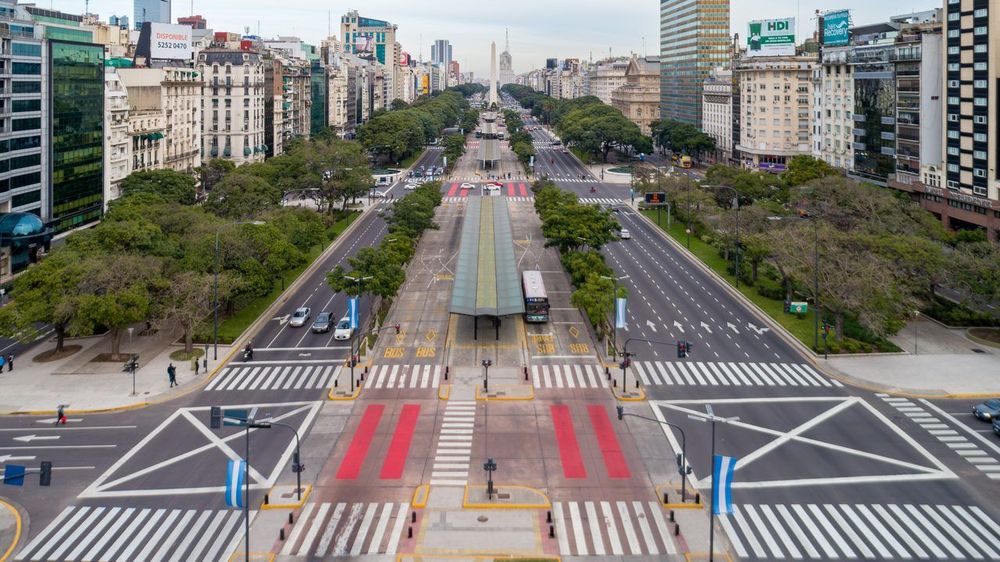
Buenos Aires looks tailor-made for traffic jams: ten lanes of Avenida 9 de Julio, colectivos double-parked on every corner, taxis idling three deep outside Recoleta cafés. Yet a large share of porteños live without a private car, and they get around just fine. Visiting Buenos Aires without a car isn't a workaround, it's largely how the city expects you to move: a dense Subte and bus network built decades before ride-hailing apps existed, a flat downtown where Palermo blends into Recoleta on foot, and a SUBE card that unlocks nearly everything for well under a dollar a ride. Ryo's audio-guided tour of Buenos Aires follows exactly this logic, stringing together neighborhoods you can reach by Subte stop or short walk. In the next few sections, you'll find out why colectivo route 152 might be the single most useful number to memorize in the whole city, why black-and-yellow paint is the first thing to check before you climb into a taxi, why Puerto Madero's wide avenues reward a bike rental while San Telmo's cobblestones punish one, and the exact shuttle counter to look for at Ezeiza so you don't end up negotiating a fare at 6 a.m. after a ten-hour flight.
Why You Don't Need a Car in Buenos Aires
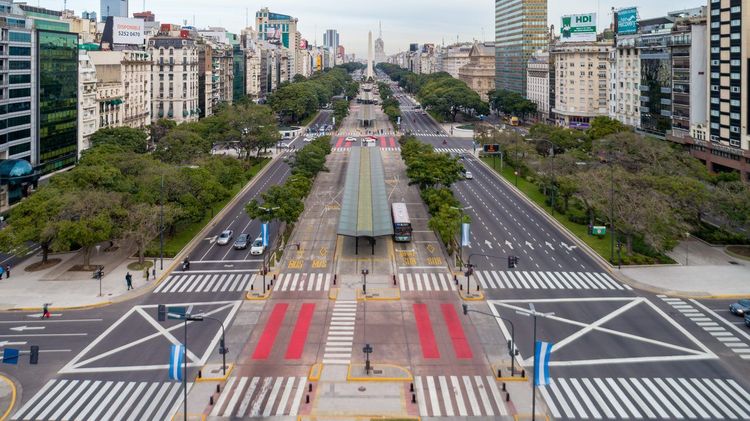
Ask a porteño how to get around Buenos Aires and the answer rarely mentions a steering wheel. The short version: the Subte and the colectivo network cover roughly nine out of ten trips a visitor needs, and the remaining tenth is a five-minute taxi ride. Renting a car here solves a problem you don't have while creating three new ones: parking, break-ins, and traffic that turns a 20-minute drive into an hour on Avenida 9 de Julio at rush hour.
Car hire counters at both airports do brisk business with travelers heading to Mendoza wine country or Patagonia, and that's the right use case. Inside the city limits, though, driving means hunting for a guarded garage (street parking invites theft), deciphering one-way grids that change direction every block, and paying tolls on highways locals navigate by memory. None of that buys you anything the Subte doesn't already solve for a fraction of the cost.
Is Buenos Aires walkable? Largely, yes. The city sits on a flat grid with wide sidewalks in Palermo, Recoleta, and Puerto Madero, and most neighborhoods worth seeing cluster within a few Subte stops of each other. The sections below break down which mode handles which job: the Subte for crossing the city fast, colectivos for routes the Subte skips, taxis and app-hailed rides for late nights or heavy bags, and your own two feet for the blocks in between. Treat this as the order locals actually use, not a menu of equal options.
The Subte: Buenos Aires' Fast, Cheap Underground
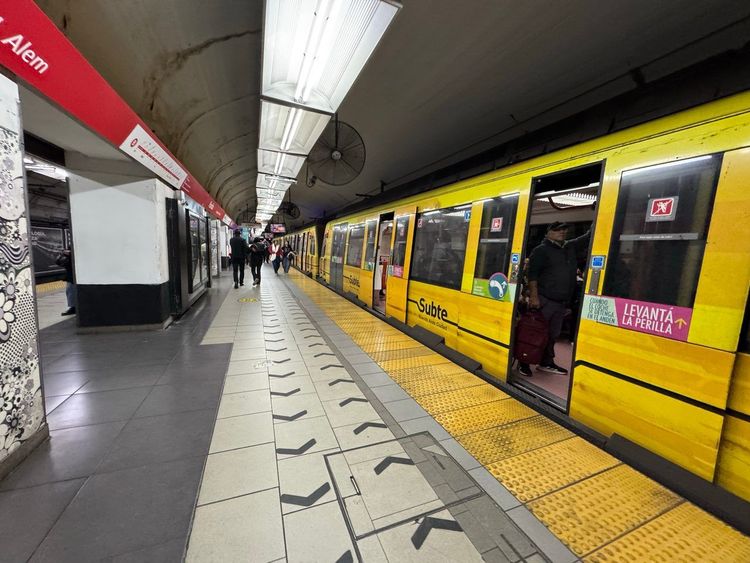
Buenos Aires' Subte (short for subterráneo) is South America's oldest underground rail system, opened in 1913, and it's still the fastest way to cross the city during daytime hours. Six lines (A, B, C, D, E, and H) radiate from the center, and for a visitor the ones that matter most are Line D (running through Palermo up to Belgrano and the small Barrio Chino), Line E (useful for San Telmo and the Catalinas stop near Puerto Madero), and Line C, the only line connecting the two mainline train terminals, Retiro and Constitución.
Spanish-only signage puts some visitors off at first, but line maps are color-coded, station names are announced, and connections between lines are logical enough that a transit app covers the gap in Spanish fluency. The one real adjustment for newcomers: unlike London or New York, Buenos Aires' Subte closes early, around 11pm on weeknights and even earlier on Sundays, so plan your last ride home before you order a second round.
Trains run roughly 5am to 11pm Monday to Saturday, with a later start and an earlier last train on Sundays and holidays. A single ride costs a flat fare regardless of distance (already AR$574 in 2024, and now well above that, though still under one US dollar), because fares are adjusted every month or two to track inflation. Rush hour runs 7:30-9:30am and 5:30-8pm, when Line D and Line B in particular get genuinely packed, so if you're carrying luggage or traveling with kids, it's worth timing trips outside those windows.
- SUBE or contactless. Cash and the old tokens are long gone; you tap a loaded SUBE card, and most turnstiles now also accept a contactless bank card or phone.
- One tap per rider. There's no group discount, so each person taps independently.
- Free transfers. Switching lines within the paid zone doesn't cost extra, as long as you don't exit through the turnstiles.
You can top up a SUBE card at kiosks near any station entrance (look for the blue SUBE sign) or inside the station at a boletería window, and automatic top-up terminals in many stations take cash too.
If you're mapping out which parts of the city to prioritize, it helps to know that several neighborhoods worth exploring on foot sit within a short walk of a Subte exit. Ryo's audio-guided tour of Buenos Aires is built around exactly that logic: you ride the Subte to the nearest stop, step out, and let the next stop in the route cue up its story automatically, no need to map out walking directions between stations yourself.
A few stations are worth riding through just to look at them. Line A's original Belgian wooden cars ran until 2013, and a few have been kept for occasional heritage runs, while Estación Perú has been restored in its early-20th-century style, with period tiling and old-fashioned advertising panels. If you've got ten minutes to spare between stops, it's a free glimpse of the city's Belle Époque ambitions.
Keep bags zipped and in front of you during rush hour, especially on Line D between Palermo and the center; it's not dangerous, just crowded enough that absent-mindedness gets expensive. Locals keep phones in front pockets by habit, not paranoia. Once you're off the main lines, though, the Subte stops being useful, and the colectivo network, with many times as many routes, fills the gaps.
Colectivos: Buenos Aires' Everywhere Bus Network
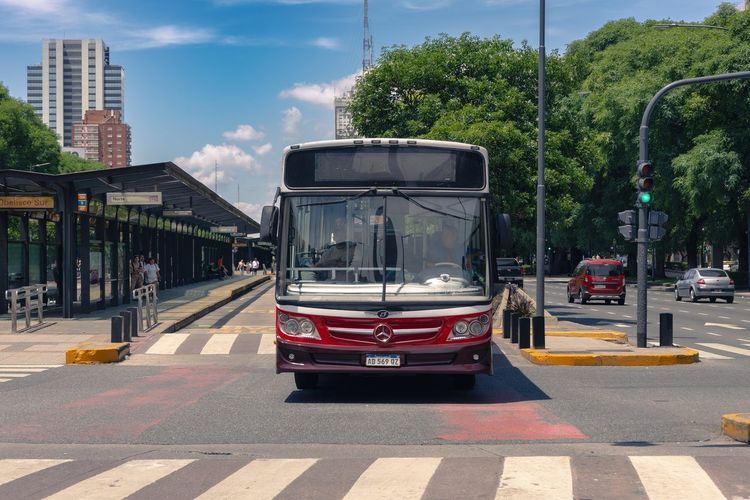
Where the Subte has six lines, the colectivo network runs well over a hundred inside the city alone, and that's the real backbone of getting around Buenos Aires without a car. If the Subte doesn't reach your destination, a colectivo almost certainly does, and routes run nearly all night on major corridors, long after the Subte has shut its gates.
The catch for visitors is that colectivos aren't numbered in any obvious geographic order, and route numbers alone don't tell you much. Route 152, for instance, runs from the northern suburbs down Santa Fe and along the edge of downtown to La Boca, making it one of the most useful single routes for sightseeing, while route 29 links La Boca and San Telmo with Palermo and Belgrano via the center. Rather than memorizing numbers, open a transit app (covered in detail further down), type in your destination, and let it tell you which colectivo to flag down and where.
Paying is simple, and cash is never accepted: you tap a SUBE card on the reader next to the driver as you board, and on a growing number of lines a contactless bank card or phone works too. Fares are tied to distance, so tell the driver your destination or the fare band before tapping; a standard ride within the city still comes to well under a dollar, slightly less than the Subte.
The first time you ride a colectivo, you might miss your stop. That's normal. Buses don't announce stops the way metro systems do, so keep your transit app open and watch the street names, or simply ask the driver, since porteño bus drivers are used to tourists and will often tell you when to get off if you mention your destination when boarding. Press the button well before your stop, because drivers don't slow down for hesitation.
Buses earn their keep in the neighborhoods the Subte skips entirely: Palermo Hollywood, the quieter parts of Belgrano, and the riverside stretch toward La Boca are all colectivo territory. If your itinerary includes a day exploring murals in La Boca or brunch in Palermo Hollywood, a bus (or a short walk combined with one) will get you there more directly than backtracking through downtown Subte interchanges.
Night owls benefit too: several core routes run through the small hours, which matters in a city where dinner starts at 10pm and bars don't fill up until midnight. Expect colectivos to be crowded at rush hour and nearly empty by 10pm. Seats near the front are typically left open for elderly passengers and pregnant women, an unwritten rule locals take seriously even when the bus is packed.
For the trips where waiting for a bus doesn't make sense, especially late at night or with luggage, taxis and app-hailed rides become the better call.
Taxis, Uber, and Cabify: Which to Trust and When
Buenos Aires' black-and-yellow taxis are everywhere, and they're legal, regulated, and metered. Are taxis safe to hail on the street? Generally, yes, provided you stick to a few habits: look for the official black-and-yellow paint job with a working taxi license number displayed on the door, confirm the meter is running from the moment you get in, and if you're uneasy, note the license plate. Street-hailed taxis are a normal, unremarkable way to get around for most porteños, not a last resort.
Where it gets more complicated is Uber. Ride-hailing has long operated in a legal gray zone in Buenos Aires, the subject of court battles and protests from taxi unions, with pressure that has rarely been aimed at riders. In practice, Uber works fine for tourists: drivers use personal cars without commercial plates, pickup in busy areas sometimes means walking a block to avoid a taxi-stand confrontation, and the app experience is identical to using it anywhere else. Cabify, a Spanish competitor, operates in the same space and is well established in Buenos Aires, with a solid driver pool in central neighborhoods.
Should you use Uber or Cabify over a street taxi? For late-night rides, airport transfers, or any time you want a fixed price before you commit, app-hailed rides win on predictability: you see the fare, the driver, and the route before you get in. Street taxis are often just as cheap, sometimes cheaper for short hops, and arguably just as safe, but you're trusting a meter and a stranger's driving rather than a logged, GPS-tracked trip.
A typical ten-minute taxi ride across a few neighborhoods runs roughly 3 to 6 US dollars at current exchange rates, with Uber and Cabify landing in a similar range outside of surge pricing. The real cost difference shows up on longer trips or during rain, when street taxis become scarce and app prices can spike noticeably. If you're deciding which to use, default to a street taxi for short daytime hops and an app for anything after dark or over fifteen minutes.
A few giveaways separate a legitimate cab from trouble: the license photo and ID number should be visible on the dashboard or passenger-side door, the driver should start the meter unprompted, and if a driver quotes a flat fare instead of running the meter for a short in-city trip, that's a signal to find another car. Radio taxis, booked by phone or app rather than hailed on the street, add a layer of accountability since the trip is logged with a dispatch company.
None of this replaces the option that costs nothing and needs no app at all: walking, which covers more of the city than most visitors expect.
Walking Buenos Aires: The City's Best-Kept Transport Secret
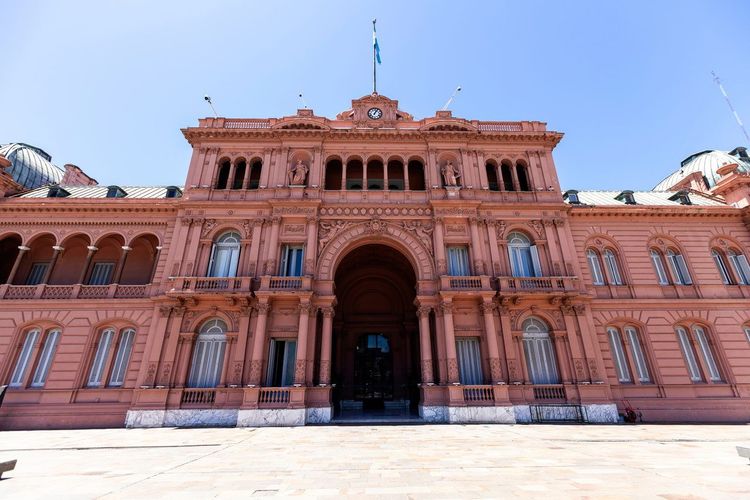
Buenos Aires rewards walking in a way few South American capitals do. The grid is flat, sidewalks are wide (if occasionally cracked), and entire days can pass without needing transit at all if you're based in the right neighborhood. Palermo, Recoleta, Puerto Madero, and the historic center around Plaza de Mayo are all walkable within themselves, and often walkable between each other if you've got the time and the weather cooperates.
When does walking stop being a good idea? It works best from mid-morning through early evening, and in spring and fall when temperatures sit comfortably in the 60s and 70s Fahrenheit. Summer (December-February) brings heat and humidity that make a 40-minute walk feel like twice that, and some stretches, particularly south of San Telmo toward La Boca, are better covered by taxi after dark, a point worth remembering for the night section further down.
This is also exactly how the audio-guided tour from Ryo is designed to work: rather than driving between stops, you walk from one to the next, and each stop triggers its own story the moment you arrive, so the route itself becomes the transportation.
The single best stretch for a first-time visitor is the walk from Plaza San Martín through Recoleta to the cemetery gates, roughly 25 minutes through some of the city's grandest Belle Époque architecture. On the other end of the spectrum, Puerto Madero's riverside promenade is flat, wide, and shaded by modern towers rather than old trees, a completely different register of walk that takes about the same amount of time.
A few basics apply anywhere: keep your phone out of your hand on busy corners, don't flash a map on your screen while standing still, and if a street feels emptier than it should at that hour, it's not insulting your sense of adventure to cross to the next block over.
Cycling and Ecobici: Buenos Aires' Public Bikeshare
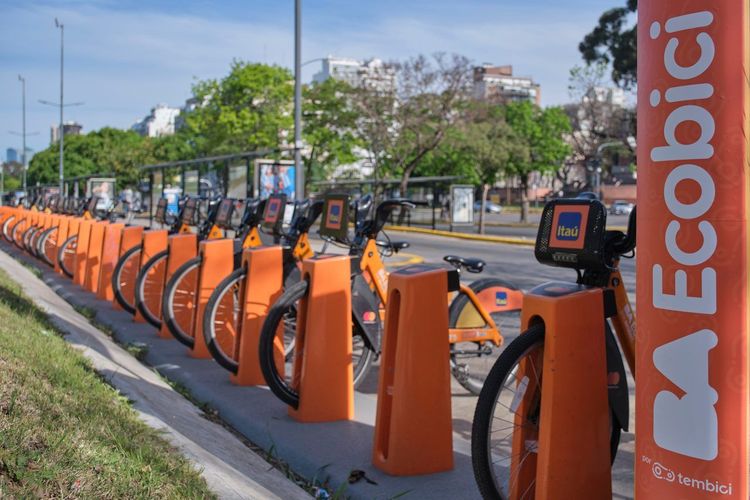
Buenos Aires runs one of Latin America's largest public bikeshare systems, Ecobici, with hundreds of stations and thousands of bikes scattered across the city. It started out free, but today visitors pay: download the Ecobici app, register with your passport, and buy a day or multi-day pass that covers a set number of minutes per ride, with extra charges if you don't dock the bike in time. It remains one of the cheapest ways to cover medium distances in good weather.
The city's bike lane network, mostly separated from car traffic by raised curbs or paint, is extensive in some areas and patchy in others. Puerto Madero is the easiest place in the city to cycle: wide, flat, and largely free of cross-traffic. Palermo's parks, especially around the Bosques de Palermo, are similarly forgiving, with dedicated paths winding through the rose gardens and lakes.
Where cycling stops being relaxing is dense, older neighborhoods like San Telmo and parts of downtown, where cobblestones, double-parked cars, and narrow one-way streets make the bike lanes feel more theoretical than real. If you're nervous about riding in traffic, stick to Puerto Madero and Palermo and take the Subte or a short walk for the rest.
One quirk worth knowing: the sign-up flow can require a phone number that receives a confirmation text, which sometimes trips up travelers relying only on a data eSIM. If registration stalls, ask your hotel desk; most have dealt with this before and can help with a workaround.
Get Your SUBE Card Before You Explore
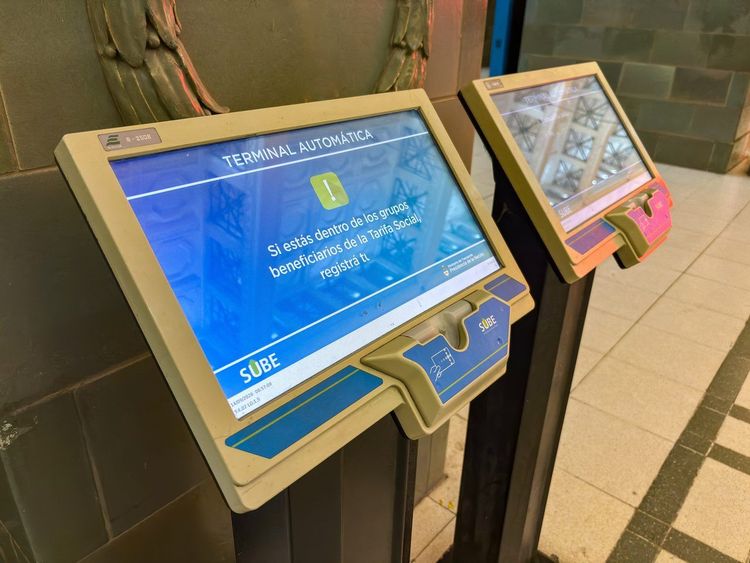
Every mode of transit covered so far, the Subte, colectivos, and suburban trains such as the Mitre line to Tigre, runs on the same card: SUBE. Contactless bank cards now work on much of the network, but SUBE remains the one payment method accepted everywhere, and it gives you the transfer discounts when you switch from bus to train within a short window.
You can buy a SUBE card at kiosks near Subte stations (look for the blue SUBE logo in the window), at tourist information points and some airport outlets, or at official SUBE centers. The card itself costs a small flat fee, and you load credit separately at the same kiosks or via machines inside Subte stations.
The most common mistake isn't buying the card, it's underestimating how much credit to load. A card with just enough for one ride leaves you stranded if your return trip costs slightly more after a fare adjustment, and these happen often. Load more than you think you'll need for the day, ideally enough for four or five rides, and top up again before you run dry rather than after.
Multiple people can share one SUBE card, tapping it in sequence as each person boards, which simplifies things for couples or families who'd rather not juggle several cards and balances.
Staying Connected: Navigation Apps and Data in Buenos Aires
Locals navigating Buenos Aires' colectivo maze rely on a short list of apps: Moovit, Google Maps, and the city's own BA Cómo Llego, all of which track colectivo routes, Subte status, and walking directions with reasonable accuracy. Moovit tends to be slightly better for bus-specific details, like how many stops remain, while Google Maps is the more reliable default for combined walking-plus-transit routes.
For Subte-specific service alerts, closures and delays in particular, the official accounts of Emova, the company that has operated the Subte since 2021, post updates faster than most third-party apps, worth a follow if you're relying heavily on the underground during your stay.
Staying connected matters more in Buenos Aires than in cities with clearer street signage, since half of navigating here is confirming you're walking toward the right colectivo stop rather than away from it. An eSIM activated before you land means you're not hunting for Wi-Fi to check a bus route, and the big local telecom providers also sell physical SIMs at the airport if you'd rather have a local number.
Download an offline map of central Buenos Aires before you lose signal underground on the Subte, a five-minute precaution that saves you from standing at a station exit squinting at a blank screen while a line of commuters moves around you. It's a small habit, but one that separates a smooth week in the city from an afternoon spent backtracking.
Buenos Aires Neighborhoods Without a Car: Palermo, Recoleta, Puerto Madero, and San Telmo
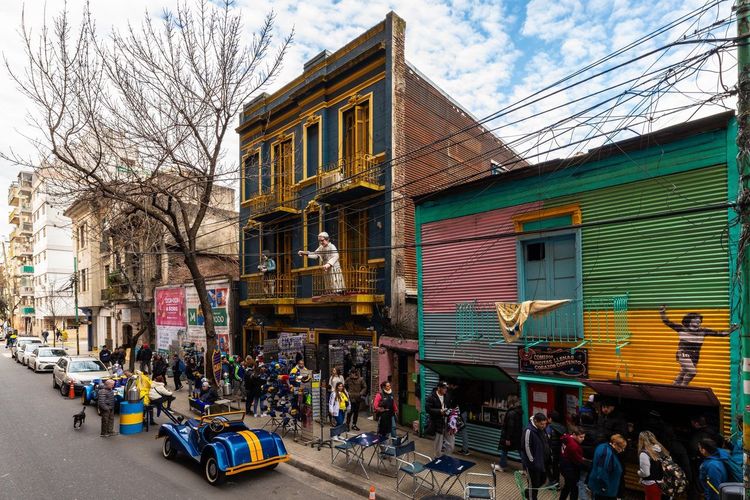
Four neighborhoods anchor most visitors' time in Buenos Aires, and conveniently, all four connect to each other without needing a car at any point. Here's the breakdown, and how to move between them on transit or foot alone.
Palermo is the city's largest neighborhood, really a cluster of micro-neighborhoods (Palermo Soho, Palermo Hollywood, Las Cañitas) spread across tree-lined streets that stay busy with cafés until well past midnight. Line D of the Subte serves it directly, with stops at Plaza Italia, Scalabrini Ortiz, and Palermo station itself, and the walk between any two of these stops rarely takes more than 15 minutes. Within Palermo itself, the sub-areas sit close enough that walking beats waiting for a bus: Palermo Soho to Palermo Hollywood is about 12 minutes on foot, crossing under the train tracks near Juan B. Justo. The Bosques de Palermo) parks sit at the neighborhood's edge, reachable on foot from the Plaza Italia stop or by a short Ecobici ride, and they're worth building a whole morning around.
Recoleta, just southeast of Palermo, is an easy 20-minute walk or a short colectivo ride away. Its best-known landmark, the Cementerio de la Recoleta), holds the Duarte family vault where Eva Perón has rested since 1976, among 4,691 above-ground vaults. Non-resident visitors now pay an entrance fee at the gate, and guided tours are available. The neighborhood's cafés and bookstores cluster within a few blocks, making it one of the most walkable pockets in the city once you've arrived. If you're continuing on to Palermo afterward, walking along Avenida del Libertador takes about 25 minutes past the Museo Nacional de Bellas Artes, or a colectivo covers the same stretch in under ten.
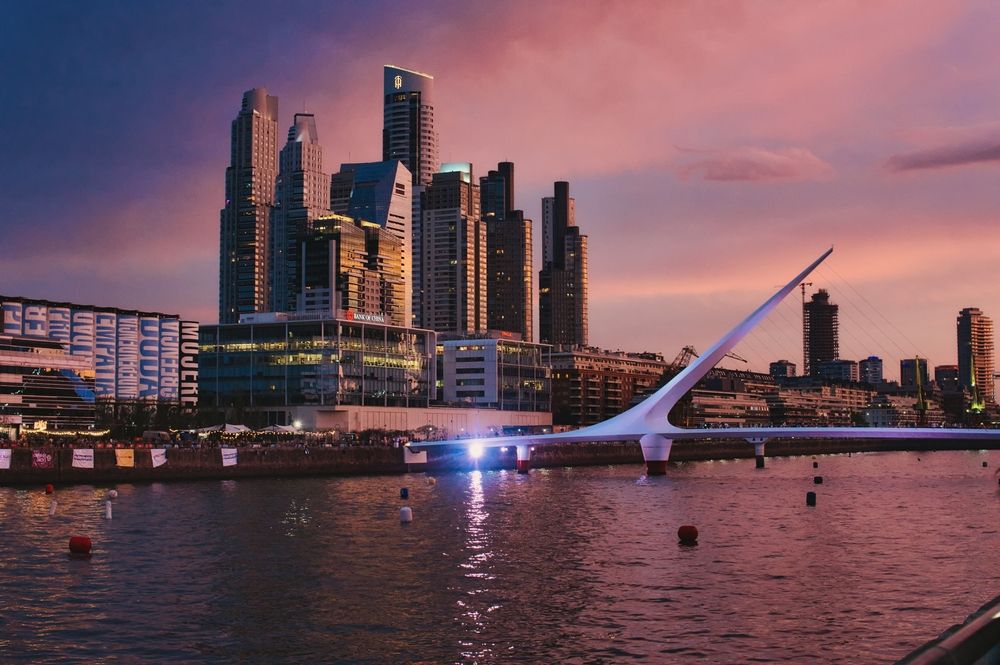
Puerto Madero, the redeveloped docklands east of downtown, is a different register entirely: wide promenades, glass towers, and the Puente de la Mujer), a white pedestrian bridge that's become one of the most photographed spots in the city. No Subte line runs into the docks themselves, but it's a flat 10-minute walk from Catalinas (Line E) or L. N. Alem (Line B), and once you're there, everything is walkable along the waterfront. The ecological reserve at the district's eastern edge, Reserva Ecológica Costanera Sur, adds another hour of car-free walking along the river if you want to extend the visit.
San Telmo, the city's oldest neighborhood, trades Puerto Madero's glass towers for cobblestones, antique shops, and the Sunday street fair around Plaza Dorrego (Humberto Primo 400, C1103 Buenos Aires, rated 4.4/5 on Google (36 857 avis)), one of the best places in Buenos Aires to watch an impromptu tango performance for free. Line C and Line E both have stations within walking distance, though San Telmo's narrow streets are genuinely better explored on foot than by bike or bus once you're inside them. From San Telmo, colectivo 29 or a 20-minute walk up Defensa connects back to the historic center around Plaza de Mayo, making it an easy add-on to a day that started in Recoleta.
Linking all four without backtracking is exactly the kind of planning problem Ryo's audio-guided walk through Buenos Aires' neighborhoods is built to solve: the route strings these districts into a single walkable sequence, with the audio narration covering details like the Recoleta cemetery's more eccentric burials and the dockworkers' history behind Puerto Madero's red-brick warehouses, so you're not cross-referencing a guidebook at every turn.
If you're trying to fit all four into a single trip, the natural order runs Recoleta in the morning before the cemetery gets crowded, Palermo for lunch and an afternoon wander, Puerto Madero at golden hour along the river, and San Telmo in the evening, when the antique shops give way to tango bars and parrillas filling up for dinner. For a day-by-day version of that sequence, our 3-day Buenos Aires itinerary lays it out with the sights in each district.
Arriving Without a Car: EZE and AEP Airport Transfers
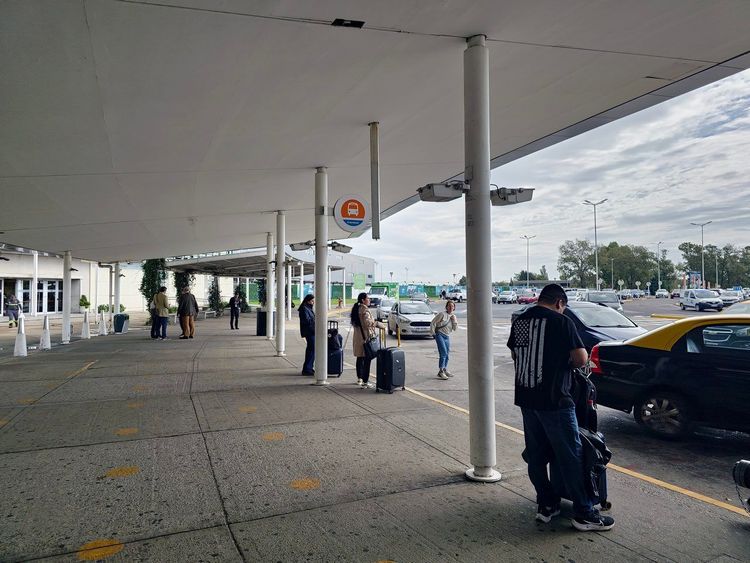
Buenos Aires has two airports, and knowing which one you're landing at changes your entire transfer plan. Ezeiza International Airport (EZE)) handles nearly all international long-haul flights and sits about 35 kilometers southwest of downtown, while Aeroparque Jorge Newbery (AEP) (Av. Rafael Obligado s/n, C1426 Buenos Aires, rated 4.4/5 on Google (63 303 avis)) handles domestic flights and some regional international routes on the riverfront, just north of Palermo.
What's the move for getting from EZE to the city? The most reliable option, and the one most visitors end up using, is Tienda León, a dedicated shuttle company with a counter inside the arrivals hall. Buy a ticket at the counter (cash or card), and a coach takes you directly to their terminal on Avenida Madero, at the edge of Puerto Madero and Retiro, from where you can grab a taxi to your final stop. The ride takes 45-75 minutes depending on traffic, with departures running roughly every 30 minutes through the day.
If you'd rather go door to door, book an official airport taxi or remise (a pre-arranged car with a fixed fare agreed before you get in) at the dedicated counters just past customs. Fares are posted and don't require negotiation, which matters after a long flight when you're not in a mood to haggle. Expect to pay noticeably more than the Tienda León shuttle, but you'll be dropped at your hotel's door rather than a downtown terminal.
Uber and Cabify technically operate at EZE, but pickup logistics are inconsistent: some drivers cancel rather than enter the airport's regulated taxi zone, and the ones who do often ask you to walk to a nearby pickup point rather than meeting you at arrivals. If you're set on an app ride from EZE, build in extra time and keep the Tienda León counter, which runs around the clock, as your fallback.
AEP, being so close to downtown, is simpler. A taxi from Aeroparque to most central neighborhoods runs 15-25 minutes and costs a fraction of the EZE equivalent, and app-hailed rides work more reliably here since the airport sits inside the city's normal operating zone rather than out past the highway. Several colectivo lines also stop outside the terminal, a genuine option if you're traveling light and already hold a SUBE card.
Roughly budgeting: a Tienda León shuttle from EZE runs about $10-15 USD equivalent, an official taxi or remise $35-50, and an app ride somewhere in between when it works. From AEP, taxis typically land under $10. Keep small bills or a card ready either way, since change can be slow to come by at airport counters.
Whichever airport you land at, the shuttle or taxi ride into the city is dead time worth using: download your maps, and if you plan to explore with a Ryo audio guide during your stay, grab the route now, so the first stop is ready to go the second you check into your hotel.
One practical note for EZE specifically: luggage carts are free inside the terminal but become scarce near the exits, where unofficial baggage helpers sometimes offer to carry bags for tips. It's not dangerous, just unnecessary, since the walk from baggage claim to the Tienda León counter is short and flat.
Getting Home Safely at Night Without a Car
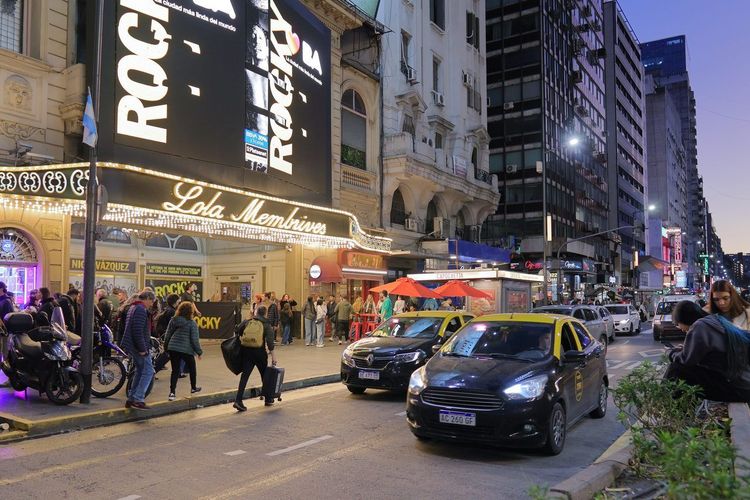
The question that matters most after dark isn't which transit mode to take, it's which rides to trust. The Subte stops running around 11pm and many colectivo routes thin out sharply after midnight, which means your options narrow to taxis and app-hailed rides for most late trips.
What is the safest move for getting home at night? Book through an app rather than hailing on the street. Uber, Cabify, and registered radio taxis all log your trip, share the driver's details and plate number before you get in, and let you, or a travel companion back home, track the route in real time. Street-hailed taxis at night aren't inherently dangerous, but they remove that paper trail, and after midnight, waiting three extra minutes for a logged ride is worth it.
A handful of areas warrant extra caution after dark: the edges of La Boca beyond the touristy Caminito strip, parts of Constitución around the train terminal, and poorly lit stretches of San Telmo south of the main plaza. None of these are no-go zones in daylight, but at night, they're the blocks where a five-minute taxi beats a fifteen-minute walk, even if the walk looks perfectly fine on a map.
If you're traveling with a companion, share your live trip location with them through the app before you set off, a feature built into both Uber and Cabify that takes ten seconds to enable. Solo travelers should default to the same habit, sending the trip details to a friend or screenshotting the driver and plate number before getting in.
Buenos Aires nightlife runs late by any standard; clubs don't fill up until 1 or 2am and stay open past sunrise some weekends. That schedule means getting home at night often really means getting home at 5 or 6am, when streets are quiet and app wait times can stretch longer than usual. Book a ride before you leave the venue rather than standing outside trying to flag one down.
Should You Rent a Car in Buenos Aires Anyway?
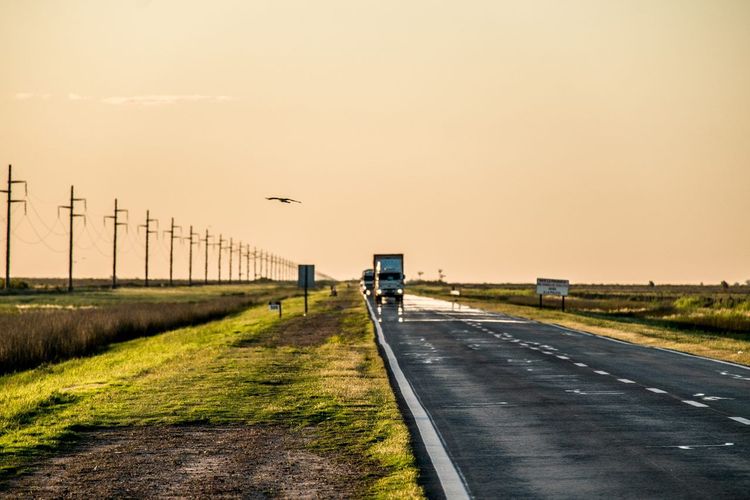
Everything above argues against a car inside the city, and that argument holds. But there's one scenario where renting makes genuine sense: leaving Buenos Aires entirely, for wine country around Mendoza, the lake districts of Patagonia, or a slower-paced road trip through the pampas that public transit simply doesn't reach well.
Is it safe for tourists to drive in Argentina? Generally yes, outside the capital. Argentine highways are well-maintained on major routes, signage is clear, and driving culture outside Buenos Aires is noticeably calmer than the capital's aggressive merge-and-honk style. The adjustment that catches visitors off guard is distance: Argentina is enormous, and a short drive between regional towns can easily run three or four hours.
What about a car for the city alone? No, and most rental agencies will tell you the same thing if you ask directly. Renting a car is expensive relative to transit costs, parking at most hotels runs an additional daily fee, and insurance requirements for foreign drivers add complexity that simply isn't worth it for a trip confined to the city.
If a road trip beyond the city is part of your plan, pick up the car on your way out of town, ideally at the airport, rather than renting for your entire stay and leaving it parked, and accumulating fees, while you explore Buenos Aires on foot and by Subte. Most international agencies operate counters at both airports and downtown offices, and booking in advance, especially during Argentine summer (December-February), avoids scrambling for availability.
Day Trips From Buenos Aires Without a Car
Two of the best day trips from Buenos Aires require no car at all, and arguably work better without one.
Tigre, a river town about an hour north of the city, is reachable entirely by train: the Mitre line runs directly from Retiro station to Tigre's own terminal, with frequent departures through the day, paid with the same SUBE card. The fare is among the cheapest scenic rides in the country, and the line is also simply a pleasant way to see Buenos Aires' northern suburbs shift from apartment towers to leafy, low-rise streets. Once there, the real draw isn't the town itself but the Paraná Delta, a maze of rivers and islands best explored by the small passenger boats, lanchas colectivas, that double as public transit for the people who actually live out on the delta.
Before boarding a boat, the riverside market Puerto de Frutos is worth an hour of browsing for wickerwork, furniture, and crafts, a short walk from the train station and a reasonable place to grab lunch before heading out onto the delta.
The other standout car-free day trip crosses an international border entirely by water. Buquebus ferries leave from the Dársena Norte terminal, between Retiro and Puerto Madero, across the Río de la Plata to Colonia del Sacramento, a fast-ferry hop of a little over an hour to a UNESCO-listed colonial town, or a longer crossing directly to Montevideo for travelers who want to see Uruguay's capital in a single long day, or better, as an overnight add-on to the trip. Fares vary by season and how far ahead you book, but a one-way fast ferry to Colonia typically runs in the $40-60 USD range, with the Montevideo crossing costing somewhat more and taking roughly two and a half hours. Bring your passport for either option: immigration for both countries is handled at the terminal before you board.
If Montevideo is on your radar, it's worth reading up on getting around once you're there too, since the city rewards the same car-free approach as Buenos Aires: Ryo's guide to visiting Montevideo without a car covers the ferry terminal transfer and the city's own walkable core in more detail.
Trains in Argentina move at a pace that rewards patience rather than efficiency, which is exactly the point for a day trip. Where a colectivo or taxi gets you somewhere fast, the Tigre train is scenic by design, running through suburban stations and riverside scenery that a highway bypass would otherwise hide entirely.
Plan a full day for either trip: the Tigre delta boats run on their own loose schedule and invite detours, while the Buquebus crossing to Uruguay involves check-in and passport control that mean arriving well before the posted sailing time. Buy ferry tickets a day or two ahead in high season, since popular departure times sell out.
Getting Around Without a Car If You Have Limited Mobility
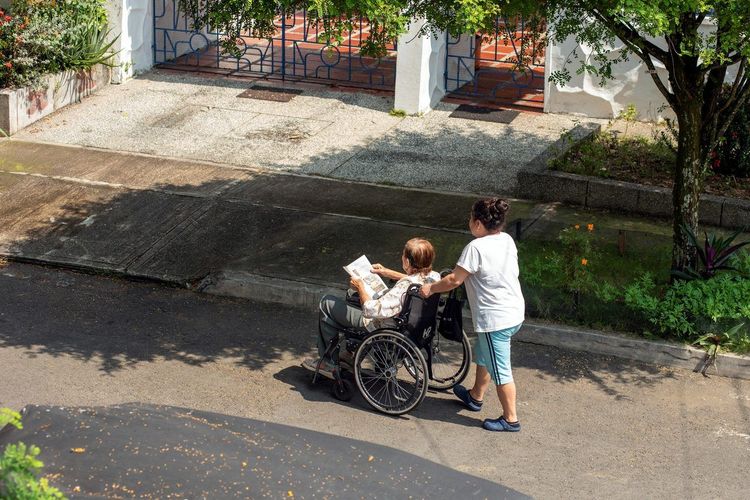
Buenos Aires is not an easy city for travelers with limited mobility, and it's worth saying plainly rather than glossing over. Cobblestone streets in San Telmo and parts of Recoleta, uneven sidewalks citywide (tree roots and decades of patchwork repairs are the main culprits), and inconsistent curb cuts make independent navigation harder than in most major capitals.
Elevator access on the Subte is limited but improving: Line H, the newest line, has elevators at most of its stations, and a growing number of stations on the older lines have been retrofitted. The city publishes which stations have working elevators, worth checking before you plan a route rather than discovering a staircase-only station on arrival. Many colectivos are now low-floor buses with a ramp, though older vehicles still circulate on some lines.
For door-to-door transport, some radio taxi and remise companies operate a small fleet of wheelchair-accessible vehicles, bookable by phone a day in advance rather than hailed on the street; ask your hotel to help place the call, since availability is limited and advance notice matters more here than in cities with larger accessible fleets.
If mobility is a concern, build buffer time into any itinerary that includes San Telmo or Recoleta's cemetery specifically, both of which involve uneven, historic paving that's genuinely difficult with a wheelchair or walker, however accessible the transit getting you there might be. Puerto Madero, by contrast, with its flat modern promenades, is the most consistently accessible neighborhood in the city.
How Much Does It Cost to Get Around Buenos Aires Without a Car
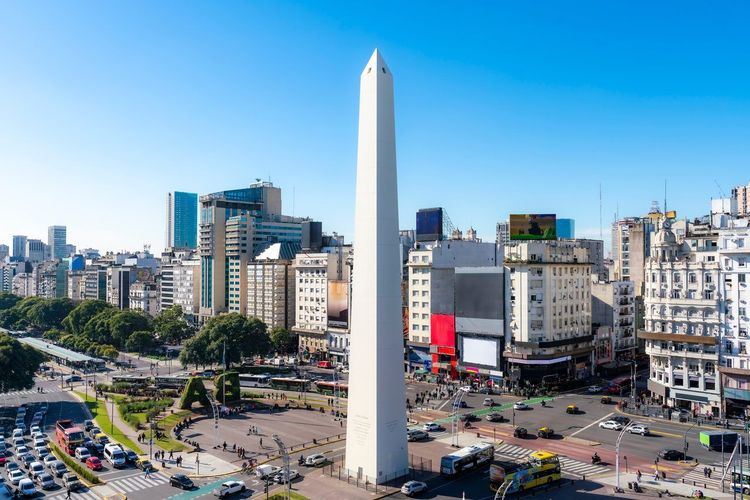
Add up a typical day without a car, and the numbers are hard to argue with. A visitor riding the Subte twice, a colectivo once, and taking one short taxi ride spends somewhere in the range of $5-8 USD equivalent total, SUBE fares included. Even a heavier day, three or four app-hailed rides instead of transit, rarely breaks $25-30.
Compare that to renting a car for the same day: a compact rental runs roughly $30-50 USD per day before insurance, fuel is no bargain either, and parking at a hotel or guarded garage downtown adds another $10-20 daily on top of that. Before you've driven a single kilometer, the car has already cost more than a full day of transit and taxis combined.
A quick reference for budgeting (peso prices move every month, so dollar equivalents are the safer guide):
- Subte ride: flat fare, under $1 USD
- Colectivo ride: slightly less, scaling with distance
- Short taxi hop: roughly $3-6 USD
- Tienda León shuttle from EZE: $10-15 USD equivalent
- Rental car, per day: $30-50 USD before insurance and parking
None of this accounts for the time saved, either. A rental car in downtown traffic at rush hour frequently loses to a Subte ride covering the same ground, which means the money you save going car-free in Buenos Aires comes with a faster trip attached, not a slower one.



FAQ
What is the best way to get around in Buenos Aires?
For most visitors, it's a combination of the Subte for crossing the city quickly, colectivos for routes the Subte doesn't reach, and walking within neighborhoods like Palermo or Recoleta. Save taxis and app-hailed rides for late nights, airport transfers, or heavy luggage.
What to be careful of in Buenos Aires?
Keep an eye on bags in crowded Subte cars and busy pedestrian streets, stick to app-logged rides after dark, and use extra caution around Constitución station and the edges of La Boca beyond the Caminito tourist strip, especially at night.
Can I use Uber in Buenos Aires?
Yes. Uber has long operated in a legal gray area contested by taxi unions, but it works for riders much like anywhere else. Drivers use personal, unmarked cars, with the occasional pickup-spot workaround near busy areas or airports. Cabify is a solid alternative.
Is it safe for tourists to drive in Argentina?
Outside Buenos Aires, generally yes, on well-maintained highways with clear signage. Inside the capital, traffic, parking scarcity, and unfamiliar one-way grids make driving more stressful than useful, which is why most visitors reserve a rental car for trips beyond the city rather than city driving itself.
Is Buenos Aires walkable?
Largely, yes. The city's flat grid and wide sidewalks in neighborhoods like Palermo, Recoleta, and Puerto Madero make walking a genuinely practical way to get around, especially in spring and fall. Summer heat and a handful of neighborhoods after dark are the main exceptions.
Is the Subte easy to use for tourists?
Yes, with a short learning curve. Lines are color-coded, a transit app fills in for the Spanish-only signage, contactless bank cards work at most turnstiles, and the main adjustment is the early closing time, around 11pm on weeknights.
Conclusion
Buenos Aires makes a convincing case for leaving the rental car off your itinerary entirely. Between a Subte that gets you across downtown in twenty minutes, a colectivo network that fills every gap the trains don't reach, and whole neighborhoods built for walking, the city hands you a transit system that's faster, cheaper, and considerably less stressful than fighting traffic on Avenida 9 de Julio. Save the car rental for Mendoza or Patagonia, where open roads actually reward it.
Want a head start on turning all of this into an actual itinerary? The Ryo audio guide to Buenos Aires does the sequencing for you, stop by stop, so the only decision left once you land is which Subte exit to take first.