© Shutterstock
 Votre guide Ryo
Buenos Aires for Free: 15 Things to Do in 2026
Looking for free things to do in Buenos Aires? Porteños will tell you, half joking, that the real tour of their city costs nothing but shoe leather, and they're not exaggerating much. A 19th-century presidential balcony, a planetarium shaped like a flying saucer, a theatre turned bookstore and a riverside wetland full of herons are all walk-up-and-stare free. The surprise isn't that there are dozens of them. It's how central and how genuinely good they are, not scraps left over after the paid attractions close. Ryo's audio-guided tour of Buenos Aires already traces a good chunk of this ground, which makes it a useful spine to hang the rest of this list on.
You'll find the famous landmarks first, because they deserve it. Then come the corners most lists skip: opera boxes turned reading nooks open late into the evening, a rose garden holding roughly 18,000 rosebushes, a free rooftop viewpoint reached by a spiral staircase, a volunteer-run tram that still rattles through Caballito on weekends, and a Sunday gaucho fair that has just celebrated its 40th year. One honest warning up front: a couple of icons, Recoleta Cemetery above all, now charge foreign visitors, and we flag every one of those cases clearly. Everything is organized neighborhood by neighborhood so you can actually walk it.
1. Plaza de Mayo, Casa Rosada & the Cabildo
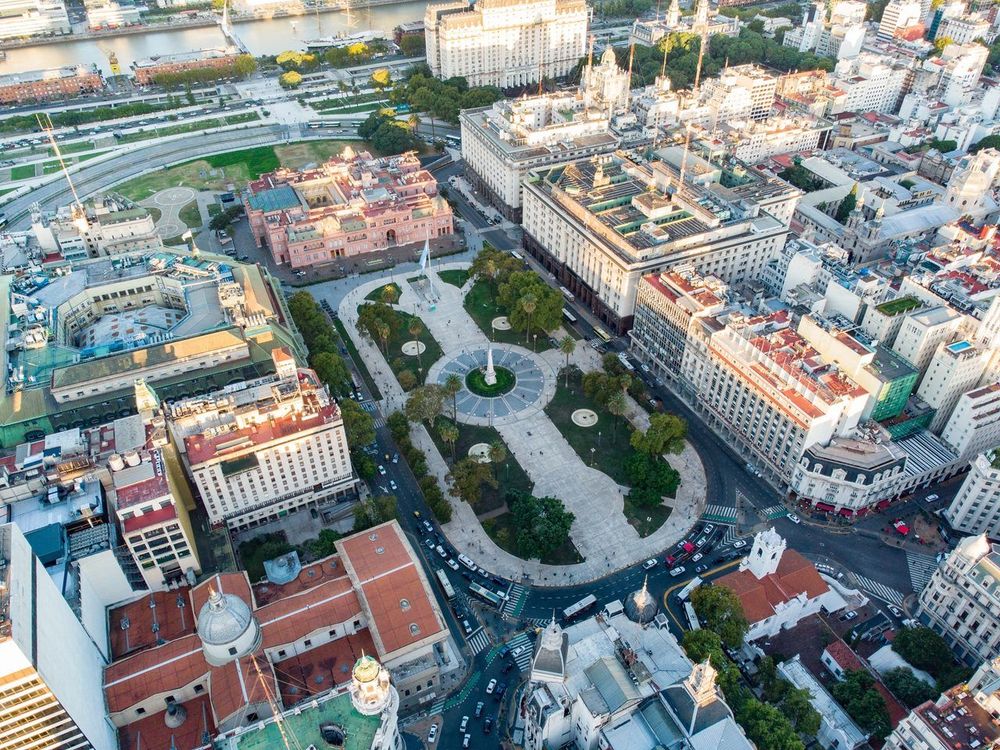
Every Argentine history lesson eventually points back to Plaza de Mayo), the square where the May Revolution of 1810 unfolded, where crowds gathered to hear Perón speak, and where the Madres de Plaza de Mayo still circle every Thursday afternoon demanding answers about the disappeared. It isn't a museum piece behind glass. It's a working civic square, ringed by some of the most consequential buildings in the country, and you can walk its entire perimeter for free any day of the week.
At the square's eastern edge sits the Casa Rosada), the salmon-pink presidential palace whose balcony Evita and Perón used for their famous addresses. Free guided visits of the interior run on weekends but must be booked online in advance; if you miss a slot, don't worry. The exterior, the mounted Granaderos guarding the doors and the sheer theater of people watching here on a Sunday afternoon are the real draw. Locals argue politics on the benches, vendors sell choripán, and tourists crane their necks at the same balcony seen in a thousand newsreels.
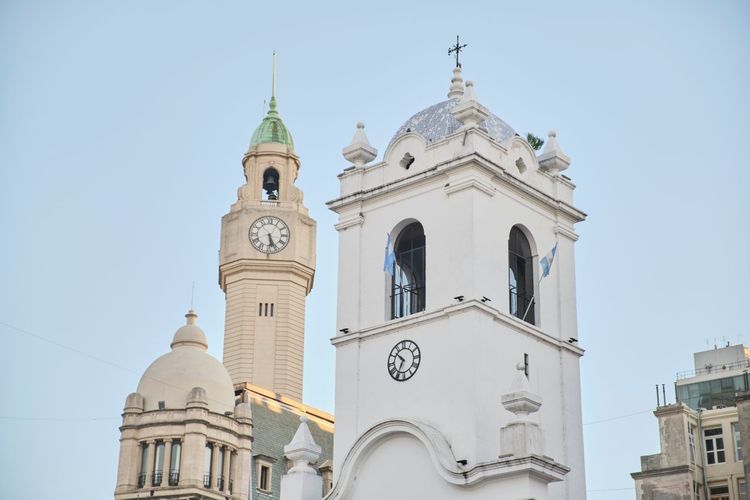
Directly across the square stands the whitewashed Cabildo (Bolívar 65, C1066 Buenos Aires, rated 4.6/5 on Google (12 112 avis)), the colonial town hall where the 1810 revolution was actually plotted. Its arcaded facade was cut back twice to make room for new avenues, which is a story in itself, and the building now houses the National Historic Museum of the Cabildo and the May Revolution. A block away, the Manzana de las Luces (Perú 272, C1067 Buenos Aires), the old Jesuit city block that once hosted the first seat of the University of Buenos Aires, hides colonial tunnels beneath its courtyard. Walking the block above ground costs nothing; only the guided tunnel tour charges a small fee.
You could spend twenty minutes here or two hours, depending on whether a protest, a tango busker or a political rally happens to be passing through. That unpredictability is sort of the point. Ryo's Soul of Argentina audio route walks you across the square itself, narrating the political history behind that Casa Rosada balcony and the colonial Cabildo standing right next to it, so the stones mean something rather than just looking old.
2. El Caminito and the Street Art of La Boca
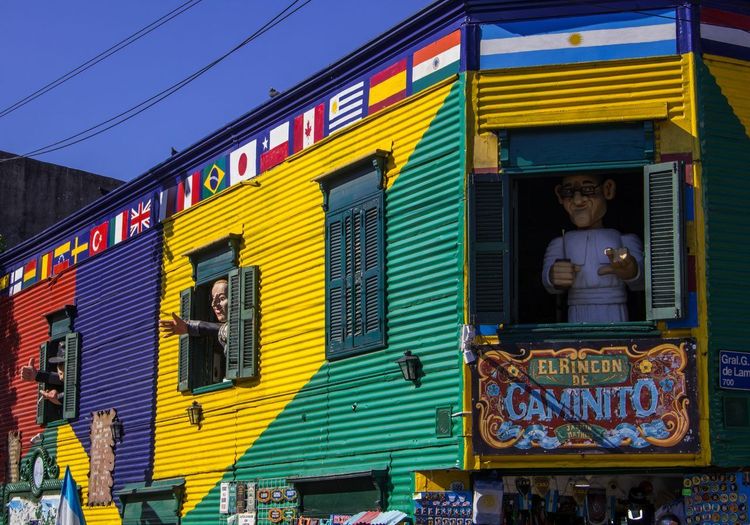
El Caminito (Caminito, C1161 Buenos Aires, rated 4.5/5 on Google (6 424 avis)) is probably the most photographed street in Argentina, and almost nobody pays a cent to see it. The open-air street museum runs about 150 meters through the port neighborhood of La Boca, lined with corrugated-metal houses painted cobalt blue, mustard yellow and fire-engine red, the same colors dockworkers once scavenged from leftover ship paint because they couldn't afford matching cans.
That detail matters more than the postcard shots suggest. La Boca was a working-class immigrant port district, mostly Genoese, and the patchwork colors were improvisation born of poverty, not a design brief. Walking the street costs nothing. Tango dancers perform for tips at the little plazas along the route most afternoons, and vendors sell leather goods and tango memorabilia from stalls packed tight on either side.
A quick practical note: the free part is the street and its murals. Several small museums tucked into the painted buildings, plus a few tango dinner shows aimed squarely at tour buses, do charge admission, and La Boca after dark is rougher than its daytime image suggests, so treat this as a daylight outing. Arrive before noon if you want fewer crowds and softer light; by mid-afternoon, tour groups pack the main strip three deep. The Ryo audio-guided tour of the city's neighborhoods stops exactly where the dancers usually set up, and the audio lays out the port-worker history behind the colors while you're standing in front of them.
3. Recoleta Cemetery's Marble Mausoleums
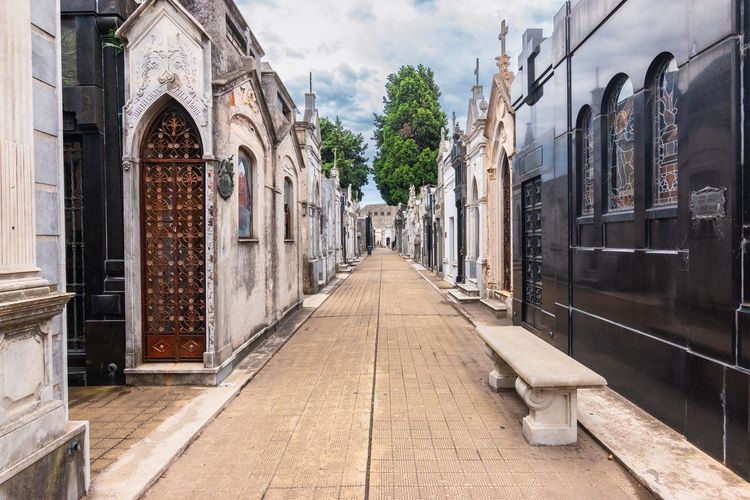
Recoleta Cemetery (Junín 1760, C1113 Buenos Aires, rated 4.3/5 on Google (7 284 avis)) is the one big exception on this list, and you should know it before you go: since late 2023, international visitors pay an entrance ticket (around AR$24,030, roughly US$16 to 17, as of mid-2026, card payment only), while Argentine residents with a DNI still enter free. We keep it here because the neighborhood around it is free, and because it remains one of the most extraordinary sights in South America. Ninety-four of its mausoleums have been declared national historic monuments, and the cramped streets between them, lined with marble angels, weeping statues and family crypts stacked three generations deep, feel more like a miniature city than a graveyard.
Evita Perón's tomb, modest compared to the grander mausoleums around it, draws a steady trickle of visitors who leave flowers at the Duarte family crypt most days. Nobel laureates, presidents and Rufina Cambacérès, the young woman said to have been buried alive in 1902, all rest within a few minutes' walk of each other.
If you'd rather keep your day at zero pesos, do what many porteños do: walk the outer walls, then spend your time on the plaza in front. Plaza Francia's weekend artisan fair, the giant rubber tree outside La Biela café and the Basílica del Pilar right next to the cemetery gate are all free. If you do buy a ticket, give yourself at least 45 minutes inside. The maze of walkways is easy to get lost in, and that's not a complaint.
4. Bosques de Palermo, El Rosedal & the Planetarium
The Bosques de Palermo), officially Parque Tres de Febrero and usually just called the Palermo Woods, form the largest green lung in the city: roughly 400 hectares of lakes, jogging paths and shaded avenues that locals treat the way New Yorkers treat Central Park. On weekends, some inner roads close to cars and fill instead with cyclists, rollerbladers and families renting paddle boats on the lakes, a small fee for the boats, zero for everything else.
Inside the woods sits El Rosedal), the rose garden, which holds around 18,000 rosebushes laid out around a small lake crossed by a white footbridge that's become one of the most photographed spots in Palermo. Spring, roughly October through November in the southern hemisphere, is peak bloom; visit on a weekday morning and you might have entire rows of roses to yourself. Next door, the Garden of Poets lines a path with busts of writers from Shakespeare to Borges.
A short walk away, the Galileo Galilei Planetarium (Av. Sarmiento, C1425 Buenos Aires, rated 4.6/5 on Google (15 222 avis)) sits inside the park grounds, a silver, saucer-shaped dome that looks more like a UFO prop than a scientific institution. Walking around the exterior and the meteorites displayed near its entrance is free; the sky shows inside charge a modest ticket. Even without going in, it's one of the odder pieces of public architecture you'll find anywhere in South America.
Beyond the park, the wider Palermo district is a free show in itself: the leafy streets of Palermo Soho, with their murals and design boutiques, and Plaza Serrano's weekend craft stalls reward an aimless afternoon. The public EcoBici bike-share also has stations around the woods if you want to cover more ground. The neighborhood audio stroll on Ryo loops through this stretch of Palermo too, pausing at the rose garden and the planetarium's odd silhouette along the way.
5. Reserva Ecológica Costanera Sur
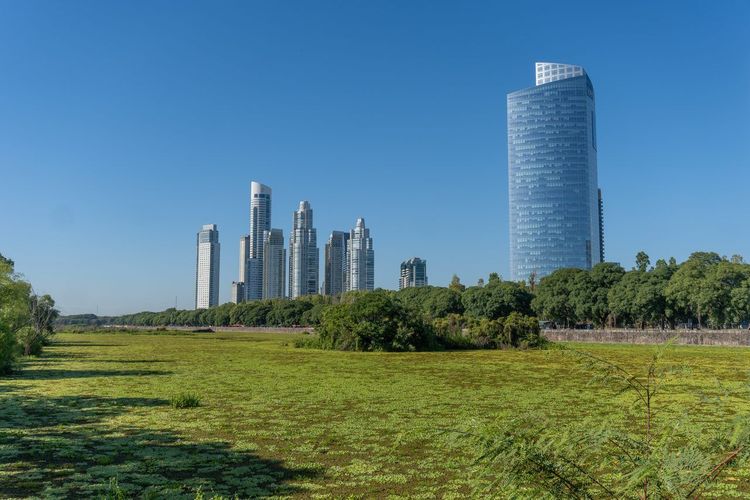
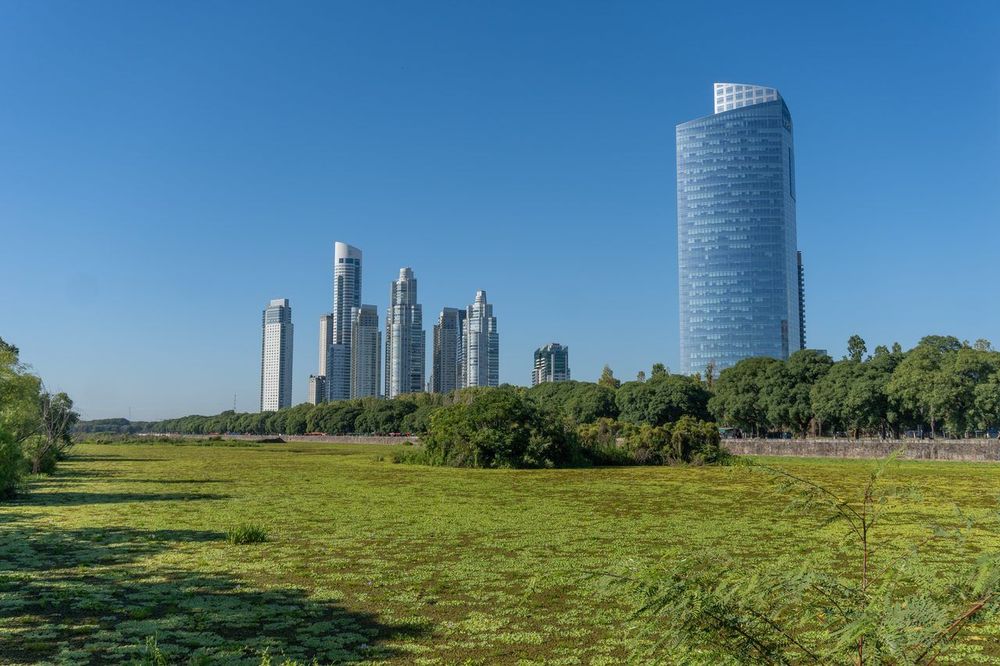
Most visitors never make it to the Reserva Ecológica Costanera Sur (Av. Tristán Achával Rodríguez 1550, C1107 Buenos Aires, rated 4.5/5 on Google (88 478 avis)), which is strange given it sits a fifteen-minute walk from Puerto Madero's glass towers. The reserve covers about 350 hectares of reclaimed wetland along the Río de la Plata, built accidentally from construction rubble dumped here in the 1970s that nature quietly colonized with reeds, lagoons and more than 300 recorded bird species.
Birdwatchers show up early with binoculars for herons and kingfishers, but you'll probably come for something simpler: sunset over a river so wide you can't see Uruguay on the other side, even on a clear evening. Walking and cycling trails loop through the whole reserve, entry is free, it's closed on Mondays, and the gates shut in the early evening, so check the closing time for the season.
A sandy stretch along the riverbank, sometimes marketed loosely as the urban beach, lets porteños sunbathe in summer, though swimming in the Río de la Plata isn't recommended. Bring water and sun protection; there's very little shade once you're past the entrance, and almost no services inside. On weekends, the food trucks lined up along the Costanera Sur promenade at the entrance sell cheap choripán and bondiola sandwiches, which turns a free afternoon of birdwatching into a near-free picnic. If you're short on time, even a forty-minute loop along the main trail to the river viewpoint gives you a sense of the place, and it's one of the few spots in the city where the traffic noise disappears completely.
6. San Telmo: Plaza Dorrego, Calle Defensa & the Sunday Fair
Plaza Dorrego) is the second-oldest square in the city after Plaza de Mayo, and on many evenings you'll find tango dancers performing for loose change at its edges while neighbors sip mate on surrounding benches. It anchors San Telmo, the cobblestoned neighborhood many porteños consider the cradle of tango.
On Sundays, the plaza and a long stretch of Calle Defensa (Defensa, C1102 Buenos Aires) transform into the San Telmo Sunday Fair, hundreds of stalls selling antiques, mate gourds, vintage cameras and odd curiosities you won't see anywhere else. Browsing costs nothing. Buying, obviously, does, and polite bargaining is expected rather than rude.
A few blocks down Defensa, the Zanjón de Granados sits above a network of colonial tunnels and an old stream channel that once drained the early city. Viewing the historic house from the street is free; descending into the tunnels requires a paid guided tour, worth it if you have an extra hour, skippable if your Sunday is already full.
Come hungry: the fair's choripán stands and empanada carts are some of the best cheap eats in town, and they're half the reason locals show up even with no intention of buying anything. If you only have one Sunday here, this is arguably where to spend the morning. That same audio walk from Ryo follows Calle Defensa cobblestone by cobblestone through the thick of the fair, with a stop explaining what those tunnels under Zanjón de Granados were really built for.
7. El Ateneo Grand Splendid, the Theatre-Turned-Bookstore
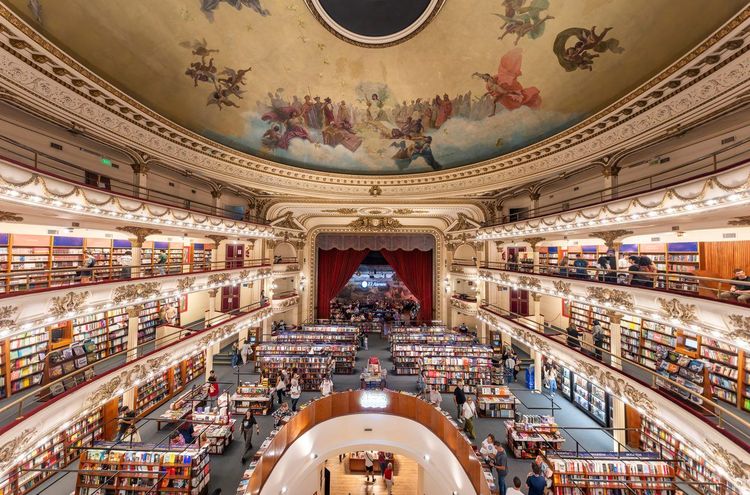
El Ateneo Grand Splendid (Av. Santa Fe 1860, C1123 Buenos Aires, rated 4.8/5 on Google (103 696 avis)) opened in 1919 as a theatre of about 1,050 seats, later housed Radio Splendid's broadcasts, and was converted into a bookstore in 2000 without stripping out its architecture. The frescoed ceiling, the velvet curtains still framing the old stage and the balcony boxes, now reading nooks rather than opera seats, are all intact.
Walking in and browsing costs absolutely nothing, which is remarkable for a place regularly ranked among the most beautiful bookstores on earth. The old stage now houses a café where you can sit with a coffee under the original proscenium arch, and the store stays open into the evening most days, making it a perfect after-dinner stop if you want something quieter than a milonga. Climb to the upper balconies for the best overview photo, and aim for a weekday evening when the crowds thin out.
If one bookstore leaves you wanting more, head for Avenida Corrientes, the city's traditional booksellers' avenue. Between Callao and the Obelisco, dozens of new and secondhand bookshops keep their doors open late, some until midnight or beyond, alongside theatres and pizzerias that fill up after the shows. Browsing the bargain bins on the sidewalk is a porteño ritual, and nobody will hurry you along. Most books are in Spanish, so don't expect to stock up on English paperbacks, but the atmosphere is the real reason to wander here after dark.
8. Usina del Arte & CCK: Free World-Class Culture
The Usina del Arte) is a former power station in La Boca converted into a concert hall and exhibition space, its brick shell with a clock tower now hosting everything from symphony concerts to contemporary art shows. Entry to the building is free, and most of the program is too; only some concerts carry a fee. Check the schedule before you go, since free tickets for popular weekend events go fast.
Across town, the former CCK, renamed Palacio Libertad (Sarmiento 151, C1041 Buenos Aires, rated 4.6/5 on Google (81 339 avis)) in 2024 but still called CCK by plenty of locals, occupies the old central post office building, a Beaux-Arts giant whose huge symphony hall, nicknamed the Ballena Azul (Blue Whale), is one of the largest in Latin America. Free exhibitions rotate through its galleries, and the building itself, all marble staircases and gilded ceilings, is worth the visit even if nothing on display interests you. Free guided tours of the building run regularly, and the Gran Lustre hall, with its enormous chandelier, and the upper terraces with views toward Puerto Madero are spots most visitors never think to look for. Concert tickets for the main hall are often free too, released online a few days ahead, so keep an eye on the schedule if you'd like to hear an orchestra without paying a peso.
For contrast, Fundación Proa (Av. Pedro de Mendoza 1929), a privately funded contemporary art museum facing the old harbor a few steps from Caminito, charges a modest admission. Pairing a free afternoon at Usina del Arte with a short paid stop at Proa, about a fifteen-minute walk apart, makes for one of the better culture-focused half-days in the city, especially if you're already in La Boca.
9. Puerto Madero, the Puente de la Mujer & the Obelisco
Puerto Madero), the city's old port, sat derelict for decades before developers converted its redbrick warehouses into some of the priciest real estate in the capital. Walking the dockside promenade, flanked by glass towers on one side and the old naval frigate Presidente Sarmiento, now a museum ship, on the other, costs nothing.
The neighborhood's signature structure is the Puente de la Mujer), a white pedestrian bridge designed by Santiago Calatrava whose central section rotates to let boats through the dock. It's at its best around sunset, when the towers behind it catch the light and the bridge itself glows white against the darkening sky.
A twenty-minute walk inland brings you to the Obelisco (Av. 9 de Julio, C1043 Buenos Aires, rated 4.6/5 on Google (187 221 avis)), the 67-meter white monument raised in 1936 on Avenida 9 de Julio, widely cited as the widest avenue in the world at roughly 140 meters across. Crossing it on foot requires patience and more than one green light; the central islands are the best place to stand and take it in.
The contrast says something about the city: Puerto Madero is manicured redevelopment, the Obelisco is raw, honking downtown. Downtown, the main Ryo audio guide crosses the Puente de la Mujer and faces the Obelisco down 9 de Julio, telling you how the avenue ended up so absurdly wide while you walk it.
10. Feria de Mataderos and the Best Weekend Markets
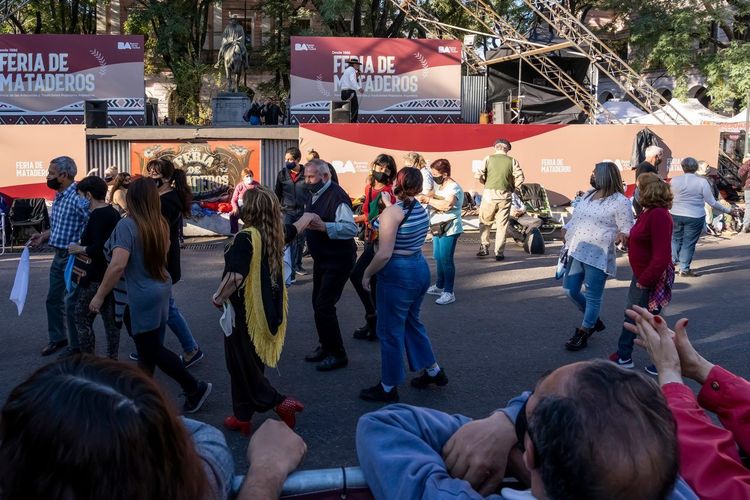
The Feria de Mataderos) sits far from the tourist center, out in the old stockyard district it's named after, and that distance is exactly why it feels authentic rather than staged. Folk musicians play chacareras, couples dance on the street, gauchos compete in the sortija, a horseback ring-spearing game, and stalls sell mate gourds, knives, ponchos, locro and empanadas from different provinces. The fair runs on Sundays and national holidays from 11am to 7pm, takes a break in January and February, is cancelled when it rains, and celebrates its 40th anniversary in 2026.
Closer to the center, the Mercado de las Pulgas) fills a large hall on Avenida Dorrego, on the edge of Colegiales near Chacarita, with secondhand furniture, vintage lamps and antiques dealers. Some travel writers call it the Chacarita flea market. It's less about buying and more about wandering through decades of discarded Buenos Aires design.
Parque Rivadavia (Av. Rivadavia 4900, C1424 Buenos Aires, rated 4.4/5 on Google (65 581 avis)), in Caballito, hosts a long-running book and record fair along its paths, where secondhand vinyl, old magazines and stacks of paperbacks spill across folding tables, busiest on weekends. Browsing all three markets in a single weekend costs you nothing but transit fares, and each draws a noticeably different crowd.
11. Free Museums and Wednesday-Only Treasures
The city has a generous museum scene, split roughly into two categories: national museums that are free most days, and city-run museums that waive admission on Wednesdays. One catch you won't read everywhere: the city museums' free Wednesdays now apply only to Argentine residents, so as a visitor you'll pay a modest ticket there.
In the free category, the National Museum of Fine Art holds the country's largest public art collection, Argentine masters alongside Monet, Van Gogh and Rodin, with no admission charge. Further along the same avenue, the National Museum of Decorative Art (Museo Nacional de Arte Decorativo, Av. del Libertador 1902, C1425 Buenos Aires) fills a Belle Époque mansion with European furniture and porcelain, free from Wednesday to Sunday, 1pm to 7pm. The ESMA museum, officially the Museo Sitio de Memoria ESMA (Av. del Libertador 8151, C1429 Buenos Aires), occupies a former clandestine detention center from the last military dictatorship; it's sobering rather than scenic, but it's essential for understanding modern Argentine history. The Cabildo's own museum, the National Historic Museum of the Town Hall and the May Revolution, and Museo Ricardo Rojas, the writer's preserved home, are national museums too, with low or no admission; check their current days before you go.
On the city side, the Museo Fernández Blanco, housed in the neo-colonial Palacio Noel (Suipacha 1422, C1011 Buenos Aires), specializes in colonial Latin American silver and art. The Museum of Buenos Aires (Museo de la Ciudad), the Museo Casa Carlos Gardel (Jean Jaurès 735, C1215 Buenos Aires, rated 4.3/5 on Google (2 242 avis)), set in the tango singer's former home and closed on Tuesdays, and the Museum of Modern Art (MAMBA, Av. San Juan 350, C1147 Buenos Aires) in San Telmo all follow the Wednesday rule for residents.
Museum hours shift often, and several close on Mondays or Tuesdays, so if you're planning a museum crawl, confirm each venue's schedule the morning of rather than trusting anything written months ago, including this list. Watch out too for the Noche de los Museos, usually in autumn, when hundreds of museums open free until the small hours.
12. Chacarita Cemetery and Gardel's Tomb
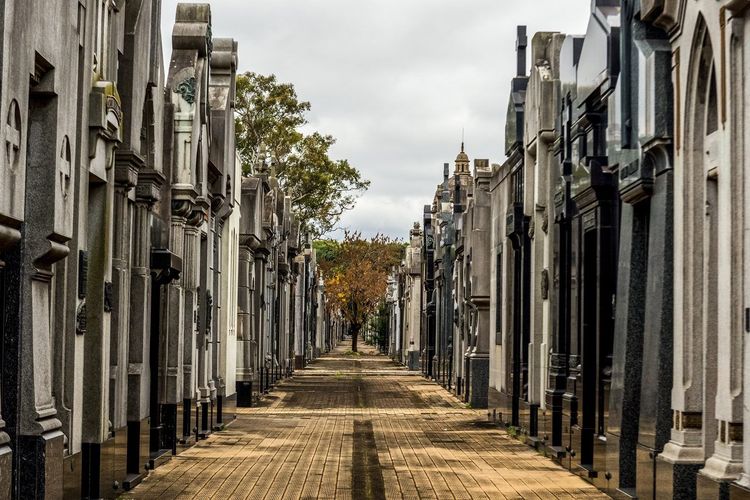
Chacarita Cemetery (Av. Guzmán 670, C1427 Buenos Aires, rated 3.9/5 on Google (3 891 avis)), the city's largest, gets a fraction of Recoleta's tourist traffic, and unlike Recoleta it's free for everyone. It holds Carlos Gardel's tomb, topped by a life-size bronze of the singer with one hand raised. Tango fans keep a strange tradition alive here: they slip a lit cigarette between the statue's metal fingers, so you'll often find one smoldering there, alongside flowers and plaques of thanks.
The cemetery sprawls across far more ground than Recoleta, with wide avenues, a monumental entrance, underground galleries of niches and a less manicured, more lived-in feel. You'll also find the Rincón de los Notables, where tango composers, actors and aviators rest. Many of the city's working-class and immigrant families are buried here too, and the variety of styles, from Art Deco pantheons built by unions and mutual-aid societies to simple niches decorated with football scarves, tells a broader story of the city than Recoleta's aristocratic marble. Go in the morning, when the light is gentler, and bring water; it's easy to walk for an hour without retracing your steps. Afterwards, the Mercado de las Pulgas on Avenida Dorrego is a short walk away if you want to pair the visit with some vintage browsing.
13. Hidden Landmarks: Palacio Barolo, Mirador Güemes & Street Art Alleys
These spots rarely appear together, which is exactly why they belong in one section: a self-guided architecture and street-art walk through corners most itineraries skip.
Start with the Palacio Barolo), a 1923 office tower whose architect, Mario Palanti, designed it as an allegory of Dante's Divine Comedy: hell on the lower floors, purgatory in the middle, heaven at the lighthouse-topped summit. Viewing the lobby and exterior is free; climbing to the top requires a paid guided tour, often timed for sunset.
A short walk north, the Mirador Güemes), at the top of the Galería Güemes arcade, offers a free rooftop view over downtown. You climb a narrow spiral staircase, it opens on weekdays only (roughly 10am to 1pm and 2pm to 4:40pm) and closes on rainy days, so plan your visit around it. Few tourists find it, which means you'll often have the panorama mostly to yourself.
For street art, Pasaje Lanín) in Barracas turned a quiet residential lane into an open-air gallery. Starting in 2001, the artist Marino Santa María worked with neighbors to cover 34 houses over three blocks in bold paint and Venetian mosaic. Combine it with one of the tip-based street art tours that leave from Palermo or San Telmo and you'll understand why the city is considered one of the mural capitals of Latin America.
Back in the historic center, San Ignacio de Loyola Church (Bolívar 225, C1066 Buenos Aires), the oldest church still standing in the city, lets you admire its baroque facade and twin towers for free, though the colonial tunnels beneath it keep limited visiting hours. Further north, Belgrano's Chinatown packs a few compact blocks around Arribeños street with grocery stores, bakeries and lantern-strung archways, a completely different backdrop with no entry fee.
Round out the walk with more free exteriors: the Palace of Running Waters, a 19th-century water utility building disguised as a French château and clad in some 170,000 ceramic pieces, with a small free water museum inside; the Argentine Congress, whose green dome and fountain-filled plaza face Avenida de Mayo; and the Basílica de María Auxiliadora y San Carlos, a striking church in Almagro. The Legislature of the City of Buenos Aires, a few blocks from Plaza de Mayo, can be admired from its own plaza for free as well.
14. Quirky Free Experiences: Tierra Santa, Free Tango Shows & the Historic Tram
For something stranger, Tierra Santa), nicknamed Jesus Land by visitors, is a biblical theme park on the riverfront where a towering animatronic Christ rises from a fake mountain every hour. Admission isn't free, so think of it as a paid curiosity; the Costanera promenade outside, where planes skim in to the city airport overhead, costs nothing.
Free tango shows exist too, sort of: several bars and cultural centers around San Telmo and Palermo host informal milongas with no cover charge, though you're expected to buy at least one drink, which makes the tango technically free and the evening not quite. Plaza Dorrego's street performances, mentioned earlier, remain the most reliably free tango-watching option.
For transport nostalgia, you can hop aboard an authentic porteño tram. The Tranvía Histórico de Caballito), revived in the 1980s by the volunteer Friends of the Tram association, runs free 20-minute loops from Emilio Mitre and José Bonifacio, on Saturdays and holidays from 3pm to 6pm and on Sundays from 10am to 1pm and 3pm to 6pm, with departures roughly every 25 minutes. The cars, including a restored La Brugeoise, recall the network that once crisscrossed the whole city before the last lines closed in the early 1960s.
Three more worth the detour: Parque de la Memoria, a riverside memorial to the victims of state terrorism with a long wall of names facing the Río de la Plata; Paseo de la Historieta, a trail of comic-strip statues that starts with Mafalda at the corner of Defensa and Chile and winds about ten blocks through San Telmo toward Puerto Madero; and the Floralis Genérica (Av. Pres. Figueroa Alcorta, C1425 Buenos Aires, rated 4.7/5 on Google (30 250 avis)), a giant steel and aluminum flower in Plaza de las Naciones Unidas whose petals were designed to open at dawn and close at dusk, though the mechanism has spent long periods out of service.
15. Practical Tips: Free Walking Tours, Budget & Best Time to Visit
Several companies run free walking tours of the historic center, San Telmo and Recoleta daily, tip-based rather than ticketed, usually departing from Plaza de Mayo, Plaza San Martín or the Congress. A tip equivalent to roughly US$5 to 10 per person, paid in pesos, is standard and keeps the guides, often history or tourism students, actually paid.
Getting around cheaply means buying a SUBE card, the rechargeable transit pass sold at kiosks and subte stations, which works across buses, the subte and local trains for a fraction of what a taxi costs. If you'd rather skip transit logistics altogether, Ryo's guide to exploring Buenos Aires without a car breaks down which neighborhoods are walkable and which need a bus or subte hop.
Budget accommodation clusters around Palermo and San Telmo, with hostels and guesthouses considerably cheaper than equivalent lodging in Recoleta or Puerto Madero. For timing, spring (October to November) and autumn (March to April) bring mild weather and thinner crowds than January and February, when many locals leave for the coast and some smaller businesses close entirely.
One last pro tip: carry small bills. Many free attractions sit next to tip-based extras, street vendors or small museums with a modest fee, and breaking a large note at 9am in a kiosk queue wastes more time than it should.



FAQ
What are the best free things to do in Buenos Aires?
Plaza de Mayo and the Casa Rosada, El Caminito in La Boca, the Palermo Woods with El Rosedal, the Reserva Ecológica and the San Telmo Sunday Fair are the most consistently recommended free attractions, all easy to combine into walking days. El Ateneo Grand Splendid and the Museo Nacional de Bellas Artes round out the list on a rainy day.
Which museums are free to visit?
The Museo Nacional de Bellas Artes, the Museo Nacional de Arte Decorativo and the ESMA memory site are free for everyone. City-run museums such as the Fernández Blanco, the Carlos Gardel museum, the Museum of the City and MAMBA are free on Wednesdays, but only for Argentine residents.
What free things can you do at night?
Browse El Ateneo Grand Splendid or the late-opening bookshops of Avenida Corrientes, watch the Puente de la Mujer and Puerto Madero's skyline light up along the docks, or catch an informal milonga in San Telmo or Palermo where entry is free even though a drink is usually expected.
Is Recoleta Cemetery free to enter?
Not for foreign visitors. Since late 2023, international tourists pay an entrance ticket (about AR$24,030 in mid-2026, card only), while Argentine residents with a DNI enter free. Chacarita Cemetery, home to Carlos Gardel's tomb, remains free for everyone.
How many days do you need to see the top free attractions?
Three to four days covers the major free landmarks comfortably: one day for the historic center and San Telmo, one for La Boca and Puerto Madero, one for Palermo and Recoleta, and a half day for museums or a Sunday market.
What are some unique or offbeat free activities?
The free rooftop view at Mirador Güemes, the mosaic houses of Pasaje Lanín in Barracas, a ride on the volunteer-run historic tram in Caballito and a cigarette-holding Gardel statue at Chacarita all qualify as offbeat experiences most visitors never stumble onto.
Buenos Aires rewards wandering more than almost any other capital this size, and the free version of the city isn't a watered-down substitute for the paid one; it's largely the same city, minus the admission booth. Start with the landmarks everyone mentions, then let a Sunday market or a mosaic-covered alley pull you somewhere a guidebook wouldn't have sent you. Pack comfortable shoes, a SUBE card and a few small bills, and the city will do the rest.
If you'd like someone to tell you the stories behind the facades as you go, the Ryo audio-guided tour of Buenos Aires works as a pocket narrator: put your headphones on at Plaza de Mayo, follow the route at your own pace, and save your pesos for an empanada in San Telmo. And when you're ready to plan the rest of the trip, our three-day Buenos Aires itinerary shows how to fit these free stops alongside the paid highlights.
À lire également