© Shutterstock
 Votre guide Ryo
Visiting Antwerp Without a Car in 2026: Walking, Tram and Water Bus Itinerary
Antwerp settled the question before you even asked it: visiting Antwerp without a car is not an activist constraint, it's simply the fastest way to reach the Grote Markt. The low-emission zone covering the center sorts vehicles at the entrance, De Lijn trams run every few minutes and the historic center can be crossed on foot in twenty minutes. For this first contact with the city, the Ryo audio-guided tour of Antwerp serves as a common thread: it links the cathedral, the Grote Markt and the Scheldt quays without you ever having to look for a parking space.
In three days, you'll see a cathedral that houses four paintings by Rubens, a restaurant where you have lunch surrounded by statues of saints salvaged from decommissioned churches, and a pedestrian tunnel from the 1930s that passes under the river with its original wooden escalators. You'll also learn how the low-emission zone works and why it's enough to discourage most visiting drivers. Between the MAS and its free panoramic walkway, the Art Nouveau houses of Zurenborg and the bike-sharing available on every street corner, Antwerp is remarkably easy to visit without an ignition key.
Why Visit Antwerp Without a Car
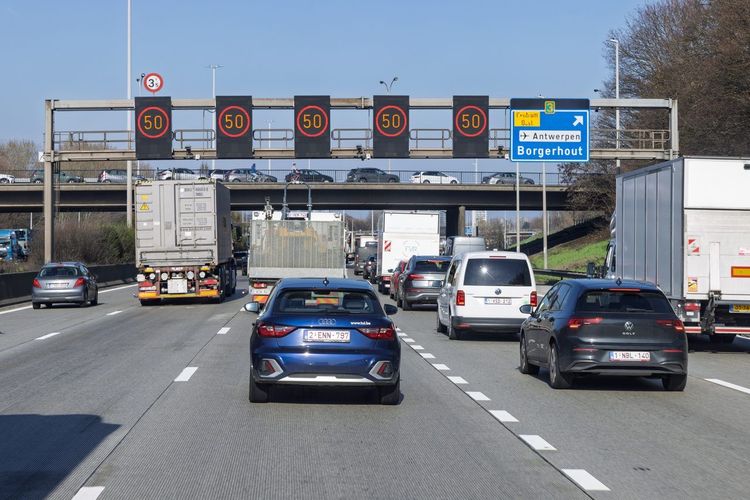
Antwerp's low-emission zone sorts vehicles as soon as they approach the center: since 2025, a diesel car must meet at least the Euro 6 standard and a petrol car the Euro 3 standard to drive in, and foreign plates must be registered beforehand, under penalty of a fine of at least 150 euros. For a visitor coming from France in a rental car, the paperwork often takes more time than the train journey.
The historic center, for its part, boils down to a rectangle of about two kilometers by two, bordered by the Scheldt on one side and by the large boulevards (the Leien) on the other. From the Grote Markt to the central station, allow twenty-five minutes on foot at a leisurely pace, and barely more to reach the Eilandje quays or Meir street. The cobbled streets of the historic heart are largely pedestrian or very lightly trafficked, and the main roads that remain open are lined with separated bike lanes.
What really changes the game is the density of the De Lijn network: on the central lines, trams and buses run every five to ten minutes, and a 24-hour pass costs less than an underground car park for the afternoon. Add the water bus on the Scheldt and bike-sharing at every intersection, and the car frankly becomes the slowest option.
How to Get to Antwerp Without a Car
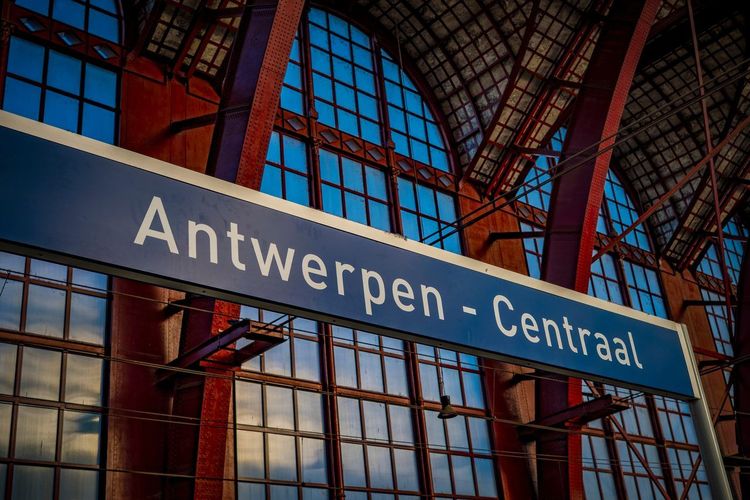
The train remains the most direct way to reach Antwerp from France. From Paris-Nord, some Eurostar trains bound for Amsterdam stop directly at Antwerpen-Centraal (Koningin Astridplein 27, 2018 Antwerpen, rated 4.6/5 on Google from 6,142 reviews), in just over two hours. Other schedules require a connection at Brussels-Midi, followed by about forty minutes on a Belgian train. From Lille, the total journey drops below two hours thirty with one change. Book a few weeks in advance if possible: fares climb quickly as the date approaches.
The arrival station deserves a look up before you leave: Antwerpen-Centraal is nicknamed the cathedral of railways, with its metal dome and marble hall that look more like a museum than a simple connection point.
From within Belgium itself, IC trains connect Brussels to Antwerp in under forty-five minutes, with several departures per hour during the day. It's by far the best option if you combine Antwerp with Brussels or Ghent in the same trip.
By air, Brussels Airport (Zaventem) is the most convenient: a direct train reaches Antwerpen-Centraal in 35 to 45 minutes, with no change. Antwerp airport (Deurne) also exists, but it receives only a limited number of flights. If your ticket search leads you instead to Charleroi or Eindhoven, expect a connection by bus or train, for a budget that is sometimes lower than a flight to Zaventem.
Finally, long-distance buses serve Antwerp from several major European cities, with a stop near the central station. It's the most economical option if you're traveling on a tight budget, at the cost of a few extra hours of travel.
Once there, don't even think about renting a car: between the low-emission zone, the price of parking and the density of the tram network, it would only complicate a stay that is easily managed on foot and by public transport.
Getting Around Antwerp Without a Car: Tram, Bus, Bike and Water Bus
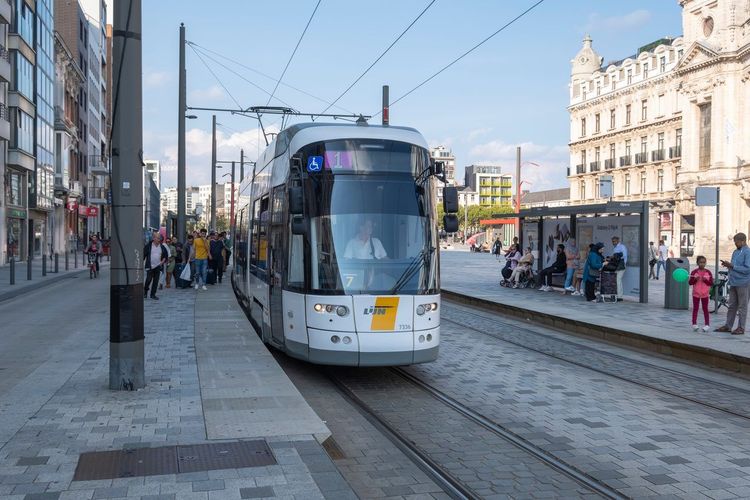
The De Lijn network crisscrosses the whole city with trams and buses. A single ticket costs 3 euros and the 24-hour pass 9 euros: it pays off from the fourth ride of the day. The simplest way is to buy your tickets in the De Lijn app, which also shows real-time schedules, or to pay contactless on board. The lines crossing the center cover most of the neighborhoods of interest to a visitor: historic center, Eilandje, Zuid and Zurenborg.
Around the station and under the large boulevards, the tram dives into the premetro, an underground network launched in the 1970s for a future metro that never materialized. With luggage, favor the surface stops in the center, which are easier to access. Keep in mind that inspections are frequent and that the fine for not having a ticket far exceeds the price of a ride.
The Velo Antwerpen bike-sharing system complements the network for slightly longer trips: several hundred stations across the city, a day pass for a few euros that includes rides under thirty minutes, and separated bike lanes on most main roads. The city is flat, which makes cycling accessible even without great physical fitness.
The most photogenic option remains the water bus (waterbus) departing from the Steenplein quay (Steenplein, 2000 Antwerpen, rated 4.4/5 on Google from 10K reviews). For a few euros, it goes up the Scheldt toward the port or riverside villages like Kruibeke, with a view of the cranes and Antwerp's skyline that no tram will give you. Check the timetable before leaving, as it varies by season.
To reach the left bank for free, there's another option few tourists know about: the Sint-Anna Tunnel (Sint-Annatunnel), opened in 1933, which passes under the Scheldt for a little over 500 meters. You go down via vintage wooden escalators, then cross on foot or by bike to emerge facing the panorama of the old town, ideal at sunset.
Finally, don't underestimate walking: it's often the fastest way to get from the cathedral to Meir street, without waiting for a tram for three stops. To link neighborhoods between two tram rides without losing the thread, the sub-tour "Une prestance au plus haut niveau" of the Ryo audio-guided tour of Antwerp is done entirely on foot: 21 audio stops, 2h25 and 6 kilometers that stitch together the historic center, the Eilandje and the quays.
Day 1: Antwerp's Historic Heart on Foot
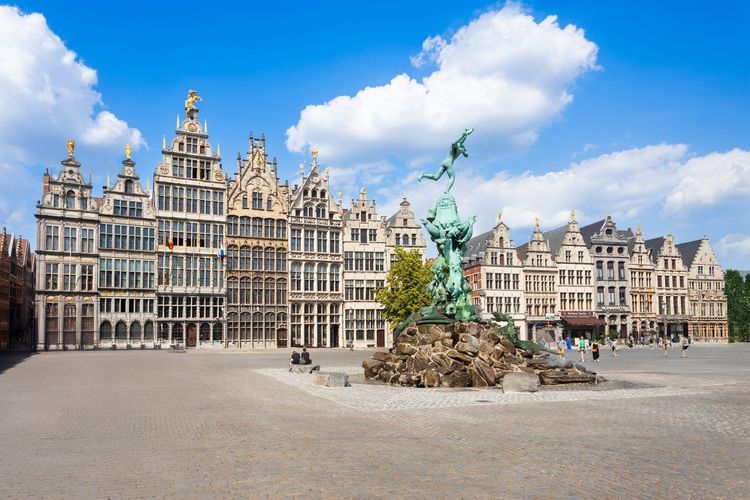
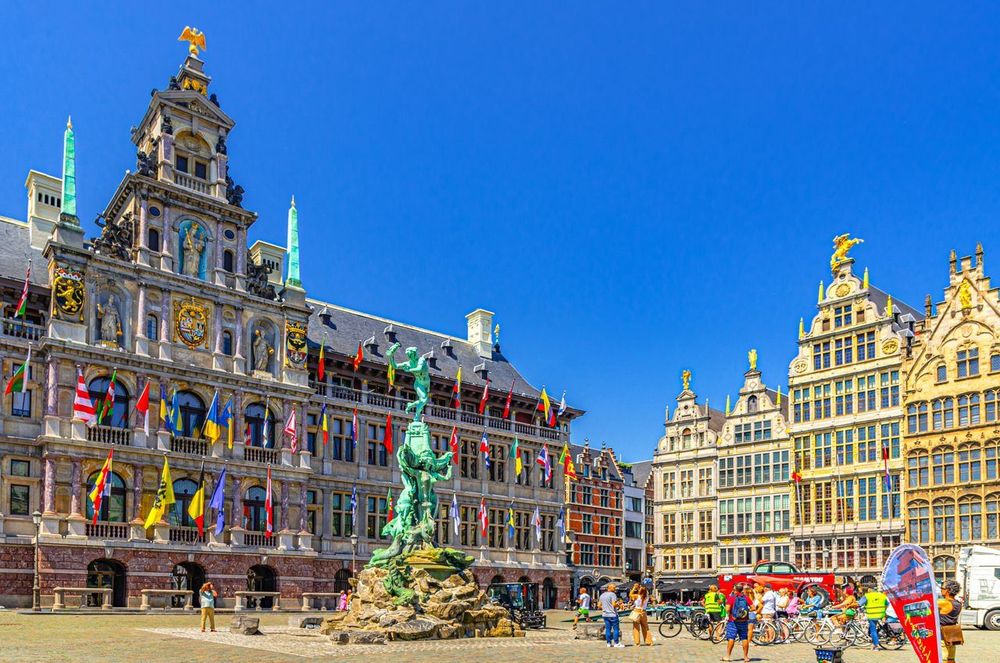
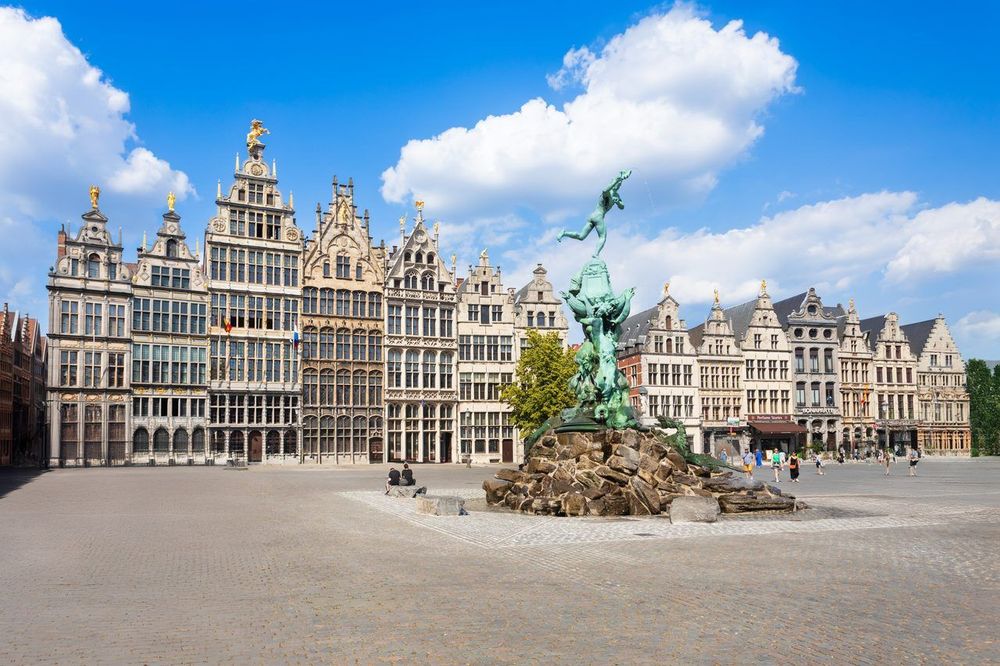
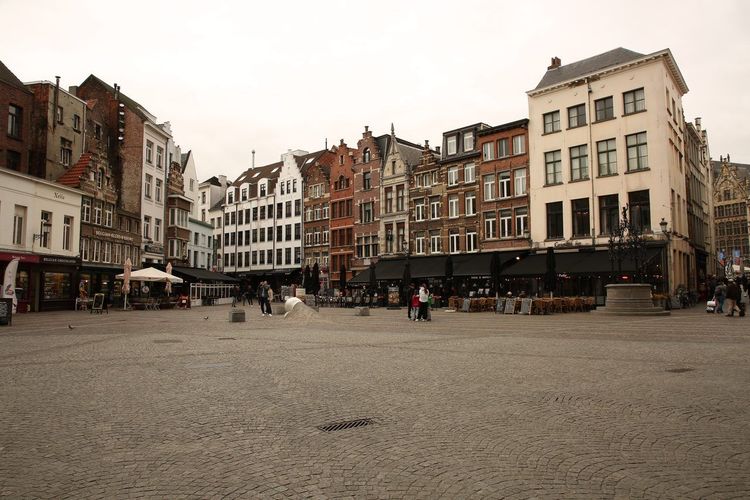
Start with the Grote Markt, Antwerp's main square. The gabled facades of the guild houses frame the Brabo fountain and the Renaissance town hall completed in 1565. Legend has it that the giant Antigoon, who extorted the Scheldt boatmen, had his hand cut off by the young Roman soldier Brabo, who threw it into the river: hence the city's name (hand werpen, to throw the hand). Early in the morning, the square still belongs mostly to the regulars having a coffee on a terrace before the groups arrive.
Two minutes away on foot, Our Lady's Cathedral of Antwerp dominates the neighborhood with its 123-meter Gothic spire, the tallest church tower in the Benelux. Inside are four paintings by Rubens, including the famous Descent from the Cross and the Elevation of the Cross. Allow a good hour to spot each painting and plan on about twelve euros for the entrance ticket. Tower climbs are offered on certain days: ask at the reception desk if you don't mind heights.
On leaving, head toward the Hendrik Conscienceplein: this is where the Saint Charles Borromeo Church stands, a former Jesuit church from the early 17th century. Rubens had designed the ceiling paintings, but a fire caused by lightning in 1718 destroyed most of them. What remains is a spectacular Baroque facade and the Lady Chapel, which gives an idea of the original splendor. In the late afternoon, the terraces of this square are calmer than those of the Grote Markt.
For lunch, push open the door of the restaurant Elfde Gebod (Torfbrug 10, 2000 Antwerpen, rated 4.2/5 on Google from 5,439 reviews) (the Eleventh Commandment), at the foot of the cathedral. The place is decorated with dozens of statues of saints salvaged from decommissioned churches, piled from floor to ceiling in a setting that is as much museum as tavern. The food is good classic Flemish cooking, but people go mainly for the decor.
In the afternoon, wander without a set route through the small streets around the cathedral: the Vlaeykensgang, a 16th-century alley hidden behind a discreet door on the Oude Koornmarkt, then the Scheldt quays a few minutes' walk away. This is precisely the loop, from the Grote Markt to the cathedral and then to Saint Charles Borromeo, that the Ryo audio-guided tour of Antwerp follows, with anecdotes slipped in between each stop so you miss nothing without having your nose in a map.
Look up at the Grote Markt: each guild house still bears at its top the statue or emblem of the guild that occupied it, a detail most hurried visitors never notice. And if the world capital of diamonds intrigues you, the DIVA, the diamond and silversmith museum located on the Suikerrui, a stone's throw from the square, tells five centuries of Antwerp know-how. The diamond district itself is next to the central station, where hundreds of jewelry shops line their windows along the pedestrian streets.
If you're traveling with children, the Vlaeykensgang almost always appeals to the youngest with its secret-passage atmosphere.
Day 2: The MAS, the Port and the Plantin-Moretus Museum
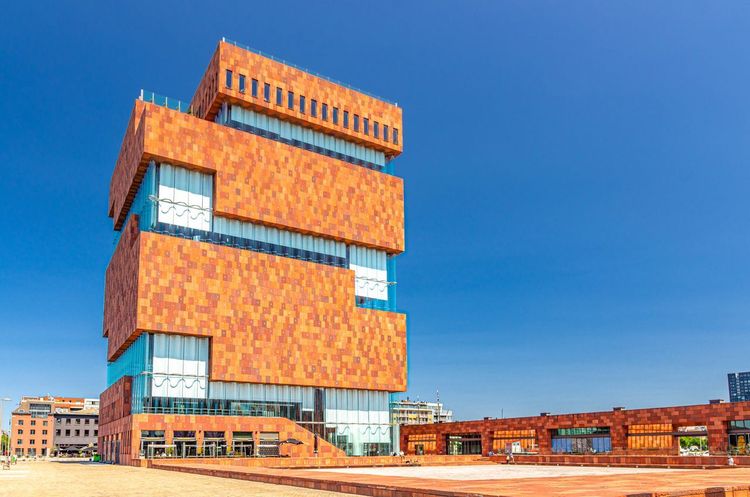
The second day is organized around the former docklands, the Eilandje, about a twenty-minute walk from the Grote Markt. The building that dominates the neighborhood looks like nothing else in Antwerp: the MAS (Museum aan de Stroom) stacks ten floors of red sandstone and glass, opened in 2011 between two harbor basins.
The galleries trace the history of the port and Antwerp's exchanges with the world, but the real highlight is the spiral walkway leading to the roof: access is free, no ticket needed, making it one of the best viewpoints in the city over the port, the Scheldt and the rooftops of the historic center. The roof remains open in the evening for much of the year, so you can go up for sunset. On weekends, be prepared to be patient at the most photogenic hours.
The docks district surrounding the MAS is worth lingering in after the visit. The old warehouses have been converted into lofts and restaurants, and the Red Star Line Museum, housed in the shipping company's buildings, tells the story of the millions of European emigrants who left for America from these quays between 1873 and 1934. Contemporary architecture fans will push on to Zaha Hadid's Port House, a glass vessel set in 2016 on a former fire station, accessible by bus from the Eilandje. The Port of Antwerp-Bruges remains the second largest in Europe behind Rotterdam, but most of its activity takes place much farther north, invisible from the center.
Heading back toward the center along the Scheldt, allow a good half hour's walk to reach the Plantin-Moretus Museum (Vrijdagmarkt 22, 2000 Antwerpen, rated 4.6/5 on Google from 4,654 reviews), housed in the home and workshop of the printer Christophe Plantin. Inscribed on UNESCO's World Heritage list in 2005, it is the only museum in the world with this status: it preserves the two oldest printing presses still in existence, a Renaissance library and an inner courtyard left almost intact for four centuries. Allow around 12 euros for entry and one to two hours for the visit. The place is quiet, a good break for children tired from walking all morning.
This loop between the docks and the old town is done entirely on foot, without ever looking for parking near the port. With its 21 audio stops spread over 6 kilometers, the Ryo audio-guided tour covers precisely this link between neighborhoods, handy if you prefer a voice in your ear to a map unfolded in the middle of the street. For lunch, the area around the Vrijdagmarkt, where a public sale of second-hand furniture is still held on Friday mornings, offers several simple addresses, far from the crowds of the Grote Markt.
Meir Street and the Zuid and Zurenborg Districts
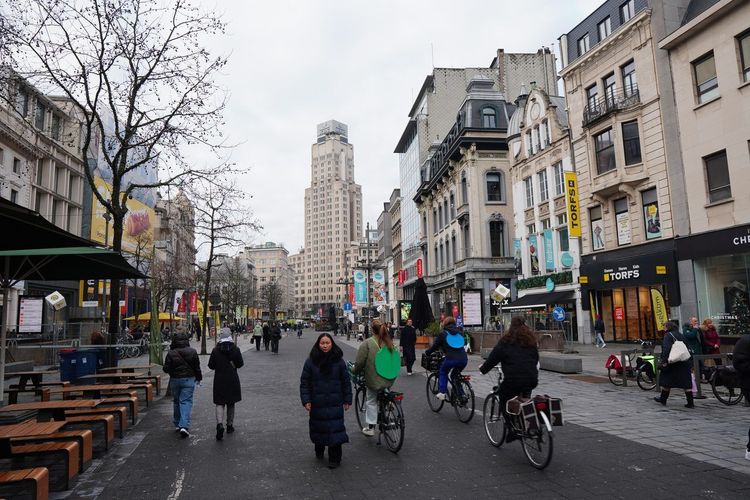
The Meir links the historic center to the central station and remains Antwerp's main shopping artery. The Baroque and Rococo facades lining it, including the Paleis op de Meir (former royal palace), contrast with the fashion stores occupying the ground floors. Pedestrianized, it can be walked without encountering a single car. The Stadsfeestzaal, a former banqueting hall turned shopping gallery with Belle Époque decor, is worth a stop even with no intention to shop.
For fashion fans, the next stop is on the Nationalestraat: the MoMu, the fashion museum, shares the ModeNatie building with the famous fashion department of the Royal Academy of Fine Arts, which trained the "Antwerp Six" and a whole generation of renowned designers. Belgian designer boutiques are concentrated in the neighboring streets, between Kammenstraat and Lombardenvest.
A quarter of an hour's walk further south, the Zuid district has changed its look with the conversion of its former filled-in docks into squares and contemporary buildings. The KMSKA, the Royal Museum of Fine Arts, reopened in 2022 after eleven years of work: a must for Flemish painting, from Van Eyck to Ensor. At the end of the district, Richard Rogers' Palace of Justice and its sail-shaped roofs mark the city's other great contemporary architectural gesture. As for dining, Zuid gathers many of the most popular addresses: reinvented bistro cooking, wine bars and tables set up in former workshops.
A total change of atmosphere awaits at Zurenborg, southeast of the center, about fifteen minutes by tram. The district holds one of the finest collections of Art Nouveau and eclectic houses in Belgium, built mostly between 1894 and 1910 for a bourgeoisie that vied in architectural fantasy. The Cogels-Osylei (Cogels-Osylei, 2600 Antwerpen, rated 4.9/5 on Google from 68 reviews) lines up facades that borrow in turn from Neo-Gothic, Neo-Renaissance or Art Nouveau, sometimes on the same house.
This setting very nearly disappeared: in the 1960s, part of the district was slated for demolition, before the mobilization of its residents led to its protection. The short version of the Ryo audio-guided tour of Antwerp lets you wrap up the center in less time and keep the afternoon for this excursion. The nearby Dageraadplaats completes the stroll with its neighborhood terraces.
Antwerp at Nightfall: Where to Eat and Have a Drink
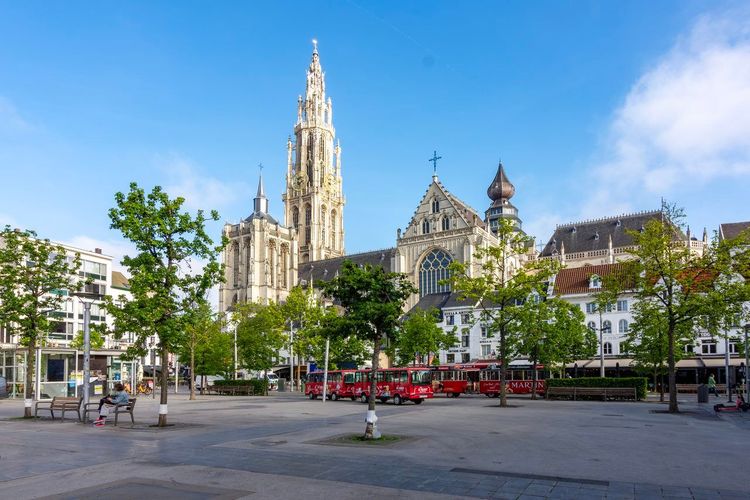
In the evening, three neighborhoods concentrate most of the nightlife, all accessible without a car. The Groenplaats and its surroundings, a stone's throw from the Grote Markt, remain the simplest option at the end of a visit: lively terraces, an unabashedly touristy atmosphere, and a choice of beer bars wide enough to taste several local specialties, starting with De Koninck, the Antwerp beer served in its round glass, the "bolleke".
For a more local atmosphere, head up to the theater district, around the Theaterplein: world cuisines, discreet cocktail bars and a clientele that is more Antwerp than tourist.
The Zuid district, crossed during the day for its museums, changes mood at nightfall. The terraces around the Leopold de Waelplaats fill up from aperitif time, and several places there offer more ambitious cooking than in the historic center, at reasonable prices.
All these neighborhoods are reachable by tram or on foot, and De Lijn lines still run in the evening. No need to plan a drive back: on foot, most hotels in the center are less than twenty minutes from these terraces.
Our Favorites, Free Activities and Which Museum to Choose
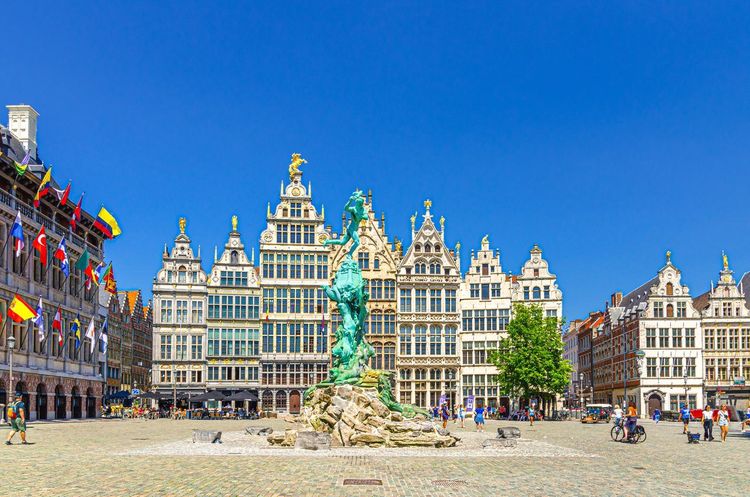
If your time is limited, here is what we think deserves priority: the MAS rooftop at sunset, the Grote Markt, cathedral and Saint Charles Borromeo loop from the first day, crossing the Sint-Anna Tunnel for the view from the left bank, the houses of Zurenborg, often overlooked in express itineraries, and a lunch break at Elfde Gebod for the decor as much as for the plate.
As for free activities, Antwerp is surprisingly generous. Besides the MAS rooftop, the exterior of the Grote Markt and the cathedral can be seen without a ticket, the Scheldt quays offer a walk with a view of the river, the Sint-Anna Tunnel can be crossed for free, and the Stadspark, near the station, is perfect for a picnic break. On Friday mornings, the public sale at the Vrijdagmarkt can also be watched for free, as can the windows of the diamond district: Antwerp remains the world's leading trading center for rough diamonds, even if cutting has largely moved to India.
That leaves the question that comes up most often: which museum should you choose if you only visit one? For Flemish painting, the KMSKA or Our Lady's Cathedral, if only for its four Rubens. For a more immersive experience and a stunning view, the MAS, especially as its roof is free; it's often the families' choice. History-of-the-book enthusiasts, finally, shouldn't leave without seeing the Plantin-Moretus, which is far less crowded.
For history buffs, Antwerp offers particularly dense terrain: in the 16th century, the city was one of the richest commercial and financial centers in Europe, before the closure of the Scheldt, imposed by the United Provinces from the end of the century, caused it to decline for nearly two hundred years. This up-and-down history can be read in the architecture, from the guild houses of the Grote Markt to the converted docks of the Eilandje. And if you have to choose between two visits on the same half-day, keep the museums for rainy hours: Antwerp's weather remains changeable.
If you only have one day, the short version of the Ryo audio-guided tour condenses several of these favorites into a tighter route.
Where to Stay and How Much to Budget to Visit Antwerp Without a Car
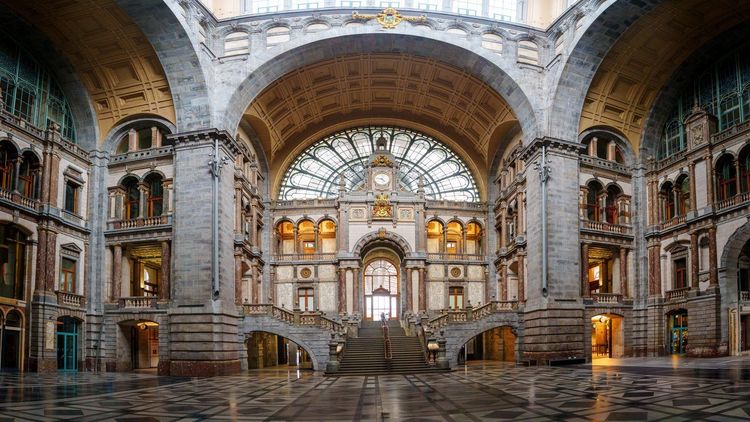
To limit travel, choose accommodation in the historic center or within walking distance of the central station. The streets around the Groenplaats and the cathedral offer the most direct access to the first day's sights, while staying near Antwerpen-Centraal makes round trips easier if you arrive and leave by train.
Budget-wise, expect between 70 and 150 euros a night for a double room in a decent hotel in the center, and more like 50 to 90 euros for a quality hostel or an apartment on the immediate outskirts. Prices rise on weekends and during major trade fairs: if your dates are flexible, comparing several weeks can often save 20 to 30% on accommodation.
Families will often find more comfort in an apartment with a fully equipped kitchen, especially for three nights or more. The Eilandje, in the midst of a residential revival, has several recent residences of this type, fifteen minutes' walk from the Grote Markt and a stone's throw from the MAS. For couples or solo travelers, the small charming places in the alleys around the Hendrik Conscienceplein offer a more intimate setting, in renovated historic buildings.
For dining, a typical day costs between 30 and 50 euros per person if you alternate a simple lunch and a more refined dinner. Museums cost between 10 and 20 euros depending on the site, and three 24-hour De Lijn passes come to 27 euros, often less if you walk for a full day. In total, a three-day stay in Antwerp without a car, accommodation included, can reasonably be budgeted between 350 and 600 euros per person depending on the level of comfort sought.
To continue preparing your trip, our article on things to do in Antwerp details other ideas if you stay more than three days.
Car-Free Sunday and the Low-Emission Zone in Antwerp
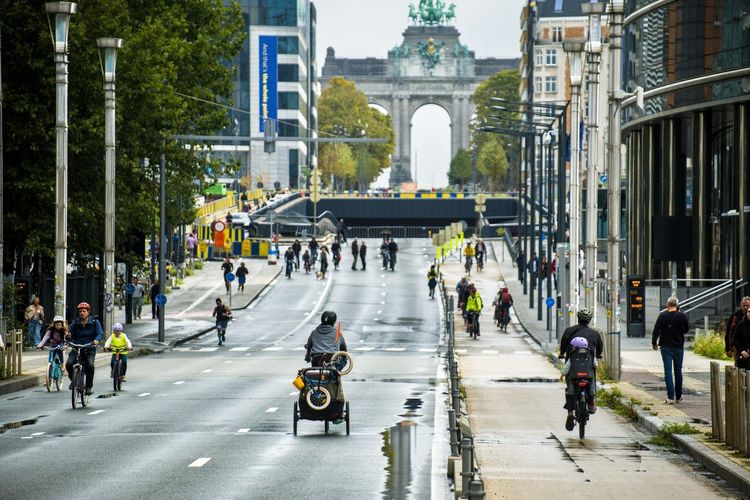
Every September, European Mobility Week gives rise in Belgium to days when streets are given back to pedestrians and cyclists. Brussels thus organizes its big car-free Sunday every year, and Antwerp regularly takes part with streets or neighborhoods closed to traffic depending on the edition. If your stay falls in this period, check the city's program: seeing normally noisy avenues transformed into an urban playground is worth the detour, and Brussels is only 40 minutes away by train.
The rest of the year, the low-emission zone (LEZ, Lage-emissiezone) applies permanently to the city center and the left bank. Since January 1, 2025, diesel cars must meet at least the Euro 6 standard and petrol cars the Euro 3 standard; thresholds will tighten further in the coming years. Vehicles registered abroad must be registered online free of charge before entering, and an infringement costs at least 150 euros, an amount that rises for repeat offenses.
Think tourists slip through the net? The license plate recognition cameras installed at the entrances make no distinction between residents and foreign visitors. If you arrive by car anyway, register several days before departure, with the vehicle registration certificate at hand, and check the city's official website, as the rules change regularly.
For a visitor, the practical lesson is simple: if you plan to rent a vehicle to explore the Flemish countryside, pick it up from an agency located outside the regulated zone, and keep Antwerp for your feet and the tram.
Visiting Antwerp Without a Car as a Family: Practical Tips
Yes, the itinerary described here works very well with children, provided you adjust the pace. Plan on two days rather than three for the essentials (historic center and MAS), and keep the third for neighborhoods like Zurenborg, which younger visitors enjoy less than a good afternoon at the park or on a terrace.
As for the distance actually walked, count on five to seven kilometers a day if you follow Day 1 or Day 2 in full, which remains manageable for children from 6 or 7 years old, especially with a seated lunch break. With younger children or a stroller, alternate walking and tram rides rather than doing everything on foot. The Sint-Anna Tunnel and its wooden escalators, incidentally, make an excellent childhood memory.
Where to start? The central station is the simplest landmark: it's probably where you arrive, it lets you fan out in all directions, and its luggage lockers let you drop off your things before starting the visit. Antwerp Zoo, one of the oldest in the world, is right next to the station: an easy stop to fit in if the children get saturated with churches.
As for reservations, book tickets for the MAS, the KMSKA and the zoo online in high season to avoid the weekend queue. The water bus can't be booked: simply check the day's timetable.
For a first family discovery without having to manage the city map on top of the children, our Ryo audio-guided tour remains a simple solution: each stop is triggered as you approach the place, leaving your hands free to hold the children's rather than a phone. Also plan a few breaks with no particular goal, a park, a waffle on the Groenplaats: children often remember a city better when the visit leaves room for the unexpected.



FAQ
Can you visit Antwerp without a car?
Yes, and it's actually the most practical option: the historic center is compact, largely pedestrian, and well served by De Lijn trams and buses. The low-emission zone also makes a car impractical for a simple tourist stay.
How do you get around Antwerp without a car?
On foot for the historic center, by De Lijn tram or bus (3 euros per ride, 9 euros for the 24-hour pass) for Zuid or Zurenborg, by Velo Antwerpen bike for in-between trips, and by water bus or through the Sint-Anna Tunnel to cross the Scheldt.
How many kilometers do you need to walk per day in Antwerp?
Expect between five and seven kilometers a day when following a full itinerary like Day 1 or Day 2, a pace suited to most adults and to children from 6 or 7 years old, with a few breaks.
Which museum should you choose if you only visit one?
For Flemish painting, the KMSKA or Our Lady's Cathedral and its Rubens paintings. For architecture and a free panoramic view, the MAS. For UNESCO heritage and the history of printing, the Plantin-Moretus Museum, which is far less crowded.
Can you do this Antwerp itinerary with children?
Yes, by adjusting the pace: two days rather than three for the essentials, walks broken up by tram rides, and tickets booked in advance for the most popular sites in high season.
What can you do for free in Antwerp?
Go up to the MAS rooftop, admire the Grote Markt and the exterior of the cathedral, walk along the Scheldt quays, cross the Sint-Anna Tunnel, stroll through the Vrijdagmarkt on Friday morning and through the diamond district near the central station.
Do you need to book the water bus or visits in advance?
The water bus can't be booked; just check the seasonal timetable. For the MAS, the KMSKA and the zoo, booking online is recommended on weekends and in high season.
Antwerp Without a Car, the Right Reflex
Antwerp lends itself remarkably well to a car-free stay: the historic center fits within a handful of square kilometers, the De Lijn network, the water bus and the Sint-Anna Tunnel cover everything walking can't reach in an afternoon, and the low-emission zone convinces the last holdouts. Between the cathedral, the MAS, Plantin-Moretus and the houses of Zurenborg, three days are enough to get a complete picture of the city.
If you want to turn this itinerary into a guided stroll rather than a list of names to tick off, the Ryo audio-guided tour of Antwerp picks up the essentials of this guide, step by step, at your own pace. Download the app before you leave and let yourself be guided from the Grote Markt to the Scheldt quays.