© Shutterstock
 Votre guide Ryo
Visiting Liège in 2 Days: Complete 2026 Itinerary
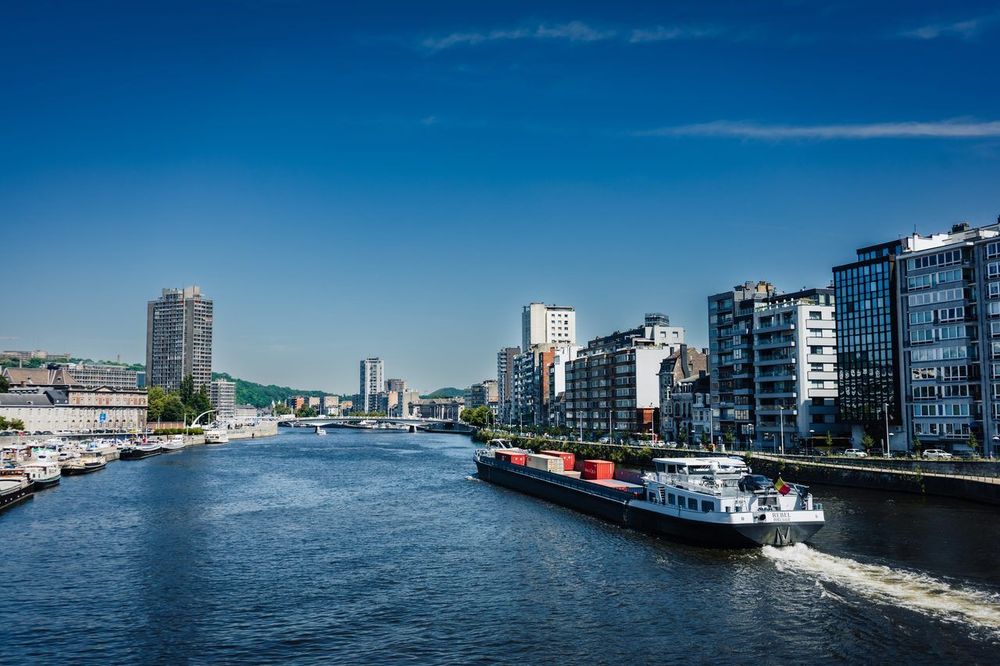
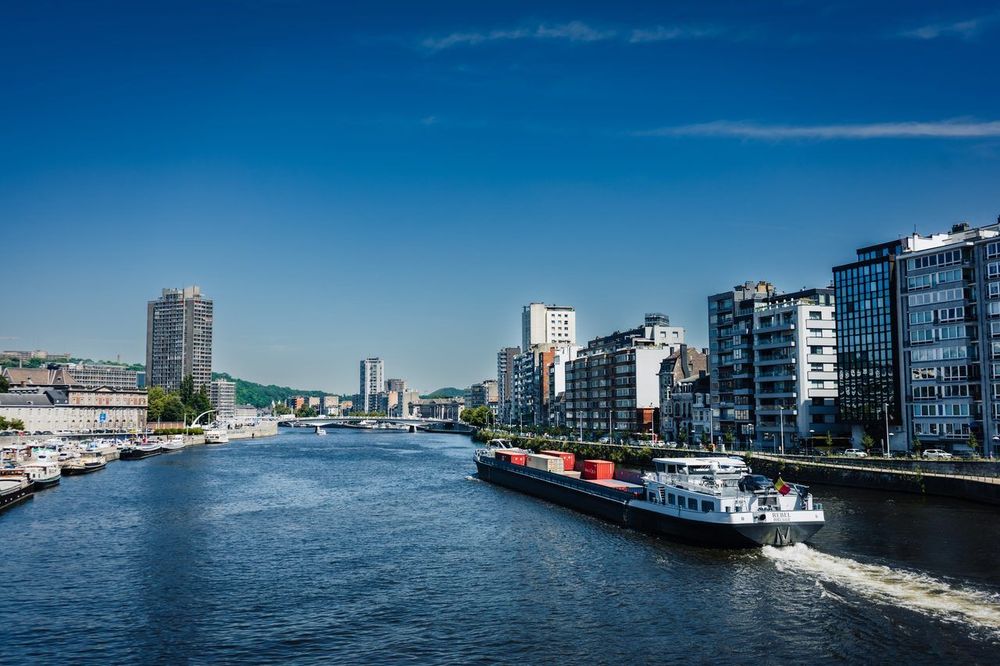
Liège has never tried to charm at first glance. Yet visiting Liège in 2 days is more than enough to grasp its unique energy, as long as you split your visits well between the historic upper town and the banks of the Meuse. You have to climb the 374 steps of the Montagne de Bueren, get lost in the steep alleyways of the Pierreuse district or cross a bridge to Outremeuse to understand why the people of Liège call their city the Cité Ardente. To get a feel for the centre before heading off to explore the alleyways, the Ryo audio-guided tour of Liège tells the story of the city's main landmarks as you walk, without having your nose buried in a map.
Over these two days, expect to climb a steep hill for a panorama over the whole valley, to come across a station designed by Calatrava made entirely of glass and white steel, to eat a waffle that has nothing to do with the Brussels kind, and to stumble upon the oldest market in Belgium, where poultry is still sold next to second-hand clothes. Between Walloon heritage, street art in Outremeuse and good local beer, here is how to organise these two days without missing anything essential. Distances between districts are short, which leaves room to slow down if an address holds your attention longer than expected.
Day 1, Morning: The Citadel, the Cathedral and the Historic Heart
Montagne de Bueren and Coteaux de la Citadelle
The best way to understand the nickname Cité Ardente is to work up a sweat from the very first hour. The Montagne de Bueren is a staircase of 374 steps completed in 1880, designed to let the citadel garrison get down into town quickly. A tasty detail: the army also wanted to keep its soldiers away from the neighbouring Rue Pierreuse (Rue Pierreuse, 4000 Liège), known for its taverns. Allow about ten minutes to climb, longer if you stop to catch your breath, which is highly recommended given how the view over the rooftops of the upper town opens up at every landing.
At the top, the Coteaux de la Citadelle extend the walk along wooded paths, between low walls, orchard terraces and fortification remains overgrown with vegetation. Few tourists make it up this far, which makes it a good spot for an impromptu picnic away from the bustle, with views over the Meuse valley and the hills framing it. The citadel itself, built in the 17th century by the prince-bishops and later reworked during the Dutch period, has almost entirely disappeared, replaced by a hospital. Only the Enclos des Fusillés, where resistance fighters were executed during both world wars, recalls the site's military role: a sober place of remembrance, to be seen in silence.
This is exactly the kind of detail that the Ryo audio-guided tour of the Cité Ardente knows how to tell while you walk: it climbs the Montagne de Bueren, follows the Coteaux and stops in front of the cathedral, with an anecdote about the origin of the nickname that few printed guides go into. Allow about 2 hours and 24 audio stops over 4.3 km, to follow at your own pace.
Saint-Paul Cathedral and Cité Miroir
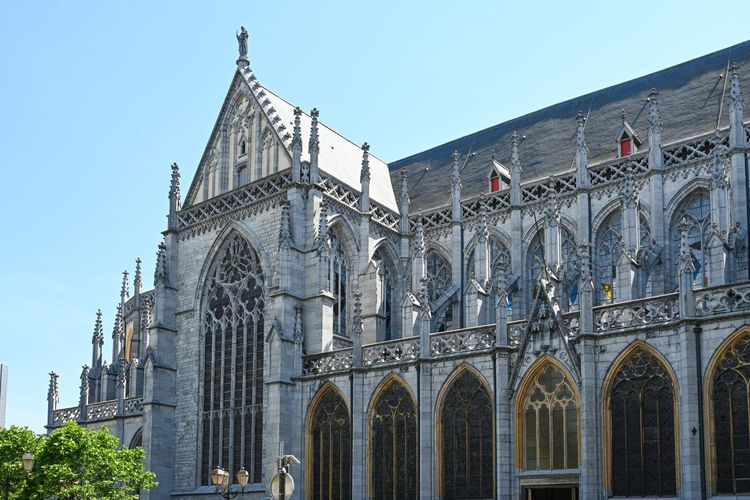
Heading back down to the centre, Saint-Paul Cathedral imposes its Gothic silhouette on the heart of the city. Rebuilt from the 13th century on the foundations of an older collegiate church, it inherited the title of cathedral in 1802, after the revolutionary demolition of Saint-Lambert Cathedral, an episode the people of Liège still mention with a hint of regret. The treasury, accessible separately, holds some of the finest Mosan goldsmith pieces in Belgium, including the bust-reliquary of Saint Lambert.
A few streets away, the Cité Miroir occupies the former Bains et Thermes de la Sauvenière, a public swimming pool from the 1940s converted into a cultural centre dedicated to memory and citizenship. The building's modernist architecture, bright volumes and large glass roofs are worth the detour on their own, even if you do not visit the current exhibition.
Hors-Château District, Pierreuse Alleyways and Archéoforum
The Hors-Château district stretches below the citadel, between 17th- and 18th-century mansions and cobbled dead-end alleys that seem frozen in time. Push open the carriage gates of the impasse de la Couronne or the impasse des Ursulines: it is here, more than on the main shopping streets, that Liège reveals its true face.
Just above, the Pierreuse district also climbs up the hillside, with its colourful façades and hidden staircases. Less photographed than Hors-Château, it remains one of the most endearing corners of the upper town.
On your way down, you emerge onto place Saint-Lambert, dominated by the Palace of the Prince-Bishops. For nearly eight centuries, Liège was the capital of an independent ecclesiastical principality, and this palace was its seat of power. Now a law court, it often lets visitors into its first arcaded courtyard, where the carved columns are all different. A few steps further, the place du Marché lines up the town hall, nicknamed La Violette, and the Perron, a column topped with a pine cone that has symbolised the liberties of Liège since the Middle Ages.
End this morning underground, at the Archéoforum (Place Saint-Lambert 32, 4000 Liège, rated 4.4/5 on Google from 472 reviews), an archaeological site beneath place Saint-Lambert that layers nearly 9,000 years of human occupation, from prehistoric and Gallo-Roman remains to the foundations of the vanished cathedral. The visit takes a little under an hour and offers a striking contrast with the city on the surface, just above your head.
Day 1, Afternoon: Le Carré, Liège Waffle and Local Beer
Le Carré and Strolling Around the City Centre
After a morning on slopes, the afternoon is more relaxed in Le Carré (Rue Pont d'Avroy, 4000 Liège), the pedestrian district bounded by rue Pont d'Avroy, boulevard de la Sauvenière and rue du Pot d'Or. It changes its face completely between noon and midnight: lively shops by day, the epicentre of Liège's nightlife as soon as night falls, with a reputation that reaches well beyond the city limits.
It is also the right time to stroll around Liège's city centre in the broader sense, between rue de la Cathédrale and rue Vinâve d'Île, where local shops mix with big chains. Shopping in the centre's boutiques is an activity in itself: artisan chocolatiers, independent record shops and second-hand clothes stores follow one another over a few hundred metres. If you are looking for a souvenir that is more than a fridge magnet, go for a jar of Liège syrup or a bottle of peket, the local, often flavoured, genever sold in several delicatessens in the area.
Tasty Break: Liège Waffle and Brasserie C
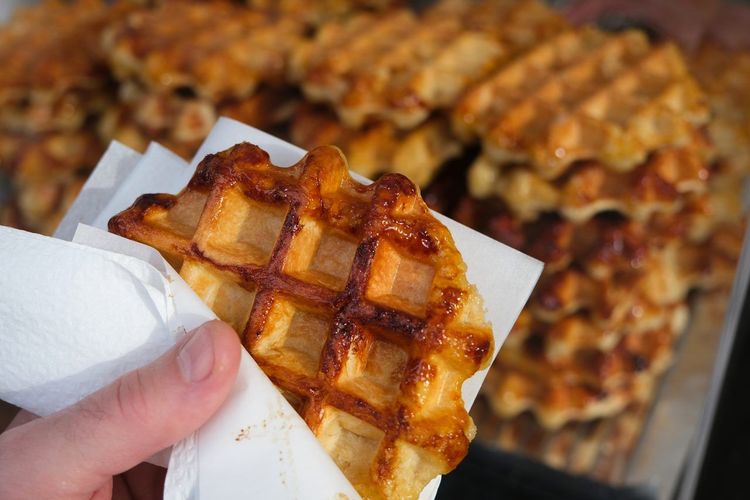
Forget the preconceived idea: the real Liège waffle looks nothing like its Brussels cousin. Smaller, denser, kneaded with pearl sugar that caramelises as it bakes, it is eaten plain, by hand, without whipped cream. You will find it in a good dozen waffle shops in the centre, often sold warm straight from the iron, slightly crispy around the edges.
For the liquid part, head back up to Hors-Château to the Brasserie C (Impasse des Ursulines, 4000 Liège, rated 4.5/5 on Google from 3,056 reviews), nestled in the impasse des Ursulines, at the foot of the Montagne de Bueren. This microbrewery of the Principality made its name in 2012 with the Curtius, a 7-degree blonde that has become one of the city's emblematic beers. Its terrace hidden at the end of the alley is one of the most pleasant spots for a tasting at the end of the day.
The Ryo audio-guided tour also slips a few good food and drink addresses between historical stops, and tells the story of this young brewery set in one of the oldest corners of the city. Before heading back to rest, enjoy the terrace and watch the city pick up its evening rhythm, glass in hand.
Day 2, Morning: Guillemins Station, La Boverie and the Banks of the Meuse
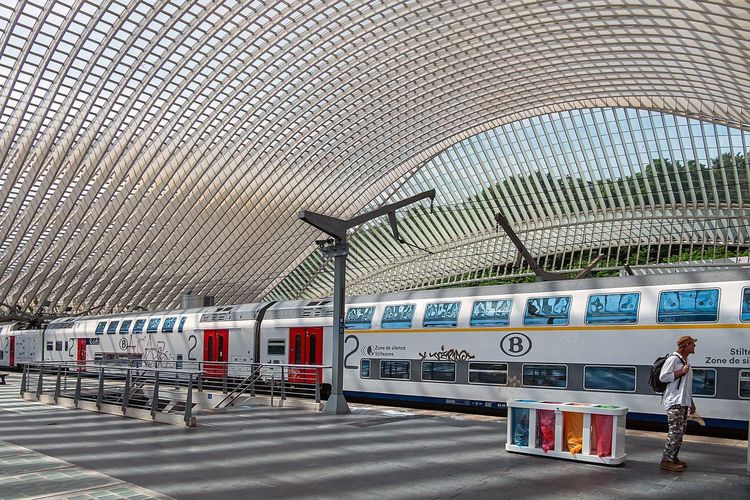
Liège-Guillemins Station, Calatrava's Architectural Signature
Head for the left bank to start the second day with an architectural shock. The Liège-Guillemins station, inaugurated in 2009, was designed by the Spanish architect Santiago Calatrava as an immense white vault of steel and glass, with no traditional façade: you enter at ground level under a structure that evokes the skeleton of a giant animal suspended above the platforms. It deserves a good ten minutes just to look up and watch the light passing through the glass roof depending on the time of day.
If you prefer to discover this southern axis with commentary in your ears, the Ryo audio guide to Liège launches from your phone and lets you choose your stops, without changing anything about the itinerary described here.
La Boverie Museum and Park
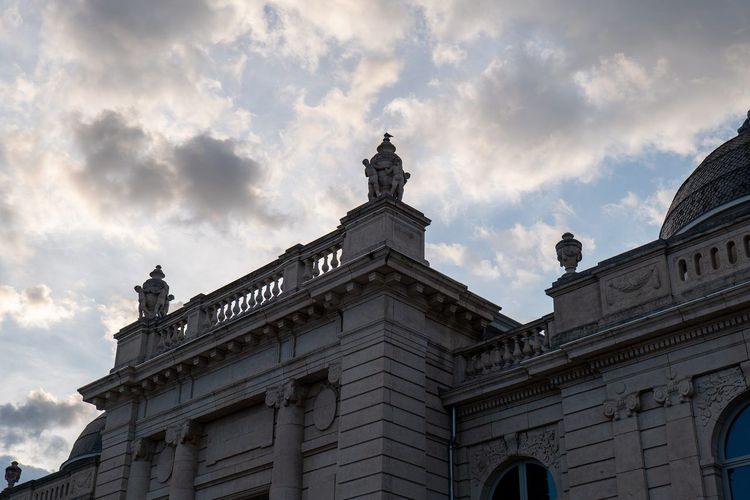
About fifteen minutes' walk from the station, via the La Belle Liégeoise footbridge, the La Boverie museum occupies the former Palace of Fine Arts built for the 1905 World's Fair. Reopened in 2016 after an extension by Rudy Ricciotti, it combines collections of ancient and modern art with high-level temporary exhibitions put together with major institutions, including the Louvre.
The museum is surrounded by La Boverie park, laid out on the island formed between the Meuse and the Dérivation, a canal dug in the 19th century. Shady lawns, tall trees and statues punctuate the walk: it is the ideal place for a picnic break, especially if the sun cooperates.
Walk or Jog Along the Meuse, Botanical Garden and Parc d'Avroy
If you like to run while travelling, the quays that run along the Meuse from La Boverie to the centre offer a flat, open route, ideal for a morning jog or a bike ride. Several bike-sharing stations dot the route, handy for saving time between two stops.
Heading back up to the centre, Liège's Botanical Garden, created in the 19th century for the university, houses large greenhouses and a tree-filled park where it is nice to slow down. Close by, the Parc d'Avroy (Boulevard d'Avroy, 4000 Liège, rated 4.1/5 on Google from 5,029 reviews) lines up its centuries-old trees and its pond along the boulevard of the same name, a green lung appreciated by the people of Liège for the lunch break. It is also where the October fair takes place every autumn, one of the largest funfairs in Belgium.
Day 2, Afternoon: La Batte Market and the Outremeuse District
La Batte Market, the Sunday Meeting Place
If your stay falls on a Sunday, keep your morning free for the La Batte market, held every week from about 8 am to 2:30 pm. Documented since 1561, it is the oldest market in Belgium, and its stalls stretch over some 3.6 km along the quay. You can find everything there, from second-hand clothes to cheeses, including live poultry and waffles sold non-stop.
If you visit on another day, the market simply will not be there: in that case, swap the two days to place La Batte on a Sunday if this popular atmosphere appeals to you. Allow at least an hour to go around it, more if you like to hunt for bargains. Arrive before 10 am: the crowd swells quickly late in the morning, especially in nice weather, and the best deals go early. Also bring a bit of change, as many traders still prefer cash.
Outremeuse District: Street Art and Folklore
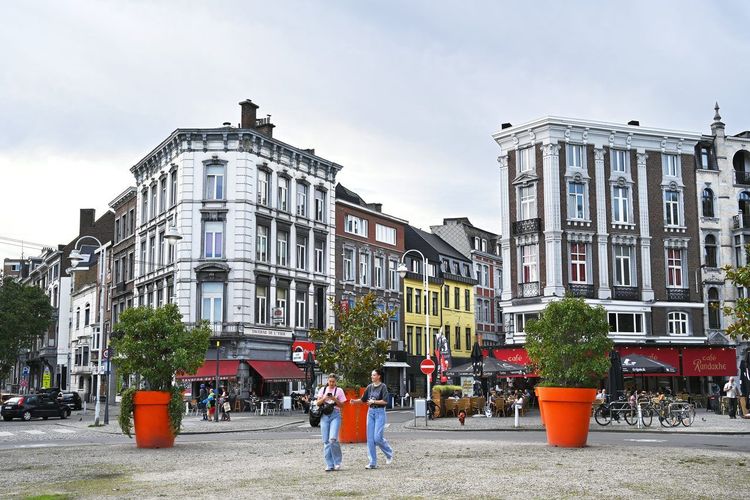
On the other side of the Meuse, the Outremeuse district cultivates a separate identity, almost a republic within the city. Its inhabitants even proclaim themselves citizens of the Free Republic of Outremeuse, a joke that says a lot about their attachment to the district. Folklore remains alive there, especially around 15 August, when the district celebrates its big popular festival with processions, peket and parades. The façades feature a nice concentration of street art, often painted by Liège artists on blind gable walls. Look up as you walk up rue Puits-en-Sock or along the quays: the murals change regularly, which makes you want to come back. Folklore lovers can also push open the door of the small Tchantchès museum, rue Surlet, where the costumes given to the puppet over the decades are on display.
With headphones on, you will hear on the Ryo audio guide the story of Tchantchès, the cheeky puppet who became the mascot of Outremeuse, born according to legend in 1760 between two paving stones of the district. It is the kind of story you discover much better while walking, with headphones on, than by reading a sign planted on a street corner.
Still in Outremeuse, on quai Van Beneden, the Aquarium-Muséum of the University of Liège offers a more intimate setting, between tropical fish and zoological collections accumulated for over a century.
Grand Curtius and the Museum of Walloon Life
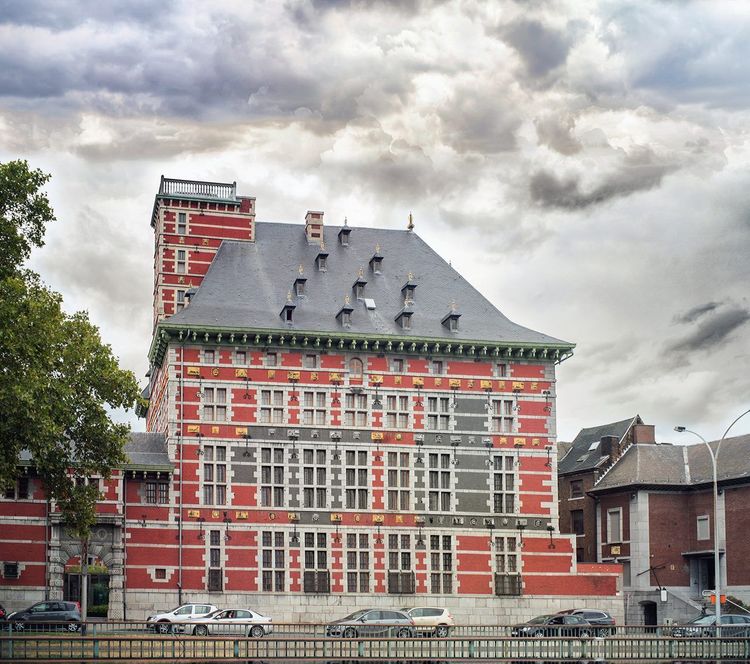
Crossing the Meuse again, the Grand Curtius brings together several collections in a single complex: archaeology, decorative arts, religious and Mosan art, weapons and glass. Its core is the palace built between 1597 and 1605 for Jean Curtius, a wealthy arms and gunpowder merchant, recognisable by its red brick and stone façade. It is probably the densest museum complex in the city, to be favoured if you can only choose one museum over these two days.
A few minutes' walk away, in the former convent of the Friars Minor, the Museum of Walloon Life (Cour des Mineurs, 4000 Liège, rated 4.3/5 on Google from 1,259 reviews) rounds off the visit nicely with its reconstructed interiors and workshops of the past, not to mention its puppet theatre where Tchantchès is of course the star.
If you still have a bit of energy, go on to the Collegiate Church of Saint-Barthélemy, a stone's throw from the Grand Curtius. Behind its Romanesque façade flanked by two towers, it houses the baptismal font of Renier de Huy, a 12th-century brass basin carried by sculpted oxen, often cited among the masterpieces of Mosan art. Entry is paid but modest, and the work is worth the detour on its own for anyone with a bit of interest in the Middle Ages.
Where to Stay in Liège for a 2-Day Trip
There is no need to book weeks in advance outside high season, but three districts stand out depending on the type of stay you are after.
The historic centre, around rue Neuvice (Rue Neuvice, 4000 Liège), remains the most practical choice for two days: everything is accessible on foot, from the cathedral to Le Carré. It is also the liveliest area in the evening, to be avoided if peace and quiet is your priority.
The Guillemins district, around the station, suits trips organised by train: recent hotels, direct connections to Brussels and the high-speed train to Paris, and immediate proximity to La Boverie to start the second morning without wasting time.
For a more offbeat stay, a guesthouse in Outremeuse lets you stay with locals, in a more working-class and less touristy district. It is often the warmest option, with hosts who know their street like the back of their hand and gladly share their addresses.
Allow on average 90 to 130 euros a night for a well-located double room in the city centre, a bit less in Guillemins or outside major events such as the Les Ardentes festival in early July, which pushes up prices across the city. Whichever district you choose, the Ryo audio-guided tour of Liège remains accessible from your phone at any hour: handy for extending the visit into the evening, once the museums have closed.
Getting Around Liège: On Foot, by River Shuttle or Public Transport
Liège is very easy to visit without a car, and it is even recommended given how the historic centre is packed around cobbled streets and sloping alleyways.
Visiting Liège on foot remains the best option for most of the places mentioned above: the historic centre, Le Carré and Outremeuse are linked within 15 to 20 minutes of walking via the bridges spanning the Meuse. Only the climb to the citadel requires a minimum of physical fitness.
For longer trips, notably between the centre and Guillemins station, TEC buses cover the city well, with single tickets or cheaper day passes if you plan several trips.
A lesser-known detail: a river shuttle links several points in the centre in the warmer months, at a modest fare. Check the schedules before relying on it, but it is an original way to see the city from the water.
Where to Eat and Drink in Liège
Treating yourself in Liège's restaurants inevitably means Walloon cuisine: boulets à la liégeoise covered in a Liège syrup sauce, salade liégeoise with green beans and bacon bits, or veal kidneys à la liégeoise. Le Carré, the historic centre and rue Roture, in Outremeuse, have the highest concentration of addresses, from traditional bistros to more creative restaurants.
Having a coffee or a drink is an integral part of Liège's rhythm. The terraces of place du Marché or rue Saint-Adalbert fill up at the first rays of sunshine, and it is not unusual to see a coffee break turn into an aperitif. Try peket at least once, served in a small glass, ideally in a local café in the centre.
For brunch, several addresses in the centre and Outremeuse offer generous set menus at weekends, built around local products: Herve cheese, artisan bread, homemade jams. A good option for a Sunday morning before La Batte, so you do not arrive on an empty stomach.
In the evening, if you are after a calmer atmosphere than Le Carré, head up rue Hors-Château or place du Marché: the cafés there are quieter, ideal for tasting a regional abbey beer or a glass of wine from the hillsides, as vines have made a comeback on the slopes of the city in recent years. Remember to book on Friday and Saturday evenings at the most popular restaurants, as the dining rooms are often small.
How Long to Allow and When to Visit Liège
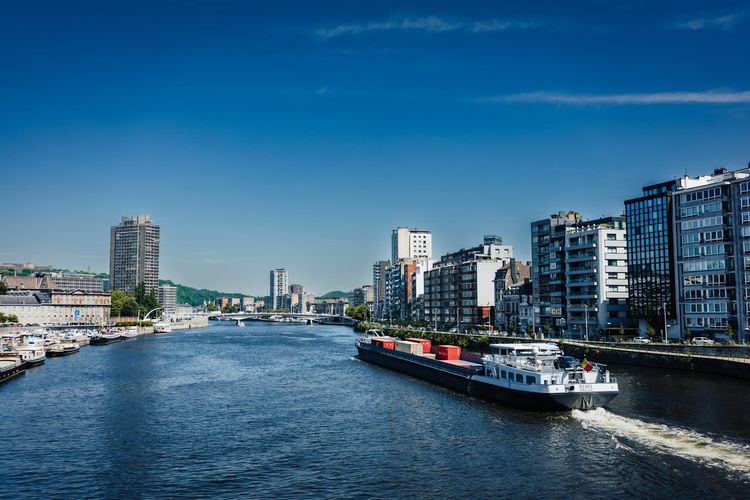
How long does it take to visit Liège? Two full days are enough to cover the essentials: the historic upper town on the first day, the banks of the Meuse and Outremeuse on the second. With a third day, you can add the Remouchamps caves or go as far as Spa, less than an hour's drive away.
Why visit Liège rather than another Belgian city? Because it is less overrun with tourists than Bruges or Brussels, while offering a dense heritage inherited from eight centuries of principality and a real working-class character. It is a city that is lived as much as visited, with its neighbourhood cafés and its sing-song accent.
When to come to Liège? Spring and early summer remain the most pleasant seasons to enjoy the hillsides and terraces. July coincides with Les Ardentes, which pushes up accommodation prices; 15 August brings a unique atmosphere to Outremeuse, and December draws crowds with the Christmas Village, one of the largest Christmas markets in Belgium.
Budget and Tips for Visiting Liège in 2 Days
Much of what makes Liège endearing costs nothing. The climb up Bueren, the walk through Hors-Château and Pierreuse, the courtyard of the Palace of the Prince-Bishops, the La Batte market or a stroll through Outremeuse easily fill half a day of free sightseeing.
In terms of figures, allow about 40 to 60 euros per day per person excluding accommodation: a few museum entries (around 10 euros on average), a restaurant meal, a waffle and a local beer on a terrace. Adding accommodation, a two-day weekend in Liège remains doable with 200 to 300 euros per person, return transport not included.
Good tip: the City's museums, including the Grand Curtius and La Boverie, are in principle free on the first Sunday of the month (excluding certain temporary exhibitions). If your stay falls on that weekend, the savings become serious.
Another tip: come by train. Guillemins station is served directly from Brussels in under an hour and by high-speed connections from abroad, which avoids parking fees in the city centre, often high. Once there, your legs are enough for most of the itinerary, and an occasional bus ticket completes the picture.
Visiting Liège with Family, as a Couple or in the Rain
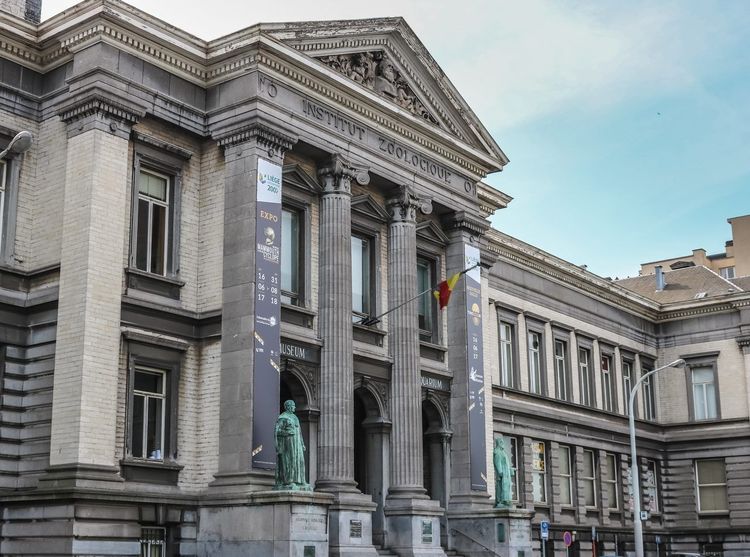
With family, focus on the Aquarium-Muséum and a ride on the river shuttle, which turns a simple trip into a little adventure. La Boverie park offers enough space to let the youngest run around, and the puppets at the Museum of Walloon Life generally amuse young and old alike.
For two, the sunset from the Coteaux de la Citadelle, a waffle shared in a Hors-Château alley and then a last drink in Le Carré make for a successful evening, without any complicated reservations.
In the rain, the museums take over: Grand Curtius, Boverie, Walloon Life and Cité Miroir are just a few streets from each other, enough to fill an entire day while almost always staying under cover.

FAQ
How long does it take to visit Liège?
Two full days cover the essentials: the upper town with the Citadel and the cathedral on the first day, then the banks of the Meuse, La Boverie and Outremeuse on the second. With an extra day, you can add a day trip to the surrounding area or simply slow down the pace.
How do you get around Liège without a car?
The city is very easy to explore on foot, with the main tourist districts reachable within 15 to 20 minutes of walking. For longer trips, TEC buses cover the whole city, and the seasonal river shuttle offers an original alternative.
What can you do in Liège when it rains?
Focus on the museums: Grand Curtius, La Boverie, the Museum of Walloon Life, Archéoforum and Cité Miroir are close enough together to string visits together under cover.
What can you do in Liège as a couple?
Climb up to the Coteaux de la Citadelle for the sunset, wander through the alleyways of Hors-Château, or end the evening on a terrace in Le Carré: Liège is a great place for a getaway for two.
What can you do in Liège with family?
The Aquarium-Muséum, the Grand Curtius and a ride on the river shuttle generally appeal to children and parents alike. La Boverie park offers room to catch your breath between visits.
Can you visit Liège on foot in 2 days?
Yes, without any particular difficulty. Only the climb to the citadel takes some effort; the rest of the itinerary follows flat or gently hilly routes, with 15 to 25 minutes of walking from one point to the next.
Two days in Liège are enough to understand why this city keeps carving its own path between Brussels and Maastricht, without trying to resemble its more photogenic neighbours. Between the breathless climb up to the citadel, a waffle eaten on the street and a Sunday morning spent browsing the Batte market, this format leaves time to feel the rhythm of the Cité Ardente.
Before heading off to explore the alleyways of Hors-Château or the banks of the Meuse, download the Ryo audio-guided tour of the Cité Ardente: 24 narrated stops over 4.3 km, to follow at your own pace, without relying on a guide or a fixed schedule.