© Shutterstock
 Votre guide Ryo
Free Things to Do in Albi: 10 Ideas for 2026
In Albi, the red city charges little to those who take the time to walk. Finding free things to do in Albi simply means knowing where to look: the squares of Old Albi can be explored at any hour, and the largest brick cathedral in the world lets you into its nave with no ticket desk at the entrance. The banks of the Tarn then unroll their lawns beneath the buttresses of the Palais de la Berbie, in the heart of an Episcopal City listed as a UNESCO World Heritage Site since 2010. To find your way through these brick lanes without booking a guided tour, the Ryo audio-guided tour of Albi offers 26 audio stops over 3.5 km, from Place du Vigan to the quays.
You will also discover a 13th-century cloister planted with medicinal herbs and open to all, a covered market where you can wander among navettes and gimblettes, and a 13-hectare leisure area with one of the largest skateparks in the region. A neighboring village reveals, from its rocky spur, one of the finest views of the cathedral, and another a remarkable Romanesque church. And because not everything in Albi is free to enter, a dedicated section clearly tells you what remains paid, with the alternative to plan for each case.
1. Stroll Through Old Albi and Its Historic Squares
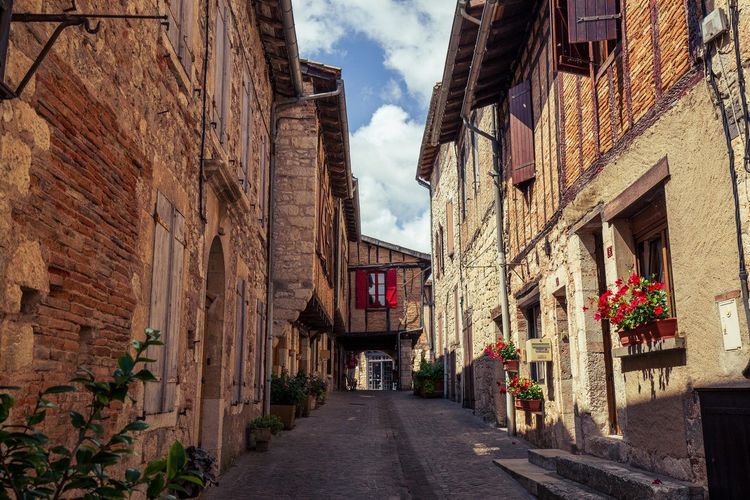
Before the cathedral and the quays, it is through its squares that the red city tells its story best. This historic triangle, built in local brick from the 13th to the 16th century, can be explored entirely on foot, at any hour.
Place du Vigan and Place Savène, the Lively Heart of the City
The Place du Vigan (Place du Vigan, 81000 Albi) is the city's true living room: café terraces, arcades and brick façades follow one another around a vast space where locals and visitors mingle. You don't have to sit on a terrace: simply watching the comings and goings is enough, especially on market days, when the whole city seems to converge on the center.
A few minutes' walk away, Place Savène (Place Savène, 81000 Albi) continues this atmosphere in a more intimate register. Smaller and lined with red brick houses, it serves as a quiet crossing point between the Vigan and the lanes of the episcopal quarter. Its benches make it a pleasant stop to look up at the façades without a precise itinerary.
The Castelviel Quarter and the Hôtel Reynès, Discreet Heritage Gems
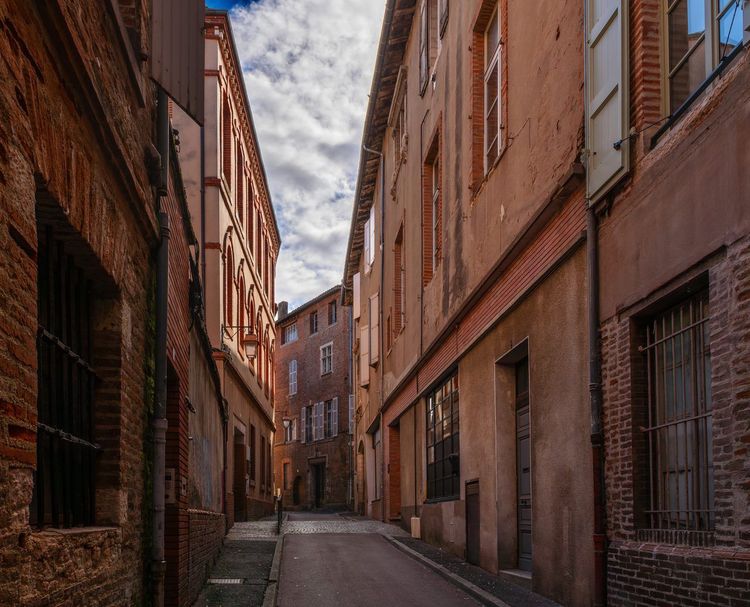
The Castelviel Quarter, the oldest core of Old Albi, stretches out in narrow lanes to the west of the cathedral. You walk slowly here, eyes raised to the timber frames and overhanging upper floors that sometimes loom over the street. Few visitors venture beyond the cathedral square, which leaves the quarter to those who take the time to get a little lost.
Closer to the heart of the city stands the Hôtel Reynès (Rue Timbal, 81000 Albi, rated 4.7/5 on Google from 81 reviews), a Renaissance mansion whose courtyard and sculpted façade testify to the wealth of Albi's woad merchants in the 16th century, when woad, the blue dye extracted from a plant, made the fortune of the whole Albi-Toulouse-Carcassonne triangle. The medallions and busts adorning the courtyard remain visible from the entrance.
If you prefer some context to wandering blindly, the Ryo audio guide to Old Albi covers precisely this stretch between Place du Vigan, Place Savène and the Castelviel, with anecdotes about the brick façades and the Reynès family along the way.
2. Visit Sainte-Cécile Cathedral and the Gardens of the Palais de la Berbie Freely
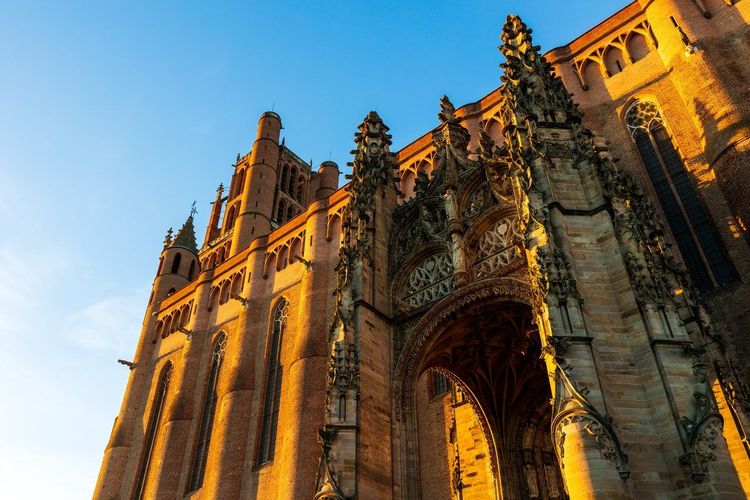
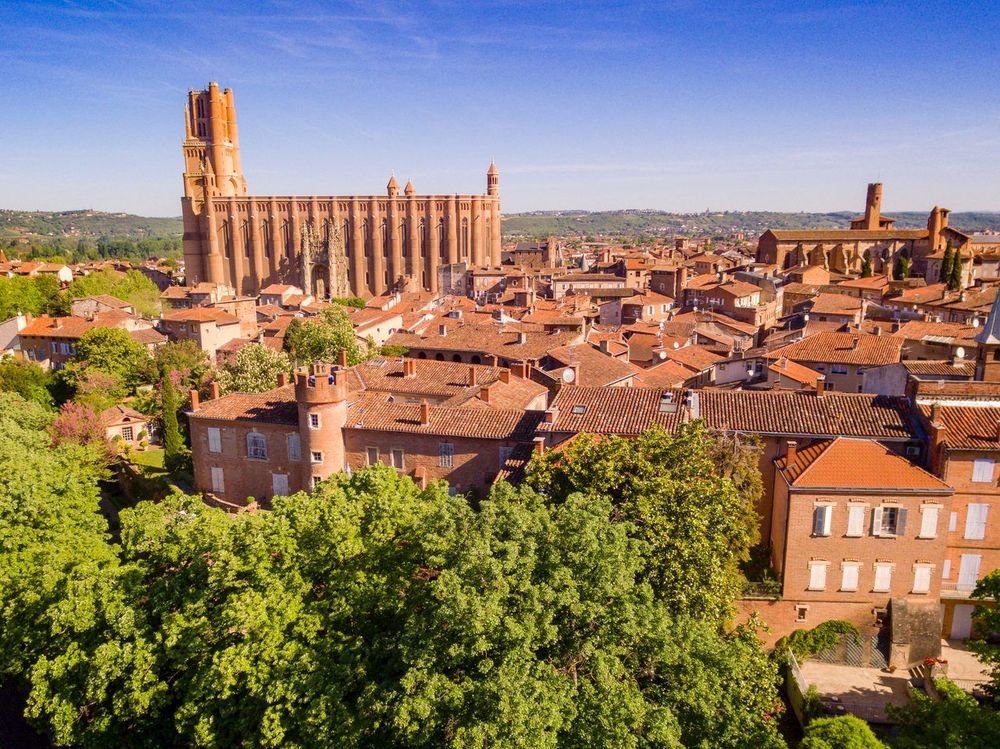
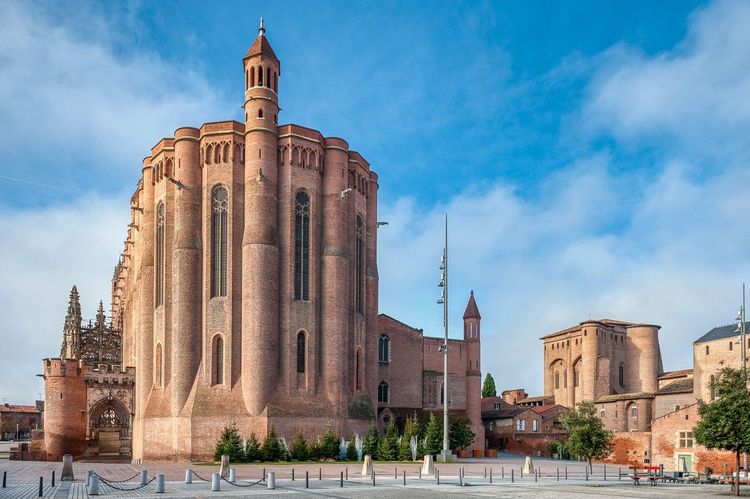
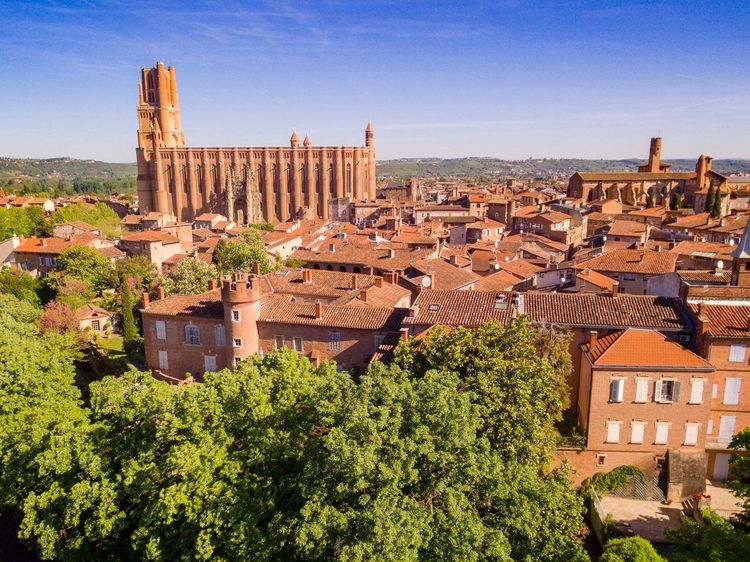
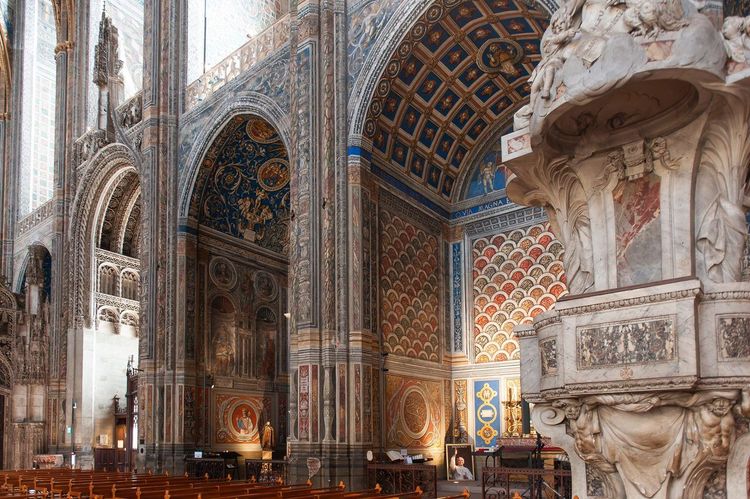
The Sainte-Cécile Cathedral, begun in 1282 in the aftermath of the crusade against the Albigensians, dominates the city like a fortress. It remains to this day the largest brick cathedral in the world. Entry to the nave is free, with no reservation: you push open the door and discover, beneath the painted vault, the great Last Judgment from the late 15th century. Only the Grand Choir with its carved stone rood screen, as well as the treasury, require a ticket (6 euros full price, 5 euros reduced, audio guide included, free for under-14s).
Just behind, the gardens of the Palais de la Berbie (Place Sainte-Cécile, 81000 Albi, rated 4.6/5 on Google from 1,120 reviews) open in terraces above the Tarn. These French-style gardens, with boxwood clipped into arabesques, can be visited freely, unlike the Toulouse-Lautrec Museum housed in the palace itself. You can stroll there during opening hours, enjoy the shade of the ramparts and admire the plunging view of the Pont Vieux without any guard asking you for anything.
Several stops on the Ryo audio-guided tour are devoted to this episcopal area: they explain why the cathedral looks like a fortress and how the bishop turned the neighboring palace into a veritable keep, enough to enrich your visit to the nave before deciding whether the Grand Choir is worth the ticket.
3. Walk Along the Banks of the Tarn, with Family or Friends
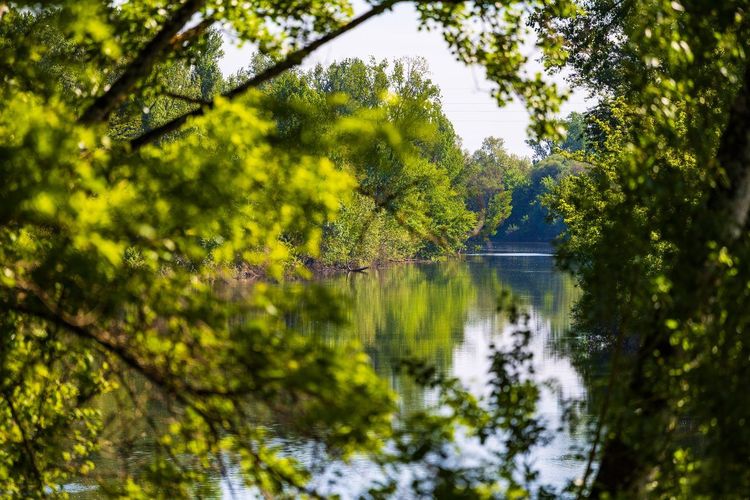
The banks of the Tarn are probably the favorite outing of the people of Albi themselves. On the right bank, paths, lawns and landing stages lead right down to the water, with the cathedral as a backdrop.
The Pratgraussals Leisure Area, Its Playgrounds and Skatepark
On the right bank, the Pratgraussals leisure area spreads over more than 13 hectares of greenery between the Tarn and the residential neighborhoods. Families will find playgrounds, lawns for picnics and a football pitch, while sports fans can enjoy freely accessible tennis courts. In summer, a guinguette and a paddle base liven up the place (these two are paid), and the municipal program occasionally adds children's activities.
Traveling with children? Our article on visiting Albi with family completes this selection with other ideas suited to their pace.
The View of the Pont Vieux and the Pont Neuf from the Quays
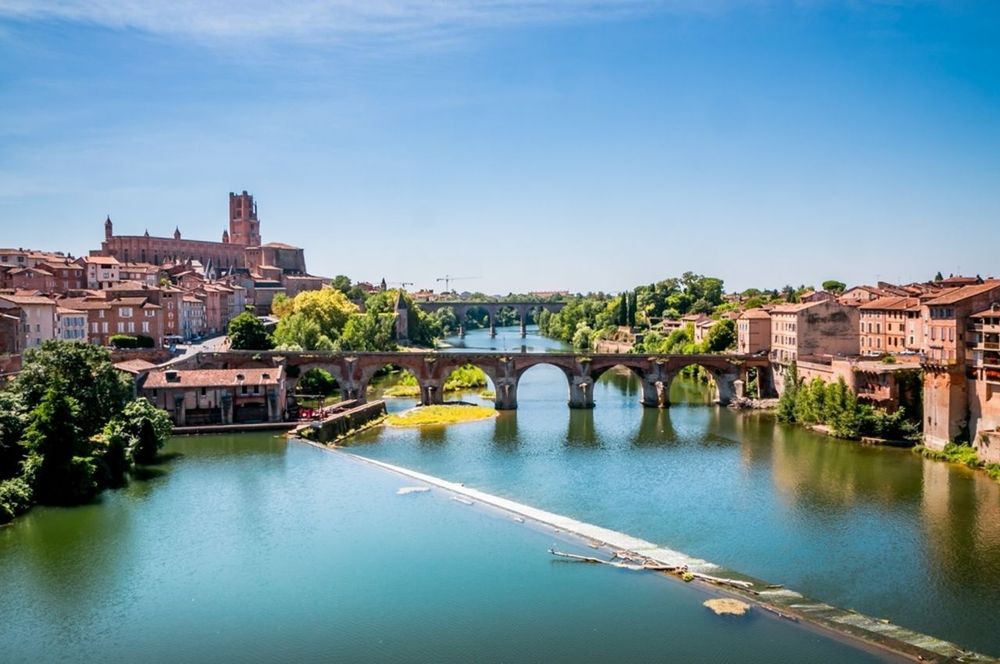
The Pont Vieux, built around 1035, is among the oldest bridges in France still open to traffic. From the quays, its low silhouette of stone and brick, with its uneven arches, offers one of the most photographed viewpoints in the city, especially at sunset when the brick turns orange.
A little further on, the Pont Neuf (Pont Neuf, 81000 Albi, rated 4.8/5 on Google from 43 reviews), inaugurated in the 19th century, completes the perspective with a more classical silhouette. Between the two bridges, the quays are perfect for a family stroll, a bike ride or simply watching the tourist gabarres go by without boarding.
The best tip is to cross the Pont Vieux on foot to the Madeleine quarter, on the right bank. From there, at the water's edge, you get Albi's postcard view: the cathedral, the Palais de la Berbie and its hanging gardens stacked above the Tarn, with the old Albi mills below. In the morning, the light strikes the brick head-on; in the evening, it sets it ablaze. Allow twenty minutes more than planned, because you always want to retrace your steps for one last photo.
On these quays, the Ryo audio narration comments on the two bridges in the order of the walk: 1h40 of listening in total, which leaves time to stop on a bench rather than rush.
4. Picnic and Relax at Rochegude Park
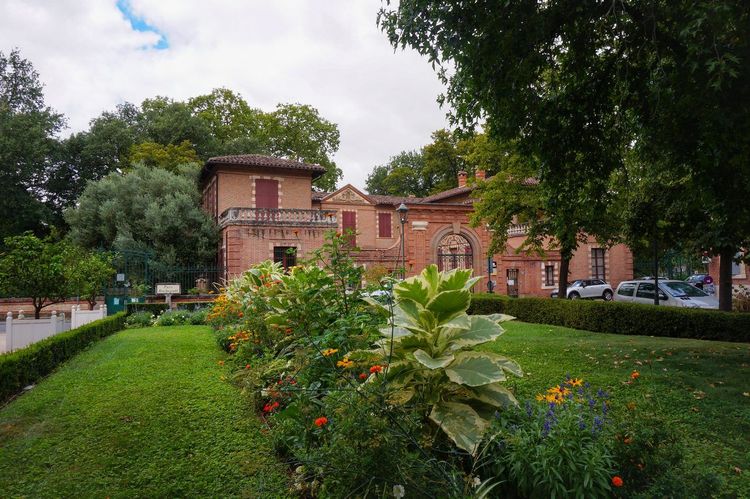
About ten minutes' walk from the historic center, Rochegude Park (Avenue du Parc Rochegude, 81000 Albi, rated 4.5/5 on Google from 2,262 reviews) offers a tree-lined setting for a lunch break. Bequeathed to the city by Admiral de Rochegude, it features broad shaded avenues, a pond and generous lawns, popular with families at weekends as well as with locals coming to read on a bench.
Entry is free and nothing stops you from bringing your own basket rather than eating out in town. The shaded benches fill up quickly on sunny days: arriving before noon is the best habit.
To put this basket together without blowing your budget, stop first at the covered market or a bakery in the center: a navette, a piece of sheep's cheese and a seasonal fruit are enough. The park is then perfect for a nap in the shade of the big trees after a morning in the Episcopal City, and you set off again in the afternoon toward the riverbanks, rested and having saved the price of a set menu.
5. Wander Through the Covered Market and Spot Albi's Specialties
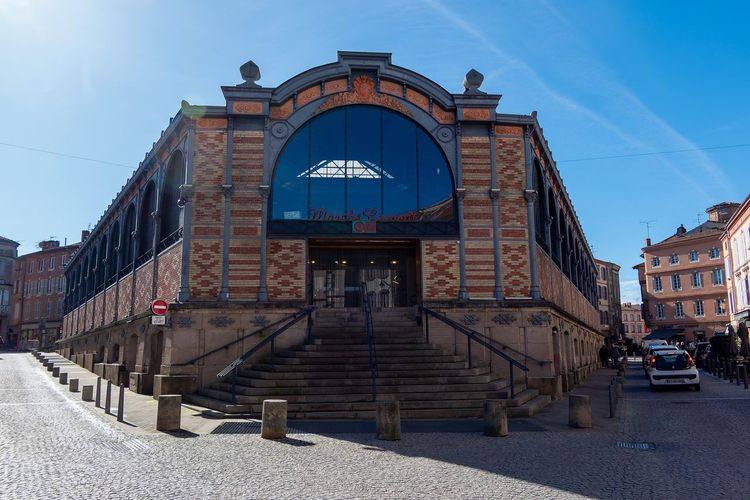
The Albi covered market (Place du Marché Couvert, 81000 Albi, rated 4.3/5 on Google from 533 reviews), an iron-and-glass hall a stone's throw from the cathedral, can be visited as an attraction in its own right, even with no intention of buying. Among the stalls of sheep's cheese, Tarn charcuterie and Gaillac wines, the aroma alone justifies the detour, from Tuesday to Sunday morning.
The producers are happy for you to browse their stalls, and some offer small tastings depending on the season. It's a chance to spot the local specialties, cited as early as 1933 in the Trésor gastronomique de la France: the Albi navette, a diamond-shaped almond biscuit, the gimblette, a crown-shaped pastry flavored with lemon or orange blossom, and the triangular jeannot flavored with aniseed. You can then decide whether to take them home or simply to have seen them up close.
6. Step Into the Saint-Salvi Collegiate Church and Its Cloister, an Oasis in the Historic Center
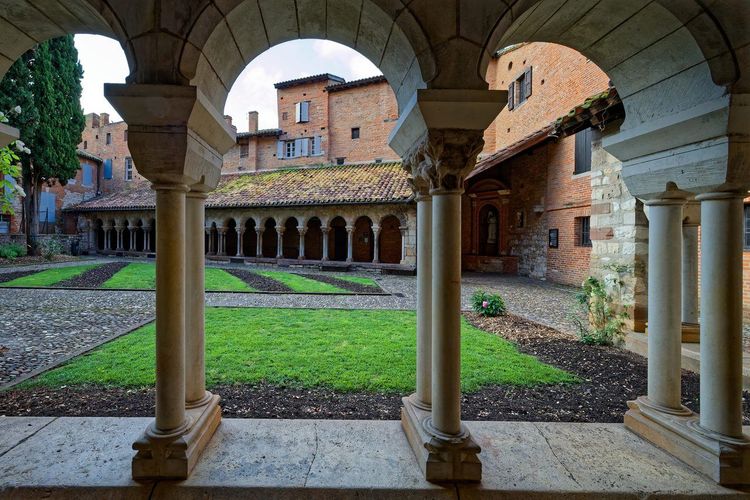
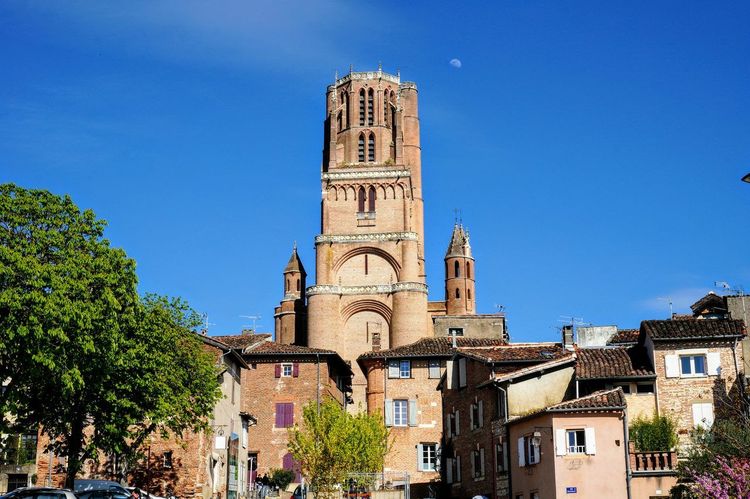
Five minutes from the cathedral, the Saint-Salvi collegiate church is the oldest church in Albi, built over the tomb of Saint Salvi, a 6th-century bishop. The building combines a Romanesque stone base with Gothic brick sections, a mix that in itself tells of several centuries of construction. Access to the church is free.
The real treasure is hidden on the side: the Saint-Salvi cloister, freely accessible every day from 9am to 6pm, surrounds a small garden of medicinal plants. The noise of Rue Mariès fades as soon as you pass beneath the arcades, making it the ideal place to catch your breath between two visits. Few tourists spot it, even though it is an integral part of the Episcopal City listed by UNESCO.
Right next to the cathedral, at 1 rue de la Croix-Blanche, the Maison du Vieil Alby (1 Rue de la Croix Blanche, 81000 Albi, rated 4.4/5 on Google from 155 reviews) deserves a glance from the street for its timber-framed façade. The Albi Patrimoine association runs an information point on history there; visiting the rooms, devoted to old trades and the history of the city, requires a small entrance fee (from 3 euros).
7. Hike or Cycle in the Albi Countryside
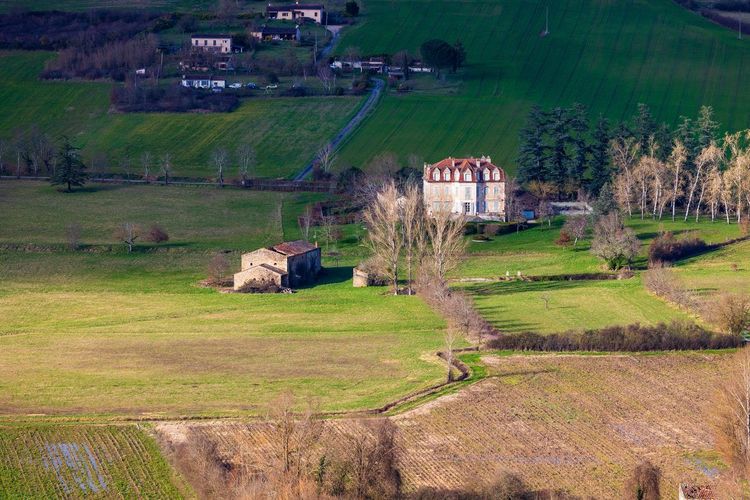
Beyond the ramparts, the Albi countryside can be explored on marked routes that require neither an entrance fee nor expensive equipment.
Hiking Trails Around Albi
Several hiking trails start from the banks of the Tarn and climb toward the Gaillac hillsides or lead to Lescure-d'Albigeois and its Romanesque church of Saint-Michel. These loops of 5 to 15 km suit a day outing as well as a digestive walk after the market. Routes can be obtained from the tourist office and on the Tarn departmental hiking portal.
Cycling Routes Along the Tarn, Without Paid Rental
The paths running along the Tarn, notably from Pratgraussals via the pedestrian footbridge, are well suited to family cycling. Rental remains paid in town: if you travel with your own bike, these routes are entirely open to you.
Want to go further on foot? The 26 stops of the Ryo audio-guided tour of Albi end at the water's edge, a good starting point to continue onto a trail once the last one has been listened to.
8. Enjoy Albi's Events and Entertainment
Throughout the year, the city organizes events open to all: evening producers' markets in summer, neighborhood festivals, open-air concerts or Christmas lights in December. European Heritage Days, in September, even open the cathedral's Grand Choir for free visits.
The highlight of late winter is the Albi Carnival, one of the oldest in the South-West. Mentioned as early as the mid-19th century, it has been held almost uninterrupted since 1951 and celebrated its 70th edition in 2026. Its monumental papier-mâché floats, an Albi signature since 1905, parade over two Sundays through the city center, escorted by bandas, majorettes and a shower of confetti. About ten floats come out of the workshops each year, designed and built by three employees supported by around a hundred volunteers, which explains their often spectacular finish. The parade is watched from the sidewalk: arrive half an hour before it starts to secure a front-row spot, especially with children, and choose clothes that don't mind confetti.
It's worth checking the program before you leave: the tourist office and the Grand Albigeois agenda relay these seasonal events, often open to all even when they feature professional artists.
Other events return every year. The Fête de la Musique, on June 21, turns the squares of the center into open stages, while December brings its light decorations and its Christmas market. Want to avoid the disappointment of a closed venue or an event canceled due to weather? Check the schedule and exact location the day before, as they vary from one edition to the next.
9. Get Active Outdoors: Skatepark, Pétanque, Freely Accessible Courts
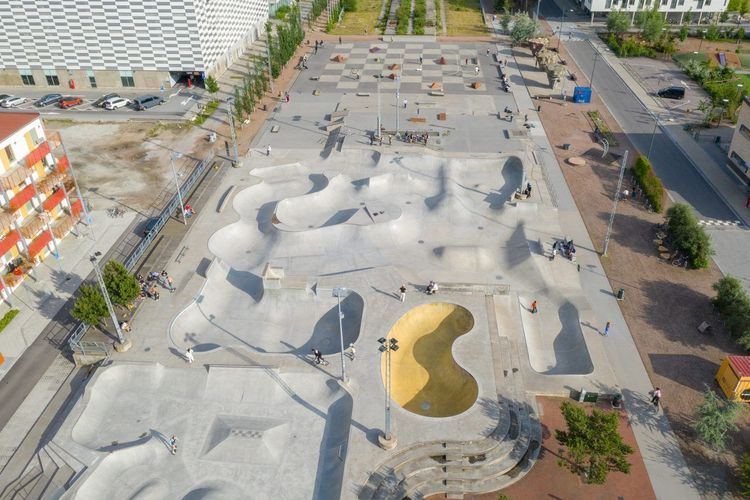
The Pratgraussals skatepark is among the most ambitious in the South-West: 1,600 m² in total, with a 1,100 m² street section and a 390 m snakerun full of bumps and curves. Skateboards, roller skates, BMX and scooters are all welcome, with free access.
Elsewhere in town, several pétanque courts await players, and the tennis courts at the leisure area complete the offer. Only the municipal swimming pool remains paid among the major sports facilities, which clearly sets outdoor facilities apart from indoor ones.
10. Venture to the Neighboring Villages
Few pieces of content about Albi mention this option, yet it is obvious once you are there: several villages in the surrounding area can be reached by bike or by walking a few kilometers, without depending on a bus or taxi.
Castelnau-de-Lévis (Castelnau-de-Lévis, 81150 Castelnau-de-Lévis), perched on a rocky spur about 7 km from the center, offers from its castle ruins and its tall tower one of the finest panoramic views of the cathedral and the Tarn valley. The viewpoint is accessible at any hour.
Even closer, Lescure-d'Albigeois adjoins the north-eastern suburbs of Albi, on the right bank of the Tarn. Its Saint-Michel church, standing alone on a hillock between the river and the village, is considered the best-preserved Romanesque building in the Albigeois. Built between approximately 1120 and 1150 by the Benedictine abbey of Saint-Michel de Gaillac, in perfectly dressed limestone, it has been listed as a historic monument since 1883. Take the time to study its west portal, inspired by the door of Saint-Sernin in Toulouse: set on three steps, it features small columns with historiated capitals, populated with human and animal heads and plant motifs. It is the richest ensemble of Romanesque sculpture in the area, and the contrast with the Gothic brick of Sainte-Cécile, seen that same morning, makes the comparison fascinating. The portal can be admired from the forecourt at any hour; interior opening varies by season, so check with the town hall or the tourist office.
If you have a full day, our article on the surroundings of Albi details other villages and sites to discover nearby.
Practical Tips for Visiting Albi Smartly
Good to Know Before You Go: Opening Hours, Seasons, Crowds
Most of the sites mentioned here (squares, riverbanks, Pratgraussals, Rochegude park) remain accessible at all times. The cathedral, the Berbie gardens and the Saint-Salvi cloister, however, follow opening hours, and the cathedral limits visits during services. Crowds increase at weekends and during school holidays: a weekday visit, mid-morning, lets you enjoy the historic squares without the crowds of tour groups.
Getting Around Albi on a Budget: Walking, Cycling, Bus
The historic center can be explored on foot in half a day, with distances between the main points of interest rarely exceeding fifteen minutes' walk. For Pratgraussals or the neighboring villages, your own bike remains the most economical solution. Our guide to visiting Albi without a car details the transport options, from the city bus to the SNCF train station located fifteen minutes' walk from the center.
Zero Budget in Albi: What Remains Paid (and How to Limit the Cost)
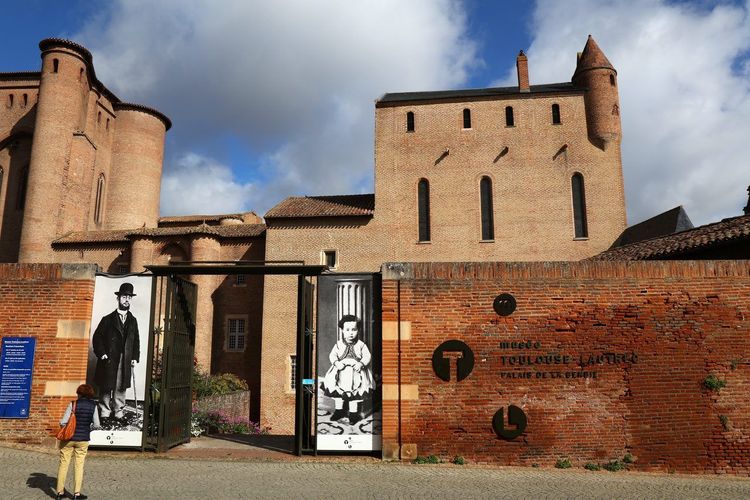
Not all visits are free, and it is better to know this before going. The Toulouse-Lautrec Museum (Palais de la Berbie, Place Sainte-Cécile, 81000 Albi, rated 4.5/5 on Google from 2,461 reviews), housed in the Palais de la Berbie, requires a 10-euro ticket (5 euros reduced rate, free for under-18s) to access the largest public collection in the world devoted to the artist born in Albi in 1864. The alternative is to enjoy the palace gardens and their view over the Tarn.
Sailing on the Tarn aboard a gabarre, those traditional boats that once carried wine and goods, remains a paid activity. The quays let you watch these same gabarres from the shore, photo in hand. The same goes for the cathedral's Grand Choir (6 euros), the Maison du Vieil Alby (from 3 euros) and the tourist office's guided tours: if you combine several paid sites, the Albi City Pass lets you bundle the entries at a preferential rate.



FAQ
Are all the museums in Albi paid?
Yes for museums in the strict sense: the Toulouse-Lautrec Museum (10 euros) and the Maison du Vieil Alby (from 3 euros) require a ticket. However, the cathedral nave, the Saint-Salvi cloister and the Berbie gardens can be visited freely.
Which days is Sainte-Cécile Cathedral free to enter?
The nave is open to everyone every day during opening hours, outside of services. The Grand Choir and the treasury require a ticket all year round (6 euros), except during European Heritage Days in September, when the Grand Choir opens for free visits.
Where can I park cheaply to visit Albi?
Free parking areas are located on the outskirts of the center, notably around the Pratgraussals leisure area, on the right bank. You then reach the historic center on foot in about fifteen minutes via the Pont Vieux.
How much time should I allow to explore Albi on foot?
A full day is enough to explore Old Albi, the cathedral nave, the gardens and the banks of the Tarn. Plan on a weekend instead if you add the Rochegude park, the covered market and an excursion to Castelnau-de-Lévis or Lescure-d'Albigeois.
Are guided tours of Old Albi paid?
Guided tours from the tourist office are paid and require a reservation. Exploring the historic squares and the lanes of the Castelviel on your own is always free, and a smartphone audio guide lets you get the commentary without following a group.
What is the best season for free activities in Albi?
Spring and early autumn offer the most pleasant conditions for walking along the Tarn, with fewer crowds than in midsummer. In return, summer brings outdoor events and long evenings on the quays, late winter has its carnival, while December stands out for its festive lights.
Albi on Foot, the Best Plan for the Red City
Albi proves generous to visitors who take the time to walk rather than tick off paid attractions. Free things to do in Albi are plentiful: between the squares of Old Albi, the nave of Sainte-Cécile, the Saint-Salvi cloister, the banks of the Tarn and a detour to Castelnau-de-Lévis, you can fill an entire weekend without taking out your bank card, except perhaps for a coffee on a terrace.
And to miss none of the stories hidden behind these brick façades, the Ryo audio-guided tour of Albi accompanies you at your own pace: 26 audio stops, 1h40 of listening and 3.5 km between the historic squares and the quays of the Tarn, with no reservation and no group to follow.
À lire également