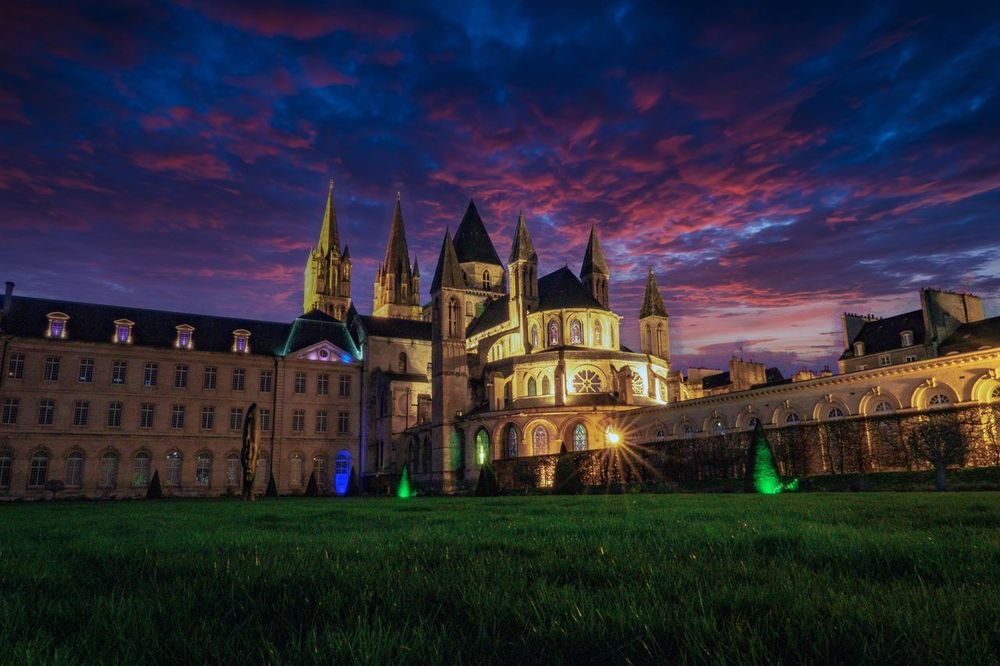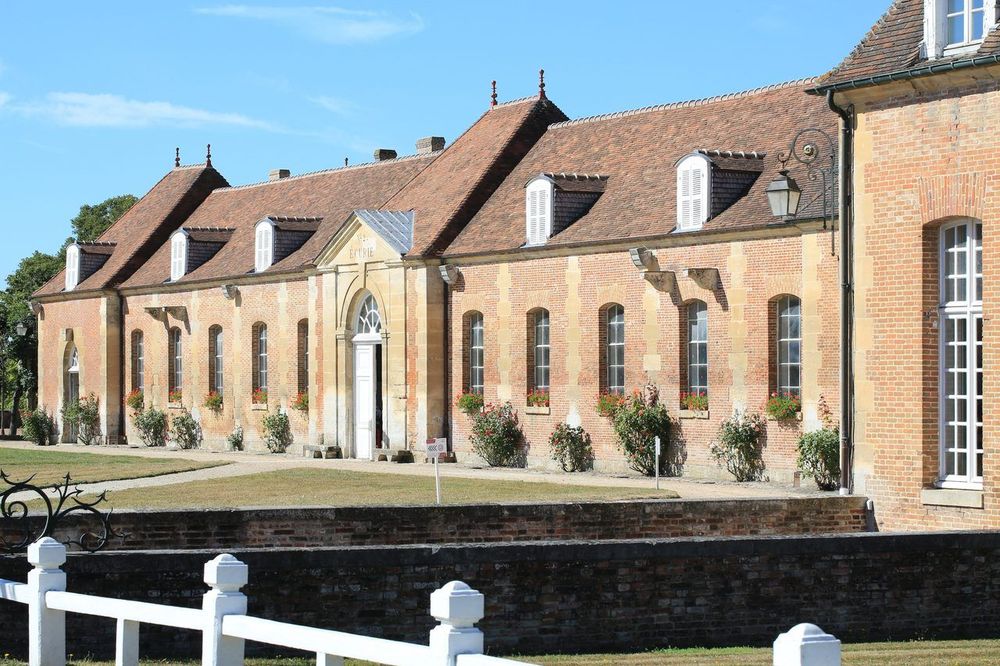
© Shutterstock
 Votre guide Ryo
Things to Do in Argentan: 16 Ideas for Visits in 2026
Argentan doesn't make the cover of Normandy travel guides in the same way as Bayeux or Deauville, yet the town packs eight centuries of history around its needle lace and its vanished duchy. Wondering what to do in Argentan means choosing between a morning in the medieval lanes, an afternoon by the Orne, or an escape to the stud farms and cider orchards that surround it. No Ryo audio-guided tour covers its cobblestones yet, but the app remains a useful ally for organising the rest of a Norman stay, from Falaise to Caen.
The town is home to one of the rare workshops still capable of reproducing the point d'Argentan, a needle lace among the finest in the world and a close cousin of the point d'Alençon, which UNESCO inscribed on its list of Intangible Cultural Heritage in 2010. Fifteen minutes away by road, the national stud of Le Pin lines up its 17th-century stables across more than a thousand hectares of meadows. A little further on, the village of Camembert gave its name to the world's most imitated cheese, while the Montormel memorial documents one of the bloodiest episodes of the Battle of Normandy. This selection of sixteen stops covers the historic heart of Argentan and its surroundings, to be combined according to the time available.
1. Maison des Dentelles d'Argentan

The Maison des Dentelles d'Argentan (34 rue de la Noë, 61200 Argentan, rated 4.2/5 on Google from 38 reviews), housed in a former private mansion in the heart of town, traces four centuries of needle lace. The point d'Argentan, recognised as one of the rarest craft skills in France, requires several hours of work for a single square centimetre of finished lace. The technique almost disappeared after the Revolution before being revived in the 19th century by workshops run by religious communities. The point d'Argentan remains one of the rarest lace stitches in the world, a close relative of the point d'Alençon — the latter inscribed by UNESCO on the Representative List of the Intangible Cultural Heritage of Humanity in 2010. The collections blend antique textile pieces, contemporary works, and lacemakers' tools, while the Musée Fernand Léger-André Mare, also based in Argentan, takes over on the fine arts side with a collection devoted to these two Norman artists.
Allow about an hour for the visit, a little longer if a lacemaker demonstration is scheduled that day, which happens several times a month outside the low season. You can ask at the front desk for the workshop calendar: some sessions allow you to watch the bobbin or needle technique at close range, just centimetres from the expert hands that still practise it. The combined ticket with the nearby basilica remains the most economical option for anyone planning to visit both sites on the same day.
2. Basilique Notre-Dame d'Argentan
The basilique Notre-Dame d'Argentan (Place du Marché, 61200 Argentan, rated 4.6/5 on Google from 37 reviews) dominates the place du Marché with its Flamboyant Gothic façade from the 15th century, completed over several generations of construction between 1450 and 1620. The bell tower rises to around sixty metres, a landmark visible from the surrounding countryside. Inside, the choir's stained-glass windows date largely from the 19th century, restored after the 1944 bombings that damaged part of the roof structure.
The building holds the title of minor basilica, a rare distinction for a church of this size. Take the time to walk around the building from the rear: that is where the contrast between the Gothic buttresses and the later extensions is most clearly read. Entry is free all year round, with reduced hours on Mondays.
Local tradition holds that some of the stones in the façade came from the quarries of Falaise, transported by river along the Orne in the 15th century — a common practice for the major Norman construction sites of the period.
3. Tour Marguerite de Bretagne, Remnant of the Ducal Castle
Only one tower remains of the ducal castle of Argentan, built in the 14th century by the dukes of Alençon and later remodelled under Marguerite de Bretagne, Duchess of Alençon in the 15th century, who gave it its current name. The tour Marguerite de Bretagne (Rue du Château, 61200 Argentan, rated 4.5/5 on Google from 2 reviews), cylindrical and standing about twenty metres high, can be visited during the Journées du Patrimoine and a few summer openings organised by the tourist office.
The rest of the fortress was demolished in the 17th century, its stones reused in local buildings — a common fate for many Norman castles that fell into disuse after the Wars of Religion. Even when closed, the tower is worth a stop: the public garden surrounding it offers an open view over the slate rooftops of the historic centre.
4. Chapelle Saint-Nicolas
Built in the 17th century for the neighbouring hospital, the chapelle Saint-Nicolas retains a fairly complete Baroque interior for a building of this modest size. Its Classical façade stands in sharp contrast to the Flamboyant style of the basilica, just a few hundred metres away.
The visit takes only a few minutes when the doors are open, generally in the afternoon during the summer season. It makes a pleasant pause between two stops in the town centre. Push the door if you pass by: the place, rarely busy, offers a quiet interlude away from the bustle of the market. The gilded altarpieces and polychrome statues bear witness to the taste of Argentan's 17th-century bourgeoisie for religious ornament.
5. La Halle au Blé
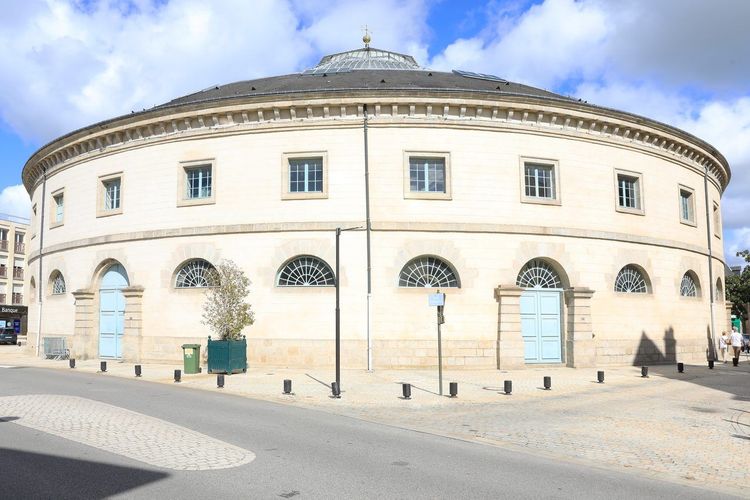
Built in 1828 to house the grain market, the Halle au Blé (Place de la Halle, 61200 Argentan, rated 4.4/5 on Google from 277 reviews) features a metal framework that was quite unusual for the provinces at the time. It now hosts temporary exhibitions and certain themed markets.
Check the exhibition programme before visiting, as the building remains closed outside events. The square surrounding it is worth photographing for its row of 19th-century façades. Inside, the metal structure lets in overhead light that shows off the temporary displays to good effect. The nearby Terres d'Argentan tourist office can advise on opening dates and events throughout the year.
6. The Promenade des Ados Along the Orne
The path known locally as the promenade des Ados (Rue des Ados, 61200 Argentan, rated 4.8/5 on Google from 9 reviews) follows the Orne for nearly two kilometres, between willows and the ruins of the old castle. Locals come here to run early in the morning or stroll with their families on Sunday afternoons, a ritual that dates back to the landscaping of the park in the 19th century.
The route passes beneath the remains of the keep and alongside old washhouses still visible from the path. You will also spot grey herons that nest on the banks, particularly active in spring. Wear sturdy shoes after rain: some stretches remain muddy despite the town's regular maintenance.
For a longer walk, the path eventually reaches the banks of the étang du Château before branching out into the bocage countryside surrounding Argentan.
7. Église Saint-Germain
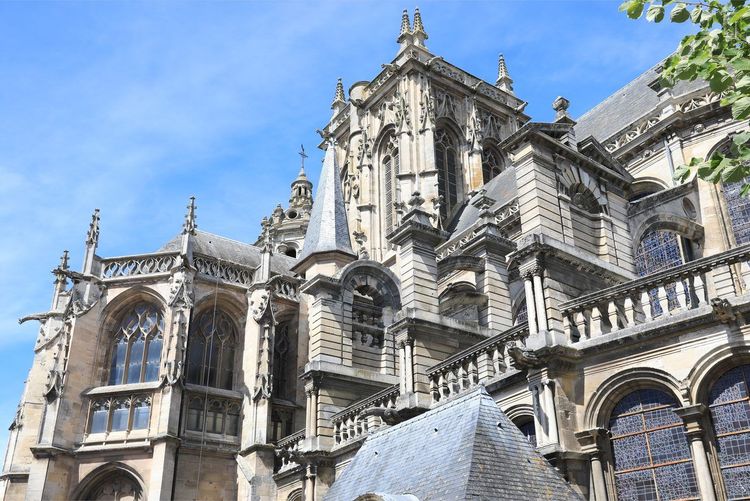
Less photographed than the basilica, the église Saint-Germain nonetheless retains an 11th-century Romanesque choir beneath later Gothic additions. It is one of the rare witnesses to the Argentan that existed before the great fire that devastated part of the town in the Middle Ages.
The interior, more austere than the neighbouring basilica, lends itself to a quick but instructive visit tracing the architectural evolution of the town between the 11th and 15th centuries. Opening hours generally follow those of services, in the late morning. Take the time to study the choir capitals, carved with simple plant motifs typical of Norman Romanesque art: they rank among the oldest surviving examples of sculpture preserved in the town.
8. Les Étangs de la Herse
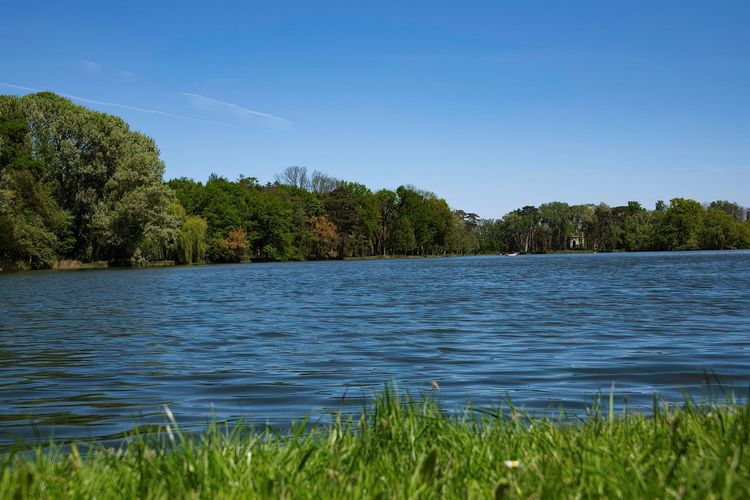
On the southern edge of Argentan, the étangs de la Herse (Route de la Herse, 61200 Argentan, rated 4.6/5 on Google from 97 reviews) form a leisure area popular for fishing, canoeing, and shaded walks. The main lake covers around ten hectares, fed by a tributary of the Orne.
In summer, a grassy area attracts families for a picnic, with a few tables and children's play equipment. Carp fishing also draws regulars who sometimes camp on site at weekends; a day fishing permit is sufficient for passing visitors.
Allow a good hour for a full circuit on foot around the lake, longer if you stop to watch the coots and grebes that nest on the banks. A fitness trail and several play areas complete the site, pleasant in every season just a short distance from the town centre.
9. The Saturday Morning Market
Every Saturday morning, place Henri IV and the surrounding streets transform into a traditional market where local producers sell farmhouse camembert, dry cider, and Norman poultry. The atmosphere is more authentic than touristy, a reliable indicator of local life.
Arrive early if you want the best farmhouse products: some cheese stalls are picked clean by 10 a.m. during busy periods. Beyond the food stalls, a few flower and clothing sellers round out the market, which spills into the neighbouring pedestrian streets. It is the ideal opportunity to taste the local produce before heading to the haras du Pin or Camembert, or on to Caen for its own Ryo audio-guided tour to round out the Norman getaway.
10. The Haras National du Pin
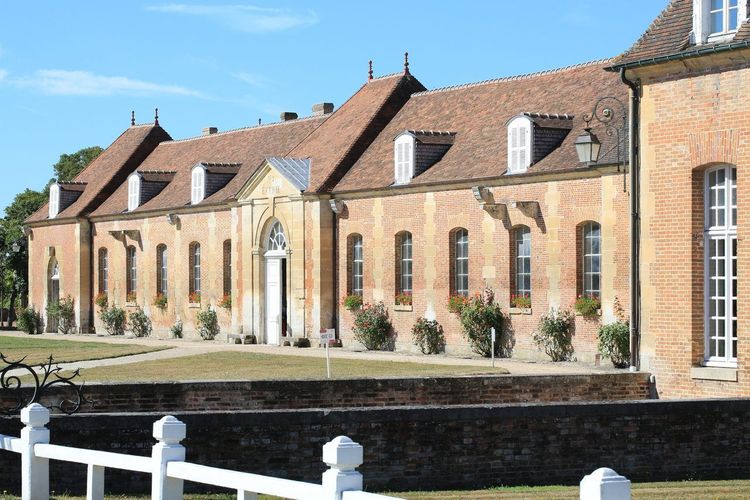
Nicknamed the Versailles of the horse, the haras national du Pin (Le Haras, 61310 Le Pin-au-Haras, rated 4.5/5 on Google from 1,561 reviews) occupies an estate of more than 1,100 hectares about twenty minutes from Argentan by road. Built from 1715 on the orders of Louis XIV, the main château and its stables lay out a Classical perspective rare for an equestrian site.
The estate is home to around forty breeding stallions of several breeds, from the Percheron to the Anglo-Norman thoroughbred. On presentation days, generally at weekends and during the major summer equestrian festivals, the horses are led in hand in front of the château in a choreography that has been refined over decades — a spectacle included in the estate's entrance ticket.
Book your ticket online on busy days, particularly during the Jeudis du Haras events held in summer. Allow half a day to enjoy both the guided tours of the stables and the park, plus a possible carriage display. Children particularly enjoy getting close to the foals in the adjoining paddocks.
Le Pin is one of the rare national studs still in full operation in France, a status that explains the quality of the site's preservation despite its age.
11. Camembert, the Village That Gave Its Name to the Cheese
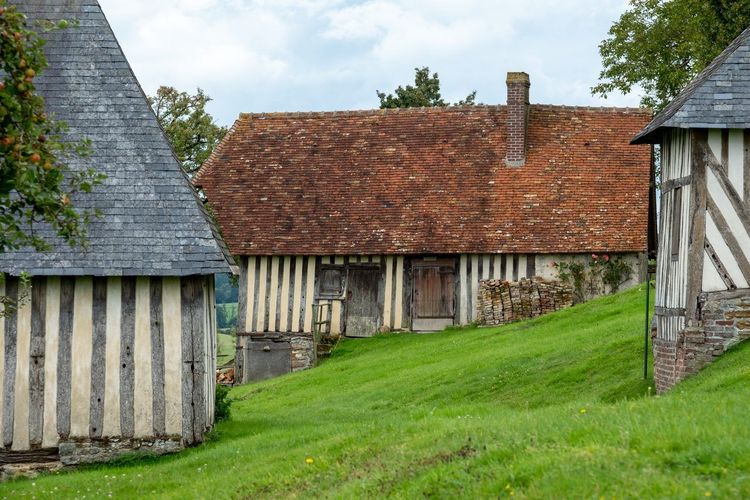
About twenty kilometres from Argentan, the hamlet of Camembert has only a handful of inhabitants but concentrates the history of one of the world's most exported cheeses. It is here that Marie Harel is said to have perfected the current recipe at the end of the 18th century, on the advice of a priest taking refuge during the Revolution.
The Maison du Camembert (Le Bourg, 61120 Camembert, rated 4.3/5 on Google from 1,218 reviews), set in a traditional half-timbered farmhouse, traces the traditional production process and offers a tasting at the end of the visit. The old farm of Marie Harel, now private property, remains visible from the road even though it cannot be visited.
Some artisan dairies in the surrounding area open their doors for visits by appointment, a good option for watching the ladling process — a step that still distinguishes a genuine AOP Normandy camembert from its industrial counterparts. Allow around two hours to combine the village and a nearby dairy.
The little village, nestled around its church and a few farms, can be crossed on foot in ten minutes but is worth the detour for the postcard scene alone, statue of Marie Harel included on the main square.
12. The Donjon de Chambois
About fifteen kilometres from Argentan, the donjon de Chambois ranks among the best-preserved keeps in Normandy, with its four floors still open to visitors and its roughly twenty metres of height. Built at the end of the 12th century, it escaped the major destructions that affected other fortresses in the region. From the upper floors, the eye sweeps across the surrounding countryside — a panorama that helps to understand the strategic importance of this strongpoint in August 1944.
The village of Chambois also carries the memory of the Falaise-Argentan Pocket: it was here that Allied and German troops fought fierce battles in August 1944, an episode documented in greater detail at the nearby Montormel memorial.
The keep is generally visited on guided tours in summer, at fixed times announced by the Terres d'Argentan tourist office. Wear sturdy shoes for the stone staircases, which are quite steep on the upper levels.
13. Vimoutiers and Its Camembert Museum
Half an hour from Argentan, the small town of Vimoutiers long rivalled Camembert for the unofficial title of cheese capital. Bombed in 1944, it rebuilt its town centre in a style characteristic of post-war Normandy, with fairly uniform light-brick façades.
The musée du Camembert (Avenue du Général de Gaulle, 61120 Vimoutiers, rated 4.4/5 on Google from 365 reviews), located in the town centre, traces the industrial history of the cheese from its rise in the 19th century to the protected designation of origin obtained in 1983 for genuine raw-milk Normandy camembert.
A statue of Marie Harel, donated in 1928 by a grateful American cheesemaker, still stands in the central square, despite damage sustained during the bombings and a head that has been reattached several times since.
14. The Château de Falaise, Birthplace of William the Conqueror
About thirty minutes from Argentan, the château de Falaise (Place Guillaume le Conquérant, 14700 Falaise, rated 4.5/5 on Google from 5,454 reviews) stands on a rocky spur overlooking the Ante valley. It is here that William the Conqueror is said to have been born around 1027 — future Duke of Normandy and King of England after the Battle of Hastings in 1066. The main keep, restored in the early 2000s, remains one of the best-preserved examples of 12th-century Norman military architecture.
The visit combines vaulted rooms, a reconstruction of court life, and a multimedia trail immersive enough for families. A contemporary Corten steel walkway, added during the restoration, allows visitors to cross certain parts of the keep without using the original staircases — a solution that sparked debate at its inauguration but greatly eases the visit for families with children or for visitors with reduced mobility.
Book the guided tour in high season, as slots fill up quickly at weekends. Allow an hour and a half for the full route, longer if you add the climb to the top of the keep, whose view stretches to the Pays d'Auge countryside on a clear day.
The town of Falaise also paid a heavy price in August 1944, largely destroyed during the battle of the Pocket — a context that several panels in the château recall throughout the visit.
15. The Mémorial de Montormel
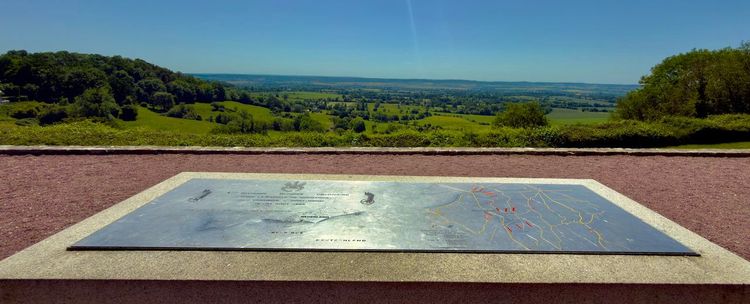
On the heights of Coudehard, about twenty minutes from Argentan, the mémorial de Montormel (Coudehard, 61160 Mont-Ormel, rated 4.6/5 on Google from 1,169 reviews) overlooks what was the final bottleneck of the Falaise-Argentan Pocket in August 1944. From the panoramic terrace, you can still make out the valleys where some of the bloodiest fighting of the Normandy campaign took place, with tens of thousands of German soldiers encircled within a matter of days.
The museum displays period equipment, tactical maps, and testimonies that place Argentan and its surroundings at the heart of a decisive episode of the Second World War, often less well known than the D-Day landings themselves. An orientation table allows visitors to follow the battle hour by hour while looking out over the actual landscape.
The visit suits history enthusiasts and families alike, thanks to an accessible educational trail. Allow around one hour, longer if you then walk to the nearby viewpoint at Mont-Ormel, reachable via a marked footpath.
16. An Escape into the Suisse Normande
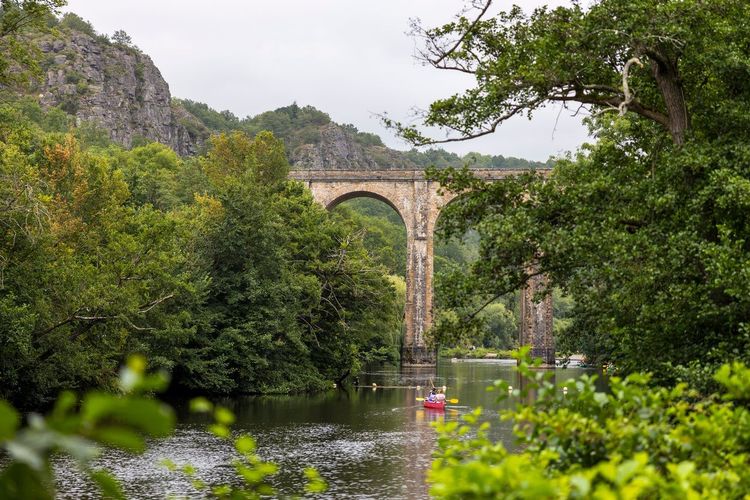
To extend the stay, the Suisse Normande, around Clécy, lies just under an hour from Argentan by road. The name owes its appeal mainly to the relief, which is hilly enough for the region, with gorges carved by the Orne that have been drawing climbers and canoe enthusiasts for decades.
The Rocher des Parcs (Rocher des Parcs, 14570 Clécy, rated 4.7/5 on Google from 25 reviews), a granite cliff well known to Norman climbers, also offers a viewpoint accessible on foot for walkers. Below, several hire companies offer canoes and kayaks for descending the Orne over a few kilometres, a popular family activity in summer.
If your Norman stay extends beyond Argentan, the Ryo app already lists several audio-guided tours in other French towns — handy for planning the next stages of the route.



FAQ
How much time should you allow to visit Argentan?
One day is enough for the historic centre (the basilica, the Maison des Dentelles, and the tour Marguerite de Bretagne). Add another day to combine excursions to the haras du Pin, Camembert, or the château de Falaise.
What is Argentan's speciality?
Needle lace known as point d'Argentan, one of the rarest craft techniques in France and a close cousin of the point d'Alençon registered by UNESCO. The town is also renowned for its Saturday farmers' market and its proximity to the Camembert dairies.
Is Argentan a good base for visiting Normandy?
Yes, its central position in the Orne département allows you to fan out towards Falaise, the Suisse Normande, the haras du Pin, and the D-Day beaches in under an hour and a half by road — an advantage that the Ryo app helps you organise throughout your stay.
What should you see in Argentan in half a day?
Head first to the basilique Notre-Dame, then the Maison des Dentelles, followed by a stroll along the promenade des Ados beside the Orne — the densest itinerary available in the town centre.
Where should you eat in Argentan?
The town centre has several restaurants around the place du Marché, serving classic Norman cuisine (cider, camembert, andouille sausage). The Saturday morning market remains the best option for putting together a local picnic.
Is Argentan close to Mont-Saint-Michel?
Allow around an hour and forty minutes by road, a reasonable journey for a day trip from Argentan if the rest of your Norman stay is organised around the Orne.
Argentan lends itself to a visit at your own pace, combining medieval heritage, extraordinarily rare lace, and wide-open Norman countryside right on the town's doorstep. The historic centre can be explored on foot in a morning, while the surrounding area — from the haras du Pin to the château de Falaise — deserves a full day for anyone who wants to understand why this part of the Orne mattered so much in the history of ducal Normandy and then in the Liberation.
Argentan does not yet have its own audio-guided tour, but the Ryo app already allows you to plan the next stages of a Norman stay calmly, town by town, slipping into your itinerary the audio-guided tours already available in other French cities — enough to turn a simple question, what to do in Argentan, into a complete itinerary across the whole pays d'Auge and pays d'Ouche.
À lire également