© Shutterstock
 Votre guide Ryo
Canoeing & Kayaking in Normandy: the 9 Best Spots to Paddle in 2026
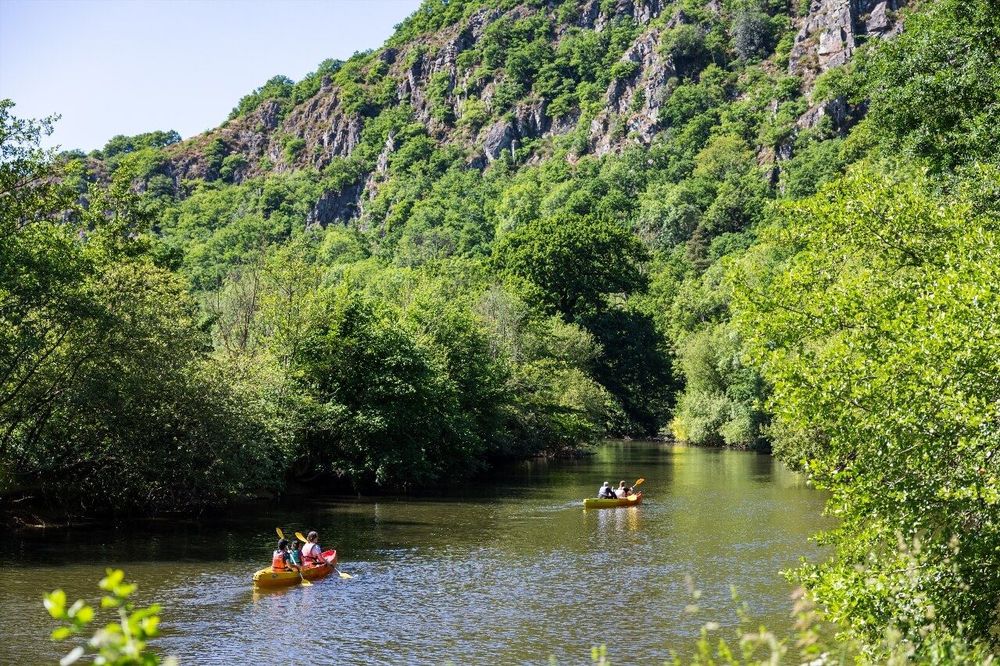
Canoeing and kayaking in Normandy remains one of the region's best-kept secrets: it unrolls more than 3,000 kilometres of navigable waterways, yet the majority of visitors only ever see them from bridges. With a paddle in hand, though, an entire region changes its face: the chalk cliffs of the Côte d'Albâtre drop sheer into a slate-grey sea, the meanders of the Risle cut through beech forests where silence feels almost heavy, and the gorges of the Orne at Clécy look more like the Dordogne than anything you might picture when you think of Normandy. If you are looking for where to go canoeing and kayaking in Normandy in 2026, this guide takes you to the nine most compelling sites, with the practical information other lists leave out: required skill levels, real distances, rental bases, and best seasons. As a bonus, once the paddle is put away, the Ryo audio guide of Rouen awaits with 27 audio stops to explore the Norman capital in a whole new way.
From sea kayaking along the cliffs of Étretat to a leisurely family paddle down the Risle, the region covers a very wide spectrum. Here you will find an under-the-radar river in the Eure that can keep you busy for two full days, a canyon with 60 metres of relief in the Calvados that even long-time Normans underestimate, and a nautical centre in the Manche that rents transparent sea kayaks for hugging the Cotentin coast. Each spot is described with its highlights, its constraints and the alternatives if the weather refuses to cooperate.
Why Normandy Is Ideal for Canoeing and Kayaking
People think of the D-Day beaches, the cliffs, the camembert. Rarely the rivers. That is precisely where Normandy's advantage lies for the kayaker: competition is low, waterways are uncrowded, and landscapes remain intact for want of nautical over-tourism.
The region divides into several major river basins, each with a distinct personality. The Orne carves gorges through the Armorican massif — this is canoeing and kayaking that feels like a genuine adventure. The Risle and the Eure flow through bocage valleys with gentle gradients, ideal for beginners and families. The Seine offers long navigable stretches with a moderate current. And the coastline, from Dieppe to the Cotentin, provides sea kayaking for those who want the thrill of an open horizon.
The optimal season runs from April to October, with a peak in July–August for families and a peak flow in March–April for those who prefer livelier rivers. Outside school holidays, most nautical bases operate on weekends only — check before making the journey.
The Risle: Paddlers' Paradise in the Eure
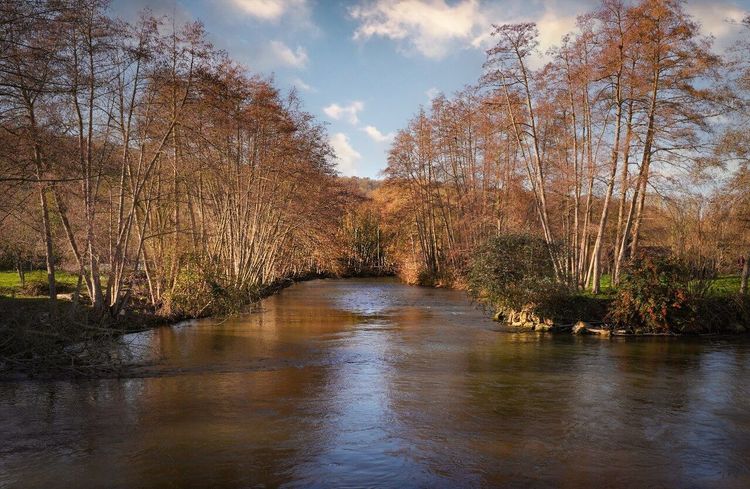
The Risle is probably the most enjoyable river in Normandy for canoeing and kayaking. It rises in the Orne, crosses the Eure over 140 kilometres and flows into the Seine estuary at Pont-Audemer. Its profile is exceptional: a steady current of 2 to 4 km/h, a comfortable width of 15 to 25 metres, wooded banks with no artificial development over long stretches, and water clear enough to see the bottom outside of flood periods.
The most popular section runs from Brionne to Pont-Audemer, roughly 50 kilometres divisible into two or three full-day stages. The best-known base in the valley is Randonn'Eure, based at Routot, which organises return shuttles and rents two-to-four-person canoes as well as solo kayaks.
What the brochures won't tell you: the Risle changes dramatically with the season. In April–May, the current carries you and you can cover 18 to 20 kilometres in a day without effort. In July–August, the flow drops and some shallow sections require you to drag your craft a few metres. Wear closed-toe shoes if you come in summer.
The Risle is classified as a first-category fishing river along a good part of its course, meaning remarkable aquatic wildlife: grey herons, kingfishers, otters and occasionally great cormorants perched like sculptures on low branches. The stretch between Pont-Authou and Appeville-Annebault is particularly wild: no parallel road, no house visible from the water, just the Forêt de la Montagne Saint-Michel on one side and damp meadows on the other.
Skill level: beginner, from age 8. No particular technique is required on the flatwater sections. Families with young children will prefer the family canoe (3–4 seats) over solo kayaks.
The Orne and the Canyon at Clécy: the Suisse Normande by Kayak
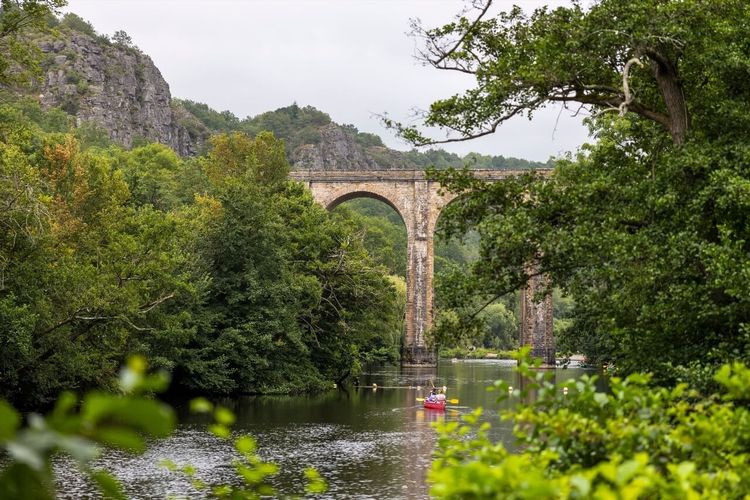
The area around Clécy in the Calvados is the surprise that most Normandy guides overlook. Thirty-five kilometres south of Caen, the Orne cuts through a massif of sandstone and schist, forming enclosed meanders with relief that can exceed 60 metres between the ridges and the river. The nickname 'Suisse normande' is no exaggeration: the scenery is closer to the Vézère valley than to any image you might have of Normandy.
The Centre de Pleine Nature in Clécy is the benchmark for canoeing and kayaking in this area. It offers marked descents of 3 to 22 kilometres at varying levels depending on the section chosen. The standard 8-kilometre descent between Saint-Omer and Clécy is suitable for beginners; the upstream stretch between Thury-Harcourt and Clécy, with more rapids (class I–II), is aimed at those who already have a few hours of paddling under their belts.
Best time to go: March to June, when the Orne carries enough water to clear the rocky passages without scraping the bottom. In high summer some sections run too low. In return, the Norman spring offers ridge-tops still covered in fresh beech leaves and a light of rare softness.
A practical tip: if you are spending a day in Clécy, combine the morning kayak descent with an afternoon hike up to the Pain de Sucre. This limestone viewpoint at 260 metres altitude gives a bird's-eye view of exactly the meanders you have just paddled. The effect is striking.
Caen is 35 minutes away by road. The Ryo audio guide for Caen, with its 22 audio stops on the Caen self-guided tour, lets you extend the day in the city after your descent.
The Seine Between Vernon and Les Andelys
The Seine in Normandy has a reputation as an industrial river. That is true at Rouen, where barges and container ships set the tone. But upstream, between Vernon and Les Andelys, the river regains an almost bucolic gentleness that kayakers know well.
The Vernon–Les Andelys section covers roughly 30 kilometres and can be paddled comfortably in a single day or in two stages with an overnight bivouac. The Seine's current is slower than the Risle's — expect 1 to 2 km/h — but the width of the river (100 to 150 metres) gives a sense of grandeur that smaller waterways cannot match. The enclosed meanders between limestone cliffs and forests rank among the most beautiful landscapes in the Norman Seine valley.
Two sites are unmissable from the water. Giverny first: paddling under the willows, you can spot Claude Monet's house from the river at an angle the painter himself never depicted. Then Les Andelys, with Château Gaillard perched on its cliff — one of the best-preserved medieval fortifications in Normandy, built by Richard the Lionheart in barely two years between 1196 and 1198. The view from the water is more impressive than from the road.
Skill level: beginner. The Seine on this stretch is navigable with no prior experience. Watch out for pleasure boats in summer — hug the banks and stay visible.
If you have an extra day to give to Rouen, the Ryo self-guided audio tour of Rouen with 27 audio stops guides you through the city of a hundred spires, between the Gothic cathedral and the half-timbered streets.
The Gorges de la Vire, Manche
Less well-known than the Risle or the Orne, the gorges de la Vire in the Manche nevertheless offer one of the most spectacular backdrops in the region for canoeing and kayaking. The Vire cuts through a schist plateau, carving deep gorges where in places the rocky walls drop straight into the water from more than 30 metres above.
The area around Saint-Lô towards Condé-sur-Vire concentrates most of the rental bases. The most popular stretch runs 15 kilometres between Rocher de Ham and Saint-Lô, with several class-I rapids manageable from intermediate level onwards. The particular beauty of this route lies in its rocky needles rising from the water like natural sculptures — locals call them the 'dents de la Vire'.
Practical note: the season on the Vire is short, as the flow drops sharply between mid-July and September. May–June is the ideal window. For the rest of summer, check water levels before you go — some bases post real-time conditions on their social media.
The Eure: Pont-de-l'Arche and Louviers
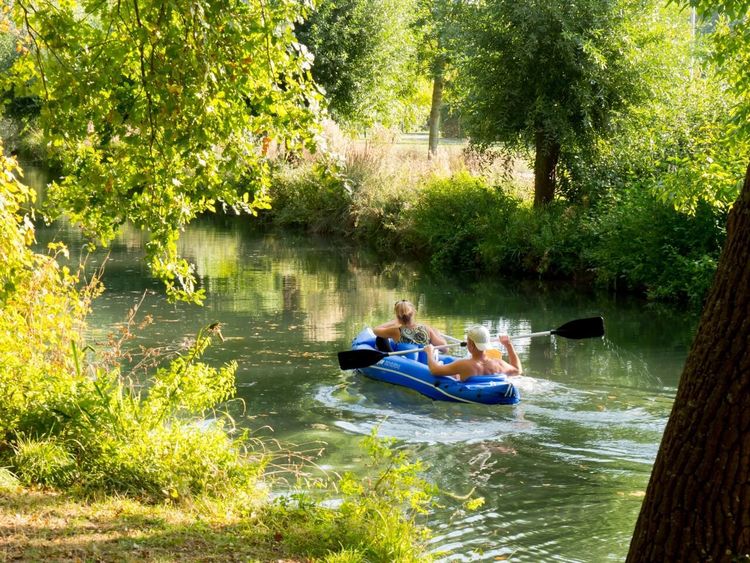
The river Eure offers a lesser-known alternative to the Risle in the same département. The stretch between Pacy-sur-Eure and Pont-de-l'Arche measures 40 kilometres and has an even gentler profile than the Risle: weak current, grassy banks, passages under medieval bridges. Perfect for a first canoeing or kayaking experience with very young children.
The town of Louviers has developed a project to showcase the network of water channels that once ran through its old cloth-weaving workshops. Today, local associations offer kayak tours of these urban canals — an original experience that blends paddling with industrial history.
What sets the Eure apart from its neighbours: the presence of many water mills still standing, sometimes still operational, which you paddle past at close range. Near Acquigny, the Renaissance château and its grounds border the river, providing one of the most photographed scenes among kayakers in the area. This stretch is particularly popular with wildlife photographers: aquatic fauna is plentiful, with colonies of coypu and groups of mallards taking off noisily as you approach.
The Côte d'Albâtre by Sea Kayak
Moving from river to sea changes everything. Sea kayaking along the Côte d'Albâtre, between Fécamp and Dieppe, is a discipline in its own right that demands a minimum of experience and a serious read of weather conditions. But the scenery is unmatched in Normandy: white chalk cliffs plunge vertically into an intensely green sea, natural arches carved by erosion can sometimes be paddled through in calm weather, and pebble beaches accessible only from the water give a sense of the world's end barely 1h30 from Paris.
The Centre Nautique de la Côte d'Albâtre (Quai de la Vicomté, 76400 Fécamp, rated 4.7/5 on Google from 70 reviews), based in Fécamp, is the main operator in the area. It offers guided outings along the cliffs, with introductory packages for beginners (2 hours with an instructor) and coastal tours for more experienced paddlers (full day, 15 to 20 km).
Dieppe is 35 kilometres away. Take the opportunity to explore the city with the Ryo audio guide of Dieppe and its 22 audio stops tracing the history of this pioneering port in cross-Channel connections.
A critical point: never underestimate conditions in the English Channel. Tidal currents can reach 3 to 4 knots in certain areas, and westerly winds build quickly. Always go out with a sea-approved life jacket and check the Météo-France maritime forecast before launching. And to unwind on land, our audio-guided tour of Caen loops 4.6 km through the old town, starting from the Abbaye aux Hommes.
The Touques Estuary: Between Deauville and Trouville
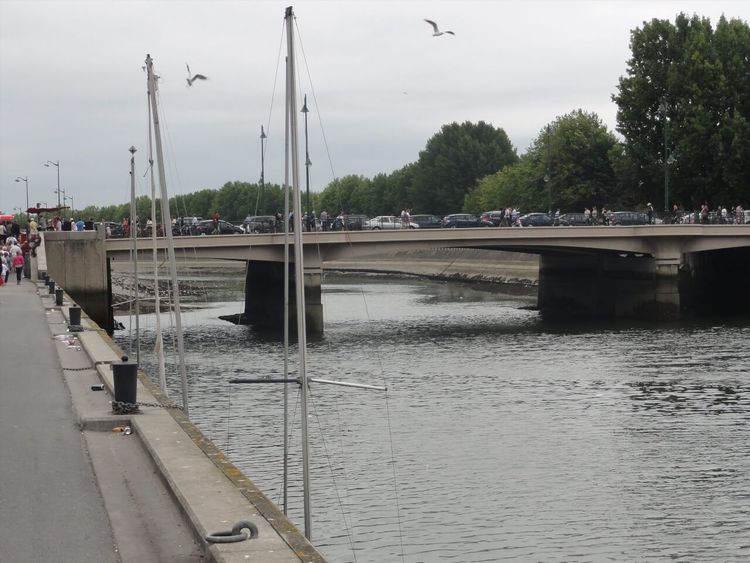
Less athletic but singularly beautiful, kayaking in the Touques estuary between Deauville and Trouville offers an experience you will find nowhere else in Normandy: paddling between two legendary 19th-century seaside resorts, with their Belle Époque villas reflected in the calm river water.
The Touques is navigable for about fifteen kilometres from Pont-l'Évêque down to its mouth. The estuary itself, wide and tidal, is best explored in the two hours following high tide, when the current helps you in one direction and then the other. The mudflats exposed at low tide host hundreds of wading birds in autumn and spring.
Deauville deserves some exploration on foot after paddling. The Ryo audio guide of Deauville with 19 audio stops plunges you into the glamorous and surprising history of this resort that saw Coco Chanel, Marcel Proust and virtually all of Hollywood pass through over the decades.
Lakes and Nautical Centres: Caniel, Bréhal, Saint-Sauveur-le-Vicomte
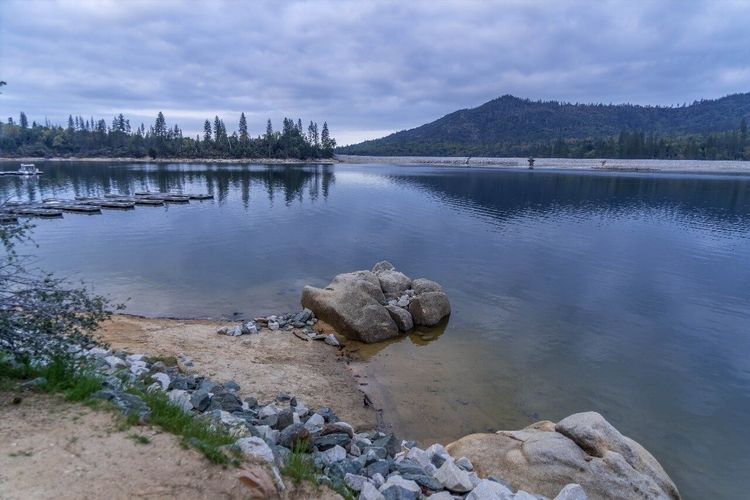
Not every kayaker is looking for a river adventure. For families with very young children, absolute beginners or simply those who want a safe environment, Normandy's lakes and nautical centres offer excellent conditions for learning to canoe and kayak.
Lac de Caniel, at Vittefleur in Seine-Maritime, is an artificial reservoir surrounded by forests, nestled in the Durdent valley between Saint-Valery-en-Caux and Fécamp. The leisure base on its shores offers kayak rental, pedal boats and stand-up paddleboards — a family-friendly mix that works well for a relaxed day out.
On the Manche side, the nautical centres at Bréhal and Granville (run by 8 Milles Nautic) offer sea kayaking in semi-sheltered waters, with introductory sessions available from age 6. At Saint-Sauveur-le-Vicomte, the leisure base on the Douve is perfect for a family half-day sheltered from the Cotentin winds.
These venues generally have more affordable rates than river bases: budget €12 to €18 for one hour of kayaking, with half-day packages at €30–40 including all equipment.
Canoeing and Kayaking Around Rouen: Paddling in Seine-Maritime
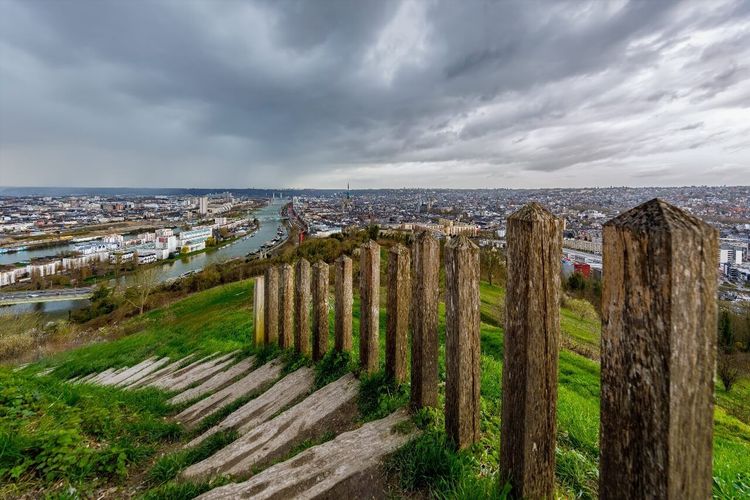
Seine-Maritime combines two assets often overlooked for canoeing and kayaking in Normandy: the Seine itself with its meanders around Rouen, and a coastal shoreline accessible by sea kayak from several points along the coast.
The association Pagaies en Seine organises regular outings on the Seine both upstream and downstream of Rouen. The Elbeuf–Rouen stretch (25 km) is particularly rewarding: you paddle beneath the same limestone cliffs and forests that inspired the painters of the Barbizon school, while progressively approaching the city whose cathedral towers appear on the horizon.
The AONES Canoë Kayak club in Rouen also offers training sessions and club outings for paddlers who want to improve their technique — an interesting option if you are considering joining a club after your stay.
Rouen is well worth an extra day. The Ryo self-guided audio tour of Rouen lists 27 audio stops between the Notre-Dame cathedral, the Gros-Horloge and the medieval lanes of Vieux-Rouen — one of the best audio coverages of the city available on a smartphone.
On the Seine-Maritime coast, the port of Dieppe also makes a good starting point for marked sea-kayak sessions organised by the local club.
Practical Information for Planning Your Canoeing and Kayaking Trip in Normandy
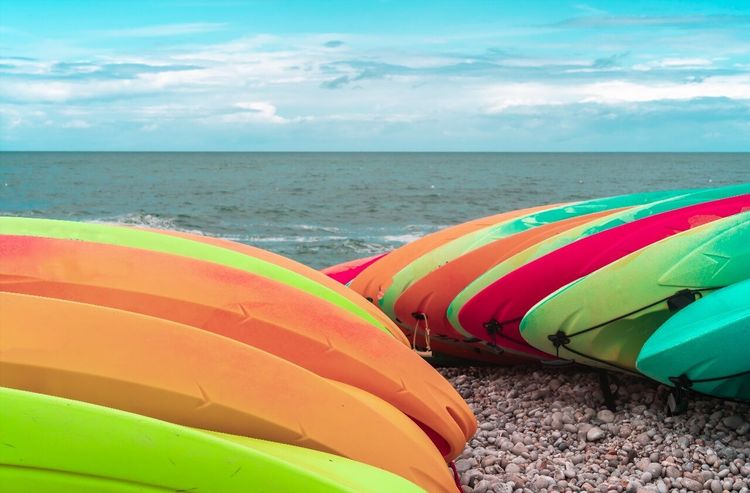
Before heading out on the water, a few practical points to keep in mind.
Skill levels and safety. Most Norman waterways are accessible without a licence or prior training on the marked sections offered by commercial bases. Rivers are graded from class I (flat water, easy) to class VI (unrunnable). In Normandy, rivers suitable for families tend to fall around class I–II. Beyond that, prior experience is essential.
Provided or personal equipment. Rental bases always provide a life jacket, paddle, helmet where applicable and a waterproof barrel for your belongings. Bring a change of clothes, sunscreen, water and a snack. In summer, a wetsuit is not necessary on inland rivers, but it is advisable for sea kayaking even in July.
Indicative prices in 2026. Budget €25 to €45 per person for a half-day (3–4 hours) with return shuttle included. Full-day packages (6–7 hours) cost between €35 and €60. Children generally receive a reduced rate from age 8. Some bases offer group rates from 8 people — ask directly.
Booking. In July–August, most bases are fully booked at weekends. Reserve at least a week in advance. On weekdays, availability is generally good even in peak season.
Weather and water levels. Normandy is a windy and rainy region even in summer. Check the Météo-France forecast (website or app) and real-time river levels on Vigicrues for inland waterways. A river in flood is dangerous even for experienced paddlers.
To round out your stay in Normandy, the Ryo audio guide of Honfleur offers a 20-audio self-guided tour for a one-hour walk around this harbour town that gave birth to French Impressionism.



FAQ
Where can beginners go canoeing and kayaking in Normandy?
The rivers best suited to beginners and families are the Risle (Eure), the Eure between Pacy and Pont-de-l'Arche, and the Seine between Vernon and Les Andelys. These three waterways feature a gentle current, no significant rapids, and well-equipped rental bases with return shuttles. For children under 8, opt for lakes such as lac de Caniel where conditions are fully controlled.
What Is the Best Place to Canoe and Kayak at Clécy?
The Centre de Pleine Nature in Clécy is the go-to venue for paddling the Orne through the Suisse normande. It offers several routes from 3 to 22 km at varying difficulty levels, from beginner to intermediate. The classic 8 km descent between Saint-Omer and Clécy is suitable from age 10 with no prior experience. Book in advance in May–June, the best season for this stretch.
Can You Go Canoeing and Kayaking in Normandy Outside of Summer?
Yes, and some rivers are actually better in spring. The Risle, the Orne and the Vire carry more water between March and June, making navigation easier and avoiding low-water portages. Many bases operate on spring weekends. However, most close from November to March — check opening periods before you plan.
What Gear Should You Bring for a Canoeing and Kayaking Trip in Normandy?
Rental bases provide the essentials: kayak or canoe, paddle, life jacket. On your side, bring a change of clothes (you will get wet), closed-toe shoes that can get wet, sunscreen, water and a snack. A personal dry bag is useful for your phone and keys. On the sea, a light wetsuit is recommended even in summer.
What Is the Average Price for a Canoe and Kayak Rental in Normandy?
Prices vary by base and duration. Budget around €25 to €35 per person for a half-day with shuttle, €35 to €60 for a full day. Group rates (8 people or more) are generally negotiable. Some bases offer weekend packages with nearby campsite accommodation, which works out cheaper than organising everything separately.
Is Sea Kayaking Accessible to Beginners on the Normandy Coast?
With an instructor, yes. The Centre Nautique de la Côte d'Albâtre in Fécamp offers 2-hour introductory outings with an instructor, open to participants from age 14. However, paddling independently on the Normandy coast requires solid experience: tidal currents are strong, winds unpredictable, and the cliffs offer no shelter in case of trouble. Never go out alone and always check conditions before launching.
Conclusion
Normandy is a seriously underrated canoeing and kayaking destination. Between the Risle and its 50 kilometres of unspoilt nature, the spectacular canyon of the Orne at Clécy, the Côte d'Albâtre cliffs seen from the water, and the meanders of the Seine beneath Château Gaillard, you have enough to paddle several weekends without ever repeating yourself.
And once the paddle is put away, Normandy is still there to explore. The Ryo audio guide is available for Le Havre with 18 audio stops on Auguste Perret's architecture and the history of this city rebuilt after the war, as well as for Rouen, Caen, Dieppe, Deauville and Honfleur. All cities that deserve an evening after a day on the water.
À lire également