
Créé par Emilie, le 17 nov. 2026
Votre guide Ryo
Dieppe, France
Against wind and tide
Parcours audioguidé pour visiter Dieppe en 1 jour
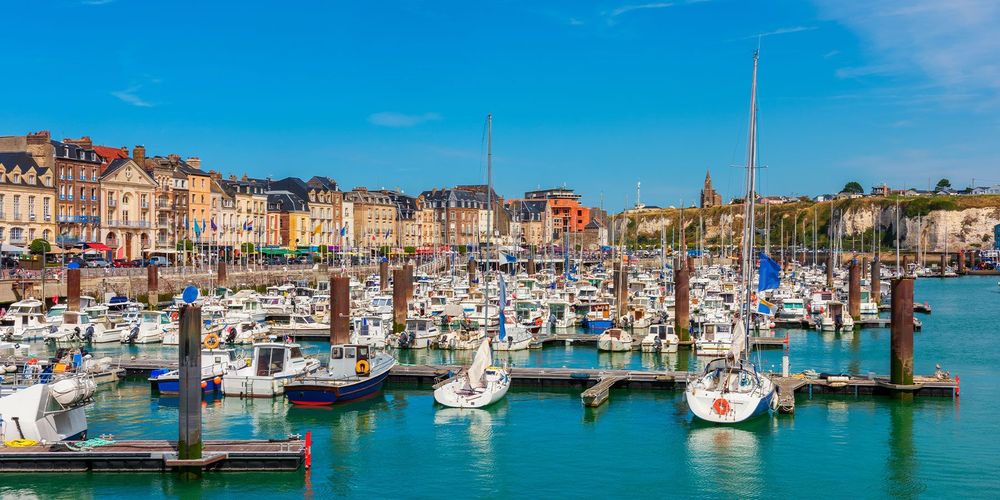
This tour of Dieppe invites you into a landscape where land meets sea, where white chalk cliffs rise above the foaming waters of the English Channel. Breathe in the salty air of this historic port, where the refined spirit of early seaside resorts meets the authenticity of a still-thriving maritime life. Between seafront façades opening onto the horizon and sheltered streets tucked away from the wind, the city reveals a proud character shaped by explorers and ocean spray. It’s a walk guided by shifting reflections and endless views, offering a vivid sense of a place that lives to the rhythm of the tides.
Quand partir à Dieppe ?
Jan.
8°
13
Feb.
8°
11
March
10°
10
April
13°
9
May
16°
9
June
18°
9
July
21°
8
Aug.
21°
9
Sept.
19°
10
Oct.
16°
12
Nov.
11°
14
Dec.
9°
14
Dieppe has a cool oceanic climate, with summers around 20°C and windy winters between 3°C and 8°C. The ideal period runs from June to September to enjoy the seafront and the cliffs. Don't miss September in even-numbered years for its famous International Kite Festival, or spring to savor its renowned scallops (coquilles Saint-Jacques) on the harbor.
Départ conseillé
No need to worry about where to begin! Our tours are designed as a loop, so you can jump in wherever you are. The navigation system and audio-guide will automatically adjust to your location. However, if you happen to be nearby, we do have a preferred starting point : opposite Les Tourelles.
Parking à proximité
Parking Indigo Dieppe La Plage : 102 Bd de Verdun
Dieppe has a number of parking facilities in its small streets, with or without reservation. Some are even free, such as those on the seafront or near the station, which is estimated to be around 10 minutes' walk from the city centre.
Découvrez 23 lieux d'intérêt pour visiter Dieppe








What to see in Dieppe on your 2h tour?
This 5 km loop takes about 2 hours and links 22 sights in Dieppe. It starts at the Tourelles gate and the Castle-Museum perched on the cliff, crosses Saint-Rémy and Saint-Jacques churches, then crosses the port's bridges into the Pollet district and its chapel. It then follows the harbour and Henri IV Quay up to the Abraham Duquesne statue and the Grande Rue. With the app in your ears, every stop tells a little of the city's seafaring story.
Information checked in November 2026 and subject to change.
1 - The Tourelles
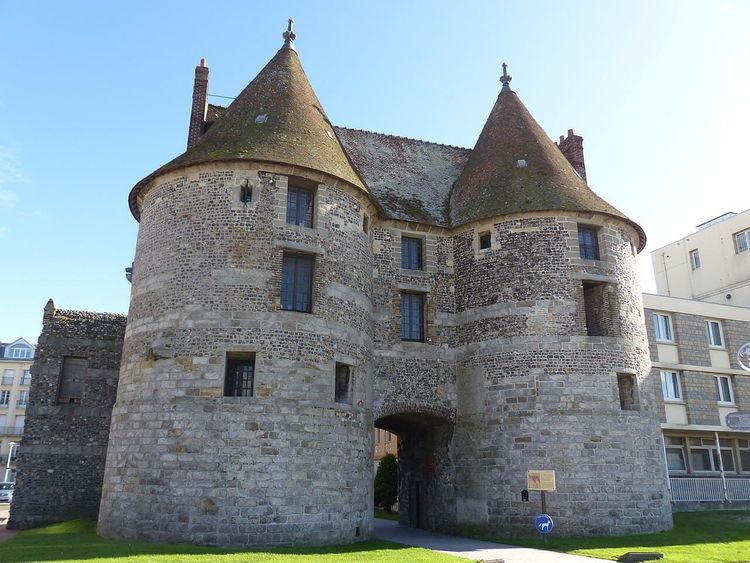
Facing you, on Boulevard de Verdun, two round towers of sandstone and flint stand out clearly from the surrounding buildings. They're all that remains of the six gates that once punctuated Dieppe's 15th-century fortified wall, swept away by 19th-century seaside development works. Used as a prison until 1825, the monument also saw the departure of the King's Daughters, sent to Quebec by Louis XIV to help populate New France. It now houses the headquarters of an international kite festival, held every two years since 1980.
Free to see from outside
2 - Castle-Museum

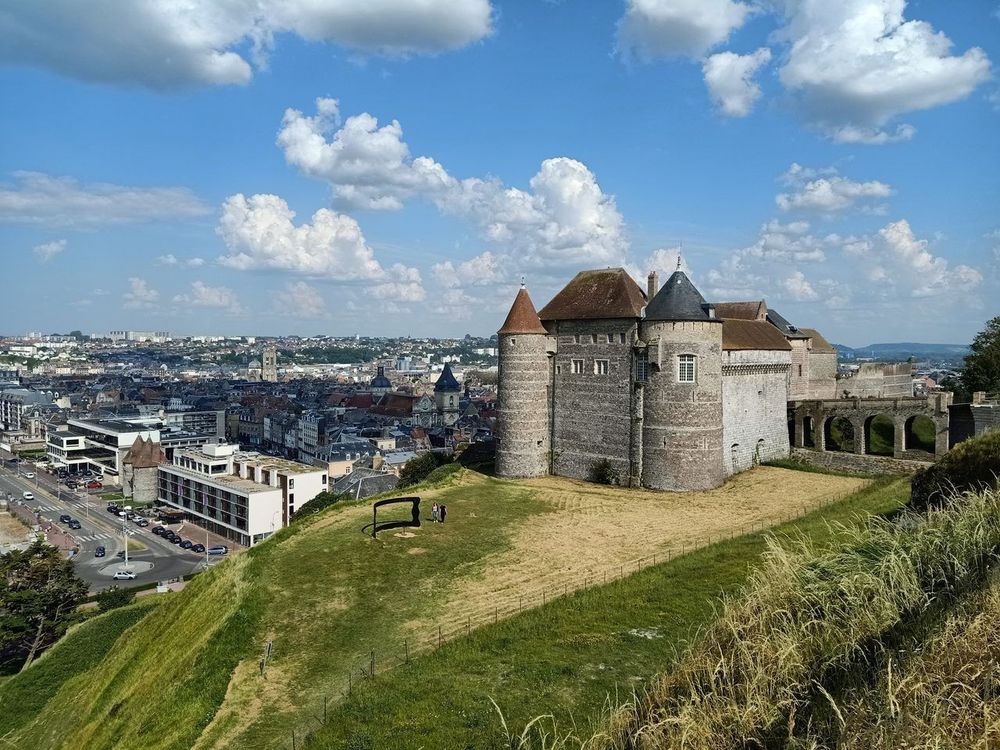
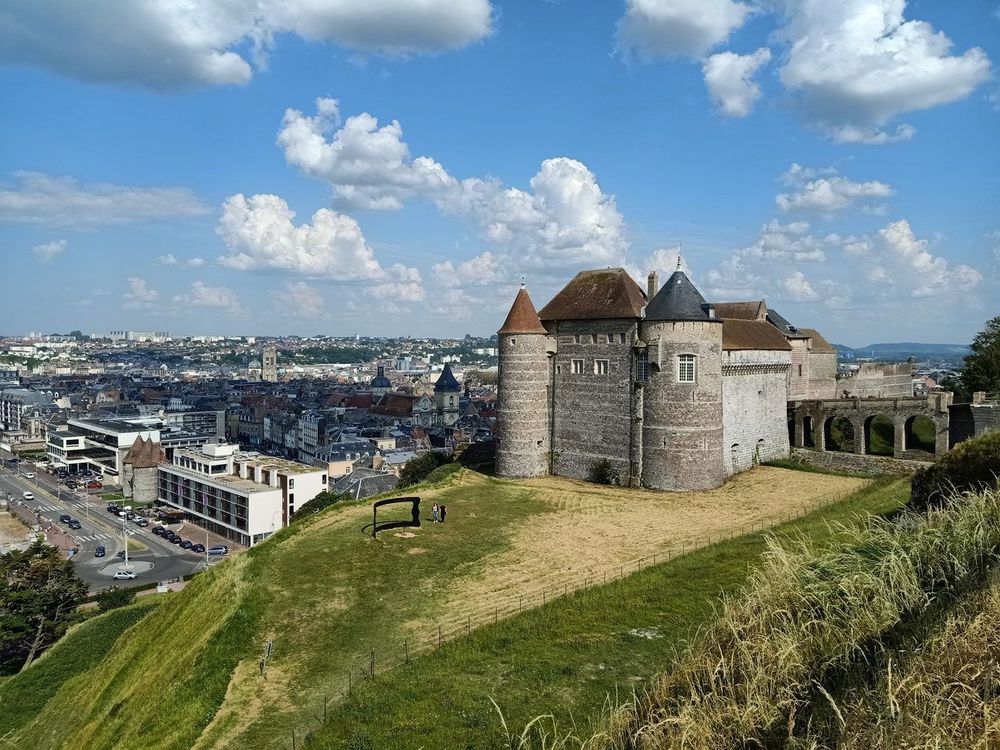
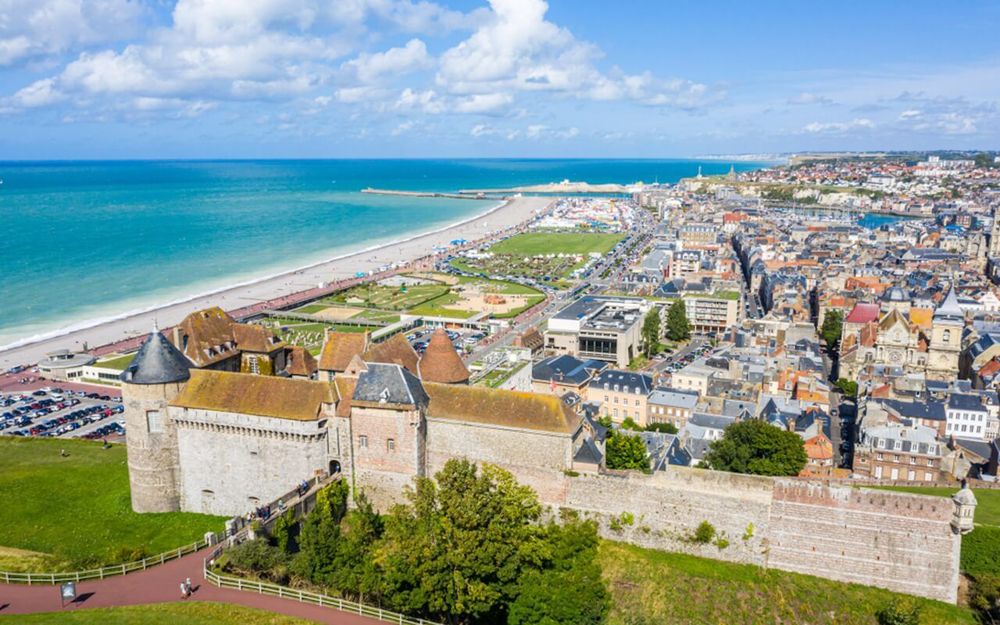
Perched on the cliff overlooking the town, this fortress is thought to date from around 1188, raised under Henry II of England and then his son Richard the Lionheart, before being destroyed, rebuilt and enlarged over the centuries. Turned into a museum in 1923 after a stint as a prison, it holds 25,000 objects, including a remarkable ivory collection: up to 300 craftsmen once worked this material here. You'll also find canvases by Renoir and Pissarro, plus keepsakes from composer Camille Saint-Saëns.
Paid entry (about €6) · Allow 1 h 30
3 - Saint-Rémy Church
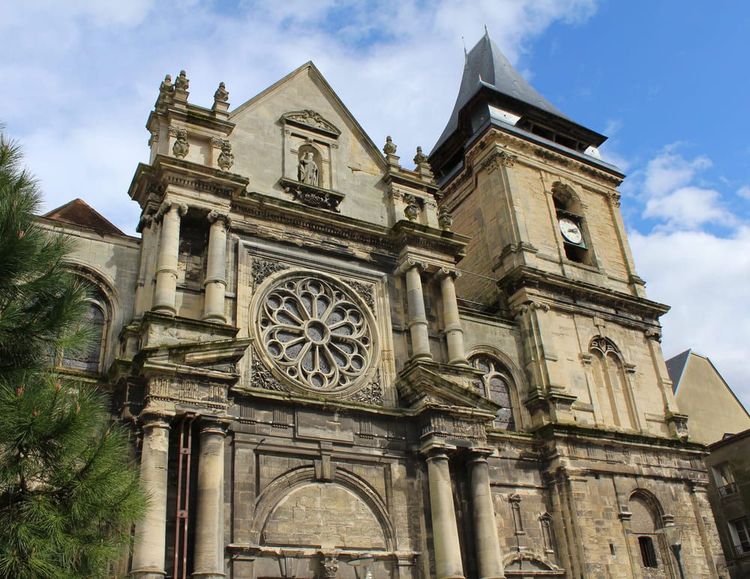
The first stone of this church was laid in 1545 by a city alderman, on the ruins of an older sanctuary. Work was interrupted by the Wars of Religion and only finished a century later, blending Renaissance touches with baroque accents depending on the building phase. Listed as a historic monument in 1910, it has been under restoration since the 1990s: ironwork, the organ, and above all a 17th-century altarpiece on the theme of Christ's circumcision, gilded with thousands of gold leaves.
Free entry
4 - Puits-Salé Square
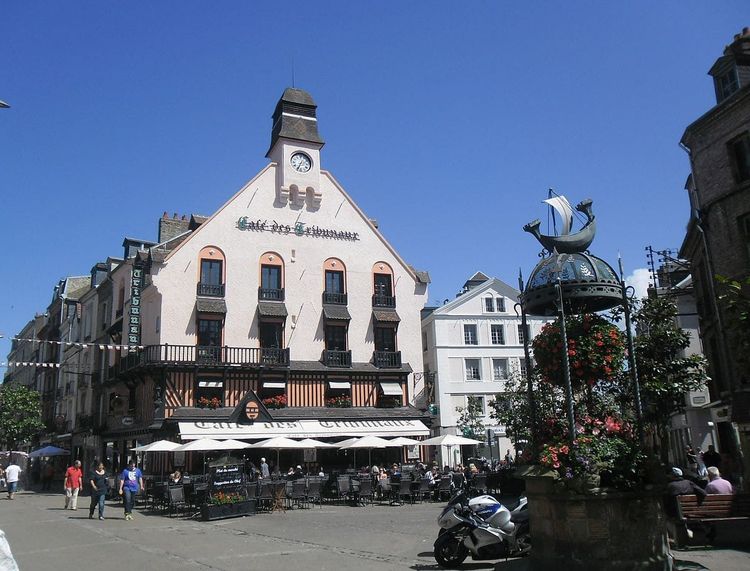
Six streets meet on this square, the liveliest in Dieppe, named after a fake well installed in 1930 where an older fountain once stood: its water, tainted by seawater seepage, was used for cleaning rather than drinking. Since the 18th century it has been home to the large white Café des Tribunaux, once a cabaret, then a council meeting room, and finally a café. Oscar Wilde, who took refuge in France after his prison sentence, was a regular, as were painters Walter Sickert and Jacques-Émile Blanche.
Free entry
5 - Saint-Jacques Church
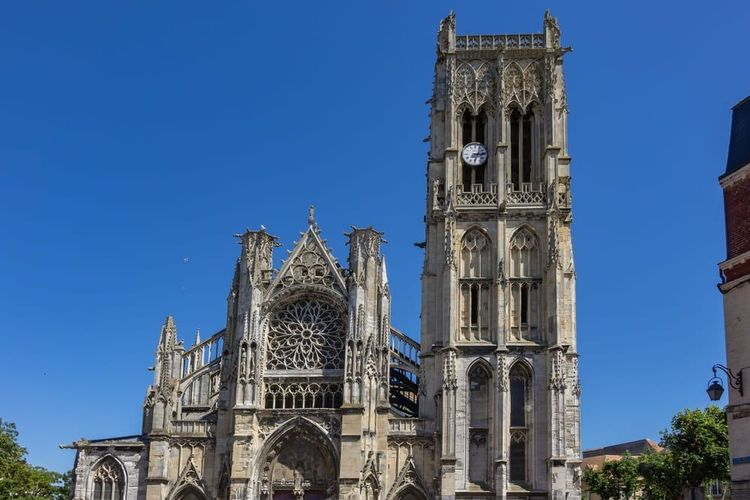
An archbishop of Rouen was behind this church, built from the 12th to the 16th century, whose unusually generous size came from its spot on the pilgrim road to Santiago de Compostela. Gothic and Renaissance styles blend harmoniously here, between radiating chapels and a rose window. An unusual frieze depicts peoples from Africa, Asia and the Americas encountered by Dieppe's navigators. An inspiration for Victor Hugo, it has been listed as a historic monument since 1840.
Free entry
6 - Jean Ango Lift Bridge
Two moving bridges link the banks of Dieppe's harbour: this one, opened in 1881 and rebuilt in its current form in 1950, rises like a drawbridge to let boats slip through. Its control cabin, designed by a local architect, bears two carved reliefs, one for the seafarers' health service, the other for the coat of arms of its illustrious namesake. Jean Ango, a wealthy Dieppe shipowner, fitted out vessels for King Francis I and dared to trade with America and India despite the Spanish and Portuguese monopoly.
Free entry
7 - Dry Port
These boats seem to float in mid-air rather than on water: welcome to the dry port on Pollet Island. The marina's three basins, overwhelmed by demand, pushed Dieppe to open this land-based parking area in 2015, where boats rest on racks stacked across four levels. Close to 300 vessels wait here, lowered back into the water within minutes thanks to dedicated technicians. Notably, the facility occupies a former dry dock, lengthened in 1967, which even hosted a concert in 2010.
Free to see from outside
8 - Colbert Bridge
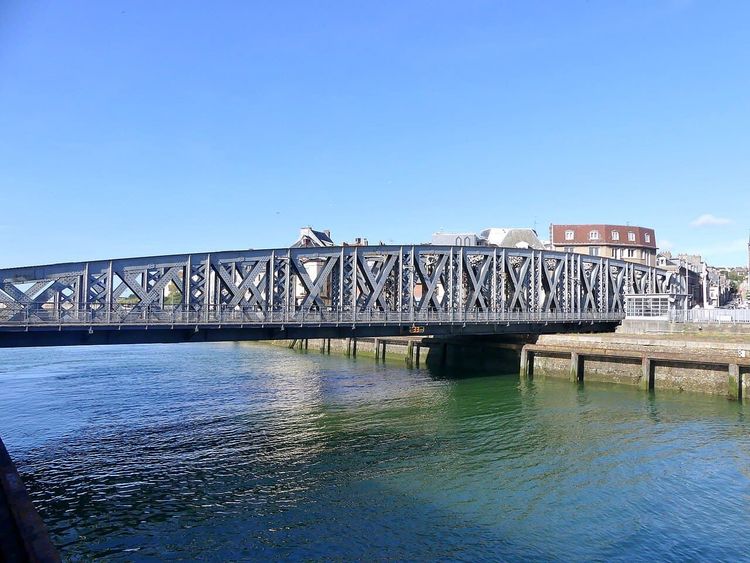
Brought into service in 1889, this metal structure, weathered by salt air, is among the last swing bridges still working in Europe. In barely 95 seconds, a hydraulic mechanism rotates its 800 tonnes to clear the way for boats, hence its affectionate nickname, the turning bridge. Built using the same techniques as the Eiffel Tower, it narrowly escaped demolition before being saved by locals' attachment to it, and was listed as a historic monument in 2020.
Free entry
9 - Herring, the King of Dieppe
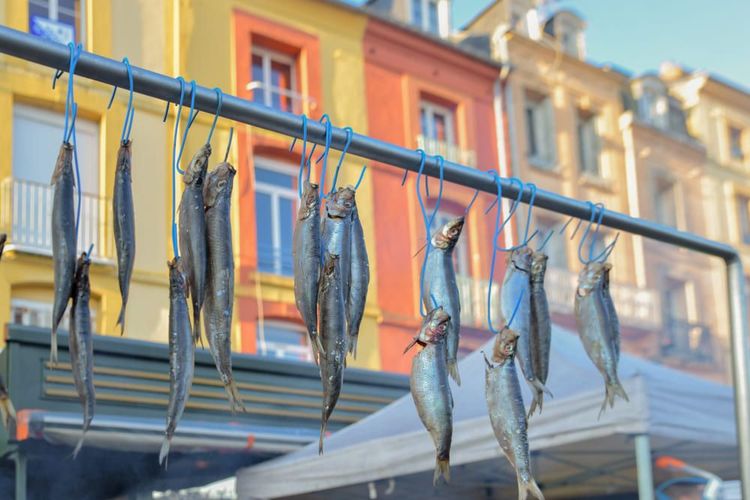
Dieppe fish, fish of choice: the local slogan really pays tribute to herring, star of the quays since the Middle Ages. Plentiful and easy to preserve, this fish fed the town through winter and even travelled to Paris markets as early as 1300. Depending on how it was prepared, it was sold under names like powdered, filleted, Christmas-caught or white herring. A fair is still held in its honour every third weekend of November, where it's devoured grilled, served with potato and a little salted butter.
10 - The old Pollet district
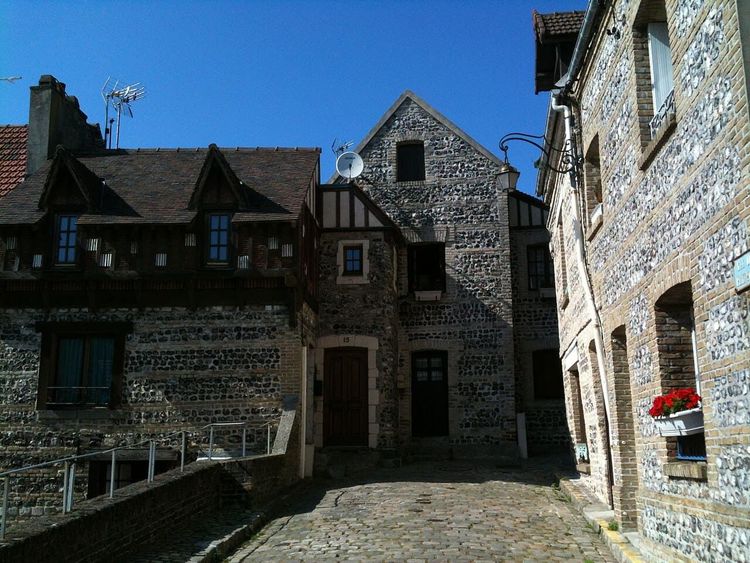
Across the water from the Colbert bridge, the Pollet district keeps Dieppe's traditional heart alive. As early as the Middle Ages, fishermen built modest flint and stone houses here, which escaped the fire of 1694. Its narrow streets, long looked down on by the rest of the town as unhealthy, now benefit from an urban renewal programme restoring their old-fashioned charm and drawing a new crowd.
Free entry
11 - Notre-Dame de Bonsecours Chapel
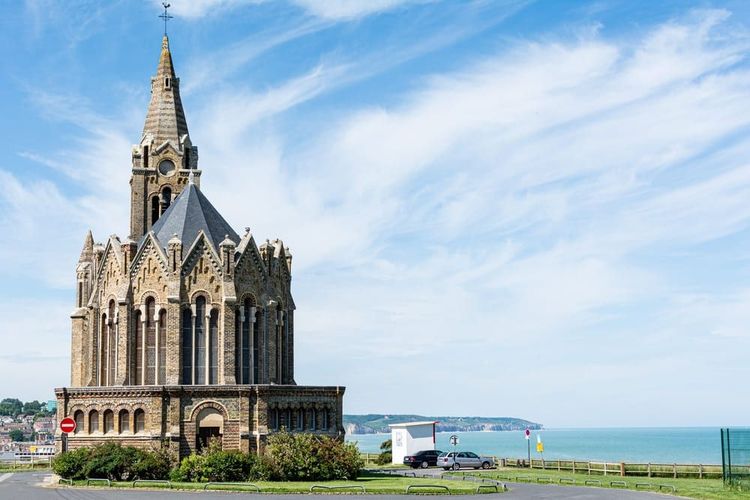
Perched on the cliff above the Pollet district, this chapel has watched over seafarers since 1876. Originally conceived as a simple pilgrimage site, it became, from the early 20th century, a memorial to Dieppe sailors lost at sea, honoured by commemorative plaques on its walls. On either side of the statue of the Virgin, small votive boats recall the prayers once offered before each voyage.
12 - View over the port
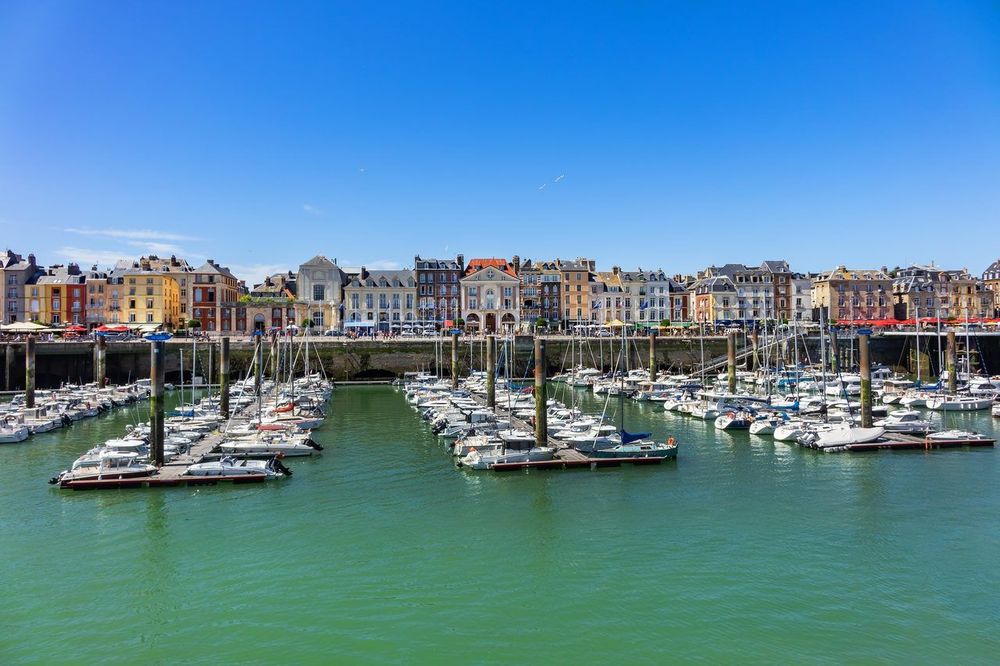
With your back to the road, facing the water, one of Dieppe's finest sights opens up: the moored hulls of boats, with the facades of Henri IV Quay in the background. No need to buy a postcard when the scene composes itself right in front of you, blending maritime history with the everyday life of the harbour in a single frame.
Free entry
13 - Port of Dieppe
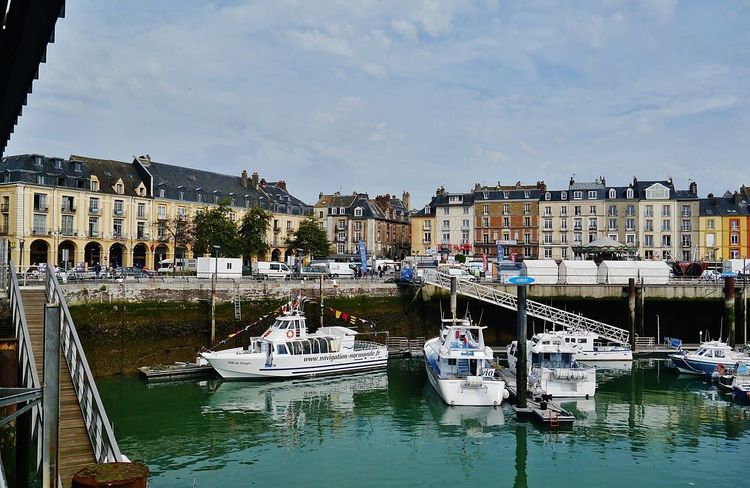
At the centre of town, this harbour was for a long time the largest in France, earning Dieppe the nickname of the town with four ports. Herring and scallop fishing, fruit trading, cross-Channel links launched in the 1790s and leisure boating all share the same waters, supporting over 2,000 jobs managed by the regional ports authority. Here, it's a port within the town, and a town within the port.
Free entry
14 - London Mansion
The doyenne of French seaside resorts since 1824, Dieppe once drew Parisian and English high society to grand seafront hotels, almost all of which have since vanished. This one, recognisable by the white statues on its facade, is an exception. It's said that painter Eugène Delacroix stayed here often, keen to capture the Dieppe coastline on canvas.
Free to see from outside
15 - Brief historical overview of Henri IV Quay
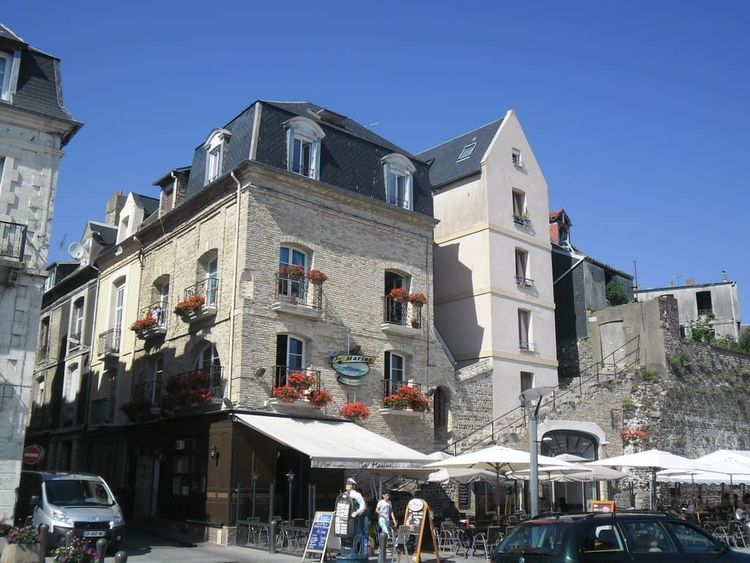
The colourful facades lining this quay hide a violent past: during the Nine Years' War, an Anglo-Dutch fleet bombarded the town for two days, destroying two-thirds of its timber-framed houses. Rebuilt along classical lines, with straight streets and aligned facades, Dieppe still bears traces of this, such as the Hôtel d'Anvers, once home to a wealthy merchant, or the Hôtel des Oratoriens, built on the site of Jean Ango's former house.
Free entry
16 - The Crab Tower
Right at the end of the quay, a busy bistro hides a little-known relic: the retaining walls of a square tower raised around 1345 to protect the harbour entrance. Originally named the Pollet tower, it earned its current nickname from the crustaceans that clung to its stones at low tide. Torn down in 1841, only its foundations remain, listed as a historic monument since 1991.
Free to see from outside
17 - The Gobes
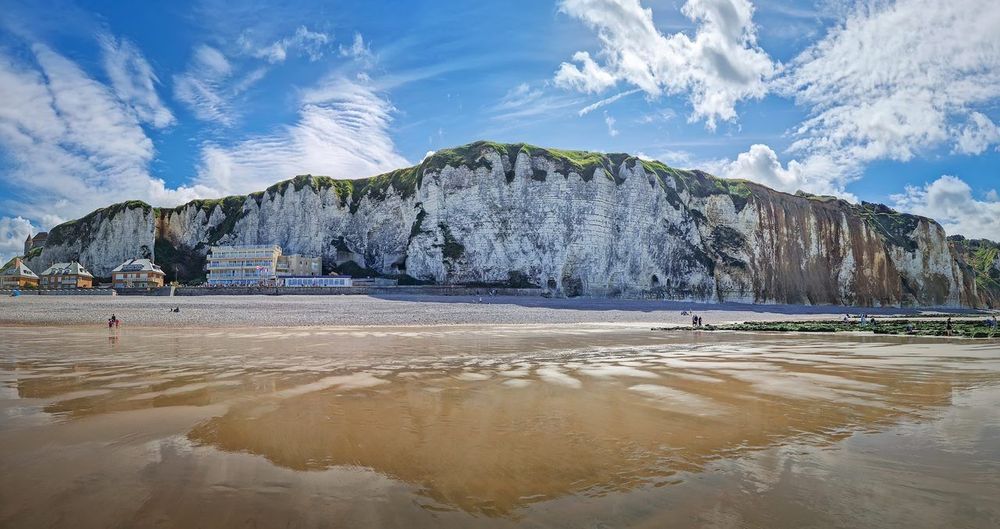
The white chalk of the cliff hides strange hollows, known as gobes, dug out to produce lime. Some, on the cliff face near the town centre, served in the 19th century as makeshift shelter for the poorest families, driven from their homes by the digging of the channel. Around 1900, about a hundred so-called gobiers still lived there, until their final eviction during the Second World War. Access is now closed off.
Free entry
18 - ESTRAN City of the sea
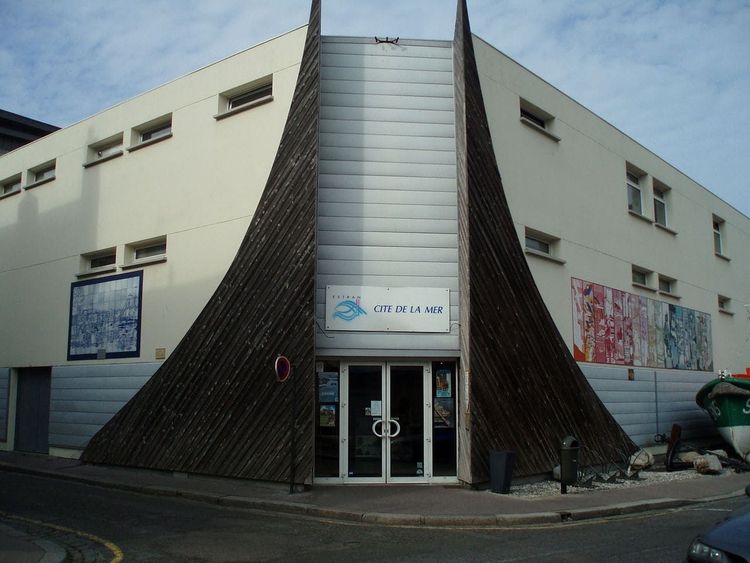
This eco-museum, opened in 1993, takes its name from the part of the shoreline covered by the tide. Across 1,600 square metres, it explains fishing techniques, the evolution of shipbuilding and the Channel's environment, through a Viking longship model, a trawler engine and a herring smokehouse. Two aquarium rooms let visitors watch local fish and rays, a fitting nod to Dieppe's status as France's leading shellfish port.
Paid entry (about €8) · Allow 1 h 30
19 - Dieppe, the birth of THE seaside resort in France
Forget the French Riviera: Normandy is where seaside holidays as we know them truly began. Dieppe opened its first bathing establishment in 1822, but it was a lively, rebellious young duchess, daughter-in-law of King Charles X, who really launched the fashion in 1824, bathing before an admiring crowd to the sound of a cannon. The craze then took off right through the Belle Époque, when bathers traded corsets and long hair for sportier outfits. The water, meanwhile, stays cold: an average of 13°C.
Free entry
20 - Memorial to the 14th Tank Regiment of the Canadian Army
This memorial honours the Canadian soldiers of Operation Jubilee, an Allied raid launched at dawn on 19 August 1942 on the beaches of Dieppe. Spotted by a German convoy, the 6,000 men who landed faced a storm of gunfire; within hours, nearly 1,200 of them were killed and around 2,000 were taken prisoner. Militarily disastrous, the operation nonetheless yielded valuable intelligence, put to use two years later for the Normandy landings.
Free entry
21 - Abraham Duquesne Statue
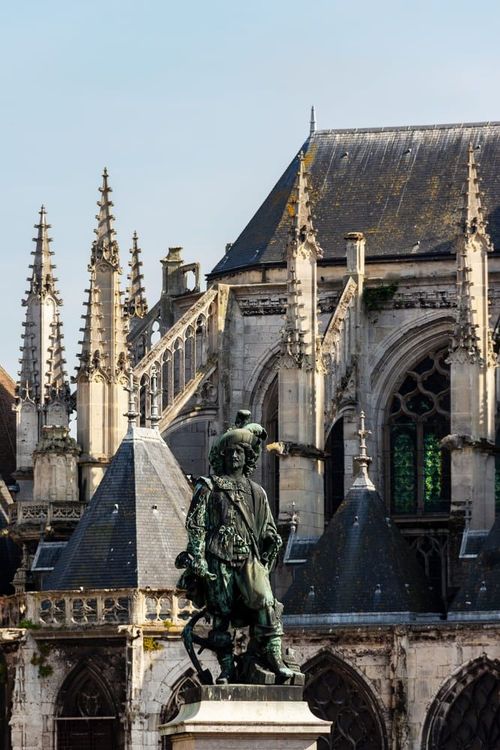
Born in Dieppe around 1608, into a Protestant family of shipowners, Abraham Duquesne became one of the greatest naval officers of his century, after a spell in the Swedish fleet following a fall from favour under Louis XIII. Back in France, he crushed the Spanish and Dutch fleets at Augusta in 1676. Loyal to his faith despite the revocation of the Edict of Nantes, he never received the title of admiral he deserved. The statue, by a local sculptor, dates from 1844.
Free entry
22 - Grande Street
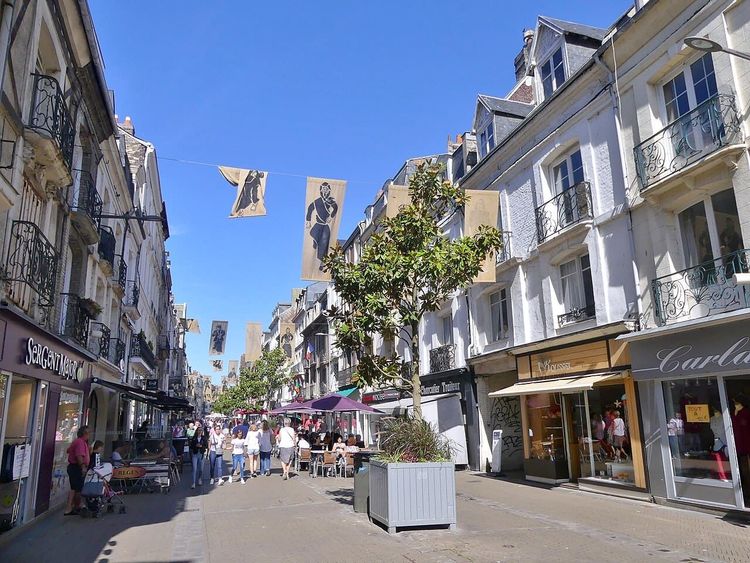
Entirely pedestrian, this street already linked two cliffs back in Gaulish times. It owes its current look, lined with houses and townhouses, to the rebuilding that followed the English bombardment of 1694. The town's leading shopping artery, it hosts a fresh-produce market every Saturday morning so well regarded that it was voted France's most beautiful market in 2020, after coming second the year before.
Free entry
What to do in Dieppe in 2 or 3 days?
The route covers the essentials in 2 hours over 5 km, between the seafront, the harbour and the Pollet district. Two or three days leave time to settle into the town's rhythm, then to follow the Alabaster Coast.
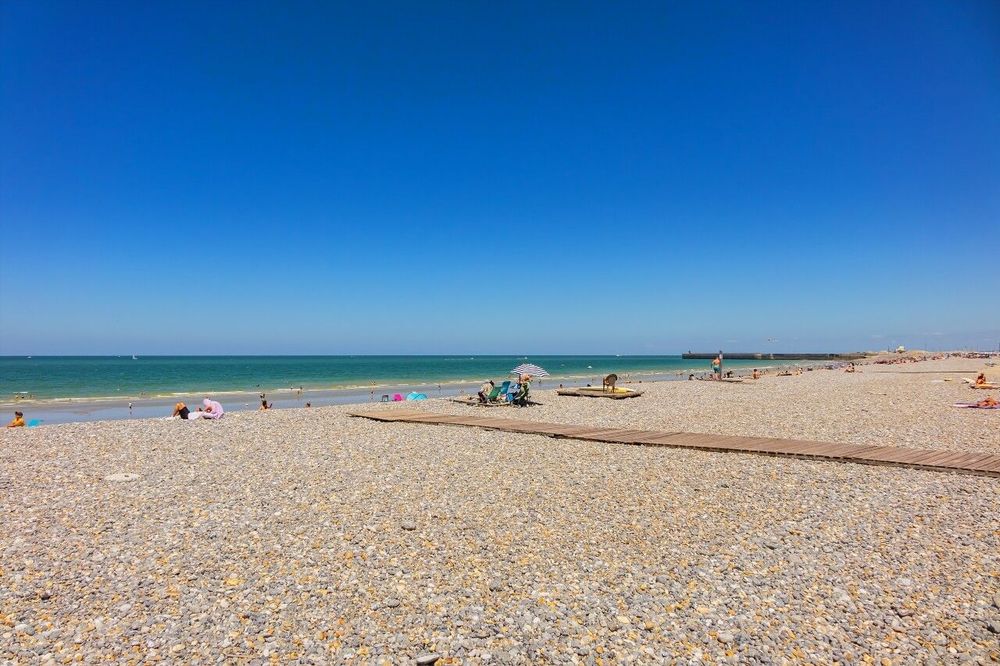
The next day, take your time on Dieppe beach, which the route only skirts: a stretch of pebbles with a Blue Flag label, lined by a huge lawn. The harbour also offers paid boat trips to see the town from the sea. On Saturday mornings, the market, one of the largest in Normandy, fills the Grande Rue and Place Nationale, at the foot of Saint-Jacques church; our guide to free things to do in Dieppe lists more ideas that cost nothing.
On the third day, head out of Dieppe: to the west, Veules-les-Roses, one of the Most Beautiful Villages of France, is crossed by the Veules, described as France's smallest river at barely over a kilometre long, which runs past watercress beds, wash-houses and mills before reaching the sea.
Which neighbourhoods does the tour cross?
On this loop, the route links the two banks of Dieppe's harbour, from the foot of the castle to the old Pollet district, before returning along the quays and the seafront to the centre.
It starts at the Tourelles, the last gate of the medieval ramparts, at the foot of the Castle-Museum perched on the cliff. It then heads down to Saint-Rémy church, Place du Puits-Salé, where six streets meet, and Saint-Jacques church, a stop on the pilgrim routes to Santiago de Compostela (stops 1 to 5).
The route crosses the harbour by the Jean Ango lift bridge, opened in 1881, passes the dry port, then the Colbert swing bridge, brought into service in 1889. It then enters the old Pollet district, where fishermen settled as early as the Middle Ages; from there, the Bastille path leads up to Notre-Dame de Bonsecours chapel, perched on the cliff (stops 6 to 11).
The route then comes back towards the harbour, facing Henri IV Quay, and follows that quay from the former Hôtel de Londres to the Crab Tower, then stops facing the gobes, old chalk quarries. It reaches the ESTRAN, the seafront of the first sea-bathers and the Canadian memorial, then the statue of Abraham Duquesne on Place Nationale, before closing the loop along the Grande Rue (stops 12 to 22).
How much does it cost to visit Dieppe?
Of the 22 stops on the route, fourteen can be visited freely, and four others, the Tourelles, the dry port, the former Hôtel de Londres and the Crab Tower, are admired from outside. Among the rest, only two charge admission.
A ticket to the Castle-Museum costs €6.50 for a visit of about an hour and a half, and one to the ESTRAN City of the Sea €8, for a similar length of time.
The Dieppe Tourism Pass gives access to 17 sites and activities across the Dieppe area, from the Castle-Museum to the ESTRAN and the Miromesnil estate: it costs €24 for one day or €42 for three consecutive days.
Information checked in November 2026 and subject to change.
Where to stop for a bite along the tour?
The route stops at a tribute to herring, the king of Dieppe's fish, at the entrance to Le Pollet, the old fishermen's quarter. Every third weekend of November, a fair celebrates it on Henri IV Quay, grilled or marinated, with a potato and a knob of salted butter.
In restaurants, oysters from the region often open the menu, followed by marmite dieppoise, a fish and shellfish stew enriched with fresh cream, where prawns, scallops and langoustines all have their place. Lisette à la dieppoise, mackerel marinated in cider, carrots and vinegar, is served as a starter or a main course.
For something sweet, apple caramel is sold all over town, in jars of every size, and the Norman crêpe is known for the buckwheat added to its batter. To raise a glass, frênette, a lightly alcoholic sparkling drink also called ash cider, makes an original souvenir; these specialities are covered in our top 10 culinary specialities of Dieppe.
What to do in Dieppe with children?
The Castle-Museum, the second stop on the route, and the ESTRAN City of the Sea, further along the quays, make a good family outing.
At the castle, the battlements, the cannons aimed out to sea and the view over the Channel win over younger visitors from the entrance; allow an hour with children aged 5 or 6. At the ESTRAN, open all year, two aquarium rooms show off the fish of the Channel, and you also learn about the Viking longship and a trawler's engine.
For older children, more ideas, from supervised climbing, usually from age 8, to walks along the cliffs, are gathered in our guide to visiting Dieppe with family.
What should you know before visiting Dieppe?
Before setting off, three practical points are worth knowing: the climb to the chapel, the ESTRAN's closing days and the rhythm of the tides on the beach.
Notre-Dame de Bonsecours chapel (stop 11) overlooks Le Pollet from the cliff: you climb up via the Bastille path, followed by a small trail near Rue Samuel de Champlain.
The ESTRAN City of the Sea closes on 25 December and 1 January: it's worth checking its hours before going during the end-of-year holidays.
Finally, the pebble beach changes at low tide, when strips of sand appear at the water's edge; swimming, however, is only supervised in summer.
What to see around Dieppe?
Dieppe makes a handy base for exploring the Caux region or heading to other towns worth visiting on foot.
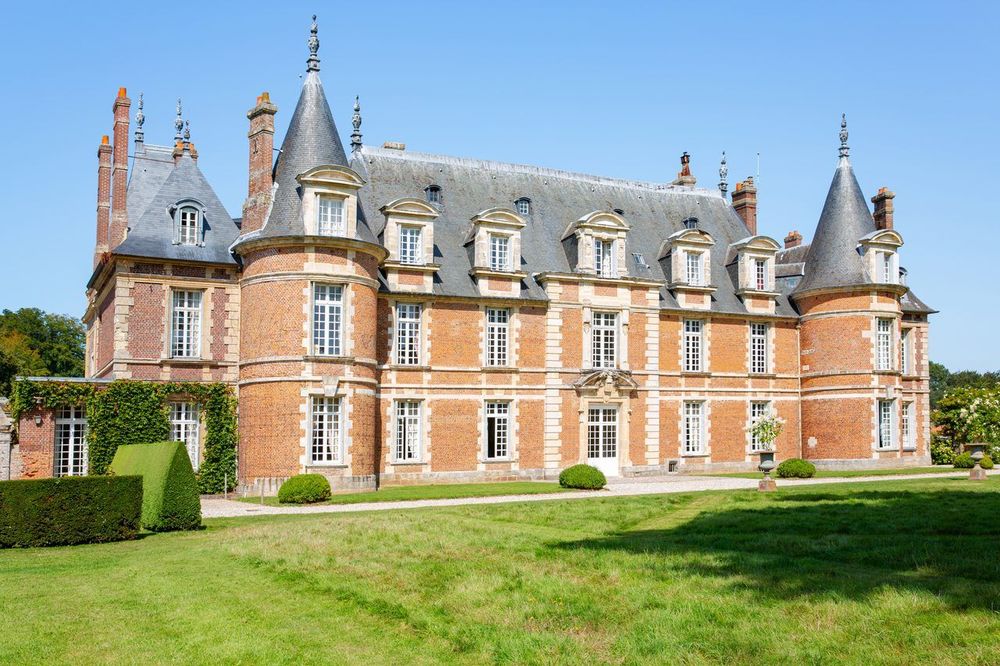
12 km from Dieppe, the Miromesnil estate, birthplace of Guy de Maupassant, combines a 17th-century château, cultivated gardens and a historic vegetable garden; our guide to the Miromesnil estate covers the visit.
Several nearby towns also have their own audio-guided route: Rouen, 54 km away, shows off its cathedral and half-timbered houses, while Le Touquet, 75 km away, stretches its beaches, dunes and pine forests along the Opal Coast.
On the banks of the Seine, Honfleur, 83 km away, keeps its picturesque harbour and cobbled streets; Le Havre, 85 km away, reveals its centre rebuilt by Auguste Perret. At 88 km, Amiens combines a Gothic cathedral, the Saint-Leu district and the hortillonnages.
What's on in Dieppe right now?
As the year draws to a close, head just outside Dieppe for a seasonal date.
From November 27 to December 13, 2026, the Miromesnil estate, 12 km from town, sets up its Christmas market over three weekends in the château's park, with stallholders and a festive mood.
Information checked in November 2026 and subject to change.
Le plein d'inspirations
Explorez le monde en totale liberté, à pied au cœur des villes ou au fil des routes. Nos guides audios transforment chaque destination en une découverte culturelle immersive et unique.










FAQ for visiting Dieppe
When is the best time to visit Dieppe?
The ideal time to discover Dieppe runs from June to September, when the oceanic climate turns milder with temperatures around 20°C. It's the perfect moment to make the most of the seafront and the majestic chalk cliffs. If you visit in September in even-numbered years, you'll have the chance to attend the spectacular International Kite Festival, which fills the sky with a thousand colours. Spring is also an excellent alternative, especially for food lovers, who can savour the famous freshly caught scallops. Winter remains pleasant despite temperatures between 3 and 8°C, but be prepared to face the bracing winds that are an integral part of the town's maritime charm.
How much time do you need to visit Dieppe?
A full day lets you discover the essentials of Dieppe and soak up its unique maritime atmosphere. In a few hours' walk, you can explore the historic centre, stroll along the seafront, visit the castle-museum and wander through the lively port. For a more in-depth exploration including the town's heights and perhaps a trip to the surrounding cliffs, plan on two days instead. The Ryo audioguide accompanies you on this exploration with a narrated tour that optimises your time by linking the major points of interest. If you really want to take the time to live at the rhythm of the tides and explore the surroundings, a long weekend will be ideal for making the most of the atmosphere of this port town.
How do you get to Dieppe from Paris?
The journey between Paris and Dieppe is simple and quick, with several options depending on your preferences. By car, allow about two and a half hours via the A13 motorway then the A151, a pleasant drive through the Normandy countryside. The train is a comfortable alternative, with direct connections from Gare Saint-Lazare, usually in around two hours. Long-distance buses also offer regular connections, often cheaper but a little longer. Once there, the town is easily covered on foot, which lets you leave your vehicle in the car park and fully enjoy the sea air. The railway station is close to the town centre, making arrival by train particularly convenient for starting your exploration right away.
Where can you park in Dieppe?
Dieppe has several well-located parking options for exploring the town on foot. The seafront car park, facing the beach, remains the most convenient for quickly reaching the main tourist sites and the town centre. You'll also find parking spaces along the Quai Henri IV, near the marina, often less crowded than those on the seafront. For cheaper parking, the car parks located slightly away from the centre generally offer better rates, notably the one near the station. In high season, arrive in the morning if possible to find a space easily. Most car parks operate with a pay-and-display system, and some offer attractive day passes if you plan to stay several hours.
What can you do in Dieppe when it rains?
On rainy days, frequent in this seaside town, Dieppe reveals other, equally captivating facets. The castle-museum, perched on the cliff, offers a fascinating cultural refuge with its collections of carved ivories and its exhibitions on local maritime history. The Cité de la Mer immerses you in the marine world with its aquariums and interactive exhibits, perfect for understanding the ecosystem of the English Channel. The port cafés are warm havens where you can watch the harbour activity while enjoying a Normandy cider. Don't overlook the Saint-Jacques church, a splendid example of Gothic architecture, or the covered market hall for an immersion in the local atmosphere. The town-centre shops and art galleries also let you pleasantly extend your discovery, sheltered from the bad weather.
What are the must-sees in Dieppe?
Dieppe reveals its treasures over the course of a walk between land and sea, where each site tells part of its maritime history. The castle-museum, a stone sentinel overlooking the town, offers spectacular views and houses rich collections. The seafront with its long pebble beach invites contemplation facing the emblematic white cliffs. The fishing port throbs with authentic activity, especially lively when the boats return. The Saint-Jacques church bears witness to past prosperity with its flamboyant Gothic architecture. The lanes of the Pollet district preserve the soul of the old fishermen. The Ryo audioguide guides you through these must-sees with enriching commentary that brings each place to life, revealing the secrets and anecdotes that make the unique charm of this town turned towards the horizon.
Where can you eat in Dieppe and which specialities should you try?
Dieppe's cuisine naturally celebrates the riches of the sea, headlined by the famous scallops, particularly tasty from November to March. The port restaurants offer generous seafood platters where oysters, whelks and freshly caught brown crabs sit side by side. Don't miss the marmite dieppoise, a traditional dish combining fish and shellfish in a creamy sauce. The town-centre bistros also serve excellent moules-frites and meltingly tender sole meunière. To accompany these marine delights, Normandy cider is a must, as is the local perry. Those with a sweet tooth will delight in the salted-butter caramels and Normandy shortbread offered in the pastry shops. The Saturday morning market remains the ideal place to discover local produce and chat with the local producers.
What can you visit around Dieppe on a day trip?
The area around Dieppe is full of natural and heritage wonders within reach on a day trip. Varengeville-sur-Mer charms with its church perched on the cliff edge and its remarkable gardens, notably that of the Bois des Moutiers. The Château de Miromesnil, the presumed birthplace of Maupassant, enchants with its elegance and its kitchen gardens. Further afield, Veules-les-Roses charms with its flower-filled thatched cottages and the smallest river in France. For lovers of wild nature, the cliffs of Étretat offer spectacular panoramas, even if the distance calls for careful planning. Closer by, Arques-la-Bataille is worth the detour for its medieval castle and its state forest, ideal for hiking. These getaways let you appreciate the diversity of the Pays de Caux, between architectural heritage, romantic gardens and magnificent coastal landscapes.
What is Dieppe's maritime history?
Dieppe has lived facing the Channel for centuries. Its port fitted out boats for herring and cod fishing, sent navigators towards Africa, Brazil and Newfoundland, and supported generations of ivory carvers whose delicate pieces are displayed in the castle museum, perched on the cliff above the town. The town was also one of France's first sea-bathing resorts, launched in the nineteenth century by visitors from Paris, hence its villas and the long lawn that separates the streets from the beach. The memory of the 1942 raid, a hard day for the largely Canadian troops involved, is still present along the seafront and in the nearby war cemetery. The Ryo audio guide offers a dedicated Dieppe route that unfolds this history from the harbour to the castle.
Can you swim on the beach at Dieppe?
Yes, the beach stretches right through the centre, between the castle and the cliffs, but it is made of pebbles rather than sand: water shoes make getting in far more comfortable, and the slope can be steep depending on the tide. Swimming is supervised during the summer season within a marked zone; outside those hours the Channel stays cool and the currents call for care. The wide lawn along the seafront serves as a spot for picnics, games and kite flying, with areas laid out for children. Supervised water sports are also available nearby depending on the season. Take a look at the tide times before settling in.
When and how can you attend the Dieppe International Kite Festival?
Founded in 1980, this biennial festival runs for nine days in September, usually around the third week, and the next edition is planned for 2027. More than 400 kite flyers from some forty countries fly giant kites along roughly four kilometres of beach, watched by over 500,000 visitors.
Entry is free, with only some workshops costing 5 to 10 euros. Don't miss the opening ceremony, the illuminated evenings, often on Thursday and Saturday, and the grand Sunday finale. If you can only come for one day, pick a Saturday.
Programme, accommodation and transport are covered in our guide to the Dieppe kite festival.
What can you discover at the Miromesnil estate near Dieppe?
The estate lies in Tourville-sur-Arques, about ten kilometres south of Dieppe. Its 17th-century château of red brick and white stone, still lived in, is where Guy de Maupassant was born on 5 August 1850. The 16th-century chapel is its oldest feature, set within some 80 hectares of woods, meadows and orchards.
The real highlight is the historic kitchen garden, full of forgotten varieties and at its best in May. In summer, actors perform scenes from Maupassant in the gardens after dark.
Plan your visit with our guide to the Miromesnil estate.
What is marmite dieppoise, and which other local recipes should you try?
The sea rules the table in Dieppe. Marmite dieppoise brings together fish and shellfish, scallops, langoustines or prawns, in a crème fraîche sauce. Also try the local oysters, scallops, best enjoyed in early October, lisettes, mackerel marinated in cider, and Normandy sole braised in cream.
Salt-meadow lamb delights meat lovers, apple caramel sold in jars makes a tasty souvenir, and frênette, a sparkling drink of around 3.5 degrees, is a classic aperitif.
See the full selection in our guide to the culinary specialities of Dieppe.
What can you do in Dieppe, between museums, Saint-Jacques church and the Saturday market?
Start at ESTRAN Cité de la Mer on Rue de l'Asile Thomas, devoted to fishing and the Upper Normandy coast, then climb to the castle museum on Rue de Chastes, where some fifteen rooms display around 25,000 objects, from ivories to seascapes, with a superb view over the sea.
Saint-Jacques church, begun in 1195, still bears sailors' graffiti and a frieze about maritime expeditions. On Saturday morning, the market, voted the most beautiful in France in 2020, overflows with seafood, before a stroll around the harbour.
All the ideas are in our top things to do in Dieppe.
What can you do in Dieppe with children, between the castle, the beach and water sports?
The castle museum on the western cliff captivates children with its crenellated towers, cannons and carved ivories: allow an hour with five- or six-year-olds. On the pebble beach, lifeguarded in July and August, the huge seafront lawn hosts picnics, a playground and mini-golf; bring water shoes.
Canoeing and kayaking take place at sea or on the Arques river, from age 7 or 8 depending on the club. On rainy days, ESTRAN Cité de la Mer saves the afternoon, and nearby you'll find the Ailly lighthouse and the Dénestanville treetop adventure park.
Plan your stay with our family guide to Dieppe.
What is Dieppe's pebble beach like, and which nearby beaches can you reach?
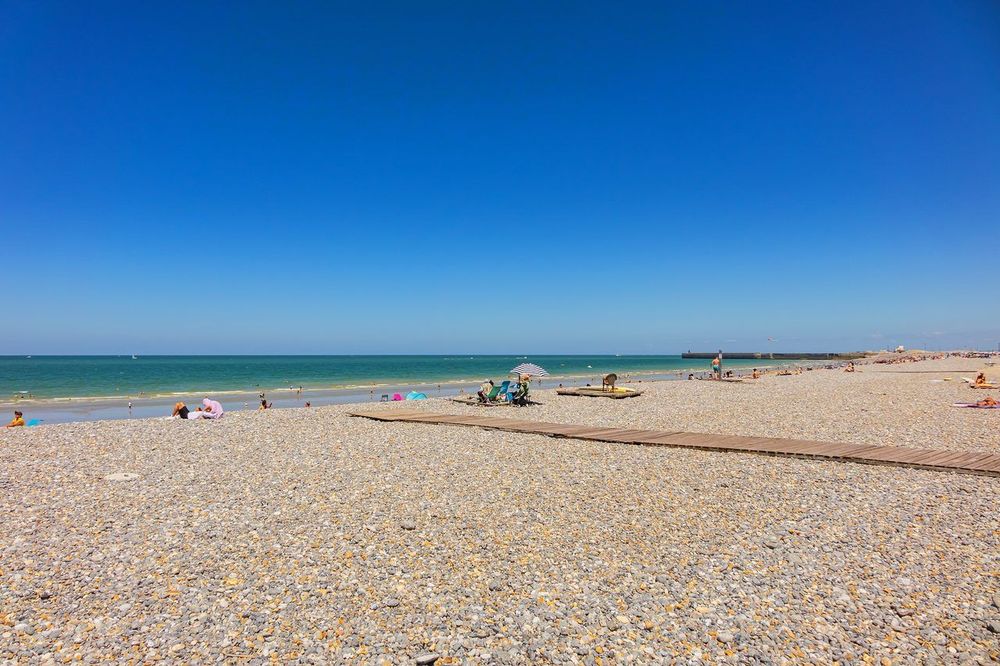
The shore stretches for about one and a half kilometres of pebbles between the harbour and the castle cliff, lined by the vast lawns of Boulevard de Verdun, perfect for picnics. Awarded the Blue Flag, it is lifeguarded in summer, with a beach information point, showers and access for people with reduced mobility; at low tide, the foreshore draws shellfish gatherers.
Dieppe is considered France's first seaside resort, launched by the Duchess of Berry in 1824. Five neighbouring beaches, from Puys to Quiberville-sur-Mer, are under twenty minutes away.
All the practical tips are in our guide to Dieppe beach.
How can I visit Dieppe without a car, on foot, by bike and by train?
Dieppe is easy to explore without a car: its centre fits in a rectangle of under two kilometres between the station and the cliffs. From Paris-Saint-Lazare, weekday trains change at Rouen, with a direct service at weekends; Nomad coaches and the Avenue Verte cycle route complete the options.
Once there, the Grande Rue, quai Henri IV, the château-museum, Le Pollet and the beach are all linked on foot, and the Deep Mob bus serves outlying areas such as Puys.
To plan a stay without ever taking the wheel, read our guide to Dieppe on foot, by bike and by train.
What can you do for free in Dieppe: beaches, cliffs and maritime heritage?
Find all fourteen ideas, including what still costs money, in our article on free things to do in Dieppe.
What should I see and how should I plan a first visit to Dieppe?
Dieppe is above all a working fishing port, about 170 km from Paris and 2 to 2.5 hours away by train. The historic centre, seafront, harbour and the Pollet district can all be explored on foot, with no more than about fifteen minutes' walk between them.
Climb up to the Château-Musée for the panorama, pass through the Puits Salé square and Saint-Jacques church, then follow the pebble beach and Quai Henri IV. If you stay more than 48 hours, Varengeville-sur-Mer is roughly a fifteen-minute drive away.
All the practical tips are in our guide to visiting Dieppe for the first time.
Vos commentaires, idées et suggestions
Aucun avis pour le moment