© Shutterstock
 Votre guide Ryo
Visiting Dieppe Without a Car in 2026: The Guide on Foot, by Bike and by Train
Visiting Dieppe without a car is no hardship: its centre fits in a rectangle of less than two kilometres between the station and the cliffs, and the port splits the town into two districts that you connect by crossing a bridge, not a car park. It is almost the natural way to discover the town, the one followed by the Ryo audio-guided tour of Dieppe, designed to be followed on foot as soon as you step off the train.
Here is what awaits you once you step off the TER: a café where Oscar Wilde held court on the place du Puits-Salé, a pebble beach bordered by lawns rather than concrete, a château-museum housing one of the richest collections of carved ivories in France, one of the busiest Saturday markets in Normandy and even the factory where Alpines are still built. Between the train from Paris-Saint-Lazare, the Nomad coaches to the coast, the Avenue Verte by bike and neighbourhoods that follow one another on foot, this guide details how to organise a complete stay in Dieppe without ever taking the wheel, including excursions to Le Tréport and the hinterland.
How to Get to and Around Dieppe Without a Car
Arriving by Train from Paris and Normandy
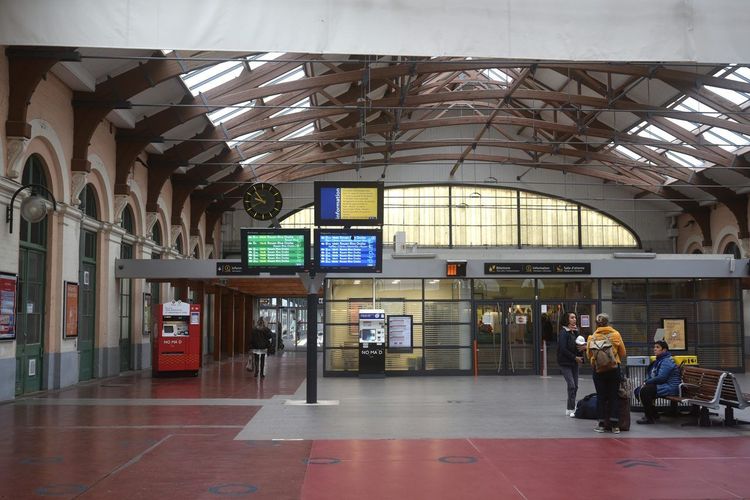
Dieppe station is on boulevard Georges-Clemenceau, south of the centre, a short walk from the port basins and about ten minutes on foot from the Grande Rue. Opened in 1848, it is the oldest station designed to link Paris to the sea, and it remains the only rail access to the town today.
From Paris-Saint-Lazare, on weekdays allow for a journey with a change at Rouen: a train to Rouen-Rive-Droite, then a TER Normandie to Dieppe, for a total of a little over two hours depending on connections. At weekends, a direct Paris-Dieppe return service, nicknamed the "Train de la Marée", spares you the change: it is the option to aim for on a short stay. From Rouen, TER trains run all day to Dieppe, taking about an hour.
One detail often surprises Parisians: the Navigo pass does not work as far as Dieppe, which lies outside the Île-de-France fare zone. You need a standard TER ticket, and fares rise as the date approaches. Booking a few weeks ahead remains the most useful habit, especially in July-August.
Arriving by Bus, Carpool or Bike
Where there is no station nearby, the Nomad coach network, Normandy's regional network, complements the train, with lines linking Dieppe to Le Tréport, Serqueux or the villages of the Pays de Caux. Carpooling works well on the Paris-Dieppe and Rouen-Dieppe routes, especially on Friday evenings and late Sunday afternoons.
By bike, Dieppe is a crossroads: the town lies on the Vélomaritime (EuroVelo 4), which runs along the Alabaster Coast, and marks the French starting point of the Avenue Verte London-Paris, the cycle route that heads to Paris through the hinterland after the ferry crossing from Newhaven. You can therefore arrive by bike from England, Paris or Le Havre without leaving the signposted paths. The most efficient combination remains the train on the way in, walking or cycling on site, and a coach for day trips.
Getting Around Dieppe on Foot Once You Are There
Once on the station platform, forget about looking for a car park: Dieppe can be crossed in twenty minutes of walking from the station to the beach. The town centre, the port and the château-museum fit in a pocket handkerchief, and most of the programme can be completed on foot in a single day.
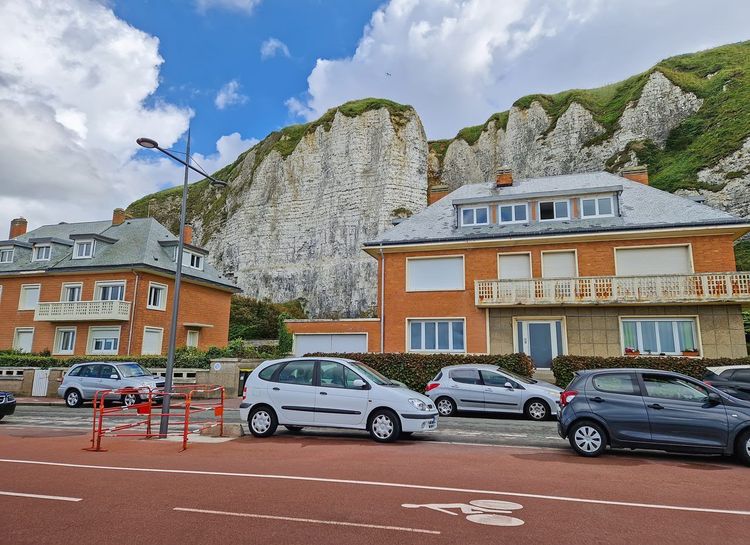
Two slopes are worth mentioning: the climb to the château-museum from the seafront, and the scramble up the Pollet cliff once you have crossed the port. Nothing alpine, but good shoes help on the cobbles.
For longer trips, to Neuville-lès-Dieppe or the Puys beach for example, the Deep Mob urban bus network takes over, with several lines serving the outlying districts; it is also the most practical option if you are travelling with someone with reduced mobility. Dieppe without a car is a different pace of visiting: you notice the facades of the Grande Rue, the smell of fish on the quays, everything that a car erases between two red lights.
Dieppe Town Centre on Foot: Districts and Landmarks
The town centre unfolds as a natural route, from the station towards the sea, passing through three different atmospheres in less than an hour of leisurely walking.
The Grande Rue and the Place du Puits-Salé
The Grande Rue (Grande Rue, 76200 Dieppe) is the pedestrian shopping street that crosses the town centre towards the port. It is your guiding thread for exploring the centre on foot, without consulting a map at every crossroads.
It leads to the place du Puits-Salé, dominated by the facade of the Café des Tribunaux, a former meeting place for artists and writers, where Oscar Wilde had his habits during his Dieppe exile in 1897. The square long concentrated the social life of the budding seaside resort, when the Parisian aristocracy discovered sea bathing in the 19th century; today it remains a lively terrace, a good landmark for finding your bearings in old Dieppe.
Around the square, several lanes lead towards the Saint-Jacques church on one side and the quay on the other: taking them at random remains the best way to get a feel for the town's layout without GPS. On weekdays, the Grande Rue keeps the quiet rhythm of a Norman town; on Saturday mornings, it becomes an extension of the market, with stalls spilling out in front of the shop windows. Traditional fishmongers and designer boutiques sit side by side, a mix that sets it apart from the more uniform pedestrian zones of the coast.
The Quai Henri IV and the Bout-du-Quai District
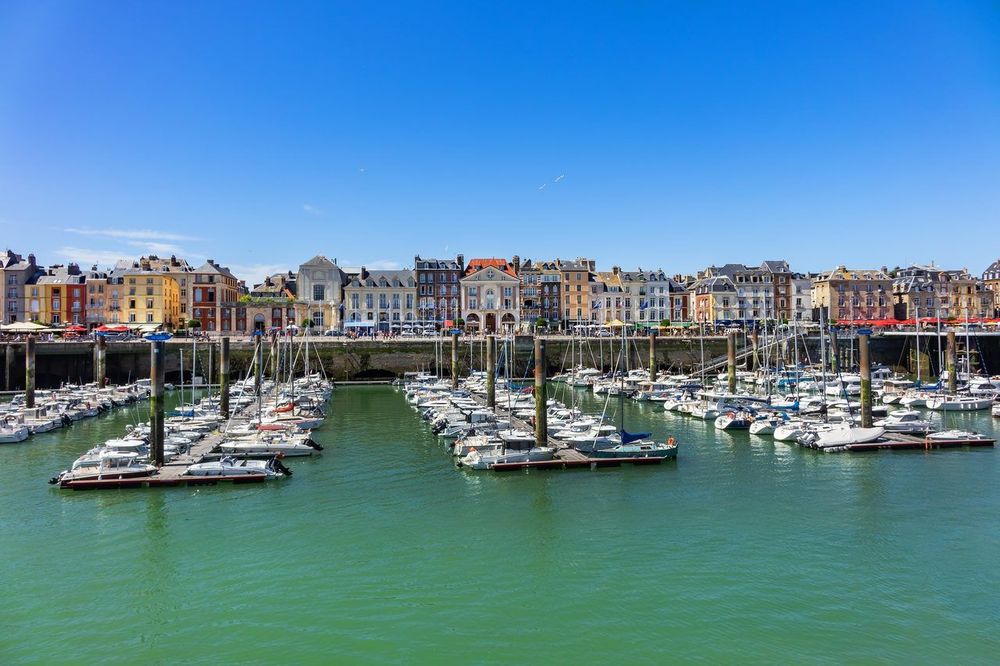
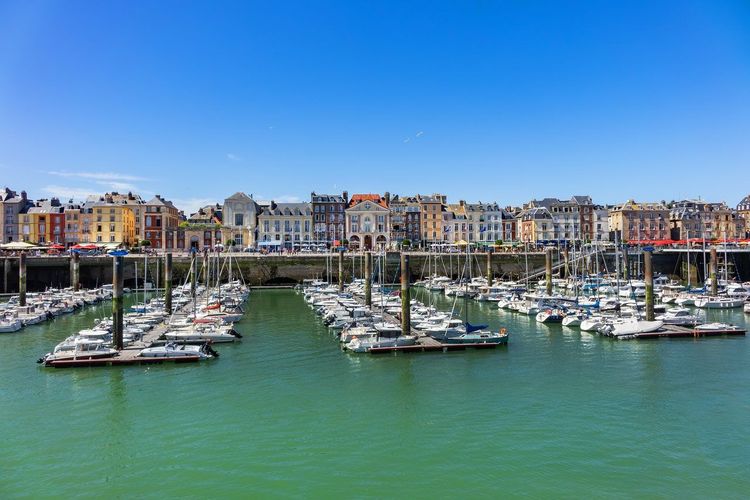
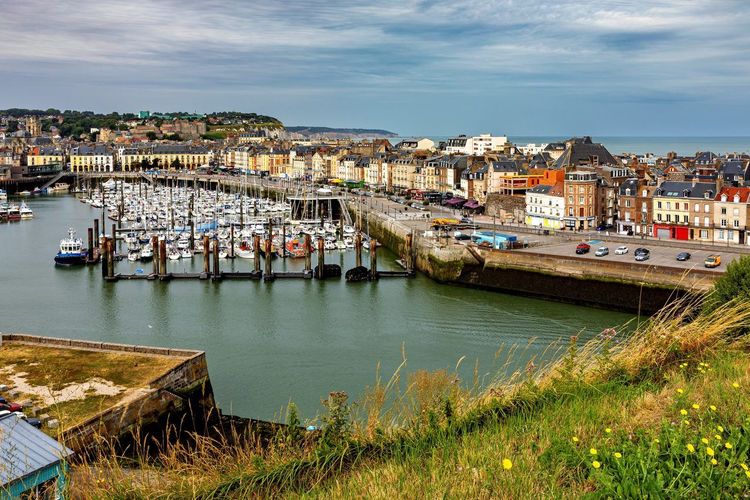
Heading back down towards the port, the quai Henri IV runs along the outer harbour for several hundred metres, facing the sailboats of the marina. This is where most of Dieppe's restaurants and terraces are concentrated, with a direct view of the moored boats.
At the end of the quay, towards the open sea, lies the Bout-du-Quai, the former fishermen's district, with its low houses crowded against one another and its narrow lanes. The atmosphere is closer to a fishing village than to a seaside resort, in sharp contrast with the bourgeois centre around the Puits-Salé.
Allow about ten minutes' walk between the place du Puits-Salé and the end of the quay. If you like photography, allow more: the light on the channel and the piers at the end of the day often keeps walkers longer than planned.
The Three Port Basins: Leisure, Fishing and Commerce
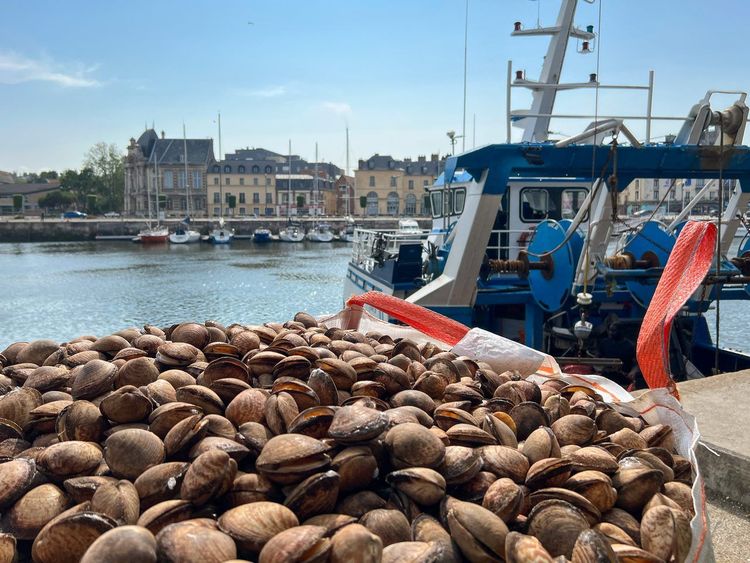
The port of Dieppe reads as a succession of basins, each with its own function. The marina, or outer harbour, hosts sailboats just below the quai Henri IV: it is the first one you see on leaving the town centre.
Further on, the Duquesne basin (Bassin Duquesne, 76200 Dieppe, rated 4.3/5 on Google from 6 reviews) concentrates the activity of the fishing port, where scallops, soles and herrings arrive depending on the season. It is historically the economic heart of the town; aim for early morning to see the bustle of the landing.
Finally, the commercial port and the cross-Channel terminal host the ferries to Newhaven and freight traffic: more industrial, but it explains why Dieppe has always been a gateway to England rather than a simple seaside resort.
These basins, the Grande Rue and the Bout-du-Quai form a single continuous thread that the Ryo audio-guided tour of Dieppe links in 22 audio stops: you get the local anecdotes in your ear without depending on a guide or a visiting schedule.
Historic Heritage to Visit Without a Car: Château and Churches
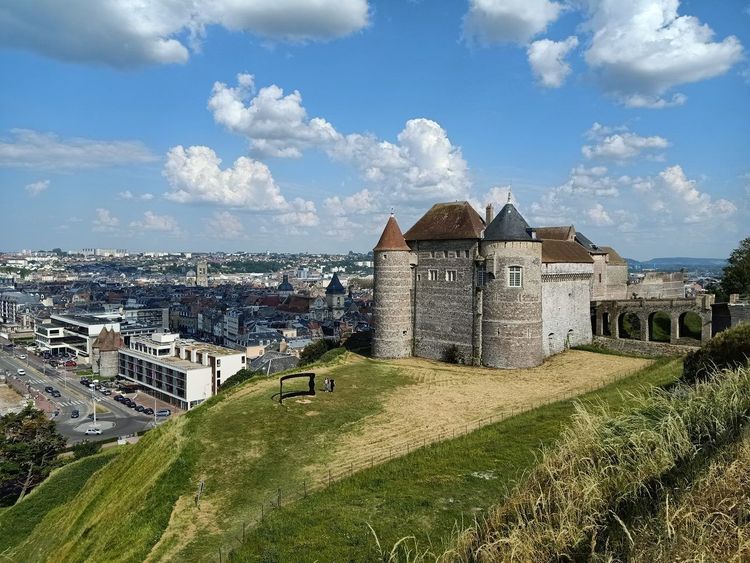
All of Dieppe's historic heritage can be visited on foot from the centre, at the cost of a climb of a few minutes at most.
The Château-Museum: Ramparts and Ivory Collection
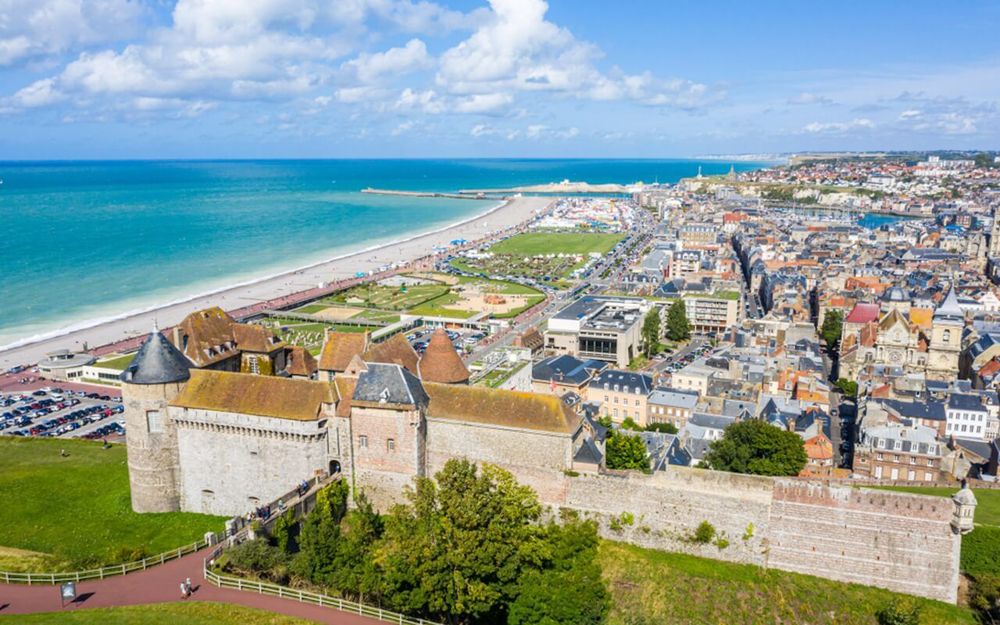
Perched on the western cliff overlooking the beach, the Dieppe château-museum (Rue de Chastes, 76200 Dieppe, rated 4.3/5 on Google from 3,933 reviews) can be reached in about fifteen minutes' walk from the place du Puits-Salé. Its oldest tower dates back to the 14th century, most of the building was rebuilt in the 15th century in flint and sandstone, and it has housed the municipal museum since 1923.
Inside, the flagship collection remains that of the carved ivories: for several centuries Dieppe was a major French centre of ivory carving, a skill fed by maritime trade with Africa. Dieppe workshops produced crucifixes, fans and ship models. The museum also displays maritime collections and paintings linked to Dieppe's vogue among 19th-century painters, from Courbet to Renoir, Pissarro and Sisley.
Admission costs a few euros, with reduced rates: check any free admission with the tourist office before your visit. Allow a good hour between the ramparts, the ivory room and the terraces, from where the view takes in the whole beach as far as the port piers.
Saint-Jacques Church and Saint-Rémy Church
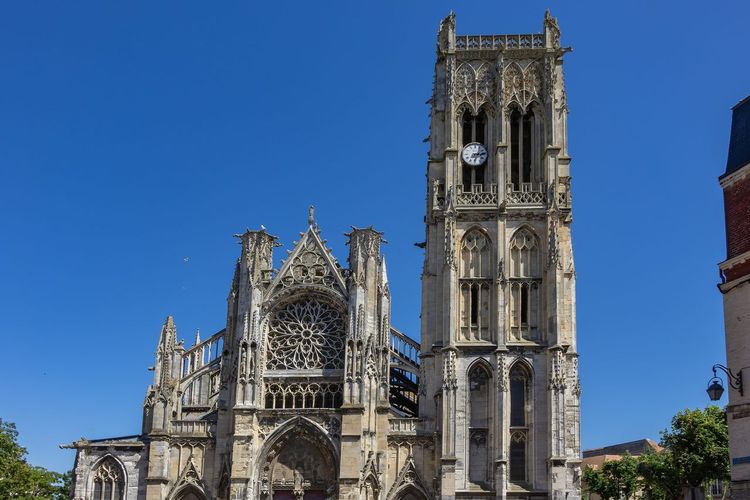
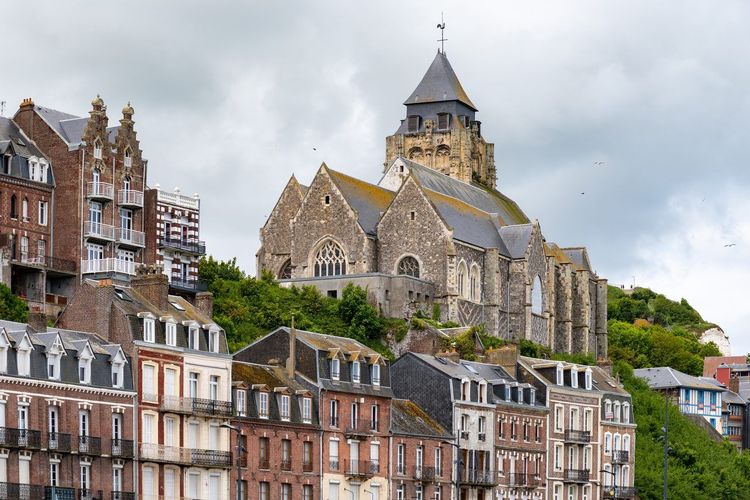
On the way back down to the centre, two churches mark your route. The Saint-Jacques church, in Gothic style, dominates the square of the same name in the heart of the town centre: its construction spread from the 12th to the 16th century, hence the mix of styles visible on its facade and carved portal.
Inside, several chapels bear witness to the town's wealth at the time when Dieppe shipowners, Jehan Ango foremost among them, financed expeditions to Brazil and the New World.
At the foot of the château, the Saint-Rémy church, later (16th-17th centuries), blends Renaissance and classicism. Less visited than Saint-Jacques, it is worth the detour for its organ and its more sober facade.
This small triangle of château, Saint-Jacques and Saint-Rémy sums up the history of Dieppe: a town of privateers and shipowners enriched by the sea, which became one of the first seaside resorts in France in the 1820s, when the Duchess of Berry launched the fashion for sea bathing. If you prefer stories to dates, the Ryo audio-guided tour climbs towards the château and tells you in your ear the privateer tales that made the town's fortune.
Le Pollet and the Cliff, Between Panoramic Views and a Fishermen's District
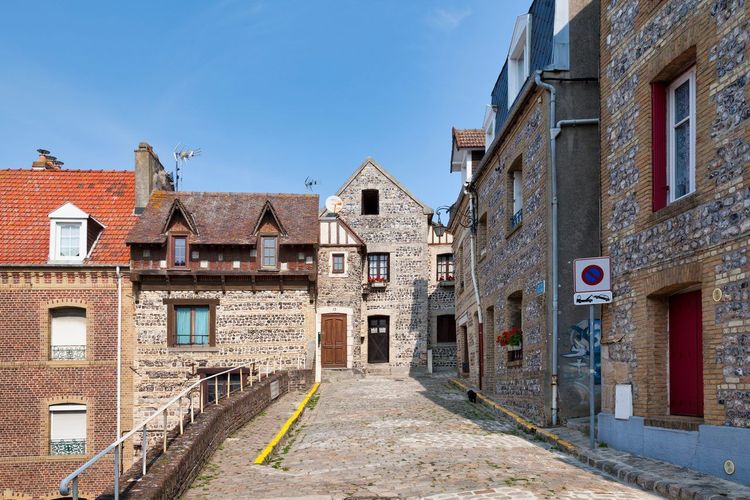
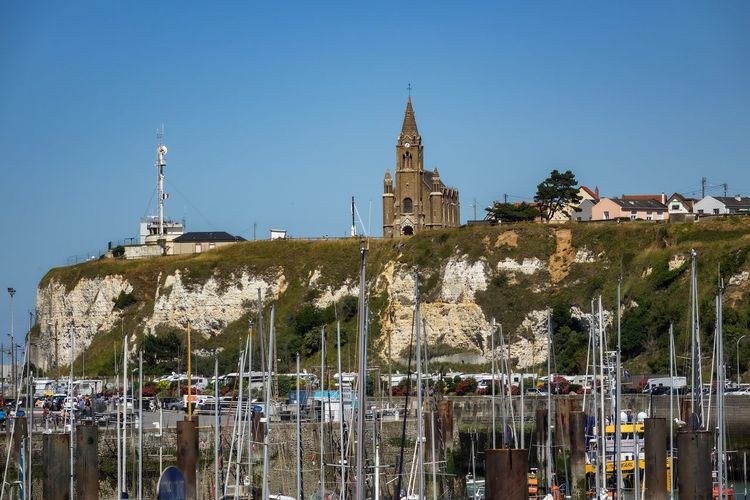
Facing the town centre, on the other side of the channel, lies Le Pollet, the historic district of Dieppe's sailors. You reach it via the Colbert bridge, a swing bridge from 1889, in five minutes' walk from the quai Henri IV.
The district then climbs the eastern cliff, a short but steep rise leading to the Notre-Dame-de-Bonsecours chapel (Le Pollet, 76370 Dieppe, rated 4.6/5 on Google from 526 reviews), whose walls carry plaques in memory of sailors lost at sea. From this promontory, the view takes in the channel, the basins, the beach and, in clear weather, the white cliffs stretching towards Pourville.
It is the simplest place to enjoy the best views of the cliffs without leaving the town or taking a bus: the climb is done on foot, via stairs and lanes, in about fifteen minutes from the port. Le Pollet keeps the character of a village within the town, with its fishermen's houses and a few bars that look at the port rather than the Channel. At weekends, Dieppe locals climb up for the sunset; off-season, only the seagulls make any noise.
If you still have energy, continue along the coastal path to Puys, half an hour's walk away, for a more open view of the Alabaster Coast. One stop on the Ryo audio-guided tour takes you to this very slope to tell the life of the Pollet sailors facing the panorama.
Dieppe Beach and Seafront
Between the port piers and the château cliff stretches the Dieppe beach (Boulevard de Verdun, 76200 Dieppe, rated 4.4/5 on Google from 5,391 reviews), nearly 1.8 kilometres of pebbles bordered by a surprising feature: huge lawns rather than a concrete promenade, where Dieppe locals picnic as soon as the first fine days arrive.
These lawns, laid out in the 19th century when Dieppe became a fashionable seaside resort, set the Dieppe seafront apart from its neighbours. You will also find the Les Bains aquatic complex with its heated seawater pools, the casino, play areas and several pétanque courts.
Strolling along the seafront easily takes an hour if you stop to watch the kites, very present thanks to the constant winds of the bay. The boulevard directly links the château on one side and the port on the other, making it an ideal reference axis when discovering the town on foot. The pebbles make barefoot walking unpleasant, but the view of the cliffs makes up for it.
The sea stays cool even in midsummer, rarely above 18 or 19 °C, and swimming is supervised in high season in a section marked by flags. For anyone visiting Dieppe without a car, this promenade has another advantage: it is flat and accessible to pushchairs and wheelchairs alike, unlike the streets climbing to the château or Le Pollet. To learn all about swimming and the neighbouring beaches, see our guide to Dieppe beach.
ESTRAN: Cité de la Mer and Unusual Must-Sees

Two visits complete the classic heritage programme, both without a car.
ESTRAN, the Museum of the Sea and the Cliffs
ESTRAN: Cité de la Mer, rue de l'Asile-Thomas, can be reached in a few minutes' walk from the port. The museum traces Dieppe's maritime history through shipbuilding, fishing techniques and the formation of the chalk cliffs of the Alabaster Coast, with aquariums populated by Channel species.
It is the ideal visit on a rainy or windy day, both frequent on this coast, and it complements the château-museum well by telling the life of the fishermen rather than that of the shipowners. Admission remains affordable, with a family rate, and a little under an hour is enough to go round.
Dieppe, Birthplace of the Alpine
Less well known than the château or the port, Dieppe's automotive history deserves a detour. It was here that Jean Rédélé, then the youngest Renault dealer in France, founded the Alpine brand in 1955, which became a benchmark of French motorsport.
This history is not just a memory: the Alpine factory in Dieppe is still in operation and the brand has kept its historic roots there. Enthusiasts watch for open days and classic car gatherings that regularly liven up the town, and the tourist office will tell you about opportunities to visit.
The anecdote says something about Dieppe: a town that has always looked elsewhere, by sea with the privateers and transatlantic expeditions, or by road with Rédélé's berlinettas. The Ryo audio-guided tour of Dieppe lets you hear this kind of story over 5 km of walking, without having to look for them on a discreet commemorative plaque.
The Dieppe Market and Where to Eat in the Town Centre
The Dieppe market (Place Nationale, 76200 Dieppe, rated 4.6/5 on Google from 1,363 reviews) is held every Saturday morning between place Nationale, the Grande Rue and the adjoining streets, and ranks among the most renowned in Normandy. Fishmongers' stalls stand alongside Norman cheeses, cider and vegetables from the Pays de Caux.
The market takes place all year round, and it is on Saturday that it reaches its full scale. Without a car, you leave light: no boot to fill, but a few products slipped into a bag are enough to prolong the stay. In November, the Herring and Scallop Fair turns the quay into a great gourmet hall.
As for specialities, the scallop remains the local star, served in most restaurants on the quai Henri IV, as is the marmite dieppoise, a simmered dish that blends fish, shellfish and Norman cream. To eat in the town centre without long journeys, the triangle formed by the quay, the Grande Rue and the Bout-du-Quai concentrates most of the addresses, from simple crêperies to more refined restaurants.
If you want to go beyond the marmite, our article on Dieppe's culinary specialities covers the products to taste on site. In a hurry between two visits? The fishmongers on the quay also offer takeaway platters.
A Day in Dieppe on Foot: The Typical Itinerary
Only have one day and a train ticket? Here is a sequence that requires neither bus nor taxi, starting and ending at the station.
Morning. Leave the station and reach the Grande Rue in about ten minutes. On Saturdays, dive straight into the market; on other days, make a detour via the Saint-Jacques church before emerging onto the place du Puits-Salé for a coffee facing the Café des Tribunaux. Then head down to the quai Henri IV and follow the outer harbour to the Bout-du-Quai.
Midday. Have lunch on the quay, scallops in season or marmite dieppoise, then cross the Colbert bridge to climb to Le Pollet and the Notre-Dame-de-Bonsecours chapel: it is the best viewpoint to help digestion.
Afternoon. Head back down to ESTRAN if the weather turns, otherwise go straight to the beach and its lawns, which you follow up to the foot of the château-museum. Keep an hour for the ivory collection and the view from the terraces, then come back down via the Saint-Rémy church.
End of day. Allow twenty minutes' walk to return to the station. In total, about 6 to 7 km over the day, roughly the route of the Ryo audio-guided tour of Dieppe (22 audio stops, 2 hours of actual walking, 5 km): you can start it from the station and let the stops pace your visit.
Excursions Without a Car Around Dieppe: Le Tréport, Mers-les-Bains and Beyond
Le Tréport and Mers-les-Bains by Train or Bus
Le Tréport (Quai Sadi Carnot, 76470 Le Tréport), about thirty kilometres north-east of Dieppe, is the easiest excursion to organise without a car. No train connects the two towns directly, but Nomad coaches run along the coast and drop you at Le Tréport in about an hour, for a few euros.
On site, everything is done on foot: the fishing port, the cliffs framing the town, and above all the free funicular that climbs to the top of the cliff for a spectacular view of the bay.
On the other side of the Bresle, a few minutes' walk away, lies Mers-les-Bains, already in the Somme, famous for its Belle Époque villas with colourful facades lined up along the seafront. You thus combine two atmospheres, the port of Le Tréport and the seaside architecture of Mers, without getting back into a vehicle.
Leave mid-morning and return late afternoon: you will have time for the funicular, a stroll along the seawall and a fish meal facing the port. Off-season, check the return times, as services become rarer at the end of the day. By bike, the Vélomaritime also links Dieppe to Le Tréport along the coast, a fine alternative in good weather.
Château de Miromesnil, Arques-la-Bataille and Eawy Forest: Outings That Require a Little Organisation
The other excursions require more planning, but remain feasible without a car, particularly if you rent a bike.
The Arques-la-Bataille château, a ruined medieval fortress perched on a promontory, is about 7 kilometres south-east of Dieppe. Note that no train stops there: the most pleasant solution is the Avenue Verte London-Paris, built on a former railway line, which starts from Dieppe and passes through Arques-la-Bataille. Allow half an hour of flat cycling, then a few minutes' climb on foot to the ramparts.
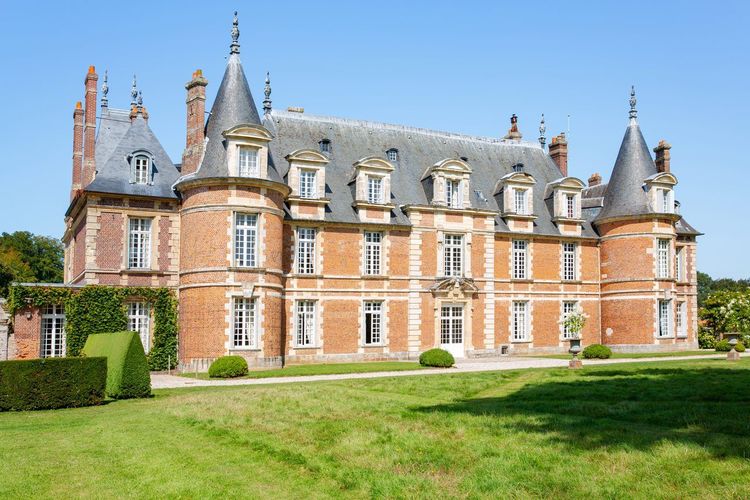
The Château de Miromesnil, at Tourville-sur-Arques, is the birthplace of Guy de Maupassant in 1850; the estate can be visited for its château, walled vegetable garden and park. With no station nearby, access is by bike from Arques on small roads, or by taxi. Our article on the Miromesnil estate details the visit.
Further into the hinterland, the Eawy forest is renowned for its beech grove and its long, straight forest avenue. The Avenue Verte follows the Varenne valley on the edge of the massif: by bike, it is a day trip from Dieppe, reserved for reasonably fit cyclists.
To the west, the Bois des Moutiers (Route de l'Église, 76119 Varengeville-sur-Mer, rated 4.5/5 on Google from 632 reviews), at Varengeville-sur-Mer, combines a house by the architect Edwin Lutyens with gardens inspired by Gertrude Jekyll. The village is about ten kilometres away: bike, taxi or Nomad coach depending on the season's timetable. Georges Braque, who lived there, rests in the Varengeville seaside cemetery, a few minutes from the garden.
Étretat, further south on the Alabaster Coast, remains the least realistic outing without a car: no direct connection, and a journey of two hours or more via Le Havre or Fécamp. For other ideas in the area, our selection of what to see around Dieppe completes this overview. The key is to accept half a day per outing rather than cramming in three as you would by car.
Where to Stay and When to Go to Dieppe Without a Car
Staying Near the Centre and the Station
To visit Dieppe without a car, the choice of accommodation matters almost as much as the choice of transport. Favour a hotel between the station and the quai Henri IV: you arrive on foot from the train and set off each morning without depending on a bus.
The quai Henri IV and Grande Rue district groups most of the hotels and guesthouses, within walking distance of all the sights. For more calm, the addresses on the seafront offer a view of the Channel, at the cost of a slightly longer walk to the station.
Prices remain more affordable than on the Côte Fleurie, with good availability outside July-August; during the kite festival, book several months in advance. Those on a tight budget will find guesthouses further out, served by the Deep Mob buses, notably towards Neuville-lès-Dieppe.
Which Season and How Many Days to Plan
Two or three days are enough to cover the essentials: the centre and the port on the first day, the château, Le Pollet and ESTRAN the next day, then an excursion to Le Tréport or by bike towards Arques on the third day.
Spring (May-June) and September remain the best times to visit Dieppe: pleasant temperatures, moderate crowds, a well-stocked market. Summer is livelier, with a full beach and more coaches to the coast.
Make a note in advance of the Dieppe international kite festival, held in even-numbered years in September, which turns the seafront lawns into one of the largest kite gatherings in the world. Our article on the kite festival details the programme and the best viewpoints.
Winter remains a season apart: some shops close earlier, the wind makes the Pollet cliff less pleasant and coaches become scarcer. Nothing prevents an off-season visit, shorter and focused on the town centre, the château-museum and ESTRAN, with the Herring Fair in November as a bonus.

FAQ
Can you visit Dieppe without a car from Paris?
Yes. From Paris-Saint-Lazare, allow a little over two hours with a change at Rouen on weekdays; at weekends, a direct Paris-Dieppe train avoids the change. The station is a ten-minute walk from the centre, and everything else can be done on foot.
Can you use the Navigo pass to get to Dieppe?
No: Dieppe lies outside the Île-de-France fare zone, so the Navigo pass is not valid there. You need a TER ticket, which you can buy at the station or online.
What is the best time to visit Dieppe?
Spring and early autumn offer the best balance between weather and crowds. In even-numbered years, in September, the international kite festival draws large crowds: book early if you are aiming for those dates.
Is the Dieppe château-museum paid?
Yes, admission costs a few euros, with reduced rates. It remains one of the most affordable visits of your stay; check with the tourist office about any free days.
Where can you park to visit old Dieppe if you come by car anyway?
Several car parks line the centre, notably along the seafront and around the docks, as the historic heart is partly pedestrianised. Park once on arrival and continue on foot, exactly as this guide suggests.
Does the Dieppe market take place all year round?
Yes, the Saturday morning market is held all year round between place Nationale and the Grande Rue, with fishmongers and Normandy producers.
Where can you enjoy the best views of the cliffs?
The Pollet cliff, around the Notre-Dame-de-Bonsecours chapel, offers the most accessible view of the port and the beach. The château-museum terraces offer the opposite viewpoint, and the Le Tréport funicular a wider panorama of the coast.
Dieppe has a rather rare quality on the Alabaster Coast: an entire town that can be explored on foot, from the train to the beach, without a single stop requiring a vehicle. The compact centre, the port districts, the château-museum on its cliff and even the excursions to Le Tréport or Arques can be combined in two or three days, if you accept swapping the steering wheel for good shoes, a rental bike and a few bus timetables.
To follow this route without memorising every address or anecdote, the Ryo audio-guided tour of Dieppe remains the simplest tool: 22 audio stops over about 5 kilometres and two hours of walking, to start as soon as you leave the station, with no booking or timetable to follow.
À lire également