© Shutterstock
 Votre guide Ryo
Visiting Dieppe for the First Time: The Complete 2026 Guide
The first thing that surprises you when arriving in Dieppe by train is the smell. Even before you catch sight of the sea, the air changes: iodine, fresh fish, a bit of salt that clings to your skin. To visit Dieppe for the first time, it is best to set aside the postcard clichés: this Normandy town is above all an active fishing port, with working quays right in the center, a stone's throw from a Belle Époque casino and a 15th-century castle perched on a cliff. You still see trawlers unloading their catch of the day right next to the market, you climb up to the Château-Musée for a panorama that takes in the whole bay, then you head back down through alleys where Pollet fishing families have lived for generations. The Ryo audio-guided route of Dieppe links 22 of these stops over about 5 km, enough to cover the essentials in half a day. This guide covers the historic center, the seafront, the surrounding area such as Varengeville-sur-Mer, Normandy's culinary specialties and all the practical details for organizing a first stay with no unpleasant surprises.
Where Is Dieppe and Why Visit It for the First Time
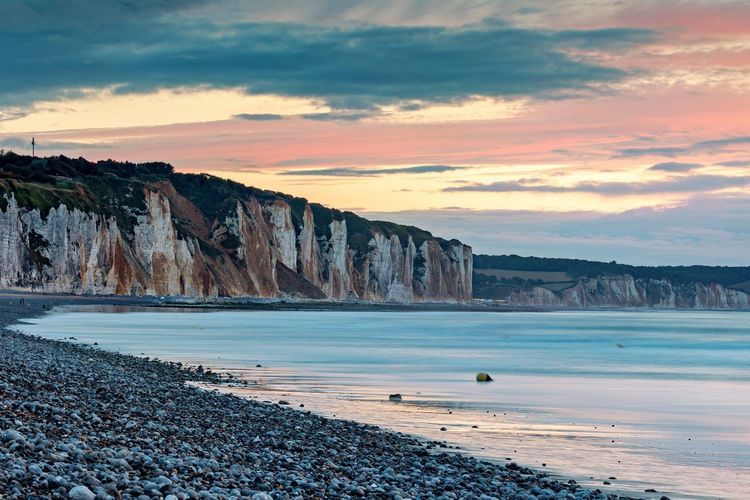
Dieppe is located in the Seine-Maritime department, on the Normandy coast of the English Channel, about 170 km northwest of Paris. Allow roughly two to two and a half hours by train from Paris-Saint-Lazare station, most often with a change at Rouen, which makes it one of the fastest seaside getaways to reach from the capital without driving. The town has a distinctive setting: it is tucked between two chalk cliffs, the Pollet cliff to the east and the one that carries the castle to the west, with the mouth of the Arques river having shaped the harbor over the centuries.
What sets Dieppe apart from other resorts on the Normandy coast is that it has never stopped being a working port. Unlike Deauville or Étretat, where tourism has largely replaced port activity, Dieppe still supports a fishing fleet, a cross-Channel link to Newhaven in England and a market that supplies part of Normandy with fresh fish. Dieppe is often described as the first seaside resort in France: English and then Parisian nobility were already coming to bathe here in the early 19th century, well before Trouville or Deauville existed in their current form.
For a first stay, this dual identity is precisely what makes the town so pleasant to explore on foot. The historic center, the seafront, the harbor and the Pollet district are almost all next to one another, linked by a maximum of about fifteen minutes of walking. You don't need a car to take in the Château-Musée, the pebble beach, the quays and the fishermen's alleys in a single day. The surrounding area, on the other hand, requires a bit more organization: Varengeville-sur-Mer and its gardens are about fifteen minutes away by road, which is worth devoting half a day to if your stay lasts more than 48 hours.
This guide follows that logic: first the town center and the coastline, which concentrate most of the must-sees, then the surrounding area, the culinary specialties, and finally all the practical information for getting here, getting around, sleeping and budgeting your stay.
The Historic Center: From the Puits Salé to the Château-Musée de Dieppe
Dieppe's historic center is best visited as a loop, starting from the central square, climbing toward the castle and then heading back down toward the church. Allow a good hour and a half if you take the time to go up to the top of the west cliff, less if you stay in the lower town. This is the densest part of the Ryo audio-guided route, which tells the story of Dieppe's privateering and trading past as you walk up the cobbled alleys.
The Château-Musée de Dieppe and Its Panorama over the Town
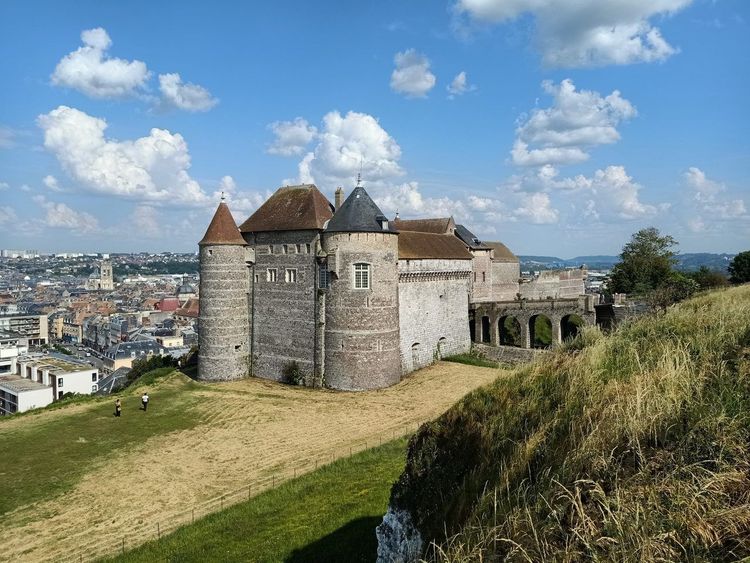
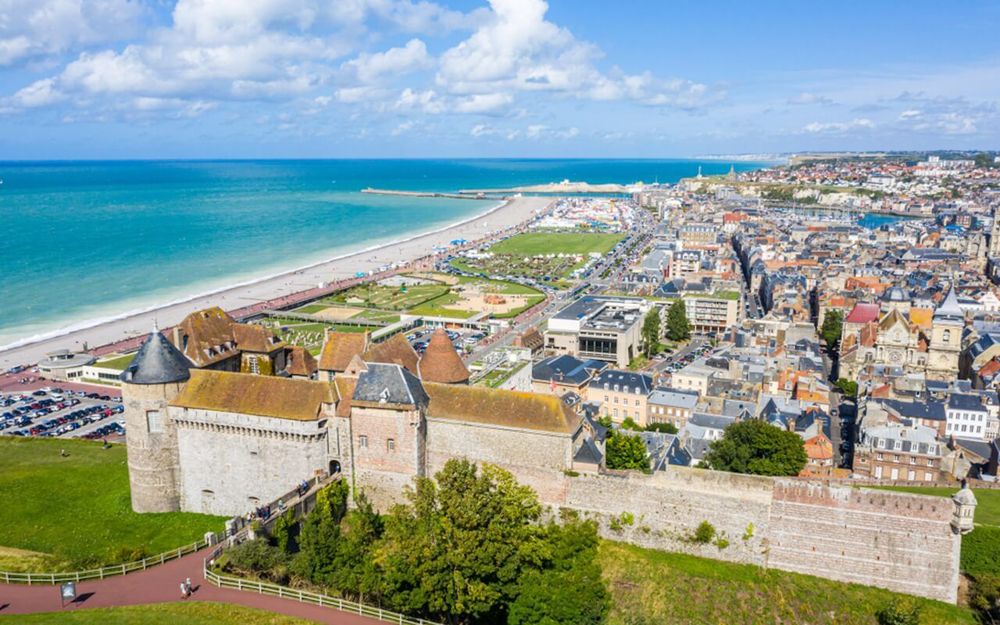
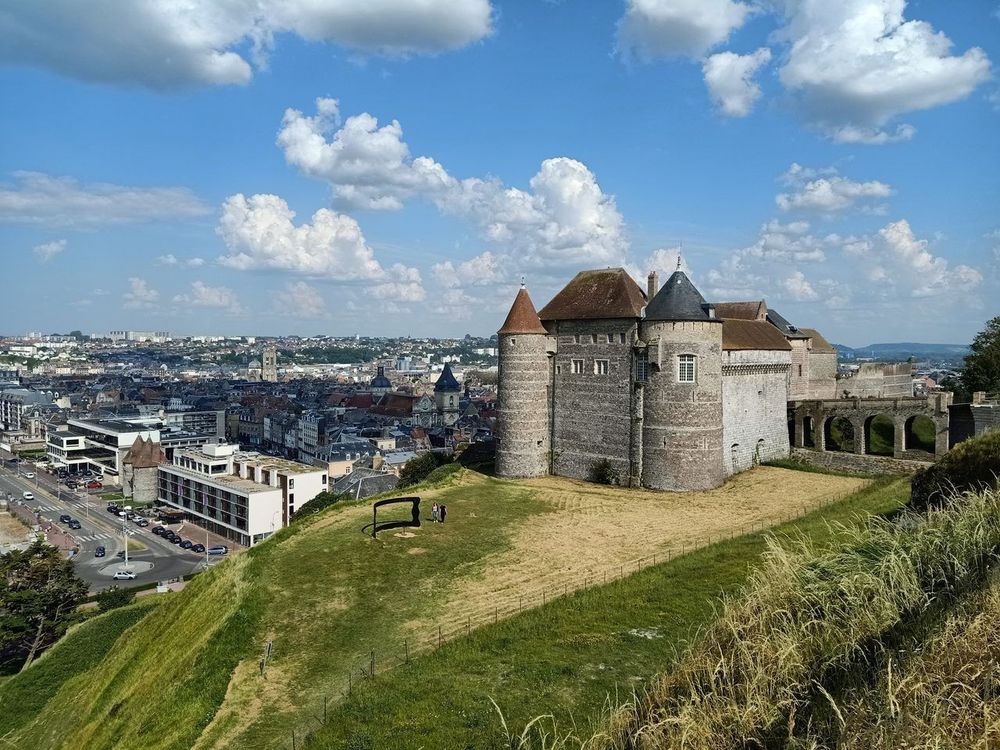
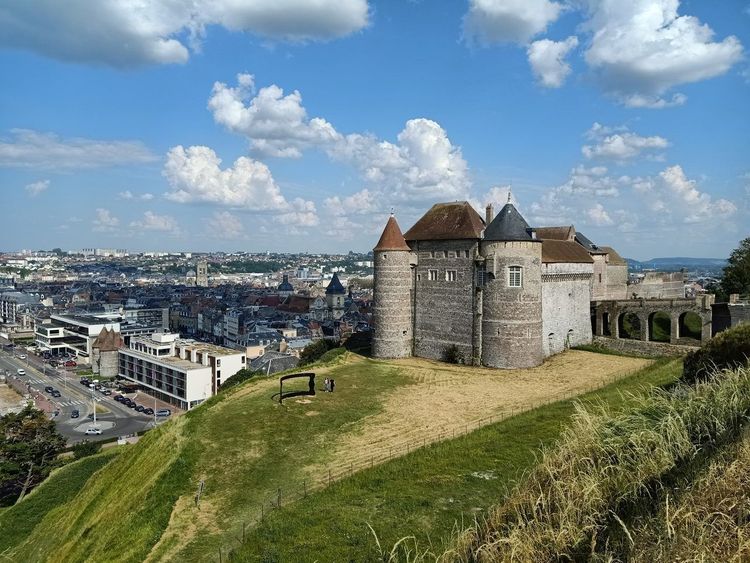
Perched on the west cliff, the Château-Musée de Dieppe has overlooked the town since the 15th century. Built from flint and sandstone to defend the port, it now houses a museum that combines maritime history, carved ivories (Dieppe was a major center of ivory carving from the 16th to the 19th century) and a collection of paintings related to the town, as well as works connected to the many painters who passed through Dieppe, from Pissarro, who painted the harbor from his hotel room during his stays in 1901 and 1902, to Georges Braque.
Visiting the museum easily takes 45 minutes to an hour, for a modest admission fee. If you are visiting Dieppe for the first time, it is the best place to understand at a glance how the town was built between its two cliffs. Even without going inside, climbing up to the ramparts is worth the detour: the panorama covers the whole bay, the seafront, the Pollet cliffs opposite and, on a clear day, you can make out the coast as far as Pourville. The museum is closed on Tuesdays and some public holidays, so remember to check before heading up if it is your only goal.
To get there from the center, go up via the rue de l'Oranger or the stairs running alongside the castle garden: the slope is noticeable, so plan on closed shoes rather than sandals if you are doing the round trip in a single outing. The public garden surrounding the castle, with its flower beds and shaded benches, also makes a pleasant break before heading back down to the center.
The Place du Puits Salé and the Town Center
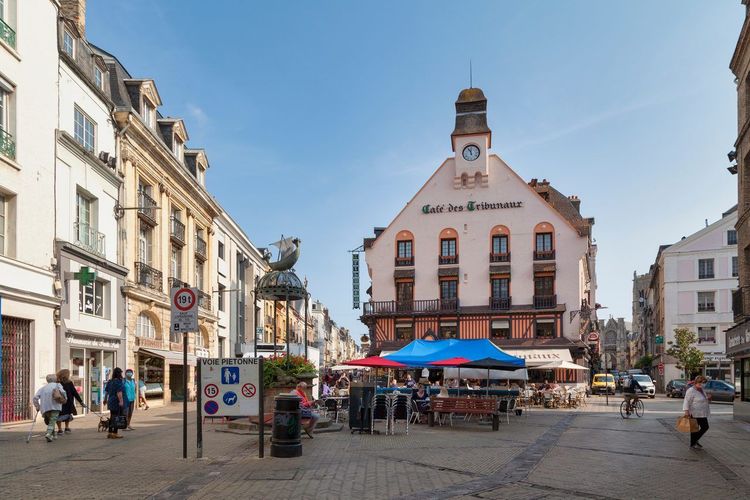
Heading back down toward the center, you come out onto the place du Puits Salé (Grande Rue, 76200 Dieppe), the true heart of the town with its café terraces, including the historic Café des Tribunaux. This is where the Grande Rue converges, the pedestrian shopping street that runs through the whole historic center for several hundred meters, lined with half-timbered houses and classic Norman façades.
The square's name comes from an old saltwater well that is said to have existed on this spot, linked to the activity of salt makers before the port specialized in fishing. Today, it is mostly a handy landmark: most of the shops, bakeries and small Norman stores are on the Grande Rue and in the adjacent streets, ten minutes' walk from the castle and barely five minutes from the seafront. You will find local brands as well as a few surf and nautical equipment shops, a reminder that Dieppe remains a town turned toward the sea even in its downtown commerce.
If you are looking for somewhere to take a break, the square's terraces are pleasant in late morning, before the bulk of the tourist crowds arrive in summer. It is also a good starting point for walking to Saint-Jacques Church (Place Saint-Jacques, 76200 Dieppe, rated 4.5/5 on Google from 622 reviews), two streets away.
Saint-Jacques Church
Two minutes' walk from the Puits Salé stands Saint-Jacques Church, a Gothic building constructed from the 12th to the 16th century and listed as a historic monument as early as 1840. Inside, the Treasury wall bears the famous "Frieze of the Savages," sculpted around 1530: you can recognize Brazilian Indians by their feathered headdresses, a souvenir of the Dieppe expeditions from the time when the town's shipowners traded with the four corners of the world.
This frieze, extremely rare in Norman religious art, bears witness to the expeditions led by local shipowners, the best known of whom, Jehan Ango, also had the manor built that you will come across later near Varengeville. The interior of the church deserves a quick visit for its vaults and its organ, especially if you have a little time between two stops in the historic center. Admission is free and the building stays open for most of the day, outside of Mass times. It is a short stop, ten minutes is enough, but it rounds off the castle, town center, church loop nicely before heading back down toward the seafront.
The Seafront, the Harbor and the Pollet District
From Saint-Jacques Church, you just need to go down the street toward the north to reach the seafront in under ten minutes. This part of the visit changes register completely: you leave the shopping alleys behind to follow the beach, then the fishing harbor, all the way to the working-class Pollet district, where Dieppe keeps its most maritime soul.
The Pebble Beach and the Seafront
The Dieppe beach stretches over more than 1.5 km of pebbles, bordered by a wide boulevard lined with lawns, pétanque courts and children's play areas. It is a rather rare layout on the Normandy coast: instead of a simple seaside boulevard, Dieppe laid out vast green spaces between the town and the beach as early as the 19th century, inherited from its past as the first aristocratic seaside resort.
The boulevard de Verdun, which runs along the entire beach, is also home to the Dieppe casino, as well as a mini-golf course and several beach volleyball courts in summer. Swimming flags mark the supervised zones in high season: it is best to stay within them, as currents can be stronger than they look at low tide.
As for swimming, the sea recedes far at low tide and the pebbles can make walking uncomfortable without suitable shoes, but the atmosphere at the end of the day, when the low light skims the water, more than justifies a stroll even without a swim. For kite enthusiasts, Dieppe hosts one of the largest international festivals of its kind every two years, in September of odd-numbered years (the last edition took place in 2025, the next is expected in 2027): for about ten days, the seafront lawns are covered with colorful sails. Our article dedicated to the international kite festival helps you plan your dates.
The Quai Henri IV and the Harbor
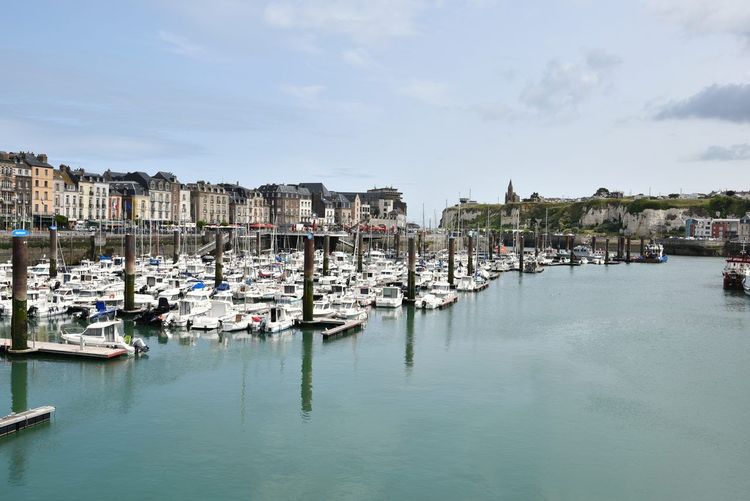
Continuing east, the seafront joins the quai Henri IV (Quai Henri IV, 76200 Dieppe), which runs along the harbor channel. This is where the fishing boats moor, unloading scallops, herring and other fish every morning that you will find a few hours later at the market or on the plate of a harbor restaurant.
The port of Dieppe is divided into several basins: fishing port, marina and cross-Channel terminal to Newhaven, which gives the quay continuous activity, quite different from the calm of the tourist quays found elsewhere in Normandy. Early in the morning, part of the catch is still negotiated directly on the quay before heading to the fish auctions and fishmongers of the town, a scene you can watch without disturbing the work by simply staying on the sidewalk. On the cross-Channel side, the ferry terminal is a little further along the same quay, with regular crossings to England.
Late afternoon is also when the trawlers come back in, a good time slot to watch the unloading. Want to hear what these quays have to say? A section of the Ryo audio guide of Dieppe runs along the quai Henri IV up to the bridge leading to the Pollet, with an anecdote about the fishing families who have lived in the district for several generations.
The Pollet District
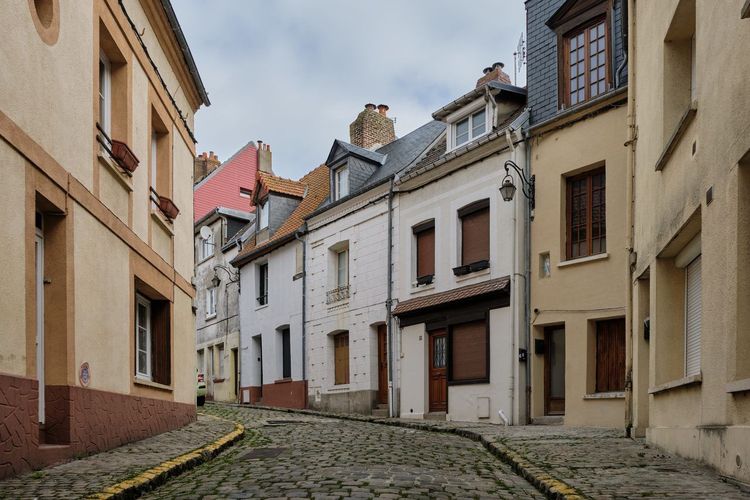
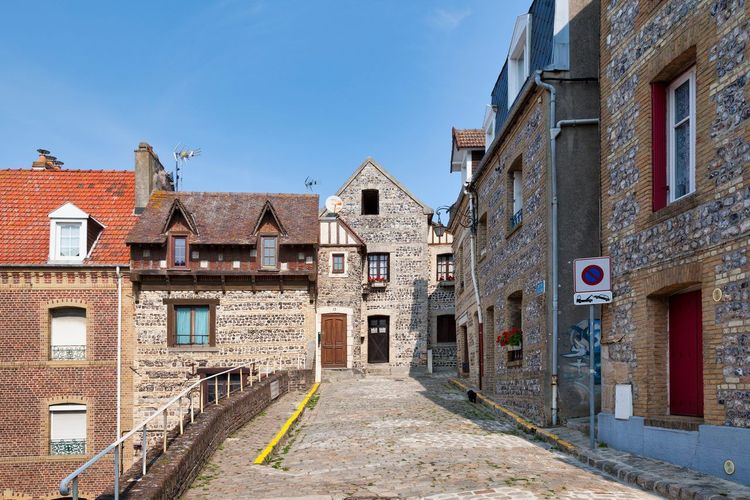
On the other side of the basin, crossing the Colbert Bridge, you enter the Pollet district, historically the stronghold of Dieppe's seafaring and fishing families. The alleys are narrower, the houses more modest than in the town center, and the atmosphere remains distinctly more local: this is everyday Dieppe, far from the terraces of the Puits Salé.
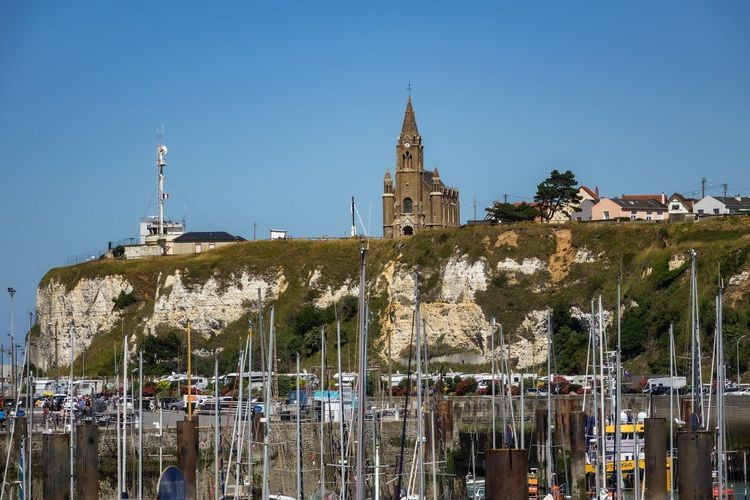
The Pollet also climbs toward a cliff, less visited than the castle's, with several viewpoints over the harbor and the lower town. The chapel of Notre-Dame-de-Bon-Secours, perched on this cliff, remains a place of pilgrimage for seafaring families, with boat-shaped ex-votos hung inside in thanks for rescues at sea. The viewpoint just behind the chapel offers one of the most open perspectives over the harbor and the lower town, often overlooked by visitors who don't venture this far.
It is a stop that takes little time, 20 to 30 minutes of walking, but it completely changes your perception of Dieppe after visiting the historic center and the seafront: you move from a tourist town to a fishing town that continues to live from the sea.
The Estran Cité de la Mer and the Saturday Morning Market
Two experiences round out the seafront visit nicely: a museum devoted to fishing and the marine ecosystem, and the weekly market that has enlivened the town center for centuries.
The ESTRAN Cité de la Mer (37 Rue de l'Asile Thomas, 76200 Dieppe, rated 4.1/5 on Google from 1,211 reviews) is a science and technology museum devoted to the sea and the Normandy coast, located near the harbor. You can discover aquariums showcasing the fauna of the English Channel, models and pieces related to shipbuilding and fishing, as well as exhibitions on Dieppe's maritime history, from expeditions to Brazil and Newfoundland to today's cross-Channel port.
The visit is particularly suitable for families with children: the touch aquariums and the workshops offered on certain days appeal to the youngest, and a full visit generally takes one to one and a half hours. The museum is open every day of the year (except around Christmas and New Year's Day), with a full price of €8 and €4.50 for ages 4-16. It is a good fallback plan in case of rain, which is frequent on this stretch of the Normandy coast.
The Saturday morning market takes place on the Grande Rue and the adjacent squares, and it is regularly cited among the largest markets in Normandy. The tradition is said to date back to the Middle Ages, when Dieppe obtained the right to hold a weekly market by royal charter; even today, local producers mingle with harbor fishmongers along several hundred meters of stalls, from the Grande Rue to the surroundings of Saint-Jacques Church. You will find seafood landed the day before or that very morning: scallops in season, herring, sole, but also Norman cheeses, cider, calvados and fresh produce from the surrounding area.
If your stay falls on a Saturday, organize your morning around this market before tackling the rest of the program: it is both a treat for foodies and a good glimpse of local life, far from the tourist restaurants on the seafront. Arrive before 10 a.m. if you want to enjoy it without the crowds that build up in late morning, especially in summer. Outside of Saturday, smaller markets are also held during the week, with a more limited selection.
The Cliffs and Viewpoints around Dieppe
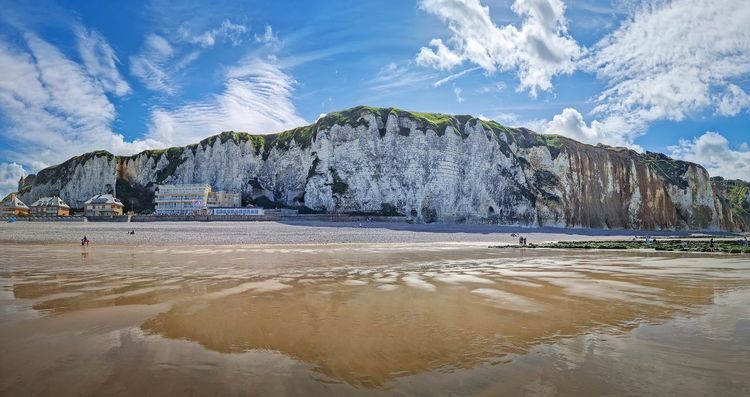
Dieppe is framed by two chalk cliffs that offer the best views of the town, each with a different atmosphere. If you have time, both are worth the detour, but they are visited separately.
On the west side, the cliff that carries the Château-Musée overlooks a landscaped green space, with an eighteen-hole golf course set on the plateau since 1897, one of the oldest in France. This golf course long attracted a British clientele who came by ferry from England; you can walk along its edges without playing, simply to enjoy the coastal path that borders it. The viewpoint from this path, freely accessible, opens up a view of the beach, the harbor and, in fine weather, the coast toward Pourville.
On the east side, the Pollet cliff is less developed but wilder: a path climbs from the district to a viewpoint that directly overlooks the harbor and its channel, an angle you can't get from the castle. It is also where you can best gauge the coastal erosion that regularly gnaws at the Normandy shoreline, a phenomenon detailed on several information panels along the route.
As for listening, several stops on the Ryo audio-guided route climb to these cliff viewpoints, with commentary on the formation of chalk and the gradual retreat of the coastline, a way of listening to the landscape rather than simply photographing it. Allow half an hour round trip for each cliff if you start from the town center, in walking shoes rather than sandals: the paths are uneven in places. If you only want to do one cliff, choose the castle's for the overall view, and save the Pollet's for a second visit if your stay lasts more than 24 hours.
Varengeville-sur-Mer and the Area around Dieppe
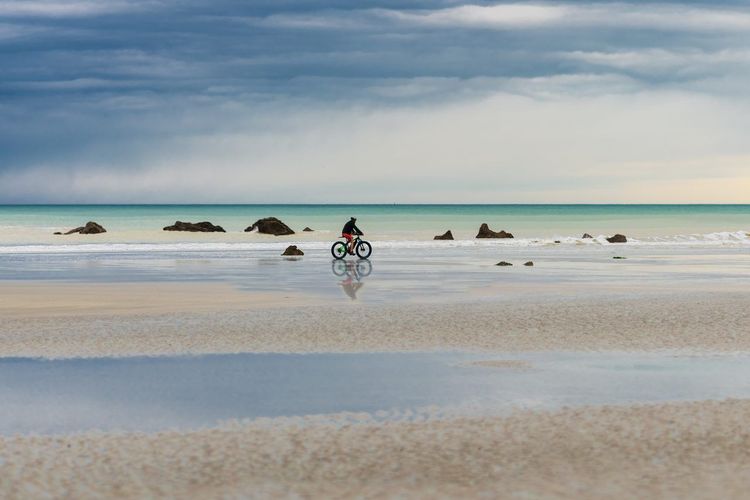
If your stay lasts more than two days, the area around Dieppe deserves half a day, ideally by car since this zone falls outside the pedestrian route in town. Varengeville-sur-Mer, about fifteen minutes' drive to the west, concentrates most of the attractions: a remarkable garden, a Renaissance manor and a village that has long attracted painters and writers.
Varengeville-sur-Mer and the Vasterival Garden
The village of Varengeville-sur-Mer stretches along the cliff, between fields and woods, with an isolated church at the edge of the void where the painter Georges Braque is buried, and where one of his stained-glass windows adorns the building. It is a peaceful setting, quite different from the bustle of Dieppe's harbor. The village also attracted several writers and musicians in the 20th century, drawn by the particular light of this stretch of coast, the same light that inspired many Impressionist painters to work in the Dieppe region.
Right next door, in the neighboring commune of Sainte-Marguerite-sur-Mer, the Vasterival garden was shaped by Princess Greta Sturdza starting in 1955: more than 7,000 species and varieties over twelve hectares of undergrowth, with blooms spread throughout the year. This private garden can only be visited on a guided tour, by appointment; from mid-March to mid-September, a one-hour visit is also offered on weekdays at 11 a.m. without reservation. It is therefore best to build it into your program in advance. For botany enthusiasts, it is one of the most renowned gardens in Normandy, often compared to the great English gardens for the diversity of species gathered on a relatively modest plot.
The Manoir d'Ango
A few minutes from the Vasterival, the Manoir d'Ango (Route du Manoir d'Ango, 76119 Varengeville-sur-Mer, rated 4.3/5 on Google from 389 reviews) was built in the 16th century for Jehan Ango, a wealthy Dieppe shipowner who financed the town's maritime expeditions to Africa and Brazil. The building combines traditional Norman half-timbering with Italian Renaissance decoration, brought back by the craftsmen Ango had brought home from his travels.
The most photographed detail remains the central dovecote, a round tower in a checkerboard of stone and brick that could house several thousand pigeons, a sign of its owner's wealth at the time. Local legend has it that Francis I himself stayed in this manor during a trip through Normandy, charmed by the splendor of the home of a mere shipowner who then rivaled that of the greatest noble families of the kingdom. The visit is generally free access in the courtyard, with a modest entrance fee for the gardens and certain rooms open to the public depending on the season.
The Yères Valley
A little further along, in the direction of Le Tréport, the Yères Valley offers another face of the Norman countryside: a river winding between hills, half-timbered villages and wet meadows all the way to the sea at Criel-sur-Mer. The river, about forty kilometers long, also lends itself to trout fishing for enthusiasts with a fishing permit, and several marked hiking trails let you follow it for several kilometers between woods and wet meadows.
It is an excursion for walking lovers rather than visitors in a hurry: allow a full afternoon if you want to stop in one of the villages such as Mesnil-Val or Criel-sur-Mer, go on to the beach and head back to Dieppe at a leisurely pace. For those with a full day in the area rather than half a day, combining Varengeville in the morning and the Yères Valley in the afternoon remains the most comfortable formula, without passing through Dieppe twice. For a first stay centered on the town, this valley remains optional, best saved for a second visit or a longer stay in the region.
Culinary Specialties: the Marmite Dieppoise and Seafood

It is impossible to visit Dieppe without tasting its best-known specialty, the marmite dieppoise: a slow-simmered dish that combines white fish, mussels, shrimp and sometimes scallops in a Normandy cream sauce, often made with cider or white wine and mushrooms. Originally a fishermen's dish, designed to make the most of the fish of the day, the marmite has become the signature of Dieppe's tables: you will see it on the chalkboard of almost every restaurant in the harbor.
The recipe varies from one restaurant to another, but it appears on almost every menu in the town center and the harbor, particularly in the establishments on the quai Henri IV, well placed to serve fish landed just a few hours earlier.
Beyond the marmite, Dieppe remains above all a town of simple, raw seafood: scallops in season (from October to May), smoked herring, sole and other flatfish that you can find directly at the Saturday market or from the fishmongers of the Grande Rue. On the sweet side, the region around Dieppe also produces Norman ciders and calvados that go well with a seafood meal.
For a more complete tour of the addresses and specialties not to be missed, our article on Dieppe's culinary specialties details ten addresses tested on site.
Where to Stay and Where to Eat in Dieppe
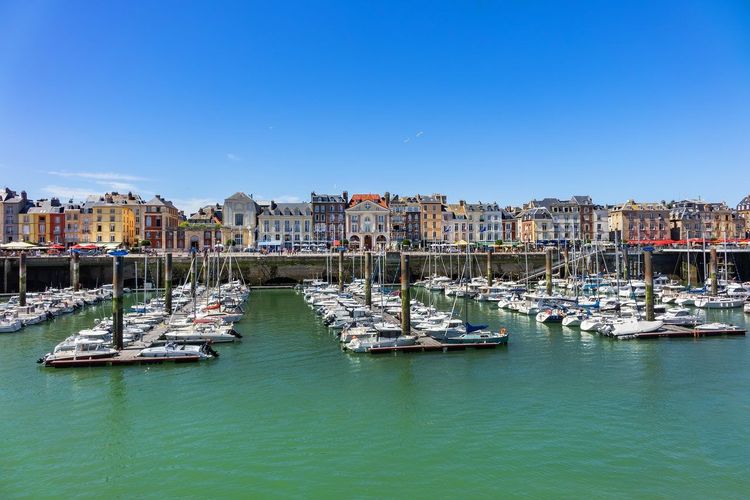
Dieppe remains an affordable town compared with other Normandy destinations such as Honfleur or Deauville, with a choice of accommodation ranging from a hotel facing the sea to a bed and breakfast in the Pollet.
Where to Stay in Dieppe Depending on Your Profile
For a first stay, the simplest option is to stay near the seafront or the historic center, within walking distance of most of the must-sees. The hotels on the boulevard de Verdun offer a direct view of the beach and the casino, handy if you don't want to walk far in the evening after dinner.
On the budget side, the town center and the district behind the place du Puits Salé offer simpler hotels, often 20 to 30% cheaper than seafront establishments, for an extra ten-minute walk. Fans of unusual accommodation will also find a few bed and breakfasts set up in former fishermen's houses in the Pollet, a way of staying in the town's most authentic district rather than in its most touristy part. For travelers who prefer a quieter setting, a few accommodations are also located in the residential district south of the center, twenty minutes on foot from the must-sees but at noticeably lower rates, an option to consider for a stay of several days rather than just a weekend.
In high season (July-August) and on the kite festival weekend, book several weeks in advance: Dieppe's hotel supply remains limited compared with towns of equivalent size, and prices climb quickly during these periods.
Restaurants in Dieppe
The quai Henri IV and its surroundings have the highest concentration of fish and seafood restaurants, with views of the fishing boats moored right opposite. It is the most obvious place to taste the marmite dieppoise, even if prices there are generally higher than a few streets away.
For simpler eating, the Grande Rue and the small streets around the place du Puits Salé group together crêperies, brasseries and a few more classic Norman addresses, at more accessible prices. If you are traveling with children, some brasseries in the town center offer suitable menus, easier to find than at the harbor, where the offering remains focused on traditional seafood cuisine. For a quick lunch between two visits, several fishmongers at the market also offer seafood platters to take away, a cheaper option than a restaurant and just as fresh, to enjoy on a bench on the seafront.
Lastly, the Pollet hides a few small neighborhood restaurants less known to visitors, where the menu follows the catch of the day directly rather than a fixed tourist menu. Whichever area you choose, booking in the evening in high season is a good idea, especially on weekends, as terrace tables facing the harbor and the beach go quickly.
How to Get to and Around Dieppe without a Car
Dieppe is easy to reach from Paris, and once there, the compactness of the town center means you can visit the essentials without a car.
Getting to Dieppe by Train or by Car
By train, allow about 2 to 2.5 hours from Paris-Saint-Lazare station: most journeys involve a change at Rouen, with direct trains remaining rare. It remains one of the simplest seaside getaways to organize without a car from the capital. Dieppe station is fifteen minutes' walk from the historic center, a pleasant walk that follows part of the canal. On fares, booking your train ticket several weeks in advance often halves the price compared with a last-minute purchase, a tip valid on most Paris-Normandy lines.
By car, allow about 2h15 to 2h30 from Paris via the A13 to Rouen then the A151 toward Dieppe, a trip with no particular difficulty. Several car parks are located in the town center and along the seafront, notably near the casino and close to the harbor, with rates that remain reasonable compared with other Normandy coastal towns in high season. In summer, spots near the beach fill up quickly in the middle of the day, so it's best to arrive early or park a little further away and walk.
For travelers coming from England, a cross-Channel link connects Dieppe to Newhaven, an option still little known to French visitors but handy if you are combining your stay with a trip to the United Kingdom.
Getting Around Dieppe without a Car
Once there, Dieppe can be visited almost entirely on foot: the historic center, the seafront, the harbor and the Pollet are all within a radius of fifteen to twenty minutes' walk at most. This is precisely one of the town's strengths for a first stay without a car.
This is the setup co/fr/destinations/france/parcours audioguidé Ryo/dieppe): its 22 stops guide you step by step over about 5 km, with no need to pull out a paper map at every intersection or search for the next point of interest on your phone. Allow about two hours for the whole route, at your own pace, with possible breaks at each stop.
A few shuttles and local buses also serve the outlying districts and certain nearby beaches such as Pourville, handy if you want to go a little further without renting a car for a single outing. Cycling remains a limited option in the town center because of the cobblestones, but becomes more comfortable once you head out to the seafront and its long straight stretches. For slightly more distant areas such as Varengeville-sur-Mer, a rental car or a taxi remains the simplest solution, as bus connections are limited in frequency. To explore mobility options in town in more depth, our article on visiting Dieppe without a car details the alternatives available depending on the season.
Practical Info: Budget, Weather and Good to Know for a First Stay
Before finalizing your itinerary, here are a few practical pointers so you aren't caught off guard on site.
On the budget side, a weekend in Dieppe for two people costs on average between 250 and 450 euros, including accommodation and seafood meals, excluding transport. It is markedly more affordable than Deauville or Honfleur for a comparable level of comfort, especially if you stay away from the seafront. This budget varies greatly with the season: expect the high end of this range in July-August and during the kite festival (September of odd-numbered years), and rather the low end in low season, from October to March, when accommodation prices drop noticeably while you still have full access to fresh scallops.
On the weather side, summer in Dieppe is cool for a French seaside destination: temperatures rarely exceed 23-24°C in July-August, and the wind, frequent on this part of the Normandy coast, can make it feel cooler even in fine weather. It is not a destination for prolonged swimming, but rather a town to visit actively, on foot, between possible showers: always bring a windbreaker, even in midsummer. Spring and early fall are often the best windows for visiting Dieppe: fewer people than in midsummer, still decent weather, and gentler accommodation rates. In winter, on the other hand, many shops and restaurants on the seafront close for part of the week, so check before leaving.
For families with young children, Dieppe remains a suitable destination: the wide sidewalks of the seafront, the children's play areas on the lawns, the Estran Cité de la Mer and its aquariums, as well as the beach, even though it is pebbly, offer enough to keep you busy for several days without needing a car to get around. For the youngest children, the mini-golf and the play areas on the lawns of the boulevard de Verdun remain the simplest options to combine with a beach outing, without needing to book anything in advance. The main point of attention is strollers on the cobblestones of the historic center, which are fairly uneven in places.
In terms of seasonality, the Saturday market, the kite festival in September (every other year) and fresh scallops from October to May are the three events worth adjusting your dates for if any of them particularly interests you. To go further on activities suited to children, our article on visiting Dieppe with family complements this practical info.



FAQ
How many days should you plan for visiting Dieppe for the first time?
One full day is enough to see the essentials of the historic center, the seafront and the Pollet. If you want to add Varengeville-sur-Mer and its surroundings without rushing, plan on two full days instead, with a morning devoted to the surrounding area and the Saturday market if your dates allow.
How do you get to Dieppe from Paris?
The train from Paris-Saint-Lazare takes about 2 to 2.5 hours, most often with a change at Rouen. By car, allow about 2h15 to 2h30 via the A13 and A151. The train remains the simplest option for a first trip without a car, with the station just a fifteen-minute walk from the center.
How do you get around Dieppe without a car?
The historic center, the seafront, the harbor and the Pollet can all be visited on foot, with a maximum of fifteen to twenty minutes of walking between each area. The Ryo audio-guided route of Dieppe covers most of this route over about 5 km. Only the surrounding area, such as Varengeville, requires a car or a taxi.
Where should you stay in Dieppe depending on your budget?
Seafront hotels offer a direct view of the beach but cost more. The town center, behind the place du Puits Salé, offers more affordable options ten minutes away on foot. For unusual accommodation, a few bed and breakfasts are located in former fishermen's houses in the Pollet.
What budget should you plan for a weekend in Dieppe?
Plan on 250 to 450 euros for a weekend for two, including accommodation and seafood meals, excluding transport. It is generally more affordable than other Normandy seaside towns such as Deauville or Honfleur for equivalent comfort.
Is the weather reliable in Dieppe in summer?
Temperatures stay moderate, rarely above 23-24°C in July-August, and wind is common on this part of the Normandy coast. Always bring a windbreaker, even in midsummer, and keep a plan B in case of rain, such as visiting the Estran Cité de la Mer.
Is Dieppe suitable for travelers with young children?
Yes: wide sidewalks along the seafront, children's play areas on the lawns, aquariums at the Estran Cité de la Mer and a beach within walking distance of the center. The main thing to watch out for is the uneven cobblestones of the historic center for strollers.
Conclusion
Dieppe is not just a stopover on the road to the Normandy beaches: it is a town that has kept its port, its market and its fishermen's districts intact, which makes it a surprisingly authentic destination for a first stay. In one well-filled day or two relaxed days, you will have time to climb up to the Château-Musée, walk along the quai Henri IV to the Pollet, taste a marmite dieppoise and, if the weather allows, go on to Varengeville-sur-Mer.
To enjoy this first visit without piling up searches on site, the 22 audio tracks of the Ryo audio-guided route remain the simplest way to string these stops together at your own pace, headphones on, without ever losing the thread of the town's privateering and maritime history. All that's left is to book your train tickets and pack a windbreaker.
À lire également