© Shutterstock
 Votre guide Ryo
Free Things to Do in Dieppe in 2026: Beaches, Cliffs and Maritime Heritage
In Dieppe, the sea is free. Among the free things to do in Dieppe, the most beautiful come down to three words: pebbles, sea spray and seagulls, accessible at any hour without an entrance ticket. Between the Arques estuary, the chalk cliffs stretching toward Pourville-sur-Mer and the alleys of the old Pollet quarter, the Norman town has nothing to envy the paid attractions of the coast. To get a feel for the place before setting off on foot, the Ryo audio-guided tour of Dieppe sets the scene of the seafront and its port history in 22 audio stops.
Here, one of the largest Saturday markets in Normandy still enlivens the Grande Rue, an international festival brings kite flyers from around the world to the seafront lawns every two years, and in summer the town offers introductions to sea rowing and aqua walking. The grounds of the Château-musée open onto a full panorama of the Channel without buying an exhibition ticket, and the monuments of the 1942 raid tell, in the open air, one of the hardest chapters of local history. From the morning fish auction to the alleys of the Pollet, here are fourteen ideas for visiting Dieppe without opening your wallet, each time noting what remains paid to avoid unpleasant surprises.
1. The Pebble Beach and Seafront of Dieppe
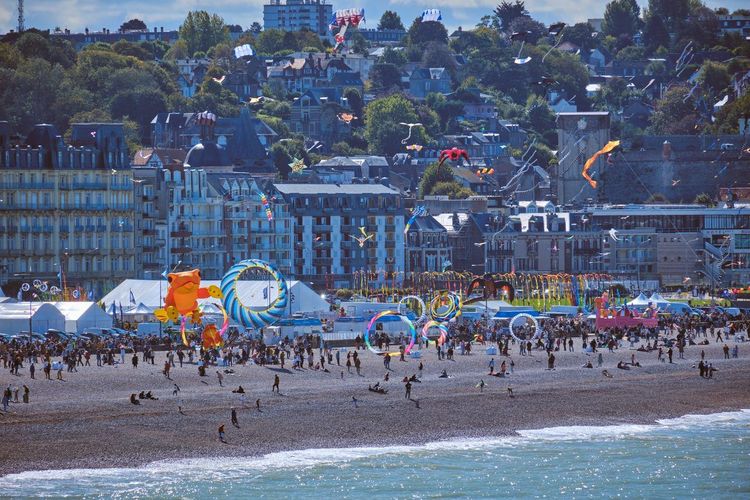
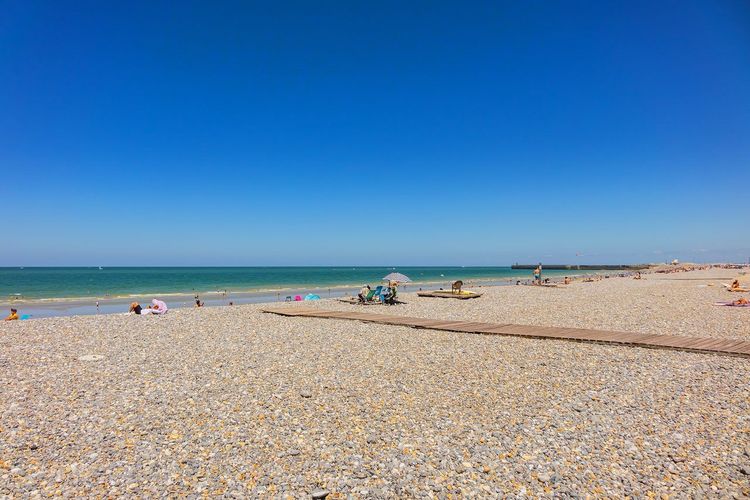
The Dieppe beach (Boulevard de Verdun, 76200 Dieppe, rated 4.4/5 on Google from 5,391 reviews) stretches over nearly two kilometres of pebbles, between the harbour jetty and the cliff crowned by the castle. Unlike the fine-sand beaches of the Atlantic, it calls for water shoes, but it offers immediate access to water that is often cooler and less crowded than elsewhere. The esplanade running alongside it, bordered by wide lawns, can be explored on foot, by bike or with a stroller, from sunrise to sunset, without spending a thing.
Dieppe even claims the title of France's first seaside resort: it was here, in 1824, that the Duchess of Berry came to take her first sea baths, launching a fashion that would then spread across the whole Normandy coast. This head start explains the look of the Boulevard de Verdun, where 19th-century façades stand alongside post-war reconstruction buildings, all facing the open sea.
In summer, lifeguard posts oversee supervised swimming in several zones, generally from late June to early September according to the municipal order. You can settle on the lawns for a picnic while the children play on the pebbles (the rides and inflatable structures set up in summer, however, are paid). The benches scattered along the seawall let you spend an entire day facing the sea with no expense other than the sandwich bought at the market.
In the evening, the beach changes character: families head home, joggers and anglers take over on the jetty, and the low light on the pebbles attracts photographers. To learn everything about the swimming areas and facilities, our guide to the Dieppe beach goes into detail. The seafront is also one of the common threads of the Ryo audio-guided tour, which tells the story of sea bathing and the seawall before leading you to the harbour.
2. The Port of Dieppe: Fish Auction, Trawlers and Marina
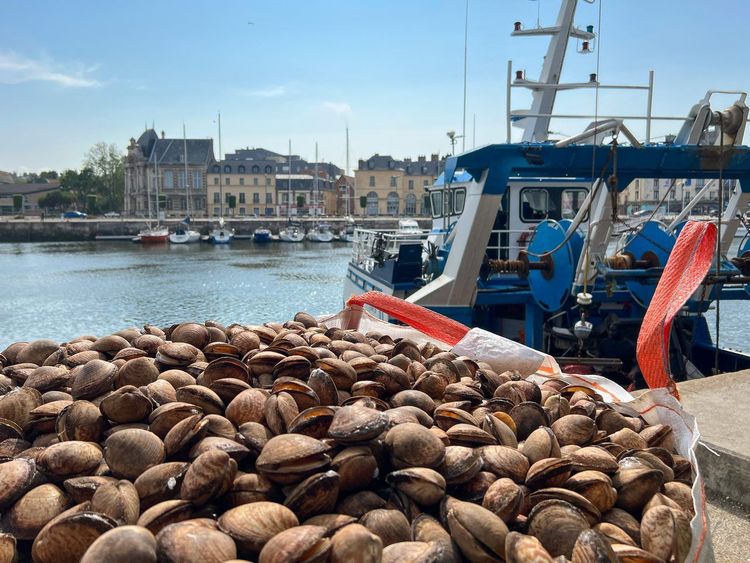
Linked to Newhaven by ferry since the 19th century, Dieppe remains an active fishing port, renowned for its scallops. Strolling along the quays, watching the trawlers return and observing the unloading from a distance costs nothing: position yourself on the quay early in the morning to see the crates of fish unloaded and sorted before the sale, which is reserved for professionals.
A few minutes' walk away, the marina hosts several hundred boats and makes for a pleasant end-of-day stroll. A boat trip at sea remains paid, but wandering the quays, watching the manoeuvres and chatting with boaters requires no booking. Want to understand what you're seeing without going aboard? One stop on the Ryo audio-guided tour pauses right on the quays to tell the story of fishing, the fish auction and the great days of the port.
For photos, look out for the Colbert Bridge, a swing bridge built at the end of the 19th century, which still pivots to let boats pass between the outer harbour and the basins. In late afternoon, fishing boats return in a golden light typical of the Alabaster Coast.
3. The Pollet Quarter, Between Fishermen's Alleys and Harbour Views
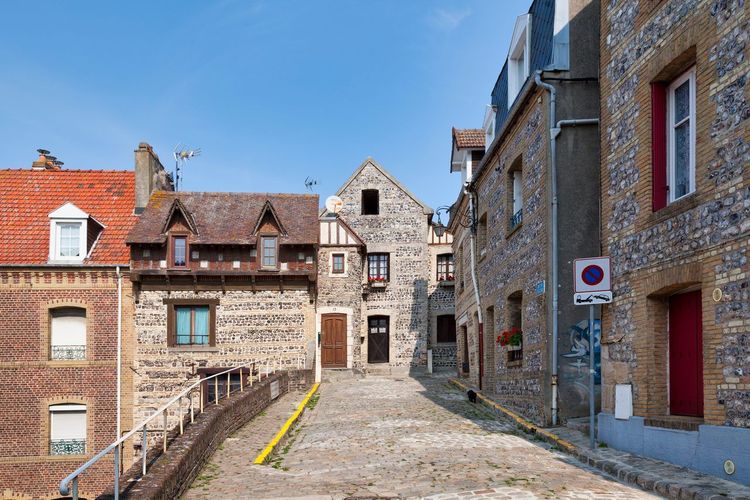
Separated from the town centre by the channel, the Pollet quarter forms an enclave of narrow alleys and tightly packed houses, historically home to fishing families. You reach it on foot by crossing the Colbert Bridge or the Jehan-Ango Bridge, and a stroll through this maze shows you a more working-class Dieppe, far from the terraces of Quai Henri-IV. Take your time: the brick and flint houses, the stairways climbing toward the cliff and the little neighbourhood cafés tell of a distinct identity, to the point that the Polletais long considered themselves different from the Dieppois across the water. In the morning, you will mostly meet residents; in the afternoon, the light passes behind you and lights the harbour head-on, ideal for photos.
Climbing up from the alleys, you reach the Notre-Dame-de-Bon-Secours chapel (Pollet, 76200 Dieppe, rated 4.6/5 on Google from 527 reviews), perched on the east cliff. Its walls bear plaques in memory of sailors lost at sea, a striking testament to what fishing has cost Dieppe families. The interior can be visited freely during opening hours, but it is also the viewpoint that justifies the climb: the panorama takes in the harbour, the beach, the castle and, in clear weather, the coast to the west.
4. The Dieppe Market, a Friendly Immersion
The Dieppe market (Grande Rue, 76200 Dieppe, rated 4.6/5 on Google from 1,365 reviews) is among the largest in Normandy: it sets up on Saturday morning in the Grande Rue and on Place Nationale, at the foot of Saint-Jacques church. Wandering between stalls of freshly landed fish, Norman cheeses and ciders from the Pays de Caux can be done without buying anything, and the atmosphere is especially lively from 8 a.m., before the crowd thickens in late morning.
Also look out for the more discreet weekday markets, smaller but just as lively. Take the time to observe the exchanges between fishmongers and regulars: it is often there, more than in a museum, that daily life in Dieppe can be read. And if you plan to picnic on the beach, it's the ideal place to shop at producer prices. Arrive on foot or park away from the centre: on Saturday mornings, the streets around the Grande Rue fill up quickly.
5. The Cliffs and Coastal Path to Pourville-sur-Mer
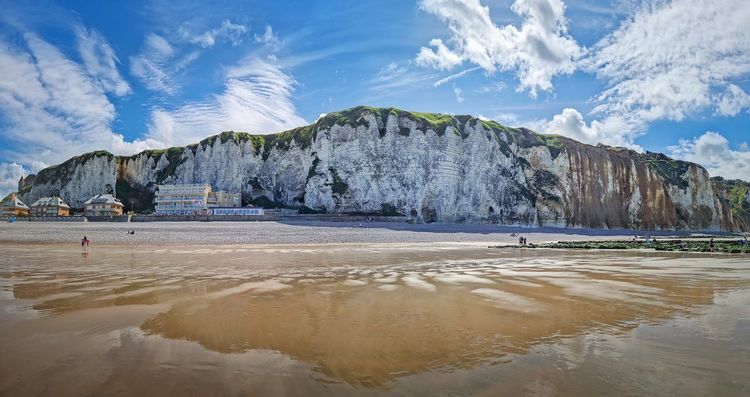
The Customs Officers' Path and Its Viewpoints over the Channel
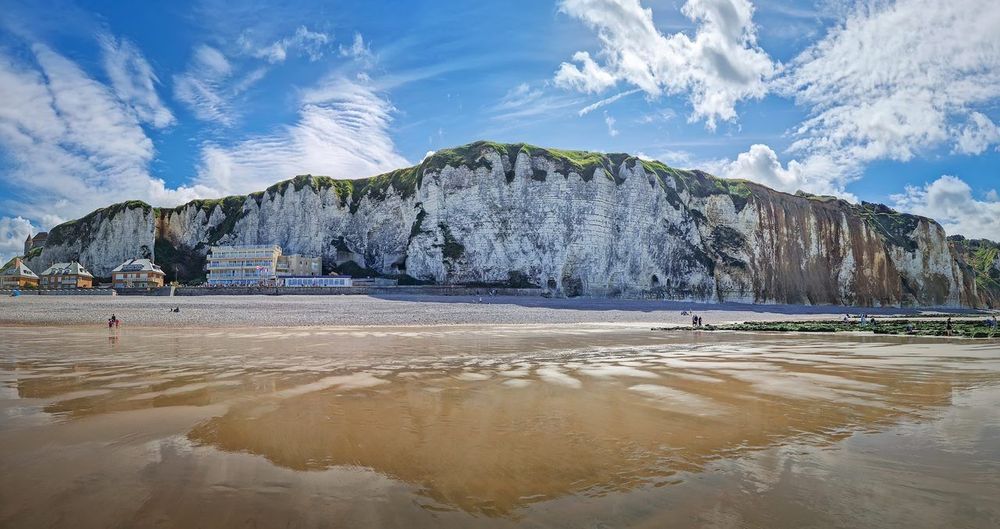
The customs officers' path, which follows the route of the GR21 between Le Havre and Le Tréport, runs along the top of the chalk cliffs west of Dieppe. The start is at the end of the seafront, at the foot of the castle, and the path climbs quickly to offer clear views of the Channel, the fields of the Pays de Caux and the white silhouette of the cliffs, reminiscent of those of Étretat, but more discreet.
Allow about an hour's walk to reach Pourville at a leisurely pace. The path runs alongside the Dieppe-Pourville golf course and is not lit at night: keep a good distance from the edge, as the chalk collapses regularly, and bring a windbreaker even in midsummer.
Pourville-sur-Mer: Beach and Surf Introductions
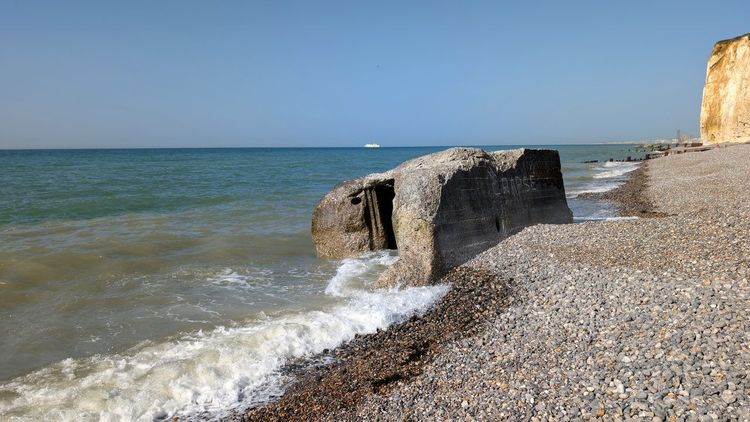
At the end of the path, Pourville-sur-Mer (Hautot-sur-Mer, 76550 Pourville-sur-Mer, rated 4.4/5 on Google from 30 reviews) unfolds its own pebble beach, quieter than Dieppe's and popular with local surfers. On 19 August 1942, it was also one of the raid beaches, where the Canadian South Saskatchewan Regiment landed. Depending on the period, associations and summer municipal programmes offer surf introductions at a symbolic price, sometimes free: check with the tourist office before planning your slot.
The return can be made by the same path, with the town in your sights. If you follow up with the walk of the Ryo audio-guided tour, keep some energy: its 5 km are also done on foot.
6. The Château-musée de Dieppe: Grounds and Sea Viewpoint
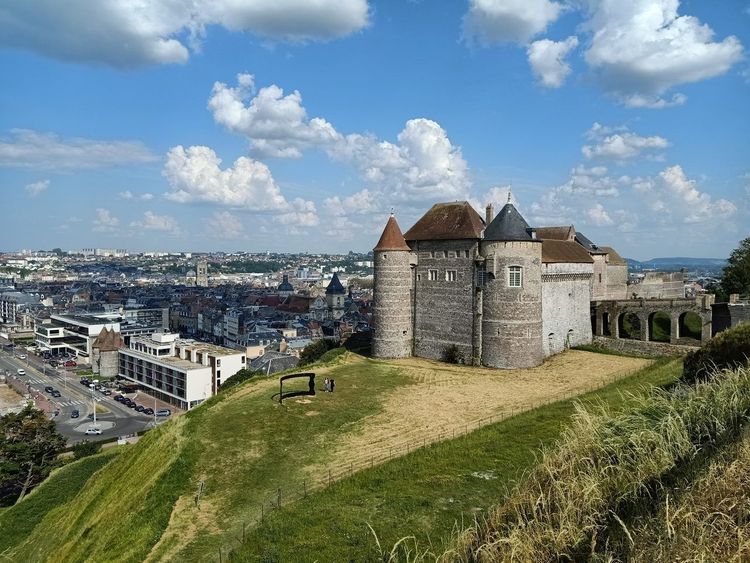
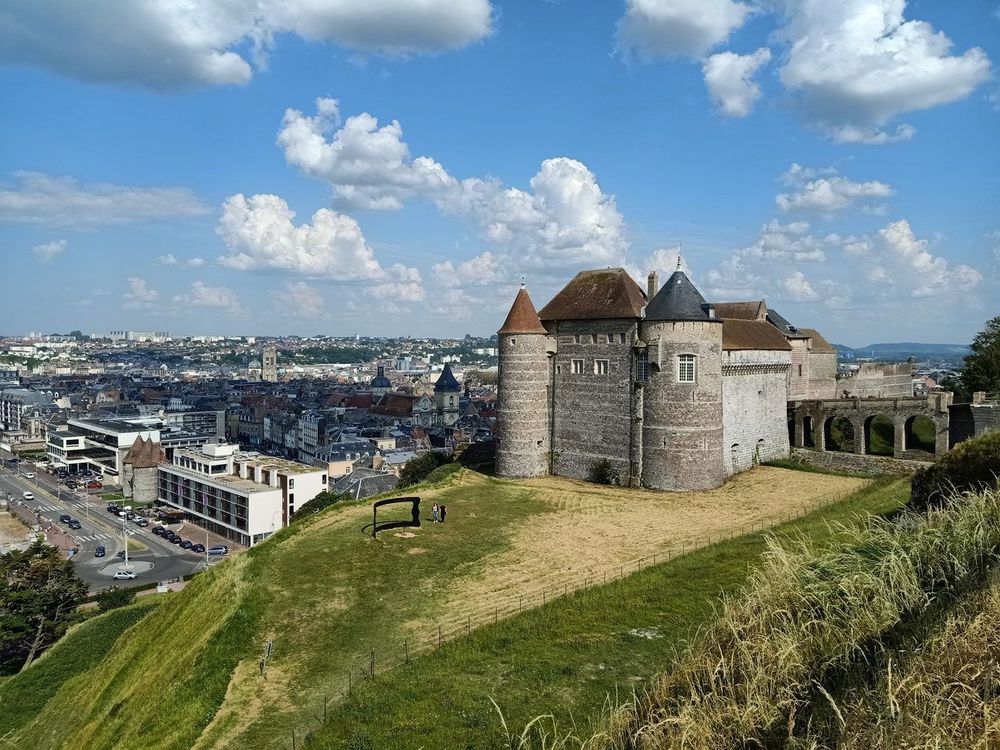
Perched on the west cliff, some thirty metres above the sea, the Château-musée de Dieppe (Rue de Chastes, 76200 Dieppe, rated 4.3/5 on Google from 3,934 reviews) was largely rebuilt in the 15th century. Since 1923 it has housed the municipal museum, famous for its carved ivories, witnesses to a prosperous Dieppe craft in the 17th and 18th centuries, when ivory arrived through the port, and for its paintings by Renoir, Pissarro and Courbet. Admission to the rooms remains paid, and it's best to check the opening hours before heading up.
On the other hand, the castle's outdoor grounds and the esplanade at the foot of the ramparts are freely accessible. From there opens one of the finest viewpoints in town, taking in the beach, the harbour and, opposite, the Pollet cliff. Many visitors are content with this outdoor stroll, and you will find that it more than justifies the climb.
7. The Dieppe Raid Memorial (1942) and the Seafront Monuments
On 19 August 1942, Operation Jubilee sent about 6,000 soldiers, mostly Canadian, to assault the beaches of Dieppe and its surroundings. The raid turned into a disaster: more than 900 Canadians lost their lives in a single day and nearly 2,000 were taken prisoner. The Square du Canada, at the foot of the castle, and the seafront steles pay tribute to the regiments engaged that day.
These monuments, open to all year round, can be seen in about twenty minutes. Every 19 August, commemorative ceremonies bring together veterans, Canadian families and residents: attending, while staying discreet, shows the extent of the bond that still links Dieppe to Canada. The Mémorial du 19 août 1942 museum, housed in the former theatre, explores the subject further, but its admission is paid. Facing this beach, the Ryo audio guide also devotes an episode to the raid, to be heard where it took place.
8. The Churches of Saint-Jacques and Saint-Rémy, Two Gems of the Historic Centre
Saint-Jacques church dominates the historic centre with its Gothic silhouette, built between the 12th and 16th centuries and adorned with Flamboyant-style chapels. A stop on the Camino de Santiago routes, as its name suggests, it deserves a visit for its sculpted portal and stained-glass windows, even if you are not a believer. Look up in the Treasury Chapel: a sculpted frieze depicts Indians of Brazil, a reminder of the distant expeditions financed in the 16th century by the Dieppe shipowner Jehan Ango. Entry is free during opening hours.
A few streets away, Saint-Rémy church has a plainer façade but an interesting interior, blending late Gothic and classical elements. Both buildings can be visited in under an hour combined and complete a historical itinerary of the town centre, between the market and the Pollet quarter.
9. The Public Parks and Gardens of Dieppe
To catch your breath between visits, Dieppe doesn't need large parks: its seafront lawns, which extend along the whole length of the beach, serve as a public garden facing the Channel. People play ball, picnic and fly kites on windy days, without ever feeling cramped.
The Square du Canada (Boulevard de Verdun, 76200 Dieppe, rated 4.7/5 on Google from 27 reviews), laid out on the slope rising to the castle, offers benches and flowerbeds sheltered from the wind, with a plunging view of the beach.
These green spaces are well suited to a break between the beach and the town centre, especially with children who need to run around after walking on the pebbles. If you're travelling with family, our article on visiting Dieppe with family complements this list with ideas suited to every age.
10. The Jean-Renoir Media Library, a Refuge Between Two Swims
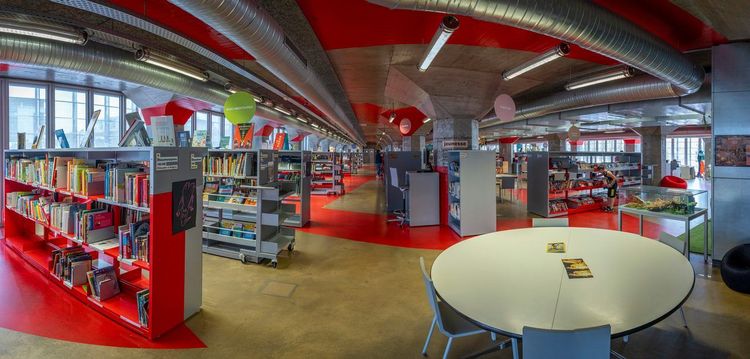
On rainy days, or simply for a break, the Jean-Renoir media library (Quai Bérigny, 76200 Dieppe, rated 4.2/5 on Google from 41 reviews) opens its reading rooms, newspapers and children's area without registration. Only borrowing documents requires a card: consulting on site, reading the press or leafing through picture books with the children remains open to all.
Located facing the harbour, it fits easily between two swims or between the fish auction and the market. Keep it in mind if the Norman weather plays tricks: a shower passes quickly, and you'll be steps from the quays when the sun returns. The programme of activities (readings for little ones, temporary exhibitions, workshops) is often open without booking: have a look at the notice board at the entrance.
11. Summer Water Activities: Aqua Walking and Sea Rowing
Aqua Walking and Sea Rowing at the Beach Point
Every summer, the Dieppe beach point (Boulevard de Verdun, 76200 Dieppe, rated 4.8/5 on Google from 6 reviews) organises introductory sessions in aqua walking and sea rowing, led by sports instructors. These sessions, most often offered in the morning and with on-site registration, let you try these activities without personal equipment or a year-round licence. The programme changes from one season to the next: check the schedule posted at the beach point as soon as you arrive.
Supervised Courses and Introductions on the Water
Alongside these sessions, fuller courses and equipment rental (paddleboard, kayak, catamaran) remain paid and are aimed at those wishing to deepen a practice over several days. The distinction is worth making clear: the municipal summer introductions cost nothing, while equipment rental or multi-session courses fall under the offer of local sailing clubs.
12. Treasure Hunts, Discovery Trails and Self-Guided Visits via Smartphone
Dieppe offers several treasure hunts and discovery trails, some of which, run by private providers, require a ticket. There are nevertheless ways to explore the town at your own pace without paying for a guide: information panels scattered across the historic centre, discovery maps available at the tourist office, or simple curiosity guided by street plaques. The tourist office, located at the Jehan-Ango Bridge between the harbour and the centre, provides maps and brochures: it's the right starting point for spotting old alleys, shipowners' houses and traces of the bombings of the last war.
If you prefer to be accompanied, a self-guided visit via smartphone offers a good compromise: you move on when you wish, pause for a coffee and resume without losing the thread. That is the principle of this Ryo audio-guided tour in Dieppe, titled "Contre vents et marées" (Come Hell or High Water): 22 audio stops spread over about 5 kilometres, for 2 hours of walking between beach, harbour, castle and churches.
A single phone is enough for the whole family, which avoids multiplying screens during the walk.
13. Events and Entertainment The date and time vary from year to year, with the tide and the weather: they are announced a few weeks in advance by the town hall and the tourist office. Arrive early to find a spot on the seawall.
The International Kite Festival and the Regattas
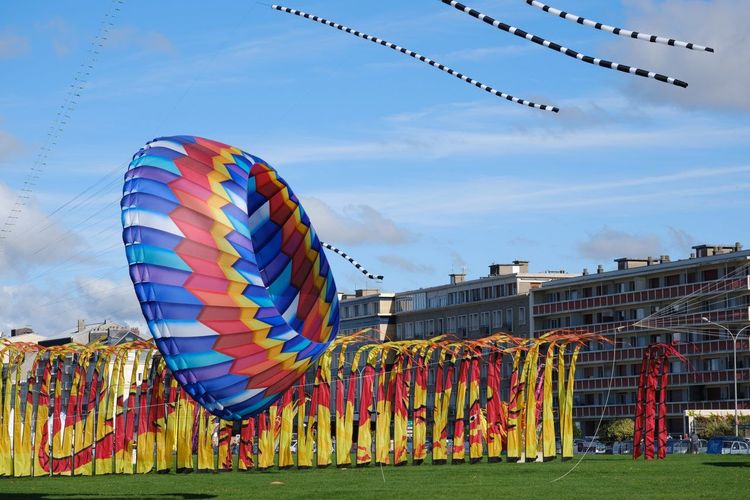
Every two years, in even-numbered years, in September, Dieppe has hosted since 1980 one of the most important international kite festivals in the world. Pilots from dozens of countries fly giant structures above the seafront lawns, and access to the site is free. To prepare your visit, read our guide on attending the Dieppe international kite festival.
In a different vein, the Dieppe Voiles et Falaises maritime festival brings together, depending on the summer programme, tall ships and regattas in the bay, which you can follow from the jetties, the seawall or the heights of the Pollet, without having to go aboard.
The Herring and Scallop Fair in November
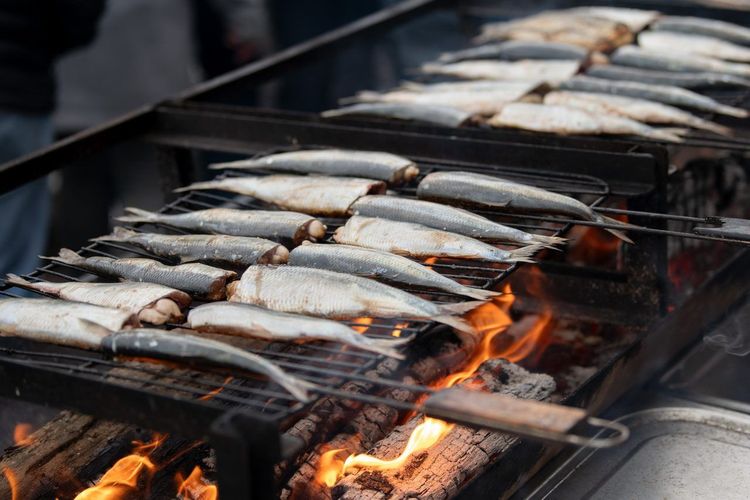
Out of season, the great popular gathering remains the herring and scallop fair, held every year in mid-November on the quays. Entry to the site is free: you wander among the stalls, the smell of grilled herring and the bustle of the fishermen, and you only pay for what you taste. It's a chance to see Dieppe living to the rhythm of its flagship fishing season, when the scallops land at the port.
14. Good to Know: Budget, Access and Best Time to Visit Dieppe
From Paris, Dieppe can be reached by train from Saint-Lazare station, generally with a change at Rouen, in a little over two hours. By car, allow about 200 kilometres via the A13, then the A151 and the N27. From Rouen, a little under an hour by road or regional train is enough, making Dieppe a realistic day trip from Normandy or the Île-de-France. Once there, everything is done on foot: the station is a quarter of an hour's walk from the beach.
To keep the budget down, favour a picnic bought at the Saturday market over seafront restaurants, and reserve paid activities (boat trip, Château-musée ticket, water-sports equipment rental) for one or two chosen moments. The period from late May to September remains the most favourable: supervised swimming, beach point introductions and summer events mainly run during this window. Spring and early autumn offer a calmer town for walking on the cliffs and exploring heritage.
Short on time to organise everything? The Ryo audio guide to Dieppe acts as a common thread, to launch between two stops. And to extend your stay beyond the town, our selection of places to see around Dieppe leads to Varengeville-sur-Mer and beyond.



FAQ
How much time should I plan to visit Dieppe on a small budget?
A full day lets you combine the beach, the harbour, the Pollet and the market. To include the walk to Pourville, the grounds of the Château-musée and the churches in the centre, it's better to plan two days at a relaxed pace.
Are the beaches in Dieppe paid?
No. The main pebble beach is open all year round, with supervised swimming in summer. Pourville-sur-Mer beach, about an hour's walk along the customs officers' path, is also open to everyone and quieter.
Is the Château-musée de Dieppe free?
No, admission to the exhibition rooms is paid. However, the outdoor grounds and the viewpoint over the town and the sea can be explored freely.
When is the fireworks display in Dieppe?
It is set off in summer from the seafront. The exact date is announced each year by the town hall and the tourist office a few weeks before the event.
Is Dieppe suitable for a budget family trip?
Yes: a supervised beach, municipal water-sports introductions, a media library with a children's area, the seafront lawns and a lively market make for a family day with no admission fees, excluding equipment rental or dining.
What is the best time of year to enjoy free activities in Dieppe?
From late May to September for swimming and water-sports introductions. Spring and early autumn are better for walking on the cliffs and visiting the heritage sites, with fewer crowds.
Dieppe lends itself particularly well to a stay without big expenses: between the beach, cliffs, maritime heritage and local life, most of what makes the town charming can be discovered on foot, with your wallet closed. Often all it takes is walking a little further, or looking a little more closely at the fish auction or the façades of the Pollet, to get off the most beaten paths.
To link all these places without improvising, our Ryo audio-guided tour of Dieppe strings together 22 stops over about 5 kilometres, from the beach to the Pollet, to follow at your own pace.
À lire également