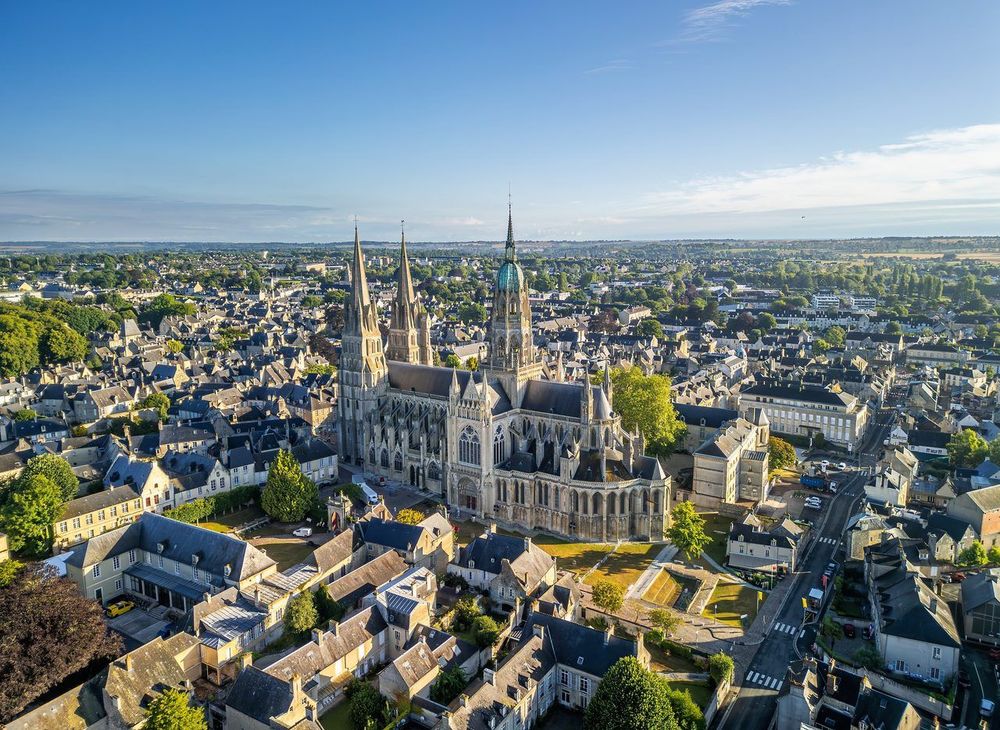
© Shutterstock
 Votre guide Ryo
The 16 Most Beautiful Villages of Calvados to Discover in 2026
Calvados has two faces. The first, everyone knows: the D-Day beaches, the battlefields, Caen rebuilt after the war. The most beautiful villages of Calvados to discover reveal themselves elsewhere, in the meanders of the Pays d'Auge, on the chalky cliffs of the Côte Fleurie, deep in the bocage where the apple tree reigns supreme and where ivy slowly devours 16th-century doorways. These are hamlets and small towns of a few hundred to a few thousand inhabitants that most travellers pass through without stopping.
Beuvron-en-Auge, the only village in Calvados to hold the official 'Most Beautiful Villages of France' label, draws convoys of curious visitors every weekend to photograph its half-timbered houses. Honfleur and its Vieux-Bassin inspired Claude Monet, Eugène Boudin and an entire generation of Impressionist painters. But this guide goes far beyond the best-known destinations: you will find here a Louis XIII château that François Mansart built before the age of thirty in the heart of the bocage, a Norman port from which William the Conqueror set sail for England in 1066, a belvedere at 150 metres above sea level forgotten by every tourist circuit, and a village that smells distinctly of aged cheese. Sixteen villages in all, spread across the Pays d'Auge, the Côte Fleurie and the Bessin, with practical information to help you plan your visit. Ryo also lists the main sites and points of interest in the larger Norman cities nearby, to complement an itinerant stay across the department.
Beuvron-en-Auge, the Only 'Most Beautiful Village of France' in Calvados
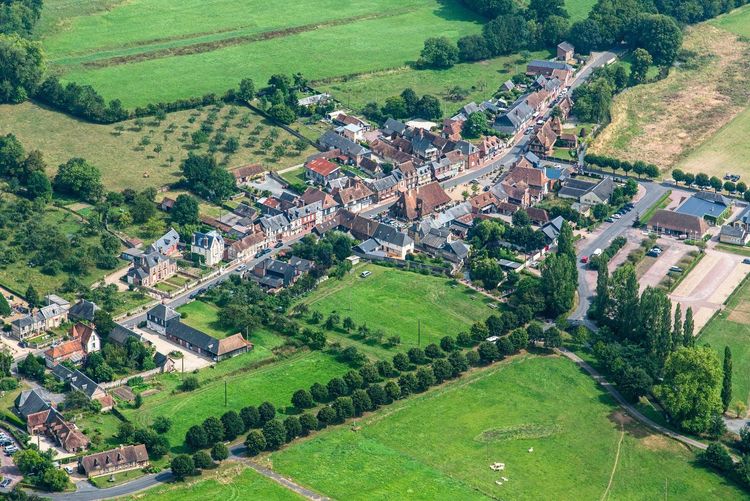
It is the most photographed village in Calvados, and the reason is immediately apparent the moment you enter the village: a 16th-century wooden market hall stands at the centre of the square, surrounded by half-timbered houses with flowered red-brown and cream façades that lean slightly under the weight of the centuries. Beuvron-en-Auge (Village de Beuvron-en-Auge, 14430 Beuvron-en-Auge, rated 4.6/5 on Google with 3.2K reviews) is the only village in Calvados to hold the official 'Most Beautiful Villages of France' label — one of the first Norman villages to obtain it — and one of the rare Norman hamlets to have kept its historic centre so intact.
The central market hall deserves a closer look. Built in the 16th century and restored in the 20th, it hosts fortnightly markets and remains a rare architectural landmark in Lower Normandy: the oak timber frame, set directly on wooden columns with no mortar between the stones, reflects a carpentry expertise that has long since disappeared. Around the square, the houses date mostly from the 16th and 17th centuries, some with jetties projecting over the street at each floor, creating a painted wooden corridor that even the Norman rain cannot make less charming.
Beuvron-en-Auge is one of the landmark stops on the Cider Route, a 40-kilometre circuit linking a dozen villages of the Pays d'Auge through orchards and manor houses. In October, the Cider and Calvados Festival transforms the village into a lively market: local producers sell under the market hall, and the scent of fermented apple drifts through the entire village. Outside this festival, the small shops set up in the timber-framed houses offer pottery, Norman chocolate bars and homemade milk jam.
Two kilometres away, the Manoir de Coupesarte, a private property visible from the road, is one of the finest examples of an Auge manor house in Calvados: water-filled moats, half-timbering, red brick and slate roofs compose an image that sums up the rural architecture of the department in a single glance. Beuvron can be visited in under an hour if you stay in the centre, but the village is best combined with Cambremer (12 km away) and Beaumont-en-Auge (15 km away) for a full day in the Pays d'Auge.
Free parking at the entrance to the village; car access only (no rail service or frequent coach). The village is very busy on weekends from May to September and during the Cider Festival in October. Outside these peak periods, a weekday visit is considerably more pleasant.
Honfleur, the Port That Gave Birth to Impressionism
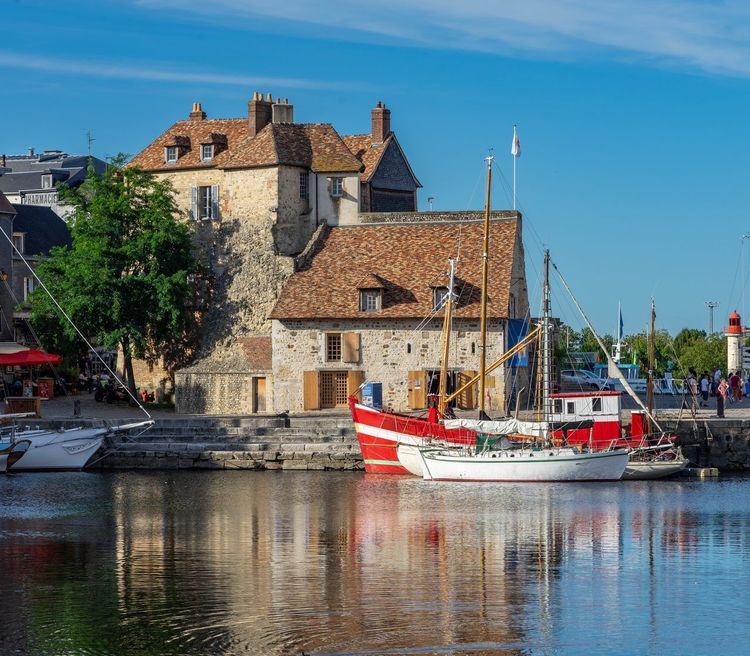
Honfleur plays in a different league. With 600,000 visitors a year, it is the most visited destination in Calvados after Caen, and one of the most photographed in all of Normandy. The reason lies in a particular geography: the Vieux-Bassin, dug in the 17th century, is framed by seven-storey houses with slate façades, packed so tightly they seem to prop each other up to avoid falling into the green water. When the sun catches the Seine estuary in the late afternoon, the raking light on those blue-grey façades creates the effect that Claude Monet, Eugène Boudin and Johan Barthold Jongkind spent decades capturing on canvas.
The Église Sainte-Catherine stands apart in Norman heritage. Built by local shipwrights in the 15th century, after the end of the Hundred Years' War, it is the largest wooden church in France. The bell tower, separate from the main church, rests on piles driven into the marshy ground. The interior resembles an upturned ship's hull: the master carpenters who built it were the same craftsmen who constructed the hulls of the port's fishing boats. The wooden sacristy, added in the 16th century, houses a collection of maritime ex-votos brought by fishermen in thanksgiving for their safe returns.
The Musée Eugène Boudin holds a collection of paintings by Boudin, Monet and their contemporaries, with a focus on Norman landscapes and the skies of the estuary. Beyond the museum, old Honfleur is best explored on foot: the rue de l'Homme-de-Bois with its 16th-century timber-framed houses, the Lieutenance (the last surviving remnant of the old royal gateway, the only section of the medieval ramparts still standing), and the five salt stores of the port. These buildings, constructed in the 17th century to store the salt used to preserve fish — red brick and flint, mansard roofs — have been converted into cultural exhibition spaces. They illustrate the commercial wealth of the port of Honfleur at the time of the Compagnie du Canada, when Honfleur was one of the leading ports in France.
On a practical note, Honfleur remains a town of 8,300 inhabitants with intense tourist activity from May to September. Restaurants along the quay charge prices to match the crowds. The best addresses are found in the side streets away from the basin, around the rue de la Bavole and the place Arthur-Boudin. The town can be visited on foot in two to three hours for the highlights, or a full day if you include the museums and a walk on the plateau above.
From Caen, Honfleur is 65 km via the A13 (Normandy Bridge, toll of around €5). The best approach is to arrive mid-week outside July and August, when the lanes are relatively quiet and the morning light still grazes the basin with the quality that explains why generations of painters chose to settle here. For those wishing to explore the larger Norman cities with thematic guidance, Ryo's audio guides cover several remarkable French destinations.
Beaumont-en-Auge, the Medieval Belvedere Forgotten by Guidebooks
14 kilometres from Honfleur along the D118, Beaumont-en-Auge (Bourg de Beaumont-en-Auge, 14950 Beaumont-en-Auge, rated 4.4/5 on Google with 620 reviews) sits on a limestone promontory 120 metres above the Touques valley. The view from the belvedere at the top of the village takes in the green bocage all the way to the Seine estuary on a clear day. The village is well known to Normans and largely overlooked by outside visitors, which makes it one of the most pleasant to explore — no crowds, no souvenir shops.
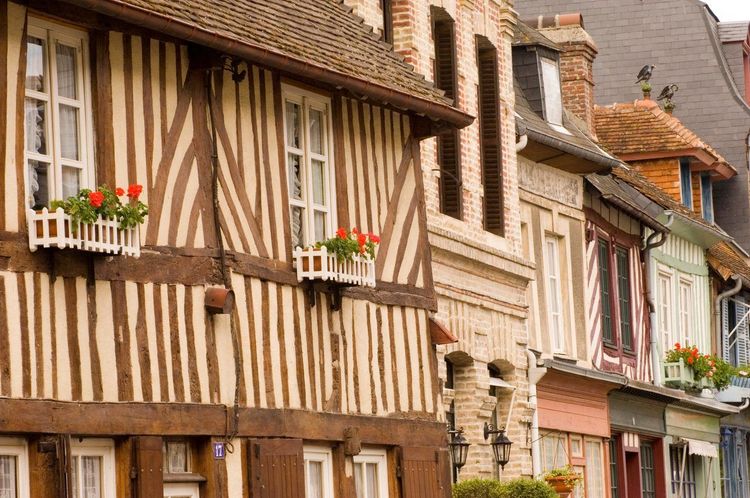
The village has retained its medieval character almost intact: half-timbered houses along the main street (mostly from the 16th and 17th centuries), a former Benedictine priory founded in the 11th century and dissolved at the Revolution, whose flint walls still dominate the village. Pierre-Simon Laplace, one of the greatest mathematicians and astronomers in French history, was born here in 1749: a plaque and a bust in the village centre mark the fact. For dining, two or three inns offer menus based on local produce at reasonable prices, which is relatively rare among the villages of the neighbouring Côte Fleurie.
Beaumont-en-Auge deserves half an hour on foot through its lanes, ideally combined with Honfleur and Cambremer to fill a full day in the Pays d'Auge. The view from the belvedere, especially at sunset, is alone worth the detour from neighbouring villages.
Cambremer, at the Heart of the Orchards and the Cider Route
Cambremer (Bourg de Cambremer, 14340 Cambremer, rated 4.7/5 on Google with 1,602 reviews) is the informal capital of the Cider Route. This 40-kilometre circuit links a dozen manor houses and farms of the Pays d'Auge under a shared apple-green signpost, and Cambremer is its central stop. Perched at 105 metres above sea level, the village offers an unobstructed view over orchards in bloom in spring or rows of apple trees laden with fruit in autumn.
The centre is modest: a main square with a handful of Norman houses, a 12th-century church remodelled in subsequent centuries, and the Manoir de Canteloup, home to a cider and calvados producer open for visits in season. The appeal of Cambremer lies less in the village itself than in its immediate surroundings. A few kilometres away, the manor houses of Grandouet and Bonnebosq offer tastings directly on the farm: dry cider, perry and aged calvados matured in oak barrels for several years.
The Old Trades Fair, held every summer in Cambremer, draws craftspeople and curious visitors from across the region. Outside this event, the village can be visited in an hour, ideally mid-week to avoid queues at the best-known cider producers during the summer season. Combine with Beuvron-en-Auge (12 km) for a perfect half-day on the Cider Route.
Saint-Pierre-sur-Dives, the Market Hall Held Together Without a Single Nail
Saint-Pierre-sur-Dives is not the most picturesque village in Calvados, but it is home to one of the oldest covered markets in Normandy. The medieval market hall dates in its earliest structures to the 11th century. Destroyed in 1944, it was rebuilt to the original design: the technical feat of this building comes down to a single figure — 290,000 wooden pegs hold the chestnut timber frame together without a single metal nail, following the techniques of medieval carpenters.
The market has been held under this hall every Monday morning since the Middle Ages. It is one of the most authentic rural markets in Calvados, with AOP cheeses (camembert, livarot, pont-l'évêque), local market gardeners, poultry and beekeepers. Arrive before 9am to see the market at full swing before the stalls start packing up.
The Benedictine abbey, founded in the 11th century, stands next to the market hall. Its cloister and Romanesque church, later remodelled in the Gothic style, are worth a short visit. Also worth noting in the main street: a mosaic of black and white pebbles created by local residents, depicting a stylised map of the village — a rare detail that few visitors notice.
Orbec, the Rue Grande with Its Hundred Half-Timbered Houses
The rue Grande in Orbec (Rue Grande d'Orbec, 14290 Orbec, rated 4.4/5 on Google with 750 reviews) concentrates within 500 metres one of the best-preserved alignments of half-timbered façades in all of Normandy. More than a hundred timber-framed houses, listed or registered as historic monuments and dating from the 15th to the 18th century, line the street. Some display jetties at each floor projecting over the road, giving the impression that the houses almost touch each other halfway across the sky above the cobbled street.
Orbec is crossed by the Orbiquet, a tributary of the Touques that runs alongside the town for several kilometres. Walking trails follow the stream through damp meadows, with views of restored mills and lavoir washing fountains still in working order. The town is less visited than Beuvron or Honfleur, lending it a quiet atmosphere and an authenticity that the most heavily promoted destinations have often lost.
The municipal museum, housed in a 16th-century manor house, displays collections of Norman art and 19th-century regional paintings. Open in season (May–September), it can be visited in an hour. Orbec is best explored on foot over two hours, combining the rue Grande with the museum.
The Saturday morning market brings together a fine selection of local producers around the market hall. Several inns offer generous Norman menus: Caen-style tripe, Vire andouille sausage, baked camembert. A proper regional meal to round off a stroll through the lanes.
Dives-sur-Mer, the Port of William the Conqueror
In September 1066, William the Conqueror and his 10,000 men set sail from the port of Dives-sur-Mer (Village médiéval de Dives-sur-Mer, 14160 Dives-sur-Mer, rated 4.5/5 on Google with 897 reviews) to cross the Channel and conquer England. The crossing took a day and changed the history of two nations. Today, a list engraved in stone on the wall of the church of Notre-Dame records the names of 475 companions of William who took part in the expedition — names, titles and places of origin — one of the most tangible traces of the Norman Conquest in the department.
The medieval village has largely survived. The 15th-century medieval market hall, now restored, houses antique dealers and craft artisans. An artisans' village has gradually taken shape around the hall since the 1970s: potters, cabinetmakers, glassblowers and jewellery makers have set up their workshops in the historic buildings, creating a space that blends medieval history with contemporary craft.
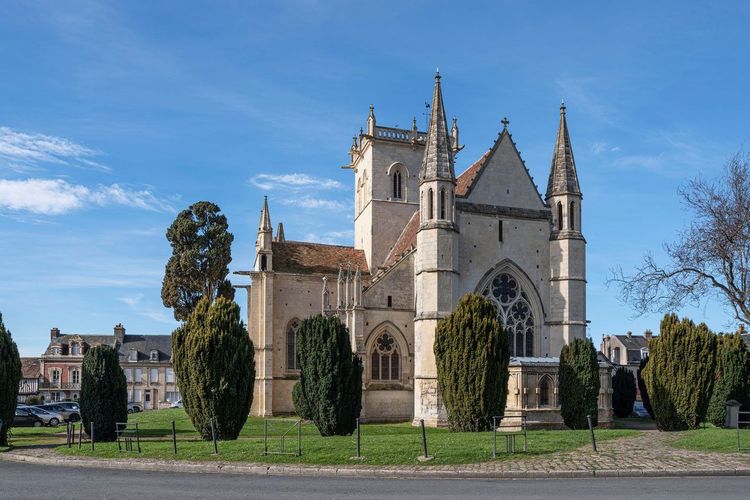
The church of Notre-Dame, a listed historic monument, is worth visiting for its Romanesque nave, its stained glass windows and the list of William's companions engraved on the wall. Dives-sur-Mer is adjacent to Cabourg: the two villages make a natural double excursion, medieval on one side, Belle Époque on the other. Allow half a day for both.
Villerville, the Cliffs of the Impressionist Painters
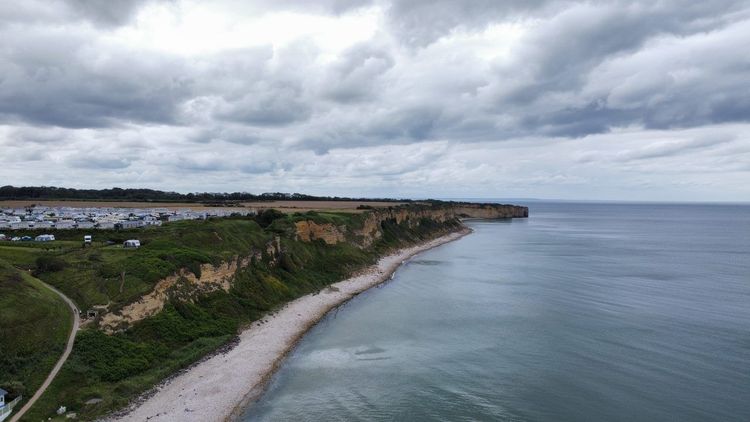
10 kilometres west of Honfleur, perched on chalky cliffs that drop into the English Channel, Villerville (Village de Villerville, 14113 Villerville, rated 4.5/5 on Google with 1.8K reviews) is the most unspoilt seaside village on the Côte Fleurie. No chain shops, no seafront pizzerias: a village of 600 inhabitants that has kept its 19th-century seafront houses, its wisteria-garden villas and its steep lanes leading down to the beach.
Claude Monet painted here, as he did in nearby Honfleur. At the end of the 19th century, Villerville attracted a colony of painters in search of the estuary's light — that Norman light, grey in the morning, white at noon, golden at sunset — which defined Impressionism as a pictorial movement. The beach is accessible via a wooden path from the centre.
The cliffs above the beach offer a coastal path with views over the Bay of Seine, the Normandy Bridge and the Pays de Caux coastline. An easy hour-long round trip, best done in the late afternoon for the raking light on the white cliffs.
Clermont-en-Auge, the 360-Degree Panorama over the Bocage
Clermont-en-Auge (Chapelle Notre-Dame de Clermont, 14430 Clermont-en-Auge, rated 4.4/5 on Google with 130 reviews) does not appear in any mainstream tourist guide. It is a hamlet of a few dozen houses, perched at 150 metres above sea level on a limestone spur that dominates the Pays d'Auge in every direction. The chapelle Notre-Dame-de-Clermont, a listed historic monument whose earliest structures date from the 11th and 12th centuries, is the only remarkable building on the site.
The view from the belvedere beside the chapel is one of the finest in Calvados: on a clear day, from the Bay of Seine on the horizon to the hills of the Norman bocage, with in between a checkerboard of green meadows, orchards and half-timbered villages. At sunset in summer, the light over the Touques valley has a rare photographic quality — the kind of panorama one searches for over hours without always finding it in guidebooks.
Clermont-en-Auge is reached via narrow roads from Beuvron-en-Auge (6 km). No accommodation or restaurant on site. Allow 20 minutes for the site itself, best combined with Beuvron-en-Auge or Saint-Julien-de-Mailloc for a full day in the bocage.
Livarot-Pays-d'Auge, the Village of the Strongly Scented Cheese
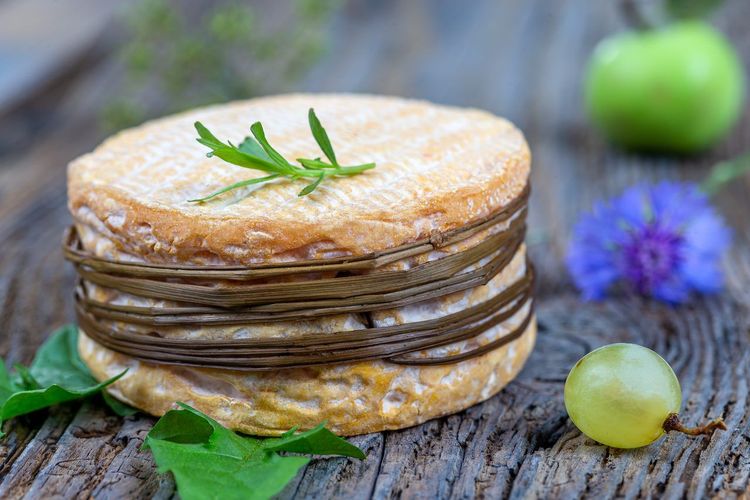
Livarot (Bourg de Livarot, 14140 Livarot, rated 4.2/5 on Google with 620 reviews) gave its name to one of the four great AOP Norman cheeses, alongside camembert, pont-l'évêque and neufchâtel. It is recognisable by the five strips of sedge that circle its cylindrical form — a detail that earns it the nickname 'the colonel' — and above all by its smell of damp cellar and assertive pungency, which hints at a flavour far more powerful than camembert. AOP livarot is now produced in limited quantities in the region, but the village remains the heart of its tasting culture.
The Musée du Livarot, housed in the former workshops of a village dairy, explains the ripening techniques and the history of cheese in the Pays d'Auge. The guided tour lasts approximately 45 minutes and concludes with a tasting. Two kilometres from the centre, the Ferme des Liards offers tours of its artisan dairy and a farm shop selling the full range of AOP cheeses from the region.
The village of Livarot is modest: a square, a 12th-century church, a Thursday morning market. It is a stop on a circuit through the Pays d'Auge rather than a destination in its own right, but for lovers of Norman gastronomy, this detour is essential.
Cabourg, the Seaside Resort Immortalised by Marcel Proust
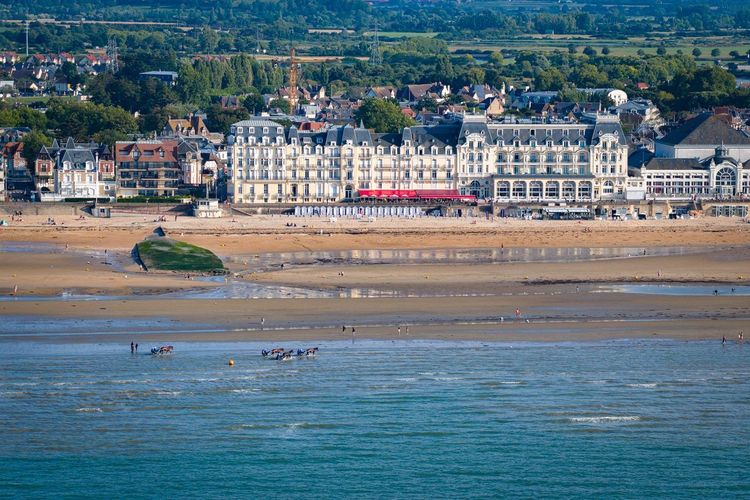
Cabourg is the only seaside resort on this list, and perhaps the most singular. Its distinctive feature lies in its urban layout: the town is arranged in a perfect fan shape around the Grand Hôtel, with avenues radiating towards the sea like the spokes of a wheel. This plan, drawn up in 1854 by urban planner Henri Durand-Morimbau, has barely changed since, an urban curiosity immediately apparent from an aerial view.
The Grand Hôtel, a Belle Époque palace built in 1907, welcomed Marcel Proust every summer from that same year until 1914. The writer worked here on parts of In Search of Lost Time, and the fictional seaside town of Balbec in the novel is directly inspired by Cabourg, its Grand Hôtel and its early 20th-century summer visitors. Proust always occupied room 414, which bears his name today, shutting the blinds to keep out the daylight and dictating his notes through the night. This room remains available to book, at a rate befitting its literary status.
The Promenade Marcel Proust (Promenade Marcel Proust, 14390 Cabourg, rated 4.7/5 on Google with 3.8K reviews), stretching 1.7 kilometres, runs along the fine sandy beach between the Grand Hôtel and the late-19th-century seaside villas. It is the most pleasantly planned promenade on the Côte Fleurie, ending with a view over the mouth of the Dives and the port of Dives-sur-Mer. Behind the touristy seafront, the inner lanes of Cabourg retain a provincial calm that comes as a surprise outside the summer season.
Cabourg in July and August is packed: a very busy beach, fully booked restaurants, high accommodation prices. Outside the season, the town recovers a nostalgic atmosphere more in keeping with the Proustian spirit of the place — the Grand Hôtel lobbies, the deserted streets, the wind over the empty beach. The resort can be visited in two hours for the highlights. Caen, for its part, unfolds across 23 audio-guided stops, in the home of William and Matilda.
Creully-sur-Seulles, the Château Where the BBC Covered D-Day
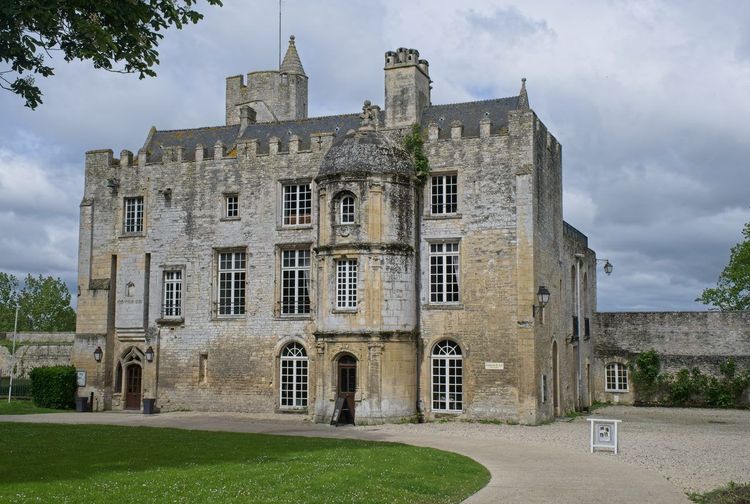
Creully-sur-Seulles is a Bessin village of 1,700 inhabitants whose distinction lies in its role during the Second World War. The fortified château, an 11th-century medieval building remodelled in the 16th and 17th centuries, was requisitioned by the BBC as early as 8 June 1944 — just 48 hours after D-Day — to house a mobile radio transmitter. It was from the keep of Creully that the BBC broadcast the first live reports of the Normandy Landings.
The château is open to visitors in season. The radio control room has been reconstructed with period equipment, and an archival video presents the reports broadcast from this post during the first days of the Battle of Normandy. The keep offers a fine view over the Bessin bocage.
The village of Creully deserves a 30-minute stroll: the houses built in golden Caen stone, the oolitic limestone quarried locally since medieval times, give the village a warm light very different from the half-timbered architecture of the Pays d'Auge. The church of Saint-Martin retains partially visible Romanesque frescoes. Twelve kilometres away, Bayeux and its tapestry offer a full extra day's exploration.
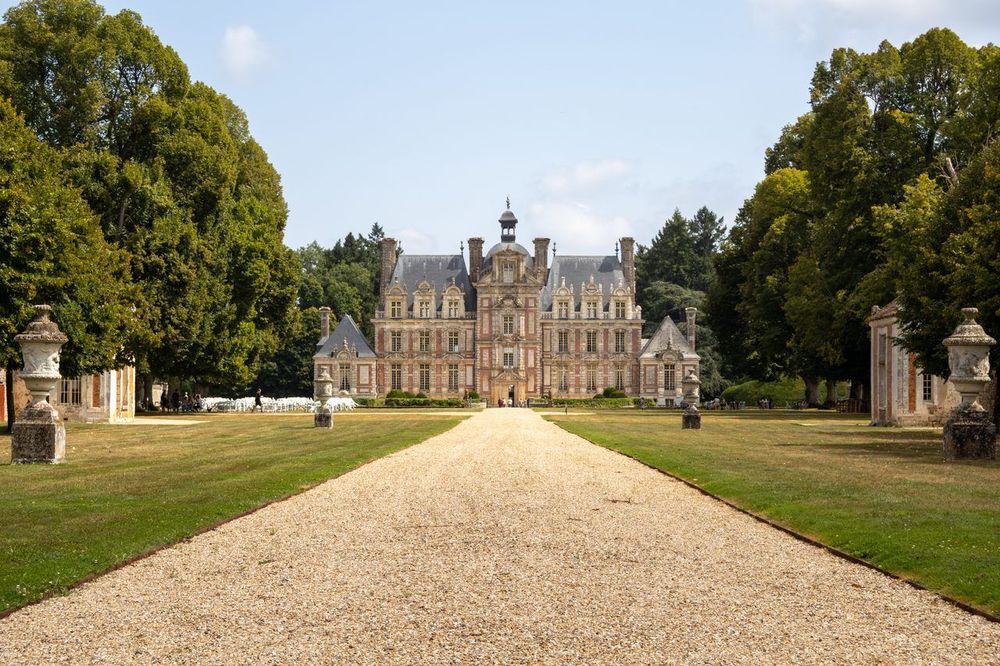
Balleroy-sur-Drôme, François Mansart's Château in the Heart of the Bocage
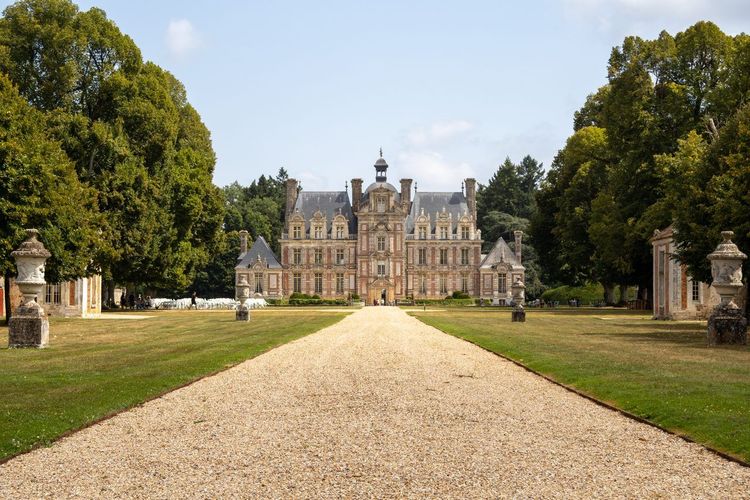
Balleroy-sur-Drôme is arranged around a 700-metre tree-lined avenue leading from the village centre to the gateway of a château that has barely changed since the 17th century. François Mansart, the architect who revolutionised French architecture of his era and gave his name to the mansard roof, built the Château de Balleroy (Avenue du Château, 14490 Balleroy-sur-Drôme, rated 4.3/5 on Google with 823 reviews) from 1626 onwards, when he was not yet thirty years old, for the de Choisy family. It is one of his first major works and one of the most coherent of his output.
The symmetrical façade in Caen stone and pink brick, the characteristic double-pitch rooflines of the Louis XIII style, the formal French gardens laid out in the 17th century form a rare ensemble in the Norman bocage. Inside, a dozen furnished rooms are open to visitors: a salon hung with Cordovan leather, a portrait gallery of the de Choisy family, and rooms decorated in keeping with 17th-century conventions, all remarkably well preserved.
The château also houses the first hot-air balloon museum in France, founded by Malcolm Forbes, the billionaire American publisher and ballooning enthusiast who bought the estate in 1970. The collection includes historic balloons, early navigation instruments and documentation on the history of balloon flight since the Montgolfier brothers. The Balleroy International Balloon Meet, a major international balloon gathering, was held each year in the château's grounds and was long the most spectacular event in Calvados during the summer season.
Grandcamp-Maisy, the Fishing Port Between Scallops and D-Day
At the western end of the Bessin, 15 kilometres from Bayeux, Grandcamp-Maisy is the most active fishing port on the Calvados coast. The fleet of trawlers and crab boats that supplies the region's fish auctions comes in every morning, and the activity of the port gives the village a genuinely working atmosphere, far removed from picture-postcard Normandy.
Scallops are the local speciality: the Bay of Seine is home to one of France's main scallop fishing grounds. From November to March, the official fishing season, the port's restaurants serve fresh morning scallops at prices well below those charged in Honfleur or Cabourg. A good reason to plan a stop here in autumn or winter.
The Rangers Museum, housed in a former barracks 500 metres from the port, documents the assault by American Rangers on the Pointe du Hoc on the night of 5–6 June 1944. Archival photographs, period military equipment and filmed veteran testimonies. The Pointe du Hoc itself, with its preserved bomb craters and collapsed blockhouses, is 6 kilometres away by car — a striking site that deserves half an hour's visit.
Port-en-Bessin-Huppain, a Fishermen's Stopover on the Côte de Nacre
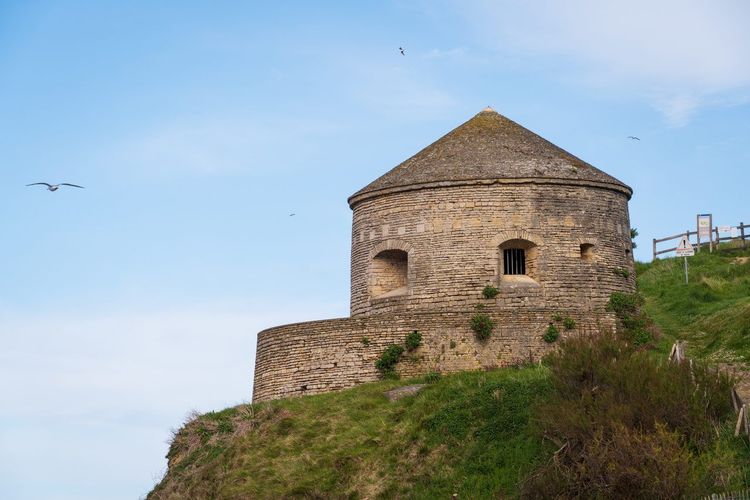
Less well known than Grandcamp, Port-en-Bessin-Huppain (Avant-port de Port-en-Bessin, 14520 Port-en-Bessin-Huppain, rated 4.7/5 on Google with 20 reviews) is one of the smallest professional fishing ports on the Calvados coast, and probably the most authentic. Its two basins, dating from the 17th century and enlarged in the 19th, accommodate around twenty professional fishing boats and a handful of pleasure craft. The fish auction takes place every weekday morning.
The village is split in two by the cliffs: the upper part (Huppain) retains the old flint and limestone houses, while the lower part (Port-en-Bessin) has lived by the port and fishing for centuries. A jetty offers an unobstructed view along the coast to the west, towards the Pointe du Hoc and the D-Day beaches.
Port-en-Bessin is also the starting point of the PLUTO oil pipeline, Pipeline Under The Ocean, laid by the Allies after 6 June to fuel the motorised forces advancing through Normandy. A logical stop on the D-Day beaches itinerary between Arromanches and Omaha Beach.
Arromanches-les-Bains, the Remains of the Artificial Port
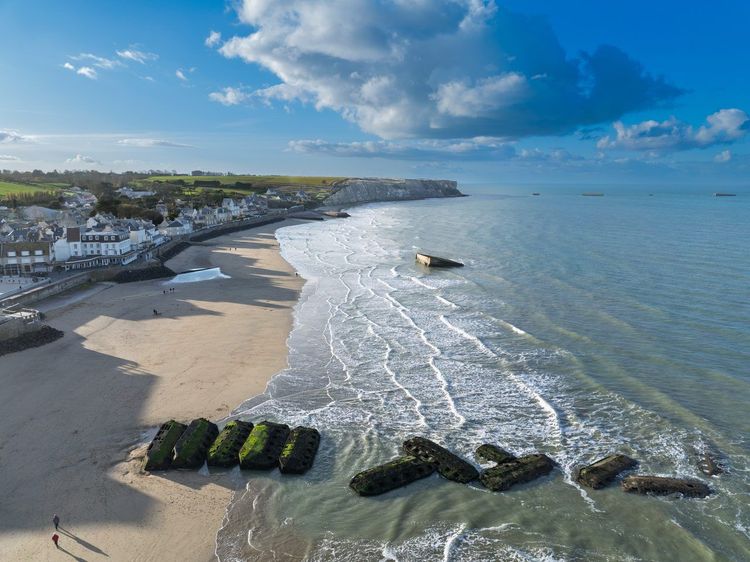
Arromanches-les-Bains owes its worldwide fame to a unique feat of military engineering: the construction, in 10 days from 7 June 1944, of a Mulberry artificial harbour (Esplanade du Port, 14117 Arromanches-les-Bains, rated 4.7/5 on Google with 526 reviews) capable of receiving ocean-going vessels directly on the Norman coast. This prefabricated harbour, assembled offshore at Arromanches from elements transported from England, enabled the landing of 2.5 million soldiers, 500,000 vehicles and 4 million tonnes of equipment over the course of 100 days.
The remains of the artificial harbour are still visible from the beach at Arromanches: concrete caissons 60 metres long emerge at low tide a few hundred metres from the shore, forming a recognisable arc visible from the air. The sight is particularly striking at low tide, when the concrete structures stand out clearly from the water and their true, colossal scale becomes perceptible from the shore.
The D-Day Museum at Arromanches, founded as early as 1954, is the first museum devoted to D-Day to open in France. Its collection includes authentic remains from the artificial harbour, scale models, period film footage and comprehensive documentation on Operation Neptune. Adjacent, the Arromanches 360° Museum screens a panoramic film about the events of June 1944 in a circular projection room. Allow two hours for both museums.
Arromanches is 10 kilometres from Bayeux and 30 kilometres from Caen. In July and August, the beach is busy with families and the village is very touristy. The main attractions — the museums and the harbour remains — are accessible and well worth visiting all year round, including out of season when queues disappear.
When to Visit the Villages of Calvados
The time of year has a strong bearing on the quality of your visit, depending on whether you are after photographic light, a festive atmosphere or peace and quiet.
Spring (April–May): the best period for the landscapes of the Pays d'Auge. The apple trees in blossom, between late April and mid-May depending on the year and the variety, transform the orchards into pink and white canvases. Beuvron-en-Auge and Cambremer are particularly rewarding at this time of year. Temperatures remain cool (12–16°C during the day) and tourist numbers are still moderate, making visits considerably more pleasant.
Summer (June–August): peak season on the Côte Fleurie. Honfleur, Cabourg and Villerville are very busy, especially at weekends. Museums are open continuously, all restaurants are in service, and local events are at their liveliest. The weather is pleasant (18–22°C), but beaches and restaurants fill up quickly. For the D-Day sites (Arromanches, Grandcamp, Pointe du Hoc), summer is the most vibrant period, with commemorations around 6 June.
Autumn (September–October): the ideal period for the Pays d'Auge and the Cider Route. Apples are harvested from August to November depending on the variety, and the presses are running at full capacity on the farms. The Cider and Calvados Festival at Beuvron-en-Auge takes place every October. The Côte Fleurie recovers a gentler atmosphere once the summer visitors have left.
Winter (November–March): the villages of the Pays d'Auge are almost empty. Museums reduce their hours or close. The weather is wet and windy, Calvados being one of the rainiest departments in France in winter. It is nonetheless a fine period for photographing the half-timbered houses in the Norman mist, and restaurants offer generous seasonal menus: scallops, Norman suckling pig, Caen-style tripe.
Choose a weekday visit over a weekend, especially for Beuvron-en-Auge, Honfleur and Cabourg. From May to September, weekends turn these villages into tourist corridors that do them no justice.
How to Plan Your Itinerary in Calvados
Sixteen villages scattered across a department of 5,500 km² call for a logical approach to avoid exhausting back-and-forth journeys. Calvados divides naturally into three geographical zones, each with its own character and villages.
The Pays d'Auge (east of the department) groups the half-timbered villages and the Cider Route: Beuvron-en-Auge, Beaumont-en-Auge, Cambremer, Clermont-en-Auge, Orbec, Livarot, Saint-Pierre-sur-Dives. These seven villages link up naturally on a circuit of 80 to 100 kilometres centred around Lisieux or Saint-Pierre-sur-Dives. Allow at least a day and a half to see them all in comfortable conditions.
The Côte Fleurie (north-east): Honfleur, Dives-sur-Mer, Villerville, Cabourg. These four towns are spread over 25 kilometres of coastline between the Seine estuary and the mouth of the Dives. One day is enough for all four, or two days if you want to take your time at Honfleur and explore the museums.
The Bessin (north-west): Creully-sur-Seulles, Balleroy-sur-Drôme, Arromanches-les-Bains, Port-en-Bessin-Huppain, Grandcamp-Maisy. This area is defined by the history of the D-Day Landings and the bocage heritage. Allow at least two days to combine the villages with the historic sites.
Suggested 5-day itinerary:
- Day 1: Honfleur (full day, museums included)
- Day 2: Villerville morning + Dives-sur-Mer + Cabourg (Côte Fleurie)
- Day 3: Beuvron-en-Auge + Cambremer + Beaumont-en-Auge + Clermont-en-Auge (heart of the Pays d'Auge)
- Day 4: Saint-Pierre-sur-Dives + Orbec + Livarot (deep Pays d'Auge)
- Day 5: Balleroy + Creully + Arromanches + Port-en-Bessin + Grandcamp (Bessin)
Accommodation: the most convenient bases are Honfleur for the Côte Fleurie (many hotels, but high prices in season), Lisieux or Orbec for the Pays d'Auge (less touristy, reasonable prices), and Bayeux for the Bessin. Bayeux, 25 kilometres from Caen, is the best-equipped town for reasonably priced accommodation in the area.
Transport: a car is essential. Regional coaches cover certain routes (Caen–Honfleur, Caen–Lisieux, Caen–Bayeux) but frequencies are low outside school hours. For the villages of the Pays d'Auge (Beuvron, Cambremer, Orbec), there is no serious alternative to a car.
For the larger cities in the region such as Caen, Ryo's audio-guided tours allow you to explore the historic centre independently. A good option for combining a day in Caen with the rest of a stay in the villages of Calvados — Ryo offers guides available across many French destinations.



FAQ
Which is the most beautiful village in Calvados?
Beuvron-en-Auge is the most legitimate candidate: the only village in Calvados to hold the 'Most Beautiful Villages of France' label, it concentrates on a single square the essence of Auge architecture — 16th-century half-timbered houses, a medieval market hall and flower-adorned timber-framed homes. Honfleur is often mentioned in this category, but it is a town of 8,300 inhabitants, far from the definition of a village.
Are There Any 'Most Beautiful Villages of France' in Calvados?
Just one: Beuvron-en-Auge, one of the first Norman villages to earn this label. Calvados is significantly underrepresented in this label compared to other departments — the Dordogne has 13, see our Ryo guide to the most beautiful villages of the Dordogne, the Haute-Loire around ten. Normandy as a whole has only a handful, mainly concentrated in the Eure and Orne departments.
What is the Best Season to Visit the Villages of Calvados?
Spring (April–May) for the apple trees in blossom in the Pays d'Auge, autumn (September–October) for the Cider Route and the Cider Festival in Beuvron. Summer is lively but busy along the Côte Fleurie. Spring remains the ideal window for combining beautiful scenery with still-manageable crowds.
How Do You Get to the Villages of Calvados Without a Car?
It is challenging. The villages of the Pays d'Auge (Beuvron, Cambremer, Beaumont, Orbec) are only accessible by car. The Côte Fleurie is better served: coaches connect Caen to Honfleur, Cabourg and Dives-sur-Mer several times a day. For Villerville, cycling from Honfleur (10 km of marked path) is a viable option outside the winter season.
Where to Stay When Visiting the Villages of Calvados?
Three bases stand out depending on the area you prioritise. Honfleur is the most convenient for the Côte Fleurie: many hotels and B&Bs, but prices are high in peak season. For the Pays d'Auge, Lisieux or Orbec offer less touristy accommodation at reasonable prices, well placed to explore Beuvron-en-Auge, Cambremer and Livarot. For the Bessin and the D-Day sites, Bayeux, 25 kilometres from Caen, is the best-equipped town for affordable hotels and gîtes in the area.
On the Road to the Pays d'Auge
From the half-timbered houses of Beuvron to the remains of the artificial harbour at Arromanches, from the pungently scented livarot to the Impressionist light of Villerville at dusk: Calvados offers a concentrated essence of Normandy that goes far beyond the clichés of the D-Day beaches. This department reveals itself to those who give it several days rather than a quick stop on the way to the coast.
To explore the larger Norman cities alongside this village circuit, the Ryo app offers audio-guided tours available across many French destinations. If other regions tempt you, also check out our Ryo guide to the most beautiful villages around Rennes or our Ryo selection of villages around Nantes for similar escapes in western France.
À lire également