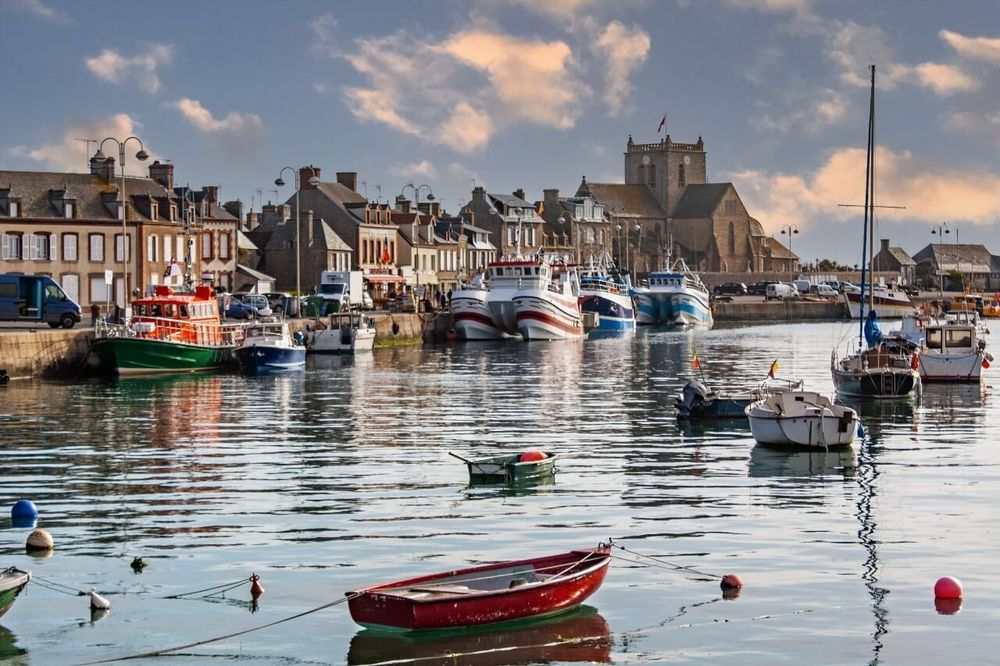
© Shutterstock
 Votre guide Ryo
Visit Caen in 2 Days: 2026 Itinerary Between Heritage, Nature, and the Côte de Nacre
Caen has a particular quality: it had to be almost entirely rebuilt after the 1944 bombings, while keeping its medieval castle and two eleventh-century abbeys intact amid the postwar buildings. This contrast between Romanesque stone and modern reconstruction gives the city an identity found nowhere else in Normandy. If you are wondering how to visit Caen in 2 days, know that the historic centre can be walked in a morning, but the city also hides surprises worth slowing down for: an artificial hill built on a former landfill that has become the largest urban park in Normandy, an inner port connected to the sea by a 14-kilometre canal, and an entire neighbourhood transformed into an open-air street art gallery. Over two days, you will have time to combine the keep of the castle founded by William the Conqueror, the Memorial to understand 1944, and a day trip to the Côte de Nacre as far as Pegasus Bridge. This guide details hour by hour what to see, where to eat in the Vaugueux district, and how to organise your travel, with the Ryo audio guide for Caen as your thread through the historic centre.
Day 1: The Historic Heritage of Caen
The first day focuses on a compact area: fewer than two kilometres separate the castle from the place Saint-Sauveur, leaving plenty of time to linger without rushing from one monument to the next. Allow a morning for the castle and its museums, then an afternoon split between the abbeys and Old Caen.
The Château de Caen, Its Keep, and Its Museums
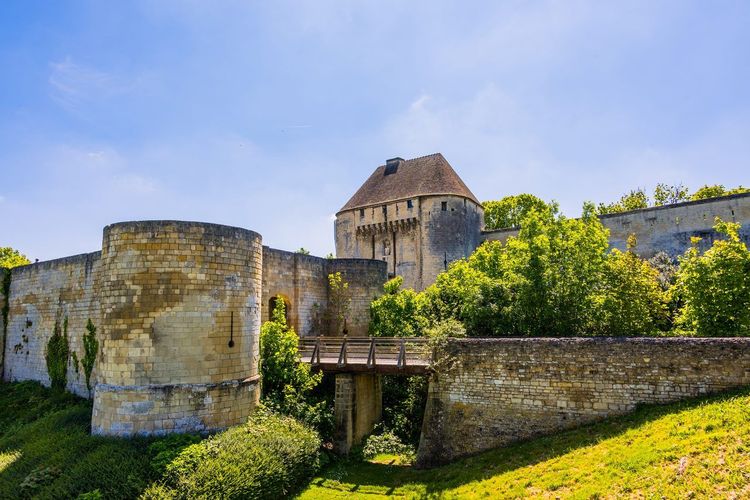
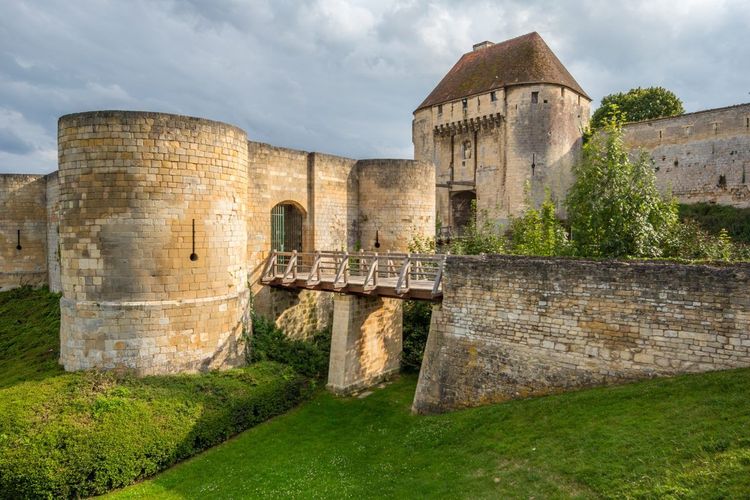
The Château de Caen, founded around 1060 by William the Conqueror, immediately asserts itself as one of the city's most visible landmarks as you leave the car park. Its fortified enclosure covers nearly 5.5 hectares, making it one of the largest medieval fortresses in Europe still open to the public. The ramparts can be walked freely and offer, from the walkway, a clear view over the slate rooftops of Old Caen and the spires of the two abbeys.
Entry to the enclosure and the rampart walk is free all year round, from early morning until evening. Come early: the raking light brings out the grain of Caen stone, the blond limestone quarried from the Orne valley and exported since the Middle Ages to England to build the Tower of London and Westminster Abbey. Once through the Porte des Champs, two buildings deserve a look before you even enter a museum: the church of Saint-Georges, deconsecrated and converted into a visitor welcome space, and the Salle de l'Échiquier, one of the rare surviving examples of Romanesque civic architecture in Europe.
At the centre of the enclosure, the keep today shows only its foundations, but its footprint gives a sense of its former scale: it ranked among the largest Romanesque keeps in the Western world before its destruction, begun during the Revolution and completed by the 1944 bombings. Archaeological panels allow you to mentally reconstruct the three vanished storeys, and the path around the keep's moat offers one of the best vantage points over the church of Saint-Pierre.
Two museums share the enclosure. The Musée de Normandie traces, across two floors, one hundred thousand years of human occupation in the region, from prehistoric tools to traditional Norman costumes. The Musée des Beaux-Arts de Caen holds paintings by Rubens, Perugino, and Poussin in a modern postwar building. If you can only choose one museum to keep your morning light, go for the Musée de Normandie: its chronological thread suits a short one-hour visit better.
Good news for your budget: the permanent collections of both municipal museums are free to visit; only temporary exhibitions are ticketed, at around 5 to 8 euros. Both venues close on Tuesdays, a detail worth noting if your first day falls on that day—in which case it is better to swap the two days of the itinerary.
Ten minutes' walk from the enclosure, the FRAC Normandie occupies a former convent converted into a contemporary art space, just a short distance from the centre. Entry is free and exhibitions change several times a year, making it a good option if the afternoon turns rainy.
The Abbaye aux Hommes and the Abbaye aux Dames
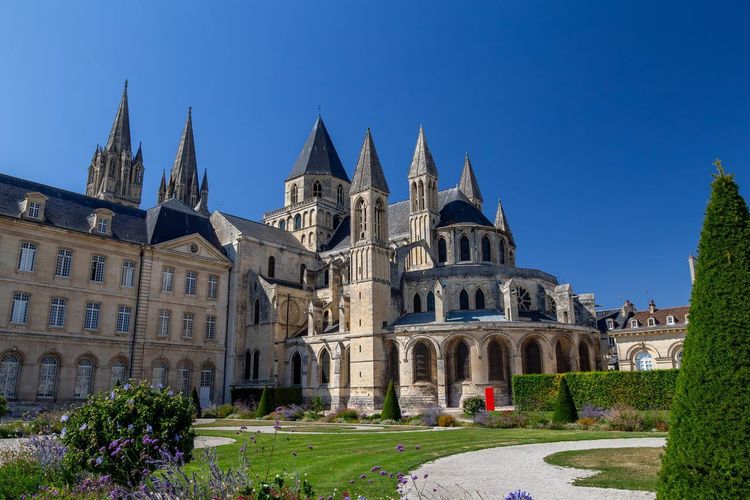
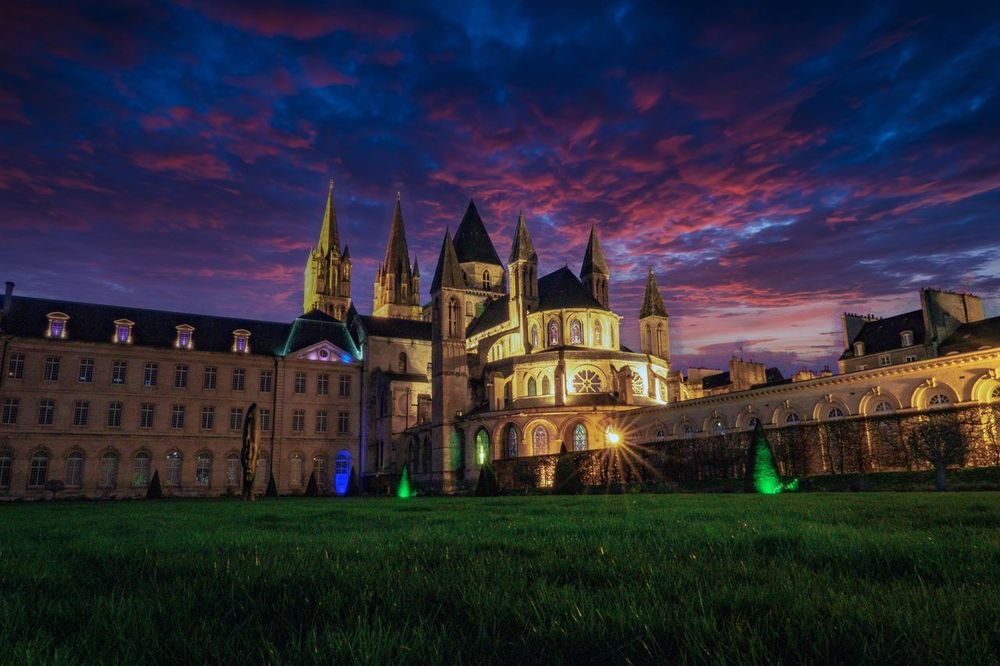
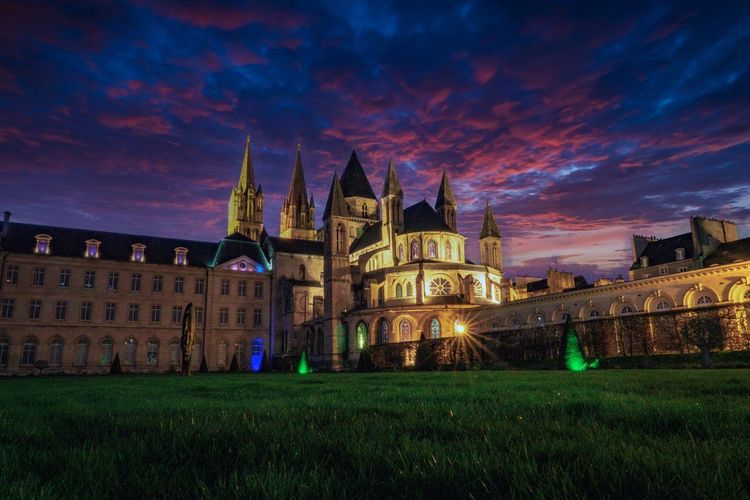
The story of the two abbeys begins with a forbidden marriage: in the eleventh century, William the Conqueror married his cousin Matilda of Flanders despite papal opposition. The couple eventually obtained forgiveness by pledging to each found an abbey, one for men and one for women. The Abbaye aux Hommes, today home to Caen's city hall, houses in its church of Saint-Étienne the tomb of William, partly destroyed and then reconstructed over the centuries.
The church of Saint-Étienne can be visited freely, without a ticket, and is well worth it if your time is limited: its twin-towered façade, copied throughout Normandy and then in England after 1066, encapsulates Norman Romanesque architecture in a single glance. The eighteenth-century conventual buildings, however, are only accessible on a guided tour: allow about one hour, a few euros per person, and a walk through the cloister, the refectory, and the grand staircase that the city hall still uses for its ceremonies.
Twenty minutes' walk away, the Abbaye aux Dames now houses the Normandy Regional Council, but its church of the Trinity remains open to visitors and preserves the tomb of Matilda, simply engraved on a black marble slab. The adjoining cloister, more understated than that of the Abbaye aux Hommes, can be visited in about fifteen minutes.
Do not miss the crypt of the church of the Trinity, bristling with a forest of stocky columns that still bear carved eleventh-century capitals. Matilda died in 1083, William in 1087: each rests in 'their' abbey, two kilometres apart, giving the afternoon's route an almost romantic coherence. Free guided tours are offered on certain afternoons at both abbeys: ask at the reception desk when you arrive if you want to time your visit accordingly.
Old Caen, the Church of Saint-Pierre, and the Place Saint-Sauveur
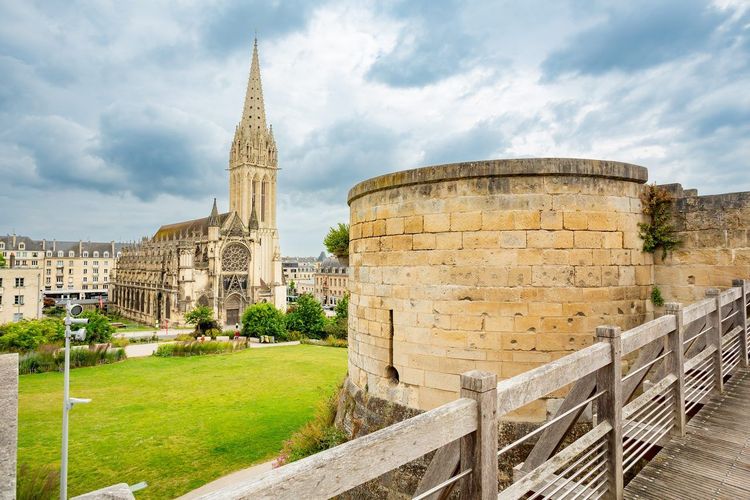
Old Caen partially survived the bombings, which explains the coexistence of medieval lanes and gaps rebuilt in the 1950s. The Church of Saint-Pierre, with its Flamboyant Gothic chevet, dominates the square of the same name. Its spire, damaged in 1944, was restored to its original appearance and remains visible from several points in the city centre.
Directly opposite, the Hôtel d'Escoville displays a carved Renaissance façade that stands out amid the rebuilt surroundings. Its inner courtyard, freely accessible during the day, is worth a detour for its bas-reliefs depicting mythological scenes. The tourist office occupies part of the ground floor, making it a convenient stop to pick up a map and updated opening hours before continuing.
From there, take time to walk up the rue Froide and the rue Écuyère, two narrow shopping streets where old façades, cafés, and a handful of independent shops survive. Heading west, the church of Saint-Sauveur borders the place Saint-Sauveur, lined with half-timbered houses and regularly enlivened by a market. This square has a feature few visitors notice: its classical eighteenth-century layout, with its aligned ashlar façades, makes it the only urban ensemble of this style preserved in Caen.
Just behind it, the Alexis de Tocqueville library occupies a contemporary cross-shaped building, opened in 2017 on the peninsula, whose four wings point toward four landmarks in the city. Entry is free and the top floor offers an unexpected view over the port. A few streets away, the Artothèque Caen, a discreet contemporary art venue, allows visitors to borrow original artworks as they would borrow a book—a little-known curiosity for passing visitors.
The Mémorial de Caen: an Essential Stop to Understand the City
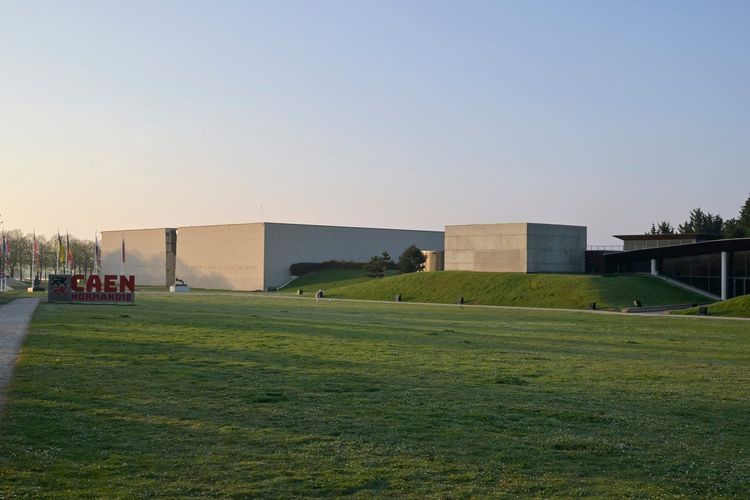
The Mémorial de Caen (Esplanade Général Eisenhower, 14000 Caen, rated 4.6/5 on Google based on 23,168 reviews) opened its doors in 1988 on the very site of a former German underground command post, a choice of location that is far from coincidental. Conceived as a museum for peace rather than a simple war memorial, it retraces the causes of the Second World War, the Occupation, the D-Day landings, and then the Cold War through to the fall of the Berlin Wall.
The visit follows a dense chronological route, blending period objects with filmed testimonies from Norman civilians. Allow between two and a half and three hours to cover everything at a comfortable pace, more if you add General Richter's bunker, left as it was.
Budget-wise, expect around twenty euros for an adult ticket, half that for children, with family passes to soften the bill. The site is open every day in high season, closes for a few weeks in January for maintenance, and can be reached by bus from the city centre in about fifteen minutes. A large free car park awaits those arriving by car.
A combined ticket also lets you pair the visit with a bus tour of the D-Day beaches, an interesting option if you are not planning to hire a car during your stay. Book ahead in June, when crowds linked to the commemorations make queues grow.
If you are travelling with children or simply want to breathe between emotionally intense galleries, the memorial gardens surrounding the building are freely accessible, with several steles dedicated to the Allied nations.
The Vaugueux and the Best Places to Eat
At the end of the first day, head to the neighbourhood that best survived the 1944 bombings and now concentrates most of Caen's dining scene.
The Vaugueux: Cobbled Lanes and Half-Timbered Façades
The Vaugueux, whose name is thought to derive from an old medieval moat, owes its charm to its cobbled lanes lined with half-timbered houses, spared from destruction thanks to its position below the castle. Restaurants and wine bars have set up their terraces here over the last few years, without spoiling the original architecture.
The neighbourhood is particularly photogenic at the end of the day, when the façades are lit up and the terraces fill. The Caen audio-guided tour passes right through this area, a good way to understand while walking why these lanes were preserved when everything around them was collapsing.
Where to Eat in Caen: Our Picks by Budget

For a quick and affordable meal, several crêperies and street food spots have opened around the place Saint-Sauveur and in the Vaugueux (Rue du Vaugueux, 14000 Caen). In the mid-range, traditional brasseries serve tripes à la mode de Caen, the emblematic dish slow-cooked for hours in a blend of cider and calvados, usually accompanied by a glass of local cider. For a more refined evening, a few gastronomic tables in the city centre offer menus built around Norman produce: Isigny butter, scallops, and regional cheeses.
A useful tip: Vaugueux tables fill up by 8 pm on Fridays and Saturdays, especially in spring. A call in the afternoon is usually enough to secure a terrace. For a quick lunch, the Friday morning market at the place Saint-Sauveur and the Sunday morning market near the port are full of hot food stalls with takeaway options, perfect to enjoy on the quays.
What to bring back from Caen? A bottle of calvados or farmhouse cider, a pot of teurgoule (Norman rice pudding slow-baked with cinnamon), Isigny caramel, or a piece of Caen faience, a local craft tradition since the eighteenth century still found at a few antique dealers in the centre.
Day 2: Nature, Gardens, and Walks Along the Orne
After a first day packed with monuments, the second shifts to a slower pace, among gardens, a green hill, and a riverside stroll.
The Jardin des Plantes and the Colline aux Oiseaux
The Jardin des plantes de Caen, founded in 1689, spreads over several hectares in the heart of the city and is free to visit all year round. Tropical greenhouses, a rose garden, and a medicinal plant collection follow one another in a more intimate setting than the large neighbouring park.
A few minutes' walk away, the Colline aux Oiseaux (Avenue Amiral Wietzel, 14000 Caen, rated 4.6/5 on Google based on 6,597 reviews) was developed on the site of a former municipal landfill, rehabilitated in the 1980s and 1990s to become the city's largest landscaped park. A small tourist train circles the grounds, farm animals can be seen free of charge, and several play areas are dotted along the route, making it ideal for families. The rose garden, with several thousand bushes, peaks in June, exactly when the city fills for the commemorations.
Both sites combine easily into a morning: allow about fifteen minutes' walk between the two main entrances. From the hill, the view stretches to the nearby Memorial, making it easy to visit both if you prefer to move the museum to the second day.
The Banks of the Orne by Bike or Electric Boat
A cycle route follows the Caen-to-the-Sea canal for nearly 15 kilometres, linking the city centre to Ouistreham along an almost flat path heavily used by local joggers and cyclists at weekends. Close to the city centre, the vallée des jardins offers a landscaped section along the Orne, with benches and shaded lawns, extended by the Prairie, a vast green space of over 90 hectares tucked between the racecourse and the river.
Exploring Caen by bike is straightforward: the metropolitan transport network runs a bike-sharing service with stations scattered across the centre, and several shops offer bike hire in Caen by the hour, half-day, or one-way to the sea. For a more contemplative outing, silent electric boats can be hired without a licence directly on the quays: the electric boat on the Orne requires no prior experience and is well suited to a family outing along the basins and into the first meanders of the river. Those looking for something more active will prefer canoe-kayaking: our Ryo article on the best canoe-kayaking spots in Normandy lists several departure points accessible from the centre.
Book your slot in advance if you are targeting a summer Saturday afternoon: boats go quickly between 2 pm and 5 pm.
Vaucelles and the Port of Caen: the Unexpected Face of the City
Few visitors cross the Orne to explore the south bank, which makes it one of the city's most authentic areas.
The Vaucelles District and Its Murals
Long an industrial area, the Vaucelles district has been transformed in recent years through a programme of wall murals commissioned from French and international street artists, spread across the gable ends of former warehouses. A free-form stroll is enough to spot a dozen of them, with no fixed itinerary required. The most impressive compositions span several-storey building gables, visible from the street without any detour: simply follow the axis heading up from the Pont de Vaucelles.
To go further, an offbeat visit with a greeter—those passionate volunteers who show visitors their city for free—gives access to anecdotes no printed guide mentions. The concept is simple: submit a request online a few days ahead, a local resident responds and devotes two hours of their time, at no cost to you. The district also has several booksellers and second-hand book dealers, some occupying former workshops, a pleasant stop for lovers of old books.
The Port of Caen, Ornavik, and Its Quays
The port of Caen, organised around the bassin Saint-Pierre, is a reminder that the city remains connected to the sea by a 14-kilometre navigable canal to Ouistreham. The redesigned quays now host cafés and terraces, far from the purely industrial image one might expect. The neighbouring peninsula, a former port wasteland in full transformation, now concentrates a concert hall, food trucks, and urban development projects that are reshaping this corner of the city year after year.
A few kilometres away, Ornavik (Presqu'île de Caen, 14000 Caen, rated 4.4/5 on Google based on 843 reviews), a historical Viking park, recreates a full-scale Viking village: wooden houses, craft workshops, and educational activities recount the Norman settlement of these lands over a thousand years ago. The site was created around the millennium of Normandy, celebrated in 2011, and remains largely unknown to passing visitors. It is only open for part of the year, mainly from April to autumn, with costumed volunteers demonstrating blacksmithing, weaving, and bread-baking: check the calendar before making the trip, as activities vary from one weekend to the next.
Day Trips to the Côte de Nacre: Ouistreham, Pegasus Bridge, and the D-Day Beaches
If your stay extends beyond two days, or if you are willing to cut the second morning short, the Côte de Nacre is about twenty minutes by road and concentrates several major D-Day sites. Without a car, regular buses link the centre of Caen to Ouistreham in about forty minutes, and the canal cycle route offers a sporty but very enjoyable alternative.
Ouistreham, the Lighthouse, and Sword Beach
Ouistreham, fifteen kilometres from Caen, blends the charm of a Norman seaside resort with its role as a ferry port to England. The lower town, animated around the marina, contrasts with the quieter seafront.
The Ouistreham lighthouse is climbed via a staircase of more than 170 steps and offers from its top a clear view over the Orne estuary, the English Channel, and on a clear day the English coast in the distance. It only opens during the summer season and on a few spring weekends, so check before crossing the whole town for nothing.
Right next to it lies Sword Beach, where British troops and the Kieffer Commando landed on 6 June 1944. Today bordered by villas and colourful beach huts, it reveals its history only through a few commemorative steles scattered along the sand. The Musée du Mur de l'Atlantique, housed in the former German fire-control post, rounds out the visit for those who want to understand the defensive mechanics of the sector.
Pegasus Bridge and the Pointe du Siège
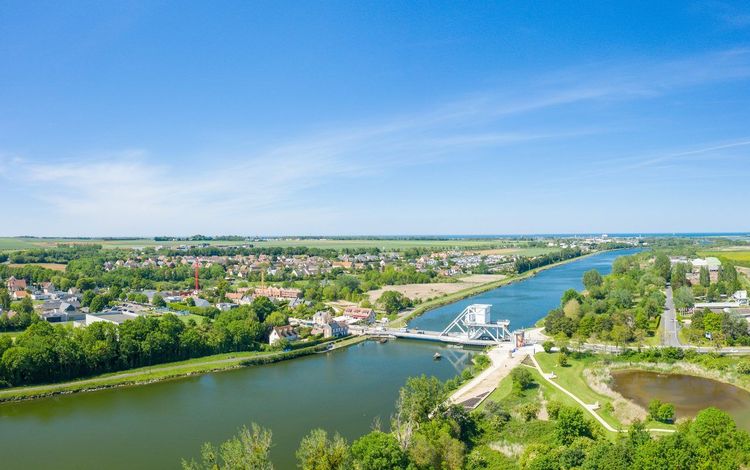
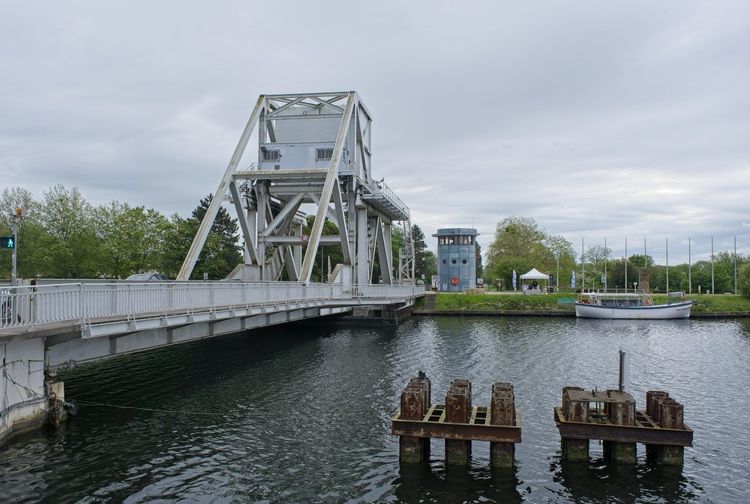
At Bénouville, Pegasus Bridge marks one of the very first sites liberated in France: in the night of 5 to 6 June 1944, British gliders landed there with legendary precision to seize the bridge before dawn. The original structure, since replaced by a modern road bridge, is preserved at the nearby Mémorial Pegasus, with bullet marks still visible.
Steps away, the Café Gondrée claims the title of the first house liberated in France and still operates as an establishment, an almost obligatory stop for history enthusiasts. Our Ryo article on the history of Bayeux extends this chronological thread to the city that hosted the first provisional government of liberated France.
A little further north, the Pointe du Siège forms a nature reserve where the Orne estuary meets the sea, popular with birdwatchers for spotting waders at low tide. Wear closed shoes and check the tide times: at high tide, part of the paths becomes impassable.
Lion-sur-Mer and the Falaise des Confessionnaux
Lion-sur-Mer rounds off the loop with its elegant Belle Époque villas lined along a seafront more discreet than Ouistreham's. The village has retained a residential character that sets it apart from the summer bustle of neighbouring resorts.
Continuing westward, the Falaise des Confessionnaux (Lion-sur-Mer, 14780, rated 4.5/5 on Google based on 46 reviews) exposes limestone strata rich in ammonite and belemnite fossils, remnants of a warm sea that covered the region more than 160 million years ago. The coastal path running along the foot of the cliff continues toward Luc-sur-Mer for those who want to extend the walk. Again, beware of the rising tide, which rapidly closes the passage at the base of the cliff. The audio-guided tour of Caen makes a good warm-up before setting off on these coastal excursions.
More Day Trip Ideas: Clécy, the Viaduc de la Souleuvre, and Bayeux
For a third day, or simply if you prefer a more active travel style, three destinations usefully round out the itinerary without ever exceeding three-quarters of an hour by road.
Clécy and Outdoor Activities in the Norman Switzerland
About 45 minutes south of Caen, Clécy provides access to what is nicknamed the Norman Switzerland, granite gorges carved by the Orne that have nothing Swiss about them other than the name but offer a genuine outdoor playground: rock climbing on the Rochers des Parcs, via ferrata, whitewater kayaking, and panoramic hikes. Clécy and the Norman Switzerland are best discovered in spring, when the Pain de Sucre ridges overlook a still-green valley and paragliders catch the thermals. Our Ryo article on the most beautiful villages in Calvados lists several stops to combine with this day trip.
The Viaduc de la Souleuvre for Thrill-Seekers
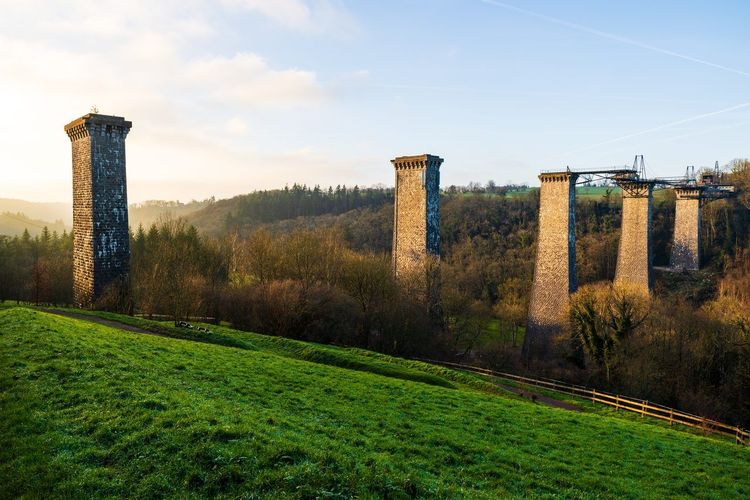
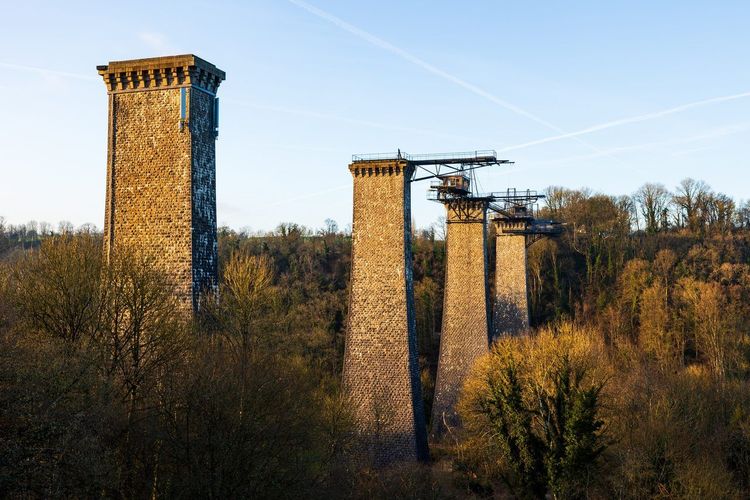
Built at the end of the nineteenth century for a now-disused railway line, the viaduc de la Souleuvre (14350 Souleuvre-en-Bocage, rated 4.7/5 on Google based on 3,001 reviews) has reinvented itself as one of France's most renowned bungee-jumping sites, with around sixty metres of free fall beneath your feet. A giant zip line also allows you to cross the valley without jumping, for those who prefer the thrill without the leap. Slots must be booked online and fill quickly on summer weekends.
Bayeux and Its Tapestry, 30 Minutes from Caen
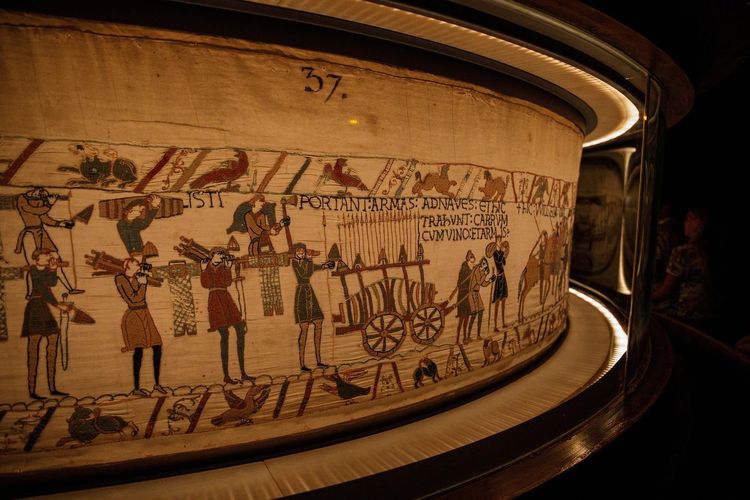
Bayeux, about thirty minutes by road or direct train, deserves half a day on its own. Its embroidered tapestry, nearly 70 metres long, recounts the Norman conquest of England in 1066 with a level of detail that continues to fascinate historians and visitors alike. Be aware, however, that the museum housing it is undergoing a major renovation and the work is not permanently on display, so check the opening conditions before planning the visit. The Gothic cathedral, spared by the 1944 fighting, the Memorial des reporters, and the old town centre crossed by the Aure river are more than enough to fill half a day. Our Ryo guide to a walk in Bayeux details a walking route through the historic centre.
Where to Stay in Caen: Options for Every Budget and Travel Style
For a two-day heritage-focused stay, the historic centre neighbourhood, around the castle and the Vaugueux, remains the most comfortable choice: you can reach most sites on foot and enjoy the evening atmosphere without depending on a car.
The station area, slightly less picturesque, wins on practicality: easier parking, direct connections to Paris, and generally lower rates than in the very centre. The tram links the station to the centre in just a few minutes, cancelling out the disadvantage of the distance.
If your itinerary includes a full day on the Côte de Nacre, basing yourself in Ouistreham or Lion-sur-Mer lets you combine beach and city visits without multiplying journeys, at the cost of a twenty-minute daily commute into the city centre. Seasonal rentals are plentiful there outside July and August, often at more attractive rates than in the very centre for equivalent space.
Budget-wise, Caen's price range remains reasonable for a Norman prefecture: budget hotel rooms on the outskirts, an abundant mid-range offer around the station and the centre, and a few charming addresses in town houses in Old Caen. Whatever option you choose, book early if your stay falls in June: D-Day commemorations push hotel occupancy up across the entire Côte de Nacre, including Caen itself.
Practical Information: Getting There, Getting Around, Weather, and Budget
A few practical pointers before you finalise your itinerary.
How to Get to Caen (Train, Car, Plane)
By train, the direct line from Paris Saint-Lazare takes about two hours and drops passengers at Caen station, fifteen minutes' walk from the castle. It is the simplest option for a car-free stay, with several daily return services and fares that drop significantly when booked in advance.
By car, the A13 then A84 motorway links Paris to Caen in just under two and a half hours outside of traffic. Several park-and-ride facilities on the outskirts allow you to leave your vehicle and complete the journey by tram, a much cheaper option than parking in the very centre.
Caen-Carpiquet Airport, more modest in size, handles a few regional routes and is mainly useful for visitors coming from other French regions without going through Paris. From England, the ferry service to Ouistreham provides a direct gateway to the Côte de Nacre.
Getting Around on Foot, by Bike, or by Public Transport
Caen city centre can be crossed on foot in about twenty minutes, from the castle to the station, making walking perfectly sufficient for the first day of your itinerary.
The Twisto network, combining tram and bus, efficiently supplements longer journeys, particularly to the Colline aux Oiseaux, the Memorial, or the port. A single ticket can be bought on board or at a machine, but the day pass becomes cost-effective from the third journey onwards. A bike-sharing service also lets you reach the banks of the Orne without depending on bus timetables.
In short, getting around Caen without a car presents no difficulty for the first two days; only the Côte de Nacre and more distant excursions benefit from a vehicle or an organised tour.
Weather, Best Time to Visit, and Budget
Caen's weather is typically oceanic: mild but changeable, with possible showers at any time of year and rarely extreme temperatures, around 5 to 8 degrees in winter and 20 to 23 degrees in high summer. May to September offers the best balance between long days and pleasant temperatures, with a peak in visitor numbers in June linked to the commemorations. Pack a windproof jacket even in August: the sea breeze travels up the canal and cools the evenings on the quays.
If you are planning several paid visits, compare the cost of a city pass against individual tickets: beyond three sites visited, the pass is generally worthwhile. That said, the free permanent municipal collections and free access to the castle enclosure make this calculation less clear-cut here than in other cities.
Budget for an average daily spend covering accommodation, meals, and local transport, adjusted to your chosen comfort level: around sixty euros per person on a budget, double that in mid-range with a restaurant in the evening. Market days also punctuate city life: place Saint-Sauveur on Friday mornings, the port area and place Courtonne on Sunday mornings, two popular gatherings for local produce. To plan your walking routes in the centre, the Ryo audio guide for Caen remains a reliable starting point.
Caen with Kids or in the Rain: Alternative Activities
Things to do with children in Caen are plentiful: the Colline aux Oiseaux and the Jardin des plantes remain the safest bets, complemented by the educational spaces at the Mémorial de Caen, designed to remain accessible to younger visitors without overwhelming them. Ornavik, with its Viking craft workshops, works particularly well with 6-to-12-year-olds, as does an electric boat ride on the port basins.
If the sky clouds over, head to the museums: the Musée des Beaux-Arts, the Musée de Normandie, and the FRAC each offer two to three hours of dry-weather visiting, as does the Alexis de Tocqueville library for a quieter break. The metropolitan swimming pool and ice rink round out the list of rainy-day retreats, along with a cinema in the centre.
On the budget side, several activities remain free year-round: entry to the Jardin des plantes, permanent collections of the municipal museums, a stroll through the abbey courtyards, a walk in the Vaugueux or along the port quays. When it comes to eating, the brasseries in the centre and the crêperies in the Vaugueux are family-friendly, with children's menus and quick service—worth confirming when booking if you are travelling with kids.



FAQ
How Much Time Do You Need to Visit Caen?
Two days are enough to cover the historic centre, the Memorial, and a day trip to the Côte de Nacre. Add one more day if you want to include Bayeux, Clécy, or a full morning devoted to the gardens and the Colline aux Oiseaux.
What to Do in Caen in 1 Day if Time Is Short?
Focus on the castle and its museums in the morning, then the Abbaye aux Hommes and Old Caen in the afternoon. The Memorial alone requires half a day, so you will likely have to skip it or come back another time.
What to Do in Caen on a Third Day?
A third day naturally points toward the surrounding area: Bayeux and its medieval centre, the Norman Switzerland around Clécy, or a full day on the D-Day beaches heading toward Arromanches and Colleville-sur-Mer.
What to Do in Caen for Free?
The Jardin des plantes, the courtyards of both abbeys, the permanent collections of the municipal museums, the FRAC, a stroll through the Vaugueux and along the port quays, and the Vaucelles murals can all be enjoyed without spending a euro.
Where to Stay in Caen for a 2-Day Trip?
The historic centre, around the castle and the Vaugueux, is best suited for a heritage-focused stay. The station district offers more convenience and moderate rates, while Ouistreham appeals to visitors who want to combine city and seaside.
What to Do in Caen When It Rains?
The city's three museums, the Memorial, the Alexis de Tocqueville library, and the Artothèque Caen can easily fill a full day indoors, with the option of reaching each site by tram.
Is Caen a Good Destination for a Romantic Weekend?
The Vaugueux, with its cobbled lanes and gourmet restaurants, is perfect for an evening for two, as is a sunset walk along the castle ramparts or the port quays.
Do You Need a Car to Visit Caen and Its Surroundings?
Not for the first two days: the city centre is easily explored on foot and by tram. A car or an organised tour does become useful for exploring the Côte de Nacre, Bayeux, or the Norman Switzerland at your own pace.
Two days in Caen ultimately leave a stronger impression than the short duration might suggest: a founding castle, two history-laden abbeys, an under-the-radar street art district, and a coastline still shaped by 1944. The city lends itself equally well to a concentrated heritage stay and to a slower escape among gardens and the banks of the Orne. To continue exploring the historic centre at your own pace, our Caen audio-guided tour guides you step by step between the castle, the abbeys, and Old Caen.
À lire également