© Shutterstock
 Votre guide Ryo
Ateliers des Capucins in Brest: Complete Guide 2026
Above the port, on the plateau overlooking the Penfeld, a former French Navy arsenal has become one of the most unique cultural venues in France. The Ateliers des Capucins in Brest spread across more than 35,000 m² of 19th-century industrial halls converted into a covered public space bringing together a media library, concert hall, climbing wall, restaurants and makers' workshops. It is often described as the largest covered public square in Europe, a description that gives a fair sense of the sheer scale of the place.
Since opening in November 2016, the site welcomes more than 1.5 million visitors a year. This guide covers everything: the must-see facilities, the 2026 events programme, how to get there, opening hours and admission prices. To explore Brest beyond the plateau, the Ryo Brest audio guide offers 27 stops across the Capital of the Oceans in 3 hours 30 minutes.
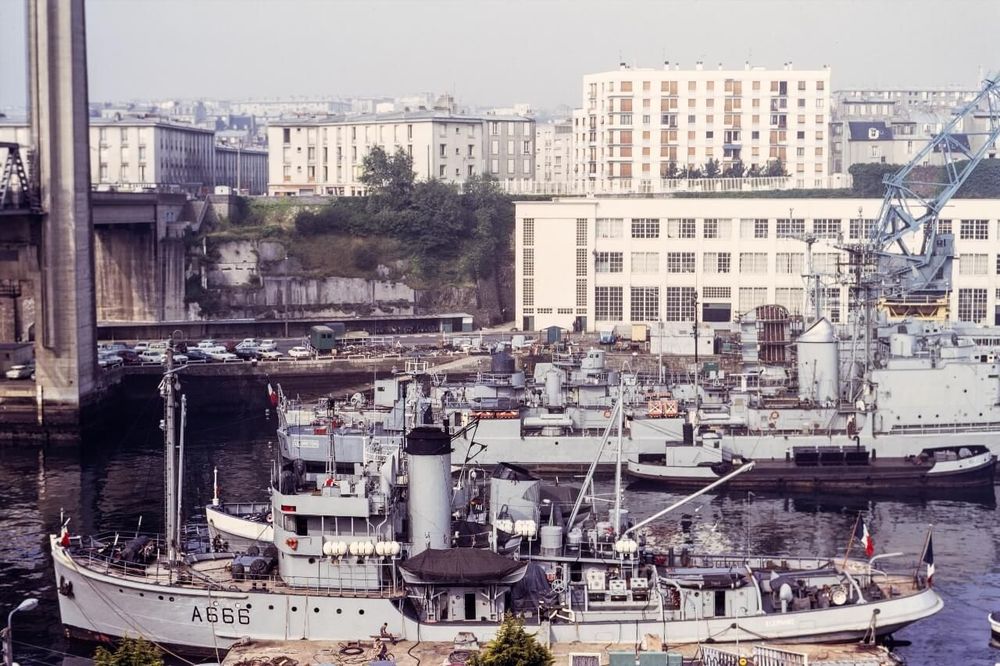
From Franciscan Convent to Naval Arsenal
The history of the site dates back to the late 17th century. Present in Recouvrance since 1672, the Franciscan friars known as Capucins obtained permission to build a convent on this height overlooking the city: the foundation stone was laid by Vauban in 1695. The community remained active until the French Revolution, when the friars were expelled and the buildings confiscated by the state. The French Navy then inherited the plateau and gradually established its naval construction workshops there.
The 19th century transformed the site into an industrial complex. From 1840 onwards, large brick-and-metal-framed halls were erected to house the forge, the boilermaking workshop and the naval carpentry trades. Thousands of workers laboured here until the 1990s, manufacturing components for the warships of the French fleet. When the Navy reduced its workforce and outsourced part of its production, the plateau gradually fell silent.
The city of Brest took over the site in the 2000s and entrusted the conversion to architect Patrick Thépaut. The project preserved the industrial skeleton — overhead cranes, metal frameworks, brick walls — while opening the spaces up to everyone. The inauguration took place in November 2016. In less than ten years, the former arsenal has become one of the most visited community venues in Brittany.
The François Mitterrand Media Library
This is the site's main facility, the one that alone justifies the trip for many visitors. The François Mitterrand media library occupies several levels of the central main hall with nearly 500,000 items (around 120,000 available on open shelves): books, comics, magazines, music collections, digital resources and heritage archives on Brest's maritime history. Access is free and open to all, with no registration required to browse on site.
The interior architecture is immediately striking. The former overhead cranes from the arsenal have been preserved and converted into walkways suspended ten metres above the shelves. The overhead glazing lets in natural light even on a typical grey Breton day. Reading areas are spread across several levels with a wide variety of seating, from floor cushions to high stools near the balustrades.
The children's area on the ground floor is particularly well suited to families. Specialist collections for ages 0 to 12, regular activities (read-alouds, craft workshops, book clubs) and a playful layout make it one of the best facilities of its kind in Brittany. Young children can easily spend an hour there without getting bored.
Also worth noting is a collection dedicated to the Navy's industrial archives: naval construction blueprints, photographs of the workshops in operation, and staff registers from the 19th and 20th centuries. Not always available on open shelves — ask at the front desk if this type of documentation interests you.
Le Block: Concerts and Temporary Exhibitions
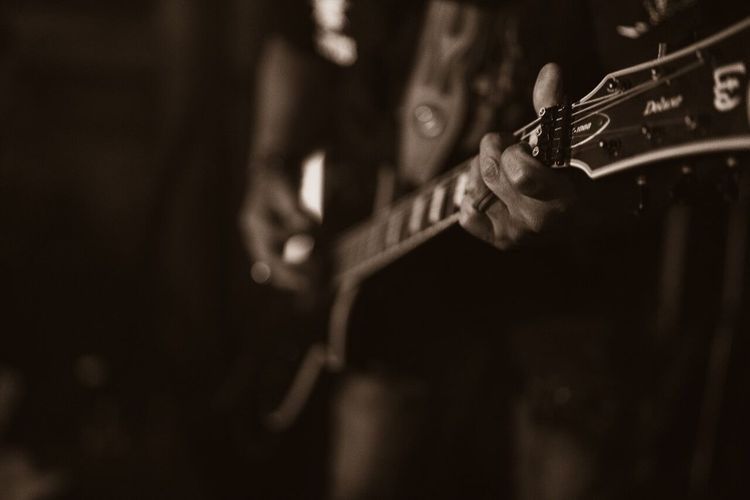
Le Block is the site's performance venue. Its capacity of around 500 people in concert configuration gives it an intimate feel that larger regional venues cannot offer: artists perform close to the audience, the sound is consistent regardless of where you stand, and ticket prices remain reasonable. The programme covers rock, electronic music, world music and DJ nights, with a focus on emerging artists from the Breton and national scenes.
Between concerts, Le Block hosts temporary contemporary art exhibitions, often linked to Breton artists or to maritime and industrial themes consistent with the site's identity. Free private views and occasional performances animate the space between major evening events. Check the programme online — tickets for popular concerts sell out quickly.
Climbing, Skating and Urban Sports
Few cultural venues incorporate a 12-metre climbing wall into their main hall. The wall caters to climbers of all levels: accessible routes for beginners and technical overhanging starts for experienced climbers. Harnesses and climbing shoes are available to rent on site. Supervised sessions are offered on weekdays for adults and for children from age 6.
Adjacent to the wall, the indoor skate park is a valuable asset in Brest, where the oceanic climate can spring surprises even in summer. Ramps, rails and varying levels of difficulty coexist within a well-defined space. Footfall is usually light on weekday mornings and much busier on weekend afternoons. For supervised sessions or time slots reserved for school groups, check the online schedule before you visit.
Food and Refreshments on the Plateau
The site's food offer is more varied than it appears from the outside. Several food outlets occupy the ground floor of the main hall, from fast food to daily specials and a handful of world cuisines, with average prices between 10 and 16 euros at lunchtime. The shared tables and covered-market atmosphere fit the spirit of the place perfectly.
The terrace refreshment stands, sheltered under the metal canopy of the façade, are the ideal spot in fine weather. The view opens out over the harbour of Brest and the hills of Finistère. On concert evenings, some bars remain open until the end of events at Le Block.
To bring something back from Brest, several colocs sell local products (Breton cheeses, artisan cider, tinned fish) direct from the hall. Our article on the culinary specialities of Brest will give you more addresses for eating and shopping around the city.
Programme and Events 2026
The events calendar changes every month; the site programmes between 150 and 200 events per year. Here are the highlights to keep in mind for 2026.
The Nuits des Capucins, in July and August, transform the main hall into a festive evening space: concerts, film screenings and artistic performances, all free to attend. It is one of the most popular cultural events of the Brest summer, often packed at weekends.
In autumn, the Longueur d'Ondes festival (dedicated to radio and sonic art) regularly takes over Le Block and the media library spaces. Meetings with radio journalists, listening workshops and semi-private concerts follow one another over several days with a programme accessible to non-specialists.
During school holidays, family activities intensify: digital fabrication workshops (3D printers, laser cutting), art introductions and sports courses fill the morning slots. The media library also offers story sessions and open-access book clubs.
The full monthly programme is published on the official website, with a dedicated section for free or reduced-price events.
The Brest Cable Car
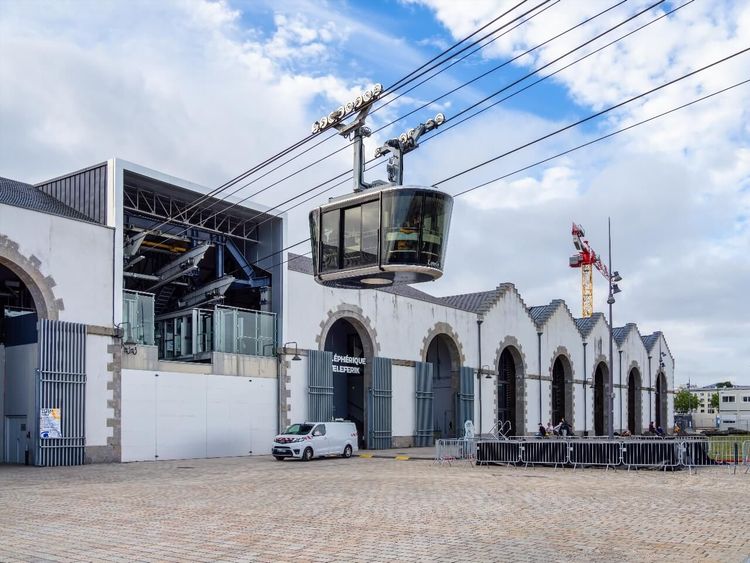
How do you reach the plateau from the city centre? The most spectacular answer is the Brest cable car (1 Rue de Siam, 29200 Brest, rated 4.4/5 on Google from 2,325 reviews), inaugurated on 19 November 2016, the same day as the halls. It connects the lower station on the rue de Siam side to the plateau by crossing the Penfeld (the river separating civilian Brest from military Brest) at nearly 70 metres above the ground, over a 420-metre line.
The crossing takes about 3 minutes. The view from the cabin extends over the harbour, the bridges of Brest, the commercial port and the wooded heights in the direction of Daoulas. On a clear day, the outlines of the islands of Ouessant and Molène can be made out on the horizon. Even if you arrived by car, take the cable car at least one way to enjoy this panorama.
The journey corresponds to line C of the Bibus network: a standard ticket is sufficient, and network passes are valid. Usual hours: 7:45am to 8:30pm on weekdays, 9:30am to 8:30pm at weekends. Be aware of temporary closures in strong winds — check via the Bibus app before setting off, especially in winter and autumn. Back down at street level, our short Brest audio-guided tour picks up the centre again across 19 stops.
The Colocs: Artisans, Makers and Shops

The 'colocs' are the dozens of small businesses that have made their home in the nooks and crannies of the hall: craft workshops, designers' boutiques, cultural associations, a yoga studio, an independent bookshop and coworking spaces. This short-term model allows young businesses to test their ideas without the constraints of a conventional commercial lease.
On weekday mornings, you have a good chance of coming across artisans working directly in view of the public — a ceramicist, a luthier, a screen printer. Open studio days are organised from time to time, with direct sales from the workshops. The full list of active colocs and their individual opening hours is available on the official website.
The Capucins Neighbourhood
The plateau is also a neighbourhood in full transformation. The opening of the site in 2016 accelerated the renovation of the surrounding residential fabric: new shops, cafés and local services have moved into ground-floor units. The area, long perceived as cut off by the Penfeld divide, is now one of the most dynamic in the city.
A few minutes' walk from the halls, the Jardin des Explorateurs offers a remarkable panorama over the harbour and the military fortifications below. It is one of Brest's least visited viewpoints, yet among the most breathtaking. A little further down the hillside, the Tour Tanguy (museum of Old Brest, free entry) presents dioramas recreating the city as it was before its destruction in 1944, with a moving perspective on the post-war reconstruction.
To explore this area at your own pace, the Ryo Brest audio guide offers a self-guided tour passing through several landmarks in the area, from the quays of the Penfeld to the medieval castle.
How to Get There
By cable car: lower station at place de la Liberté, on the rue de Siam side. The journey takes 3 minutes, with high frequency during peak hours. This is the quickest and most enjoyable access from the city centre.
By bus: Bibus lines 2, 3 and 4 serve the plateau. Allow 10 to 15 minutes from the city centre depending on the line.
By car: a covered car park is available on site, accessible via rue des Vingt-Deux-Juillet. The first hour is free, which is enough for a quick visit to the media library. Beyond that, an hourly rate applies.
On foot: from the city centre, the climb takes 20 to 25 minutes through the residential streets of Recouvrance. The descent is more pleasant and considerably faster.
Opening Hours and Admission Prices
The site is open Tuesday to Sunday, generally from 10am to 8pm. The main hall and its walkways are freely accessible without reservation. Opening hours may be extended on evenings with events at Le Block.
The François Mitterrand media library follows its own schedule (Tuesday–Saturday and Sunday mornings). On-site access and browsing are free. Borrowing items requires registration, which is also free.
For the climbing wall: expect around 6 to 10 euros per session depending on age, with equipment rental available at an additional cost. The skate park operates on open or supervised time slots, with variable participation fees depending on the session.
Most concerts and events at Le Block are ticketed, with prices generally between 8 and 22 euros depending on the artists. Some performances in the main hall and the Nuits des Capucins (July–August) are free to attend.
Practical Tips Before You Visit
Avoid Saturday afternoons between 2pm and 5pm: this is peak footfall, particularly in the food areas and around the climbing wall. Tuesday and Thursday mornings offer the quietest slots.
Allow more time than you think you'll need. Even if your initial goal is a single facility, curiosity takes over and a full afternoon passes easily on the plateau. The hall is pleasant to wander through without a fixed agenda.
For families, the hall floor is fully accessible with a pushchair. The media library's children's area is particularly well suited to young children, and cloakrooms are available at the main entrance.
If you would like to extend your visit with more discoveries around Brest, the Ryo app offers a 27-stop audio guide to the city, and our article on things to do in Brest will give you further ideas.
FAQ
Is the Ateliers des Capucins free to visit?
Access to the main hall and the François Mitterrand media library is completely free. Some facilities are paid: the climbing wall (6 to 10 euros per session), supervised classes and shows at Le Block (8 to 22 euros depending on the artists). Events in the main hall, including the Nuits des Capucins in summer, are often free to attend.
How do you get to the plateau from downtown Brest?
The Brest cable car is the most practical option. The lower station is a few minutes' walk from place de la Liberté. A standard Bibus bus ticket is sufficient and network passes are valid. Several bus lines also serve the plateau, and a covered car park is available for visitors arriving by car.
What are the Capucins opening hours in 2026?
The site is generally open Tuesday to Sunday from 10am to 8pm. The media library has its own hours (Tuesday–Saturday, Sunday mornings). The cable car runs from 7:45am to 8:30pm on weekdays. These hours may change during school holidays or special events. Always check the official website ateliersdescapucins.fr before your visit.
Can you visit with young children?
Yes, it is a very family-friendly venue. The hall is pushchair-accessible, the media library has a well-designed children's area for ages 0 to 12, and activities are regularly offered during school holidays. The climbing wall welcomes children from age 6 for supervised introductory sessions.
What events are planned for 2026?
The Nuits des Capucins (July–August) are the summer highlight, with free concerts and performances in the main hall. The Longueur d'Ondes festival in autumn and temporary exhibitions at Le Block animate the rest of the year. The updated monthly programme is available on the official website.
Is there a restaurant on the plateau?
Yes, several food outlets and refreshment stands are present in the hall, with prices ranging from 10 to 16 euros at lunchtime. Some bars stay open in the evening during events at Le Block. The colocs also sell Breton products (cheeses, cider, tinned fish) for a picnic on site.
The Ateliers des Capucins capture something essential about Brest: the city's ability to reinvent its industrial heritage without erasing it. A French Navy hall turned into Finistère's most vibrant covered public space, connected to the city centre by a cable car crossing the Penfeld at nearly 70 metres above the ground. If you only have one morning to spend on the plateau, start with the media library and end on the terrace with the view over the harbour.
To explore Brest beyond the plateau, the Ryo Brest audio guide takes you through 27 stops across the city, from the alleyways of Recouvrance to the medieval castle and the quays of the Penfeld. And if you'd like to take a day trip from Brest, our article on the most beautiful villages around Brest offers several ideas for day outings in Finistère.
À lire également