© Shutterstock
 Votre guide Ryo
Visiting Brest with Family in 2026: Océanopolis, Cable Car, and Must-Sees
Brest is unlike any other Breton city. Here, the ocean isn't a postcard backdrop but the central subject, the one that shapes its museums, parks, and even its public transport. Visiting Brest with family means looking at the sea in a different way: from a tropical tank, a cabin suspended above the arsenal, or the ramparts of a castle that has guarded the entrance to the Penfeld for seventeen centuries. To understand this city rebuilt after the war before diving into the sights, the Ryo audio guide for Brest traces the thread of its port history in 3h30.
In a single day or over a long weekend, you can come face to face with an octopus and a blue-spotted stingray at Océanopolis, cross the Penfeld on an urban cable car, climb into the greenhouses of a one-of-a-kind botanical conservatory, and picnic overlooking the harbor without spending a cent. You can also head out to a wind-battered lighthouse thirty minutes away, or retreat to a climbing gym when the rain rolls in — which it does in Finistère even in July. This guide covers every step, from the park's star animals to ideas for keeping toddlers busy on a grey day, with all the practical details (tickets, transport, budget, accommodation) so you can get organized without spending the whole evening on it.
Océanopolis, the Must-See of Brest
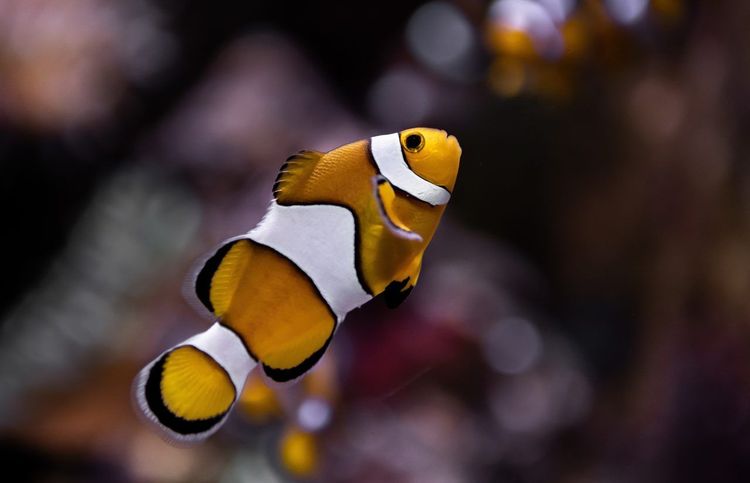
Océanopolis (Port de Plaisance, 29200 Brest, rated 4.1/5 on Google based on 20,131 reviews) is the top paid tourist attraction in Finistère and one of the main reasons so many parents choose Brest over other Breton cities for their holidays. Opened in 1990 on the Moulin Blanc marina peninsula, ten minutes from the city center, this ocean science center is organized into three distinct pavilions (temperate, tropical, polar) connected by outdoor walkways that already offer, on their own, a beautiful view over the harbor.
Allow at least half a day, or a full day if you want to see everything without rushing. The park is home to several thousand animals and around a hundred tanks: it's impossible to take it all in within two hours, and it's better to choose two pavilions and explore them at a leisurely pace rather than skim through everything.
The Tropical Pavilion and La Cité des Océanautes
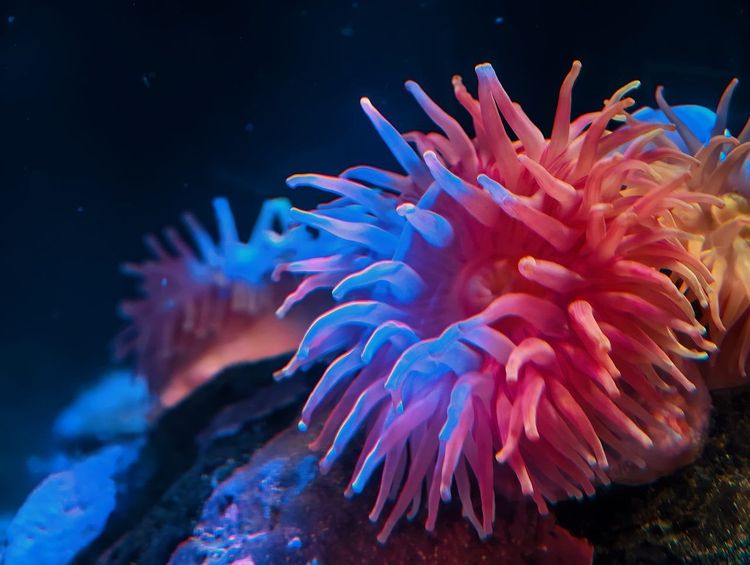
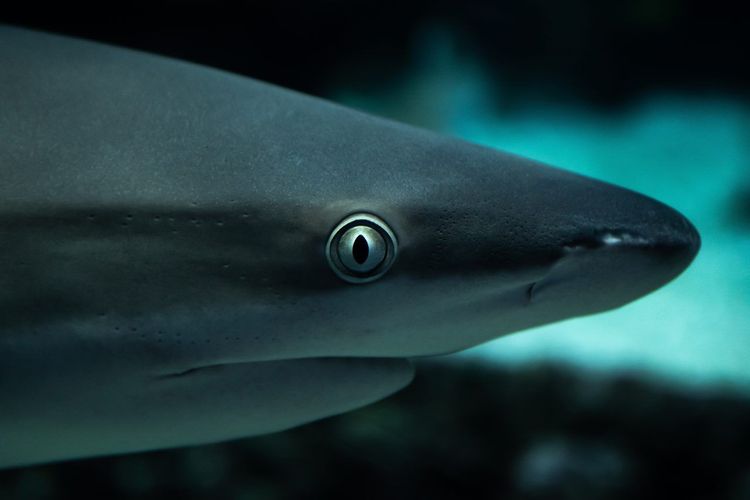
The Tropical Pavilion, fully redesigned during its most recent renovation, plunges visitors into the warm waters of the Indian Ocean and the Pacific: blacktip reef sharks, clownfish, and a reconstructed coral reef are displayed along a route designed at eye level, with low-set windows built for younger visitors. It's often the favorite pavilion for children under 8, as much for the colors as for the ambient warmth, which is a welcome bonus on a drizzly day.
Right next door, La Cité des Océanautes offers a more hands-on and sensory experience: touch screens, manipulation games, experiments to repeat ten times over, and short workshops led by the park's educators. Allow a good hour to see everything, more if your crew is under 6 and wants to start all over again from the beginning.
The Park's Star Animals
Every tank has its star. The octopus, capable of changing color and texture in a fraction of a second, holds attention far longer than any interactive screen. The short-snouted seahorse, tiny and almost motionless, takes patience to spot: a good opportunity to teach younger children to observe rather than dash from one tank to the next.
The blue-spotted stingray glides through the tropical tank, while the Norway lobster and the European lobster are presented alongside their local story, that of Breton fishing and its fish auctions. Further along, sardines swirl in tight shoals inside a cylinder that is literally hypnotic, and the moon jellyfish, lit up in blue, remains the park's most-requested photo spot. The clownfish, undisputed star since a certain animated film, often brings the visit to a memorable close. The polar pavilion has its own headline acts: Gentoo penguins and seals, fed in front of the public at set times — a must-see appointment to check on the day's schedule as soon as you arrive.
Practical Info: Tickets, Pass Océan, and Opening Hours
Océanopolis is generally open from 9:30 a.m. to 6:00 p.m., with extended hours in July and August and a technical closure of a few weeks in January. Booking tickets online avoids queuing at the ticket desk, especially in the height of summer when the line can stretch beyond half an hour mid-morning. The Pass Océan bundles four major Brest attractions on a single ticket during the summer season: the deal becomes worthwhile as soon as you plan at least two paid visits.
On the accessibility front, the entire route is stroller-friendly: ramps, elevators, and wide pathways let you move around without carrying anyone, even during peak hours. Picnic areas are set up outside, which keeps restaurant costs down, and a ticket remains valid for the whole day if you leave for lunch on the nearby beach.
The Ateliers des Capucins and the Urban Cable Car
A former industrial site of the arsenal, the Ateliers des Capucins plateau has been converted into a public hub while retaining its original metal hall, one of the largest in Europe. A bookshop, restaurants, a media library, a coworking space, and a museum all coexist under the same roof, with enough covered space to let younger children run around without disturbing anyone: it's the number one refuge on rainy days. A Ryo article covers the Ateliers des Capucins in depth if you want to plan your visit in advance.
The 70.8 Ocean Museum
Housed inside the hall, the 70.8 museum (named after the percentage of the Earth's surface covered by oceans) is run by the Océanopolis teams and dedicated to marine technology: underwater robots, telecom cables laid on the floor of the Atlantic, marine energy, and deep-sea exploration. The route is short, dense, and highly hands-on, making it a solid ninety-minute visit for children aged 8 to 14, though more abstract for younger ones.
The entry price is lower than Océanopolis, and the two sites pair well on a two-day stay: the large aquarium park on one side, the ocean from an engineering perspective on the other.
The Cable Car Crossing, the Most Memorable Experience
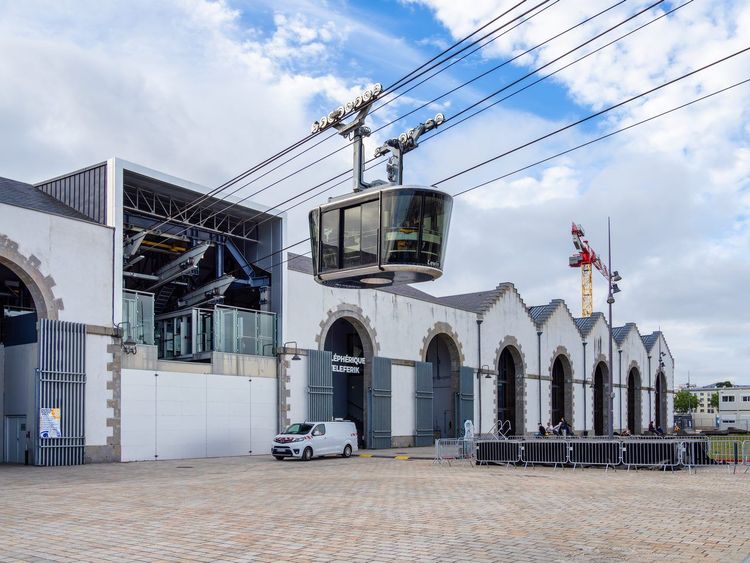
Opened in late 2016, the Brest urban cable car (2 Cours Dajot, 29200 Brest, rated 4.4/5 on Google based on 2,398 reviews) connects the Capucins plateau to the Jean Moulin station, at the foot of the Cours Dajot and a short walk from the castle. The crossing takes about three minutes and passes over the Penfeld: it is France's first urban cable car to span a navigable waterway, and the view looks down onto the arsenal, the grey buildings of the French Navy, and the entire harbor. Many visitors under 12 remember it more vividly than any museum.
The two cabins pass each other every few minutes during the day, and the crossing is paid for with a standard public transport ticket from the urban network — the same one used for buses and trams. In other words, a sightseeing experience at bus-ticket prices. Treat it as a natural transition between the Capucins and the historic center rather than a standalone attraction: it drops you within walking distance of the castle, without getting back in the car or hunting for a parking spot.
The Château de Brest and the National Maritime Museum
The Château de Brest (Rue du Château, 29200 Brest, rated 4.5/5 on Google based on 334 reviews) is the city's oldest structure: its foundations date back to the Roman castellum of the 3rd century, and it has survived sieges, wars, and the bombings of 1944 without ever falling out of use. It now houses the headquarters of the Atlantic Maritime Prefecture and the Musée national de la Marine, whose collections tell the history of the French Navy and the military port since the 17th century.
The visit has been designed to be shared across generations rather than lined with display cases: ship models, carved figureheads, cannons, a midget submarine displayed in the courtyard, visitor booklets, and occasional workshops during school holidays. From the ramparts and the Tour Madeleine, the view plunges directly onto the entrance of the Penfeld and the warships moored alongside — a free spectacle that is worth the climb on its own for a child who has never seen a helicopter carrier up close.
Allow ninety minutes for a relaxed visit with children aged 6 to 12, less if you focus on the ramparts and the outdoor route. The ticket office offers reduced rates and free entry for under-18s, a detail that noticeably lightens the bill over a multi-day stay.
Rue Saint-Malo and the Recouvrance District
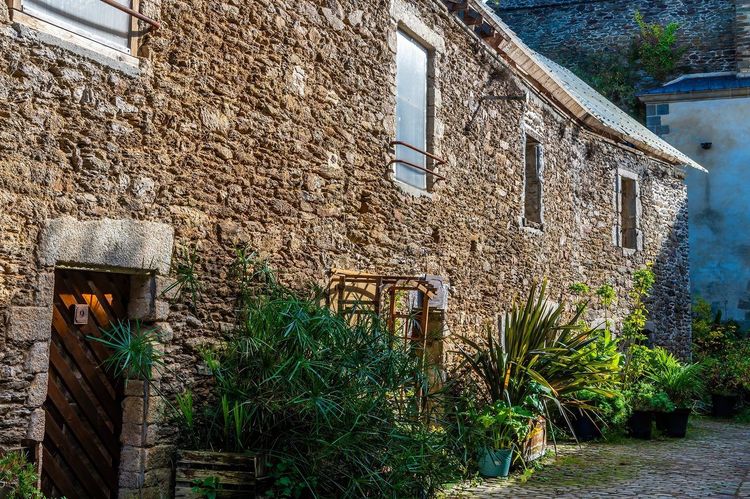
Brest was more than 90% destroyed during the Second World War, which makes rue Saint-Malo (29200 Brest) feel almost unreal: this cobbled lane lined with granite houses is one of the rare old streets to have survived the bombings. Facing demolition in the 1980s, it was saved and restored by a residents' association that now organizes exhibitions, concerts, and events there during the warmer months. Walking through it offers a concrete sense of what the city looked like before the war — a striking contrast with the concrete of the rebuilt center.
Just across the Penfeld, the Recouvrance district also has a character all its own: sloping alleyways, granite staircases, colorful façades clinging to the hillside, and the Tour Tanguy topped with its slate roof, housing a museum about pre-war Brest. It is reached via the pont de Recouvrance, Europe's largest lifting bridge when it entered service in 1954, whose deck still rises from time to time to let military vessels pass. Watching this maneuver from the quayside costs nothing and easily fills a good quarter of an hour.
The district lends itself to a free one-hour stroll with no set itinerary: head up one alley, come back down another, stop to admire a mural. It's also the classic starting point for reaching the castle on foot, by crossing the bridge rather than taking public transport.
A Walk along the Quays and the Commercial Port
The commercial port of Brest (29200 Brest) has remained a working port in the truest sense, with its cranes, container ships, vast dry dock, and ship repair activity visible from the quays. It offers a useful counterpoint to the museums: nothing here is reconstructed — you're watching a functioning port, complete with the smell of fuel oil and the clank of chains.
Along the quai Malbert are moored the deep-sea tugboats tasked with rescue operations in the Iroise Sea, including the Abeille Bourbon, famous for its interventions during winter storms. Spotting this red and black vessel moored just a few meters from the edge often makes more of an impression than any scale model under glass, especially after a visit to the National Maritime Museum.
The quayside walk can be done on foot or by bike, following the bassin du Commerce all the way to the foot of the pont de Recouvrance. Benches, playgrounds, and café terraces punctuate the route, making them handy for a mid-way snack break, and the area concentrates most of the bars and restaurants open in the evening. Allow thirty to forty-five minutes of leisurely strolling, more if you stop to count the moored boats.
The Stang-Alar Valley: Botanical Park and Playgrounds
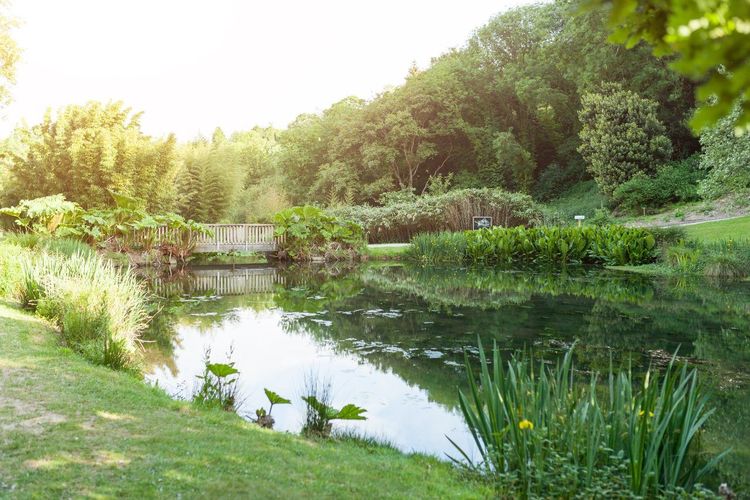
Carved out by a stream running down toward the harbor, the Stang-Alar valley stretches across the east of Brest for several kilometers and on its own concentrates a good portion of the city's free outings. Ponds, woodland, flat paths accessible with a stroller, meadows: it is Brest's green lung, ten minutes on foot from Océanopolis, which makes it easy to combine both in a single day.
The Conservatoire botanique national de Brest
Founded in 1975, the Conservatoire botanique national de Brest (52 Allée du Bot, 29200 Brest, rated 4.7/5 on Google based on 102 reviews) was the world's first of its kind. Its mission: to save threatened plant species, some of which are extinct in the wild, brought back from tropical islands and cultivated here. The conservation garden in the valley can be visited freely and at no cost year-round, with marked paths and labeling throughout.
The tropical greenhouses, on the other hand, are ticketed and only open during certain periods, at a modest price with free entry for younger children. Warm and humid, they make an ideal escape on a rainy day: baobabs, carnivorous plants, and species lost from their natural habitats can be discovered in about an hour. Check the opening days before you go, as they vary by season.
Playgrounds and Open Lawns to Burn Off Energy
Further down, several playgrounds are dotted along the valley, with equipment suited to different age groups, from sandpits to obstacle courses for pre-teens. A pétanque court, picnic tables, and large lawns round out the space: you can easily spend half a day here without ever getting back in the car.
After a morning at the museum, it's the simplest option for burning off accumulated energy: free access, nearby parking, no reservation required. Allow at least two hours to combine the greenhouses and the outdoor play areas, more if you add a loop around the ponds.
A Boat Trip on the Rade de Brest
The Rade de Brest, one of Europe's largest enclosed roadsteads, is best discovered from the water. Several companies offer guided tours departing from the port du Château, lasting one to one and a half hours, passing by the arsenal, the Île Longue peninsula, and sometimes the goulet — the narrow passage that shields the harbor from Atlantic swells.
These crossings are suitable from around ages 4 or 5, when children can stay still long enough for the commentary. Book the day before in high season: the morning slots, calmer on the water, fill up first. Pack a light layer and a windproof jacket even in August — out on the water, the wind stays fresh year-round in this part of Finistère. Some companies also offer the maritime link to Le Fret on the Crozon peninsula, which pleasantly replaces an hour's drive with a crossing of the harbor.
Shows, Exhibitions, and Cultural Outings for Young Audiences
Brest is not limited to science museums. Le Quartz (60 Rue du Château, 29200 Brest, rated 4.4/5 on Google based on 1,053 reviews), the city's national stage, programs contemporary circus, dance, and productions for young audiences each season, with reduced rates that make a night out at the theatre accessible.
On the live music side, La Carène, the concert hall at the commercial port, regularly includes all-ages concerts in its lineup. For the visual arts, the Passerelle contemporary art center occupies a former warehouse in the station district and hosts free-entry exhibitions, often accompanied by practical workshops during school holidays — a reliable option when the outings budget starts to feel the strain.
Check the monthly program as soon as you arrive: in Brest, most of the young-audience programming takes place on weekdays and in the late afternoon, not just on weekends. Ryo's audio-guided tour of Brest links several of these spots along the way.
Outdoor Activities and Cycling around Brest
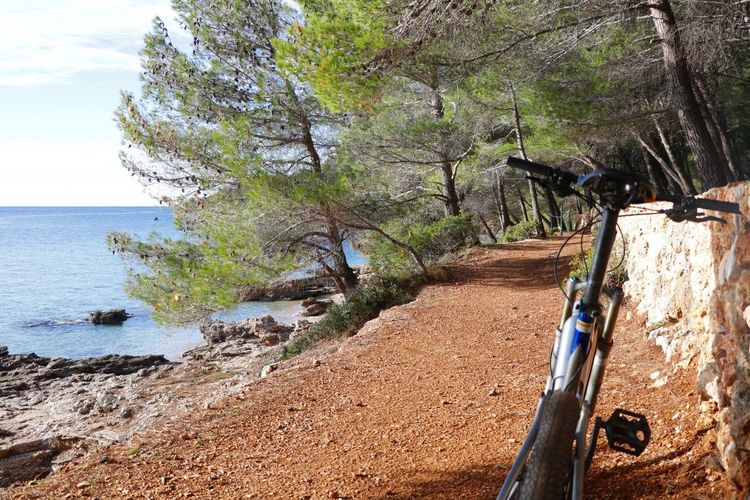
Brest has a sufficiently developed network of coastal cycling paths to plan a bike ride without ever crossing a busy road. The route running alongside the harbor, between the Moulin Blanc marina and the commercial port, is flat and smooth, accessible even to a 7-year-old who has just lost the training wheels.
Several local rental shops offer electric bikes, baby seats, and trailers, available by the half-day or the week. Allow about an hour to ride from Océanopolis to the city center along the cycle path, a route far more enjoyable than the road in peak tourist season. One word of caution: Brest is built on hills, and the return leg to the center climbs steeply from the quays.
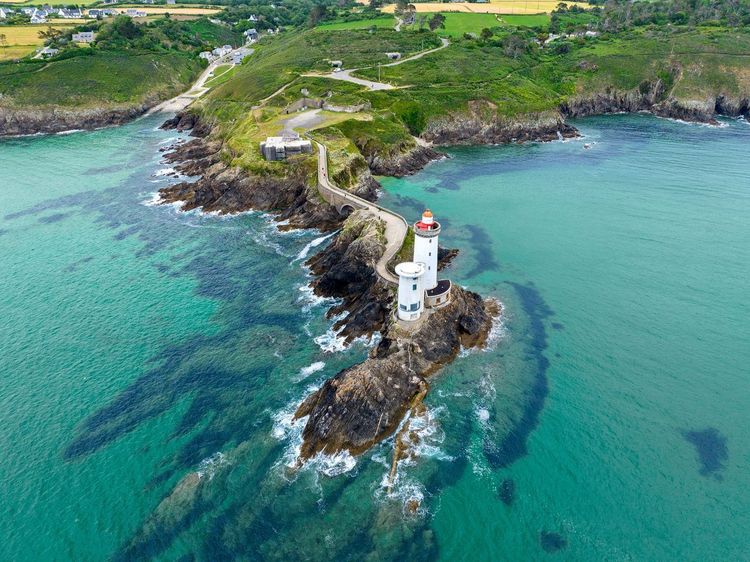
Beyond cycling, the GR 34 coastal path passes through the area and includes wide, all-terrain-stroller-friendly stretches, particularly around the pointe du Petit Minou and its lighthouse perched on the rocks, one of the most photographed in Brittany. It's the obvious alternative to the museums on a day when everyone just wants to run and scramble over rocks.
Picnic and Beach Break at Moulin Blanc
The plage du Moulin Blanc (Port de Plaisance, 29200 Brest, rated 3.9/5 on Google based on 2,694 reviews), a stone's throw from Océanopolis, remains the most convenient spot for a post-visit lunch on the sand: nearby playground, fine sand, a direct view over the harbor, and supervised swimming in summer. The water stays cool, but that rarely matters at this age.
The Stang-Alar valley, the Cours Dajot with its sweeping view over the port, and the castle lawns offer three other free picnic spots sheltered from the wind depending on the day's direction. For supplies, local markets, crêperies, and takeaway spots at the commercial port make it easy to put together a simple meal between visits. For a closer look at local specialties worth trying, a Ryo article rounds up the best culinary specialties of Brest, from kouign-amann to galette-saucisse from the Saturday market stalls.
Day Trips from Brest: Pointe Saint-Mathieu and Crozon
If your stay lasts more than two days, two short excursions complement a city-center-focused program nicely. A Ryo article also details the most beautiful villages to visit around Brest for those wanting to venture further into the peninsula.
Pointe Saint-Mathieu: Lighthouse and Abbey (30 min)
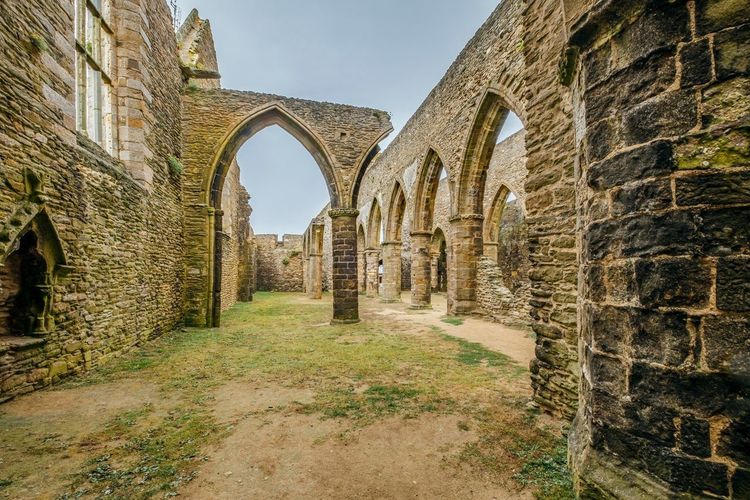
About thirty minutes' drive away, in the commune of Plougonvelin, the Pointe Saint-Mathieu combines an active lighthouse with the ruins of a medieval Benedictine abbey set facing the ocean. Climbing the lighthouse steps, when it is open to visitors, offers a spectacular view over the Chenal du Four and the Molène archipelago — a perfect physical challenge for those who like counting stairs.
The site can also be explored for free: the cenotaph for sailors who died for France, the signal station, the paths leading down to the coves. Half a day is more than enough, and the sandy beaches of Plougonvelin, just a few minutes away, make it easy to follow up with a swim.
The Musée vivant des vieux métiers, in Crozon
Just under an hour away, on the Crozon peninsula side, the Musée vivant des vieux métiers (Kerdanet, 29160 Argol, rated 4.8/5 on Google based on 434 reviews) in Argol recreates dozens of life-size artisan scenes: a forge, an old-fashioned classroom, a village grocery, a clog-maker's workshop. Vanished trades are shown in concrete, hands-on ways that are often far more engaging than a traditional display case, and the site has one of the best reputations in the area among visitors traveling with young children.
These two excursions don't combine well in a single day when traveling with young children: it's better to pick one and save the other for a future visit, or spread them across two separate days if the schedule allows.
Activities for Toddlers and Rainy Days

With children under 5, the pace of a Brest stay inevitably changes: less walking, more breaks, and a reliable backup plan for showers — which are frequent even in summer on the tip of Brittany.
Workshops, Shows, and Media Libraries for Ages 0–5
The Brest media library network, including the one at the Capucins, regularly organizes storytime sessions for toddlers, free of charge and usually without advance booking. Several local organizations complement the offering with creative workshops and storytelling walks designed for children aged 4 to 6, a great way to fill a morning without covering kilometers on foot.
The Musée des Mômes, a hands-on exploration space designed for children under 10, is worth checking for its program: sessions often require registration and fill up quickly during school holidays.
Climbing and Indoor Play Centers in Bad Weather
From age 3 upward, Climb Up Brest (15 Rue Colbert, 29200 Brest, rated 4.8/5 on Google based on 927 reviews) offers bouldering zones adapted for beginners, no rope or technical equipment required, in an atmosphere that feels more playful than sporty. It's one of the most reliable options on a rainy day, alongside the indoor play centers on the outskirts, with inflatable structures, slides, and trampolines.
Always keep a covered option in reserve during a Breton stay. Between two downpours, a climbing gym, the Capucins hall, or the Stang-Alar greenhouses can save the day, and the weather in Brest often changes in under two hours.
Where to Stay in Brest: Apartment Hotels and Campsites
The city center, around rue de Siam and the castle, has several serviced apartments and apartment hotels equipped with a kitchenette — a practical option for preparing meals and avoiding the restaurant every evening. Within walking distance of the quays, the cable car, and tram stops, it's the logical choice for a two-to-three-night stay focused on city sightseeing.
Over by Moulin Blanc, a handful of hotels line the beach and the marina: quieter, ten minutes by car from the center, and right next to Océanopolis for being among the first through the doors at opening time. For those who prefer the outdoors, several campsites are dotted on the outskirts, toward Sainte-Anne du Portzic, Plougonvelin, or the entrance to the peninsula, with mobile homes, covered pools, and play areas — a considerably more economical option over a full week. Book early for July and August, as these places fill up several weeks in advance.
Practical Tips for Planning Your Stay in Brest
The center is very easy to cover on foot or by bike: the castle, rue Saint-Malo, the quays, and Recouvrance can all be linked without a car in half a day. For Océanopolis and the Stang-Alar, which are further out, the tram and bus network do the job, with a single ticket valid on the cable car too and advantageous fares for under-12s. To round out the list of things to see year-round, a Ryo article covers the best activities to do in Brest.
Two to three days are enough to cover the essentials: one day for Océanopolis, half a day for the Capucins, the 70.8 museum, and the cable car, the rest for the historic center and an excursion to the Pointe Saint-Mathieu or Crozon. The budget depends mainly on accommodation and the number of paid visits; by alternating one paid site per day with the quays, the Stang-Alar, rue Saint-Malo, the plage du Moulin Blanc, and the castle grounds — all free — the total stays manageable. Parking is paid in the city center: the covered car parks near the castle and the place de la Liberté are the most convenient, and park-and-ride facilities on the outskirts let you finish the journey by tram.
On the seasonal front, spring and early autumn offer the best balance between mild weather and manageable crowds, particularly at Océanopolis where summer queues quickly discourage the youngest visitors. The autumn half-term holidays also work very well, with plenty of indoor venues available. To extend the discovery of the city before or after your stay, the Ryo audio guide for Brest is available in a short version focused on the historic center, a format suited to those who can't sustain three hours in a row.

FAQ
How Many Days Should You Plan to Visit Brest with Children?
Two to three days are enough to cover Océanopolis, the Ateliers des Capucins with the cable car, the castle, and the historic center without rushing. Add a day if you plan an excursion to the Pointe Saint-Mathieu or the Crozon peninsula.
Is Océanopolis Suitable for Toddlers and Strollers?
Yes. Ramps, elevators, and wide pathways make stroller navigation easy throughout all three pavilions, and rest areas are spread along the route. La Cité des Océanautes and the Tropical Pavilion are the two spaces best suited to children under 6.
What Can You Do in Brest When It Rains?
The 70.8 Ocean Museum and the Ateliers des Capucins hall, the Conservatoire botanique greenhouses, the Climb Up climbing gym, and the media libraries all offer reliable indoor alternatives. Océanopolis remains the safest backup plan: the visit takes place almost entirely under cover.
Is the Brest Cable Car Free and Suitable for Young Children?
It is not free, but it can be paid for with a standard public transport ticket from the urban network, the same one used for buses and trams. The crossing takes less than three minutes and is suitable for all ages, including strollers.
What Is the Best Time of Year for a Stay in Brest?
Spring and early autumn combine often mild weather with lighter crowds, particularly at Océanopolis. Summer remains pleasant but requires booking tickets and accommodation well in advance.
Where Should You Park in Brest When Visiting with a Stroller?
The covered car parks in the city center, near the castle and the place de la Liberté, are closest to the main attractions. Océanopolis has its own on-site parking, and park-and-ride facilities on the outskirts allow you to reach the center by tram without hunting for a space.
What Can You Do around Brest in Half a Day?
The Pointe Saint-Mathieu, thirty minutes away, combines an active lighthouse and medieval abbey ruins facing the ocean. The Musée vivant des vieux métiers in Argol, on the Crozon side, is an alternative less than an hour's drive away, and the beach at Plougonvelin rounds out the first option nicely.
Between ocean, reconstructed heritage, and a world-class maritime discovery center, Brest packs enough into a few square kilometers to keep kids and adults busy for several days without ever repeating the same experience. Whether you start with the tanks at Océanopolis or a suspended crossing above the Penfeld, the city lends itself equally well to a packed itinerary or slower days spent wandering the quays, greenhouses, and playgrounds of the Stang-Alar.
To plan your route through the historic center in detail, the Ryo audio guide for Brest is the most practical companion to this guide, with 27 audio stops spread across a 3h30 visit, to be enjoyed at your own crew's pace.
À lire également