© Shutterstock
 Votre guide Ryo
Visiting Brest in 3 Days: Complete Itinerary, Must-Sees, and Best Addresses (2026)
From the top of the Cours Dajot, the Brest roadstead opens like an inland sea, ringed by forts and the grey silhouettes of warships slipping silently toward the Atlantic. It is an image few travel guides manage to convey, as Brest still carries the reputation of a rebuilt city — mineral and austere in the wake of the 1944 bombardments. Yet visiting Brest in 3 days reveals an Ocean Capital full of contrasts: a castle spanning seventeen centuries that remains occupied by the French Navy, a science and culture centre unique in Europe where penguins and jellyfish glide past, an urban cable car soaring over the military harbour, and pastel alleyways patiently brought back to life in Recouvrance. This guide lays out a day-by-day itinerary, from the historic core to the city's heights, then out to the wild lighthouses of the Côte des Légendes and the best local tables. To extend the walk on the ground, the Ryo Brest audio-guided tour enriches every stop with anecdotes told on the move, between one appointment with the sea and the next.
Why Brest Surprises: the Ocean Capital in Brief
Brest resembles no other Breton city, and that is precisely what makes it a destination in its own right. More than 90% destroyed in 1944 after a six-week siege, the city rebuilt itself wholesale in the 1950s: broad avenues, light-coloured buildings, open perspectives over the roadstead. The result unsettles travellers expecting half-timbered houses. Here, the architecture tells a different story — one of a reconstruction conceived by urban planner Jean-Baptiste Mathon to bring air and light to a port city long confined behind its fortifications.
This brief and brutal history also explains its intact maritime identity. Born around a Roman castellum that became a fortress remodelled by Vauban, the city has always lived to the rhythm of its roadstead — one of the largest in Europe — and its arsenal, still home port of the French strategic oceanic force. You do not come here to tick off ancient monuments, but for this permanent tension between military past, cutting-edge oceanographic research, and a very relaxed neighbourhood life.
It is also an easy city to enjoy. The centre can be covered on foot in under half an hour, distances between the major sites are counted in minutes, and the people of Brest are famously unpretentious — far from the crowds that overwhelm other Breton coastal cities in summer. On fine days, the raking light over the roadstead more than compensates for the absence of ancient stonework.
To get your bearings, a quick look at a map of Brest is enough: the city is organised around the Penfeld, the river that separates the city centre and rue de Siam to the east from the working-class district of Recouvrance to the west, dominated by the castle. To the south lies the commercial port and the roadstead; to the north-east, residential heights and the valley of the Stang-Alar botanical garden. This simple layout naturally structures the itinerary that follows.
Day 1: the Historic Heart of Brest, from the Castle to rue de Siam
Start at the Château de Brest, one of the oldest continuously active castles in the world: seventeen centuries of military history, from Roman foundations to bastions remodelled by Vauban, within walls still occupied by the French Navy. It houses the Musée national de la Marine, whose collections trace the history of French naval power from 17th-century ship models to contemporary submersibles. Climbing the ramparts and the keep is worth the entrance ticket alone, offering a plunging view over the Penfeld estuary and the constant movement of support vessels. As in all national museums, admission is free for under-26s resident in the European Union.
On leaving, head up to the Cours Dajot, a tree-lined promenade laid out in the 18th century by convicts from the prison hulks along the old ramparts. It is the best free viewpoint in the city: the roadstead stretches as far as the eye can see, with the naval base installations in the background and, on a clear day, the Crozon peninsula sketched out on the horizon. Many hurried visitors stop at the castle and miss this belvedere — a mistake.
Head back down toward rue de Siam, the mythical artery of the reconstruction, immortalised by Jacques Prévert's poem "Barbara" and its "it rained without ceasing on Brest that day". Broad, straight, and lined with geometrically fronted buildings designed by Mathon, it connects the port to the place de la Liberté and concentrates most of the city-centre shops. Take time to look up: the details of the concrete balconies and the black granite fountains by Marta Pan, set in the middle of the roadway, speak volumes on their own about the post-war architectural ambition.
At the far end, place de la Liberté serves as the civic heart: city hall, department stores, and tram stops gather around a wide forecourt, animated on Tuesday, Thursday, and Saturday mornings by one of the city's largest markets. It makes a good pause before continuing toward the port de Brest (Port de Brest, 29200 Brest, rated 4.2/5 on Google from 93 reviews), where commercial, leisure, and fishing activities share the quays. Watch the comings and goings of trawlers and sailing boats — very different from the more martial ballet of the military roadstead visible from Dajot.
End this first day with the abri Sadi-Carnot, a tunnel hewn into the rock beneath Cours Dajot, between the city centre and the commercial port. This shelter, built in the late 1930s and later requisitioned by the occupying forces, housed hundreds of Brest civilians during the bombardments. On 9 September 1944, an accidental explosion caused the greatest civilian disaster of the siege of Brest, killing several hundred people. The site only opens for occasional guided visits, often organised by the tourist office: ask when you arrive, as slots fill quickly and the place leaves a lasting impression. To extend this historical immersion, the Ryo Brest audio-guided tour follows exactly this route between the castle, rue de Siam, and the port, with GPS-triggered audio cues at every stop.
Day 2: Océanopolis and the Shores of the Roadstead
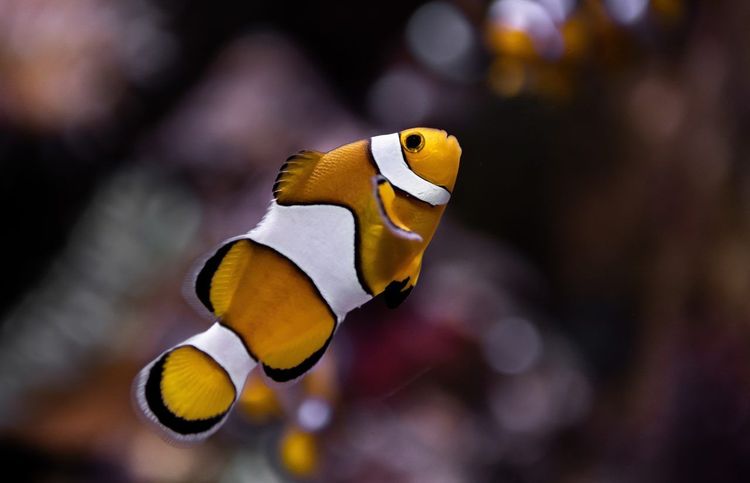
Reserve the entire morning for Océanopolis, the largest science and culture centre dedicated to the ocean in Europe and one of the most visited sites in Brittany. Three themed pavilions — polar, tropical, and Brittany — let you observe gentoo penguins, sharks, sea otters, and jellyfish in impressive volumes, complemented by an outdoor otter trail and scientific workshops. Allow at least three hours if you want to catch a feeding session: schedules are posted at the entrance and well worth the wait. Book your time slot online during school holidays, as the ticket queue grows fast by mid-morning.
In the afternoon, change pace entirely by walking along the rade de Brest. This vast enclosed bay — one of the largest in Europe at around 180 square kilometres — deserves time: you can board a commentary cruise, or simply stroll on foot along the quays from Océanopolis toward the marina. The light changes quickly here, between sea spray and sunny spells, giving the water a different atmosphere every hour.
Head down to plage du Moulin Blanc (Rue Alain Colas, 29200 Brest, rated 3.9/5 on Google from 2,695 reviews), a few minutes' walk from Océanopolis. It is the most popular beach within Brest itself, valued for its fine sand, sailing school, and paddleboarding spots. Even outside the bathing season, the landscaped coastal path draws joggers and families, with an open view over the leisure boat moorings.
From this vantage point you can make out the base navale de Brest, one of the French Navy's strategic sites. It is not open to free visits, but its scale is readable with the naked eye: quays, port cranes, and the silhouettes of military vessels occupy a large portion of the inner roadstead. It is a useful reminder that Brest remains, above all, a naval city as much as a seaside destination. End the day with a walk through the commercial port, where container ships, support vessels, and oceanographic research boats cross paths — including those of the French oceanographic fleet based at the Ifremer centre in nearby Plouzané. To go deeper into this day between the aquarium and the roadstead, our Ryo article on the best things to do in Brest details further angles along the waterfront.
Day 3: Recouvrance, the Ateliers des Capucins, and the City Heights
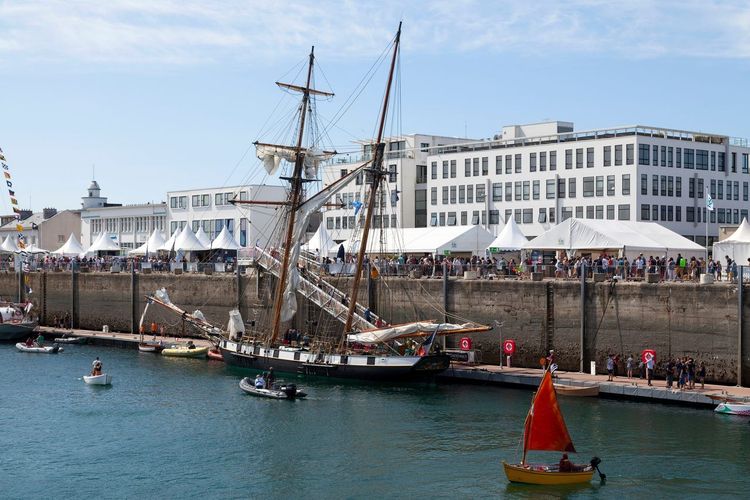
Cross the Penfeld to reach the Recouvrance district, a working-class left bank long overlooked by mainstream tourism. The historic home of sailors and arsenal workers, this neighbourhood has retained a more tightly knit urban fabric than the city centre, partly spared by the great boulevards of the post-war reconstruction. There is a different feel here — more working-class, and all the more appealing for its slightly rough authenticity.
Venture deeper into rue Saint-Malo, the oldest street in Brest and the last surviving witness to the neighbourhood as it existed before 1944. Long neglected and earmarked for demolition, it was saved and restored house by house by a residents' association, and today hosts one of the highest concentrations of colourful buildings in the city: blue, yellow, and red facades, hand-painted murals, and mosaic work. It has become one of the most photographed spots in Brest, yet the atmosphere remains surprisingly peaceful on weekdays, and the street comes alive with concerts and flea markets in fine weather.
Nearby, the Tour Tanguy commands the mouth of the Penfeld. This medieval keep, one of the rare surviving remnants of old Brest, houses a small municipal museum devoted to the city's pre-war history, featuring dioramas recreating Brest at the Belle Époque, neighbourhood by neighbourhood. The visit takes about twenty minutes and provides a moving counterpoint to what has been lost. Admission is free, but check the opening times: they vary considerably by season.
Right next door, the Jardin des Explorateurs clings to the slopes above the Penfeld, overlooking the military port. This terraced garden features plants brought back by the great French navigators, from Bougainville to Dumont d'Urville, with a wooden walkway that offers one of the finest free viewpoints over the arsenal and the pont de Recouvrance. Rarely crowded, it provides an unexpected green pause in the middle of a very built-up neighbourhood.
Ride back up on the Brest cable car, France's first urban cable car, opened in 2016 to link the two banks of the Penfeld in about three minutes. The cabin soars over the military port and offers a rare bird's-eye view of the French Navy vessels moored below — an angle impossible to obtain any other way. It operates like a regular public-transport line: a standard Bibus ticket suffices, making the crossing one of the best value-for-sensation experiences in the city.
At the other end stretch the Ateliers des Capucins, former arsenal engineering workshops converted into a vast public space open since 2017: cinema, media library, restaurants, climbing wall, and a monumental nave that the city bills as the largest covered square in Europe. You will also find the Emperor's barge, a ceremonial rowing boat built in 1810 and returned to Brest in 2018, displayed in a dedicated building. The scale of the space is as impressive as the success of the conversion — a rare example of military heritage handed back to the people. Allow a good hour to wander through the halls and take a coffee on the terrace. Our Ryo article dedicated to the Ateliers des Capucins goes into detail on the history of this site and its current uses.
The Museums Not to Miss in Brest
Beyond the three-day itinerary, Brest offers a dense museum scene, often free of charge, making it an underrated cultural destination. The Musée national de la Marine, already mentioned on Day 1 within the castle walls, remains the essential reference for understanding the city's maritime history: allow at least an hour if you have not visited it yet.
The Musée des Beaux-Arts de Brest, a short walk from rue de Siam, merits a visit in its own right. Its collections cover 19th-century Breton painting, including several works linked to the École de Pont-Aven, as well as a notable symbolist painting collection. It is a human-scale museum, pleasant to wander through in an hour without feeling overwhelmed, and one of the rare spots in the centre where you can sit quietly on a rainy day.
For contemporary art, head to the Passerelle contemporary art centre (41 Rue Charles Berthelot, 29200 Brest, rated 4.5/5 on Google from 150 reviews), housed in a rehabilitated industrial building near the station. Its temporary exhibitions, often bold and featuring international artists, change several times a year, and admission is free. The vast skylit floors are worth the visit as much as the works on display, and the place rarely gets crowded even at the height of summer.
If your stay extends, note that these three museums combine easily into a half-day of culture, provided you keep the Musée national de la Marine for the morning of Day 1, when visitor numbers are lowest.
The Stang-Alar Botanical Garden and the City's Green Spaces
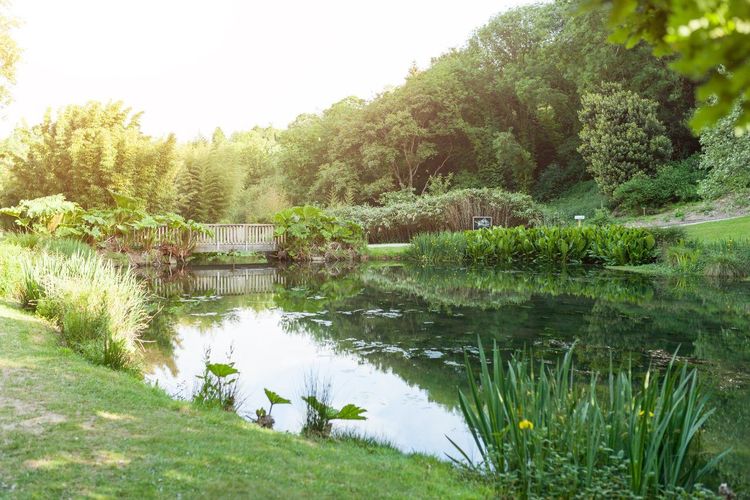
About fifteen minutes from the centre, the Stang-Alar botanical garden (52 Allée du Bot, 29200 Brest, rated 4.7/5 on Google from 101 reviews) occupies a steep, humid, and cool valley even in midsummer. Across some thirty hectares, it brings together one of the richest botanical collections in Brittany, with a particular focus on endangered species: tree ferns, giant rhododendrons, and plants from remote islands such as Madeira, the Canary Islands, and the Mascarene Islands.
This valley is home to the Conservatoire botanique national de Brest, the first of its kind created anywhere in the world, in 1975. Its mission of saving plants facing extinction makes it a scientific site as much as a tourist one: the tropical greenhouses, the only paid-entry section, protect species that have become extremely rare or extinct in the wild. The outdoor park, however, is free to visit year-round, making it an excellent option for a nature break in the middle of an urban-heavy stay. Allow an hour and a half for a leisurely walk, longer if you have curious children keen to explore the paths and ponds.
What to Do in Brest in 1 or 2 Days if Time Is Short
If you only have one day, focus on the essentials: the Château de Brest and its Musée national de la Marine in the morning, rue de Siam and Cours Dajot for the view late morning, then Océanopolis in the afternoon if schedules allow — or alternatively the Recouvrance district and rue Saint-Malo for a shorter walk.
With two days at your disposal, add the cable car and the Ateliers des Capucins, which naturally complete the Recouvrance loop, plus a full morning at Océanopolis. This is the most balanced formula for leaving with a comprehensive picture of the city without sacrificing any major site.
The must-sees for a simple weekend therefore revolve around four poles: the castle and the Navy, rue de Siam and its post-war perspectives, Recouvrance with its cable car, and Océanopolis. By stringing them together in this geographical order, you avoid unnecessary back-and-forth and keep time for a lunch break facing the roadstead. The Ryo Brest audio-guided tour follows exactly this loop logic, handy when time is tight. And if a third day opens up, that is precisely the moment to venture further afield — toward the Crozon peninsula or the lighthouses of the Côte des Légendes.
What to Do around Brest: the Crozon Peninsula, Le Conquet, and the pointe Saint-Mathieu
The Crozon peninsula, three-quarters of an hour's drive via the pont de l'Iroise, offers some of the most spectacular scenery in Finistère. The pointe de Pen-Hir, with its cliffs plunging straight into the ocean and the famous rocky formation known as the Tas de Pois, is reached by an easy one-hour walk suitable for families. Pack a windproof jacket: even in July, westerly swells can roll in without warning.
To the west, Le Conquet (Le Conquet, 29217) is worth the detour for its still-active fishing port, one of the most authentic in the region, with granite houses clustered tightly around the basin. It is also the departure point for ferries to Ouessant and Molène, if you have an extra day to devote to the Ponant islands.
A few minutes away, the pointe Saint-Mathieu (Plougonvelin, 29217, rated 4.8/5 on Google from 502 reviews) combines three attractions in one: the ruins of a Benedictine abbey, a still-operational lighthouse that can be climbed in season, and a signal station still used by the Navy. The view from the lighthouse gallery, reached after 163 steps, takes in the entrance to the goulet de Brest and, on a clear day, the distant outline of Ouessant.
These three stops combine easily into a half-day or a full day depending on available time, as a natural extension of a 3-day stay in Brest. For a wider selection of villages and viewpoints within an hour's radius, our Ryo article on the most beautiful villages around Brest lists other less-visited options around the cap de la Chèvre and Camaret-sur-Mer.
Lighthouses and the Côte des Légendes around Brest
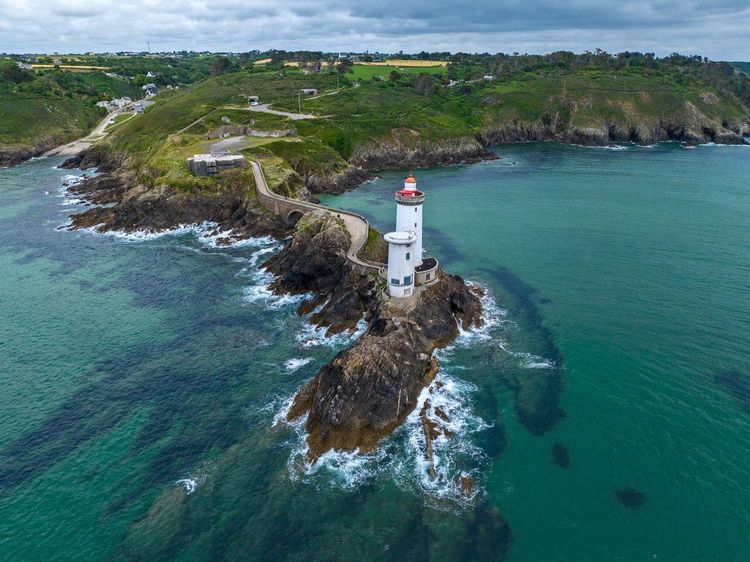
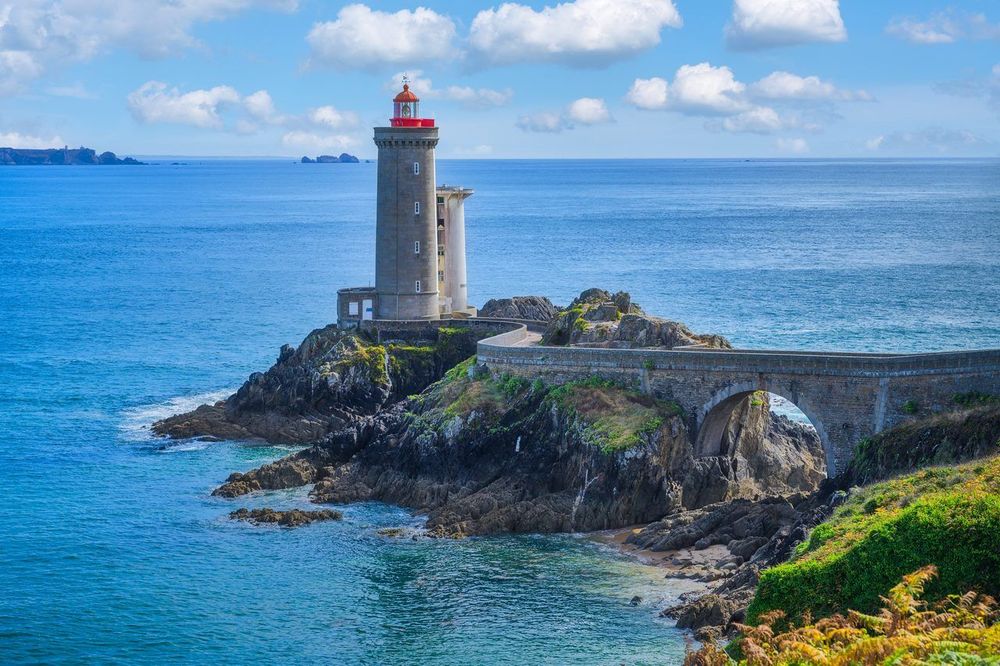
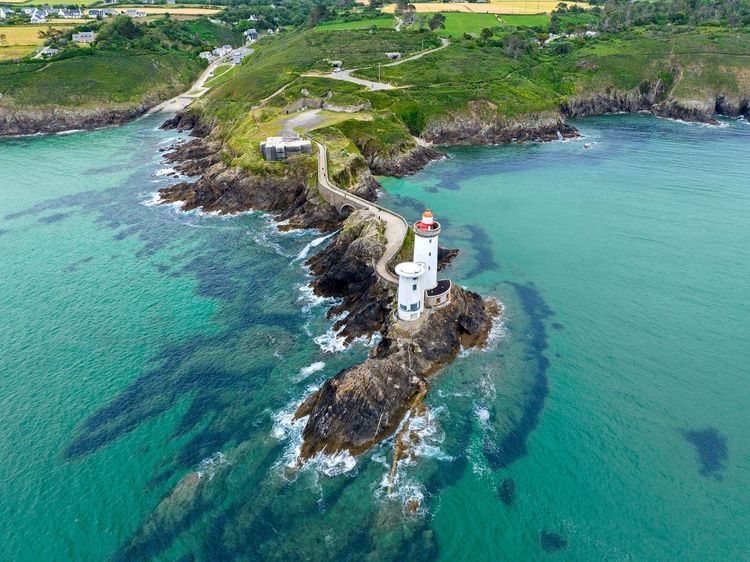
Less visited than the Crozon peninsula, the northern coast of the Léon is well worth the detour for its spectacular lighthouses, starting with the phare du Petit Minou, about twenty minutes from Brest. A red-and-white silhouette perched on a rocky spur connected to the mainland by a stone bridge, it ranks among the most photographed lighthouses in Brittany, especially at sunset when the light skims the waves. On days of high tides and westerly winds, the plumes of spray that wash over the jetty attract as many photographers as curious onlookers: keep your distance, as the sea is treacherous here.
Heading north, the road runs along the Abers and the Côte des Légendes, a coastline cut by narrow estuaries — the Aber Wrac'h and the Aber Benoît chief among them — where the sea pushes deep inland. This is a wilder, less tourist-worn stretch of Brittany, where fishing villages have kept their own pace and artichoke fields run down to the dunes.
The highlight of this coastal route is the phare de l'Île Vierge at Plouguerneau: at 82.5 metres, it is the tallest lighthouse in Europe and the tallest ashlar stone lighthouse in the world. Visible from far along the coast, it is accessible only by boat, on crossings organised from Plouguerneau or the Aber Wrac'h. Inside, the staircase leads to a room entirely lined with blue opaline glass — a unique architectural detail that alone justifies the crossing.
On shore, Plouguerneau and its Musée des Goémoniers tell a little-known chapter of the Breton economy: the harvesting of goémon, the brown seaweed exploited for iodine, soda, and then food-grade gelling agents, which sustained generations of coastal families. The museum presents harvesting techniques from sickle and horse to flat-bottomed boat, and this seaweed-gathering culture remains alive in the region, where dedicated festivals still take place in summer.
Finally, Brignogan-Plages and Meneham (Kerlouan, 29890, rated 4.5/5 on Google from 1.4K reviews) make an ideal conclusion to this outing: Meneham is a hamlet of Breton thatched cottages built among enormous granite boulders, now restored and freely accessible, while Brignogan-Plages lines up beautiful light-sand beaches still untouched by mass tourism. This cluster of the Côte des Légendes, often absent from standard guides to Brest, makes a distinctive full-day excursion for those with a vehicle. Back in town, Ryo's audio-guided tour of Brest offers a good way to piece together the sights covered over these three days at your own pace.
Where to Eat in Brest: Best Addresses and Local Specialties
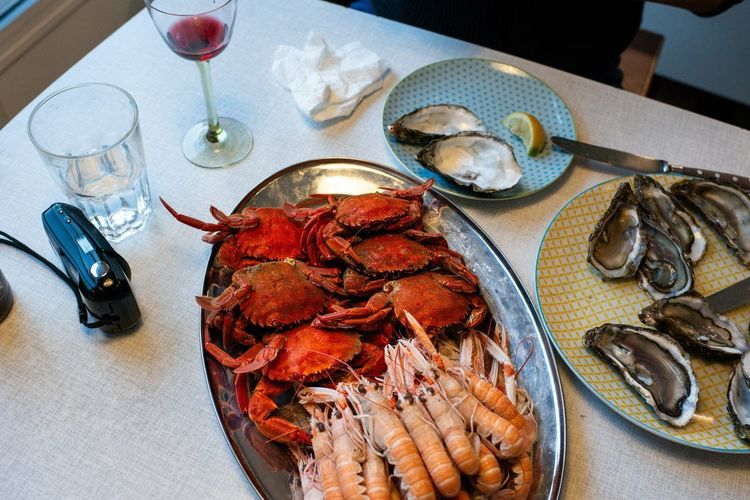
Eating well in Brest poses little problem given how fresh and affordable the seafood offering is. Le Crabe Marteau, on the commercial port, has made its name serving whole crustaceans with a mallet and a bib: convivial and noisy, it should be booked several days in advance at weekends.
The rue de Siam area and the surrounding streets concentrate most of the bistronomy restaurants in the centre, with short menus that change with market arrivals. This is where to look for a more relaxed dinner after a day on foot, while the commercial port holds the monopoly on late-night atmosphere and live-music bars.
On the local specialties front, do not leave without trying a buckwheat galette filled with andouille de Guéméné, a cotriade — the roadstead fish stew simmered with potatoes and onions that fishermen used to make on board — and of course a kouign-amann, the buttery, sugary cake born in Douarnenez that has become a regional emblem. Oysters and scallops, fresh from the sea, remain the most reliable choice in any crêperie or brasserie on the port. Our Ryo article on the culinary specialties of Brest details ten additional addresses sorted by district and budget.
Where to Stay in Brest for a 3-Day Trip
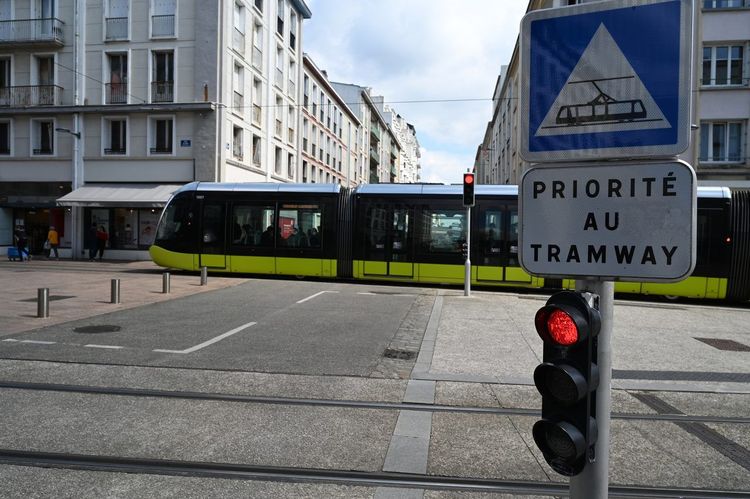
For three nights in the city, the choice of neighbourhood matters as much as the choice of hotel. The city centre, around rue de Siam, remains the most practical option: everything is walkable, restaurants and shops are immediately on hand, and it is the logical starting point for heading toward both the castle and the train station.
Recouvrance appeals to travellers seeking a more unusual stay, close to rue Saint-Malo and the cable car. The offer is more limited but prices are often gentler, with the advantage of being two minutes from the Ateliers des Capucins in the evening.
Finally, staying beside the roadstead, near the marina or Moulin Blanc, suits families and those who prefer calm: accommodation there tends to be newer, sometimes with water views, at the cost of a slightly longer journey into the historic centre — generally offset by frequent bus connections. Whatever neighbourhood you choose, book early in July and August: Brest's hotel supply is limited compared to other Breton cities of similar size, and the Jeudis du Port festival and major maritime gatherings wipe out availability within weeks.
How to Get to Brest and Get around the City
To reach Brest, the train is often the most comfortable option. From Paris Montparnasse, the TGV covers the journey in 3h30 to 4h30 depending on the service, with several round trips daily. It is also a pleasant way to arrive, as the track runs along the roadstead in the final kilometres before the station, offering a first glimpse of the city from the heights.
Flying makes most sense from the south of France or from abroad: Brest-Bretagne airport, about twenty minutes from the centre by shuttle or taxi, receives regular services from several major French cities and some European destinations. It is often the fastest option in high season, when trains are fully booked.
By car, allow about 6 hours from Paris via the A81 then the RN12 — a longer journey that only makes sense if you plan to explore the Crozon peninsula or the Côte des Légendes afterwards, both poorly served by public transport. Once there, however, it is best to leave the car in a car park: the Bibus bus and tram network covers most tourist sites from the centre to Océanopolis, and the urban cable car, included with the same ticket, crosses the Penfeld in three minutes.
Finally, walking remains the best way to discover the city centre and Recouvrance: distances between the castle, rue de Siam, and the place de la Liberté are at most fifteen minutes apart, and the Ryo Brest audio-guided tour fits exactly within this pedestrian perimeter. Only Océanopolis, slightly out of the way on the roadstead side, warrants a bus or bike ride if you prefer not to walk three kilometres each way.
What to Do in Brest with Children
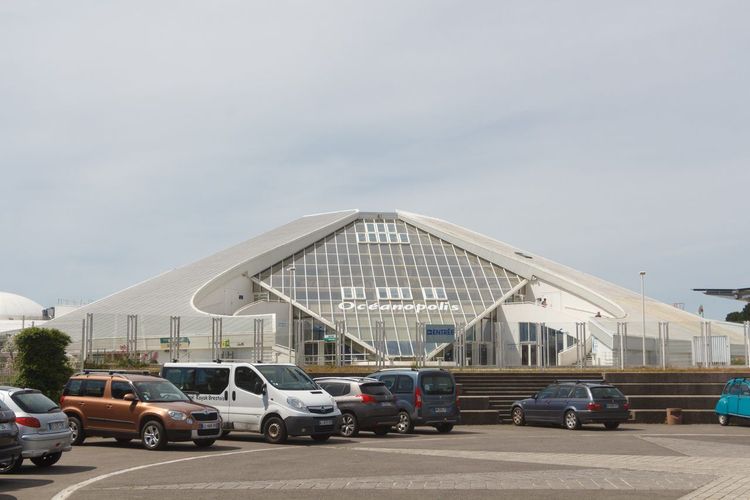
The question of what to do with children finds an obvious answer from Day 2 onward: Océanopolis is the safe bet, with its touch pools and feeding sessions that captivate toddlers and teenagers alike. Allow at least half a day to make the most of all three pavilions.
The Jardin des Explorateurs in Recouvrance perfectly rounds out a morning walk with its planted terraces and suspended walkway above the military port — without the admission fee or the crowds of the aquarium. The Brest cable car also works as an attraction in its own right for children, who love soaring over the arsenal in three minutes for the price of a bus ticket.
For a complete family day, add plage du Moulin Blanc, ideal for a breather between visits with its supervised bathing in season, before finishing at the Ateliers des Capucins, where the climbing wall and the vast covered nave never fail to impress younger visitors.
What to Do in Brest When It Rains
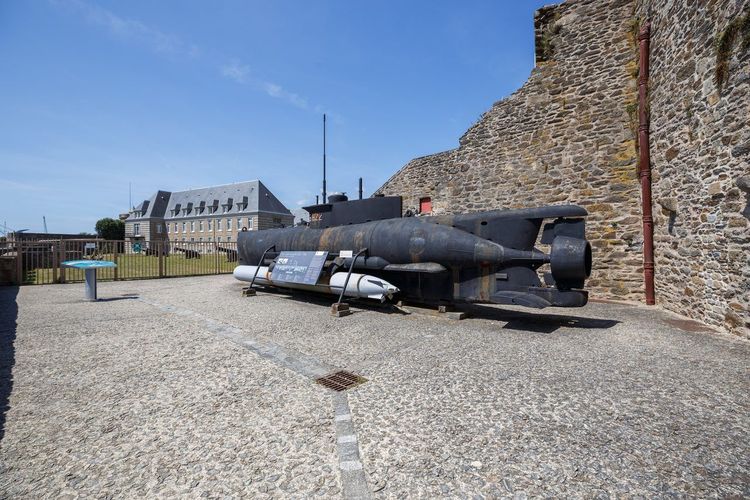
With an unpredictable oceanic climate, the rainy-day programme is worth planning before you even book your stay. Museums offer the most natural refuge: the Musée national de la Marine in the castle, the Musée des Beaux-Arts, and the Passerelle contemporary art centre can all be visited comfortably even in heavy drizzle.
The Ateliers des Capucins are arguably the city's best wet-weather option: cinema, media library, restaurants, and shops allow you to spend several hours entirely under cover without ever getting bored. Océanopolis, finally, is just as enjoyable whatever the weather outside, as all its pavilions are fully indoors. One local consolation: Brest's showers are often brief, and a single bright spell is enough to dash up to Cours Dajot and watch the roadstead change colour.
When to Go and What Budget to Plan for 3 Days in Brest
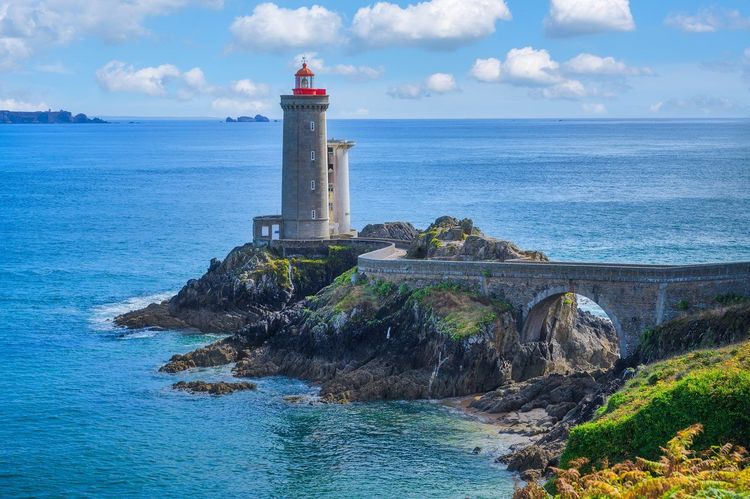
To choose the right time of year, the ideal window runs from May to September, when temperatures hover around 18 to 22 °C and long days leave plenty of time to combine city visits with coastal excursions. July and August are the busiest months, without ever reaching the saturation of other Breton destinations. Spring offers a good compromise: gardens in bloom, softer prices, and a light that gives roadstead photos their full charm.
On the question of how long you need, 3 days strike a good balance between exploring the city centre and taking a day trip to the Côte des Légendes or the Crozon peninsula. Two days are enough for the main intra-muros highlights, but leave no room for a real nature escape.
Budget-wise, allow approximately 250 to 350 euros per person excluding transport for city-centre accommodation, two restaurant meals a day, and paid admissions — Océanopolis above all, whose adult ticket runs to around 25 euros. Add the cost of your train ticket or fuel depending on your chosen mode of transport, and factor in a small reserve for a boat trip if the weather cooperates.
Good news for tight budgets: the free portion of the itinerary is considerable. Cours Dajot, rue de Siam, Recouvrance and rue Saint-Malo, Tour Tanguy, the Passerelle art centre, the Jardin des Explorateurs, and the Stang-Alar botanical garden park can all be visited without paying a single entry fee, meaning a large part of the stay can be built without spending anything on tickets.



FAQ
How many days do you need to properly explore Brest?
Three days allow you to cover the city centre, Recouvrance, and the Ateliers des Capucins while still leaving time for a day trip to the Crozon peninsula or the lighthouses of the Côte des Légendes. Two days are enough for the main intra-muros highlights if time is short.
What to do in Brest in 1 day if you are just passing through?
Prioritise the castle and the Musée national de la Marine in the morning, rue de Siam and Cours Dajot late morning, then Recouvrance and rue Saint-Malo in the afternoon. Add Océanopolis only if opening times allow.
How to get around Brest without a car?
The city centre and Recouvrance are easily walkable. The Bibus bus and tram network covers longer journeys, especially to Océanopolis, and the urban cable car connects the two banks of the Penfeld in a few minutes with the same ticket.
What to do in Brest for free?
Cours Dajot, rue de Siam, the Recouvrance district with rue Saint-Malo, Tour Tanguy, the Passerelle contemporary art centre, the Jardin des Explorateurs, and the Stang-Alar botanical garden park can all be visited without an entry ticket.
What to do in Brest when it rains?
Museums, especially the Musée national de la Marine and the Musée des Beaux-Arts, as well as the Ateliers des Capucins and Océanopolis, offer several hours of fully indoor visiting, ideal for typical Breton drizzle days.
What budget should you plan for a 3-day stay in Brest?
Budget between 250 and 350 euros per person excluding transport, including city-centre accommodation and restaurants, adding around 25 euros for Océanopolis admission if you plan that visit.
What to see around Brest in a day?
The Crozon peninsula with the pointe de Pen-Hir, Le Conquet, and the pointe Saint-Mathieu make up the most complete day trip. For a different option, the lighthouse route toward Plouguerneau and the Côte des Légendes also lends itself well to a full-day drive.
At the end of this stay, Brest leaves an impression rarely anticipated before the trip: that of a city that has turned its reconstruction into an assumed identity, blending vast post-war perspectives with pockets of heritage saved at the last moment like rue Saint-Malo. Add to that one of Europe's most spectacular roadsteads, a world-class oceanographic centre, and wild lighthouses less than an hour's drive away, and the recipe for a successful long weekend becomes obvious.
If you prefer exploring at your own pace rather than following a paper itinerary, the short version of the Ryo Brest tour condenses the essential stops of the historic centre into a single audio-guided walk, GPS-assisted, to turn these three days into a discovery as smooth as it is informed.
À lire également