© Shutterstock
 Votre guide Ryo
Free Things to Do in Chamonix-Mont-Blanc: 15 Ideas Without Paying for the Lift (2026)
Looking for free things to do in Chamonix-Mont-Blanc without giving up the big landscapes? Good news: Europe's most famous mountain can be admired perfectly well without a cable car ticket. The valley, about twenty kilometres long between the Mont Blanc range and the Aiguilles Rouges, can be explored on foot from the village, and many of its most photographed panoramas only require a pair of hiking shoes. At first you look up at the Aiguille du Midi and think of the cable cars, but the reality on the ground is more generous: balcony trails, mountain lakes, nature reserves, the mountaineers' cemetery and the Saturday market can all be discovered without opening your wallet, as long as you know where to set foot. To get your bearings as soon as you arrive, the Ryo audio-guided tour of Chamonix-Mont-Blanc traces a first thread through the village, between historic viewpoints and stories of the pioneers of mountaineering.
This guide brings together outings that do not always appear in the brochures: a viewpoint over the Mer de Glace reachable without the Montenvers train, a themed trail at the foot of the Bossons Glacier, the plot where Whymper, Lachenal and Terray rest, a discreet waterfall twenty minutes' walk away, and the upper villages of the valley, often overlooked in favour of the town centre alone. You will also find ideas by season, solutions for rainy days, budget tips and a clear line between what stays free to access and what deserves, from time to time, getting out your credit card.
1. Admire the Aiguille du Midi and Mont Blanc Without Paying for the Lift
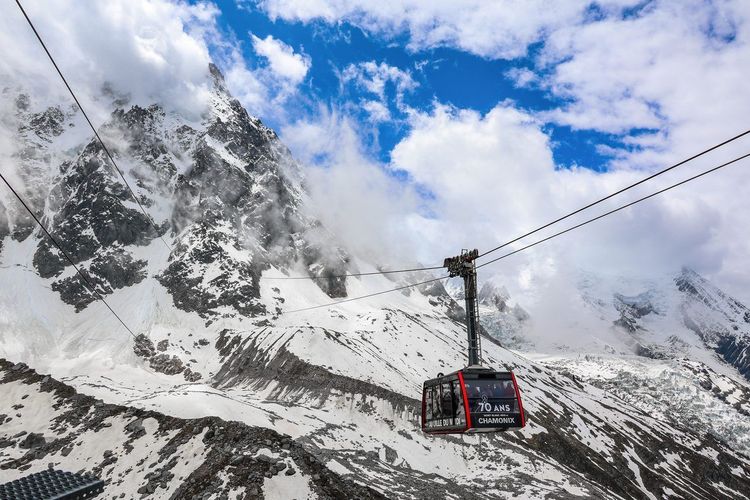
Chamonix-Mont-Blanc lies in Haute-Savoie, at the bottom of a glacial valley wedged between France, Italy and Switzerland, a little over an hour's drive from Geneva. This enclosed position has an advantage that is often forgotten: the village itself offers a head-on view of the Aiguille du Midi and its 3,842 metres, without any need to step into the cabin.
The simplest spot remains the Place du Mont-Blanc (Place du Mont-Blanc, 74400 Chamonix-Mont-Blanc, rated 4.5/5 on Google from 2.1K reviews), right in the centre, where your gaze runs straight up the rock face. A little further on, the bridges over the Arve offer another framing, with the glacial river, milky in summer, in the foreground. For a view without rooftops or power lines, spend a few minutes climbing the paths that rise on the Brévent side, above the centre: the elevation gain stays modest and the whole massif changes scale.
Want the opposite angle, the one that shows the Aiguille du Midi from the other side of the valley? The Brévent trail starts right from the village. The summit is nearly 1,500 metres above Chamonix, a real mountain day, but the lower half of the route is enough to gain height over the Bossons Glacier and frame the summit without a single pylon in the picture. Bring water: the slope faces due south and heats up quickly.
The best time? In the evening, when the low light colours the granite orange and then pink, a spectacle the locals simply call “alpenglow”. In summer, the sun sets late behind the Aiguilles Rouges: settle onto a bench by the Arve around 8:30 pm and watch the light slowly climb along the Dôme du Goûter up to the summit of Mont Blanc, the last point lit in the entire valley. On clear days, you may spot tiny points of light on the ridges: the headlamps of roped parties setting off at night toward the summits. To go further on this peak, our Ryo guide to visiting the Aiguille du Midi details the best light windows and the history of the first ascents, stories you will also find in the audio stops of the Ryo audio-guided tour as it passes through the village and its viewpoints over the range.
2. The Mer de Glace and the Bossons Glacier Without a Ticket
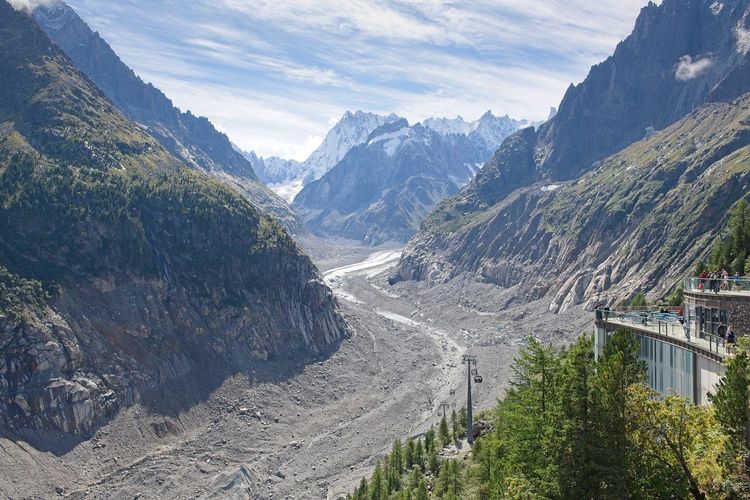
The Montenvers rack railway remains the most comfortable way to approach the Mer de Glace, but it is not the only one. Two options are open to you. The first: walk up to the Montenvers via the forest trail that starts in Chamonix, about 850 metres of elevation gain and two and a half hours of climbing, with the pleasure of arriving on the terrace without having spent anything. The second, shorter: the viewpoint at the Chapeau, above the hamlet of Lavancher, which overlooks the glacier's terminal tongue and the seracs from the right bank. Allow a little over an hour's climb from Lavancher, and a mountain refreshment hut as your reward.
The Bossons Glacier is even easier to approach. From the car park just before the entrance of the Mont Blanc tunnel, a path climbs in about twenty minutes to the Chalet du Glacier des Bossons (Chemin du Glacier des Bossons, 74400 Chamonix-Mont-Blanc, rated 4.7/5 on Google from 1.8K reviews). According to the tourist office, the loop is 2.6 km with 268 metres of elevation gain, or about 1h20 round trip. Families can also start from the Grépon car park, below the Aiguille du Midi cable car, allowing an hour's walk.
The big asset of this walk is its themed trail: a series of panels tells the story of the glacier, the Little Ice Age and the spectacular retreat of the ice since the 19th century. Children understand immediately by comparing the old photos with what they see before their eyes. The trail is open from April to November, depending on snow conditions. Only the chairlift serving the chalet is paid: you do not need it.
3. Legendary Balcony Trails and Panoramas Accessible on Foot
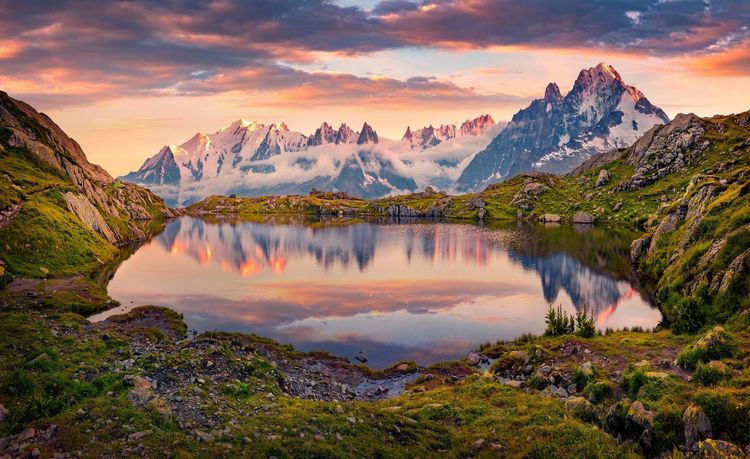
The valley owes part of its reputation to its balcony trails, laid out along the mountainside to offer a plunging view of the glaciers without ever touching them. Three routes concentrate most of the interest, each with its own level of difficulty. Choose according to your legs.
Grand Balcon Nord, the Royal Panorama Above the Mer de Glace
The Grand Balcon Nord links the Plan de l'Aiguille to the Montenvers at over 2,000 metres of altitude, beneath the Chamonix Aiguilles, and many consider it the most beautiful trail in the valley. From the valley floor, without lifts, allow about 1,300 to 1,400 metres of elevation gain: a day reserved for fit hikers. On arrival at the Montenvers side, do not miss the Signal Forbes, a viewpoint named in honour of the Scottish physicist James David Forbes, who studied the movement of the Mer de Glace here in the 19th century. The view takes in the Grandes Jorasses, the Drus and the Aiguille Verte.
Budget tip: walking down from the Montenvers to Chamonix at the end of the day takes less than two hours and saves you the return train ticket.
Petit Balcon Nord, the Version Accessible to the Whole Family
Lower down, the Petit Balcon Nord runs about 200 metres above the valley floor, between Le Tour, Argentière and Les Bois, at around 1,100 to 1,450 metres of altitude. The Argentière - Les Bois section is 6 km long and takes about 1h45 going downhill. Gaps between the larches reveal the Aiguille Verte and the Drus intermittently. The return to Chamonix can be done on foot along the Arveyron, or by train from Les Praz if little legs get tired.
La Jonction, Facing the Bossons Glacier
The La Jonction trail (Chalet des Pyramides, 74400 Chamonix-Mont-Blanc, rated 4.9/5 on Google from 394 reviews) climbs from the hamlet of Le Mont, above Les Bossons, passing the Chalet des Pyramides, then follows the ridge separating the Bossons Glacier from the Taconnaz Glacier. The route ends at around 2,589 metres, at the point where the two glaciers once joined. Allow about 1,500 metres of elevation gain and 7 to 8 hours round trip: the reward is a direct overhead view of the crevasses and seracs, unmatched in the valley. It is also the route taken by the first attempts on Mont Blanc in the late 18th century.
These three routes share one rule: start early. Summer storms often break in mid-afternoon, and leftover June snow makes some sections slippery. To refine your choice, our Ryo hiking guide around Chamonix details the variations and water points of each route.
4. High-Altitude Lakes and Waterbodies Not to Miss
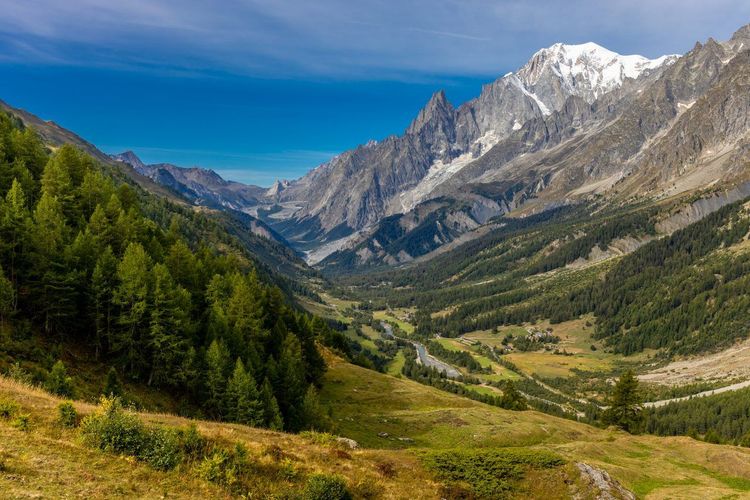
The lakes fall into two families: those you earn by the sweat of your brow, in a day, and those you can reach in sneakers from the centre. Both are worth the detour.
Lac Blanc and the Chéserys Lakes, the Iconic High-Altitude Lake
The Lac Blanc is probably the most shared image of the valley after the Aiguille du Midi: turquoise water resting at 2,352 metres, reflecting the Aiguille Verte and the Drus on calm days. Reaching it entirely on foot from Les Praz or Argentière means about 1,300 metres of elevation gain and 6 to 7 hours round trip. Just below, the Chéserys lakes form a string of small bodies of water, less crowded, where the reflection of the massif repeats along the path. The final sections are equipped with metal ladders: bring good shoes.
The colour of Lac Blanc changes with the season: milkier in early summer because of suspended glacial flour, clearer in September. You can time your visit for one effect or the other depending on the photo you want. The site lies within the Aiguilles Rouges nature reserve: bivouacking and dogs are regulated there.
Lac des Gaillands and Lac Bleu, the Accessible Classics
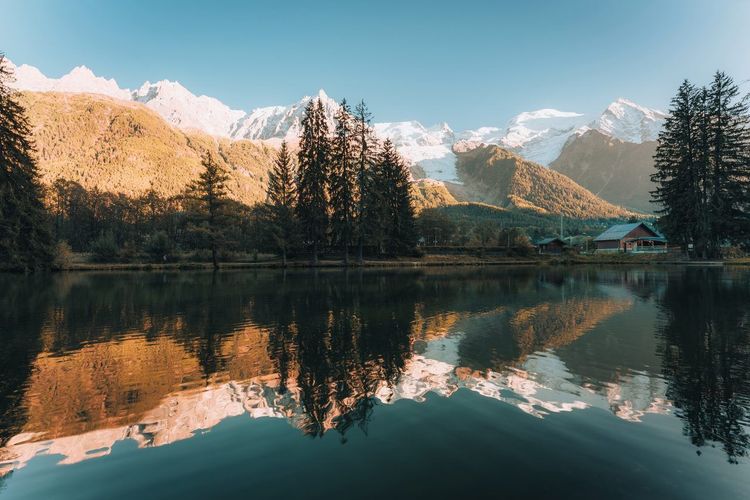
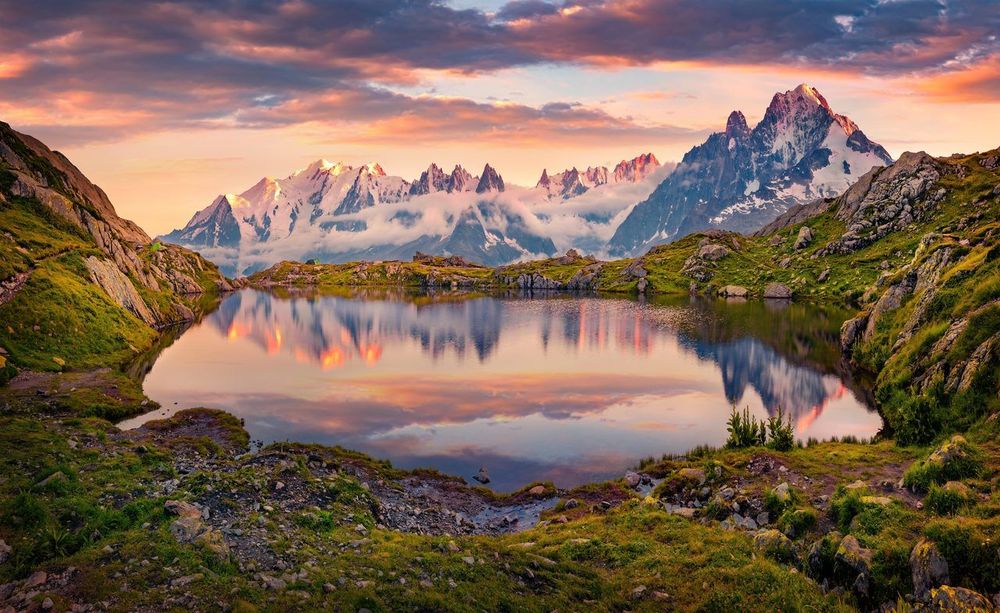
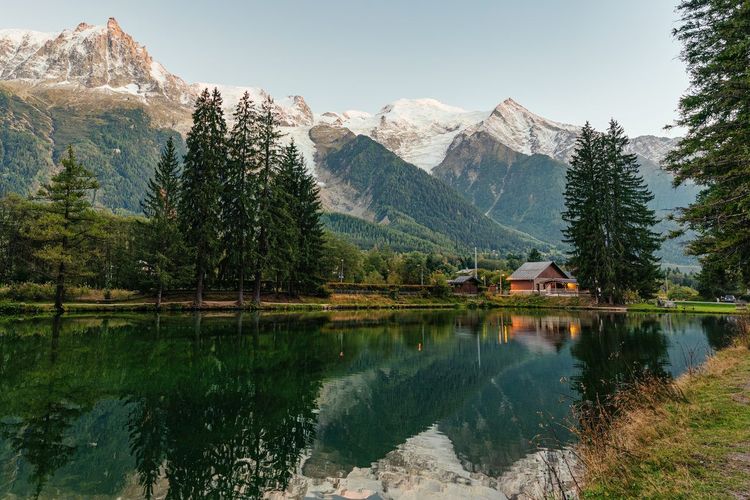
At the opposite end of the effort spectrum, the Lac des Gaillands is about twenty minutes' walk from the centre of Chamonix, on flat ground. Its postcard view is known to every photographer: the reflection of the Mont Blanc massif in the calm water, especially at the end of the day. Please note, swimming is prohibited. On the other hand, the place is perfect for picnics on the grass, fishing and watching climbers on the neighbouring rocks.
The Lac Bleu, more off the beaten track, nestles at about 2,300 metres, a quarter-hour's walk from the Plan de l'Aiguille mid-station. The marked trail has barely 60 metres of elevation gain and access to the lake is free from June to late October, depending on snow conditions. Let's be honest: without the lift, you have to climb on foot from Chamonix (about 1,300 metres of elevation gain). The smartest option is to include it in a Grand Balcon Nord loop, since both start from the same plateau.
Cascade du Dard, the Secret Waterfall
Few visitors know the Cascade du Dard (Les Bossons, 74400 Chamonix-Mont-Blanc, rated 4.8/5 on Google from 269 reviews), which tumbles through the forest about twenty minutes' walk above Les Bossons, on the Mont Blanc tunnel side. The path crosses damp undergrowth and comes out directly at the falls, whose flow varies greatly with the melt: impressive in June, much more discreet in September. A refreshment hut at the foot of the waterfall offers a place to pause, but nothing obliges you to buy anything to enjoy the spot. You can combine it with the nearby Bossons Glacier trail.
5. Nature Reserves to Explore Without an Entry Fee
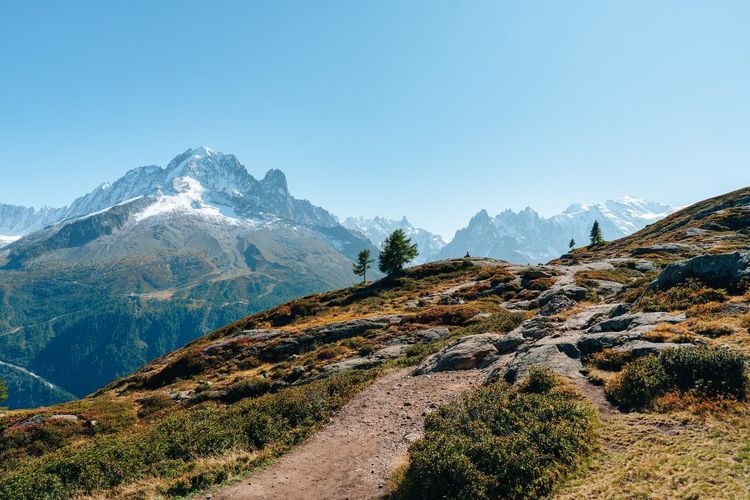
Aiguilles Rouges Nature Reserve
Created in 1974, the Aiguilles Rouges nature reserve protects about 3,300 hectares of alpine pastures, scree slopes and glacial lakes, right opposite the Mont Blanc range. There is no entry fee: the trails start from the Col des Montets (Col des Montets, 74400 Vallorcine, rated 4.7/5 on Google from 119 reviews), La Flégère or Planpraz. You regularly encounter ibex, chamois and marmots, especially early in the morning or at the end of the day. You are lucky if you spot a bearded vulture, reintroduced in the Alps and now seen above the valley.
A few rules to know before setting off: no dogs, no picking plants, no fires, and bivouacking is only tolerated under precise conditions. These restrictions explain the density of wildlife you see here, far higher than on neighbouring slopes.
Col des Montets and the Vallon de Bérard Reserve
The Col des Montets, at 1,461 metres, marks the reserve's northern gateway. Its visitor chalet presents alpine fauna and flora, and a nature trail of about an hour, dotted with information panels, lets families discover the wetlands and the erratic boulders left by the glaciers. A little further on, from Le Buet, the Vallon de Bérard nature reserve stretches north into a wilder glacial valley, dotted with waterfalls and crossed by trails far less busy than those on the Chamonix side.
The two reserves complement each other well over a day: the first for wildlife watching from the balconies, the second for tranquillity and more rugged landscapes, away from the summer crowds. Bring binoculars: they are worth any guided excursion. The reserve rangers also hold summer office hours at the Col des Montets chalet: don't hesitate to ask them where the ibex are that day, they often know better than anyone.
6. Unusual Heritage and the History of the Valley
Saint-Michel Church and the Biollay Cemetery
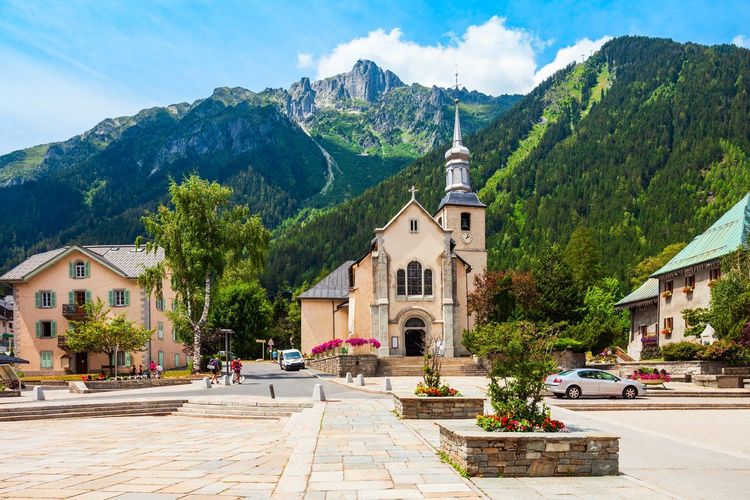
In the heart of the village, Saint-Michel Church features a typically Savoyard onion-domed bell tower. The current building dates from the early 18th century, entry is free and the rather sober interior offers a moment of calm amid the bustle of the pedestrian street. Look up at the stained-glass windows: several evoke the mountains and the life of the guides.
A few minutes' walk away, the Biollay cemetery is one of the most powerful places of remembrance in mountaineering. From the entrance, the tomb of Edward Whymper, conqueror of the Matterhorn in 1865, catches the eye. Further on rest Louis Lachenal and Lionel Terray, figures of the 1950 French Annapurna expedition. The guides' vault, built in 1946, lines up three granite steles bearing the names of Company members lost in the mountains: a tribute is paid to them every 15 August. Walking there in silence often says more about the history of the valley than any information panel.
The Compagnie des Guides de Chamonix, a Living Museum
Founded in 1821, the Compagnie des Guides de Chamonix (190 Place de l'Église, 74400 Chamonix-Mont-Blanc, rated 4.4/5 on Google from 196 reviews) is considered the oldest association of high-mountain guides in the world. Its headquarters, the Maison de la Montagne, stands opposite the church: you can step inside to check the outings board, see photographs of historic ascents and, often, exchange a few words with a guide between two climbs. In the same building, the Office de Haute Montagne provides information on the condition of routes and huts, a mine of information that costs nothing.
This is the route, from Saint-Michel Church to the Biollay cemetery, followed by the Ryo audio-guided sub-tour Where Earth Touches the Sky, with stories devoted to the pioneers of mountaineering who rest just a few metres away. There, headphones on, you understand how a simple village cemetery became a place of pilgrimage for an entire discipline.
7. Parks and Green Spaces in the Heart of Chamonix
Parc Couttet and Parc du Paradis des Praz
The Parc Couttet (Allée Recteur Payot, 74400 Chamonix-Mont-Blanc, rated 4.5/5 on Google from 117 reviews), a stone's throw from the centre, is a tree-lined garden with a playground and shaded lawns. Open from morning to evening, it is a pleasant place to stop and catch your breath between visits, especially with children who need to burn off energy.
More discreet, the Paradis des Praz stretches out near the Les Praz golf course, with its small pond where ducks and fish paddle, and its lawns facing the Aiguille Verte. Far less crowded than the centre, it is a pleasant spot for a quiet picnic. You can walk there from Chamonix along the promenade by the Arve, a flat walk of about forty minutes.
Between the two, the Bois du Bouchet forms a large green lung along the Arve, crisscrossed by flat paths where you meet joggers, horse riders and families. In winter, its cross-country tracks attract Nordic skiers, but the walking paths remain open to all. Allow an hour's stroll here when you have neither the desire nor the time to gain altitude.
Les Gaillands, Climbing Rocks and Lawns Facing the Massif
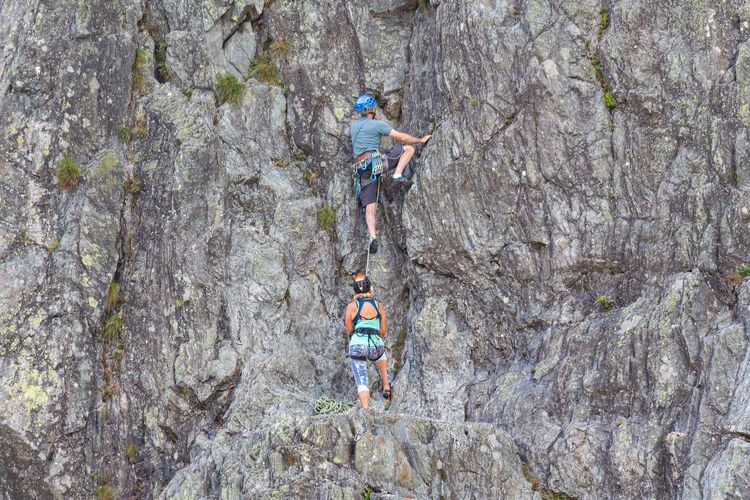
On the shores of Lac des Gaillands, the climbing rocks have served as a training ground for guides and local climbers for decades. Watching the roped parties practise, settled on the grass below, has become an activity in its own right: you see children being introduced to climbing as well as alpinists preparing for a major route. If you have your own equipment and the required level, access to the site is free.
The surroundings of Parc Couttet and the historic centre are also part of the Ryo audio-guided tour, which tells how this farming hamlet became, in just a few decades, the world capital of mountaineering: a good way to connect the village's green spaces to the wider history of the valley.
8. Villages and Hamlets of the Valley to Explore on Foot
Vallorcine and Argentière, the Upper Villages
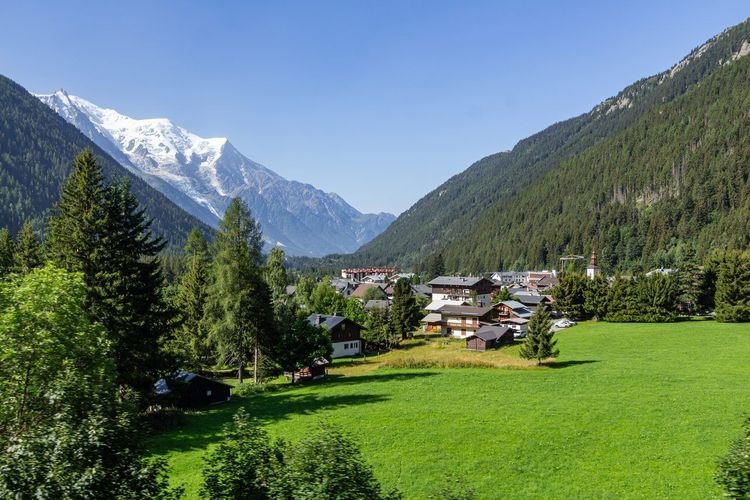
Vallorcine, the last French village before the Swiss border, can be visited at a leisurely pace in a little under an hour: church, old wooden farmhouses, the picturesque Mont-Blanc Express station. The atmosphere there is much calmer than in Chamonix. The valley train drops you off there from the centre; check with your host, as the guest card provided by many accommodations in the valley lets you use local trains and buses at no extra charge.
Argentière, halfway along, enjoys a head-on view of its glacier, visible from several points in the village without any particular effort. The retreat of the ice over recent decades can be read almost with the naked eye. On Sundays, in season, a market enlivens the village square. Take the time to climb up to the small Baroque church and its cemetery, where the view of the Argentière Glacier and the Aiguille Verte is one of the finest in the upper valley. Higher still, the hamlet of Le Tour marks the end of the valley, with its glacier and alpine pastures in flower in July.
Les Bossons and the Barberine Waterfall, Between Forest and Altitude
The hamlet of Les Bossons is the point in the valley closest to a glacier with a direct view, with its small chapel and chalets scattered among the spruces. It is the natural starting point for the glacier trail, the Cascade du Dard and La Jonction, described above.
At the other end of the valley, near Vallorcine, the Barberine waterfall can be reached in about twenty minutes' walk from the hamlet of the same name, almost at the border. The site is free to access and the roar of the water can be heard from afar in June. The historic Barberine lake, for its part, was swallowed up by the Émosson dam on the Swiss side: you can drive up from Le Châtelard, but that is another excursion, best done by car.
To link these villages without a car, the Tour du Mont Blanc route passes precisely through Les Bossons, Argentière and Vallorcine: our Ryo article on the Tour du Mont Blanc details the stages that cross each of these hamlets.
Les Houches and Servoz, the Southern Gateway to the Valley
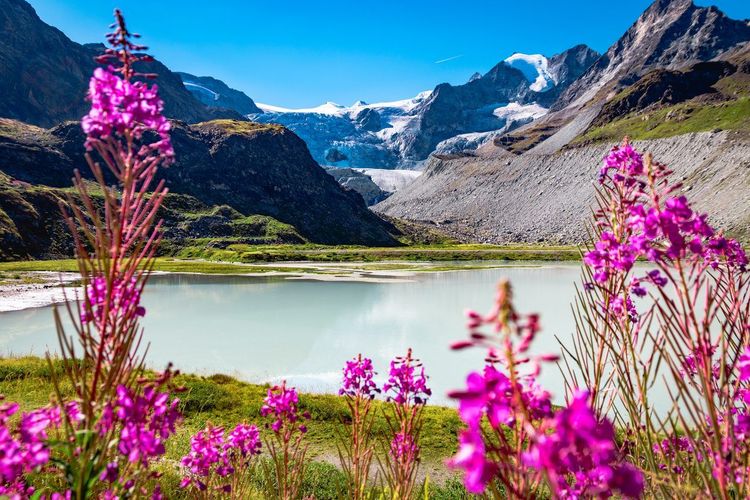
It is often forgotten, but the valley does not begin at Chamonix. Arriving from Geneva, Les Houches then Servoz form the southern gateway, with a much more family-friendly village atmosphere. In Les Houches, the Lac des Chavants is a small pond surrounded by meadows, the starting point for several forest walks: children run around while parents enjoy the view of the Aiguille du Goûter. A path also leads to the statue of Christ-Roi, an immense stone figure erected in the 1930s, watching over the valley from a wooded promontory. The climb takes about forty-five minutes and offers a fine view down the length of the valley toward Chamonix.
Servoz, even more discreet, has kept its old stone houses and barns. Its forest trails, quiet even in the height of August, run along the Arve and climb toward the alpine hamlets, with open views of the north face of Mont Blanc. Closer to the village, the Diosaz gorges can be visited for a fee, but the surrounding forest trails remain free. If you are staying in Chamonix, these two villages are reachable in a quarter of an hour by train, enough to enjoy a half-day away from the crowds.
9. Family Hikes and Free Activities for Children
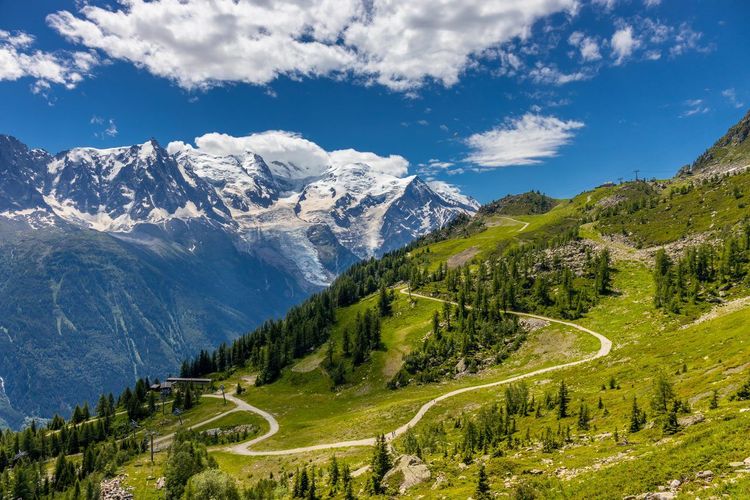
With children, the challenge is not finding zero-cost outings, there are plenty, but short and flat ones. The walk along the Arve, from the centre to Les Praz, is easily done with a stroller and lets you combine river, forest and views of the peaks without any notable elevation gain. With walking children aged 5 or 6, the Bossons Glacier trail and the Col des Montets nature trail are two safe bets: short, fun, with panels that give a reason to stop.
For babies, keep altitude in mind: most paediatricians advise against rapid ascents above 2,000 metres for toddlers. The valley floor offers plenty of space anyway: the Parc Couttet playground, the lawns of the Paradis des Praz and a picnic by Lac des Gaillands easily fill a morning.
You can also turn any of these walks into a treasure hunt: spot the marmots in the Aiguilles Rouges reserve, count the roped parties on the Gaillands rocks, or guess the names of the peaks from the Arve bridge. A notebook and a few pencils are enough: have the children draw the glacier they saw in the morning, then compare it with the old photos on the Bossons panels. You will see they remember the retreat of the glaciers better than from any lesson. For teenagers, suggest a photo challenge instead: the best reflection of Mont Blanc on a lake, or the closest marmot, without ever disturbing it. A good part of the Ryo audio-guided tour of Chamonix-Mont-Blanc can also be followed with a stroller, with stories designed to captivate young and old between stops.
10. The Chamonix Market and Local Life
The Chamonix market sets up every Saturday morning, from about 6 am to 2 pm, on Place du Mont-Blanc. You can stroll among stalls of Reblochon, Beaufort and Tomme cheeses, mountain charcuterie and local crafts, with no obligation to buy in order to enjoy the atmosphere. In season, Argentière holds its market on Sunday morning and Les Houches on Monday: enough to fill a week.
The Chamonix-Mont-Blanc Tourist Office (85 Place du Triangle de l'Amitié, 74400 Chamonix-Mont-Blanc, rated 4.3/5 on Google from 1,938 reviews), on Place du Triangle de l'Amitié, hands out hiking maps, shuttle timetables and up-to-date weather bulletins, a resource that many visitors in a hurry underuse. You will also find the programme of street entertainment and open-air concerts. On the southern side of the valley, the Les Houches Tourist Office usefully supplements information on the Prarion trails, the Merlet reserve and Christ-Roi.
11. What to Do in Chamonix by Season: Summer or Winter
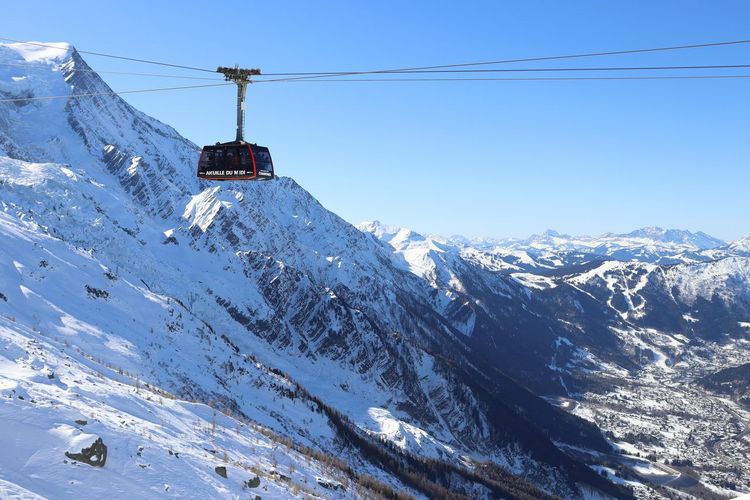
In summer, the valley revolves almost entirely around hiking and lakes: high-altitude trails generally passable from late June to late September, alpine pastures in flower in July, concerts and street entertainment on certain evenings. The highlight remains the Guides' Festival on 15 August: open-air mass, blessing of ropes and ice axes, tribute at the Biollay vault and demonstrations on the Gaillands rocks, all open to everyone.
When to come? It all depends on your tolerance for crowds. July-August is peak season, while late June and September often offer comparable weather with noticeably fewer people on the trails. September even has a bonus: the lakes are clearer and the larches start to turn yellow toward the end of the month.
In winter, the equation changes. The high balcony trails close under the snow, but several groomed walking and snowshoe routes remain free to access on the valley floor, notably between Chamonix and Argentière or toward the winter trail of the Bossons Glacier. The end-of-year lights in the pedestrian streets, the spectacle of freeride skiers seen from the village and natural ice rinks in some winters complete the programme.
For a family on a tight budget, summer remains simpler: there are more free outings and they are better suited to young children than in winter, when almost everything revolves around the ski pass.
12. What to Do for Free in Chamonix When It Rains?
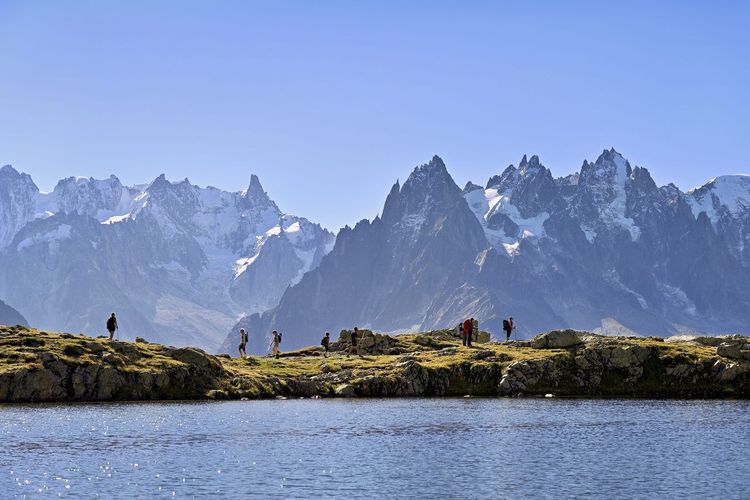
When the rain sets in, several refuges are open to you without reaching for your wallet. The Maison de la Montagne and the Office de Haute Montagne are the first reflexes: you can check the bulletins, leaf through the topo guides and listen to the guides comment on the weather. Saint-Michel Church also offers a calm shelter for a quarter-hour of contemplation.
On the cultural side, the Musée du Mont-Blanc, reopened on 11 July 2026 in the former Chamonix Palace, charges adults (€12 full price) but is free for under-18s: a good deal for families on grey days. The art galleries and equipment shops on rue Joseph Vallot also let you browse in the dry, and the library in the centre welcomes passing readers freely.
If the shower only lasts an hour or two, which is common in the mountains, wait under an awning before heading off again toward the lakes or the Bossons trail: the rain-washed air often offers exceptional visibility of the peaks just afterwards, and the waterfalls gain in power. However, avoid high-altitude trails during storms: lightning is one of the main summer dangers in the massif.
13. Tips and Tricks for Visiting Chamonix Without Breaking the Bank
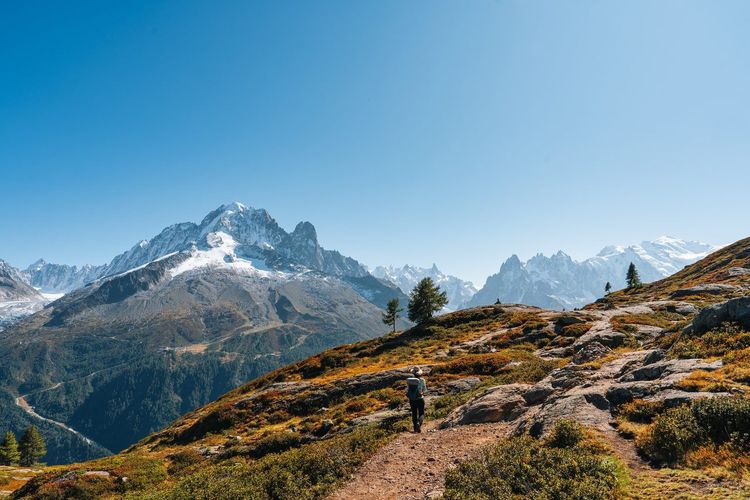
Chamonix can be reached in a little over an hour from Geneva airport, by shuttle or by road, and the valley train links it to Saint-Gervais on one side and to Martigny, in Switzerland, on the other. Once there, you don't need a car: buses and trains serve all the hamlets, from Servoz to Vallorcine.
As for parking, favour the peripheral car parks, often cheaper or even free depending on the season, rather than those in the centre. Check with the tourist office: the rules change from year to year. If you are staying in the valley, always ask your host for the guest card, which gives access to local public transport and a few discounts.
For timing, one simple rule: viewpoints are best enjoyed early in the morning, when the light grazes the massif and the trailhead car parks are not yet full. Prepare your picnics the day before at the supermarket, as mountain refreshment huts remain expensive. A water bottle is often enough: many drinking-water fountains dot the village.
Another tip: keep an eye on the tourist office's weekly programme. Several times each summer, guide talks, mountain film screenings and open-air concerts are offered without reservation. On festival evenings, the music echoes all the way to the terraces of Place du Triangle de l'Amitié. And if you love photography, the footbridge over the Arve opposite the office remains one of the best vantage points for the Aiguille du Midi, especially at blue hour.
The good reasons to come go beyond skiing alone: this is where the modern history of mountaineering began, with the first ascent of Mont Blanc in 1786 by Jacques Balmat and Dr Michel-Gabriel Paccard, and where the first Winter Olympic Games were held, in 1924. Their statue, along with that of Saussure, stands on the banks of the Arve, right in the centre: an essential photo stop.
14. How Much Time and What Budget to Plan for a Stay in Chamonix
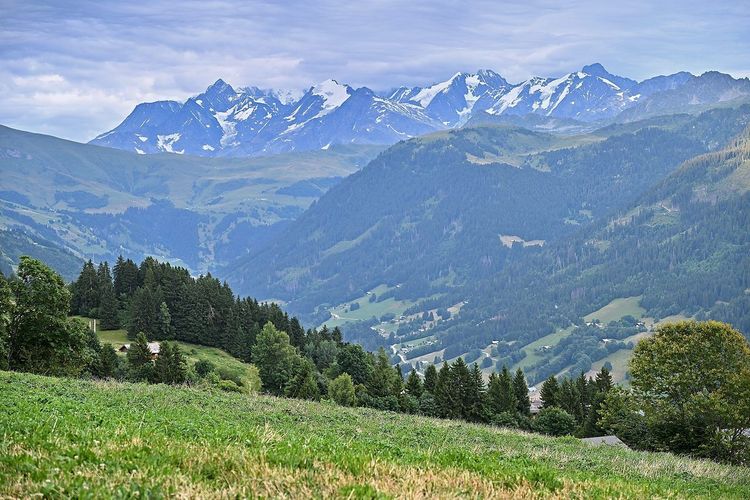
To truly enjoy these outing ideas without rushing, allow at least three to four days on site. That leaves time to alternate a big balcony hike, a lakes day, a heritage morning in the village and some margin for the weather, often changeable at altitude. With a week, you can add the upper villages, the Aiguilles Rouges reserve and an outing on the Les Houches side.
On the budget side, accommodation and food remain the main expenses, especially in August and during the winter holidays. Beyond these fixed costs, a family can string together several days of zero-cost leisure by combining the trails and the heritage sites. Booking a place to stay near a valley train station rather than right in the centre often means paying less while staying mobile. And if you are set on a cable car, choose only one, the most emblematic for you, rather than piling up tickets.
To plan a short stay, our article on a 2-day visit to Chamonix offers a day-by-day itinerary, easy to adapt into a budget-friendly version.
15. The Must-Do Paid Activities to Plan as a Complement
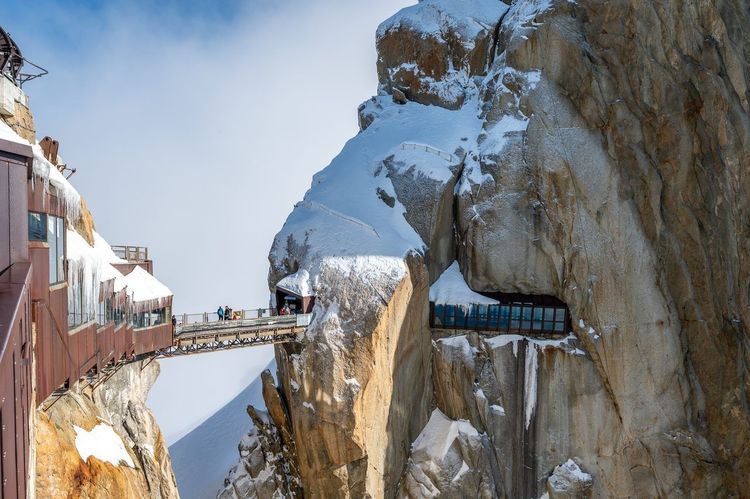
It is better to draw a clear line between what is free and what is not before you leave. The Aiguille du Midi cable car and the Montenvers train remain the two most in-demand paid experiences, and for good reason: no trail replaces the feeling of hovering at 3,842 metres or the direct access to the Mer de Glace ice cave.
The Parc de Merlet (325 Chemin du Parc de Merlet, 74310 Les Houches, rated 4.6/5 on Google from 4,134 reviews), in Les Houches, offers a stroll among semi-free-roaming chamois, ibex and marmots, with a head-on view of Mont Blanc: a paid but reasonable entry for a family half-day.
For history lovers, the Musée du Mont-Blanc, heir to the former Alpine museum, presents over 1,800 m² the history of the region, the great feats of mountaineering and artists' perspectives on the massif. The Evettes via ferrata, at La Flégère, is free to access if you have your own equipment, but the approach by gondola, equipment rental or guided supervision are paid. Finally, the QC Terme spa, on the Promenade du Fori, offers heated outdoor pools facing the massif: a relaxing break with no ticket-free equivalent in the valley.



FAQ
How many days should you plan to visit Chamonix without paying for everything?
Three to four days allow you to fit in a balcony hike, a lakes day and a visit to the village's heritage sites without rushing. With less time, focus on the town centre, Lac des Gaillands, the Biollay cemetery and the Bossons Glacier trail.
What are the 100% free activities in Chamonix?
The balcony trails, the Lac Blanc hike, the Bossons Glacier trail, the Aiguilles Rouges reserve, Saint-Michel Church, the Biollay cemetery, the Maison de la Montagne, the town-centre parks and the Saturday market cost nothing.
What can you do in Chamonix with children without spending money?
The flat walk along the Arve, the Bossons themed trail, the Col des Montets nature trail, the Parc Couttet playground and a picnic at Lac des Gaillands are all great for families. Please note that swimming is prohibited at Les Gaillands.
What can you do in Chamonix in summer without paying?
Summer is the time for high-altitude lakes, balcony trails and nature reserves, which are usually open from late June to September depending on snow conditions. On 15 August, the Guides' Festival brings the whole village to life.
What can you do in Chamonix in winter without a lift pass?
The groomed walking and snowshoe routes on the valley floor, the festive lights on the pedestrian streets and watching skiers from the village are all accessible without a lift pass. The high-altitude balcony trails, however, are closed.
What can you do in Chamonix when it rains, without paying?
The Maison de la Montagne, the Office de Haute Montagne, Saint-Michel Church and the public library offer shelter. The Musée du Mont-Blanc charges adults but is free for under-18s.
Is Chamonix an expensive destination for families?
Accommodation and dining weigh on the budget, but the number of free outings (lakes, balcony trails, heritage sites) and the guest card for transport help keep leisure spending down significantly while you are there.
Conclusion
Chamonix-Mont-Blanc is therefore far from a destination reserved for big budgets. The valley can be discovered very largely on foot, among turquoise lakes, vertiginous balcony trails, wild reserves and alpine heritage, and the few paid experiences, cable car, mountain train, wildlife park or museum, complement this foundation rather than replace it.
To link these places without wasting time scouting, the Ryo audio-guided tour of Chamonix-Mont-Blanc remains the simplest starting point: it crosses the historic village, its viewpoints over the massif and the heritage described in this article, headphones on and with no schedule constraints.
À lire également