© Shutterstock
 Votre guide Ryo
Visiting Chamonix-Mont-Blanc for the First Time: The Complete 2026 Guide
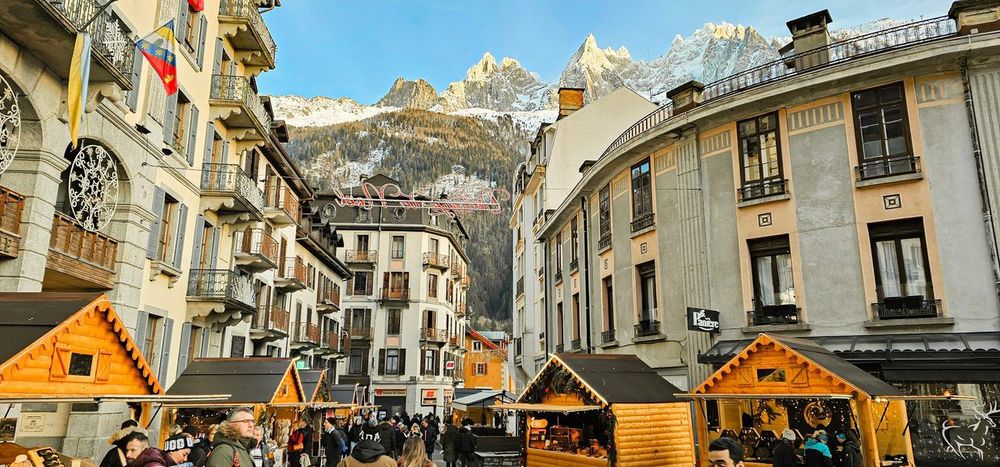
At Chamonix-Mont-Blanc station, you only have to look up to understand why this valley attracts several million visitors every year: Mont Blanc and its glaciers seem to tumble straight onto the village rooftops. Visiting Chamonix-Mont-Blanc for the first time nevertheless calls for a real plan, rather than a simple list of summits to tick off. The Ryo audio-guided tour of Chamonix-Mont-Blanc helps you get your first bearings as soon as you step off the train, even before choosing between the Aiguille du Midi and the Mer de Glace.
In this guide, you climb to 3,842 metres in about twenty minutes by cable car, descend onto a glacier via a new gondola followed by a metal staircase, meet ibex in an animal park open onto the alpine pastures, and discover that a spa looks the massif straight in the eye from its outdoor pools. Between hikes accessible from day one, an ice cave re-carved every year and a valley that can be explored by bike as well as by little train, Chamonix has enough to fill a weekend or a two-week stay. Budget, season, duration, accommodation: everything you need to know for a successful first visit is gathered here.
Where Chamonix-Mont-Blanc Is Located and How to Get There
Chamonix-Mont-Blanc is located in Haute-Savoie, at the bottom of an Alpine valley framed by the Mont Blanc massif on one side and the Aiguilles Rouges range on the other, very close to the Swiss and Italian borders. Geneva, with its international airport, is only an hour away by road: it is the gateway most used by foreign visitors.
By car, you reach Chamonix via the A40 motorway from Geneva or Annecy (allow about 1h15 from Geneva, a little more from Annecy), or through the Mont Blanc Tunnel if you are arriving from Italy. By train, the TGV serves Saint-Gervais-Le Fayet from Paris, then the regional metre-gauge Mont-Blanc Express line climbs up to Chamonix: allow about 6 to 6.5 hours in total from the capital. Shuttles also leave from Geneva airport several times a day in season.
Once there, you don't need a car to explore the centre: the guest card provided by accommodations gives free access to Chamonix buses and the valley train, from Argentière to Les Houches via Servoz. For the high-altitude sites, the departure stations are all accessible on foot or in a few minutes by bus from the town centre.
Your first instinct on arrival? Take an hour to walk through the village with the Ryo audio-guided tour in your ears: the station, church, shopping streets and banks of the Arve fall into place, and you then know where you are before heading off to the summits.
High-Altitude Must-Sees: The Aiguille du Midi and the Mer de Glace
The Aiguille du Midi and Its Panorama of Mont Blanc
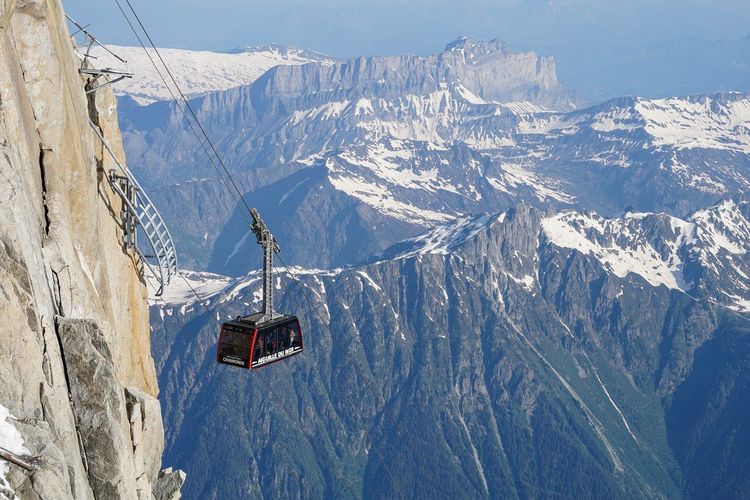
The Aiguille du Midi is, for many, the number one reason to come to Chamonix. The cable car, operated by the Compagnie du Mont-Blanc, climbs to 3,842 metres in two sections and barely twenty minutes, one of the fastest ascents in Europe for such a dizzying elevation gain.
At the summit, the panorama opens onto the entire range, with the roof of Europe (4,807 m) seeming within arm's reach. The boldest step into the Step into the Void, a glass cube suspended above 1,000 metres of nothingness. The terraces also let you simply catch your breath and let your gaze run over the glaciers.
On the practical side, book your tickets online several days, even several weeks in advance in high season (July-August, February holidays): slots go fast and the wait on site can exceed two hours. The price is dynamic, from €60.20 to €83 for an adult return depending on the date, which rewards those who book early. Opt for the first departure in the morning, around 8am, for clearer skies and a shorter queue. And take a warm jacket even in August: it is regularly 20 degrees colder than in the valley.
From the summit, the Panoramic Mont-Blanc gondola glides over the glaciers to Pointe Helbronner, from where the Skyway descends toward Courmayeur on the Italian side. Guided roped parties head towards the Vallée Blanche or the Cosmiques refuge. For a first visit, the classic return trip is more than enough: allow half a day for the ascent, terraces and descent. To go further, our guide to visiting the Aiguille du Midi details each level of the site.
The Montenvers Train, the Mer de Glace and the Ice Cave
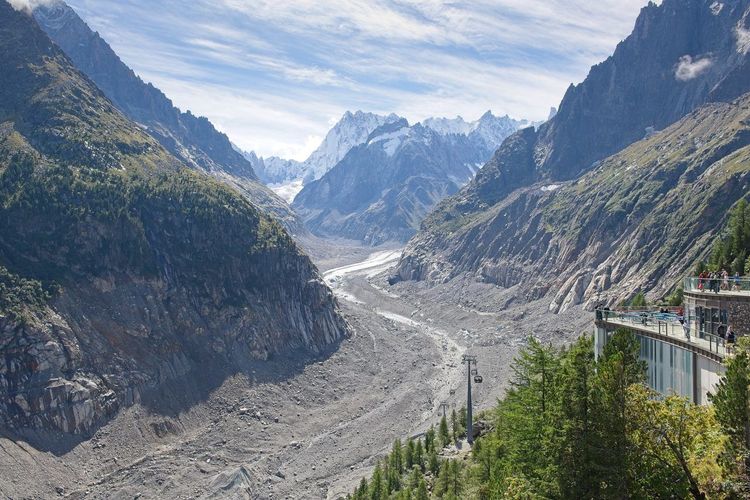
Next up is the red rack railway to Montenvers, also run by the Compagnie du Mont-Blanc. It climbs from Chamonix station to the Montenvers site in about twenty minutes, with sweeping views over the valley.
At the terminus, the Mer de Glace stretches for about 7 kilometres: it is the largest glacier in France, even though it recedes every year, a retreat made visible by the dated signs along the descent. A new gondola, opened in February 2024, brings visitors closer to the glacier, before a metal staircase leads down to the ice. On site, the Glaciorium explains glaciology and the impact of global warming on the Mer de Glace in an interactive way.
Every year, an ice cave (Gare du Montenvers, 74400 Chamonix-Mont-Blanc, rated 4.5/5 on Google from 1,334 reviews) is hand-carved again into the glacier, a tradition going back to the 19th century: sculpted galleries, bluish light, and a staging that changes from one season to the next. The full pack of train, gondola and cave costs €49.70 per adult (€31.50 for the return train only).
Bring good shoes: the steps down to the glacier are slippery, even in midsummer. The quietest slots are early in the morning or late in the day; midday combines visitors arriving by train with those coming back down from the Aiguille du Midi.
On the way, the Ryo audio-guided sub-tour Where Earth Touches the Sky tells you about this passage from the green valley to the glaciers: the birth of the Compagnie du Mont-Blanc, the first tourists at Montenvers and the retreat of the Mer de Glace, to be listened to directly on site.
Strolling Through the Centre of Chamonix
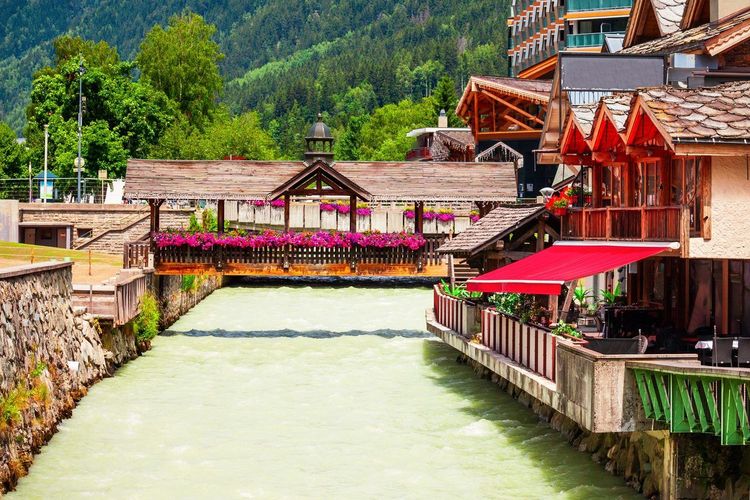
The Lanes, Saint-Michel Church and Lake Chamonix
Between two high-altitude ascents, the town centre of Chamonix deserves a stroll on foot. The pedestrian lanes around rue du Docteur Paccard and rue Joseph Vallot gather mountain shops, terraces and the façades of former Belle Époque palace hotels, a reminder of the golden age of British mountaineering.
The Saint-Michel Church, rebuilt in the early 18th century, marks the heart of the village. A few streets further down, on the banks of the Arve, the statue of Jacques Balmat pointing out the summit to Horace-Bénédict de Saussure recalls the first ascent of Mont Blanc in 1786, the starting point of the whole tourist history of the valley.
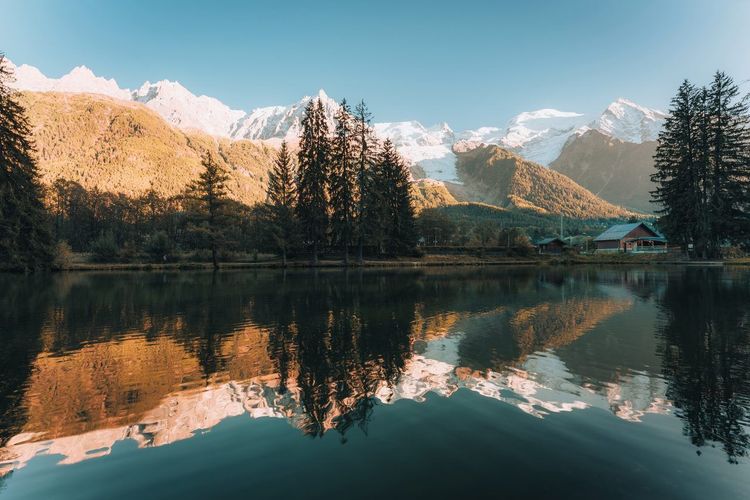
Looking for Lake Chamonix? No need to search the centre: the lake that everyone refers to as such is Lac des Gaillands, about twenty minutes' walk south of the village. The Aiguilles Rouges are reflected in it in fine weather, ideal for a picnic with children (more on that below).
The Crystal Museum

The Crystal Museum (615 Allée du Recteur Payot, 74400 Chamonix-Mont-Blanc, rated 4.6/5 on Google from 1,040 reviews), housed in the Espace Tairraz, displays smoky quartz, pink fluorites and other minerals mostly extracted from the depths of the Mont Blanc massif.
The same building houses an interpretation centre devoted to mountaineering, from the first scientific expeditions to contemporary feats on the north faces. Allow an hour, perfect in case of rain. Good news for families: admission is free for under-18s.
If you prefer to discover these lanes with headphones rather than a paper map, the Ryo audio-guided tour of Chamonix-Mont-Blanc links them in order, with anecdotes from the guides and pioneers who built the village's reputation.
Hikes Around Chamonix for All Levels
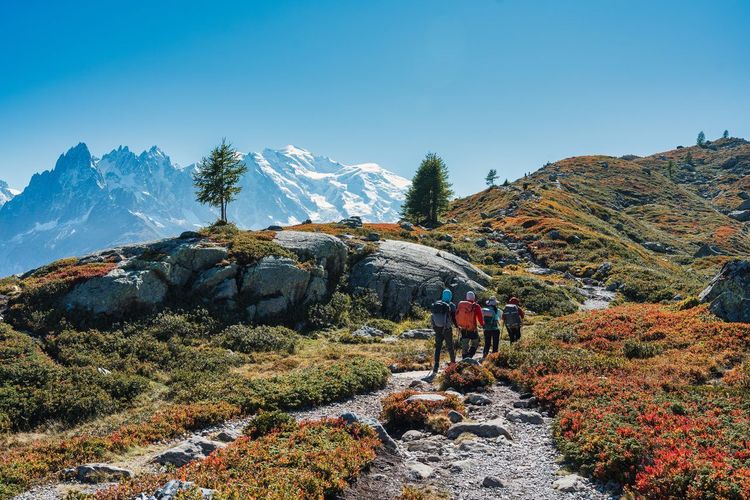
Lac Blanc, the Iconic Panoramic Hike
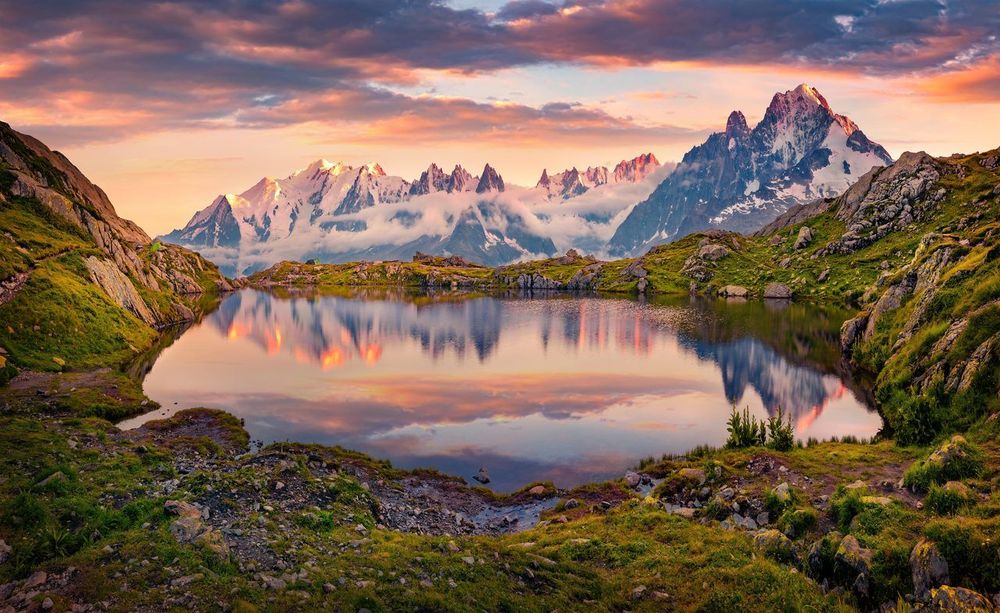
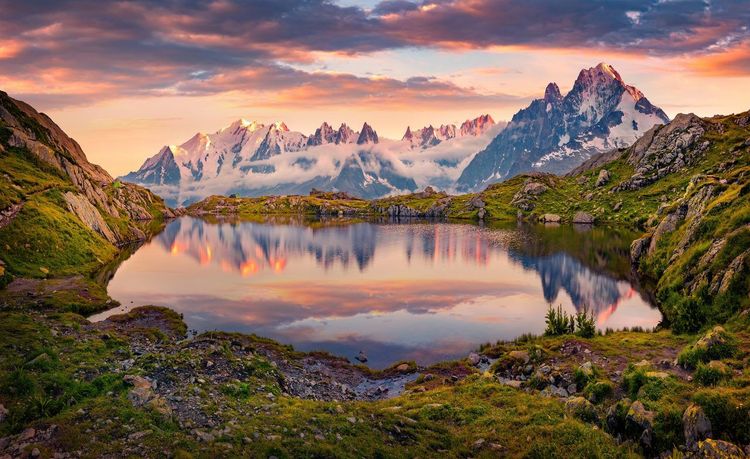
The Lac Blanc hike is probably the most photographed in the valley. The trail starts from the top of the Flégère gondola and climbs in 1h30 to 2h to a high-altitude lake (2,352 m) that reflects, in clear weather, the entire Mont Blanc massif.
The positive elevation gain is around 500 metres, on a sometimes rocky trail: allow 3h30 to 4h30 round trip, breaks included. It is not a stroll for toddlers, but it remains accessible to anyone in good shape. In 2026, the gondola reopens on 20 June after its spring closure, and the trail is said to be passable from July to the end of September. Set off early: clouds often build up on the Mont Blanc side in late morning.
The Lac Blanc refuge, by the water, is perfect for a snack break, or even a night at altitude. On the way back, a variant passes by the Chéserys lakes, which are wilder. Ibex and chamois can often be spotted on the scree at the end of the route.
La Jonction and the Tines Loop, Accessible Glacier Panoramas
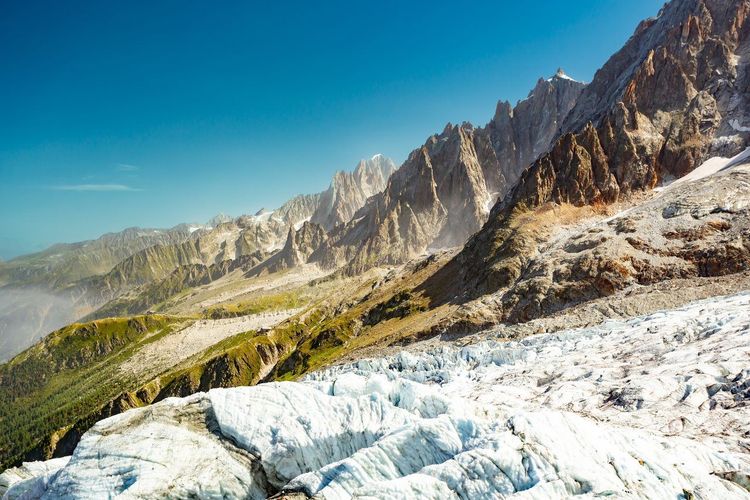
More athletic, the hike to La Jonction (Chemin de la Jonction, 74400 Chamonix-Mont-Blanc, rated 4.9/5 on Google from 394 reviews) starts from Les Bossons and climbs between forest and moraines to the promontory (2,589 m) where the Bossons and Taconnaz glaciers meet. With the Bossons chairlift, allow about 1,165 metres of elevation gain and 6h30 of walking round trip; on foot from the car park, it is nearly 1,500 metres and a long day. Reserved for experienced hikers, from July to September.
For a short, family-friendly outing, the Tines loop follows the Arve through forest between the hamlet of Les Tines and that of Les Praz, with glimpses of the Aiguilles Rouges and almost no elevation gain.
Allow 1h30 to 2h; an all-terrain pushchair is possible on a good part of the route. Keep this itinerary in reserve for a quiet afternoon between two high-altitude days, or for a day when the summits stay in the clouds.
Snowshoe Hikes in Winter
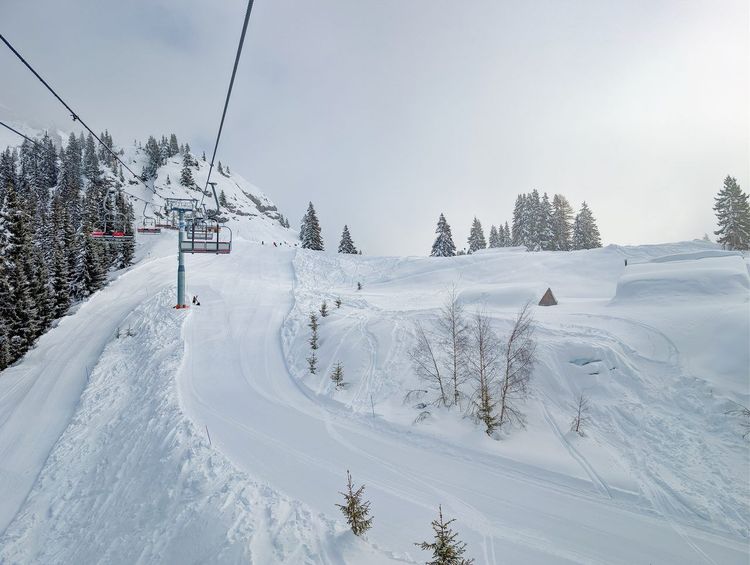
In winter, several trails in the valley become marked snowshoe routes, notably on the valley floor and on the balconies accessible by lift. Guides and mountain leaders offer supervised outings for beginners, with equipment rental in the shops in the centre.
For a first outing, opt for a guided half-day: winter waymarking differs from summer's and the avalanche risk, even on modest slopes, is never taken lightly here.
Before lacing up your boots, our article on hiking around Chamonix lists other routes by level. And if you want to understand the terrain before walking, the Ryo audio-guided tour names each summit visible from the village.
Relaxation and Wellness: The Thermal Spa Facing the Mont Blanc Massif
After two or three days of climbing, the QC Terme Chamonix spa offers a well-deserved break. The complex features heated outdoor pools with a head-on view of the massif, saunas, hammams and hydromassage circuits.
Allow around €50 to €70 for entry depending on the day and season, with bathrobe and towel generally provided. Book online at weekends and during school holidays: evening slots are the most in demand, to enjoy the pools at nightfall under a mountain sky.
On a tighter budget? Several hotels in the valley open their spa for the day without an overnight stay, an option to check directly with the establishments.
Family Activities and Thrills
The Merlet Animal Park and Its Nature Walks
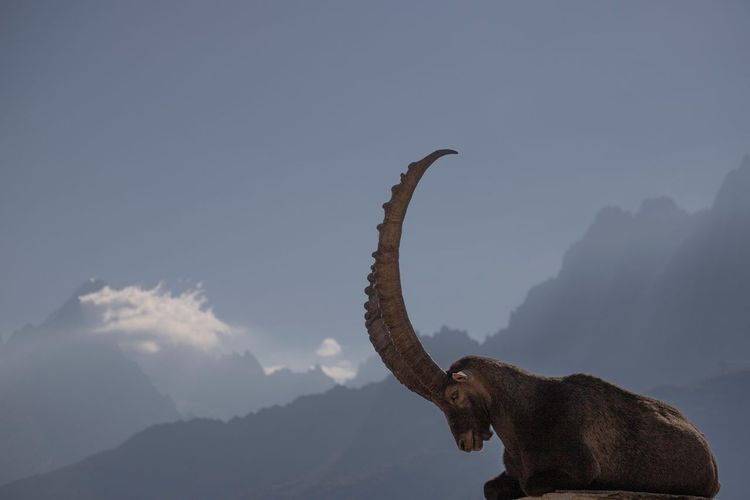
Perched at around 1,500 metres above Les Houches, the Merlet animal park lets marmots, ibex, chamois and mouflon roam semi-freely on open alpine pastures, facing the Mont Blanc range.
The narrow access road already offers a panorama of the massif before you even reach the car park. Allow 1h30 to 2h on the park's marked trails, with several viewpoints set up for watching the animals without disturbing them.
It is one of the favourite outings for families with young children, who get close to Alpine wildlife without the elevation gain of a real trail. The park is open from May to the end of September, by reservation in 2026, for €9 per adult and €6 per child.
Treetop Adventure, Summer Toboggan and Lac des Gaillands
At Les Planards, at the foot of the town centre, the leisure park combines a rail-based summer toboggan and adventure activities for children: a chance to speed down a track in the middle of August without a snowflake in sight. Treetop adventure courses, from zip lines to low courses for little ones, round out the offering in the valley.
A little further south, Lac des Gaillands (Route des Gaillands, 74400 Chamonix-Mont-Blanc, rated 4.3/5 on Google from 900 reviews) combines lawns, a picnic area and historic climbing rocks, where the valley's guides have been training beginners for decades.
These activities are just minutes from one another, making it easy to build a full afternoon without getting back in the car. The lake's water, fed by glacial torrents, stays cool even in July: check the signage on site before swimming.
Swimming Pool, Ice Rink and Indoor Leisure
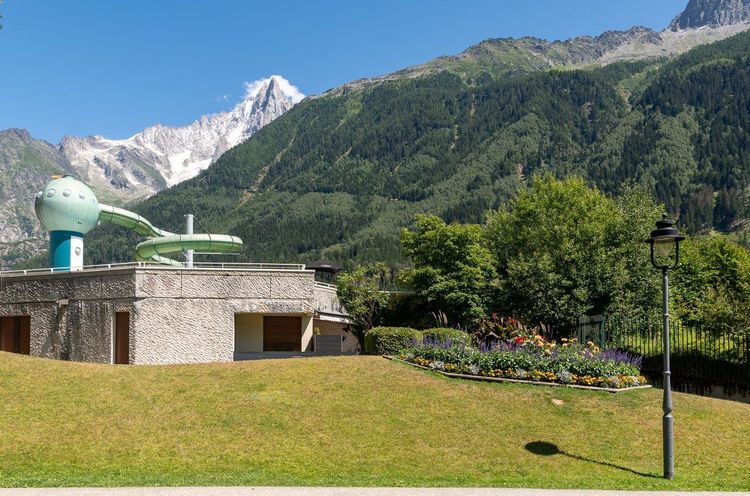
The Richard-Bozon sports centre brings together a swimming pool with indoor and outdoor pools, and an ice rink open much of the year, including in summer for some public sessions.
It is the ideal fallback on rainy or very cold days. Skate rental on site, with hours varying by season: check before going, as some slots are reserved for local clubs.
For a broader overview of what the valley has to offer, our article on the must-do activities in Chamonix details ten ideas for putting together a multi-day schedule.
Exploring the Valley: Argentière, the Mont Blanc Tramway and the Gorges
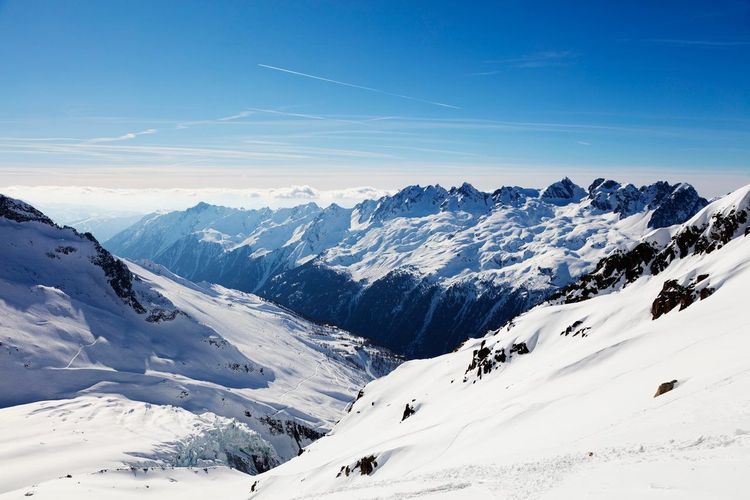
Argentière, the Mont Blanc Tramway and the Valley by Bike
About fifteen minutes by bus from the centre, the village of Argentière has a more mountain-like atmosphere, with fewer shops, and a direct view of the Argentière Glacier and the Aiguille Verte.
It is also the base for the Grands Montets ski area, renowned as one of the most demanding in the French Alps and prized by off-piste skiers from around the world.
In the other direction, leaving the valley towards Saint-Gervais, the Mont Blanc Tramway departs from Le Fayet and climbs to the Nid d'Aigle, at over 2,300 metres, facing the Bionnassay Glacier. It is the highest rack railway in France, and the starting point for mountaineers heading for the Goûter refuge.
To explore the valley at a different pace, rent a regular or electric bike in the centre: paths and small roads link Chamonix to Les Praz and Argentière. And for tired legs, the Mont-Blanc Express, free with the guest card, serves all the hamlets from Servoz to Vallorcine.
The Diosaz Gorges and Lac Vert in Passy
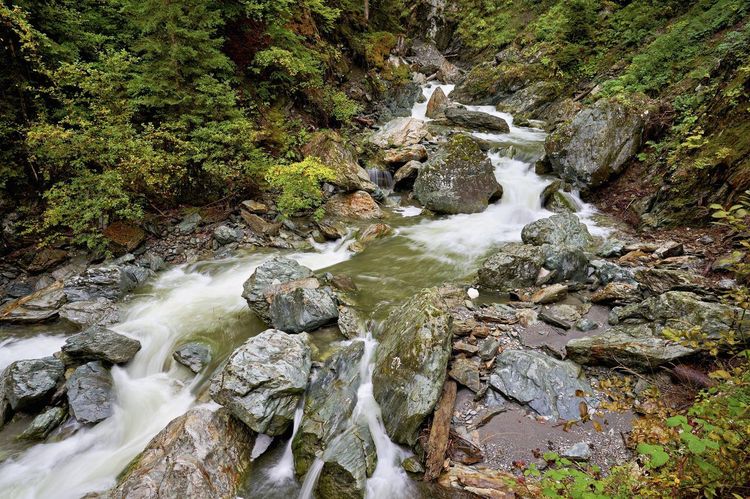
About twenty minutes' drive away, at Servoz, the Diosaz Gorges are explored along a suspended walkway of footbridges above a torrent that tumbles in cascades through a narrow, refreshing canyon.
In 2026, the site is open from 30 May to 27 September, for €7.50 per adult. Allow 1h15 for the visit over 2 km round trip; note that the route is not accessible to pushchairs.
A little further on, Lac Vert (Route du Lac Vert, 74190 Passy, rated 4.3/5 on Google from 960 reviews) in Passy owes its name to the colour of its water, tinted by the reflections of the surrounding forest, with the massif's summits in the background: one of the most photographed spots in the Mont Blanc region.
The walk around the lake takes barely twenty minutes on a flat trail, easy to combine with the gorges on the same day.
Chamonix in Winter: The Ski Area and Snow Activities
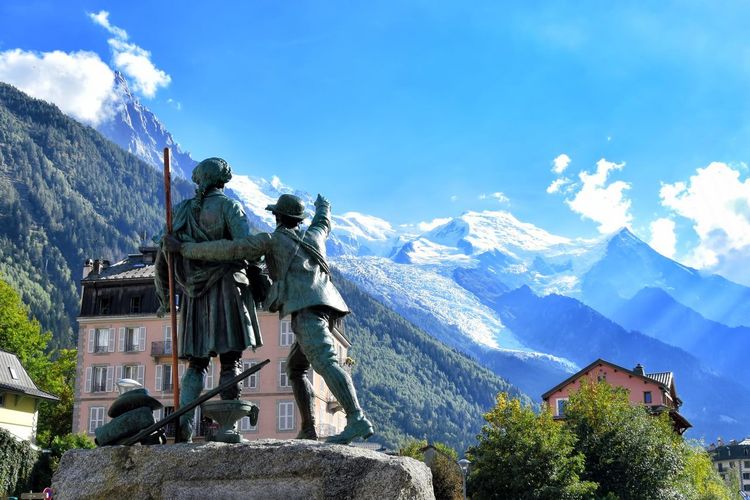
In winter, Chamonix becomes one of the most sought-after ski areas in the French Alps, with several sectors linked by shuttle: Les Grands Montets on the Argentière side, Le Brévent (74400 Chamonix-Mont-Blanc, rated 4.8/5 on Google from 626 reviews) and La Flégère facing Mont Blanc, the more family-friendly Les Houches, and Balme above Le Tour.
Unlike many large resorts, you won't move from one sector to another on skis: you generally need to take the free shuttle, which requires a little organisation the day before.
For non-skiers, the valley also offers toboggan runs, cross-country skiing on the valley floor and the snowshoe outings mentioned above. Multi-area passes such as Mont-Blanc Unlimited let you try several sectors in a single stay, useful on a first visit to compare the very different atmospheres of the Grands Montets and the Brévent. Book your equipment in advance during school holidays: stocks quickly run low on common sizes.
How Long to Plan and Which Season to Choose for a First Visit
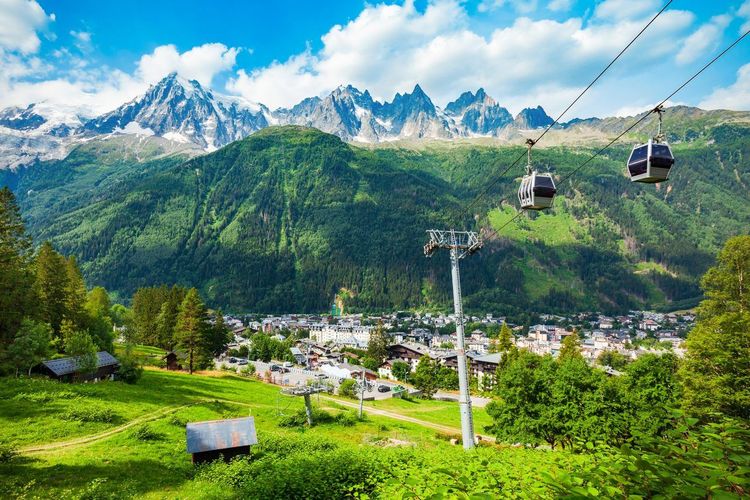
For a first discovery, two full days already let you tick off the essentials: one day for the Aiguille du Midi and the Mer de Glace, a second for the town centre and a short walk such as the Tines loop. With three to four days, you can add Lac Blanc, the Merlet park and an outing to Argentière or the Diosaz gorges without rushing.
Summer, from June to September, remains the most versatile period: high-altitude sites and trails open, long days for chaining activities together. July and August, however, see the highest crowds, with queues that can double the visit time at the Aiguille du Midi. September, calmer and often bright, is an excellent compromise.
Winter, from December to April, completely changes the face of the valley: priority to skiing, snowshoeing and a more hushed atmosphere, with some high-altitude sites on reduced hours depending on the weather. In the shoulder seasons, in May and October-November, many shops and lifts close for maintenance, a period to avoid if you plan to chain together high-altitude activities.
Where to Stay in Chamonix-Mont-Blanc
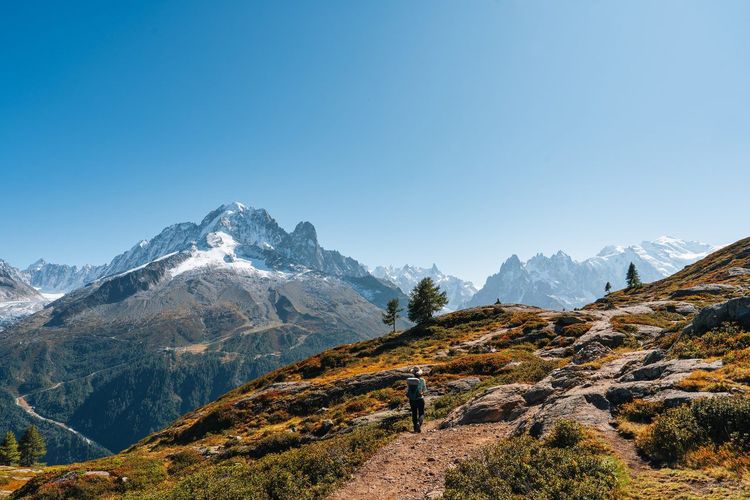
The town centre has the widest choice of accommodation, convenient for reaching lifts and restaurants on foot, but it is also the liveliest area and the most expensive in high season.
For more peace and quiet, the hamlets of Argentière or Les Praz offer a more residential setting, a few minutes by bus from the centre, often at gentler prices for a chalet or apartment. Les Houches, at the entrance to the valley, suits families looking for a more accessible ski area.
From campsites and group lodges to luxury chalets with views of the massif, by way of the historic hotels in the centre, the range is wide. Book several months ahead for July-August or the February holidays, the two peaks of the year.
To refine your choice according to the length of your stay, our itinerary for visiting Chamonix in two days offers a complete programme with suggestions by area.
Practical Tips: Preparation, Budget and Getting Around
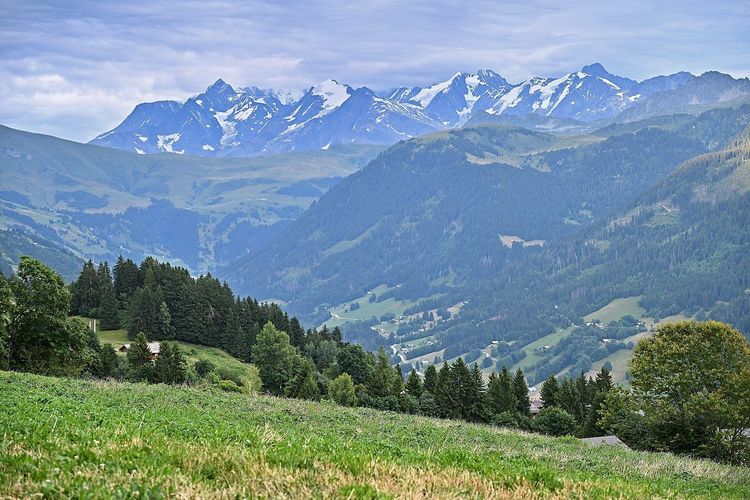
Before leaving, remember the guest card provided by most accommodations: it gives free access to the buses and the valley train, a detail that quickly changes the transport budget over several days.
On the budget side, plan a comfortable allowance for altitude: from €60.20 to €83 for an adult return to the Aiguille du Midi depending on the date, €49.70 for the Montenvers pack with the ice cave. Families can lighten the bill with the Compagnie du Mont-Blanc's multi-activity passes and by booking early to benefit from the lowest dynamic prices.
Always check the weather at altitude before booking the Aiguille du Midi: clear skies in the valley guarantee nothing at 3,800 metres, and the Compagnie du Mont-Blanc's real-time webcams show you the visibility at the summit before you buy.
As for clothing, the three-layer rule remains the most reliable: technical base layer, fleece, waterproof jacket, even in midsummer. Between the valley (often 25 degrees in August) and the Aiguille du Midi (close to 0 degrees), the gap is systematic.
Finally, think about altitude itself: some visitors feel slight breathlessness or headaches after a rapid ascent to the Aiguille du Midi. Nothing alarming for a few hours, but avoid intense effort right after arrival and drink regularly.



FAQ
How Many Days Do You Need to Visit Chamonix-Mont-Blanc?
Two full days are enough to discover the essentials: the Aiguille du Midi or the Mer de Glace, the town centre and a short walk. To also enjoy Lac Blanc, the Merlet park and an outing to Argentière, allow three to four days, or even a week to alternate between altitude and rest.
Is One Day Enough to Discover Chamonix?
Yes, as long as you choose a clear priority between the Aiguille du Midi and the Mer de Glace. A typical day combines a high-altitude ascent in the morning, lunch on a terrace, then a stroll through the town centre in the afternoon.
Is Chamonix Suitable for a Family Holiday?
Absolutely: the Merlet animal park, Lac des Gaillands, the Planards summer toboggan and the Richard-Bozon centre swimming pool keep children of all ages busy, alongside easy walks such as the Tines loop.
What Is the Best Time to Visit Chamonix, Summer or Winter?
Summer (June to September) opens all the high-altitude sites and trails, with long days; September is the best compromise between weather and crowds. Winter (December to April) is all about skiing and snowshoeing. The choice mostly depends on the activities you are looking for.
Do You Need to Book the Aiguille du Midi and the Montenvers Train in Advance?
Yes, it is strongly recommended in July-August and during the February school holidays: time slots fill up several days ahead and the wait without a reservation can exceed two hours. Booking early also lets you take advantage of the lowest dynamic prices.
How Do You Get Around Chamonix Without a Car?
The guest card gives free access to the buses and the Mont-Blanc Express train, which serve the valley's hamlets from Servoz to Vallorcine. A bike, regular or electric, completes the network in summer.
With glaciers reachable in twenty minutes by cable car, streets steeped in history, hikes for all levels and family activities that easily fill a week, Chamonix-Mont-Blanc proves far richer than a simple stop between two summits. The valley rewards above all those who take the time to discover it step by step.
For a successful first visit, remember the essentials: book the Aiguille du Midi in advance, adapt your schedule to the weather at altitude, and leave some room for the unexpected. On site, the Ryo audio guide to Chamonix-Mont-Blanc accompanies you at your own pace, helping you understand the history of the valley between two high-altitude ascents.
À lire également