© Shutterstock
 Votre guide Ryo
Auvergne Volcanoes: Where to Stay Based on Your Starting Point (2026)
The Auvergne volcanoes cannot be explored from a single hotel. The Parc Naturel Régional des Volcans d'Auvergne stretches across 3,950 km² and two distinct massifs separated by more than 100 kilometres of mountain roads: the Sancy to the north and the Cantal to the south. Choosing where to stay to visit the Auvergne volcanoes means first choosing your itinerary. Basing yourself in Clermont-Ferrand gives you transport links and gastronomy; sleeping in Mont-Dore or Murol puts you directly beneath the puys, within hiking-boot reach from the moment you wake up. This guide reviews ten concrete accommodation bases, from spa towns to medieval villages carved from black basalt, from isolated gîtes to characterful hotels, so you can find exactly where to settle depending on your plans and budget. To discover Clermont-Ferrand before setting off to conquer the puys, the Ryo audio-guided tour of Clermont-Ferrand offers 21 audio stops through the "black diamond of Auvergne".
1. Choosing Your Base: Sancy Massif or Cantal Massif?
Before booking anything, there is one fundamental question to settle: which massif do you want to explore first?
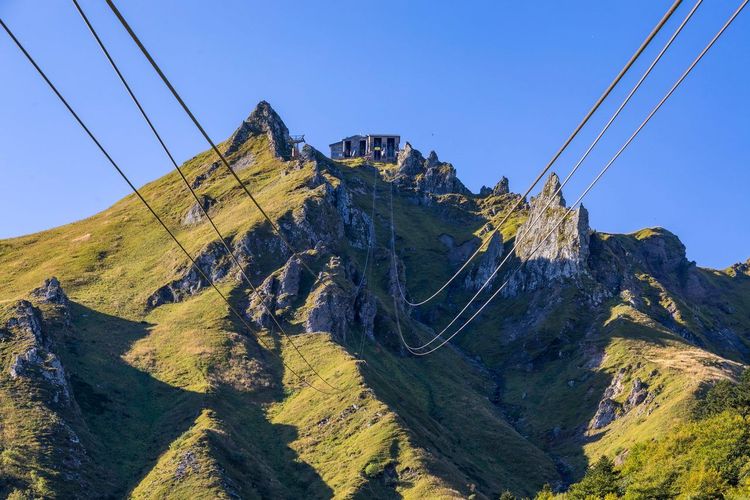
The Sancy massif (northern part of the park, Puy-de-Dôme department) concentrates the most accessible and most iconic volcanoes. The Puy de Dôme (Sommet du Puy de Dôme, 63870 Orcines, rated 4.8/5 on Google with 28K reviews) (1,465 m) can be reached by rack railway from a high-altitude car park. The Chaîne des Puys has been a UNESCO World Heritage Site since 2018, with 80 volcanoes aligned over 35 km. The Puy de Sancy (1,886 m) is the highest point in the Massif Central. The villages of the Sancy — Mont-Dore, Murol, Besse, Aydat, Orcival — are all less than 45 minutes' drive from one another, making loop itineraries easy to plan.
The Cantal massif (southern part of the park) is wilder and less crowded. The Puy Mary (1,787 m) and the Plomb du Cantal (1,855 m) are the landmark summits of a different geology: whereas the Sancy lines up clearly distinct cones, the Cantal is one of the largest stratovolcanoes in Europe, eroded into an amphitheatre of radiating valleys. Salers and Saint-Jacques-des-Blats serve as natural bases for this area.
For a stay of fewer than 4 days, focus on a single massif rather than trying to cover everything. For a week or more, you can reasonably alternate between the two areas with a transition night in Issoire or Aurillac.
2. Clermont-Ferrand: the Gateway to the Auvergne Volcanoes
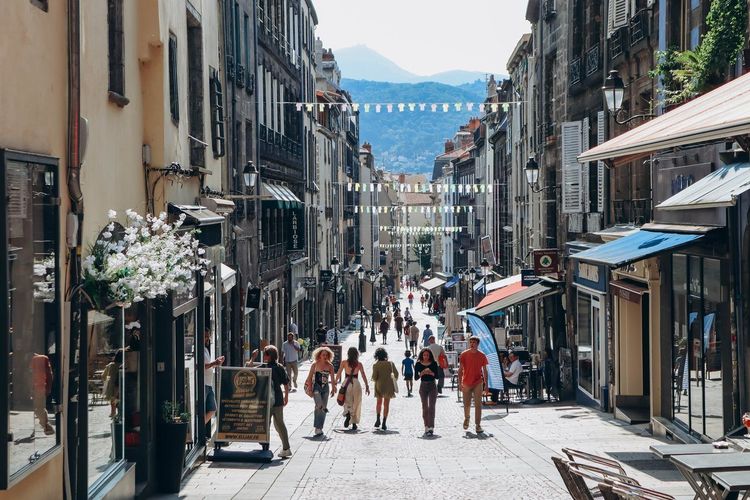
Clermont-Ferrand is the only large city in Auvergne directly connected to the national rail network (Paris in 3h20 by train, Lyon in 2h30) and to the motorway system. The vast majority of visitors arrive here, and it is a relevant base if you are travelling without a car or if you wish to alternate between urban sightseeing and volcanic excursions.
The city is built on an ancient lava flow. Its buildings made of Volvic stone — this black volcanic rock quarried 15 km to the north-west — give the old town a sombre and dramatic appearance found nowhere else in France. The cathédrale Notre-Dame-de-l'Assomption, built entirely from Volvic lava, is one of the most singular Gothic monuments in the country: 400 years of construction, eight centuries of history, and that obsidian-black colour that makes it instantly recognisable from the heights above.
In terms of accommodation, Clermont-Ferrand offers the widest range in the region: chain hotels in the city centre, boutique hotels in the lanes of Vieux-Montferrand, addresses close to the SNCF station for early morning departures to the volcanoes. Expect an average of €70 to €110 per night for a double room in high season — cheaper than Paris or Lyon for a comparable level of comfort.
From Clermont-Ferrand, the Puy de Dôme is accessible in 40 minutes via the D941 road, then by the Panoramique des Dômes rack railway (about 15 minutes' climb). The Chaîne des Puys extends to the north-west: around ten puys walkable on foot from well-equipped car parks, with no major difficulty for occasional hikers.
The main drawback of staying here: the wild volcanoes remain at least 45–60 minutes away by road. If your priority is direct immersion in the puys from the moment you wake up, the Sancy villages will be more relevant. But for a stay that combines city sightseeing, Auvergne gastronomy (truffade, pounti, AOP cheeses), volcanic hikes and practical transport — especially for flying out from Clermont-Aulnat airport — it is the region's reference logistical base.
The Ryo audio-guided tour of Clermont-Ferrand covers 22 audio stops in 2h10 and 5.3 km through the historic centre. An excellent way to get a feel for the city on the day you arrive, before setting off to explore the volcanoes the next morning.
3. Mont-Dore: at the Heart of the Sancy Massif
If you want to sleep directly among the volcanoes, Mont-Dore (Place du Panthéon, 63240 Le Mont-Dore) is probably the best option in the Sancy area. This high-altitude spa town (1,050 m) sits at the bottom of a glacial valley 40 km from Clermont-Ferrand. It houses thermal baths that have been in use since Roman times and a modest ski resort — an unexpected combination that gives it a unique character in Auvergne.
From the town centre, marked trails climb directly to the Puy de Sancy (1,886 m). In summer, a cable car followed by a short walk on foot brings you to the summit in under an hour. The view over the rounded domes of the ancient volcanoes — so different from the sharp cones that still dominate the popular imagination — is breathtaking in clear weather.
The accommodation offer is dense for a town of 1,500 inhabitants: several 2- and 3-star hotels, numerous seasonal rental apartments and gîtes in the immediate surroundings. Prices remain reasonable outside peak periods (July–August and the Christmas holidays): €50 to €85 per night for a decent hotel. In high season, it is better to book two to three months in advance.
For families, Mont-Dore is a safe bet: the Dordogne valley (the river has its source here) offers easy walks, the resort has a municipal swimming pool, and the town-centre restaurants welcome children with ease. In winter, the Sancy ski area remains one of the few accessible in Auvergne, with around twenty runs.
One thing to bear in mind: Mont-Dore is a geographical dead end. The roads to Murol (20 km) or Besse (25 km) pass through mountain passes that can be snowbound from November to April. Check conditions before planning loop itineraries in the low season.
4. Besse-et-Saint-Anastaise: Medieval Charm at the Gates of the Puy de Sancy
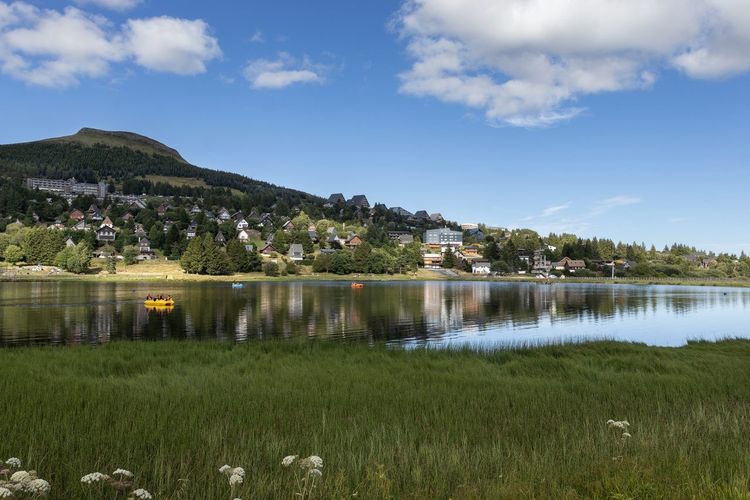
Located 25 km north-east of Mont-Dore, Besse-et-Saint-Anastaise (Place du Dr Pipet, 63610 Besse-et-Saint-Anastaise, rated 4.5/5 on Google with 3.1K reviews) is one of the best-preserved medieval villages in Auvergne. Its black basalt cobbled streets, 15th-century houses and Romanesque church make it a surprisingly pleasant place to stay when you want to be close to the Sancy without sacrificing architectural character.
The village is a 20-minute drive from Lac Pavin, France's deepest maar lake (92 m). Unlike artificial reservoirs, Lac Pavin was formed around 6,700 years ago during a volcanic eruption — a detail that enriches the walk around its perfectly circular shores.
Super Besse, the associated ski resort, is 8 km away. In summer, the chairlifts serve mountain bikers and hikers who want to gain altitude quickly. For accommodation, the village offers a few characterful independent hotels and bed-and-breakfasts in medieval buildings: €45 to €75 per night on average for a double room.
5. Murol: Medieval Castle and Volcanic Lake
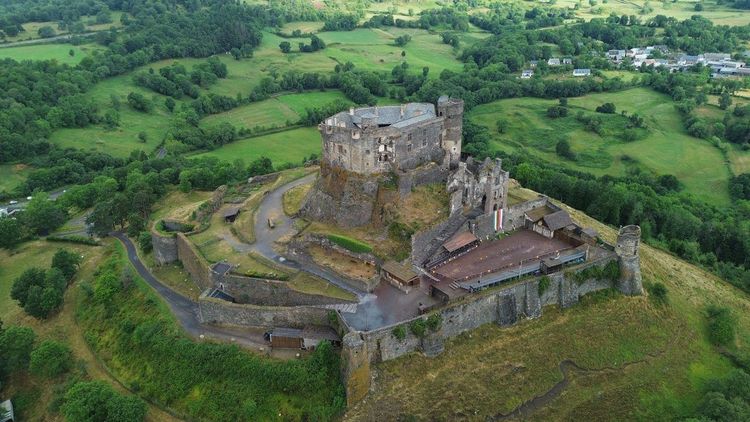
Murol is often cited as the most picturesque village in the Sancy, and it is hard to dispute the title. The château de Murol (12th–15th century) overlooks the village from a volcanic promontory, and Lac Chambon (Route du Lac, 63790 Chambon-sur-Lac, rated 4.5/5 on Google with 3.6K reviews), formed by an ancient lava flow that dammed the valley, stretches out less than 2 km away. In July and August, it is one of the most visited sites in the Puy-de-Dôme.
This summer popularity has a downside: in August, the access roads become congested and accommodation books up months in advance. Outside July–August, Murol regains an appreciable calm and prices drop significantly. For a spring or September visit to the volcanoes, it is one of the best bases in the area, equidistant from Mont-Dore (20 km), Besse (15 km) and Orcival (25 km), with the lake on hand for a swim after hiking.
Accommodation is split between campsites (the municipal campsite on the shores of Lac Chambon is very popular), holiday rentals and a handful of hotels. Camping pitches are priced at €15 to €25 per night in high season.
6. Aydat: on the Shore of Auvergne's Largest Natural Lake
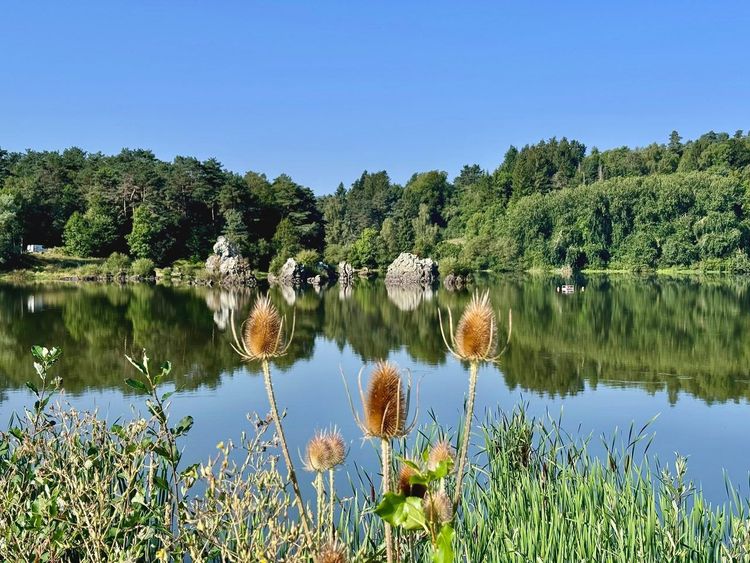
The Lac d'Aydat (Lac d'Aydat, 63970 Aydat, rated 4.3/5 on Google with 1,049 reviews) (60 ha, 10 m deep) is the largest natural lake in Auvergne and one of the few in the department where swimming is permitted. It was formed 8,000 years ago when a lava flow from the puy de la Vache dammed the Veyre river — the landscape around the lake is itself the direct result of the volcanic activity that shaped the entire region.
Staying in Aydat puts you 20 minutes from Clermont-Ferrand by motorway and 30 minutes from the Puy de Sancy. Campsites and holiday rentals around the lake make up most of the offer, with hotel accommodation remaining limited. It is a solid option for families who want to combine swimming and hiking without the altitude price tags of the ski resorts. On the trail side, the puy de la Vache and the puy de Lassolas are accessible on foot from car parks near the lake, with remarkable views over the Chaîne des Puys in fine weather.
7. Orcival: Immersion in the Volcanoes, Away from the Crowds
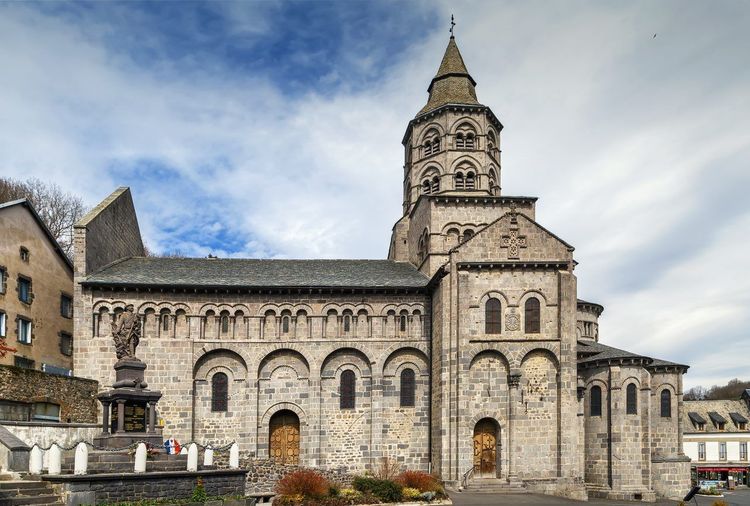
Orcival (400 inhabitants) is the most discreet village in this guide, and probably the one that best matches the idea of an authentic immersion in the volcanoes. Its Romanesque church, Notre-Dame d'Orcival (Le Bourg, 63210 Orcival, rated 4.5/5 on Google with 1,537 reviews) (12th century), is a listed historic monument and has attracted pilgrims since the Middle Ages. The village is perched in a small green valley, surrounded by forests and high-altitude pastures.
Accommodation is limited to a handful of bed-and-breakfasts and gîtes — and that is precisely the appeal of the place. From the village, several GR long-distance trails set off towards the surrounding puys: towards the Puy de Dôme via the mule path (about 2 hours' walk) and towards the Roches Tuilières et Sanadoires, two spectacular volcanic chimneys reachable in under an hour on foot. Orcival is 25 km from Clermont-Ferrand and 15 km from Mont-Dore. Back in Clermont-Ferrand, the city tells its own story over 2 hours 10 minutes of audio-guided walking through its black-lava centre.
8. Salers: Jewel of the Cantal and Gateway to the Southern Massif
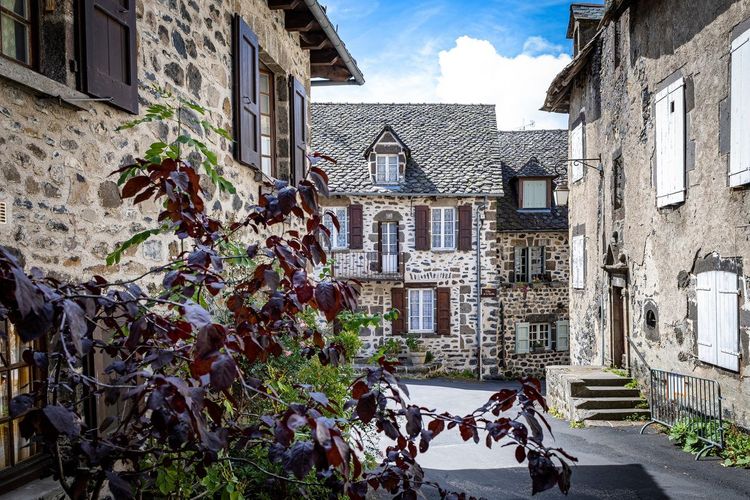
Heading south, Salers (Grande Place, 15140 Salers, rated 4.6/5 on Google with 3.9K reviews) marks the entrance to Cantal territory. This 15th-century village, also carved from black volcanic stone, is one of the "Plus Beaux Villages de France" and the natural starting point for exploring the western Cantal massif. The Salers breed, whose lyre-horned cattle graze on the surrounding upland pastures, gives it a terroir identity that the Sancy villages do not share to the same degree.
The ridge road (D680) links Salers to Aurillac while skirting the Cantal summits: it is one of the finest panoramic roads in Auvergne. In fine weather, the views extend as far as the Aubrac mountains to the south and the Puy Mary (1,787 m) to the east, reachable in 30 minutes by road from the village. The gorges of the Rhue and the Truyère can also be visited in a half-day.
For accommodation, Salers offers several charming hotels and bed-and-breakfasts in the medieval buildings of the centre: €50 to €80 per night for a characterful establishment. It is also one of the least saturated areas compared to the Sancy — you can find accommodation at the last minute even in July, something almost impossible in Mont-Dore or Murol in high season. The village cheese shop is an institution for taking home some AOP Salers cheese.
9. Saint-Jacques-des-Blats: at the Foot of the Plomb du Cantal
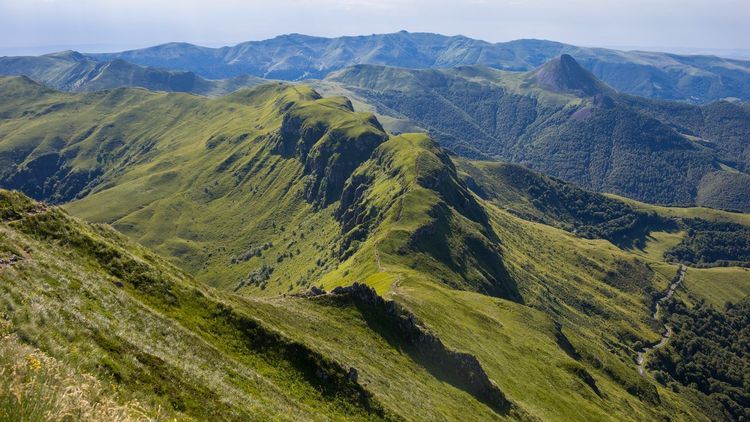
Saint-Jacques-des-Blats (Le Bourg, 15800 Saint-Jacques-des-Blats, rated 4.2/5 on Google with 162 reviews) is a small mountain village set in the upper Cère valley, at the foot of the Plomb du Cantal (1,855 m). It is the most direct base for ascending the highest point of the Cantal massif — the climb from the village takes 3 to 4 hours return depending on your fitness level.
A cable car from Lioran (5 km away) reduces the effort for those who want to enjoy the panorama at the summit without the full ascent. In clear weather, the Pyrenees are visible to the south and the Alps to the east. Accommodation is limited to a handful of gîtes and bed-and-breakfasts — a hiker's address, to be booked by those seeking absolute peace and immediate proximity to the Cantal summits. Saint-Jacques-des-Blats is 50 km from Aurillac and 120 km from Clermont-Ferrand.
10. Vichy: Spa Culture and Volcanoes 45 Minutes Away
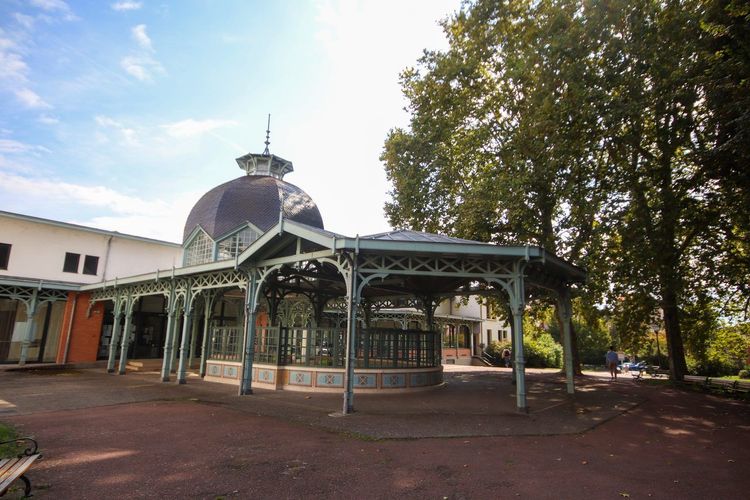
Vichy is located 65 km north of Clermont-Ferrand, about 45 minutes by road. It is not the classic base for the Auvergne volcanoes, but it is a serious option for those who want to combine a spa stay with excursions into the Parc des Volcans. The city has built its entire reputation on its mineral waters and cure facilities, and its Belle Époque architecture — the ceramic-fronted hotels along the Allier, the opera house, the covered drinking fountains — is one of the most coherent and best-preserved in France.
From Vichy, the Puy de Dôme is an hour's drive away and the Chaîne des Puys is 1h20 away. That is not ideal for hikers who want to multiply daily outings into the volcanoes. But for a 3–4 day stay combining morning spa sessions and afternoon volcano exploration, or for a weekend for two where the setting matters as much as the physical activity, the combination works very well.
Vichy's hotel offer is varied and often excellent value for money: €60 to €100 per night in establishments with Art Deco or Belle Époque décor. The city also offers a genuine evening scene with its terraces, gastronomic restaurants and casino, making it a pleasant base camp for travellers who do not want to sacrifice comfort and urban atmosphere.
The Ryo audio guide La fièvre de l'eau — 27 audio stops in 1h35 and 3.6 km — tells the fascinating history of Vichy, from the Roman Empire to the great cures of the 19th century. For those passing through Vichy before heading to the volcanoes, it is a perfect introduction to the thermal history of the entire region.
11. Practical Tips: When to Come and How to Get Around
A car is almost essential. Villages such as Murol, Besse, Salers and Saint-Jacques-des-Blats are not served by any regular public transport. Clermont-Ferrand is well connected by train (Paris, Lyon, Bordeaux) and has a regional airport, but once you are on the ground, everything goes through a car. The notable exception is the Panoramique des Dômes (Gare du Panoramique des Dômes, 63112 Royat, rated 4.6/5 on Google with 16,974 reviews): this rack railway departs from a high-altitude car park at 1,350 m (or from a shuttle from Clermont-Ferrand) and reaches the Puy de Dôme in 15 minutes, with no need to drive to the summit.
When to come? The ideal season for exploring the Auvergne puys runs from May to October. June and September are the perfect months: clear trails, lush vegetation, stunning photographic light, and accommodation available without booking months ahead. July–August guarantees warm weather but also traffic jams on the Puy de Dôme road (up to 1h30 wait at the car park on August weekends) and hotel reservations that need to be made very early.
For winter hiking, the snow-covered volcanoes offer a breathtaking spectacle. But mountain roads can be closed, particularly the D983 towards Besse in heavy snowfall. The Sancy ski resorts — Super Besse and Mont-Dore — operate from December to March depending on snow conditions. The season has become increasingly unpredictable since 2020, with low-snow winters reducing opening periods.
How many days to allow? To see both massifs without rushing, allow a minimum of 5 to 7 days. For a weekend focused on the Sancy and the Puy de Dôme, 2 nights in Mont-Dore or Murol is more than enough. For the Cantal alone, 2 nights in Salers allow you to fan out across the main summits and villages.
Advance booking: in July–August, demand exceeds supply in the small Sancy villages. Murol, Orcival and Mont-Dore often fill up as early as January for the summer. Outside the season, spontaneity remains possible, but some hotels and gîtes close between November and March — always check before setting off.
To go further in your planning, explore our Ryo selection of the finest hikes in the Puy-de-Dôme and our Ryo guide to the must-see volcanoes of Auvergne.
FAQ
What is the best place to stay near the Auvergne volcanoes?
Mont-Dore is the most complete base for exploring the Sancy massif: you are within walking distance of the Puy de Sancy, the accommodation offer is wide, and services remain available even in the low season. Murol is the quintessential family option, with the Lac Chambon beach 2 km away and the medieval castle to keep children entertained on rainy days. For the Cantal, Salers offers the best balance between architectural charm and access to the Cantal summits, with more available accommodation than in the Sancy area in summer. If you prefer a complete infrastructure with transport links, Clermont-Ferrand remains the most practical logistical base, especially for travellers without a car.
Can you visit the Auvergne volcanoes without a car?
It is difficult, but not impossible for the Puy de Dôme. Clermont-Ferrand is well connected by train from Paris and Lyon, and the Panoramique des Dômes takes you to the summit without driving. However, to reach Mont-Dore, Murol, Besse, Salers or Saint-Jacques-des-Blats, a car is necessary. Seasonal shuttles sometimes operate in summer (check with local tourist offices), but they remain too unreliable for planning a complete itinerary. The simplest solution: rent a car at Clermont-Ferrand station upon arrival.
What is the best season to visit the Auvergne volcanoes?
June and September are ideal. The trails are clear and walkable, the vegetation is at its best, the photographic light is stunning in the early morning, and accommodation remains available without booking months in advance. July–August guarantees fine weather but draws heavy crowds at the Puy de Dôme, in Murol and along the Sancy roads. In winter, the volcanoes under snow are magnificent for well-equipped hikers, but some mountain passes close and accommodation options shrink in the mountain villages.
Are the Auvergne volcanoes dangerous?
No. The Auvergne volcanoes have been extinct for more than 6,700 years in the case of the most recent ones (Lac Pavin was formed during the last eruption) and for several million years in the case of the oldest. Scientists are categorical: there is no active volcanic risk in the region. The only dangers are those of mountain hiking: changeable weather, slippery trails after rain, strong winds at the summit of the Puy de Dôme or the Sancy. Bringing appropriate equipment for ascents above 1,500 m is recommended even in summer.
How much does a one-week stay to visit the Auvergne volcanoes cost?
For 7 nights, budget €350 to €600 per person for accommodation depending on the type chosen (camping, gîte, 2–3-star hotel). Paid admissions are few: the Panoramique des Dômes (around €18 return for adults in 2026), volcano museums (€5 to €10 depending on the site). The park itself is entirely free for hikers and visitors. The main expense remains car hire (€40 to €60/day) and dining, where Auvergne specialities — truffade, aligot, saint-nectaire, bleu d'Auvergne — are available at all price levels, whether you opt for the village brasserie or a gastronomic restaurant.
Conclusion
There is no single answer to the question of where to stay for the Auvergne volcanoes: everything depends on what you are looking for. Clermont-Ferrand for arrivals and departures, Mont-Dore or Murol for immersion in the Sancy, Salers for the authenticity of the Cantal — that is the sequence that makes the most of this exceptional region.
Our Ryo app covers the two most historically rich cities in the region: the Ryo audio-guided tour of Clermont-Ferrand guides you through the black diamond of Auvergne in 22 audio stops and 5.3 km, and the Ryo audio-guided tour of Vichy dives into 2,000 years of thermal history in 28 stops. The puys are waiting for you.
À lire également