© Shutterstock
 Votre guide Ryo
Unusual Visit to Aurillac: 11 Offbeat Experiences in 2026
An unusual visit to Aurillac is unlike any other French prefecture escape. Nestled in a fold of the Cantal, the city is at once a medieval market town, a theatrical backdrop, and an observation post perched above the largest volcanic complex in Europe. People rarely come here by chance, and they often leave with the feeling of having uncovered a well-kept secret of the Massif central.
Exploration begins the moment you look up at Château Saint-Étienne, perched on its rocky outcrop, and continues through alleyways where grey lava facades tell eight centuries of history. Here, a pope of the eleventh century introduced Arabic numerals to Europe. There, a century-old workshop still hand-sews umbrellas — the last of its kind in France. Every summer, the entire city transforms into a stage for one of Europe's greatest street festivals, before returning, for the rest of the year, to its role as a peaceful base for excursions to Puy Mary and the Cantal volcanoes. With the Ryo app, which features original audio-guided tours in several French cities, this exploration takes on an added dimension.
Château Saint-Étienne, a Volcanic Watchtower over the City
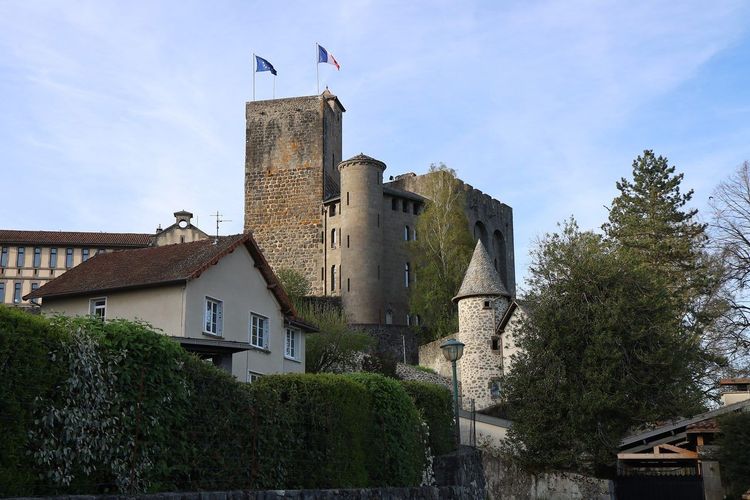
Perched on a basalt outcrop at over 700 metres above sea level, Château Saint-Étienne (Le Château, 15000 Aurillac, rated 4.4/5 on Google with 1.1K reviews) has dominated Aurillac since the twelfth century. The counts of Auvergne and then the bishops of Saint-Flour took turns occupying it, before the Revolution left the keep half in ruins for nearly two centuries. It was not until the late twentieth century that an ambitious restoration project restored its sentinel-like appearance, with its crenellated towers visible from almost every point in the lower town.
You climb it via a staircase carved into the volcanic rock, step by step, until the slate and grey lava rooftops of Aurillac spread out below like a scale model. On a clear day, the eye reaches as far as the first ridges of the Cantal mountains, some twenty kilometres away. Many visitors stop at this view, but the interior of the keep holds another surprise: it houses the Muséum des Volcans, entirely dedicated to the formation of this massif whose western flank Aurillac occupies. Scale models, rocks, and reconstructions explain why the city rests on a lava flow several million years old — a detail that most passing visitors are entirely unaware of when they arrive.
The restoration project, partly funded by the city and the region, lasted nearly fifteen years. The carpenters had to recreate a solid oak roof frame faithful to ancient techniques, as no original plans had been preserved. The result is well worth the visit: the vaulted ground-floor hall, with its six-metre-high ceilings, now serves from time to time as a temporary exhibition space — a new lease of life that would no doubt have surprised the medieval bishops.
A site warden is happy to recount the story of the underground passage that once linked the castle to the heart of the old town — now sealed, but whose starting point can still be glimpsed behind a grille near the entrance. This kind of detail, unmentioned in official brochures, is what makes a visit so rewarding when you take the time to talk with the staff rather than simply following the marked route. The museum takes about an hour to visit, and climbing to the top of the keep adds roughly twenty minutes; it is worth checking opening times the day before with the tourist office, as the site closes on certain days in the low season.
This promontory sets the tone for any off-the-beaten-track exploration of Aurillac: the city is not content with a medieval heritage set against a picture-postcard backdrop — it literally built itself on a volcano.
In the Footsteps of Gerbert d'Aurillac, the Pope Who Counted Differently
Aurillac gave a pope to medieval Europe — and no ordinary one. Born around 946 in the area surrounding the city, Gerbert d'Aurillac grew up at the Benedictine monastery of Saint-Géraud before becoming, in the year 999, Pope Sylvester II. His trajectory remains singular in the history of the papacy: a mathematician and astronomer, he helped introduce Arabic numerals and the use of the abacus to Western Europe, gradually replacing the cumbersome Roman numerals in scholarly calculations. He is also credited with building a hydraulic organ and mechanical clocks — inventions that, centuries later, fuelled a persistent legend: that of a pope-magician who had made a pact with dark forces to acquire such knowledge.
An equestrian statue pays tribute to him on the esplanade that bears his name, at the foot of Château Saint-Étienne.
Local guides enjoy recounting that some residents, even in the nineteenth century, avoided walking past the monument after nightfall. A rather unexpected way of measuring how stubbornly legends persist in a city that once produced one of the most rational minds of its time. Take a moment to look at the base of the statue and the plaques surrounding it: they summarise in a few lines a destiny that set out from the Cantal and reached the throne of Saint Peter, at a time when travelling from Auvergne to Rome was itself an adventure. To extend the visit, look for the remains of the old abbey of Saint-Géraud, now incorporated into the fabric of the town centre, a few minutes' walk from the square.
The Vieux Aurillac, a Timeless Labyrinth of Grey Stone
Behind the main square, the Vieux Aurillac unfolds a network of narrow alleyways that most visitors pass through without stopping, hurrying to reach the main shopping streets. Yet this is where the city reveals its true face: sculpted grey lava facades, inner courtyards hidden behind heavy wooden archways, spiral staircases climbing to upper floors that give no hint of their presence from the street. Rue Vermenouze and its immediate surroundings contain the highest concentration of half-timbered houses and Renaissance details, with mullioned windows that have survived five centuries without losing their elegance.
Some of these private courtyards open exceptionally to the public during the heritage open days in September. Long-time residents of the neighbourhood recall that one of them once served as a workshop for tanners, whose acrid smell permeated the entire area before the Jordanne was channelled to carry away wastewater. Today, the river flows more discreetly alongside the centre, but it remains the guiding thread that explains the medieval layout of the city, pressed between the watercourse and the first foothills.
Walk without a fixed itinerary for half an hour and you will almost certainly stumble upon a detail no guidebook has time to mention: a faded coat of arms above a doorway, a grimacing gargoyle, a half-legible Latin inscription. It is this absence of a marked route that makes wandering through the Vieux Aurillac so enjoyable for those who like to roam without a map. Wear comfortable shoes: the uneven cobblestones, slippery after rain, require a little care.
Place Gerbert and its café terraces make a good halfway pause, before continuing the exploration towards the remains of the Cordeliers convent, a little further south.
France's Last Umbrella Factory

Aurillac long called itself the French capital of the umbrella, and the story is no commercial legend. From the late nineteenth century onwards, several workshops in the city were producing umbrellas for the whole country, drawing on local textile expertise and skilled labour. Most of these workshops closed over the course of the twentieth century, undercut by Asian industrial production, but one name has held on: Maison Piganiol (Aurillac, 15000 Aurillac, rated 4.8/5 on Google with 220 reviews), founded in 1884, claims the title of the last umbrella factory still in operation in France.
Production remains largely manual: cutting the fabric, mounting it on the ribs, sewing the tips. Certain workshops open their doors occasionally for organised visits — a rare opportunity to watch an everyday object being made by hand, one that we rarely associate with artisan craftsmanship. The contrast with the umbrella's somewhat mundane image is striking: here, each piece takes several dozen minutes of work before being assembled, and high-end models, fully lined and hand-sewn, can require up to half a day of labour.
If you enjoy this kind of preserved industrial heritage, the Ryo guide to Limoges explores another French artisan tradition through a comparable audio-guided tour — useful for extending the idea once you are back home.
When All of Aurillac Becomes a Stage: the Street Theatre Festival
Every year in late August, Aurillac lives through four days that have nothing in common with the rest of its calendar. Since 1986, the international street theatre festival has transformed squares, alleyways, car parks, and public gardens into improvised stages where several hundred companies from across Europe converge. The official, curated programme coexists with an enormous open-access fringe, available to anyone wishing to perform in the street — giving the event a rare scale: for four days, the city's population is multiplied several times over by the influx of festival-goers, artists, and curious onlookers.
The experience goes far beyond the framework of a simple performing arts festival. Walking through Aurillac at this time of year means rounding a corner in the Vieux Aurillac to find a brass band, stumbling upon an acrobatic act staged in front of Château Saint-Étienne, or sharing a pavement with costumed performers waiting their turn. The residents themselves readily recall growing up as children, crossing paths with elaborately dressed artists in the middle of the street, without anyone finding it the least bit surprising in a city accustomed for decades to this wave of creativity.
If you visit Aurillac outside this period, it is hard to imagine the scale of the phenomenon — the city settles back into an almost provincial calm for the rest of the year. It is precisely this contrast that makes the festival so memorable for those lucky enough to attend: for one long weekend, a quiet prefecture of the Massif central becomes one of Europe's capitals of street performance. Book your accommodation several months in advance if you are aiming for this period; rooms fill up quickly within a thirty-kilometre radius of the centre.
For travellers who miss the festival window, there is still more than enough to fill an out-of-the-ordinary stay in Aurillac for the rest of the year, between medieval heritage and volcanic open air.
The Jardin des Carmes, a Green Retreat in the Heart of the City
Laid out on the site of a former convent, the Jardin des Carmes (Rue des Carmes, 15000 Aurillac, rated 4.1/5 on Google with 210 reviews) offers a leafy breathing space just a stone's throw from the historic centre. Shaded benches, a bandstand, and well-tended flowerbeds make it a popular spot for local families in the late afternoon.
The Carmelite convent that once occupied the site disappeared during the Revolution, but the garden's layout still preserves its regular geometry, with straight-lined paths and flowerbeds redesigned with the seasons. There is nothing ostentatious here, but the spot is worth a detour for its tranquillity, in complete contrast to the bustle that reigns during the street theatre festival. Regulars come to read a newspaper or watch children running between the flowerbeds, far from the main tourist attractions. Allow about twenty minutes to walk around it, longer if you settle on a bench to take in the quiet comings and goings of passers-by. In spring, the blooming flowerbeds and the growing shade of the tall trees make it one of the most pleasant corners of the city for a moment's rest between sightseeing.
An Expedition into the Cantal Volcanoes
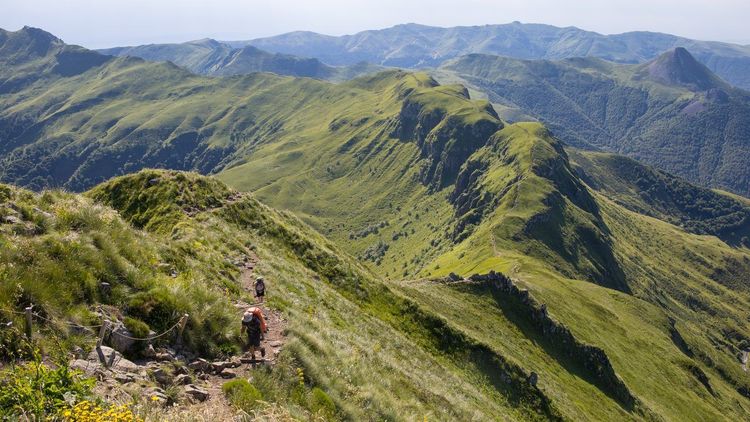
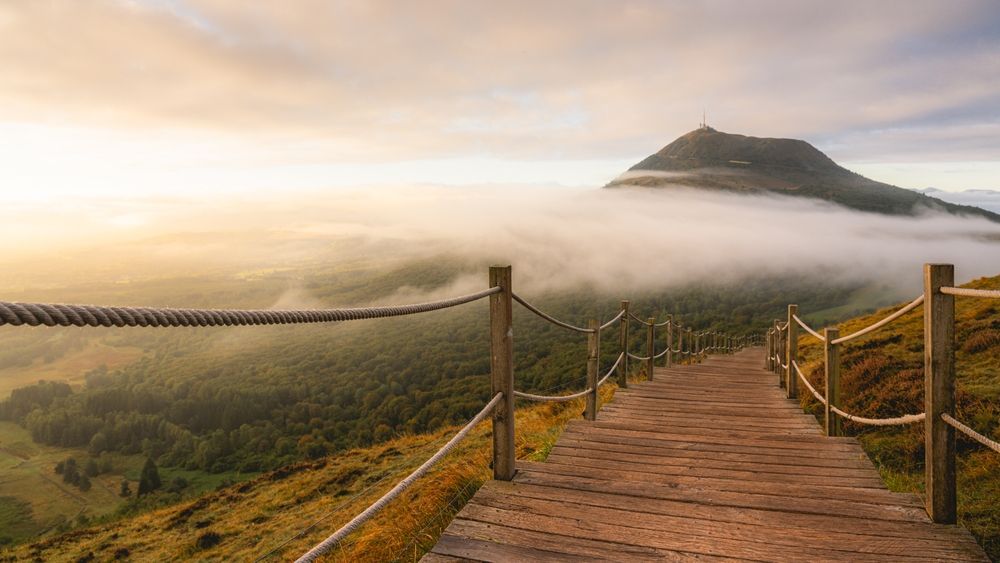
Aurillac is less than an hour's drive from Puy Mary (Le Puy Mary, 15400 Mandailles-Saint-Julien, rated 4.8/5 on Google with 365 reviews), the iconic summit of the largest stratovolcano in Europe, formed millions of years ago by successive layers of lava flows. The site, listed as a Grand Site de France, offers several hiking routes suited to all levels, from family-friendly trails to the full circuit of the burons scattered across the high pastures.
The ascent to the summit from the Pas de Peyrol takes about thirty minutes of sustained walking but remains accessible to anyone with a reasonable level of fitness. The reward: a 360-degree panorama over the radiant valleys of the Cantal, dotted with herds of Salers cattle, recognisable by their dark red coats and lyre-shaped horns. Few visitors who come solely for the city of Aurillac expect to find, at such a short distance, a landscape this spectacular and yet so much less crowded than the great Alpine massifs.
Puy Griou, further south, will appeal to hikers in search of a less-frequented summit that is equally photogenic, with its instantly recognisable pyramidal silhouette. Allow half a day for the round trip from the nearest car park, and bring water: shade is scarce once you leave the tree line.
This kind of excursion deserves a minimum of forward planning: the weather changes quickly at altitude, even in the height of summer, and the burons converted into farm-inns close early at the end of the season. Check with the Aurillac tourist office before setting out, particularly regarding road conditions in the event of bad weather. One thing is certain: few French prefectures offer such direct access to a volcanic landscape of this scale, less than forty minutes from their town centre.
Sleeping Somewhere Out of the Ordinary
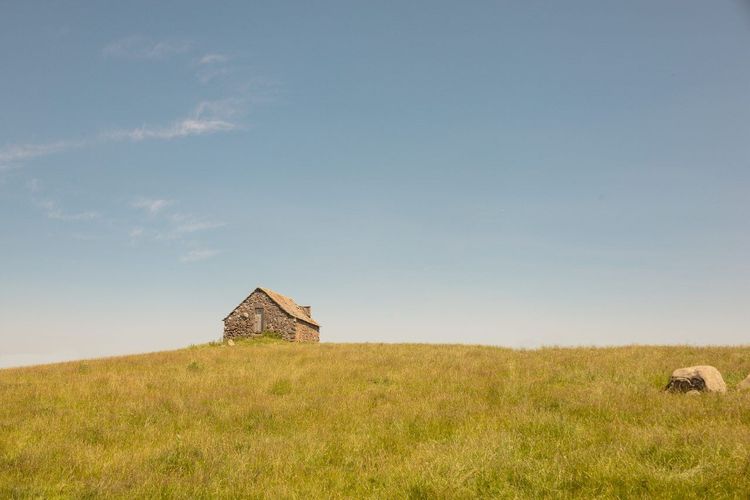
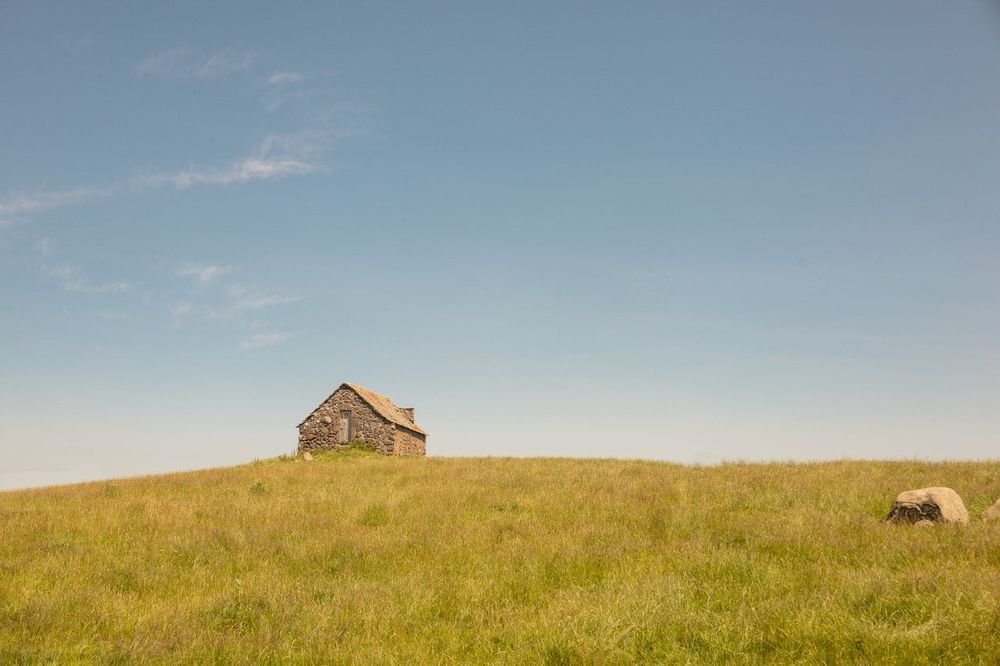
Aurillac and its surroundings offer several addresses that favour originality over standardised comfort. In the surrounding countryside, some former burons — those stone huts where cheese was once made during the summer transhumance — have been converted into charming gîtes, with their original lauze stone roofs and fireplaces preserved. Spending a night in one of these high-altitude refuges, isolated and silent, offers an experience that is hard to find anywhere else in France.
Some accommodation closer to the centre takes a different approach, offering bed-and-breakfast rooms in old buildings in the Vieux Aurillac, with exposed beams and visible volcanic stone. Other establishments on the outskirts offer tipi or treehouse options for families looking for an unusual night without straying too far from the city. Prices vary considerably with the season: expect reasonable rates in spring and autumn, noticeably higher prices in midsummer and, of course, during the week of the festival.
If you enjoy this kind of alternative approach to travel, the Ryo team regularly works to document similar formats in other French cities, with the same philosophy: prioritising the experience over a simple list of addresses. Check availability well in advance if your stay falls during the street theatre festival — demand rises sharply across the entire region at that time.
Eating Local: Tripoux, Buron, and Forgotten Cheeses
Cantal gastronomy does not do things by halves. Tripoux — small parcels of stuffed veal or mutton tripe slow-cooked for several hours — remains the most emblematic dish of the region, served in many restaurants throughout the town centre. Its traditional preparation, lengthy and precise, means it is a dish that many visitors approach with caution before inevitably asking for a second helping.
Cheese plays an equally central role: cantal, salers, saint-nectaire, and bleu d'Auvergne compete for space on the stalls of local producers, often aged directly in caves carved into the hillside. Some summer burons, open in season, offer tastings on the spot with explanations of ageing methods — a gastronomic visit that naturally complements an excursion to Puy Mary. Truffade, a generous mixture of potatoes and fresh cantal tome, and aligot, its stretchy cousin, also appear on most menus: two hearty dishes conceived for long days in the mountains.
For those with a sweet tooth, fouace — a Cantal brioche flavoured with orange blossom — is traditionally enjoyed at breakfast or at the end of a meal. Another French destination also champions lesser-known specialities to explore off the beaten track: the Ryo guide to Nîmes offers a comparable look at a southern terroir — useful if your itinerary then takes you towards the Mediterranean.
Markets and Living Traditions of Aurillac
Aurillac maintains a well-rooted market tradition, with stalls that take over the town centre on certain mornings of the week. Cheese producers, market gardeners, and craftspeople rub shoulders in an atmosphere that still owes much to the old livestock fairs, long among the most important in the Massif central.
This agricultural history partly explains the city's attachment to its rural traditions, despite its status as a prefecture. On certain market days, you will still encounter breeders who have come to sell their produce directly — a producer-to-visitor interaction that has become rarer elsewhere in France. The covered market extends this tradition year-round, sheltered from the elements, with its cheese, butcher, and greengrocer stalls supplying a loyal clientele of regulars. Taking the time to talk with them, rather than simply buying, remains one of the simplest ways to understand what makes the Cantal's identity so distinctive.
Practical Information for Visiting Aurillac Differently
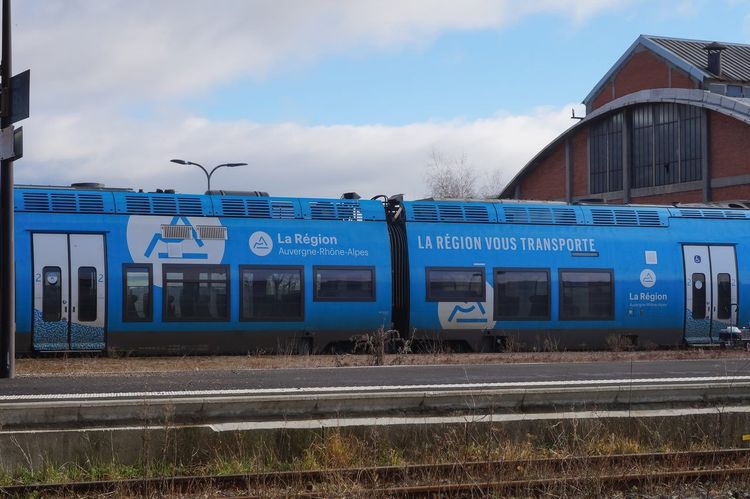
Aurillac can be reached by train from Paris via Clermont-Ferrand or Brive-la-Gaillarde, with a total journey time of four to five hours depending on connections. By car, allow approximately five and a half hours from the capital, more if you extend the trip to the Cantal volcanoes. The city also has a small airport with connections to Paris, convenient for a quick return trip.
On the ground, the town centre can be explored entirely on foot — one day covers the main heritage highlights, two if you include Château Saint-Étienne and a short excursion to the immediate surroundings. Several free or low-cost car parks ring the historic core, and an urban bus network serves the more outlying neighbourhoods. Allow an extra day for the Cantal volcanoes, more if you plan several hikes: a car is almost essential there, as public transport serves the mountain passes poorly.
Budget-wise, Aurillac remains a markedly more affordable destination than France's major cities, for both accommodation and dining — except during the street theatre festival, when prices rise noticeably. The best time for an unusual visit to Aurillac depends on what you are looking for: spring and early autumn offer pleasant light and fewer crowds for exploring the medieval heritage, while late August remains unmissable for experiencing the festival at its full intensity.
FAQ
What is the most unusual thing to visit in Aurillac?
The climb to Château Saint-Étienne remains the most striking experience, combining panoramic views over the city with a visit to the Muséum des Volcans housed in the keep. A tour of an umbrella-making workshop, when available, offers another rare glimpse into the area's local heritage.
How much time should I plan to visit Aurillac differently?
A two-day weekend is enough to cover the Vieux Aurillac, the castle, and a first excursion to the volcanoes of the Cantal. Three days allow more time for hiking and artisan visits.
When does the Aurillac street theatre festival take place?
The event traditionally takes place in late August, over four days, drawing hundreds of companies every year to perform in the streets and squares of the city.
Is Aurillac an easy city to explore on foot?
Yes, the historic centre can be covered entirely on foot, with the main sights located less than twenty minutes' walk from one another.
Where should I stay for an original experience in Aurillac?
Converted burons turned into charming gîtes in the surrounding countryside, and bed-and-breakfasts set up in old buildings in the town centre, offer the most original options.
What should I bring back from Aurillac?
A hand-crafted umbrella from Maison Piganiol or a cave-aged cantal cheese make for souvenirs that are directly tied to the local identity.
How do I get to the Cantal volcanoes from Aurillac?
Puy Mary is less than an hour's drive away, via mountain roads that are best avoided in bad weather outside the summer season.
In Summary: a Prefecture That Defies the Postcard
Aurillac belongs to that rare category of French cities that resist a single image. You come for a castle and leave with a mathematician pope, a last umbrella maker, and the memory of a festival that turns entire streets into open-air theatre. Add in direct access to the Cantal volcanoes and you have a destination far richer than its size would suggest.
While waiting for a dedicated Ryo audio-guided tour of Aurillac to come to life, lovers of off-the-beaten-track discoveries can already explore our Ryo guide to a weekend in Aquitaine to extend the experience elsewhere in France, before one day returning to roam the grey lava alleyways of the Cantal.
À lire également