© Shutterstock
 Votre guide Ryo
Vieux Lyon: Complete Guide to the Historic District in 2026
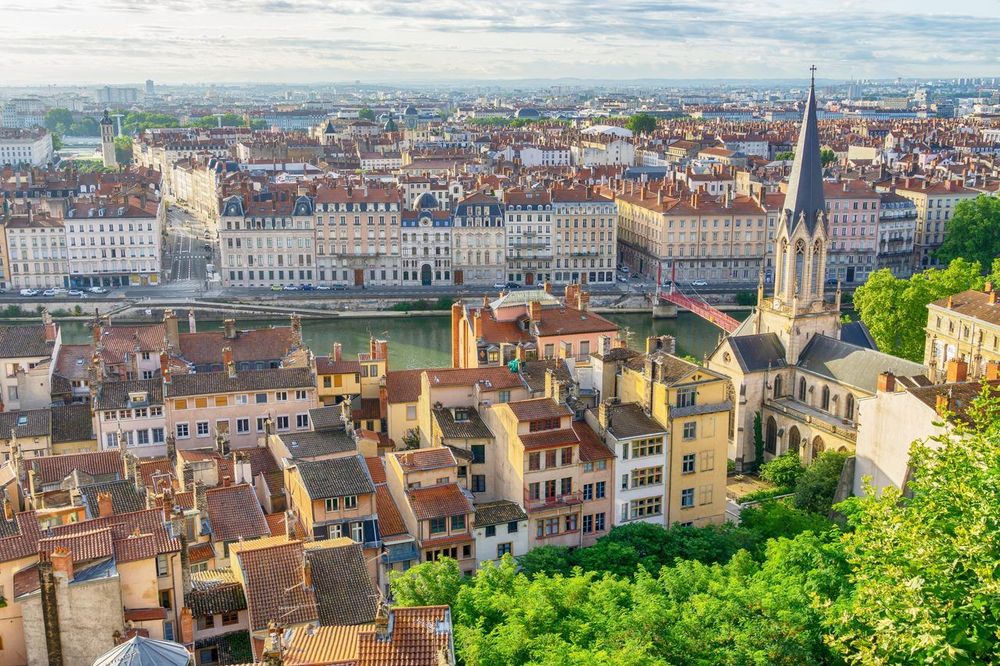
A maze of cobbled streets, ochre facades wedged between two hills, and beneath your feet, a five-century-old secret: the traboules. The Vieux Lyon neighborhood spreads across some fifty hectares between the Saône and the Fourvière hill, and remains one of the best-preserved Renaissance ensembles in Europe. Since 1998, this area has been part of the historic site of Lyon inscribed on the UNESCO World Heritage List, alongside the Presqu'île and the Fourvière hill. The Ryo audio-guided tour of Lyon takes you through every street, without ever having to consult a map.
Three ancient parishes follow one another along the river: Saint-Jean, Saint-Georges, and Saint-Paul. Here you will find a 12th-century cathedral with an astronomical clock still in operation, around thirty traboules open to the public, two museums housed in Renaissance mansions, and a century-old funicular that climbs to the basilica of Fourvière in barely two minutes. Some courtyards still conceal sculpted coats of arms that most hurried visitors never notice. The Ryo audio-guided tour of Lyon lets you follow this historical thread street by street, traboule by traboule, without missing any of the details that make the neighborhood so rich.
A History of Three Districts: Saint-Jean, Saint-Georges, and Saint-Paul
The history of the neighborhood begins well before the Renaissance. From Gallo-Roman times, the Fourvière hill was home to the heart of Lugdunum, the capital of Gaul founded in 43 BC. The current neighborhood developed later, at the foot of this hill, on the right bank of the Saône, around the old cathedral and the bridge that linked the city to the Presqu'île. In the Middle Ages, three distinct parishes already structured this space: Saint-Jean at the center, Saint-Georges to the south, and Saint-Paul to the north, each organized around its own church.
It was during the Renaissance that the neighborhood experienced its golden age. Lyon became a leading financial and commercial hub thanks to the four annual fairs established by King Louis XI in 1463, which exempted the city from commercial taxes for several weeks each year. Italian bankers and merchants from Florence, Genoa, and Siena settled on rue Saint-Jean and rue du Bœuf. They commissioned sumptuous private mansions with interior courtyards, galleries, and spiral staircases that still bear witness to their wealth today. This Italian influence explains the neighborhood's distinctive style — a hybrid of Flamboyant Gothic and Florentine Renaissance found nowhere else in France with such density.
Each of the three sectors retains its own identity, which can still be perceived today while wandering through them. Saint-Jean, around the cathedral, concentrated religious power and the grand merchant residences, with more ornate facades and larger courtyards. Saint-Georges, more working-class, was home to weavers and boatmen who worked on the nearby Saône, in more modest and compact buildings. Saint-Paul, to the north, formed the link with the Croix-Rousse hill and its future weavers' workshops. This social diversity, contained within a confined space, partly explains the neighborhood's urban density, with its tall buildings and shared courtyards sometimes served by a single communal entrance from the street.
Decline set in during the 19th century, when industrial growth shifted economic activity toward the Presqu'île and the Croix-Rousse, where new mechanized silk workshops were established. The area became a working-class neighborhood, sometimes deemed insalubrious, abandoned by the elites who now preferred the more modern buildings on the left bank of the Rhône. Descriptions of the period speak of overcrowded courtyards, deteriorating housing, and a negative image that clung to the neighborhood for over a century.
After the Second World War, some blocks were even threatened with outright demolition, in the name of urban modernization then fashionable throughout France. Plans were drawn up to raze part of the neighborhood to build roads and new buildings, as happened in other French cities during the same period.
The neighborhood's preservation owes much to a handful of residents, architects, and associations who refused this planned disappearance in the 1950s and 1960s. Their mobilization led to a heritage designation that would durably change the neighborhood's face — which will be discussed in the next section. Without this local resistance, most of the facades you admire today would likely have been demolished.
Today, the neighborhood is home to around 2,000 permanent residents, a figure that has remained relatively stable since the major rehabilitation campaigns launched in the 1970s. This population — a mix of former workers, liberal professionals, and students — coexists with a tourist flow estimated at several million visitors per year, one of the highest in the city after the Presqu'île.
A Protected Area Since 1964: The Renaissance Architecture of Vieux Lyon
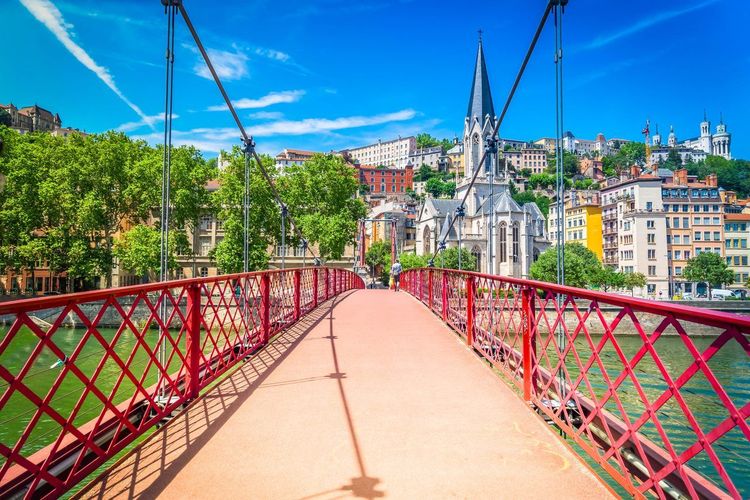
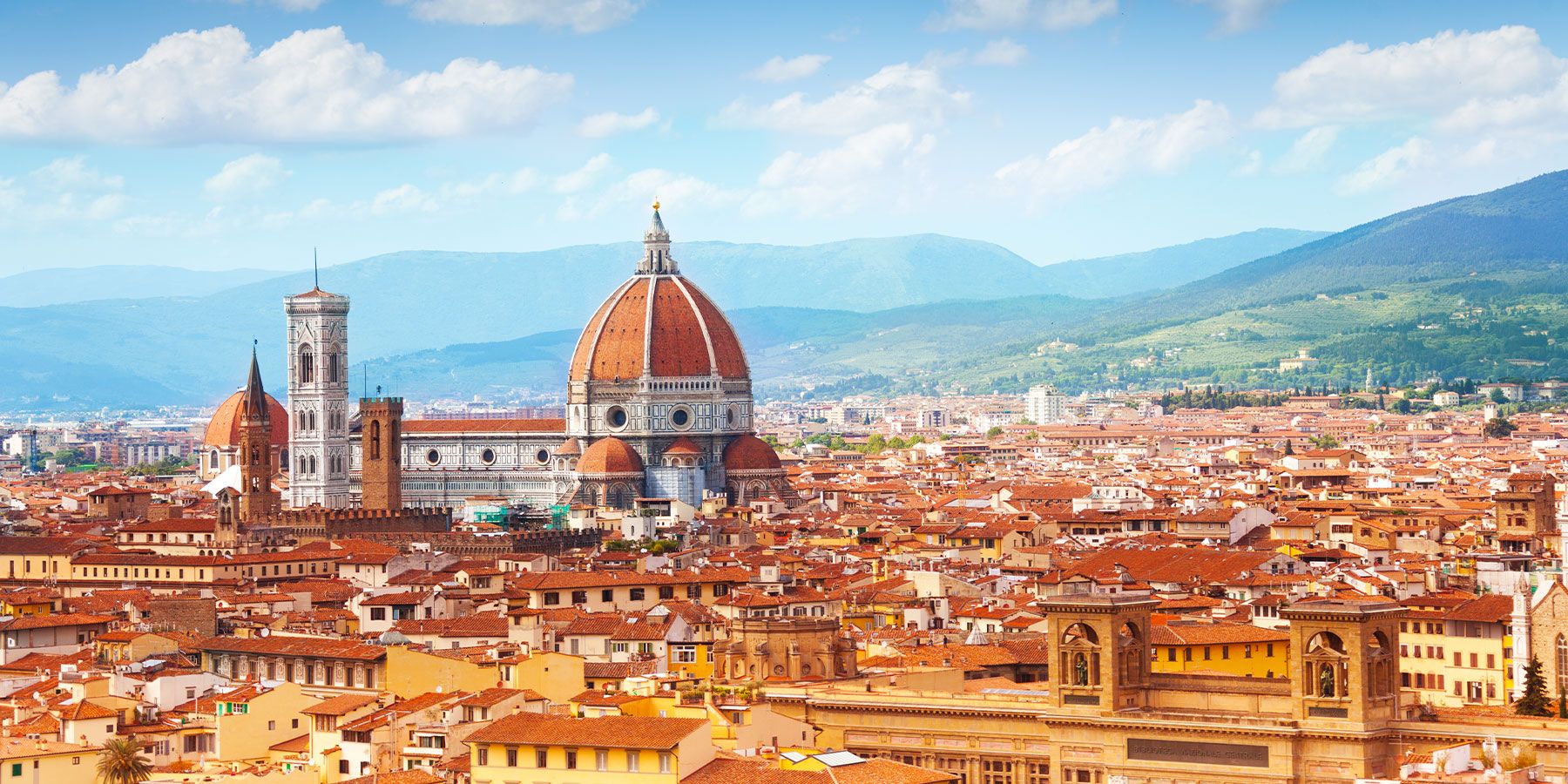
In 1964, Vieux Lyon became the very first protected sector (secteur sauvegardé) in France, two years after this status was created by the Malraux Act of 1962. This designation now protects nearly 500 listed buildings, many of which date from the 15th to the 17th century. It would then take until 1998 for the entire historic site of Lyon, including Vieux Lyon, to join the UNESCO World Heritage List, alongside sites such as the historic centers of Prague and Florence.
The neighborhood's architecture is recognizable by a few typical features. Narrow facades in golden stone or half-timbering often conceal interior courtyards far more spacious than one would imagine from the street. You will find stacked galleries, loggias open onto the courtyard, and above all spiral stone staircases serving the upper floors without encroaching on the living space. This organization in depth, rather than in facade, clearly sets it apart from the later Haussmann-style districts, built on the opposite principle of an ostentatious facade giving directly onto the street.
Corner turrets, often visible on rue du Bœuf or rue Saint-Jean, served both as stairwells and as outward signs of wealth. Some courtyards retain remarkable sculpted elements: medallions, coats of arms, or antique-style decorations inspired directly by Florentine models brought back by Italian merchants. Many of these courtyards remain private property, but several are freely accessible during the day, their carriage gates simply pushed open to allow curious visitors who know where to look.
You will also notice the variety of facade colors, from ochre yellow to pale pink, which gives the neighborhood its particular quality of light in the late afternoon. Many of these hues were restored during renovation campaigns carried out since the 1970s, based on analysis of original paint layers found beneath more recent renders.
Some buildings still bear the name of their original patron: the Thomassin house on place du Change, or the Hôtel de Gadagne, now a museum. Take time to look up above the shop windows: it is often at the second or third floor that the original sculpted details are best read, spared by the commercial transformations of the ground floors.
The Traboules: Secret Passageways of Vieux Lyon
The word traboule comes from the Latin trans ambulare, meaning to walk across. In practice, these are covered passageways that connect one street to another, or even to a quayside, by passing through one or more buildings. The neighborhood has nearly 40 of them, around thirty of which are open to the public, generally between 7am and 7pm, with silence expected since these are still occupied residential buildings.
Their origins remain debated among local historians. Some traboules are said to date back to the 4th century, when residents needed quick access to the waters of the Saône for their daily activities. Others, more numerous, were mainly created or repurposed during the Renaissance to ease movement between merchant mansions, sheltered from the weather and from prying eyes. One thing is certain: in the 19th century, the silk workers (canuts) of the Croix-Rousse, on the other side of the hill, used them to transport bolts of silk away from the rain, between workshops and warehouses. The audio-guided tour of Croix-Rousse, in the Footsteps of the Canuts, on the other side of the hill, tells this textile story in detail, traboule by traboule.
Among those in the neighborhood, the best-known remains the Longue Traboule, which connects 54 rue Saint-Jean to 27 rue du Bœuf by passing through four successive courtyards. Allow five minutes to walk through it while stopping at each courtyard, more if you linger over the sculpted details. Other, more discreet traboules hide at 27 rue Saint-Jean or 6 rue des Trois-Maries and open directly onto the Saône quays, with an unobstructed view of the Presqu'île opposite. Beware of a common confusion: the spectacular cour des Voraces, with its monumental staircase, is not located here but on the slopes of the Croix-Rousse. Many visitors search for it in vain between Saint-Jean and Saint-Paul, when it actually belongs to the city's other great traboule neighborhood.
A tip for spotting them without a map: look for ajar carriage gates, often marked with a small round blue-and-white badge mentioning traboule. Avoid lingering in them after 7pm or speaking loudly — these corridors still serve private homes, and local residents regularly complain about noise from overly large tourist groups.
If you want to explore further, several local guides offer accompanied tours focused exclusively on the traboules, with access to some courtyards normally closed to the public. This is an interesting option if you are visiting as a group or with family and want to avoid ringing at the wrong doors. The Longue Traboule itself remains open to independent visitors via Ryo's audio-guided tour, for those who prefer to explore at their own pace.
The Cathédrale Saint-Jean-Baptiste and Its Astronomical Clock
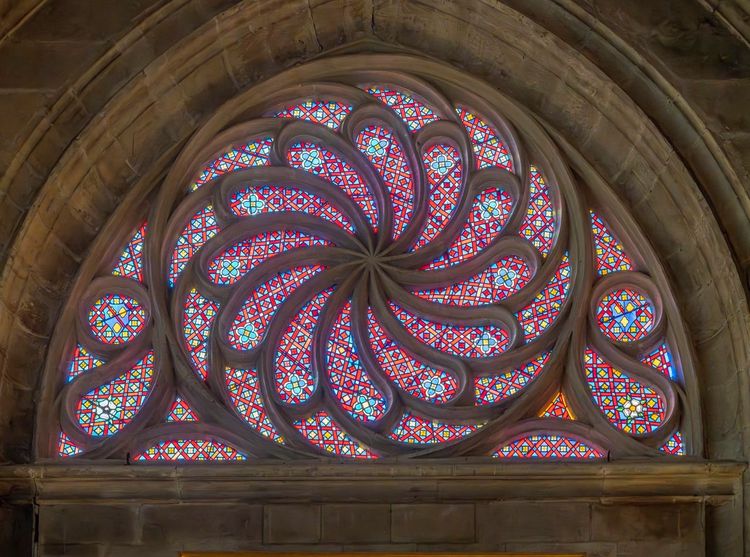
At the heart of the neighborhood stands the Cathédrale Saint-Jean-Baptiste (Place Saint-Jean, 69005 Lyon, rated 4.6/5 on Google based on 15,263 reviews), whose construction spanned more than three centuries, from the 12th to the 15th. This duration explains the blend of styles visible on the facade: a Romanesque base, a Gothic nave, and a Flamboyant portal adorned with more than 300 sculpted medallions, now partially damaged by the Wars of Religion of the 16th century.
Inside, the 14th-century astronomical clock attracts its share of curious visitors every day. Wound by hand, it indicates not only the time but also the date, the position of the sun and moon, and activates a small automaton theatre at set hours — at noon, 2pm, 3pm, and 4pm. It is one of the oldest astronomical clocks still in operation in Europe.
The cathedral also has its share of national history: it was here that the proxy marriage of Henri IV and Marie de Medici was celebrated in 1600, before the couple met in person a few weeks later in Lyon itself. The choir's stained-glass windows, among the oldest in the building, were restored in the 19th century after suffering the ravages of time and successive conflicts.
You can visit the nave freely during the day; only the crypt and the treasury, when open, require a modest entrance fee. Plan appropriate attire — covered shoulders — as in most active places of worship. The Sunday morning mass is still celebrated normally, which may restrict tourist access at certain specific times.
Rue Saint-Jean and Rue du Bœuf: The Historic Main Streets
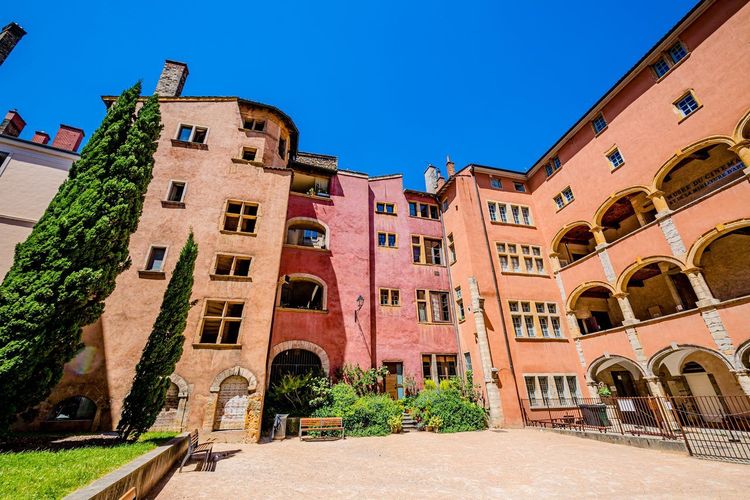
Rue Saint-Jean connects the cathedral to place du Change (69005 Lyon) in an almost straight line, over about 300 metres. It was the neighborhood's main commercial axis from the Renaissance onward, and has retained that vocation with its bouchon windows, souvenir shops, and pastry displays. The facades, four to five storeys high, conceal numerous traboules and remarkable courtyards, particularly at numbers 24, 27, and 54.
Running parallel to the Saône, rue du Bœuf is narrower and quieter. Here you will find the Tour Rose, a 16th-century mansion recognizable by its pink-brick stair tower, now incorporated into a hotel complex. A little further along, the statue of the Child with the Goose, a copy of a Hellenistic original, adorns a discreet wall fountain that many hurried visitors never notice.
At the junction of the two streets, place du Change owes its name to the money changers who operated there during Lyon's international fairs. The Loge du Change, an 18th-century Neoclassical building, occupies one side of the square and now serves as a Protestant temple. It is a useful landmark for getting your bearings in the neighborhood, halfway between the cathedral and the pont Bonaparte.
In the evening, place du Change and its immediate surroundings sometimes host street musicians or small pop-up markets, particularly on fine spring days. It is also an excellent starting point if you want to explore rue Lainerie further north, whose name recalls the former wool trade once practiced there before the rise of silk.
From Saint-Jean to Fourvière: The Climb to the Basilica
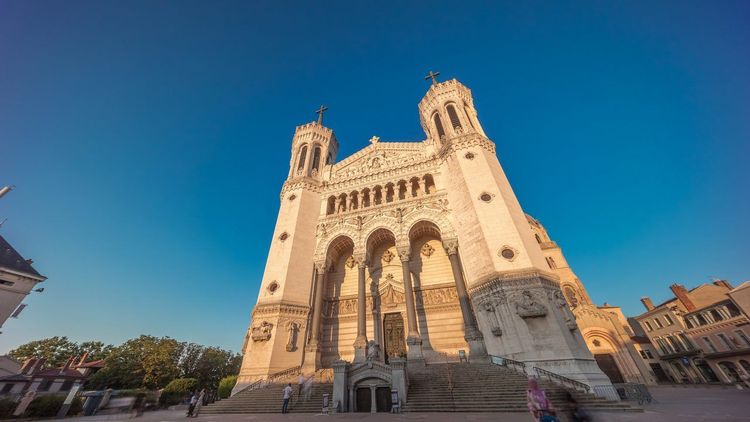
From place Saint-Jean, two options are available to reach the Fourvière hill: the walk up through the Rosaire gardens, or the funicular, locally nicknamed la ficelle (the string). The second option remains the most popular: a two-minute journey is enough to climb nearly 130 metres of elevation, from the Vieux Lyon station up to Fourvière.
At the top, the Roman theatres of Fourvière are a reminder that Lyon was founded by the Romans in 43 BC under the name of Lugdunum. The grand theatre, which can accommodate up to 10,000 spectators during the Nuits de Fourvière festival in summer, stands alongside the smaller and better-preserved odeon, reserved for musical performances in antiquity. Access to the archaeological site is free all year round, outside of performance evenings.
A few hundred metres further stands the Basilique Notre-Dame de Fourvière (8 Place de Fourvière, 69005 Lyon, rated 4.8/5 on Google based on 40,348 reviews), completed in 1896 in a neo-Byzantine style that deliberately contrasts with the Gothic restraint of the Cathédrale Saint-Jean below. Its golden mosaics, Romanesque crypt, and above all its esplanade offer one of the most sweeping panoramas over Lyon: both hills, the confluence of the Rhône and Saône, and on a clear day the Alpine chain on the horizon, with Mont Blanc sometimes visible to the naked eye.
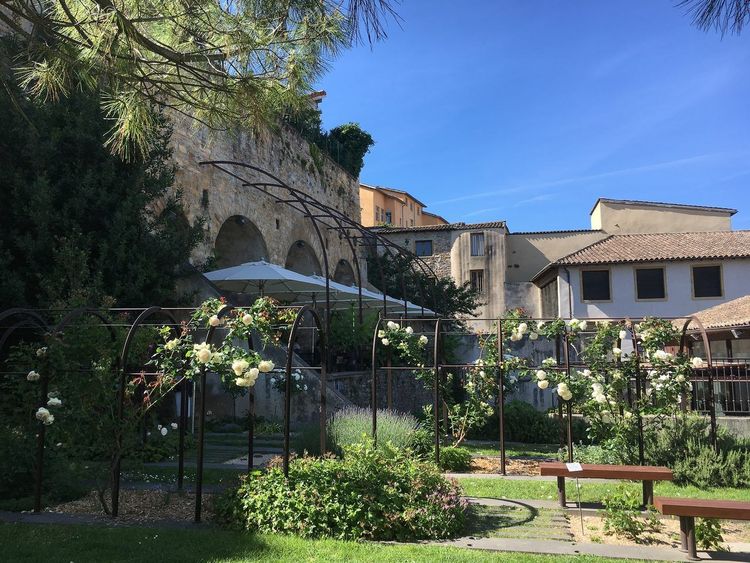
For the descent, the footpath through the Rosaire gardens is preferable — a shaded route that winds between the trees and brings you back directly into Vieux Lyon, near the montée du Chemin Neuf. Allow around twenty minutes of walking, mostly downhill, with several intermediate viewpoints over the neighborhood's rooftops. Bring water if you are heading up in the summer heat: there is no fountain along this stretch.
Museums and Curiosities of the Neighborhood
Housed in a vast Renaissance mansion — one of the largest built complexes in the neighborhood — the Musée Gadagne traces the history of Lyon from its Gallo-Roman origins to the present day. It also houses, on the top floor, the Musée des Marionnettes du Monde, where Guignol takes pride of place — the emblematic puppet created in Lyon in 1808 by Laurent Mourguet, a former silk worker turned itinerant tooth-puller and then puppet showman. The museum closes on Mondays and most public holidays, like the majority of Lyon's municipal institutions: check opening hours before visiting, especially outside the summer season.
Close by, the Musée Miniature et Cinéma (60 Rue Saint-Jean, 69005 Lyon, rated 4.7/5 on Google based on 14,503 reviews) occupies the Maison du Crible, a 16th-century mansion. It features miniature sets of remarkable realism, alongside a collection of props and models used in well-known films, from The Fifth Element to Alien. The visit ends with an entire floor devoted to special effects and cinema make-up, particularly popular with teenagers.
More off the beaten track, the small museum of religious art adjoining the cathedral is worth a detour if you are interested in liturgical goldsmithery. Allow about half an hour for the visit, often without queues, unlike the two previous museums which can be fully booked at weekends in high season.
If your time is limited, prioritize the Musée Gadagne, which is more comprehensive and better connected to the general history of the neighborhood you have just explored in the surrounding streets. The Ryo audio guide also points out the facades and courtyards to observe just before you go in, helping you link what you see inside with what you have just walked through outside.
Where to Eat in Vieux Lyon: Bouchons and Good Tables
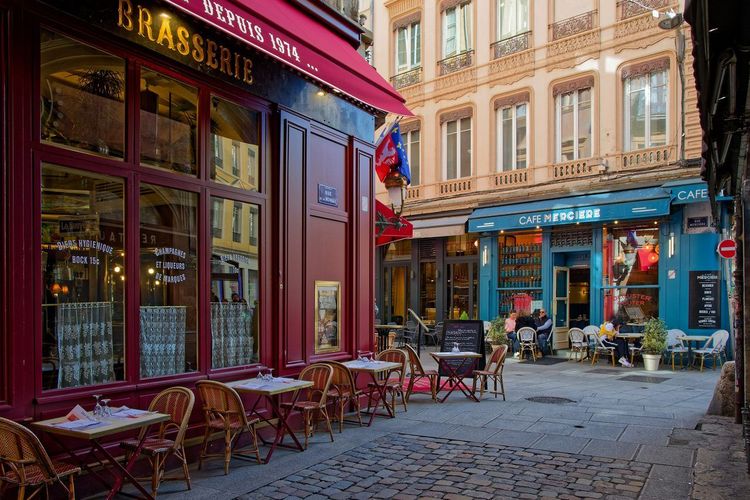
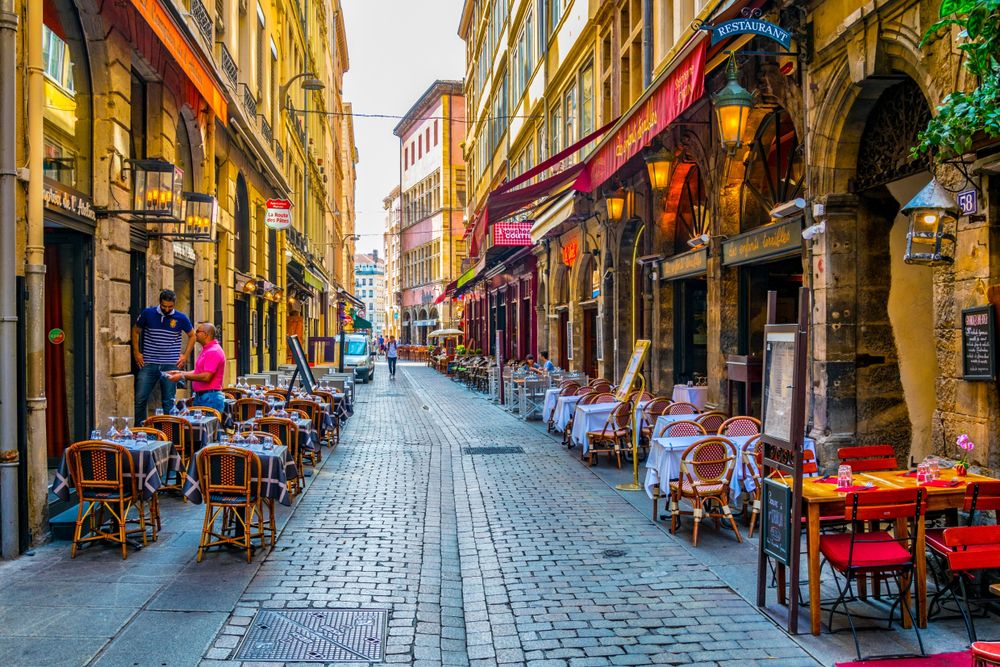
The neighborhood has one of the highest concentrations of bouchons lyonnais in the city. These small traditional restaurants, often set in old vaulted cellars or on the ground floors of Renaissance mansions, serve hearty cuisine inherited from the mères lyonnaises: pike quenelles with Nantua sauce, tablier de sapeur, cervelle de canut, and andouillette sausage. Some establishments display the official Bouchon Lyonnais label, a mark of authenticity in contrast to addresses more geared toward passing tourists.
For a more substantial or lighter meal, head to the Halles de Lyon Paul Bocuse (102 Cours Lafayette, 69003 Lyon, rated 4.5/5 on Google based on 14,674 reviews), about fifteen minutes by metro from the Vieux Lyon station, on the other side of the Rhône. This covered market brings together around sixty artisans and restaurateurs, including cheese makers, fishmongers, and butchers. Our article details how to plan a visit to the Halles de Lyon Paul Bocuse if you want to extend the gastronomic experience after your stroll through Vieux Lyon.
Within the neighborhood itself, opt for the side streets off rue du Bœuf rather than rue Saint-Jean, which is busier and therefore pricier. Book ahead if possible, especially at weekends: most bouchons have only around twenty covers, and some flatly refuse last-minute reservations in peak tourist season. Budget-wise, expect to pay an average of €25 to €35 for a full menu in a traditional bouchon, drinks included — good value for such a touristy neighborhood, provided you avoid the most exposed addresses on rue Saint-Jean.
If you are travelling with children or prefer lighter fare, a few addresses now offer streamlined versions of Lyonnaise classics without abandoning the original recipes. Ask the waiter for advice: most know their menu thoroughly and can steer you toward a less rich dish without compromising the experience.
Walking Itinerary: Visiting Vieux Lyon in Half a Day
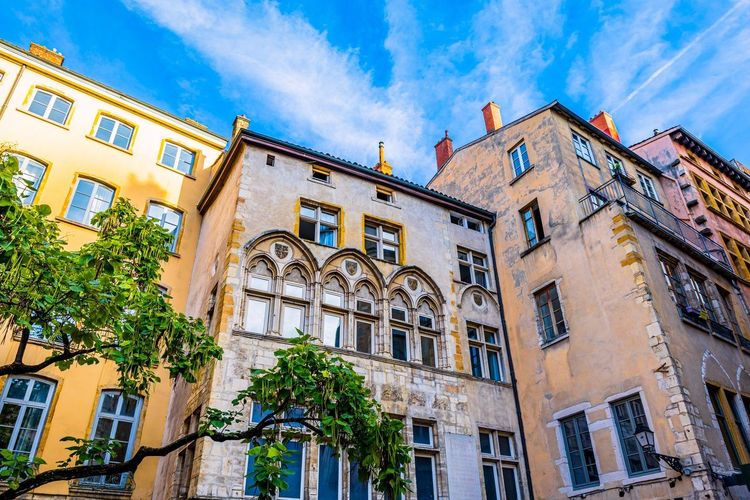
Allow about three hours to cover the neighborhood's highlights on foot, including a lunch break and the climb to Fourvière. Here is a simple itinerary designed to avoid retracing your steps.
Start at place Saint-Jean, in front of the cathedral, then head up rue Saint-Jean to the Longue Traboule at number 54. Cross through the four courtyards to reach rue du Bœuf, where you will spot the Tour Rose. Head back down toward place du Change via the smaller parallel lanes, less crowded and ideal for observing the facades without the Saturday afternoon crowd.
From place du Change, make your way to the Musée Gadagne, a five-minute walk, for a cultural break of about an hour. On leaving, two options: push on to the Musée Miniature et Cinéma if cinema interests you, or head straight to the funicular station to climb up to Fourvière before the afternoon crowds gather on the esplanade.
Once at the top, allow 45 minutes for the basilica and its panorama, then descend via the Rosaire gardens. You will arrive back at the foot of the neighborhood near the montée du Chemin Neuf, a five-minute walk from your starting point. For those who prefer step-by-step guidance rather than a paper map, the Ryo audio-guided tour of Lyon follows broadly this same route, with commentary triggered automatically at each stage via geolocation, so you never need to keep checking your phone.
If you are travelling as a family, build in extra breaks: children particularly enjoy the traboules, rather like a life-size treasure hunt, but tire more quickly on the climb to Fourvière. The funicular remains the best option for all ages in that case.
If you have a full day rather than half a day, add the Presqu'île and its grand squares to your itinerary: our guide to visiting Lyon in 3 days details how to combine Vieux Lyon with the rest of the city over a longer stay.
Neighborhood Life: Shops, Market, and Atmosphere
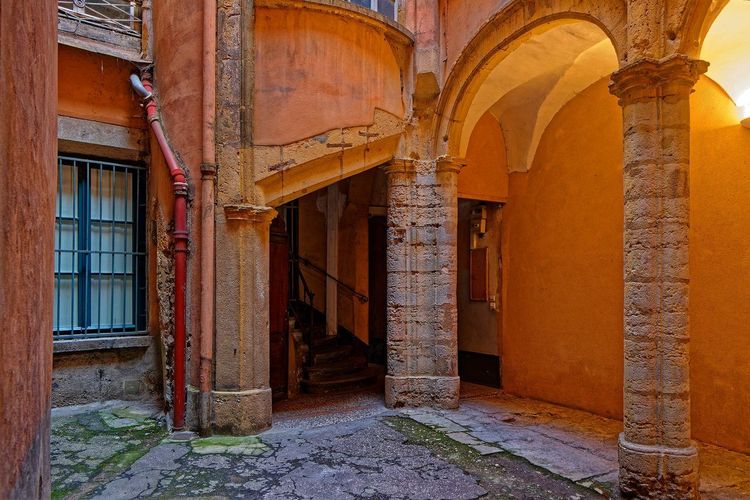
After 6pm, the neighborhood changes its face. Tourist groups give way to residents heading home, bouchon terraces filling up, and a handful of wine bars tucked into the lanes around rue des Trois-Maries. This is arguably the best time to sense the neighborhood's residential atmosphere, far from the daytime crowds.
In terms of shops, a handful of artisan workshops — bookbinders, chocolatiers, antique dealers — hold their ground against tourist pressure, particularly on rue Saint-Jean and rue Lainerie. The nearest food market is held on quai Saint-Antoine, on the other bank of the Saône, every morning except Monday: a good option for an impromptu picnic in the Rosaire gardens or on the quayside.
The neighborhood also has a significant student population, housed in some of the Renaissance buildings converted into small apartments. This social mix — permanent residents, local shops, and tourist flow — partly explains why the area has avoided the trap of becoming a museum district entirely emptied of its inhabitants, unlike other European historic centers accorded the same UNESCO status.
Flower-filled window boxes, laundry sometimes discreetly drying in a courtyard, or children heading home from school through a traboule: these everyday details are a reminder that the neighborhood is very much alive, not merely a frozen backdrop for postcards.
Getting There, Transport, and Practical Information
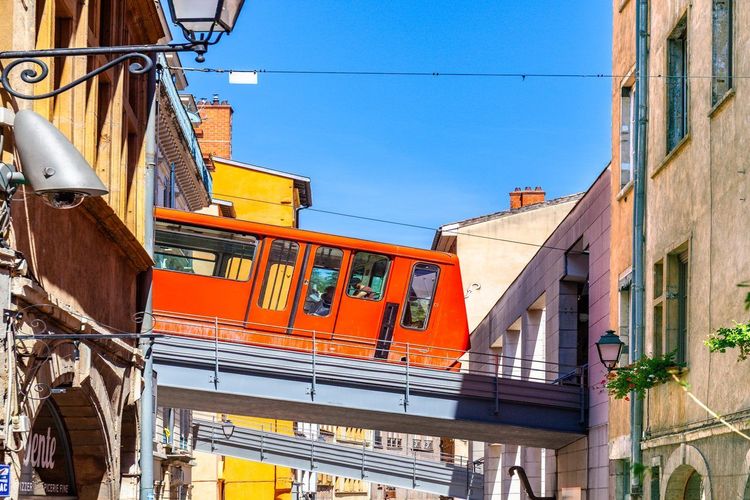
The neighborhood is easily reached by metro, line D, at the Vieux Lyon – Cathédrale Saint-Jean stop, a short walk from place Saint-Jean. Several bus lines complement the service, along with river shuttles in summer from the Presqu'île. By car, it is better to park on the Presqu'île or at car parks near quai Fulchiron and walk to the neighborhood, as most streets are pedestrianized or very narrow for motor traffic. Good to know: the funicular is part of the TCL public transport network, so a standard metro ticket is all you need to ride it — no extra charge — and the same ticket remains valid for the metro-funicular connection within the following hour.
The Lyon City Card tourist pass, available for one, two, or three days, includes entry to the Musée Gadagne, the Musée Miniature et Cinéma, as well as public transport and the funicular. For a stay focused solely on Vieux Lyon, it is not essential, as the main outdoor sites — the cathedral, traboules, and historic streets — are freely accessible all year round.
Remember to wear comfortable shoes: the cobblestones and slopes toward Fourvière make the visit ill-suited to heels or smooth-soled shoes, especially after a shower.
When to Visit Vieux Lyon: Seasons and Crowds
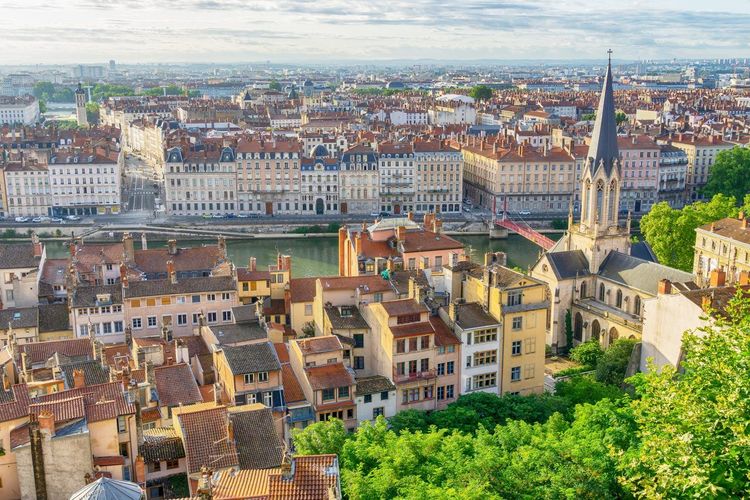
Spring and early autumn remain the most comfortable periods for exploring the neighborhood, with soft late-afternoon light on the ochre facades and still-manageable crowds on weekdays. Summer, on the other hand, sees the neighborhood saturated between 11am and 5pm, particularly around the cathedral and the funicular station, where queues can stretch for several dozen metres.
December deserves a special mention, with the Fête des Lumières in early December, which transforms the facades of Vieux Lyon into screens for monumental light projections. The neighborhood then takes on an entirely different nocturnal dimension, but crowds are considerable: it is best to visit the traboules during the day and return in the evening for the light show. The Ryo audio guide also points out some lesser-known viewpoints, away from the most congested routes, to enjoy the spectacle without being squeezed by the crowd. Our article on the Fête des Lumières in Lyon details the programme and the best viewpoints.
In winter outside of December, the neighborhood regains a welcome calm, with a low-angle light that is particularly photogenic on the facades in the late morning.
FAQ
Where is the Vieux Lyon neighborhood located?
Vieux Lyon occupies the right bank of the Saône, at the foot of the Fourvière hill, in the 5th arrondissement of Lyon. It stretches from place Saint-Jean in the south to the Saint-Paul district in the north.
How much time should I plan to visit Vieux Lyon?
A half-day, about three hours, is enough to cover the main sites: the cathedral, one or two traboules, rue du Bœuf, and the Gadagne museum. Allow a full day if you add the climb to Fourvière and lunch in a bouchon.
Are the traboules freely accessible?
Around thirty private traboules are open to the public, generally between 7am and 7pm. These are occupied residential buildings: it is best to move through them quietly and avoid late hours.
How do I get up to the basilica of Fourvière from Vieux Lyon?
The funicular, departing from the Vieux Lyon station, takes two minutes to reach Fourvière. On foot, allow 20 to 25 minutes via the Rosaire gardens or the montée Saint-Barthélemy.
Is visiting Vieux Lyon free?
Yes, for the most part: streets, the cathedral, traboules, and the Fourvière esplanade are all freely accessible. Only the museums — Gadagne and Miniature et Cinéma — as well as certain parts of the basilica, require a ticket.
What is the best time to avoid crowds in the neighborhood?
In the morning before 10am or in the late afternoon after 5pm, on weekdays rather than weekends. Avoid July and August between 11am and 5pm, the period of highest tourist footfall.
Is it easy to park near Vieux Lyon?
Street parking in the neighborhood is very limited. It is better to use a car park near quai Fulchiron or the Presqu'île, then reach Vieux Lyon on foot or by metro.
Conclusion
Vieux Lyon lends itself equally well to an impromptu stroll or a carefully planned itinerary. Between discreet traboules, Renaissance facades, and the panorama from Fourvière, the neighborhood condenses several centuries of Lyonnaise history within a perimeter that can be explored entirely on foot, without ever needing to hop back on public transport along the way.
If you prefer to be guided without juggling a paper map and phone searches, the audio-guided tour of Lyon covers Vieux Lyon and its surroundings, with commentary triggered automatically at each point of interest. The perfect way to turn a simple visit into a genuine immersion in the neighborhood's history.