© Shutterstock
 Votre guide Ryo
Visiting Nancy in 2 Days in 2026: Complete Itinerary between Stanislas and Art Nouveau
As dusk falls, the golden gates of Place Stanislas blaze under the spotlights and the crowd that strolled in flip-flops in the afternoon suddenly transforms into silhouettes photographing gold against a blue night sky. It is this shift — between solemn classicism and laid-back student life — that sets the tone: visiting Nancy in 2 days means crossing three centuries of architecture within a perimeter barely larger than a pocket handkerchief, walkable in half a day. Two days are enough to string together the UNESCO-listed golden triangle, an Art Nouveau house still furnished by its original owner, a stroll along the junction canal, and a detour to a confectionery that has jealously guarded its macaron recipe since 1793. Along the way you will also discover an orientalist villa forgotten on the hillsides, a street art trail covering former electrical substations, and a tourist pass that, used wisely, can cut your admission costs in half. The Ryo audio-guided tour of Nancy serves as the perfect thread to ensure you miss nothing of this Lorraine highlights reel, neighbourhood by neighbourhood.
Two full days, a handful of gourmet addresses, and a touch of nature thrown in for good measure: everything you need to turn a simple weekend into a complete immersion in a city that has long lived in the shadow of its Alsatian neighbours.
Day 1: the UNESCO Golden Triangle and the Old Town
The first day belongs entirely to Nancy's historic heart — that compact area where 18th-century classicism and medieval remains speak to each other across a handful of streets. Allow a full day to avoid rushing: every square deserves a pause, every doorway a lifted gaze.
The UNESCO Golden Triangle: Place Stanislas, Place de la Carrière, and Place d'Alliance
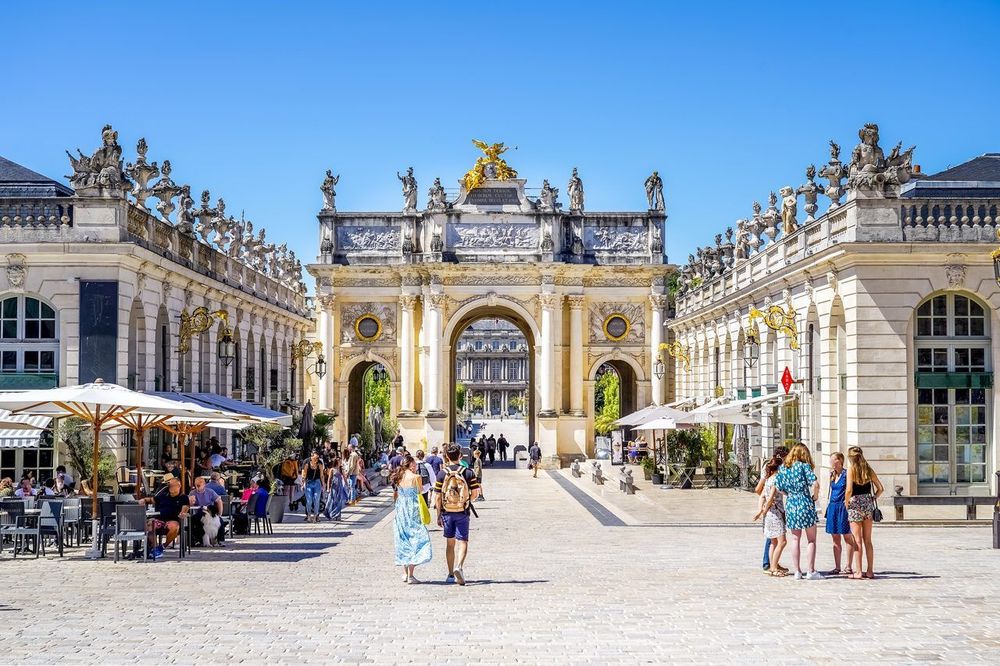
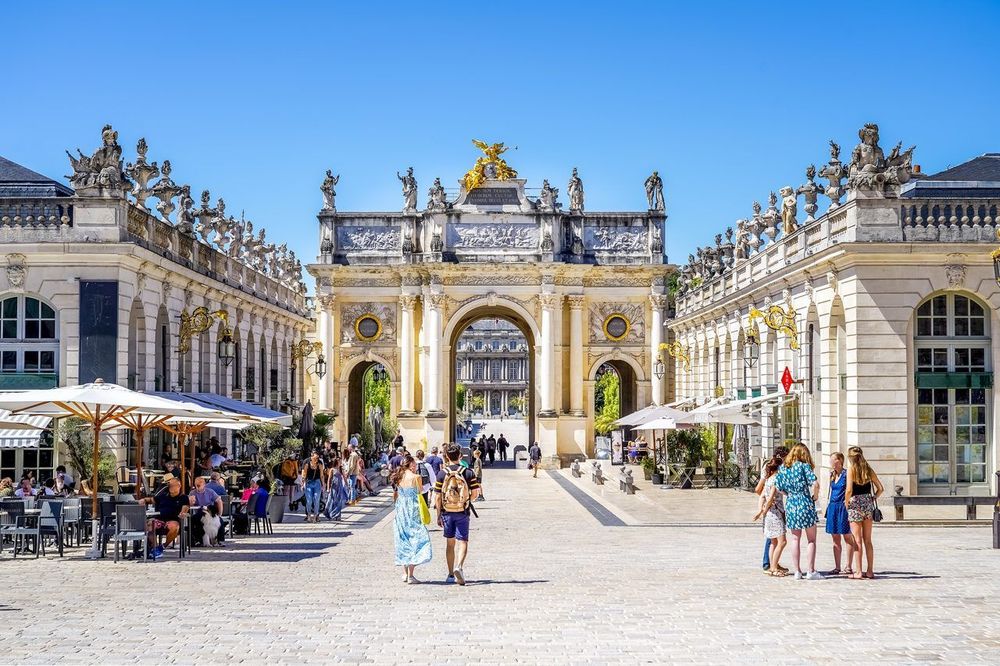
Everything inevitably starts with Place Stanislas, listed as a UNESCO World Heritage Site since 1983 along with its two neighbours. Designed by architect Emmanuel Héré for Duke Stanislas Leszczynski, it unfolds its gilded wrought-iron gates — crafted leaf by leaf by Jean Lamour — its Neptune and Amphitrite fountains, and the former town hall closing the perspective. In the morning, before the tour groups arrive, the square still belongs to joggers and pigeons; this is the moment to photograph it without anyone standing in front of the gates.
Stanislas Leszczynski, former dethroned King of Poland, received the Duchy of Lorraine as a life tenancy following the marriage of his daughter to Louis XV. This peculiar diplomatic arrangement explains the square's grandeur: Stanislas invested a personal fortune to build himself a capital befitting his ambitions, even at the cost of indebting the duchy for several decades.
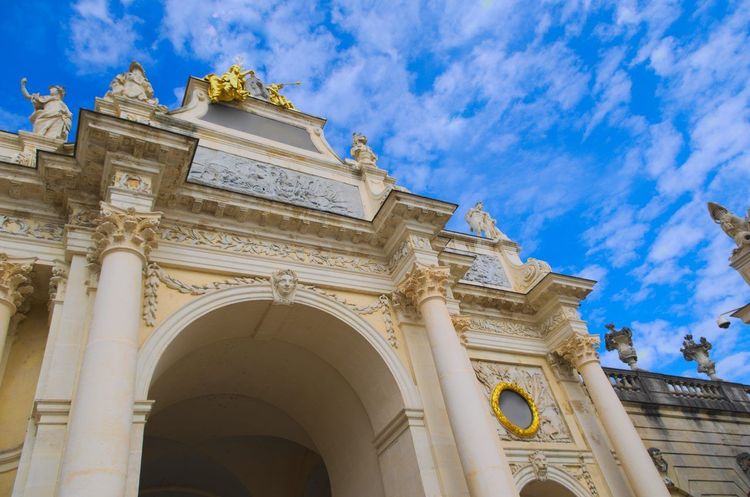
Passing under the Arc Héré at the square's north-western corner, you reach Place de la Carrière, a tree-lined avenue bordered by colonnaded mansion houses that once served as a jousting ground. The atmosphere changes completely: fewer tourists, more calm, and a perspective stretching all the way to the Palais du Gouvernement. This is where the Lorraine nobility lived, behind facades that are almost identical — an orderly arrangement conceived by Héré to emphasise the unity of ducal power.
The third square in the trio, Place d'Alliance, is discovered almost by surprise, slightly set back. Smaller and more intimate, it celebrates the Franco-Austrian alliance of 1756 around a baroque fountain surrounded by lime trees. You can sit on a bench for five minutes before moving on — it is often the spot that hurried visitors skip, wrongly so: it is precisely here that the city's scale reveals itself best, far from the grandeur of Stanislas.
To understand how these three squares connect with the rest of the city, the Ryo guide to Nancy's neighbourhoods details the boundaries between the Old Town, the New Town, and the classical centre — a useful mental map before setting out on foot.
The Ducal Palace, Porte de la Craffe, and the Cordeliers
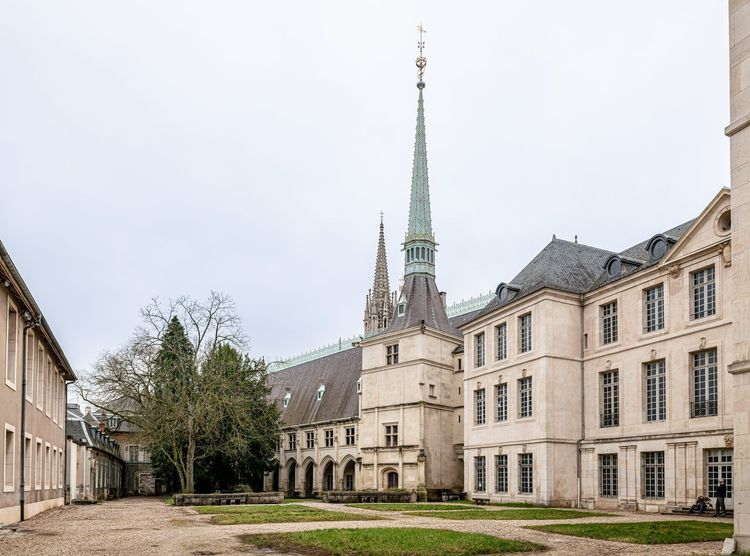
Heading up Grande Rue from Place Stanislas, you enter the Old Town — Nancy's medieval cradle, predating Stanislas's project. The Palais des Ducs de Lorraine, with its flamboyant gatehouse adorned with an equestrian statue of Duke Antoine, houses the Musée Lorrain, currently closed for an extensive renovation: the exterior facade, however, remains visible and is worth the detour in its own right.
Just next door, the church and chapel of the Cordeliers house the recumbent effigies of the Dukes of Lorraine — a ducal necropolis little known enough to remain quiet even in the height of the season. The chapel's dome, modelled on the Medici Chapel in Florence, surprises with its proportions in a city most often associated with 18th-century classicism.
At the end of Grande Rue, the Porte de la Craffe closes the old fortified enclosure. Its two round towers with machicolations, a 14th-century remnant, served as a prison for many years before becoming the city's symbolic gateway. You can end the morning here, then head back down towards the terraces of Rue des Maréchaux for lunch — this street concentrates most of the gourmet addresses in the historic centre.
In the afternoon, if time is tight, it is possible to trim the itinerary: Grande Rue itself is a pleasant stroll, punctuated by old houses and inner courtyards discovered by pushing a half-open carriage gate. Many hurried visitors skip these details, yet they make all the difference between a postcard visit and a real wander through the Old Town.
Day 2: the New Town, Art Nouveau, and the Banks of the Meurthe
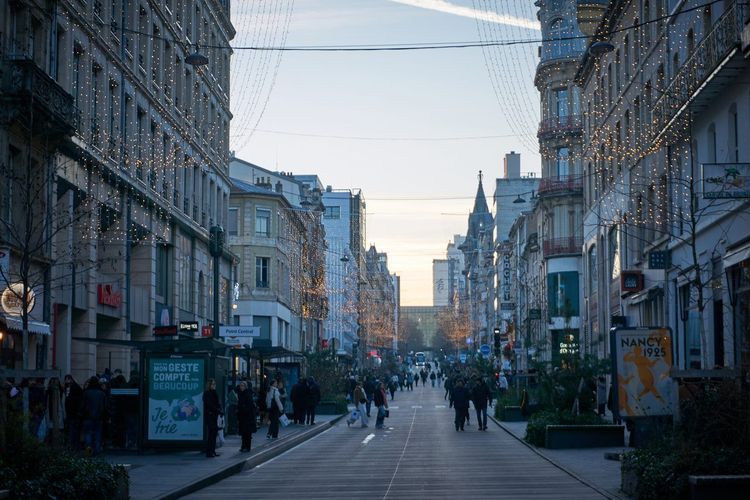
A change of scenery for the second day: head to the New Town, laid out by Charles III in the 16th century and largely reinvented by Art Nouveau industrialists around 1900. This is the less photographed side of Nancy, but just as distinctive.
Unlike the Old Town's winding lanes, the New Town follows a grid plan conceived by Charles III to organise the expansion of the ducal capital. It is the wide avenues inherited from this urban logic — Avenue Foch above all — that allowed 19th-century industrialists to build spacious Art Nouveau villas with gardens, a luxury unthinkable within the tight fabric of the historic centre.
Villa Majorelle and the Musée de l'École de Nancy
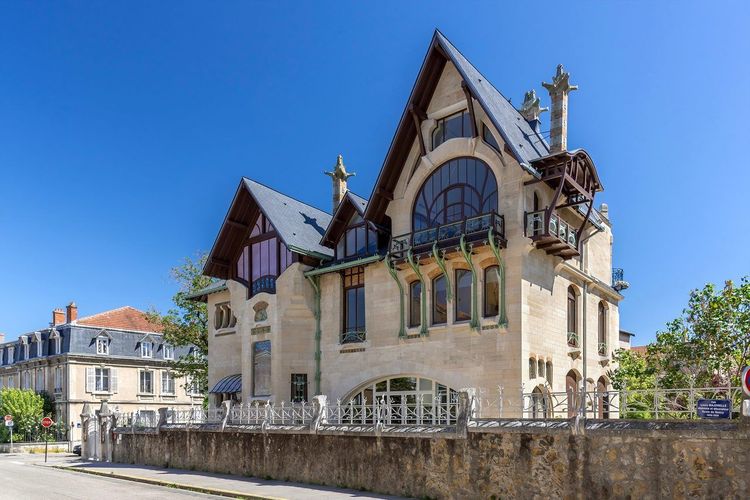
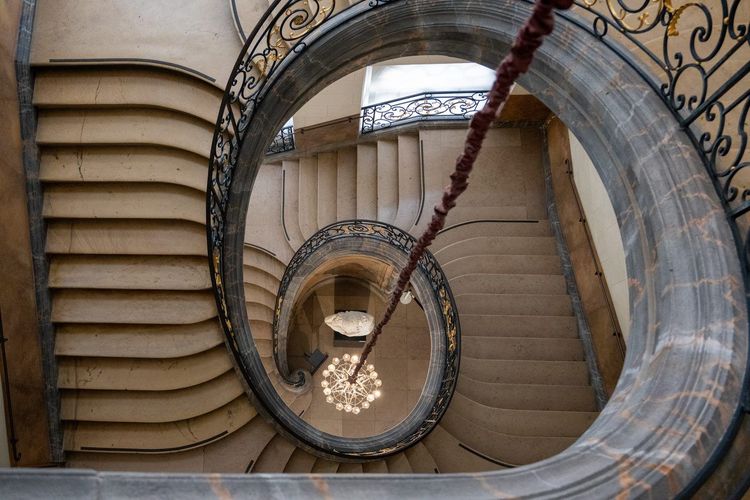
A ten-minute walk from the station, Villa Majorelle opens its doors like a time capsule. Built in 1902 for cabinet-maker Louis Majorelle by architect Henri Sauvage, it remains furnished in its original Art Nouveau style: vegetal ironwork, stained-glass windows by Jacques Gruber, a staircase that seems to grow like a vine. Visits take place in small groups on reserved time slots — book your ticket several days in advance during high season.
A few streets away, the Musée de l'École de Nancy (36-38 Rue du Sergent Blandan, 54000 Nancy, rated 4.6/5 on Google with 2,403 reviews) occupies the former home of a patron of the movement, with a garden planted with species that directly inspired the floral motifs of the furniture displayed inside. Unlike a conventional museum, the rooms are presented as in a lived-in home — dining room, bedroom, sitting room — giving an experience that feels more sensory than documentary. The École de Nancy, led by Émile Gallé, championed art for everyone and in everything, from collectible vases to door handles — a philosophy found throughout the New Town's architecture.
Walking back towards the centre along Avenue Foch, several listed facades are worth slowing down for — this thoroughfare has one of the highest densities of Art Nouveau buildings in the city, with banks, villas, and apartment blocks competing in ironwork. The Art Nouveau experiences selected by Ryo in Nancy often return to this neighbourhood, which is less frequented than the classical centre but equally photogenic.
The Canal, the Bras Vert, and the Banks of the Meurthe
The afternoon lends itself to a greener pause, along the Nancy junction canal, the link between the Meurthe and the Canal de la Marne au Rhin. The shaded, flat towpath can be covered on foot or by bicycle in just under an hour, with moored barges and a few terraces set up for picnicking.
Further along, the Bras Vert and the banks of the Meurthe offer a wilder face — reeds, grey herons, and cycle paths heading out of the city. This is where Nancy's residents come to run at the end of the day, far from the bustle of the centre. The city breathes differently here, almost rural, just fifteen minutes' walk from Place Stanislas.
In the late afternoon, the low-angled light on the canal water offers one of the finest viewpoints for photographing the silhouettes of towers and steeples in the centre — without the crowd that gathers earlier in the day around Place Stanislas.
This Art Nouveau day wraps up nicely with dinner in the Saint-Georges or Foch neighbourhood, where several restaurants lean into the 1900 aesthetic right down to the tableware.
The Must-See Museums of Nancy
Nancy has five major museums, three of which already appear in the two-day itinerary. To plan your visit without unpleasant surprises, here are the key opening hours and admission prices.
The Musée des Beaux-Arts de Nancy, located on Place Stanislas itself, brings together a collection ranging from Italian Renaissance painting to contemporary art, with a Daum glass section housed in the former casemates beneath the square. Admission is around €7 for adults, free on the first Sunday of the month, open every day except Tuesday from 10am to 6pm.
More unexpected, the Muséum-Aquarium de Nancy (34 Rue Sainte-Catherine, 54000 Nancy, rated 4.5/5 on Google with 4,147 reviews) combines tropical tanks with natural history collections inside a preserved 1930s setting complete with mosaics and stained glass. Children stop at the piranhas, adults at the decor itself — often the real surprise of the visit.
The Musée de l'École de Nancy, already covered above, rounds out this core selection, as does the Musée Lorrain, housed in the Palais des Ducs but currently closed for works — check its opening status before making the trip, as the renovation spans several years. A fifth name deserves a place on the list: the Musée de l'Histoire du Fer in Jarville-la-Malgrange, ten minutes from the centre by tram. Less visited than the others, it traces the history of Lorraine's iron and steel industry through a route that speaks as much to metallurgy enthusiasts as to families looking for an original afternoon out. Closed on Tuesdays, open either continuously or in two sessions depending on the season — worth confirming on site.
Several of these museums now offer a digital audio guide accessible on a smartphone — a practical option if you prefer to keep your hands free rather than carrying a device borrowed from reception. Combined tickets also exist between the municipal museums for visitors who want to focus solely on the art collections without purchasing the full CityPass.
Nature and Relaxation: Parc de la Pépinière, the Botanical Garden, and Nancy Thermal
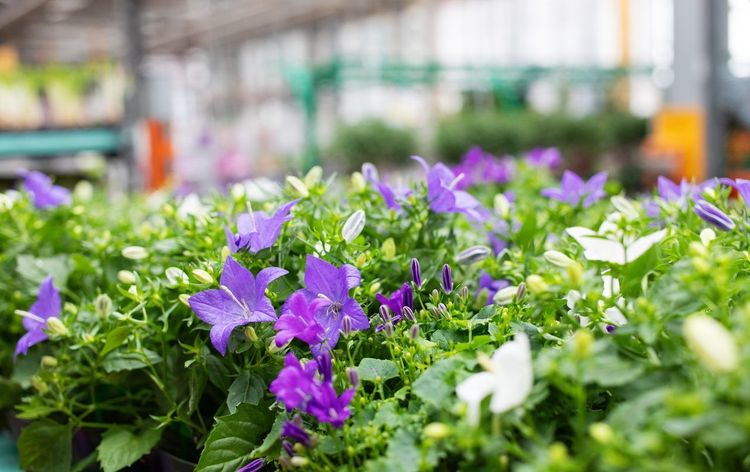
After two days packed with architecture, Nancy also knows how to slow down. The city readily claims its title as a place of wellbeing, between its green lung and its thermal heritage.
Parc de la Pépinière and the Jardin Botanique Jean-Marie Pelt
The Parc de la Pépinière, a short walk from Place Stanislas, has served as Nancy's green living room since the 18th century. It features an old merry-go-round, a free mini-zoo where deer and poultry occupy enclosures, pétanque courts taken over as soon as the weather turns fine, and a rose garden that fills the air with scent in June. It is the kind of place where spreading out a blanket for an hour is enough to shift the pace of the day.
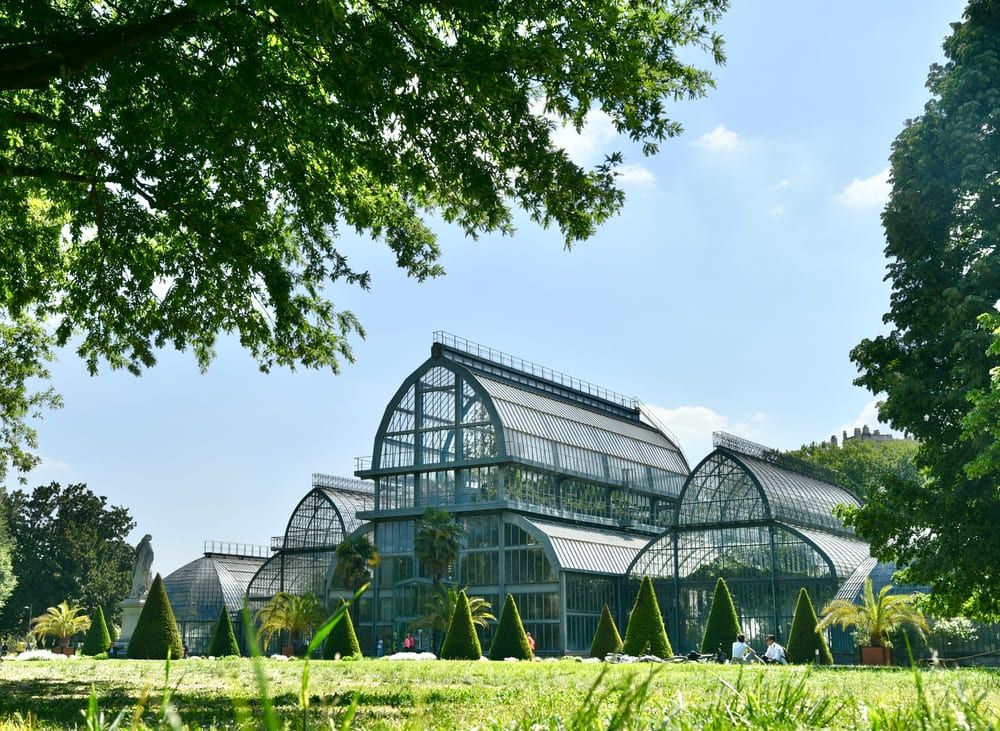
A little further away, in Villers-lès-Nancy, the Jardin Botanique Jean-Marie Pelt spreads across some thirty hectares, with tropical greenhouses that transport you far beyond Lorraine — orchids, carnivorous plants, giant cacti. Allow a morning if you like to take your time, less if you head straight for the heated glasshouses, which are particularly welcome on a rainy day.
Nancy Thermal, the Wellness Break
Opened in 2023 after a multi-year renovation, Nancy Thermal (5 Boulevard Jean-Jaurès, 54000 Nancy, rated 3.6/5 on Google with 1,012 reviews) combines thermal pools, sauna, and hammam within a 1910s spa complex listed as a historic monument. It may not be the most obvious activity for a 2-day stay, but slipping an hour of spa time between two heritage visits changes the texture of the trip — especially in winter.
For more free ideas in the same relaxed spirit, the free activities listed by Ryo in Nancy explore the subject further, including parks, markets, and walks.
La Douëra and the ADN Street Art Trail: Hidden Gems off the Beaten Track
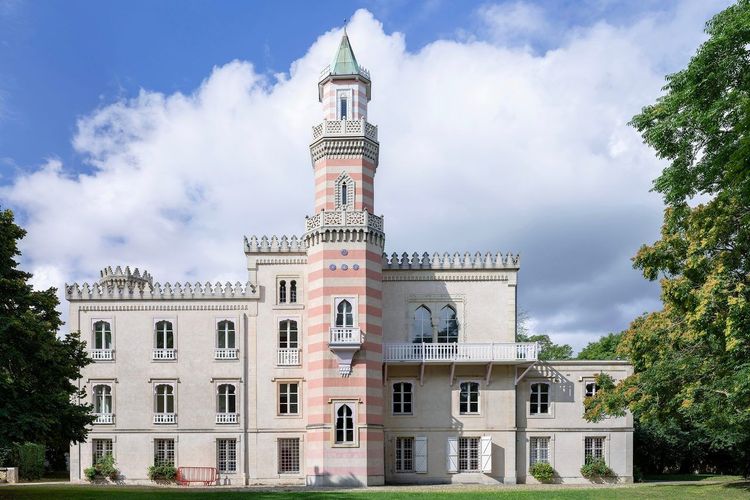
Few guides mention the Douëra, this orientalist villa clinging to the hillsides of Malzéville, on Nancy's northern edge. It owes its décor to painter and orientalist Charles Cournault, who turned it into his home-studio in the 19th century after his travels in Algeria: horseshoe arches, ceramics, and woodwork stand in complete contrast to the classicism of the city centre — a total change of scenery just fifteen minutes from the great squares.
La Douëra (Rue de la Douëra, 54220 Malzéville, rated 4.3/5 on Google with 239 reviews) now hosts temporary exhibitions and community events; the interior is not open for visits on a permanent basis, but the facade and the terraced garden — with its sweeping view over the valley — justify the detour on their own for lovers of unusual architecture. Check for open-day events, which are often scheduled around exhibition weekends.
By contrast, the Nancy ADN street art trail relies on urban surprise: former electrical substations have been turned into canvases for murals by local and international artists, scattered across several neighbourhoods. Following this trail on foot or by bike, map in hand, offers a completely different reading of the city — more contemporary, more offbeat than the golden triangle.
The street art trail lends itself particularly well to a family outing: children love searching for the next mural like a treasure hunt, and the route passes through residential neighbourhoods you would otherwise never visit. Allow around two hours for the full version, less if you are targeting only the works in the city centre.
These two hidden gems combine well at the end of a stay, once you have already ticked off the must-sees and are looking to venture off the beaten track without leaving the city. The top 6 things to do in Nancy according to Ryo lists other ideas of the same kind, often absent from mainstream guides.
What to Eat in Nancy: Local Specialities and Top Foodie Addresses
Nancy has a culinary identity as strong as its architectural heritage, and two days are barely enough to do it justice.
Sweet Treats: Macarons, Bergamots, and Rum Baba
The Nancy macaron bears no resemblance to its Parisian cousin: no colourful shell or ganache filling, but a soft almond, sugar, and egg-white biscuit whose recipe dates back to the Sœurs Macarons — two nuns who began selling it commercially in 1793. Two historic establishments vie for the title of keeper of the secret, each swearing they hold the original recipe, a rivalry that has lasted more than a century and amuses locals and visitors alike.
The bergamote de Nancy comes in small translucent squares — a hard sweet flavoured with bergamot essential oil, and the first French confectionery to receive a Protected Geographical Indication, in 1996. Found in almost every sweet shop in the centre, sold in a metal tin, it travels well. Other local treats orbit these two stars: sugared almonds, candied mirabelle plums, and Lorraine-style fruit jellies all appear in the same shop windows. Locals each have their favourite house — a debate almost as lively as the one pitting the two macaron guardians against each other.
Another speciality less known outside Lorraine is the rum baba, whose invention legend attributes to Duke Stanislas's court — a great pastry lover — from a kouglof soaked in sweet wine. Some patisseries in the centre still offer a generously drenched version, worlds away from the industrial baba.
Savoury Classics: Quiche and Lorraine Pâté
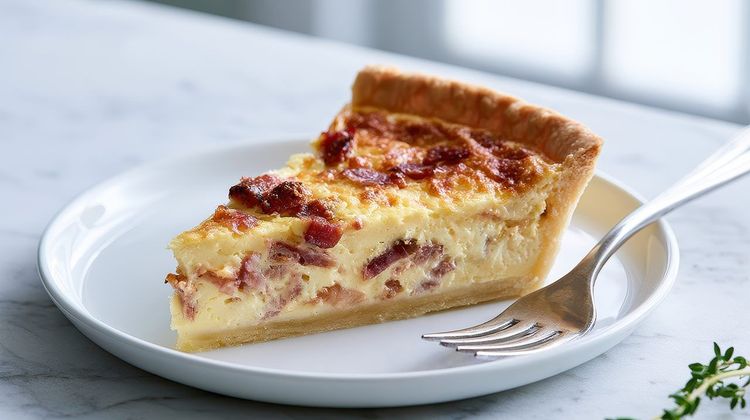
It would be impossible to leave without trying a genuine quiche lorraine — no cheese in the original recipe, contrary to what you sometimes find elsewhere, just eggs, cream, and lardons in a shortcrust pastry. Several bakeries on Rue des Maréchaux and in the covered market offer individual portions to take away, ideal for a quick lunch between sightseeing stops.
The pâté lorrain, less exported than the quiche, is just as worth trying: pork and veal marinated in white wine, wrapped in puff pastry. It is found mainly at charcutiers-traiteurs rather than restaurants — more of a take-away item than something ordered at a table.
The covered central market, open Tuesday to Saturday, remains the best place to taste without detour: local producers, cheesemakers, and an atmosphere that contrasts with the more tourist-facing shop fronts of the centre. It is also where many Nancy residents do their weekend shopping — a way of experiencing the city that never appears in brochures. For an edible souvenir, opt for a tin of bergamots and a vacuum-packed bag of macarons — both keep for several weeks and travel without fuss.
For precise addresses to sample these specialities, Rue des Maréchaux concentrates the bulk of the dining options in the historic centre, with a range spanning traditional bistros to more contemporary tables. The Ryo top 10 culinary specialities of Nancy details address by address where to find each product, macarons, bergamots, and pâté lorrain included.
Nancy CityPass: Good Deal or Wasted Money?
Before rushing to buy the pass as soon as you step off the train, a quick calculation is in order: the Nancy CityPass is only really worth it if you plan to visit several museums and take a guided tour over the two days.
What the Nancy CityPass Covers and 2026 Prices
The pass gives access to the main municipal museums (Beaux-Arts, École de Nancy, Muséum-Aquarium), a guided tour of the historic centre, and discounts at a number of partner shops and restaurants. Two formats are available — a 24-hour version at around €15 and a 48-hour version at around €22 — the latter being the most suitable for a 2-day stay, as it covers exactly the duration of the itinerary described above. Since prices change from season to season, confirm them with the tourist office before purchasing.
For a couple visiting three museums and joining a guided tour, the saving often exceeds €10 per person compared with buying individual tickets. Below two or three paid activities, however, the maths become less favourable — it is better to pay at the door. The guided tour included in the pass usually departs from the tourist office, in French, with fewer English-language slots available — worth checking if you are travelling in an international group.
For a family with children, the calculation changes again: younger visitors benefit everywhere from free or reduced admission, and some museums offer a family ticket that makes the CityPass less essential. The smart move is to count how many paid activities you have planned over the two days before deciding, rather than buying the pass out of habit as you step off the train.
Where to Buy the Pass and the Nancy CityPass App
The CityPass is available at the tourist office on Place Stanislas, or directly online via the Nancy CityPass app, which also lets you book certain visit slots — Villa Majorelle in particular, where places are limited.
The app also includes an interactive map and up-to-date opening hours, useful for adjusting your itinerary on the fly if a museum announces an exceptional closure. As a complement, our Ryo app lets you follow the Ryo audio-guided tour of Nancy — a neighbourhood-by-neighbourhood commentary that adds historical storytelling to the practical pass.
Where to Stay in Nancy: Neighbourhoods and Top Picks
For a 2-day stay built around walking, the choice of neighbourhood matters almost as much as the choice of hotel.
The area around Place Stanislas and the station remains the most practical: everything is reachable on foot in under twenty minutes, and hotels here cover every budget range, from renovated youth hostels to characterful addresses in 18th-century mansion houses. It is the safest choice for a first visit.
The more residential Saint-Georges neighbourhood appeals to those looking for gentler prices without straying too far — ten minutes' walk from the centre. It has more bed-and-breakfasts and small independent properties, with a quieter atmosphere in the evenings.
Finally, the station area suits a time-pressed stay where every minute of walking counts in order to string two full days together without losing time to transfers. Plan to book several weeks ahead if your visit coincides with the Saint-Nicolas festivities and the Christmas market in December — rooms become scarce during that period.
Budget-wise, expect to pay between €70 and €100 per night for a decent double room in the city centre outside the festive period, and up to €150 for charming addresses in former private mansions. Booking accommodation near the station also simplifies arrival by train, with both the Old Town and the New Town accessible on foot in either direction. Families or groups will also find short-stay apartments in the Foch neighbourhood — practical for preparing a meal between visits rather than eating out at every sitting. Wherever you stay, the Ryo audio-guided tour of Nancy is an easy way to link the neighbourhoods on foot the next morning.
Getting to and around Nancy
By train, Nancy is easily reached from Paris: the direct TGV line connects Gare de l'Est to Nancy station in around 1h30, making a two-day return trip perfectly realistic even without a car. From Strasbourg or Metz, allow around 1h20 and 40 minutes respectively by TER regional train.
By car, Nancy sits at the junction of motorways A31 (north-south axis) and A33, about 3h30 from Paris. Since the historic centre is largely pedestrianised, it is best to park on arrival rather than attempting to navigate the narrow streets of the Old Town.
On the parking front, finding a space in Nancy is nothing like the ordeal it can be in other French cities of similar size. On-street parking is paid in the central zone Monday to Saturday, with rates that climb quickly beyond two hours to encourage turnover — the worst option if you are staying for a full day. Several underground car parks surround the centre, near Place Stanislas, Place Maginot, and Place Carnot, with 24-hour flat rates that become significantly better value from the first night. Many city-centre hotels offer a negotiated parking rate — worth asking when you book. The expert tip is to target a car park further out near a tram or bus stop, usually cheaper, and complete the journey by public transport or on foot. In December during the Saint-Nicolas festivities, spaces in the centre fill up very early in the morning: parking on the outskirts then becomes the only stress-free option.
Once there, walking is by far the best option: the entire historic centre can be crossed on foot in under an hour from end to end, and most of the places mentioned in this itinerary are within twenty minutes of each other. For tired legs or families with young children, a tourist train runs in high season from Place Stanislas — a roughly 45-minute tour that gives a first overview before exploring on foot in more depth.
For longer journeys — to the botanical garden or the Musée de l'Histoire du Fer, for example — the Stan tram and bus network covers the whole agglomeration, with a single ticket at around €1.60 or a day pass if you plan multiple trips. The nearest airport, Metz-Nancy-Lorraine, mainly serves domestic flights and a handful of European routes; for a 2-day trip from a major French city, the train remains almost always the simplest option, thanks to its central station.
When to Go: the Best Time to Discover Nancy
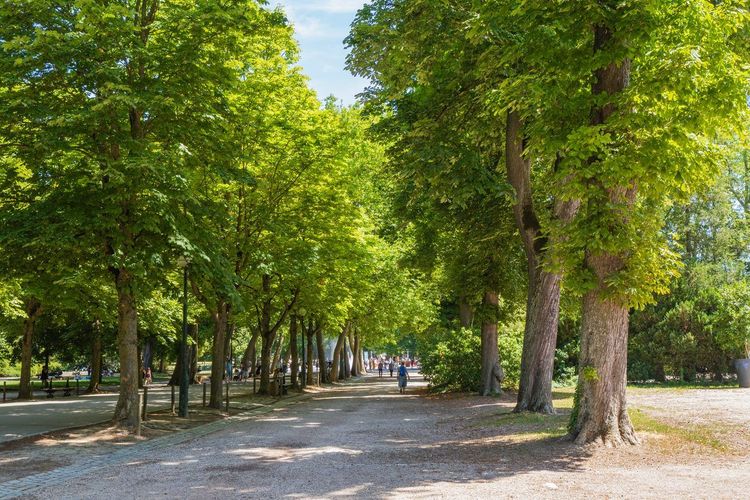
Spring and early autumn offer the best compromise: mild temperatures, flowering gardens in Parc de la Pépinière, and tourist numbers that are still manageable compared to the height of summer. May and June remain the most pleasant window for walking all day without suffering from the heat.
Summer brings longer evenings to enjoy the terraces and the illuminated Place Stanislas, but also more people crowding around the golden gates in the middle of the day. It is also the season for light shows projected onto the facades of the square — a nocturnal event that alone justifies pushing dinner back a little later.
Nancy in December deserves a special mention: the Saint-Nicolas festivities — patron saint of Lorraine — and the Christmas market set up around Place Stanislas and Place de la Carrière transform the city centre into a nocturnal stroll through lights and fir trees. Crowds swell significantly on weekends; it is better to visit mid-week if you prefer more breathing room, and to book accommodation well in advance.
Day Trips from Nancy: Châteaux and Lorraine Towns to Add to Your Itinerary
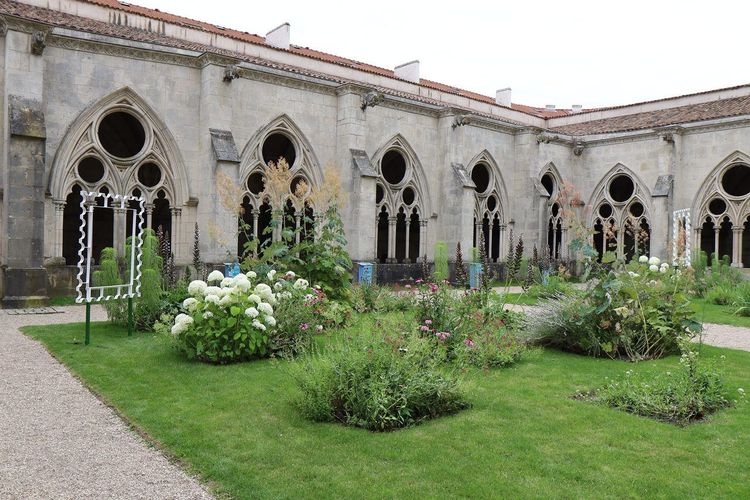
If your stay extends beyond two days, or if you are the type who wants to see everything, several Lorraine gems can be reached in under an hour by road. Lunéville and Toul can be reached by TER from Nancy station; for Haroué and Saint-Nicolas-de-Port, a car is strongly preferable, with journey times never exceeding 45 minutes.
Lunéville and Haroué: in the Footsteps of the Dukes of Lorraine
Thirty minutes by road, Lunéville carries the nickname of the 'Lorraine Versailles' — a title owed to its château built for Duke Léopold on the model of Louis XIV's palace. Partially destroyed by fire in 2003, it has undergone a lengthy restoration and can now be visited with its reconstituted French formal gardens, stables, and museum. The château grounds, free and open year-round, are perfect for a picnic even if you skip the interior, with their basins and statues recalling Duke Léopold's ambition to rival Versailles.
A little further on, the château d'Haroué (2 Rue du Château, 54740 Haroué, rated 4.4/5 on Google with 1,092 reviews) offers a complete contrast: an 18th-century palace in the heart of the Lorraine countryside, built by architect Germain Boffrand for the de Beauvau-Craon family, who occupied it for nearly three centuries, surrounded by water-filled moats and gardens reworked in the 20th century. The guided tour, more intimate than Lunéville's, allows access to rooms with original furnishings — a rarity for a château of this scale.
The château still hosts receptions and private events, which accounts for occasional closures out of season: check opening hours before making the trip, especially between November and March when visits are often limited to weekends.
Toul and Saint-Nicolas-de-Port: Ramparts and a Basilica
To the west, Toul has kept its Vauban ramparts almost entirely intact, encircling an old town built around its Cathédrale Saint-Étienne — a rare example of Flamboyant Gothic architecture in Lorraine. The Côtes de Toul vineyard, producing the region's distinctive vin gris, stretches right to the edge of the city — a good excuse to round off the visit with a tasting.
To the east, Saint-Nicolas-de-Port is home to a basilica that seems wildly disproportionate for the size of the town: its two towers reach almost 87 metres — a Flamboyant Gothic monument that drew one of the great pilgrimages of Western Christendom in the Middle Ages. Seeing it rise around a bend in the road, almost incongruous amid the fields, remains one of the great architectural surprises in the Nancy area.
These two day trips combine well into a single day by car — Toul in the morning, Saint-Nicolas-de-Port in the late afternoon on the way back to Nancy, with barely 30 minutes of road between the two stops. If you don't have a car, several rental agencies near the station offer half-day or full-day hire, which often works out cheaper than a return taxi to all four destinations. To plan these excursions without losing time on the road, the best day-trip ideas around Nancy gathered by Ryo offer realistic half-day and full-day combinations.
Visiting Nancy with Family, as a Couple, or Solo: Adapting Your Itinerary
The itinerary described above works for every type of traveller, but a few tweaks change the experience depending on who you are travelling with.
A family trip is made easier by the Muséum-Aquarium, the free mini-zoo in Parc de la Pépinière, and the ADN street art trail — easily turned into a treasure hunt to keep children entertained between heritage visits. Plan more frequent breaks and lighten the Day 1 programme: Place Stanislas and the golden triangle are more than enough to fill a morning with young children. Pushchairs move easily around Place Stanislas and through the New Town, with its wide, largely flat pavements; the Old Town, with its cobblestones, requires a little more care with a small child.
As a couple, the late-afternoon stroll along the canal and the Christmas market in December concentrate the city's most romantic moments — along with a dinner at an Art Nouveau address in the Foch neighbourhood, 1900 décor and all. Place d'Alliance, more intimate than Stanislas, is well suited to a quiet moment for two away from the crowds.
Solo, Nancy reveals itself as a student and intellectual city, driven by a young population that keeps bars and cafés buzzing late into the evening, around Place Saint-Épvre as much as in the streets climbing towards Saint-Sébastien. The welcome is reserved but sincere — typical of Lorraine — a contrast that often surprises visitors arriving from more expressive French regions. This culture of markets and leisurely strolling runs through the whole city: the covered market in the morning, the terraces of Rue des Maréchaux at midday, the student bars in the evening. It is a rhythm that suits a couple on a weekend break just as well as a solo traveller who has come simply to walk without a fixed route. The top 6 things to do in Nancy proposed by Ryo also offers good leads for filling an evening alone without getting bored.
Nancy in 1 Day or 3 Days: Adjusting the Length of Your Stay
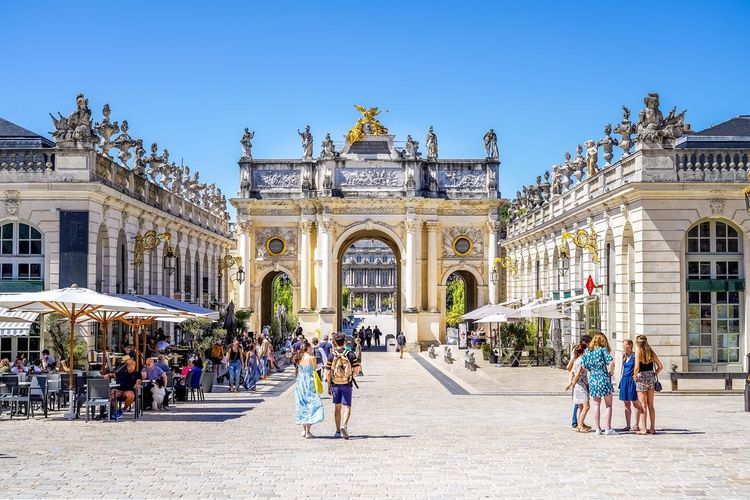
How much time to spend in Nancy depends above all on your appetite for museums. If you only have two hours — what some call the UNESCO flash — focus on the three squares of the golden triangle and leave with the city's essential visual highlights.
To cover Nancy in a single day, spend the morning on the golden triangle and the Old Town, then devote the afternoon to Villa Majorelle and a quick walk along the canal. It is an efficient summary that skips the secondary museums and day trips, but gives a faithful overview of the city's dual identity — classical and Art Nouveau.
The two days described in this article represent the most balanced format: enough time for the main museums, a relaxing break in the park or at the spa, and a meal worthy of the local specialities — without outstaying your welcome.
To visit Nancy over 3 days, add a full day dedicated to Lorraine day trips — Lunéville and Saint-Nicolas-de-Port, for example — or explore the secondary museums and the Saint-Georges neighbourhood at a more relaxed pace. It is also the most comfortable option for travelling with young children, avoiding the strain of cramming too many visits into a single day. Visitors coming for a simple weekend from a nearby city — Metz or Strasbourg in particular — often opt for the shorter one-day version, with the intention of returning later for the Lorraine day trips they didn't have time to fit in.
In summary: half a day is enough for Stanislas and its two neighbours, a full day to add the Old Town, and two complete days to take in Art Nouveau, gastronomy, and a genuine nature break. Beyond that, every additional day is best justified by an excursion into the surrounding area rather than further exploration of the city centre itself.
Whatever length of stay you choose, the Ryo audio-guided tour of Nancy adapts to your pace, with stages that can be followed in order or dipped into according to the time available.
FAQ
What is the best time to visit Nancy?
Spring and early autumn offer the best balance between mild weather and manageable crowds. December is charming for the Saint-Nicolas festivities and the Christmas market around Place Stanislas, provided you accept larger crowds on weekends.
How long does it take to visit Nancy?
Two days allow you to cover the UNESCO golden triangle, the Old Town, Art Nouveau, and a relaxing break. One day is enough for the visual highlights, while three days leave time to add a Lorraine day trip.
Can you visit Place Stanislas for free?
Yes, Place Stanislas is a public space with free access at all hours. Only the surrounding museums, such as the Musée des Beaux-Arts, charge an entrance fee.
Where can you eat an authentic quiche lorraine in Nancy?
The bakeries and charcuteries on Rue des Maréchaux and in the covered central market offer versions faithful to the original recipe — no cheese — available to take away or eat on the spot.
How do you book a visit to Villa Majorelle?
Bookings are made online, through the city museums' ticketing platform or the tourist office, several days in advance during high season: time slots are limited by group size.
Is it easy to park in Nancy?
Yes, several underground car parks surround the city centre at reasonable rates, with attractive 24-hour packages. On-street parking, paid on weekdays and designed for short stays, is poorly suited to a full day: aim instead for a car park near a tram stop.
What culinary specialities should you bring back from Nancy?
Nancy macarons and bergamot sweets keep for several weeks and travel well. Lorraine pâté, more delicate, is best enjoyed on the spot or within a few days of purchase.
Conclusion
Two days in Nancy are enough to understand why the city is as loved as it is intriguing: a listed square that rivals the finest royal squares in Europe, an Art Nouveau neighbourhood that holds its own against Brussels or Vienna, and a culinary identity that fits entirely inside a tin of bergamot sweets. The itinerary proposed here — from the golden triangle to the New Town, via the canal and the good tables of Rue des Maréchaux — also leaves room for the unexpected: a street art mural stumbled upon by chance, an impromptu climb up to La Douëra.
To follow this route step by step, never missing a transition between two neighbourhoods, the Ryo audio-guided tour of Nancy narrates each stage in audio, from the very first step on Place Stanislas to the final detour along the banks of the Meurthe.
À lire également