© Shutterstock
 Votre guide Ryo
The Most Beautiful Villages around Paris to Discover This Winter 2026
Île-de-France is more than Paris. Within 100 kilometers of the capital, villages keep their cobblestones, their ramparts, and their rivers entirely to themselves once autumn arrives. The most beautiful villages around Paris reveal a rare quality in winter: authenticity without staging, medieval underground galleries without queues, riverbanks along the Seine in the low January light. Before hitting the road, you can begin your exploration right in the capital with the Ryo Paris audio guide, spending a morning wandering the backstreets of Le Marais before heading out to the countryside.
This guide covers fourteen villages within a 100-kilometer radius of Paris: a medieval city listed as a UNESCO World Heritage Site, a hamlet of 200 souls tucked away in the Compiègne forest, the village where Van Gogh painted 74 canvases in 70 days, a fairy-tale castle reconstructed turret by turret by Viollet-le-Duc, and Picardy alleyways with walls covered in old roses. For each one, you will find how to get there from Paris, what works and what closes in winter, and the details that standard travel guides tend to leave out.
Provins, the Timeless Medieval City
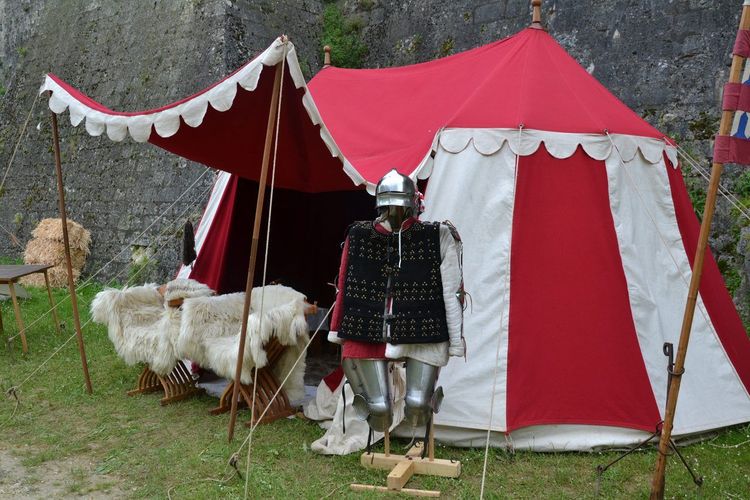
Provins is one of the rare French sites that fully lives up to its reputation. Listed as a UNESCO World Heritage Site in 2001 for its medieval fairs and ramparts, this town in Seine-et-Marne lies 81 kilometers from Paris, a 1h30 train ride from Gare de Lyon with no connection. In summer, falconry shows and jousting tournaments draw thousands of visitors every weekend. In winter, all those crowds disappear. That is precisely why you should go.
The Tour César has dominated the upper town since the 12th century. Its 44 meters offer a view over the entire medieval city, the ramparts, and the Brie plain stretching to the horizon. Entry costs 5 euros in winter. You stand a good chance of visiting it almost alone, something that is impossible in July when school groups file through the narrow stairways one after another. The view from the walkway, through the mist, has something almost hypnotic about it.
Below, the Grange aux Dîmes (Rue Saint-Thibault, 77160 Provins, rated 4.4/5 on Google from 456 reviews) houses a modest but solid museum dedicated to the history of the Champagne fairs, which made Provins a commercial capital of medieval Europe in the 12th and 13th centuries. These biannual fairs drew merchants from across Europe for several weeks at a time: Italians, Flemish traders, and Aragonese would meet here to exchange cloth, spices, and precious metals. The building retains an atmosphere of ancient commerce that the summer reenactments tend to turn into folklore.
The network of medieval underground galleries is worth a full hour. These tunnels, dug from the 11th century onward, served alternately as wine cellars, mushroom farms, and logistical passages between houses in the upper town. Guided tours run year-round (1 hour, 7 euros for adults). In winter, the constant 12°C temperature in the galleries feels almost pleasant compared to the cold outside. The walls still bear graffiti left by students of the medieval university — traces that no one ever thought to erase.
The 12th-century ramparts encircle the upper town for two kilometers, still walkable on foot. The stroll along the battlements, above the now-dry moats, begins through a discreet gateway on Rue des Jacobins that most visitors miss. Allow 45 minutes for the full circuit. On a misty January day, the towers emerge from the fog in a way that photographers know well.
On the practical winter side: Provins' medieval Christmas market is usually held on the first weekends of December. Restaurants in the upper town slow down, but several brasseries remain open on weekends. The Rose de Provins, a multi-petaled variety cultivated here since the Middle Ages for its medicinal properties, is sold as jams, floral waters, and soaps in several shops in the lower town. In winter the rose bushes are dormant, but the shops are open.
Auvers-sur-Oise, in Van Gogh's Footsteps
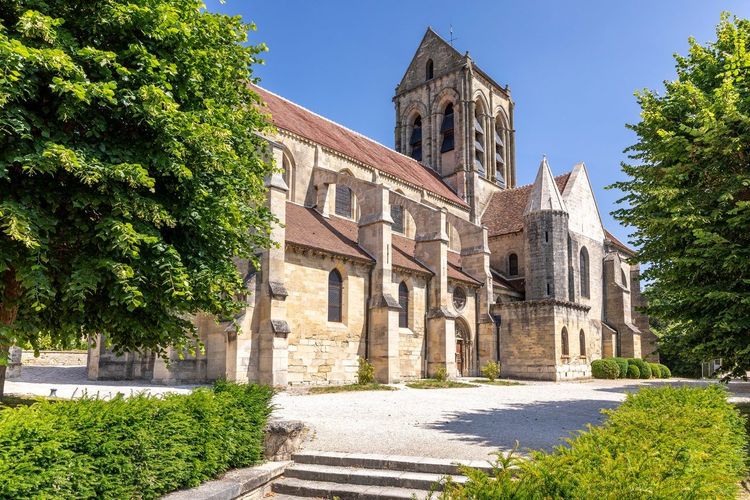
Auvers-sur-Oise is a village in Val-d'Oise 35 kilometers northwest of Paris, and it carries an artistic weight disproportionate to its 7,000 inhabitants. Vincent van Gogh spent the last 70 days of his life here, from May to July 1890, and painted 74 canvases, including the Église Notre-Dame d'Auvers-sur-Oise (Rue Gachet, 95430 Auvers-sur-Oise, rated 4.6/5 on Google from 665 reviews) and the famous Wheatfield with Crows. He died on 29 July 1890 in his room at the Auberge Ravoux, and was buried in the village cemetery alongside his brother Theo, who died six months later.
In winter, the village recovers a particular quality. The groups of tourists who dutifully follow the 'In Van Gogh's Footsteps' signs are absent. You can wander alone in front of the Auberge Ravoux, that sadly famous blue façade, and look up at room number 5 on the first floor. The room is 7 square meters. Van Gogh lived and died there. There is nothing more to add.
The Église Notre-Dame d'Auvers-sur-Oise, painted by Van Gogh in June 1890 (the canvas hangs in the Musée d'Orsay), stands at the top of the village, surrounded by its cemetery. In winter, the low afternoon light gives it exactly the color Van Gogh had captured: a slightly unreal blue-violet. The graves of Van Gogh and Theo are at the north wall of the cemetery, two grey stones covered in ivy. It is neither monumental nor spectacular. It is intimate, and perfectly in keeping with the man.
The Maison du Docteur Gachet, the home of Van Gogh's physician friend, is managed by the Val-d'Oise departmental council and open on certain days in winter. The Château d'Auvers offers an immersive multimedia journey called 'A Journey through the Age of Impressionism', but it generally closes from November to mid-March.
To get there from Paris without a car: Transilien H from Paris Saint-Lazare to Pontoise, then a TER to Auvers-sur-Oise. Allow 1h10 to 1h30 depending on connections. From Pontoise, cycling (8 kilometers, flat route along the Oise) is a pleasant option if the weather allows. Art lovers will find it worthwhile to combine this village with a prior visit to the Musée d'Orsay in Paris, where several canvases painted at Auvers are on permanent display.
Giverny, Monet's Village
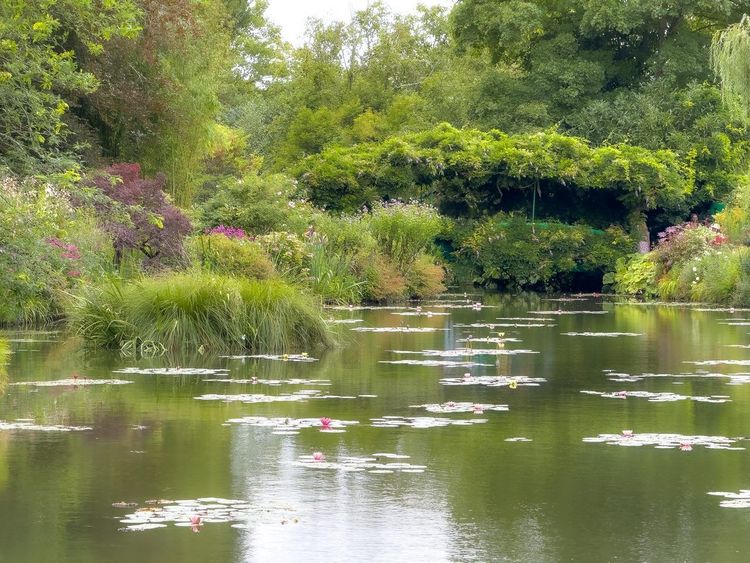
Giverny is 80 kilometers from Paris, in Normandy, in the Eure department. It is worth being honest about winter: Claude Monet's gardens are closed from October to late March. If you come in January, you will not see the water lilies. What you will see, however, is an authentic village, almost deserted, with Norman half-timbered houses in the grey winter light.
The Église Sainte-Radegonde where Monet is buried is accessible year-round. His tomb, in the adjoining cemetery, is decorated with flowers even in winter by visitors who have come from afar. The Musée des impressionnismes de Giverny generally closes from November to March, but its façade and the surrounding public space remain accessible.
What remains truly accessible in winter at Giverny is the village itself: its Norman cob-and-timber houses, the small main street, the artists' studios that succeeded the American colony established here in the 1880s. Several of these houses still host artists in residence. Walking around at the hour when the garden would be open in spring, you end up seeing what Monet saw each morning from his window: not the flowers, but the light on the Seine and the hills of the Eure.
To reach Giverny from Paris: train Paris Saint-Lazare → Vernon (1h05, TER, about ten departures a day) then a shuttle from Vernon station to Giverny. Note: this shuttle runs only from March to November. In winter, plan on a taxi from Vernon (12–15 euros, 6 kilometers) or a rental bike from the station. By car, the A13 from Paris gets you to Giverny in about 1h15. Combining the visit with Vernon itself is a good idea: the town has decent hotels, an old mill on the Seine photographed by Monet, and a lively Saturday morning market open year-round.
La Roche-Guyon, Jewel of the French Vexin
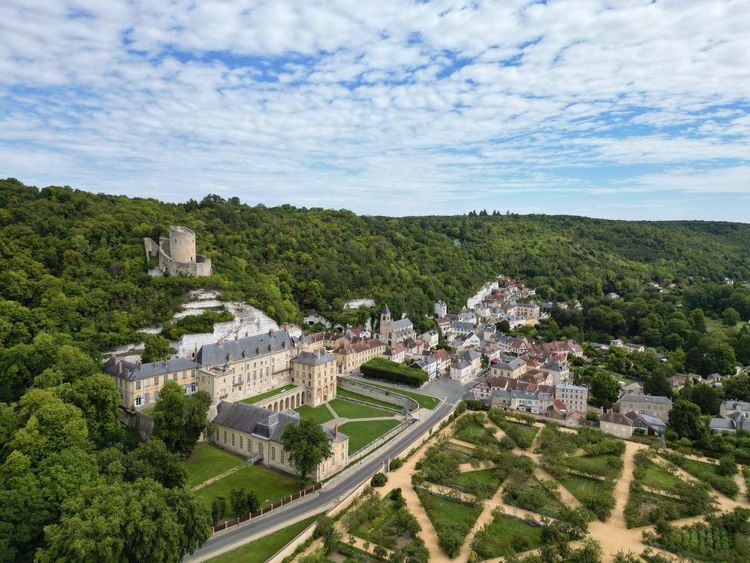
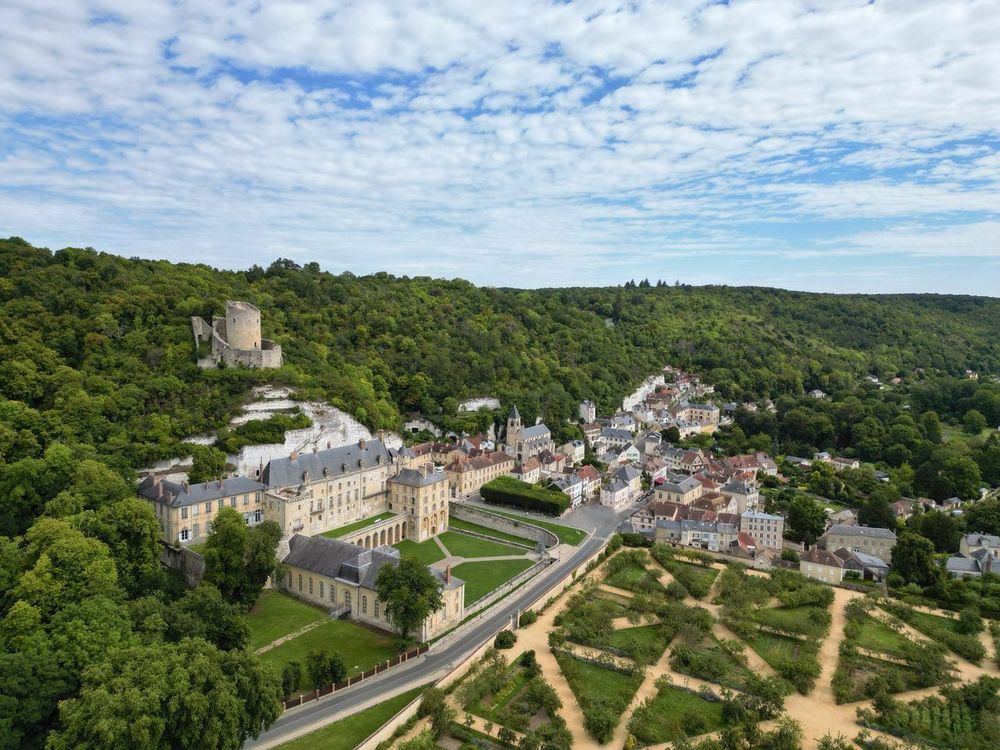
At 80 kilometers northwest of Paris, La Roche-Guyon is one of the villages holding the 'Most Beautiful Villages of France' label. This label, awarded on strict heritage criteria, applies to only 184 French communes. The village stretches along the Seine, dominated by a 60-meter chalk cliff into which an 11th-century troglodyte castle is carved, extended by an 18th-century classical château at the edge of the rock.
The particularity of this château lies in its two-part architecture: the feudal tower carved directly into the chalk cliff (reached by a staircase of 200 steps cut into the rock), and the 18th-century château at its base, with its formal French gardens and brick dovecote. In winter, the château is open (reduced hours; check before you go) and the visit is less expensive than in summer. The restored historic kitchen garden has a particular charm in winter with its bare trellises and neat paths.
The French Vexin, of which La Roche-Guyon is one of the emblematic villages, is a limestone plateau northwest of Paris offering open-field landscapes that are atypical for Île-de-France. Hiking trails from the village follow the Seine to the cliffs. The winter paths are muddy but manageable in good boots, and virtually deserted. The chalk cliff loop (6 kilometers, moderate elevation) offers views of the Seine meanders that no postcard faithfully reproduces.
La Roche-Guyon is difficult to reach by public transport from Paris (several connections, at least 2 hours). By car, the A13 then the D913 from Mantes-la-Jolie: about 1h15. The village has no hotel, but several gîtes on the edge of the Vexin welcome weekend visitors, and Mantes-la-Jolie 20 kilometers away has decent hotels.
Moret-sur-Loing, between the Loing and the Fontainebleau Forest
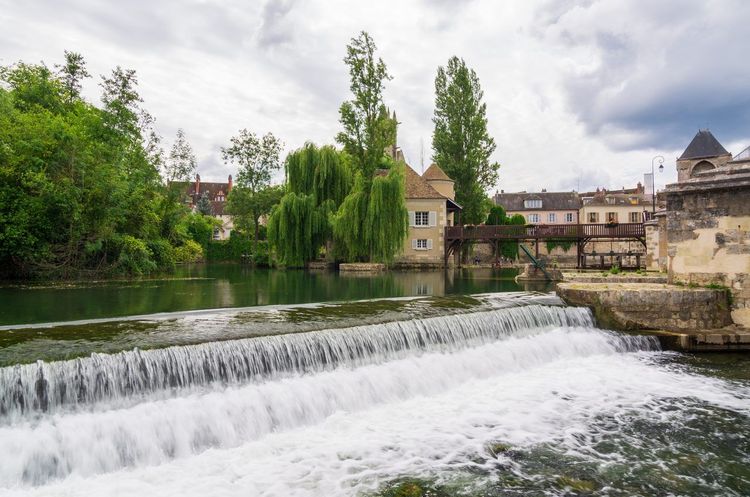
Moret-sur-Loing has something slightly phantasmal about it: you arrive thinking of Alfred Sisley, and the painter is everywhere — not in museums, but in the very geography of the place. Sisley lived here from 1889 until his death in 1899, and painted its mills, its medieval gateways, and the confluence of the Loing and the Seine in canvases now scattered across the world's greatest museums.
The village lies 75 kilometers from Paris, on the edge of the Fontainebleau forest. Its medieval fortifications are largely intact: the Porte de Bourgogne and the Porte de Samois still flank the town, and the ramparts run along the river. In winter, the morning mist rising from the Loing gives the stone the color of Sisley's oil paintings: grey-pink, slightly damp, just a little unreal.
Moret-sur-Loing is also known for its sucres d'orge des Religieuses, barley sugar sweets made according to a 17th-century recipe preserved by the local Benedictine sisters. The confectionery shop (now run by laypeople who bought the recipe) sells these sweets year-round. This is not a generic souvenir: it is one of the only French regional confections whose recipe has survived four centuries without significant alteration.
Train access is easy: Paris Gare de Lyon → Moret-Veneux-les-Sablons by TER, 55 minutes for around 12 euros. The village is 1.5 kilometers from the station, a 15-minute walk. In winter, the nearby Fontainebleau forest is ideal for a 2–3 hour hike along the Loing trails before heading back to Paris. Barbizon (see below) is 15 kilometers away by car, making a comfortable combined day trip.
The Chevreuse Valley: Three Villages in One Day
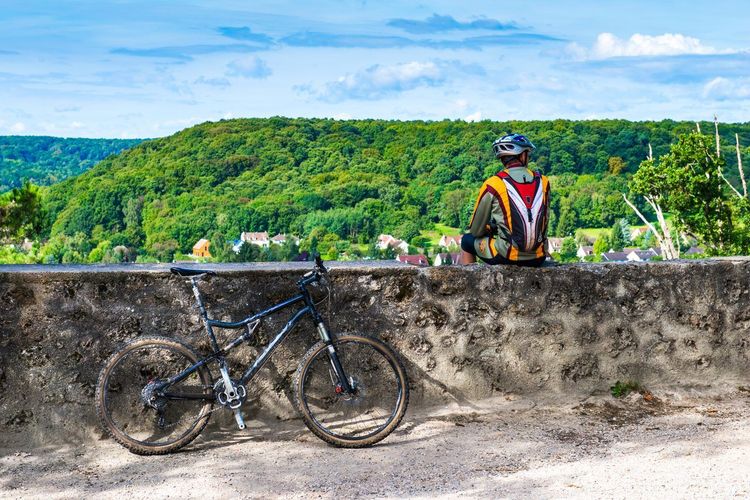
The Haute-Vallée de Chevreuse forms a regional nature park 30–45 kilometers southwest of Paris, reachable by RER B. Three villages concentrate most of the interest, and their geographic proximity allows you to combine them in a single day if you have a car.
Chevreuse is the most accessible of the three, right at the terminus of the RER B (station Saint-Rémy-lès-Chevreuse, 5 minutes' walk from the center). Its Château de la Madeleine is a complex of medieval ruins perched on a wooded spur, with views over the entire valley. Access is free; the climb takes about 20 minutes from the town center. In winter, the undergrowth around the ruins is bare, allowing you to see the castle's structure far better than in summer when vegetation hides the walls. The lower town has a Saturday morning market and a few good restaurants with reasonable off-season prices.
At 10 kilometers from Chevreuse, Dampierre-en-Yvelines is home to the Château de Dampierre (2 Grande Rue, 78720 Dampierre-en-Yvelines, rated 4.3/5 on Google from 438 reviews), designed by Jules Hardouin-Mansart — the same architect as the Palace of Versailles — on commission from the Duke of Chevreuse under Louis XIV. The château is surrounded by a large formal French park with ornamental ponds and trimmed hornbeam allées. In winter, the park is freely accessible even when the château itself is closed (it generally closes from November to March). The restrained architecture in grey stone, with its perfect symmetry, appeals to admirers of French classicism at its most rigorous.
Third stop: Montfort-l'Amaury, 40 kilometers west of Paris. This medieval village climbs a hillside around the ruins of Anne de Bretagne's castle. The cobbled streets, the 15th- and 16th-century half-timbered houses, and the church of Saint-Pierre with its listed 16th-century stained glass make it one of the most architecturally complete villages in the region. Montfort-l'Amaury is best known among music lovers for having been home to Maurice Ravel, who lived there from 1921 until his death in 1937. The Maison de Maurice Ravel (Le Belvédère) is open to the public for guided tours. Winter opening hours are reduced, but the house remains accessible on certain days: check the museum website.
To combine all three villages in one day from Paris: RER B to Saint-Rémy-lès-Chevreuse (terminus, 50 minutes from Paris), then a rental car or rideshare for Dampierre and Montfort. Without a car, Chevreuse alone is directly accessible from the RER B, which is more than enough for a pleasant half-day.
Barbizon, the Painters' Village
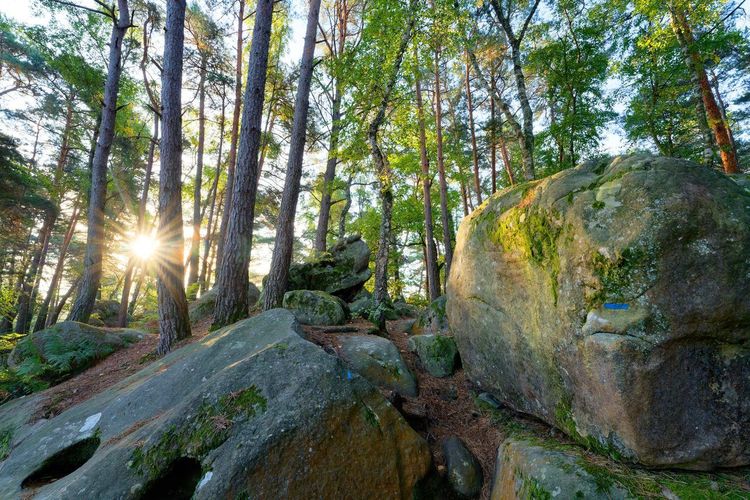
Barbizon is a paradox. This village of 1,200 inhabitants on the edge of the Fontainebleau forest, 55 kilometers from Paris, has exerted an influence on art history that its size absolutely does not suggest. It was here that Corot, Millet, Rousseau, and some twenty other painters settled between 1830 and 1875, developing a style of open-air painting directly inspired by the forest. This movement, known as the 'School of Barbizon', influenced Impressionism, then the Americans, then the Japanese — who still come today to photograph the sites in organized groups.
The Auberge du Père Ganne, converted into a museum, is the main attraction: it is the rural inn where the painters stayed and painted, even on the walls and doors that the museum has preserved intact. You can see oil sketches painted directly onto the wooden door panels and drawer fronts. Winter hours: generally open Wednesday to Monday, 10am–12:30pm and 2pm–5:30pm, closed Tuesday. Admission: 5 euros. In winter, the rooms are virtually empty and it is possible to sit for a long time in front of these paintings without anyone jostling you.
The Grande Rue de Barbizon is a single street lined with a handful of galleries and studios. The Atelier Jean-François Millet (29 Grande Rue, 77630 Barbizon, rated 4.4/5 on Google from 295 reviews) (a listed historic monument) adjoins the painter's house and is sometimes open by appointment in winter. The Fontainebleau forest begins literally at the end of the street, and the Gorges d'Apremont, reachable on foot from Barbizon in 30 minutes, are particularly beautiful in winter: the sandstone boulders emerge from the russet heather with no green vegetation to hide them, and the December light carves them out with a sharpness that summer simply does not allow.
Pierrefonds and Its Fairy-Tale Castle
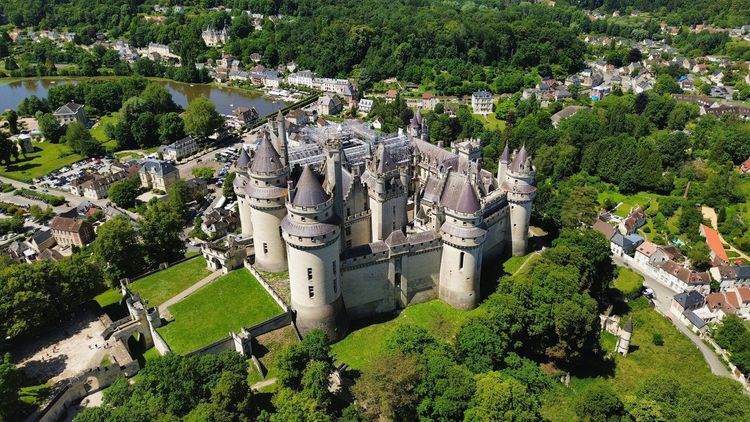
You need to see the Château de Pierrefonds from a distance first, from the road that descends toward the village, to understand that something does not quite fit with the ordinary reality of a ruined castle. This fortress is a fully reconstructed medieval stronghold, rebuilt by Viollet-le-Duc from 1857 onward, commissioned by Napoleon III as an imperial residence in the Compiègne forest. The result is vertiginous. Some historians have criticized Viollet-le-Duc for inventing a Middle Ages that never existed quite as depicted. But the architectural quality of the reconstruction is undeniable, and the details — chimeras, gargoyles, machicolations, allegorical personifications of chivalric virtues above the towers — are obsessively precise.
Pierrefonds is 80 kilometers from Paris in the Oise department, on the edge of the Compiègne forest. The château is managed by the Centre des monuments nationaux and open year-round, with reduced winter hours (generally 10am–1pm and 2pm–5pm from September to May). Admission: 9 euros. The château is well known to film buffs: the British series Merlin (BBC, 2008–2012) used it extensively as a backdrop, and dozens of French and foreign film productions have taken advantage of its exteriors.
The village of Pierrefonds (Place de l'Hôtel de Ville, 60350 Pierrefonds, rated 4.5/5 on Google from 2.1K reviews) itself is pleasant, arranged around an artificial lake created under Napoleon III. The 19th-century houses lining this lake give the town the feel of a mountain lakeside resort — somewhat unexpected on the Picardy plain. In winter, the ducks and swans on the lake are virtually the only visible inhabitants. To reach Pierrefonds from Paris, the simplest option is the train Paris Nord → Compiègne (50 minutes) then a local bus or taxi (17 kilometers). Combining Pierrefonds with Saint-Jean-aux-Bois (10 kilometers through the forest) makes for an excellent full day. And before you set off again, the capital is worth rediscovering with headphones on: our audio walking tour From the Mona Lisa to the Notre-Dame Cathedral unfolds over 7.3 kilometers from the Louvre to the Île de la Cité.
Crécy-la-Chapelle, the Venice of Brie
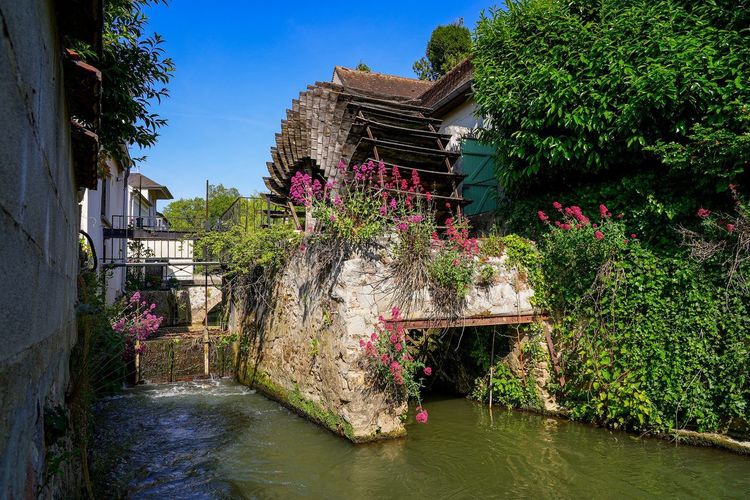
Crécy-la-Chapelle deserves to be better known. This village in Seine-et-Marne, 45 kilometers east of Paris, is nicknamed the 'Venice of Brie' for a concrete reason: the Grand Morin flows through it in several branches, creating islands linked by small stone bridges. The result, seen from the old mill, looks like a miniature Venetian scene in a rural setting.
The Collégiale Notre-Dame de l'Assomption, a Gothic jewel of Brie built between 1202 and the mid-13th century, is the village's main monument: the vault of its choir, supported by twelve ogives, is a rare singularity in the region. In winter, the village is practically deserted on weekdays. The banks of the Grand Morin can be walked for several kilometers. The river lends itself to fishing, and weekend anglers are often the only other visitors you will encounter.
By public transport from Paris: RER A to Chessy (Marne-la-Vallée), then a local bus; allow 1h15 to 1h30. By car via the A4: 45 minutes. Crécy pairs well with Provins (30 kilometers further east) for a day focused on Seine-et-Marne.
Vétheuil and Gerberoy, Two Discreet Gems
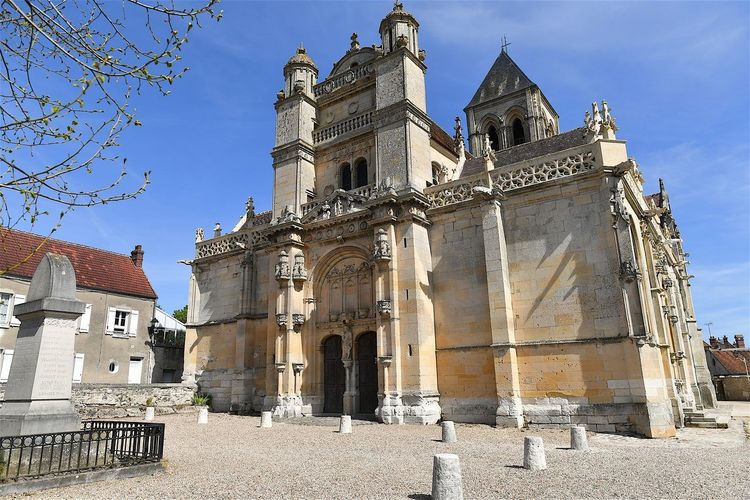
These two villages have nothing in common geographically: they lie 80 kilometers apart. But they share the same quality: an unaffected beauty, known only to those who have taken the trouble to venture off the beaten track.
Vétheuil is a village in Val-d'Oise 70 kilometers from Paris, on the banks of the Seine. Monet lived here from 1878 to 1881 and painted the Seine in every guise, notably during the brutal freeze of the winter of 1879–1880, when the drifting ice on the river gave rise to a series of paintings of startling modernity. The Église Notre-Dame de Vétheuil (Chemin de l'Église, 95510 Vétheuil, rated 4.6/5 on Google from 74 reviews), the subject of several canvases, stands on the riverbank. In winter, with the morning mists and the low light on the water, you will understand exactly why Monet never wanted to leave.
Gerberoy, 90 kilometers north of Paris in the Oise, is one of the 'Most Beautiful Villages of France'. This settlement of 100 inhabitants is famous for its roses: the painter Henri Le Sidaner planted hundreds of old-variety rose bushes here in the early 20th century, and its sloping alleyways are overrun with vegetation in May and June. In winter, the rose bushes are bare, but the village reveals its medieval structure without artifice: the ramparts, the cob-and-timber houses, the Collégiale Saint-Pierre. The effect is different from summer — more austere, and architecturally coherent in a way that the spring blossoms almost manage to conceal.
Saint-Jean-aux-Bois, the Secret Clearing
Saint-Jean-aux-Bois is in a category of its own. This hamlet of 200 inhabitants deep in the Compiègne forest, 70 kilometers from Paris, has barely changed since the 12th century. The entire village amounts to a square, a Cistercian abbey, an inn, and a handful of houses, surrounded by forest in every direction. There is no bakery. There is no tobacconist. There is a listed Romanesque abbey, a fountain, and silence.
The Abbaye de Saint-Jean-aux-Bois (1 Rue de l'Abbaye, 60350 Saint-Jean-aux-Bois, rated 4.7/5 on Google from 61 reviews), founded in 1152, is partially open to visitors (the abbey church is accessible). In winter, the Compiègne forest surrounding the village can be explored on several kilometers of marked trails. The centuries-old beech trees form vaulted canopies that give certain avenues the feel of a living cathedral. The hamlet lies 17 kilometers from Compiègne: train Paris Nord → Compiègne (50 minutes) then 20 minutes by car or taxi. This is the definition of the unplanned winter escape: you arrive, you walk, you have lunch at the inn, you leave.
How to Reach These Villages from Paris
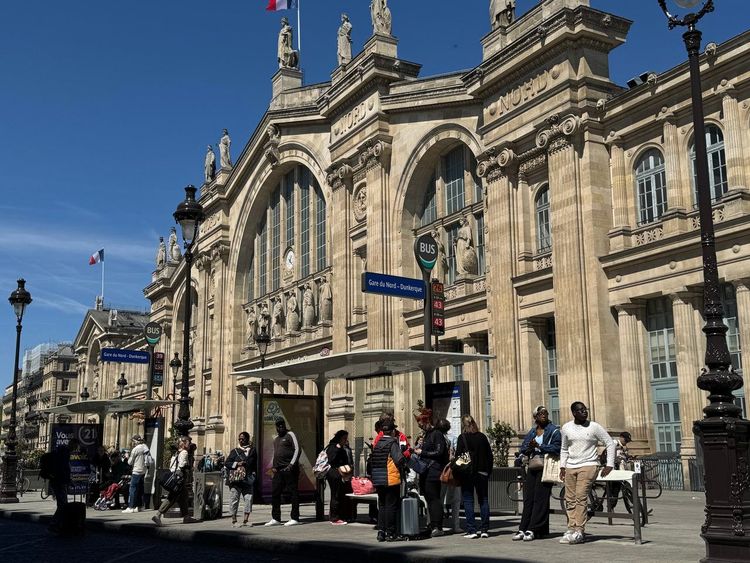
The most frequently asked practical question is about transport. These villages are not all equally well served, and planning a car-free day requires a little advance preparation.
By train, the most direct connections are:
- Provins: Paris Gare de Lyon → Provins, direct TER, 1h30, around 16 euros one way. Several departures per day on weekdays.
- Moret-sur-Loing: Paris Gare de Lyon → Moret-Veneux-les-Sablons, TER, 55 minutes, around 12 euros.
- Auvers-sur-Oise: Paris Saint-Lazare → Pontoise (Transilien H), then TER to Auvers, about 1h15.
- Giverny: Paris Saint-Lazare → Vernon, TER, 1h05. Vernon–Giverny shuttle runs only from March to November: plan on a taxi (12–15 euros) or a rental bike in winter.
- Compiègne (for Pierrefonds and Saint-Jean-aux-Bois): Paris Nord → Compiègne, 50 minutes, around 22 euros.
- Chevreuse: RER B, terminus Saint-Rémy-lès-Chevreuse, 55 minutes from Paris.
By car, the general rule is that villages in the 40–60 kilometer ring are reachable in 45–60 minutes outside of traffic (plan to leave before 9am on weekends to avoid tailbacks on the Francilienne ring road). The A6 serves Barbizon and Fontainebleau, the A13 serves Giverny and La Roche-Guyon, and the A1 serves Compiègne and Pierrefonds.
An often-underestimated option: renting a car for the day from Paris, picked up at a station or central agency, allows you to combine two or three villages in the same geographic direction. Auvers-sur-Oise, Vétheuil, and La Roche-Guyon flow naturally into one another across Val-d'Oise. Barbizon and Moret-sur-Loing combine easily along Seine-et-Marne. For practical questions about insurance and deposits, our article on credit cards for car rentals clarifies the key points.
For visitors arriving in Paris by plane who want to explore the surroundings before leaving, think about planning your time in the capital first. The Ryo Paris audio-guided tour covers the main historic neighborhoods, which makes it easy to schedule one or two village days as an extension without feeling you have missed Paris.
Why Winter Is the Best Season for Île-de-France Villages
The title of this article is not a marketing formula: winter is objectively the best time to visit the majority of villages around Paris. Here is why, without beating around the bush.
Visitor numbers. In July, Provins receives thousands of visitors every weekend for its medieval shows. In January, you will often find yourself alone in the underground galleries with a guide who has time to answer every question. The same logic applies at Auvers-sur-Oise, where tourist groups disappear entirely, and at Barbizon, where the Auberge du Père Ganne empties out to the point that the curator takes time to chat in front of each painting.
The light. The low December and January sun creates a raking light that brings out stone façades, ramparts, and riverbanks in a way that is impossible in summer. This is the light Monet sought at Vétheuil, the light Sisley captured at Moret-sur-Loing. If you are a photographer, November to February is your prime window.
Prices. Accommodation around Île-de-France villages (rural gîtes, bed and breakfasts) is 30 to 40% cheaper in winter than in July. Village restaurants often offer reduced set menus on weekdays out of season. At both Provins and Barbizon, museum entry prices do not vary by season, but car parks are generally free in winter.
What closes. It is worth being honest: several sites have more restricted winter hours or close entirely.
- Monet's gardens at Giverny: closed from October to late March.
- Château d'Auvers: closed from November to mid-March.
- Vernon–Giverny shuttles: suspended from November to March.
- Musée des impressionnismes de Giverny: closed from November to March.
- Inns and restaurants in the smallest villages: often closed on Mondays and Tuesdays.
The practical rule: always check opening hours online before you leave for specific visits. The Centre des monuments nationaux websites (Pierrefonds, Provins) and house-museums are generally reliable for winter opening information. And if a site is closed when you arrive, the village itself remains accessible: the alleyways, the riverbanks, and the local markets are often worth as much as the paid sites.
For ideas on organizing getaways from Paris that include villages, our article on weekends around Paris offers combinations organized by duration and geographic direction.
FAQ
Which village is easiest to visit from Paris without a car?
Provins is probably the simplest choice: a direct TER line from Gare de Lyon, 1h30 with no connection, drops you right in the town center. The historic village is a 5-minute walk from the station. Moret-sur-Loing (55 minutes, Gare de Lyon) and Auvers-sur-Oise (1h15, with one connection at Pontoise) are also reachable without a car. Chevreuse is accessible by direct RER B from Paris (terminus Saint-Rémy-lès-Chevreuse, 55 minutes). For Giverny, plan on taking a taxi from Vernon station in winter.
Which villages around Paris hold the 'Most Beautiful Villages of France' label?
Two villages in this selection officially carry the label: La Roche-Guyon (Val-d'Oise, on the banks of the Seine) and Gerberoy (Oise, famous for its roses). This label is awarded by the national association 'Les Plus Beaux Villages de France' according to strict criteria: fewer than 2,000 inhabitants, at least two protected sites or monuments, and a commitment by the municipality to environmental quality. It currently covers 184 French communes in total. Several other villages in this article (Moret-sur-Loing, Barbizon, Saint-Jean-aux-Bois) have applied on various occasions without yet receiving the label.
Can you combine several villages in a single day from Paris?
Yes, provided the villages are geographically close and you have a car. A few logical combinations that work well:
- Auvers-sur-Oise + Vétheuil + La Roche-Guyon (Val-d'Oise axis, by car, a full day)
- Barbizon + Moret-sur-Loing (Seine-et-Marne/Fontainebleau axis, one day by car or TER)
- Chevreuse + Dampierre-en-Yvelines + Montfort-l'Amaury (Yvelines axis, one day by car)
- Pierrefonds + Saint-Jean-aux-Bois (Compiègne forest, half a day from Compiègne)
Avoid mixing villages in opposite directions: Provins to the east and Giverny to the west are 180 kilometers apart, which makes for a hellish day on Île-de-France roads.
Are there Christmas markets in the villages around Paris?
Yes, several. Provins hosts a medieval Christmas market in December, usually on the first weekends of the month, with costumed entertainment. Montfort-l'Amaury and Chevreuse have their own Christmas markets, more modest but authentic. For exact dates, local tourist offices publish their programs in November. Our article on the most beautiful Christmas markets in France also lists several options within an extended radius around Paris.
What Can You See in Provins over a Full Day?
Provins can be visited comfortably in a day without rushing. Morning: a walk along the ramparts (45 minutes), a visit to the Tour César (1 hour), lunch in the upper town. Afternoon: a tour of the medieval underground galleries (1 hour, guided visit, booking recommended), a stroll through the lower town around the Église Saint-Ayoul and Rue Saint-Antoine with its half-timbered houses. Late afternoon: a few purchases in Provins rose shops before taking the train back to Paris. Total: 6–7 well-filled hours, with no medieval show in winter but with a freedom of visit that summer simply does not allow.
From Paris, it is tempting to stay in the capital: there is no shortage of neighborhoods to explore, and the Ryo app offers several audio-guided tours through the city's least touristy corners. But these villages of the Île-de-France region offer a different mental geography: time slowing down, stone walls without artificial lighting, rivers that no one watches. In winter more than in summer, these qualities are fully accessible, with no queues and no background noise.
Whether you choose Provins for its medieval underground galleries, Auvers-sur-Oise for Van Gogh's room, La Roche-Guyon for its chalk cliffs above the Seine, or Saint-Jean-aux-Bois for its forest silence, these villages deserve more than a quick detour. Start with Paris if you wish with the Ryo Paris audio guide, then take the train the next morning. The Île-de-France countryside awaits those who know that the best things are often less than two hours from home.
À lire également