© Shutterstock
 Votre guide Ryo
Butte-aux-Cailles in Paris: Village Neighborhood Guide for 2026
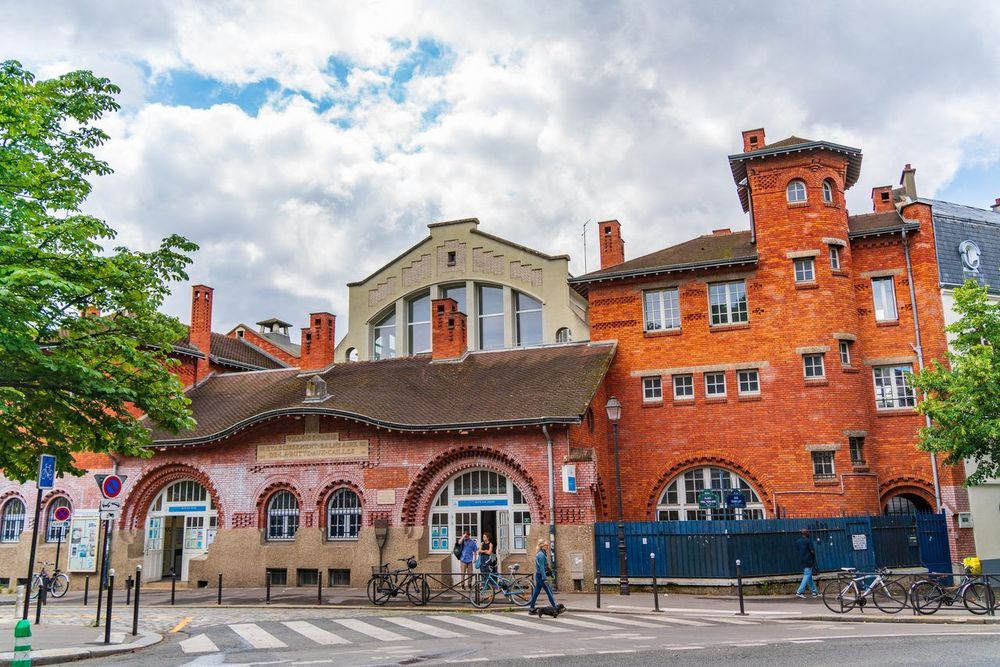
Step off the metro at Corvisart and you'll immediately sense that something doesn't quite fit the usual idea of Paris. No grand boulevards here, no Haussmann-era buildings lined up in perfect symmetry: just low houses, cobblestones climbing uphill, and window boxes brimming with flowers. The Butte-aux-Cailles neighborhood, a little-known corner of Paris's Left Bank, escaped Baron Haussmann's sweeping urban works because its steep slopes made large-scale construction too costly — and that quirk of urban planning preserved a village within the city that neither classic guidebooks nor the Ryo Paris audio tour tell in quite the same way.
Here you'll find an artesian well feeding an Art Deco swimming pool at 28 degrees since 1924, lanes where the word cité still carries its 19th-century meaning, a Byzantine-style church built in 1912, and façades repainted with the white figures of street artist Jérôme Mesnager. This guide covers the neighborhood's history, its bars and bistros, its street art, and the practical information needed to plan a visit — day or night. The Butte-aux-Cailles in Paris is best discovered on foot, with no fixed itinerary, making it one of the most freewheeling escapes the capital has to offer.
History and Origins of the Village Neighborhood
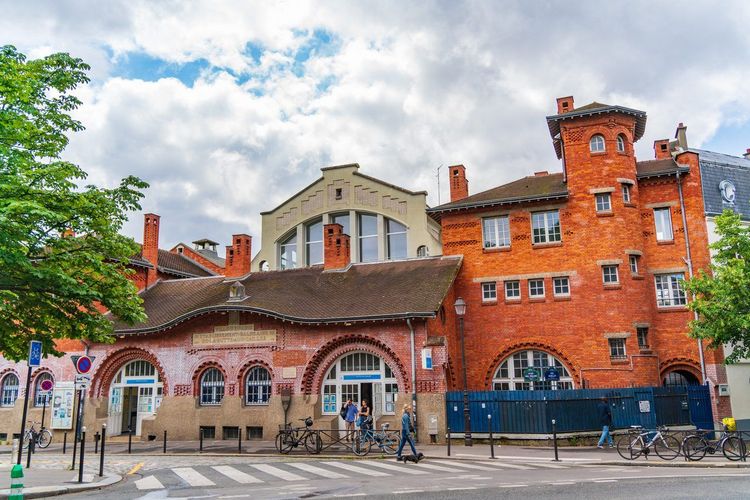
Before becoming a Parisian neighborhood, Butte-aux-Cailles was a rural hamlet clinging to a 63-meter hill on the banks of the Bièvre. The river, now buried beneath the 13th arrondissement, sustained tanners, dyers, and launderers who needed its water for their trades — often foul-smelling ones that were best kept well away from the center of Paris. This artisanal origin partly explains why the neighborhood long held a working-class reputation, far removed from the Paris of grand boulevards.
The origin of the name is debated among local historians. The most widely held theory suggests the hill takes its name from a certain Pierre Caille, a 17th-century landowner whose surname gradually shifted to cailles through successive notarial records. A more poetic but less documented version evokes flocks of wild quails that once nested on these agricultural heights before the first housing developments arrived. Neither version has definitively overtaken the other, though neighborhood guides tend to take firm sides — each in a different direction, depending on which story was passed down to them.
The neighborhood was absorbed into Paris in 1860, when Napoleon III annexed the surrounding communes. But its uneven terrain and narrow plots made Haussmann's grand projects financially unattractive: developers of the era preferred to invest elsewhere, on flat land that was easier to divide and build. As a result, Butte-aux-Cailles retained its low buildings, its dead ends, and its narrow lanes — features that scarcely exist anywhere else within the Paris city limits, an involuntary privilege now enjoyed by visitors in search of a different Paris.
At the turn of the 20th century, the neighborhood welcomed successive waves of workers, craftsmen, and small traders drawn by modest rents and proximity to the factories of the 13th arrondissement. Then, from the 1970s and 1980s onward, students and artists moved in, attracted by workshops that were still affordable. This bohemian layer left a lasting imprint: artists' studios, cooperatives, community bars, and a village identity that has resisted — with varying success — the real-estate pressures bearing down on the 13th arrondissement. The gradual channeling of the Bièvre, completed in the early 20th century for sanitary reasons, erased the last visible sign of this riverine history, but its underground course remains known to locals with a passion for neighborhood history.
The Place de la Commune-de-Paris and the Artesian Well
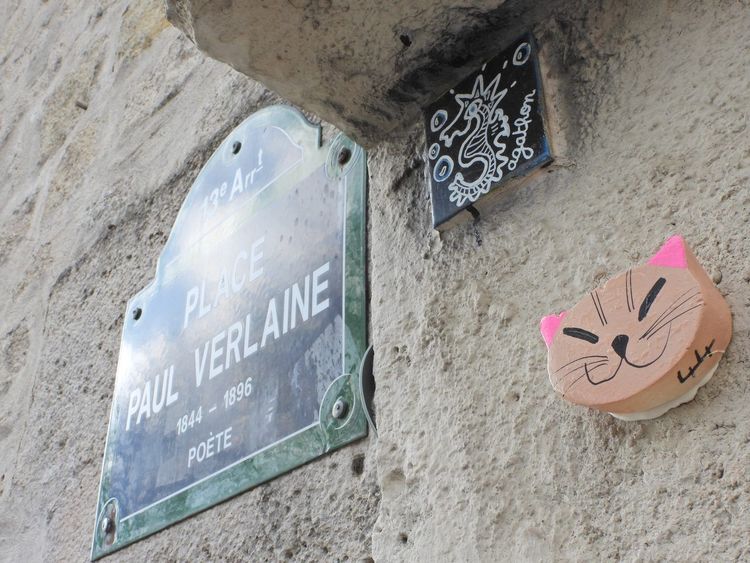
At the heart of the neighborhood, the place de la Commune-de-Paris-1871 (Place Paul-Verlaine, 75013 Paris, rated 5/5 on Google from 1 review) occupies both a geographical and symbolic position. Long known simply as Place Paul-Verlaine, it was renamed to recall that Butte-aux-Cailles was one of the last strongholds of resistance during the Bloody Week of May 1871, when Communards erected barricades here against the Versailles troops.
Beneath this same square lies one of the 13th arrondissement's best-kept secrets: an artesian well, drilled in the late 19th century to supply Paris with drinking water at a time when the city was desperately short of it. The water, drawn from more than 500 meters underground, rises naturally at a constant temperature of around 28 degrees, with no artificial heating whatsoever. This titanic borehole — one of the deepest ever drilled at the time — still feeds a public fountain today, where many Parisians come to fill jugs, convinced of the merits of this free mineral water.
This same artesian aquifer feeds the neighborhood's swimming pool, creating a subterranean link between a 19th-century feat of engineering and a sports facility still in active use. On weekdays and weekends alike, you'll often spot a quiet line of locals coming to fill their bottles at the fountain — a neighborhood ritual that speaks volumes about residents' attachment to their corner of the hill. Some even travel from the other side of Paris with armfuls of empty bottles, a weekly pilgrimage that never fails to surprise passing visitors.
A Walk through the Cobblestone Lanes of Butte-aux-Cailles
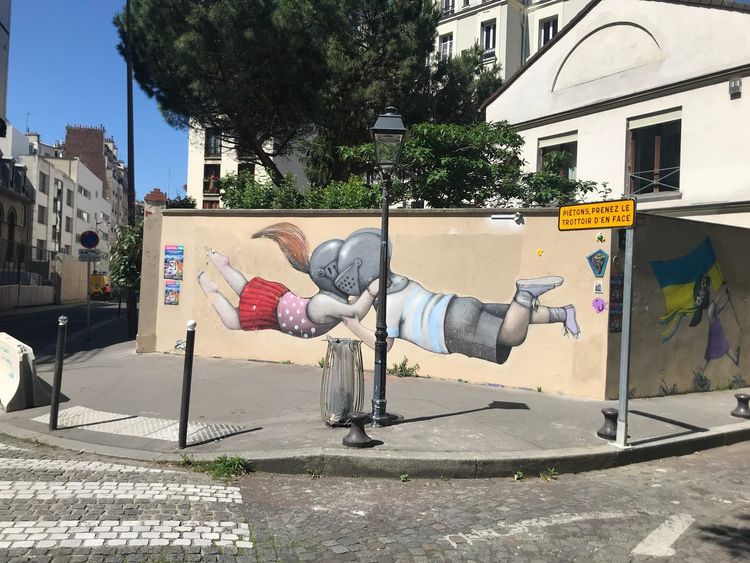
The rue de la Butte-aux-Cailles is the neighborhood's backbone — a cobbled, gently sloping street that concentrates most of the bars, restaurants, and independent shops. Periodically pedestrianized for local events, it sets the tone from the very first steps: low two- or three-story façades, hand-painted signs, and a few Virginia creeper tendrils climbing the walls in summer.
Heading north, you emerge onto passage Vandrezanne (75013 Paris), a narrow lane lined with small detached houses and front gardens that looks more like a country path than a Paris street. A few meters further, rue Daviel and its surroundings reveal a cluster of low-rise buildings dating from the early 20th century, originally designed to house working-class families in conditions better than the surrounding slums.
At the corner of rue Gérard and rue Buot, take a moment to look up: the artists' studios that once occupied the ground floors have given way to residential units, but the large north-facing bay windows typical of ateliers still survive on several façades. It's a detail most hurried visitors never notice, yet it tells an entire chapter of the neighborhood's artistic history.
The rue des Cinq-Diamants is also worth a detour: shorter than the main street, it concentrates several independent shops and a stretch of wall murals that change regularly as façades are renovated. This is often where regulars bring their out-of-town guests — less for any specific monument than for the general atmosphere of the street.
If this walk makes you want to keep exploring Paris's Left Bank, the Ryo audio tour of the Latin Quarter, from the Sorbonne to the Panthéon covers neighboring territory, about fifteen minutes on foot or two metro stops away. The two neighborhoods share a similar topography of hills and lanes that escaped the grand urban works, even though their social histories have nothing in common.
On your way back down toward the place de la Commune-de-Paris, pause for a few minutes at square Le Gall, a small and little-known green space where locals come to read or picnic, well away from the tourist groups that, in any case, are still a rare sight on the Butte. From there, the Latin Quarter and its Panthéon lie close enough to continue the day with Ryo's audio-guided tour of that neighbourhood.
Villa Daviel and the Working-Class Garden Estates
Built in 1912, Villa Daviel (75013 Paris, rated 4.6/5 on Google from 210 reviews) is a cluster of small individual houses arranged around a leafy private lane, originally conceived as a garden estate for the neighborhood's working-class families. The idea, highly fashionable at the turn of the century, was to provide healthy housing — with a small garden and natural light — in reaction to the insalubrious conditions that still prevailed in some of Paris's poorer districts.
A few streets away, Petite Alsace, another estate built in the 1910s, follows the same principle with half-timbered façades that evoke, as its name suggests, Alsatian architecture. Both complexes remain private property today, but their entrances and gardens can be admired quite freely from the street, as long as you remain discreet: these are places where people live, not tourist attractions.
This early 20th-century social heritage gives Butte-aux-Cailles an urban texture that is rare within the Paris city limits. Nowhere else, within such a small radius, will you find such a concentration of garden estates still inhabited and maintained by their residents. It also helps explain why the neighborhood long flew under the radar of organized visits, before social media brought it back into the spotlight.
The Church of Sainte-Anne-de-la-Butte-aux-Cailles
Completed in 1912, the église Sainte-Anne-de-la-Butte-aux-Cailles (15 Rue Vergniaud, 75013 Paris, rated 4.5/5 on Google from 374 reviews) stands apart from the rest of Paris's religious heritage with its architecture inspired by Byzantine basilicas — exposed brick, rounded arches, and a stocky silhouette more reminiscent of certain Mediterranean buildings than of the Gothic churches found in central Paris.
The building, constructed to meet the needs of a rapidly expanding working-class population in the early 20th century, deliberately departs from the conventional canons of Parisian religious architecture of the era. This stylistic boldness — unusual for a church in a working-class parish — has made it one of the most photographed stops on a Butte-aux-Cailles walk, often stumbled upon by visitors who weren't expecting to round a Paris corner and find a Byzantine silhouette waiting for them.
The interior, more austere than the façade might suggest, is nonetheless worth a quick look if opening hours allow — particularly for its exposed wooden roof structure, which only deepens the building's distinctive atmosphere.
Street Art: Murals and Stencils of the 13th Arrondissement
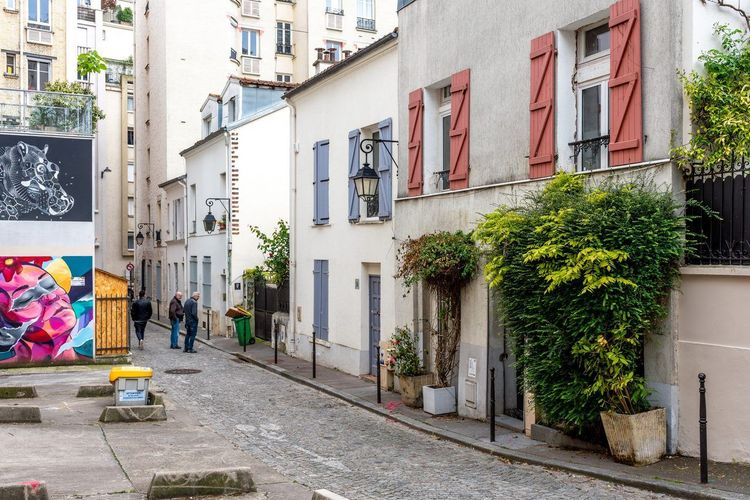
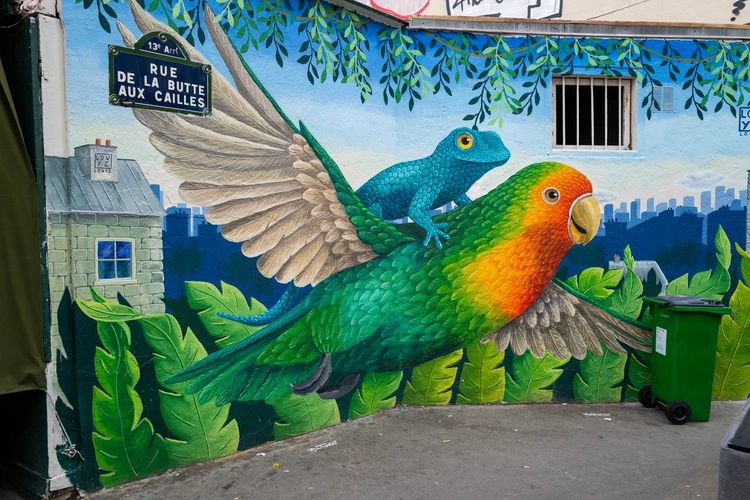
Since the 1980s, Butte-aux-Cailles has served as a canvas for several generations of urban artists. The most celebrated remains Jérôme Mesnager, whose white figures — painted directly onto walls — still punctuate several façades in the neighborhood, particularly around the rue de la Butte-aux-Cailles and the rue des Cinq-Diamants. These immaculate, almost ghostly silhouettes have become a recognizable symbol of Parisian street art well beyond the 13th arrondissement.
Other stencils and collective murals — sometimes ephemeral — appear and disappear as façades are renovated. The neighborhood has never organized an official street art trail, unlike other parts of the city, which gives each discovery a pleasantly spontaneous quality: you come across a mural at the bend of a lane without having looked for it.
If you enjoy this kind of urban wandering, allow about an hour to spot the main visible works, drifting without a fixed route between the rue de la Butte-aux-Cailles, rue Gérard, and the surroundings of passage Vandrezanne. Bring a fully charged phone: the raking light of late afternoon sets off the white figures on brick walls particularly well.
The Butte-aux-Cailles Swimming Pool, an Art Deco Gem
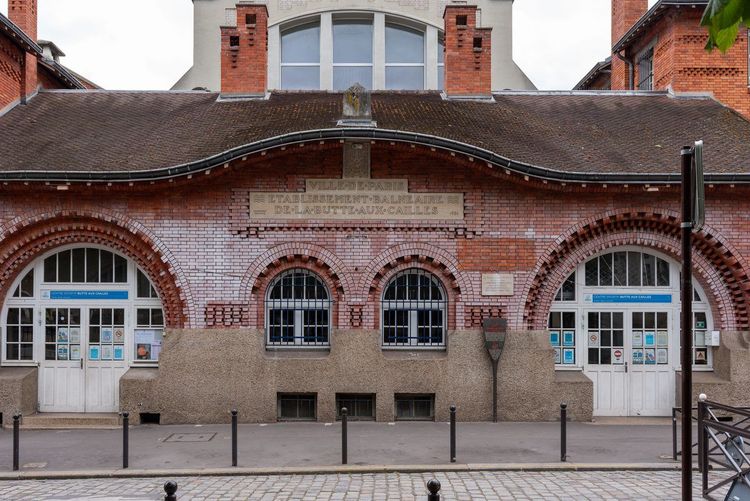
Opened in 1924, the Butte-aux-Cailles swimming pool (5 Place Paul-Verlaine, 75013 Paris, rated 3.8/5 on Google from 2,306 reviews) is fed directly by the water from the nearby artesian well, allowing its outdoor pool to remain naturally heated even in the depths of winter. The facility includes both an indoor and an outdoor pool, both listed as historic monuments for the quality of their Art Deco architecture: coloured ceramics, glass roofing, and period metalwork.
Open to the public year-round during time slots that rotate between schools, clubs, and open swimming, the pool remains one of Paris's most popular municipal sports facilities — above all for its heated outdoor pool, an absolute rarity in the capital. If you travel with a swimsuit in any season, this is probably one of the only places in Paris where using it outdoors actually makes sense, even on a January afternoon.
Cafés and Neighborhood Bars: Where to Have a Drink
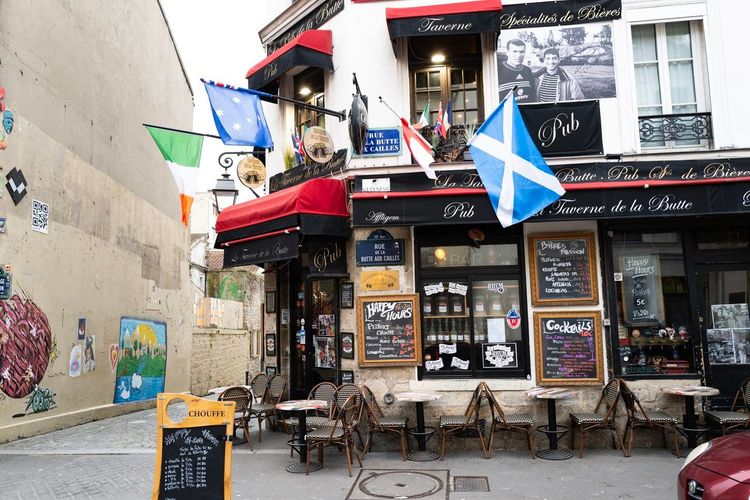
The social life of Butte-aux-Cailles revolves largely around its cafés and bars, concentrated mainly along the rue de la Butte-aux-Cailles and the rue des Cinq-Diamants. La Folie en Tête, the neighborhood's historic music bar, has hosted concerts and rock-tinged evenings for decades, in a deliberately eclectic décor that has never tried to polish itself up for the tourist guides.
A few steps away, Le Merle Moqueur (11 Rue de la Butte-aux-Cailles, 75013 Paris, rated 4/5 on Google from 618 reviews) cultivates an equally convivial spirit, with board games on the tables and a crowd that mixes long-standing regulars with curious newcomers. Both spots illustrate what sets Butte-aux-Cailles apart from other lively neighborhoods in Paris: here, people come to talk and play, not just to be seen.
On weekdays from around 6 p.m., the terraces fill gradually with a mix of students from nearby universities, thirty-somethings from the neighborhood, and longer-standing residents who know every server by name. At weekends, the atmosphere picks up a notch without ever quite tipping into the commotion of the capital's most tourist-heavy areas. You can move between two or three spots within less than 200 meters, making an evening here unusually easy to organize without booking a taxi between each stop.
A handful of venues also offer weekend brunch menus — a relatively recent habit that has taken hold on the Butte at much the same pace as elsewhere in Paris, featuring scrambled eggs and filter coffee rather than the traditional croissants from the bistro across the street.
Where to Eat in Butte-aux-Cailles: Bistros and Local Tables
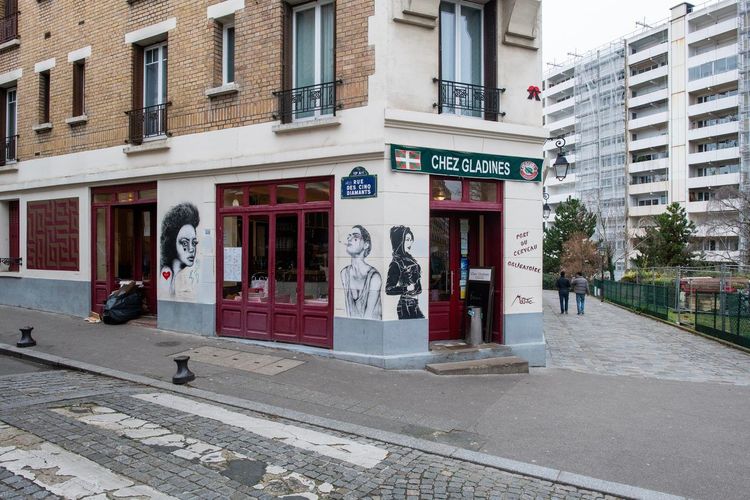
Chez Gladines (30 Rue des Cinq Diamants, 75013 Paris, rated 4.4/5 on Google from 4,935 reviews), the neighborhood's Basque institution, is renowned for its XXL salads and generous dishes at wallet-friendly prices — so much so that the queue regularly spills onto the pavement at peak times. The concept doesn't take reservations, which is part of the local folklore: you wait, you chat with your neighbors in line, and the wait itself ends up becoming part of the experience.
Another emblematic address, Le Temps des Cerises has operated since the 1970s as a workers' cooperative — a shared-management model among employees that remains rare in Parisian restaurants. The cooking is simple and generous, drawing a crowd of regulars as much as curious visitors who come for the concept as much as for the food.
A little further out, on the edges of the neighborhood, L'Avant Goût has built a solid reputation in the 13th arrondissement for its creative bistro cooking at prices that remain reasonable for the quality on offer. It's a worthwhile option if you're looking for a table a step up from the most popular spots on the rue de la Butte-aux-Cailles.
Beyond these institutions, the neighborhood offers a range of small bistros, affordable Asian restaurants, and more contemporary tables that benefit from commercial rents still reasonable by central Paris standards. You'll struggle to find a Michelin-starred restaurant on the Butte — that's not its calling: here you eat well, without breaking the bank, in the atmosphere of a neighborhood canteen rather than a tourist restaurant. To broaden your culinary horizons beyond this single neighborhood, our article on Paris culinary specialties lists further addresses spread across the capital.
If you're traveling in a group, it's better to book ahead for the most popular tables, or plan to arrive early: by 8:30 p.m. on a Friday, most sought-after spots are fully booked well past 10 p.m.
Independent Shops, Market, and Artisans
The neighborhood has long resisted the arrival of large retail chains, preferring to keep a fabric of independent businesses: secondhand bookshops, fine food stores, ceramicists' workshops, and vintage clothing boutiques set up in former craftsmen's premises. This commercial diversity — increasingly rare within the Paris city limits — contributes directly to the village identity that residents take pride in.
A few hundred meters away, the marché Auguste-Blanqui (Boulevard Auguste-Blanqui, 75013 Paris, rated 4.3/5 on Google from 517 reviews) takes place several mornings a week beneath the elevated viaduct of metro line 6, a setting that has become iconic among amateur photographers. Fruits, vegetables, cheeses, and artisanal products change hands here in an atmosphere far more local than at the tourist markets of central Paris.
Occasional flea markets, often organized by local residents' associations, round out this commercial landscape. They're an ideal opportunity to unearth a vintage object or chat with locals who have been attached to their stretch of street for several decades.
Gardens and Green Spaces around the Butte
Just steps from the rue de la Butte-aux-Cailles, the square des Peupliers (75013 Paris, rated 4.6/5 on Google from 180 reviews) offers a little-known green haven, appreciated by local families for its quiet and shaded benches. Many visitors walk straight past without stopping, simply unaware that a garden lies hidden behind its understated gate.
Just south of the neighborhood, the Cité Florale is well worth a detour for its streets named after flowers: rue des Orchidées, rue des Volubilis, rue des Iris. The houses, draped in Virginia creeper and wisteria depending on the season, create an almost provincial setting right in the heart of Paris, barely a quarter of an hour's walk from the place de la Commune-de-Paris.
These scattered, discreet pockets of greenery partly explain why so many residents of the 13th arrondissement describe their neighborhood as a village rather than simply a slice of the capital. You can combine the square des Peupliers and the Cité Florale in a short complementary walk of about thirty minutes.
Photographing Butte-aux-Cailles: the Best Viewpoints
The marché Auguste-Blanqui, with its elevated metro viaduct cutting across the sky of the 13th arrondissement, remains one of the favorite framings for photographers exploring the area — especially when a line 6 train crosses the viaduct in the full morning light.
The rue de la Butte-aux-Cailles, shot in a slight low angle from the bottom of the slope, captures the gradient that sets this neighborhood apart from the rest of Paris. Jérôme Mesnager's white figures, scattered across several façades, offer ready-made foreground subjects that stand out sharply against the brick walls.
Finally, the Cité Florale and its flower-lined streets shift their look entirely with the seasons: mauve wisteria in spring, russet foliage in autumn. The same viewpoint can yield two radically different photographic atmospheres a few months apart, which is why some regulars return to photograph the same streets several times a year.
Butte-aux-Cailles at Night: a Festive Village Atmosphere
After dark, Butte-aux-Cailles changes face without losing its neighborhood soul. The bars along the rue de la Butte-aux-Cailles fill with students from nearby universities, but also with thirty- and forty-somethings from the area who return for long-established habits. The atmosphere remains broadly good-natured — closer to a village fête than to a standardized nightlife zone.
The concerts and evenings hosted at La Folie en Tête shape part of the area's nocturnal calendar, as do a few board-game bars that keep evenings going until late on weeknights and weekends alike. To keep track of cultural events across the whole city beyond this neighborhood, the Paris events page lists the not-to-be-missed happenings throughout the seasons.
Unlike other, more central lively neighborhoods, Butte-aux-Cailles remains residential: locals live above the bars, which explains a certain collective discipline around noise after midnight. This is worth knowing if you're staying in the neighborhood rather than just visiting for the evening.
How to Get to Butte-aux-Cailles
The metro station closest to the heart of the neighborhood is Corvisart, on line 6, about a five-minute walk from the place de la Commune-de-Paris. Place d'Italie, served by lines 5, 6, and 7, is a practical alternative if you're coming from another part of the city, though it involves a slightly longer walk. Reaching the Butte-aux-Cailles neighborhood in Paris takes only a few minutes from one of the south side's largest interchange hubs.
Several bus lines complement this network, including from the main roads of the 13th arrondissement. If you come by bike, several self-service stations dot the surroundings of Place d'Italie, but be prepared to push your bike on the final climb — the Butte's gradient is anything but trivial. To complete your Parisian stay beyond this single neighborhood, the Ryo Paris audio guide offers a structured tour through the city's must-sees, easy to combine with a detour up to the Butte.
When to Visit the Neighborhood
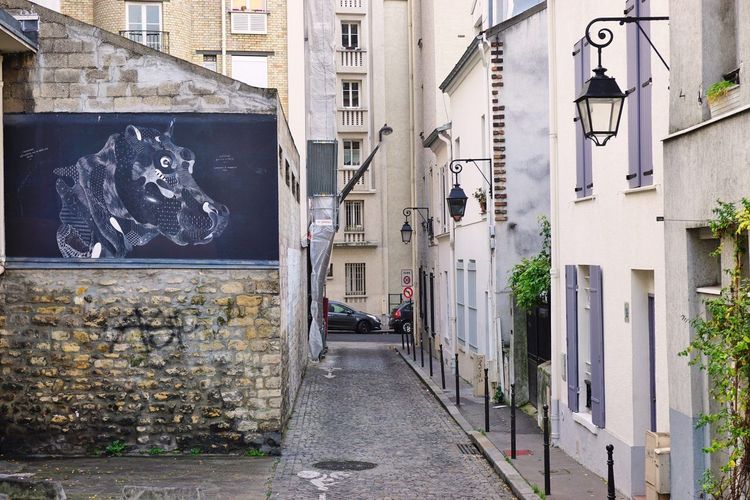
Spring and early autumn offer the most pleasant conditions for strolling through the cobbled lanes, when window boxes are in bloom and terraces stay open late without excessive heat. During the day, mornings are best for enjoying the calm and the light on the façades; at weekends, evenings take over with a noticeably livelier atmosphere. The Butte-aux-Cailles in Paris is genuinely worth visiting at any time of year, and winter shouldn't be ruled out — especially if the prospect of an outdoor heated swim at the neighborhood pool sounds appealing.
Where to Stay near Butte-aux-Cailles
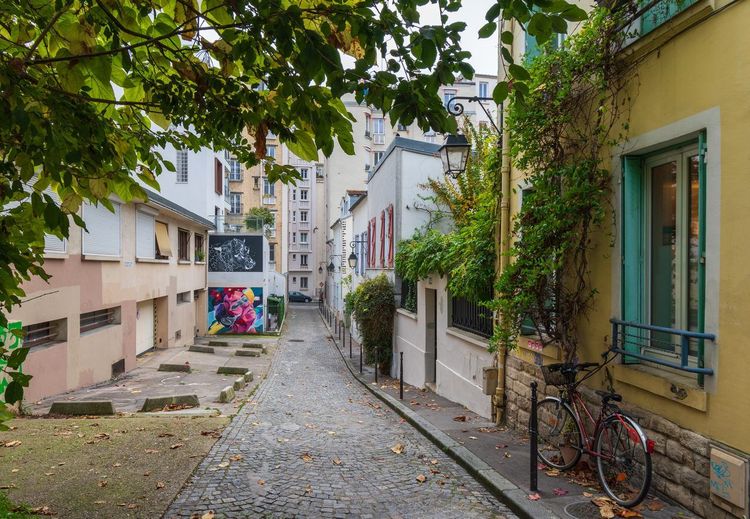
The 13th arrondissement offers a range of accommodation generally more affordable than central Paris neighborhoods, from budget hotels to furnished short-stay apartments. Staying directly within the Butte-aux-Cailles perimeter is possible, but options are limited by the neighborhood's small size and the scarcity of conventional hotel establishments.
Many visitors prefer to base themselves near Place d'Italie, five to ten minutes on foot, where the hotel offer is broader while still allowing quick access to the village neighborhood. This option also makes it easier to use the more numerous metro connections for exploring the rest of the city. That said, staying in the Butte-aux-Cailles neighborhood itself remains the most immersive experience — especially if you dream of starting the day with a coffee on a terrace on the rue des Cinq-Diamants before the passing visitors arrive.
Anecdotes and Curiosities of the 13th Arrondissement
Beyond the debate over the origin of its name, Butte-aux-Cailles holds several entertaining peculiarities. In the early 20th century, for instance, the neighborhood welcomed a succession of artists and writers drawn by modest rents — a tradition that persists today in a more diffuse form, through collectives of craftspeople and independent creatives.
Another little-known fact concerns the neighborhood's role during the Second World War: its labyrinthine layout of lanes and courtyards made it well suited to certain local resistance activities, difficult to patrol because of its irregular street plan. Few commemorative plaques preserve any visible trace of this, which makes this chapter of its history all the more confidential.
Some locals also like to point out the existence, in a secondary lane near Villa Daviel, of one of the neighborhood's narrowest façades — almost wedged between two neighboring buildings — an accident of architecture that never fails to amuse attentive visitors.
Finally, certain residents enjoy noting that Butte-aux-Cailles rises to around 63 meters above sea level, making it one of the natural high points of the Left Bank — far behind Montmartre, but enough to offer a few open views over the surrounding rooftops from certain sloping intersections.
What to Know Before You Go
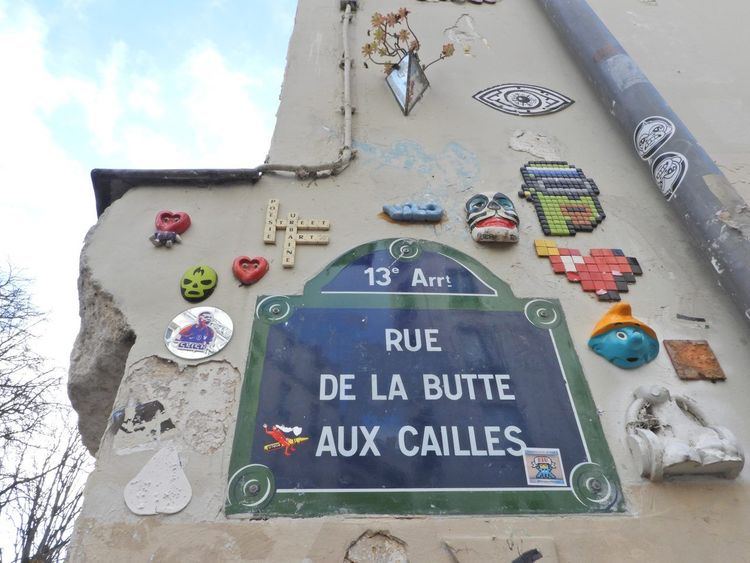
Allow two to three hours for a thorough visit to the Butte-aux-Cailles neighborhood in Paris, including a stop at a local bar or bistro. The entire area can be covered on foot, with no need for intermediate transport, making it an easy addition to a broader visit of the 13th arrondissement or the nearby Latin Quarter. Wear comfortable shoes: the cobblestones and slopes, charming in photographs, are considerably less welcoming in heels.
FAQ
Why is the neighborhood called Butte-aux-Cailles?
Two theories coexist: the first attributes the name to Pierre Caille, a 17th-century landowner whose surname gradually transformed over time, while the second evokes wild quails that nested on this agricultural hill before the neighborhood was urbanized. No definitive proof has settled the debate between the two accounts.
How do I get to Butte-aux-Cailles by metro?
Corvisart station, on line 6, is about a five-minute walk from the heart of the neighborhood. Place d'Italie, served by lines 5, 6, and 7, is a practical alternative depending on your starting point in Paris, though it requires a slightly longer walk to the place de la Commune-de-Paris.
How much time should I set aside to visit Butte-aux-Cailles?
Two to three hours are enough to cover the main lanes, the place de la Commune-de-Paris, and a few bars or restaurants, including a break along the way. Allow half a day if you want to add the Cité Florale and have lunch on site.
Is the Butte-aux-Cailles swimming pool open to the public?
Yes, the municipal pool welcomes the public year-round during open-swim sessions, outside of time slots reserved for schools and sports clubs. Its outdoor pool remains naturally heated even in winter thanks to water from the nearby artesian well, making it a rare attraction in Paris.
What is the best time to visit the neighborhood?
Spring and early autumn offer the most pleasant conditions for a stroll, with open terraces and favorable light for photos. Weekend evenings suit those seeking the festive atmosphere of local bars, while weekday mornings are ideal for peace and quiet.
Where can I eat cheaply in Butte-aux-Cailles?
Chez Gladines and Le Temps des Cerises remain the best-known spots for generous meals on a tight budget, complemented by several neighborhood bistros and affordable Asian restaurants along the rue de la Butte-aux-Cailles and the rue des Cinq-Diamants.
Is Butte-aux-Cailles a safe neighborhood at night?
The neighborhood is generally peaceful and residential, with a convivial rather than tense nightlife atmosphere. As anywhere in Paris, the usual precautions are recommended, particularly near the main roads bordering the area, which become quieter once the bars have closed.
The Butte-aux-Cailles neighborhood in Paris remains one of those rare corners of the capital where history, urban design, and village life can still be read in the very layout of the streets. Between the artesian well, garden estates, a Byzantine church, street art, and welcoming bars, it offers a break from the Paris of grand monuments, just a few metro stops from the center.
To continue exploring beyond this single neighborhood, the Ryo Paris audio guide offers a complete self-guided tour through the city's major sites — a natural way to follow up this village escape with the rest of your Parisian stay.
À lire également