© Shutterstock
 Votre guide Ryo
Visiting Quimper for the First Time: The Complete 2026 Guide
Visiting Quimper for the first time means discovering a Breton prefecture like no other: the old town was built at the confluence of the Odet and the Steïr, and the spires of the Cathédrale Saint-Corentin have dominated the slate rooftops since the mid-19th century. It is best explored without too strict an itinerary: the half-timbered lanes reveal their details to those who take the time to look up. The Ryo audio guide tour of Quimper is designed precisely for this kind of stroll, covering 2.5 km in about an hour of listening, with 23 commented stops.
Here, a Gothic cathedral built over more than two centuries can be visited without a ticket, an entire neighbourhood still lives off hand-painted faience dating back to 1690, and the covered market changes atmosphere throughout the day, from the morning coffee to the afternoon cheese stalls. This guide covers the historic centre and the cathedral, the walk along the Odet, the Locmaria district and its workshops, the museums not to be missed (including one currently under renovation), a full-day itinerary, the best local restaurants, the villages and the Cornouaille coastline within an hour's drive, as well as practical information for planning your stay.
Old Quimper: Historic Heart and Cathédrale Saint-Corentin
The old town of Quimper is almost entirely contained within a triangle that can be walked in half a day, yet it rewards multiple visits. Between the cathedral, the halles and the half-timbered lanes, every street corner hides a carved detail, an old shop sign or a jettied facade.
The Cathédrale Saint-Corentin and Its Square
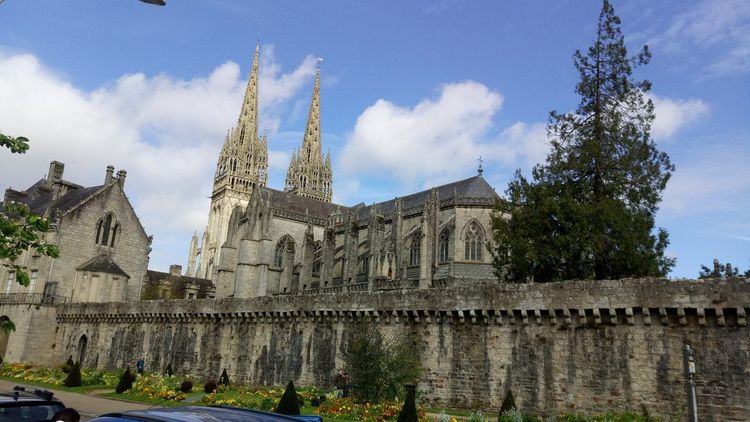
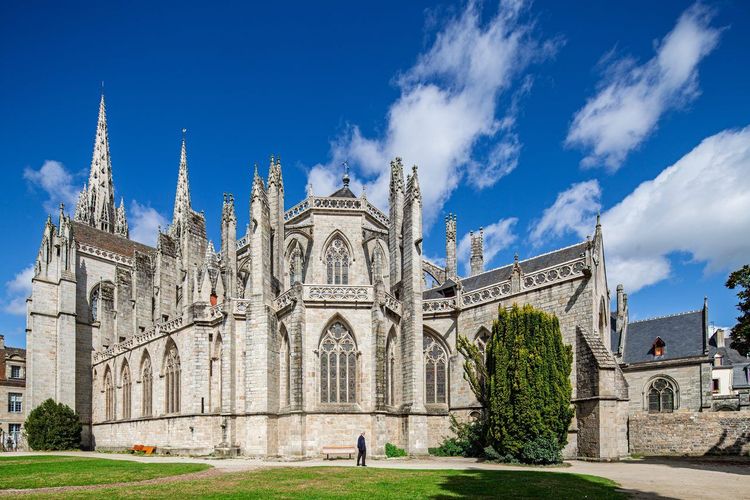
The Cathédrale Saint-Corentin is visible from almost every point in the city centre, and with good reason: its two spires rise to 76 metres. Yet they were only added between 1854 and 1856, funded by a public subscription from the people of Quimper, while the Gothic building work had begun in 1239 with the choir. Once inside, look towards the altar: the choir deviates by about 10° from the nave. The most widely accepted explanation relates to the ground, as the builders avoided the wet, unstable soil close to the river.
The place Saint-Corentin stretching before the main portal serves as a landmark for any visit. Look up between the two towers: the equestrian statue of King Gradlon, the legendary founder of the city according to Breton tradition, stands between them above the facade. The café terraces surrounding the square make it a great starting or finishing point for a walk through the old town.
Allow around thirty minutes inside if you wish to admire the 15th-century stained glass windows, among the finest in Brittany. Entry is free all year round, making it an easy stop to combine with the rest of the old town.
Half-Timbered Lanes: Rue Kéréon, Place au Beurre and Rue Saint-Nicolas
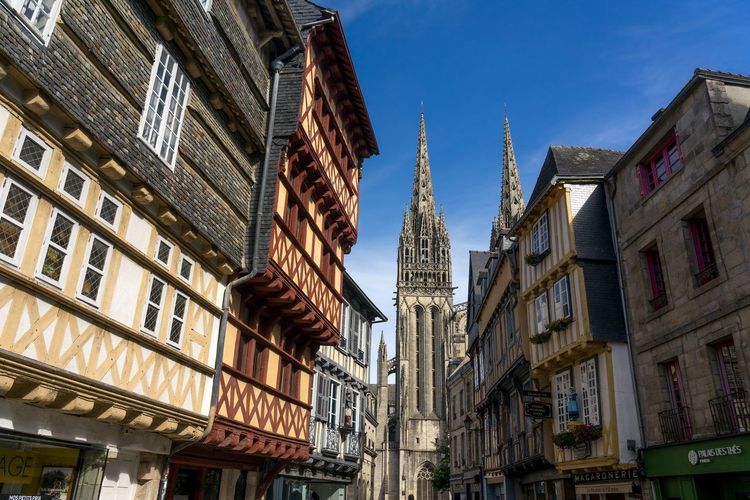
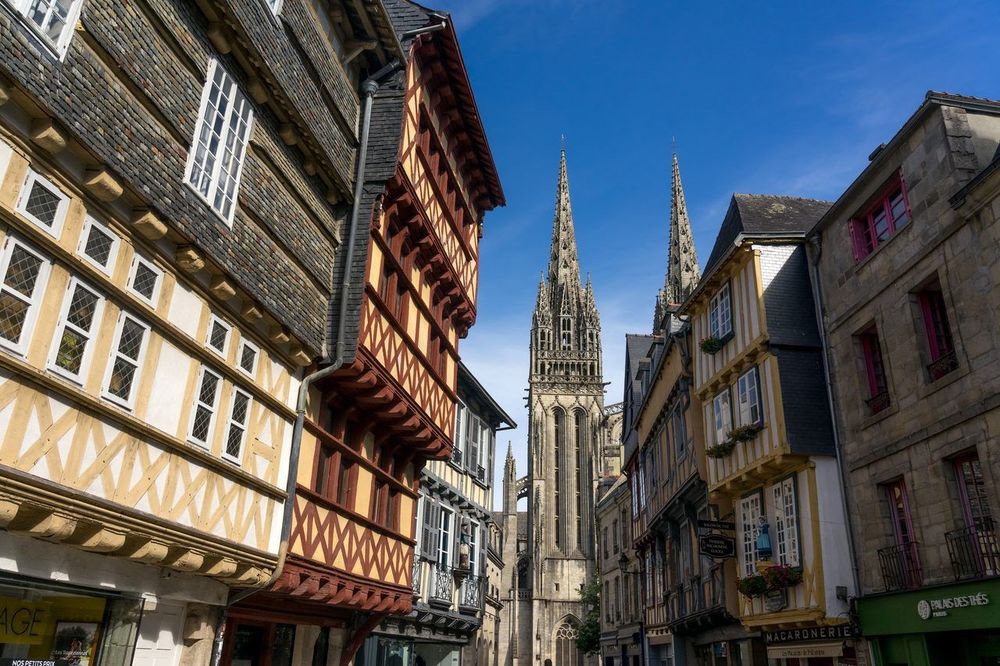
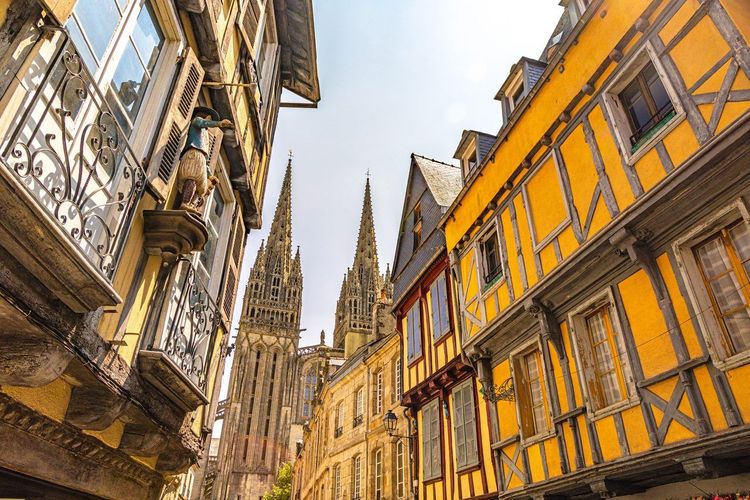
From the place Saint-Corentin, rue Kéréon opens up as the historic commercial artery of the city, lined with half-timbered and jettied houses. Its Breton name means 'cobblers', recalling the craftsmen who once worked here; it has retained its medieval layout even as the shop fronts have changed. Today's windows blend Breton designer boutiques, art galleries and more conventional shops, but the pace remains pedestrian, making it pleasant even at the height of tourist season.
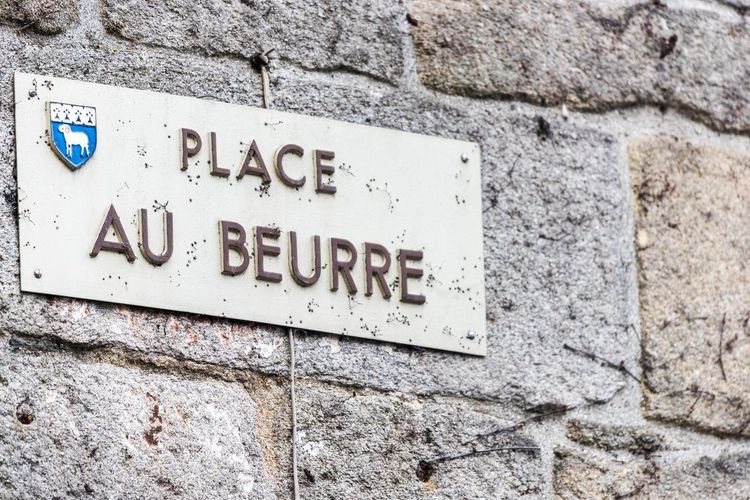
Just nearby, the place au Beurre has a name that raises a smile but is a genuine reminder of the butter market once held there. Its half-timbered facades are among the best preserved in Quimper, with carved beams visible on the upper floors.
A little further along, rue Saint-Nicolas and place Mesgloaguen offer a quieter version of the same scenery, away from the crowds of rue Kéréon. This is the place to observe the details without the crowds: carvings on the corner beams, mullioned windows, ancient doors.
Halles Saint-François and the Ramparts: Food and History
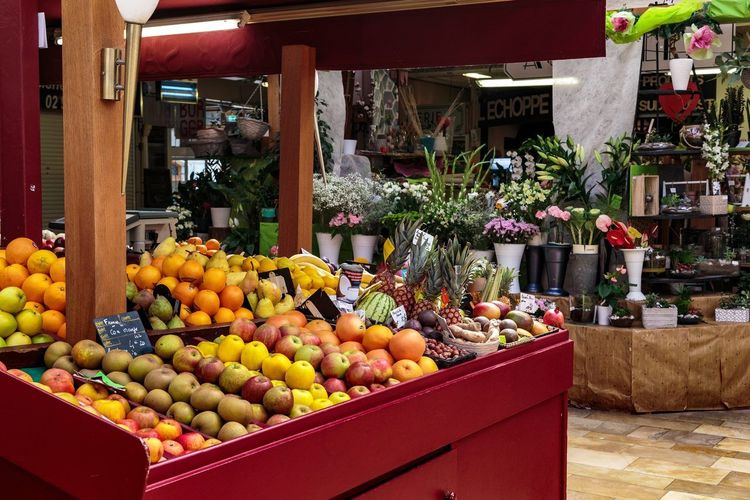
The halles Saint-François (Place des Halles, 29000 Quimper, rated 4/5 on Google from 1,100 reviews) have occupied the site of the former Cordeliers convent since 1847. On the night of 27–28 August 1976, a fire destroyed them and nearly engulfed the neighbouring district; they were rebuilt and remain a very popular covered market, open every day (on Sundays until 1 pm). You will find far breton, kouign-amann and seafood, with an atmosphere that shifts completely between 8 am and noon.
The ramparts, sections of which survive along the Odet and around the jardin de l'Évêché, are a reminder that Quimper was a walled city in the Middle Ages. Part of the wall now serves as a walkway, a pleasant complement to a visit of the historic centre.
If you prefer a guided visit at your own pace, the Ryo audio guide tour of Quimper takes you through the Cathédrale Saint-Corentin, the half-timbered lanes and the halles across its 23 commented stops, connecting these places without having to look up the stories yourself.
Strolling along the Odet and Its Flower-Covered Footbridges
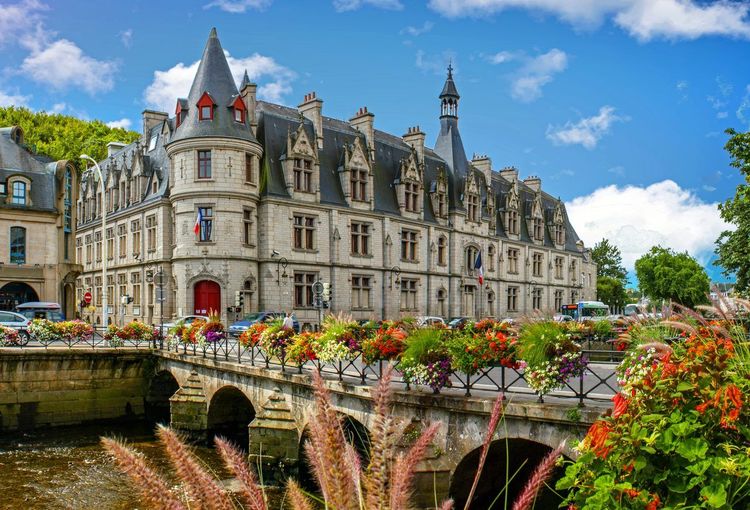
After the density of the historic centre, a walk along the Odet shifts the pace entirely: this is the greenest and most peaceful part of a first visit to Quimper.
Quays and Flower-Covered Footbridges of the Odet
The Odet flows through Quimper and its quays have been laid out as a continuous promenade, shaded by trees along both banks. In the warmer months, the railings of the flower-covered footbridges disappear beneath window boxes, one of the most photographed images in the city.
The pont Médard, at the end of rue Kéréon, offers one of the best views of the cathedral and the houses lining the water. It also serves as a useful landmark for reaching the Locmaria district by following the river rather than cutting through the centre.
The walk lends itself well to a break: several benches and terraces look directly onto the water, in complete contrast to the bustle of rue Kéréon. You will notice that the level of the Odet changes throughout the day: the river is still subject to tidal influence right into the heart of Quimper.
Gardens and Green Spaces in the City Centre
Just behind the cathedral, the jardin de l'Évêché (Rue du Roi Gradlon, 29000 Quimper, rated 4.9/5 on Google from 18 reviews) backs onto the old ramparts and offers an open view of the chevet and the Odet below. It is one of the most easily accessible gardens in Quimper from the city centre.
Other green spaces complement the walk, such as the jardin de la Retraite, more tucked away, or the landscaped riverbanks further west. For a first visit, an hour is enough to link these gardens without losing sight of the Odet, a leisurely pace that the Ryo audio guide follows in its final section.
The Locmaria District and Quimper's Faience Workshops
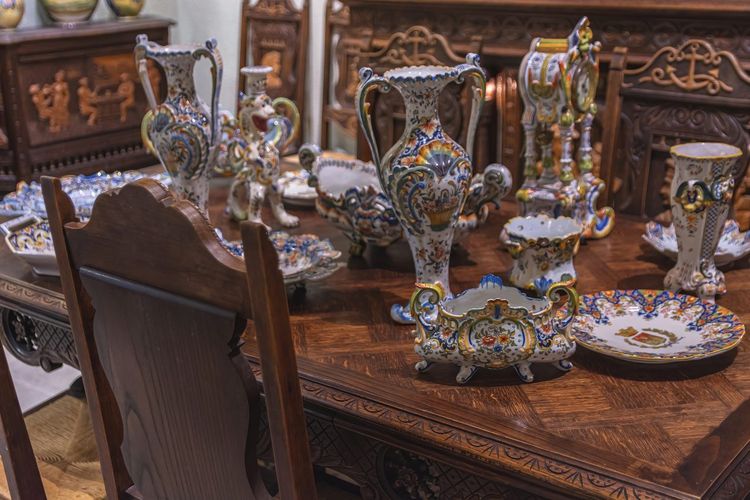
On the other side of the Odet, Locmaria long lived apart from the city centre, sustained by a craft tradition that made Quimper's reputation well beyond Brittany.
The Faience Workshops and Manufactures
Quimper faience has been produced in Locmaria since 1690. The faïencerie Henriot-Quimper, heir to this history and holder of the Entreprise du Patrimoine Vivant label, remains one of the oldest active manufactures in France. Its guided tour takes you through the workshops, from shaping and firing to the painters who decorate each piece by hand.
The Quimper craft tradition rests on instantly recognisable motifs: the little Breton man and woman in traditional dress, stylised flowers, blue and yellow borders. Since every design is painted by hand, prices exceed those of industrial faience, but you leave with a genuinely unique piece, starting with the famous personalised bowl.
Right next door, the Musée de la Faïence traces three centuries of Quimper production, from the earliest pieces to Art Deco creations. If you plan to visit the workshop in July or August, book ahead: time slots are limited and fill up quickly.
The Locmaria District: Crafts and Religious Heritage
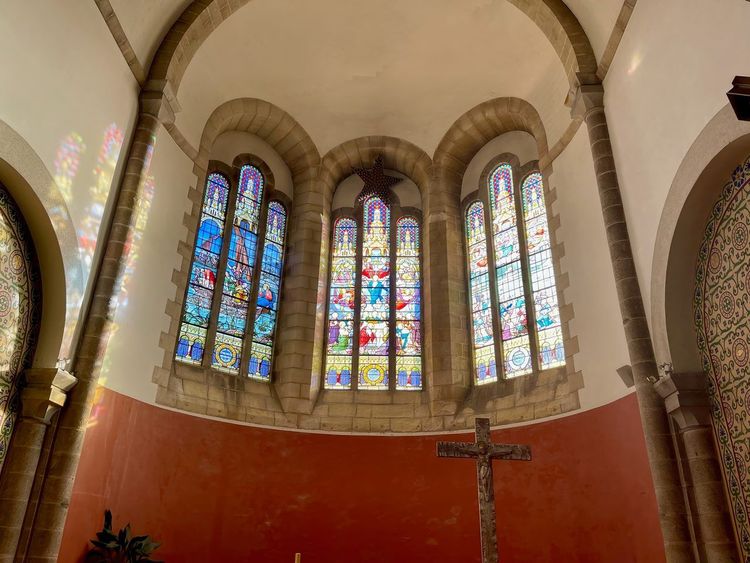
The district also preserves the église Notre-Dame-de-Locmaria (Rue du Père Abgrall, 29000 Quimper, rated 4.5/5 on Google from 67 reviews), an 11th-century Romanesque building considerably older than the cathedral, whose simplicity contrasts sharply with the Flamboyant Gothic of the city centre. It is one of the rare surviving examples of Romanesque architecture still visible in Quimper, and its small cloister garden is often deserted.
The district lends itself well to a late morning or early afternoon visit, when the artisan shops are open. One stop on the Ryo audio guide tour tells the story of the faience manufactures and the daily lives of the Locmaria craftspeople, with details not always found on the information panels.
The Essential Museums of Quimper
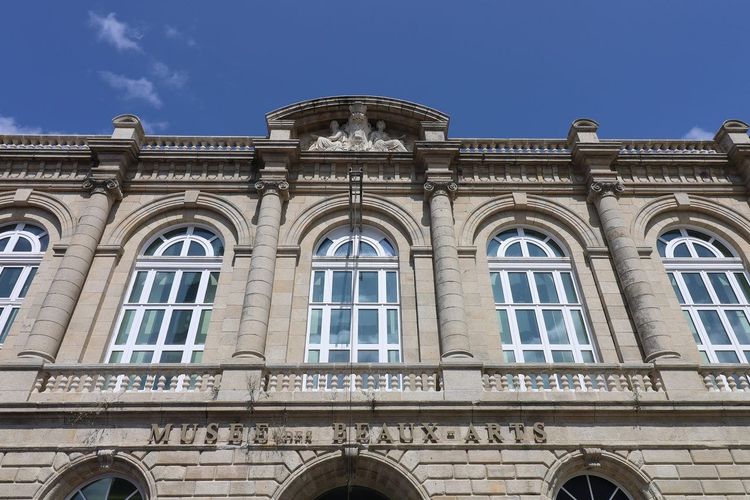
Two major museums complete a first visit, just a few metres from each other at the foot of the cathedral. Before you set off, do check their current status: one of them has just come through a lengthy renovation.
The Musée des Beaux-Arts de Quimper
The Musée des Beaux-Arts de Quimper, located on the place Saint-Corentin, holds a rich collection of European painting, with a particularly important body of work devoted to the Pont-Aven school and the artists who painted Brittany at the end of the 19th century. It closed in autumn 2024 for major renovation work (roof, insulation, climate control, new reception and new shop), with a reopening announced for autumn 2026.
If your stay falls just after the reopening, allow around an hour and a half for a full visit, slightly less if you focus on the Breton rooms. Check the museum's website before you go, as the exact date depends on the progress of the works.
The Musée Départemental Breton
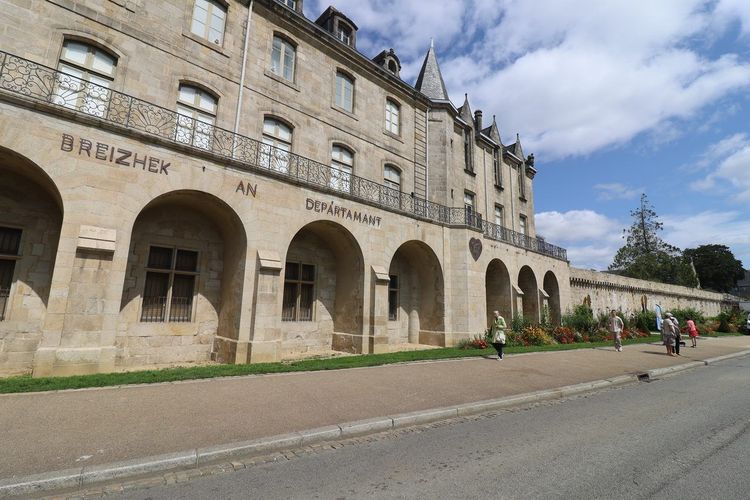
Housed in the former bishop's palace adjoining the cathedral, the Musée Départemental Breton (1 Rue du Roi Gradlon, 29000 Quimper, rated 4.6/5 on Google from 827 reviews) traces the history and ethnography of the region, from embroidered costumes to faience and rural furniture. The setting, with its Renaissance staircase tower, is almost as much of a draw as the collections.
It is open Tuesday to Sunday from 10 am to 6 pm, and every day in July and August. If you can only choose one museum for a first visit, make it this one: it gives you the keys to understanding Cornouaille as you explore it afterwards.
A One-Day Itinerary in Quimper for First-Time Visitors
Only have one day? Here is how to cover the essentials without rushing.
Morning: Cathedral, Old Town and Halles
Start early, around 9 am, with the Cathédrale Saint-Corentin and the square surrounding it: the morning light filters well through the stained glass windows and tour groups generally arrive later. Allow 45 minutes for the interior and the immediate surroundings.
Continue along rue Kéréon and place au Beurre, then slip down to rue Saint-Nicolas for a breather. This section can be done at a leisurely pace in about an hour, stopping wherever the shop windows catch your attention.
Finish the morning at the halles Saint-François, while the stalls are still well stocked: this is the ideal time for a coffee or a snack before crossing to the other bank.
Afternoon: Museums, Locmaria and a Walk along the Odet
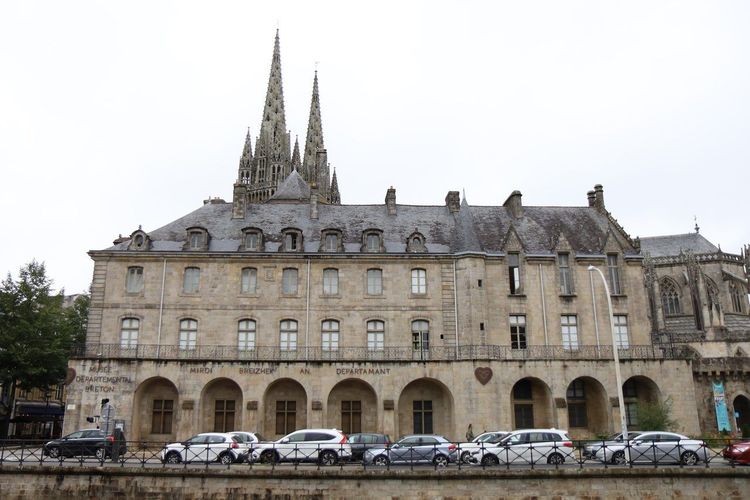
After lunch, head to the Musée Départemental Breton, and the Musée des Beaux-Arts right next door if it has reopened. Both visits combined take around two and a half hours.
On your way out, cross pont Médard and follow the Odet quays to the Locmaria district, where the faience workshop and the Musée de la Faïence can easily fill an hour. The walk from the museums takes about fifteen minutes, with photo stops on the flower-covered footbridges along the way.
If museums are not particularly appealing, reverse the order: start with Locmaria in the early afternoon and save a museum for the end of the day, before the 6 pm closing time.
End of Day: Local Specialities and the Quimper Atmosphere
In the late afternoon, treat yourself to a break at a crêperie in the historic centre: this is when the terraces on place au Beurre and rue Kéréon regain their calm, between the lunchtime groups and the evening dinner crowd.
Before dinner, two options are open to you: stay in the old town for a classic galette, or head out earlier, before 6.30 pm, to the cider house at the Manoir du Kinkiz on the outskirts of town for a tasting of cider and lambig. The second option requires a car; the first can be done entirely on foot.
Throughout this same day, the Ryo audio guide tour of Quimper can serve as a thread for the morning: with its 23 stops spread over 2.5 km and about an hour of listening, it structures the visit to the cathedral, the lanes and the halles, with no itinerary to prepare in advance.
Where to Try Local Specialities in Quimper
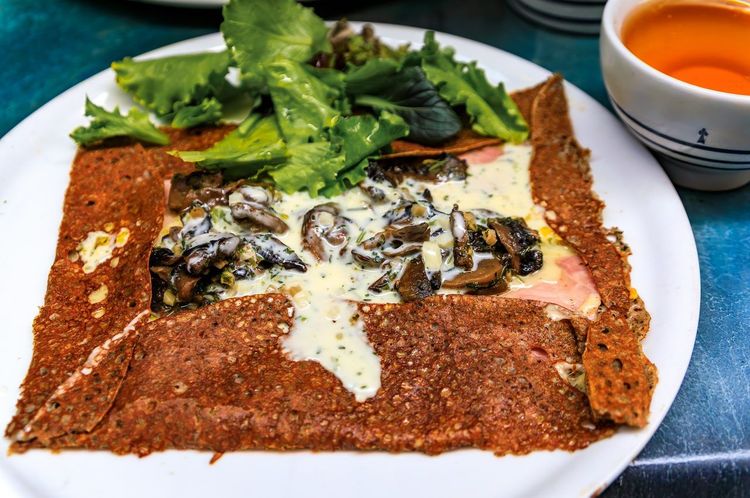
Quimper's gastronomy is firmly Breton, centred on crêpes, cider and seafood, with a few addresses that stand out from the crowd.
Crêperies and Breton Specialities in the Old Town
Crêperies are concentrated mainly around rue Kéréon and place au Beurre, with establishments that have been serving for several generations. The classic galette complète — egg, ham and cheese — is the safe choice; save room for a salted butter caramel crêpe, or a slice of far breton for dessert.
At the halles Saint-François, you will also find everything you need to put together a quality picnic: local cheeses, charcuterie, smoked fish and artisan bread, ideal for a quick lunch between two visits.
The Manoir du Kinkiz and Its Cider House
The cider house at the Manoir du Kinkiz, a few minutes from the centre by car, is run by Hervé Seznec, who produces cider, AOC pommeau de Bretagne, lambig, chouchen and apple juice on site. The tour of the cellar and orchards ends with a free tasting of the full range, and several cuvées have been awarded medals at the Concours Général Agricole.
The cider house is open Monday to Saturday, with a lunch break, and closed on public holidays. Leave some room in the boot: the bottles sold on site make excellent souvenirs.
What to See and Do around Quimper: Villages and the Cornouaille Coast
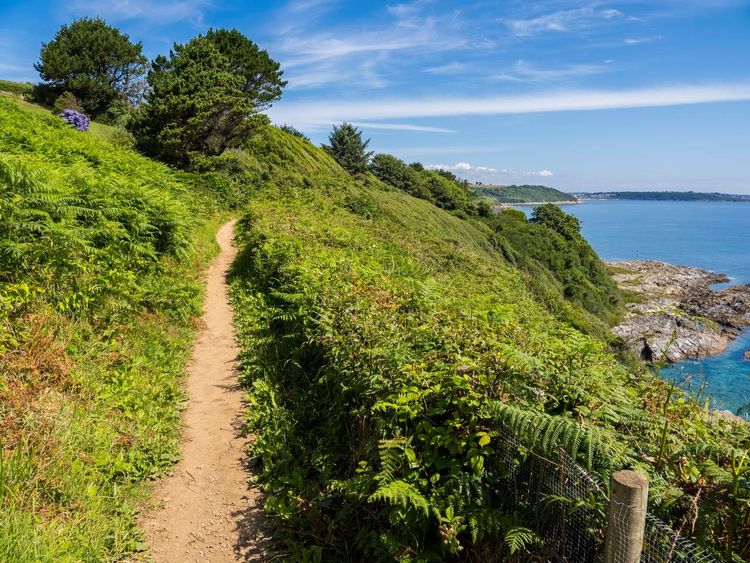
Quimper also serves as an ideal starting point for Cornouaille, a region that blends characterful villages, fishing harbours and spectacular coastline, all within less than an hour's drive.
Locronan and Douarnenez: A Characterful Village and a Breton Port
Locronan, about twenty minutes from Quimper, is one of France's Most Beautiful Villages: its granite houses, clustered around the Gothic église Saint-Ronan built between 1430 and 1480, have served as a backdrop for many period films. The central square, paved and free of visible cables, creates a remarkably convincing sense of stepping back in time.
Douarnenez, another twenty minutes further on, retains a fishing port identity far more pronounced than Quimper's. Port-Rhu, with its boat museum and old rigged vessels moored alongside, traces the history of fishing and the sardine canning industry that built the town's prosperity.
Concarneau and Pont-Aven: Artistic Cornouaille
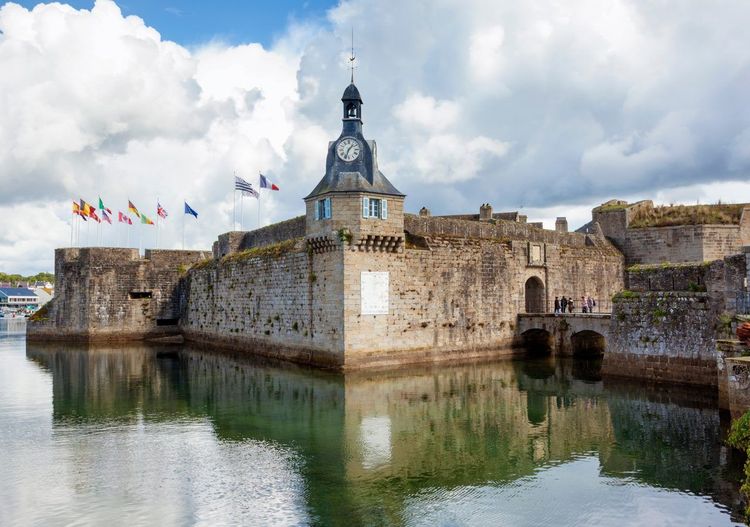
Concarneau, about thirty minutes to the south-east, is distinguished by its Ville Close, an islet roughly 350 metres long encircled by granite ramparts. The fortifications, completed in 1694 and inspected by Vauban the same year, can be walked in about an hour, with views over the still-active fishing harbour.
Pont-Aven, further inland, owes its fame to Paul Gauguin and the school of painting that developed there at the end of the 19th century. The Bois d'Amour, which runs alongside the Aven, inspired many canvases, several of which are held at the Musée des Beaux-Arts de Quimper: a direct link between the two towns that gives added meaning to a combined visit.
Cap Sizun, Pointe du Raz and Bénodet: Fresh Air and Coastline
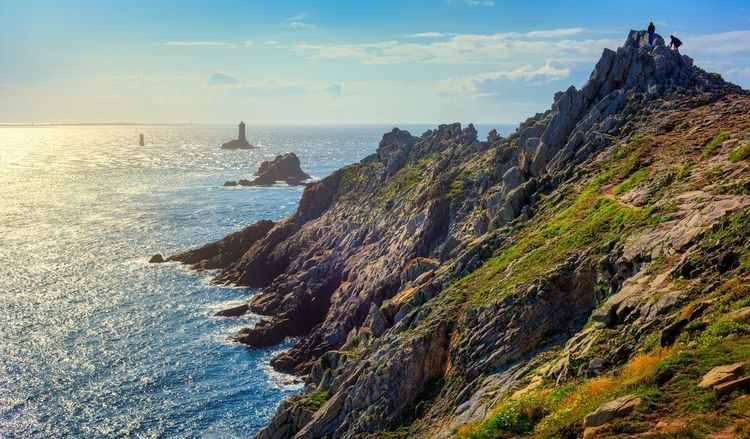
For the open sea, Cap Sizun and the Pointe du Raz, about three quarters of an hour's drive away, offer one of the most dramatic coastal landscapes in Brittany: steep cliffs, marked coastal paths and views of the île de Sein on a clear day. The wind blows almost constantly here, even in summer, so bring a windproof layer.
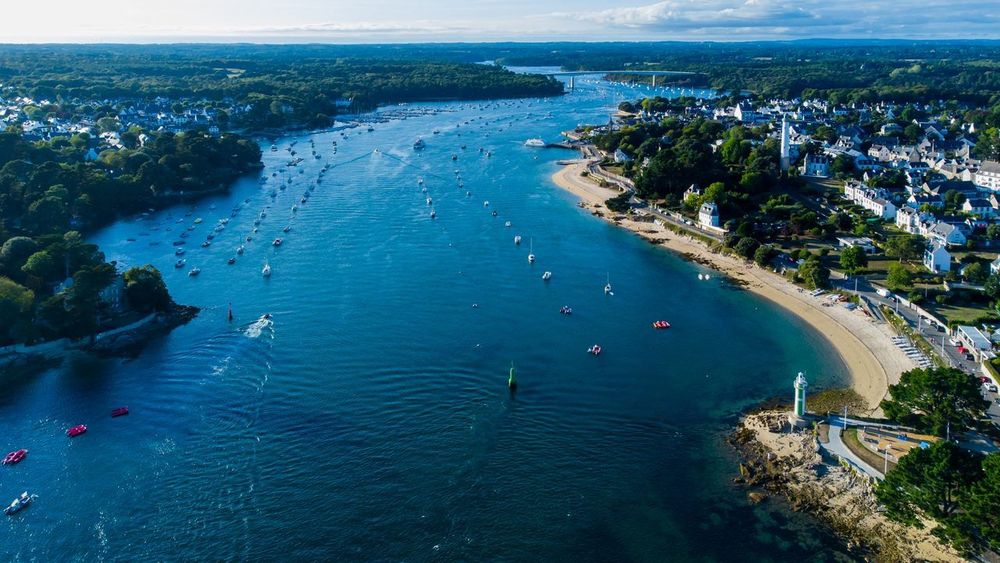
In the opposite direction, Bénodet (Pointe du Coq, 29950 Bénodet, rated 5/5 on Google from 5 reviews), about twenty minutes south of Quimper at the mouth of the Odet, offers a gentler seaside atmosphere, with sandy beaches and river cruises. A relaxing way to end your stay in Cornouaille after days of walking through town and along the cliffs.
To explore these surroundings further, our Ryo article on the area around Quimper details further options depending on the time available and your mode of transport.
Another Side of Quimper: Markets, Crafts and Local Life
Beyond the monuments, Quimper can also be discovered through its pace of life, often overlooked on express visits.
Markets and Local Life through the Seasons
On Saturdays, the large market stretches along the Steïr and around the halles: fruit and vegetable producers in the morning through to early afternoon, clothing and everyday goods until the evening. On Wednesdays, a smaller market takes over some of the same spots. If you can, time your visit to a Saturday morning: that is when you will see the most locals, basket in hand.
In summer, the pedestrian streets also host concerts and events, including the Festival de Cornouaille at the end of July, one of the great gatherings of Breton music and dance. Costumed parades, bagadoù and fest-noz transform the city for several days. Out of season, Quimper returns to a slower pace, better suited to observing local life than ticking off a list of monuments.
For craft enthusiasts, the designer boutiques on rue Kéréon and the Locmaria workshops form a natural circuit: embroidery, faience, marine textiles. And if you prefer to explore without a fixed schedule, the Ryo audio guide for Quimper is available at any time on your smartphone, outside the usual guided tour time slots.
Where to Stay in Quimper: Which District Should You Choose?
The historic centre remains the most practical choice for a first visit: a few minutes' walk from the cathedral, the halles and the half-timbered lanes, it lets you do everything without a car. Accommodation there is plentiful but more expensive in high season, especially during the Festival de Cornouaille, when it is worth booking several weeks in advance.
The districts around the Odet, slightly outside the historic core, often offer better value for money while still being within reasonable walking distance. This makes a good base for a stay of several days, particularly if you plan excursions to Locronan, Concarneau or the Pointe du Raz.
If you are arriving by car and plan to explore Cornouaille, look at Locmaria or the area near the station: parking is easier there without being too far from the centre. Travellers arriving by train will appreciate being able to drop their bags ten minutes from the cathedral.
To complete your trip planning, our Ryo article on things to do in Quimper and our Ryo selection of Quimper culinary specialities offer further ideas depending on the length of your stay.
Practical Tips: Getting There, Parking and Choosing Your Season
How to Get to and around Quimper
Quimper is connected to Paris-Montparnasse by direct TGV, taking roughly 3h45 to 4h15 depending on the service, with a station about ten minutes' walk from the cathedral. By car, allow around 5h30 from Paris via the Breton expressway, a longer journey but useful if you plan to explore the region afterwards.
Once there, the historic centre can be visited entirely on foot: the distances between the cathedral, the halles, Locmaria and the museums rarely exceed fifteen minutes' walk. A car only becomes necessary for excursions to Locronan, Concarneau or the Pointe du Raz.
Where to Park Easily
Several car parks ring the city centre, notably near the place de la Résistance and the halles, with hourly rates that are reasonable compared with other Breton tourist towns. Avoid the centre on Saturday morning, the day of the large market: several streets around the Steïr are taken over by stalls.
What Is the Best Time to Visit Quimper
Spring and early autumn offer the best balance between mild weather and moderate crowds, with the Odet's flower-covered footbridges already or still in bloom. July and August remain the liveliest period, driven by the Festival de Cornouaille, but also the busiest at the most popular sites. Autumn 2026 has an added bonus: the announced reopening of the Musée des Beaux-Arts.

FAQ
How long does it take to visit Quimper?
A full day is enough to cover the essentials of the historic centre, the cathedral, Locmaria and one museum. Allow two to three days if you want to add the surrounding villages and coastline, such as Locronan, Concarneau or the Pointe du Raz.
What are the must-sees in Quimper?
The Cathédrale Saint-Corentin, the half-timbered lanes around rue Kéréon, the halles Saint-François and the Locmaria district with its faience workshops form the heart of a first visit. The Musée Départemental Breton, and the Musée des Beaux-Arts after its reopening, round out the itinerary nicely.
Is Quimper worth visiting during a trip to Brittany?
Yes, Quimper combines a dense architectural heritage within a compact area and quick access to some of the most beautiful scenery on the Breton coast. It makes an efficient base for exploring Cornouaille without spending hours on the road every day.
What is the best time of year to visit Quimper?
Spring and early autumn offer a good balance between weather and crowd levels. Summer remains pleasant but busier, especially around the Festival de Cornouaille at the end of July.
What can you visit around Quimper in a day?
Locronan and Douarnenez on one side, or Concarneau and Pont-Aven on the other, combine well into a single day trip. The Pointe du Raz deserves a day of its own, as the round trip and the walk along the coastal paths take considerably more time.
Where can you park easily in Quimper?
The car parks near the place de la Résistance and the halles are the most convenient options for reaching the historic centre on foot in just a few minutes. Avoiding Saturday morning, the day of the big market, makes finding a space much easier.
Quimper lends itself well to a gradual exploration: a first day is enough to take in the essentials of the historic centre, but the city above all makes you want to come back, if only to linger in Locmaria or push on to the cliffs of Cap Sizun.
To organise your visit without spending hours preparing, launch the Ryo audio guide tour of Quimper directly from the Cathédrale Saint-Corentin: its 23 commented stops cover the essentials of the historic centre and leave you time to wander through the half-timbered lanes, the halles and the quays of the Odet.
À lire également