© Shutterstock
 Votre guide Ryo
20 Most Beautiful Villages Around Rouen: Hidden Gems of Normandy (2026)
The most beautiful villages around Rouen go far beyond the Gothic cathedral, medieval lanes, and Impressionist museums of the Norman capital. While Rouen already concentrates all of that within its own boundaries, the Normandy that surrounds it jealously guards its most secret villages. Some carry the official 'Most Beautiful Villages of France' label; others have no official plaque but possess a soul that tourist circuits never find. From the banks of the Seine to the alabaster cliffs, through the bocage of the Pays d'Auge, within a radius of 100 to 120 km you have something genuinely rare: a concentration of picturesque villages that would change anyone's mind about what 'French province' really means. To prepare or extend your getaway, the Ryo audio guide of Rouen covers 27 points of interest over 4 km and is the best starting point before venturing out to these villages.
Among the villages in this selection: one built around a Benedictine abbey founded in 1034, another that holds the title of village of the shortest river in France (840 metres long), a medieval port where William the Conqueror waited for favourable winds before setting sail for England, and a Norman valley that inspired Claude Monet so deeply that he had his famous garden built there. This overview of 20 villages leaves no room for clichés.
1. Le Bec-Hellouin, the Benedictine Abbey Founded in 1034
Le Bec-Hellouin is one of the rare villages in Normandy to appear both on the official 'Most Beautiful Villages of France' list and to house an abbey still active after a thousand years of existence. Located 50 km south-west of Rouen in the Risle valley, it can be reached in about an hour via the D438 through Bourgtheroulde.
The Abbaye Notre-Dame du Bec (Chemin de l'Abbaye, 27800 Le Bec-Hellouin, rated 4.6/5 on Google with 1,969 reviews) was founded in 1034 by Herluin, a Norman knight turned monk. It quickly became one of the most influential intellectual centres of medieval Europe: Anselm of Canterbury served as prior here before becoming archbishop, and Lanfranc taught theology here before crossing the Channel with William the Conqueror. The abbey was destroyed during the Revolution and rebuilt in the 19th century; today, a community of Benedictine monks keeps it alive. You can visit the cloister and the abbey church on guided tours organised several times a week, outside liturgical days.
The village itself deserves an hour of leisurely wandering. Its half-timbered houses in ochre and rust tones line a paved main street; the Bec stream flows quietly between the gardens. Allow 1.5 to 2 hours to visit the whole site, longer if you attend one of the Gregorian chant services open to the public on Sunday mornings. The free car park at the village entrance means you won't need to drive through the lanes.
What sets Le Bec-Hellouin apart from many other labelled villages is the absence of intrusive souvenir shops. The main commercial establishments remain the bakery and a country restaurant set in an old farmhouse. Come preferably on a weekday between May and September to avoid the tour coaches that descend from the car park on Saturday afternoons.
2. Lyons-la-Forêt, 35 km from Rouen, Three-Time Award Winner
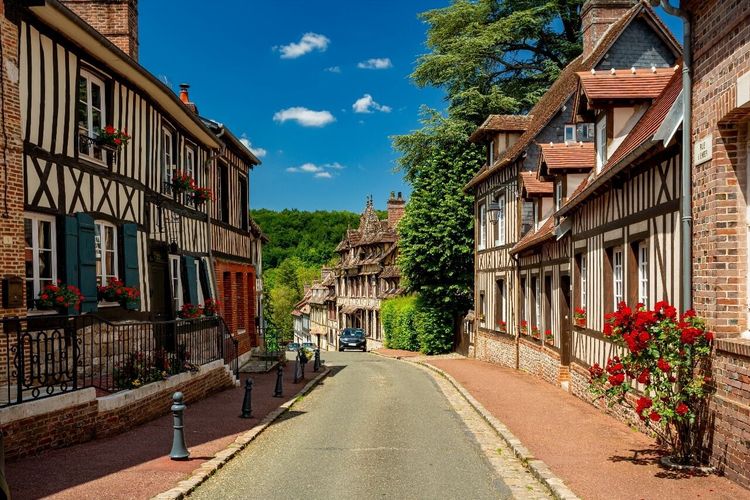
Lyons-la-Forêt (Place Isaac Benserade, 27480 Lyons-la-Forêt, rated 4.5/5 on Google with 2.3K reviews) has been named a 'Most Beautiful Village of France' and has twice won the national 'Floral Villages' competition. It sits at the heart of the Lyons forest, one of the largest beech forests in Europe with 10,700 hectares of high forest. At 35 km east of Rouen via the D321, it is the quickest excursion on this list.
The village centre is organised around an 18th-century grain market, built in solid oak from the neighbouring forest. All around it, half-timbered houses from the 17th and 18th centuries enclose the square, painted white or cream with brown wooden frames. The architectural coherence is striking: almost no modern construction breaks the picture. Ravel composed his orchestration of 'Le Tombeau de Couperin' here during a stay in 1917; Flaubert set scenes of 'Madame Bovary' in the surrounding area.
The forest surrounding the village offers about fifteen marked trails. The Fontaine Sainte-Catherine circuit (4.5 km, duration 1h15) follows the Lieure, a trout river winding through beech groves. In autumn, the light filtering through the russet beeches is particularly memorable. Several local craftspeople — a potter, a cabinetmaker, a beekeeper — open their workshops on weekends from Easter to the end of October.
For lunch on site, the village inn serves traditional Norman cuisine centred on forest produce: game in season, mushrooms, and cheeses from the Eure. Book ahead if you come on a weekend from May to September — tables are scarce.
3. Veules-les-Roses, the Shortest River in France
Veules-les-Roses (Rue Victor Hugo, 76980 Veules-les-Roses, rated 4.6/5 on Google with 1.8K reviews) holds a title few villages can boast: crossed by the Veules, which flows just 1,149 metres before reaching the Channel, it is the village of the shortest river in France. Located 70 km north-west of Rouen on the Alabaster Coast, it is accessible via the D925 from Rouen through Yvetot.
The village owes its name to the roses that cover the facades of its low houses between May and July. Its watermills — about ten were operating along the river in the 19th century — have been restored and dot the Chemin des Moulins, a flat, pleasant footpath of just over a kilometre that is easy for everyone. The alabaster cliff above the beach reaches 50 metres in height here and offers a remarkable panorama from the viewpoint accessible on foot from the Rue du Frette.
Victor Hugo spent several summers in Veules-les-Roses between 1836 and 1853; the villa where he stayed still exists, recognisable by its red-brick facade overlooking the stream. Guy de Maupassant and Paul Meurice also came here, drawn by the tranquillity of this artists' village. Today, art galleries have replaced writers' studios, but the character of the village remains very well preserved.
The pebble beach is accessible at low tide via a path between the cliffs. Outside the peak summer season, you may find yourself almost alone there. Avoid July and August weekends: the car park fills up quickly and the village loses some of its charm under tourist pressure. A visit in May or September offers the best conditions.
4. Étretat, Alabaster Cliffs and the Mystery of Arsène Lupin
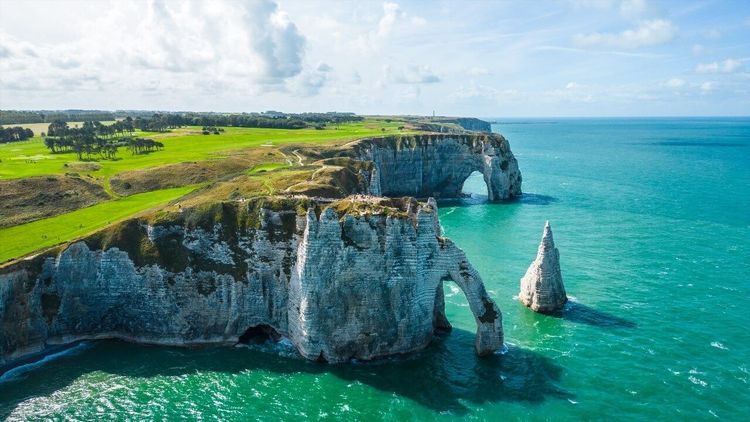
Étretat is perhaps the most photographed village in Normandy, but it remains on this list for a precise reason: its Amont and Aval cliffs are a geological phenomenon unique in Europe, and the Belle Époque village that frames them holds its own against any seaside resort on the continent. At 85 km north-west of Rouen via the A150 then the D940, allow 1h10 by road.
The alabaster cliffs of Étretat reach 70 metres on the Aval side and 80 metres on the Amont side. The Manneporte, the largest of the three natural arches, allows boats to pass through at high tide. Monet painted the cliffs more than 40 times between 1883 and 1886, from the beach and from the clifftop paths. The sunsets over the Aval cliff, with the hollow needle and the arch in the background, still produce images today that the Impressionist painters would have recognised without hesitation.
Maurice Leblanc, creator of Arsène Lupin, made Étretat even more famous by setting 'L'Aiguille creuse' (1909) here. His villa, the Villa Le Clos Lupin (15 Rue Guy de Maupassant, 76790 Étretat, rated 4/5 on Google with 296 reviews), is now a museum dedicated to the fictional character, open from April to November. The visit is original in that it stages Lupin as a real inhabitant of the village. It is an excellent choice if you are travelling with children or fans of the character recently brought back into the spotlight by the Netflix series.
The village has a 16th-century market hall, a few half-timbered houses in the lanes perpendicular to the beach, and a fishermen's chapel perched on the Amont cliff. To see the cliffs without the crowds, go up before 9 a.m. or after 6 p.m. in summer — tour coaches generally leave before sunset. The Ryo audio guide of Rouen prepares you to understand the Impressionist context that links Rouen and Étretat in the Norman imagination.
5. La Bouille, the Painters' Village on the Seine
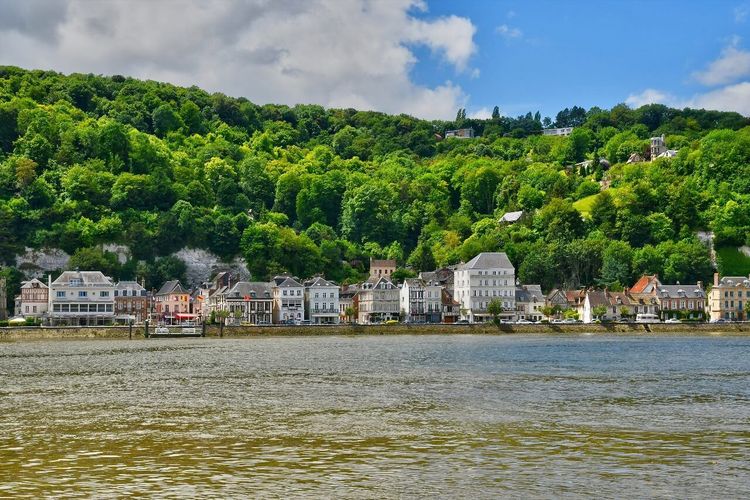
La Bouille (Place du Bateau, 76530 La Bouille, rated 4.4/5 on Google with 750 reviews) is the village closest to Rouen in this selection: barely 25 km to the south-west, accessible via the D938 along the Seine or by ferry from Sahurs. This small Seine port, squeezed between the river and the cliff, was nicknamed 'the painters' village' at the end of the 19th century, when Impressionists came from Paris and Rouen to work there.
The distinctive feature of La Bouille lies in its geography: the village stretches in a single row of houses between the quay and the limestone cliff, less than 400 metres long. Behind the houses, the cliff rises steeply to the Roumare forest. On the Seine side, riverside restaurants and guinguettes line a quay that has changed little since the paintings of Lebourg and Corot.
The Église Saint-Michel (16th century) and the Château de Robert le Diable, perched on the plateau overlooking the village, are worth the uphill walk from the quay (20 min). The castle houses a permanent exhibition on the Vikings in Normandy. In summer, the Seine-side terraces serve fried fish and moules marinières. The pedestrian ferry between La Bouille and Sahurs (running from March to November) is one of the last active Seine ferries still in operation.
This is an ideal excursion to combine with a half-day in Rouen: leave early, visit the cathedral and the Vieux-Rouen, then head down to La Bouille for lunch by the water.
6. Beuvron-en-Auge, the Most Beautiful Village of the Pays d'Auge
Beuvron-en-Auge (Place Michel Vermughen, 14430 Beuvron-en-Auge, rated 4.6/5 on Google with 2.0K reviews) is often cited as the most photogenic Norman village in France, and there is a reason for that. Its 16th-century central manor house, which once served as a market hall, is surrounded by half-timbered houses whose timber frames form diamond, chevron, and star patterns — a decorative technique unique to the Pays d'Auge found nowhere else in France with such density. At 100 km from Rouen via the A13 and the D16, allow 1h20 of travel.
The village has held the 'Most Beautiful Village of France' label since 1998. Unlike other labelled villages, Beuvron-en-Auge is still inhabited and lively: the houses around the central square are occupied by authentic businesses — a cheese shop, a cider producer, a potter. The Route du Cidre passes through Beuvron; you can buy cider, calvados, and Normandy pommeau directly from the village producers.
The interior of the Église Saint-Michel is worth visiting for its 16th-century wall frescoes, partly preserved despite the Wars of Religion. The cemetery behind the church, with its moss-covered limestone graves, has a particular atmosphere that photographers appreciate.
Beuvron-en-Auge is in Calvados, on the border between the Pays d'Auge and the Pays de Caen. If you extend the day, the neighbouring villages of Clermont-en-Auge and Cambremer are less than 15 km away and nicely complement the picture of the Norman bocage. Plan a full day to explore around Beuvron in the Pays d'Auge.
7. Gerberoy, Roses and Medieval Ramparts of the Oise
Gerberoy (Place Henri Le Sidaner, 60380 Gerberoy, rated 4.6/5 on Google with 1.4K reviews) is not in Normandy strictly speaking — it lies in the Oise, 60 km south-east of Rouen, on the border between Normandy and Picardy. But it deserves a place on this list as it figures among the 'Most Beautiful Villages of France' and can be reached from Rouen (D927 via Gournay-en-Bray) in under an hour.
The village owes its fame to the painter Henri Le Sidaner, who settled here in 1901 and spent forty years transforming the medieval ramparts into rose gardens. His paintings of the flower-lined lanes and enclosed gardens made it a recognised painting subject across Europe. Today, the 400 old rose bushes covering the facades of the half-timbered houses bloom from 1 June to 15 July, a period during which the village holds a well-attended rose festival.
The 11th-century ramparts are partially preserved. The Collegiate Church of Saint-Pierre houses a set of modern stained-glass windows of uncommon quality for a village of fewer than 100 inhabitants. Outside the flowering season, Gerberoy is almost deserted, lending it a melancholic charm that admirers of off-the-beaten-path villages will appreciate.
8. Giverny, Monet's Gardens 70 km from Rouen
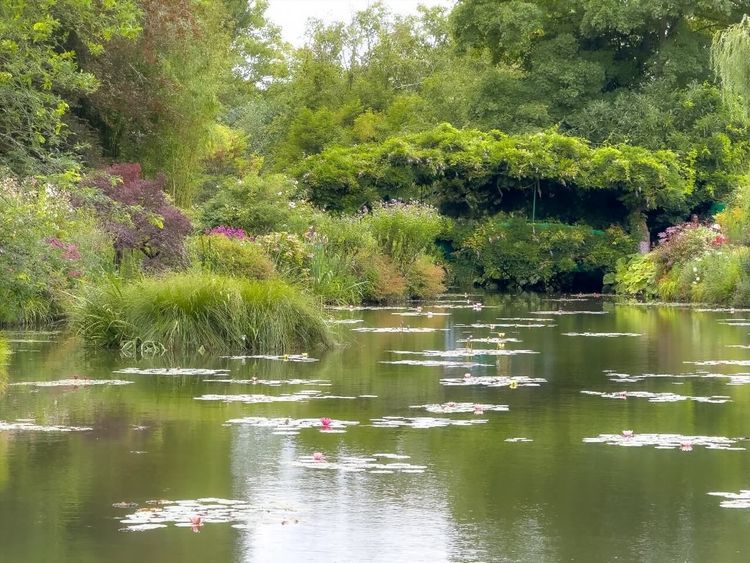
Giverny is the village where Claude Monet lived and worked for 43 years, from 1883 until his death in 1926. It lies 70 km south of Rouen in the Eure, easily accessible via the A13 towards Paris, then the D5 from Vernon. The Maison et Jardins de Monet is the most visited tourist site in Upper Normandy after Mont-Saint-Michel, with more than 600,000 visitors per year.
The water garden with its Japanese bridge and water lilies is the source of Monet's famous 'Nymphéas' series — 250 paintings begun in 1896. The garden has been entirely restored according to the original plans drawn by Monet himself. The flower beds are organised by colour with an almost pointillist precision that owes much to the Japanese aesthetic Monet discovered through woodblock prints. By the late 19th century, Monet's collection of Japanese prints numbered more than 230 pieces; they are all displayed in the house.
The village of Giverny itself is worth exploring beyond the gardens. The road climbing from the Seine up to the plateau offers views of the valley. The Musée des Impressionnismes Giverny (99 Rue Claude Monet, 27620 Giverny, rated 4.2/5 on Google with 3,167 reviews) (formerly the Musée d'Art Américain) presents temporary exhibitions on the American painters who came to work here at the end of the 19th century, drawn by Monet's presence.
Practical tip: the gardens are open from 1 April to 1 November, from 10 a.m. to 6 p.m. Book online — the on-site ticket office is often sold out in season. For a queue-free visit, aim for a Tuesday or Wednesday morning in April or October.
9. Barfleur, the Medieval Port of the Norman Conquest
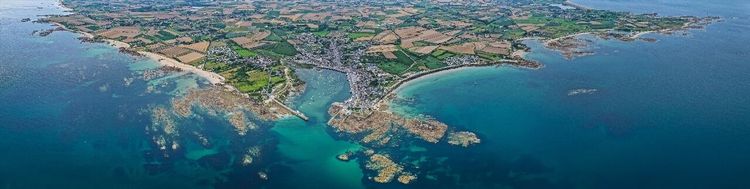
Barfleur (Place de Gaulle, 50760 Barfleur, rated 4.5/5 on Google with 690 reviews) is a fishing port in the Cotentin, 160 km from Rouen, but the distance is well worth it. Listed as a 'Most Beautiful Village of France', it is one of the only villages on this list to have played a direct role in the history of medieval England. William the Conqueror embarked part of his fleet here in 1066 for the Norman conquest; Henry I of England lost his only son in the wreck of the White Ship here in 1120.
The port of Barfleur is surrounded by houses of grey granite, a local stone that gives the village an austere and solid character very different from the half-timbered style of the Norman interior. The fishing boats — langoustines and lobsters from the Channel — colour the harbour in red and blue. At the far end of the port, the Gatteville lighthouse is one of the tallest in France at 75 metres, built between 1829 and 1835. It is a listed historical monument and open to the public (365 steps) for a panoramic view of the Cotentin peninsula and, on clear days, the Channel Islands.
The Rouen audio-guided tour lets you understand the Norman context before setting out on excursions to Cotentin villages like Barfleur. Its 28 audios trace in particular the Viking period and the Norman expansion towards England — a useful thread for contextualising what you will see in Barfleur.
For dining, Barfleur has two fish restaurants on the harbour, one of which specialises in Cotentin shellfish. The season runs from April to September; out of season, the village empties almost completely and only the bakery stays open on a regular basis.
10. Yport, the Artists' Cliff of the 18th Century
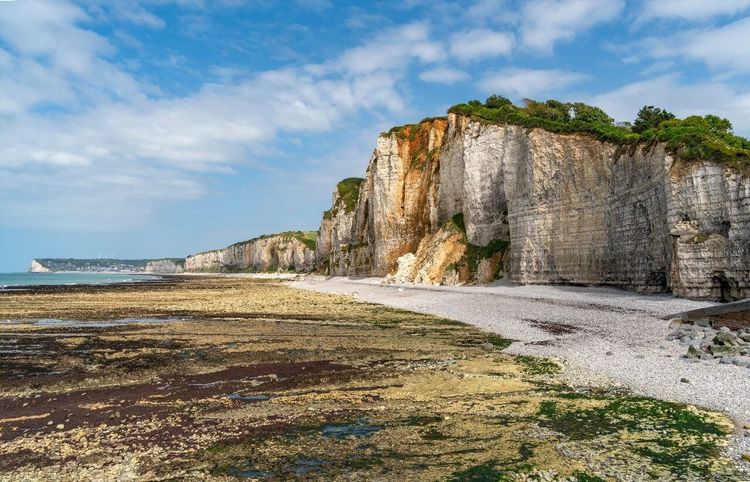
Yport (Rue du Bord de Mer, 76111 Yport, rated 4.5/5 on Google with 2,618 reviews) is a small fishing village on the Alabaster Coast, 80 km north-west of Rouen, between Étretat and Fécamp. It has the distinction of remaining untouched by mass tourism despite its pebble beach and spectacular cliffs. Maupassant set several scenes of his Norman short stories here.
The village nestles in a valleuse — the Norman term for these dry valleys carved by streams that reach the sea by cutting through the cliff. The valleuse of Yport is one of the most accessible on the coast: the beach lies directly below the village, with no difficult staircase. The Amont cliff towering over the village reaches 60 metres and can be followed along the customs officers' path (GR21), which links Étretat to Fécamp over 20 km of wild coastline.
Yport has fewer than 700 inhabitants in the low season. Its lanes run steeply down to the beach, lined with low houses several of which have kept their ground-floor boat sheds. On July–August weekends, a handful of campers and holidaying families bring the seafront to life without spoiling the place. This is exactly the kind of Norman village a tourist board would not promote — and that is precisely what makes it worth visiting.
11. Varengeville-sur-Mer, Clifftop Gardens and the Grave of Georges Braque
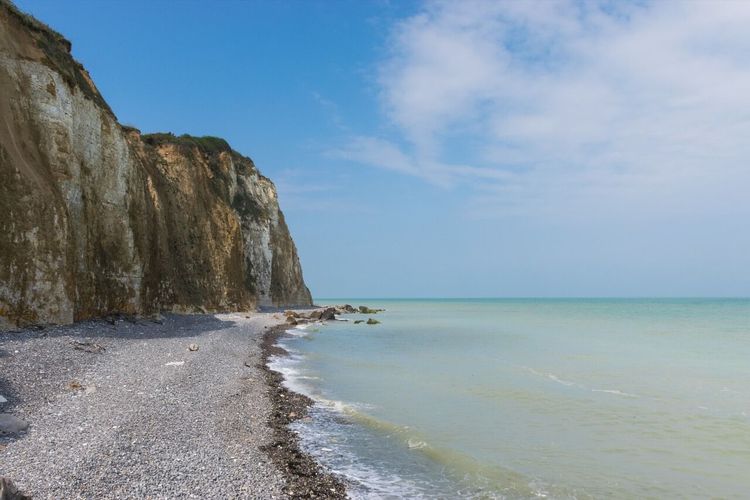
Varengeville-sur-Mer (Route de Vastérival, 76119 Varengeville-sur-Mer, rated 4.4/5 on Google with 310 reviews) combines several treasures in a single village: an internationally renowned clifftop garden, the grave of Cubist painter Georges Braque, and an 11th-century church with a stained-glass window by Braque himself. At 55 km north of Rouen via the A151, it makes a half-day excursion.
The Parc du Manoir d'Ango and the Jardin de Vastérival are the two major horticultural sites. The Jardin de Vastérival (10 hectares) is considered one of the finest coastal gardens in Europe, with collections of rhododendrons, shrubs, and cliff plants arranged on a slope descending to the sea. It is open to the public in the morning, Tuesday to Friday, from March to October.
The Église Saint-Valery stands on the cliff above a path leading down to the sea. Braque's stained-glass window 'Tree of Jesse', installed in 1954, fills the interior with blues and greens that contrast with the sobriety of the Romanesque building. In the adjoining cemetery, Braque's grave is recognisable by its plain granite slab topped with a midnight-blue mosaic dove — a piece created by Braque himself before his death in 1963. Alexander Calder, Erik Satie, and several other artists are also buried in this cemetery with its alleys of clipped yew. In Rouen, our audio walking tour tells the same Normandy in 28 stops, from the cathedral to the Place du Vieux-Marché.
12. Honfleur, Artists' Port and Capital of Norman Impressionism
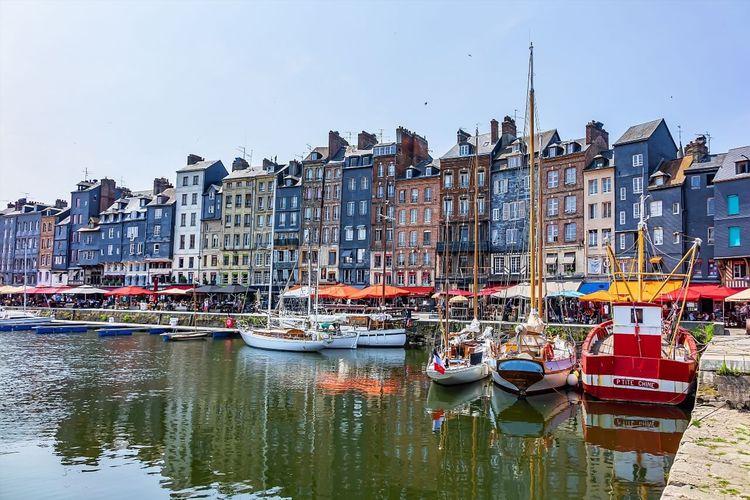
Honfleur is the best-known town-village on this list, but its reputation is well deserved and it remains unmissable in any overview of the most beautiful villages around Rouen. Located 90 km to the west via the A13 and the Pont de Normandie, Honfleur is reachable in 1 hour by road.
The Vieux Bassin of Honfleur is the most reproduced image in Normandy: six- or seven-storey houses with grey slate facades are reflected in the harbour water, where pleasure boats have replaced merchant vessels. This harbour was one of France's first Atlantic trading ports, from which expeditions set sail for Canada, the West Indies, and Africa in the 16th century. Samuel de Champlain embarked here in 1603 to found Quebec.
Eugène Boudin, born in Honfleur in 1824, was the pioneer of open-air painting and Monet's first teacher. The Musée Eugène Boudin brings together his works alongside those of Monet, Dubourg, Jongkind, and other painters of the Honfleur School. Boudin had persuaded the young Monet, then a teenager, to abandon caricature and paint light outdoors — a conversation that lastingly changed the history of art.
The Église Sainte-Catherine is unique in France: entirely built in wood by Honfleur's ship carpenters in the 15th century, it has two parallel naves covered by a roof shaped like an upturned ship's hull. The bell tower, separate from the church and also in wood, dates from the same century. It is the largest timber religious building in France.
For museum opening hours and admission prices, consult the Honfleur tourist office, which updates information annually. In July–August, the Vieux Bassin is saturated on weekends — aim for weekday mornings or come out of season to find calm.
13. Saint-Cénéri-le-Gérei, the Most Isolated Labelled Village in Normandy
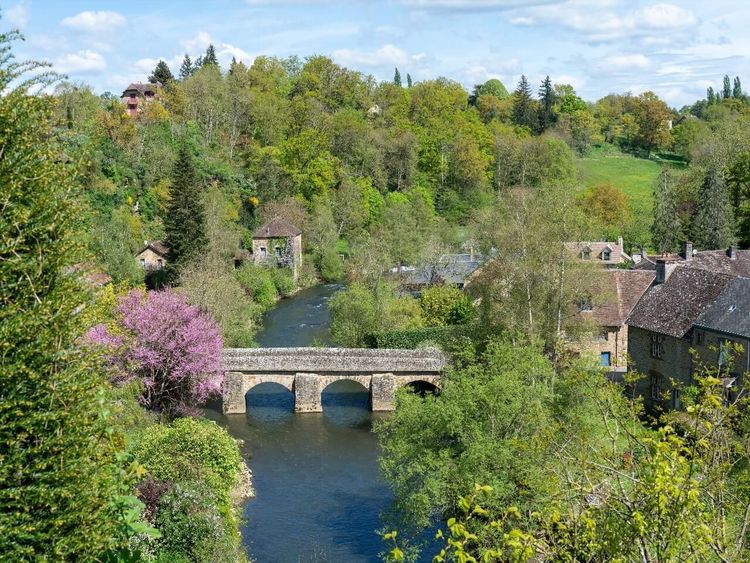
Saint-Cénéri-le-Gérei (Le Bourg, 61130 Saint-Cénéri-le-Gérei, rated 4.6/5 on Google with 380 reviews) is the furthest from Rouen in this selection — 160 km to the south-west in the Orne, on the fringes of the Normandie-Maine Regional Natural Park — and probably the least well known. Yet this village, listed as a 'Most Beautiful Village of France', is often cited by connoisseurs as the most authentic in Normandy.
The village sits on a rocky spur around which the Sarthe curves in a spectacular meander. From the cemetery of the Romanesque church (11th century), the panorama over the river and the wooded valley offers one of the most serene views in all of Normandy. The church itself, dedicated to Saint Cénéri of Ireland — an Irish monk who evangelised the region in the 7th century — contains wall frescoes from the 12th and 14th centuries in good condition.
The village attracted a colony of American and Canadian artists in the late 19th century, notably painters from the Barbizon School travelling through Normandy. Today, a dozen artists and craftspeople live here year-round. The mill on the Sarthe and the old 15th-century stone bridge are the two other visual highlights of the village.
Saint-Cénéri-le-Gérei is a village best visited alone or as a couple, on a weekday outside the summer season. There is no restaurant, just one grocery shop open three mornings a week, and no mobile phone signal in the valley. That is precisely what makes it memorable.
14. Nonancourt, a Medieval Fortress on the Norman Border
Nonancourt, 80 km south of Rouen in the Eure, is neither labelled nor famous. But its 12th-century medieval tower, once a frontier fortress between Normandy and the Capetian domain, warrants a stop if you are passing through the Avre valley.
The tower of Nonancourt was built under Henry Beauclerc to defend the Norman frontier against the Capetians. Richard the Lionheart met the French King Philip II Augustus here in 1195 to negotiate peace. The tower, standing 20 metres tall, is today privately owned but visible from the street. The town preserves several half-timbered houses from the 15th to 17th centuries around the central square, as well as a restored timber market hall.
Nonancourt is more of a road stop than a destination in itself. Allow 45 minutes to walk around the historic centre on foot.
15. Beaumont-en-Auge, Panorama over the Touques Valley
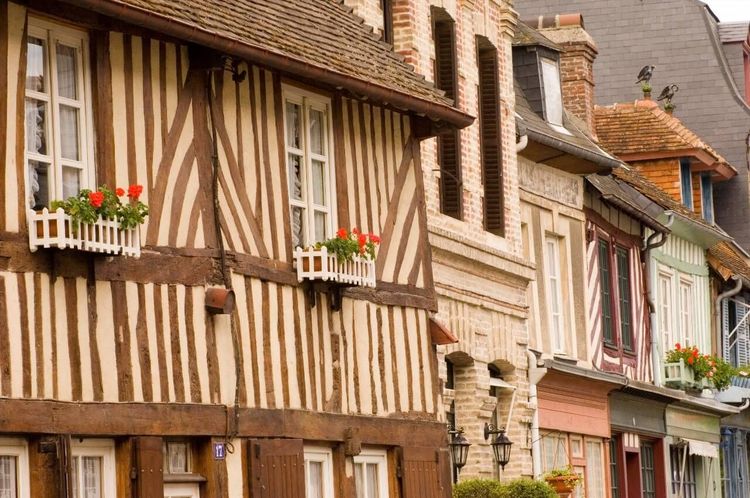
Beaumont-en-Auge (Rue de la Libération, 14950 Beaumont-en-Auge, rated 4.3/5 on Google with 190 reviews) is perched at 140 metres above sea level on a promontory offering a 360° panorama over the Calvados countryside. At 110 km from Rouen via the A13, this small Pays d'Auge village combines 17th-century half-timbered houses with a view that makes the place truly singular.
The mathematician Pierre-Simon de Laplace was born here in 1749. A commemorative plaque on the birthplace recalls that this quiet village gave rise to one of France's greatest scientists, often compared to Newton for his work in celestial mechanics. The Église Notre-Dame (12th–16th century) dominates the village square from its promontory. Consider the Ryo audio guide of Rouen to explore the Norman capital before branching out to Beaumont and the villages of the Pays d'Auge.
16. Fécamp, the Cliffs and the Benedictine Treasure
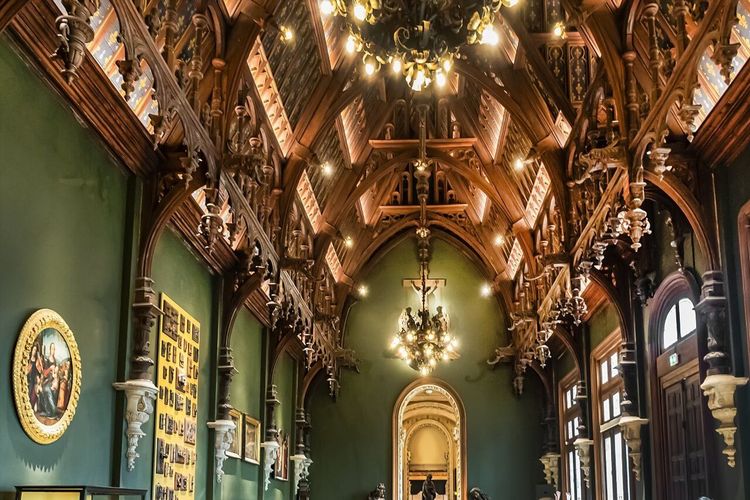
Fécamp is more of a town than a village, but its Palais Bénédictine (110 Rue Alexandre Le Grand, 76400 Fécamp, rated 4.5/5 on Google with 6,356 reviews) is a monument unique in Europe that justifies its inclusion in this selection. At 70 km north of Rouen via the A151, it is a natural stop if you are heading towards Étretat or Yport.
The Palais Bénédictine was built in 1900 by Alexandre Le Grand, a merchant who revived the Bénédictine liqueur, invented by the monks of Fécamp abbey in the 16th century and lost during the Revolution. The palace blends neo-Gothic and neo-Renaissance architecture in an extravagant construction that contrasts sharply with the sobriety of rural Normandy. The visit includes the distilleries, a collection of decorative arts, and a tasting. The building itself is a listed historical monument.
The Abbaye de la Trinité, founded in the 10th century on the site of a Merovingian monastery, is one of the largest abbey churches in Normandy (127 metres long). Legend has it that a fig trunk containing a relic of the Precious Blood washed ashore here in the 8th century, making it a major pilgrimage site throughout the Middle Ages. The cloister and side chapels are accessible during visiting hours.
Fécamp's beach is a pebble beach flanked by cliffs of 115 metres — the highest on the Alabaster Coast. The fishing port remains active and supplies herring, cod, and scallops to the quayside restaurants.
17. Dieppe, the Castle Museum and France's First Seaside Resort
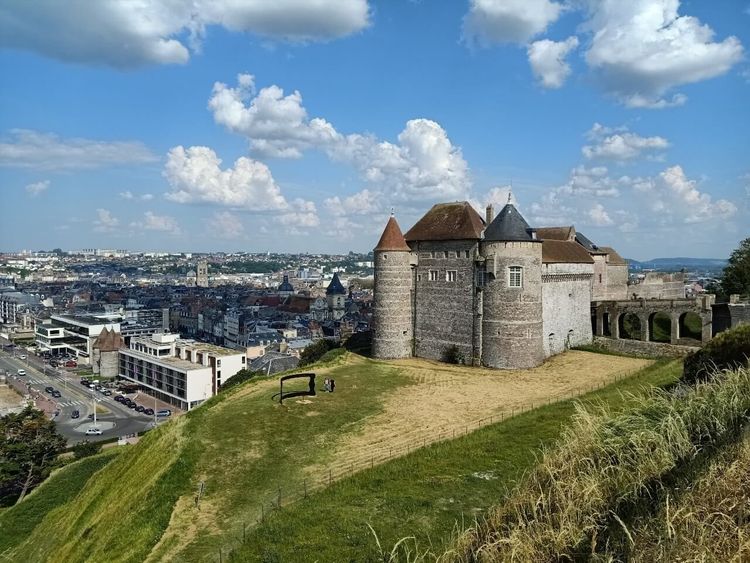
Dieppe was France's first seaside resort, adopted as early as 1822 by English aristocrats crossing the Channel in search of sea air. At 65 km north of Rouen via the A151, it is also an active port and a town that has retained its maritime character without turning into a tourist theme park.
The Château de Dieppe (Rue de Chastes, 76200 Dieppe, rated 4.3/5 on Google with 3,796 reviews) overlooks the beach from its promontory. Built in the 14th and 15th centuries and remodelled under Louis XIV, it now houses the Dieppe Museum, with collections of 16th-century carved ivories — a local speciality linked to trade with Africa — and a section dedicated to Georges Braque, a native of Dieppe. The Amont and Aval cliffs framing the beach allow walks along the customs officers' paths with views over the Channel.
Dieppe's Saturday morning market is renowned throughout the region for its fish, shellfish, and Norman cheeses. The large pebble beach (1.8 km) is one of the longest on the Alabaster Coast and remains pleasant even in midsummer, as the sea breeze naturally disperses the crowds.
18. Tancarville, the Suspension Bridge and the Medieval Castle
Tancarville is worth a stop for its medieval castle perched above the Seine estuary, 30 km west of Rouen. Long known only for its suspension bridge — now largely replaced in local use by the new Pont Gustave-Flaubert since 2024 — the village is rediscovering its original appeal.
The Château de Tancarville (Route du Château, 76430 Tancarville, rated 2.4/5 on Google with 10 reviews) was one of the most powerful fortresses of ducal Normandy. Its ruins, consolidated and partially open to visitors, overlook the Seine estuary from a limestone spur 100 metres high. The panorama over the estuary, the Risle marshes, and, on clear days, the mouth of the Seine towards Le Havre, is one of the widest in the region. The climb from the village takes 15 minutes on foot along a wooded path.
Tancarville is also a starting point for walks through the Marais Vernier, a preserved wetland in the Seine estuary and habitat of numerous migratory bird species.
19. Saint-Valery-en-Caux, Fishing Port and White Cliffs
Saint-Valery-en-Caux (Quai de la Carenage, 76460 Saint-Valery-en-Caux, rated 4.6/5 on Google with 834 reviews) is an active fishing port on the Alabaster Coast, 55 km north-west of Rouen between Dieppe and Fécamp. Its tidal harbour, cliffs, and 16th-century Manoir Henri IV make it a refreshing stopover on the Seine-Maritime village route.
The Manoir Henri IV (c. 1540) is the only Renaissance house on the Alabaster Coast to have survived the 1940 bombardments. Its facade of alternating brick and flint, adorned with pilasters and sculpted medallions, contrasts strongly with the usual Norman style. It is now owned by the town and used for temporary exhibitions.
Saint-Valery's beach is sheltered by two cliffs forming a natural setting. The Amont cliffs (70 metres high) can be followed along the GR21 to Veules-les-Roses, 10 km to the east — a 3-hour round-trip coastal hike with remarkable views over the Channel.
20. Practical Tips for Planning Your Excursions
The majority of villages on this list are difficult or impossible to reach by public transport. A car is almost essential, especially for villages in the Cotentin (Barfleur), Calvados (Beuvron-en-Auge), and Orne (Saint-Cénéri-le-Gérei). The exceptions are Giverny (shuttle from Vernon in season), Étretat (bus from Le Havre), Dieppe, and Fécamp (trains from Rouen).
The best time to visit these villages is May–June or September–October. The late-afternoon Norman light in May is exactly what Monet was looking for. Hotels and restaurants are open, prices remain reasonable, and the villages have not yet been hit by the peak-season influx.
To plan your itineraries, here are some practical groupings:
- Alabaster Coast (day trip or weekend from Rouen): Étretat + Yport + Fécamp or Saint-Valery-en-Caux + Veules-les-Roses. Allow 200 km of driving.
- Pays d'Auge and Calvados (weekend): Honfleur + Beuvron-en-Auge + Beaumont-en-Auge. Allow 250 km.
- Eure and forest (day trip): Lyons-la-Forêt + Le Bec-Hellouin + Giverny. Allow 180 km.
- Cotentin (weekend): Barfleur + Saint-Vaast-la-Hougue. Allow 350 km round trip.
For accommodation, rural gîtes in the Pays d'Auge villages are plentiful and often make better bases than town hotels. Book at least 6 weeks in advance for weekends in May, July, and August.
If you are basing your stay in Rouen before exploring the surrounding area, start with the Rouen audio walking tour — the Ryo audio guide covers 28 points of interest in 1h45 and will give you the historical and cultural context to better appreciate the surrounding Norman villages.
FAQ
Which villages closest to Rouen can be visited in a day?
The most accessible villages from Rouen for a day trip are La Bouille (25 km, 30 min), Lyons-la-Forêt (35 km, 40 min), and Le Bec-Hellouin (50 km, 55 min). These three destinations each allow for a half-day visit and can be combined. La Bouille can be explored in 2 hours, Lyons-la-Forêt in 2 to 3 hours depending on how far you venture into the forest.
Which villages around Rouen hold the 'Most Beautiful Villages of France' label?
Within a 150 km radius of Rouen, the villages labelled 'Most Beautiful Villages of France' are: Le Bec-Hellouin, Lyons-la-Forêt, Veules-les-Roses, Barfleur, and Saint-Cénéri-le-Gérei. Gerberoy (Oise) carries the same label. Beuvron-en-Auge is also labelled and lies 100 km away.
What is the best season to visit the Norman villages around Rouen?
May–June is the best period: roses are in bloom at Gerberoy and Veules-les-Roses, the gardens of Giverny reach their full glory, and the villages are not yet overrun by tourists. September–October offers remarkable Norman light and lower prices. Avoid July–August weekends, particularly at Étretat and Honfleur.
Can these villages be visited without a car from Rouen?
Not easily for most of them. The exceptions accessible by public transport from Rouen are: Dieppe (train in 45 min), Fécamp (bus), Étretat (bus from Le Havre, itself reachable by train from Rouen), and Giverny (train to Vernon, then seasonal shuttle). The inland villages — Le Bec-Hellouin, Beuvron-en-Auge, Lyons-la-Forêt — require a personal vehicle.
Which village around Rouen is best suited for families with children?
Étretat is ideal for families: cliffs accessible on foot, a beach, Villa Le Clos Lupin (a playful Arsène Lupin museum), and several cafés along the promenade. Giverny captivates children with Monet's gardens and vibrant colours. Honfleur, with its Vieux Bassin and Marine Museum, also offers many points of interest accessible to all ages.
Which Norman villages around Rouen are the least touristy?
Saint-Cénéri-le-Gérei (Orne), Yport, Varengeville-sur-Mer, and La Bouille remain off the mass-tourism circuit. Saint-Cénéri-le-Gérei has neither a restaurant nor a hotel — a maximally authentic experience for those seeking unspoiled Normandy. Nonancourt and Beaumont-en-Auge are also little-visited despite their character.
The Norman hinterland offers far more than its headline destinations alone. These 20 villages, from the cliffs of Seine-Maritime to the bocage of Calvados and Orne, map out a territory where every bend in the road reveals a half-timbered facade, an orchard in bloom, or a thousand-year-old abbey. Before setting out to explore, ground yourself in the Norman capital with the Ryo audio guide of Rouen, which retraces in 28 audios the history of a city that was once larger than Paris. The villages on this list will be all the richer for knowing their context.
À lire également