© Shutterstock
 Votre guide Ryo
Visiting Rouen in 2 Days: The Complete Itinerary from Vieux-Marché to Saint-Ouen Abbey (2026)
Rouen is unlike any other Norman city: its half-timbered houses, numbering in the hundreds in the old town alone, stand alongside a cathedral that Monet painted around thirty times in different lights, and a cobbled street leads straight from Joan of Arc's execution site to a covered market from the 1970s. Visiting Rouen in 2 days is enough to take in these contrasts, provided you follow an itinerary that avoids unnecessary back-and-forth between neighborhoods. That is exactly what this guide offers, built along the same lines as the Ryo audio-guided tour of Rouen: a chronological thread that starts at place du Vieux-Marché and leads, over forty-eight hours, to Saint-Ouen Abbey, the Seine quays, and a handful of hidden gems that most visitors never discover.
You will discover why Notre-Dame cathedral rises to 151 meters, the tallest spire in France, how a 16th-century aître served first as a plague cemetery and then as a school of fine arts, where a church that has been entrusted to the Protestant community for two centuries hides in the very heart of the city, and what time to climb up to the côte Sainte-Catherine for a sunset over the slate rooftops. We also include the best places to sleep and eat, a possible side trip to the abbey of Jumièges or Monet's gardens, and answers to the practical questions every weekend visitor asks before setting off.
Before You Go: Getting to and Around Rouen
Getting to Rouen from Paris and Parking in the City Center
By train, allow around 1h10 to 1h30 from Gare Saint-Lazare to Gare de Rouen-Rive-Droite, with departures roughly every hour on weekdays on the Nomad line heading toward Le Havre. This is the simplest option for a weekend: the station is about a fifteen-minute walk from the cathedral, and the entire historic center can then be explored on foot. Booking a few weeks ahead, the ticket often drops below €20, whereas a same-day ticket can easily cost twice as much.
From other cities, Rouen is easy to reach: about 1h30 by train from Caen, 2h30 from Lille with one change, and just under an hour by road from Le Havre or Dieppe if you are combining the trip with the Norman coast.
If you drive via the A13, allow 1h15 to 2 hours from Paris depending on traffic leaving the capital. Since the medieval center is largely pedestrianized, it is best to park in a covered car park rather than hunt for a street space: the Hôtel de Ville, Palais de Justice, and Espace du Palais car parks offer direct access to Vieux Rouen within ten minutes on foot, at rates of around €2 to €2.50 per hour, with a 24-hour flat rate that is considerably more economical if you are staying overnight. Check with your accommodation whether it has a preferential rate at one of these car parks — many central hotels have such an arrangement.
Getting Around the Historic Center on Foot
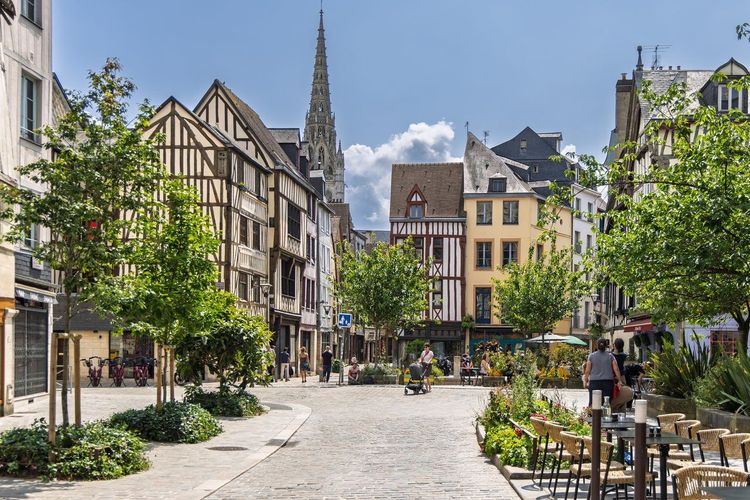
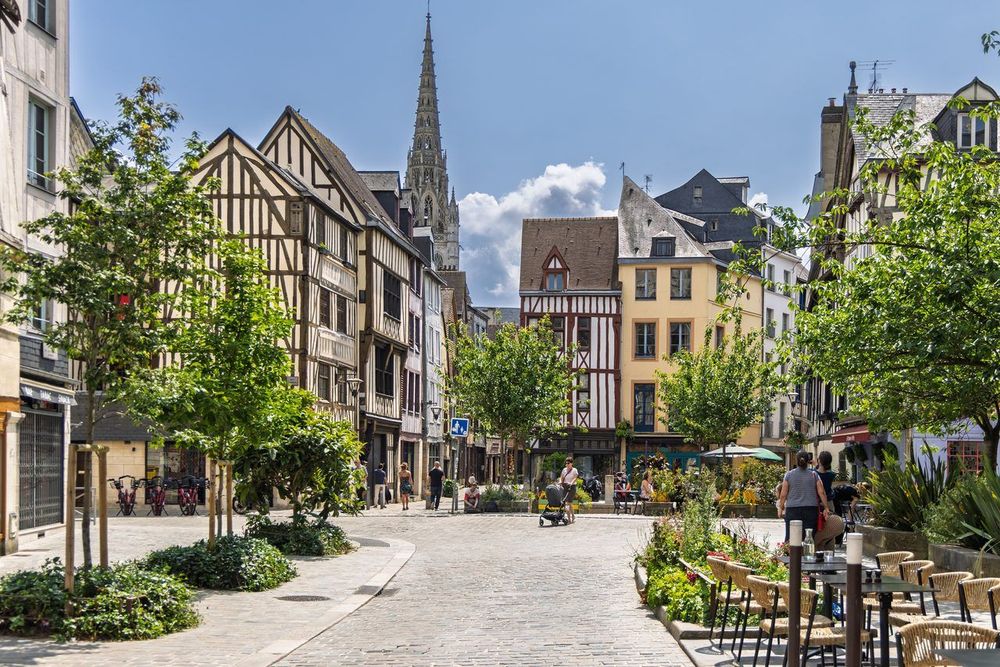
Rouen is almost entirely explored on foot: from the Gros-Horloge to Saint-Ouen Abbey, it is never more than a twenty-minute walk, and most stops in this guide follow on from each other in five to ten minutes. The Astuce network — buses and metro — is still useful for reaching the côte Sainte-Catherine or the left bank without tiring your legs, with a single ticket for under €2 and a day pass that pays off from the third journey. The bike-share scheme complements this well for cycling along the quays, which are flat and fully cyclable for several kilometers.
One detail worth noting: the old town is entirely cobbled, often with rounded and uneven stones. Flat, comfortable shoes are a better choice than a brand-new pair of sneakers, especially after a shower. To follow this guide's itinerary without getting lost in the alleyways, the Ryo audio guide pinpoints each stop and automatically calculates the distances between them.
The Itinerary at a Glance
Day one focuses on the medieval heart: place du Vieux-Marché and église Sainte-Jeanne-d'Arc in the morning, then up the rue du Gros-Horloge to Notre-Dame cathedral, lunch near the covered market, then east toward the église and Aître Saint-Maclou, rue Eau-de-Robec, and the Antiques Quarter. The day ends at height, on the côte Sainte-Catherine, before descending to the Seine quays.
Day two opens on place du Général-de-Gaulle with Saint-Ouen Abbey, the town hall gardens, and the keep, devotes the afternoon to the municipal museums, and then leaves the end of the day for lesser-known gems in the center: Temple Saint-Éloi, Maison Sublime, Parlement de Normandie. In total, plan for around twelve kilometers of cumulative walking over the two days, almost entirely in the pedestrian zone.
Day 1, Morning: Place du Vieux-Marché, the Gros-Horloge, and the Cathedral
Place du Vieux-Marché and the Église Sainte-Jeanne-d'Arc
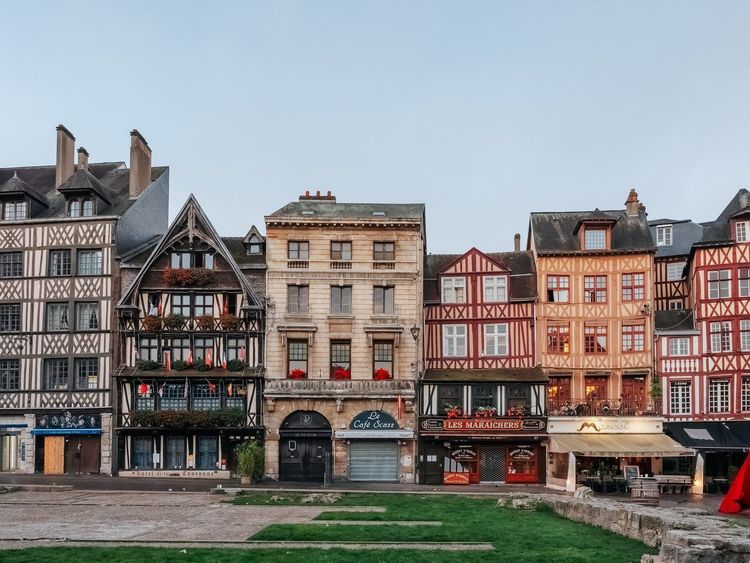
Start at the place du Vieux-Marché, the spot where Joan of Arc was burned at the stake on 30 May 1431. Nothing in its current atmosphere — covered market stalls and café terraces — hints at this past: it is precisely this contrast that makes the visit so striking. A tall cross, planted at the presumed site of the pyre, quietly marks what took place here on a spring morning.
Right beside it, the église Sainte-Jeanne-d'Arc was built in the late 1970s on the same site. Its architecture — a shell of wood and slate evoking either flames or an upturned boat, depending on your interpretation — deliberately contrasts with the half-timbered façades surrounding it. Inside, the 16th-century stained-glass windows came from the former église Saint-Vincent: removed and stored safely before the war, they survived the 1944 bombings that destroyed their original building, and found a new home fifty years later in this more than 500-square-meter glass wall. Few contemporary buildings deliver such an immediate visual impact the moment you step through the door.
Take some time to wander through the covered market stalls, designed by the same architect as the church and open every morning except Monday: fishmongers, cheesemakers, and greengrocers have been trading here for generations, and it is a good spot for a coffee before tackling the day. The cafés on the square open from 8 a.m. and see as many hurrying locals as weekend visitors.
The Gros-Horloge and Its Iconic Street
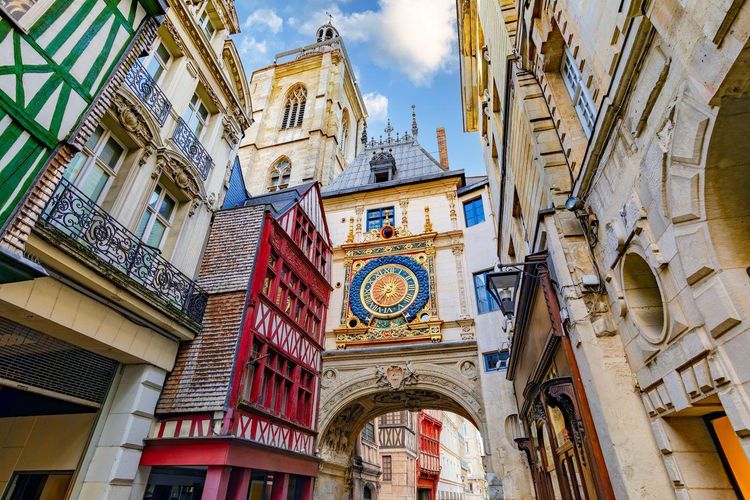
Walking up the rue du Gros-Horloge, you come to Rouen's most photographed attraction. The Gros-Horloge is an astronomical clock whose mechanism — one of the oldest in Europe still in working order — dates back to the late 14th century. The gilded dial, added later to a Renaissance arch spanning the street, shows both the time and the phases of the moon. A detail that few visitors notice: there is only one hand, for the hours, and a paschal lamb — the city's emblem — decorates the center of the dial.
You can climb the adjoining belfry — a ticket of around €7.50 with an audio guide included — to see the original mechanism, the clock keeper's room, and a first view over the rooftops of the historic center. Allow 45 minutes, spiral staircase included. The rue du Gros-Horloge, fully pedestrianized, links place du Vieux-Marché to the cathedral over around 300 meters: it is the city's busiest shopping street, lined with 15th- and 16th-century half-timbered houses whose jettied upper floors lean out over the shop fronts.
Notre-Dame Cathedral of Rouen and the Historial Jeanne d'Arc
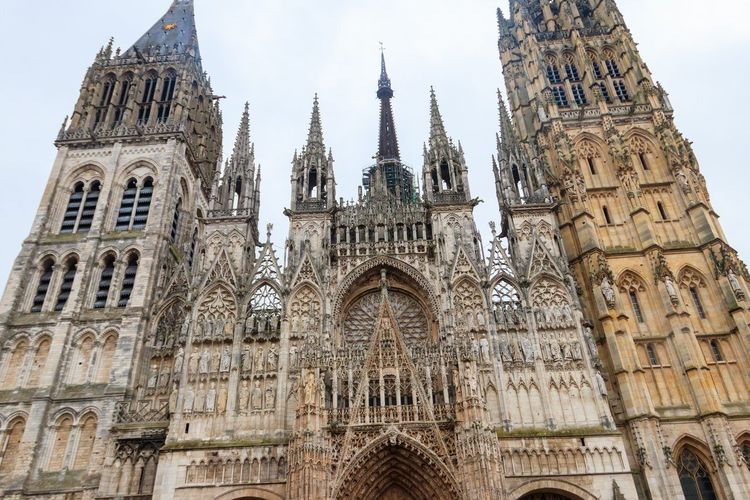
At the end of the street stands Notre-Dame Cathedral of Rouen, whose cast-iron spire rises to 151 meters. It was the tallest building in the world between 1876 and 1880, before being surpassed by Cologne Cathedral. Claude Monet painted it around thirty times between 1892 and 1894 from a shop set up opposite, seeking to capture the shifting light on its Flamboyant Gothic façade.
Entry is free, and you could easily spend thirty to forty minutes inside. Look for the Tour de Beurre on the right side of the façade, said to have been funded by indulgences granted to the faithful who were permitted to eat butter during Lent. Then walk around the building via rue Saint-Romain to discover the Portail des Libraires and its courtyard lined with medieval shop stalls — one of the most photogenic angles in the city. Inside, the tombs of the Dukes of Normandy serve as a reminder that Rouen was once a capital: the tomb of Richard the Lionheart's heart, whose organ was interred here, remains the most visited.
If you are in Rouen between June and September, come back after dark: the façade serves as a screen for a free monumental light projection that repaints the stone in color for around twenty minutes.
Just behind it, in the former Archbishop's Palace, the Historial Jeanne d'Arc retraces the trial and rehabilitation of the Maid of Orléans through an immersive route of around 1h15, including projections and reconstructions. Expect around €11 for a full-price ticket. It is the logical complement to the morning: having seen the place of her execution, you understand here the political and religious machinery that led her to the pyre. The site adds a further layer of history, since it was in this very room — the salle de l'Officialité — that the rehabilitation trial of 1456 was held.
If you want to explore this first quarter in more depth before moving on, the Ryo audio-guided tour of Vieux Rouen details the history of every façade between Vieux-Marché and the cathedral, without needing to take out your phone at every street corner.
Day 1, Afternoon: The Saint-Maclou Quarter and Rue Eau-de-Robec
The Église and Aître Saint-Maclou
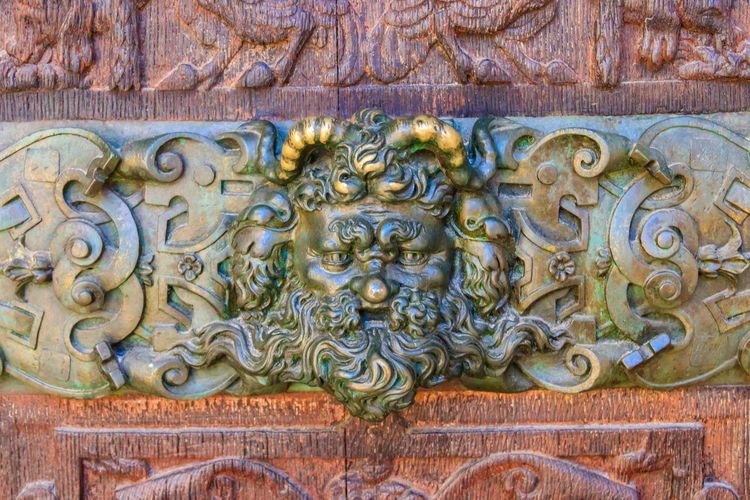
Ten minutes' walk from the cathedral, the église Saint-Maclou is one of the finest examples of Flamboyant Gothic architecture in Normandy, with its five-bay fan-shaped porch and richly sculpted façade. Look at the carved wooden door panels, decorated with Renaissance bas-reliefs of exceptional fineness: they rank among the most beautiful religious woodwork preserved in France. The building has regained its splendor after a lengthy façade restoration campaign.
Just behind it, the Aître Saint-Maclou is arguably the most unusual spot in the historic center. This former plague cemetery, whose half-timbered galleries were built in the 16th century, has kept its macabre décor: skulls, crossed tibias, gravediggers, and hourglasses carved along the beams. It later served as a boys' school, then long housed the Rouen regional school of fine arts, before being restored and reopened to the public in the early 2020s. The courtyard is now lined with galleries and craft shops, and entry remains free during the day.
Head to the far end of the courtyard to spot, beneath a glass case, a mummified black cat discovered during building works. Local legend sees it as a ritual for protection against evil spirits — which says a great deal about the atmosphere of the place.
Rue Eau-de-Robec and the Antiques Quarter
Continuing east, rue Eau-de-Robec runs alongside a former channeled waterway, now bordered by colorful half-timbered houses connected to the road by small footbridges. The quarter long housed the city's tanners and dyers, who rinsed their fabrics in the stream, before becoming one of the most photogenic corners of Rouen. Flaubert, who grew up a few streets away, used it as the setting for a passage in Madame Bovary.
Halfway along the street, the so-called Maison des Quatre Fils Aymon houses the National Museum of Education (185 Rue Eau de Robec, 76000 Rouen, rated 4.5/5 on Google from 528 reviews), one of the few French museums dedicated to the history of schooling. Exercise books, desks, educational posters, and antique toys tell three centuries of classroom life: a short and surprisingly nostalgic visit, perfect with children or on a rainy afternoon.
Immediately nearby, the Antiques Quarter, around rue Damiette and rue Eau-de-Robec, concentrates some thirty second-hand and antique shops. Even without any intention of buying, the stroll is worth it: Norman furniture, faïence, silverware, and antique religious objects are displayed in shop windows across several city blocks. Rue Damiette also offers one of the finest perspectives in the city, with the tower of Saint-Ouen Abbey as a backdrop.
This part of the city, with its half-timbered houses leaning toward each other, gives the best sense of what medieval Rouen looked like before the 1944 bombings, which destroyed a considerable portion of the city center, particularly the entire quarter between the cathedral and the Seine.
Day 1, Late Afternoon: Panoramic View and a Walk Along the Quays
The Panoramic View from the Côte Sainte-Catherine
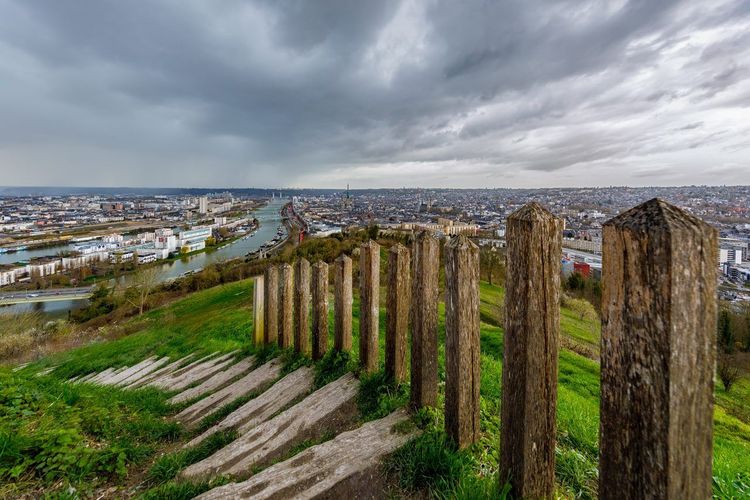
End the first day with a climb up to the côte Sainte-Catherine (Rue Alfred de Jussieu, 76000 Rouen, rated 4.7/5 on Google from 2,581 reviews), to the east of the historic center. The path climbs for about 25 minutes from the quays along a stony trail winding through the undergrowth, but the reward is worth the effort: a 180-degree panorama over the slate rooftops, Gothic spires, and the bends of the Seine. If you prefer to save your legs after a full day of walking, a bus drops you a few minutes from the viewpoint.
In the late afternoon, the raking light sculpts the cathedral bell tower and the port installations on the left bank: this is the best time of day for this view, particularly for couples looking for a more intimate moment after hours of busy sightseeing. Bring a torch or a charged phone if you are heading back down after dark — the path is unlit.
A Walk Along the Seine Quays
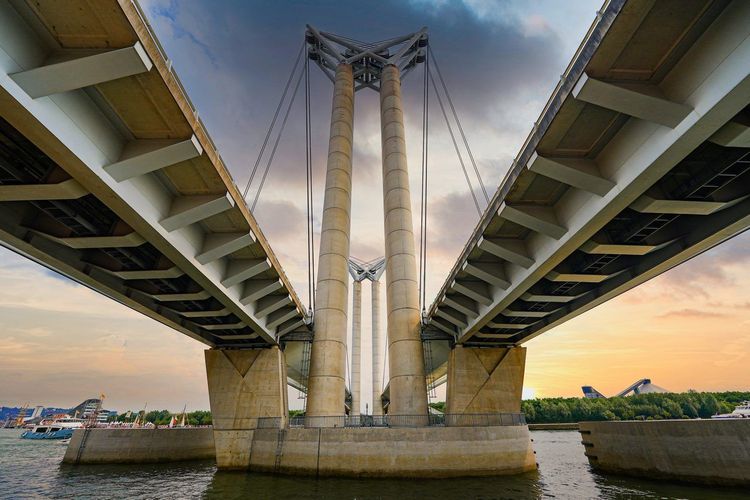
On the way back down, treat yourself to a stroll along the Seine quays, redesigned over the past fifteen years into a continuous pedestrian and cycling promenade. Here you will find Hangar 23, a former port warehouse converted into a performance venue, a few riverside bars set up on pontoons in fine weather, and the Pont Gustave-Flaubert, whose deck rises several dozen meters in a matter of minutes to let ships pass. It is the highest lift bridge in Europe, and watching it in motion is a spectacle few visitors anticipate.
The left bank, long overlooked, has been transformed into an end-of-day promenade: lawns, sports areas, and terraces facing the river. It is also a good place to have dinner before heading back to rest: the first day will have covered the essentials of Vieux Rouen, ready to give way, the following day, to the more institutional quarter around the town hall.
Day 2, Morning: The Town Hall, Saint-Ouen Abbey, and the Keep
Saint-Ouen Abbey Church and the Town Hall Gardens
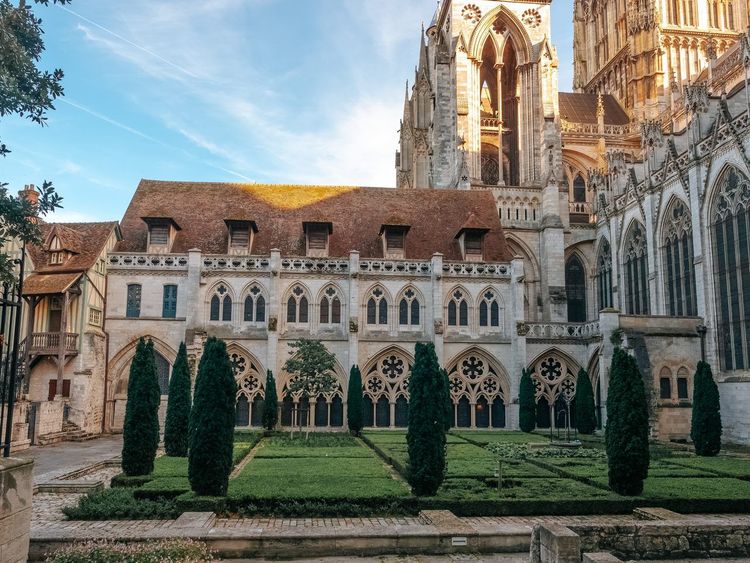
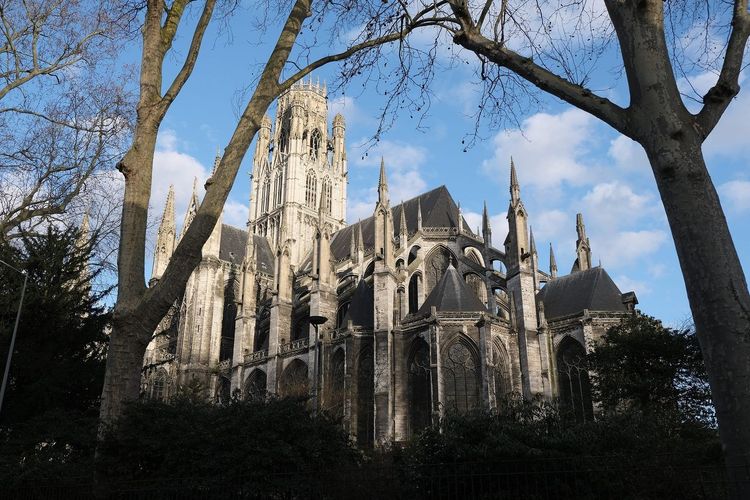
Head to place du Général-de-Gaulle to open the second day. Saint-Ouen Abbey Church is, for many art historians, an even more accomplished example of Rayonnant Gothic than the cathedral itself: its nave exceeds 30 meters in height under the vaults over a length of more than 130 meters, and its Cavaillé-Coll organ — one of the best-preserved in France — is regularly used for concerts and recordings.
Entry is free, and the acoustics of the building — almost as vast as a cathedral — come as a surprise every time. Do not miss the Portail des Marmousets on the north side, and the light filtered through the high windows late in the morning: since the abbey has retained most of its original stained glass, the interior is bathed in a colorful brightness that the darker cathedral does not provide.
Directly in front, the Rouen town hall occupies the former conventual building of the abbey, which explains its unusually long façade for a town hall. An equestrian statue of Napoleon stands on the forecourt, brought down from its plinth in 2019 for restoration and then reinstated — an episode that dominated local news for several months. Behind the building stretch the town hall gardens, a formal French-style park where the people of Rouen come to picnic at the first sign of fine weather. It makes a welcome free pause between two monuments.
The Rouen Keep, a Remnant of Joan of Arc's Trial
About fifteen minutes' walk away, the Rouen keep (Rue du Donjon, 76000 Rouen, rated 4.3/5 on Google from 993 reviews) — also known as the Tour Jeanne d'Arc — is the only surviving remnant of the castle built by Philip II of France at the beginning of the 13th century. It is here, according to tradition, that Joan of Arc was threatened with torture during her trial in 1431, in a lower hall whose floor you can still walk on. The visit is short — about thirty minutes for a few euros — and allows you to climb into a vaulted room that gives a concrete sense of medieval military architecture, far removed from the ornamental richness of the churches visited the day before. The model of the vanished castle, displayed upstairs, helps you understand the fortress's footprint on the upper town.
On the way back toward the station, make a detour via square Verdrel and its large trees, or via église Saint-Godard and its Renaissance stained-glass windows — two calm stops that weekend itineraries almost always overlook. To continue this historical thread without getting lost in the side streets, Ryo's audio-guided tour of Rouen offers a sequence designed specifically around these sites, with anecdotes that few printed guides cover in detail.
Day 2, Afternoon: The Must-See Museums
The Rouen Museum of Fine Arts
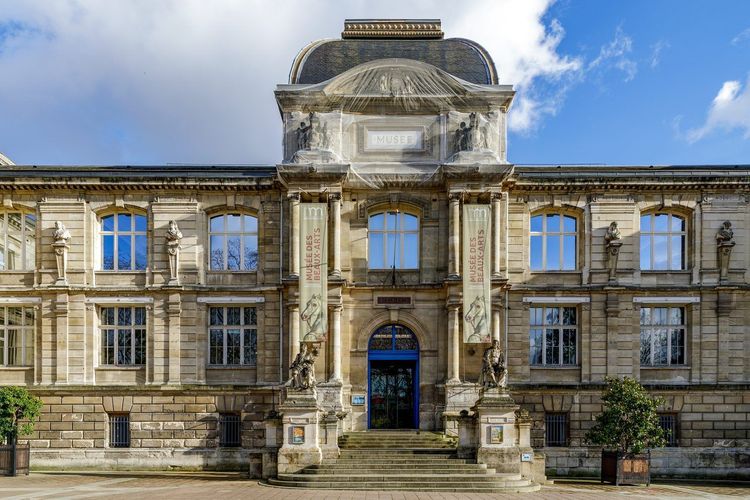
If the afternoon looks rainy, head to the Rouen Museum of Fine Arts, one of the richest in France outside of Paris. Its collections span seven centuries of painting, from Velázquez to Modigliani by way of Géricault — a native of the city — and a particularly well-stocked Impressionist room featuring a Monet from the cathedral series. Entry to the permanent collections is free; only temporary exhibitions are ticketed.
Allow 1h30 for an attentive tour, a little less if you focus on the Impressionist rooms, which have been enriched over the years by bequests from Norman collectors. The museum café, set under a glass roof, makes a pleasant stop if the rain settles in for good.
The Musée Le Secq des Tournelles and the Ceramics Museum
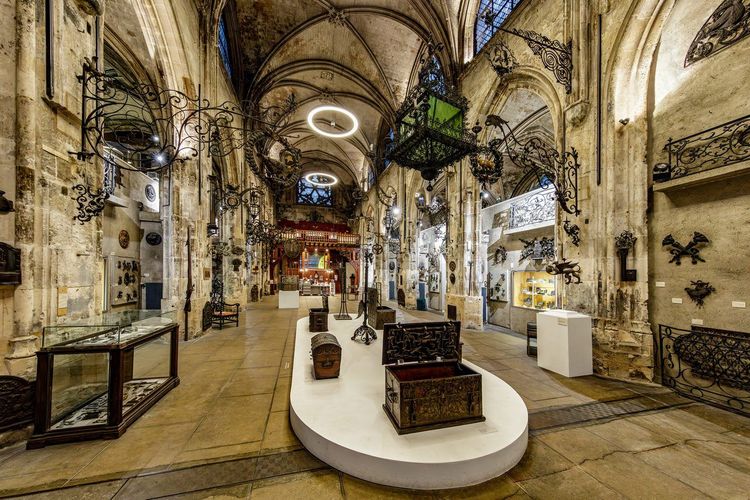
A short walk away, housed in a deconsecrated church, the Musée Le Secq des Tournelles holds one of the most important ironwork collections in the world: signs, grilles, keys, locks, and surgical instruments from the Middle Ages to the 19th century, displayed in a Gothic setting that highlights every piece. The effect is striking, almost theatrical, and the visit takes around forty minutes.
The Ceramics Museum, housed in a 17th-century mansion, pays tribute to Rouen faïence, celebrated since the 17th century for its blue lambrequin designs and later for its polychrome decoration. Good news for your budget: the permanent collections of the metropolitan museums — including all three of these — are free for everyone, and the three buildings are less than five minutes' walk from each other. Only temporary exhibitions are ticketed, with a pass giving access to the entire network.
In the Footsteps of Flaubert and Corneille
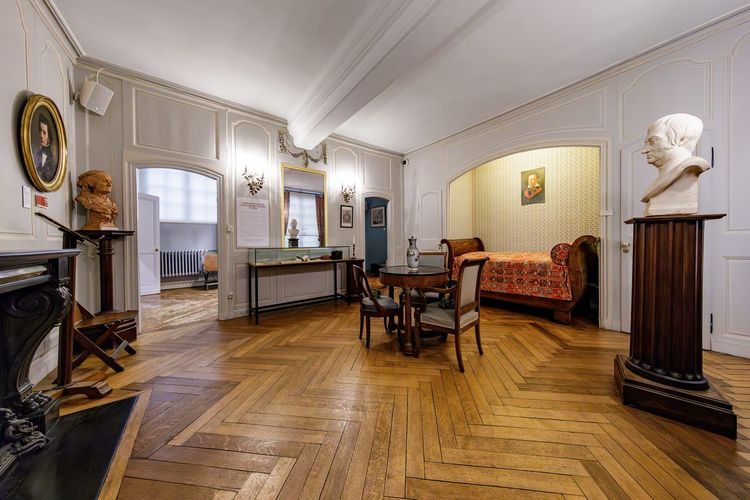
Rouen is also a city of writers — something most two-day itineraries fail to mention. The Flaubert Museum and History of Medicine (51 Rue de Lecat, 76000 Rouen, rated 4.4/5 on Google from 112 reviews) occupies the Hôtel-Dieu apartment where Gustave Flaubert was born in 1821, his father having been chief surgeon there. You visit the furnished birth room before moving into a rather striking medical collection: surgical instruments, an 18th-century leather-and-fabric obstetric mannequin, and apothecary jars. This blend of literature and medicine explains much of the clinical writing style of Madame Bovary.
A few minutes from Vieux-Marché, the birthplace of Pierre Corneille on rue de la Pie completes the picture: the playwright spent much of his life in Rouen here, and the half-timbered house still holds its original furnishings and early editions of his plays. Two short, little-visited stops covered in detail — including opening times — in our Ryo guide to the Corneille and Flaubert houses. Ryo's audio-guided tour of Rouen swings by the Museum of Fine Arts and the Musée Le Secq des Tournelles a little further along, tying these two literary stops into the wider walk.
Hidden Rouen: Lesser-Known Gems to Discover
Temple Saint-Éloi, the Maison Sublime, and the Parlement de Normandie
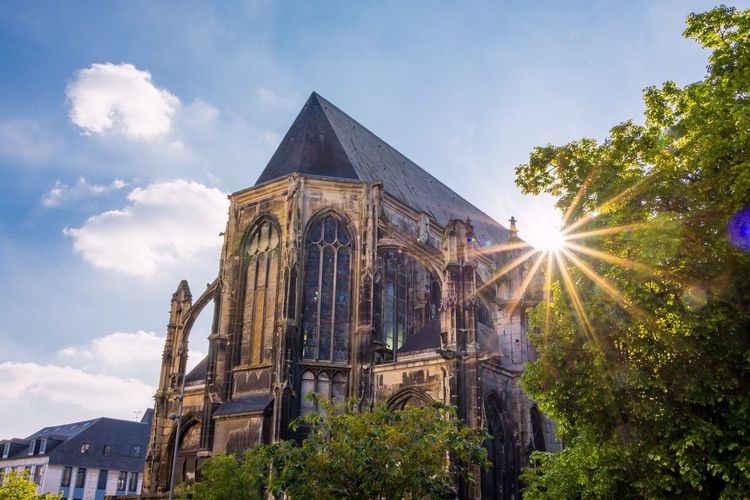
Few weekend visitors push open the door of Temple Saint-Éloi, a former Gothic church deconsecrated during the Revolution and then assigned to Protestant worship in the early 19th century. It is today one of the few Protestant churches in France housed in a medieval building, and its stripped-back interior stands in sharp contrast to the ornamental excess of the city's other churches. It is just a few minutes from the rue du Gros-Horloge, making it an easy detour.
In the courtyard of the Palais de Justice lies the Maison Sublime, uncovered during excavations in the 1970s. It is the oldest Jewish building still visible in France — most likely a 12th-century Talmudic school. Hebrew inscriptions carved into the stone remain legible, a rare vestige of Rouen's medieval Jewish community, expelled in 1306. Visits are by reservation only through the tourist office, in small groups: book ahead of your trip, as time slots fill up quickly.
The Parlement de Normandie — today the Palais de Justice — deserves a stop for its early-16th-century Flamboyant façade, one of the most ornate in the city, often overshadowed by the nearby cathedral. Look for the shell craters deliberately left on the rue aux Juifs façade: they date from the fighting of 1944 and have never been filled in.
Église Saint-Patrice and Traces of the Viking Presence in Rouen
The église Saint-Patrice (Rue Saint-Patrice, 76000 Rouen, rated 4.8/5 on Google from 28 reviews), dedicated to the patron saint of Ireland, holds an exceptional set of 16th-century Renaissance stained-glass windows, considered among the finest in Normandy. It remains largely off the beaten tourist track, making it a peaceful visit at the end of your stay, often with just the caretaker for company.
Rouen owes its status as Norman capital to the Vikings: the Treaty of Saint-Clair-sur-Epte, signed in 911, handed the region to the Scandinavian chieftain Rollo, who made the city his base. His tomb is in the cathedral, just a few meters from that of Richard the Lionheart's heart. The layout of the ancient port, street names, and excavations carried out beneath place du Vieux-Marché all quietly retain traces of this Scandinavian foundation. It is a little-known thread, almost a curiosity, through which to discover the city from an angle beyond the sole prism of Joan of Arc.
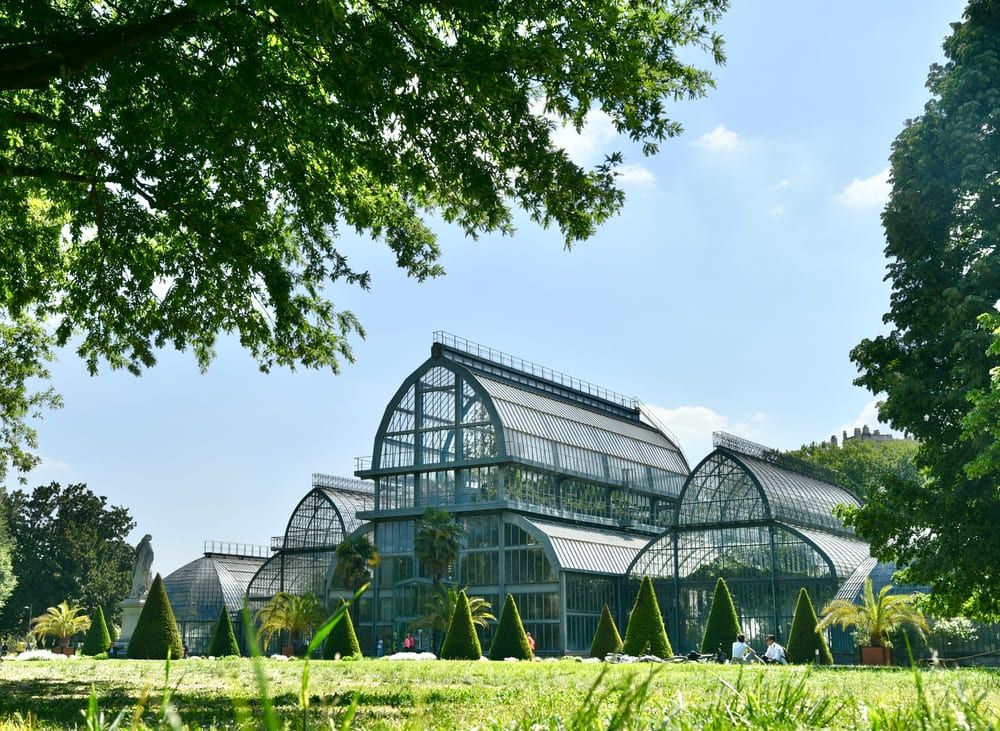
Another discreet stop: the botanical garden on the left bank, with its tropical greenhouses and century-old plant collections, free to enter and rarely crowded. For more off-the-beaten-track discoveries like these, our Ryo guide to free activities in Rouen lists further addresses in the historic center.
What to See Around Rouen
The Abbey of Jumièges, a Jewel of the Seine Valley
About thirty minutes by car, the abbey of Jumièges is among the most beautiful romantic ruins in France. Victor Hugo already called it 'the most beautiful ruin in France' in the 19th century. Founded in the 7th century, devastated during the Wars of Religion and then sold as a stone quarry after the Revolution, it has retained two western towers of more than 40 meters, now overgrown with ivy and populated by birds.
Entry costs a few euros and the self-guided visit lets you wander through the open-air nave and the surrounding parkland of several hectares. It makes for an easy excursion at the end of your stay, combinable with the abbey route that runs along the bends of the Seine toward Saint-Martin-de-Boscherville and Saint-Wandrille.
Giverny, Vernon, and the Bends of the Seine
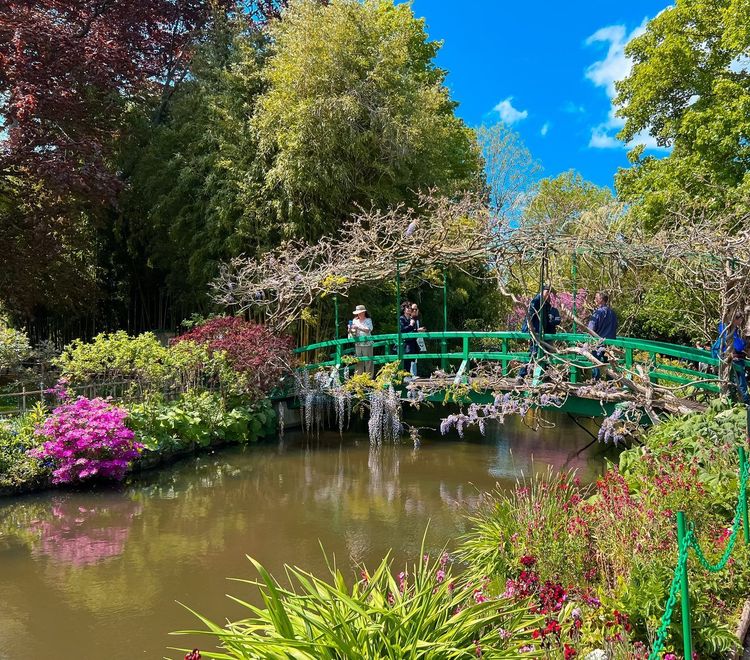
If you extend by half a day, Claude Monet's house and gardens at Giverny can be reached in about an hour via the Seine valley, passing through Vernon and its old mill on stilts. The connection with Rouen is direct: it was from Normandy that Monet painted the cathedral series, and seeing the water lily pond after having studied the façade that obsessed him gives the weekend a satisfying coherence. The gardens are only open in fine weather, from spring to early autumn, and it is best to book your time slot online in advance. Our Ryo guide to Vernon covers the immediate surroundings in detail.
Along the same route, Les Andelys and its Château-Gaillard — a fortress built by Richard the Lionheart at the end of the 12th century — offer one of the finest views over the Seine, with an almost complete meander laid out below your feet.
Forges-les-Eaux and the Norman Countryside
Further northeast, about forty minutes from Rouen, Forges-les-Eaux (Place Brévière, 76440 Forges-les-Eaux, rated 4.6/5 on Google from 158 reviews) shows an entirely different face of Normandy: a spa town frequented since the 17th century for its iron-rich springs, it retains a casino, thermal park, and a lake well suited to leisurely walks.
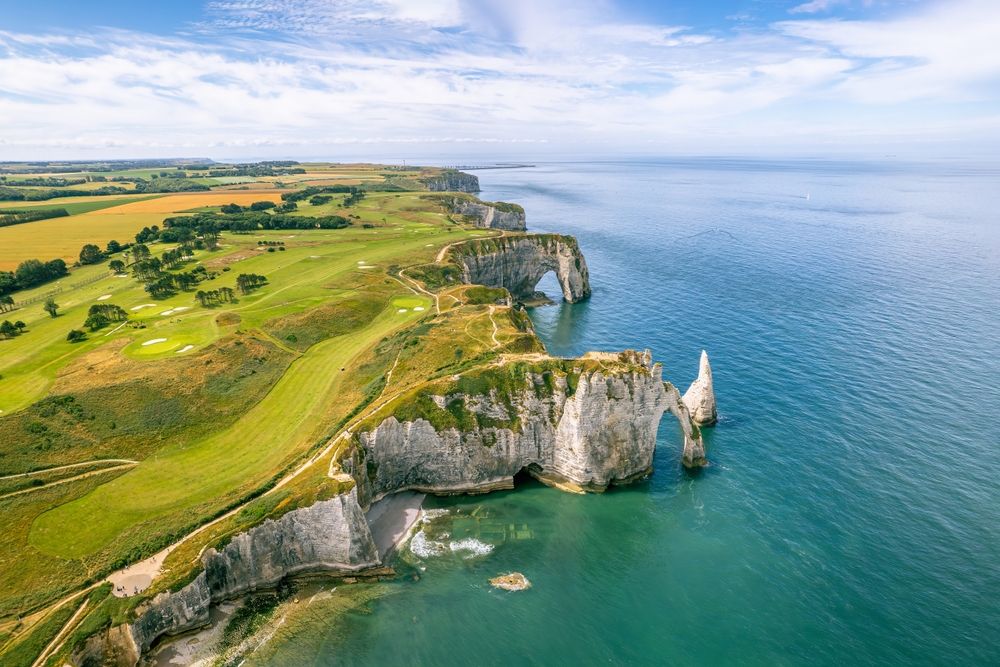
This rural area of the pays de Bray, with its half-timbered farmhouses, cheese dairies, and farmers' markets, offers a pleasant contrast to the heritage density of the city center. Our Ryo guide to exploring the surroundings of Rouen, our Ryo selection of the most beautiful villages around Rouen, and our Ryo guide to Norman châteaux and manor houses outline further ideas for a third day, all the way to the cliffs of Étretat, about 1h30 by road.
Where to Stay in Rouen
For a two-day weekend, prioritize accommodation in the historic center, between place du Vieux-Marché and the cathedral: you will be within walking distance of the entire first-day itinerary, without depending on public transport in the evening. Expect between €90 and €150 per night for a mid-range hotel within this perimeter, a little more on Saturdays and during school holidays.
The left bank, around the Gare Saint-Sever and the district of the same name, offers gentler rates — often 20 to 30% cheaper — at the cost of an extra ten to fifteen minutes' walk to reach Vieux Rouen. This is a good option if your budget is tight or if you are traveling with family and need larger apartments. The Gare Rive-Droite area is convenient when you arrive late by train or are leaving early on Sunday morning.
The Saint-Maclou quarter, quieter in the evenings, appeals to couples in search of a picturesque setting: its half-timbered alleyways are particularly photogenic once the day visitors have left. A few guesthouses hide behind 16th-century façades, with exposed beams and creaking staircases. Book several months ahead if your stay falls during the Armada or a long weekend: the city fills up very quickly. Our Ryo guide to Rouen's neighborhoods details the atmosphere of each area — useful if you are hesitating between several zones before booking.
Where to Eat in Rouen
Norman cuisine can be savored in Rouen through a few unmissable specialties. Canard à la rouennaise — prepared from ducks smothered using a local method and served with a blood sauce — remains the city's signature dish: a handful of fine-dining tables in the center still keep it on the menu, often requiring a day's notice. Cheese lovers will find neufchâtel, shaped like a heart, and camembert on most menus, while teurgoule — cinnamon rice pudding baked for hours in the oven — makes regular appearances as a dessert.
On the sweet side, two treats travel well in your bag: sucre de pomme, a Rouen confectionery sold in translucent sticks, and mirliton, a small almond tart that pastry chefs across the center make in their own way.
For a quick lunch between visits, the area around place du Vieux-Marché and the covered market concentrates bakeries, crêperies, and cider bars. In the evening, the tables along rues Martainville, Damiette, and Eau-de-Robec offer a more intimate setting, often with views of the illuminated half-timbered houses, while place du Vieux-Marché remains the liveliest but also the most touristy spot.
Don't leave without trying a Norman cider or a calvados as a digestif: several bars in the center offer tastings without reservation, featuring ciders from small producers in the pays d'Auge and the pays de Bray. Our Ryo guide to Rouen's culinary specialties lists tried-and-tested addresses — useful for avoiding tourist traps around the busiest sights.
When to Visit Rouen: Weather and Best Time to Go
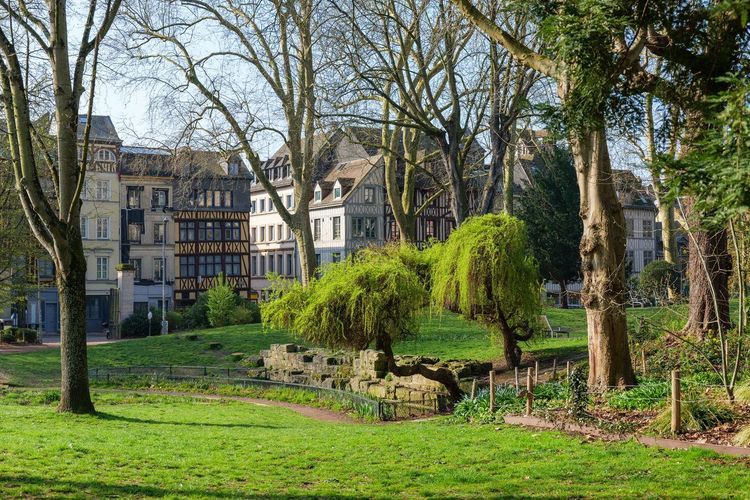
The Norman climate is mild year-round, with frequent but rarely heavy rain: a waterproof jacket is more useful than an umbrella, which the wind will quickly turn inside out. Spring (April to June) and early autumn (September–October) offer the best balance: temperatures around 15 to 18 °C, moderate crowds, and light that is particularly flattering on the Gothic façades.
Summer draws more visitors, but brings with it the nighttime projections on the cathedral and very lively quays. It is also the season of the Armada, a gathering of tall ships held every four to six years that temporarily transforms the Seine riverbanks into a giant popular celebration. If your dates coincide with this event, book your accommodation several months ahead.
Autumn has its own highlight: the Fête du Ventre, an October weekend when Norman producers take over the streets around Vieux-Marché. Winter, quieter and often rainy, remains an option for those seeking lower prices and a crowd-free city, particularly around the Christmas market set up at the foot of the cathedral in December. Our Ryo events calendar for Rouen lets you plan your dates around a highlight rather than leaving it to chance.
FAQ
How Many Days Do You Need to Visit Rouen?
Two days are enough to cover the essentials: Vieux-Marché, Gros-Horloge, the cathedral, the Saint-Maclou quarter, Saint-Ouen Abbey, and the museums. With a third day, you can add a trip to the abbey of Jumièges, Giverny, or the bends of the Seine.
What to Do in Rouen in 1 Day if Time Is Limited?
Focus on the triangle of place du Vieux-Marché, Gros-Horloge, and Notre-Dame cathedral, rounded out by the Aître Saint-Maclou, then finish with a quick climb up to the côte Sainte-Catherine in the late afternoon for the panoramic view. This amounts to about 5 hours of leisurely walking.
Where to Park in Rouen to Visit the Historic Center?
The Hôtel de Ville, Palais de Justice, and Espace du Palais car parks are the closest to Vieux Rouen, less than ten minutes' walk from the cathedral, at around €2 to €2.50 per hour. Since the center is largely pedestrianized, it is best to avoid moving the car between stops.
What to Do in Rouen as a Couple?
Sunset from the côte Sainte-Catherine, a walk along the Seine quays at dusk, and dinner in a half-timbered alleyway in the Saint-Maclou quarter make for a simple yet effective trio for a romantic weekend. In summer, the free nighttime projection on the cathedral façade adds one last stop.
What to See Around Rouen if You Extend to 3 Days?
The abbey of Jumièges, about thirty minutes away, and the abbey route along the bends of the Seine remain the most obvious excursion. Giverny and Les Andelys will appeal to fans of Impressionism and fortresses, while Forges-les-Eaux and the villages of the pays de Bray make for a more rural third day.
Is Rouen a Family-Friendly City?
Yes: the pedestrian center limits traffic risks, the Aître Saint-Maclou and the Gros-Horloge generally fascinate younger visitors, and both the National Museum of Education and the municipal museums offer free, interactive trails. Our Ryo guide to Rouen with kids details activities sorted by age group.
Do You Need to Book Visits in Advance?
For the most part, no: churches, the aître, and gardens are freely accessible. Two exceptions are worth planning ahead: the Maison Sublime, which can only be visited in guided groups by reservation, and the Historial Jeanne d'Arc on busy weekends, where midday time slots fill up first.
What Budget Should You Plan for a 2-Day Weekend in Rouen?
Budget between €200 and €350 per person for two days, including mid-range accommodation and meals, bearing in mind that most churches and the permanent collections of the municipal museums are free. A tighter budget of around €150 is possible by staying on the left bank and opting for quick lunches. Ryo's audio-guided tour of Rouen, which passes both the Gros-Horloge and the Historial Jeanne d'Arc, is a handy way to fill sightseeing time between museum visits.
Conclusion
Forty-eight hours in the Norman capital means accepting that choices have to be made, but the chronological itinerary in this guide — from Vieux-Marché to Saint-Ouen Abbey by way of the center's hidden gems — covers the essentials without turning into a race against the clock. The city lends itself particularly well to exploration on foot, quarter by quarter, never straying more than twenty minutes from your starting point.
If you prefer to explore at your own pace rather than follow a paper map, our Ryo app offers an audio-guided tour of Rouen covering the key sites mentioned here with their historical anecdotes, with no need to plan a route in advance.
À lire également