© Shutterstock
 Votre guide Ryo
Visiting Royan Without a Car in 2026: the Complete Guide on Foot, by Bike, and by Bus
In Royan, a car is far from your best friend: the seafront quays clog up as soon as the weather turns nice, and the Grande Conche car parks fill up before noon in July. The good news is that you can explore Royan perfectly well without a car: the post-war rebuilt town can be walked in a morning, and the main beaches, market, and seafront all sit within a three-kilometre radius. That is precisely the playground of the Ryo audio-guided tour of Royan, designed to be followed on foot, without ever searching for a parking spot.
This guide details every practical option for arriving without a car (direct TER train from Bordeaux, TGV then TER from Paris, ferry from Le Verdon, plane via La Rochelle), and then for getting around once you are there: the Cara'bus network running all the way to La Palmyre, cycle paths hugging the Grande Côte along the Vélodyssée, and coastal paths walkable in flip-flops or hiking shoes alike. Between the église Notre-Dame cast in concrete in the 1950s, the carrelets fishing huts perched above the estuary, and the Cordouan lighthouse reachable by boat from the harbour, you have more than enough to fill a stay without ever touching a steering wheel.
How to Get to Royan Without a Car
Before thinking about your itinerary on the ground, you first need to reach Royan without taking the motorway. The town sits at the end of a railway line, making it accessible by train, though sometimes with a connection.
Train and Bus from Major Cities
The Royan train station (Place de la Gare, 17200 Royan, rated 3.9/5 on Google from 431 reviews) is served by TER Nouvelle-Aquitaine trains. From Bordeaux-Saint-Jean, some TER services now run directly to Royan with no change at Saintes, taking just over 2 hours; others require a connection at Saintes, from which the final leg takes around 40 minutes. From Paris-Montparnasse, the easiest option is to take a TGV to Angoulême and then a TER Angoulême–Royan (around 1h30, with around half a dozen services a day): allow approximately 4 hours door to door. The Niort–Saintes–Royan lines round out the offer if you are coming from Poitiers or La Rochelle.
For travellers on a budget, long-distance coaches (Flixbus, BlaBlaCar Bus) also serve Royan from Paris or Bordeaux, often cheaper than the train but considerably slower. One tip: Royan station is about ten minutes' walk from the central market, so you won't need a taxi to reach accommodation in the town centre.
Plane and Ferry Royan / Le Verdon
Royan does have an aerodrome (Royan-Médis), but it handles no regular commercial flights. The nearest airport is La Rochelle–Île de Ré, about 1 hour by road, connected to several European cities; from La Rochelle station, the train then takes you to Royan via Saintes. Bordeaux-Mérignac, far busier, is another alternative: take the tram or a shuttle to Bordeaux-Saint-Jean, then hop on a TER.
If you are coming from the Médoc or cycling down the coast from the south, the Royan / Le Verdon ferry saves you a detour of more than 100 km via Bordeaux. The crossing of the Gironde estuary takes 20 to 30 minutes, carries pedestrians, cyclists, and cars, and runs year-round with extra sailings in high season. The adult foot-passenger fare is around €7 from April to October, slightly less out of season, and your bike comes with you. You disembark directly at Royan harbour (Quai de Bel Air, 17200 Royan, rated 4.4/5 on Google from 9,363 reviews), just a stone's throw from the town centre.
Getting Around Royan Without a Car: Bus, Bike, and Walking
Once you have arrived at the harbour or the station, forget about parking: Royan is best discovered on foot, with a bus network and cycling infrastructure among the finest on the Charente coast to back you up.
The Cara'bus Network and Summer Lines
The Cara'bus network, operated on behalf of the Royan Atlantique Urban Community, links the town centre to Pontaillac, Saint-Palais-sur-Mer, Vaux-sur-Mer, and Saint-Georges-de-Didonne. In summer, additional lines serve tourist sites, including the Royan <> La Palmyre route running to the zoo and the Côte Sauvage beaches. You will find a ticket vending machine at Royan SNCF station (bus bay A). If you were used to the m-ticket app: the Nemo application has not been accepted on board since July 2026, so check the current purchasing method on the network's website before you travel.
Bike Hire and Cycle Paths
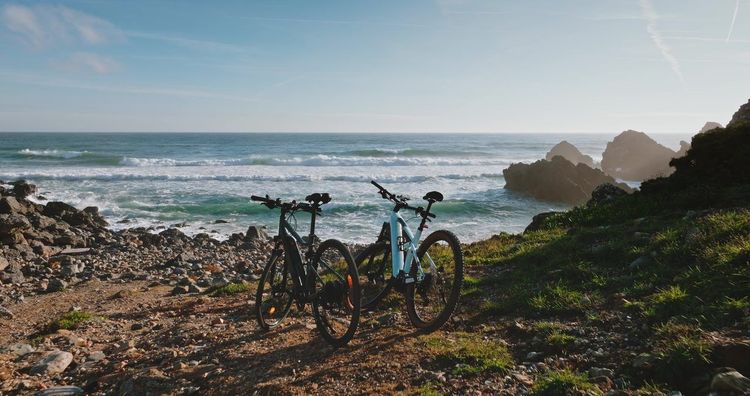
Royan Atlantique has developed a network of cycle paths linking the town centre, the beaches, and the coastal communes, largely away from motor traffic. Several bike hire shops, based near the harbour and the central market, offer standard bikes, electric-assist bikes, children's models, and trailers, by the half-day, full day, or week. For combining two beaches and a nearby village in the same day without depending on bus timetables, this is the most flexible solution.
The Ryo audio-guided tour 'The Atlantic Phoenix City' is done entirely on foot: 16 audio stops spread across 3.2 km, roughly 1h30 of walking at your own pace, with no motorised travel between stops.
Royan Town Centre on Foot: Church, Seafront, and Market
Destroyed to around 85% by the 1945 bombings, Royan was rebuilt in the 1950s under the direction of urban planner Claude Ferret, in a modernist style that sets it apart from neighbouring seaside resorts. This post-war architectural heritage sits within a compact perimeter between the church, the market, and the seafront: perfect for a morning on foot.
The église Notre-Dame and the Reconstruction Architecture
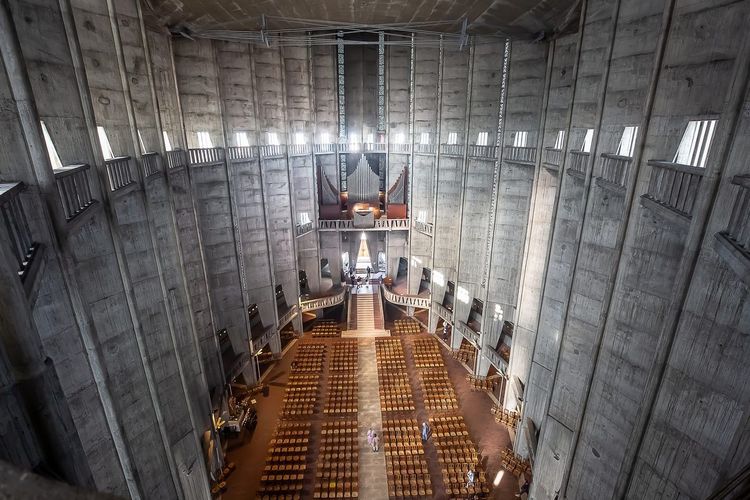
The église Notre-Dame de Royan (Place de l'Église, 17200 Royan, rated 4.5/5 on Google from 3,535 reviews), designed by Guillaume Gillet and inaugurated in July 1958, has become the city's symbol. Its concrete bell tower of around 60 metres, intended by Mayor Max Brusset as a landmark visible from the ocean, still divides opinion: you either love it or hate it. Push the door open anyway — the light filtered through the coloured glazing gives the nave a remarkable atmosphere. Around it, several seafront buildings share the same architectural language, all within a few minutes' walk of each other.
The congress centre, set facing the Grande Conche, extends this 1950s architectural circuit and today hosts shows and trade fairs. The Barrière casino is located further west, on the Pontaillac esplanade, facing the beach: a good excuse to extend your walk all the way to the end of the seafront.
The Central Market, the Seafront, and Pontaillac
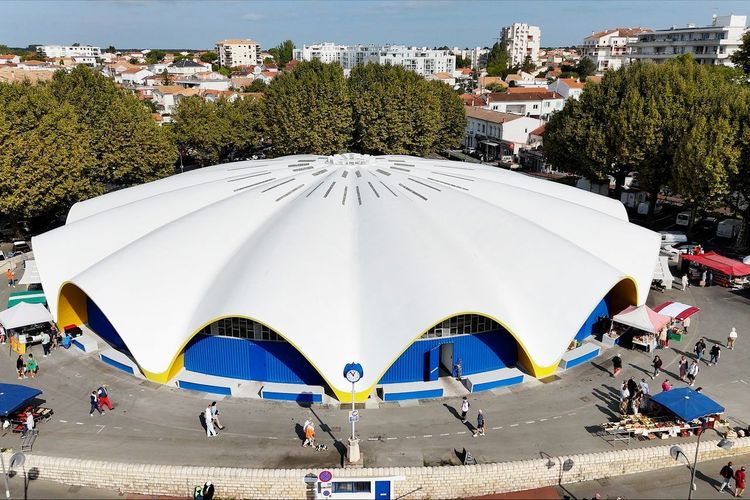
The central market, built from 1955 onwards by architects Louis Simon and André Morisseau, is a concrete shell just 8 cm thick covering more than 52 metres in diameter, with not a single interior pillar. Come in the morning: locally caught fish, Marennes-Oléron oysters, and Charentais goat's cheese all rub shoulders beneath beautifully soft natural light. An hour is enough to take it all in, and in the height of summer it's worth arriving early to beat the crowds.
From there, the seafront promenade heads west, lined with fish restaurants and shops, all the way to the Pontaillac district: its Belle Époque seaside villas, spared by the bombing, offer a striking contrast with the rebuilt town centre. Allow 25 to 30 minutes of easy walking from the market, or take a few stops on the Cara'bus if you'd rather save your legs for the beach.
This neighbourhood is precisely what the Ryo audio-guided tour of the Atlantic phoenix city explores: the church, the market, and the reconstruction-era buildings, with the story of a city razed and rebuilt in concrete at record speed running throughout.
Beaches Accessible on Foot or by Bike from the Town Centre
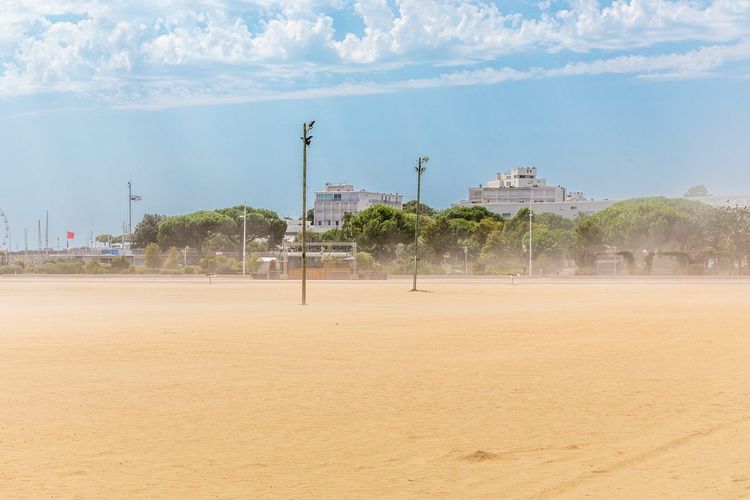
It's impossible to visit Royan without spending time on the sand. Fortunately, the best beaches are all reachable without a car.
La Grande Conche and the Foncillon Beach
The Grande Conche beach, stretching over 2 km, forms the arc that defines the entire seafront. You can reach it on foot from any point in the town centre in under 15 minutes. Lifeguard posts, showers, beach clubs, and water sports equipment hire are all concentrated here in season, making it the most practical beach for a car-free stay.
On the other side of the harbour, Foncillon beach (Boulevard de la Grandière, 17200 Royan, rated 4.5/5 on Google from 100 reviews), nestled at the foot of the coastal road, is smaller and more sheltered, popular with families with young children. It is 10 minutes' walk from the harbour.
The Carrelets and the Coastal Road
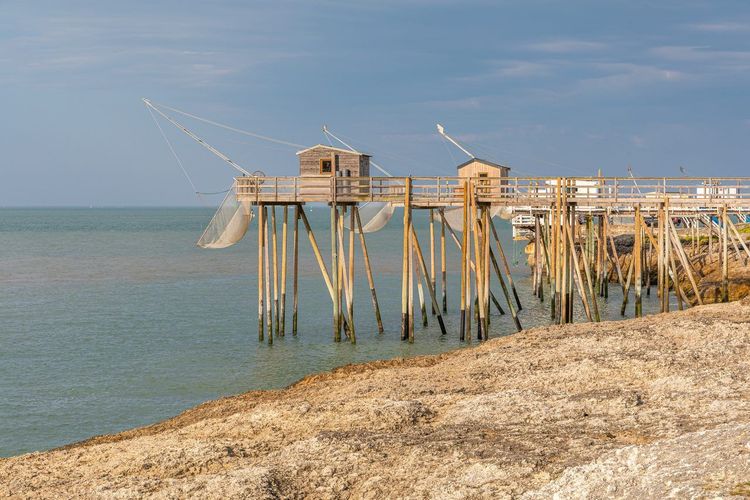
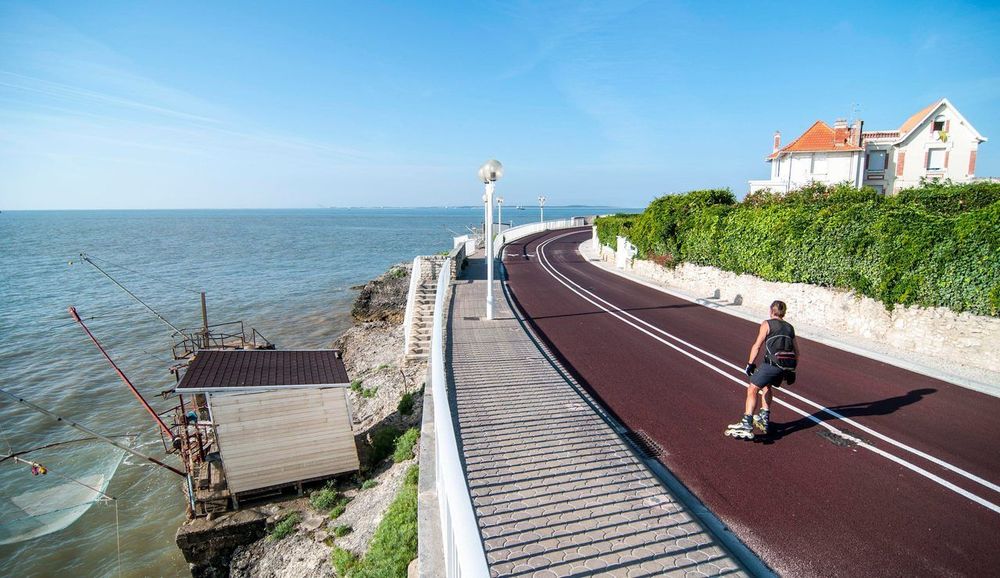
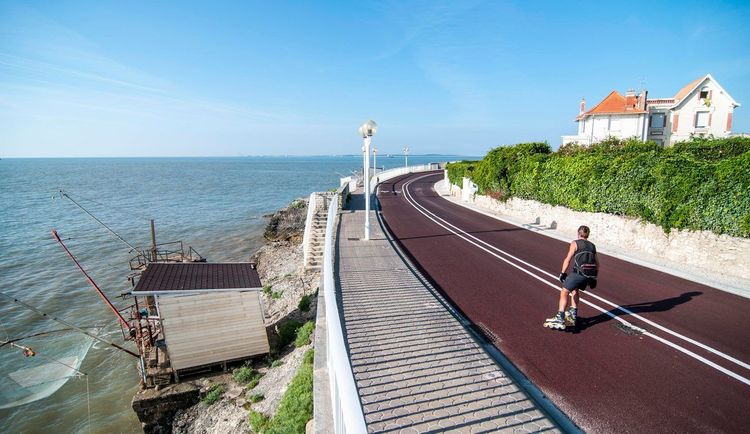
Following the coastal road towards Pontaillac and then Saint-Palais-sur-Mer, you will come across the first carrelets: these stilt fishing huts, fitted with a large square net raised by a winch, have dotted the Charente coastline for generations. Some can be hired for a fishing session or a sunset aperitif; most are simply photographed from the path.
After listening to the story of the reconstruction on the Ryo audio-guided tour, this walk along the coastal road makes an ideal follow-up: you move from 1950s concrete to villas and wooden jetties in under half an hour's walk.
Coastal Walks and Trails Without a Car
Beyond the beaches, the coastline around Royan has several paths that are walkable only on foot. To reach the starting point at Vaux-sur-Mer, take the Cara'bus from the town centre: you can go one way by bus and return on foot, or vice versa depending on your energy levels.
The Sentier des Douaniers Towards Saint-Palais
The sentier des Douaniers, linking Vaux-sur-Mer to Saint-Palais-sur-Mer, winds between pine trees and limestone cliffs, with multiple viewpoints over the ocean and access to the coves below. Depending on your stops, allow 2 to 3 hours to walk it in full. Wear sturdy shoes: the path alternates between sand, roots, and steps cut into the rock.
The Promenade des Falaises and the Pont du Diable
The promenade des falaises, the most spectacular stretch, towers above the ocean and offers sweeping views towards the Grande Côte. At Saint-Palais, it leads to the pont du Diable (Grande Côte, 17420 Saint-Palais-sur-Mer, rated 4.7/5 on Google from 43 reviews), a rocky arch sculpted by erosion, reached via a slight detour from the main path. At high tide coefficients, the waves surge through with a roar: stay well behind the barriers.
Keep your earphones in your bag: the Ryo audio guide commentary is designed to be listened to while walking, and nothing stops you from combining the town centre in the morning with the coastal path in the afternoon.
By Bike Along the Grande Côte and the Vélodyssée
To cover more ground without ever getting behind the wheel, the bike remains the most efficient option around Royan.
The Vélodyssée Towards La Palmyre and Saint-Palais
The Vélodyssée, the long-distance cycling route running along the Atlantic coast from Brittany to the Basque Country, passes through the Royan Atlantique area largely on dedicated infrastructure. From Royan harbour, it heads towards Saint-Palais-sur-Mer and then La Palmyre, threading between pine forests and glimpses of the ocean, on a broadly flat profile suitable for families. Allow 1h30 to 2h to reach La Palmyre at a relaxed pace, with several beaches where you can stop. Heading south, the Le Verdon ferry takes over from the route.
Cycling Circuits in the Hinterland
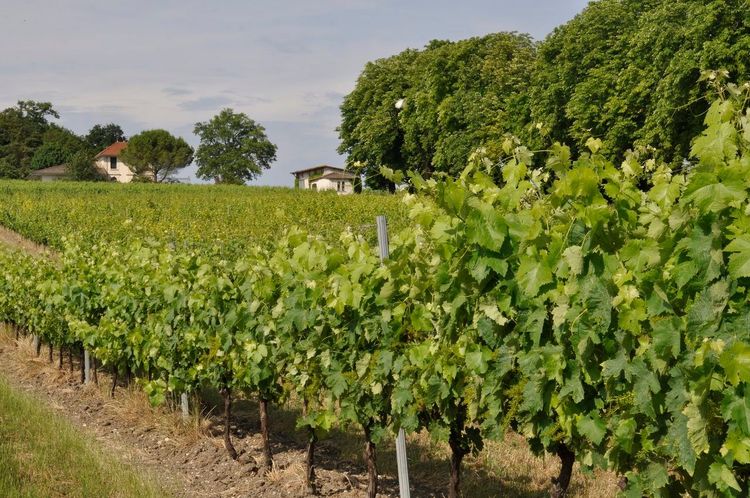
If you want to venture away from the coast, waymarked loops head inland: circuit no. 1 from Rétaud, through vineyards and Charentais hamlets, or circuit no. 9 from Saint-André-de-Lidon, more rolling. The countryside there is very different from the beaches, and far less crowded in high season.
To extend these routes, the Ryo article on hiking around Royan details several loops in the surrounding area. And if you keep a morning free for the town centre, the Ryo audio-guided tour remains an easy fit between two cycling outings: 1h30 on foot, starting whenever you like.
Boat Excursions: the Cordouan Lighthouse and the Gironde Estuary
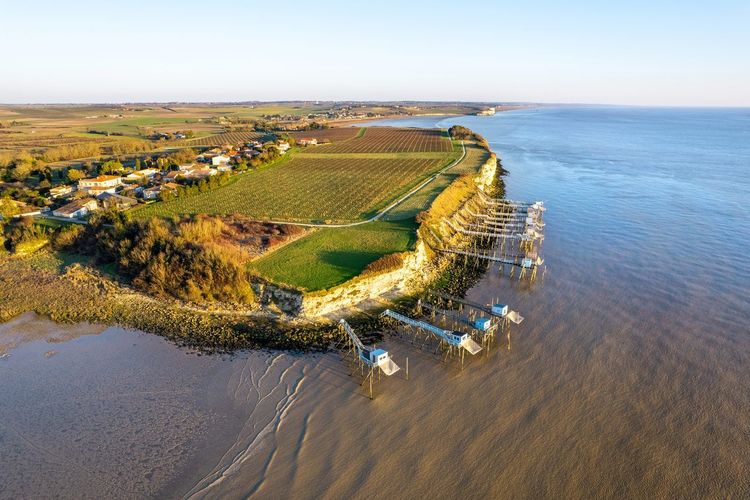
A boat trip is arguably the most iconic excursion from Royan without a car: departures are directly from the harbour, right in the town centre.
The Cordouan Lighthouse by Boat
Listed as a UNESCO World Heritage Site since 2021, the Cordouan lighthouse stands in the middle of the Gironde estuary on a rocky platform that is only exposed at low tide. Nicknamed the 'Versailles of the Sea', it was built between 1584 and 1611 and then heightened in the 18th century. Croisières La Sirène organises stopover outings from April to October from Royan's marina (quai de Monastir, near the carousel): departures are timed around the tides to allow landing and a visit to the lighthouse. Book early in summer, and set aside a half-day as well as shoes that don't mind getting wet.
Cruises Along the Gironde Estuary
The same company also offers sea trips without a stopover, around the lighthouses and through the estuary, shorter and less tide-dependent. A little further north, Croisières Alizé departs from La Tremblade (reachable by regional coach) for the île d'Aix passing beneath Fort Boyard, with 1h30 of sailing and a stopover on the island.
If you simply want to cross the estuary without an excursion, the Royan / Le Verdon ferry remains the quickest and most affordable option, and offers a lovely view of the Royan coastline into the bargain.
La Palmyre and the Surrounding Area by Bus, Without a Car

The area around Royan has several sites well worth a detour, all connected to the town centre by bus or by bike.
La Palmyre Zoo by Bus
The La Palmyre zoo, one of the most visited in France with around 1,600 animals across 18 hectares, is the area's unmissable family day out. In summer, the Cara'bus Royan <> La Palmyre line drops you nearby; out of season, services are more limited, so check the timetables before you go. Allow a full day: the park is hilly and best explored slowly, especially with children.
Saint-Georges-de-Didonne, Meschers, and the Grottes du Régulus
To the east of Royan, Saint-Georges-de-Didonne and its parc de l'Estuaire can be reached by bus, or by bike along the coastal road enjoying the panorama over the Gironde. A little further on, Meschers-sur-Gironde is home to the grottes du Régulus (Impasse du Régulus, 17132 Meschers-sur-Gironde, rated 4.4/5 on Google from 4,827 reviews), ancient troglodyte dwellings carved into the limestone cliff; the guided tour tells in just under an hour the story of the fishermen who lived there and the privateers' legends attached to them.
Bus frequencies vary considerably between high and low season: it's better to check timetables the evening before rather than counting on a service every twenty minutes outside of July and August.
A Day Trip to the île d'Oléron by Bike or Bus
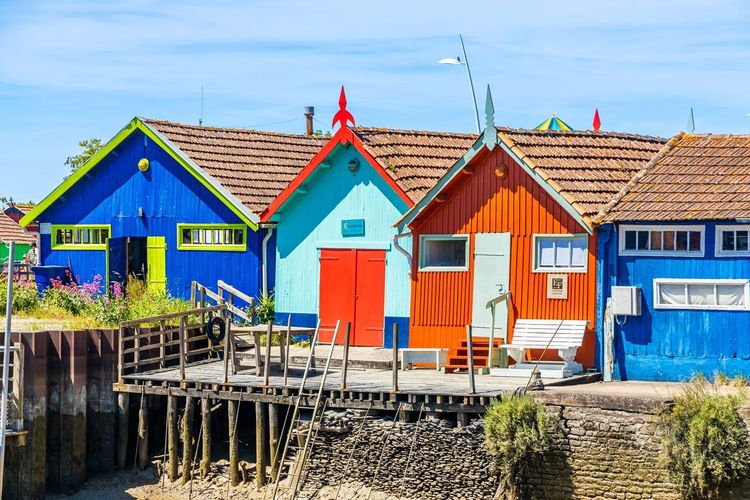
Few guides mention the île d'Oléron as part of a car-free stay in Royan, yet it is perfectly reachable without hiring a vehicle.
Crossing to Oléron Without a Car
From Royan, you first need to get to Marennes or Bourcefranc, by regional coach or by bike via La Tremblade. The île d'Oléron viaduct, around 3 km long, has no proper protected cycle lane: cyclists can use the pavement, but the crossing is not particularly pleasant and is best avoided with children. The coach is therefore the most comfortable way to cross the bridge, and you will find over 160 km of cycling routes waiting for you on the island.
Along the way, or as a separate excursion, two stops are worth making: Talmont-sur-Gironde (Place de l'Église, 17120 Talmont-sur-Gironde, rated 4.6/5 on Google from 1.5K reviews), listed among the Most Beautiful Villages of France, with its small Romanesque church perched above the estuary, and the marshes of Saint-Just-Luzac, where waymarked paths wind between oyster beds and huts. Talmont is easily reached by bike by following the estuary from Meschers.
What to See on the Island in Half a Day
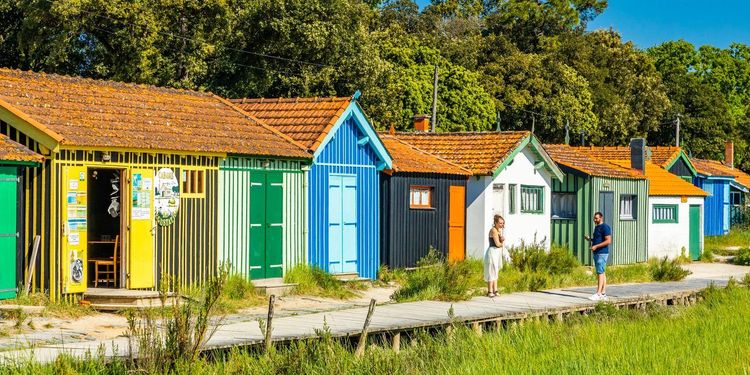
Once on Oléron, the oyster ports such as Le Château-d'Oléron and La Cotinière are easily explored by bike, between colourful huts, oyster stalls, and small coves. For a more detailed plan, the Ryo article on the best activities on the île d'Oléron maps out a full itinerary, useful if you plan to spend an entire day there.
What to Do in Royan on a Rainy Day, Without a Car
A rainy day doesn't necessarily spoil a car-free stay: several options remain accessible on foot or with a few bus stops.
Start with the interior of the église Notre-Dame and the central market, two shelters that are worth a visit even in fine weather. If you have a bike or take the bus, les Caves Jules Gautret (2 Rue des Roseaux, 17200 Saint-Sulpice-de-Royan, rated 4.4/5 on Google from 697 reviews), a house founded in 1847 in Saint-Sulpice-de-Royan (a few kilometres from the town centre), offer Monday to Saturday a guided tour of the chai followed by a tasting of pineau des Charentes, cognac, and local wines, around 1h15 in total. The Barrière casino in Pontaillac and the congress centre also host shows and events depending on the season.
And if the sky clears later in the day, head out to the sentier des Douaniers or the seafront: on this coast, sunny spells can arrive very quickly.
Food and Markets: Local Specialities Not to Miss
The central market remains the best gateway into local gastronomy, within walking distance of most town-centre accommodation.
You can't leave without tasting Marennes-Oléron oysters, matured in oyster beds, or mouclade, mussels in a cream sauce gently spiced with mild curry, a hallmark dish of Charentais restaurants. Pineau des Charentes, a fortified wine produced in the hinterland, is served as an aperitif in most bars along the seafront.
At the stalls, you'll find the day's catch (sea bass, sole, cuttlefish), goat's cheeses, and Charentes-Poitou AOP butter, perfect for putting together a picnic for the beach or the sentier des Douaniers. For lunch without leaving the town centre, the restaurants around the market often offer better-value set menus than those on the promenade facing the ocean. On busy days, arrive before 10am to get the best selection.
Where to Stay in Royan Without a Car: Well-Connected Neighbourhoods
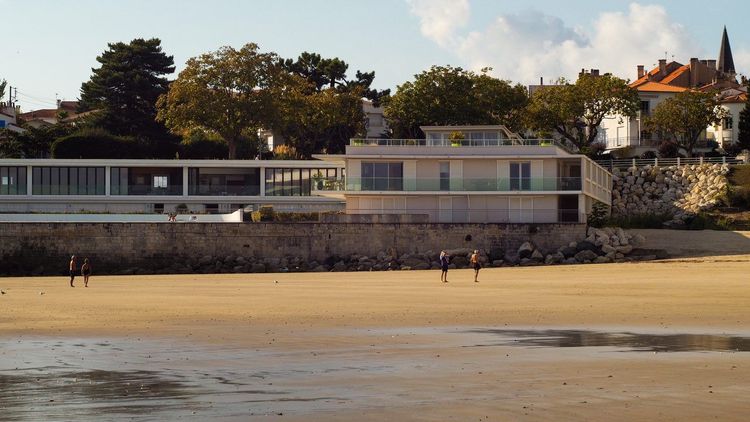
Your choice of neighbourhood makes a significant difference to a car-free stay: prioritise proximity to the town centre, the station, or the seafront rather than accommodation on the outskirts that would force you to take several buses.
Town Centre and Seafront
The town centre, around the central market and the église Notre-Dame, remains the most practical choice: everything is walkable, including the station and the main bus stops. The seafront, along the Grande Conche, appeals for its direct beach access, though at a noticeably higher price in high season. If you're arriving by train with luggage, accommodation within 10 minutes' walk of the station saves you a taxi or shuttle.
Pontaillac and Quieter Districts
Pontaillac, more residential, is still 25 minutes' walk from the centre or just a few bus stops away: a good compromise if you want quiet evenings and a beach on your doorstep. With a family, aim for accommodation near a stop that serves both the town centre and the beaches, to minimise connections with tired children.
Budget and Tips for a Car-Free Stay in Royan
Travelling without a car in Royan can also lead to real savings, as long as you plan a little ahead.
On the Cara'bus network, a multi-journey ticket or a short-stay pass works out considerably cheaper than buying individual tickets if you're planning several return trips to La Palmyre or Saint-Palais. For cycling, most hire shops offer weekly rates that are often better value than a summer parking pass. Add in the absence of fuel and parking costs — paid and packed in July and August along the seafront — and the transport budget for a car-free stay is generally lower than for a motorised one.
For a first visit, three to four days are enough to cover the town centre, one or two beaches, the coastal path, and a boat trip; a week allows you to add La Palmyre, Oléron, and the estuary villages at a more leisurely pace.


FAQ
How long does it take to visit Royan without a car?
Three to four days are enough for the essentials: the post-war rebuilt town centre, one or two beaches, and a boat excursion to Cordouan or through the estuary. To add La Palmyre, the île d'Oléron, and the coastal paths at a relaxed pace, plan for a week instead.
What is the best way to get around Royan without a car?
Walking is sufficient for the town centre; cycling takes over for the more distant beaches and the Grande Côte. The Cara'bus network remains useful for La Palmyre or Saint-Georges-de-Didonne, especially outside the summer season.
How do you get from Royan to La Palmyre without a car?
In summer, the Cara'bus line Royan <> La Palmyre connects Royan town centre to the zoo area. By bike, the Vélodyssée gets you there in 1h30 to 2h through the forest. Out of season, the bus service is reduced: check the timetables.
Are there cycle paths in Royan Atlantique?
Yes, the agglomeration has a network of cycle paths linking the town centre to the beaches and neighbouring communes, largely separated from traffic. The Vélodyssée also crosses the area all the way to La Palmyre and beyond towards La Tremblade.
How do you reach the Cordouan lighthouse without a car?
From Royan harbour, by boat excursion with a stopover, from April to October. Departures depend on the tides: book in advance during high season.
Where should you stay in Royan to explore easily without a car?
The town centre, around the central market, remains the most practical option for doing everything on foot, including access to the train station and bus stops. The seafront is ideal for direct beach access, while Pontaillac offers a quieter setting 25 minutes' walk from the centre.
Conclusion
Visiting Royan without a car is no hardship at all: the rebuilt town centre is walkable, cycle paths run along the Grande Côte, and buses fill in the gaps towards La Palmyre or the estuary. The choice of pace is yours, whether that means three days focused on the town centre and the nearby coast, or a week that stretches out to Oléron and the inland marshes.
For your first morning, launch the Ryo audio guide of Royan from the town centre: 16 narrated stops across 3.2 km to understand this concrete phoenix city, without a traffic map to decipher or a parking space to hunt down.