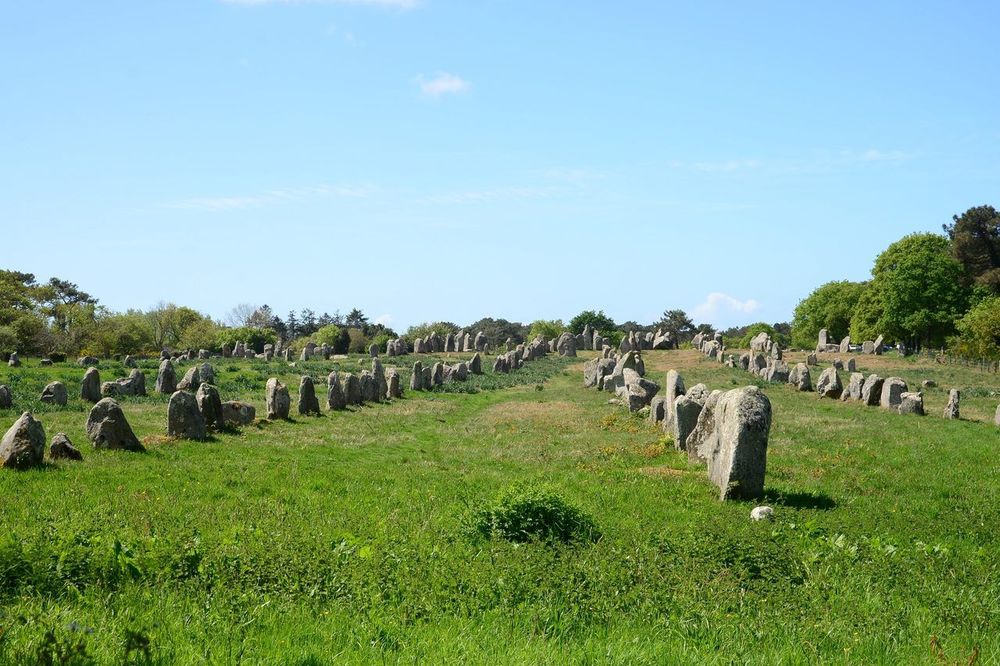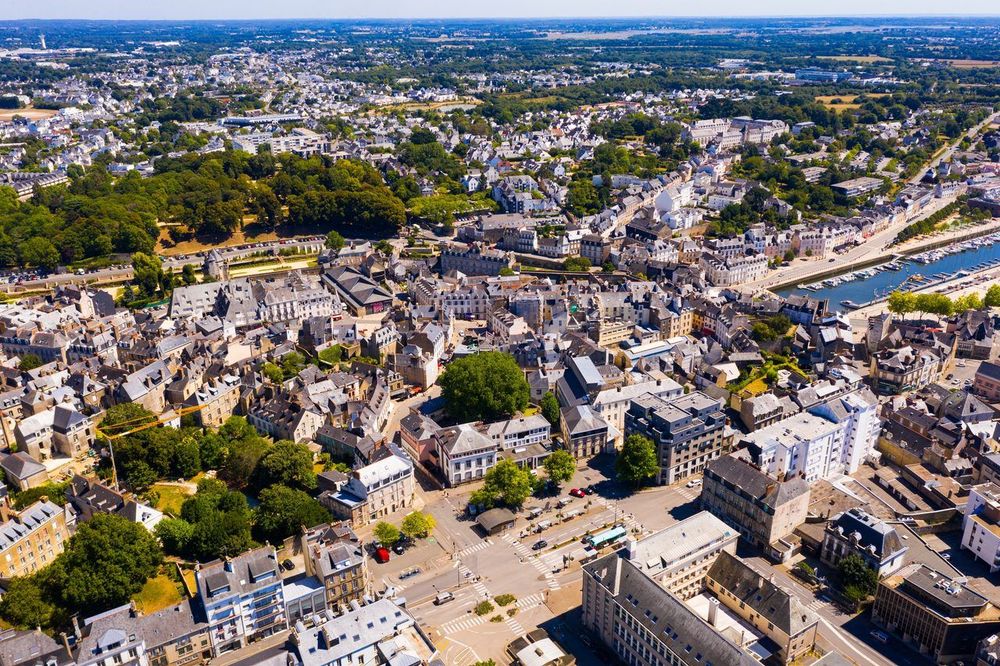
© Shutterstock
 Votre guide Ryo
Walking in Vannes: the Best Walks in 2026
At high tide, the Golfe du Morbihan rises to the foot of Vannes' ramparts and laps at the harbour pontoons. At low tide, the same quays overlook kilometres of mud where herons fish in silence, perfectly still. This rhythm between walled city and open sea is what makes walking in Vannes so distinctive: on the Vannes–Conleau walk, you stroll past 13th-century fortifications before lunch and then walk across a wild peninsula in the afternoon. The Ryo audio-guided tour of Vannes already covers the essentials of the old centre in 1h20, but the city and its gulf deserve the time to venture much further.
This guide starts from the ramparts and the Garenne washhouses, descends to the harbour along the Rabine promenade, crosses the Conleau peninsula at low tide and ventures into the protected Séné marshes with their five ornithological hides. It then pushes on towards Arradon, the Île-aux-Moines and Locmariaquer, where the Grand Menhir brisé and the Table des Marchands await curious walkers, before ending with the best family-friendly and cycling options and practical information for organising your walk in Vannes in any season.
Old Vannes and Its Ramparts
Every walk in Vannes logically begins here, in the old centre largely covered by the Ryo audio guide to Vannes: a compact, fully pedestrianised area where cobbled lanes lead from one timber-framed house to the next in just a few minutes.
The Ramparts, the Jardin des Remparts and the Garenne Washhouses
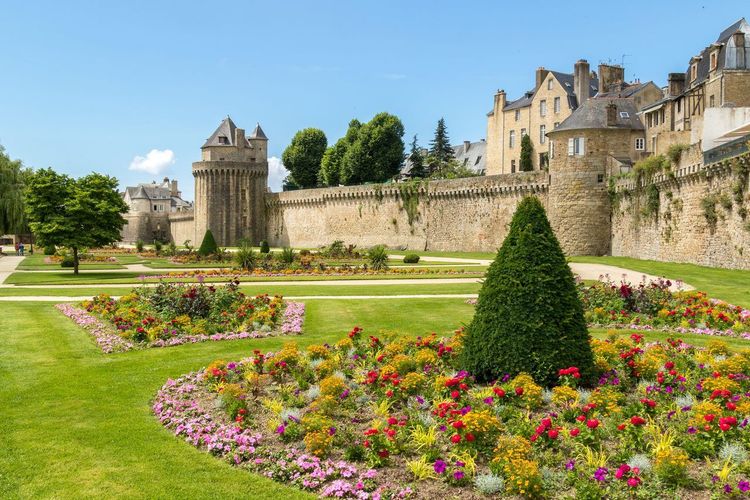
The ramparts of Vannes enclose the old centre for nearly 1.5 kilometres, from the Garenne bastion to the Prison gate. Built from the 13th century and reinforced through to the 17th, they still feature several well-preserved towers and bastions, including the Tour du Connétable that dominates the garden.
Below them, the Jardin des Remparts lines up its geometric flowerbeds at the foot of the fortifications, a 19th-century design that deliberately contrasts with the raw stone of the walls. It is one of the locals' favourite spots for photographing the fortified ensemble, particularly in the late afternoon when the low light grazes the towers.
Just below flow the Garenne washhouses, a long row of slate-roofed washhouses built along the Marle in the 19th century. In use until the mid-20th century, they are today one of the most reproduced postcards of old Vannes. You walk alongside them for about a hundred metres before reaching the main entrance to the old town.
The Saint-Pierre Cathedral and the Saint-Patern Quarter
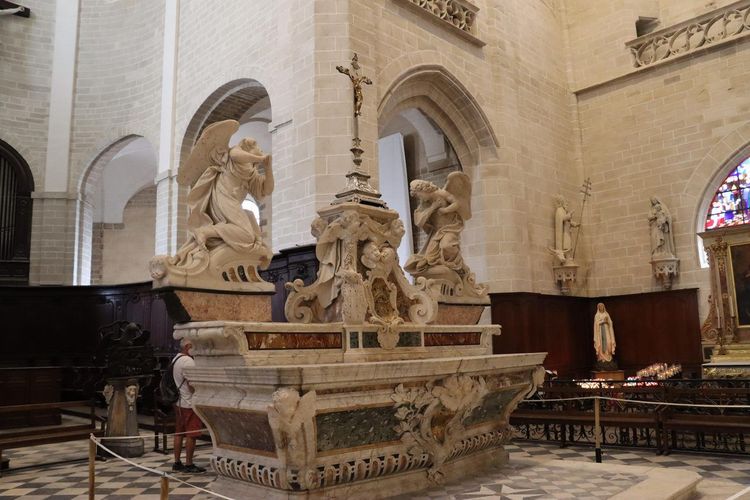
Entering through the Prison gate, you almost immediately come upon the Saint-Pierre Cathedral, a building that blends flamboyant Gothic with 19th-century additions, featuring a Renaissance chapel housing the tomb of Saint Vincent Ferrer. Entry is free and open, making it a short but unmissable stop on any walk through the centre of Vannes.
From there, head towards the Saint-Patern quarter, more residential and less crowded than the tourist core. The façades here are more modest, often adorned with flowers, and you are more likely to encounter locals than visitors. It makes a worthwhile 15-to-20-minute detour if you want to step off the most well-trodden path.
Place Henri IV and the Timber-Framed Houses
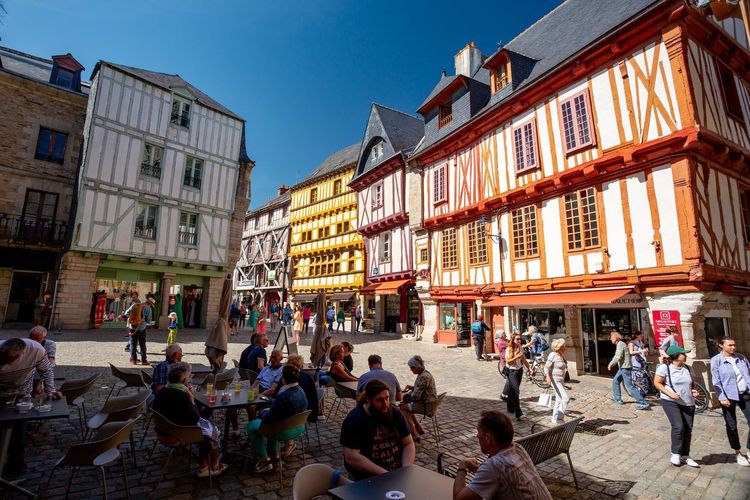
Back towards the centre for Place Henri IV, arguably the visual highlight of old Vannes: around ten 16th-century timber-framed houses with jettied upper storeys frame a cobbled square where terrace seating spills out at the first sign of fine weather.
Don't miss the house known as 'Vannes and His Wife', on the corner with Rue Noé, whose carved statues give the whole ensemble its nickname. The marked itineraries in this area are well signposted and visitor reviews regularly praise how easy it is to walk around Vannes without getting lost, even without a map. Allow 45 minutes to an hour for this first stretch of the Vannes walk, if you take your time, pausing along the way at Saint-Pierre Cathedral and the Prison Gate.
The Rabine Promenade and the Port of Vannes
Leaving old Vannes through the Saint-Vincent gate, the city changes pace and opens up to the water.
The Marina and the Quays
The Vannes marina lines up several hundred berths along the Tabarly and Éric Le Roy quays, among cruising yachts and traditional gulf boats. At high tide, the water almost touches the restaurant terraces that border the quay; at low tide, the hulls rest on the mud — a sight that always surprises visitors from elsewhere.
The quays themselves are pedestrianised for much of their length, lined with crêperies and wine bars. They form an almost obligatory passage between old Vannes and the Rabine, and a pleasant stop to watch boats manoeuvre in the channel that links the harbour to the gulf.
The Rabine: Gardens and Waterside Path towards the Gulf
From the harbour, the Rabine promenade (Avenue de la Marne, 56000 Vannes, rated 4.4/5 on Google with 140 reviews) extends the walk for nearly 2 kilometres towards the gulf, between landscaped gardens and rows of century-old plane trees. It is the route that consistently comes up whenever people look for a seaside walk in Vannes, and rightly so: the path follows the water almost without interruption, with several benches and picnic areas.
Along the way you will pass the Parc du Golfe and its sports facilities, then the first open panoramas over the islets of the Golfe du Morbihan. Allow 30 to 40 minutes one way on foot from the harbour, a little more if you walk all the way to the end of the jetty. It is a perfect family walk: flat, shaded and wide enough for pushchairs and bicycles.
The Rabine takes its name from the tree-lined avenues typical of 19th-century Breton parks. The current route was laid out to connect the walled city to the deep-water harbour at a time when Vannes was looking to develop its maritime activity. Today, evening joggers and Sunday families share it without ever getting in each other's way — a sign that the design has aged rather well.
One tip: avoid the Rabine car park at weekends in summer — it fills up by 10am. It is better to walk from the city centre, 15 minutes away, or cycle along the dedicated path that runs the full length of the route.
The Conleau Peninsula: between Sea and Countryside
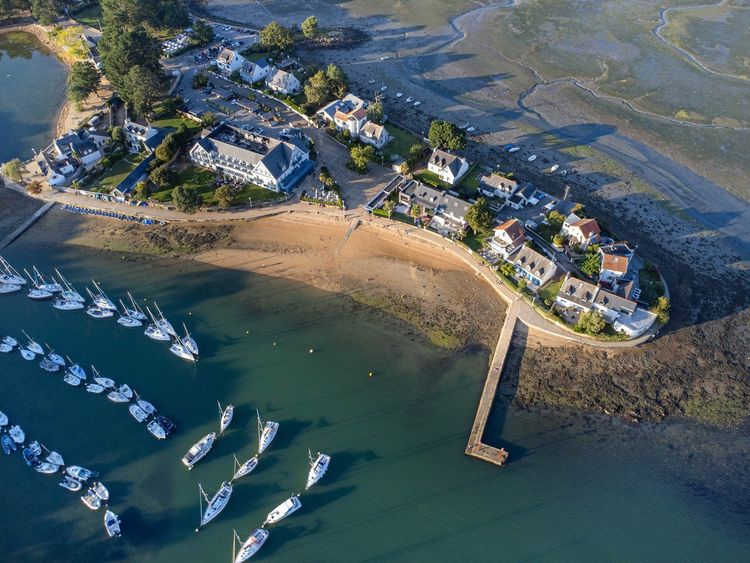
About 3 kilometres south of the centre, the Conleau peninsula closes off the Rabine at a spit of land surrounded by water on three sides. It is one of the most sought-after routes whenever people mention hiking near Vannes on the Conleau side, and one of the rare walks in the area that genuinely blends sea and countryside on a single trail.
Walking around the Peninsula
The full circuit around the Conleau peninsula takes about 1h15 on foot, along a shaded path that alternates meadows, pine woods and waterside stretches. The route is waymarked and broadly flat, accessible to the whole family, with a few tree roots to watch out for on the more wooded sections.
At the tip of the peninsula, a sandbar sometimes connects Conleau to the île de Boëde depending on the tidal coefficient — a phenomenon that catches hurried walkers off guard and delights those who check the tide times before setting off. Our Ryo article on hiking around Vannes details other similar loops if this one appeals to you.
The Beach and the Small Port of Conleau
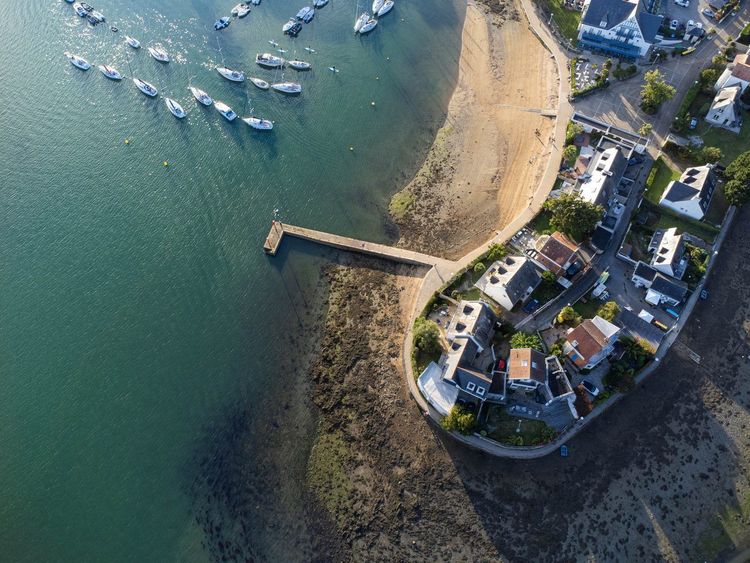
On the town side, Conleau beach is tiny but very popular in summer, with a direct view over the île de Boëde and the small fishing harbour nearby. The water here is calm, sheltered by the shape of the peninsula, making it a favourite spot for families with young children.
The port of Conleau (Rue Fernand Le Dressay, 56000 Vannes, rated 4.6/5 on Google with 9,629 reviews) has a handful of traditional boats and a few waterside restaurants with terrace seating — perfect for rounding off the loop with a drink or a seafood platter. In summer, a water shuttle sometimes connects Conleau directly to the Île-aux-Moines, an option worth checking depending on the season if you want to combine both walks in one day.
By car, there is free parking at the entrance to the peninsula, though it is often full at weekends in July and August. By bike, it is about 15 minutes from the city centre via the path along the Rabine: combined with the Rabine walk, this is probably the finest car-free half-day walk in Vannes.
The Séné Trails and the Marshes Nature Reserve
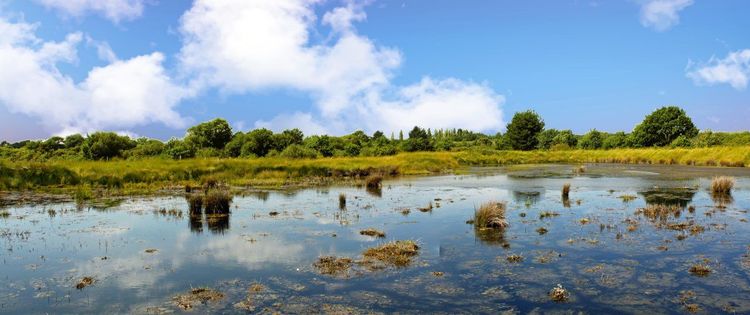
Just south of Conleau, the commune of Séné is home to several of the finest nature walks in the area. It is the logical extension of a walk in Vannes when you want to swap cobblestones for mudflats and silence.
The Séné Marshes Nature Reserve
The Séné marshes nature reserve protects former salt marshes converted into a natural area — one of the richest wetlands in Brittany. Depending on the season, you can spot little egrets, avocets and, in winter, thousands of ducks and wading birds passing through.
Four kilometres of trails cross the reserve, dotted with five wooden hides where binoculars are far from superfluous. Entry is charged, around 7 euros for an adult and 3.50 euros for a child, and the reserve house lends or hires out observation equipment. Allow 1h30 to 2 hours for the full loop if you stop at each hide, or 45 minutes to 1 hour for the wheelchair- and pushchair-accessible path, which serves two adapted hides.
Check opening times before you travel: the reserve is open from February to early September, closed on Mondays outside July and August, and admits visitors only from 2pm for much of the season. The best time to watch birds is at the very start or end of the opening window, when activity is most intense and the light is softest for photography. Avoid the midday heat in summer: the birds become less visible and the walk feels less comfortable on the shadeless stretches.
The association Bretagne Vivante, which manages the site, regularly organises free or subsidised guided outings, particularly during the major spring and autumn migrations. This is a worthwhile option if you are new to birdwatching and want to leave with more than blurry photos of distant black dots.
The Cabelous Trail and the Culs Salés Trail
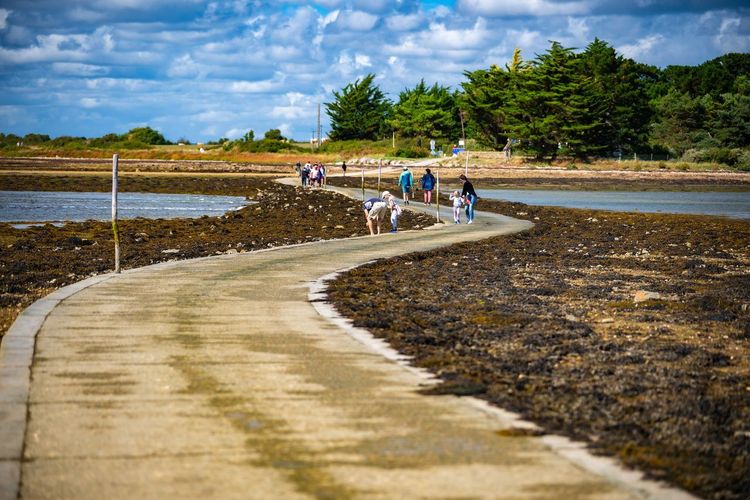
Two other routes complete Séné's offer, shorter and less well known than the reserve. The Cabelous trail follows the coast for around 5 kilometres, between woodland and mudflats, with fine open views over the gulf wherever the path clears the trees.
The Culs Salés trail (Séné, 56860 Séné, rated 4.4/5 on Google with 858 reviews) takes its name from the now-abandoned salt marshes whose dykes and geometric basins can still be made out from the path. It loops in just under an hour and is well suited to a late-afternoon walk, when the raking light picks out the relief of the old salt workings.
These two loops combine easily with the nature reserve to make a full half-day in the Séné marshes, provided you wear sturdy footwear: the ground stays wet for much of the year, even in fine weather.
Séné is 10 minutes by car from the centre of Vannes, or by bus on the Kicéo network, which serves the reserve several times a day on weekdays. For cyclists, a continuous path runs alongside much of the route from the Rabine, making it possible to combine Conleau and Séné in a single outing without returning through the city centre.
The Beaupré-La Lande Park: a Nature Walk on the Doorstep of Vannes
Less well known than Conleau or Séné, the Beaupré-La Lande park (Rue de Beaupré, 56000 Vannes, rated 4.1/5 on Google with 44 reviews) stretches across the northern heights of Vannes, between the Beaupré district and the commune of Saint-Avé. It is a recently created woodland area, laid out on former farmland, with paths winding between copses, meadows and a central lake.
The site receives little coverage in mainstream travel guides, yet it makes a peaceful alternative to the busier coastal walks, and is particularly appreciated by locals for a quick after-work outing. Allow 45 minutes for the full loop around the lake, more if you explore the side paths towards the wet meadows.
Access is easy by car or bicycle from the north of the city, with free parking at the main entrance. It is also a good option if you are looking for a family walk in Vannes away from the summer crowds on the seafront, with wide, broadly flat paths.
The park also has a few light outdoor fitness stations dotted along the main route — an option for those who want to combine walking with exercise without leaving the natural setting. The picnic tables near the lake make it a handy stop if you set out early and plan to eat before heading back to the centre.
The Étang au Duc: a Nature Loop on the Edge of the City
To the north-west of Vannes, between the last housing estates and the surrounding countryside, the Étang au Duc (Rue de Metz, 56000 Vannes, rated 4.4/5 on Google with 300 reviews) spreads across a lake of around forty hectares fed by the Marle. A path circles it in all seasons: it is the only walk in Vannes that combines a lake, woodland and open spaces fewer than ten minutes from the centre.
The full circuit is around 6 kilometres, about 1h30 of easy walking on flat ground that suits pushchairs and joggers alike. Several benches line the route, with open views over the water on the southern side and more tree cover to the north, so you can choose your setting depending on the weather. There is no obligation to complete the loop: the more open southern section is more than enough for an hour's outing.
In the warmer months, supervised water activities — dinghy sailing and canoeing — bring a little life to what is otherwise a very tranquil circuit. It makes a good complement if you have already explored old Vannes and are looking for a greener break, ten minutes by car from the ramparts.
Local anglers are regular visitors to the lake, particularly for carp and roach, and it is not unusual to spot a grey heron standing motionless on the bank, patiently waiting for its next meal. If you walk early in the morning, the mist that sometimes lingers over the water gives this otherwise modest loop an almost dreamlike quality.
The Eastern Golfe du Morbihan: Arradon, Île-aux-Moines and Larmor-Baden
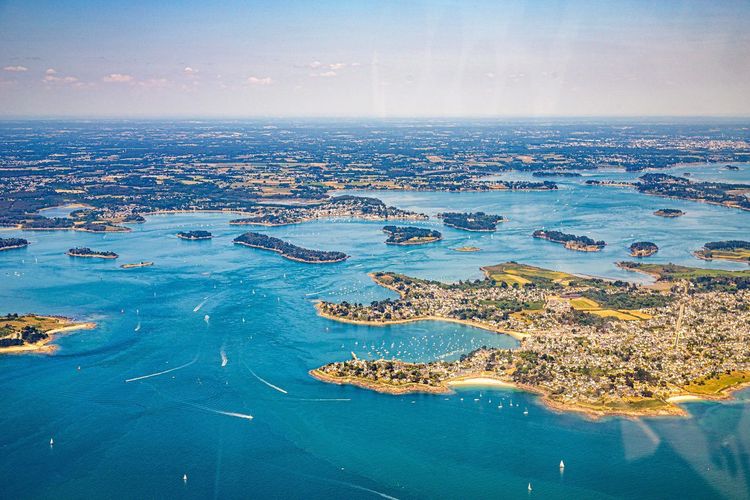
Beyond the gates of Vannes, the Golfe du Morbihan unfolds its peninsulas and islands as natural extensions of the urban walk. There are around forty islands and islets in the gulf, but only two are permanently inhabited and served by regular boats — the Île-aux-Moines (56780 Île-aux-Moines, rated 4.7/5 on Google with 2.5K reviews) and the Île d'Arz — while the others, mostly private, are best admired from the shore or from the deck of a boat. On the eastern side, three destinations concentrate the finest full-day walks accessible from Vannes, each less than 30 minutes by road or boat.
Arradon and the Tour Saint-Vincent Headland
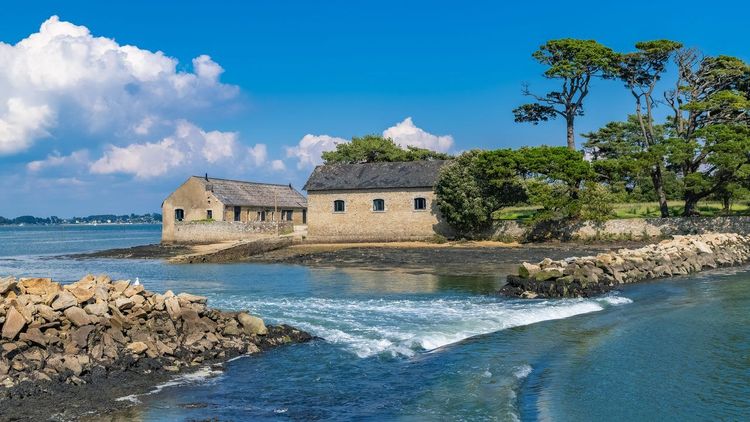
About ten minutes by car from Vannes, Arradon juts into the gulf to the west of the Rabine, with several rocky headlands that offer some of the finest panoramas across the entire Golfe du Morbihan. The headland circuit, around 6 kilometres, follows the coast between coves and small beaches, passing through the harbour and several designated viewpoints.
The Tour Saint-Vincent loop extends this coastal walk to the headland of the same name, where a 19th-century watchtower looks out over a string of islets. It is one of the best spots for photographing the gulf at sunset, with the silhouettes of the islands cutting across the water. Allow 1h30 to 2 hours for the full Arradon circuit if you combine the headland and the tower.
The Arradon harbour car park is free but limited in the height of summer — it is better to arrive before 10am at weekends or park a little further away and walk the extra few minutes. An oyster bar at the harbour makes a welcome mid-walk break, with a direct view over the boats and the gulf.
The Île-aux-Moines: on Foot or by Bike
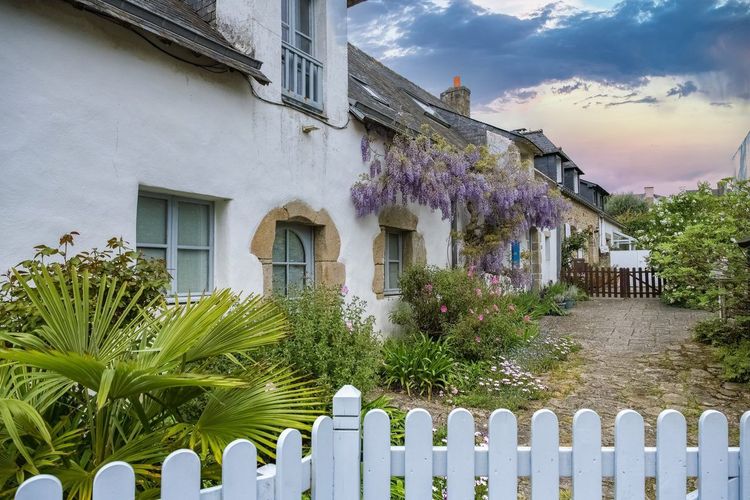
Reachable in 5 minutes by boat from the Pointe de Port-Blanc at Baden, the Île-aux-Moines is often described as the most beautiful island in the gulf, a reputation it amply deserves thanks to its lanes lined with camellias and mimosas.
The short tour of the island, around 4 kilometres, is easily done on foot in 1h30 by following the eastern coast, with almost continuous views over the neighbouring islets. By bike, several hire shops offer mountain bikes directly at the landing stage — the preferred option if you also want to explore the island's interior and its discreet megalithic alignments, far less crowded than those at Locmariaquer. The ferry runs all year, but frequencies drop outside the season, so it is worth checking times before you set off.
The island has barely 600 permanent residents, a figure that rises sharply in summer when the holiday homes fill up. Out of season, it is precisely this restored calm that appeals most, with almost deserted lanes and a winter light that is particularly photogenic over the gulf waters.
Larmor-Baden and the Tour of the Île de Berder
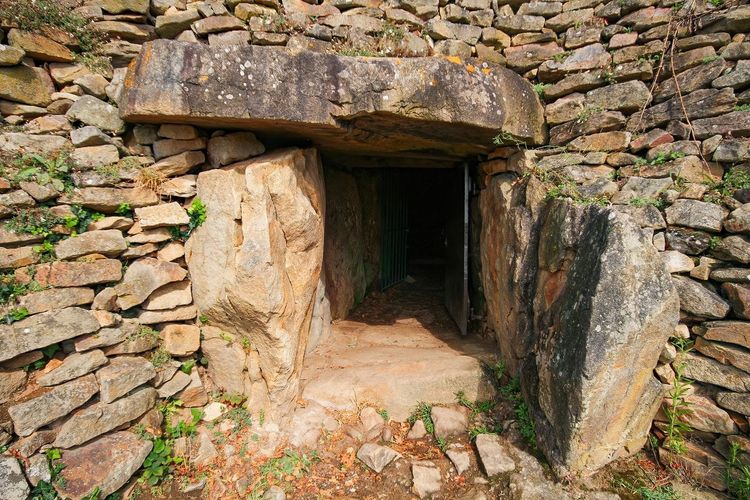
Further south, Larmor-Baden serves as the departure point for the île de Gavrinis and its cairn, one of the most remarkable megalithic monuments in Europe, accessible only by shuttle from Larmor-Baden harbour.
The tour of the Île de Berder, connected to the mainland by a tombolo passable at low tide, rounds out the local offer with a loop of around 5 kilometres through wooded, wild surroundings. Make sure to check tide times before venturing onto the tombolo: being stranded on the island side is not uncommon among visitors who have not anticipated the returning waters. Our Ryo article on the most beautiful spots in the Golfe du Morbihan covers more spots in this area if you want to continue your exploration.
The Gavrinis cairn, dated to around 3500 BCE, is considered one of the best-preserved Neolithic funerary monuments in Europe thanks to its engraved slabs. Visits are guided group tours only; book tickets in advance during the high season as demand frequently outstrips the shuttle capacity.
The Western and Southern Golfe du Morbihan: Auray, Locmariaquer, Sarzeau and Suscinio
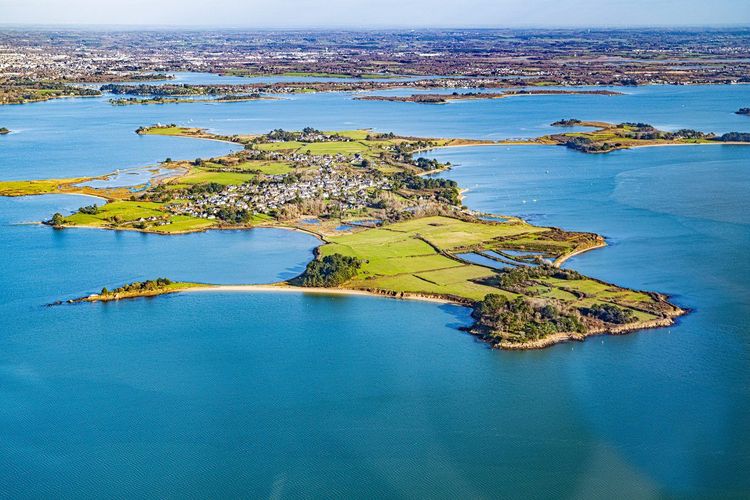
On the other side of the gulf, a second cluster of walks is organised around Auray, Locmariaquer and the Rhuys peninsula — a broader area that deserves a full day rather than a half-day. Allow 25 to 35 minutes by road from Vannes depending on your destination, with parking generally easier to find than on the Arradon or Île-aux-Moines side in high season.
Auray and the Anse du Téno
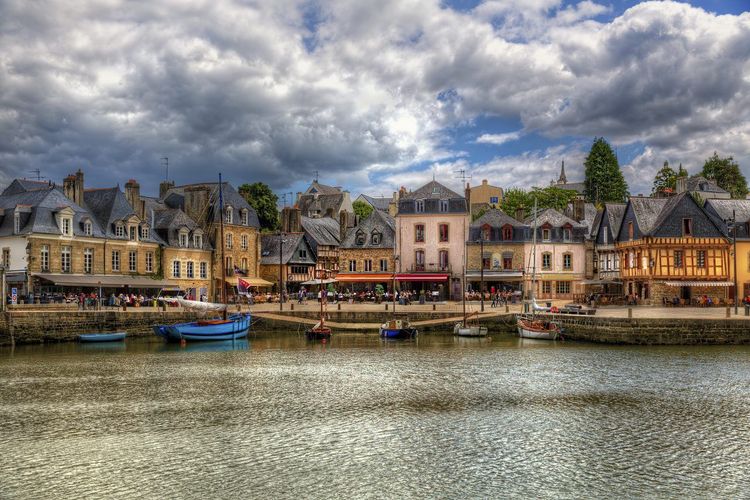
Twenty minutes by road from Vannes, Auray retains a Saint-Goustan quarter ranked among the most beautiful in Brittany, with its timber-framed houses descending to the river harbour. The Anse du Téno walk, around 8 kilometres, follows the two rivers that meet at Auray, through woodland and mudflats, down to the estuary.
Allow 2h30 for the full loop at a leisurely pace, with a recommended stop in Saint-Goustan to enjoy the riverside terraces. Saint-Goustan has kept its original paving and regularly serves as a backdrop for film and television shoots — an amusing detail for regulars who spot a camera crew set up between two timber-framed houses.
Locmariaquer and the Megalith Circuit
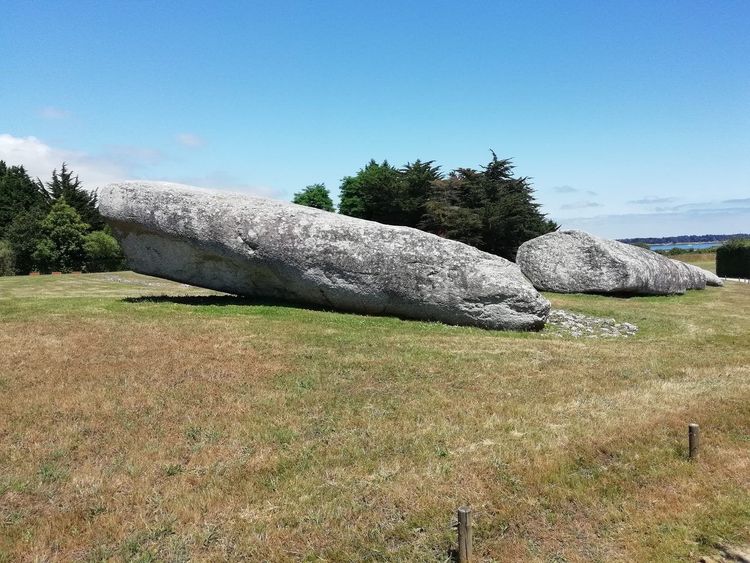
Locmariaquer closes off the western end of the gulf with one of the most significant megalithic ensembles in Europe: the Grand Menhir brisé, the Table des Marchands and the Er Grah tumulus, all grouped on a single site managed by the Centre des monuments nationaux.
The megalith circuit, around 5 kilometres, combines the visit to the paid site with a free coastal loop to the Pointe de Kervédan, with views over the entrance to the gulf and the boats passing towards Port-Navalo. Southern Morbihan has one of the highest concentrations of megaliths in the world, from the Carnac alignments to the tumuli of the Étel estuary, and Locmariaquer holds the most monumental pieces.
The Grand Menhir brisé measures 18.5 metres and is estimated to weigh around 280 tonnes: erected more than 6,000 years ago, it was the largest menhir ever raised in Europe, and its four fallen sections still convey the scale of the technical achievement. Online booking for the site is advisable in summer, as visitor numbers rise quickly when the weather is fine.
Sarzeau, the Rhuys Peninsula and the Château de Suscinio
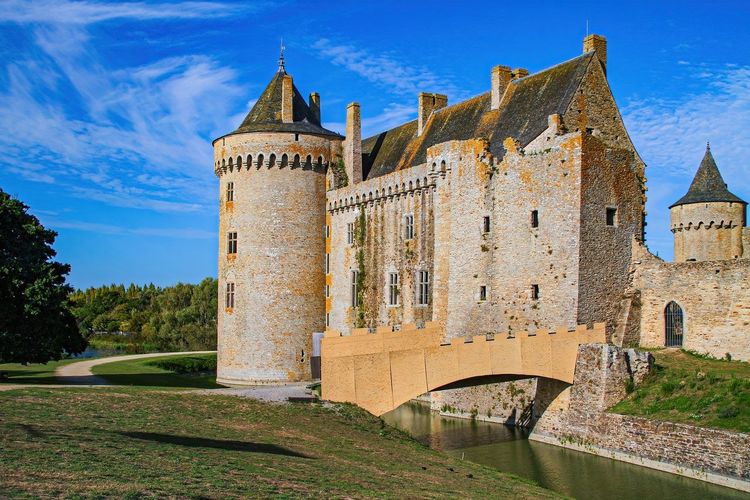
Further south, Sarzeau opens onto the Rhuys peninsula, an elongated strip of land between the gulf and the Atlantic Ocean that concentrates several well-marked hiking circuits. The Regards sur le Golfe circuit, around 10 kilometres, alternates coastal paths and small country lanes with alternating views over the gulf and then over the ocean.
At the tip of the peninsula, the Château de Suscinio (Suscinio, 56370 Sarzeau, rated 4.6/5 on Google with 12,944 reviews) closes the loop with its moat and 13th-century towers, the former residence of the Dukes of Brittany and now open to visitors. The walk to Suscinio beach, just behind the castle, brings you face to face with the Atlantic Ocean after a morning spent along the gulf — a striking contrast in landscape for anyone discovering the area for the first time.
The Rhuys peninsula is also home to a few hectares of vines, a Breton curiosity with medieval roots that enthusiasts have been reviving since the 1990s. The Château de Suscinio, for its part, has updated its interior scenography in recent years, notably around the medieval ceramic paving that has made it archaeologically renowned.
This western and southern part of the gulf lends itself less well to a spontaneous day trip than the more compact eastern side. It is better to choose one or two anchor points — Auray or Locmariaquer on one hand, Sarzeau and Suscinio on the other — rather than trying to string them all together in a single outing from Vannes.
Coastal Paths and Hikes around Vannes
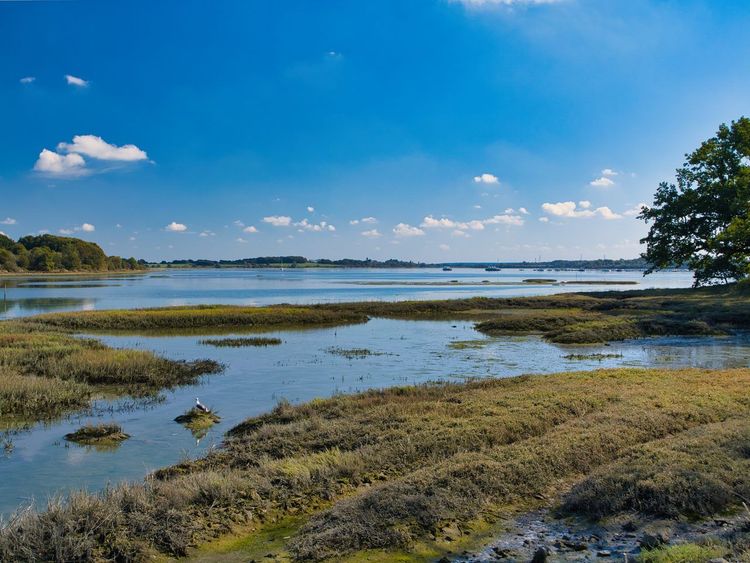
Beyond the individual walks already mentioned, Vannes is also the starting point for a much larger network of coastal paths and rural loops, enjoyed by an active walking club throughout the year.
The Golfe du Morbihan Coastal Path
The Golfe du Morbihan coastal path, often considered part of the local GR34 section, follows virtually the entire shoreline between Vannes, Séné, Arradon and Larmor-Baden. It naturally divides into sections of 5 to 10 kilometres, allowing you to tailor your outing to the time available: from a one-hour walk in Vannes to a full day's hiking between two headlands.
Several hiking guides, including Visorando, list around twenty waymarked routes in the immediate Vannes area, with downloadable maps and difficulty ratings. It is a useful resource if you want a specific walk with distance and elevation calculated in advance rather than improvising on the day.
The Vannes walking club regularly organises guided outings on these same sections, open to new members for a modest annual fee. It is an interesting option if you prefer walking in a group and benefiting from a volunteer guide's local knowledge rather than relying solely on a map. Annual membership typically costs around 30 to 40 euros, a sum easily offset by access to organised outings throughout the year, including off-the-beaten-track routes that most visitors would not find on their own.
Other Loops within 20 Minutes: Meucon, Saint-Avé
Less well known than the gulf walks, several rural loops round out the offer within 20 minutes' drive of the centre of Vannes. The Sources circuit at Meucon winds for around 7 kilometres through hedgerow bocage and small streams, in a landscape typical of the Morbihan interior, far from any maritime influence.
The Moulins promenade (Saint-Avé, 56890 Saint-Avé, rated 5/5 on Google with 1 review) at Saint-Avé follows the stream of the same name for around 5 kilometres, passing several restored watermills, some of which are still in working order during heritage open days.
Both circuits are particularly well suited to cycling, with a generally stable surface and little elevation gain, unlike some of the more technical sections of the coastal path. They are also good options for families looking for an alternative to seaside walks, especially on windy days when the coast becomes less comfortable. For most of these rural loops, a simple paper map — available from the Vannes tourist office or the relevant town halls — is all you need, with no specific app required.
Hiring a Bike to Explore Vannes and the Gulf
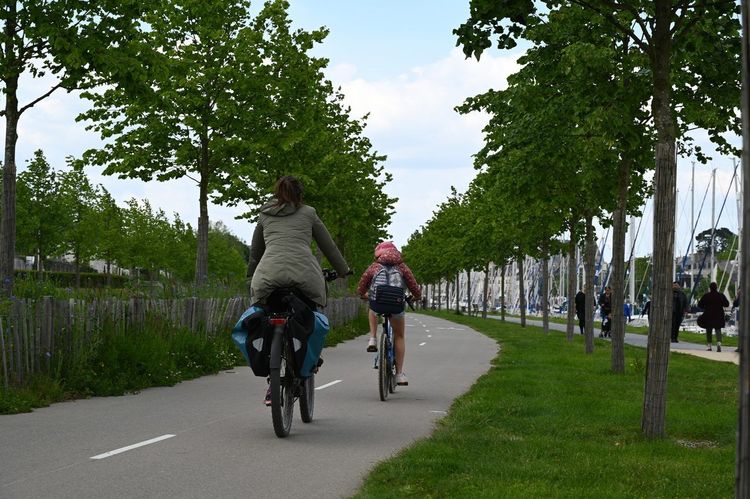
Several of the walks described above — particularly around the Rabine, Conleau and towards Arradon — are especially well suited to cycling, thanks to a broadly flat and continuous cycle path network.
In town, several bike hire shops offer standard and electric-assist models by the day or half-day, with prices generally around 15 to 25 euros for an electric bike. Booking the day before is advisable in July and August, when demand sometimes outstrips availability in the city centre.
Be wary of hire listings that circulate online: many point to addresses in Erdeven or Plouharnel, 30 to 40 minutes away by road, geared towards the southern coast and the Carnac alignments rather than a walk in Vannes and the gulf. To stay within the Vannes area, it is better to book with a hire shop in the city centre, at the port or at the station, even if it costs a euro or two more per day.
For longer ambitions, the Vélodyssée passes near Vannes and connects to certain operators specialising in long-distance loops, more oriented towards cycle touring than a day's outing. This is an option worth considering if you plan to venture beyond the gulf itself.
On an electric bike, allow around 2 hours to ride from Vannes to Arradon via the Rabine and Conleau, compared to nearly 4 hours on foot for the same loop. It is often the best compromise for covering several of the walks in this guide in a single day without sacrificing time at each site.
Some hire shops also offer cargo bikes or child trailers — a practical option for families who want to explore the gulf without depending entirely on walking for the youngest members. Check whether a helmet and lock are included in the hire price, as this is not standard with all providers.
Family-Friendly and Accessible Walks around Vannes
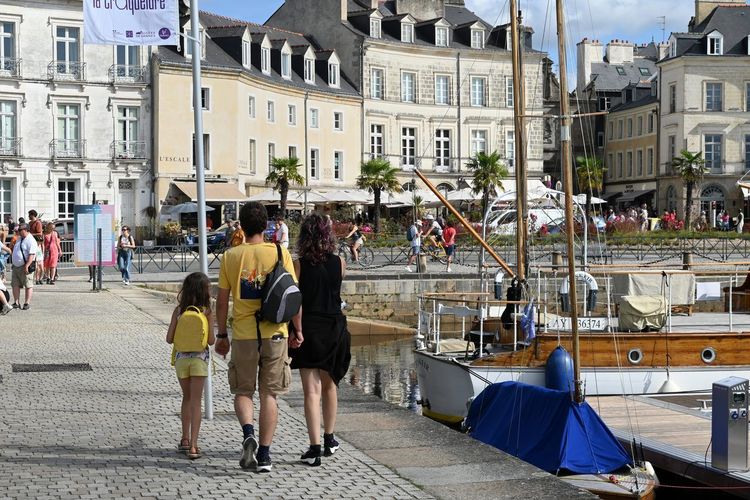
Almost all of the walks mentioned above can be done as a family. The key is choosing the right walk in Vannes based on the children's ages, whether you have a pushchair and the group's endurance — three criteria that quickly narrow down the options.
For the youngest children or pushchairs, the Rabine promenade and the Étang au Duc loop remain the safest choices: flat, shaded terrain with regular benches and no technical difficulty. The Conleau peninsula works very well too, with the added appeal of the beach and the small harbour to keep children occupied after the walk.
For families with older children who can walk for 1h30 to 2 hours without complaint, the tour of the Île-aux-Moines or the Arradon circuit add the adventurous dimension of a boat crossing or a panorama over the islands, while remaining manageable in distance. Our Ryo article on the beaches of Vannes lists other seaside options if swimming matters as much as walking in your plans.
A regional guide also lists around ten family walk ideas across the whole of Morbihan — a useful complement if you are staying for several days and want to venture beyond Vannes itself. Among the criteria that come up most often: the presence of toilets, proximity to a playground and the possibility of cutting the route short if everyone runs out of energy.
A few practical tips apply to all family outings: always bring more water than you think you will need, particularly on the Séné or Arradon trails where refreshment points are scarce once you have set off. Tide times are also worth checking systematically whenever the route passes a mudflat area or a tombolo such as the one at the Île de Berder, to avoid any unpleasant surprises with tired young children.
The Jardin des Remparts and the Beaupré-La Lande park are useful additions to this list for a mid-walk picnic break, with tables and shaded areas large enough to spread out a blanket without disturbing other visitors. In the event of light Breton rain, both sites also offer more tree cover than the seafront, which is more exposed to the wind.
Finally, bear in mind that most of the walks in this guide can be shortened without losing their appeal: there is never any obligation to complete a full circuit, and turning back halfway is often the best decision when young children show the first signs of fatigue.
Practical Information: When to Go, How Long and How to Plan
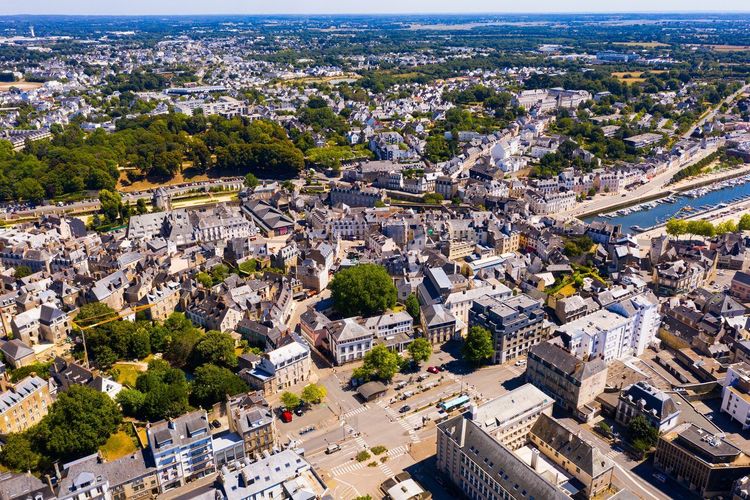
Vannes can be explored on foot year-round, but each season noticeably changes the experience. Spring, between April and June, offers soft light, camellias in bloom and still manageable crowds — it is arguably the best time for a walk in Vannes. Summer is the liveliest season, with late-opening terraces and a festive atmosphere in old Vannes, at the cost of heavier footfall on the gulf walks. Autumn and winter suit the marshes and coastal paths particularly well, with fewer visitors and often spectacular evening light.
To visit Vannes in one day, prioritise the morning for old Vannes and its ramparts, before the tour groups arrive, then the afternoon for the Rabine and Conleau, ending if possible with a sunset from the Arradon headland (Chemin de la Pointe, 56610 Arradon, rated 4.7/5 on Google with 422 reviews) or the Tour Saint-Vincent. This organisation covers the most sought-after highlights without retracing your steps.
Allow a half-day — around 3 to 4 hours — for the historic centre and its immediate surroundings alone. A full day allows you to add Conleau and part of Séné. To explore the eastern or western gulf seriously, it is better to set aside a separate full day rather than trying to combine it with the city centre on the same outing.
Wear closed shoes even for urban walks: the cobblestones of old Vannes, slippery in the rain, have seen off more than one pair of sandals. On the Séné or Arradon trails, waterproof walking shoes are preferable, as the ground stays damp for much of the year even after several dry days.
The city centre of Vannes has several paid car parks, with a daily rate that is often better value than paying by the hour. If you plan to combine several gulf walks in one day, a central car park and the Kicéo bus network for the more distant sections may be simpler than a series of separate drives.
The Ryo audio-guided tour of Vannes remains the best way to discover old Vannes at your own pace, with commentary on the ramparts, the cathedral and Place Henri IV. To plan a multi-day outing around the gulf, our Ryo article on What to Do in Morbihan usefully complements this guide with activities beyond walking.




FAQ
Where should you go for a walk in Vannes?
Old Vannes and its ramparts remain the classic starting point, complemented by the Rabine promenade down to the harbour and the Conleau peninsula for a walk combining heritage and seaside. For a more nature-focused outing, the Séné marshes nature reserve and the Beaupré-La Lande park offer a crowd-free alternative less than 15 minutes from the city centre.
How Long Does It Take to Visit Vannes on Foot?
Allow 3 to 4 hours to discover old Vannes, its ramparts and Place Henri IV at a leisurely pace with a few stops. Adding the Rabine and the harbour takes a full half-day. To also cover Conleau and part of the Séné marshes, a full day is more realistic, especially if you take time at the viewpoints.
What is the Most Beautiful Walk in Vannes?
It's hard to choose, but the ramparts–Rabine–Conleau combination remains the most complete walk in Vannes for a first visit: it links fortified heritage, a lively harbour and preserved nature across around 3 hours of cumulative walking. On the gulf side, the Arradon circuit and the Tour Saint-Vincent headland offer arguably the finest panoramas over the water, particularly at sunset.
How Do You Visit Vannes in 1 Day?
Reserve the morning for old Vannes and its ramparts before the crowds arrive, then head to the Rabine and Conleau in the early afternoon. If time allows, a quick trip to Séné or Arradon at the end of the day rounds out the programme nicely. The Ryo audio-guided tour of Vannes helps structure that first half-day without having to plan an itinerary in advance.
Where Can You Find a Coastal Path near Vannes?
The Golfe du Morbihan coastal path, often considered part of the GR34, follows the shoreline between Vannes, Séné, Arradon and Larmor-Baden. It divides into sections of 5 to 10 kilometres, making it easy to adapt the distance to your level. Detailed maps are available from the Vannes tourist office or on platforms such as Visorando.
Can You Hire a Bike in Vannes to Explore the Golfe du Morbihan?
Yes, several rental shops in the city centre offer standard and electric bikes by the day, with prices of around 15 to 25 euros for electric assist. It's a great option for linking several gulf walks, such as Conleau and Arradon, in a single outing without wearing everyone out on foot.
Which Walks Are Best for Families around Vannes?
The Rabine promenade, the tour of the Étang au Duc and the Conleau peninsula suit young children best thanks to their flat terrain and regular points of interest, such as Conleau beach. For more independent children, the tour of the Île-aux-Moines adds the appeal of a boat crossing without exceeding 1h30 of walking.
Between medieval ramparts, protected marshes and gulf islands, Vannes packs a variety of walks rarely matched across such a compact area. It is this diversity, more than the beauty of any single site, that truly sets the city apart: you can build a three- or four-day stay without ever repeating the same route, alternating heritage, nature and seaside according to the mood of the moment.
For a first visit, it is better not to try to see everything at once. Focus on old Vannes and the Rabine on the first day, then choose a sector of the gulf, east or west, for the next. The Vannes audio-guided tour remains the simplest starting point for framing that first walk in Vannes, before setting off to explore the rest of the gulf at your own pace.
À lire également