© Shutterstock
 Votre guide Ryo
Vichy and Its Surroundings: the Guide to the Best Activities in 2026
Vichy fascinates. This spa town of 25,000 inhabitants in the Allier concentrates, within just a few square kilometres, a thermal heritage unique in France, manicured imperial gardens and a history that continues to captivate. Looking for activities in Vichy and its surroundings also means discovering that the Queen of Spa Towns extends well beyond its bathhouses: the banks of the Allier, hidden museums, excursions to the volcanoes of Auvergne and the wild gorges of the Sioule. To explore the town from the moment you arrive, the Ryo audio guide La fièvre de l'eau takes you through 27 listening points over 1h35 and 3.6 km of walking through the thermal heart of the city.
From the curious visitor drawn to the Belle Époque to the adventurer seeking out the châteaux of the Bourbonnais, every type of traveller finds their match in this corner of Auvergne-Rhône-Alpes that is so often underestimated. The Parc des Célestins, sparkling mineral water to drink straight from the tap, canoeing on the Allier, Saint-Nectaire cheese just 40 km away, a Romanesque abbey church from the 12th century: this guide covers the essential spots to help you build your own itinerary.
The Thermal Heritage: Domes, Springs and Belle Époque Architecture
Vichy owes everything to its water. The Romans understood this; Napoleon III took the cure here five times between 1861 and 1866, transforming the small town into the summer capital of the Second Empire. That past has left an open-air museum at its heart, centred on the Hall des Sources, the vast iron-and-glass hall inaugurated in 1903 where visitors stroll under cover in all weathers while drinking the mineral waters.
Six springs still flow in Vichy, each with its own mineral composition and temperature. The source Chomel and the source Lucas are the most popular with passing visitors; the Grande Grille and the Hôpital remain reserved for prescribed treatments. Visitors are free to taste the waters — hot, sparkling and lightly sulphurous — in the hall, which is open year-round. The experience is both disconcerting and memorable, especially when you realise that the Vichy Célestins brand, sold in every convenience store across France, traces its origins to this very spot.
Nearby, the Centre Thermal des Dômes offers à-la-carte treatments and baths for non-patients, with one-hour or half-day packages centred on the thermal waters. The exterior architecture, with its two neo-Moorish domes dating from 1900, is worth a pause from the forecourt. Opposite, the Grand Casino de Vichy, converted into a conference centre but retaining its listed façade, completes a Belle Époque setting preserved like nowhere else in provincial France.
Don't miss the Galeries du Casino (5 Rue du Casino, 03200 Vichy, rated 4.6/5 on Google from 996 reviews), the covered promenade that once connected the casino to the spa baths. Beneath the restored glass roofing, boutiques and cafés follow one after another in a setting reminiscent of the seaside follies of the late 19th century. The Ryo audio guide "La fièvre de l'eau" passes through here, detailing the social history of these spaces — an immersion into the world of the thermal cure-seekers of old that completely transforms how you see the town.
The Banks of the Allier: Lake, Footbridges and Water Sports
The Allier runs through Vichy from north to south, and its banks form the most pleasant green lung in the city. The Lac d'Allier, created in 1963 by the Pont-Barrage de l'Europe, stretches for nearly 2.5 km between the two banks and offers a remarkably calm surface right in the heart of the urban area.
On the right bank (Vichy itself), the Parc de l'Allier unfolds across several kilometres of lawns, cycling paths and picnic areas. Families gather here at weekends to cycle or linger along the riverbanks. The Passerelle de l'Europe, a pedestrian suspension bridge connecting both banks, has become one of the unmissable spots for an evening stroll — the view of the thermal façades from the middle of the bridge is particularly striking.
Water sports enthusiasts will find what they're looking for on the opposite bank. Kayaks, stand-up paddleboards and pedal boats are available to hire from the watersports base at Bellerive-sur-Allier from May to September. The Hippodrome de Vichy-Bellerive (Avenue de Strasbourg, 03700 Bellerive-sur-Allier, rated 4.3/5 on Google from 1,029 reviews), which hosts trotting and flat racing in summer, borders the lake on the Bellerive side — Sunday morning race days are worth the visit even without placing a bet. Swimming in the lake is discouraged due to currents, but the municipal aquatic centre, a 10-minute walk from the town centre, offers an indoor pool and water slides.
Parks and Gardens Inherited from the Second Empire
Vichy has several parks born of the major imperial transformations of the 19th century. The Parc Napoléon III, adjoining the thermal centre, is the oldest and most formal: straight-lined avenues, carefully tended seasonal flowerbeds and a restored bandstand where concerts take place every Friday evening from June to August.
To the east of the town, the Parc des Hurlevents (Chemin des Hurlevents, 03200 Vichy, rated 4.7/5 on Google from 83 reviews) has a wilder character: wooded paths, views over the surrounding hills and play areas for children. Less busy than the banks of the Allier, it suits walkers looking to avoid the summer crowds.
The Jardin de l'Allier on the Bellerive side is also worth a visit: a rose garden in full bloom from June to July, with open views across the lake to the thermal façades on the opposite bank. Together, these spaces create a postcard landscape that few towns of this size can offer. As you walk through them, keep an eye on the surrounding architecture: Vichy has more than 2,000 listed or inventoried buildings from the period 1850–1940 alone. The spa villas scattered between the parks each tell a fragment of that gilded era.
Culture and Museums in Vichy
Vichy's cultural life is richer than its thermal image might suggest. The Musée des Beaux-Arts et d'Archéologie de Vichy holds collections of 19th-century paintings, ceramics and Gallo-Roman objects from local excavations. Admission is free on the first Sunday of each month; adult entry is €4 at other times.
The Musée de l'Opéra de Vichy (1 Rue du Casino, 03200 Vichy, rated 4.7/5 on Google from 1,385 reviews) is an absolute curiosity: installed in the attic of the Grand Casino, it houses a unique collection of posters, costumes and stage sets from the great operatic seasons of the Belle Époque. Hand-signed opera librettos sit alongside miniature stage models of unsettling precision. Guided visits are by prior booking through the tourist office and last approximately one hour.
To understand Vichy from a more complex historical angle, the tourist office regularly organises themed tours focusing on the 1940–1944 period, centred on the buildings that housed the ministries of the Vichy government. These tours, often led by local historians, remain among the most honest ways to approach this chapter of history.
The Opéra de Vichy, a listed historic monument, offers a lyric season from May to September with ambitious productions. A handful of last-minute seats are sometimes available on the evening itself; prices range from €15 (gallery) to €75 (stalls) depending on the performance. The building itself, inaugurated in 1903, is worth a visit even when nothing is on.
Sports and Outdoor Activities in Vichy
The thermal reputation does not prevent Vichy from being an active town. The Via Allier, a 40 km cycling route running alongside the river to the north, attracts thousands of cyclists every year. The route is flat, well signposted and requires no particular preparation — renting a bike in town (around twenty euros a day) is all you need.
For golfers, the Golf de Vichy-Rhue (18 holes) is one of the oldest courses in Auvergne. The poplar-lined fairways are as enjoyable for a stroll as they are for a round of golf; booking is recommended at weekends from May to August.
Climbing is possible at the Rochers de Châtelperron (D122, 03700 Châtelperron, rated 4.4/5 on Google from 180 reviews), 20 km north of Vichy: sandstone boulders accessible to beginner and intermediate levels, with free access year-round. Outside the summer season, the forest surrounding the site is perfect for trail running or family hiking. Our Vichy audio-guided tour also lists several viewpoints over the town accessible on foot from the thermal centre, useful for planning a car-free walk.
Day Trips: Cusset, Lapalisse, Bourbon-l'Archambault, Thiers
The richness of activities in Vichy and its surroundings also lies in the density of remarkable sites within a 50 km radius. Starting with Cusset, just 3 km east of Vichy, often overlooked despite housing the Tour de Cusset and the best-preserved medieval ramparts in the Allier département. The former fortified town, distinct from Vichy until their gradual urban merger in the 20th century, deserves an hour's exploration on foot.
Lapalisse is 40 km to the north. The Château de La Palice has dominated the town since the 12th century, with its Flemish tapestries and intact Renaissance halls. The guided tour (€9 adult, €6 child) reveals the history of the de Chabannes family, owners of the property since 1430 without interruption — a record of continuity among châteaux accustomed to changing hands with every revolution.
25 km to the west, Bourbon-l'Archambault is another spa town but of a very different character: medieval ruins of the Bourbon château, narrow cobbled lanes and iron-rich springs sixteen centuries old. Its thermal baths, mentioned as far back as the 4th century, offer an interesting alternative for a cure with a less touristy feel than Vichy.
Thiers, 50 km to the south via the D2009, is worth the detour for its Cité de la Coutellerie (23 Rue de la Coutellerie, 63300 Thiers, rated 4.4/5 on Google from 1,336 reviews) and its medieval half-timbered houses clinging to the hillside above the Durolle. If cutlery doesn't appeal, the view from the Creux de l'Enfer car park is spectacular enough to justify the journey. Allow half a day for the round trip from Vichy by car.
For a more comprehensive overview of destinations reachable by car from Vichy, the article what to do around Vichy covers further sites within 60 km.
The Gorges de la Sioule and the Puy de Dôme
About 35 km southwest of Vichy, the Gorges de la Sioule rank among the finest hikes in Auvergne. The river has carved its meanders through granite over more than 40 km, creating sheer cliffs and forests suspended above the green water. The trail running along the gorge from Ébreuil to the Rochers de la Roche (12 km loop, moderate difficulty) is waymarked and walkable from March to November.
Further south, the Chaîne des Puys (UNESCO-listed since 2018) is 50 km from Vichy. The Puy de Dôme (1,465 m) is reached from Clermont-Ferrand by rack railway — thirty minutes of climbing for a 360° view over more than 80 aligned volcanoes. In summer, book your ticket in the morning for the afternoon, as daytime slots sell out quickly, especially at weekends.
Issoire, 55 km to the south, has one of the finest Romanesque abbey churches in Auvergne. The Basilique Saint-Austremoine (Place Saint-Paul, 63500 Issoire, rated 4.7/5 on Google from 1,303 reviews), dating from the 12th century, impresses with the quality of its historiated capitals and its polychrome façade. Free entry, free parking in front of the church. The village of Saint-Saturnin, a few kilometres from Issoire, adds a medieval château and views over the chain of volcanoes to round off a day heading south. Back in town, our Water Frenzy audio walking tour covers the spa quarter in 3.6 km.
Gastronomy and Local Specialities
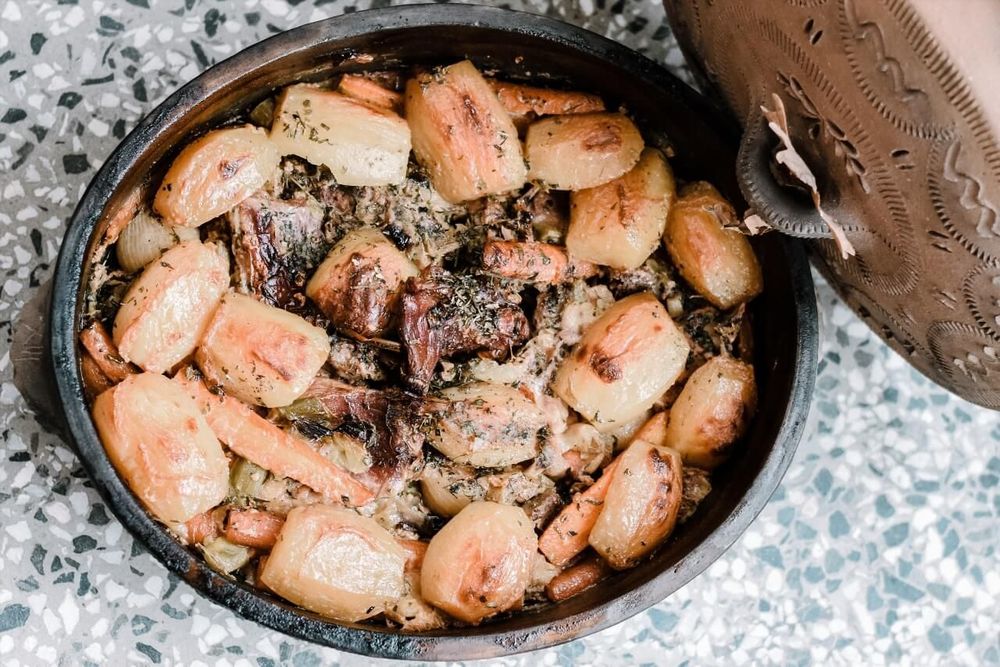
The table in Vichy blends the bourgeois cuisine inherited from the thermal era with produce from the Bourbonnais countryside. The potée bourbonnaise, a slow-cooked stew of cabbage, sausages, lard and root vegetables, is the emblematic dish of the hinterland. It features on the menu of traditional brasseries in the town centre almost year-round, but it is at its best in winter.
The pastilles de Vichy, small octagonal lozenges made with bicarbonate of soda since 1825, are the quintessential local sweet. They are found in every pharmacy and grocery shop in town, flavoured with mint or plain. A light and easy souvenir to bring home.
The Bourbonnais also produces good pressed cheeses, and the area around Saint-Pourçain-sur-Sioule (35 km to the north) is home to one of France's oldest wine appellations. Whites, reds and rosés with a charming rustic character, best discovered directly from the winemakers. To go further, the article on the culinary specialities of Vichy details the addresses and products not to be missed.
Where to Stay in Vichy
Vichy's hotel offering is dominated by thermal establishments, often linked to medically supervised stays on a full-board basis. For a free-roaming tourist visit, the best options are concentrated in the town centre, within a 10-minute walk of the spa baths.
The Hôtel Aletti Palace (3 Place Joseph Aletti, 03200 Vichy, rated 4/5 on Google from 595 reviews) (opposite the Grand Casino) is the historic address: a listed façade, renovated rooms and rates between €120 and €220 per night depending on the season. For a tighter budget, several 2–3-star hotels line the Allier with views over the lake (€80 to €130 per night). The campsites at the Lac de Bellerive-sur-Allier (left bank) are a pleasant alternative from May to September, with pitches right on the water's edge.
Rural gîtes within a 20 km radius — Hauterive, Cognat-Lyonne, Abrest — make it possible to combine a stay in the countryside with daily visits to the town, often at rates lower than those of city-centre hotels.
Practical Information: Transport, Budget and Best Season
Vichy is easily reached from Paris by direct train (3 hours from Bercy, €60 to €90 in 2nd class on Intercités services). From Lyon, allow 1h45 by car via the A89 or 2h15 by train via Clermont-Ferrand.
On the ground, the main sites are within walking distance of the thermal centre. The lake shuttle runs in summer between the two banks (free of charge). For excursions to the surrounding area, a car is virtually essential — Europcar, Avis and Budget all have rental offices on site.
On the budget side: the gardens, the Hall des Sources and most walks are free. Allow €20 to €40 per person for à-la-carte thermal treatments, €4 to €12 for paid museum entry, and €25 to €40 for a brasserie meal. June to September is the high season; May and October offer the best balance between activity and crowd levels, with weather that is often favourable in Auvergne.



FAQ
When is the best time to visit Vichy?
The thermal season runs from May to October, when all the spas, museums and outdoor activities are open. June and September are the ideal months: the lake is pleasant, the gardens are in full bloom and the crowds are thinner than in July and August. In winter, Vichy remains accessible and some spas operate year-round for extended treatment stays.
Can you visit Vichy as a family with children?
Absolutely. The Parc de l'Allier and the lake delight children with pedal boats and bicycles available to rent. The aquatic centre has water slides and shallow areas for young ones. Excursions to the Château de Lapalisse or the Cité de la Coutellerie in Thiers are suitable from ages 7–8, with enough hands-on interest to hold their attention.
How much time do you need to visit Vichy?
Two days cover the thermal heart, the banks of the Allier and one or two museums. Three days are recommended to combine Vichy with an excursion to the Gorges de la Sioule or the Puy de Dôme. For a dedicated thermal stay, medically supervised treatments typically last three weeks, but à-la-carte tourist packages run from two to five days.
Are there excursions accessible from Vichy without a car?
Cusset is 3 km away and reachable by city bus (line 3, under €2). Clermont-Ferrand is accessible by train from Vichy in 40 minutes; from there, the rack railway up the Puy de Dôme departs directly. For Lapalisse, Bourbon-l'Archambault or the Gorges de la Sioule, a car or touring bicycle remains the only realistic option.
Are the Vichy spas open to non-patients?
Yes. The Centre Thermal des Dômes has for several years offered à-la-carte treatments without a medical prescription: baths, wraps, affusion showers and massages. Half-day "thermal escape" packages start at around €60. The Hall des Sources is free and open to all for tasting the mineral waters.
What can you see around Vichy in a single day?
The Gorges de la Sioule circuit from Ébreuil (35 km) is ideal for a day of nature and heritage. Alternatively, combine Bourbon-l'Archambault (ruins, spa, old town) and Saint-Pourçain-sur-Sioule (wine tasting) for an authentic Bourbonnais day out. Allow about one hour of driving each way for either option.
Vichy: a Town to Rediscover
Vichy is a town of paradoxes: a spa destination known the world over yet under-visited outside of treatment stays, an exceptional Belle Époque heritage often overshadowed by its 20th-century history, nature accessible ten minutes from the centre and surroundings that can hold their own against the best destinations in Auvergne. It often takes just one well-spent day to understand why the cure-seekers of old came back season after season.
This guide has given you the foundations — now it's up to you to put together your own itinerary at your own pace and according to your own interests. To explore the thermal heart from the moment you arrive, the Ryo audio guide La fièvre de l'eau accompanies you across 3.6 km through 27 stops of Vichy's heritage, from the Hall des Sources to the Galeries du Casino. One hour and thirty-five minutes of guided strolling to get off on the right foot.