© Shutterstock
 Votre guide Ryo
Visit Vichy in 2 Days: Complete Itinerary between Art Nouveau Spas and the Allier Riverbanks (2026)
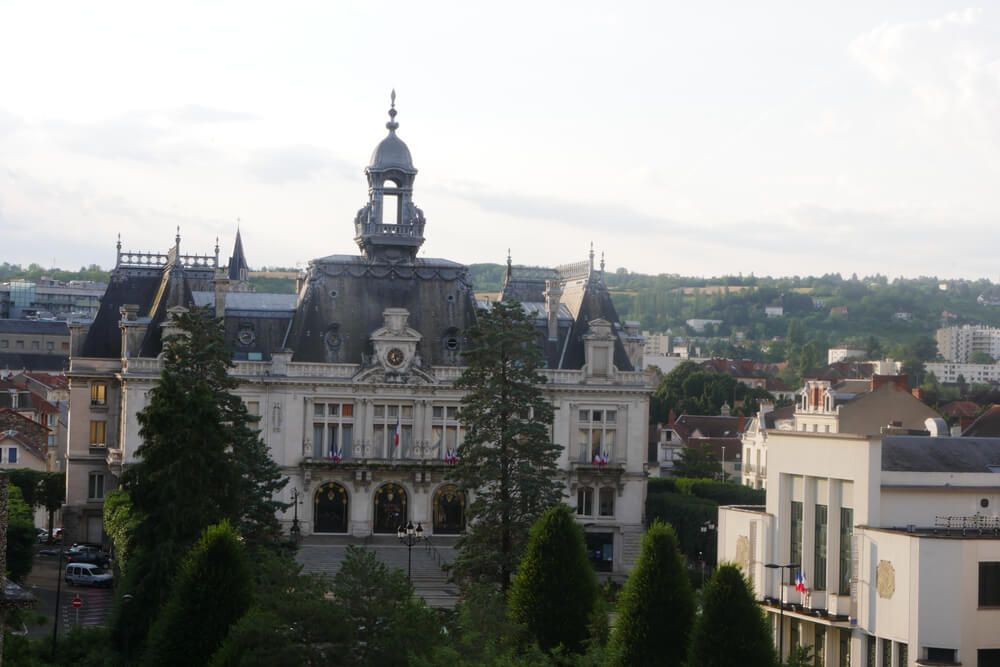
There is something slightly surreal about walking through Vichy on a weekday morning off-season: the wide avenues are nearly empty, the water flows endlessly in the Hall des sources with no one there to drink it, and the Art Nouveau façades of the thermal district seem to be waiting for the return of a clientele from the last century. Then you come across a couple cycling along the Allier, a group leaving the Opéra after a rehearsal, a full terrace on rue de Paris, and the picture changes completely. Visiting Vichy in 2 days is exactly that: a city that reads at two speeds, between thermal heritage frozen in marble and a very real local life. The city welcomes hundreds of thousands of visitors every year, between loyal spa-goers, thermal heritage enthusiasts, and players who come for the spring festival. The Ryo audio-guided tour of Vichy allows you to follow this balancing act without having to choose: 27 audio tracks spread over 3.6 km cover both the thermal fever of the Second Empire and the darker history of 1940.
In two days, you have time to cover the essentials without rushing: the old town and its lanes, the free tasting at the Hall des sources, the Art Nouveau Opéra, a walk along the Allier lake, and, if you feel like it, a break in one of the thermal spas still in operation. We also add two or three possible day trips to Charroux, Moulins, or Clermont-Ferrand, good places to eat, and a complete overview of travel by train, car, and bicycle. Enough to leave with a far clearer picture of the city than the postcard image of a spa resort that is all too often pinned to it.
Day 1: the Old Town and the Art Nouveau Thermal District
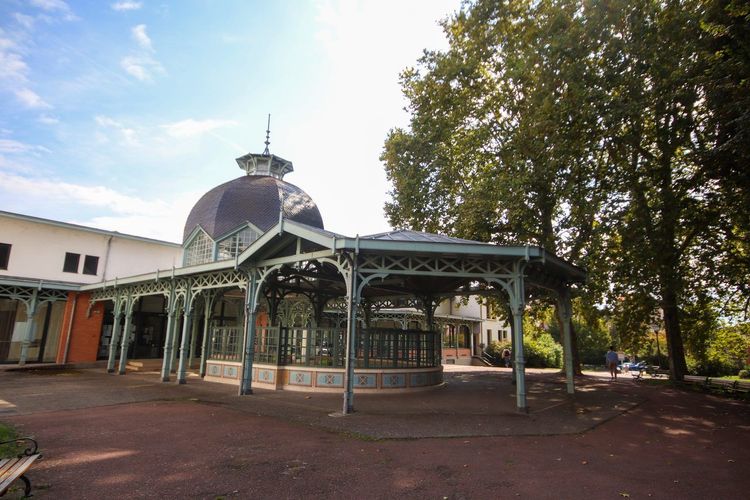
Devote this first day to the historic heart of Vichy, within roughly a kilometre of the Parc des Sources. Everything is walkable, in whatever order you prefer, but the most comfortable logic is to start with the old town in the morning, before the heat and the crowds, and finish the afternoon in the thermal district proper. Allow a full day if you take time to stop at each stage, a little less if you head straight for the highlights.
The Old Town: église Saint-Blaise, pavillon Sévigné, and Picturesque Streets
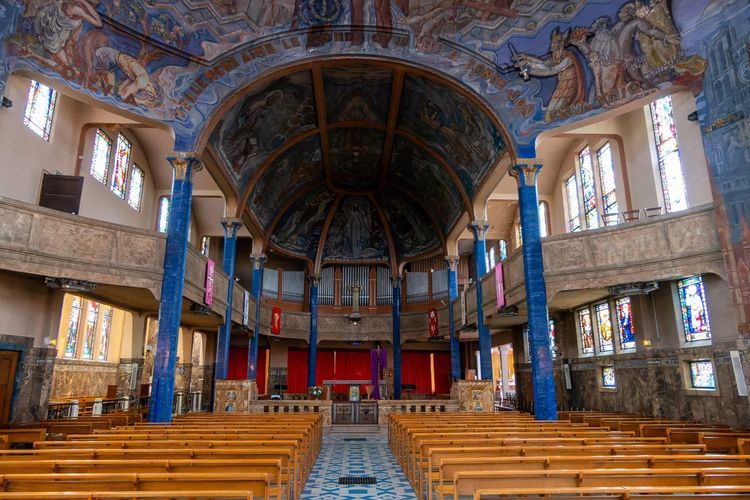
The ancient core of Vichy escaped the major urban works that reshaped the rest of the city under the Second Empire, making it an immediate contrast with the wide avenues of the thermal district. You enter through narrow streets lined with old houses, including several half-timbered buildings and sculpted façades dating from the 15th and 16th centuries.
The ensemble formed by the église Saint-Blaise and Notre-Dame-des-Malades is worth a stop, because it tells the story of two eras sitting side by side. The oldest part, a small Romanesque church remodelled over the centuries, houses the Black Madonna venerated locally and to whom the sick who came to take the waters would already make their way. Attached to it, the vast church of Notre-Dame-des-Malades was built in the 20th century in a neo-Byzantine style, easily recognisable by its dome and interior mosaics. Stepping from one nave to the other in three paces remains one of the most striking experiences in the city.
A short walk away, the pavillon Sévigné (Boulevard des États-Unis, 03200 Vichy) is a reminder that the Marquise de Sévigné stayed in Vichy in 1676 and 1677 to treat her rheumatism, leaving in her letters one of the earliest literary descriptions of the spa town. The building, altered several times and later converted into a luxury hotel, is not open for regular visits, but its façade and garden are easy to admire from the street.
Stroll then through the streets of the old town, where independent shops have held their ground reasonably well and where a few interior courtyards can be glimpsed through carriage gates left open. The Castel Franc, one of the most remarkable old residences in the district, illustrates in its own way Vichy's taste for spectacular architecture, long before Art Nouveau took hold in the thermal quarter. Extend the walk along boulevard des États-Unis to catch a glimpse of the chalets built for Napoléon III and his entourage in the 1860s: from a distance, these colourful half-timbered villas look more like a Norman backdrop than an imperial residence.
The Hall des sources and the Free Water Tasting
Around midday, make your way to the Parc des Sources. The Hall des sources, an enormous 19th-century metal hall, is where people still come today to fill their glass free of charge at several fountains, each with its own water and supposed properties.
You will find the source des Célestins, the best known, bottled and sold well beyond Auvergne, as well as the source de l'Hôpital, more discreet and reputed for its pronounced taste. Some regulars swear that the source de l'Hôpital cures hangovers better than any medicine, an unofficial reputation never scientifically validated but firmly rooted in local folklore. The source des Célestins also has its own pavilion, on the edge of the park of the same name, about ten minutes' walk away: this is where spa-goers fill their bottles, often early in the morning.
One very practical tip: taste several springs in a row — they really do not taste the same, some frankly salty and sulphurous, others almost neutral. The warm waters often surprise visitors who expected a cool supermarket mineral water. Locals come with their own bottles; no one will look at you oddly if you do the same.
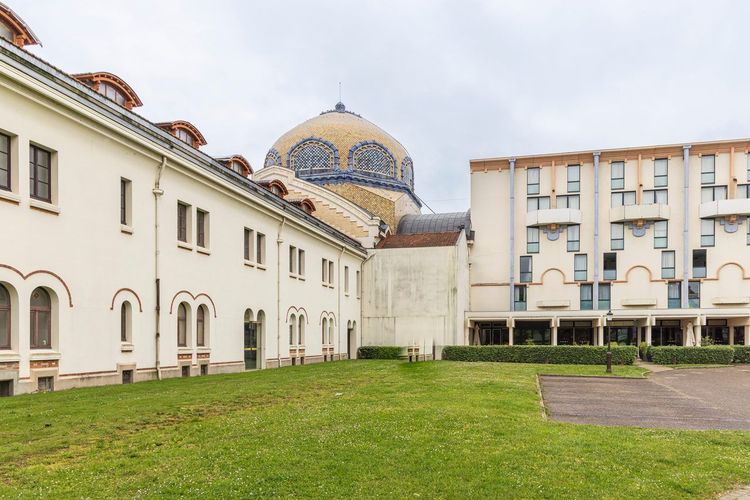
Just behind, the Bains Lardy, a former thermal establishment that has been converted and is closed to free visits, and the Centre thermal des Dômes (Boulevard Kennedy, 03200 Vichy, rated 3.6/5 on Google with 486 reviews), a large bathing establishment still in operation, complete this brief tour of the places where people have been taking the waters for two centuries. The Dômes, recognisable by their orientally inspired architecture, are also well worth contemplating from the outside if you are not going in for a treatment.
The Opéra and the Casino: Art Nouveau Jewels of the Thermal District
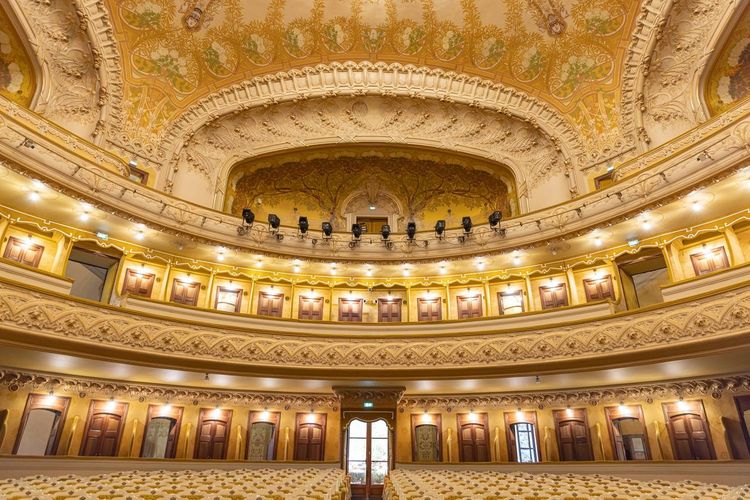
End the day with the ensemble formed by the Opéra and the Casino, without doubt the most spectacular piece of architecture in the city. The Vichy Opéra, integrated into the Palais des Congrès, is one of the rare Art Nouveau auditoriums of this scale still in operation in France: original mosaics, stained-glass windows, and woodwork compose a setting that few provincial theatres can claim.
Can you visit the Opéra outside of performances? Yes, guided tours are offered regularly by the tourist office, especially in season; outside these time slots, the lobby and the exterior can be admired freely. In season, a sound and light show is sometimes projected onto the façade in the evening, a good excuse for a second nocturnal stroll through the district.
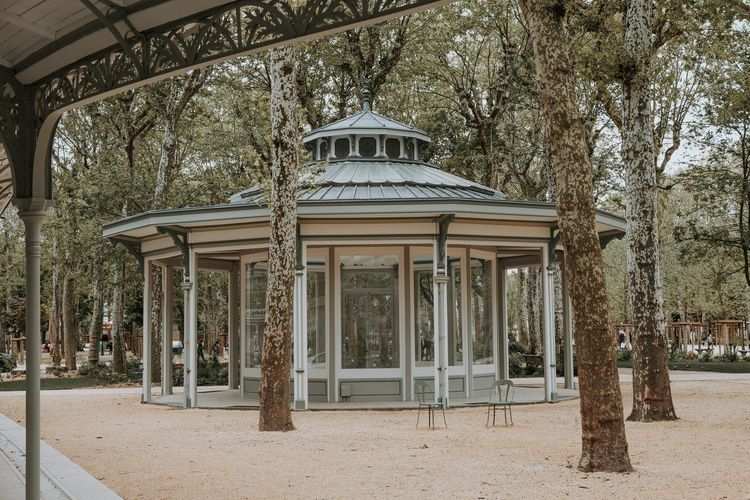
The Casino, now the Palais des Congrès, closes the square: its dome, ironwork, and stained glass make up what local guides call a true architectural world tour in a few streets, drawing on Moorish, Japanese, and Art Nouveau inspirations. The bandstand in the Parc des Sources, just opposite, still hosts concerts in summer, often free and very well attended by locals in the late afternoon.
This is also where the Ryo audio-guided tour of Vichy begins, subtitled La fièvre de l'eau, a 1h35 route over 3.6 km that covers, in order, many of the places visited on this first day. If you are looking for a ready-made route for your first day, the list of 12 must-sees put out by the tourist office follows a very similar path: there is no need to choose between the two — one narrates, the other ticks boxes.
Day 2: Parks, the Allier Riverbanks, and the Shopping District
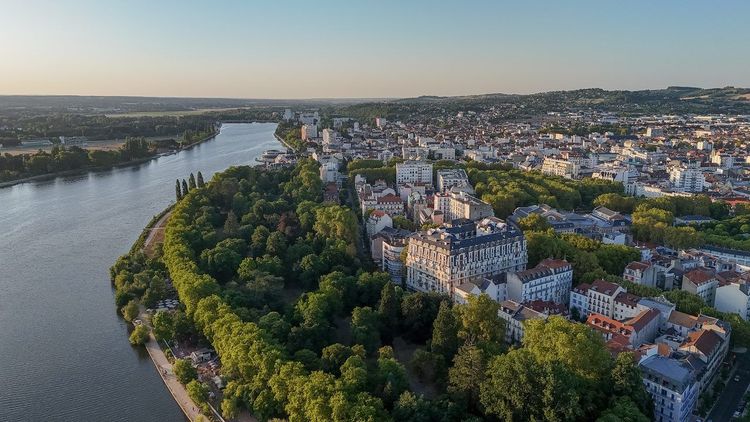
Devote this second day to the greener and livelier side of Vichy, already well known to 19th-century spa-goers: the banks of the Allier and the shopping district. It is also the most suitable day if you are travelling with children or if you prefer the pace of a cycling excursion to that of a strict heritage visit. Before setting off, a quick look at the city map helps you understand the logic of the place: everything fans out around the Parc des Sources, with the Allier as the natural western boundary and the old quarter as the eastern core. Plan a morning for the river and the afternoon for shops and last-minute purchases.
The Allier Parks and the Riverside Walk
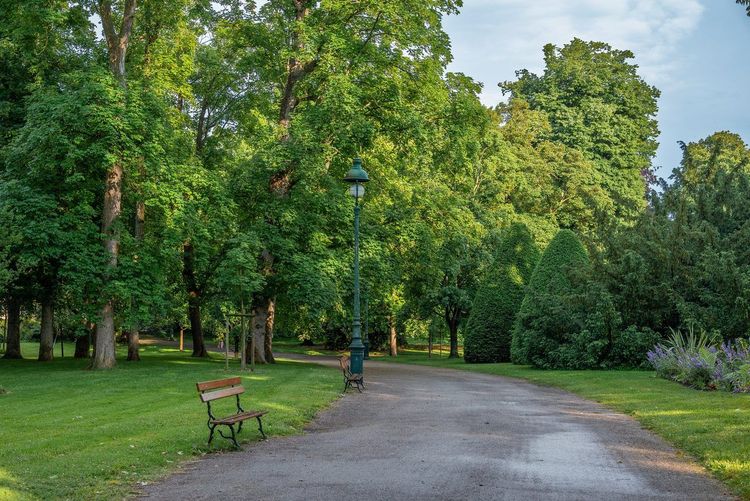
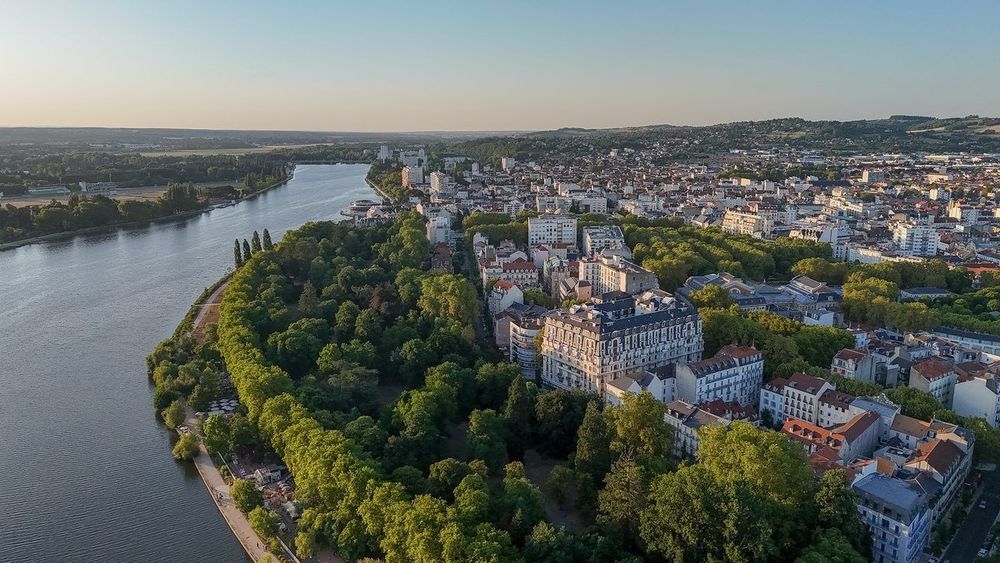
The Allier parks form a long green ribbon running along the river for several kilometres, shaded by large trees planted in the time of Napoléon III. This is where Vichy truly deserves its nickname of garden city: benches, kiosks, playgrounds, and generous lawns make it the lungs of the city. Further south, the parc des Bourins extends the walk in a distinctly more local atmosphere, with its remarkable trees and early-morning joggers.
The walk continues to the Allier lake, a stretch of water created by a dam on the river, where you can rent a pedalo, try rowing, or simply watch the local club's rowers training at the end of the day. This lake regularly hosts national and international water sports competitions, a legacy of the sports centre established on the left bank.
Many visitors stay on the right bank, whereas the crossing is well worth the detour: the pont de Bellerive and the footbridge lead in a few minutes to Bellerive-sur-Allier, just opposite, from where the view over the rooftops and domes of Vichy is by far the most photogenic. Prefer cycling? Cycle paths run along almost the entire route, and several hire shops offer bikes by the day near the bridge. The quieter left bank also serves as the starting point for long walks along the river, all the way to the natural beaches frequented by locals in fine weather.
The Shopping District: Boutiques and Souvenirs
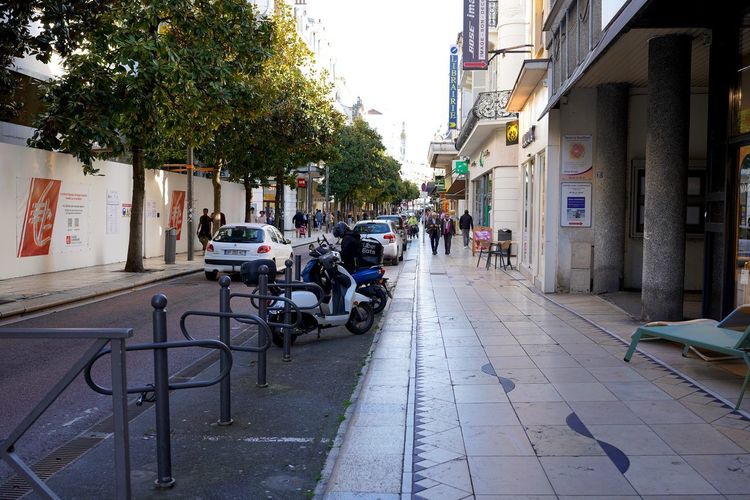
Head back towards the town centre of Vichy, organised largely around rue de Paris and rue Georges Clemenceau, pedestrianised for most of the day. Here you will find a fairly rare mix of independent boutiques, concept stores, and more mainstream brands, with a density of quality shops that often surprises visitors given the size of the city.
For shopping, focus on local designers rather than the chains found everywhere else: several addresses in the centre showcase fashion, home decor, and regional crafts. Vichy's covered market, open several mornings a week, is worth a visit for local produce: Auvergne cheeses, charcuterie, honey, green lentils. It is also a good option if you would rather pick up a picnic to take to the Allier parks than sit down for lunch.
When it comes to souvenirs, it is hard to escape the Vichy pastilles, those diamond-shaped mint sweets made from salts extracted from the thermal water and sold commercially since the 1820s, available in almost every fine food shop in the centre. The Vichy cosmetics brand, also born of these thermal waters, remains a classic to bring home, as does a bottle of Célestins water. And if you are looking for something more original, several shops sell reproduced vintage thermal posters — a far more evocative souvenir than a magnet once framed at home. The Ryo audio-guided tour also passes through Parc des Sources, just steps from these shops.
The Thermal Baths Today: Cures, Spas, and Wellness in Vichy
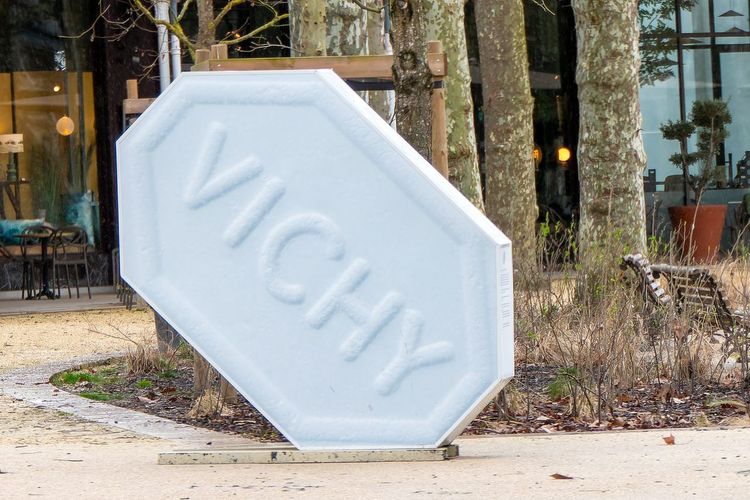
Vichy remains one of the rare French cities where you can still, literally, take the waters as in the 19th century, but the offering has diversified considerably. Two logics coexist today and it is worth distinguishing between them before booking anything.
On one side, the medical thermal cure, prescribed by a doctor, lasts three weeks and targets specific conditions: digestive and metabolic disorders, rheumatology. It takes place in the city's thermal establishments — the Thermes Callou historically associated with the digestive system and the Dômes with rheumatology — and follows a supervised protocol, partly covered by the French social security system. This is clearly not an option for a 2-day stay.
On the other side, thermal spas accessible without a prescription, open to all passing visitors. The best known, the spa thermal des Célestins, offers à la carte treatments, pool access, and half-day packages that fit very well into a weekend. Do you have to take a full cure to enjoy them? No: these spas work like any urban spa, by reservation, without a medical prescription or any length commitment.
A little history helps explain why this water has such a reputation: the Romans already knew the springs of the area, under the name Aquae Calidae, but the city as we know it today is essentially a 19th-century invention. Napoléon III, who came here to treat his ailments on several occasions from 1861, personally drove the construction of the wide avenues, parks, and first modern thermal establishments. Won over by the effects of the cure, the emperor turned Vichy into a permanent building site for more than a decade: new thoroughfares, promenades along the Allier, private mansions, comfortable villas, and the famous imperial chalets on boulevard des États-Unis, several of which can still be seen from the street. Within a few decades, the small spa town became the "Queen of Spa Towns", frequented by a wealthy European clientele seeking the cure as much as the social scene.
If you only have a few hours, book a pool and sauna session for late afternoon on the first day: that is the moment. Remember to book in advance — late-afternoon slots fill up quickly at weekends and during peak cure season.
Vichy through History: from Ancient Thermal City to UNESCO World Heritage
Understanding Vichy in two days means knowing, at least in broad outline, three historical layers that overlap in the same city: ancient origins linked to water, a far darker 20th-century episode, and a recent international recognition. None of these layers is really visible at a glance, but they explain almost everything you will see during your stay.
From Roman Baths to the "Queen of Spa Towns" under the Second Empire
The Romans already frequented the springs of the region, under the name Aquae Calidae, but the city as we know it today is essentially an invention of the 19th century. Napoléon III, who came here to treat his ailments on several occasions from 1861, personally drove the construction of the wide avenues, parks, and first modern thermal establishments. Won over by the effects of the cure, the emperor turned Vichy into a permanent building site for more than a decade: new thoroughfares, promenades along the Allier, private mansions, comfortable villas, and the famous imperial chalets on boulevard des États-Unis, several of which can still be viewed from the street. Within a few decades, the small spa town became the "Queen of Spa Towns", frequented by a wealthy European clientele seeking the cure as much as the social scene.
Vichy 1940–1944: the Vichy Regime and Its Legacy
Between July 1940 and August 1944, the city became, almost by accident, the seat of the French State led by Marshal Pétain, a regime that collaborated with the German occupier and bears direct responsibility for the persecution and deportation of French citizens. The choice of Vichy was largely down to its hotel capacity: the city then had enough large hotels to house an entire government, within a few minutes' walk of each other.
The city no longer hides this past, but it does not dramatise it either: a memorial trail marked with explanatory panels has, for some years now, allowed visitors to follow the sites of power from that period, starting with the requisitioned hotels. If the subject interests you, allow a good hour and a half to follow it seriously, ideally towards the end of your stay, once you are familiar with the layout of the thermal district.
The UNESCO Listing of the Great Spa Towns of Europe
In July 2021, Vichy joined the UNESCO World Heritage List as part of a serial property called "Great Spa Towns of Europe", alongside ten other spa cities including Baden-Baden in Germany, Spa in Belgium, and Bath in the United Kingdom. This listing concretely changes the way you look at the city: it does not reward an isolated monument but a complete thermal urban system — parks, springs, hotels, casino, and bathing establishments conceived together as a single whole. In practical terms, this also means stricter protection rules on the façades of the thermal district, and an ongoing restoration programme whose scaffolding regularly punctuates the streetscape.
It is also a good lens for literature lovers: Valery Larbaud, a writer born in Vichy in 1881, spent part of his life in the city and wove it into his work. His personal library, containing several thousand volumes, is preserved in Vichy and bears his name — a stop appreciated by readers who walk in his footsteps between spring visits.
Museums and Culture: Arts of Africa and Asia, Games Festival
Vichy hides a few cultural curiosities that hurried visitors skip entirely, even though they rarely require more than an hour. The small museum of Arts of Africa and Asia (Boulevard du Général Valentin, 03200 Vichy, rated 4.3/5 on Google with 158 reviews), located in the thermal district, presents a surprising collection of masks, textiles, and ritual objects brought back by missionaries from the region in the 19th and 20th centuries. The visit is short, often uncrowded, and provides a pleasant contrast with the rest of the programme, which is very much focused on thermal waters. Check the opening hours before you go: opening times are seasonal and more restricted in winter.
If your visit falls in spring, do not miss the Games Festival, a fixture that has become a local institution, bringing together publishers, authors, and players around board games, role-playing games, and video games at the Palais des Congrès. You can play as a family, test prototypes, and often leave with a box under your arm. Even without playing, the atmosphere in the streets of the centre during those few days is worth seeing. One final point deserves repeating: with its Opéra integrated into the Palais des Congrès, Vichy boasts one of the rare Art Nouveau auditoriums still in operation in France at this scale, a curiosity that speaks as much to architecture lovers as to music enthusiasts. The eclectic programme mixes opera, dance, comedy, and contemporary music across a season running from autumn to early summer; booking a few weeks ahead is advisable for headline shows. A concert in this auditorium, even for those who are not devoted music lovers, remains the best way to understand what the word "thermalism" meant socially a century ago.
What to Do in Vichy with Family or as a Couple
Vichy has the practical advantage of lending itself equally well to a couple's weekend and a family stay, without any real need to rethink the two-day programme outlined above: it is mainly the pace and a few detours that change.
With children, focus on the Allier parks for burning off energy, the water tasting at the Hall des sources — generally perceived as a game rather than a chore by younger visitors — and a pedalo outing on the Allier lake. The lake also offers, depending on the season, supervised activities from a certain age, from paddleboarding to small sailing boats, enough to fill half a day. The Games Festival, if the dates coincide, remains a safe bet for an entire afternoon with no organisational effort. In summer, several free events animate the Allier parks, street shows or open-air concerts, handy for filling an end of the day without spending a cent.
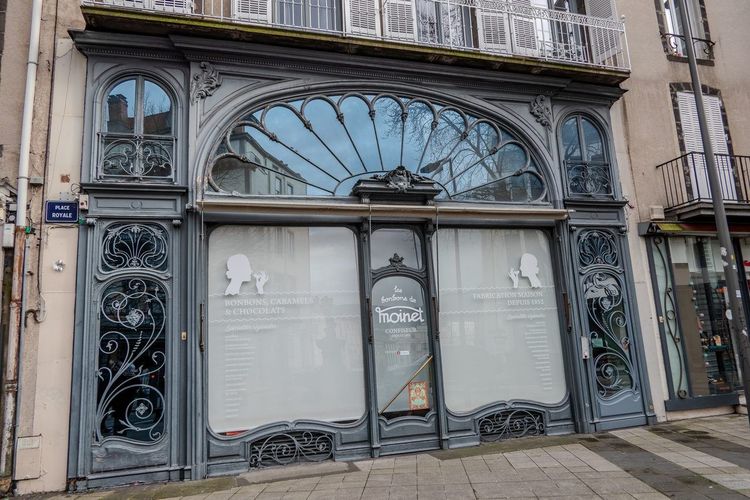
For a romantic weekend in Vichy, the order of priorities shifts slightly: a spa session at the end of the first day, dinner at one of the more intimate restaurants in the centre, and an evening stroll through the illuminated thermal district, particularly lovely around the Opéra on sound and light evenings. The city, fairly quiet after dark outside the main holiday periods, lends itself well to this kind of unhurried programme. A tip for couples: book a terrace table on rue de Paris in the late afternoon, when the raking light gives the façades an almost rosy hue, rather than at the height of the midday heat. For families, several restaurants in the centre offer straightforward children's menus, which simplifies meal planning considerably between two visits.
In both cases, a real asset of the city is that it is entirely accessible on foot or by bicycle: no need to hire a car for the duration of the stay, nor to work out complicated routes between stops on the itinerary. The Ryo audio-guided tour conveniently links Hall des Sources to the Allier Parks, on foot or by bike.
What to Do in Vichy When It Rains
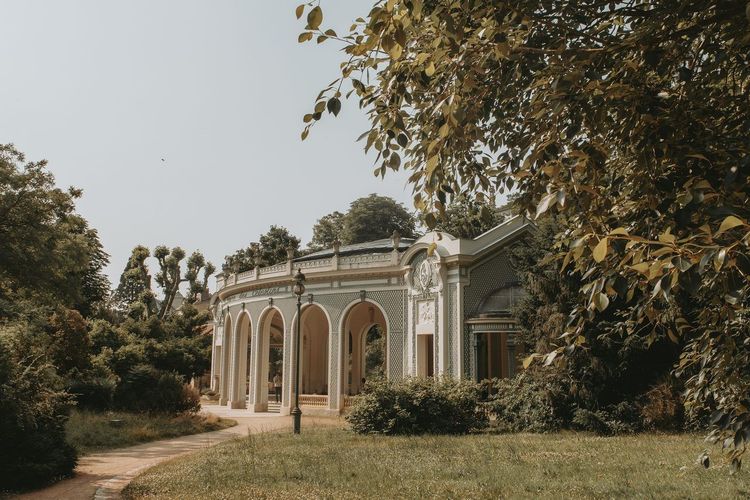
Unpredictable weather is not a real problem here, since most of the programme can shift indoors without losing much. The Hall des sources, a vast covered hall, is perfectly usable even in heavy rain, as are the small museum of Arts of Africa and Asia, the Opéra for its guided tours, and of course the thermal spas, where rain almost becomes an additional argument for staying in the warm water rather than a setback.
On the shopping front, the pedestrian streets of the town centre have enough boutiques and galleries to fill a good part of a rainy afternoon, and the covered market offers a welcome gourmet retreat on a wet morning. Another option: the town-centre cinema shows both arthouse and mainstream films, a simple alternative for a rainy evening without any great organisation. If the weather really does not improve, head to Clermont-Ferrand by train — less than 40 minutes away — where the museum offering is considerably broader.
What to See and Do around Vichy: Day Trip Ideas
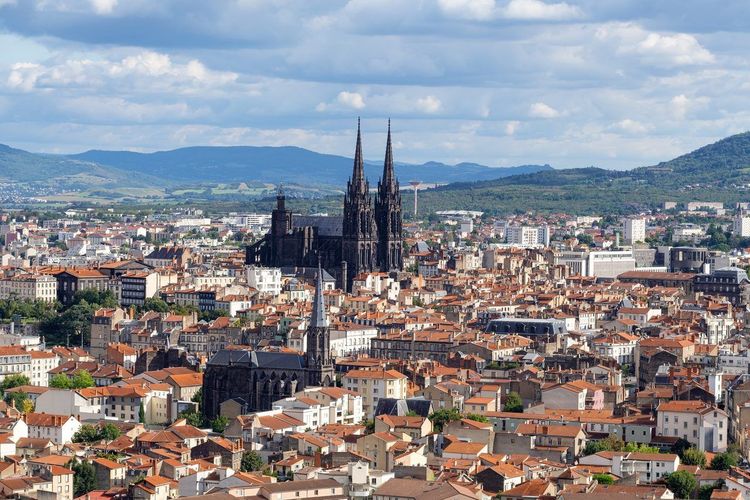
If your stay extends beyond two days or you have hired a car, several destinations within less than an hour's drive are worth a full-day excursion. They cover very different registers: a listed village, an art city, a regional metropolis, and traditional craftsmanship. The Ryo article dedicated to the area around Vichy details more ideas if you are looking for even more options.
Charroux and Moulins: Hidden Gems of the Bourbonnais
About forty minutes' drive away, Charroux (Place du Château, 03140 Charroux, rated 4.6/5 on Google with 107 reviews) is listed among the Most Beautiful Villages of France, a title fully deserved for its cobbled lanes, old houses, and the remains of its medieval fortifications. Allow half a day to wander through the craftsmen's workshops, often set up in former merchant premises, and taste the mustard produced on site, a speciality that has made the village's culinary reputation. Climb up to the belfry for the view over the rooftops and the Bourbonnais countryside: it is quick, free, and puts the village in perspective immediately.
Moulins, just under an hour away, plays in a different league: the former capital of the duchy of Bourbon, it preserves a Gothic cathedral housing the famous triptych by the Master of Moulins, as well as a dense historic centre around the Jacquemart, its emblematic clock tower. The city also houses the Centre national du costume et de la scène, installed in a former barracks, where tens of thousands of theatre and opera costumes are conserved and displayed: a surprising visit, very different from anything else the region has to offer.
Clermont-Ferrand and Thiers: Further Afield
For a more ambitious day trip, Clermont-Ferrand, the capital of Auvergne, can be reached in under 40 minutes by direct train, making it a realistic outing even without a car. Its Gothic cathedral built in black Volvic stone, its historic quarter, and a little further away the puy de Dôme and the Chaîne des Puys — also a UNESCO World Heritage Site — make for a decidedly more urban escape, a sharp contrast with the spa-town atmosphere of Vichy.
Thiers, about three quarters of an hour away, has claimed the title of France's cutlery capital since the Middle Ages: cutlers' workshops open to the public, vertiginously steep lanes, and a cutlery museum make for a visit very different from everything else on the programme — more artisanal and industrial. Between the two, the road winds through the Forez hills, a mid-mountain landscape that contrasts sharply with the Allier plain.
Where to Eat in Vichy: Our Food Recommendations
Vichy has built a genuine culinary reputation, driven by a demanding spa clientele for over a century and by a generous Auvergne terroir. Enough to put together a little address book for two days without ever repeating yourself. The Ryo culinary guide to Vichy goes deeper into local specialities if the subject interests you.
Restaurants and Local Tables
For a gastronomic dinner, La Table d'Antoine remains a reference in the city, driven by precise seasonal cooking and an elegant dining room — reservation essential at weekends.
For a more relaxed lunch, the Brasserie du Casino, next door to the Palais des Congrès, serves classic French cuisine in a period brasserie setting that is worth the visit in its own right: it is the historic canteen of the Opéra's artists, walls covered in signed photographs as proof. On the bistrot side, several addresses in the old town offer honest market cooking, often based on Auvergne products: green lentils, AOP Auvergne cheeses, Salers beef.
One practical tip: book for Saturday dinner — the city fills up fast in season, whereas a weekday lunch can generally be found without any problem, even at the last minute. Another useful habit out of season: check closing days, as several good restaurants close Sunday evening and Monday when spa-goers head home.
Patisseries, Cafés, and Evening Bars
For a good cake or a coffee on a terrace, head to the Grand Café, a historic early-20th-century brasserie whose Art Nouveau dining room is as much of a draw as the pastry menu. Its terrace remains one of the best observation posts for the life of the town centre, between passing spa-goers and families out for a stroll.
For an evening drink, the terraces on rue de Paris and around the Casino concentrate most of the nightlife — quiet but pleasant — with a few discreet cocktail bars to extend the evening after dinner.
For a Sunday brunch, several addresses in the centre now offer a full brunch menu, a fairly recent trend in Vichy but one that appeals to a younger crowd than the historic grand thermal hotels. Finally, for gourmet shopping before heading home, the covered market and the fine food shops in the centre sell pastilles, local jams, and vacuum-packed Auvergne cheeses, easy to slip into a suitcase without worrying about the journey.
Where to Stay in Vichy: Our Recommendations
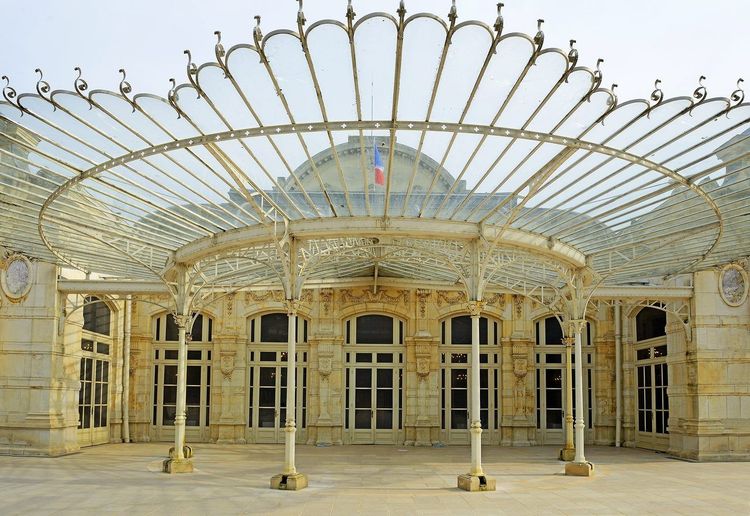
Three accommodation logics coexist here, and the choice depends above all on the atmosphere you are looking for rather than on budget alone. For an experience fully in the thermal spirit, the Aletti Palace Hôtel (Place Joseph Aletti, 03200 Vichy, rated 4/5 on Google with 605 reviews), a grand Belle Époque palace built in the early 20th century facing the Parc des Sources, remains the city's most iconic address: high ceilings, period salons, and a ballroom that has welcomed a century of international guests.
For a tighter budget without sacrificing location, several independent three-star hotels in the thermal district offer excellent value for money, often within less than 10 minutes' walk of the Hall des sources and the Opéra. Long-stay spa-goers often opt for furnished apartments rented by the week, an option worth considering even for a short stay if you prefer the privacy of an apartment to a hotel atmosphere, and often more economical from the second night onward.
Finally, for a relaxing break with a view, look at establishments overlooking the Allier parks or the river itself: several properties have invested in large picture windows and rooms facing the water rather than the city, an option particularly appreciated for a romantic weekend. Book ideally several weeks in advance during festival periods or peak cure season — hotel capacity, though generous, fills quickly at those times. Campsites and short-term rentals also exist on the outskirts, on the left bank, for tighter budgets or larger families, with quick cycling access to the centre. The Ryo audio-guided tour, which passes through Parc des Sources and Hall des Sources, is an easy walk from these addresses.
How to Get to Vichy and Get Around
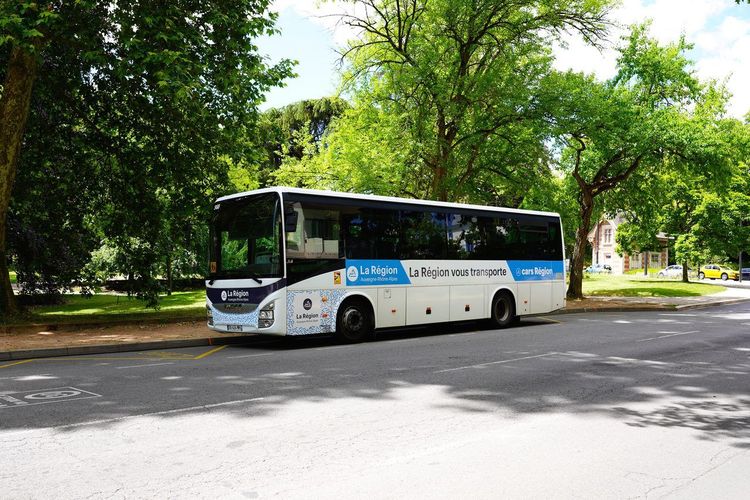
Vichy is easy to reach from most major French cities, making it a realistic weekend destination even without a car. Once there, the question of getting around is settled in minutes, the city being so compact.
By Train or Car from Major Cities
By train, the city is connected to Paris Bercy in just over 3 hours via the Bourbonnais line, and to Clermont-Ferrand in 35 to 40 minutes, with frequent connections from Lyon or Saint-Étienne. The station, a 1930s building with an ocean-liner look, is about fifteen minutes' walk from the thermal district, a pleasant journey that takes you through part of the town centre. Regional coaches also connect Vichy to Moulins and a few Bourbonnais villages for travellers without a vehicle, though the frequency is considerably more limited than the train.
By car, allow around 3h15 from Paris via the A71 motorway, a little over 2 hours from Lyon, and less than an hour from Clermont-Ferrand. The motorway passes immediately nearby, which makes access far simpler than for many other spa towns that are more landlocked and often perched in the uplands.
Getting Around Locally: on Foot, by Bike, and Parking
Once you have arrived, forget the car for two days: the historic centre, the thermal district, and a large part of the Allier parks are all walkable with ease, the city being generally flat. Cycling, very popular locally, allows you to easily extend your range to Bellerive-sur-Allier or further along the river, on paths separated from traffic. A local bus network completes the picture for reaching the outer neighbourhoods.
For free parking, aim for car parks on the immediate outskirts of the centre, particularly near the Allier parks, the riverbanks, and the residential neighbourhoods: parking there is most often free, unlike the paid zone in the town centre and around the thermal district, which is time-limited and often full during peak season. One simple habit: park once and for all on the first day near the riverbanks, then do everything on foot.
Visiting Vichy in 1 Day or 3 Days: Adapting the Itinerary
The two-day programme detailed above remains the most comfortable format, but it can be compressed or extended without too much difficulty depending on how much time you have.
For a single day on the ground, focus on the thermal district: the old town in the morning (église Saint-Blaise, pavillon Sévigné, a few streets), the Hall des sources and tasting at late morning, a quick lunch in the town centre, then the Opéra and Casino in the afternoon. You will miss the Allier parks and the day trips, but the essential thermal heritage is covered, and the total walk does not exceed 5 kilometres.
For a three-day break, add a full day dedicated to day trips (Charroux and Moulins, or Clermont-Ferrand and Thiers, depending on your tastes), or simply slow down the pace of the first two days to fit in a proper half-day spa session and an extra evening in the centre. This is also the most logical option if you are travelling with family and prefer not to cram everything into 48 hours. In any case, bear in mind that you can very easily compose your own balance between heritage, relaxation, and gastronomy: there is really no wrong way to divide your time.
Vichy Practical Guide: When to Go, Budget, and Useful Tips
The best period to visit runs from April to October, with a peak in July–August and during the spring Games Festival. Spring and early autumn often offer the best compromise: pleasant temperatures, softer hotel prices, and a city noticeably less crowded than in midsummer. Winter has its fans: mist on the Allier, deserted parks, and spa rates at their lowest.
How long should you plan for? Two days are enough to cover the essential thermal heritage and a walk along the Allier; allow three days if you want to add a day trip, or a single well-filled day if time is genuinely short.
Is Vichy a "dead" city outside the spa season? Not really: that is a persistent misconception, fed by the clichéd image of a city for elderly spa-goers. In reality, the town has an active permanent resident population, students, and a cultural programme (Opéra, festival, summer concerts) that continues all year round, even if the atmosphere is indeed more subdued in winter.
On the budget side, the destination remains reasonable for a well-known spa town: the basic heritage activities (Hall des sources, parks, walk along the Allier, bandstand) are free; only spa access, guided tours, and museum entries add to the bill. Allow around thirty euros per person for a basic half-day spa session, a few euros for a tourist-office guided tour. Remember to check public holidays before you leave: museums, shops, and some restaurants close or reduce their hours on those days, and Sunday afternoons remain generally quiet in the town centre.
One last tip for having Vichy literally in your pocket: stop by the tourist office as soon as you arrive to pick up the city map and the current visits brochure, then complement it with the Ryo app, whose interactive map and ready-to-use audio tours fit into a phone. The Ryo audio-guided tour of Vichy remains the simplest starting point for planning an itinerary before you even arrive. One last piece of advice, valid all year round: book your spa session and your Saturday evening table as soon as your dates are set — these are the only two potential friction points in a stay here; everything else can be decided perfectly well on the spot, as you walk.



FAQ
How long does it take to visit Vichy?
Two days comfortably cover the essentials: the old town, the thermal district, the Hall des sources, and a walk along the Allier. One day is enough for a focused overview of the thermal heritage, and three days allow you to add a trip to Charroux, Moulins, or Clermont-Ferrand.
Can you drink Vichy water for free?
Yes, the Hall des sources, in the Parc des Sources, offers free fountains open to everyone, including the source des Célestins and the source de l'Hôpital. Each has a different taste; it is recommended to try several to compare, ideally with your own bottle.
Is Vichy a "dead" city outside the spa season?
No, despite the persistent image of a city for elderly spa-goers. The local population, students, and an active cultural programme (Opéra, games festival, concerts) keep the city lively all year round, even if the atmosphere is quieter in winter than in midsummer.
Can you visit the Vichy Opéra?
Yes, guided tours are offered by the tourist office, especially in season. Outside these time slots, the lobby and the Art Nouveau exterior can be admired freely, and a sound and light show is sometimes projected onto the façade in the evening. Attending a performance is obviously the best way to see the auditorium.
Where can you park for free in Vichy?
Several free car parks exist on the immediate outskirts of the centre, particularly near the Allier parks, the riverbanks, and the residential neighbourhoods. Parking in the town centre and the thermal district is paid and time-limited, with frequent enforcement during peak season.
Do you have to take a full spa cure to enjoy the thermal baths?
No. The medical thermal cure, prescribed by a doctor and lasting three weeks, is distinct from the thermal spas accessible without a prescription on simple booking, with half-day packages perfectly suited to a short stay.
Can you see Napoléon III's chalets in Vichy?
Yes. The chalets built for the emperor and his entourage in the 1860s still stand on boulevard des États-Unis. They remain private properties and cannot be visited, but their colourful half-timbered façades can be admired perfectly from the pavement, preferably at the end of the day when the light shows them to best advantage.
Two days are enough to understand why this city continues to intrigue visitors well beyond its image as a thermal resort for spa-goers. Between the Art Nouveau of the spa district, the more complex history of 1940, and the quiet everyday life along the Allier, there is more than enough to fill a weekend without a dull moment. Whether you come for the architecture, the water, or simply to change pace, Vichy reveals its history in layers, much like the thermal strata that shaped it. Add a trip to Charroux or Clermont-Ferrand if you stay an extra day, and keep time for a real moment of relaxation in one of the thermal spas: that is also why people come here.
To plan your visit without spending hours on it, the Ryo audio walking tour of Vichy remains the simplest resource: a complete audio-guided tour, a map, and everything you need to know before stepping onto the station platform.