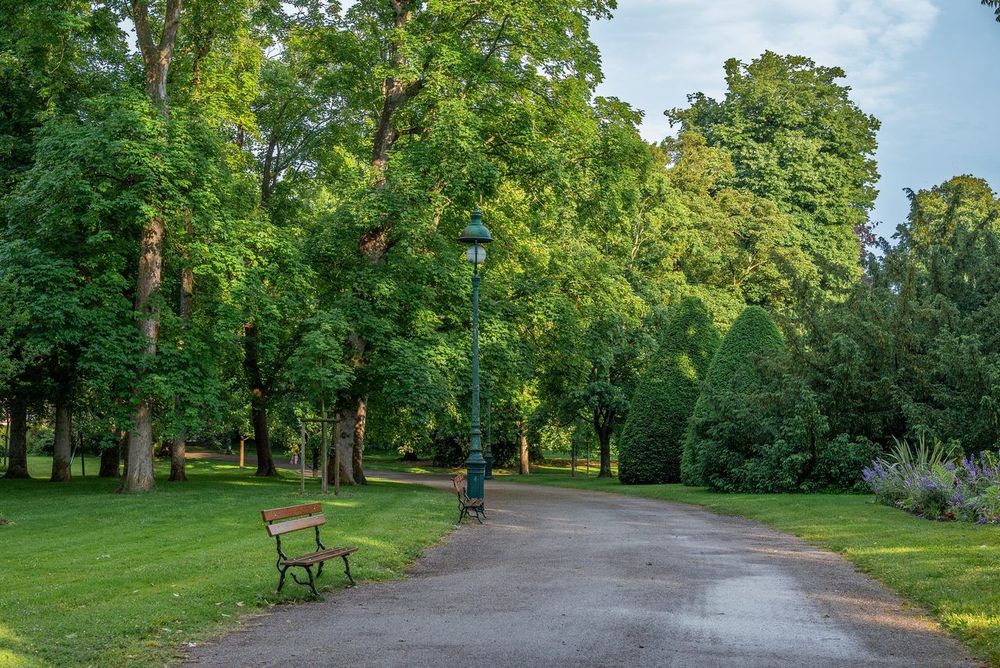
© Shutterstock
 Votre guide Ryo
Walking in Vichy: Parks, Lake, and Hidden Villages in 2026
Search “walk Vichy” online and you'll almost always land on the Allier lake loop. It's well deserved, but reductive. Here, walking retains something of the thermal heritage: beneath the metal galleries of the Parc des Sources, following the Ryo audio-guided tour that traces the history of the spa town, your pace stays oddly slow, in step with the cure-seekers of another century. Elsewhere, walking takes on an entirely different rhythm.
Over nearly 6 km, the Allier lake loop lines up grey herons, rowing skiffs and benches in the shade of plane trees. A few minutes away, Cusset still has the last standing tower of Louis XI's ramparts. And some thirty kilometres out, the village of Charroux, listed among the Most Beautiful Villages of France, rounds off a choice of walks that goes well beyond a simple stroll through the park. This guide details ten routes, from the thermal heart inscribed on the UNESCO list since 2021 to the riverside paths of the surrounding area, with distances, access, realistic timings and good reasons to stop along the way. Ryo's audio-guided tour, which runs through the Parc des Sources and along the Allier lake, helps string these stops together without getting lost.
The Allier Lake Loop, the Most Complete Walk in Vichy
The Allier lake is no natural lake: it is a dam-bridge inaugurated in 1963 that holds back the river and transforms its urban crossing into a stretch of water several kilometres long. Four years later, in 1967, Vichy hosted the European Rowing Championships here, and the site has never lost its sporting vocation since.
The bankside path forms a continuous loop of around 6 km, without a single traffic light to cross. On weekdays, early in the morning, rowing club boats cut across the water before the mist has fully lifted. Grey herons stand motionless on the banks, indifferent to the joggers arriving around 8 a.m. Further along, cycling families pass retired couples out for a stroll, and no one seems in any hurry.
Allow 1h15 to 1h30 on foot at a relaxed pace, longer if you stop on one of the benches facing the water. Setting off from the Bellerive bridge clockwise, you save the best light for late afternoon, when the thermal domes glow on the far side of the lake. Pushchairs and wheelchairs move without difficulty: the surface is flat for virtually the entire route, and drinking-water points are spaced along the banks.
By bike, the same loop takes 20 to 30 minutes. It is also the only route in the city you can do twice without getting bored: the right bank, urban and lively, is nothing like the left bank, greener and quieter.
The Covered Promenade of the Parc des Sources, Between Thermal Baths and Art Nouveau
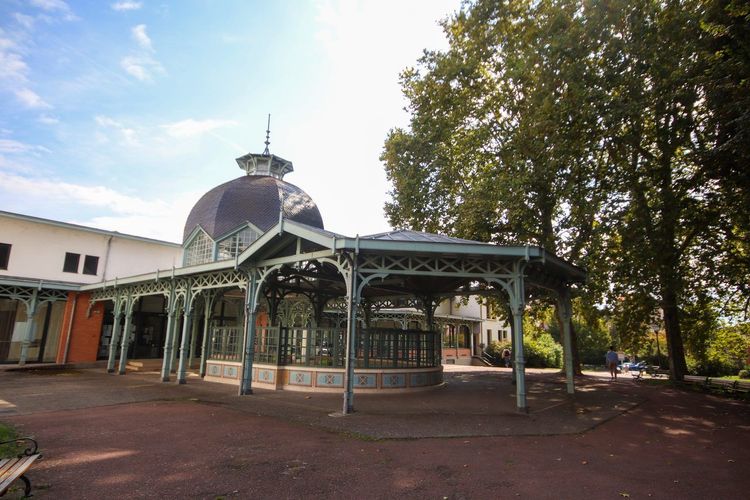
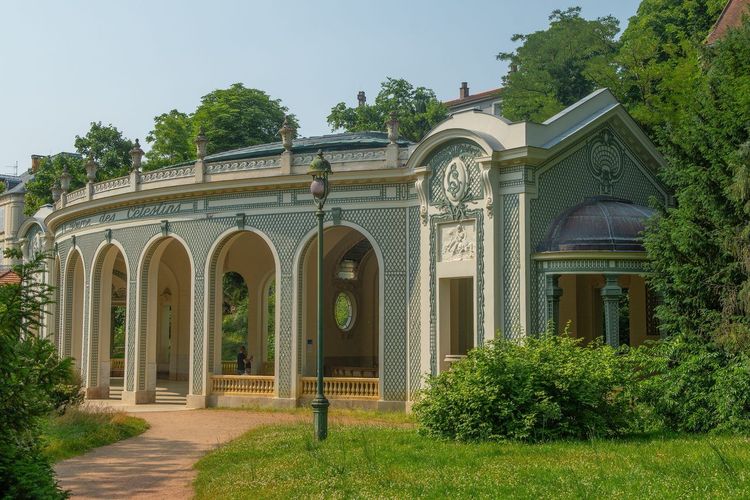
At the heart of the city, the Parc des Sources is home to one of the few covered galleries of this type in France: a metal-and-glass canopy erected at the turn of the twentieth century to allow cure-seekers to walk sheltered between drinking sessions. People still walk beneath its iron framework today.
The Grande Grille, one of Vichy's historic springs, occupies the far end of the park in an orientally inspired pavilion. Right beside it, the Hall des Sources brings together several spring-water taps under a single roof. On a rainy day, this walk remains fully practicable from start to finish — which is not so common for an urban stroll.
The Ryo audio-guided tour of Vichy, entitled "La fièvre de l'eau" (The Water Fever), traces the history of these galleries: 28 audio stops, 3.6 km of walking and around 1h35 of listening to understand why the city was built around water rather than the other way round. It is the simplest way to connect the park, the Hall des Sources and the thermal district without getting lost.
Take the opportunity to taste the waters at the Hall des Sources — each spring has its own temperature and mineral flavour. The bandstand a little further along still hosts concerts on certain summer Sundays, and the park's deckchairs are freely available from the first fine days of the year. Ryo's audio-guided tour also covers the story of each spring, from the Hall des Sources to the rest of the Parc des Sources.
The Parc Napoléon III, an English-Style Garden on the Banks of the Allier
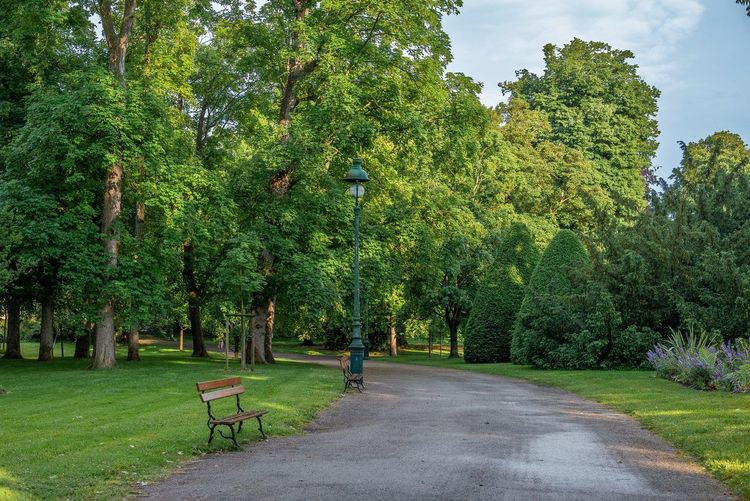
It was under the Second Empire that Vichy transformed from a quiet little spa town into a nationally renowned thermal resort. Napoléon III, who came here several times between 1861 and 1866 to treat his rheumatism, had these English-style parks laid out, their winding paths a deliberate contrast to the formal rigour of French-style gardens.
You will find cedars and sequoias planted more than 150 years ago, as well as a floral parterre replanted each season. The boulevard des États-Unis, which runs alongside the park, lines up the famous chalets built for the emperor and his entourage: decorative woodwork, polychrome brickwork, pointed rooflines — a setting that almost makes you forget you are in Auvergne.
The walk is short — barely 20 minutes to go around — but it complements the nearby lake loop well: the two connect seamlessly via a path running alongside the river.
Rue de Paris, Belle Époque Heritage and the UNESCO Legacy
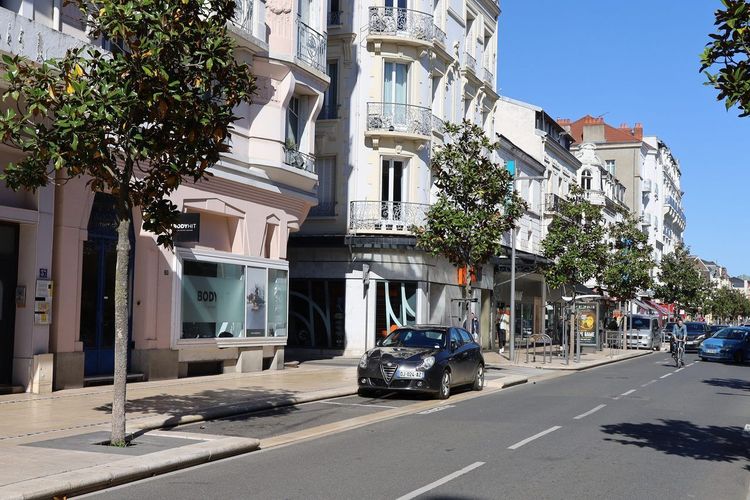
The rue de Paris concentrates the most remarkable façades in the city centre. Half-timbered villas, Art Deco buildings and Swiss-inspired chalets follow one after another over a few hundred metres, remnants of an era when the city welcomed tens of thousands of cure-seekers every season.
Look above the shop fronts: that is where the details reveal themselves — ceramic mosaics, ironwork, coloured skylights. The Opéra de Vichy (Rue du Casino, 03200 Vichy, rated 4.7/5 on Google from 1,393 reviews), inaugurated in June 1901 and completed in 1903, closes the perspective with its Art Nouveau auditorium in gold and ivory, one of the rare surviving examples of this style in France. It is worth a stop even without a show ticket.
This heritage is far from incidental: since 24 July 2021, Vichy has been inscribed on the UNESCO World Heritage List as part of the "Great Spa Towns of Europe", alongside ten other European spa towns such as Baden-Baden, Spa and Karlovy Vary. Walking through this district means crossing an urban landscape designed entirely around the cure.
This stretch takes 30 to 40 minutes, but you can extend it with a detour to the covered market halls, just two streets away, to carry on exploring the city centre.
Cusset, the Fortified Town and the Banks of the Sichon
Three kilometres from the thermal district, Cusset plays a completely different tune. Where Vichy displays its Belle Époque facades, its neighbour preserves a medieval heart: an abbey founded as early as 886, a treaty signed in 1440 by the future Louis XI, and above all the Tour prisonnière, the only tower from Louis XI's fortifications still standing from the late fifteenth century.
Used as a prison from the sixteenth century until 1960, then converted into a museum from 1980, it now houses medieval sculptures, engravings and a scale model of the fortified town. In summer, guided tours descend into the underground passages of Cusset, remnants of the fortification gateways — a welcome cool respite in the middle of August.
After the visit, the Parc des Bourins (Rue du Parc des Bourins, 03300 Cusset, rated 4.8/5 on Google from 107 reviews) extends the walk along the Sichon, the river that flows through the town before joining the Allier.
People come here above all for the peace and quiet: few tourists, plenty of regulars walking their dogs or doing their evening run. The path is flat and shaded, reachable from Vichy on foot in about thirty minutes or in a few minutes by bus. A successful walk in Vichy often includes this detour to the neighbouring town, which most visitors overlook entirely.
Bellerive-sur-Allier, the Other Bank of the Lake
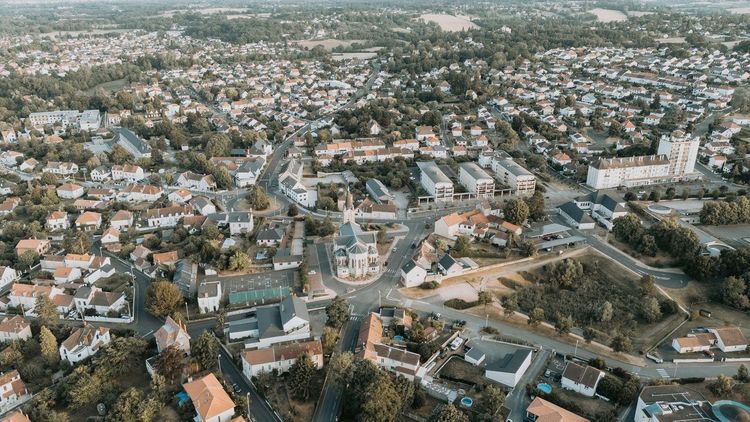
On the other side of the Bellerive bridge, the left bank belongs to Bellerive-sur-Allier, a separate commune that announces itself to the walker only through a change of atmosphere. The banks here are wider, the lawns more generous, the sporting and water-sports facilities clustered right at the water's edge.
This is where you get the finest view of Vichy: a skyline of slate rooftops, domes and steeples rising above the water, particularly photogenic at the end of the day. Extend the walk by half an hour heading south along the bank, and the city disappears entirely behind the trees.
This bank is also the most family-friendly: little traffic nearby, playgrounds, and plenty of places to sit down without having to look far.
Charroux, an Escape to One of the Most Beautiful Villages of France
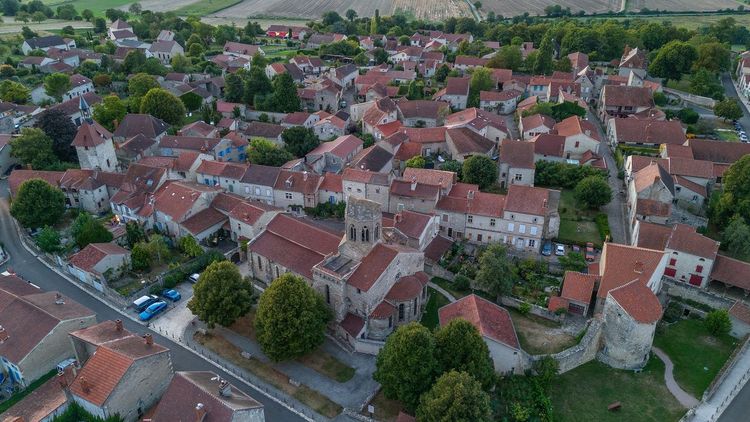
About thirty kilometres to the north-west — a good half-hour's drive — Charroux (Place du Château, 03140 Charroux, rated 4.6/5 on Google from 716 reviews) is listed among the Most Beautiful Villages of France. With its 335 inhabitants, this fortified market town, enclosed between the twelfth and sixteenth centuries by the lords of Bourbon, has preserved a remarkably legible medieval layout.
Wandering through the village needs no set itinerary: you happily lose yourself among the market halls, the Porte de l'Horloge and its sundial, the twelfth-century Romanesque church of Saint-Jean-Baptiste, and its half-timbered house with fourteenth-century elements. Former craft stalls now shelter artisan workshops, and the mustard mill perpetuates a production recorded here since the eighteenth century.
If you are looking for more ideas within an hour of the city, our article on the surroundings of Vichy lists several other villages and natural sites not to be missed.
Allow half a day to make the most of Charroux, between wandering and a lunch stop. The road from Vichy winds through rolling countryside that is worth the trip in itself, especially in spring when the meadows are in bloom.
Following the Allier Beyond the City: the Via Allier and the Château de Billy
To leave the urban setting without multiplying car journeys, the Via Allier provides the ideal thread. This 455 km cycle route, referenced V70 at national level, follows the river from Nevers, where it meets the Loire, all the way to Langogne in Lozère, near its source. Vichy sits right on its path.
There is no need to tackle the whole thing. Heading north for around fifteen kilometres — on foot in stages or by bike in one go — you reach Billy and its medieval fortress perched above the village. The scenery changes completely: Bourbonnais bocage, towpaths, villages of pale stone.
To the south, the same logic applies heading towards Abrest and Saint-Yorre, on flat stretches where you mostly pass anglers. This is the option to go for if you are staying several days and the lake loop is starting to feel too short.
Practical Tips for Planning Your Walk in Vichy
Vichy is around 3 hours from Paris by direct train, with a station located about ten minutes' walk from the Parc des Sources. Once there, the city is entirely walkable or cyclable: none of the walks described here requires a car, with the exception of the Charroux excursion.
Spring and early autumn offer the best conditions, with lighter crowds than in July and August around the lake loop. Wear closed shoes for the banks of the Sichon and the Via Allier sections; all other routes are perfectly manageable in everyday footwear.
One final planning note: Vichy's parks are open continuously and free of charge, which means you can head out very early in the morning or just before sunset — two moments when the light on the water alone justifies choosing a walk in Vichy over anywhere else.
Where to Take a Break During Your Walk
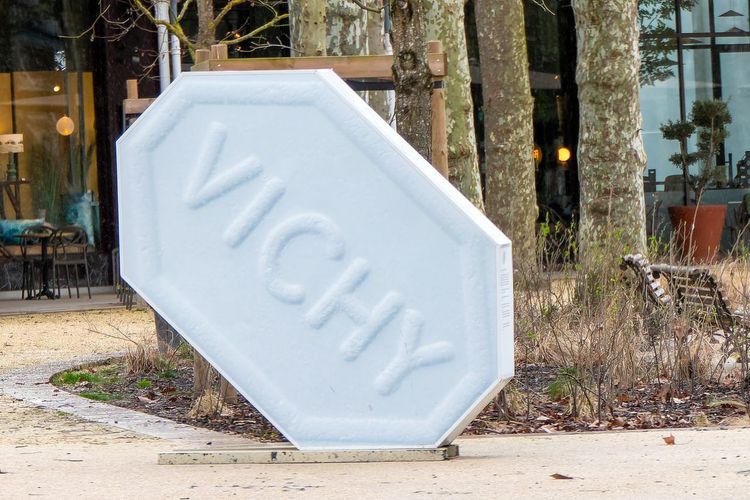
The rue de Paris and its surroundings are home to most of the tea rooms and patisseries, where you will find the Vichy pastille — a small octagonal sweet made from the mineral salts extracted from the city's spring waters. On the savoury side, several addresses serve simple regional cuisine, often featuring produce from the Allier. If you want to explore the subject before you go, the culinary specialities of Vichy details the dishes and products you absolutely must try during your stay.
Around the lake, seasonal refreshment kiosks open from April to September and allow you to split the loop in two without leaving the bank. In Cusset, the Friday morning market remains the best place to put together a picnic to take along to the Parc des Bourins.
FAQ
What is the most beautiful walk in Vichy?
The Allier lake loop remains the benchmark: around 6 km entirely flat, accessible to everyone, with an open view of the city and the Bellerive bridge. It is also the easiest route to combine with a stop at the Parc des Sources and its covered gallery.
How long does it take to walk around the Allier lake in Vichy?
Allow 1h15 to 1h30 on foot at a leisurely pace for the full loop. By bike, the circuit takes 20 to 30 minutes depending on your speed, and you can always split it in two by crossing the Bellerive bridge at the halfway point.
What is the most beautiful village near Vichy?
Charroux, about thirty kilometres to the north-west, is listed among the Most Beautiful Villages of France and is the most popular half-day excursion from Vichy.
Is Vichy a UNESCO World Heritage Site?
Yes. Since 24 July 2021, the city has been inscribed as part of the "Great Spa Towns of Europe", a transnational property bringing together eleven European spa towns. The thermal district and its parks form the heart of this designation.
Is Vichy an easy city to explore on foot?
Yes, the city centre, the parks and both banks of the lake are connected by flat, well-maintained paths. Only the excursion to Charroux requires a vehicle; Cusset can be reached on foot or by bus.
Can you go hiking or cycling from the centre of Vichy?
Yes. The Via Allier (V70), a 455 km cycle route between Nevers and Langogne, passes through the city and allows you to head north to Billy or south to Saint-Yorre without needing a car to reach a starting point.
Ultimately, Vichy lends itself to walks of very different character depending on the time of day and your mood: the sporty pace of the Allier lake in the morning, a heritage stroll along the rue de Paris in the afternoon, a medieval escape to Cusset or a trip to Charroux for a complete change of scenery. The Ryo audio-guided tour of Vichy remains the best way to connect these places without wasting time finding your way, and to understand what has made this spa town a must-visit destination for more than a century and a half.