© Shutterstock
 Votre guide Ryo
Visiting Athens for the First Time: The Complete 2026 Guide
It is still dark when the first buses park at the foot of the Acropolis, and the queue already stretches along Dionysiou Areopagitou Street. When visiting Athens for the first time, this gap between the postcard image and the reality on the ground almost always comes as a surprise. The Greek capital is not just a hill and a museum: an ancient theater with 17,000 seats lies just steps from the Parthenon, a flea market occupies the former Ottoman warehouses of Monastiraki, and a funicular climbs to a white chapel perched 277 meters above sea level for the sunset. Between the neoclassical lanes of Plaka, the Saronic Islands less than two hours away by boat and the direct flight from Paris in just over three hours, Athens lends itself as well to a one-day stopover as to a week-long stay. This guide details the sites to prioritize, the neighborhoods to explore on foot and the excursions worth extending your stay for. And if you would rather move along with a guiding thread in your ear, the Ryo audio-guided tour of Athens links most of these places in 29 audio tracks, over 8.2 km.
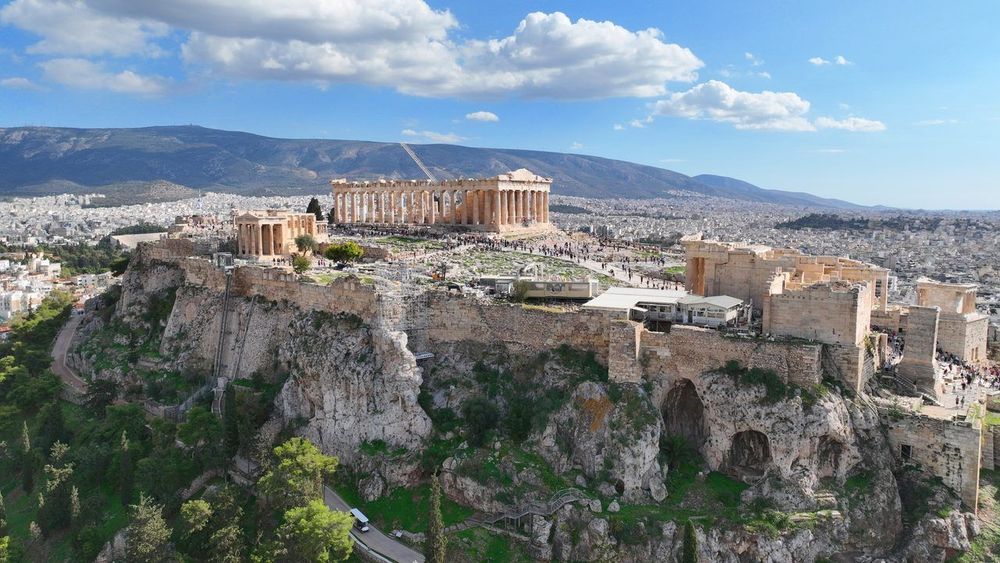
The Acropolis, the Parthenon and Their Museum
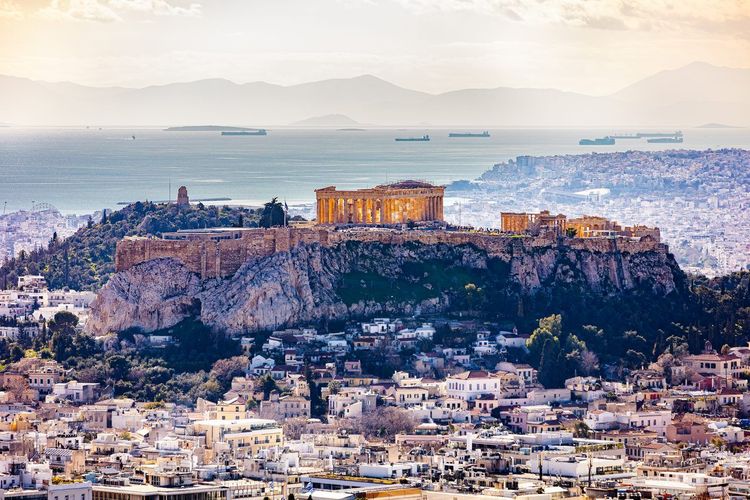
It is impossible to talk about a first stay in Athens without starting with the sacred hill. The Acropolis alone concentrates more than 2,500 years of history on a single limestone promontory, visible from almost every neighborhood in the center. Photos never do justice to the scale of the site: allow a good two hours to go around it without rushing, and plan to enter right at opening if you want to avoid the midday groups.
The Parthenon, the Erechtheion and the Ancient Theater
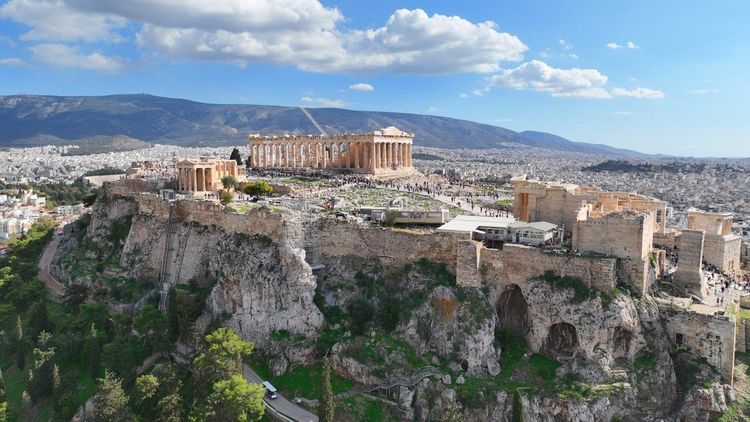
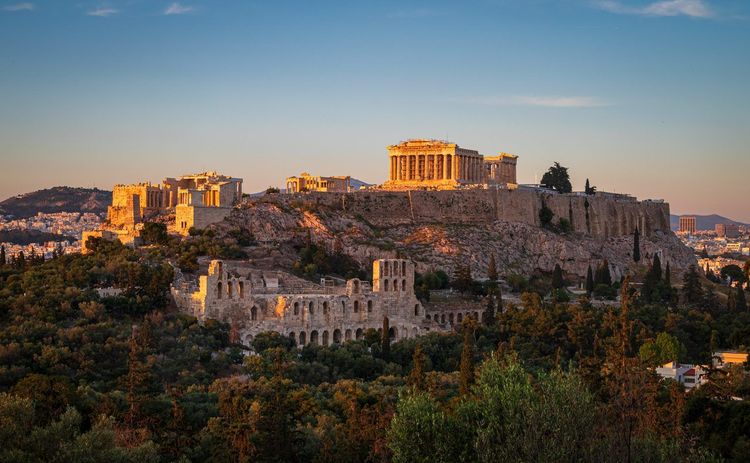
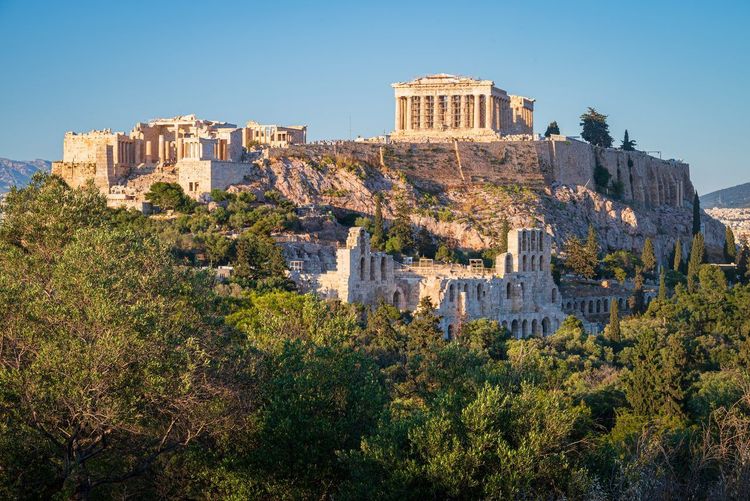
The Parthenon has dominated the summit since 447 BCE, built from Pentelic marble under the direction of Phidias. The scaffolding that has surrounded it since the 1980s is part of the scenery: the restoration is permanent, continuously funded by the Committee for the Conservation of the Acropolis Monuments, and it does not in the least prevent you from appreciating the temple's proportions or the slight curve of its columns, an optical refinement intended by its architects.
A few meters away, the Erechtheion houses the famous caryatids, those six columns sculpted in the shape of young women that support the south porch. Five of the originals moved to the Acropolis Museum (Dionysiou Areopagitou 15, 11742 Athens, rated 4.7/5 on Google from 86,365 reviews) in 1979 to protect them from urban pollution (the sixth is in the British Museum in London): the ones you see on site are casts. The temple also tells of a mythological rivalry between Athena and Poseidon, each of whom left their mark on this corner of the hill. Take the time to walk around it: the north façade, less photographed, reveals an almost intact Ionic portico.
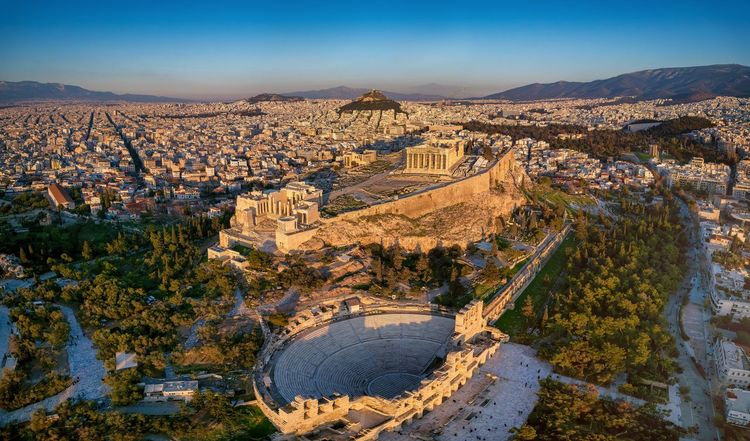
On the way down toward the south slope of the hill, the Theater of Dionysus impresses with its size: 17,000 seats carved directly into the rock, where the tragedies of Sophocles and Euripides were performed. A little further on, the Odeon of Herodes Atticus still hosts open-air concerts today during the Athens Festival each summer. The Theater of Dionysus is included in the Acropolis ticket; the odeon, for its part, is only open to audiences attending performances, but you can look down on it very well from the path that climbs toward the Propylaea.
To link these three sites without losing the historical thread, the short version of the Ryo audio-guided tour passes through the Parthenon and then the Erechtheion before stopping at the museum's threshold, with commentary on the Panathenaic frieze that helps you picture the temple as it was originally.
The Acropolis Museum: Before or After the Hill?
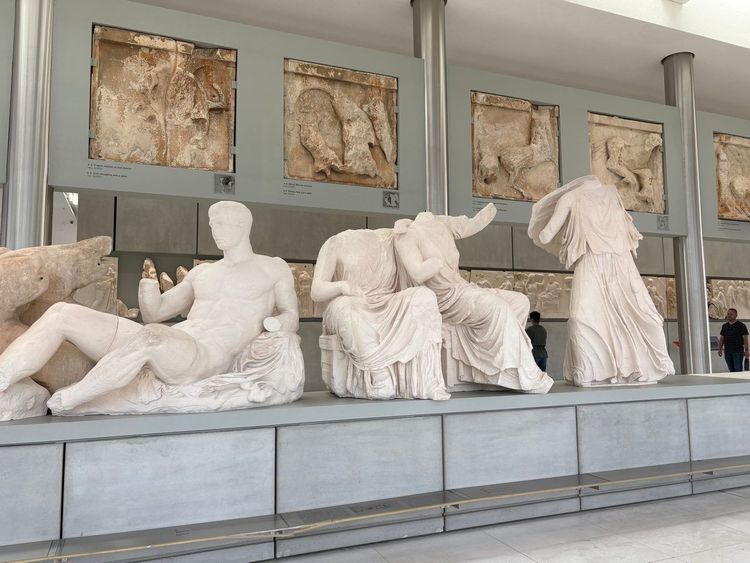
The question comes up on every first trip to Athens: should you visit the Acropolis Museum before or after the hill? Both approaches have merit. Seeing it before lets you understand the friezes and sculptures in context before finding them, by absence, on the site. Seeing it after, on the way out, helps put into perspective what you have just climbed, while your legs rest in an air-conditioned building. In both cases, allow at least 1h30.
Inaugurated in 2009 in a building designed by Bernard Tschumi, the museum is organized over several levels of glass and concrete, with a partly transparent floor that lets you see the archaeological excavations beneath your feet. The top-floor gallery, dedicated to the Parthenon, presents the frieze at real scale (originals and casts combined) and is slightly rotated to match the actual orientation of the temple.
Beware of a piece of information still widespread on blogs: the €30 combined ticket that covered seven ancient sites for five days was discontinued on April 1, 2025. The Acropolis is now paid for separately (€30 full price, €15 reduced rate), with the museum, the Agora and the Temple of Zeus each having their own ticket. Book the Acropolis online at least 48 hours ahead, for a specific time slot, especially between May and September: morning slots go quickly, and arriving without a ticket sometimes means an extra hour of queuing at the ticket office.
Plaka and Monastiraki, Historic Neighborhoods to Explore on Foot
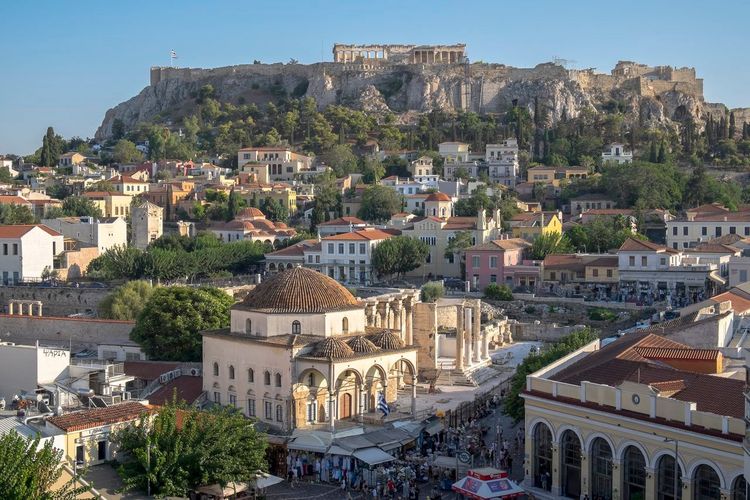
Once you come down from the hill, the contrast is immediate. Plaka and Monastiraki (Monastiraki Square, 10555 Athens, rated 4.5/5 on Google from 30K reviews) form the oldest urban fabric of Athens, a maze of cobbled lanes where neoclassical buildings stand alongside Roman remains emerging between two café terraces. It is the best place to walk without a set route, especially in the late afternoon when the heat subsides.
Plaka and Its Neoclassical Lanes
Plaka climbs gently toward the Acropolis, and every street seems to hide a miniature Byzantine church or a staircase covered in bougainvillea. The neighborhood escaped the large real-estate programs of the twentieth century thanks to heritage protection measures, which explains why the nineteenth-century neoclassical façades have remained so well preserved. Anafiotika, a Cycladic hamlet built on the hillside by workers from the island of Anafi at the time the royal palace was being built, is worth a detour: its white houses and stepped lanes make you forget you are still in a capital of two million inhabitants.
Avoid restaurants that post a tout at their door: they are almost always the most expensive places for the most mediocre quality. Prefer tavernas located one or two streets back from the main tourist axis, recognizable by their mostly Greek clientele.
Music lovers can venture as far as the Museum of Greek Folk Musical Instruments, housed in the Lassanis mansion, built in the 1830s: for around €5, its roughly 1,200 instruments cover everything from bouzoukis to shepherds' bells, with listening stations on every floor. It is a cool, little-visited break between two walks under the sun.
Monastiraki and Its Flea Market
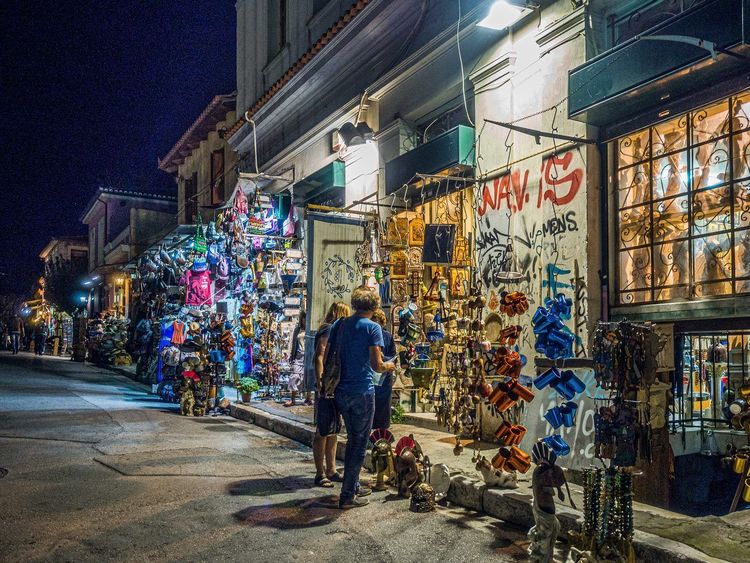
Monastiraki takes its name from a small monastery of Byzantine origin, the Pantanassa church, still visible on the central square. The flea market that extends behind the metro station occupies a former Ottoman bazaar, and some stalls still sell antiques in buildings that have not changed function for over a century. Sunday morning remains the liveliest time, with vendors spilling out into Ifestou Street, historically dedicated to blacksmiths and ironworkers.
The square also offers one of the best free views of the illuminated Acropolis, especially at the end of the day. Allow a good hour to browse the stalls without rushing, and keep an eye on your bag: it is the densest spot for tourists in the city center, and therefore also the favorite of occasional pickpockets.
On the square, the eighteenth-century Tzistarakis Mosque, converted into an annex of the Museum of Greek Folk Art, is a reminder that the city also lived four centuries under Ottoman rule. Inside the covered market, look for the record shops specializing in rebetiko music: several still sell original vinyl, an angle that few guides mention.
So as not to miss anything of this transition between the two neighborhoods, note that the Ryo audio guide winds through the lanes of Plaka to the Monastiraki market, with an anecdote about the old Ottoman bazaar told right in front of the stalls concerned.
The Ancient Agora and the Temple of Olympian Zeus
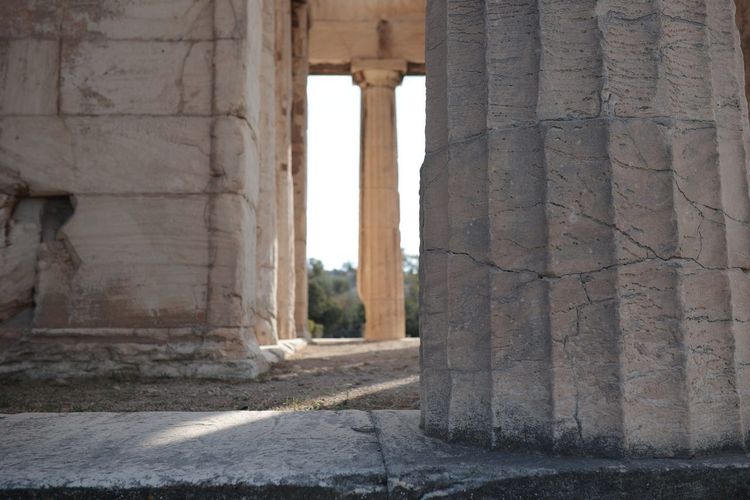
Ten minutes on foot from Monastiraki, two sites echo each other without ever being confused: one tells the story of the birth of Athenian democracy, the other celebrates Roman imperial grandeur. Grouping them in the same half-day makes sense, both geographically and historically.
The Ancient Agora and the Stoa of Attalos
The Ancient Agora served as the political, commercial and religious center of the city, where Socrates debated with his disciples and where citizens voted on certain laws by show of hands. The site preserves the Temple of Hephaestus, one of the best-preserved in all of Greece, built almost at the same time as the Parthenon but remaining largely intact thanks to its transformation into a Byzantine church for centuries.
The Stoa of Attalos, reconstructed in the 1950s on the original foundations, now houses the small Agora Museum: vases, bronze voting tools and fragments of everyday Athenian life, displayed in a colonnaded gallery that gives a fairly accurate idea of what ancient commercial architecture looked like. Few visitors stay more than twenty minutes, which makes it a restful pause after the density of the Acropolis.
The Temple of Olympian Zeus and Hadrian's Arch
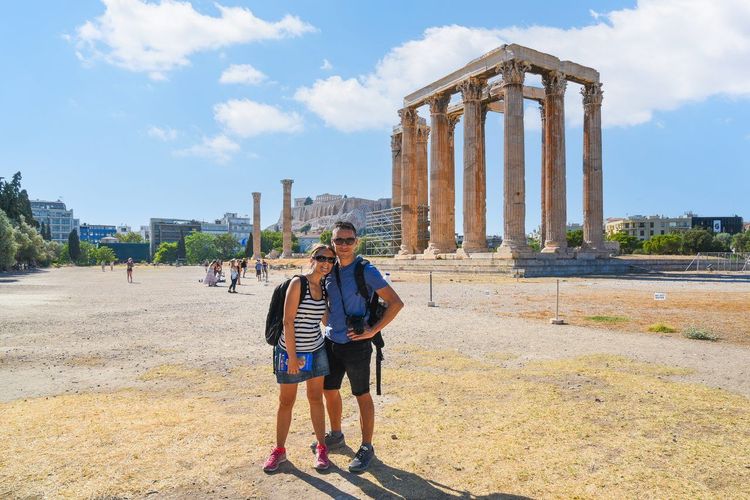
It took nearly seven centuries to complete the Temple of Olympian Zeus, begun in the sixth century BCE and finished only under Emperor Hadrian. Fifteen Corinthian columns 17 meters high are still standing out of the original 104 (a sixteenth, brought down by a storm in 1852, lies on the ground), which gives an idea of the project's enormous scale: at its completion, it was the largest temple in the entire Greek world.
Right next to it, Hadrian's Arch (Leoforos Vasilissis Amalias, 10557 Athens, rated 4.6/5 on Google from 2,004 reviews) symbolically marked the boundary between the old Greek city and the new Roman city desired by the emperor. An inscription on each face of the monument still confirms it: on one side "this is Athens, the ancient city of Theseus," on the other "this is the city of Hadrian."
The temple is visited with a ticket separate from the Acropolis one, while Hadrian's Arch, standing on the sidewalk, can be admired freely. Allow about 45 minutes for the whole, a little more if you linger in the shaded garden bordering the temple, pleasant for a break out of the midday sun.
The two sites are linked in under ten minutes on foot, a walk that our Ryo app accompanies with a story about Athenian democratic life, from the Agora to the gates of Hadrian's imperial city.
Mount Lycabettus and Viewpoints over the City
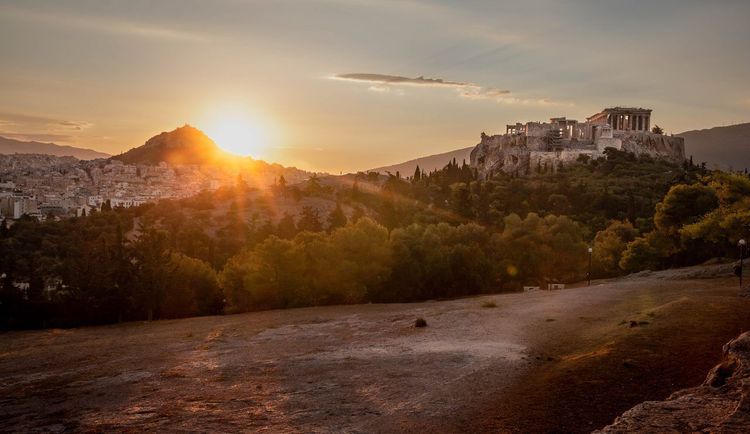
Athens sorely lacks elevation in its center, which makes the few hills overlooking the city all the more precious. Two of them are worth the detour, for almost opposite reasons.
Sunset from Lycabettus
The Mount Lycabettus rises to 277 meters, directly above the chic Kolonaki neighborhood. A funicular links the base to the summit in under three minutes, handy if the heat or the slope discourages you from climbing on foot from the neighborhood. At the top, the small white chapel of Saint George offers a 360-degree view over the whole urban area, as far as the Saronic Gulf on a clear day.
Arrive thirty minutes before sunset if you want a spot on the terrace of the café located just below the chapel: the place is known to locals as much as to tourists, and the best spots go quickly in high season. The funicular generally closes an hour after dusk, so remember to check the schedule before going up.
The climb naturally extends the listening to our Ryo audio guide to Athens, which ends at the gates of the historic center: the panorama from Lycabettus then offers an overview of the route covered during the day.
Other Viewpoints: Hill of the Muses and Philopappos
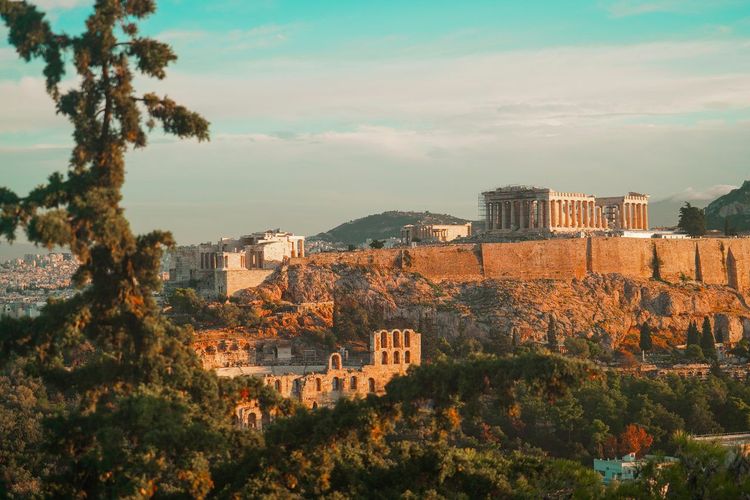
Less known to passing visitors, Philopappos Hill (Philopappou, 11742 Athens, rated 4.8/5 on Google from 22,751 reviews), also called the Hill of the Muses, faces the Acropolis directly, on the other side of a wooded valley. The path that climbs it starts from the Thissio neighborhood and crosses an almost wild landscape, surprising just a few hundred meters from the city center. It is where Athenians themselves come to photograph the Parthenon, for the simple reason that the perspective there is far better than from the hill itself.
The funerary monument of Philopappos, a Roman prince of Syrian origin, crowns the summit. Allow 30 to 40 minutes of walking from Plaka, in the shade of pines almost the whole way, which makes it a pleasant alternative to Lycabettus during the hottest hours.
Syntagma, the Parliament and the National Garden
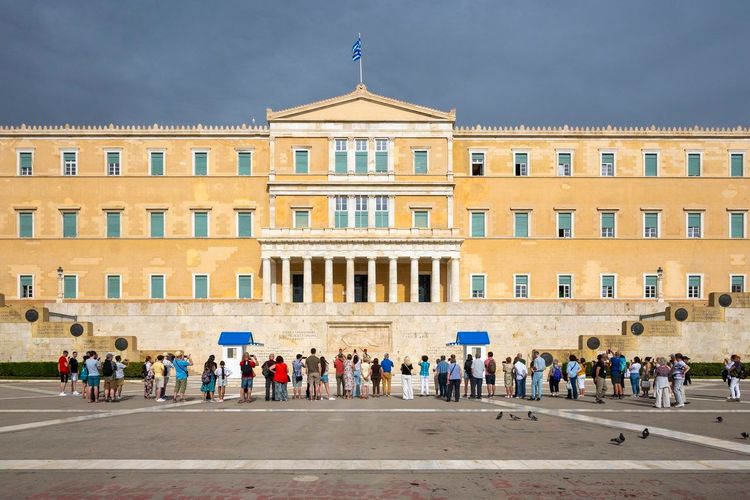
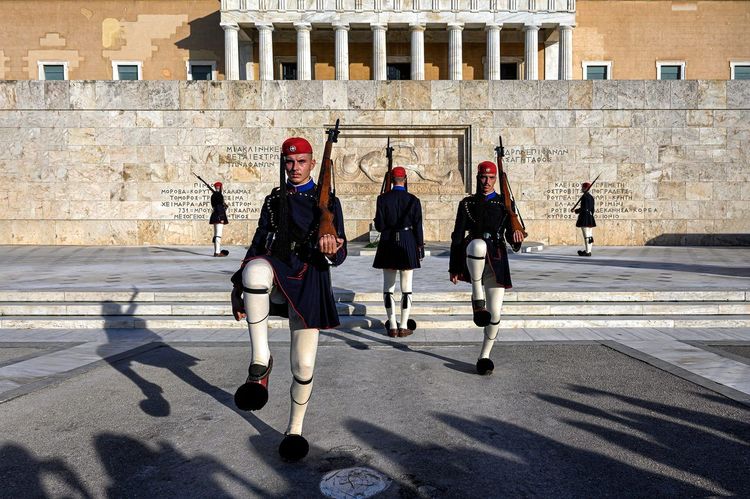
Syntagma Square marks the administrative center of the modern city, with the Greek Parliament as a backdrop. Every hour, two soldiers of the presidential guard, the Evzones, perform a slow, theatrical changing of the guard in front of the Tomb of the Unknown Soldier, traditional pom-pom costume included. The Sunday version at 11 a.m., in full dress uniform with a band, logically draws more people than the ordinary changes.
Behind the Parliament, a former royal palace built in the 1840s, stretches the National Garden (Vasilissis Amalias, 10557 Athens, rated 4.6/5 on Google from 44,489 reviews): 15 hectares planted with Mediterranean species, with ponds, free-roaming turtles and a few Roman remains scattered among the paths. It is a welcome shaded refuge in midsummer, just steps from the bustle of Syntagma.
If you only want to see one changing of the guard during your stay, aim instead for a weekday time in late morning: fewer crowds than on Sunday, and the Evzones take the time to pose for photos just after the ceremony.
Museums Not to Miss After the Acropolis
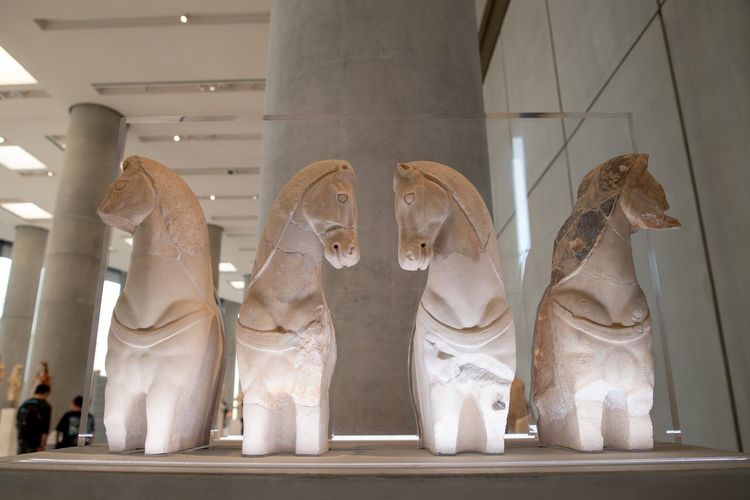
The Acropolis Museum is not the only one that deserves a place in the itinerary. Two other collections tell entire chapters of Greek history that the hill alone does not cover.
The National Archaeological Museum
The National Archaeological Museum brings together the richest collection of Greek antiquities in the world: more than 11,000 objects spread over two floors, from the gold funerary masks found at Mycenae to classical bronzes recovered from shipwrecks. The so-called Mask of Agamemnon, discovered by Heinrich Schliemann in 1876, remains the most photographed piece, even though archaeologists now agree that it belongs to a period well before the Mycenaean king.
Plan for at least two hours, more if you like ancient ceramics: the vase collection covers nearly a thousand years of stylistic evolution. The museum is a little off-center relative to the ancient sites in the middle of town, but metro line 1 from Monastiraki (Omonia or Victoria stations) makes it accessible in about ten minutes.
The Museum of Cycladic Art
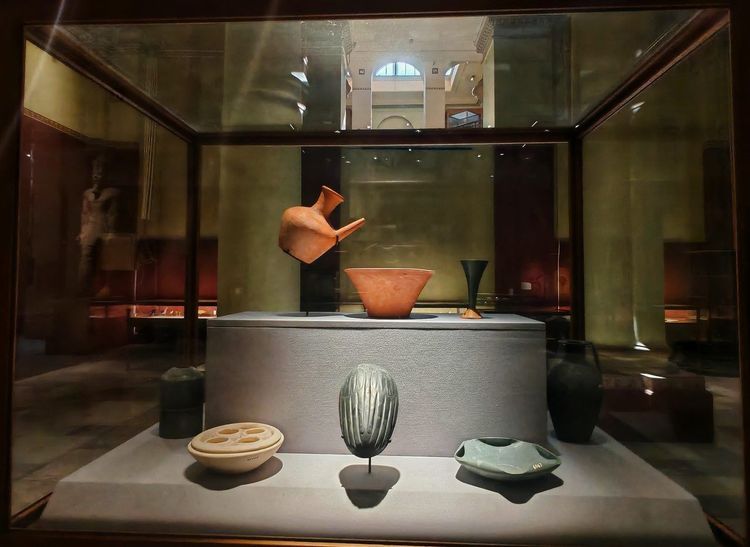
Much smaller, the Museum of Cycladic Art (Neofytou Douka 4, 10674 Athens, rated 4.7/5 on Google from 5,116 reviews) focuses on the marble figurines of the Cyclades, those pared-down silhouettes dating from the third millennium BCE that fascinated modern artists such as Picasso and Modigliani. The private collection assembled by Nicholas and Dolly Goulandris forms the heart of the museum, complemented by Cypriot pieces and a wing devoted to daily life in Antiquity, with reconstructions of banquet scenes using painted vases.
Allow an hour, or an hour and a half if the temporary exhibition holds your attention. The museum is in the Kolonaki neighborhood, within reasonable walking distance of Syntagma, which makes it easy to combine with a lunch break in this upscale area.
Planning Your Itinerary: Athens in 1, 2 or 3 Days
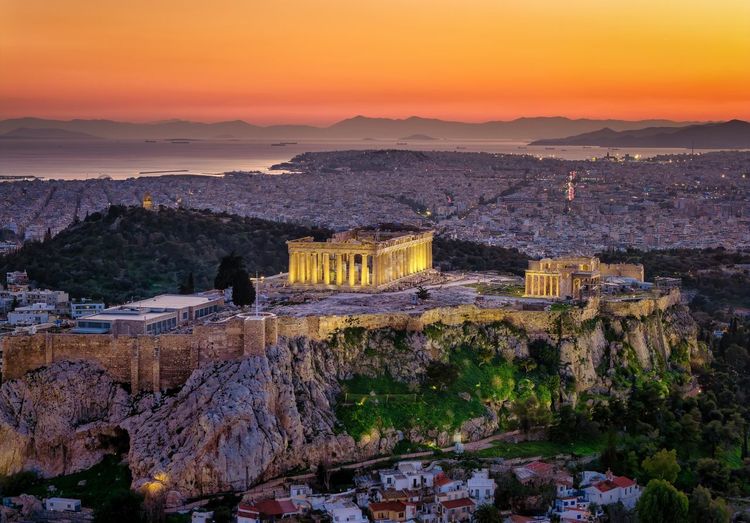
The question of timing comes up every time before a first trip to Athens: how many days should you really plan? The answer depends mostly on what you want to be sure not to miss. One day lets you see the essentials of the ancient sites in the center without excessive rushing; beyond two days, museums and day trips come seriously into play.
Athens in One Day: The Essentials
For a short stopover, concentrate on a single geographic route: the Acropolis and museum in the morning, right at opening at 8 a.m., then down to the Ancient Agora and Monastiraki in late morning, lunch break in Plaka, then Hadrian's Arch and the Temple of Olympian Zeus in early afternoon, before finishing with the changing of the guard at Syntagma or sunset at Lycabettus depending on your arrival time. This route covers the essentials of the ancient sites in a single compact walking circuit, with no needless backtracking.
Families with young children benefit from reversing this order slightly: start with the Ancient Agora, more fun with its wide shaded paths and its human-sized museum, before tackling the Acropolis in late morning while motivation is still intact. Save the Theater of Dionysus for the afternoon: the seats in full sun quickly become uncomfortable with tired children. An ice cream break in Plaka, halfway through, usually works wonders to last until the end of the day.
If you prefer a guided visit without organizing the itinerary yourself, several operators such as Civitatis offer free tours with voluntary tips, generally scheduled in the morning in front of Syntagma Square. The multi-stop tourist bus (hop-on hop-off) remains an option for people with reduced mobility or in case of extreme heat, but it loses much of the appeal of the historic center, which is discovered above all on foot and in lanes too narrow for a bus.
To calibrate this kind of route precisely, our Ryo audio-guided tour of Athens covers exactly this itinerary in half a day: 29 audio stops over 3h20 and 8.2 km, a good benchmark to know whether your walking pace suits a single-day visit or whether it is better to spread it over two.
Athens in 2-3 Days: Ancient Sites and Modern Neighborhoods
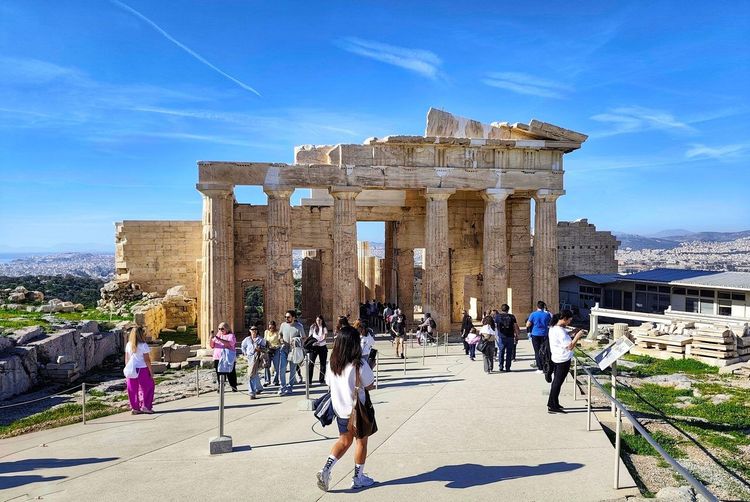
With two days, add the National Archaeological Museum and the Museum of Cycladic Art, plus a morning devoted to Lycabettus, Philopappos Hill or simply strolling through Kolonaki and its art galleries. The third day naturally opens outward: a day trip to Cape Sounion, the Saronic Islands or the site of Eleusis, each reachable in under two hours of travel from the center.
Concretely, a three-day format could look like this: first day centered on the Acropolis, its museum and the Ancient Agora; second day split between the National Archaeological Museum in the morning and Plaka, Monastiraki and Lycabettus in the afternoon and evening; third day reserved for an excursion outside the city. This split avoids stacking two major ancient sites in the same day, which quickly wears down attention even among visitors most passionate about Greek history.
Whatever the number of days chosen, a 24h or 72h transport pass (valid on the metro, bus and tram) clearly simplifies getting between neighborhoods, especially if your hotel is outside the historic center. The price remains modest compared to taxi rides, and saves you from wasting time looking for change at every validation.
Beyond three days, it becomes worthwhile to spend a night on one of the Saronic Islands rather than only making day round trips: it frees up a real evening away from the urban bustle, without sacrificing sightseeing time in the capital.
Where to Eat and Where to Stay in Athens
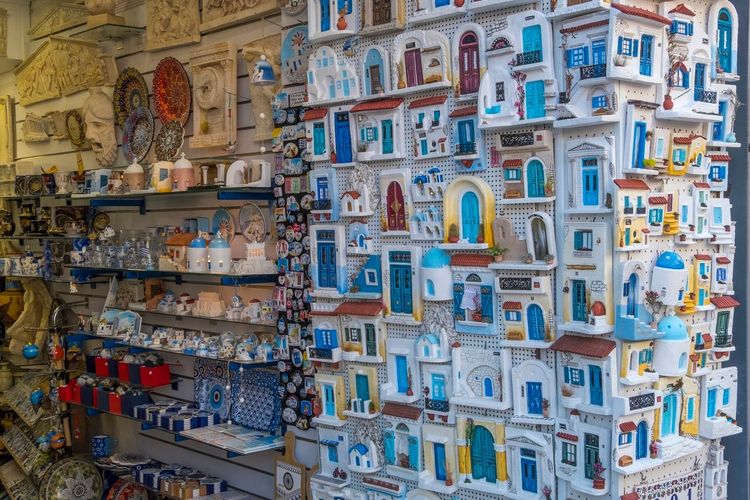
Eating and sleeping in Athens poses no particular problem for a first stay, provided you know where to look: the city is full of options at every budget, but quality varies enormously from one street to the next in the most touristy areas.
Good Places to Eat at Every Budget
Souvlaki remains the safe and inexpensive bet: a pork or chicken skewer served in pita bread with fries, tomato and tzatziki sauce, usually for 3 to 4 euros in working-class neighborhoods such as Psiri or around Monastiraki. For a sit-down meal, traditional tavernas generally serve slow-cooked dishes to share (moussaka, gigantes, saganaki) accompanied by a carafe of house wine, often cheaper and better than the labeled bottles.
Avoid restaurants that display laminated photos of dishes on the terrace: it is almost always a sign of standardized cooking for tourists. Favor places with no English signage, located one or two streets off the main avenues, where the menu changes according to the day's market. In the trendy Psiri neighborhood, several former craft workshops have been turned into small meze bars, pleasant in the evening.
For a fuller overview of the dishes to taste and the neighborhoods where you can eat well, our Ryo article on Athens culinary specialties details the classics and a few lesser-known addresses.
Neighborhoods to Stay In Depending on Your Traveler Profile
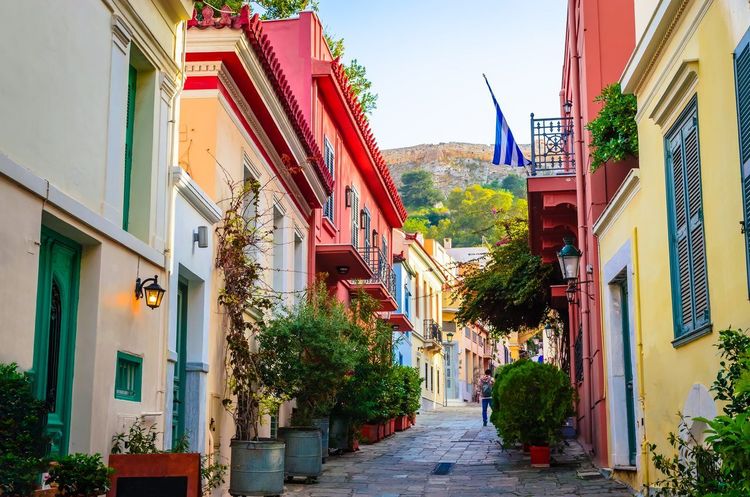
Plaka and Monastiraki suit short stays: everything is done on foot, the major sites are within fifteen minutes' walk, but prices climb in high season and the lanes are noisy until late in the evening. Koukaki, just south of the Acropolis, offers a good compromise: a quiet residential neighborhood, good dining options, and a view of the sacred hill from some hotel terraces, at still reasonable prices.
Kolonaki attracts a more affluent clientele, with its luxury boutiques and art galleries, handy for combining with a visit to the Museum of Cycladic Art. For a tighter budget, the Exarchia neighborhood, student-oriented and alternative, offers decent hostels near the National Archaeological Museum, although the nightlife atmosphere there is sometimes livelier than in the rest of the center.
Our Ryo article on the best neighborhoods to stay in Athens details the trade-offs according to your traveler profile, between quiet, nightlife and immediate proximity to the ancient sites.
Day Trips and Islands from Athens
Many visitors limit their discovery of Greece to the capital alone, even though in under two hours of travel, three totally different worlds open up: an isolated ancient sanctuary, car-free islands and a rocky point known for its sunset. These are often the most memorable experiences of a first trip to Greece, and yet few guides structure them clearly.
The Archaeological Site of Eleusis
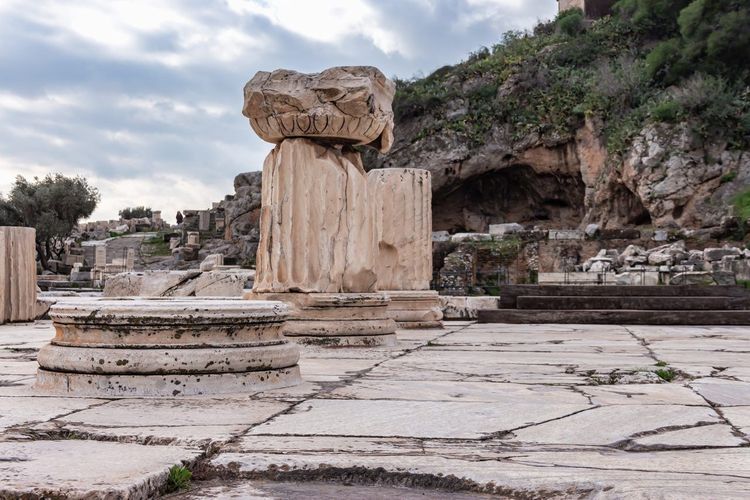
About twenty kilometers west of Athens, the archaeological site of Eleusis (now Elefsina) housed one of the most secret cults of Greek Antiquity: the Eleusinian Mysteries, initiation rites dedicated to Demeter and Persephone whose exact content remains, even today, largely unknown to historians, as participants swore never to reveal it. The site combines remains of the Telesterion, the great initiation hall, Roman propylaea and a small archaeological museum.
Allow half a day including the bus ride from Athens, about 45 minutes. It is a discreet excursion, often deserted even in high season, which contrasts radically with the tourist density of the Acropolis.
The Saronic Islands: Aegina, Hydra, Poros
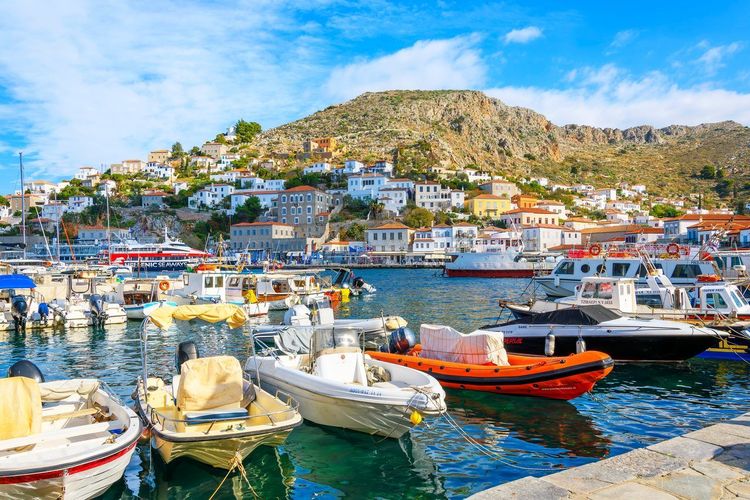
The Saronic Islands can be reached by fast ferry from the port of Piraeus, less than an hour by metro from the city center. Aegina charms with its Temple of Aphaia, perched on a wooded hill facing the sea, and its pistachios renowned throughout Greece. Hydra (Hydra, 18040) flatly bans cars: only donkeys and fishing boats move around the port, making it one of the most photogenic stops in the Saronic Gulf. Poros, more modest, is well suited to a relaxed swim less than two hours from the capital.
To compare travel times and ferry frequencies precisely by season, our Ryo article on the Saronic Islands details the options departing from Piraeus, useful for planning a day trip without unpleasant surprises regarding schedules.
Cape Sounion and Delphi
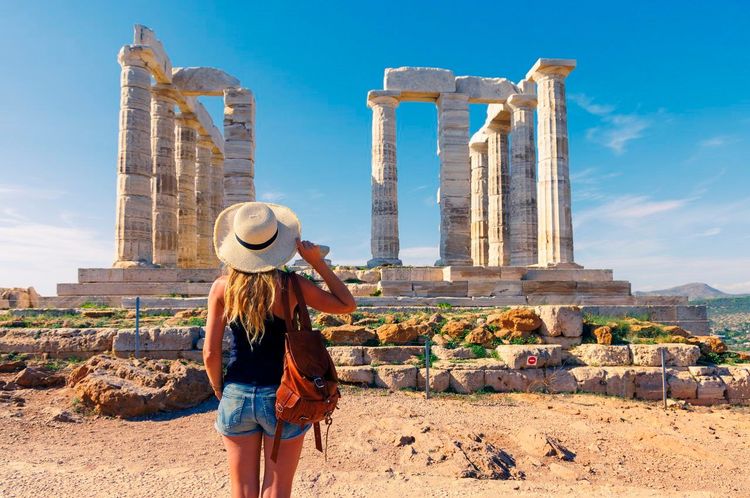
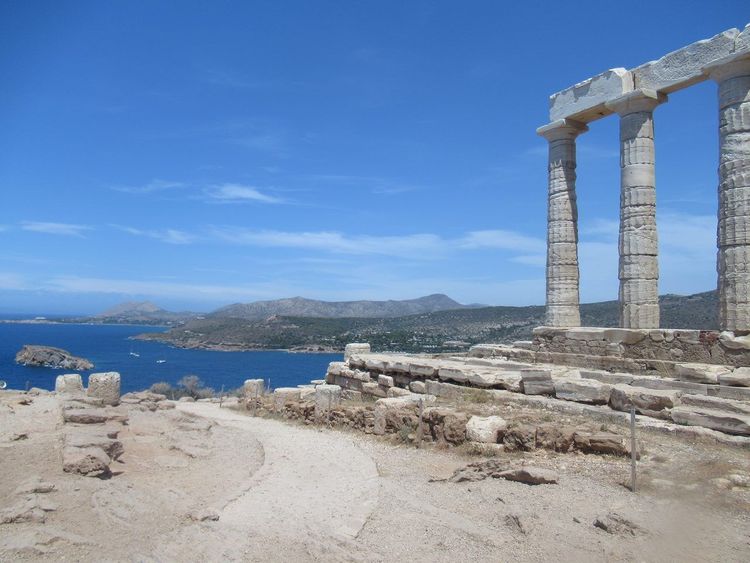
The Cape Sounion (Cape Sounion, 19500 Lavrio, rated 4.7/5 on Google from 18,062 reviews), at the tip of Attica, is home to the Temple of Poseidon built around 440 BCE on a promontory rising 60 meters above the Aegean Sea. The sunset there is renowned throughout the region, enough that tourist buses are full from early afternoon in high season. Allow about 1h15 of travel from central Athens, more in heavy weekend traffic.
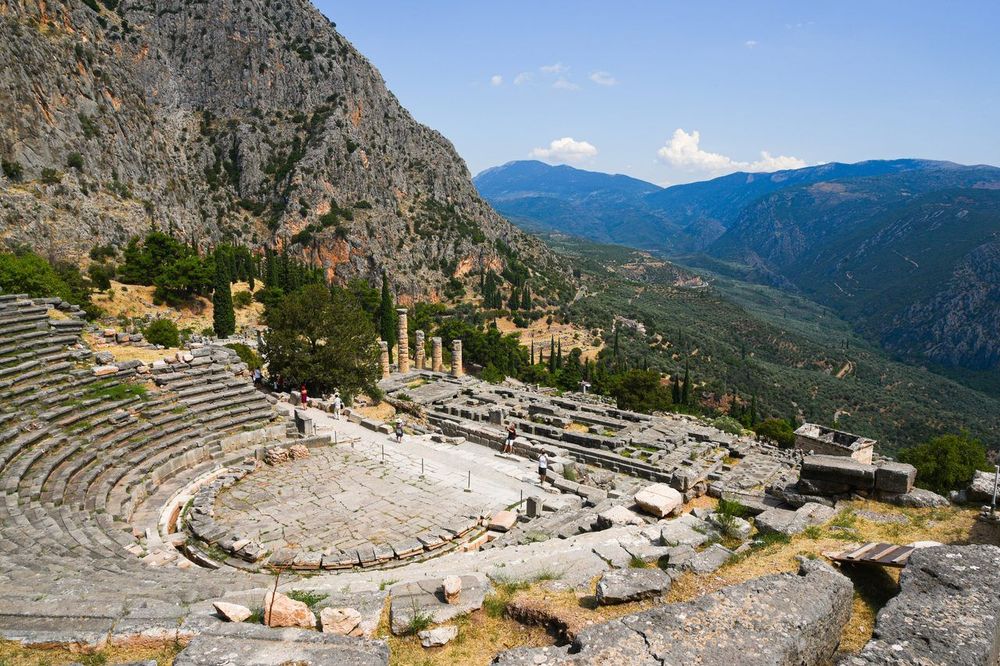
Delphi, the ancient sanctuary dedicated to Apollo and his oracle, is farther away, about two and a half hours by road: it is more of a full-day excursion than a last-minute addition. Plan it rather for a stay of four days or more, ideally with a vehicle or an organized tour from Athens.
Practical Information: When to Go, Budget, Transport and Formalities
What remains is logistics, often relegated to the end of an article even though it shapes everything else. Here is what you need to know to leave without unpleasant surprises.
When to Go: Weather and Seasons
Spring (April-May) and early autumn (September-October) offer the best compromise: temperatures around 20 to 26 degrees, sites less crowded than in July-August, and a particularly photogenic light on the ruins. The Greek summer regularly exceeds 35 degrees in Athens, making a visit to the ancient sites in full sun grueling from 11 a.m.
Winter remains underrated for a first trip: temperatures around 10-14 degrees, virtually no queues at the Acropolis, and much lower hotel rates. The trade-off is shorter days and a few rainy days to plan for, without this calling the visit into question.
Formalities, Time Difference and Flight Time
Greece is part of the Schengen area: a valid identity card or passport is enough for French, Belgian or Swiss nationals, with no visa or additional formalities. The time difference is one hour ahead of France (GMT+2 versus GMT+1), which hardly disturbs your sleep rhythm.
A direct flight from Paris takes about 3h15, a little longer from other French cities with a stopover. Several low-cost airlines serve Athens in spring and summer, with fares that drop noticeably outside school holidays.
Getting Around and Average Trip Budget
The Athenian metro, clean and punctual, covers most of the center and links the airport directly to the city center in 40 minutes. On foot, most of the ancient sites in the center are within 20 minutes of each other: after the Acropolis, there is no need to take transport again to continue on to the Agora or Plaka.
For an average budget, plan on 70 to 100 euros per day per person including decent accommodation, meals in tavernas and site entrance fees, excluding international flights. Thrifty travelers can go below 50 euros by staying in hostels and eating mainly souvlaki and street food.
Currency: the euro, as in France, which avoids any currency exchange. Tipping is not mandatory but appreciated, around 5 to 10% in tavernas if service is not already included. Bank cards are accepted almost everywhere, except in some small shops in the Monastiraki market where cash is still preferable.
Safety and Scams to Know About
Athens is a safe capital for a first stay, but a few habits will spare you the classic inconveniences. On metro line 1 between Monastiraki and Piraeus, keep your bag in front of you: it is the route most targeted by pickpockets, especially with suitcases. In the evening, beware of very friendly strangers who offer a drink near Syntagma: the bar bill can turn out to be astronomical. As for taxis, insist on the meter or use a booking app, and note that the trip from the airport is charged at a fixed rate. Finally, the Omonia neighborhood remains unpleasant at night: you have no reason to hang around there after dinner.



FAQ
How many days do you need to visit Athens for the first time?
Two days cover the essentials of the ancient sites in the center and one major museum. Three days allow you to add a day trip, to the Saronic Islands or Cape Sounion. A single day is possible during a stopover, focusing on the Acropolis, the Agora and the historic center, but at the cost of a brisk pace.
What is the best time to visit Athens?
April-May and September-October offer the best balance between mild weather and reasonable crowds. The very hot summer means visiting the ancient sites early in the morning. Winter, much quieter and cheaper, suits those who prefer museums and historic neighborhoods over the beach.
Should you book tickets for the Acropolis and its museum in advance?
Yes, especially between May and September. The Acropolis ticket (€30) can be booked online, which avoids the queue at the ticket office and secures a specific time slot, bearing in mind that the former multi-site combined ticket no longer exists since April 2025. Access to the hill has been regulated by time slots since 2023.
How do you get around Athens without a car?
The metro and walking are more than enough to explore the historic center, which is compact and generally flat around the ancient sites. A 24- or 72-hour transport pass simplifies trips to more remote neighborhoods such as the National Archaeological Museum or the port of Piraeus for excursions.
What budget should you plan for a stay in Athens?
Plan on 70 to 100 euros per day per person for a comfortable stay, excluding international flights: decent accommodation, meals in tavernas and site entrance fees. A tighter budget, around 50 euros per day, is still realistic by staying in hostels and favoring street food.
Is Athens a safe city for tourists?
Yes, overall: violent crime against tourists remains rare. The main thing to watch out for is pickpocketing in crowded areas such as Monastiraki or the metro at rush hour, and a few classic scams around the bars near Syntagma in the evening.
Do you need a passport to travel to Greece from France?
No, a valid identity card is enough for French citizens, as Greece is part of the Schengen area. A passport remains useful if you combine your stay with a stop outside the European Union, for example an excursion to Turkey from certain Greek islands close to the coast.
A first trip to Athens is rarely built in the order suggested by postcards. Between the historical density of the Acropolis, neighborhood life in Plaka, the Saronic Islands within ferry reach and a pace to adjust to the season, the city mostly rewards those who agree to slow down rather than tick off a list. Whether you have a day or a week, the simplest approach is to structure your visit around a single geographic thread, from the historic center to the hills, then to the sea.
To keep that thread without pulling out your phone at every intersection, the Ryo audio guide to Athens remains a good foundation: 29 narrated stops, 3h20 of listening and 8.2 km covering most of the sites mentioned in this guide, at your own pace and without depending on a group schedule.
À lire également