© Shutterstock
 Votre guide Ryo
Visit Cagliari in 2 Days: The Complete 2026 Itinerary
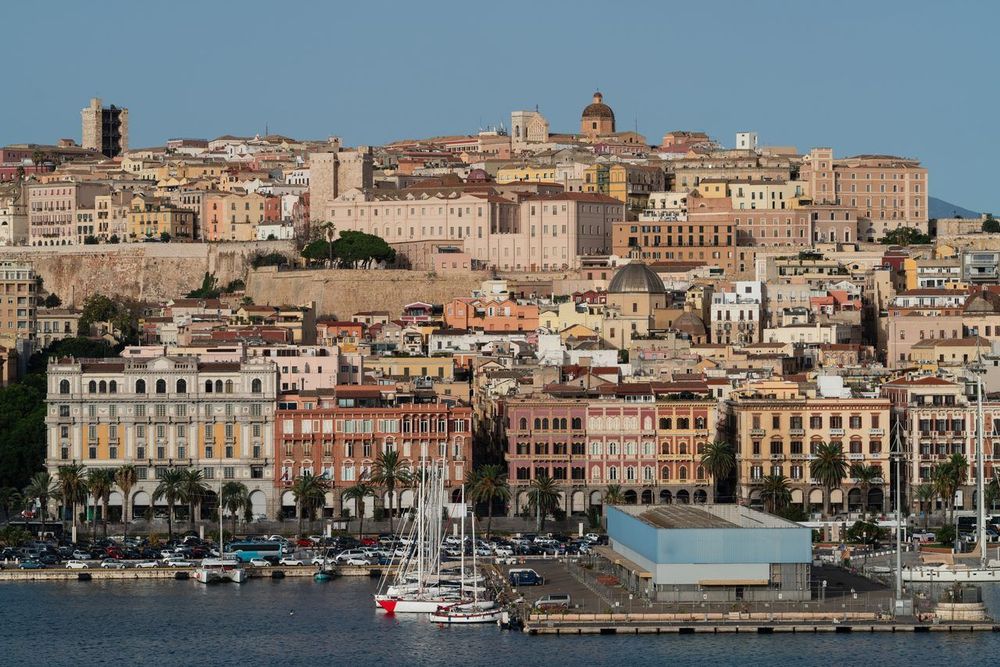
Are two days really enough to understand Cagliari? Travelers landing at Elmas airport for a short Sardinian city break keep asking this question. The answer lies in a simple geographical feature: most of the Sardinian capital's heritage is concentrated within a two-kilometer radius of the Castello, which makes a quick stay surprisingly complete. To visit Cagliari in 2 days without missing the essentials, it is better to build the itinerary by neighborhood rather than from a list of scattered monuments, much like the Ryo audio-guided tour of Cagliari, designed to connect the old town's highlights on foot without backtracking.
In forty-eight hours, you climb medieval ramparts overlooking the gulf, descend into underground galleries dug beneath the Castello hill, swim at an eight-kilometer urban beach and watch wild flamingos less than ten minutes from the city center. The program can be extended, if time allows, with an excursion to a UNESCO-listed nuragic site or to the white-sand beaches of southern Sardinia. Here is how to organize these two days hour by hour and neighborhood by neighborhood, with the distances and tips that save time on the ground.
Day 1 (Morning): The Castello, Cagliari's Fortified Historic Heart
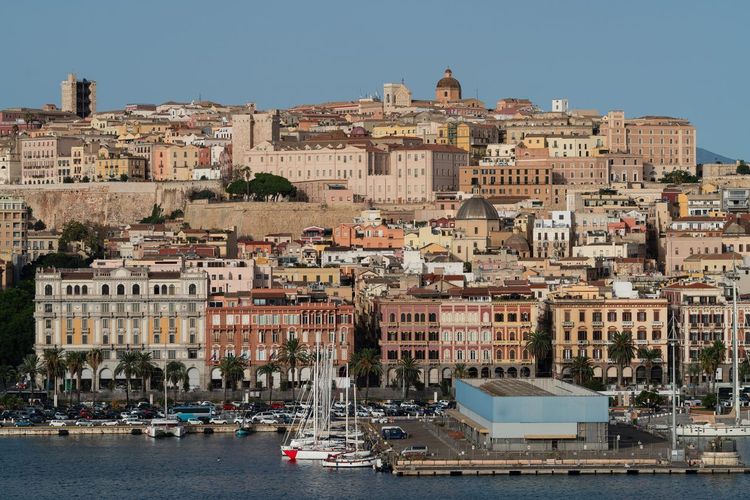
The Castello has to be earned: you literally have to climb to get in. Perched on a limestone hill more than a hundred meters above the port, this fortified district alone holds a good share of Cagliari's listed monuments. Wandering through the Castello district early in the morning, before the cruise ship groups arrive, means enjoying low light on the blond stone and nearly empty alleys.
The Bastione di Saint-Remy and the Ramparts
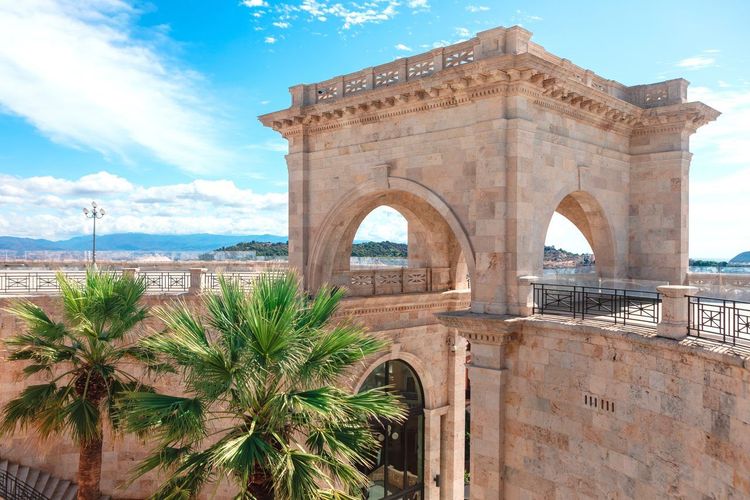
The Bastione di Saint-Remy is the most spectacular entry point to the Castello. This monumental double ramp in white limestone, built in the late 19th century on the remains of the Spanish ramparts, connects the lower town to the Umberto I terrace by a theatrical staircase.
From the terrace, the view stretches across the whole Gulf of Angels, from the Molentargius ponds to the Sella del Diavolo on a clear day. The Cagliari ramparts that still encircle much of the Castello date mostly from the Pisan and then Spanish occupation, between the 13th and 17th centuries; whole sections remain visible along Via Corte d'Appello, often mistaken for the San Remy bastion alone by visitors discovering the Castello of Cagliari for the first time.
Santa Maria Cathedral and the Palazzo Civico
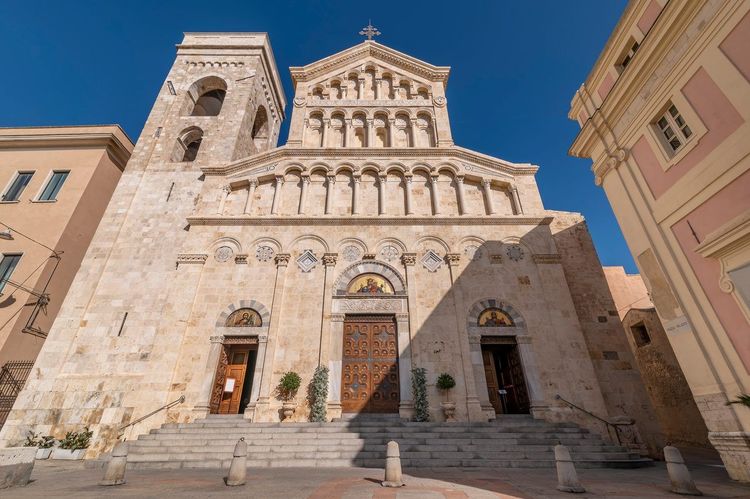
A few meters further on Piazza Palazzo, Santa Maria Cathedral (il Duomo di Santa Maria) has a Pisan-style neo-Romanesque façade added only in 1933, which hides a much older interior founded in the 13th century, with Baroque side chapels and a crypt carved into the rock in 1618 to house the relics of the city's martyrs.
Allow about twenty minutes for the visit, longer if you go down into the Crypt of the Martyrs. On the way back down toward Via Roma, the Palazzo Civico, Cagliari's neo-Gothic town hall, is worth a glance for its white, crenellated façade that contrasts with the rest of the district; the neighboring palazzo vice-regio, former residence of the Spanish and then Piedmontese viceroys, can also occasionally be visited during temporary exhibitions. If the door is open, don't miss its Provincial Council hall, decorated with early 20th-century frescoes and portraits of successive viceroys.
The Torre dell'Elefante and the Torre San Pancrazio
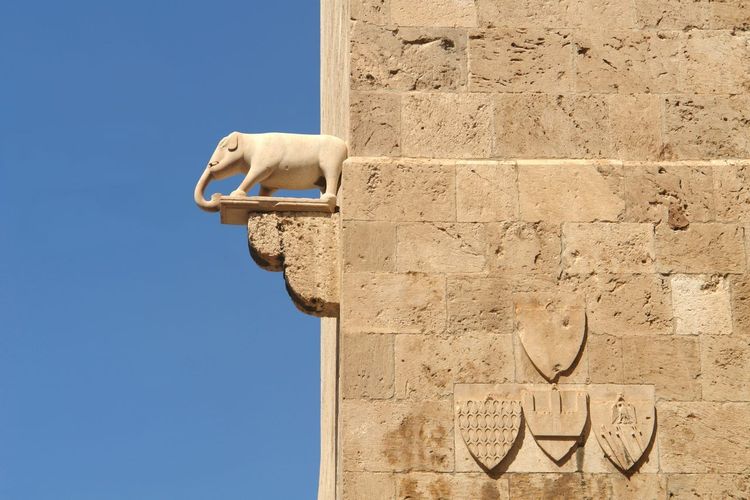
The Castello preserves two of the three Pisan towers that once protected the city: the Torre dell'Elefante (Elephant Tower), recognizable by the small elephant sculpture on its façade, and the Torre San Pancrazio (Piazza Indipendenza, 09124 Cagliari CA, Italy, rated 4.3/5 on Google from 461 reviews), more massive, which guards the northern entrance of the district.
Both towers, completed in 1305 and 1307 by the Pisan architect Giovanni Capula, are open on their inner side, a defensive choice that prevented an attacker from holding out inside. Bad news for your plans: both are closed to the public, San Pancrazio since 2016 and the Elefante since summer 2024, during consolidation works for which a new phase was funded by the municipality in spring 2026. Check their status before you go; in the meantime, walk beneath their vaulted gates, which remain the natural entrances to the Castello, and look up at the portcullis still in place beneath the Elefante.
National Archaeological Museum and National Picture Gallery
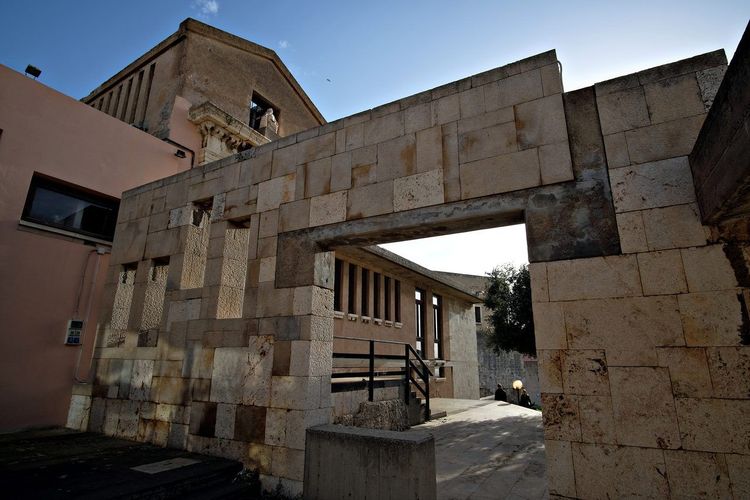
The Cittadella dei Musei, on Piazza Arsenale, brings several collections together under one roof. The National Archaeological Museum houses the richest collection of nuragic bronzetti in the world, votive statuettes cast nearly three thousand years ago, alongside Phoenician and Roman remains found throughout the region.
Just upstairs, the National Picture Gallery presents Catalan and Sardinian altarpieces from the 15th to 16th centuries, a less spectacular but rarely crowded collection that lets you take your time in front of each painting. If you are still looking for a bit of contemporary art, the municipal art gallery, located in the public gardens below the Castello, is a useful addition for enthusiasts.
To link these monuments without passing the same one twice, the Ryo audio-guided tour "The Sardinian Treasure" strings together the ramparts, the cathedral and the Pisan towers in 17 commented stops, over 1h50 and 4.5 km, with stories of Sardinia's medieval splendor. It can be downloaded before departure and works offline on site; our top 5 activities in Cagliari rounds out the selection if you have another half hour in the district.
Day 1 (Afternoon): The Marina, Stampace and Ancient Ruins
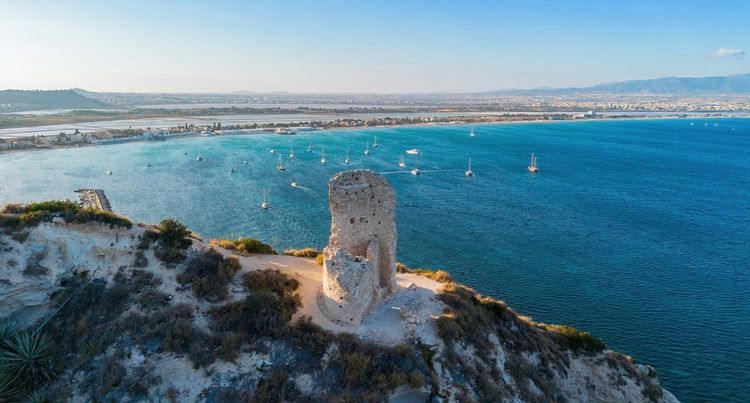
The afternoon is ideal for descending from the Castello to the working-class neighborhoods around it, each with its own identity: the Marina on the port side, Stampace on the Roman ruins side, and Villanova a little further out for those who like quiet.
The Marina and the Port District
Leaving the Castello via the Bastione San Remy, you come straight into the Marina, the shopping district bordering the marina. Strolling through the port district in the late afternoon, when the terraces start to fill up, gives a fairly accurate idea of Cagliari's rhythm of life: covered market, craft shops, and fish restaurants packed side by side in narrow alleys that recall Naples more than the rest of Sardinia.
The Villanova district, a little to the northeast, is worth a detour if you have time: less touristy, it preserves its low houses and neighborhood workshops, far from the bustle of the Marina.
Stampace and the Roman Amphitheater
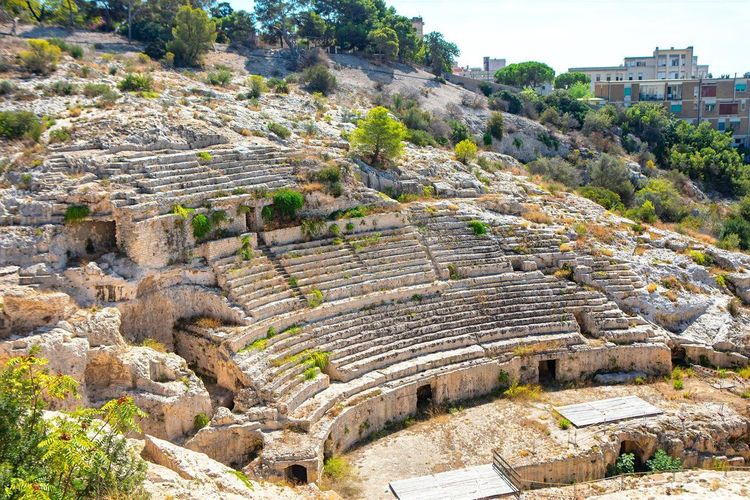
On the other side of the Castello, the Stampace district, a former suburb of Pisan merchants, leads straight to the Roman amphitheater, carved directly into the rock in the 2nd century AD and capable of holding up to ten thousand spectators at the time.
Only the tiers cut into the limestone and part of the underground corridors remain, but the site gives a concrete sense of the importance of Cagliari, then Carales, under Roman rule. Admission costs 3 euros (free for children under 6), with split hours in summer, from 10 a.m. to 1 p.m. and then 3 p.m. to 7 p.m. If you also plan to see the Crypt of Santa Restituta and the Grotta della Vipera, the combined municipal monuments ticket, at 8 euros and valid for seven days, quickly pays off.
The Villa di Tigellio and the Tuvixeddu Necropolis
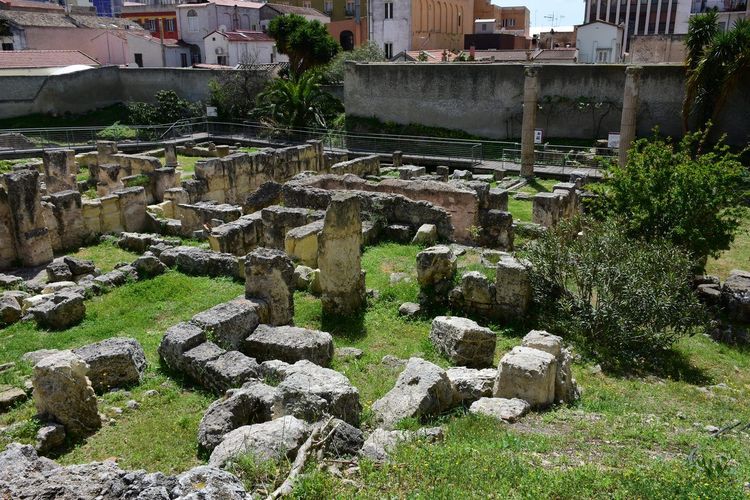
A stone's throw from the amphitheater, the Villa di Tigellio (Via Tigellio, 09124 Cagliari CA, Italy, rated 4.0/5 on Google from 310 reviews) gathers the remains of several Roman houses with mosaic floors still partially visible.
Heading west up the neighboring hill, the Punic necropolis of Tuvixeddu is the largest Phoenician-Punic necropolis in the Mediterranean, with tombs carved into the limestone rock dating from the 6th century BC.
The site, surrounded by an urban park, can be visited freely during the day; bring good shoes as the terrain remains uneven in places.
Cagliari's Underground Sites
You haven't seen all of Cagliari until you go underground. The underground sites of Cagliari comprise a network of galleries and cisterns dug over the centuries, some dating from Roman times, others converted into air-raid shelters during World War II.
Most of Cagliari's undergrounds are visited with a guide, by reservation; allow about an hour. Two municipal sites are easier to access: the Crypt of Santa Restituta, in Stampace, a rock-cut church that served as a shelter during the 1943 bombings, and the Grotta della Vipera, a Roman tomb carved into the rock at the foot of Tuvixeddu, whose façade sculpted with a serpent gave it its name. Bring a light sweater: the coolness is surprising even in midsummer.
If you saved a few stops of the "Sardinian Treasure" audio guide for the afternoon, listen to them on the way down to the Marina: between two shop windows, before the aperitif, they put into perspective what you saw in the morning on the heights.
Day 2 (Morning): Cagliari's Beaches and the Sella del Diavolo
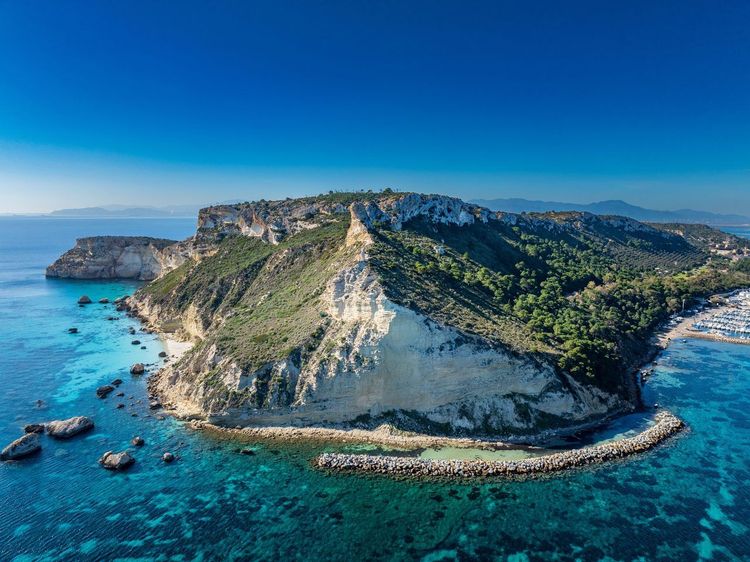
Devote the morning of the second day to the sea: Cagliari has the rare distinction, for a regional capital, of having its beach right in the city, a fifteen-minute bus ride from the historic center.
Poetto Beach and the Waterfront
The Poetto beach stretches eight kilometers between the city and Capo Sant'Elia, making it one of the longest urban beaches in Italy. The popular Poetto beach is divided into about thirty "stabilimenti" (private establishments with sun loungers) and free-access sections, quieter at the Sella del Diavolo end (Capo Sant'Elia, 09126 Cagliari CA, Italy, rated 4.8/5 on Google from 1,857 reviews).
The waterfront, renovated in recent years with a continuous bike path, is suited equally to a morning swim or a brunch at one of the many kiosks lining the sand, Cagliari's busiest beach in every season.
Calamosca, Sant'Elia and Capo Sant'Elia
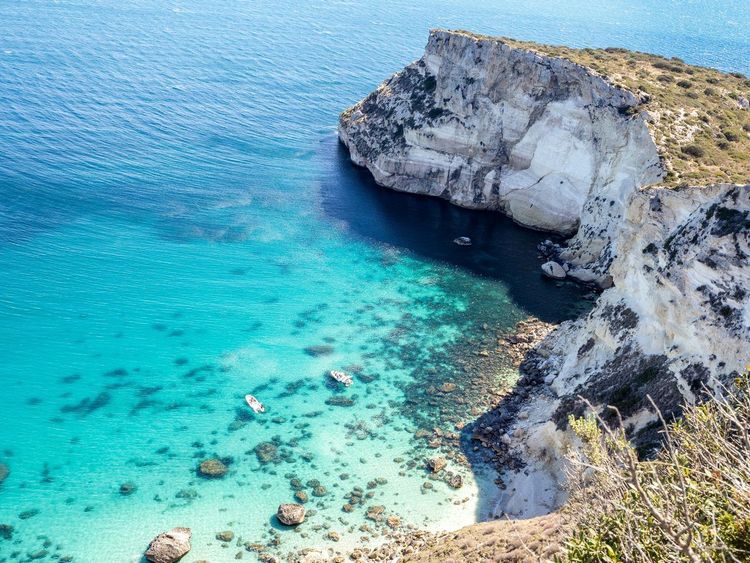
Past the Sant'Elia fishing district, two small beaches nestled among the rocks offer a more intimate alternative to the bustle of Poetto: Calamosca beach, a crescent-shaped cove sheltered from the wind, and Sant'Elia beach, more urban, just below the stadium of the same name.
The Capo Sant'Elia, a rocky promontory closing the gulf to the south, marks the starting point of the trails that climb to the Sella del Diavolo.
Hiking the Sella del Diavolo
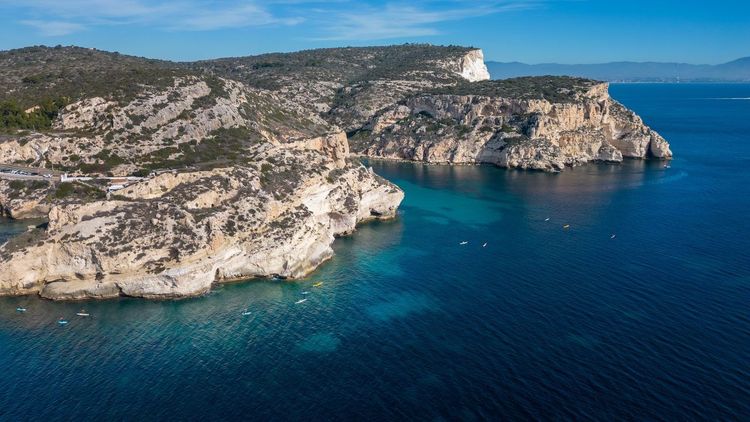
The Sella del Diavolo (literally "the Devil's Saddle") is the saddle-shaped promontory overlooking the whole Gulf of Cagliari. Two trails climb it from Calamosca: the shorter takes a little under an hour round trip, with a moderate elevation gain but sometimes discreet waymarking toward the end.
Start early in the morning in summer: there is practically no shade along the route, and the wind blowing at the top of the ridge often drops in late morning. The Sella del Diavolo hike rewards you with a 360-degree view over Poetto and the Molentargius ponds, all the way to the Sarrabus mountains on a clear day.
Cruise on the Gulf of Angels
To see Cagliari from the water, several companies offer a boat cruise on the Gulf of Angels departing from the Marina, often with a swim stop off Poetto. A sunset cruise in Cagliari, when the golden light illuminates the Castello's façade from offshore, remains one of the most photographed views of the city, best booked the day before in high season as places go quickly.
From the summit, you will easily spot the Castello and the bastions you visited the day before: this is the moment to appreciate what the Ryo audio-guided tour of Cagliari tells about a city that long lived turned toward this gulf. For a full overview, our article on the most beautiful beaches in Cagliari details access and bus schedules from the center.
Day 2 (Afternoon): Molentargius Park and the Flamingos
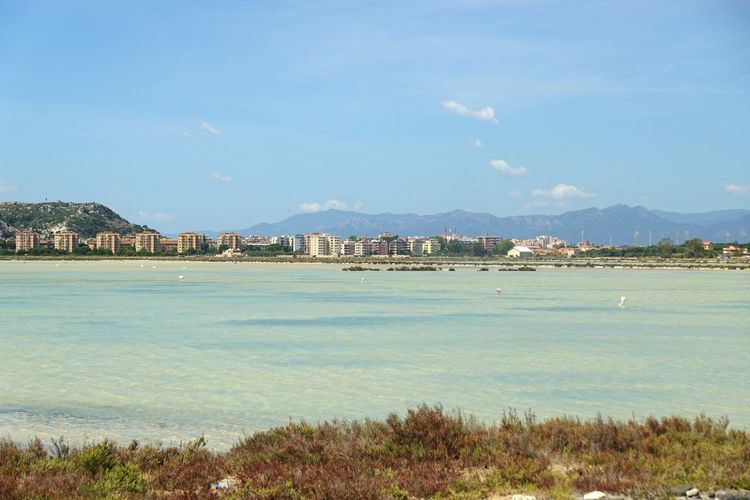
After the sea, head for the ponds. It is one of the sharpest contrasts of the weekend: going in twenty minutes by bus from the beach to a nature reserve where thousands of birds nest.
The Molentargius-Saline Nature Park
The Molentargius-Saline nature park occupies former industrial salt pans converted into a protected wetland since 1999, wedged between Cagliari and Poetto. Its flamingo population, several thousand individuals depending on the season, is easily observed from the marked trails or from the Edificio Sali Scelti, a former salt-refining building turned park headquarters and environmental education center. Binoculars are still useful, even though some groups feed a few dozen meters from the paths.
The best time to watch the flamingos remains sunrise or late afternoon, when the low light colors the salt basins a pink almost identical to that of the feathers.
The Salt Marshes and the Botanical Garden
The salt marshes west of Cagliari, still partly active on the Macchiareddu side, complete the visit for those interested in the city's industrial history: Cagliari's salt was already being exported in Phoenician times. Back in town, the botanical garden, laid out in the 19th century on former Roman quarries, offers a shaded break with more than two thousand Mediterranean and tropical species.
The Parco di Monte Urpinu, on a hill east of the center on the road to Poetto, offers a lesser-known alternative: pine grove, a small pond with free-roaming ducks and peacocks, and a viewpoint from which you can see the Molentargius basins below.
Excursion to the South: Villasimius, Chia and Pula
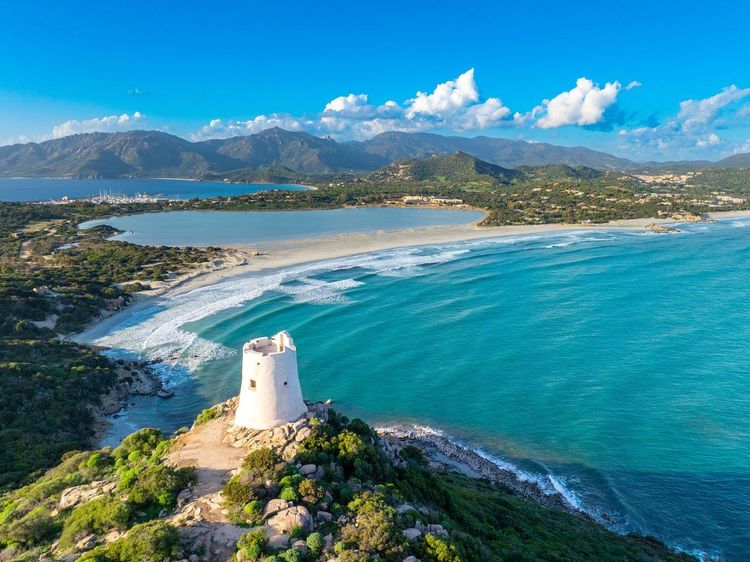
With a rental car and an extra half day, the coastline south of Cagliari opens onto beaches that rival the Caribbean in water color, without the long-haul flight.
Villasimius and Its Beaches
Forty-five minutes' drive east of Cagliari, Villasimius (Via del Mare, 09049 Villasimius CA, Italy) has several of the most beautiful beaches in southern Sardinia: fine white sand, turquoise water that stays shallow over long distances, and protected dunes.
The seaside resort, livelier in summer than the rest of the south coast, also has a small marina from which boats leave for the Isola dei Cavoli and the Capo Carbonara marine protected area.
Pula, Chia and Porto Pino
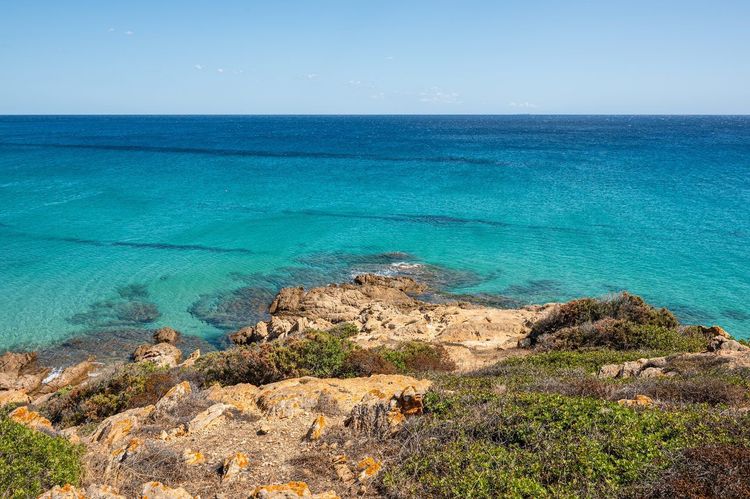
Heading west, the road along the coast passes through Pula, a quiet little town mainly known as the starting point for the Nora archaeological site, before reaching Chia, renowned for its fossil dunes and its lagoon where passing flamingos sometimes nest.
Further on, Porto Pino spreads out some of the highest dunes in Europe, an almost Saharan landscape about 1h15 by road from the Sardinian capital.
Teulada and Tuerredda
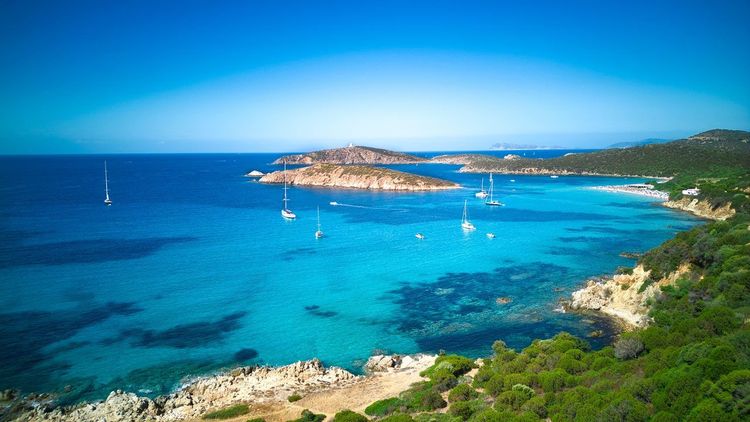
At the southwestern tip, Teulada and its neighboring beach of Tuerredda close off the coastline before the military zone protecting the point. Often cited among the most beautiful beaches in southern Sardinia, Tuerredda combines very fine sand with shallow water ideal for families.
On the road to Villasimius, east of Cagliari, the municipality of Maracalagonis is a possible stop to discover nuraghi less visited than those in the center of the island, for those with a little time left before getting back on the road. What to see around Cagliari is not limited to this list: our selection of the most beautiful places to visit in Sardinia digs even deeper into the subject for a longer stay.
Excursion Inland: Su Nuraxi di Barumini and Nora
Not every excursion around Cagliari leads to the beach. Two major archaeological sites can each be visited in a day, one facing inland, the other directly on the coast.
Su Nuraxi di Barumini, a UNESCO Site
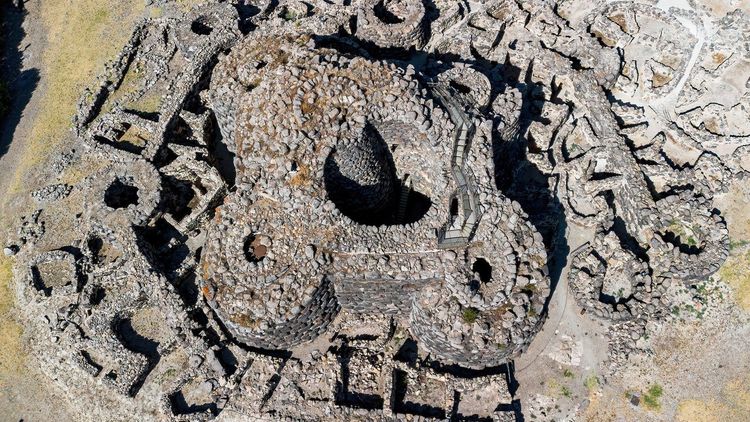
A little under an hour's drive north of Cagliari, Su Nuraxi di Barumini is the best-preserved nuragic complex in Sardinia and one of the few prehistoric sites in the Mediterranean basin listed as a UNESCO World Heritage Site.
The visit to the UNESCO archaeological site of Su Nuraxi di Barumini is done with a guide only, in small groups, for about an hour: you climb into the central tower, more than three thousand five hundred years old, before walking through the village of huts that surrounds it.
The Nora Archaeological Site
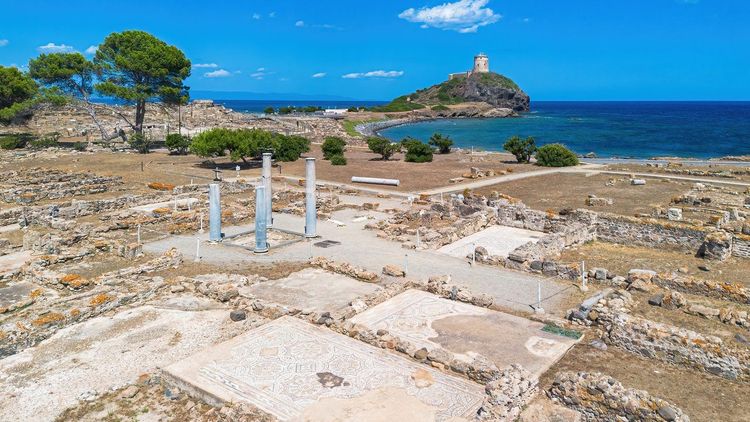
On the coast, near Pula, the Nora archaeological site occupies a peninsula where three civilizations are layered: Phoenician, Punic and then Roman. An ancient theater, baths, mosaics and paved streets can be visited at the water's edge, in a rather spectacular setting that few Italian archaeological sites can claim.
Combine the visit with a swim at the neighboring Nora beach, just below the ruins, for a full day of history and sea.
Monte dei Sette Fratelli
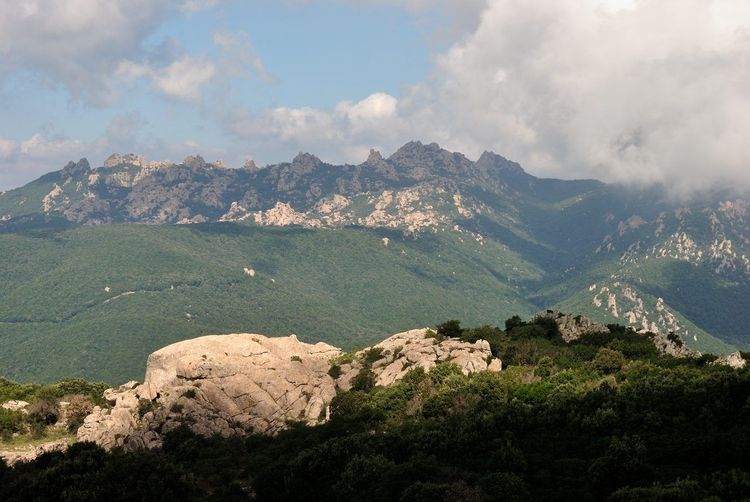
For hiking enthusiasts, the Monte dei Sette Fratelli massif, northeast of Cagliari, shelters one of the last wild populations of Sardinian deer on the island, in a dense Mediterranean forest that contrasts with the coast. Renting a car to explore around Cagliari and across Sardinia remains the simplest way to combine these excursions without depending on the infrequent regional buses, which mostly serve the main coastal routes. For more ideas starting from Cagliari, our selection of the must-do things in Sardinia completes this list with lesser-known sites.
Where to Eat in Cagliari: Culurgiones, Bottarga and Fregola
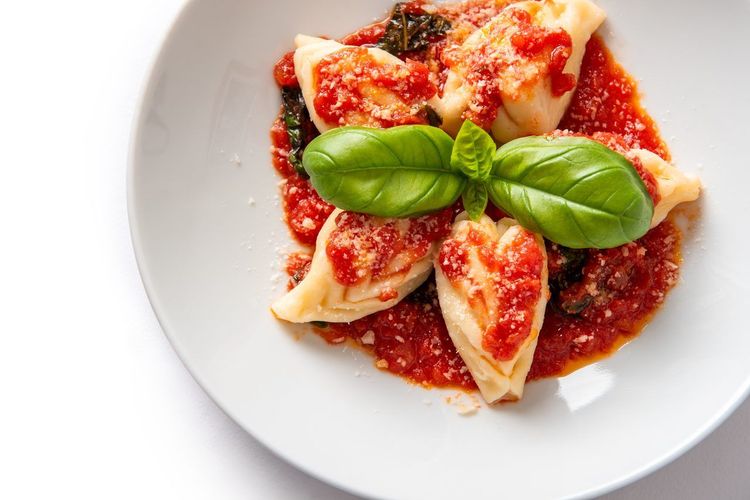
Cagliari's cuisine deserves at least one full meal in the program, even if it means sacrificing a site to take the time to sit down at the table.
Specialties to Try
Culurgiones, bottarga and fregola sum up Cagliari's cuisine on their own. Culurgiones are large hand-sealed ravioli with a wheat-ear pattern, filled with potato, pecorino and mint. Bottarga, dried and pressed mullet roe, is grated over pasta or simply enjoyed sliced with a drizzle of olive oil. Fregola, small balls of toasted semolina, traditionally accompanies seafood, especially clams caught in the nearby lagoons.
For a full meal without breaking the bank, the trattorias of the Marina district are a safe bet, as are some discreet addresses in the Castello, less visible from the street but often run by the same family for decades.
The San Benedetto Market
The San Benedetto market, opened in 1957 and billed as the largest covered market in Italy with its 8,000 square meters on two levels, brings together fishmongers, butchers, greengrocers and cheesemongers in an atmosphere that is anything but touristy.
The fish level, on the lower ground floor, is worth a visit even without any intention to buy: this is where most of the city's restaurateurs shop early in the morning. Our top 9 culinary specialties of Cagliari details the addresses and dishes ## Where to Stay in Cagliari: Neighborhoods and Accommodation Tips
The choice of neighborhood depends mostly on the pace you want to give these two days.
Staying in the Castello or the Marina
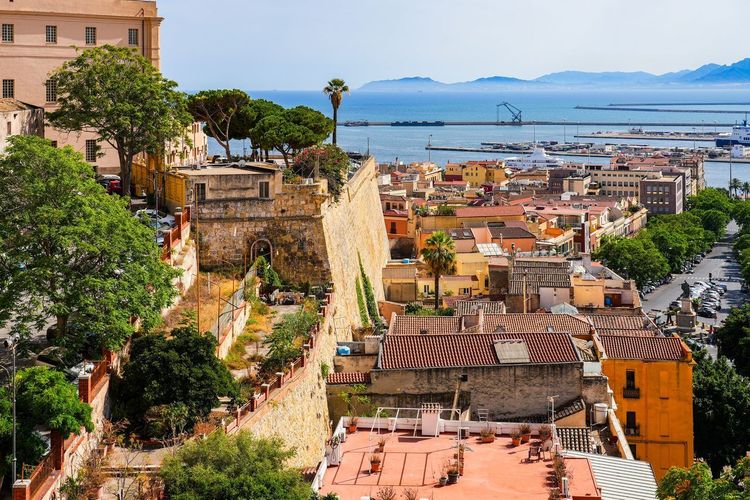
Staying in the Castello puts you right in the heart of the first day's sites, often with a stunning view from the terraces, but the steep alleys are impractical with heavy luggage. The Marina, just below, offers a comfortable compromise: five minutes' walk from the Castello, with more restaurants open late and direct access to the bus to Poetto. From historic palazzi converted into boutique hotels to charming B&Bs run by locals, the offer covers every budget in these two central areas.
Family-Run Places and Charming B&Bs
With children, look instead toward Poetto: apartments there are often larger, with the beach within walking distance and fewer stairs than in the Castello. The best places for a family stay are generally clustered around Via Roma and the waterfront, two areas well served by buses and quiet enough in the evening to put children to bed early without noise.
How to Get to Cagliari and Get Around
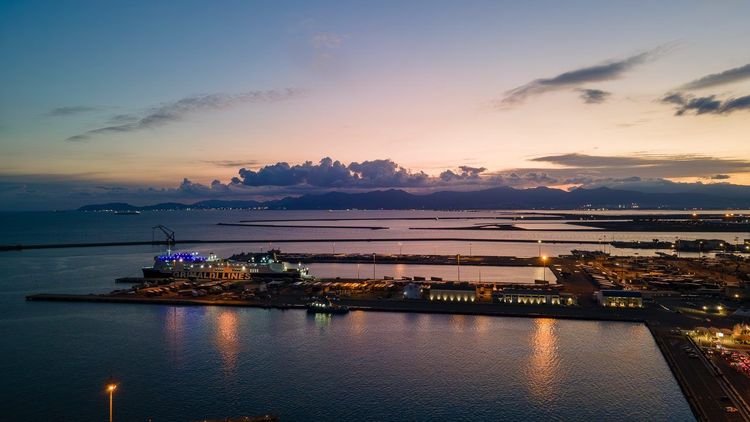
Good news: getting to the Sardinian capital from France is easy, and once there a car is almost unnecessary.
Flights, Formalities and Time Difference
Elmas airport, about seven kilometers from the center, receives direct flights from several major French cities, especially in summer when connections multiply. The direct flight time from Paris is around two hours. There is no time difference between France and Sardinia, as both share the same time zone. As for formalities, since Sardinia belongs to Italy and the Schengen area, a valid identity card is enough for a French citizen.
Getting Around Without a Car or Renting One
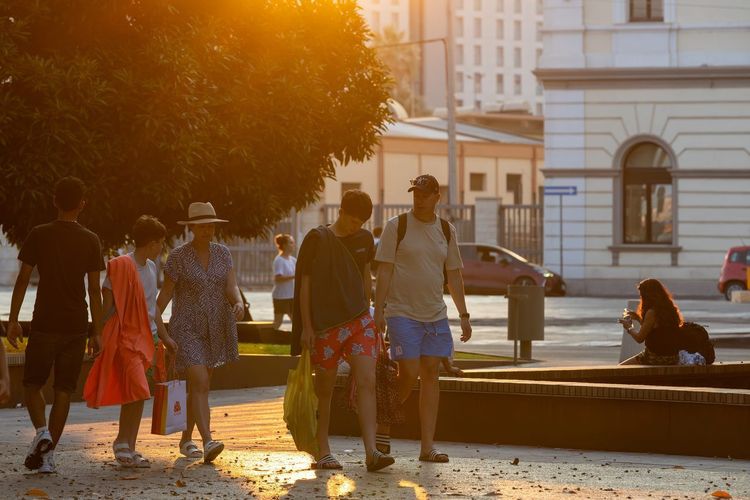
Without a car, the city center poses no difficulty: the Castello, the Marina and Stampace can all be covered entirely on foot. From Piazza Matteotti, a train reaches the airport in about seven minutes, and city buses run to Poetto in around twenty minutes. Going without a car becomes more limiting, however, for excursions to the south or to Barumini, where regional buses are rare on weekends. Renting a car at the airport then remains the most flexible solution, with rates that stay reasonable outside July-August.
When to Go: The Best Season to Visit Cagliari
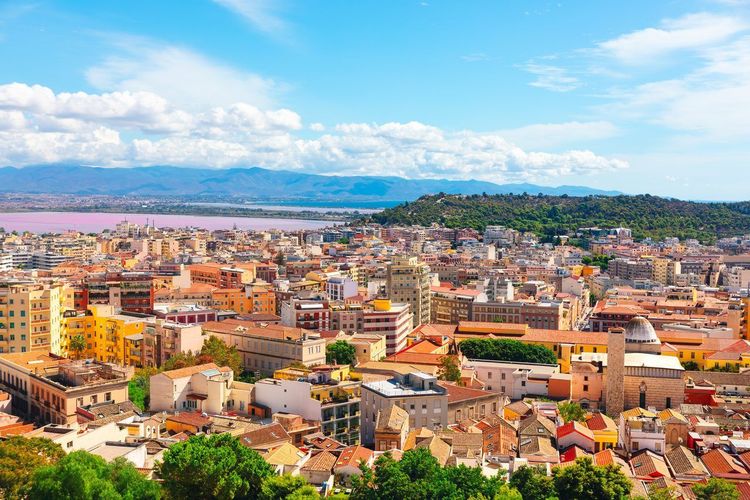
When to visit Cagliari depends mostly on what you are looking for in these two days: a crowded beach and a lively end-of-day atmosphere, or a quiet visit to the monuments without sweating under the midday sun. Sardinia's Mediterranean climate actually leaves a wide window for organizing your stay.
Spring and Autumn, Ideal Seasons
April-May and September-October offer the best conditions for combining these two full days of sightseeing with one or two excursions to the south without suffering from the heat: daytime temperatures around twenty-two to twenty-six degrees, a sea still warm enough for swimming until mid-September, and archaeological sites such as Nora or Su Nuraxi far less crowded than in peak season. Flight and accommodation prices drop noticeably once high season ends, which makes these two months particularly attractive for a tight budget on a two-day city break.
Summer, Between Heat and Crowds
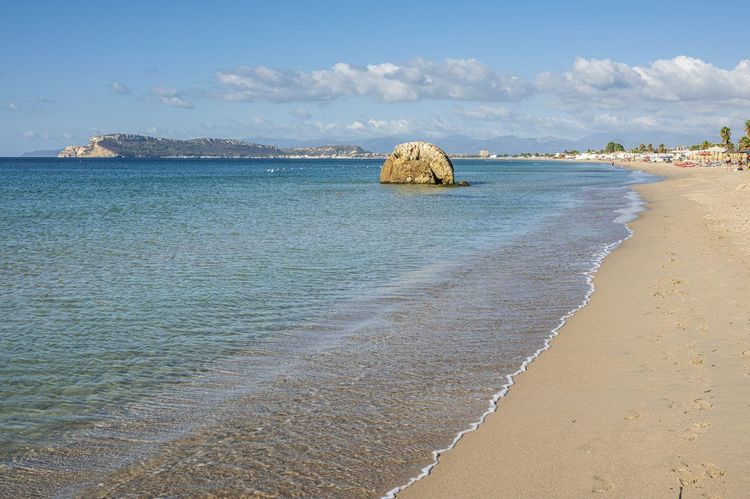
July and August regularly exceed thirty-two degrees during the day, with noticeable crowds at the Bastione in late morning and on the best-known beaches such as Poetto or Villasimius from ten o'clock. Summer is nonetheless Cagliari's liveliest season, with late evenings on the waterfront and nightlife centered around the Marina, provided you schedule heritage visits early in the morning or late in the day to avoid the heat peak. Winter, more discreet, mainly suits a cultural city break centered on the Castello, with no beach on the program.
Cagliari with Family: What to Do with Children
Hesitating to bring the kids on such a packed city break? The city, compact and bordered by the sea, is nevertheless very well suited to it.
The City Center with Children
The botanical garden and Monte Urpinu park offer two easy outdoor breaks between visits, with enough space to run around safely. Looking for the sculpted elephant on the tower of the same name, then counting flamingos at Molentargius, generally amuses children more than museums, even though the National Archaeological Museum has strong potential thanks to its nuragic bronzetti, almost at children's eye level in some display cases. Cagliari's underground sites, with their somewhat mysterious atmosphere, generally appeal to children over seven or eight, less so to toddlers intimidated by the dark.
Family Resources and Tips
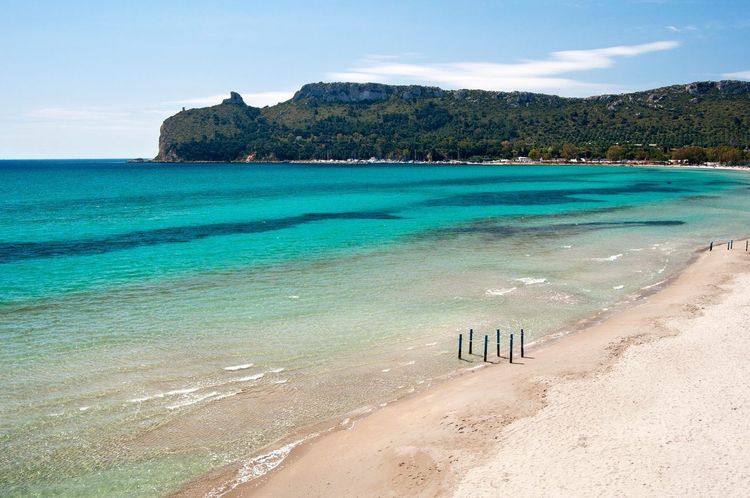
Favor the morning for heritage visits and reserve the afternoon for Poetto beach, shallow over long distances and supervised in summer on several sections. For the old town, the Ryo audio guide "The Sardinian Treasure" divides the walk into 17 short stops over 4.5 km: each pause offers a story to listen to, enough to keep children engaged without exhausting them, and everything works offline once downloaded.



FAQ
Is Cagliari worth visiting?
Absolutely: the Sardinian capital combines one of the best-preserved fortified historic centers in Italy, an eight-kilometer urban beach and quick access to major archaeological sites such as Nora or Su Nuraxi di Barumini, all within a compact area that can mostly be explored without a car.
What are the must-see sights in Cagliari?
The Castello is the top priority, with the Bastione di Saint-Remy, Santa Maria Cathedral, the archaeological museum and the two Pisan towers (visible from the outside, closed for renovation). Add the Roman amphitheater, Poetto beach and, if time allows, a climb up the Sella del Diavolo for the view over the whole gulf.
What can I do in Cagliari in 2 days?
Two days are enough for the Castello and its museums, the Marina and Stampace districts, a beach morning at Poetto and an afternoon at Molentargius park to see the flamingos. An extra excursion, to the south or inland, ideally requires another half day.
What is the nicest neighborhood in Cagliari?
The Castello is appealing for its heritage and views, while the Marina stands out for its lively evening atmosphere with restaurants and bars. Many travelers end up preferring the Marina for sleeping and the Castello for sightseeing, as the two neighborhoods are only a few minutes apart on foot.
How many days should I plan to visit Cagliari and its surroundings?
Two full days cover the city center and nearby beaches. Allow three to four days to add Barumini, Nora and a day on the southern coast between Villasimius and Chia, without driving more than two hours a day.
Do I need to rent a car to visit Cagliari in 2 days?
No, not for the first two days: the city center, Poetto and Molentargius can all be reached by bus or on foot. A rental car only becomes useful for excursions beyond Cagliari, to Barumini, Nora or the southern beaches, where public transport connections remain limited.
Cagliari in 2 Days: Key Takeaways
Two days, well divided by neighborhood and half-day, are therefore more than enough to grasp what makes Cagliari so endearing: a compact fortified center, an exceptional urban beach and surroundings that have nothing to envy from the rest of Sardinia. To keep the historical thread while walking, the Ryo audio guide to Cagliari remains the simplest complement to this guide, to carry right in your pocket for both days.