© Shutterstock
 Votre guide Ryo
Visiting Genoa Without a Car in 2026: the Complete Guide on Foot, by Bus and by Train
In Genoa, a car is often a problem you create for yourself. Visiting Genoa without a car is actually the most logical way to discover the city: the alleyways of the historic centre, the famous caruggi, are so narrow that a saloon car couldn't even pass through at walking pace, and parking in the tourist neighbourhoods easily costs 25 to 30 euros a day. Yet every year, visitors arrive in rental cars convinced they need one, only to leave it in the car park and never touch it again for the rest of their stay. You don't have to make the same mistake, and the Ryo audio-guided tour of Genoa is designed precisely for that: on foot, with an earpiece, and the city unfolding neighbourhood by neighbourhood.
This guide covers everything you need to know: how to get to the city by train, plane or bus, how to get around once you're there thanks to the AMT network and the historic funiculars, which neighbourhoods to explore on foot (from the Porto Antico to the caruggi and Boccadasse), and how to continue, still without a car, on a day trip to Portofino, Camogli or the Cinque Terre. We also include addresses for eating and sleeping near the stations, and practical information to put together a realistic itinerary over two, three or four days.
Why Visiting Genoa Without a Car Is the Best Option
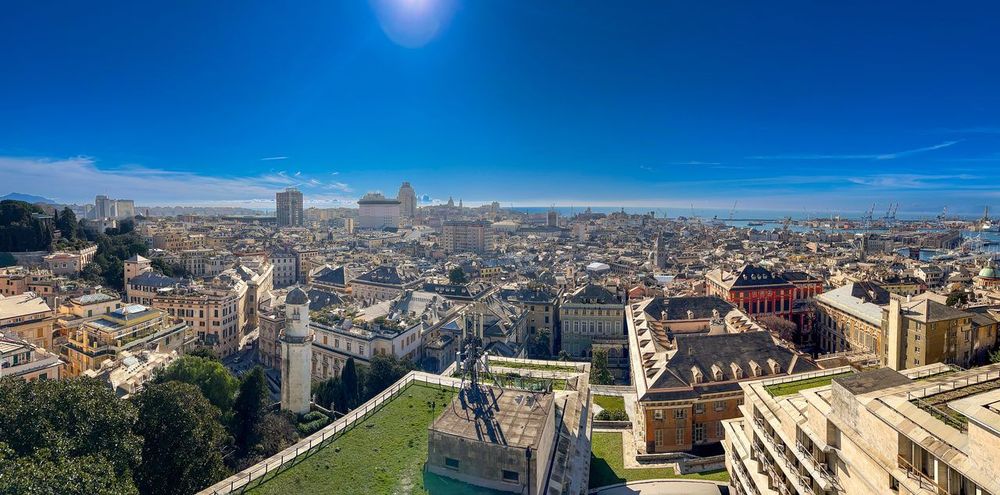
Genoa was built in layers on a strip of hills wedged between the sea and the mountains, which produced an urban landscape unique in Italy: a medieval historic centre so dense that it remains, to this day, one of the largest in Europe, threaded with alleyways where two people can barely pass each other. Driving and parking in Genoa is literally a headache in this labyrinth, not to mention the Limited Traffic Zone (ZTL) that restricts access for unauthorised vehicles to much of the centre, with fines sent directly to rental companies.
On the other hand, everything most visitors are looking for — the port, the cathedral, the palaces, the seafront neighbourhoods — is within walking distance or a handful of bus stops away. You save time by giving up the car, you save the cost of parking that often exceeds the price of lunch, and you discover the city the way the Genoese themselves experience it every day: on foot, by bus, or suspended in a funicular above the rooftops. Even residents who own a car generally reserve it for trips out of the city.
How to Get to Genoa Without a Car
Getting to Genoa without a car requires some advance planning, but remains straightforward once you know the options. Three modes of transport allow you to reach the city directly from France or the rest of Italy, each with its own trade-offs in time and budget.
By Train, the Simplest Option
The train remains, for the majority of visitors coming from France, the most comfortable option. From Nice, the journey passes through Ventimiglia, where you change to an Italian regional train that follows the entire Ligurian Riviera to Genoa: allow around 4 to 5 hours, with sea views for much of the way. From Paris, the most common connection goes via Milan, for a total journey of around 9 to 11 hours depending on connections. Booking a few weeks in advance often cuts the fare in half on Italian high-speed segments. From within Italy, Trenitalia and Italo services are frequent: around 1h30 to 2 hours from Milan, just under 2 hours from Turin, and 4h30 to 5 hours from Rome.
Genoa has two main stations: Genova Piazza Principe (Piazza Acquaverde, 16126 Genova, rated 4.1/5 on Google based on 1,914 reviews), on the port and historic centre side, and Genova Brignole, closer to the eastern neighbourhoods. Check which one is nearest to your accommodation before booking, as the two are about 2 kilometres apart and connected by the metro line or by bus. Most long-distance trains stop at both stations, in this order when arriving from the west.
By Plane via Cristoforo Colombo Airport
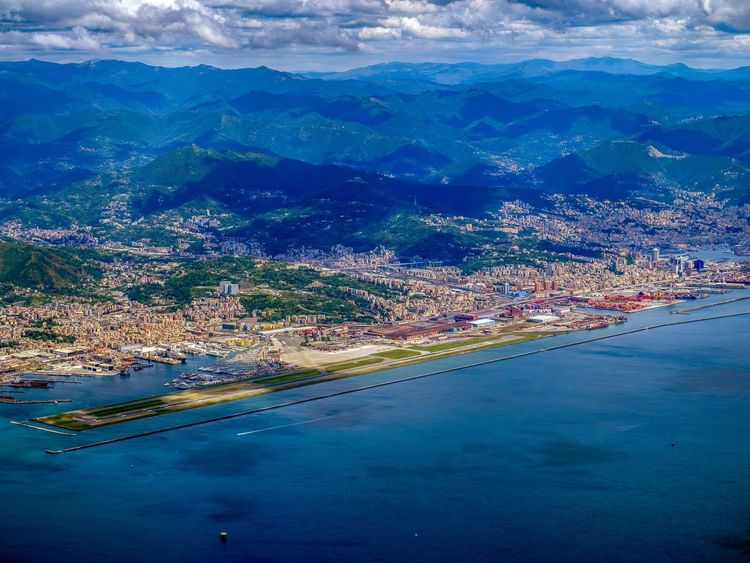
Genoa's airport, Cristoforo Colombo, is a small regional airport located about 6 kilometres from the city centre, convenient for flights from several European cities. How do you get from the airport to the centre of Genoa without a car? The Volabus shuttle connects the airport directly to the centre, with stops at Piazza Principe and Piazza De Ferrari, in about twenty minutes, for a fare under 10 euros. It is by far the simplest solution, cheaper than a taxi and without the parking costs of a rental car, which add up quickly if you were only planning to stay two or three days.
By Long-Distance Bus
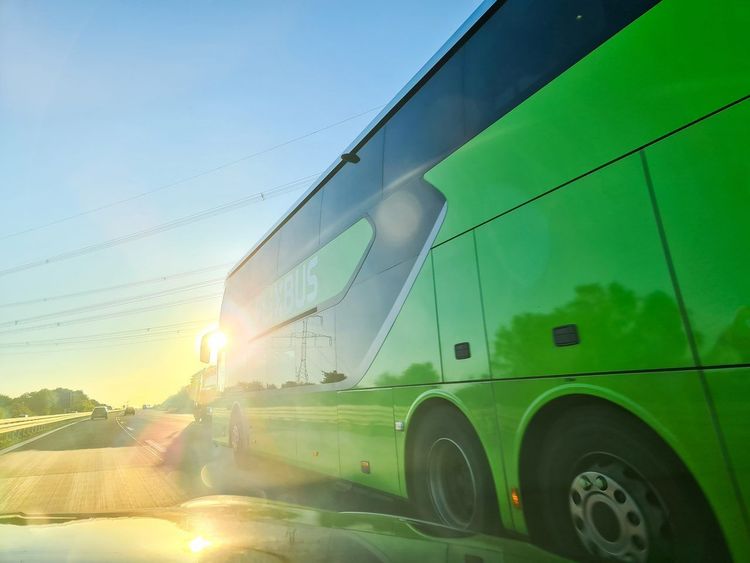
For budget travellers, long-distance bus companies (FlixBus chief among them) serve Genoa from several major French and Italian cities, with a stop generally located near Genova Brignole station or the Foce neighbourhood. Allow a longer journey than by train, sometimes twice as long, but often two to three times cheaper: a reasonable option if you are travelling without time constraints or at the last minute, when train tickets are already showing high fares.
Getting Around Genoa Without a Car
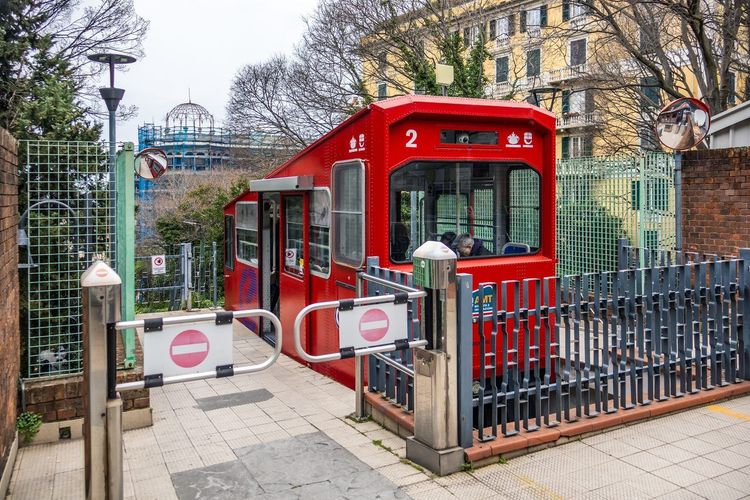
This is where the car-free angle really comes into its own. How do you get around Genoa once you're there? The answer comes down to three words: bus, walking, funicular.
The AMT Bus and Metro Network
The AMT operator runs a dense network of buses, a single metro line and the historic funiculars and elevators. A single ticket costs around 2 euros and remains valid for about a hundred minutes across the entire network, including transfers. If you are staying several days, a 24-hour pass becomes worthwhile as soon as you take four or five journeys. Tickets can be bought at tobacconists, at vending machines or via the AMT app, which is handy for avoiding the hunt for exact change.
The metro line, short with only eight stations, connects Brignole to De Ferrari in the historic centre, to Principe and the Brin neighbourhood, making it a welcome shortcut when fatigue sets in after a day of walking. Buses run late into the evening on the main lines, enough to cover a late dinner in the caruggi without having to look for a taxi.
Exploring the Historic Centre on Foot
Visiting Genoa on foot is not only possible — it is the recommended way to discover the heart of the city. The historic centre can be explored entirely on foot, from Porto Antico all the way to Via Garibaldi, passing through the caruggi. Allow about thirty minutes to cross it from one end to the other, not counting stops, detours and the temptation to linger in front of a window full of still-warm focaccia.
Visiting Genoa by public transport naturally complements walking for longer distances, towards Boccadasse or Nervi for example. What about cycling? The option remains marginal: the hilly terrain and the cobblestones of the caruggi are not well suited to it. Save the bike for flat coastal rides, along the Corso Italia and the sea, towards the east of the city.
Funiculars and Public Elevators for Gaining Altitude
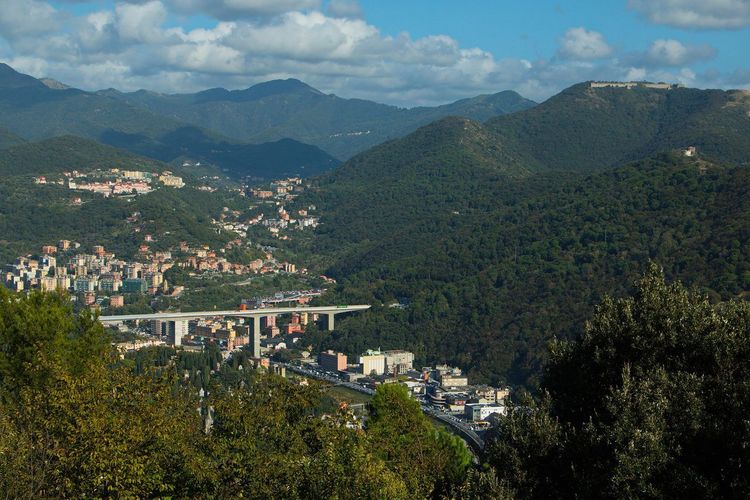
Genoa has several funiculars and public elevators integrated into the AMT network, inherited from an era when climbing the hills without a car was already a necessity. The Zecca-Righi funicular departs from the centre and climbs up to the heights of Righi, a gateway to the forts that dominate the city, with a panorama that justifies the journey on its own, especially late in the day when the raking light skims the rooftops. Other elevators, such as the one at Castelletto, allow you to gain altitude in just a few minutes for the price of a standard bus ticket.
Getting around Genoa without a car is therefore not a compromise — it is a genuine tourist asset. That is exactly the spirit of the Ryo la Superba dall'Italia audio-guided tour: 21 audio stops over 1h50 and 4.6 km, to follow on foot or between bus stops, without ever unfolding a paper map.
Porto Antico, the Starting Point on Foot
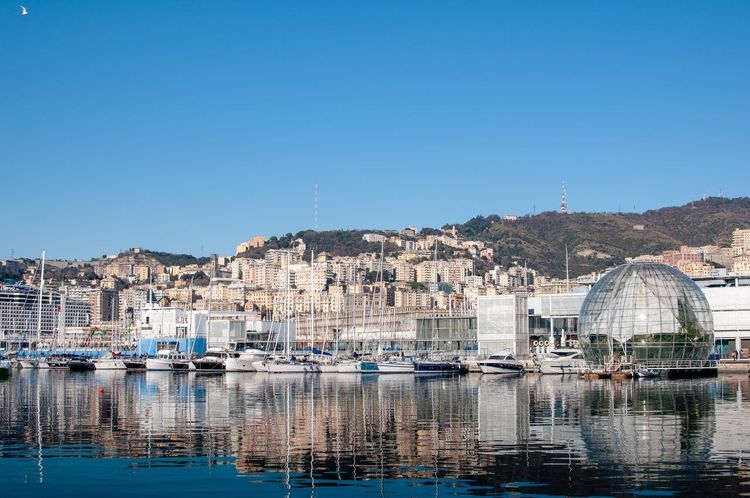
The Porto Antico, Genoa's old port, is the natural starting point for any car-free visit: you can walk there from Principe in a quarter of an hour, and it is from here that most of the city centre's neighbourhoods radiate.
The Aquarium and the Galata della Mar Museum
Exploring Porto Antico often starts with the Genoa Aquarium, the largest in Italy and one of the largest in Europe, with tanks dedicated to dolphins, sharks and penguins. Allow a good half-day if you want to see everything without rushing: the visit unfolds over several floors and continues aboard a ship moored at the quay. Booking tickets online generally avoids a good part of the queue, which can be particularly long at weekends and on public holidays.
Nearby, the Galata della Mar museum tells the story of Genoese maritime history through a full-scale reconstruction of a 17th-century galley and an immersive exhibition on Italian emigration to the Americas. It is an underrated museum, often overshadowed by the aquarium, but just as rewarding for anyone interested in the history of the port.
The Bigo Panoramic Lift and the View over the Port
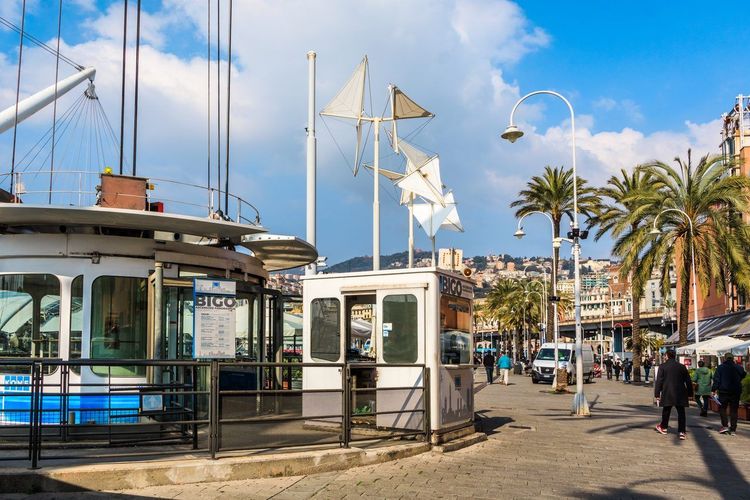
Riding the Bigo panoramic lift — this Renzo Piano structure designed for the 1992 Expo, evoking a shipyard crane — offers a 360-degree view over the port and the hills that surround it. The cabin rises slowly, giving you time to spot the towers of the business district on one side and the rooftops of the historic centre on the other. The experience is brief, about fifteen minutes, but it gives you the best overview of the city before heading out to explore it on foot.
Strolling along the Quays and Basins
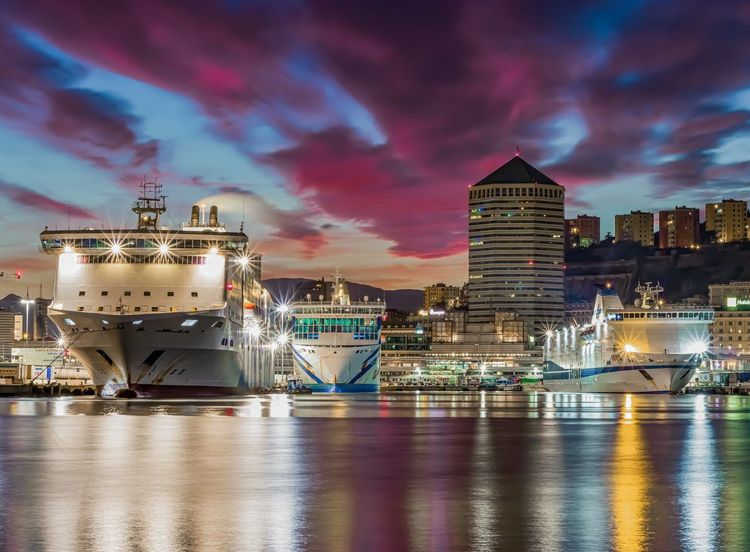
Beyond the paid attractions, Porto Antico simply lends itself to leisurely wandering: the redeveloped quays, the basins where sailboats and fishing boats are moored, the big wheel installed for part of the year. Sit on the steps facing the basin and watch the cruise ships manoeuvring in the distance: an hour passes quickly.
In the evening, the terraces come alive and the port takes on a different character, more local. Many Genoese families come here for a post-dinner stroll. It is also a good place to start the Ryo audio-guided tour: its 21 audio stops connect the waterfront to the alleyways of the centre, and tell you how this port made the fortune of the Republic of Genoa.
The Caruggi and San Lorenzo Cathedral
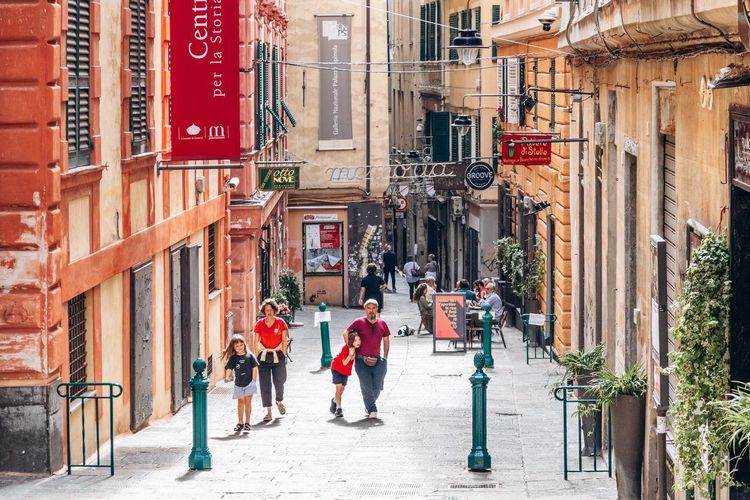
Heading up from Porto Antico, you step directly into the caruggi, that tight network of alleyways that makes up one of the largest medieval historic centres in Europe. This is where the real Genoa-on-foot experience unfolds.
Getting Lost in the Labyrinth of the Caruggi
Here, there is no fixed route: the alleyways follow one after another, sometimes dark and cool beneath tall buildings, sometimes opening onto a small square where laundry dries between two windows. You encounter centuries-old focaccerie, craftsmen's workshops and, from time to time, a Baroque church hidden behind an unremarkable façade. Plan to get deliberately lost: it is the best way to stumble upon the corners that guidebooks never mention.
As evening falls, the atmosphere changes completely. Wine bars set out tiny terraces, locals chat on their doorsteps, and the subdued lighting gives the caruggi an almost theatrical quality. One piece of advice, though: keep the alleyways closest to the port for daytime, and in the evening favour the lively streets around Piazza delle Erbe and Via San Lorenzo.
San Lorenzo Cathedral
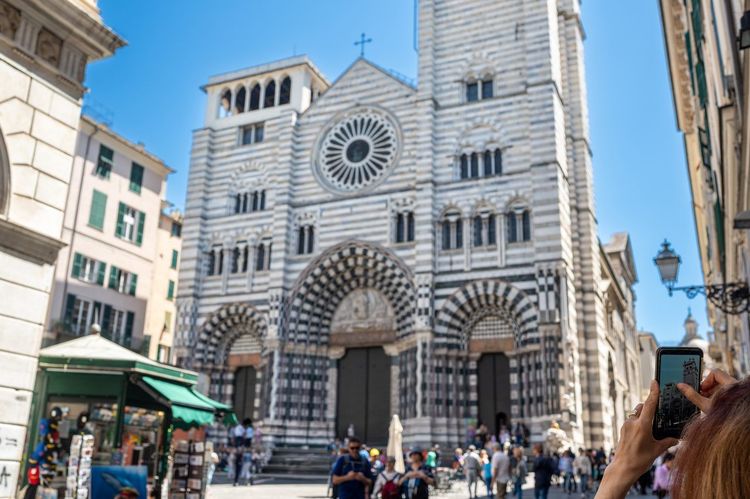
San Lorenzo Cathedral, with its façade striped in black and white bands typical of Ligurian architecture, is a must-see. The interior blends Romanesque, Gothic and Renaissance styles across successive rebuildings, and a side nave houses an unexploded shell fired by the British navy in 1941, left in place ever since. The two stone lions guarding the entrance have become one of the most popular meeting points in the city centre.
Piazza De Ferrari and the Giuseppe Mazzini Gallery
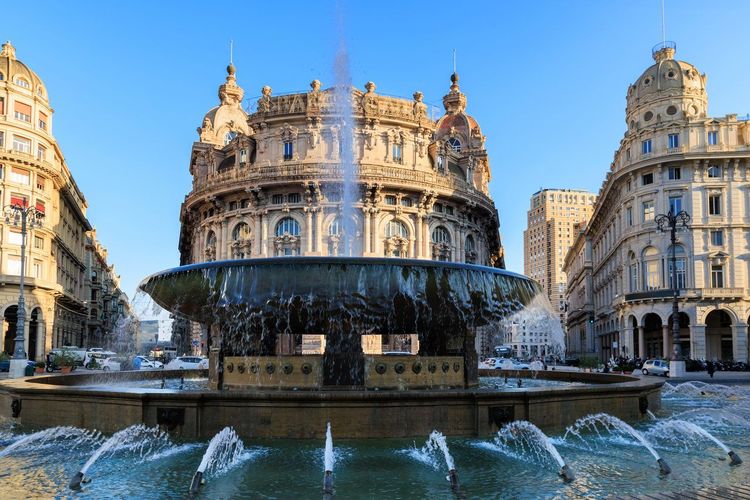
Emerging from the caruggi, you arrive at Piazza De Ferrari (Piazza De Ferrari, 16121 Genova, rated 4.8/5 on Google based on 300 reviews), Genoa's most iconic square, recognisable by its large central fountain and the façades surrounding it, between the Teatro Carlo Felice and the Palazzo Ducale. It is a lively pedestrian crossroads, perfect for a break and for watching the Genoese cross the square at all hours.
Just alongside opens the Giuseppe Mazzini Gallery, a 19th-century covered arcade housing shops and cafés beneath an elegant glass roof, a discreet nod to the Parisian passages of the same era. Several of the 21 audio stops on the Ryo audio-guided tour are concentrated in this area, between the caruggi, the cathedral and the Palazzo Ducale, with anecdotes told at the foot of each façade.
Via Garibaldi, Genoese Palaces and Via XX Settembre
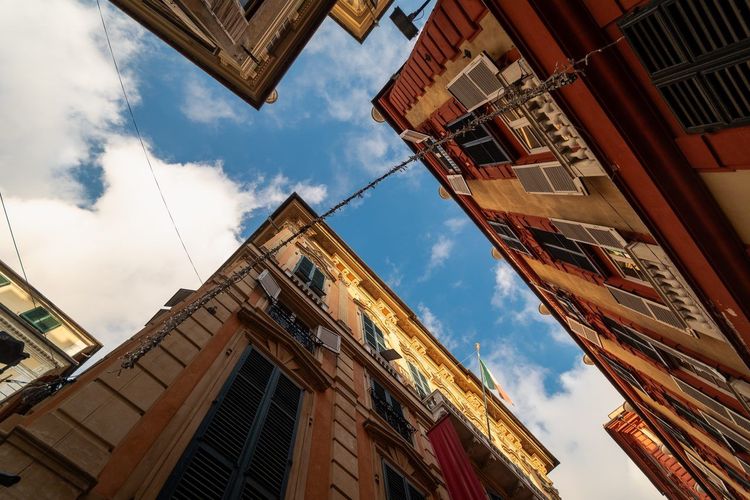
Strolling along Via Garibaldi allows you to admire the finest Genoese palaces, those residences of the 16th-century merchant aristocracy inscribed on the UNESCO World Heritage List as part of the Palazzi dei Rolli system. The painted façades and interior courtyards, often visible from the street, give a sense of the wealth accumulated by Genoa at the height of its maritime power. Palazzo Rosso, Palazzo Bianco and Palazzo Tursi, the seat of the town hall, together form the Strada Nuova museums, with collections of Italian and Flemish painting and, at Tursi, Paganini's violin.
Ten minutes' walk away, shopping on Via XX Settembre (Via XX Settembre, 16121 Genova, rated 4.4/5 on Google based on 4.3K reviews) offers a complete contrast: it is Genoa's most vibrant shopping street, lined with arcades that shelter you from rain and sun alike, with the Mercato Orientale halfway along to sample local produce, including Ligurian cheeses and cured meats. The street leads to Piazza della Vittoria, dominated by its massive 1930s triumphal arch, and then on to Brignole station, making it an excellent landmark axis if you are staying near that station.
Climbing to the Spianata di Castelletto for the View over the City
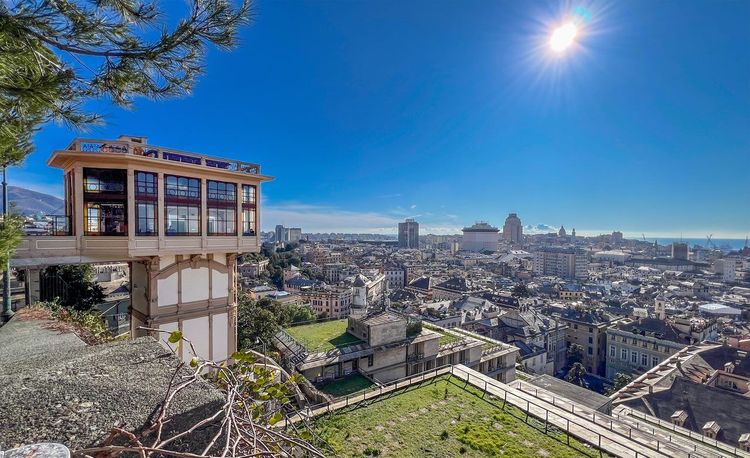
Taking the public Castelletto elevator from Piazza del Portello to reach the Spianata di Castelletto (Corso Firenze, 16136 Genova, rated 5/5 on Google based on 1 review) is one of the best arguments for going car-free: this belvedere, one of the most spectacular viewpoints over Genoa, can be reached in less than a minute's ascent for the price of a bus ticket.
From the terrace, the view takes in the port, the slate rooftops and bell towers of the caruggi, and the surrounding hills. Come at sunset, when the raking light brings out the nuances of the city. Allow twenty to thirty minutes on site, enough time for an ice cream or a coffee and a few photos, before heading back down by elevator or continuing on foot along the crêuze, those ancient stepped alleyways that wind their way down to the centre.
Boccadasse and Nervi, the Seafront Neighbourhoods Accessible by Bus
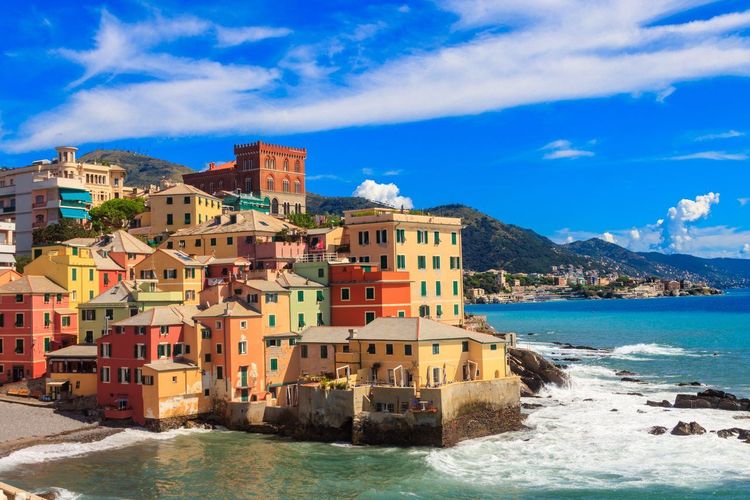
Two coastal neighbourhoods, located to the east of the centre, naturally complement a car-free stay in Genoa: Boccadasse and Nervi, both served by urban bus, and Nervi also by regional train.
Boccadasse, the Former Fishing Village
Wandering through the Boccadasse neighbourhood feels like a complete change of scale: no more palaces or grand squares, but a former fishing village with colourful houses clustered around a tiny pebble beach. A little over an hour is enough, between the beach, the perpendicular alleyways and an ice cream break on the wall facing the sea — an almost clichéd scene that works every time. From the centre, you can also walk there by following the Corso Italia, a seafront promenade of about an hour.
Nervi and Its Seafront
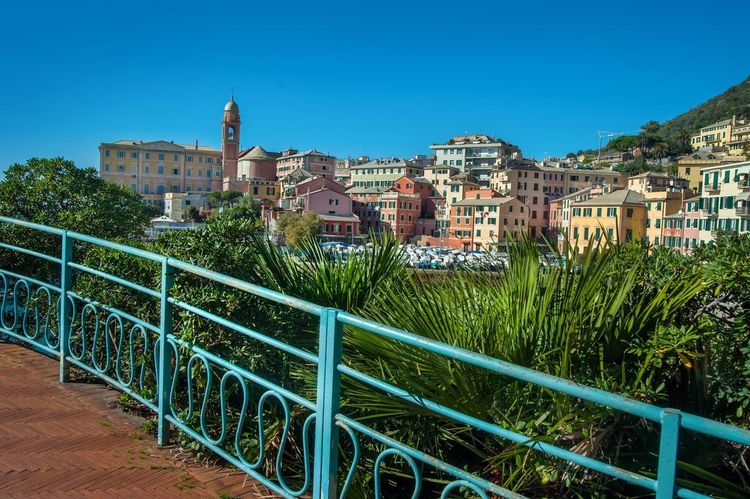
Further east, Nervi offers another face of the Genoese seafront: the Passeggiata Anita Garibaldi (Passeggiata Anita Garibaldi, 16167 Genova, rated 4.7/5 on Google based on 3.1K reviews) runs along the cliff for nearly two kilometres, between umbrella pines and rocky coves. Its English-style parks, inherited from 19th-century aristocratic villas and now open to the public, are particularly pleasant in spring. The regional train from Brignole drops you there in about a quarter of an hour, with the station just a short walk from the promenade. The seafront at Vernazzola and Sturla, along the way, is worth a stop — less well known but equally photogenic in the late afternoon.
Organisation tip: the Ryo audio-guided tour focuses on the historic centre. Listen to it on the first day to get your bearings, then save this coastal day for a freer pace, taking the bus or train both ways.
Car-Free Day Trips by Train: Portofino, Camogli, Cinque Terre
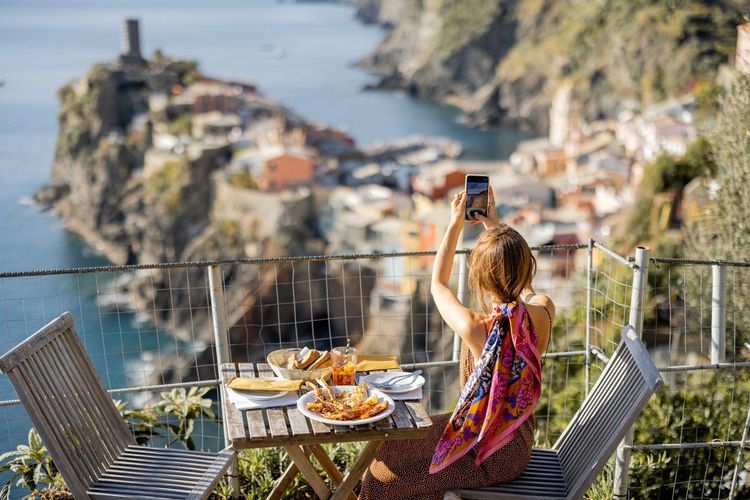
This may be the strongest argument for a car-free stay in Genoa: the three most sought-after destinations in the region — Portofino (Piazzetta di Portofino, 16034 Portofino, rated 4.6/5 on Google based on 1,926 reviews), Camogli and the Cinque Terre — can all be reached by regional train from Genoa's stations. Wherever you are staying, a day trip is easy to plan, for an average of around twenty euros return.
Camogli, the Village with Trompe-l'Œil Façades
From Genova Brignole, Camogli is about 30 to 40 minutes away by regional train. This fishing village lines its tall, colourful houses along the seafront, with trompe-l'œil painted façades simulating additional balconies and windows — a tradition often attributed to sailors who wanted to recognise their home from out at sea. The seafront promenade, dotted with fish restaurants, is entirely walkable from the station, and the Dragonara castle, of medieval origin, closes off the bay on the seaward side.
Portofino, Glamour Without a Car
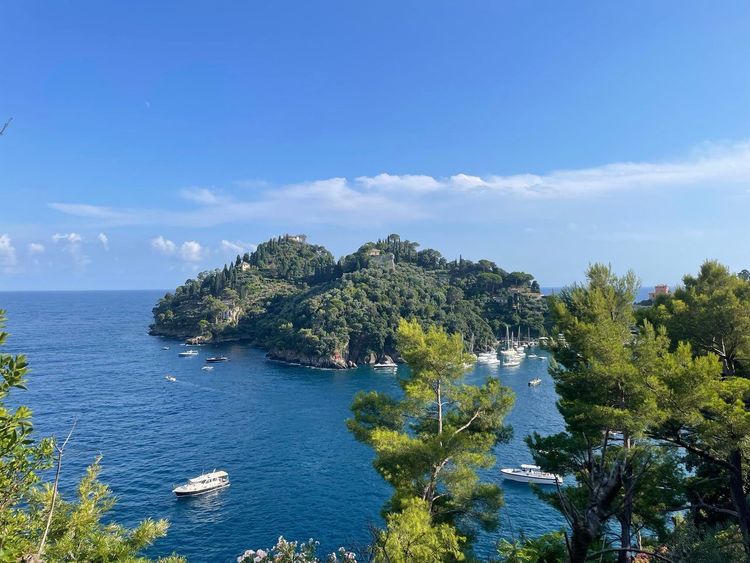
For Portofino, get off at Santa Margherita Ligure station, then continue by local bus along the coast (about twenty minutes) or by scheduled boat in fine weather. The village, with its piazzetta surrounded by ochre houses and moored yachts, can be explored on foot in an hour or two, with the option of climbing up to Castello Brown afterwards for the view over the bay. In high season, the narrow road to Portofino fills up quickly: the boat from Santa Margherita remains the most pleasant option in that case.
The Cinque Terre by Train from Genoa
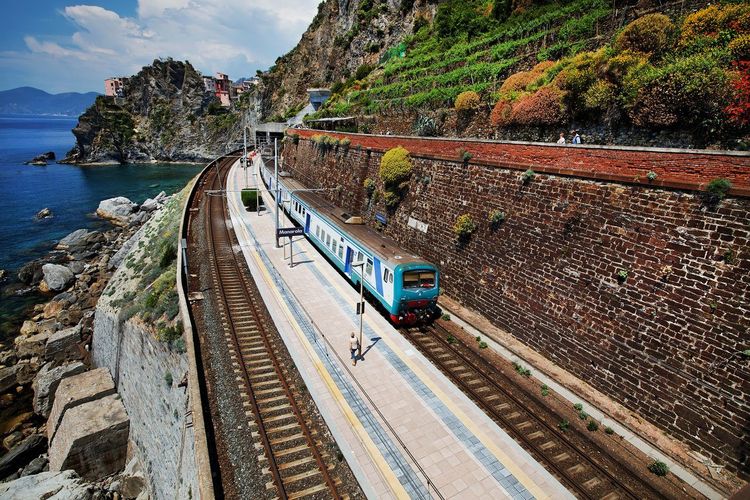
Can you get to the Cinque Terre from Genoa? Yes, and it is in fact one of the simplest excursions in all of Liguria without a car: regional trains connect Genova Brignole to Monterosso in approximately 1h20 to 1h40, then stop at Vernazza, Corniglia, Manarola and Riomaggiore. The Cinque Terre Card Treno then allows you to travel freely between the villages all day long — far simpler than a car on these narrow roads with no parking spaces. Leave early: by 10am in summer, the small station platforms are already crowded.
To explore these excursions in more depth, our article on the must-sees of Liguria details complementary itineraries village by village, useful for deciding between one or more days outside Genoa.
Where to Eat in Genoa Without Rushing
The best addresses are concentrated around the caruggi and Porto Antico, within walking distance of most accommodation in the centre.
What should you eat in Genoa? First and foremost pesto, which originated in this region and is traditionally served with trofie or trenette pasta. But the city also deserves time spent on its focaccia — thick and oily, sold by the slice in shops that have sometimes been open for a century. An improvised street food tour through the caruggi will have you tasting, in a single evening, farinata (a chickpea flatbread cooked in a wood-fired oven), fried panissa and fritto misto di pesce, often for just a few euros a portion, standing at the counter.
For restaurants, favour the no-frills trattorias tucked into the alleyways around Via San Luca or Via Giustiniani: it is often there, away from the most visible terraces, that the best home cooking is hidden, at gentler prices than on the tourist squares. For a quick lunch, focaccia bars offer takeaway options to eat on the steps of a square or on a bench facing the port.
Where to Stay to Visit Genoa Without a Car
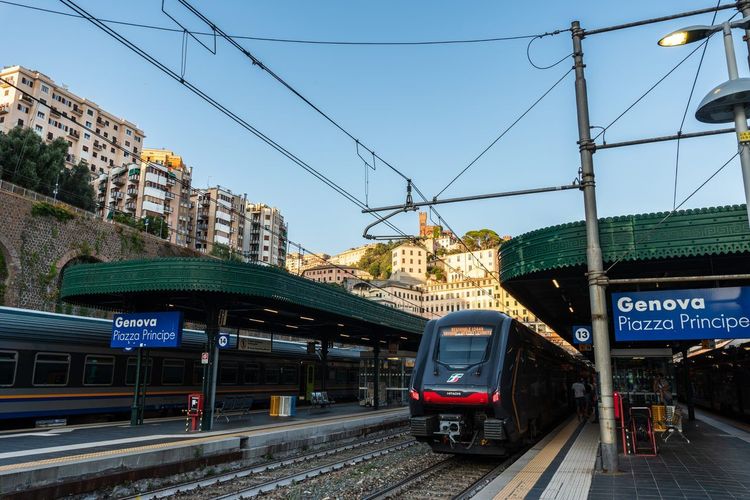
The best neighbourhoods to stay in without a car combine proximity to a station with direct walking access to the historic centre. The area around Genova Piazza Principe is ideal for a first stay: you step off the train and reach Porto Antico in a quarter of an hour on foot.
The Brignole neighbourhood offers an interesting alternative if you prefer a quieter evening, while still being within walking distance of Via XX Settembre and Piazza della Vittoria. It is also a good base for excursions to Nervi, Camogli and the Cinque Terre, since all eastbound trains stop there.
When choosing your hotel, check the stated distance to one of the two stations rather than the availability of parking: that is the criterion that will determine the real comfort of your car-free stay. Expect to pay between 80 and 130 euros per night for a decent hotel close to the centre, and considerably less for a bed and breakfast in the caruggi if you are happy to climb a few flights of stairs without a lift.
Practical Information: Budget, Safety and Best Time to Visit
When should you go to Genoa? Spring (April to June) and early autumn (September–October) offer the best conditions for walking: mild temperatures, fewer crowds than in the height of summer, and beautiful light on the port façades. Summer is still possible, but the humid heat makes walking through the caruggi more tiring in the afternoon.
How many days does it take to visit Genoa? Two full days are enough to cover the historic centre, Porto Antico and one seafront neighbourhood such as Boccadasse. Add a third day, or even a fourth, for a day trip to Portofino, Camogli or the Cinque Terre. If you are short on time, our selection of 5 things to do in Genoa will help you prioritise.
On the budget side, a car-free stay remains affordable: a few AMT tickets per day, a regional train ticket for each excursion, and the main sights (the caruggi, Via Garibaldi seen from the street, Castelletto, Boccadasse) cost nothing.
Is Genoa a dangerous city? No, Genoa remains a safe city for getting around on foot or by bus, including in the evening in tourist neighbourhoods. The standard precautions apply: be careful in the darkest and most isolated alleyways of the caruggi late at night, and pay normal attention to your personal belongings on crowded buses.
Visiting Genoa with a disability requires a little more preparation: the hilly terrain and uneven cobblestones of the caruggi make wheelchair access difficult, but Porto Antico, which has been largely redeveloped, remains accessible, as does a good proportion of AMT buses equipped with low-floor platforms. Check in advance regarding the funiculars and public elevators, whose accessibility varies from one site to another.
FAQ
Can you really visit Genoa without a car?
Yes, without any difficulty. The historic centre is pedestrian by nature, the AMT network covers the city with buses, metro, funiculars and elevators, and the three most popular excursions in the region (Portofino, Camogli, Cinque Terre) can all be done by train from Genoa's stations.
How many days should you plan to visit Genoa without a car?
Two days for the essentials of the centre and Porto Antico, three to four days if you add Boccadasse, Nervi and at least one train excursion along the Ligurian coast.
How do you get from Genoa airport to the city centre without a car?
The Volabus shuttle connects the Cristoforo Colombo airport to the centre, with stops at Piazza Principe and Piazza De Ferrari, in about twenty minutes, for less than 10 euros.
What are the best ways to get around Genoa?
Walking for the historic centre and Porto Antico, AMT buses and metro for more distant neighbourhoods like Boccadasse, the regional train for Nervi, and funiculars and elevators such as Zecca-Righi or Castelletto to gain altitude quickly.
Can you get to Portofino or the Cinque Terre from Genoa without a car?
Yes. The Cinque Terre can be reached by regional train from Genova Brignole in 1h20 to 1h40 to Monterosso, and Portofino by train to Santa Margherita Ligure then by local bus or boat.
What is the best time of year to visit Genoa on foot?
Spring and early autumn, when temperatures remain mild enough to walk for several hours through the caruggi and along the port, without the humid heat of summer.
Is Genoa a safe city for getting around on foot or by bus?
Yes, generally safe, including in the evening in tourist neighbourhoods. The usual precautions are enough: watch your personal belongings on busy buses and be careful in the most isolated alleyways of the caruggi late at night.
Visiting Genoa without a car is not a fallback option — it is the best way to approach this vertical and dense city, where every neighbourhood reveals itself more on foot than through a windscreen. Between the caruggi, Porto Antico, the seafront neighbourhoods and train excursions along the Ligurian coast, there is more than enough to fill a three or four-day stay without ever looking for a parking space. To get your bearings from the moment you arrive, the Ryo audio-guided tour of Genoa remains the simplest way to start: 21 audio stops, 4.6 km, and the rest is done on foot, at the pace of the alleyways and the port.