© Shutterstock
 Votre guide Ryo
Things to Do in Milan in 2026: Duomo, Navigli, and Hidden Gems
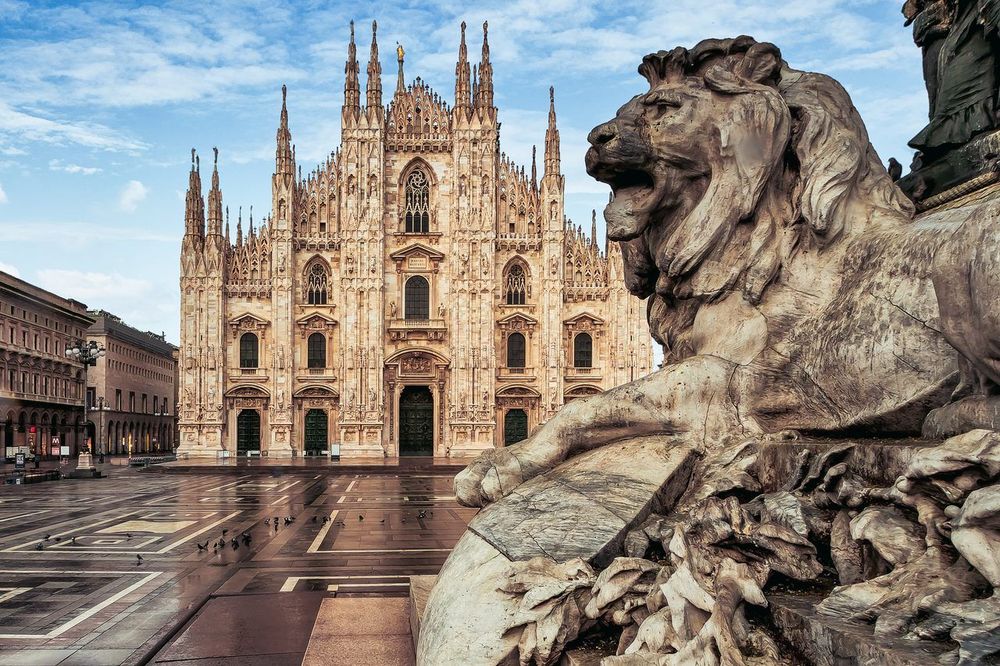
Milan's Duomo facade features 3,400 statues — and no one, not even the most seasoned guides, has ever managed to count them all with certainty. Wondering what to do in Milan means accepting from the outset that you'll have to leave something out: beneath its air of a busy economic capital, the city conceals a density of treasures that few visitors anticipate before setting foot there. Choosing between a cathedral terrace 108 meters above the ground, a Leonardo da Vinci fresco that must be booked weeks in advance, and a leisurely aperitivo beside a 14th-century canal already requires a minimum of planning. The Ryo Milan audio guide charts a logical route through these highlights, from the Duomo to the Pinacoteca di Brera via the Castello Sforzesco, with 23 audio tracks spread across roughly three hours of walking.
This guide details fifteen experiences to build a stay worthy of the city, whether it lasts 48 hours or a full week. Along the way you'll encounter a cemetery turned open-air museum, a 13th-century ossuary lined with skulls, a stadium that has witnessed ten European Champions' Cups, and four day trips to Lake Como, Bergamo, Pavia, or the Formula 1 circuit at Monza — more than enough to move well beyond the image of Milan as a mere shopping stopover before Florence or Venice.
1. Admire the Duomo di Milano, Symbol of the City
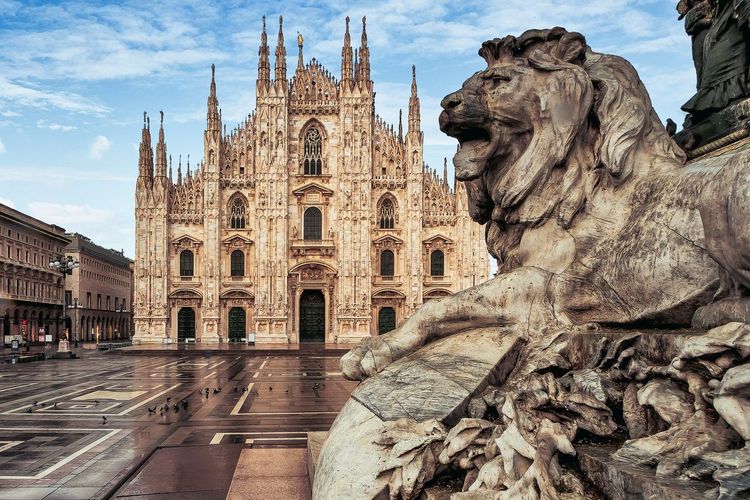
The Duomo di Milano (Piazza del Duomo, 20122 Milano, rated 4.8/5 on Google with 207,570 reviews) took nearly six centuries to complete. Construction began in 1386 at the instigation of Duke Gian Galeazzo Visconti and was not truly finished until 1965, when the last bronze door was installed. In the meantime, the cathedral became the largest Gothic church in Italy and the third largest in the world after St. Peter's in Rome and Seville Cathedral: 157 meters long, 108 meters to the tip of the main spire, and 3,400 statues scattered across the 135 spires that bristle across the roof.
Climbing to the terraces is the experience most recommended by locals themselves. Two options are available: the elevator, faster but a few euros more expensive, or the 250 spiral staircase steps, which allow you to see the Gothic structure up close. Expect around ten euros to climb on foot, around €14 with the elevator, and approximately €20 for the combined pass covering the cathedral and the Duomo Museum. Once at the top, you walk literally among the spires, at the level of the Madonnina, a gilded 4.16-meter statue that has dominated the city since 1774. On a clear day, the view stretches as far as the Alps.
Inside, five naves separated by 52 fifteen-meter-high pillars plunge the cathedral into a half-light pierced by 55 stained-glass windows, among the largest in the world. You can also descend to see the archaeological remains beneath the forecourt, where the foundations of a 4th-century early Christian basilica and a baptistery where Saint Augustine is said to have been baptized can be seen.
Book your ticket online at least 48 hours in advance: the queue on site frequently exceeds an hour during high season, especially between 10 a.m. and 3 p.m. To photograph the facade without the crowds that swamp the square, opt for sunrise, when the raking light brings out the relief of the sculptures. The Ryo audio-guided tour of Milan starts right on this square, making it easy to continue your visit without retracing your steps.
The Duomo also lends itself to an evening visit: illuminated after dark, the Candoglia marble takes on a pinkish hue that shifts with the seasons. From June to September, the Serate d'Incanto even open the terraces in the evening with musical accompaniment at sunset — a format that must be booked separately and sells out very quickly. Many Milanese simply come and sit on the steps at the end of the day, sandwich in hand, without ever going inside.
2. Stroll Through the Galleria Vittorio Emanuele II and Shop in the Fashion Quadrilateral
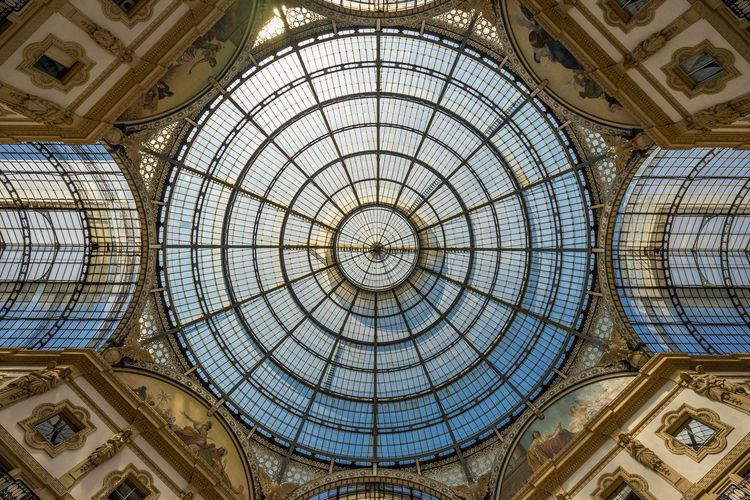
Between the Duomo and La Scala, a 19th-century glass-roofed arcade and a quadrilateral of cobblestone streets together concentrate almost the entire history of Milanese luxury retail. One is admired with your head tilted back, the other explored window by window, but both tell the same story of the city's obsession with elegance — so much so that Milanese locals nickname the gallery "Milan's living room."
The Galleria Vittorio Emanuele II, Cathedral of Shopping
The Galleria Vittorio Emanuele II (Piazza del Duomo, 20121 Milano, rated 4.7/5 on Google with 85K reviews) connects Piazza del Duomo to Piazza della Scala beneath an iron-and-glass roof completed in 1877. Architect Giuseppe Mengoni never saw his work finished: he died falling from a scaffold just days before the inauguration.
At the center of the octagonal dome, a floor mosaic depicts a bull, the symbol of Turin. Local tradition holds that spinning three times on your heel placed on the animal's private parts brings good luck — the marble there is visibly more worn than anywhere else. Beneath the arcades, Prada and Louis Vuitton boutiques stand alongside the Camparino in Galleria. Gaspare Campari opened his bottiglieria there as early as 1867, a few years after perfecting his red bitter; it was his son Davide who officially inaugurated the Camparino bar in 1915, at the opposite corner of the gallery.
The Fashion Quadrilateral, Temple of Milanese Luxury
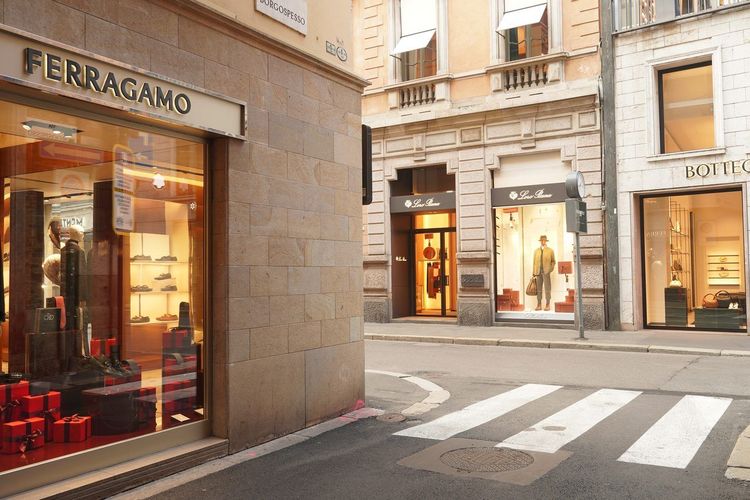
Ten minutes away on foot, the Fashion Quadrilateral forms a rectangle defined by Via Montenapoleone, Via della Spiga, Via Sant'Andrea, and Via Manzoni. This is where Versace, Armani, and Dolce & Gabbana have set up their flagship houses, behind neoclassical facades and private gardens invisible from the street.
Even without any intention to buy, the walk is worth it for the window displays, refreshed every two to three weeks by dedicated set designers. On weekday mornings, the streets are almost deserted, which completely changes the atmosphere compared to a Saturday afternoon. Prices are unsurprisingly in keeping with the neighborhood, but a few concept stores and design bookshops make it possible to leave with a souvenir without spending more than thirty or forty euros. In between, Via Montenapoleone leads directly to the public garden of the Villa Reale, a welcome green pause after so many storefronts. The Milan audio-guided tour loops back through the Galleria Vittorio Emanuele II and past the Duomo a little later, handy for timing this detour into the rest of the walk.
3. Attend an Opera at the Teatro alla Scala
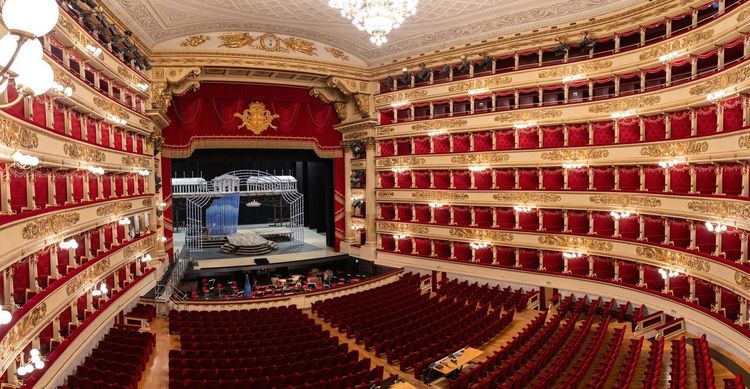
Inaugurated on August 3, 1778 on the site of the church of Santa Maria alla Scala — demolished for the purpose following the fire at the Teatro Regio Ducale in 1776 — the Teatro alla Scala (Via Filodrammatici 2, 20121 Milano, rated 4.6/5 on Google with 10,000 reviews) remains one of the most prestigious opera stages in the world. Verdi, Puccini, and Toscanini shaped a large part of the Italian repertoire here, and tradition holds that the season opens every December 7, the feast of Saint Ambrose, patron of Milan.
Attending a performance requires planning ahead: tickets for major premieres sell out within hours, but standing tickets for under €20 go on sale on the day at the box office, subject to availability. If no opera is scheduled during your stay, the Museo Teatrale alla Scala still allows you to enter the auditorium from a box and admire costumes, original scores, and instruments that once belonged to composers.
You can also simply cross the Piazza della Scala to observe the statue of Leonardo da Vinci that stands there, surrounded by four of his pupils. The theater, with its 2,030 seats spread across six tiers of gilded boxes, can often be visited in under an hour if opera is not on your agenda that day.
The full performance schedule is published a year in advance on the theater's website — a boon for planning the rest of your stay around a formal evening out: the dress code remains strict for premieres, more relaxed on weekdays. Opera enthusiasts will also appreciate the guided museum tour, which includes a visit to the Livia Simoni library, home to more than 150,000 volumes dedicated to the lyric arts.
4. Marvel at Leonardo da Vinci's Last Supper at Santa Maria delle Grazie
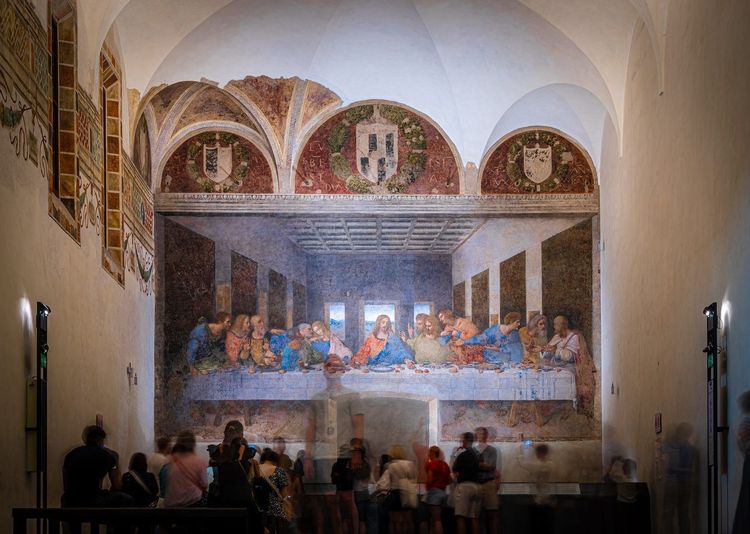
Painted between 1495 and 1498 on the wall of the Dominican refectory, Leonardo da Vinci's Last Supper survived the 1943 bombings that destroyed much of the adjoining convent: only a providential wall of sandbags saved the fresco. It now adorns the refectory of the church of Santa Maria delle Grazie (Piazza di Santa Maria delle Grazie 2, 20123 Milano, rated 4.7/5 on Google with 15K reviews), a UNESCO World Heritage Site since 1980.
Booking is mandatory, and this is where many poorly prepared travelers come unstuck: visit slots, limited to 15 minutes and a maximum of 35 people to preserve the fragile fresco, can sell out three months in advance during high season. Book as soon as your travel dates are confirmed, ideally through the museum's official website rather than a reseller that adds several dozen euros to the ticket price.
Once inside, passing through a climate-controlled airlock designed to stabilize humidity precedes entry into the refectory. Before you, the fresco's 8.8-meter width captures the precise moment Jesus announces that one of the apostles will betray him, each face caught in a different reaction. Leonardo painted on dry plaster rather than using traditional fresco technique — an experimental approach that explains the work's rapid deterioration over the centuries and the multiple restorations, the most recent of which lasted 21 years.
The church itself deserves a few minutes of attention before or after the refectory visit: its red-brick tribune, added by Bramante at the end of the 15th century, contrasts with the Gothic sobriety of the original nave.
If booking for your dates is no longer possible, an alternative exists: several guided tours combine refectory access with a visit to the Castello Sforzesco or the Pinacoteca di Brera, often with slots reserved in advance by tour operators. Expect to pay significantly more than the standalone ticket, however — around €40 to €55 compared to €15 booked directly. No flash photography is permitted, and large bags must be left in the cloakroom before entering.
5. Step Back in Time at the Castello Sforzesco
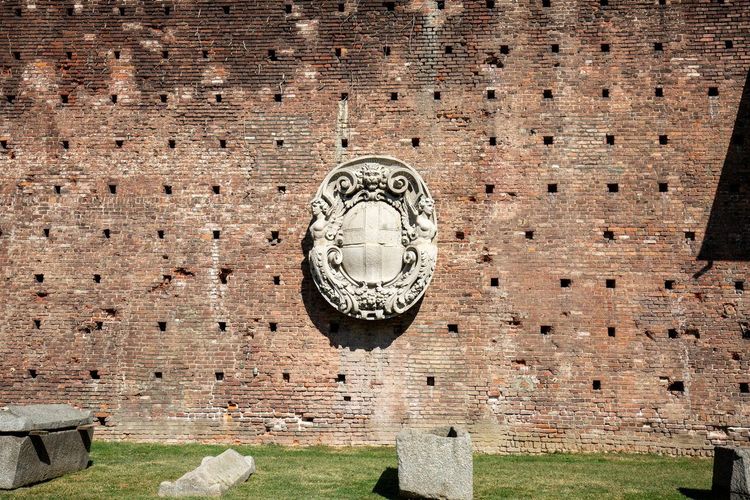
A defensive fortress before it became a ducal residence, the Castello Sforzesco (Piazza Castello, 20121 Milano, rated 4.6/5 on Google with 70,000 reviews) was rebuilt in the 15th century by Francesco Sforza on the ruins of a Visconti castle destroyed by the rebelling Milanese populace. Its crenellated towers and dry moats today enclose a vast quadrilateral housing seven different museums.
Entry to the inner courtyards is free of charge, making it a logical stop even on a museum-free afternoon. The Corte Ducale, with its brick arcades, contrasts with the more austere Piazza d'Armi, a former military parade ground now turned into a quiet lawn.
For the collections, a paid entry ticket gives access to the castle's Pinacoteca, the museum of ancient art, and above all the room housing the Pietà Rondanini, Michelangelo's last work, left unfinished at his death in 1564. The artist was still working on it just days before he died, and the contrast between the polished and barely roughed-out sections reveals an entire creative process frozen in time.
Leonardo da Vinci also left his mark on the castle: he painted the ceiling of the Sala delle Asse, a vaulted room whose painted interlacing branches cover the entire vault, restored and reopened to the public after years of work. From the courtyard, Parco Sempione opens directly on the other side, making it natural to take in both in sequence. The short version of the Ryo audio-guided tour of Milan includes a dedicated stop at this little-known room, often overlooked on express visits.
The ramparts also lend themselves to a peaceful stroll at the end of the day, when golden light strikes the red brick and the daytime crowds have abandoned the courtyards. Allow around two hours for a full visit including at least two of the seven museums, more if you linger over the Egyptian collections or the ancient musical instruments displayed on the upper floor.
6. Explore Milan's Great Art Museums
Beyond the Duomo and the Castello Sforzesco, Milan concentrates a density of art collections that rivals Rome or Florence, without ever matching their crowds. Three addresses alone structure most of the itinerary for painting and science enthusiasts, and the good news is that the city's civic museums (Castello Sforzesco, Museo del Novecento, GAM, Natural History Museum, Civic Aquarium) as well as state museums such as the Pinacoteca di Brera open their doors for free on the first Sunday of each month. On that day, online booking is not available: you must show up and wait.
The Pinacoteca di Brera
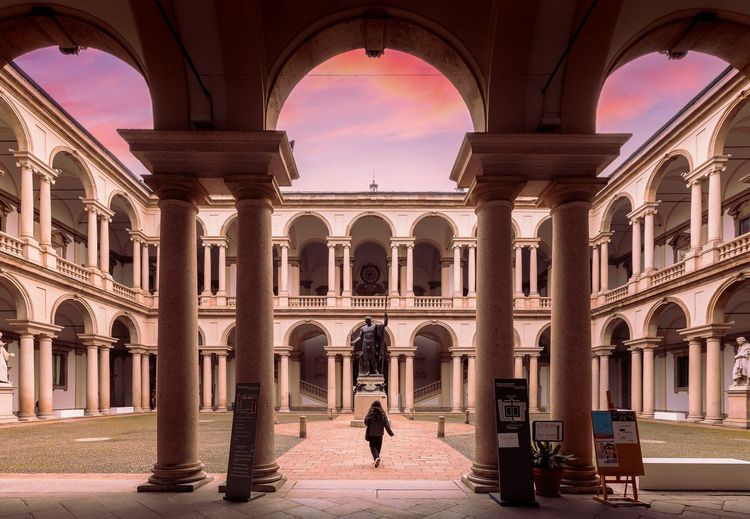
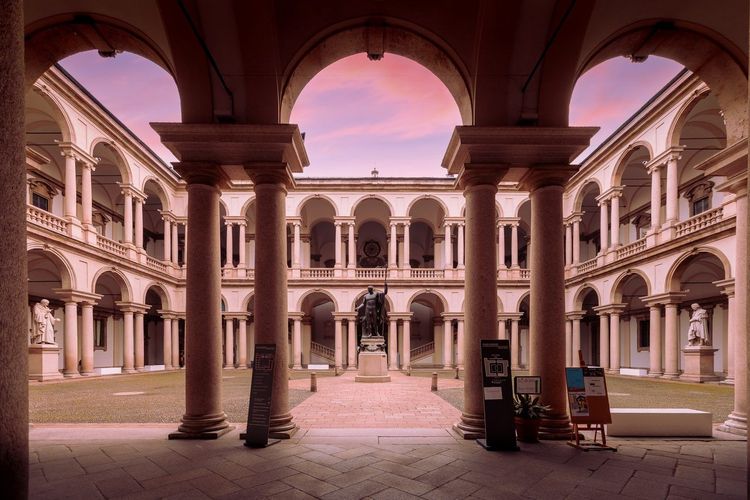
The Pinacoteca di Brera (Via Brera 28, 20121 Milano, rated 4.7/5 on Google with 20,000 reviews) occupies a 17th-century palace originally built for the Jesuits. Its 38 rooms house one of the finest collections of Italian painting in the country, headlined by Raphael's Marriage of the Virgin and Mantegna's Dead Christ, whose striking foreshortened perspective has influenced generations of painters.
Caravaggio's Supper at Emmaus hangs alongside works by Piero della Francesca and Bellini. Allow an hour and a half for a visit at a relaxed pace, more if the museum is hosting one of its regularly acclaimed temporary exhibitions.
The Pinacoteca Ambrosiana
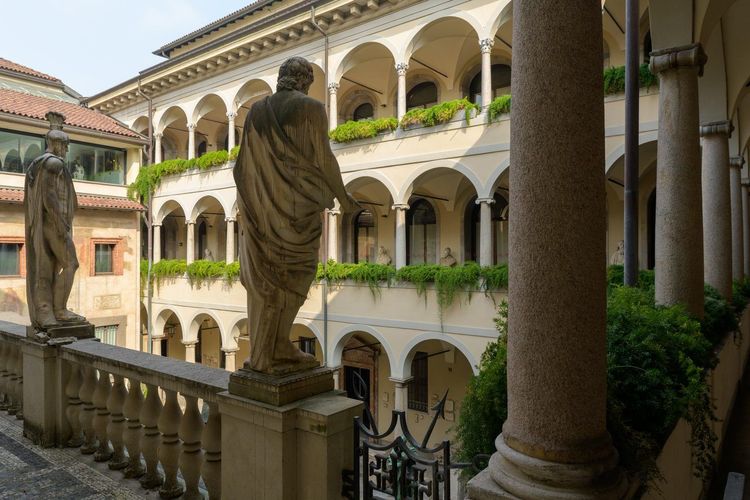
Ten minutes away on foot, the Pinacoteca Ambrosiana (Piazza Pio XI 2, 20123 Milano, rated 4.6/5 on Google with 8,000 reviews) preserves the Codex Atlanticus, the largest collection of drawings and handwritten notes by Leonardo da Vinci, twelve volumes displayed in rotation to protect the aged paper. Caravaggio's Basket of Fruit, one of the first autonomous still lifes in the history of Western art, is also on permanent display here.
Less crowded than Brera, the Ambrosiana can often be visited in an hour without ever feeling rushed.
The Leonardo da Vinci National Museum of Science and Technology
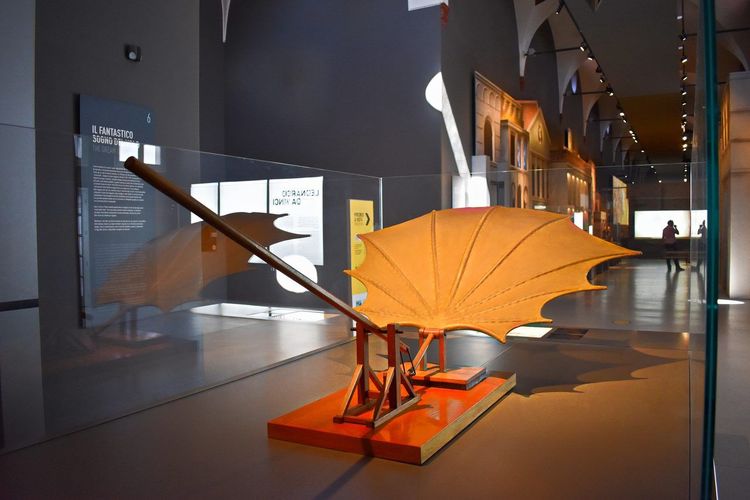
The Leonardo da Vinci National Museum of Science and Technology (Via San Vittore 21, 20123 Milano, rated 4.6/5 on Google with 12,000 reviews) is the largest science and technology museum in Italy. Housed in a former Olivetan monastery, it displays wooden scale models built from Leonardo's notebooks — from the armored vehicle to the flying machine — as well as an authentic World War II submarine, the Enrico Toti, which can be explored from the inside.
Families will find more than enough to fill an entire morning, between interactive workshops and sections dedicated to trains, aeronautics, and computing. A combined ticket, sold at the entrance, also allows you to pair the visit with the submarine and the flight simulator — two options charged separately but worth the extra cost for children.
Whatever your interests, booking tickets online for all three venues avoids the queues that quickly lengthen late in the morning on busy tourist days.
7. Wander Through the Navigli District and Experience the Milanese Aperitivo
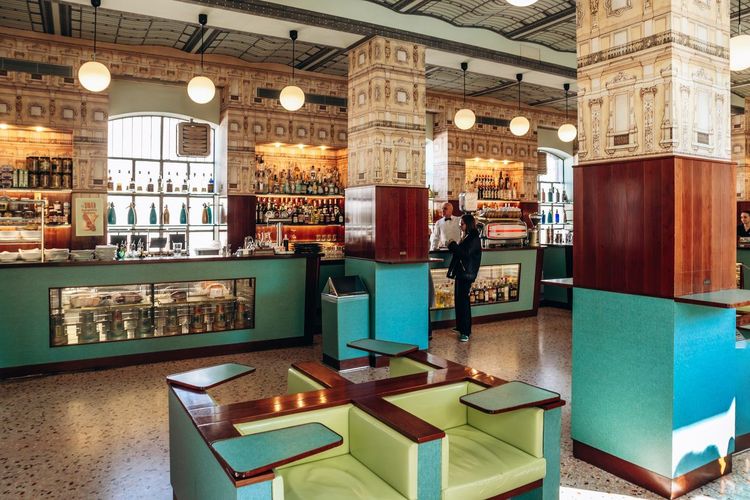
Milan has no sea, but for a long time it had its canals: a network of waterways designed as far back as the Middle Ages to transport the marble destined for the Duomo, partly perfected by Leonardo da Vinci himself, who was appointed hydraulic engineer for the Duke of Milan. Only two visible stretches remain today, but they concentrate the most laid-back energy in the city.
A Stroll Along the Navigli Canals
The Naviglio Grande (Alzaia Naviglio Grande, 20144 Milano, rated 4.5/5 on Google with 12K reviews) and the Naviglio Pavese meet at the Darsena, a former river port converted into a pedestrian promenade with fountains and stepped seating. On the last Sunday of the month, the Mercatone dell'Antiquariato lines some 400 vendors along the Naviglio Grande, where booksellers and antique dealers compete for the best spots from dawn. Every Saturday, the Fiera di Senigallia takes over along the Ripa di Porta Ticinese, in a more vintage and second-hand clothing vein.
During the day, the neighborhood also reveals a more artisanal side: former tanneries and dye works converted into art galleries and designers' studios, accessible via the Vicoli dei Navigli — small lanes running perpendicular to the canals that largely escape mass tourism. The kayaks and small boats that still navigate the canal during occasional events are a reminder that this waterway long served as a goods transport route, before rail and road took over in the 20th century.
The Aperitivo, Milan's Social Ritual
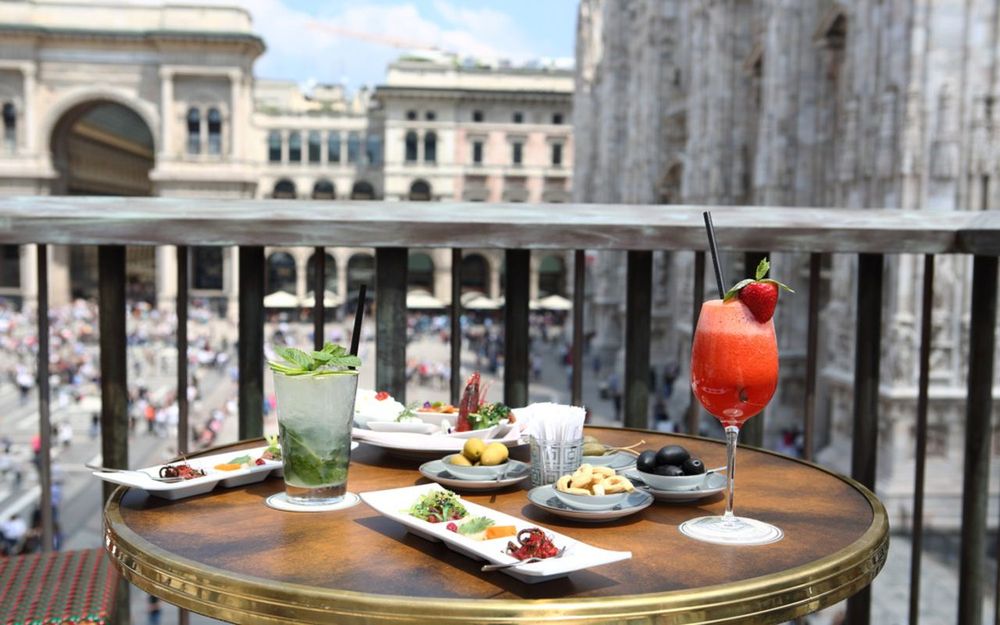
From 6 p.m. onwards, the terraces lining the canals transform into a quintessentially Milanese ritual: the fixed-price aperitivo, generally between €10 and €15, gives access to a cocktail or glass of wine accompanied by a self-service buffet of charcuterie, focaccia, and small hot dishes. Unlike in other Italian cities, the Milanese aperitivo can sometimes double as a light dinner, so generous can the buffet be.
Reserve a terrace table from 5:30 p.m. at weekends if you want to enjoy the sunset over the water: the best spots are fully booked by 6:30 p.m. On weekdays, the atmosphere is just as lively but far easier to access without a reservation. For a more leisurely dinner once night has fallen, the trattorias tucked into the lanes running perpendicular to the canals offer traditional Milanese cuisine at prices significantly more affordable than in the historic center.
On summer evenings, the Darsena also hosts open-air concerts and free film screenings — another good reason to linger by the water rather than heading straight back to the center.
8. Stroll Through the Monumental Cemetery, an Open-Air Museum
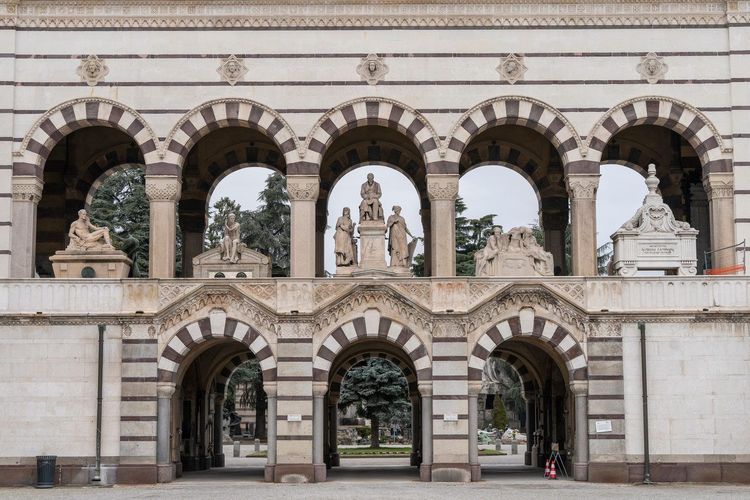
Inaugurated in 1866, the Monumental Cemetery gathers across nearly 250,000 m² the most spectacular tombs of Milan's industrial bourgeoisie. Renowned sculptors and architects competed in daring here: neo-Gothic chapels, Egyptian obelisks, life-size Art Nouveau statues, each telling in its own way the social ascent of a family.
Entry is free — a detail that often surprises visitors, given that the artistic level surpasses that of many paid museums in the city. At the center stands the Famedio, a neo-medieval temple housing the tombs of illustrious Milanese, including that of the writer Alessandro Manzoni.
Allow an hour to walk the main paths, more if you enjoy spotting the Art Nouveau details that adorn certain family chapels. The site remains little frequented by hurried tourists, making it a surprisingly peaceful parenthesis fifteen minutes' walk from the central station. A free map distributed at the entrance points out the most artistically remarkable tombs, several of them signed by the same sculptors who worked on the Duomo facade. Wear comfortable shoes: the gravel paths extend several kilometers in total.
The best time to visit is late morning, when light filters through the foliage and casts shadows from the tallest funerary monuments.
9. Relax in Parco Sempione and at the Arco della Pace
Parco Sempione, 38.6 hectares laid out in the English style at the end of the 19th century, stretches directly behind the Castello Sforzesco. Lawns, small lakes, and winding paths make it the favorite green lung of Milanese residents for morning jogs or Sunday picnics.
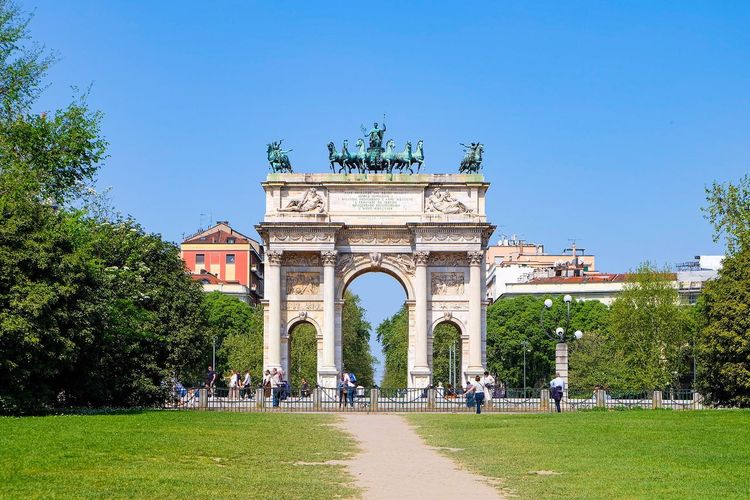
At its northwestern end stands the Arco della Pace, a neoclassical triumphal arch commissioned by Napoleon in 1807 to celebrate his victories, completed only in 1838 under the Austrian Empire, which changed its dedication. Its 25 meters of height, crowned by a chariot pulled by six bronze horses, mark the historic entrance to the city from Paris.
For the best panoramic view over the park and the castle, climb the Torre Branca, a 108-meter metal observation tower built in 1933: sunset draws a steady stream of photographers there in the late afternoon.
In summer, the park also hosts free open-air film screenings and impromptu concerts near the adjacent Arena Civica, a neoclassical amphitheater now converted into a popular performance venue. Bring a blanket: the lawns are ideal for a long break between two museum visits. Access remains free year-round, from sunrise to sunset.
10. Experience the Passion of Football at San Siro Stadium
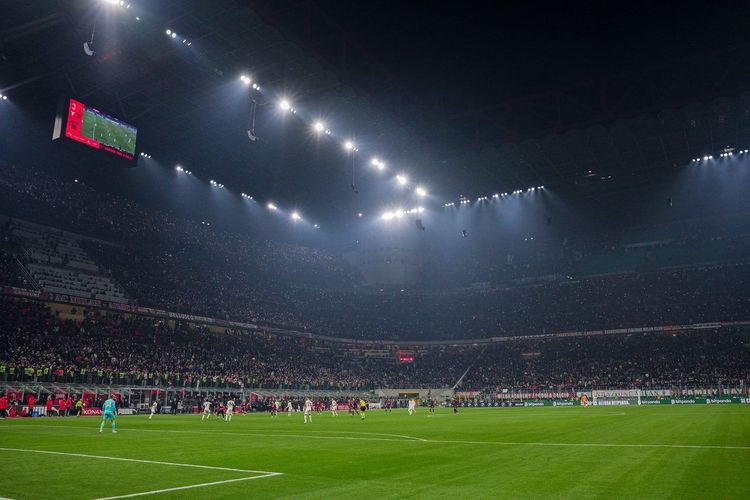
The Stadio Giuseppe Meazza, better known as San Siro (Piazzale Angelo Moratti, 20151 Milano, rated 4.7/5 on Google with 40,000 reviews), has shared its pitch between AC Milan and Inter Milan since 1947 — a rare cohabitation in Europe for two such fierce rivals. Its capacity of over 75,000 seats makes it one of the largest stadiums on the continent, and its external spiral towers, added during the 1990 renovation for the World Cup, have become as iconic as the stadium itself.
Attending a match is the ultimate experience, but tickets for the Milan-Inter derby often command premium prices and sell out weeks in advance. On non-match days, the guided stadium and museum tour still allows you to go down to the mixed zone, sit on the dugout bench, and walk through the players' tunnel.
The museum, opened in 1996 and the first of its kind inside a stadium in Italy, traces the ten European Champions' Cups won cumulatively by the two clubs (seven for AC Milan, three for Inter), with historic shirts and trophies displayed side by side. Tours depart every twenty minutes from Gate 8, on the Piazzale Angelo Moratti side. Allow around an hour and a half for the combined stadium and museum visit, and book online to avoid the queues that quickly lengthen on fine-weather weekends.
The stadium lies outside the historic center: the easiest option is the purple M5 line, alighting at San Siro Stadio, which deposits you directly at the foot of the stands in around twenty minutes from the center. The red M1 line, alighting at Lotto, is the alternative, with a short walk afterwards. A useful note for 2026: the Meazza, sold to both clubs at the end of 2025, hosted the opening ceremony of the Milan-Cortina Winter Olympics in February and remains fully operational, tours included. Its partial demolition will only take place once the new stadium is delivered, expected in the early 2030s. On match evenings, leave well ahead of time: traffic around the stadium grinds to a halt quickly once the gates open. A tip for fans torn between the two clubs: the official store sells shirts for both teams side by side — a fairly unique symbol in European football.
11. Explore Milan's Trendiest Neighborhoods: Brera, Porta Nuova, Porta Venezia
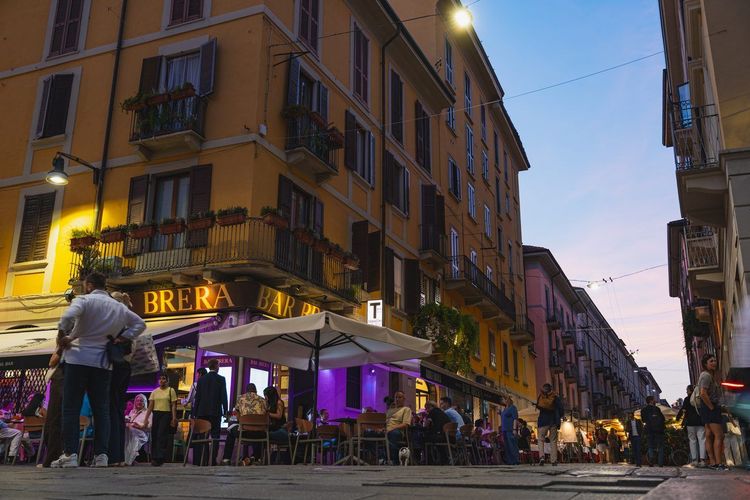
Beyond the unmissable monuments, Milan is best understood by walking from one neighborhood to the next, each with a sharply defined identity. Three of them capture this diversity particularly well: an artists' village that has remained almost unchanged since the 19th century, a vertical business district that sprang up in a decade, and a cosmopolitan area where Indian communities, alternative nightlife, and Art Nouveau facades all intermingle. Our Ryo article on Milan's neighborhoods goes into even more detail about this urban geography, neighborhood by neighborhood.
Brera, the Artists' Village
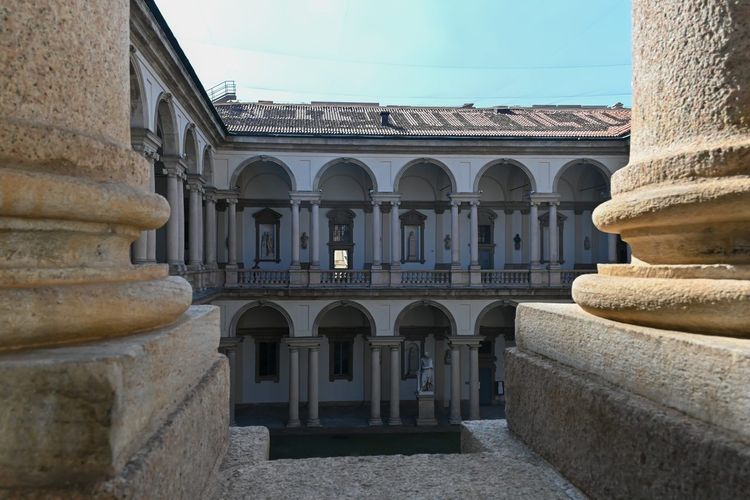
Brera owes its name to the Accademia di Brera, a fine arts school that has occupied the same palace as the eponymous Pinacoteca since 1776. Its cobblestone lanes, closed to traffic, are home to craftsmen's workshops, contemporary art galleries, and small independent designer boutiques that have largely resisted the gentrification seen elsewhere in the city.
In the evening, the wine bars along Via Fiori Chiari fill with a clientele mixing art students and local Milanese, in an atmosphere far more intimate than that of the Navigli. The antiques market held on the third Sunday of each month, set up along the main streets, rounds off the visit for fans of flea markets.
Porta Nuova, Milan's Futuristic Vertical Skyline
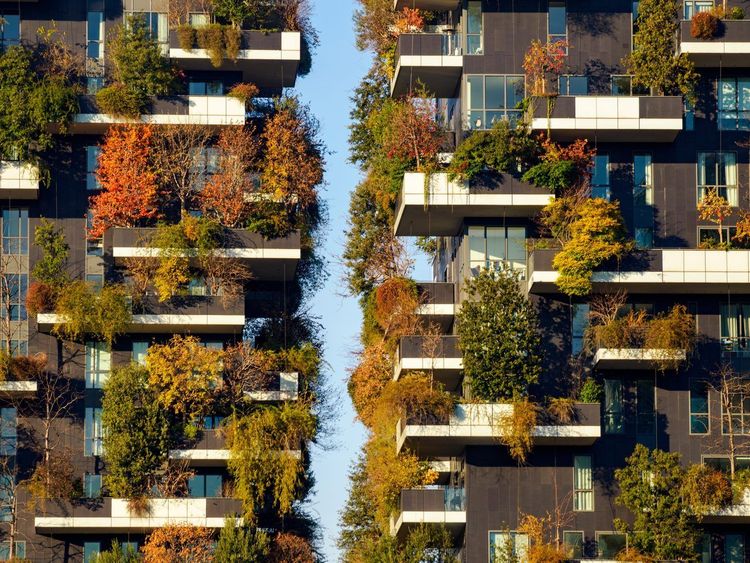
At the opposite stylistic extreme, Porta Nuova has since 2015 been home to the most spectacular skyline in Italy. The Bosco Verticale (Via Gaetano de Castillia 11, 20124 Milano, rated 4.7/5 on Google with 3,663 reviews), two residential towers covered in more than 900 trees and 20,000 plants, won the title of best skyscraper in the world in 2015 and remains one of the city's most photographed architectural symbols.
Around it, Piazza Gae Aulenti — a raised square surrounded by office towers including the 231-meter UniCredit Tower — comes alive in the evenings with its restaurants and synchronized water jet fountains, attracting families and young professionals alike. A little further east, beyond Piazzale Loreto, the emerging NoLo neighborhood (North of Loreto) has recently drawn a scene of alternative bars and restaurants, at prices considerably lower than Porta Nuova.
Porta Venezia, a Cosmopolitan and Vibrant Neighborhood
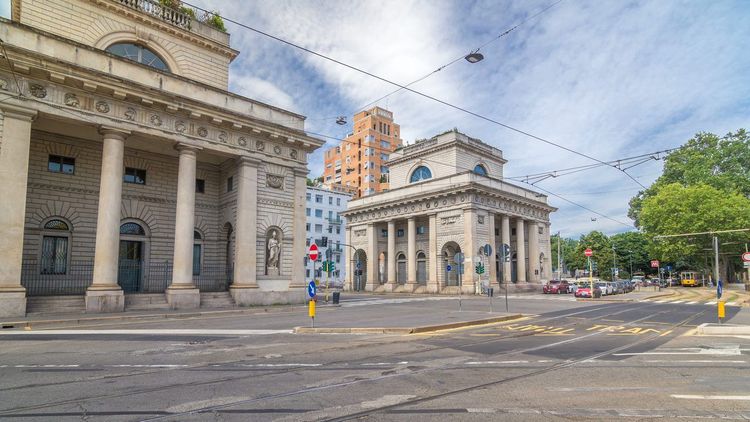
Porta Venezia combines some of Milan's best-preserved Art Nouveau facades, the city's largest Indian and Bangladeshi community concentrated along Via Padova, and an LGBT-friendly nightlife scene recognized across Italy. The Giardini Pubblici Indro Montanelli, Milan's oldest public garden opened in 1784, offer a green pause between vintage boutique visits.
During the day, the Indian grocery stores and restaurants along Via Lazzaretto serve food at prices well below those of the historic center — a welcome option for varying from Italian trattorias after a few days in the city. These three neighborhoods are easily linked on foot or by historic tram, with the orange line 1 tram running through Porta Venezia and Brera in about fifteen minutes.
12. Discover Milan's Hidden Religious Heritage
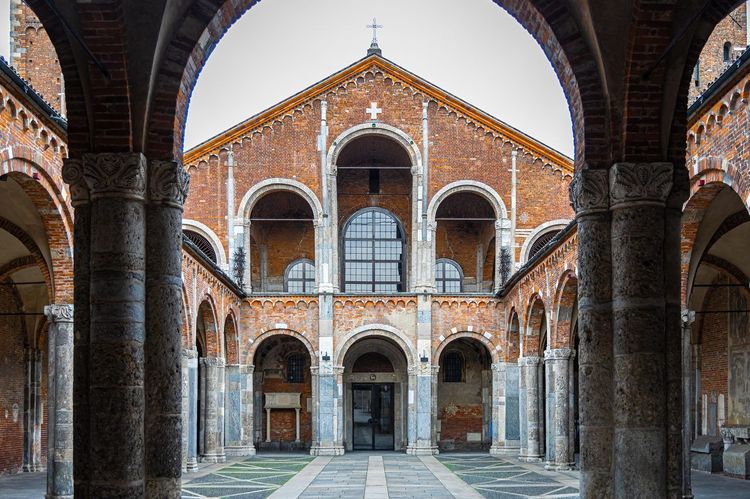
The Duomo and Santa Maria delle Grazie absorb most of the tourist attention, to the point of overshadowing two equally remarkable religious buildings — one for its antiquity, the other for its unexpected macabre quality.
The Basilica of Sant'Ambrogio
The basilica of Sant'Ambrogio is among the oldest churches in Milan, founded in the 4th century by Saint Ambrose himself, the city's bishop and one of the four Fathers of the Latin Church. The current Romanesque building dates essentially from the 11th and 12th centuries and served as a model for many Lombard churches.
Beneath the high altar rests a silver reliquary containing the relics of Saint Ambrose, while the Sacello San Vittore in Ciel d'Oro — a small side chapel — preserves 5th-century mosaics that are among the oldest in the city, set against a golden background. Entry to the basilica is free; only access to this sacello costs a few euros, and the building is just ten minutes' walk from the Leonardo da Vinci National Museum of Science and Technology, making it easy to visit both in the same morning.
The Church of San Bernardino alle Ossa, the Unusual Ossuary
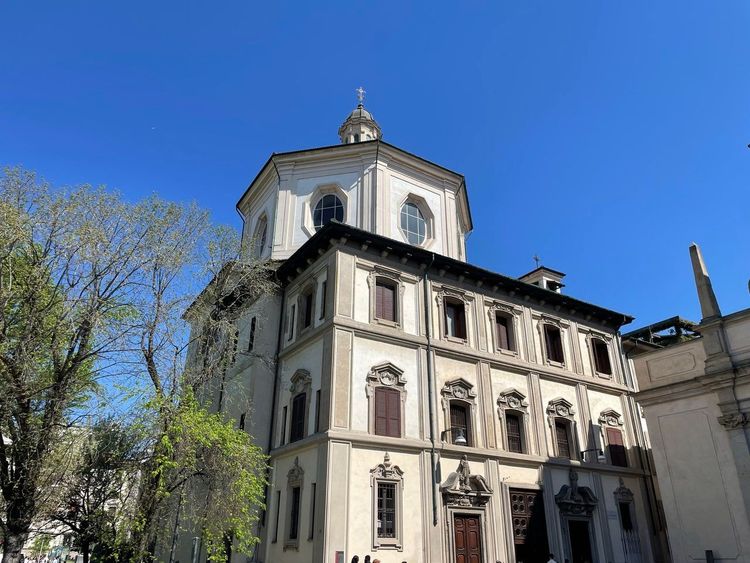
Far less well known, the church of San Bernardino alle Ossa houses a small ossuary chapel whose walls are entirely lined with human skulls and bones, arranged in geometric patterns from the 13th century onwards to accommodate the remains of an overcrowded neighboring cemetery.
The striking effect contrasts with the baroque ceiling painted with colorful frescoes overhead in the same room. Entry is free, but opening hours are limited — generally late morning and early afternoon on weekdays: it's worth checking the schedule before heading there to avoid finding the door closed. The Milan audio-guided tour makes a similar detour to the Church of San Bernardino alle Ossa, easy to combine with a Duomo visit earlier in the day.
13. Savor Milanese Gastronomy
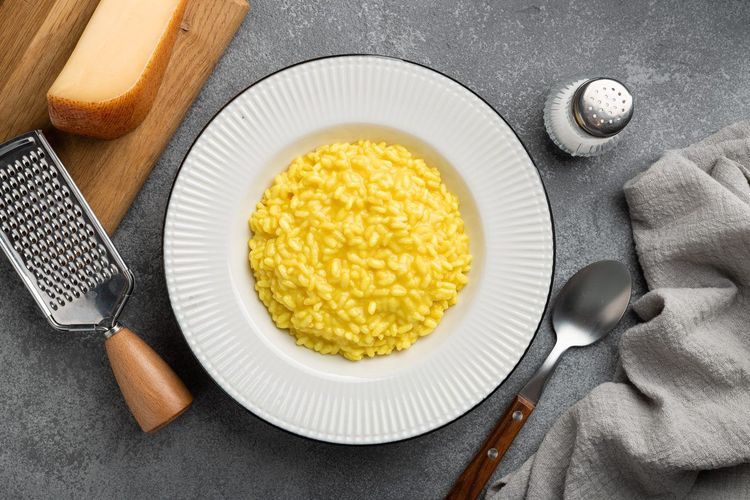
Milanese cuisine stands apart from Italy's usual Mediterranean image: here, butter often replaces olive oil, and saffron colors one of the city's signature dishes. Risotto alla milanese, a creamy saffron-tinted rice, traditionally accompanies ossobuco, braised veal shank slow-cooked for several hours.
Another local staple, the cotoletta alla milanese — a breaded veal escalope fried in clarified butter — differs from its Viennese counterpart in that the bone is left attached and the breading is thicker. Panettone, the candied-fruit brioche that has become a Christmas staple across Italy, is mentioned in Milan as far back as the Renaissance, but it was in the early 20th century that the city's bakeries gave it its tall shape and industrial success.
To try these dishes without breaking the bank, avoid the restaurants lined up directly on the Piazza del Duomo, whose prices mainly reflect their tourist location. The trattorias in Brera, the Navigli, or Porta Ticinese generally offer significantly better value, with set lunch menus often around €15 to €20. To explore the full list of local addresses and specialties, our Ryo article on Milan's culinary specialties lists ten classics not to be missed.
Covered markets — such as the one on Via Fauché or the Mercato Centrale near the station — also let you sample a selection of Lombard regional specialties at lower cost, from gorgonzola to local salumi. On the drinks side, Milanese locals drink their coffee standing at the counter, never sitting, and rarely order a cappuccino after 11 a.m. — an unwritten rule firmly observed by residents. For an original dessert, look for torta paradiso, a light sponge cake born in Pavia but widely adopted by Milanese pastry shops.
Generally budget between €25 and €40 per person for a full dinner with wine in a neighborhood trattoria, compared to double that at addresses in the historic center.
14. Take a Day Trip from Milan: Lake Como, Bergamo, Pavia, Monza
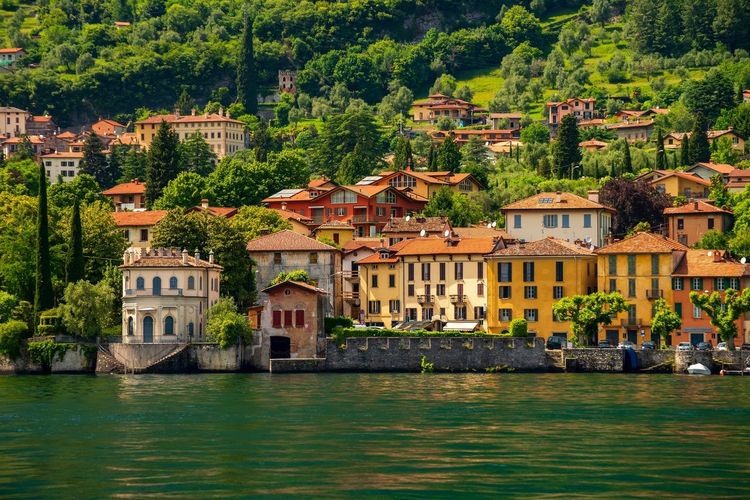
Milan lends itself particularly well to day trips thanks to a dense regional rail network that serves, in under an hour for most destinations, four places with radically different atmospheres. For those who fancy an extended road trip to the Italian lakes, our Ryo guide to the Italian lakes by campervan details itineraries and available stopping points departing from the Lombardy region.
Lake Como, a Lakeside Escape
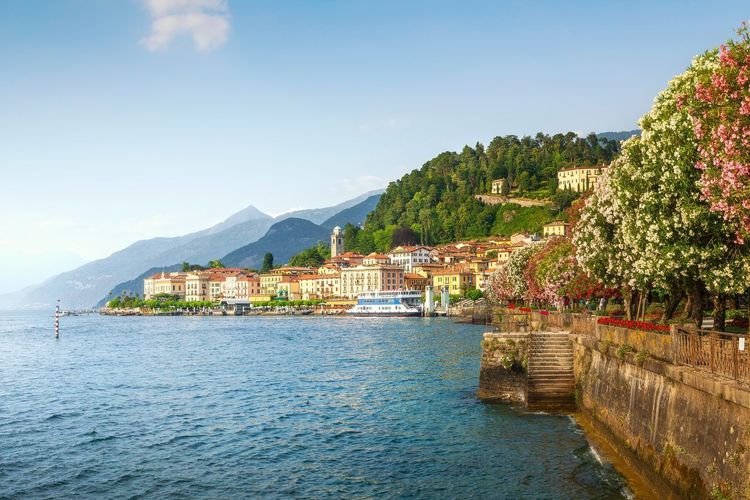
About 45 minutes by train from the central station, Lake Como has drawn an international clientele for two centuries, drawn by neoclassical villas and terraced gardens. Como, the main town, can be visited in half a day, taking in the Gothic cathedral and the lively lakefront terraces.
For a more photogenic experience, Bellagio — accessible by boat from Como — offers stepped cobblestone lanes and a breathtaking view of the Alps plunging directly into the water. A full day allows you to combine both, provided you check the boat timetables, which become less frequent outside the summer season.
Bergamo, the Fortified Medieval City
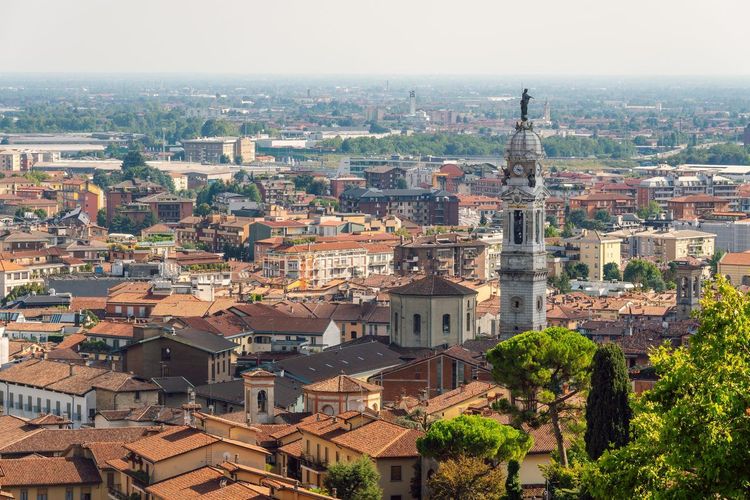
Less than an hour by train, Bergamo divides into two superimposed cities: the modern Città Bassa below, and the UNESCO-listed medieval fortified Città Alta, perched on a hill and connected by a funicular dating from 1887. Its Venetian walls, 6.2 kilometers long, offer a panorama over the Pre-Alps that rivals many more celebrated destinations.
Piazza Vecchia, the historic heart of the Città Alta, clusters Renaissance palaces and terrace cafés in the shadow of the Torre Civica, whose bell still rings every evening at 10 p.m. in a tradition of the medieval curfew never once interrupted.
Pavia and Its Charterhouse
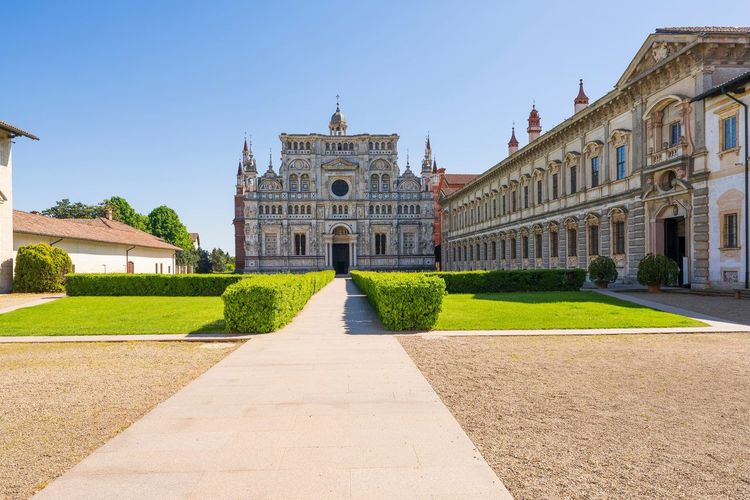
Just twenty-five minutes by train from Milan, Pavia is a university town founded in Roman times, whose red-brick historic center can easily be crossed on foot in a day. Ten kilometers to the north, the Certosa di Pavia (Viale Certosa 1, 27012 Certosa di Pavia), a Carthusian monastery begun in 1396, unfolds a polychrome marble facade among the most ornate of the Lombard Renaissance.
Entry is free, but the visit takes place exclusively in groups guided by the Cistercian monks who still occupy part of the monastery, at fixed times that are worth checking before making the trip.
Monza, Royal Charm and the F1 Circuit
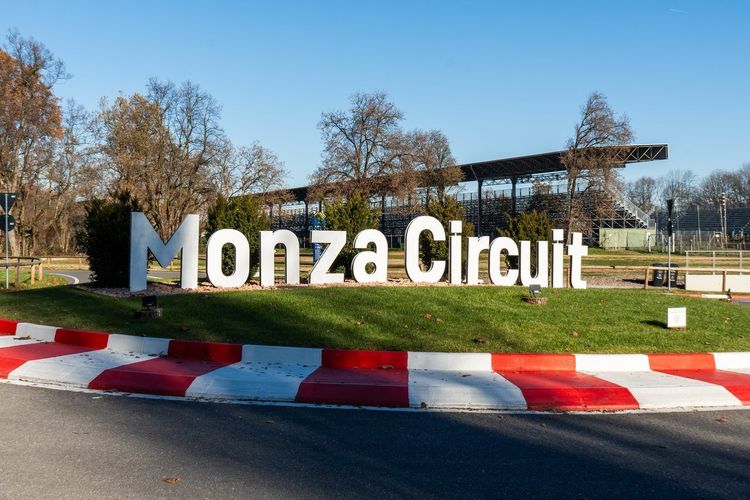
Thirty minutes by train from Milan leads to Monza, a city known to motorsport fans for its autodrome, which has hosted the Italian Formula 1 Grand Prix every year since 1922 — one of the oldest races on the world calendar.
Outside race weekends, the circuit can be visited freely on foot or by bicycle — a quite unique experience for motorsport enthusiasts. The city also houses the Villa Reale, a summer residence commissioned by Empress Maria Theresa of Austria for her son Archduke Ferdinand and built by Piermarini in the 1770s, surrounded by a park of over 700 hectares — one of the largest enclosed parks in Europe.
All these destinations can be reached by regional train from Cadorna or Centrale station, with no need to rent a car, which considerably simplifies planning a day trip. Generally budget between €10 and €25 return by train depending on the destination — a very reasonable cost compared to an organized tour with a guide.
15. Practical Information for Planning Your Stay in Milan
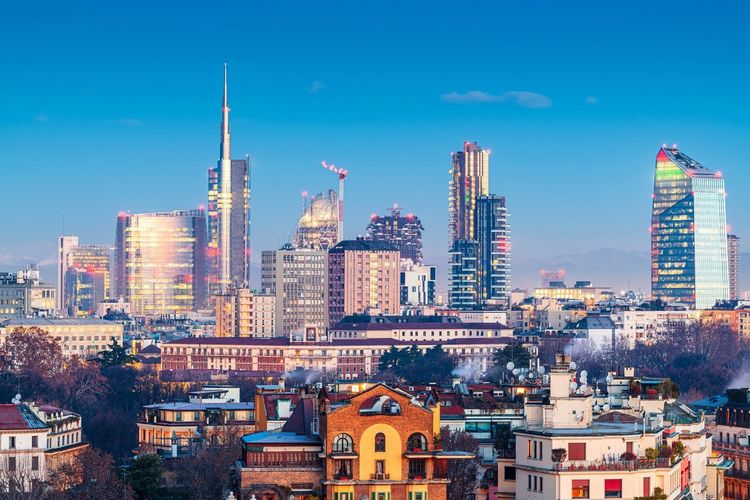
Beyond the list of must-sees, a few practical pointers save a great deal of time once you're on the ground — from choosing which neighborhood to stay in to the best way to get between the different sights on this list.
How to Get Around Milan (Metro, Tram, on Foot)
Milan's metro network has five color-coded lines (M1 red, M2 green, M3 yellow, M4 blue, and M5 purple), serving virtually all the sites mentioned in this article. A single ticket costs €2.20 and remains valid for 90 minutes across all public transport, including trams and buses. A notable change since January 2026: paper tickets are no longer sold or accepted. You must pass through the gates using a contactless bank card, a smartphone, or a credit loaded onto the rechargeable RicaricaMi card.
The historic center — from the Duomo to La Scala via the Galleria — can be covered entirely on foot in under twenty minutes. The historic orange trams, some dating from the 1920s, offer a picturesque way to reach more outlying neighborhoods such as Porta Venezia without taking the metro. From the airports, the Malpensa Express takes around 50 minutes to reach Cadorna or Centrale. Linate is now directly connected to the center by the M4 line: just twelve minutes to San Babila at the standard urban fare of €2.20. Bergamo-Orio al Serio, the main base for low-cost airlines, still has no railway station: allow around 55 minutes by coach shuttle to Milano Centrale, with the rail link still under construction.
How Many Days to Allow Depending on Your Itinerary
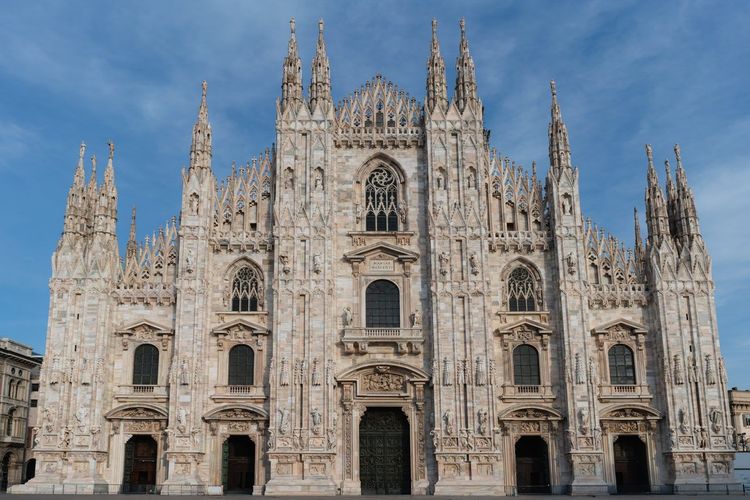
Two full days are enough to cover the highlights of the center (Duomo, Galleria, La Scala, Castello Sforzesco), adding the Last Supper if you booked in advance. Three days allow you to include the Navigli, the major museums, and a trendy neighborhood such as Brera or Porta Nuova without feeling rushed.
To combine the city with at least one day trip, allow a minimum of five days: four for Milan, one for Lake Como or Bergamo. The Ryo Milan audio guide is precisely designed to help you strike that balance from the moment you arrive, offering a roughly three-hour thread through the main sites of the historic center.
Where to Stay by Neighborhood and Budget
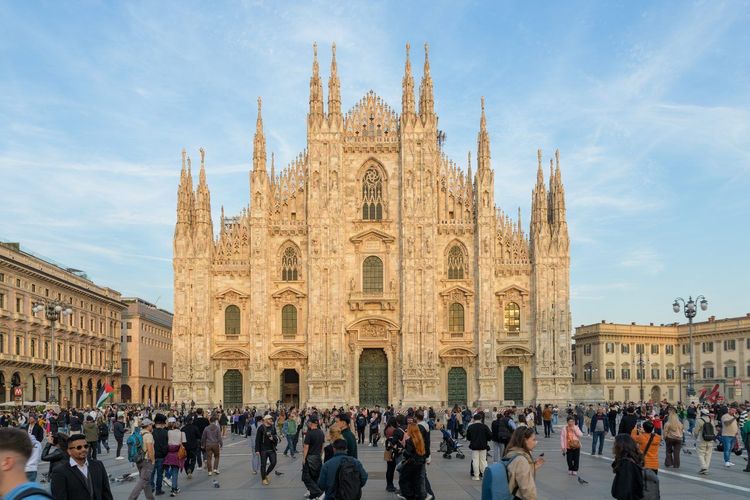
The Duomo district has the most centrally located hotels — convenient, but also the most expensive in the city. Brera wins over visitors with its charm and relative tranquility, a fifteen-minute walk from the cathedral. The Navigli suits travelers who prioritize nightlife and a more alternative atmosphere, while Porta Nuova attracts a business clientele with its recent design hotels.
For a tighter budget, the neighborhoods around the central station (Stazione Centrale) offer noticeably lower rates, while remaining less than fifteen minutes from the historic heart by metro.
FAQ
How Many Days Do You Need to Visit Milan?
Two days are enough to cover the must-sees of the historic center: the Duomo, Galleria Vittorio Emanuele II, La Scala, and the Castello Sforzesco. Allow three days to add the Navigli and a museum, and a minimum of five days if you want to combine the city with a day trip to Lake Como, Bergamo, or Pavia.
What Can You Do in Milan for Free?
The courtyards of the Castello Sforzesco, the Monumental Cemetery, the basilica of Sant'Ambrogio, and Parco Sempione can all be explored without an entrance ticket. The city's municipal museums also open for free on the first Sunday of each month, and the Galleria Vittorio Emanuele II can be visited freely at any hour.
What Is the Cheapest Way to Get Around Milan?
The single public transport ticket, valid for 90 minutes on the metro, tram, and bus, costs €2.20 and has been available since January 2026 only in digital form (contactless bank card, smartphone, or RicaricaMi card). The historic center can also be covered entirely on foot, with most must-see sights located less than twenty minutes' walk from one another.
Where Should You Stay in Milan Depending on Your Budget?
The Duomo district has the most central hotels but is also the most expensive. Brera offers a good balance of charm and tranquility, the Navigli suit night-owl travelers, and the area around the central station offers the most affordable rates, just fifteen minutes from the center by metro.
What Can You Do in Milan When It Rains?
Large indoor museums step in on rainy days: the Pinacoteca di Brera, the Pinacoteca Ambrosiana, the Leonardo da Vinci National Museum of Science and Technology, or the seven museums inside the Castello Sforzesco. The fully glass-roofed Galleria Vittorio Emanuele II also makes for a sheltered stroll.
Why Is Milan Famous?
Milan is renowned as the world capital of fashion and design, home to La Scala and Leonardo da Vinci's Last Supper, and a major economic hub of Italy. The city is also home to two of Europe's most decorated football clubs, AC Milan and Inter Milan.
Between a Gothic monument that took six centuries to complete, a medieval ossuary lined with skulls, and a stadium that has witnessed ten European Cups, Milan far exceeds its reputation as a mere shopping stopover before Florence or Venice. The city can be discovered in 48 hours or over a full week including day trips to Lake Como or Bergamo.
To organize your stay without wasting time between neighborhoods, the Ryo audio-guided tour of Milan is a great starting point: it connects the main sites of the historic center on foot, from the Duomo to the Castello Sforzesco, with the stories that bring every facade to life. Whether you have two days or a week ahead of you, Milan always rewards those who take the time to go off the beaten track.