© Shutterstock
 Votre guide Ryo
Visiting Venice for the First Time: Itinerary, Must-Sees and Tips (2026)
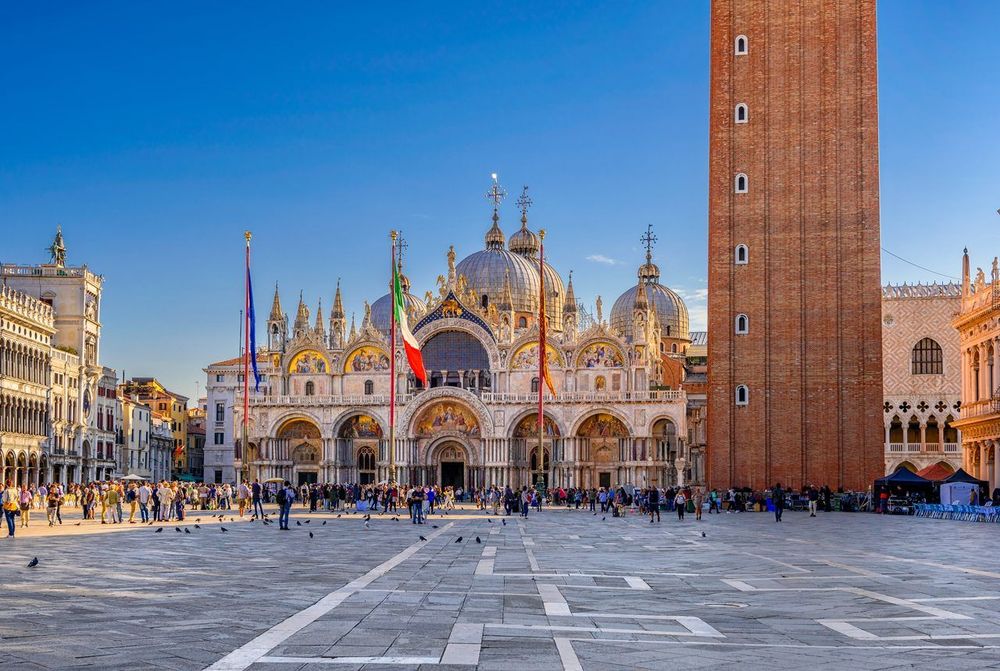
The first time you set foot on St. Mark's Square, something feels pleasantly off: no cars, no scooters, not even a bicycle. Visiting Venice for the first time means accepting to do everything on foot or by boat, and that is precisely what bewilders and then delights most travelers. Parking is impossible; getting lost for long is impossible too, since the city fits into a pocket-sized area of about 7 km², crossed by some 400 bridges linking 118 islets separated by a maze of canals.
In this guide, you will learn how many days to plan so you don't just skim the city, how to reach the historic center from Marco Polo airport without falling for the fake water taxi trap, which neighborhood to choose to sleep five minutes on foot from St. Mark's Basilica, and why the most beautiful view of the city is not the one from the Campanile but the almost secret one from the bell tower of San Giorgio Maggiore. We also cover budget, museum passes, gondolas and good addresses far from the tourist traps. The Ryo audio-guided tour of Venice also links a good number of these places on foot, step by step, without ever having to take out your phone to check a map.
How Many Days to Plan for Visiting Venice the First Time
How many days do you need to visit Venice the first time? One day is enough to tick off the major monuments of St. Mark's Square, but three days completely change the experience. They allow you to slip in an excursion to the islands, to wander without a watch through the least touristy neighborhoods, and to watch the city empty of passing groups from 5 p.m. If your time is limited, follow the express version below rather than give up on the trip, but know that 3 days remain the most comfortable format for a first stay.
One Day in Venice: The Express Itinerary from Morning to Night
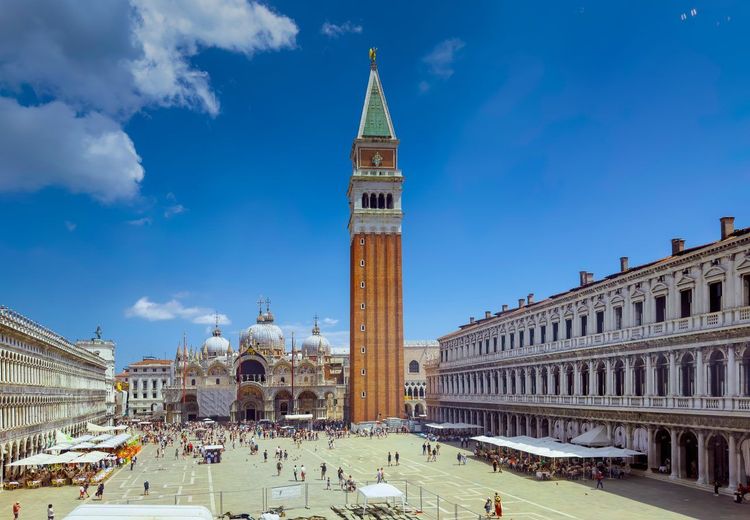
Arrive early, before 9 a.m. if possible: St. Mark's Square is almost empty at that hour, and it is the only moment of the day when pigeons outnumber tourists. Spend the morning choosing between St. Mark's Basilica and the Doge's Palace (both in one morning is doable, but tight), then cross the Rialto district along the Grand Canal to the bridge of the same name, where the fish market is still in full swing until mid-morning. If you arrive by train rather than by plane, Santa Lucia station drops you right on the water, fifteen minutes on foot from the Rialto district, which lets you start the day even earlier.
The afternoon lends itself to pure walking: deliberately get lost in the calli between San Polo and Dorsoduro, without a map, relying on the yellow signs that always point toward San Marco or the station. It is also the right time for a gondola ride, cheaper at the daytime rate than in the evening. In the evening, treat yourself to an aperitivo with cicchetti (Venetian tapas) in a bacaro in Cannaregio, then finish with a night vaporetto ride on the Grand Canal: the illuminated palaces are well worth the price of the ticket.
Three Days in Venice: The Complete Program to See Everything Calmly
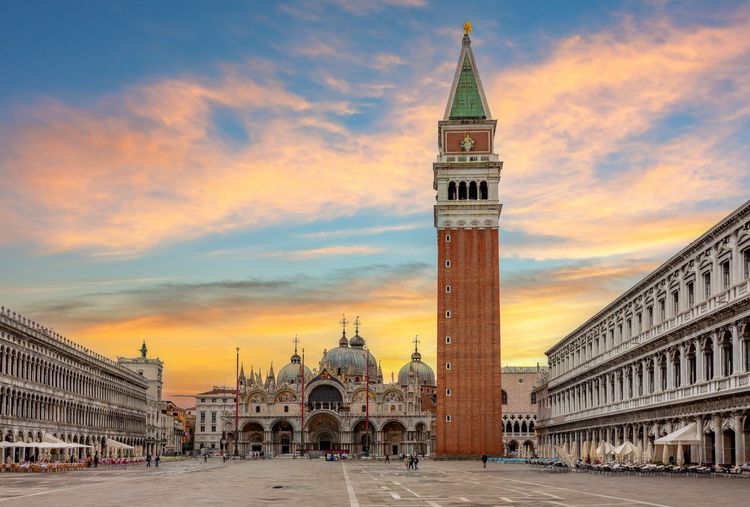
The 3-day format remains the most comfortable for a first trip, and that is precisely the ambition of this guide: giving you enough to fill each day without rushing. Day 1, devote it to St. Mark's Square and its monuments: the basilica, the Doge's Palace, the campanile and the Clock Tower form a coherent block that you visit one after the other. Day 2, head for the bridges and the Grand Canal: the Rialto in the morning for the market, a gondola ride in the middle of the day, then the Bridge of Sighs and the Dorsoduro or Cannaregio districts in the late afternoon, museums included if Venetian art interests you. Day 3, set off for the islands: Murano for blown glass, Burano for colorful houses, and if time allows, a detour to San Giorgio Maggiore for the least crowded panorama in the city.
Why choose Venice for a 3-day getaway rather than a quick weekend? Because the city only truly reveals itself after the day visitors leave, often arrived by bus or cruise ship. Spending a night there, and ideally two, means seeing St. Mark's Square returned to calm around 9 p.m., very different from the crush at 2 p.m. To find your way without consulting a map at every intersection, the Ryo audio-guided tour follows an itinerary very close to this one: 27 audios to listen to along a 7.6 km loop, or about 3h20 of guided walking.
When to Go to Venice and How to Avoid the Crowds
Choosing your dates often comes down to a compromise between mild weather and manageable crowds. July and August bring the highest temperatures, oppressive humidity, and the biggest crowds of the year on St. Mark's Square. Conversely, the low season months (November to February, apart from carnival) offer a city almost returned to its inhabitants, provided you accept the damp cold and shorter days.
The Best Season and the Best Day to Visit Venice
The best season to visit Venice remains spring (April-May) or early autumn (late September-October): pleasant temperatures between 15 and 22°C, soft light on the canals, and crowds that are far more manageable than in midsummer. Venice in October is actually a good idea for anyone seeking this balance, as long as you pack a waterproof jacket, since the first rises of Acqua Alta may already appear.
The low season months, from November to February (apart from carnival), remain the least shared secret for visiting Venice without the crowds: hotel prices drop by 30 to 40% compared to spring, restaurants regain a local clientele, and it becomes possible to cross St. Mark's Square without elbowing your way through. The only real trade-off is the weather: frequent mist, chilly nights around 2-5°C, and a higher risk of Acqua Alta than in spring.
As for the day of the week, the best day to visit Venice is generally a Tuesday or Wednesday: cruise ships, which unload several thousand passengers at once, dock more often at the beginning and end of the week. Also avoid Italian public holidays (April 25, May 1), when the local population itself heads en masse to St. Mark's Square.
Carnival and Acqua Alta: Two Very Different Faces of the City
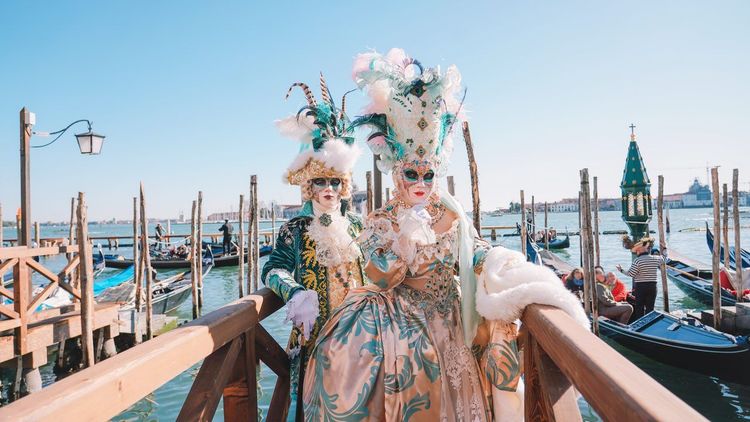
Experiencing the Venice carnival means seeing the city at its most spectacular: masks, 18th-century costumes, costume balls in the palaces, and a St. Mark's Square turned into an open-air stage for two weeks, generally in February. Planning your visit during carnival requires anticipation: hotels fully booked months in advance, doubled rates, and crowds that rival those of summer.
Acqua Alta in Venice is the other phenomenon to know about: this exceptional rise in water level mostly affects St. Mark's Square, the lowest point in the city, between October and January. Since 2020, the mobile barriers of the MOSE system rise during the highest tides and protect the lagoon from the most severe episodes; for moderate tides, the elevated walkways installed by the municipality allow you to keep moving around, and the phenomenon rarely lasts more than a few hours. It is not a reason to cancel a trip, just to slip some foldable boots into your suitcase.
How to Get to Venice from Marco Polo Airport
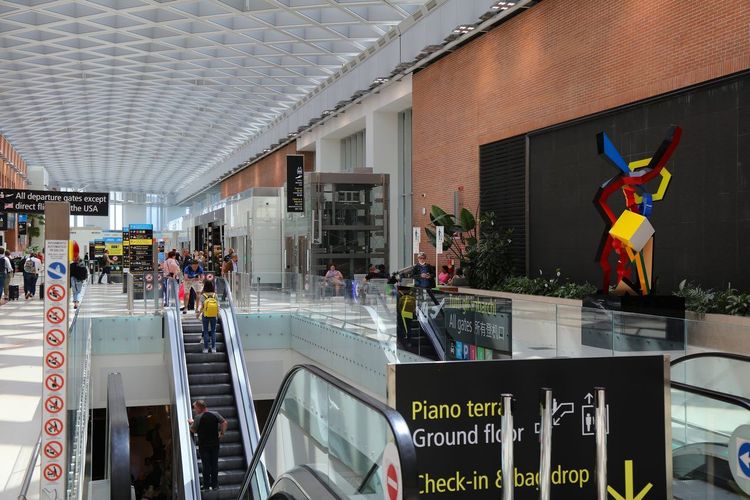
The first thing to keep in mind: Marco Polo airport is not on the historic island: it is on the mainland, about ten kilometers away, and reaching the center requires a boat, a bus, or a combination of the two. A word also about cruise ships, which now dock far from the historic center, at Fusina or Marghera, with a mandatory shuttle to the city.
Vaporetto, Lagoon Bus and Land Shuttles
How do you get to Venice from Marco Polo airport without breaking the bank? Two inexpensive land options exist. The ATVO bus connects the airport to Piazzale Roma (Piazzale Roma, 30135 Venezia VE, Italy), the gateway to the city on the mainland side, in about twenty minutes for a few euros. From there, you need to continue on foot or by vaporetto depending on the distance to your hotel.
To reach the historic center directly by water, the Alilaguna shuttle offers several lines, including the blue line (Blu) and the orange line (Arancio), which serve different stops along the Grand Canal. Which water bus to take depends on your hotel: the orange line serves Rialto and San Marco more directly, while the blue line also serves Murano and the Lido. Where to buy airport shuttle tickets? Directly at the Alilaguna counter in the terminal, or online in advance to avoid the queue. Allow €15 to €17 for a one-way ticket, and about 1h15 of crossing to San Marco, since the lagoon forces a slower route than a straight line. The airport-Venice shuttle transfer map, available at the counter or downloadable before departure, remains useful for seeing which stop is closest to your hotel: some accommodations in the north of the city clearly benefit from taking the blue line rather than the more frequently mentioned orange one.
Water Taxis and Private Transfers: Who Are They For and at What Price
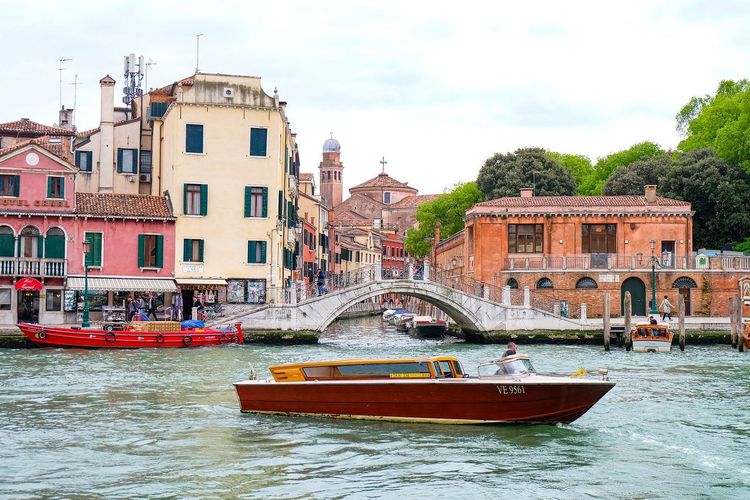
The airport-Venice transfer by water taxi is the fastest solution (about 30 minutes to the center) and the most expensive: allow between €110 and €150 for a private ride with up to two or three bags, right to your hotel's door or as close as possible depending on the accessible canals. It is a good choice if you are traveling in a group, with a family with young children, or if you arrive late in the evening after the last vaporetto.
To get from the airport to your hotel without stress, book the transfer in advance rather than negotiating on the spot: the rates posted near the airport landing stage are rarely what you will actually pay, and fake unofficial water taxis do exist. Look for the Venezia Taxi consortium logo before boarding.
How to Get Around Venice Once You're There
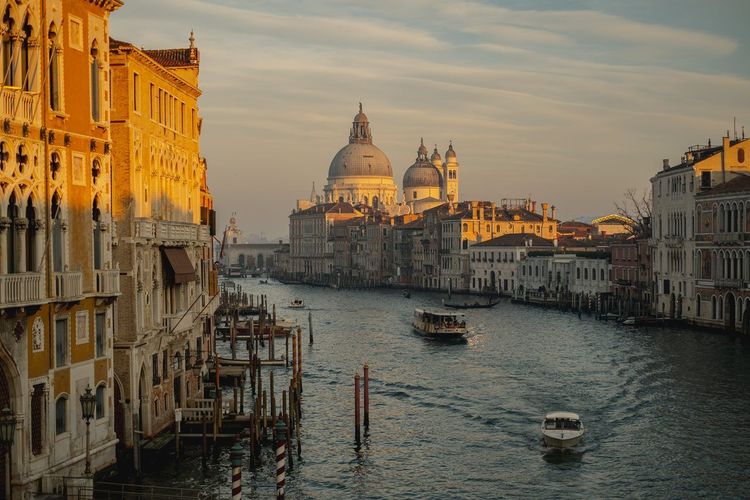
Forget the metro, trams and regular taxis: here, everything is done on foot or by boat. Distances between two points in the historic center rarely exceed 30 minutes of walking.
The Vaporetto and the Lines to Know on the Grand Canal
The vaporetto on the Grand Canal works like a floating tram: lines 1 and 2 run along the canal from one end to the other, the first serving every stop (ideal for admiring the palaces), the second faster with fewer stops. A single ticket costs around €9.50, but an unlimited 24h, 48h or 72h pass quickly becomes worthwhile from 3-4 rides a day.
The night vaporetto on the Grand Canal deserves a special mention: the lines run until late, at reduced frequency after 11 p.m., and offer one of the best value-for-spectacle ratios in the city, with illuminated palaces reflected on the black water.
Walking in Venice, the Best Way to Get Lost in the Calli
Exploring on foot nevertheless remains the best way to discover Venice: walking reveals calli (alleys) and campi (small squares) that no boat reaches. Bring a good pair of comfortable shoes, as the uneven paving and the many small bridges quickly tire poorly prepared feet.
To avoid spending your time with your nose in your phone checking a map, many visitors prefer to follow a pre-planned itinerary by ear. That is exactly what the Ryo audio guide offers: a route you follow on foot, step by step through the alleys, without ever having to stop and check a map while walking.
Where to Stay in Venice for a First Visit: Neighborhoods and Tips
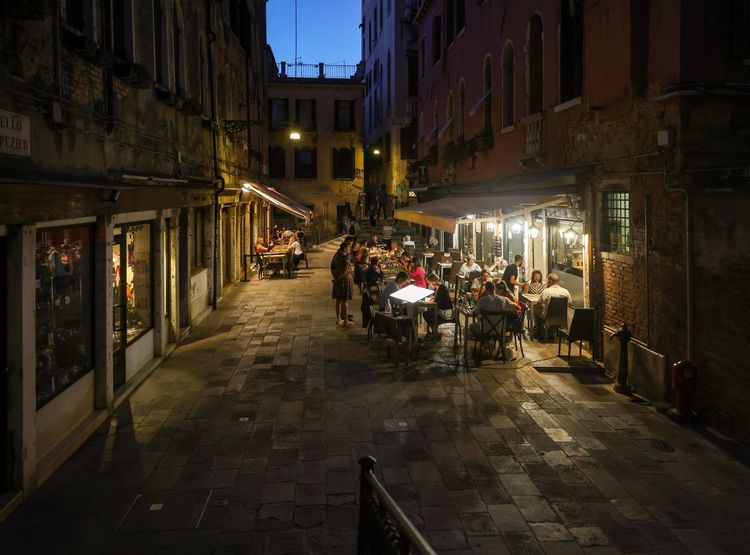
For a first stay, the choice of neighborhood matters almost as much as the hotel itself: some areas shut down almost entirely after 10 p.m., while others stay lively until all hours. Do you need to book your hotel far in advance? Yes, especially between April and October or during carnival: the best addresses are booked 2 to 3 months before the stay.
San Marco and Castello, at the Heart of the Action
The San Marco district puts everything within easy reach: the basilica, the Doge's Palace and the Rialto Bridge are all 10 to 15 minutes apart on foot. It is also the most expensive and most crowded area of the city, where sleeping next to the Gritti Palace (one of Venice's legendary hotels, on the Grand Canal) gives an idea of the price level.
Castello, just to the east, offers a more affordable alternative without losing proximity: its residential alleys, less visited toward the Arsenale end, retain a real Venetian daily life while remaining 15-20 minutes on foot from St. Mark's Square.
Cannaregio, Dorsoduro, San Polo and Santa Croce: More Authentic and Affordable
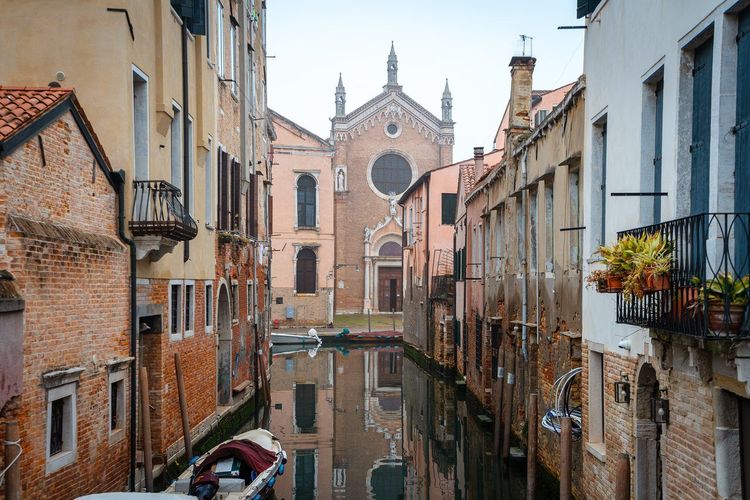
Cannaregio and Dorsoduro appeal to travelers who want to sleep next to residents rather than tourist storefronts. Cannaregio, crossed by the historic Ghetto, concentrates the city's best cicchetti spots and is 15 minutes on foot from the station, handy for late arrivals. Dorsoduro, further south, mixes artists' studios and canalside terraces, with the advantage of being a stone's throw from the Peggy Guggenheim Collection and the Gallerie dell'Accademia.
San Polo and Santa Croce, smaller, offer a compromise between centrality and calm, notably around Campo San Polo. Which neighborhood to choose for a first trip to Venice? If you only stay one or two nights, stay close to San Marco or Cannaregio to limit travel; from three nights, Dorsoduro or San Polo are well worth the detour for their atmosphere. To get a sense of these neighborhoods even before arriving, the short version of the Ryo audio-guided tour, Meeting the Serenissima, lets you discover the main outlines in an outing shorter than the full tour.
St. Mark's Square and Its Emblematic Monuments
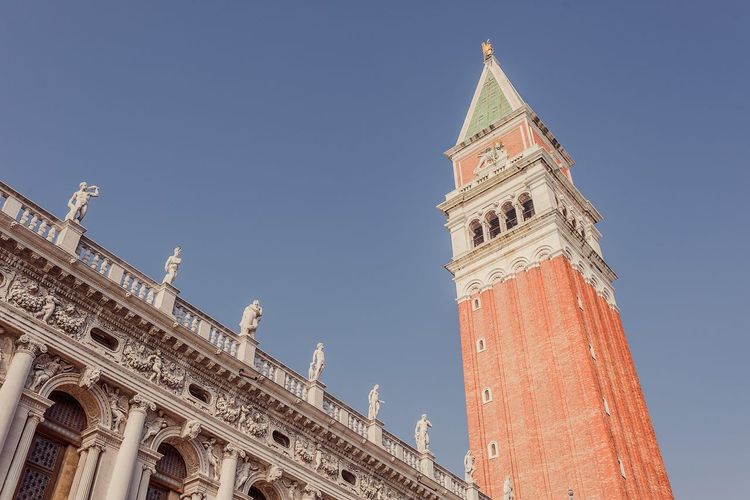
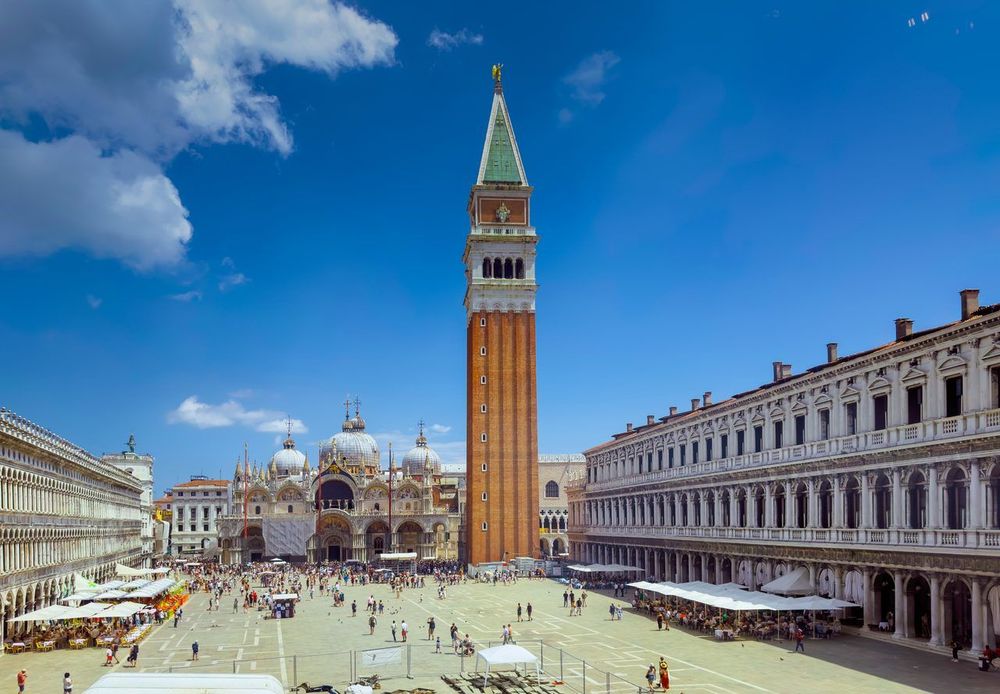
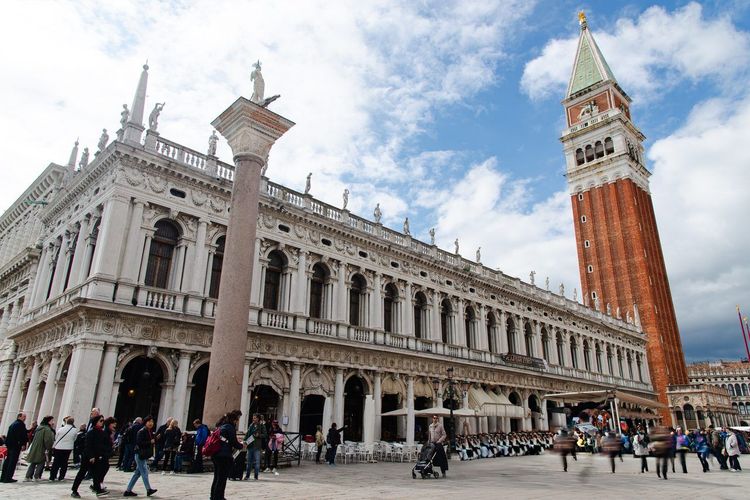
Feasting your eyes on St. Mark's Square is a bit of a rite of passage for any first stay in Venice. The city's largest square alone concentrates a good share of the monuments that made its reputation: a Byzantine basilica covered in gold, a palace that governed a republic for a thousand years, and two towers offering the best panoramas of the historic center. The Ryo audio guide to Venice passes right through here and devotes several of its commented stops to the history of the basilica and the Doge's Palace (Piazza San Marco 1, 30124 Venezia VE, Italy, rated 4.7/5 on Google from 40,269 reviews). Allow half a day at minimum to enjoy it without rushing.
St. Mark's Basilica and the Doge's Palace
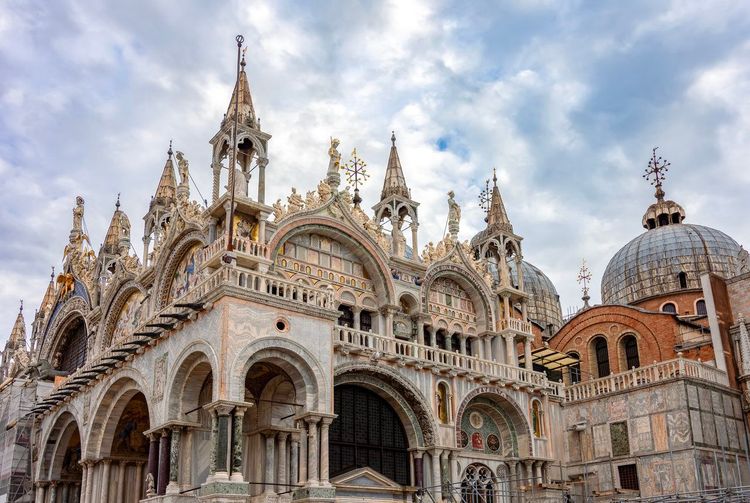
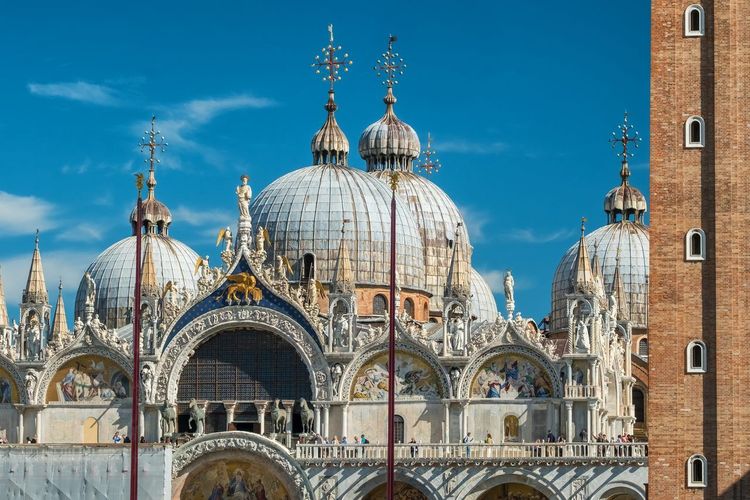
Visiting St. Mark's Basilica means entering one of the finest examples of Byzantine art in Western Europe: more than 8,000 m² of golden mosaics cover the domes, accumulated over several centuries since the 11th century. Entry to the basilica is now paid (a few euros, ticket sold on the basilica's official website), and the queue can exceed 45 minutes in high season: booking a time slot online avoids this wait.
Visiting the Doge's Palace takes a little more time, between 1h30 and 2h for a full visit: the Council chambers, the doges' apartments, then the famous Bridge of Sighs that you cross on your way out toward the prisons. This is where the power of the Republic of Venice sat for nearly a thousand years, and the rooms still hold monumental canvases by Tintoretto and Veronese.
Which to choose between St. Mark's Basilica and the Doge's Palace if time is short? The basilica can be visited in 30-40 minutes for a modest ticket, while the palace requires a real time budget and a pricier ticket (around €30 for the St. Mark's Square museums ticket). For a first stay with only one morning available, favor the basilica, then save the palace for a second visit.
The Campanile, the Clock Tower and the Best Panoramas over the City
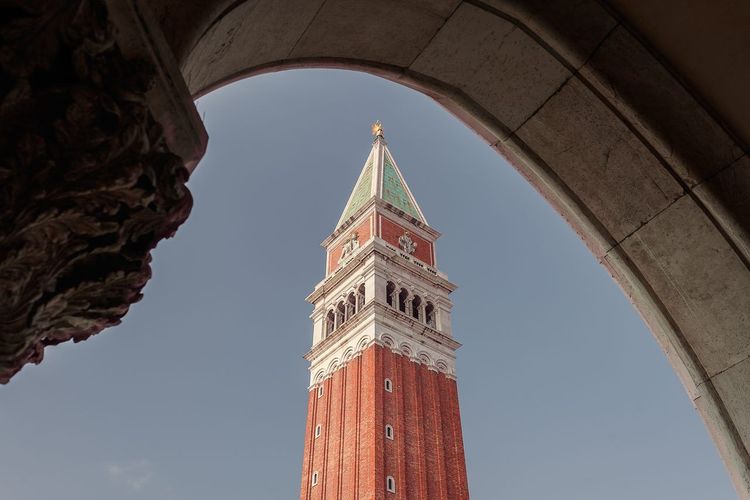
The San Marco campanile and the view over the Grand Canal alone justify the queue: from the top of its 98.6 meters, reached by elevator, the panorama takes in the whole lagoon, the distant islands, and the orange rooftops of the historic center. Go up preferably in the late afternoon, when the low light sculpts the facades far better than at midday.
The Clock Tower and the other viewpoints in Venice offer a lesser-known alternative: its guided tour, in small groups only, lets you see up close the 15th-century astronomical mechanism and reach a terrace with a plunging view of the square itself. Where to find the best panoramas of Venice beyond these two options? The spiral staircase of the Scala Contarini del Bovolo, hidden in a courtyard near Campo Manin, and the San Giorgio campanile Maggiore, less crowded, are worth the detour.
Which other churches to visit besides San Marco basilica? The church of San Zaccaria, just behind the square, and the church of the Gesuiti in Cannaregio are among the most beautiful, often deserted compared to the crush at San Marco. As for tickets, the St. Mark's Square museums ticket covers both the Doge's Palace and the Correr Museum, which costs less than separate admissions.
The Rialto Bridge, the Bridge of Sighs and the Grand Canal
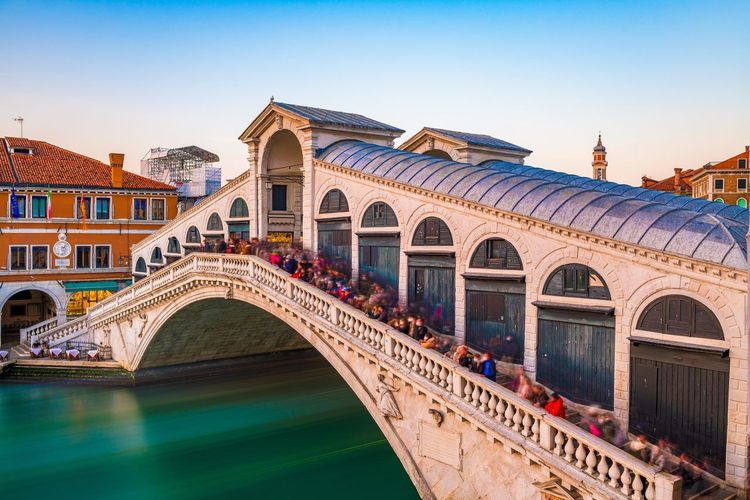
Discovering Venice's famous bridges also means understanding how the city organized its life around water for centuries. The Grand Canal, the main artery of more than 3.8 km, crosses the city in the shape of a reversed S and concentrates the finest palaces, often visible only from the water or from one of the four bridges that span it.
The Rialto Bridge and Its Lively Market
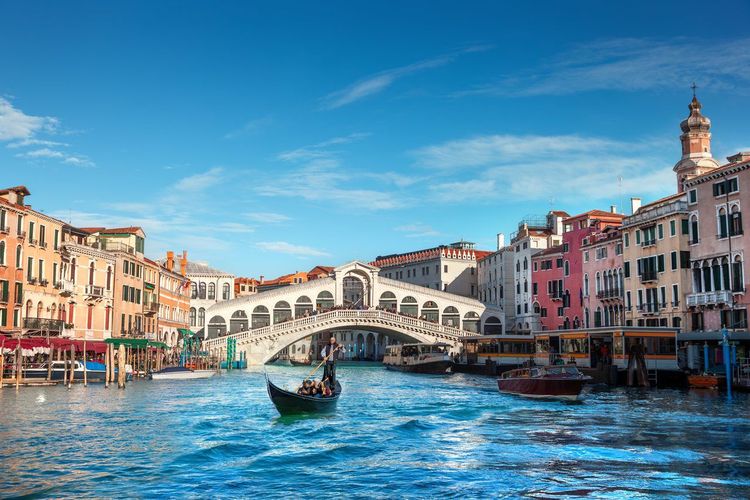
The Rialto Bridge remains the oldest of the four crossings of the Grand Canal, rebuilt in stone at the end of the 16th century after several collapses of the wooden versions. Its two rows of shops, set directly on the bridge, mostly sell souvenirs today, but the real interest of the Rialto district lies right next door: the fish and vegetable market, active since the Middle Ages, still frequented by Venetians themselves early in the morning.
How to make the most of the Grand Canal from the bridge? Go up in late morning or at the end of the day, when the light is best for photos, and avoid midday when the crowd makes crossing laborious.
The Bridge of Sighs and a Stroll Along the Grand Canal
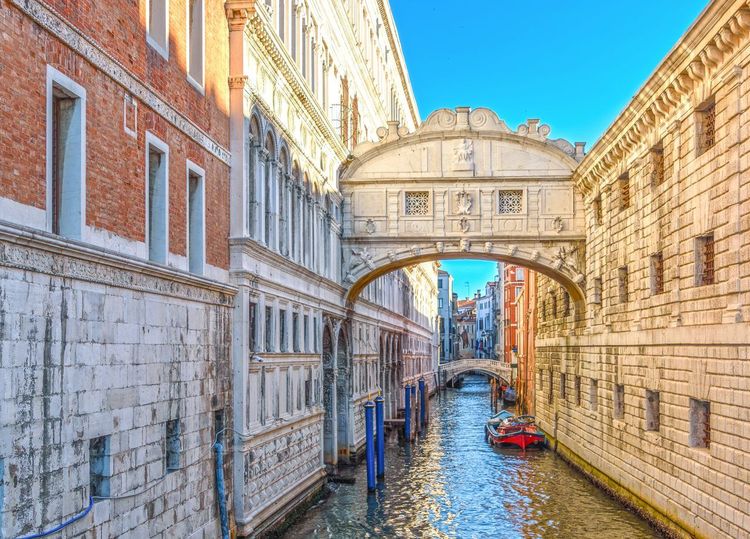
The Bridge of Sighs, far more modest in size than the Rialto, owes its fame to a persistent legend: the prisoners who crossed it, led from the courtrooms of the Doge's Palace toward the neighboring cells, supposedly let out a last sigh of freedom before being locked away. It is best seen from the Ponte della Paglia, right next to it, where a small crowd of cameras always gathers.
To extend the stroll, cruising the Grand Canal on vaporetto line 1 lets you admire the city's finest palaces along the way: the Ca' d'Oro, the Palazzo Grassi or even the Punta della Dogana at the other end. To cross the Grand Canal without using one of the four bridges, Venetians take the traghetto, a shared gondola that shuttles between two banks for €2: an economical and authentic way to enjoy a mini gondola ride without paying the tourist price. If you follow the Ryo audio-guided tour, it is in this area that you will hear, on the spot, the story of these bridges and the legends surrounding them.
Taking a Gondola Ride, the Quintessential Venetian Experience
Taking a gondola ride remains, for many, the image that sums up Venice even before setting foot there. The typically Venetian experience consists of a 25 to 30 minute ride, led by a gondolier in a striped shirt, through an itinerary of secondary canals that are calmer than the Grand Canal.
How much does a gondola ride in Venice cost? The rate is set by the municipality and identical everywhere: €90 during the day for a 30-minute ride, to be shared among a maximum of 5 passengers. From 7 p.m., it rises to €110 for 35 minutes, and gondoliers sometimes sing on request, for an extra fee. It is also possible to share a gondola with other travelers via certain booking platforms, which reduces the price per person without cutting into the experience.
It all comes down to timing: early in the morning, between 8 and 9:30 a.m., before the influx of visitors, the low light on the water and the relative calm of the secondary canals make the ride far more memorable than in the middle of the afternoon. The main landing stages are near the Rialto Bridge, St. Mark's Square and the San Polo district; negotiate the exact route before boarding, as some gondoliers are happy to customize the itinerary to your wishes.
Must-See Museums and Galleries for First-Time Visitors
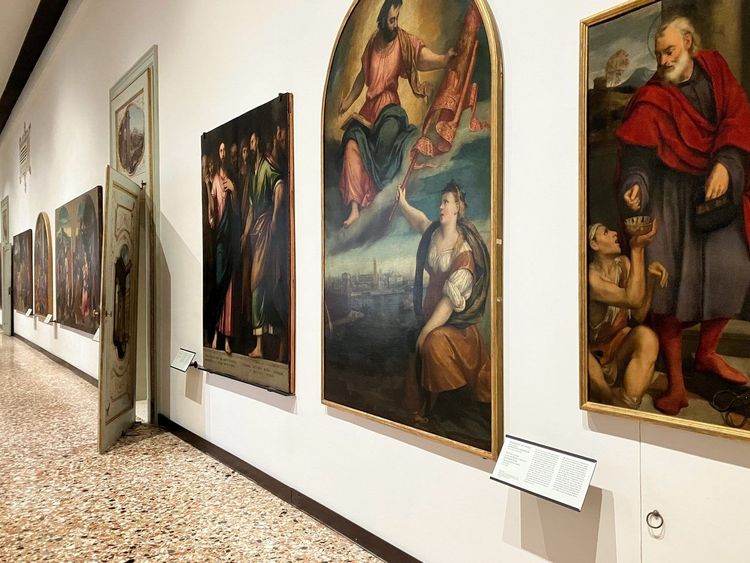
Venice has no shortage of must-see museums and galleries, but for a first stay, it is better to prioritize two or three places rather than try to see everything. If you only have half a day for museums, the Gallerie dell'Accademia and the Peggy Guggenheim Collection, both in Dorsoduro, can be visited in a single outing.
The Gallerie dell'Accademia and the Peggy Guggenheim Collection
The Gallerie dell'Accademia hold the largest collection of Venetian painting in the world, from the 14th to the 18th century: Titian, Veronese, Tintoretto and Giorgione occupy several entire rooms. Allow 1h30 to 2h for an unhurried visit.
The Peggy Guggenheim Collection, housed in the Palazzo Venier dei Leoni on the Grand Canal, takes the opposite approach with modern and contemporary art: Picasso, Kandinsky, Pollock and an important Surrealist collection, in a far more intimate setting than the big museums. If time is even tighter, focus on it alone: more compact than the Gallerie dell'Accademia, it can be visited in an hour and is open every day except Tuesday.
The Correr Museum and Ca' Rezzonico
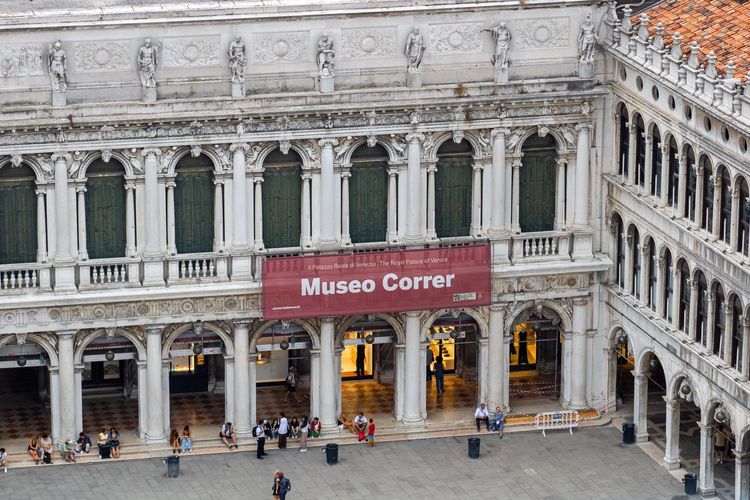
The Correr Museum, located on St. Mark's Square itself, tells the political and artistic history of the Republic of Venice, with a section devoted to the 19th-century royal apartments. Its ticket is often included in the civic museums pass, making it an easy visit to combine with the Doge's Palace.
Ca' Rezzonico (Fondamenta Rezzonico 3136, 30123 Venezia VE, Italy, rated 4.5/5 on Google from 3,515 reviews), on the Grand Canal in Dorsoduro, ideally completes the visit: this 18th-century palace, turned into a museum of the Venetian Settecento, lets you see what the interior of a patrician residence of the time really looked like, furniture and ceiling frescoes included.
Excursions to the Lagoon Islands: Murano, Burano and San Giorgio Maggiore
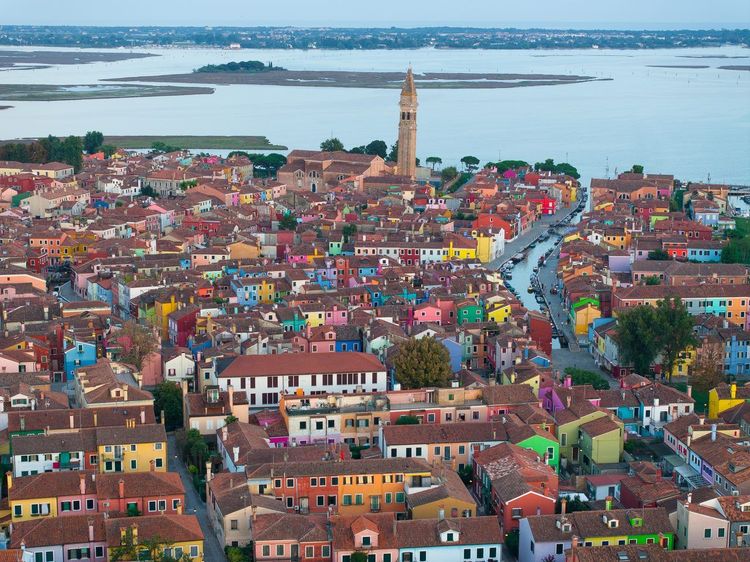
Excursions to the lagoon islands: that is what truly sets a three-day stay apart from a simple weekend in Venice. Murano, Burano and San Giorgio Maggiore (Isola di San Giorgio Maggiore, 30133 Venezia VE, Italy, rated 4.6/5 on Google from 7,295 reviews) can all be reached by vaporetto from the historic center, with no mandatory reservation, and are easily combined into a single day. If you prefer to organize your time in the historic center before or after this outing, the Ryo audio-guided tour, with its 7.6 km loop in the center, covers the urban part of the stay.
Murano, the Glass Island, and Burano, the Island of Colorful Houses
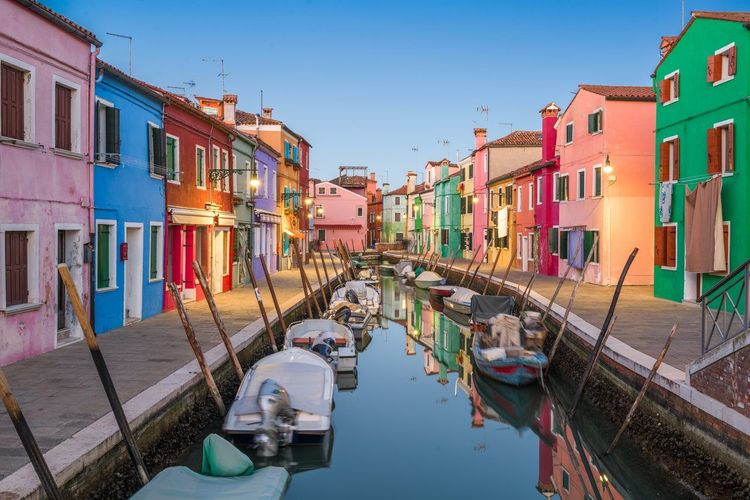
To escape for a few hours to the islands of Murano and Burano, take line 12 from the Fondamente Nove landing stage: about ten minutes to reach Murano, and around 40 to 45 minutes to Burano. Murano, the glass island, has concentrated Venice's blown glass workshops since the 13th century, when they were moved there for fire safety reasons; several furnaces offer free demonstrations followed, unsurprisingly, by a compulsory stop in the shop.
Burano, the island of colorful houses, is above all discovered for its facades painted in bright shades, a tradition that once allowed fishermen to spot their home from out at sea in foggy weather. It is also the birthplace of Venetian lace, still visible in a few family workshops.
San Giorgio Maggiore and Its Campanile, the Lesser-Known Panorama
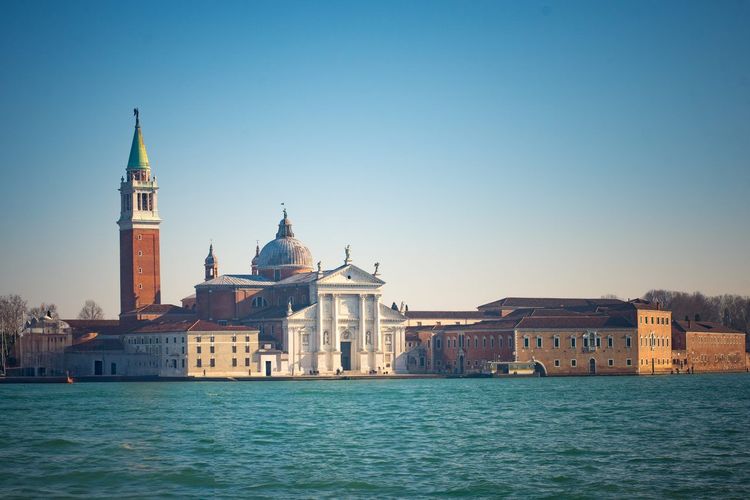
San Giorgio Maggiore and its campanile offer, in the opinion of many regulars, the finest overall view of Venice, far less crowded than that of the San Marco campanile. The island is reached in 5 minutes by vaporetto from St. Mark's Square (line 2), a round trip that easily fits within an hour.
Go up to the top of the campanile, reached by elevator for a few euros, and you will have the entire skyline of the historic center before you, from Dorsoduro to the Lido. It is often the best vantage point for taking the photo that sums up the whole trip, without ever queuing as you would on St. Mark's Square.
Unusual Activities and Unique Experiences in Venice
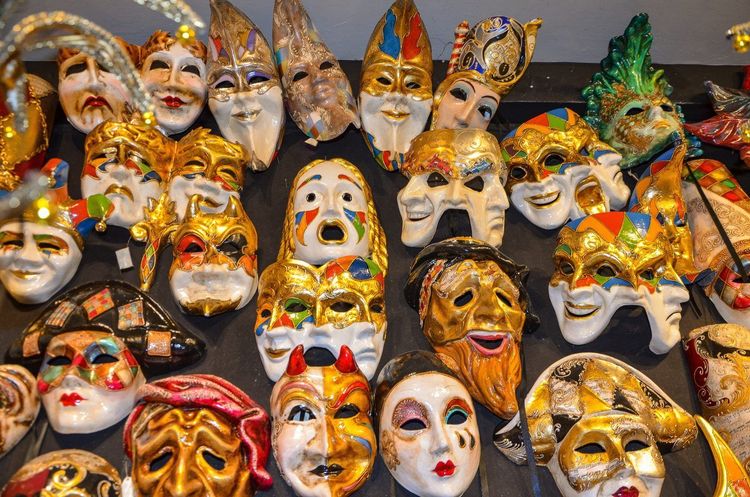
Unusual activities and unique experiences abound for those who want to get off the beaten track. Between concerts in baroque churches and Venetian mask workshops, Venice hides far more than its most photographed monuments.
Attending a Classical Music Concert or an Opera in a Church
Attending a classical music concert in a church is among the experiences that truly mark a first stay: the church of San Vidal or that of the Pietà, where Vivaldi himself taught music, regularly host ensembles playing The Four Seasons in the particular acoustics of religious buildings. Allow €25 to €35 for a seat, bookable online a few days in advance.
Where to see an opera in Venice for a more dressed-up evening? The Teatro La Fenice, rebuilt after a fire in 1996, remains the reference venue, with a program mixing great classics and more contemporary works depending on the season.
Experiencing Carnival and Exploring Unusual Venice Off the Beaten Track

Visiting unusual Venice also means pushing open the door of a mask-making workshop in Cannaregio or Castello, where some artisans offer one-hour introductions to paint your own papier-mâché mask. What to do in Venice to discover the city differently? Try a ride in a sandolo (the less touristy cousin of the gondola, rowed by local women) or a visit to the San Michele cemetery, an entire island devoted to burials, surprisingly peaceful just minutes by vaporetto from the center. Booking these experiences generally requires less anticipation than a well-known restaurant: a few days are usually enough, except during carnival when everything fills up faster.
Where to Eat Well in Venice: Our Best Addresses Far from the Tourist Traps
Tourist traps are quickly spotted once you know them: a menu displayed in six languages with photos of the dishes, a terrace right on a tourist thoroughfare, a waiter who intercepts you the moment you step in front of the window. These restaurants exist by the dozens in the San Marco area and around the Rialto Bridge, and it is better to move a few streets away from them.
Feasting on every street corner is still possible, as long as you favor bacari, those small wine bars where you eat standing or at the corner of a counter. Cannaregio and Castello have the most of them, far from the crowds: there you order cicchetti, a mix of topped crostini, small fried meatballs and marinated sardines, accompanied by an ombra (a glass of local wine) for a few euros.
The Venetian aperitif and meal follow a particular rhythm: the aperitivo is taken between 6 and 7:30 p.m., often standing in the street with a glass in hand, before a dinner that rarely starts before 8 p.m. For a proper meal, look for restaurants where the menu changes according to the day's catch rather than displaying the same laminated card all year round: it is often the most reliable sign of a kitchen aimed at locals rather than tourist groups. A good habit is also to ask the hotel staff for one or two neighborhood addresses rather than searching via an app, as the best bacari often change names over the years.
Budget, Passes and Reservations: Preparing Your Visit to Save Time
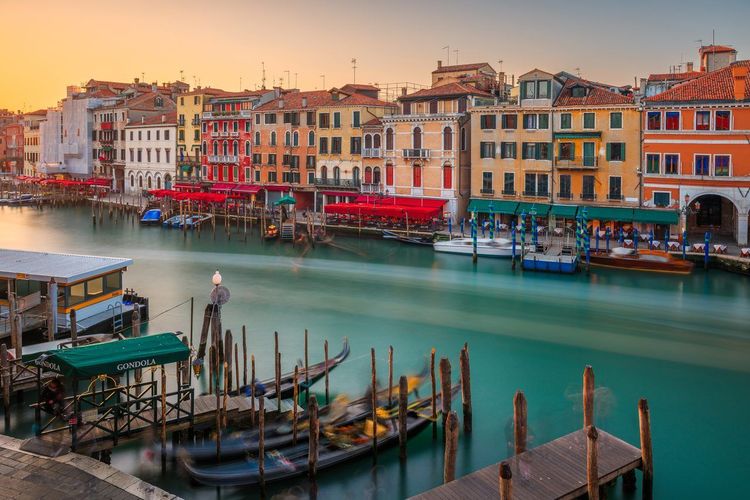
Preparing your discovery of Venice before departure avoids many wasted hours once you are there. Between the access fee, museum passes and the reservations to make in the days leading up to a peak in visitor numbers, a few golden rules are enough to turn a chaotic stay into a smooth one.
What Budget to Plan and Which Passes or Combined Tickets to Choose
What budget should you plan for a trip to Venice? Allow, excluding flights and hotel, around €70-100 per day per person for meals, vaporetto transport and two or three paid visits. Since 2024, an access fee applies on certain days of heavy crowds (mainly from April to July) to day visitors not staying overnight: €5 if you pay at least four days in advance, €10 beyond that. If you sleep in Venice, you are exempt, the hotel's tourist tax serving in its place, but you still need to register online.
Passes for visiting Venice mostly simplify the question of museums: the St. Mark's Square museums ticket (Doge's Palace and Correr Museum) costs around €30, the Museum Pass, which also opens Ca' Rezzonico and the other civic museums, about €40, while an unlimited multi-day vaporetto transport pass quickly pays off for anyone making many trips. Which passes or combined tickets to favor depends mainly on the number of planned visits: beyond three paid sites, the combined option is almost always the winner.
Booking Your Visits in Advance to Avoid Queues
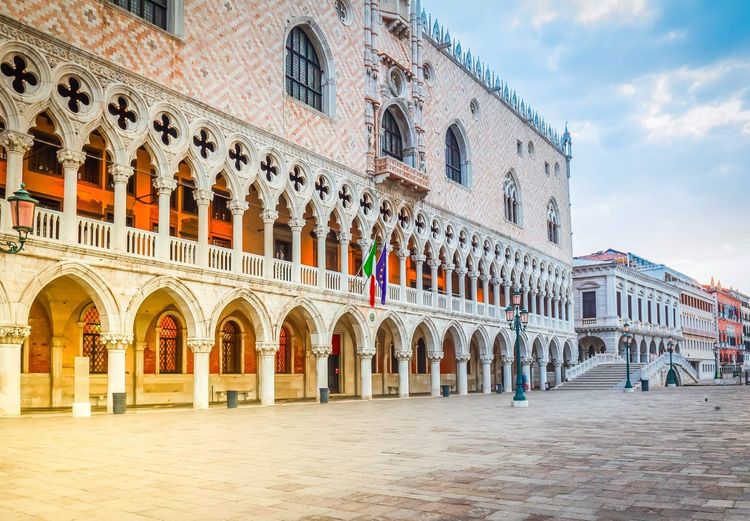
Booking and organizing your visits in advance remains the most rewarding practical tip in this entire guide. St. Mark's Basilica, the Doge's Palace and the campanile all offer time slots online, often free to book, which help you avoid queues that can exceed an hour in high season. For the Doge's Palace, the Secret Itineraries option (a guided tour of the backstage of power, including prisons and administrative offices) must be booked several weeks ahead in high season, with slots limited to small groups.
As for restaurants, the best tables in Cannaregio or Dorsoduro can easily be booked by phone or online the day before, rarely earlier. For gondolas, no reservation is necessary, but arriving early in the morning avoids the wait at the most popular landing stages.
In short: book the basilica and palace online, keep a 20-minute margin for each vaporetto trip (the lagoon never goes in a straight line), and always bring shoes you have already tested rather than new ones.



FAQ
How many days do you need to visit Venice for the first time?
One day lets you see the essentials of St. Mark's Square, but three days remain the most comfortable format for a first stay: they leave time to add an excursion to the islands and discover the less touristy neighborhoods without rushing from one monument to the next.
What budget should you plan for a first trip to Venice?
Excluding flights and accommodation, allow between €70 and €100 per day per person for meals, vaporetto rides and two or three paid visits. Combined passes lower this budget from the third visit onwards, and the access fee remains minimal by comparison.
What is the best season to visit Venice?
Spring (April-May) and early autumn (late September-October) offer the best compromise between pleasant weather and manageable crowds. Summer remains hot and packed, winter is calmer but damp, with a risk of Acqua Alta between October and January, apart from the carnival period, which draws its own crowd.
Which neighborhood should you choose to stay in on a first trip to Venice?
San Marco puts everything within easy reach but costs the most. Cannaregio and Dorsoduro offer a good compromise between authenticity, gentler prices and reasonable proximity to the major sights, while San Polo suits stays of three nights or more.
Do you need to book your hotel far in advance?
Yes, especially between April and October or during the February carnival: the best addresses are generally booked two to three months before the stay, and prices climb as availability shrinks.
How much does a gondola ride in Venice cost?
The official rate, set by the municipality, is €90 for 30 minutes during the day, for a maximum of 5 passengers. It rises to €110 for 35 minutes after 7 p.m., with the gondolier's singing as an option.
How can you avoid the crowds in Venice?
Visit the major sights before 9 a.m. or after 5 p.m., favor a Tuesday or Wednesday over a weekend, and slip in an excursion to the islands or a stroll through Cannaregio to get out of the San Marco-Rialto triangle.
Visiting Venice for the first time often gives the impression, within the first few hours, of having already come back once in another life: the city has barely changed in several centuries, and that is precisely what makes every alley and every bridge feel familiar before you have even seen them. Between St. Mark's Square, the Rialto, a gondola ride and an excursion to the islands, three days are enough to leave with the essentials, without ever feeling rushed.
To turn this list into a concrete itinerary once you are there, the Ryo audio guide to Venice remains the most practical resource: 27 audios and 3h20 of walking to follow by ear, neighborhood by neighborhood, telling the story of each place at the exact moment you are standing in front of it.
À lire également