© Shutterstock
 Votre guide Ryo
Visiting Riga at Christmas in 2026: Cathedral Square Market, Old Town and Art Nouveau District
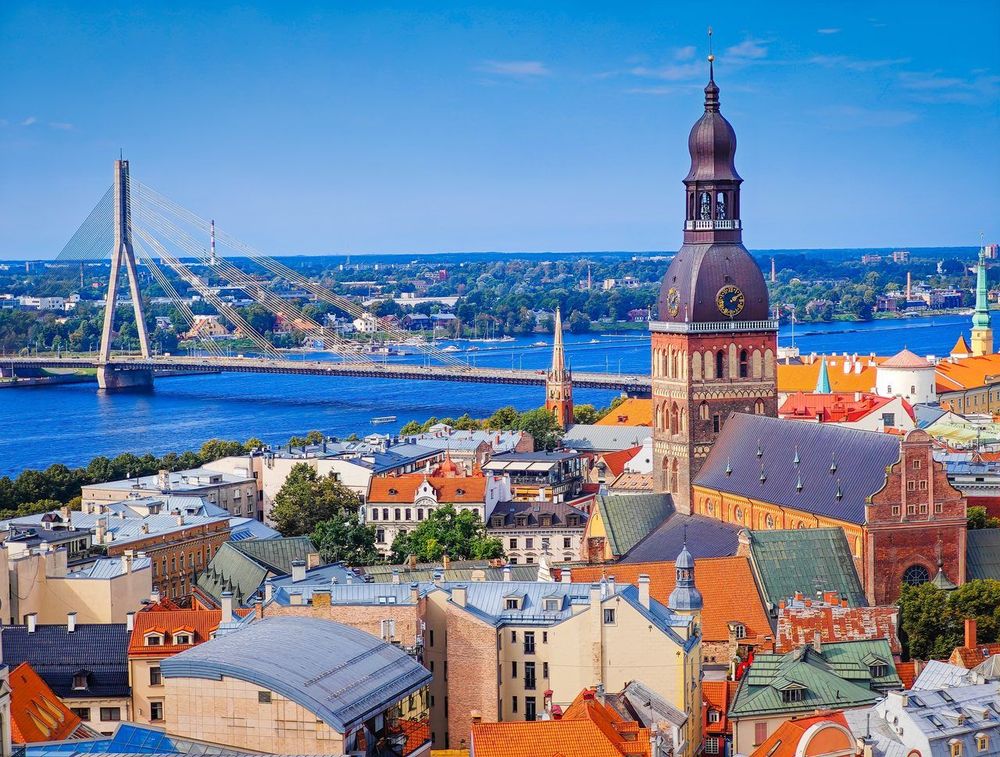
At minus four degrees, with snowflakes settling on the frozen cobblestones of Cathedral Square, the scents of mulled wine and Latvian gingerbread blend with the smoke from the braziers. This scene repeats every evening from late November to early January, and it is this, more than anything else, that leads more and more travelers each year to visit Riga at Christmas rather than a Western European market already overrun with crowds. The Latvian capital long escaped the radar of mass tourism, without losing any of the assets that earned its old town a place on the UNESCO World Heritage list in 1997. To get your bearings before you leave, the Ryo audio-guided tour of Riga retraces the historic heart of the city in several stages, which is handy for planning your own route once you are there.
In two or three days, you can reasonably combine the Christmas market on Cathedral Square, a Hanseatic old town with centuries-old merchants' houses, one of the largest Art Nouveau ensembles in Northern Europe and, for longer stays, an excursion to the Baroque Rundāle Palace less than 80 km away. Expect temperatures that most often range between -1°C and -6°C, an airport less than half an hour from the center by bus, and a daily budget well below that of Strasbourg or Vienna at the same time of year. This guide details every step, from flights to the two- or three-day itinerary.
How to Get to Riga for the Christmas Holidays
Riga is easy to reach from France during the holiday season, as long as you don't book at the last minute: fares climb quickly once the Christmas market opens its doors in late November.
Flights and Prices to Reach Riga in Winter
No airline offers a direct flight from every French city, but Paris, Nice and a few other airports are connected to Riga Airport (RIX) by direct flights of 2h45 to 3h depending on the airline, notably with Ryanair, Wizz Air or airBaltic. By booking six to eight weeks ahead, round trips can often be found for between 60 and 130 euros, a price that easily doubles on the most popular dates from December 15 to January 2. Weekday morning flights are generally the cheapest and the least affected by delays linked to winter traffic. If your departure city is not directly connected, a connection via a hub such as Amsterdam, Frankfurt or Warsaw rarely adds more than two hours to the total journey.
From the Airport to the City Center
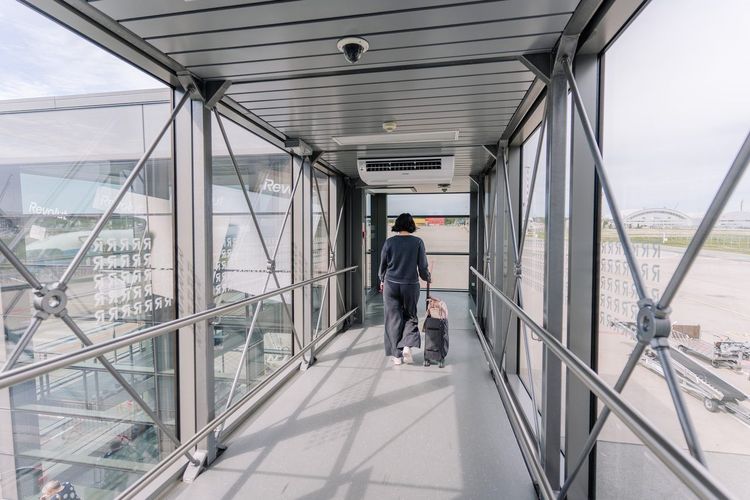
Riga Airport is only 10 km from the historic center, which makes arriving much simpler than in many other European capitals. Bus no. 22 connects the airport to the city center in 25 to 30 minutes, passing by the Central Market (Centrāltirgus) before its terminus at Abrenes iela, near the train station. The ticket costs 1.50 euros when bought in advance via the app or a Rīgas satiksme machine, and 1.81 euros when paid by bank card on board. Official taxis and apps like Bolt cost between 12 and 18 euros for the same journey, a good compromise if you arrive late at night with luggage or in -8°C weather. Avoid unofficial drivers who approach travelers as soon as they leave the terminal: fares negotiated on the spot almost always exceed those on the app.
When to Go: Climate and Best Days to Enjoy the Market
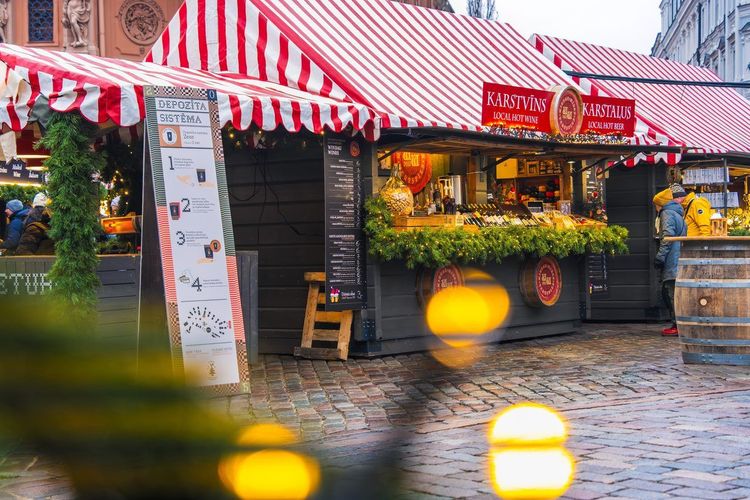
December in Riga is anything but a mild winter. Temperatures average between -1°C and -6°C, with colder spells possible in late December and early January, and snow regularly covers the old town from mid-December. Plan on technical layers rather than just a thick coat: the wind coming up from the Daugava makes it feel much colder than the thermometer shows.
The Christmas market traditionally opens in late November and stays up until the first days of January (from November 28, 2025 to January 4, 2026 for the latest edition). It is open from 11 a.m. to 9 p.m. on weekdays and until 10 p.m. on Fridays and Saturdays. The best days to visit are the weeks before the French school holidays, when hotel rates are lower and the market aisles less crowded. On weekdays, favor the slots between 10 a.m. and 3 p.m. or after 8 p.m.: crowds gather mostly on weekends between 5 p.m. and 7 p.m., when locals finish work and organized groups arrive at the end of the day. If you visit on a Saturday, arrive right at opening rather than in the middle of the afternoon.
The Christmas Market on Cathedral Square
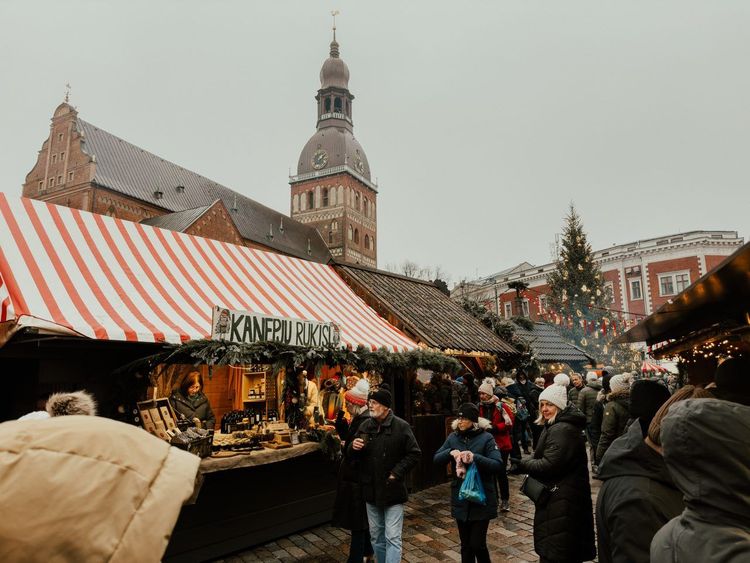
This is the beating heart of Riga at Christmas and, for many visitors, reason enough to come in December.
Atmosphere, Stalls and Crafts at the Market
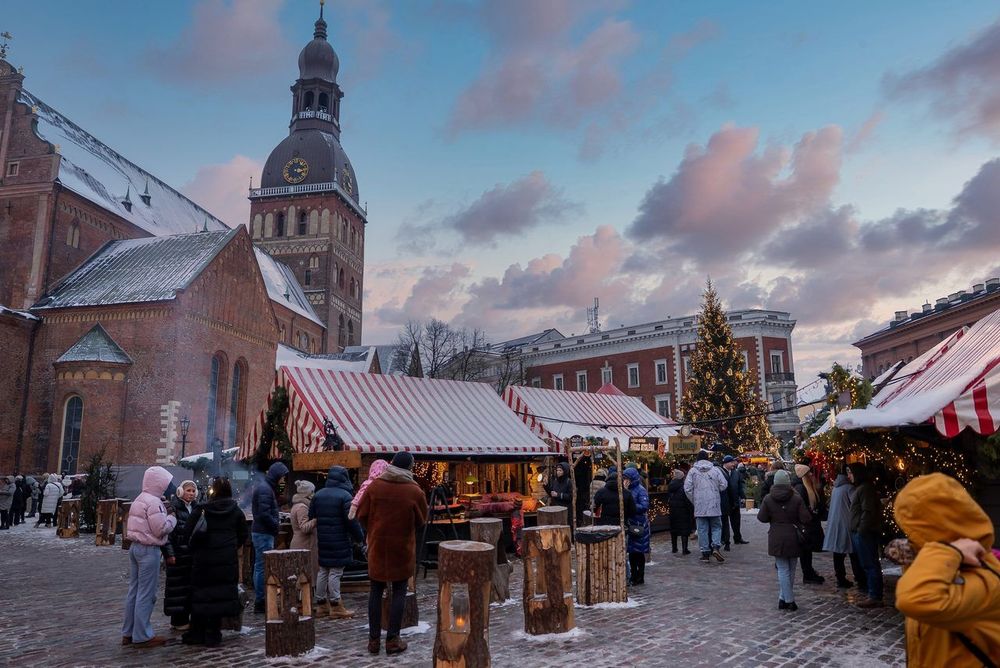
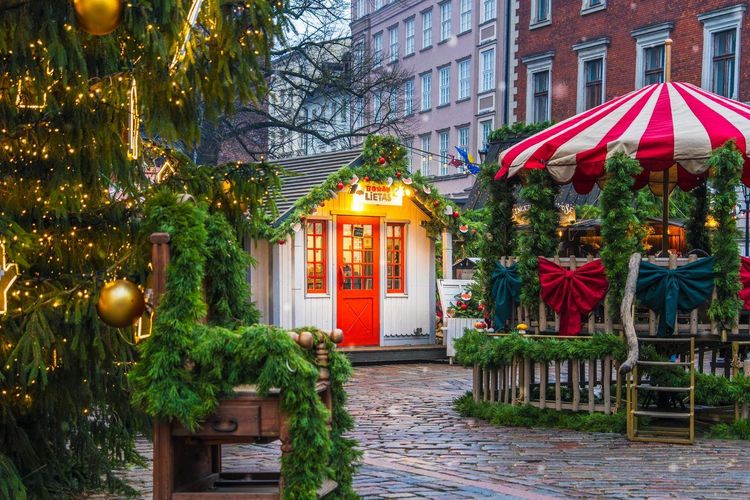
Each winter, Cathedral Square (Doma laukums, LV-1050 Riga, rated 4.7/5 on Google from 6,382 reviews) hosts more than 80 wooden stalls arranged around an immense decorated fir tree, often presented as a tribute to the local legend that the world's first decorated Christmas tree was set up in Riga in 1510 by the Brotherhood of Blackheads. Tallinn claims the same distinction, but the people of Riga firmly defend their version: an octagonal plaque set into the paving of the Town Hall square marks the supposed spot. Go looking for it, few visitors notice it.
You will find Latvian mulled wine (karstvīns), piparkūkas, those iced gingerbreads you can personalize on the spot with colored sugar, hand-knitted wool hats and mittens, and a surprising amount of Baltic amber jewelry at prices well below those of the touristy shops in the center. Choirs and small orchestras perform in the evening on a stage set up near the cathedral, and the smell of smoked meat floats constantly between the stalls, as does that of sklandrausis, a small rye tart filled with potato and carrot purée, best enjoyed warm. The atmosphere is as much artisan market as village festival, on a scale that remains far more intimate than that of Strasbourg or Cologne.
Avoiding the Crowds: Hours and Nearby Alternatives
The Ryo audio-guided tour of Riga goes right through Cathedral Square and tells, stall after stall, the story of the market and the surrounding merchants' houses: something to keep your ears busy while you queue for a mulled wine, without having to keep your eyes on a guide. If the weekend crowds put you off, several quieter alternatives exist a few minutes' walk away: the small markets at Līvu Square and Esplanade Park, and the large craft fair in Wöhrmann Garden, which brings together more than 60 artisans and producers for a weekend before Christmas, with free entry. Visitors on organized tours rarely stop there, which makes it a good plan B at the end of the day.
Riga's Old Town and Its Historic Must-Sees
Riga's old town (Vecrīga) can be explored entirely on foot in half a day, but every alley deserves a stop: the density of medieval and Art Nouveau merchant façades here is among the highest in the Baltics.
Town Hall Square and the House of the Blackheads
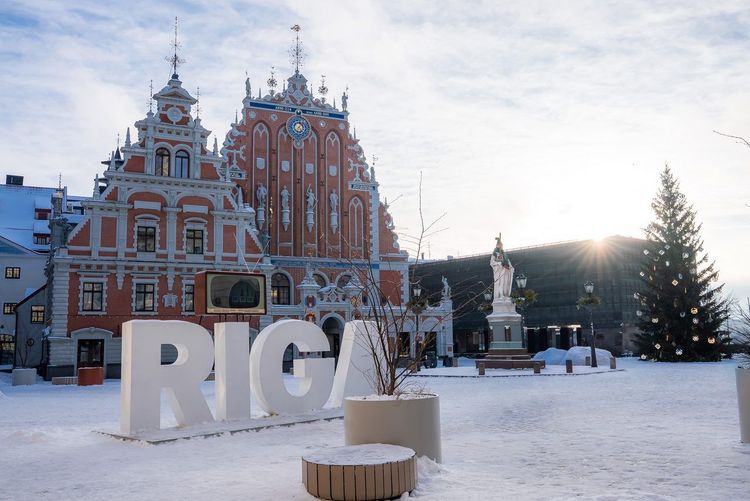
Town Hall Square is the natural starting point. The House of the Blackheads (Melngalvju nams), rebuilt after its destruction during the Second World War, displays a Flemish Renaissance façade adorned with statues and carved gables that contrasts sharply with the rest of the old town, which is more Gothic and Hanseatic.
The guild of unmarried merchants that once occupied the building held its banquets and ceremonies there, and the reconstruction of the 1990s sought to faithfully restore the original details based on pre-war photographs.
The Emblematic Cathedrals: The Dome and St. James
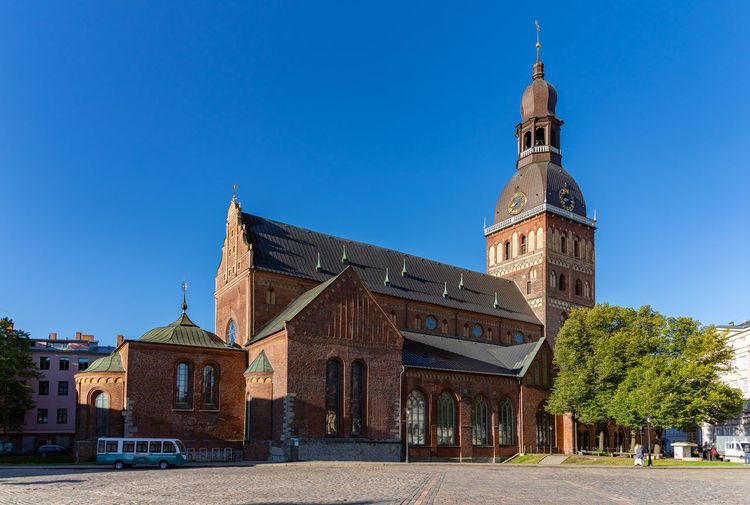
A few steps away, the Dome Cathedral (Rīgas Doms), founded in 1211, remains the largest religious building in the Baltic states and houses an organ of more than 6,000 pipes still used for regular concerts. Its massive silhouette dominates the square that bears its name and hosts the Christmas market.
The St. James's Cathedral (Svētā Jēkaba katedrāle), more discreet behind the Latvian Parliament, now serves as the city's main Catholic cathedral. Its more sober architecture deliberately contrasts with the Lutheran Dome and reflects the confessional shifts Riga has experienced over the centuries.
The Three Brothers, the Cat House and the Powder Tower
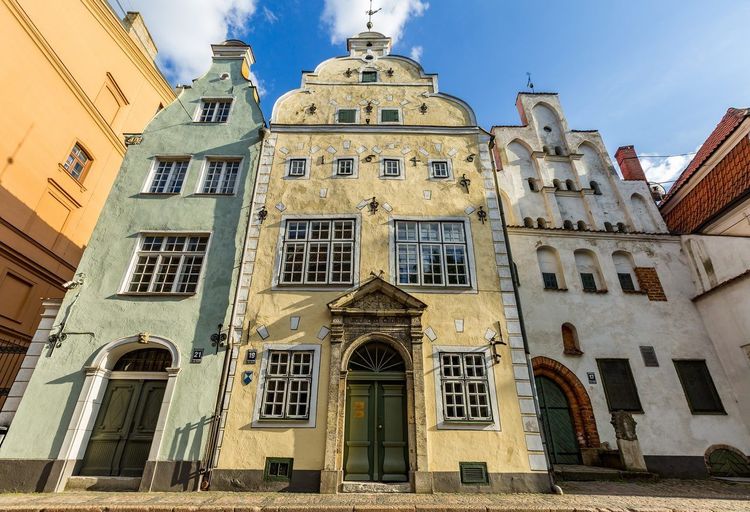
Heading north through the old town, the Three Brothers (Trīs brāļi) form the oldest ensemble of residential houses in Riga, built between the 15th and 17th centuries. Each of the three façades illustrates a different style, Gothic, Dutch Renaissance and Dutch Baroque, making it almost an open-air architecture lesson on a single street.
Not far away, the Cat House (Kaķu nams) takes its name from the two statues of black cats with arched backs on the roof, originally placed, so the legend goes, to insult the German merchants' guild located opposite. The Powder Tower (Smilšu iela 20, LV-1050 Riga, rated 5/5 on Google from 3,662 reviews) (Pulvertornis), the best preserved of the towers of the former ramparts, now houses the Latvian War Museum.
The Freedom Monument
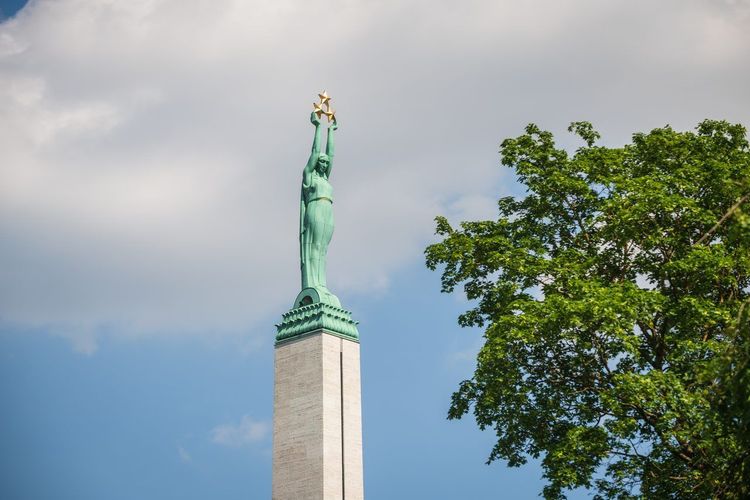
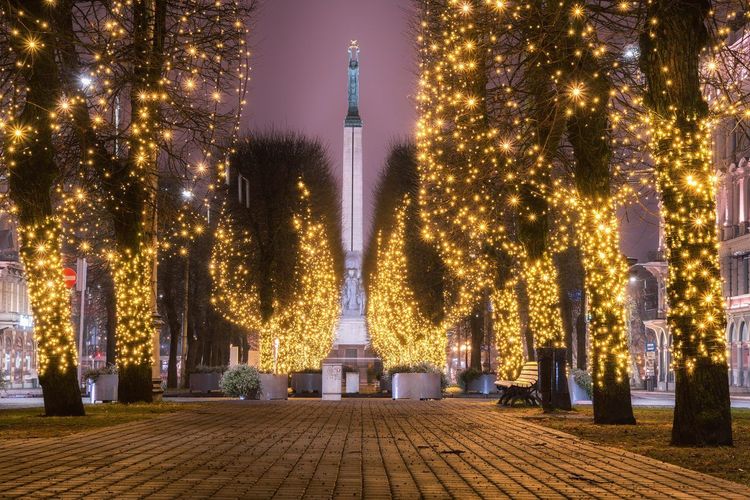
At the edge of the old town, the Freedom Monument (Brīvības piemineklis) rises more than 42 meters and remains the most politically charged national symbol in the country: erected in 1935 to celebrate independence, tolerated under Soviet occupation at the price of a forced official reinterpretation, it is now guarded at all times and decorated with flowers daily.
In winter, the snow that builds up on its base and the Christmas lights installed on the boulevard all around make it a must-pass spot between the old town and Esplanade Park.
Esplanade Park and the Art Nouveau District
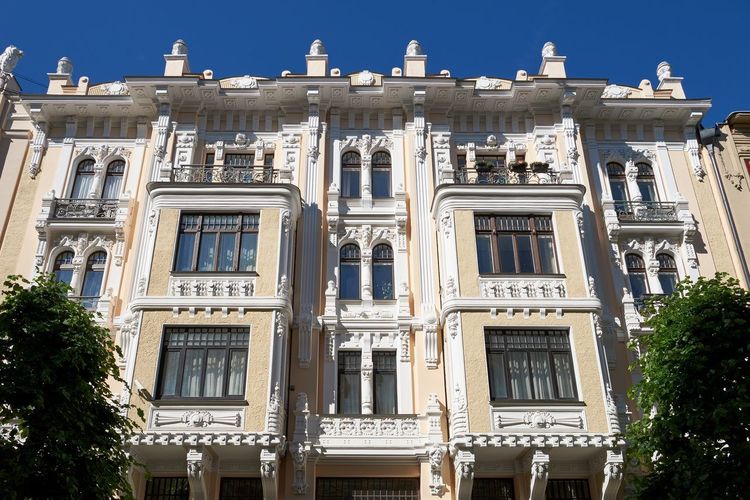
Past the Freedom Monument, Riga changes its face: the medieval alleys give way to wide boulevards and buildings that make up some of the finest Art Nouveau collections in Northern Europe.
The Orthodox Cathedral of the Nativity of Christ
On the edge of Esplanade Park, the Orthodox Cathedral of the Nativity of Christ stands out with its golden domes that contrast with the rest of the surrounding architecture. Built in the late 19th century under the influence of the Russian aristocracy of the time, it served as a planetarium during the Soviet period before being returned to Orthodox worship in 1991.
The interior, open free of charge during the day, is worth a visit for its frescoes and gilded iconostasis, particularly luminous when snowlight filters through the stained glass.
Façades and the Art Nouveau Museum
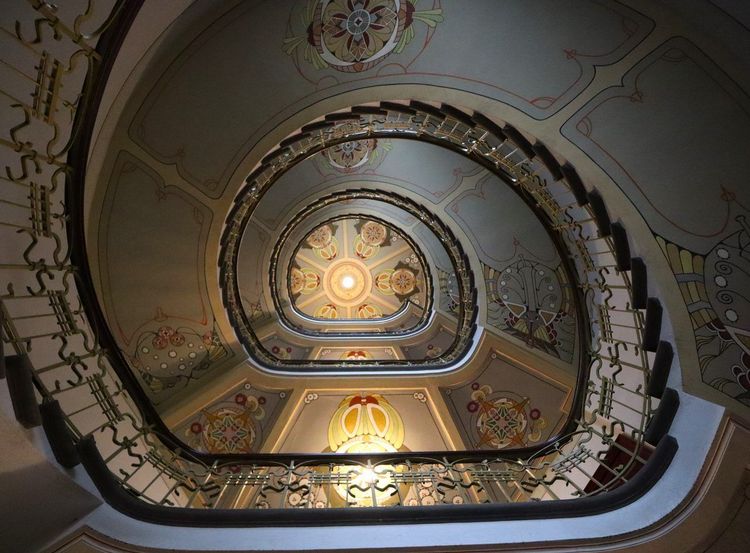
The Art Nouveau district is concentrated mainly around Alberta Street and Elizabetes Street, where architects such as Mikhail Eisenstein (father of filmmaker Sergei Eisenstein) created spectacular façades, laden with sphinxes, masks and floral motifs carved directly into the stone. The Art Nouveau Museum (Rīgas Jūgendstila muzejs), housed in the former apartment of the architect Konstantīns Pēkšēns, reconstructed with its period furniture, helps you understand how this style became Riga's architectural signature between 1900 and 1914.
A good number of these façades can be seen for free simply by walking down the street, as long as you look up: many hurried visitors walk past without noticing them.
Wöhrmann Garden and Bastejkalns Park
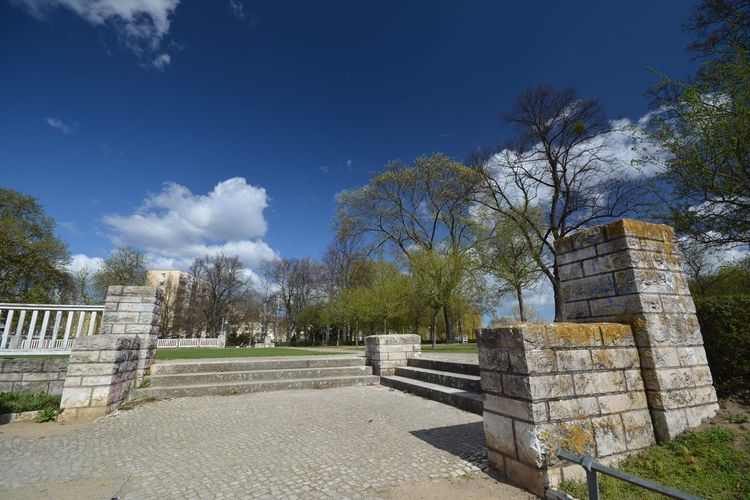
The Wöhrmann Garden (Vērmanes dārzs), opened in 1817 and the city's oldest public park, hosts the Christmas craft fair mentioned above, much calmer than Cathedral Square on weekdays. Bastejkalns Park, which runs along the former rampart turned into a canal, is pleasant to stroll even in the snow and offers a view of the Latvian National Opera (Aspazijas bulvāris 3, LV-1050 Riga, rated 4.7/5 on Google from 7,751 reviews), whose illuminated neoclassical façade is worth a detour in the evening, even without a ticket to a show.
If you followed the Ryo audio-guided tour in the old town, keep your earphones in: you can continue on foot, in under ten minutes, with a completely different chapter of Riga's history.
Where to Eat in Riga in Winter
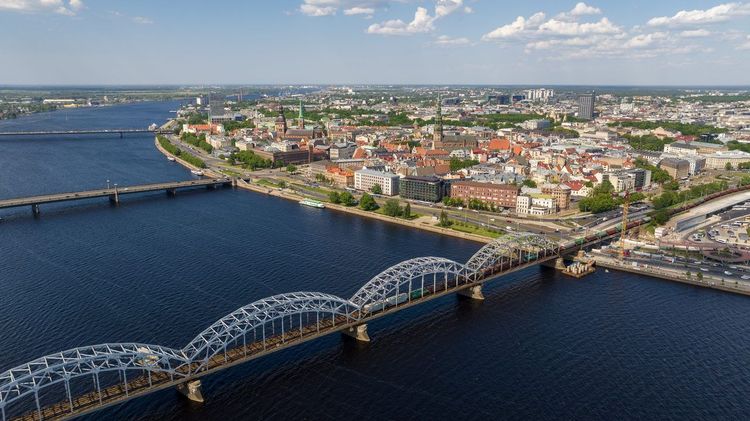
Riga's food scene has evolved a great deal in recent years, between Scandinavian-influenced specialty cafés and restaurants that reinvent Baltic classics.
Cafés and Sweet Breaks
MiiT Coffee has established itself as a reference among local roasters, with several locations in the center and a coffee often cited among the best in the Baltics.
Mazā Terapija (Baznīcas iela 15, LV-1010 Riga, rated 4.7/5 on Google from 1,243 reviews), on Baznīcas Street in the new center, is an entirely vegan café-bakery, reopened in early 2024: soups of the day, warm bowls and homemade pastries, ideal for a light lunch between the Orthodox cathedral and the Art Nouveau district.
Local Specialties to Try at the Market
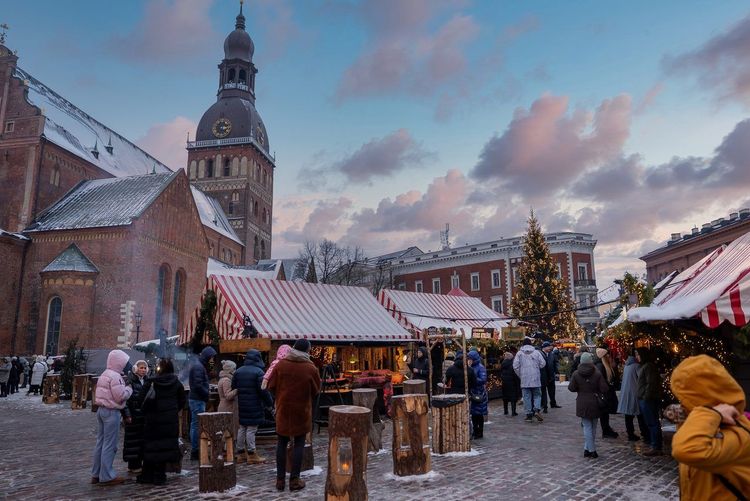
At the Christmas market itself, the stalls offer versions of local street food: pelēkie zirņi (grey peas simmered with bacon), speķrauši (savory bacon rolls), and of course piparkūkas and mulled wine at every turn. Expect to pay between 3 and 6 euros for a generous portion, enough to warm up between visits without leaving the market perimeter. For a proper meal, restaurants in the old town offer lunch menus around 10 to 15 euros, often with a soup and a meat or Baltic fish dish, noticeably cheaper than the Parisian or London equivalent. And if hunger strikes after midnight, Late Night Munchies, on Peldu Street in the old town, serves burgers, pizzas and fries until 3:30 or 4:30 a.m. on weekends, a rarity in the area.
Where to Stay in Riga for the Holidays
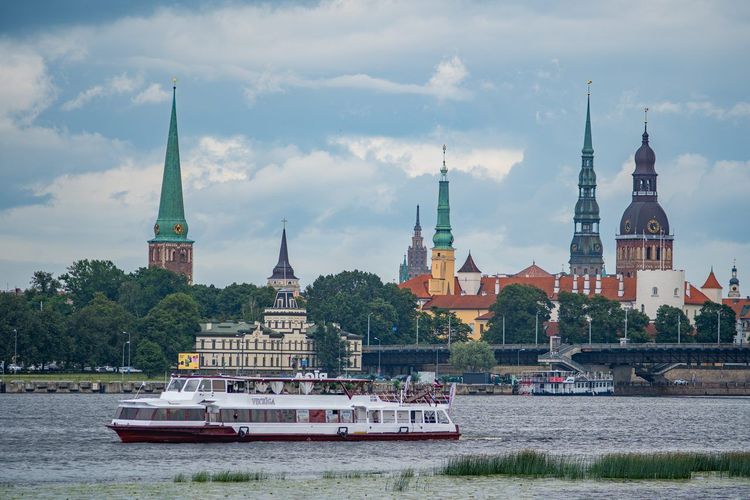
Two areas clearly stand out for a Christmas-focused stay. The old town puts everything within walking distance, from the market to the main monuments, at the cost of a price premium in December and cobbled alleys that can be slippery with a wheeled suitcase. The new center, around the boulevards and the Art Nouveau district, offers addresses that are often more affordable and quieter at night, ten to fifteen minutes' walk from the market.
The Avalon Hotel & Conferences (Kaļķu iela 9, LV-1050 Riga, rated 4.5/5 on Google from 1,957 reviews), located in the old town, illustrates well this compromise between standard comfort and immediate proximity to the sights.
Whichever area you choose, book early: Riga's hotel capacity remains modest compared with that of major capitals, and December weekends fill up quickly, especially those before the French school holidays.
Budget and Formalities for a Christmas Stay in Riga
Latvia has been part of the European Union and the Schengen Area since 2004 and 2007 respectively, which greatly simplifies formalities for French, Belgian or Swiss travelers. A valid identity card is enough for EU citizens; nationals of other countries should check Schengen entry requirements case by case, with a valid passport remaining the reference document. The local currency has been the euro since 2014, which avoids any currency exchange on arrival.
As for budget, think in terms of orders of magnitude rather than fixed prices: about 25 to 40 euros per day per person for food (restaurant meals included), 2 euros per public transport trip or a day pass at 5 euros, and 10 to 15 euros in cumulative entrance fees if you visit a museum or two. A three-day weekend in Riga therefore works out, excluding flights and hotel, to a noticeably tighter budget than in major Western European capitals at the same time of year, which partly explains the recent enthusiasm for the destination.
Day Trip to Rundāle Palace
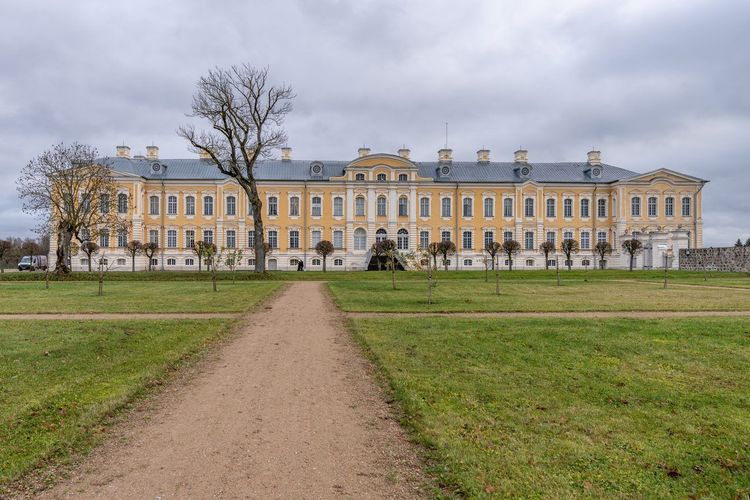
For stays of three or four days, Rundāle Palace (Pilsrundāle, LV-3921, rated 4.7/5 on Google from 14,781 reviews) is the most frequently recommended excursion outside Riga, and yet still little detailed by French-language guides.
Located about 75 km south of the capital, this Baroque palace built in the 18th century by the Italian architect Francesco Bartolomeo Rastrelli, also responsible for the Winter Palace in Saint Petersburg, can be visited in half a day from Riga. In winter, only part of the rooms remain open to the public (the French-style gardens are closed under the snow), but the White Hall and the Golden Hall are well worth the detour, as are the private apartments of the Duke of Courland, restored with rare care. Allow about an hour's drive by rental car, or book an organized bus excursion from Riga, cheaper than a round-trip taxi over this distance. Be sure to check the winter opening hours before leaving, as they are reduced compared with the summer season.
Recommended Itinerary for 2 to 3 Days in Riga at Christmas
Here is how to organize the essentials if you have two to three days on site, assuming you arrive in late morning and leave on the evening of the last day.
Day 1: Old Town and Christmas Market
Start with Town Hall Square and the House of the Blackheads, then head up to the Dome Cathedral and the square around it, where the Christmas market is set up. Take time for a mulled wine before continuing to the Three Brothers, the Cat House and the Powder Tower, ending the day at the Freedom Monument lit up at nightfall, around 4 p.m. in December. If the market is still open, return in the evening: the atmosphere changes noticeably once the lights are on and the tourist groups have gone back to their hotels.
Day 2: Art Nouveau, Esplanade and Last-Minute Shopping
Devote the morning to the Orthodox Cathedral of the Nativity of Christ and the Art Nouveau district around Alberta Street, before a lunch break in one of the cafés in the new center. The afternoon is ideal for a stroll through Wöhrmann Garden and Bastejkalns Park, with a final stop at the market for last-minute shopping: amber charms, wool mittens, gingerbread to take home. The Ryo audio-guided tour of Riga covers most of this sequence in a single continuous thread, handy so you don't have to combine several different plans once you're there. If you stay a third day, this is the time to book the excursion to Rundāle Palace, which requires a full day on its own.



FAQ
How many days should you plan to visit Riga at Christmas?
Two full days are enough to cover the old town, the Christmas market and the Art Nouveau district without rushing. A third day lets you add the excursion to Rundāle Palace or take a slower pace, which is useful in very cold weather.
What is the best time to see the Riga Christmas market?
The market generally opens in late November and stays up until the very beginning of January (January 4 for the 2025-2026 edition). The weeks before the French end-of-year school holidays offer the best compromise between a festive atmosphere and manageable crowds.
Is it very cold in Riga in December?
Temperatures average between -1°C and -6°C, with colder spells possible. The wind coming up from the Daugava makes it feel even colder: plan on technical layers rather than just a coat.
Do you need a visa to travel to Latvia?
Not for citizens of the European Union, who can travel with a valid identity card since Latvia is part of the Schengen Area. Other nationalities should check the Schengen entry requirements that apply to their passport.
What budget should you plan for a weekend in Riga at Christmas?
Excluding flights and hotel, expect about 40 to 60 euros per day per person for food, transport and one or two museum entrances, a noticeably lower budget than in Western European capitals at the same time of year.
How do you get around Riga in winter?
The old town and the Art Nouveau district are very easy to explore on foot, with most distances taking fifteen to twenty minutes to walk. For longer journeys or in very cold weather, city buses and trams cost about 2 euros per trip.
Riga at Christmas delivers on its promise without trying too hard: a market that is still human-sized, a Hanseatic old town packed with remarkable façades, and an Art Nouveau district that changes character completely within a few hundred meters. Whether you stay two days or take advantage of a long weekend to head out to Rundāle Palace, the Ryo audio-guided tour of Riga remains a good way to miss none of the essentials between mulled wine breaks.