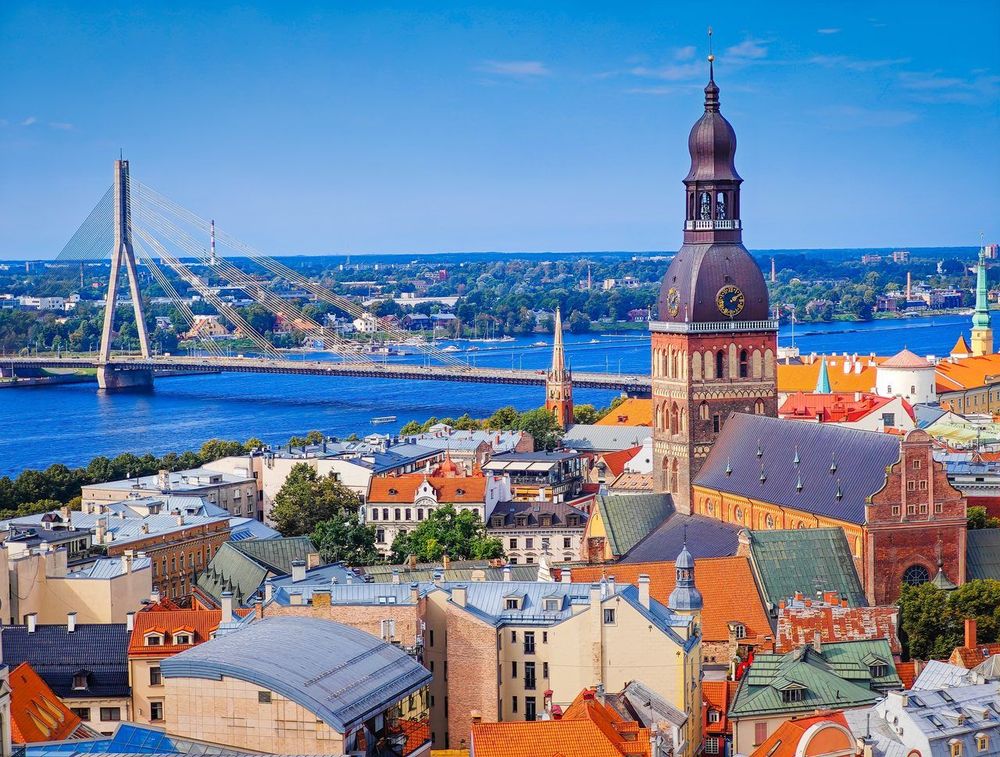
© Shutterstock
 Votre guide Ryo
Visiting Riga Solo in 2026: Old Town, Budget, and Best Addresses
Riga can be crossed on foot in half a day, but it takes a week to truly understand it. That may be the real reason why visiting Riga solo works so well: the city is compact enough that you never feel lost, and rich enough in history that you never need company to stay occupied. From the moment you step out of the cobblestone old town, the Ryo audio guide tour of Riga takes over to tell the stories that the facades don't reveal on their own.
Here you'll find a guild house destroyed and rebuilt stone by stone, a covered market installed in former zeppelin hangars, and an entire district of Art Nouveau facades sculpted by the father of filmmaker Sergei Eisenstein. Add to that a fairy-tale castle about an hour away by train, sandy beaches where Rigans spend their summer Sundays, and a cost of living that remains, in 2026, one of the most affordable in Northern Europe. Plenty to fill 3 to 5 days without going in circles or depending on a group.
Why Visit Riga Solo?
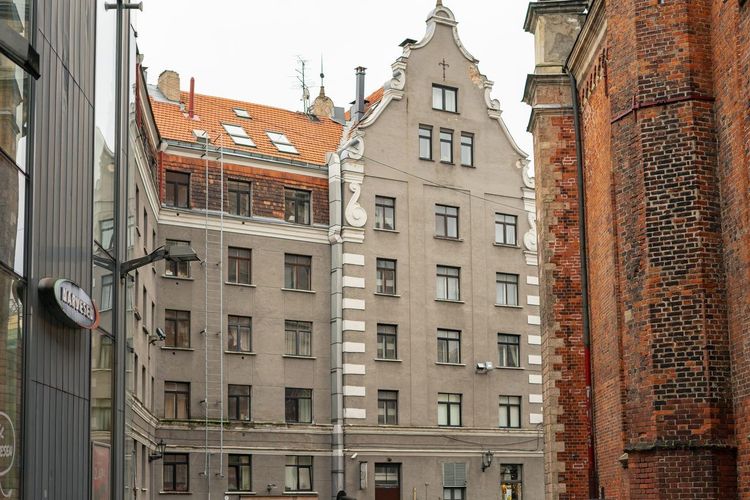
Riga has an advantage that few capitals offer: it reads like an open book. The old town, Vecrīga, can be crossed in a quarter of an hour on foot, which means you don't depend on a complicated map or a driver to improvise your day. You decide to stop, you stop. You decide to change neighborhoods, you change neighborhoods.
The city is also one of the most peaceful in the Baltic states for a solo traveler, both during the day and in the evenings in tourist areas. English is widely spoken among those under 40, public transport is reliable, and the human scale of the capital makes encounters almost inevitable: in youth hostels, on the benches of Bastejkalns Park, or seated at the counter of a cocktail bar in the city center.
Finally, Riga layers its heritage without ever looking the same from one neighborhood to the next: Hanseatic Gothic in the old town, flamboyant Art Nouveau a ten-minute walk away, raw Soviet architecture around the central market. Few European cities of this size concentrate so many architectural contrasts within such a small area.
How to Get to Riga and Reach the City Center

From France, Riga is reached almost exclusively by air: there is no direct rail connection and the road distance exceeds 2,000 km. Fortunately, Riga International Airport is the largest in the Baltic states, with direct flights from Paris year-round and, depending on the season, from a few other French cities.
Riga by Plane, Train, or Car from France
Allow around 3 hours for a direct flight from Paris with airBaltic, the Latvian national carrier, or a stopover (Vilnius, Warsaw, Frankfurt) with other airlines if you're departing from the provinces. Fares generally range between 90 and 220 euros return depending on how far in advance you book, with the lowest prices in January and February and a peak in July and August.
The train remains a marginal option for reaching Riga from France: you have to deal with several connections (often via Berlin, Warsaw, then Vilnius) for a journey of over 30 hours, reserved for slow travel enthusiasts. The car only makes sense if you're combining Riga with Tallinn and Vilnius on a wider Baltic road trip: allow two to three days of driving from France, via Germany, Poland, and Lithuania.
From Riga Airport to the City Center: Bus, Taxi, Transfer
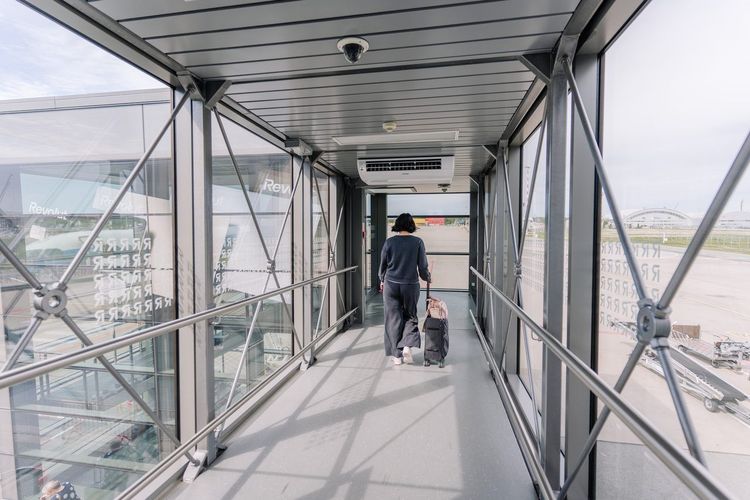
The airport is about ten kilometers from the historic center, making it one of the closest airports to its capital in Europe. Bus No. 22 connects the airport to the center in around 30 minutes, for a ticket of around 1.50 to 2 euros, with regular departures throughout the day.
If you're traveling solo and arriving late at night, a taxi remains a reasonable option: expect 12 to 18 euros per ride via an app like Bolt, widely used locally and significantly cheaper than taxis hailed at the terminal. For a gentle first contact with the city, it's worth booking a transfer through your accommodation, often priced around 20 euros and avoiding the uncertainty of a late-night solo arrival.
When to Go to Riga?
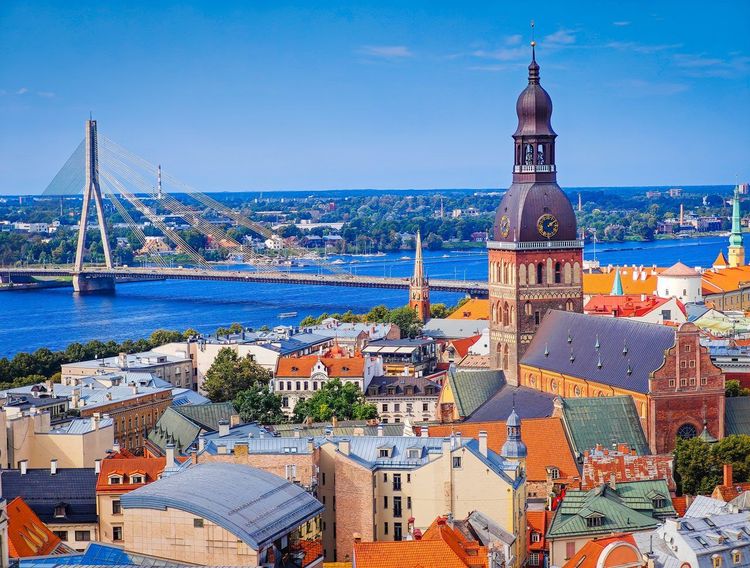
The best time to visit Riga solo is between late May and early September, when temperatures regularly exceed 18°C and terraces spill out across the old town. June also benefits from endless days: around Midsummer, the sun sets around 10:30 pm, leaving plenty of time to move between monuments and markets without rushing.
If you prefer to avoid the crowds while still enjoying pleasant weather, aim for the second half of May or the first half of September: accommodation prices are noticeably lower than in July, and museum queues shrink considerably.
The Latvian winter, for its part, is worth trying at least once: the Christmas market on Dome Square transforms the old town into a fairy-tale setting, but temperatures can drop below -10°C and night falls as early as 4 pm. A deliberate choice rather than a compromise, best suited to solo travelers who appreciate cozy atmospheres and long evenings by the fire with a warm balsam in hand.
Riga's Old Town (Vecrīga), a UNESCO-Listed Gem
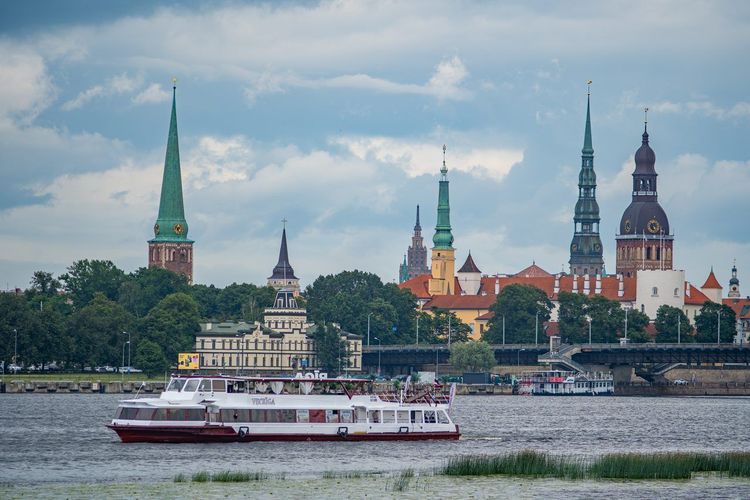
Listed as a UNESCO World Heritage Site since 1997, Vecrīga concentrates eight centuries of Hanseatic, Germanic, Swedish, Russian, and Soviet history within a single area. This is where any solo exploration of the city begins, and often ends: the cobblestone streets are narrow enough to get pleasantly lost in, and short enough that you can always find your way back within ten minutes. The Ryo audio guide for Riga takes you to a stop in front of the House of the Blackheads, the Powder Tower, and St. Peter's Church, with the story of each facade told directly in your ear, no booking required and no group to wait for.
House of the Blackheads and the Powder Tower
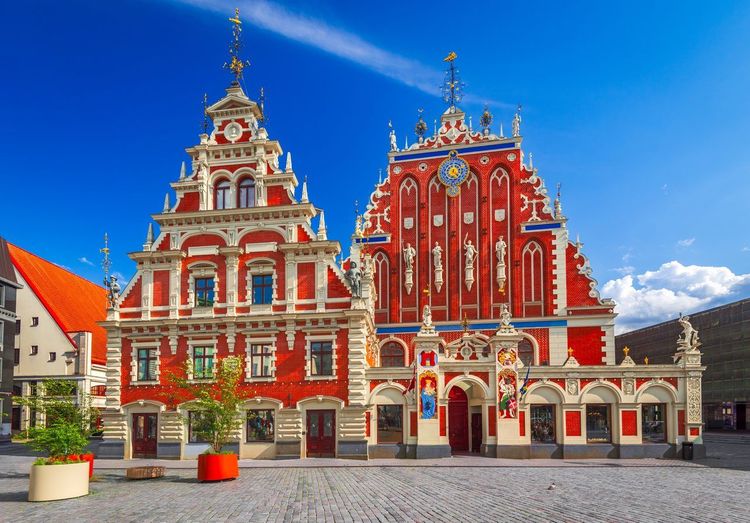
The House of the Blackheads (Melngalvju nams) belonged to the Brotherhood of Blackheads, a guild of unmarried merchants, mostly German. Bombed and burned in 1941, its ruins were razed by the Soviet regime in 1948, before an identical reconstruction was completed in 1999. Its red and white gabled facade, decorated with statues and an astronomical clock, now dominates the square in front of the Town Hall.
A few minutes' walk away, the Powder Tower (Pulvertornis) is the only surviving tower from the old medieval fortifications. Its thick walls still bear cannonballs embedded during the sieges of the 17th century. It now houses the Latvian War Museum, whose permanent collections are free to visit.
St. Peter's Church and Its Panoramic Tower
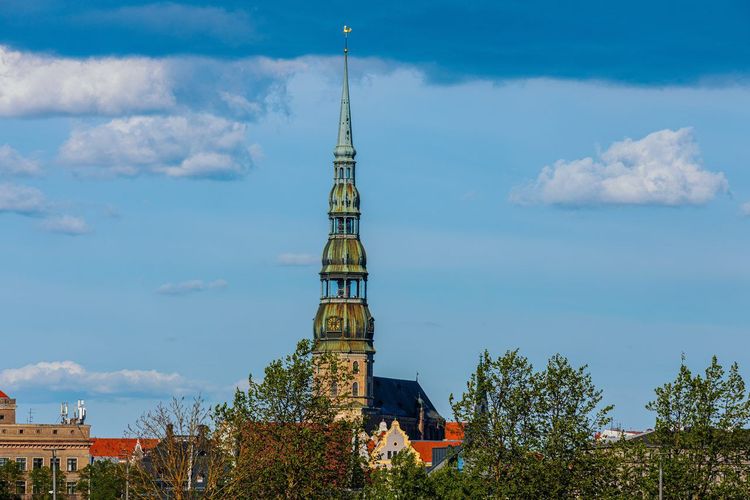
St. Peter's Church has dominated the old town since the 13th century. Its spire, destroyed by fire in June 1941 when the German army arrived, was rebuilt in 1973 and conceals a lift that rises to a platform 72 meters above the ground. For many travelers, this is the best viewpoint in Riga: a 360-degree panorama over the Daugava, the port, and the red rooftops of the historic center.
Go up in the late afternoon: you'll avoid the groups that crowd in during the morning, and the raking light is particularly flattering for photos.
Dome Cathedral, the Three Brothers, and Medieval Lanes
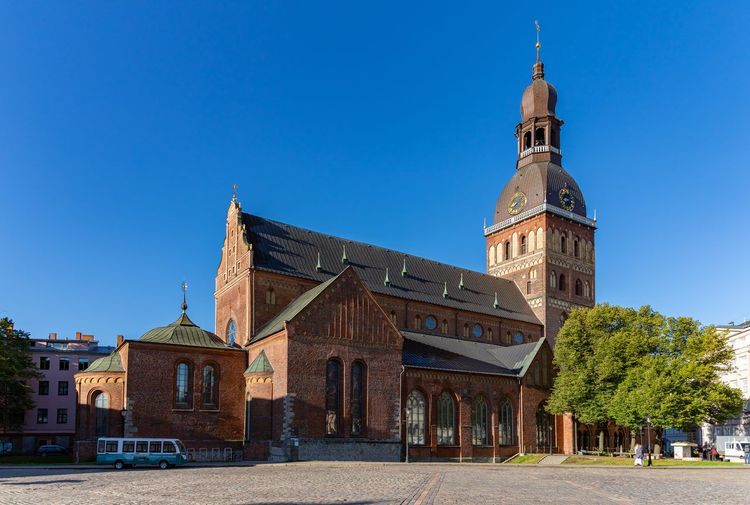
Five minutes away, the Dome Cathedral, founded in 1211, is the largest medieval church in the Baltic states. Its organ, inaugurated in 1884, is among the most impressive in Europe: if a lunchtime concert is scheduled during your stay, it's a perfect half-hour of music for a quiet solo break. Further north, the Three Brothers, three adjoining houses on Mazā Pils Street, encapsulate five centuries of civic architecture between them, with the oldest dating back to the 15th century.
Freedom Monument and the Nativity of Christ Orthodox Cathedral
On the boundary between the old town and the Art Nouveau district, the Freedom Monument has risen 42 meters since 1935. Topped by a female figure holding three stars, a symbol of Latvia's historic regions, it survived the Soviet occupation without being demolished, and Latvians still lay flowers there every 18 November, the day of the declaration of independence.
A little further along the boulevard, the golden domes of the Orthodox Cathedral of the Nativity of Christ (Brīvības bulvāris 23, 1010 Riga, rated 4.7/5 on Google with 3,451 reviews) stand in sharp contrast to the surrounding Germanic architecture. Built in the late 19th century, it served as a planetarium during the Soviet era before returning to its religious function in the early 1990s.
A Walk Along the Canals and the Old Center
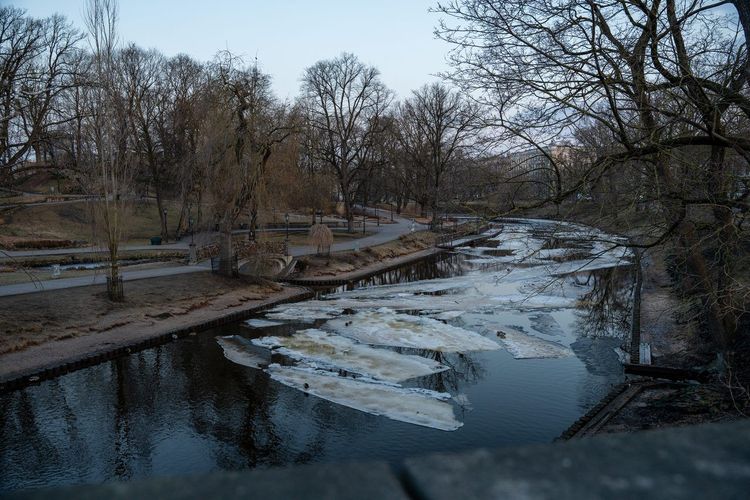
Between the Freedom Monument and the old town, the city canal (Pilsētas kanāls) winds for about 3 km through a belt of parks, following the line of the old defensive moat that was redesigned in the 19th century after the ramparts were dismantled. In summer, small boats offer one-hour rides that go down to the Daugava, a relaxing way to discover Riga beyond walking.
You can also simply wander through the old center, between Dome Square and the lanes behind St. John's Church. It is often there, away from the main thoroughfares, that the most beautiful inner courtyards and the quietest cafés for a solo break are hidden.
Riga's Art Nouveau Side: the Finest Collection in Europe
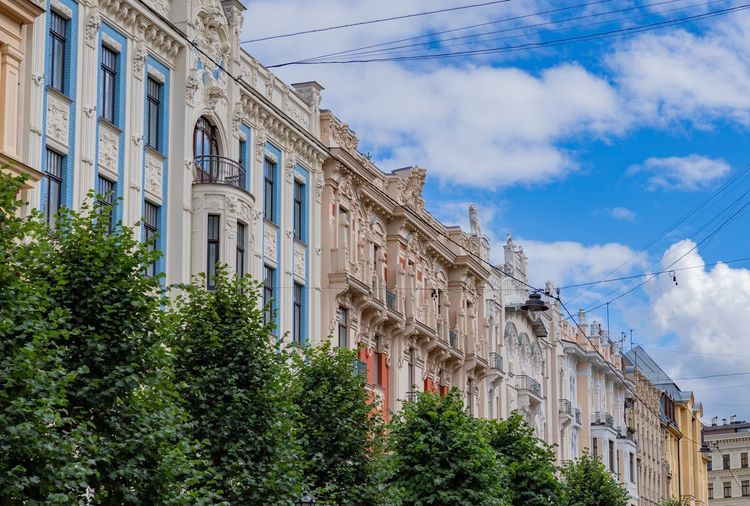
Riga concentrates one of the largest collections of Art Nouveau buildings in Europe, with nearly 800 recorded structures, representing roughly one third of all buildings in the center. This abundance, driven by the economic boom of the early 20th century, is best admired on foot, with your gaze turned upward rather than fixed on a map.
The Iconic Facades of the Art Nouveau District (Alberta and Elizabetes Streets)
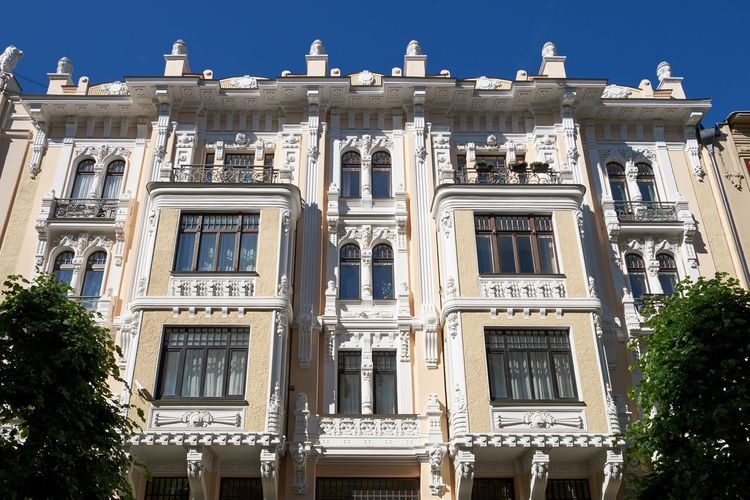
Alberta Street, about a fifteen-minute walk from the Freedom Monument, concentrates the most spectacular creations of architect Mikhail Eisenstein, father of Soviet filmmaker Sergei Eisenstein. His facades blend screaming faces, sphinxes, peacocks, and overloaded floral motifs, in a style sometimes described as eclectic Art Nouveau.
Nearby Elizabetes Street completes the visit with buildings that are more restrained but equally photogenic. In the Ryo audio guide tour, an entire stop revisits Eisenstein's story in front of his sculpted facades, context that is rarely detailed on tourist information boards. If you want to see a period interior, the Art Nouveau Museum, housed in the former apartment of architect Konstantīns Pēkšēns, recreates a bourgeois home from 1903.
VEF Kvartāls, the New Street Food and Creative District
About fifteen minutes by tram from the center, VEF Kvartāls (Ganību dambis 24a, 1005 Riga, rated 4.6/5 on Google with 152 reviews) occupies part of the former workshops of the VEF electronics factory, famous for having produced one of the very first miniature cameras, the Minox. Redeveloped in recent years, the site blends street food, designer studios, and a craft brewery.
It's a great complement to the classic facades of the center for anyone who wants to see how Riga repurposes its industrial heritage rather than demolishing it.
Museums and Cultural Heritage in Riga
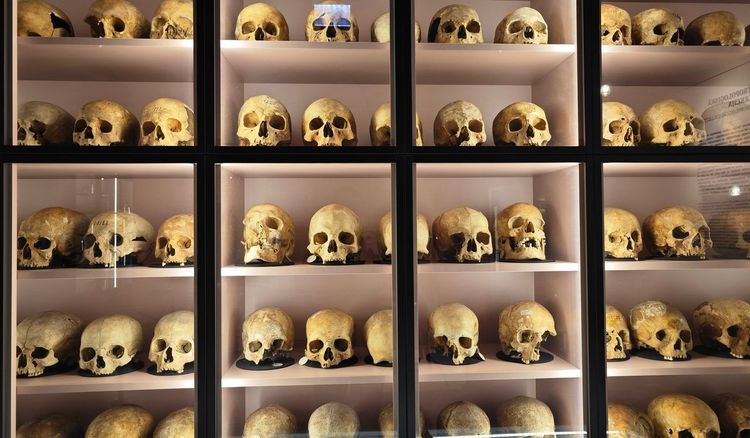
Riga has around fifty museums, a high number for a capital of around 600,000 inhabitants. Three of them capture the essence of Latvian history and identity, and a Stalinist skyscraper offers a bonus view that few visitors know about.
Museum of the Occupation and the Memory of the 20th Century
The Museum of the Occupation traces the years 1940 to 1991, during which Latvia was occupied by the USSR, then by Nazi Germany, then by the USSR again. Housed in a dark Soviet-era building on the edge of Town Hall Square, it displays objects rarely seen elsewhere: letters from deportees in Siberia, uniforms, and a reconstruction of a Gulag barrack.
The visit lasts an average of 90 minutes and entry is free, with donations welcome. In our view, this is the most emotionally intense stop of any stay in Riga: allow a quiet moment afterward on the nearby Daugava riverbanks.
National Museum of Art, Riga Stock Exchange, and Academy of Sciences
The Latvian National Museum of Art, reopened in 2016 after renovation, occupies a 1905 building and houses the country's richest collection of Latvian painting, from 19th-century Romanticism through to the Soviet era.
Closer to the old town, the Riga Stock Exchange (Rīgas Birža), a former trading palace completed in 1855 in a Venetian Renaissance style that seems improbable for the Baltic, now houses a foreign art museum: Chinese and Japanese porcelain, decorative arts, and Western paintings.
For a different kind of elevated view, cross the central market and head to the Latvian Academy of Sciences, a 1950s skyscraper that Rigans nickname "Stalin's birthday cake." Its panoramic terrace, open in the warmer months on the 17th floor, offers a bird's-eye view over the old town and, as a bonus, the only angle from which the spires of St. Peter's and the Dome are perfectly aligned.
An Evening at the Latvian National Opera
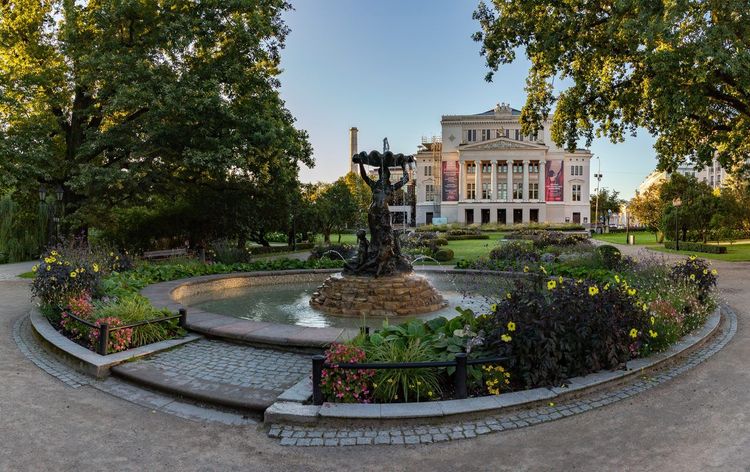
If your stay coincides with a performance night, booking a seat at the Latvian National Opera (Teātra iela 10, 1050 Riga, rated 4.7/5 on Google with 7,715 reviews) remains one of the most accessible cultural experiences in the city: the cheapest seats often start at around 15 euros, far below the prices charged in Paris or Vienna.
Traveling solo presents no problem here: the auditorium, built in 1863, welcomes many individual spectators every evening, and the foyer bar is well suited to a pre-curtain drink.
Riga's Markets: Immersion in Latvian Daily Life
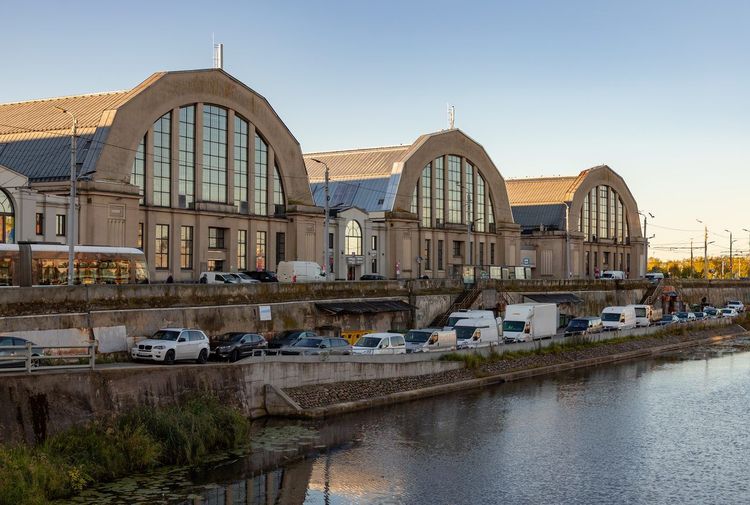
Riga's markets tell the city's story better than any monument: you encounter locals before tourists, and prices remain, on the whole, very reasonable.
The Central Market, Inside Former Zeppelin Hangars
The Riga Central Market, opened in 1930, occupies five pavilions built from former German World War I zeppelin hangars. Each pavilion has its specialty: meat, smoked fish, dairy products, vegetables, and groceries. It is one of the largest covered markets in Europe, and forms part of the UNESCO-listed area.
A section of the Ryo audio guide tour passes right through this market and tells the story of how these military hangars were converted into food halls, a story that adds a whole new dimension to the visit. Try the smoked herring and dark rye bread on the spot, often cheaper than in a restaurant.
Flea Markets and Neighborhood Markets: Latgale Tirgus and Āgenskalns
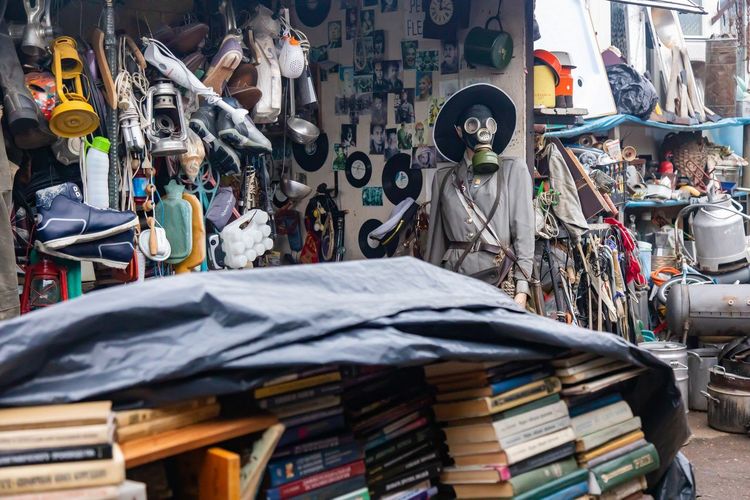
The Latgale Tirgus flea market, in the Maskavas forštate district just a short walk from the central market, mixes Soviet-era bric-a-brac, secondhand clothing, and spare parts. Bargaining is still common here, an entertaining exercise even if you don't speak Latvian.
On the other side of the Daugava, the Āgenskalns Market (Nometņu iela 64, 1002 Riga, rated 4.3/5 on Google with 8,903 reviews), housed in a renovated brick hall, offers a more authentic immersion in the daily life of a residential neighborhood: few tourists, local producers, and a handful of street food stalls at the weekend.
Where to Eat and Drink in Riga
Latvian Cuisine and Good Local Restaurants
Traditional Latvian cuisine is understated but generous: cold beet soup, marinated herring, grey peas with bacon, and potatoes with sour cream. Folkklubs Ala Pagrabs, set in a vaulted cellar, offers one of the most complete menus for discovering these classics in a folksy setting, often with live music.
For a quick and affordable solo lunch, the Lido canteens (local self-service restaurants) let you put together a full plate for under 10 euros, with no pressure from service staff and no wine list to decipher.
Cocktail Bars and Craft Breweries
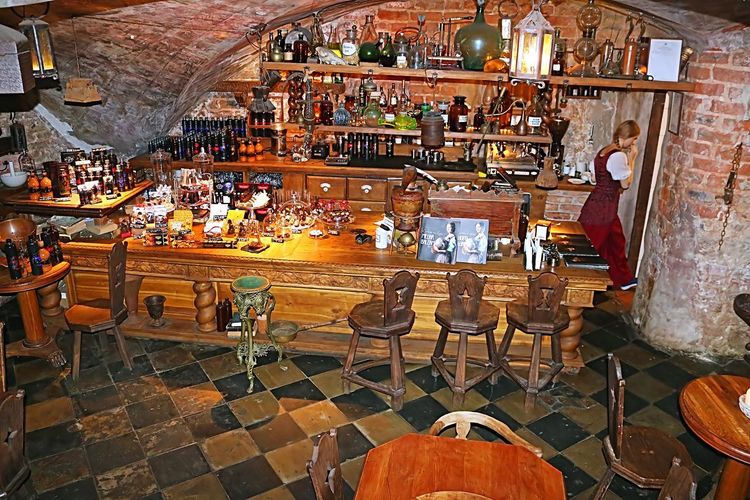
The Black Magic Bar (Kaļķu iela 10, 1050 Riga, rated 4.7/5 on Google with 2,407 reviews), dedicated to Riga Black Balsam, serves carefully crafted cocktails built around this black liqueur with 24 ingredients, in a dimly lit apothecary atmosphere that is perfect for a solo evening at the bar.
Beer lovers will prefer a craft brewery such as Valmiermuiža, whose city-center bierstube offers tastings of Latvian brews, ideal for striking up a conversation with your neighbors at the table.
Black Balsam, Kvass, and Local Specialties to Try

Riga Black Balsam, a black liqueur at 45% ABV, can be drunk as a shot, warm with blackcurrant juice, or in coffee. Created in the 18th century and long sold as a remedy, it remains the most popular food souvenir brought back by travelers.
Kvass, a fermented drink made from rye bread, lightly fizzy and almost alcohol-free, is available in bottles in every supermarket for around one euro. A simple way to taste a local tradition without needing to find a specific address.
Where to Stay in Riga When Traveling Solo
Vecrīga and the Historic Center: Convenient but Touristy
Staying in the old town puts everything within walking distance, but prices are higher than elsewhere and the atmosphere remains very lively on Friday and Saturday nights. The Relais Le Chevalier, a small boutique hotel housed in a historic building, illustrates this trade-off well: strong historic character, but rates that climb quickly in high season.
Art Nouveau District and Quiet Center, for a Relaxed Stay
Ten minutes' walk from the old town, the Art Nouveau district and the Center (around Brīvības iela and Elizabetes iela) offer a more restful compromise: often newer hotels, wider streets, and genuine peace in the evenings while still within walking distance of the main sights. The Europa Royale Riga, housed in a 19th-century former palace, is a good example for those looking for quiet but central accommodation.
Youth Hostels and Solo-Friendly Accommodation
For a tight budget and easy socializing, several hostels in the old town organize pub crawls and group dinners several evenings a week, a format that works particularly well when traveling solo. Expect around 15 to 25 euros per night in a dorm depending on the season, versus 60 to 100 euros for a decent double room in a mid-range hotel.
Always check recent reviews before booking: quality varies significantly from one property to the next, and if you're a solo female traveler, female-only dorms remain a widely available and reassuring option.
Day Trips from Riga
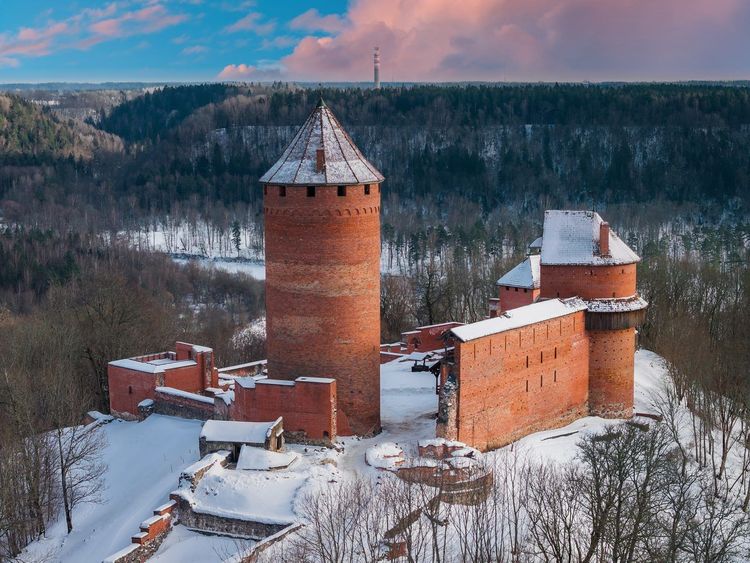
Sigulda and Turaida Castle, in the Gauja Valley
About an hour by train or bus from Riga, Sigulda gives access to the Gauja Valley, nicknamed the "Switzerland of Vidzeme" despite its far more modest terrain. Turaida Castle, a red-brick fortress founded in the 13th century and perched on a wooded hill, overlooks the river and remains one of the most photographed monuments in the country.
The legend of the Rose of Turaida, a young woman killed in the 17th century who became a Latvian symbol of faithful love, is still told today at the foot of the ramparts. Allow a full day for the round trip from Riga, taking in the Gauja National Park as well.
Jurmala, Between Beach and Art Nouveau Villas
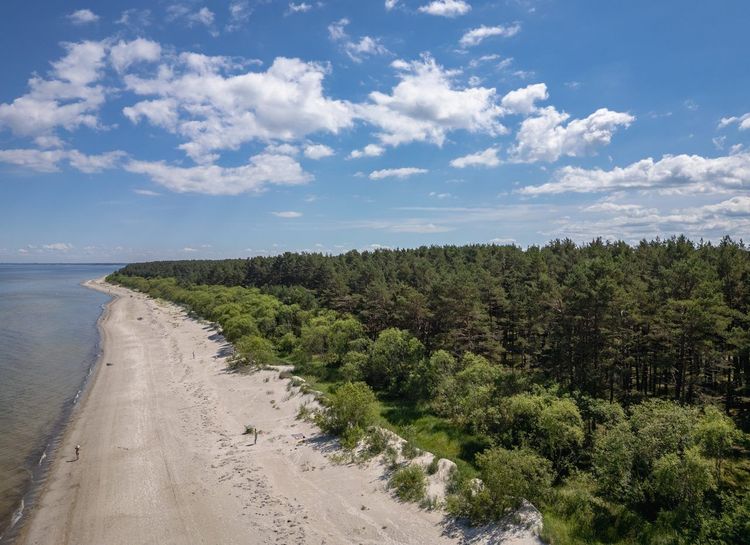
Just 30 to 40 minutes by train, Jurmala stretches more than 30 km of fine sandy beach along the Gulf of Riga, bordered by early 20th-century wooden villas, some of which have been converted into spas. It is the closest beach to Riga and one of the most popular among the city's own residents at the weekend. Get off at Majori for the pedestrian street Jomas iela.
The water stays cool even in midsummer, rarely rising above 20°C, but a walk along the seafront is more than enough to justify the trip, even without going for a swim.
Kemeri National Park, on the Bog Trail
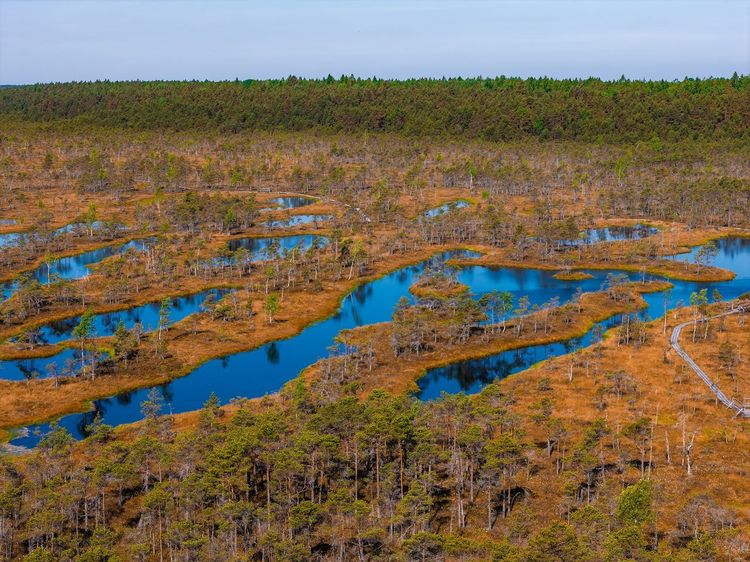
To the west of Jurmala, Kemeri National Park (Kemeri, rated 4.6/5 on Google with 8,692 reviews) is home to the Great Kemeri Bog. A wooden boardwalk trail, about 3.4 km in a loop, crosses the marsh on raised walkways punctuated by pools of brown water reflecting the sky, with an observation tower at the halfway point.
The best time to walk this trail is at sunrise, when mist still drifts over the bog: a moment of calm that solo travelers tend to appreciate particularly.
Outdoor Activities: Bungee Jumping and Guided Hiking
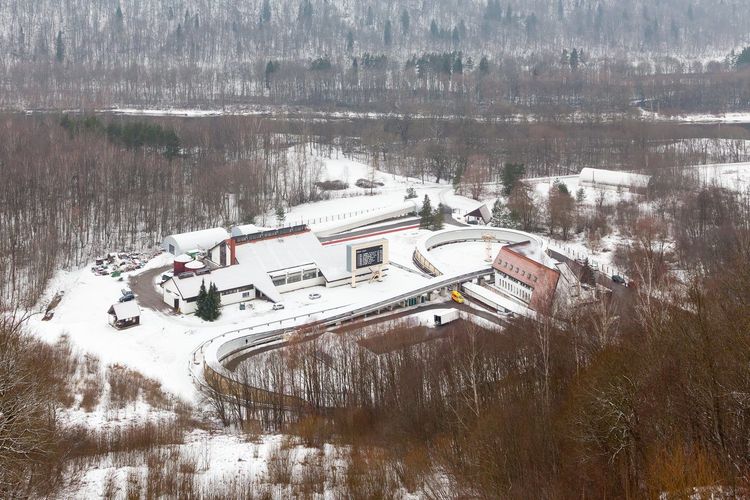
For thrill-seekers, Sigulda is Latvia's adrenaline capital: pendulum jumping or bungee jumping from the cable car cabin suspended above the Gauja, bobsleigh on the Olympic track, and treetop adventure courses. These activities are easy to book solo, without needing a partner. Several operators also run guided day hikes in the valley, departing from Riga.
These guided outings are a good option if you're traveling solo and prefer to avoid the logistics of a day trip by public transport.
Budget and Cost of Living in Riga
Riga remains one of the most affordable European capitals for a solo trip. Budget an average of 50 to 70 euros per day excluding accommodation for a comfortable budget (two restaurant meals, one attraction, transport), and around 25 to 35 euros per day if you rely on local canteens and walking.
The main museums rarely charge more than 10 to 15 euros for entry, and several, such as the Museum of the Occupation, are free. A full meal at a canteen costs between 7 and 10 euros, compared to 15 to 25 euros at a tourist restaurant in the old town.
To save money, do your grocery shopping at Rimi or Maxima supermarkets, found on every corner and significantly cheaper than the convenience stores in the tourist center. The 24- or 72-hour transport passes become worthwhile from three journeys a day, but are unnecessary if you stay within the walkable perimeter of the old town and the Art Nouveau district.
Getting Around Riga and Continuing Your Journey
Public Transport, Taxis, and Cycling in Riga
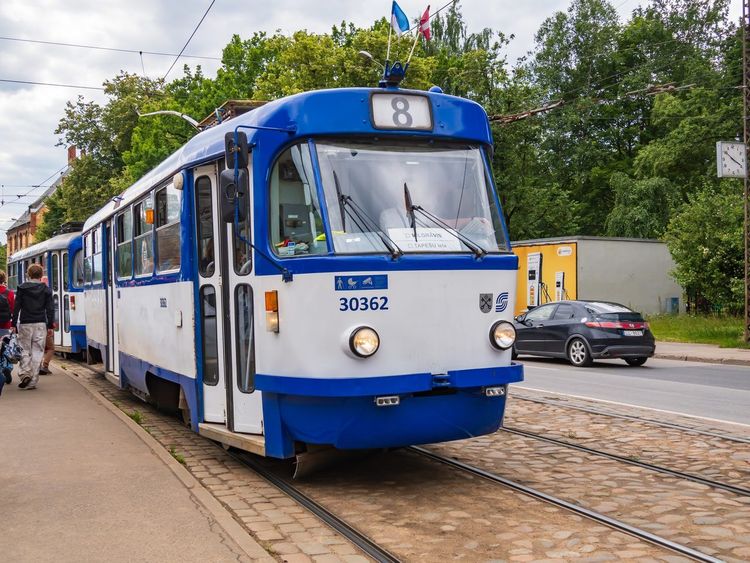
The Rīgas Satiksme network of buses, trams, and trolleybuses covers the city efficiently. An electronic ticket costs around 1.50 euros via the official app or from a ticket machine, and a little more if purchased from the driver.
Cycling, often overlooked by visitors, turns out to be a good option for reaching outlying neighborhoods: shared bikes and scooters are dotted around the center, and cycle paths run alongside part of the city canal. For nighttime journeys, the Bolt app remains the local standard, significantly cheaper than hailing a taxi on the street.
Continuing to Tallinn or Vilnius
Riga occupies a central position: Tallinn can be reached in around 4.5 hours by Lux Express or Ecolines bus, a comfortable journey with Wi-Fi and power sockets, for a fare that generally ranges between 15 and 30 euros depending on when you book.
Vilnius, in the opposite direction, is reached in around 4 hours under similar conditions, with frequent departures throughout the day. This route allows you to visit all three Baltic capitals in about ten days without taking a flight, an option increasingly popular with solo travelers who want to make the most of a single ticket into the region.
Traveling Solo in Riga: Safety, Connections, and Insider Tips
Riga is broadly a safe capital for solo travelers, including in the evenings in the city center and the Art Nouveau district. Pickpocketing is rare, concentrated mainly around the central market and the train station during peak hours, as in any large urban market.
The real local pitfall is elsewhere: some bars in the old town, often recommended by someone you meet on the street, present outrageous bills for a few drinks. Choose your venues yourself, ask for a menu with prices clearly displayed, and be wary of overly enthusiastic invitations. In case of a problem, the European emergency number 112 works everywhere, and card payment is accepted almost everywhere, including for small amounts.
Connections happen naturally in central youth hostels, but also in the café-coworking spaces that have multiplied in recent years, frequented by a community of digital nomads. Traveler networking apps also work well in Riga, a city popular enough to have a steady flow of other solo travelers passing through.
When it comes to sightseeing, an audio guide format launches from your phone at any time, without waiting for a group or booking a guide in advance: exactly what you need when you want to move at your own pace. The Ryo audio guide tour of Riga can be paused at any moment, for an impromptu coffee or an unexpected encounter, without ever losing the thread of the story.



FAQ
How many days should I plan to visit Riga solo?
Three full days are enough to cover the old town, the Art Nouveau district, and the central market. Add a fourth day for a day trip to Sigulda or Jurmala, and a fifth if you plan to push on to Tallinn or Vilnius.
Is Riga a safe city for solo travel?
Yes, Riga is a safe capital for solo travelers, both during the day and in the evenings in the central districts. The usual vigilance against pickpockets is enough, and you should avoid bars recommended by strangers in the old town.
What budget should I plan for a solo trip to Riga?
Excluding accommodation, budget 25 to 35 euros per day on an economy basis (canteens, walks) and 50 to 70 euros for mid-range comfort with restaurants and attractions. Add 15 to 25 euros per night for a dorm bed or 60 to 100 euros for a mid-range hotel room.
What is the best time to visit Riga?
The window from late May to early September offers the best weather compromise, with a peak in visitor numbers in July and August. Late May and early September remain quieter and less expensive.
How do I get to Riga from France?
Flying is the only realistic option, with direct flights from Paris taking around 3 hours. The train requires several connections and more than 30 hours of travel.
Where should I stay in Riga when traveling solo?
The Art Nouveau district offers the best balance of quiet and proximity, while the old town is convenient but more expensive and lively. Central youth hostels make it easy to meet other solo travelers.
Can I easily get from Riga to Tallinn or Vilnius?
Yes, both capitals can be reached by comfortable bus in around 4 to 4.5 hours, with frequent departures throughout the day. This is the most popular option for completing a full Baltic trip without taking a flight.
Riga is genuinely well suited to solo travel: compact, serene, rich in history, and affordable enough to multiply day trips without breaking your budget. Between the UNESCO-listed old town, the Art Nouveau facades of Alberta Street, and the central market housed in its former zeppelin hangars, there is more than enough to fill several days without retracing your steps. To bring each stage to life, the Ryo audio guide tour of Riga is the simplest way to explore at your own pace, without depending on a group or a fixed guided tour slot.