© Shutterstock
 Votre guide Ryo
Visit Coimbra in 2 Days: Complete Itinerary Between the University and the Banks of the Mondego (2026)
Twenty-four hours is never enough to understand why generations of students weep when leaving Coimbra. The city spreads out like an amphitheater above the Mondego, crowned by the oldest university in Portugal, and yet visiting Coimbra in 2 days is enough to grasp its essence if the itinerary is well planned. Here, an 18th-century library still employs colonies of bats to protect its rare books from insects. A Gothic monastery slept for a long time under the sand and the river's floods before being unearthed. A bridge bears the name of a prince and of the woman he secretly loved, murdered on the orders of his own father. To miss nothing of these two dense days, the Ryo audio-guided tour of Coimbra serves as a common thread, from the Upper Town on the first day to the other bank of the Mondego on the second.
Why Visit Coimbra in 2 Days?
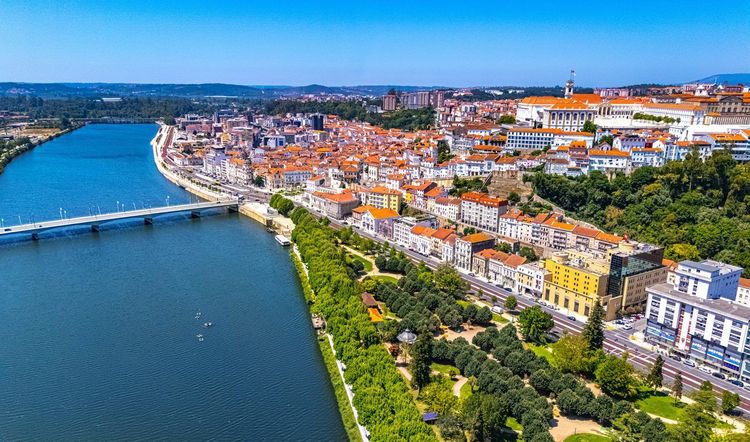
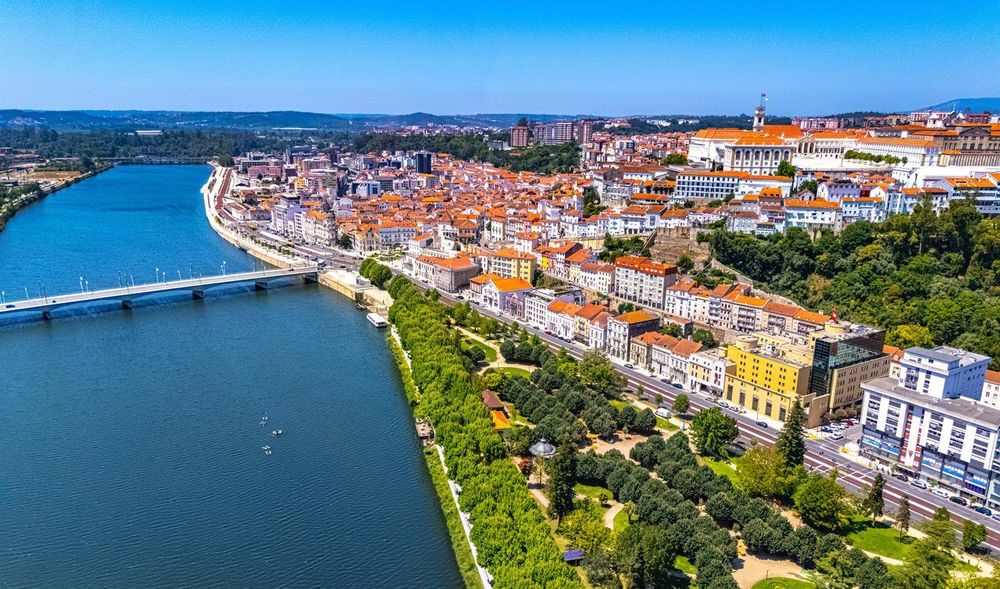
Coimbra was the very first capital of the Kingdom of Portugal, from 1131 to 1255, before Lisbon took over. This head start explains the density of heritage in the Upper Town: cathedrals, royal monasteries and colleges are layered over a few hectares, unlike more sprawling cities such as Porto. A well-paced weekend, with one day devoted to the university hill and a second to the Lower Town and the Mondego, is enough to take in the essentials without rushing.
The University of Coimbra, founded in 1290 (first in Lisbon, permanently transferred here in 1537), remains the oldest higher education institution in Portugal still in operation and one of the oldest in Europe. It has been a UNESCO World Heritage Site since 2013, along with the Upper and Lower Town that surround it. This listing does not honor a single monument but an entire urban system: the courtyard of the Paço das Escolas, the university tower visible from across the Mondego, and the network of colleges that has shaped the city since the 16th century.
A few chronological landmarks help put the next two days of visits in context: 1131 marks the founding of the Monastery of Santa Cruz by the first Portuguese kings, 1290 the creation of the university, and 1537 its permanent settlement on the hill you will climb on the first day. Between these dates, Coimbra also lived through the Napoleonic occupation of the early 19th century, whose traces can still be read in some restored buildings of the Baixa.
Coimbra also remains, above all, a lively student city: more than 20,000 students live here for much of the year, which shapes the atmosphere of the terraces, the opening hours of the bars and even the vocabulary of the local fado, which has nothing to do with Lisbon's. This is what sets Coimbra apart from Porto and Lisbon for a short stay: a human-scale city where two days are enough to alternate between academic heritage, religious heritage and student nightlife without spreading yourself thin.
Day 1: The University of Coimbra and the Historic Upper Town
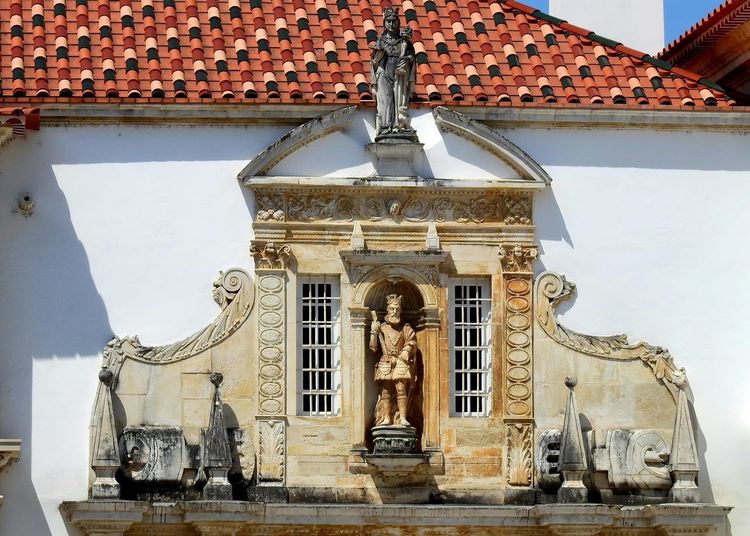
The first day takes place almost entirely at altitude, on the hill that gave the upper town its name. Allow a full morning for the university and its library, then let the afternoon drift along the steep alleys up to the Machado de Castro museum.
The University of Coimbra and the Joanina Library
Start with the Paço das Escolas (Pátio das Escolas, 3004-531 Coimbra, rated 4.6/5 on Google from 19,639 reviews), the central courtyard of the university, dominated by the Baroque tower whose bell once marked the rhythm of classes and exams. Founded in 1290, the university settled permanently on this hill in 1537, and the entire site, courtyard, chapel, Great Hall of Acts and grand staircase, has been a UNESCO World Heritage Site since 2013.
The visit usually includes the Capela de São Miguel, a 16th-century university chapel known for its Baroque organ with gilded pipes, still used during graduation ceremonies. It is also in this courtyard that students parade in capa e batina, the black cape and cassock inherited from 16th-century academic dress, a uniform you can still see today in the city's streets during exam periods.
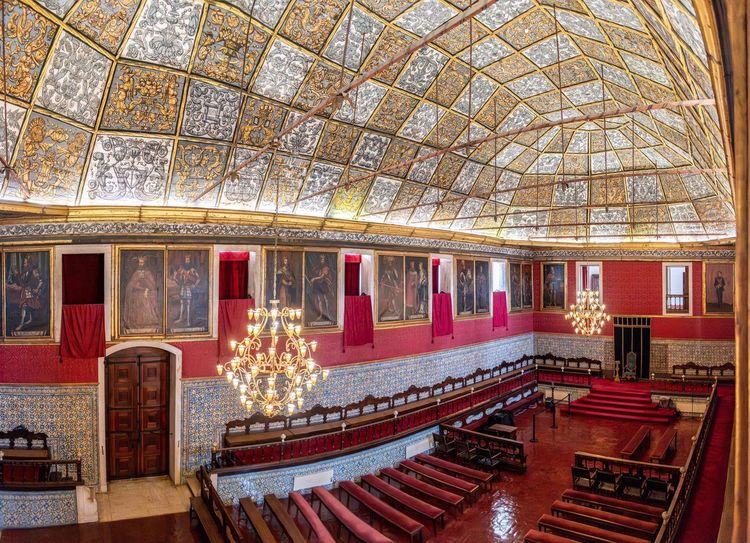
The Joanina Library, located right next door, deserves a good hour all to itself. Commissioned by King John V in the 18th century, it consists of three rooms lined with gilded wood and shelves rising to a ceiling painted in trompe-l'œil. The detail that makes local guides smile: a small colony of bats still lives in the attic and comes out each night to hunt the insects that would threaten the old bindings, a conservation method three centuries old that the library has never needed to replace.
Entry tickets are sold by time slot with a limited number of visitors per entry. They can be booked through the university's official website; in peak tourist season (June to September), morning slots often sell out several days in advance, while late-afternoon ones remain available longer. Allow €16.50 for the combined ticket, which includes the Joanina Library, the university spaces (including St. Michael's Chapel) and the Science Museum: the library cannot be visited with an individual ticket.
The Sé Velha, the Sé Nova and the Alleys of the Upper Town
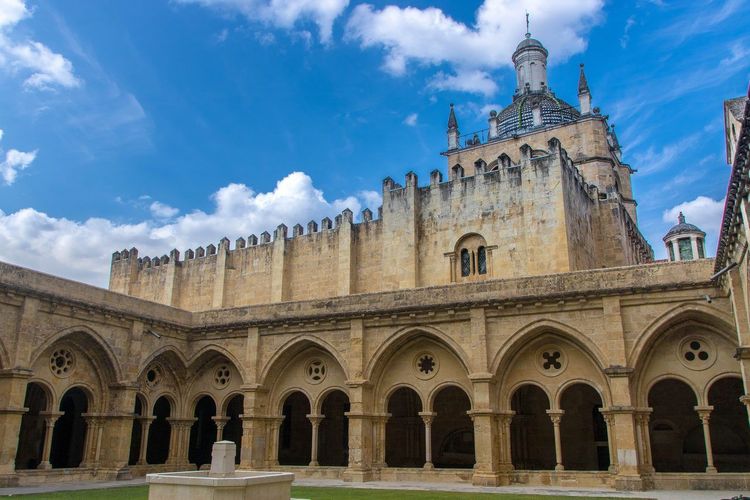
Walking down from the Paço das Escolas, a few minutes on foot is enough to reach the Sé Velha, the 12th-century Romanesque cathedral that looks more like a fortress than a place of worship, with its thick walls and arrow slits. It is one of the best-preserved Romanesque cathedrals in Portugal, built when Coimbra was still the capital of the young kingdom.
A few hundred meters away, the Sé Nova, built by the Jesuits in the 17th century, has a much more ornate Baroque facade. Inside, an altarpiece covered in gold contrasts with the almost military sobriety of the Sé Velha, a good summary of the stylistic gulf between the two buildings. If you only have time to choose one cathedral, go for the Sé Velha, which is older and more representative of the city's history.
That is precisely the appeal of this part of the day: the rua da Quebra Costas, literally the street that breaks your back, tumbles down the hill in uneven steps lined with small shops and terraces. It leads to the Almedina Gate, a remnant of the Moorish fortifications that once enclosed the entire Upper Town. Its name comes from the Arabic al-madina, the city: it marked the entrance to the fortified medina before the Christian Reconquista of the 12th century, a reminder that Coimbra, like much of central Portugal, lived under Moorish rule for a long time before becoming the first capital of the nascent kingdom. Take the time to walk slowly: the slope is steep, the cobblestones slippery in the rain, and the best views over the rooftops of the Lower Town are glimpsed between two buildings rather than from a purpose-built viewpoint.
The Machado de Castro National Museum and the Jardim Botânico
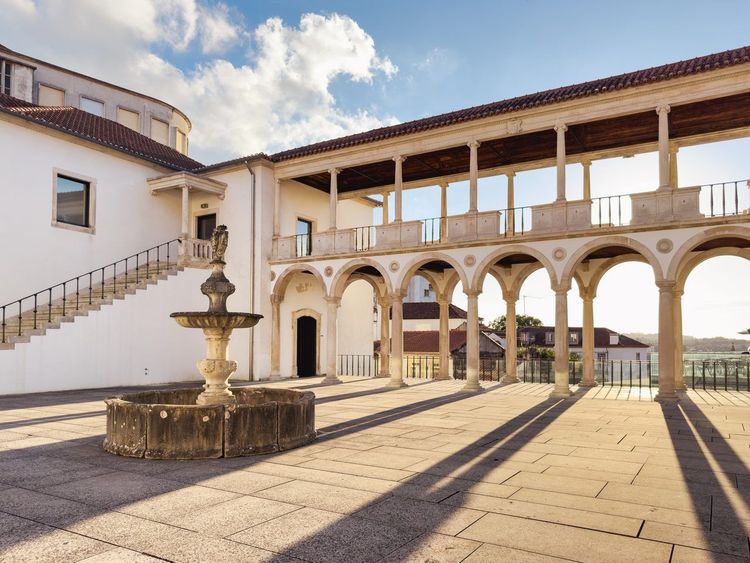
Just above the Sé Velha, the Machado de Castro National Museum occupies the former episcopal palace, built on a 1st-century Roman cryptoporticus that can still be visited underground. This cryptoporticus, nearly 100 meters of vaulted galleries on two levels, originally served as a technical foundation for the Roman forum that occupied the whole top of the hill; walking through its damp corridors gives a fairly accurate idea of the scale of the Roman city that vanished beneath medieval Coimbra. The museum's collections, medieval religious sculpture and goldsmith pieces, remain secondary to this underground space, which is still the real reason to step inside.
To end the day gently, head to the Jardim Botânico of the university, founded in 1772 and now one of the oldest botanical gardens in the country. Its terraced paths descend the hill over several levels, between tropical greenhouses and centuries-old trees, far from the bustle of the Upper Town. Entry is free for most of the year, a good enough reason to wrap up the first day here without worrying about an extra ticket. From its highest terrace, you can already make out, far below, the course of the Mondego that you will follow the next day.
To link the University, the Joanina Library and the Sé Velha in order without having to check a map at every street corner, the Ryo audio sub-tour devoted to knowledge as an elixir of youth chains these Upper Town stops together with anecdotes slipped in between facades, handy when you prefer to walk with your head up rather than your nose in a paper guide.
Day 2: The Lower Town, the Mondego and the Monasteries on the Other Bank
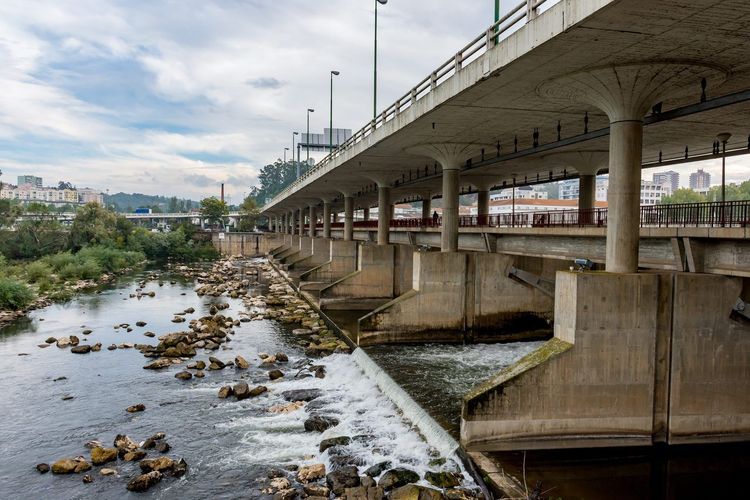
The second day heads down to the river. Allow a morning for the commercial Lower Town, then an afternoon to cross the Mondego and reach the monasteries of the left bank, which are more spread out and quieter.
Praça do Comércio and the Mercado D. Pedro V Municipal Market
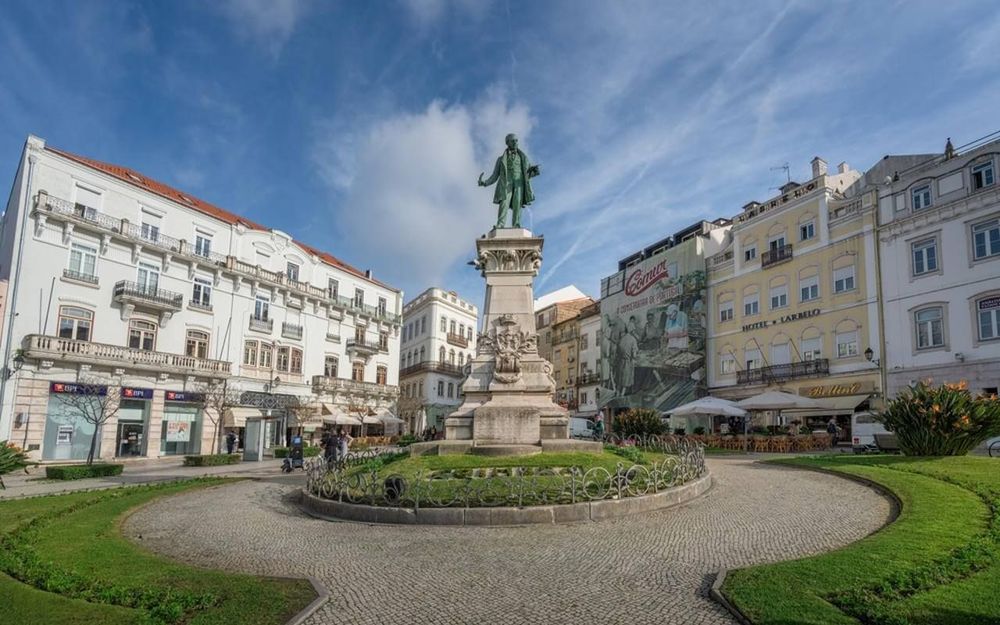
The Praça do Comércio has been Coimbra's marketplace since the Middle Ages, and it keeps this role as a commercial crossroads despite the café terraces that have replaced some of the stalls. Its pastel-colored facades, gathered around an almost square plaza, contrast with the gray stone of the Upper Town visited the day before.
Ten minutes on foot away, the Mercado Municipal D. Pedro V is worth the detour in late morning, when the fish and fruit stalls are still full. The market is open Monday to Saturday from 7 a.m. to 7 p.m., but it only really runs at full speed in the morning; on Sundays it is closed, so it is better to skip straight to the next stop. You will also find smoked chouriço and several varieties of aged sheep's cheese, enough to put together a light picnic for the rest of the day rather than stopping at a restaurant between visits.
The Monastery of Santa Cruz and the Jardim da Manga
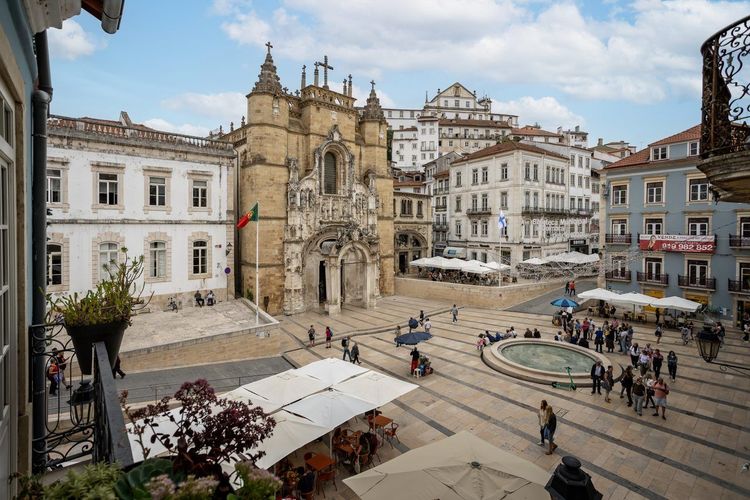
The Mosteiro de Santa Cruz, founded in 1131, houses the tombs of the first two kings of Portugal, Afonso Henriques and Sancho I, moved here in the 16th century into sculpted stone tombs. The sacristy and the chapter house, covered in 17th-century azulejos telling the life of Saint Augustine, are among the most beautiful in the city, and yet most visitors passing through Coimbra completely overlook them. The Cloister of Silence, next to the church, is also worth the detour for its two levels of arcaded galleries, a rare example of Manueline architecture preserved almost intact despite the monastery's many alterations over the centuries.
Just behind, the Jardim da Manga hides a Renaissance fountain topped with small domes that give it the look of an oriental pavilion lost in a Portuguese cloister. The ensemble, built in the 16th century, served as a washing fountain for the monks; today it is mostly a quiet corner to sit for five minutes between visits.
Across the Mondego: Santa Clara-a-Velha Monastery, the Pedro e Inês Bridge and Portugal dos Pequenitos
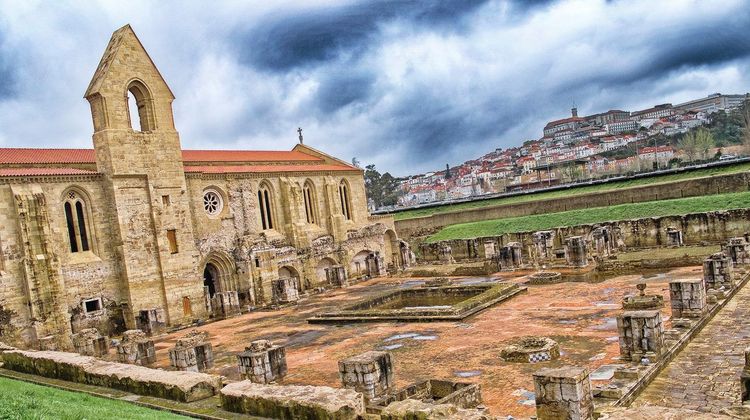
Cross the river to the left bank, which is much greener and less crowded. The Mosteiro de Santa Clara-a-Velha, founded in the 14th century, was buried under sand for a long time because of the Mondego's repeated floods: the nuns eventually abandoned it in the 17th century for a higher convent, letting the Gothic building sink gradually into the mud. Excavations carried out since the 1990s have made the arcades and the cloister visible again. The artificial pool now surrounding the ruins reproduces the 14th-century water level thanks to a permanent pumping system, a technical feat needed to stop the ground subsidence that still threatened the building a few decades ago, a rather spectacular staging for a ruined monastery.
This monastery is associated with the legend of Inês de Castro, the secret mistress of Prince Pedro, murdered on the orders of King Afonso IV in 1355 before being briefly buried here. The Pedro e Inês Bridge, reserved for pedestrians and cyclists, bears both their names and symbolically links the two banks of the river their story crossed. It is said that Pedro, once king, had Inês's body exhumed to have her crowned queen after her death, a gesture remembered as one of the darkest in Portuguese royal history.
To lighten up the afternoon, Portugal dos Pequenitos (Largo Rossio de Santa Clara, 3040-256 Coimbra, rated 4.3/5 on Google from 22,371 reviews), a theme park opened in 1940, recreates in miniature the country's most emblematic monuments and those of its former colonies. The park generally opens from 10 a.m. to 7 p.m. in high season, with an adult entry fee of €14.95; plan an hour and a half to two hours if you want to see all the pavilions, from mainland Portugal to the former African and Asian colonies. Children run between replicas of Portuguese monuments scaled down to their size, while parents see at a glance everything they will not have time to visit elsewhere in Portugal. Right next door, the Parque Verde do Mondego stretches along the riverbanks, ideal for ending the day on foot or by bike right at the water's edge.
To link these left-bank stops without wasting time looking for your way, the short version of the Ryo audio-guided tour of Coimbra covers the monasteries on this side of the Mondego in under two hours, with the story of Pedro and Inês told along the way, at the foot of the bridge rather than in a book.
A Fado Evening in Coimbra

The fado of Coimbra is not like Lisbon's, and locals are keen on that difference. Born in the university's student circles in the 19th century, it is traditionally sung by men dressed in the black academic cape, standing, without the theatricality of Lisbon's fadistas. The themes revolve around separation, nostalgia for student years and thwarted love, subjects that resonate particularly well in a city where people have long wept on leaving the lecture halls.
Several fado houses in the Upper Town, around the rua da Quebra Costas and the Praça da República, offer evening sessions, often accompanied by a glass of port. Generally allow between €15 and €25 for an evening with a light meal and drink included in the most touristy venues, or a simple entry fee of around €8 to €10 in the more modest halls frequented by the students themselves. Concerts rarely start before 9:30 p.m., giving the city time to finish dinner.
Book ahead if you are visiting during Queima das Fitas, the great end-of-year student ritual held in May: the festival, which symbolically marks the end of studies with the ritual burning of faculty ribbons, fills the city for several days and disrupts the usual concert schedules.
The rest of the year, one evening is enough to understand why the students themselves still come to listen to this repertoire, in venues that sometimes hold no more than thirty seats. No need to wait for nightfall to hear a taste of it: the Ryo audio guide to Coimbra already slips in, between two stops during the day, the story of this musical tradition unique to the city, so you arrive at the evening concert with context in mind rather than a simple tourist poster. To dig deeper before leaving, our article on how to get to know and listen to fado in Coimbra details the city's most authentic venues.
Coimbra's Hidden Gems
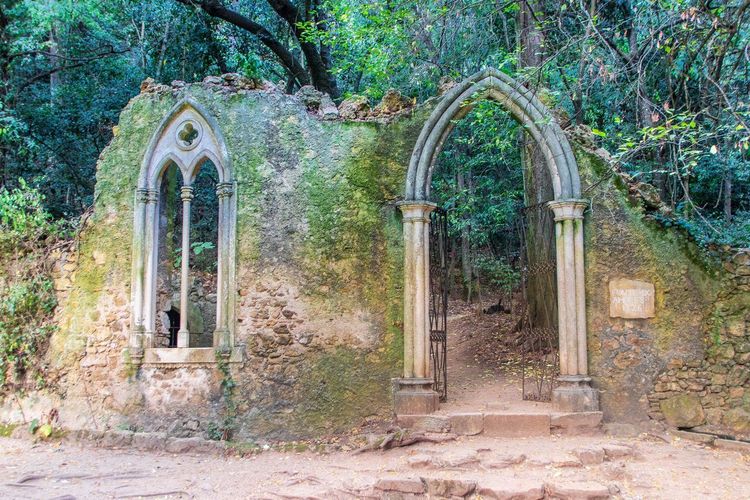
The estate of the Quinta das Lágrimas, now turned into a hotel with gardens open to the public, is visited mainly for its Fonte dos Amores, the fountain of loves, and for its 19th-century romantic gardens that descend in terraces to a small lake. The gardens can be visited freely during the day for a modest entry fee, even for non-guests of the hotel, a rarity for a private estate of this standing.
On the opposite side of the city, the Penedo da Saudade offers one of the clearest viewpoints over Coimbra, with a garden planted with cedars and pines where generations of students have carved poems into the stone. The secluded spot is well suited to a late-afternoon break, away from the groups that never go beyond the Upper Town.
The Choupal Forest and the Parque Dr. Manuel Braga
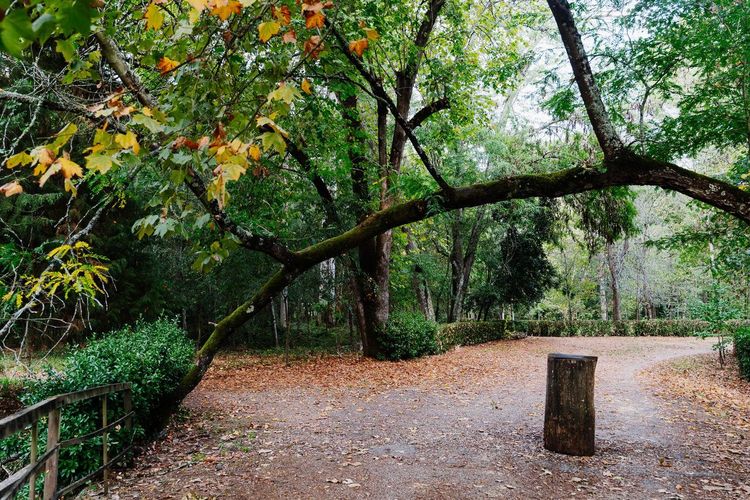
The Mata Nacional do Choupal, a poplar grove planted in the 19th century along the Mondego, offers several kilometers of shaded walking, very popular with local joggers in the early morning. Allow an hour for a full loop, ideally in late morning when the light still passes through the foliage horizontally. You may occasionally spot herons near the river's oxbows, a total contrast with the bustle of the Praça da República that same evening.
Closer to the center, the Parque Dr. Manuel Braga, just before the Santa Clara bridge, lines the water's edge with benches and café terraces. You will see as many students studying under a tree as retirees playing cards, a fairly faithful summary of life in Coimbra.
Praça da República and the Student Atmosphere at Night
The Praça da República, just below the campus, becomes in the evening the center of gravity of student nightlife: cafés, bars and a few nightclubs share the terraces until late hours during the school year. Draft beers generally cost around €1.50 to €2 in the student bars on the square, a price that partly explains why the Praça da República stays so lively throughout the academic year. It is here, rather than in the more touristy Upper Town, that you truly gauge the demographic weight of students in the city.
Nearby, the Casa Museu Bissaya Barreto (Rua da Infância, 3000-401 Coimbra, rated 4.5/5 on Google from 109 reviews) deserves a quick visit for anyone interested in recent local history: the home of the doctor and patron who founded Portugal dos Pequenitos now houses his personal collection of Portuguese art and decorative arts, a human-scale museum that most hurried visitors skip entirely. It generally closes on Mondays, like most of the city's municipal museums; check the opening hours if you plan to fit it into an already packed schedule.
Some stops on the tour branch off precisely toward these lesser-visited corners, from the Penedo da Saudade to the Praça da República, told along the way rather than listed haphazardly as in most classic guides. For a complementary overview of the city's activities, our article on the best things to do in Coimbra rounds out these lesser-known suggestions.
What to Do Around Coimbra: Half-Day Excursions
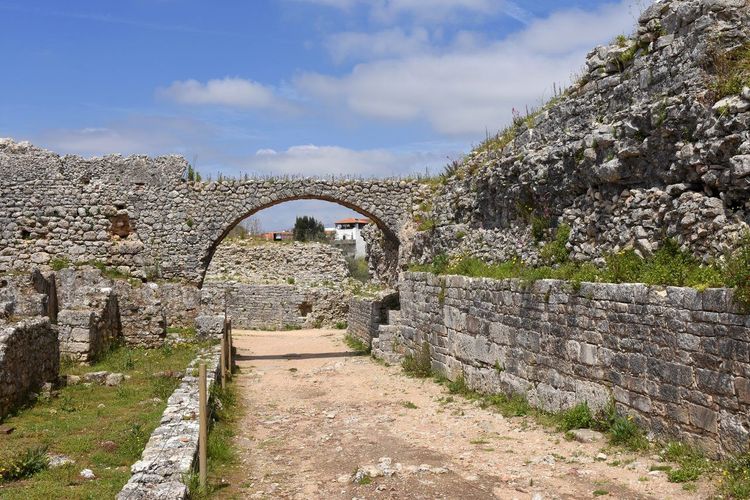
With a third day or a rental car, three excursions naturally extend the stay without altering the 2-day city format. They do not combine easily in a single day: Conímbriga and the coast lie in opposite directions, and the Bairrada vineyards also take a good part of the day for an unhurried visit. It is best to choose just one according to your priorities, by rental car or on an organized excursion from Coimbra.
The Roman Ruins of Conímbriga
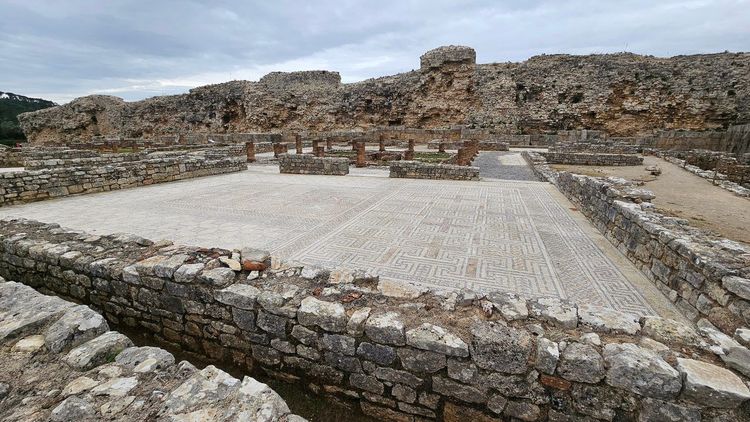
About twenty kilometers to the south, Conímbriga is home to one of the largest Roman archaeological sites in Portugal, continuously occupied from the Iron Age until its destruction by the Suebi in the 5th century. The site is visited by following the foundations of the baths, the forum and above all the residential villas, some of which have kept their polychrome mosaics almost intact under protective shelters.
The adjoining monographic museum completes the visit with everyday objects, jewelry, coins and tools, unearthed since excavations began in the 19th century. Direct buses from Coimbra are rare, only two to three connections a day on weekdays; a car or a shared taxi is far more comfortable for those who do not want to tie their day to a single bus schedule.
Figueira da Foz and the Atlantic Coast
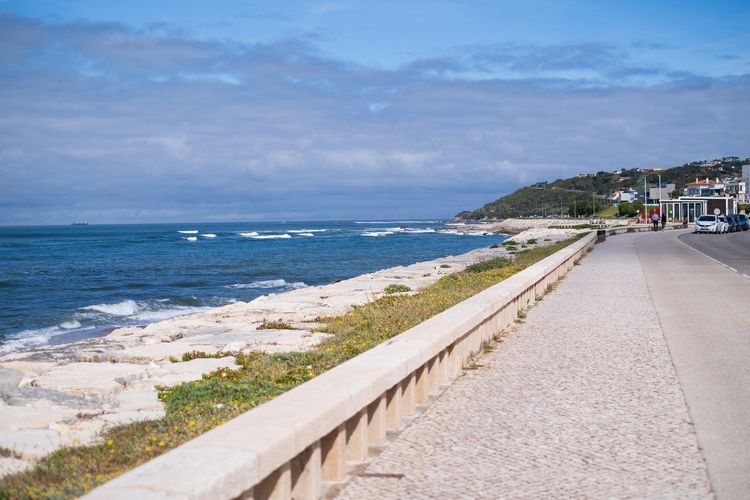
About forty minutes by road to the west, Figueira da Foz offers the contrast of the ocean after two days among stone and river. The seaside resort, one of the busiest on Portugal's central coast, has a long fine-sand beach and a lively seafront in summer, casino included. The Figueira da Foz casino, one of the largest in mainland Portugal, enlivens summer evenings for those looking for a bit of animation after two days of calmer heritage visits. Surfers will also find schools offering lessons for all levels, as the Atlantic swell is more consistent here than on the country's southern coast; local surfers often prefer the neighboring beaches of Buarcos or Cova Gala, which are less crowded.
The excursion works well at the end of the day for a sunset over the Atlantic before heading back to Coimbra, especially between June and September when the light lasts late.
The Beira Atlântico Wine Region

Between Coimbra and the coast lies the wine region of Beira Atlântico, whose Bairrada sub-region produces sparkling wines and tannic reds less well known than those of the Douro but just as distinctive. The region also produces reds from the baga grape, long shunned for their rusticity before coming back into favor with a new generation of winemakers focused on more precise winemaking. The estates are organized around small family operations rather than large tourist-oriented houses, which often means booking your tasting in advance.
The Prior Lucas estate, one of the most accessible for a half-day visit, offers a tasting of its espumantes (traditional-method sparkling wines) accompanied, depending on the season, by a plate of leitão, the roast suckling pig that makes the whole Bairrada region gastronomically famous.
For those with more time, this wine excursion combines easily with a stop in Porto, a little over an hour's drive to the north, extending the stay beyond the two days initially planned in Coimbra.
Where to Stay in Coimbra: Neighborhoods and Hotels

For a two-day visit, it is best to stay in the Upper Town or just below it, in the historic Lower Town: both neighborhoods are walkable and save you time on transport in the morning.
The youth hostels are numerous around the Praça da República and the train station, from around €20 to €25 a night in a dorm, a logical offering in a city that houses several thousand students all year round. They are often the best places to chat with locals or other travelers about the bars of the moment.
As for mid-range hotels, expect to pay between €70 and €110 a night for a well-located property in the Baixa, within walking distance of the Praça do Comércio and the public elevator linking the Lower and Upper Town. Several guesthouses occupy tastefully renovated 19th-century townhouses, often run by families who personally offer the best sightseeing tips at breakfast. On the other bank, around Santa Clara, rates drop noticeably compared with the Upper Town, at the cost of an extra ten to fifteen minutes' walk to reach the first sites of the first day.
For a more upscale stay, the Quinta das Lágrimas, already mentioned for its garden, also works as a boutique hotel in a historic setting a few minutes from the center by car or taxi, an option to consider for those who want to combine sightseeing and relaxation in a quieter setting than the heart of the city. If you arrive by car, check that your accommodation offers private parking: parking in the Upper Town remains limited and paid, and the sloping streets do not make maneuvering easy for larger vehicles.
Book early if your visit coincides with Queima das Fitas in May, or more broadly if you are traveling in the high summer season: always add a margin of 15 to 20% to the rates shown online, as demand regularly exceeds the supply available in the historic center.
Where to Eat in Coimbra: Cuisine and Good Addresses
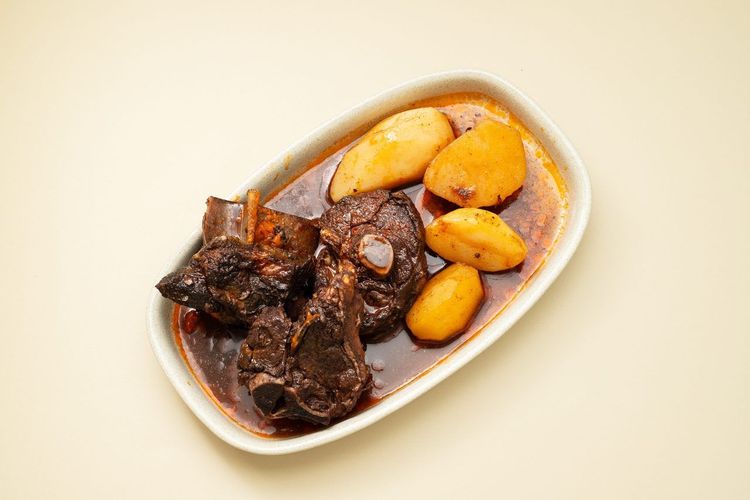
The specialty that sums up the regional cuisine is chanfana: a goat or lamb stew simmered for several hours in red wine, in an earthenware pot traditionally baked in a bread oven. This dish of rural origin, from the villages around Miranda do Corvo, appears on most menus at Coimbra's traditional restaurants, especially in winter.
For a snack in an unpretentious setting, the Tasca das Tias Camélias, a small family-run place near the Baixa, cultivates traditional cooking, generous portions, checkered tablecloths and owners who know their regulars by first name. Book for the evening, as tables are limited.
Around the D. Pedro V market and the Praça do Comércio, neighborhood tascas serve grilled fish at low prices, often under €15 for the dish of the day with a side. It is in these places without flashy signs, rather than in the restaurants lining the tourist sites, that you generally eat best. In the morning, most people in Coimbra start with a coffee and a pastel at the counter rather than a sit-down breakfast, a habit that lets you gain time before the day's first visit. The historic cafés around the Praça 8 de Maio remain a good option for observing local life before heading up to the Upper Town.
For dessert, look for the pastéis de Santa Clara, shell-shaped and filled with a cream made from egg yolk and almond, a recipe said to date back to the nuns of the Santa Clara-a-Velha convent visited on the second day. And if your excursion takes you toward Bairrada, try the local leitão, the roast suckling pig, served crispy with a glass of espumante.
Vegetarian options remain rarer in traditional tascas focused on meat and fish, but a few recent places around the Praça da República are gradually filling this gap for travelers who do not eat chanfana.
How to Get to Coimbra and Get Around

From Porto, the direct train connects the two cities in a little over an hour, with frequent departures throughout the day from Porto Campanhã station. It is the simplest way to combine the two cities on a single Portuguese circuit.
From Lisbon, allow about two hours by high-speed train (Alfa Pendular) or by slower regional train, with several daily departures from Oriente or Santa Apolónia stations. Long-distance buses also exist but noticeably lengthen the journey compared with the train. For travelers arriving by plane, the nearest airport is Porto's, about an hour and a quarter by road or train from Coimbra; Lisbon's, farther away, mainly makes sense if your trip continues south afterwards.
Note on arrival: the main station, Coimbra-B, is located away from the city center. A connecting train, included in your CP ticket, or a taxi of a few minutes, takes you to Coimbra-A station, much closer to the Baixa and the logical starting point for your first day of sightseeing.
Once in town, everything is walkable, as long as you accept the steep slopes of the Upper Town. A public elevator links the Baixa to the university district for those who want to avoid the steepest climb, and a few urban bus lines complete the network for trips to Santa Clara or Portugal dos Pequenitos on the other bank. Ride-hailing apps work normally throughout the city, handy for reaching a distant restaurant in the evening without tackling the slopes on foot. For the more athletic, a few electric bike rental shops also make trips to the other bank of the Mondego easier, where the terrain flattens out considerably compared with the Upper Town.
Many visitors start their Ryo audio guide as soon as they step off the train at Coimbra-A station, to go straight into the climb to the university without pulling out their phone at every intersection.
How Long to Stay and When to Visit Coimbra?
Two days comfortably cover the essentials: one day for the university Upper Town, another for the Lower Town and the other bank of the Mondego. For those who want to add Conímbriga, Figueira da Foz or the Bairrada vineyards without rushing, a third day noticeably changes the pace of the stay.
Spring, from April to June, remains the best time: mild temperatures, gardens in bloom, and for the lucky ones, Queima das Fitas in May, which turns the city into a giant student party. Autumn, from September to November, offers a calmer alternative with pleasant light over the Mondego.
Summer, from July to August, brings a dry heat that can be oppressive in the shadeless cobbled alleys of the Upper Town, but opens up the possibility of combining the visit with an afternoon at the beach in Figueira da Foz. Winter remains practicable, with fewer people in the queues at the Joanina Library, provided you accept frequent showers and museums that close a bit earlier. Also keep an eye on the university calendar: outside exam periods, student terraces are much livelier in the evening, while revision weeks, generally in January and May-June, noticeably empty the bars in the center. Avoid if possible the May public holiday weekends and the first weeks of Queima das Fitas if you are looking for calm: the city, usually quiet outside the university season, completely changes atmosphere during those few days.



FAQ
How long does it really take to visit Coimbra?
Two full days are enough to cover the university, the Joanina Library, the Lower Town and the monasteries on the other side of the Mondego. Allow a third day if you want to add Conímbriga, Figueira da Foz or the Bairrada vineyards without rushing.
Is Coimbra worth a stop between Porto and Lisbon?
Yes, and it is even one of the most logical stops on this train route: Coimbra is halfway, about one hour from Porto and two hours from Lisbon, which lets you spend two days there without complicating a linear north-south itinerary.
What is there to do in Coimbra with children?
Portugal dos Pequenitos, with its miniature replicas of Portuguese monuments, remains the best activity for families. The Parque Verde do Mondego and the Choupal forest then offer plenty of open space to burn off energy after a morning of museums.
What is there to do in Coimbra when it rains?
The Joanina Library, the Machado de Castro National Museum and its underground Roman cryptoporticus, as well as the monasteries of Santa Cruz and Santa Clara-a-Velha, can all be visited entirely under cover. The Upper Town remains walkable even in the rain, as long as you watch out for slippery cobblestones.
Do you need to book in advance to visit the Joanina Library?
Strongly recommended in high season: time slots have a limited number of visitors, and queues on site can exceed an hour in summer. An online booking the day before or two days before is generally enough for the rest of the year.
Is Coimbra a good city for a weekend without a car?
Absolutely: the city can be explored on foot, the train links it directly to Porto and Lisbon, and only excursions to Conímbriga or the Bairrada wine region require a car or a local bus.
In Summary
Coimbra is visited like a book read in two chapters: one day for the hill of knowledge, one day for the river and its legends. Between the Joanina Library and its conservator bats, the sunken monastery of Santa Clara-a-Velha and the tragic story of Pedro and Inês told on their bridge, the city largely keeps its promises in 48 hours, without ever giving the impression of having skimmed the essentials.
If you would rather be guided than juggle between a paper map and travel notes, the Ryo audio-guided tour of Coimbra covers in order most of the stops of these two days, from the University to the banks of the Mondego, so you can travel with your head up rather than glued to a printed itinerary.