© Shutterstock
 Votre guide Ryo
Visiting Cadiz with Family in 2026: Old Town, Beaches and Andalusian Day Trips
Cadiz is unlike any other city in Andalusia: set on a narrow peninsula, surrounded by water on almost all sides, it can be explored on foot without ever tiring out little legs. That is precisely what makes visiting Cadiz with family so easy: fifteen minutes of walking is enough to go from a shaded square to a fine-sand beach, then to a covered market where you can snack before nap time. The Ryo audio-guided tour of Cadiz follows this natural route, with stops short enough to hold the attention of the youngest all the way through.
In the pages that follow, you will come across a tower where a giant mirror projects the entire city onto a white table, a tiny beach that served as the backdrop for a James Bond film, a covered market opened in 1838 where you can taste tortillitas de camarones at any hour, and Andalusian horses that dance at a walking pace in an arena in Jerez. You will also find supervised swimming beaches, museums that appeal to curious people of all ages, a carnival reputed to be among the most exuberant in Europe, and several day trips to the white villages and coastline surrounding the bay. At the end of the article, a practical section answers logistical questions: transport, accommodation, budget and best season.
The Historic Heart of Cadiz, Best Explored on Foot

Cadiz is a peninsula city, and that changes everything when traveling with little ones: no long distances to cover, no transport to negotiate between visits, just a tangle of alleys that almost always opens onto the sea. The old town fits in the palm of your hand, ringed by ramparts, and its nearly flat terrain makes getting around easy, even with a stroller.
The Alleys and Squares of the Old Town
The best introduction is still the Plaza San Juan de Dios (Plaza San Juan de Dios, 11005 Cádiz, rated 4.5/5 on Google from 8K reviews), a vast esplanade lined by the neoclassical town hall, where the little ones can run freely while you spot a café terrace. From there, the narrow streets of the Pópulo neighborhood, considered the medieval cradle of the city, lead to three ancient gates, the arcos de los Blancos, del Pópulo and de la Rosa, which once marked the entrance to the fortified city.
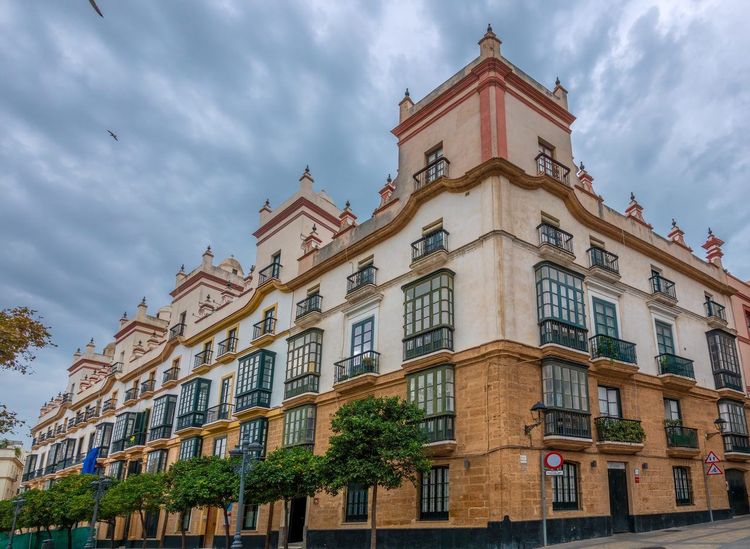
What strikes you as you walk is the constant contrast between whitewashed facades and sudden glimpses of the Atlantic at the end of an alley. The lookout towers that crown some bourgeois houses, small towers from which merchants once watched for the return of ships laden with goods from the Americas, are a good excuse to tell the city's maritime history without it turning into a lecture. Challenge the older kids to count the towers visible from a square: the game often fills a good part of the stroll.
Further west, the La Viña neighborhood, stronghold of the fishermen and beating heart of the carnival, offers a more down-to-earth atmosphere, with its fried-fish bars and decorated facades. This is where you will eat best for the least money, a stone's throw from the beach.
Walking the Ramparts to Genovés Park
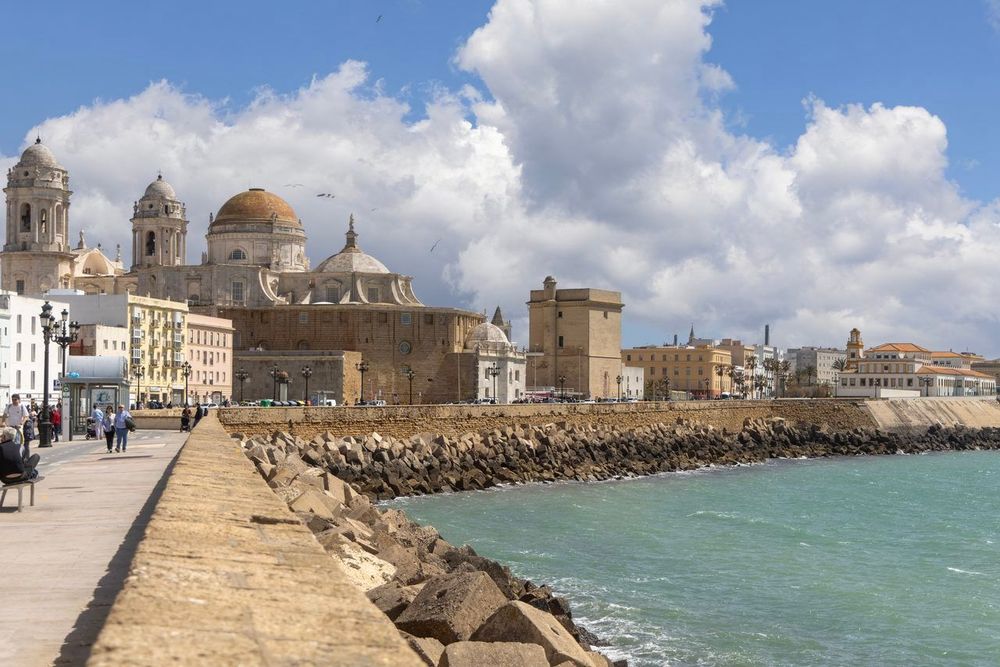
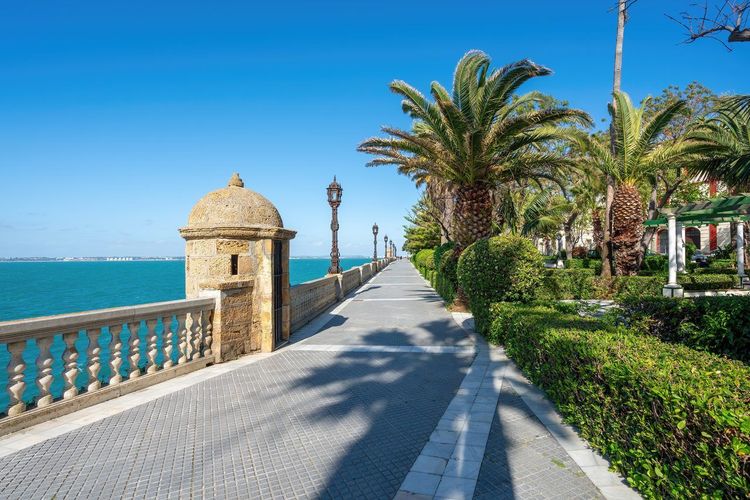
The promenades laid out along the old walls can be walked for the most part on foot, with views of the ocean on one side and the rooftops of the old town on the other. It is a pleasant route in the late afternoon, when the heat eases and the low light gilds the ostionera stone, the shelly limestone typical of the bay.
Following the seafront westward from the Alameda Apodaca, the walk naturally leads to Genovés Park, making a logical loop of an hour or two: little elevation, shade in places, and a final destination where toddlers can finally burn off energy without constraint.
If you follow the Ryo audio-guided tour dedicated to the city of the sea and of freedom, you will pass through these very alleys and ramparts, with audio stops brief enough to keep up with a group that stops every five meters for a photo or to retie a shoelace.
The Must-See Monuments to Visit with Your Children
Cadiz concentrates its major monuments within a very reasonable walking radius, which lets you put together a half-day visit without crossing the city from end to end. It is better to group them by neighborhood than to tick them off one by one in an arbitrary order.
Cadiz Cathedral and the Roman Theater
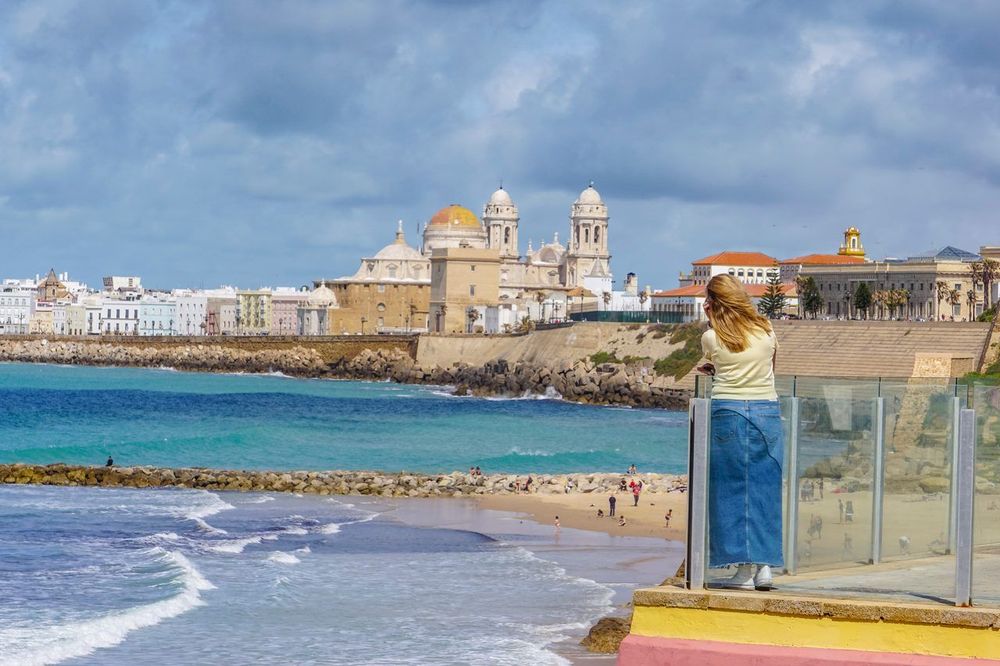
The Cadiz Cathedral, with its golden dome visible from the sea, dominates the Campo del Sur seafront. Its construction stretched from 1722 to 1838, hence the mix of Baroque and Neoclassical that attentive eyes can spot on the facade. The climb up the Poniente tower is by a ramp rather than steps, which makes it accessible to young walkers, and offers one of the best views over the bay.
Just behind it, the Roman theater of Cadiz (Teatro Romano de Gadès) surprises with its late rediscovery: it was only identified in 1980, hidden beneath houses in the Pópulo neighborhood. The idea that an entire theater slept under apartment buildings for centuries often has more effect on an eight-year-old than any learned explanation of the Roman Empire. The interpretation center, which is free, shows the original scale of the tiers in a scale model.
The Torre Tavira and Its Magic Mirror
Among the roughly one hundred and twenty-five watchtowers that still dot the rooftops, the Torre Tavira (Calle Marqués del Real Tesoro 10, 11001 Cádiz, rated 4.6/5 on Google from 9,419 reviews) is the tallest, at 45 meters above sea level, and the most famous. Its main attraction, the camera obscura, projects the city's streets and monuments in real time onto a white basin using a simple play of mirrors and lenses: an optical principle several centuries old that generally fascinates young visitors more than their parents.
Allow a little over an hour for the visit, projection included, and aim for late morning: the image is sharper when the outside light is bright. Sessions are held in small groups, so remember to arrive a bit early in summer.
Santa Catalina Castle and the Oratorio San Felipe Neri
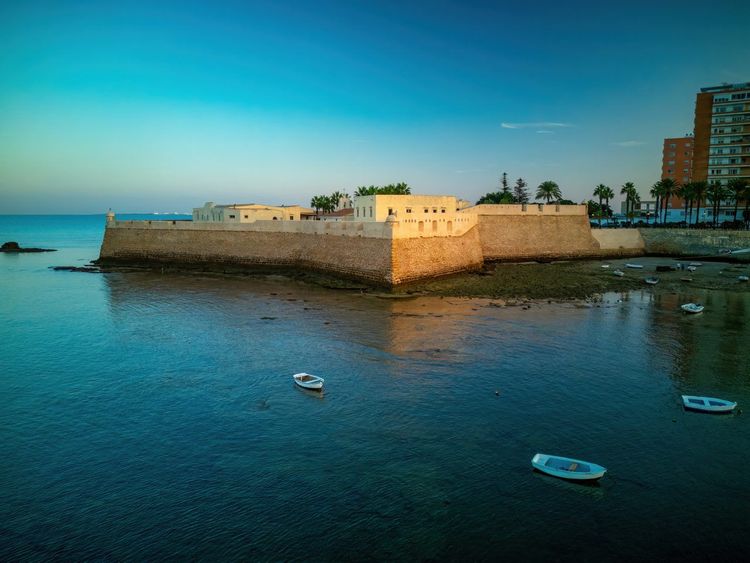
The Santa Catalina Castle, built in a star shape at the end of the 16th century after the Anglo-Dutch sack of 1596, is free to visit: its low ramparts and inner courtyards make it a natural playground, where little ones run from one bastion to another without much risk. It is also one of the best sunset viewpoints over the bay, and temporary exhibitions are regularly held there.
A few streets away, the Oratorio San Felipe Neri hides a curiosity that many Spaniards overlook: it was in this elliptical church that the Cortes sat during the Napoleonic siege, and where the Constitution of 1812, nicknamed "la Pepa," was proclaimed. Above the altar, an Immaculate Conception by Murillo, one of the painter's finest, holds your gaze long enough to explain why Cadiz was for a time the capital of free Spain.
Several stops of the Ryo audio guide are devoted to this triangle of cathedral, Roman theater and Torre Tavira, with the history of the camera obscura told in detail: it is often the passage the youngest ask to listen to again.
Cadiz Museums Suited to Young Visitors
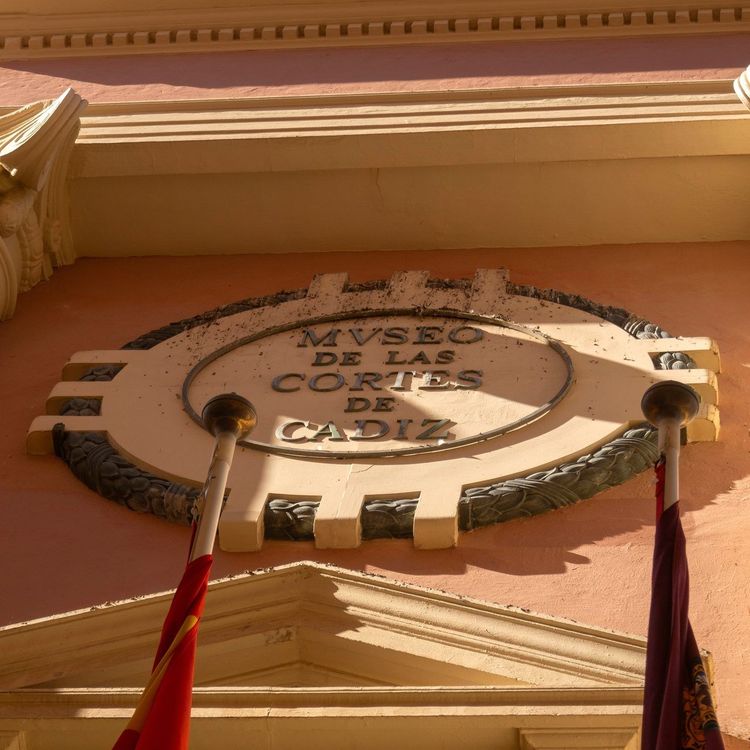
The museums of Cadiz are not imposing compared with those of Seville or Madrid, which works rather in their favor with little ones: visits stay short and digestible, focused on a few standout pieces rather than miles of corridors.
The Museo de Cádiz and the Museo de las Cortes
The Museo de Cádiz (Plaza de Mina, 11004 Cádiz, rated 4.5/5 on Google from 4,486 reviews), located on Plaza de Mina, houses on the ground floor an archaeological collection dominated by two Phoenician marble sarcophagi, one male and one female, dated to the 5th century BC: extremely rare pieces in Western Europe. The carved faces, strikingly serene, hold attention much longer than the Zurbarán paintings displayed upstairs, which is convenient since you can cut the visit short without frustration. Admission is free for citizens of the European Union.
The Museo de las Cortes de Cádiz, more modest, stands out for an immense wood and ivory model of the city as it existed at the end of the 18th century, built at 1/250 scale on commission from King Charles III. Spotting your accommodation's street on this miniature city quickly becomes a game, far more effective than a map for understanding the geography of the peninsula.
The Puppet Museum, for the Youngest
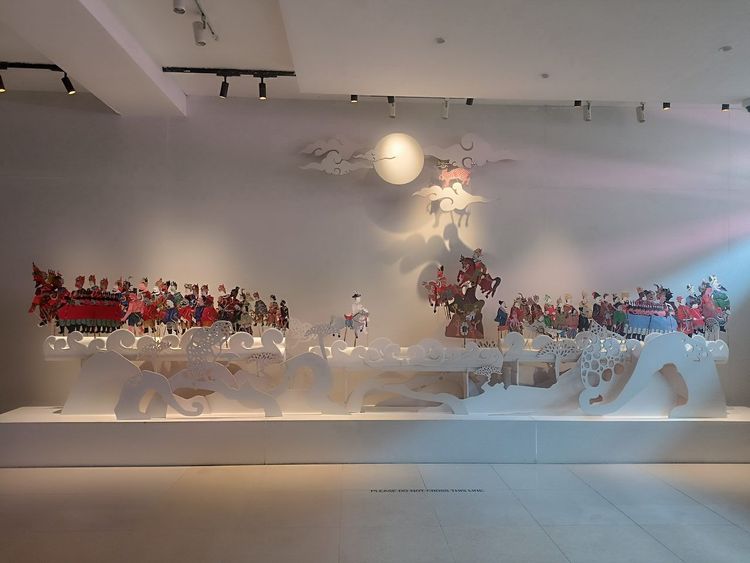
Cadiz has a long puppet tradition, embodied by La Tía Norica, a popular puppet theater whose characters date back to the 19th century. The puppet museum associated with it presents traditional figurines and puppets from around the world, with occasional activities for young audiences. It is a good fallback on rainy days, which are rare but not impossible in winter, or to break up an afternoon of classic sightseeing.
The visit rarely lasts more than forty-five minutes. Check opening hours before heading out, as they vary with the season and programming.
Cadiz Beaches: Swimming and Sand Games
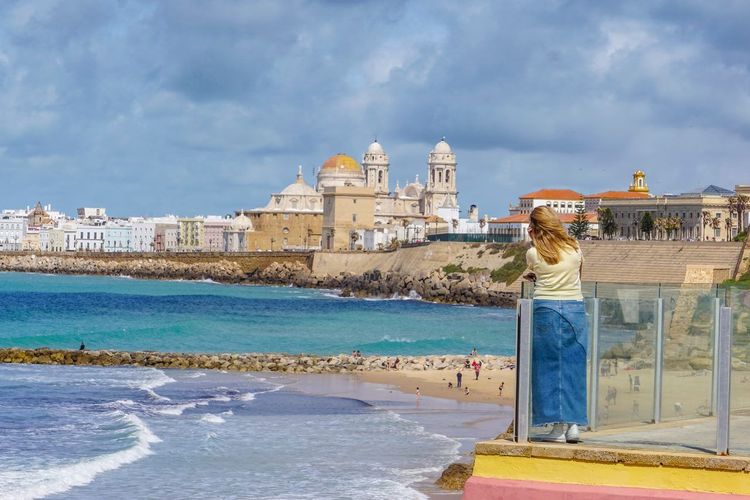
Few historic cities offer beach access less than ten minutes' walk from the old center. Yet that is the case here, where the question is not so much "should we go to the beach" as "which one should we choose."
La Caleta, the Iconic Family Beach
The La Caleta beach, nestled between the Santa Catalina and San Sebastián fortresses, is the most photographed in the city and probably the most practical with little ones: small size, generally calm water sheltered by the two rocky promontories, fine sand and showers available. It is also where a scene from Die Another Day was filmed, with Halle Berry emerging from the water, a detail that often amuses teens.
In high season, La Caleta fills up quickly from mid-morning. To keep a bit of space around your towel, arrive before 10 a.m. or aim for late afternoon, when the light softens. At low tide, the exposed rocks reveal crabs and small fish: bring water shoes.
The Other Beaches Around the Bay
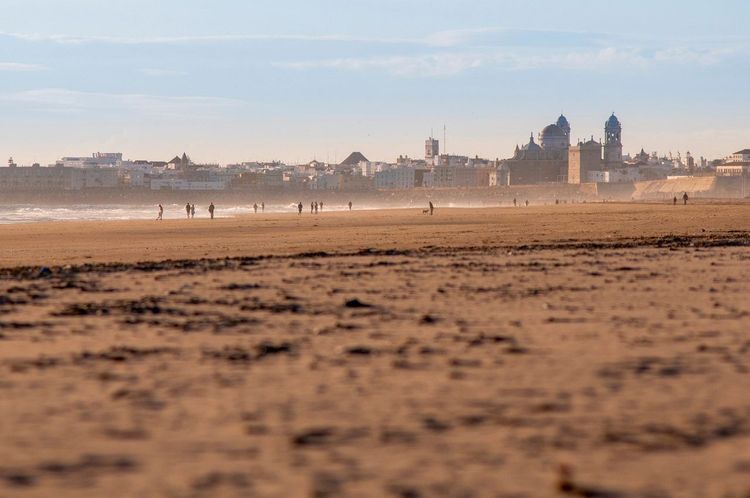
If La Caleta is too crowded, the Playa de la Victoria, which stretches over three kilometers south of the old town, offers plenty of room to spread out towels. It is equipped with lifeguard stations, showers and playgrounds, with slightly stronger swell than at La Caleta, which is worth watching with toddlers. Its long, flat seafront promenade is also ideal for first rides on a bike or scooter.
At its northern end, at the foot of the Puerta de Tierra, the small Playa de Santa María del Mar is a good choice if you are looking for a more sheltered alternative without going far from the center. Further south, the Playa de Cortadura extends the same strip of sand in a wilder, less crowded setting, ideal in the off-season for long walks.
Genovés Park, the Central Market and Tasty Breaks
Between two monuments, a group with little ones mostly needs two things: somewhere to let off steam, and somewhere to eat without queuing for an hour.
Strolling Through Genovés Park and Its Playgrounds
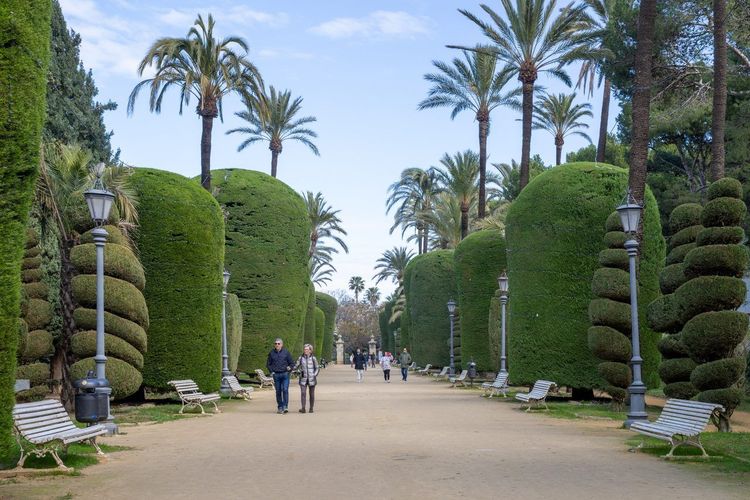
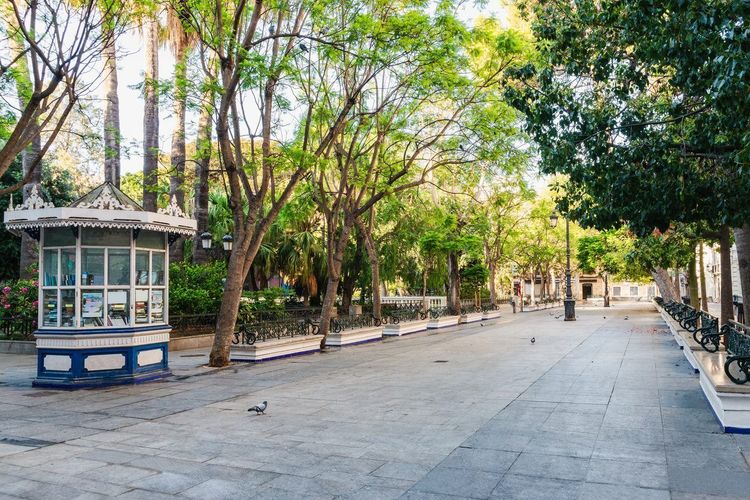
The Genovés Park, laid out in the late 19th century facing the sea, offers shaded paths lined with trees trimmed into geometric shapes, century-old dragon trees and an artificial grotto with a waterfall that always intrigues young explorers. A shaded playground lets them catch their breath while you enjoy a bench facing the Atlantic.
Beyond the park, the city has other more modest playgrounds, on Plaza de España, in the Santa María neighborhood or along the Paseo de la Victoria, handy for a quick break without a detour.
The Central Market and Its Specialties to Try
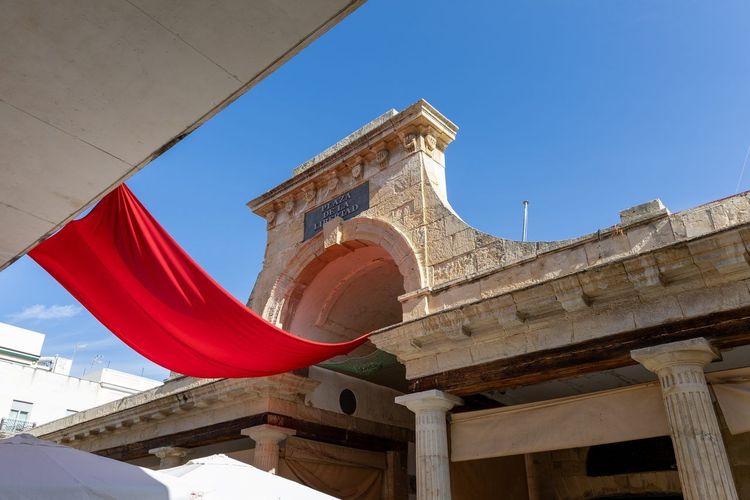
The central market of Cadiz, opened in 1838 and considered the first covered market in Spain, remains the belly of the city. Stalls of freshly landed fish sit alongside, in the outer gallery, stands selling tortillitas de camarones (crispy shrimp fritters) and pescaíto frito, to be eaten standing up, with no reservation or menu to negotiate. On Saturday at midday, the atmosphere becomes downright festive.
It is also the best place to observe the daily life of the Gaditanos: the fishmongers still call out to their customers at the top of their voices. For coffee, a daily ritual here, the terraces of the neighboring Plaza de las Flores offer a shaded break among the flower stalls. Order a "mitad" (half coffee, half milk) like a local, and for the little ones, hot chocolate and churros are unbeatable in the morning.
Good news for tired legs: the Ryo audio-guided tour passes by the central market and stops at Genovés Park, over a distance designed for a relaxed stroll, stroller included.
Day Trip to Jerez de la Frontera: Andalusian Horses and Zoo
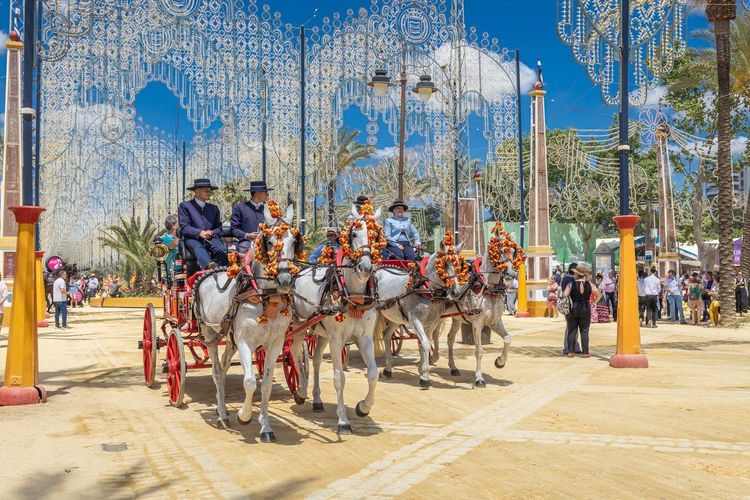
About forty minutes by car or train from Cadiz, Jerez de la Frontera deserves a day trip, especially if your little ones are crazy about horseback riding or simply curious to see horses move to music.
The Andalusian Equestrian Show and the Cartujano Horse
The Real Escuela Andaluza del Arte Ecuestre (Avenida Duque de Abrantes, 11407 Jerez de la Frontera, rated 4.5/5 on Google from 1,799 reviews) presents its show "Cómo bailan los caballos andaluces" ("How the Andalusian Horses Dance"), where horses and riders in 18th-century costume perform high-school figures, long-rein work and a final carousel, set to Spanish music. The performance lasts about an hour and a half, a format that holds attention well from age five or six. On other days, you can watch the training sessions and visit the stables.
Behind this show lies a specific lineage, the Cartujano horse, bred since the late 15th century by the monks of the Carthusian monastery of Jerez. Its pedigree has been preserved with rare care over the centuries, a detail that horse lovers enjoy discovering before entering the arena.
The Jerez Zoo and Its Green Spaces

To extend the day, the Zoobotánico de Jerez, both a zoo and a botanical garden, presents several hundred animals in a tree-filled park, with a recovery center for endangered species. It is the local equivalent of the kids' park mentioned in some guides: an easy stop to catch your breath after the show, before hitting the road again. The gardens and playgrounds of González Hontoria Park offer a free alternative.
With the round trip, allow a full day: leave early in the morning to enjoy the performance before the hottest hours.
The Jerez stop on the Ryo audio-guided tour of Andalusia tells the story of the Cartujano horse even before you arrive at the arena, helping prepare your budding riders for what they are about to see.
El Puerto de Santa María and Sanlúcar: Ferry, Medieval Market and Horse Races
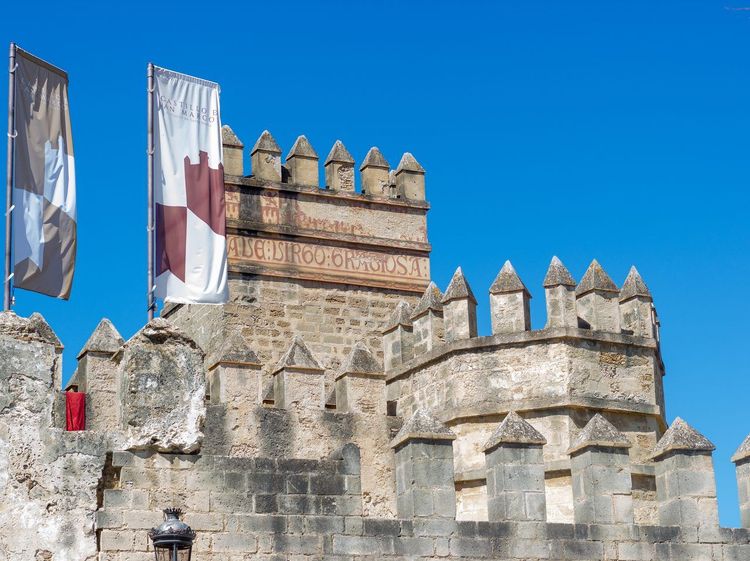
On the other side of the bay, two towns round out a week in Cadiz nicely, with the advantage of a journey that is already fun in itself.
Ferry Crossing and Medieval Market in El Puerto de Santa María
Rather than taking the car, you can reach El Puerto de Santa María in about half an hour aboard the catamaran of the bay's transport network. For little ones, the crossing is already an adventure: wind in your hair, seagulls following the boat, the ramparts of Cadiz receding. Check the schedules before leaving, as the service has experienced interruptions in recent years.
On site, the medieval market held at certain times of the year offers activities for young people: falconry demonstrations, traditional games, artisans' stalls in period costume. The town also has several Jerez wine bodegas open for visits, more for adults, and the Aqualand El Puerto water park, detailed below.
The Horse Race on the Beach in Sanlúcar de Barrameda
Less than an hour to the north, Sanlúcar de Barrameda holds horse races directly on the sand every summer, a tradition dating back to 1845. The event takes place over two series of a few days in August, at low tide, and draws thousands of spectators settled right on the beach. Young Sanluqueños even place "bets" with makeshift cardboard stalls set up on the sand.
Outside the race dates, Sanlúcar beach remains pleasant for a swimming break, with views of the mouth of the Guadalquivir and, on the opposite bank, Doñana National Park. Do not leave without tasting the langoustines in the Bajo de Guía neighborhood.
Dolphin and Whale Watching in the Strait of Gibraltar

From the port of Tarifa, about an hour and a quarter's drive south of Cadiz, several companies offer boat trips to watch dolphins, pilot whales and, especially in July–August, orcas, in the Strait of Gibraltar, one of the richest migratory passages in Europe.
Trips generally last two to three hours, aboard boats often accompanied by a marine biologist who comments on the sightings. The recommended minimum age is around four or five, out of caution rather than regulation: the swell can be stronger than in the Bay of Cadiz, so consider a seasickness remedy for sensitive stomachs. Book preferably in the morning, when the sea is often calmer.
Vejer de la Frontera and the Sierra de Cádiz Greenway: Nature and Adventure

Away from the coast, the province of Cadiz offers two nature outings that are rarely highlighted, best done on two separate days given how far apart they are.
Donkey Rides in Vejer de la Frontera
Perched on a hill about forty minutes from Cadiz, the white village of Vejer de la Frontera is best discovered on foot along its steep alleys. In the surrounding area, farms offer donkey rides, an activity suited to the youngest who struggle with consecutive climbs under the Andalusian sun. Ask locally or at the tourist office for the current providers.
Vejer is also worth the detour for its view over the Atlantic coast and, on a clear day, the mountains of Morocco. El Palmar beach, fifteen minutes away, lets you end the day with your feet in the water.
Cycling or Walking the Greenway
The Vía Verde de la Sierra follows the route of a former railway line that was never put into service, converted into a cycling and walking path over 36 kilometers between Puerto Serrano and Olvera, about two hours' drive from Cadiz. Its almost flat profile, inherited from railway constraints, makes it accessible to young cyclists, with around thirty tunnels and several viaducts to cross.
Bike rental shops, including junior models and trailers for toddlers, are found at the main access points, notably on the Olvera side. Around the Peñón de Zaframagón, you will spot one of the largest colonies of griffon vultures in Andalusia.
Amusement Parks and Fun Activities Around Cadiz

For days when culture must give way to pure entertainment, the Bay of Cadiz has a few options tailored for young people.
Water Park and Outdoor Leisure
In summer, Aqualand El Puerto, in El Puerto de Santa María, half an hour's drive away, offers slides, a wave pool and pools for toddlers, a welcome escape on very hot days. The park runs on seasonal hours, generally from June to September: check the opening dates before building a whole day around the visit.
Further south, toward Algeciras and Los Barrios, the offering is mostly limited to seasonal leisure parks and shopping centers with play areas: useful on a rainy day, but no match for the beach or the Jerez excursion.
Ice Skating and Christmas Activities
In December and early January, the historic center is decked out with lights and Christmas markets, and a temporary ice rink is set up some years on Plaza San Antonio or nearby. Gliding on ice under the Andalusian climate remains a surprise that little ones greatly enjoy.
Cadiz at Christmas has a special atmosphere, with nativity scenes (belenes) displayed in churches and brotherhoods, and the Three Kings parade on the evening of January 5, where floats throw candy to the crowd. A good reason to come outside summer if your calendar allows.
The Cadiz Carnival, a Celebration for Young and Old
If a single event should dictate your dates, it is the carnival, considered one of the most exuberant in Spain, a direct rival to that of Santa Cruz de Tenerife. It takes place every year in February or early March, over about ten days, with dates that vary according to the liturgical calendar.
Contrary to the nocturnal, boozy image people sometimes have of it, the days remain largely manageable with little ones: chirigotas (costumed groups singing satirical verses) in the streets from the afternoon, costumes worn by the whole city, and the big Sunday parade. The official group competition is held at the Gran Teatro Falla, but most of it is enjoyed for free outdoors, in the La Viña neighborhood. The hardest part is finding accommodation: booking several months ahead is no luxury.
In the Footsteps of Ancient Civilizations: The Gadir Archaeological Site
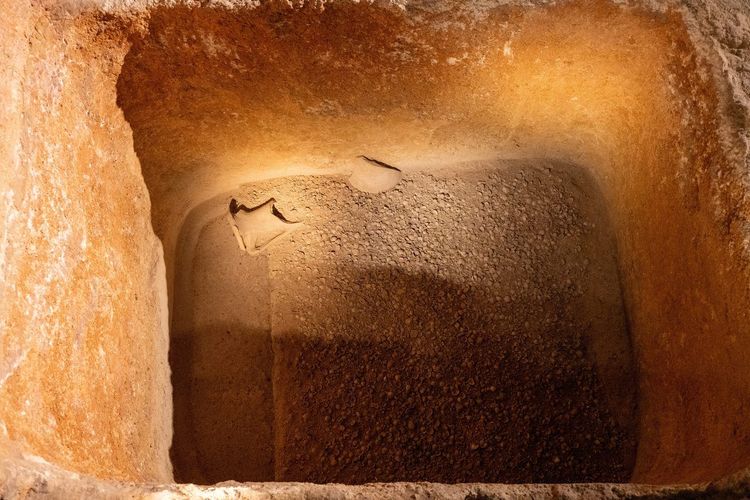
Uncovered during works beneath the La Tía Norica puppet theater, the Gadir archaeological site (yacimiento arqueológico) reveals Phoenician streets and houses dated to the 9th–8th centuries BC, as well as remains from the Roman period. It is one of the sites attesting that Cadiz is among the oldest continuously inhabited cities in Western Europe.
For a young person curious about ancient history, the guided tour, short and conducted underground via walkways, often leaves a stronger impression than a classic museum: you literally walk beneath the feet of today's residents, above walls almost three thousand years old. Audiovisual projections recreate daily life of the period, and the visit pairs easily with a puppet show in the same building.
Guided Tours and Bonus Activities to Discover Cadiz Differently
Don't feel like organizing every step yourself? Two or three options let you delegate part of the program without losing any interest.
Guided Tour in French or on a Medieval Theme
Several local guides offer tours in French, a real comfort if you would rather not juggle a paper map and a translation app. Some themed tours, focused on medieval Cadiz, pirates and the city's successive sieges, are particularly well suited to fans of adventure stories.
The Hop-On Hop-Off Tourist Bus
With toddlers, or when tiredness sets in during the stay, the hop-on hop-off tourist bus lets you cover most points of interest without walking, getting off and on as you wish. It is also a good way to get an overview on the first day, before returning on foot to the places you liked best.
Practical Information for Visiting Cadiz with Family
A few logistical pointers help avoid unpleasant surprises, especially when the rhythm of the day depends on naps and snacks.
How to Get to and Around Cadiz
Cadiz has no airport: international flights land in Seville (about 1.5 hours by road) or Jerez de la Frontera, about forty minutes away. The train is comfortable from Seville, with several daily connections of about 1 hour 45 minutes, and also serves Jerez airport, which avoids renting a car for the time you spend in the city.
On site, the old town can be explored entirely on foot. City buses link the center to Playa de la Victoria in a few minutes. For excursions to Jerez, Sanlúcar, Vejer or the Sierra, a rental car greatly simplifies organization, even though the train (Jerez) and the catamaran (El Puerto) remain good alternatives.
Where to Stay and Eat with Children
The old town has most of the suitable accommodation, often apartments with a kitchenette, handy for preparing a meal or snack without depending on Spain's late restaurant hours. The areas around Plaza de Mina and Plaza de España offer a good compromise between quiet at night and proximity to the sights; the more modern Victoria neighborhood puts the beach at the foot of your building.
As for meals, most tapas bars and fish restaurants happily welcome little ones, including on the terrace, and many serve "medias raciones" to share rather than set menus. The daily budget for four people is around 120 to 180 euros excluding accommodation, meals and small activities included, an amount that climbs noticeably during carnival or in the height of summer.
The currency is the euro, and bank cards are accepted almost everywhere, including in the small shops of the central market. As for climate, spring (April–June) and early autumn (September–October) are the most comfortable periods for walking, with the water still pleasant in September.
Before you leave, note that a smartphone audio guide like Ryo's spares you a human guide with fixed schedules: you listen freely during breaks, meals and naps, at your own pace.


FAQ
How many days do you need to visit Cadiz with family?
Three to four days are enough to cover the old town, its main monuments and a beach, while keeping a comfortable pace for little ones. Allow one extra day for each excursion you want to make to Jerez, El Puerto de Santa María or the Strait of Gibraltar.
What is the best time to visit Cadiz with children?
Spring (April to June) and early autumn (September–October) offer pleasant temperatures for walking all day, without the sometimes overwhelming heat of July–August. The February–March carnival is a festive option of its own, provided you book accommodation very far in advance.
How do you get to Cadiz from France?
The simplest option is to fly to Seville or Jerez de la Frontera, then reach Cadiz by train or rental car, in under two hours either way. Some airlines also offer seasonal flights to Jerez from several French cities.
Where should you stay in Cadiz with family?
The old town, especially around Plaza de Mina and Plaza de España, has the most convenient accommodation, often apartments with a kitchen. The Victoria neighborhood is a good fit if you prioritize the beach. Book several weeks ahead in high season, and several months ahead during carnival.
Is Cadiz suitable for toddlers?
Yes: the city is easy to explore on foot over almost flat terrain, with no long distances between the monuments, playgrounds and beaches. The pedestrian streets of the old town and the light traffic in the center also make getting around with a stroller easy.
What budget should you plan for a stay in Cadiz for four?
Excluding flights and accommodation, allow between 120 and 180 euros per day for four people, including meals and small activities. This amount rises noticeably during carnival or in the height of summer. Several key sites remain free: Santa Catalina Castle, the Roman theater, the beaches and Genovés Park.
What excursions can you take around Cadiz with children?
Jerez de la Frontera (equestrian show, zoo), El Puerto de Santa María (catamaran, water park) and Tarifa (dolphin watching) are among the most popular outings. Vejer de la Frontera and the Sierra greenway are good choices if you want a more nature-focused day.
After a stay in Cadiz, what stays in your memory is neither a specific monument nor a particular beach, but the rhythm of a city where you move effortlessly from a historic alley to a lively market, then to the water, several times a day. To rediscover this common thread without replanning every stop, the Ryo audio guide to Cadiz is the simplest way to follow this route as a family, with a shared earbud or one each, at the pace of those discovering the city for the first time.