© Shutterstock
 Votre guide Ryo
Visiting Seville as a Couple: 15 Romantic Experiences for a Getaway for Two in 2026
Visiting Seville as a couple sets a particular pace: in the cobbled lanes of Santa Cruz, it's impossible to walk fast without brushing past a pot of geraniums hanging on the wall or knocking over a glass of manzanilla set down on a terrace. It's a city that slows couples down in spite of themselves, between shaded patios and azulejos that reflect the Andalusian light until evening. To grasp its history without burying your nose in a map, the Ryo audio-guided tour of Seville starts at the Plaza de España and then heads to Rosina's balcony, Santa Cruz, the Alcázar and the Giralda before crossing the river to Triana.
Behind the postcard image of flamenco and bitter oranges, Seville holds more unexpected details for two: a contemporary hammam set in a 16th-century palace, a panoramic terrace shaped like wooden mushrooms that didn't exist before 2011, or an anonymous balcony that became the imaginary setting of a Rossini opera. Between Mudéjar monuments, candlelit dinners and covered markets where you can snack together, here are fifteen ways to experience the city as a couple, followed by our advice on where to sleep, when to go and how to plan your budget.
1. Stroll Hand in Hand Through the Santa Cruz Neighborhood
Santa Cruz is Seville's former Jewish quarter, and it is probably where the city best reveals its art of secrecy. The lanes are deliberately narrow, originally designed to keep things cool in summer, which forces passers-by to brush against the whitewashed walls and often makes couples walk close together.
Streets like Calle Mateos Gago or the Callejón del Agua hide half-open private patios, where you can glimpse fountains and orange trees in bloom from February. You can stop in front of every wrought-iron gate without any resident taking offense: it's a local habit that street photographers know well.
To capture the moment, the Plaza de Santa Cruz (Plaza de Santa Cruz, 41004 Sevilla) offers the best compromise: the Cruz de la Cerrajería, a wrought-iron cross from 1692 adorned with angels carrying lanterns, stands among the orange trees, photographed more at golden hour than at midday. Many couples wait there for nightfall, when the streetlamps come on one by one.
The neighborhood is also the sixth stop of the Ryo audio-guided tour, with anecdotes about hidden patios and orange trees: a good way to understand what you're looking at while you get lost in the maze.
2. Visit the Real Alcázar of Seville Together
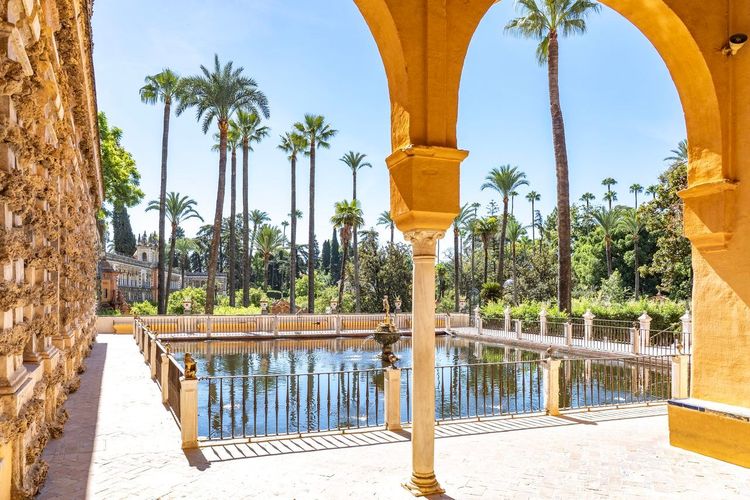
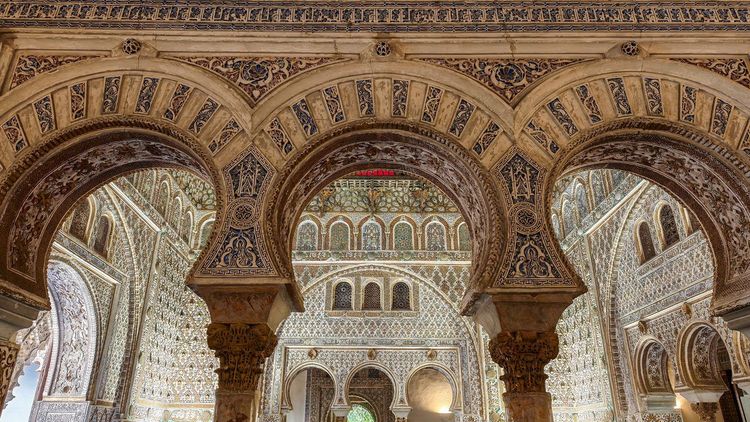
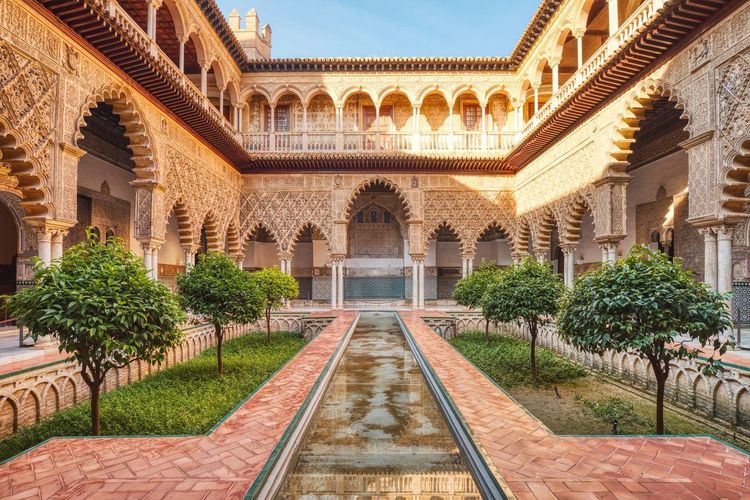
The Real Alcázar is not a castle like any other: it is a royal palace still in use, the official residence of the Spanish royal family during their stays in Seville, listed as a UNESCO World Heritage Site since 1987 along with the cathedral and the Archivo de Indias. The Muslim craftsmen who shaped its coffered ceilings and polylobed arches worked for Christian kings, which gives the whole an architectural ambiguity that is quite unique in Europe.
For a couple, the appeal goes well beyond touring the rooms. The Alcázar Gardens, with their fountains and myrtle galleries, offer almost deserted corners at the end of the day, far from the groups that gather in the morning in front of the Patio de las Doncellas. Book your tickets at least two to three weeks ahead in high season: time slots sell out quickly, and arriving without a reservation sometimes means waiting more than an hour in the sun.
Short on time? The short version of the tour, the Princess of the Guadalquivir, dedicates an audio stop to the Alcázar: enough to fill the wait at the entrance and walk into the rooms already knowing what their decorations tell.
3. Admire the Plaza de España and Paddle Along Its Canals in a Boat
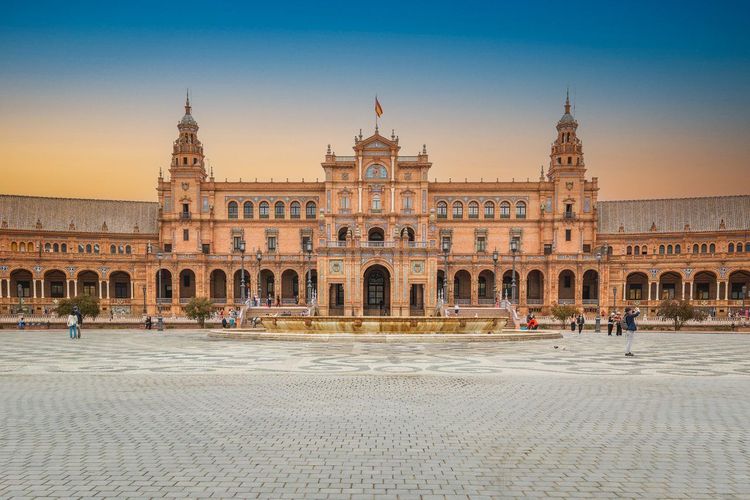
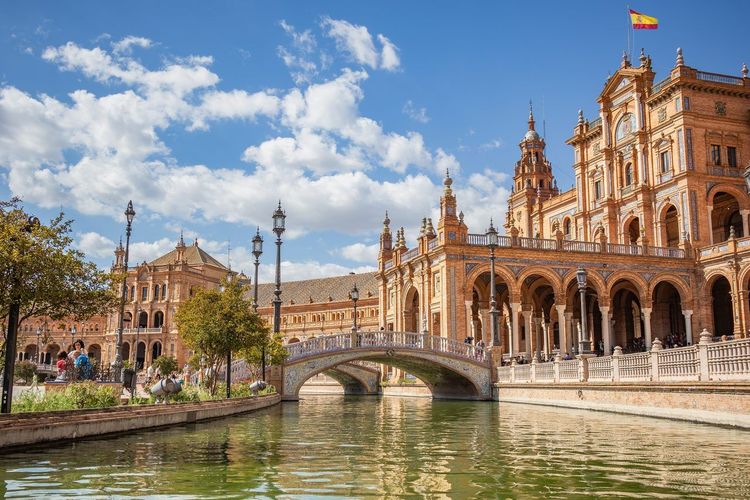
Built for the Ibero-American Exposition of 1929, the Plaza de España (Av. Isabel la Católica s/n, 41004 Sevilla, rated 4.8/5 on Google from 192,292 reviews) looks like a movie set, and for good reason: it has served as a backdrop for several international film shoots. Its semicircular layout, its 48 ceramic benches each painted to represent a Spanish province and its canal of nearly 500 meters make it one of the most photographed monuments in Andalusia.
Renting a small boat to paddle together along the canal remains the most popular activity here, especially in late morning when the heat is not yet overwhelming. Allow about thirty minutes for the rental, enough time to glide past the pavilions under the decorated bridges. For photos, favor late afternoon: the low light gilds the twin towers and gradually empties the place of groups.
This is where the Ryo audio-guided tour of Seville begins: the first track looks back at the 1929 exhibition and the provincial benches, which you can listen to while sitting on the one for your favorite region before heading to the center.
4. Climb the Giralda for a Panorama for Two
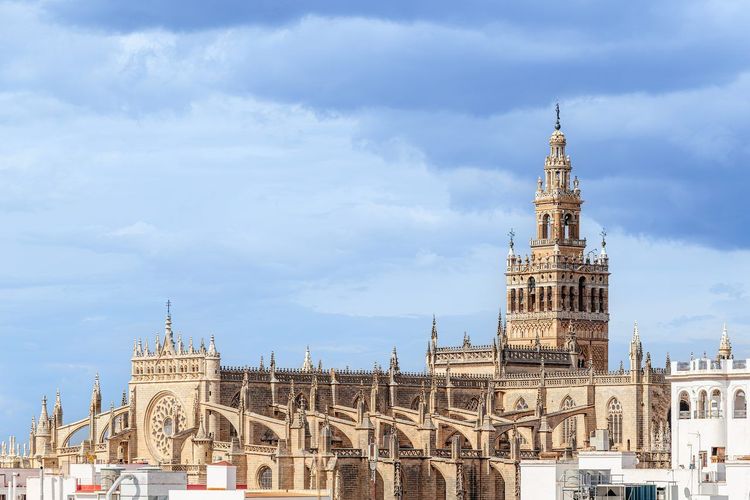
The Giralda, the bell tower of the Cathedral of Santa María de la Sede, rises to 104 meters and is climbed not by stairs but by 35 inclined ramps, designed in the Almohad period, according to tradition, so that the muezzin could ride up on horseback. The climb has something unexpected about it: you meet few steps but many turns, and you'll be out of breath more from the repetition of the landings than from the slope.
The entrance ticket to the cathedral includes access to the tower, making it one of the best values in the city for a shared panorama. Go up in late afternoon: the view then takes in the ochre rooftops of the historic center, the Guadalquivir and, beyond, the Aljarafe plain.
5. Have a Candlelit Dinner in the Patio of the Hotel Alfonso XIII or at Corral del Agua
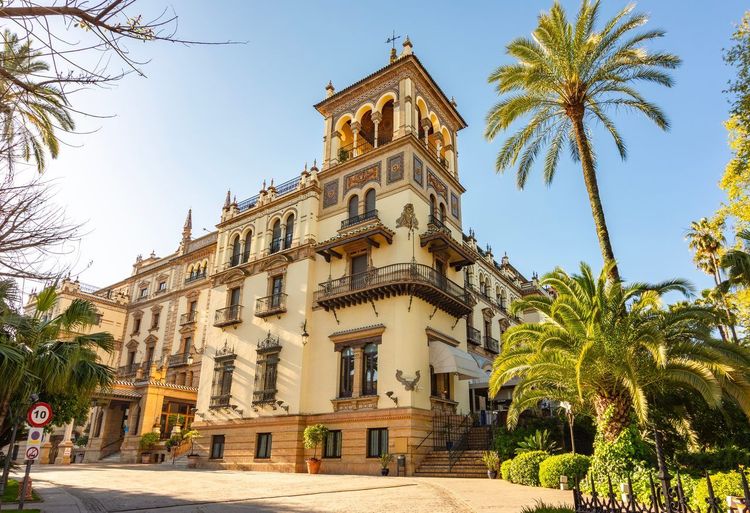
The Hotel Alfonso XIII, inaugurated in April 1928 ahead of the Ibero-American Exposition the following year, remains Seville's most emblematic address for a dinner for two. Its central patio, covered in polychrome azulejos and lined with palm trees, becomes an open-air dining room in the evening where reimagined Andalusian cuisine is served under the Mudéjar arcades.
Less expensive but just as photogenic, Corral del Agua (Callejón del Agua 6, 41004 Sevilla, rated 4.2/5 on Google from 710 reviews) occupies an 18th-century house in the Santa Cruz neighborhood, backed against the walls of the Alcázar, with two patios filled with jasmine and bougainvillea. The fountain covers the noise of the street, and the menu stays faithful to Andalusian classics like oxtail or chickpeas with spinach. Book your table for the evening rather than lunchtime: the patio makes the most sense once the heat has dropped.
6. Relax Together at the AIRE Ancient Baths
Set in a 16th-century Mudéjar palace on Calle Aire, built on Roman remains, the AIRE Ancient Baths recreate the ritual of ancient baths: a tepidarium at 36 °C, a caldarium at 40 °C, a frigidarium at 16 °C, a steam bath and a salt-water pool, all lit by candlelight and in near-total silence.
The most popular couples' option combines access to the pools with a massage for two. Book several weeks ahead for an evening slot: the dim lighting contrasts sharply with the bustle of the neighboring lanes. The small outdoor pool on the roof, facing the Giralda, is worth the extra cost on its own.
Plan to arrive fifteen minutes before your slot: passing through the changing room creates an almost ceremonial transition between the noise of the street and the silence of the pools.
7. Admire the Setas de Sevilla (Metropol Parasol) at Sunset
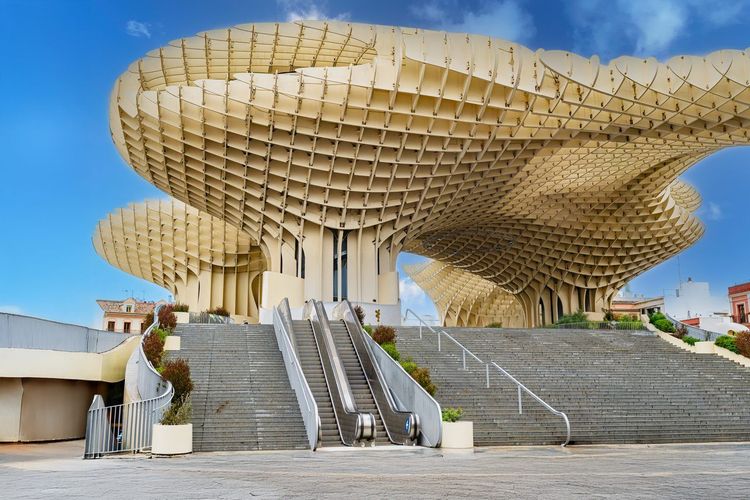
Completed in 2011 after years of troubled construction, the Metropol Parasol (Plaza de la Encarnación s/n, 41003 Sevilla, rated 4.4/5 on Google from 113,435 reviews), nicknamed the Setas de Sevilla (the mushrooms of Seville), is presented as the largest wooden structure in the world. Its undulating silhouette towers over the Plaza de la Encarnación and shelters, underground, Roman and Almohad archaeological remains discovered during the excavations.
The panoramic walkway, accessible by elevator, offers one of the few 360-degree viewpoints over Seville without going up a religious tower. Go up about half an hour before sunset: the structure turns golden, then the built-in lights come on gradually, and you'll watch the city change color beneath your feet.
8. Treat Yourselves to a Private Cruise on the Guadalquivir
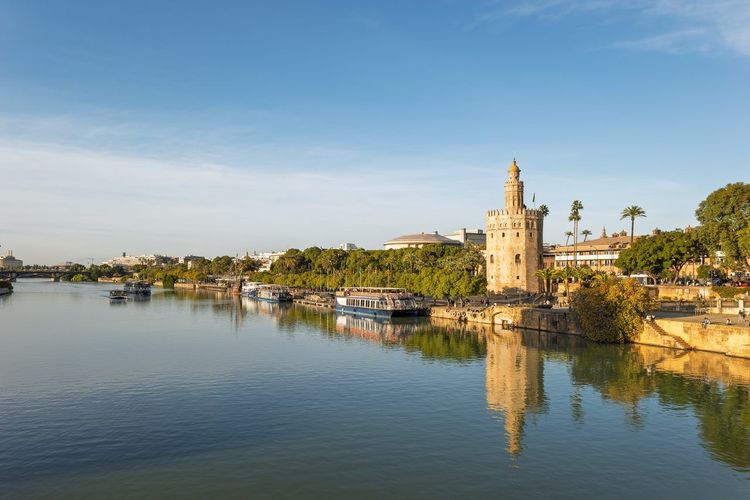
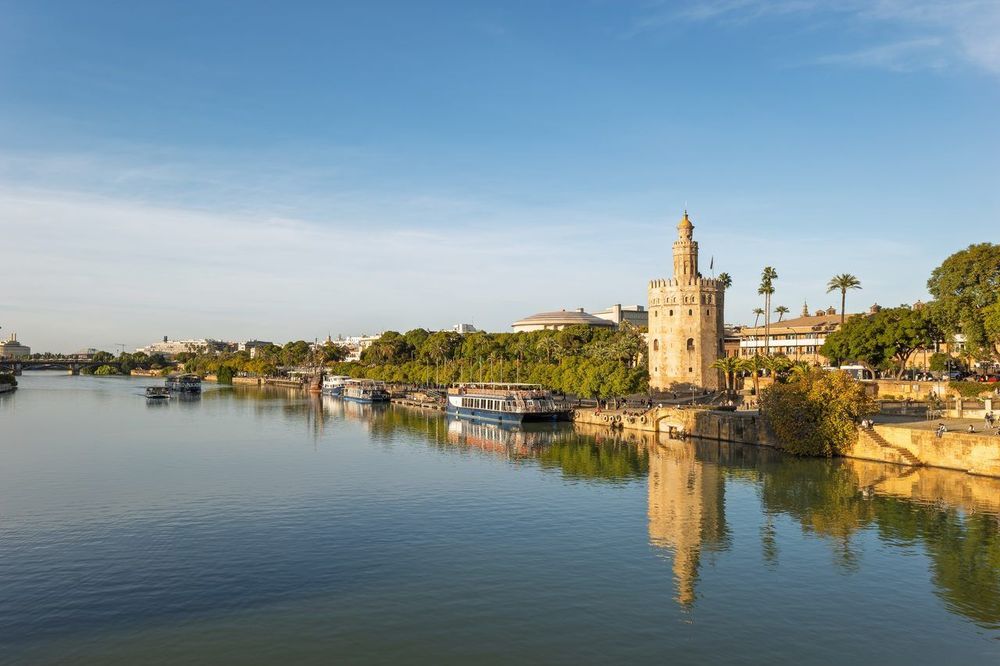
The Guadalquivir separates the historic center from the working-class neighborhood of Triana. Classic cruises leave regularly from the quays near the Torre del Oro, but for a truly private moment, several local operators offer private outings on a small boat, often electric, for just a few people.
Allow about an hour on the water at sunset, when the low light illuminates the Torre del Oro, the Triana bridge and the colorful façades of the opposite bank. If you prefer to stay on land, a walk along the quays offers the same view for free, walking as far as the Isabel II bridge.
9. Try Flamenco Together
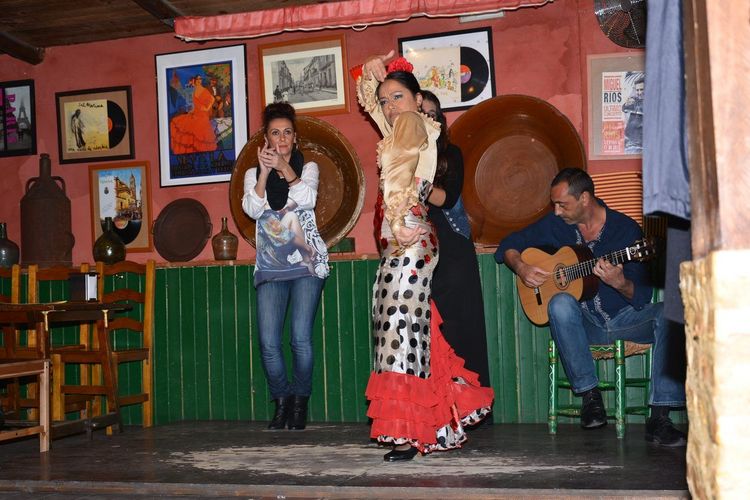
Flamenco in Seville comes in two very different experiences for a couple. On one side, the intimate tablaos, often set in former houses in Santa Cruz or Triana, where a handful of tables surround the performers just a few meters away, in rooms that rarely exceed fifty seats.
On the other, the private couples' lessons, offered by several dance schools in the center, which teach the basics of zapateado and palmas in an hour. Less academic than a traditional lesson, more physical than a seated show, it's an activity that generally ends in fits of laughter rather than a successful demonstration. And that is precisely what you'll remember.
10. Shape Clay Together in a Workshop in Triana
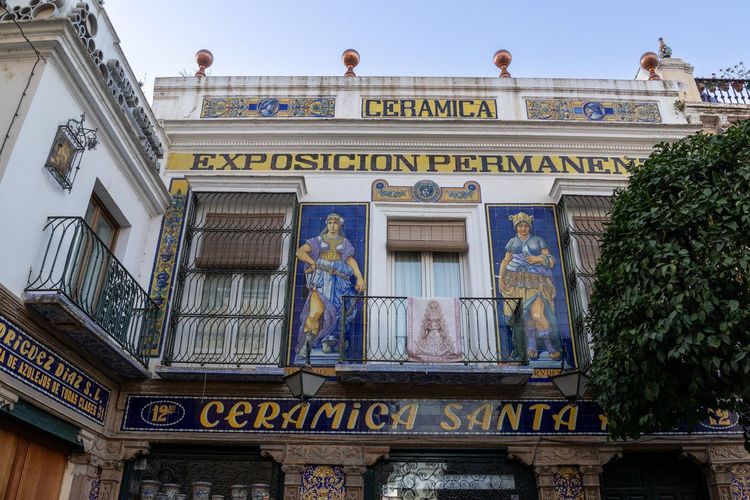
Triana, on the other side of the Guadalquivir, was for centuries the potters' quarter of Seville. The azulejos that cover the city's façades, from the Alcázar to the Plaza de España, largely came out of this neighborhood's kilns, and a few artisan workshops on Calle Alfarería still work the clay.
Several of these workshops offer short classes, one or two hours long, where you shape a bowl or a small decorative tile together, then paint it with Andalusian motifs. It's a hands-on activity that contrasts with days paced by monuments, and your creation can often be collected after firing.
Before crossing the bridge, note that the main Ryo audio-guided tour dedicates a stop to the Triana neighborhood and its market, with the story of the ceramists who decorated the whole city.
11. Have a Picnic in the Delicias Gardens
Less crowded than the neighboring María Luisa Park, the Delicias gardens offer a quiet alternative for an improvised picnic, in the shade of palm trees and large trees planted in the 19th century, when the city laid out its promenades along the river.
A quick stop at one of the city's markets is enough to put together your basket: Iberian ham, sheep's cheese and a bottle of chilled white wine. The benches facing the lawns, slightly set back from the avenue, remain surprisingly calm even on weekends.
12. Play Star-Crossed Lovers at Rosina's Balcony
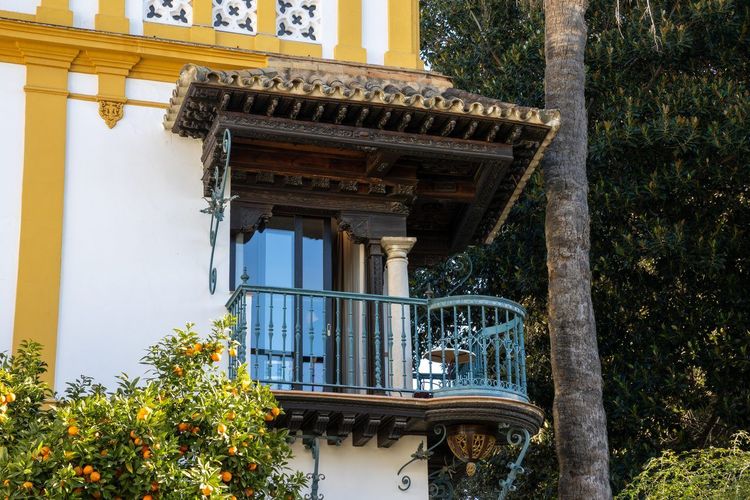
On the Plaza de Alfaro, a balcony that looks ordinary has built an international reputation: local legend has it that it inspired the scene in Rossini's The Barber of Seville, where Rosina exchanges sweet words with the disguised Count Almaviva.
Nothing historically proves the link with the opera, but the anecdote is enough to turn a simple photo stop into a suspended moment if you know the reference. The discreet corner is on the edge of Santa Cruz, near the Murillo gardens, far enough from the main flow to stay there undisturbed. The balcony is the fourth stop of the Ryo tour, which recounts the origins of the legend.
13. Enjoy an Afternoon Treat at the La Campana Pastry Shop
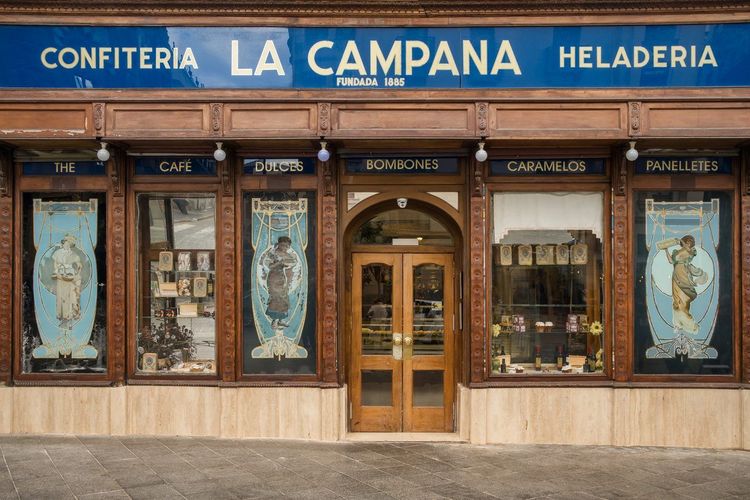
Open since 1885 at the end of Calle Sierpes, the Pastelería La Campana (Calle Sierpes 1, 41001 Sevilla, rated 4/5 on Google from 2,649 reviews) has become a landmark for locals as much as for visitors. Its windows overflow with yemas, almond tarts and small cakes that are carried away in boxes tied with ribbon.
It's best to stop by in mid-afternoon, between two visits, when the line dies down. Sharing a slice standing at the counter, as many regulars still do, is as much a part of the ritual as the pastry itself.
14. Enjoy Tapas as a Couple in Santa Cruz and Wander Through the City's Markets
Eating tapas in Santa Cruz is almost a rite of passage in Seville. The lanes around Calle Mateos Gago, and a little further on the Plaza de la Alfalfa, are home to dozens of bars where you order standing at the counter, sharing three or four small plates rather than one dish each. The good spots can often be recognized by their hanging hams and the absence of an English menu.
For breakfast, do as the locals do: a tostada with tomato and olive oil, accompanied by a coffee taken on the go in a neighborhood café rather than on a hotel terrace. It's far cheaper than a hotel breakfast, and much livelier.
As for markets, three spots are worth a detour. The Mercado de Feria, reputed to be the oldest in the city, mixes fruit stalls, fishmongers and tapas counters among iron pillars. The Triana market, meanwhile, has modernized with wine bars set among the old stalls, on the site of the former San Jorge castle. Finally, the Encarnación market, housed beneath the Setas de Sevilla, combines food shops and small counters where you can have lunch without a reservation.
To bring back an edible souvenir, the olive oil and Iberian ham shops in the center offer vacuum-packed formats that can be slipped into checked luggage. Boxes of polvorones and tortas de aceite keep for several weeks and travel without difficulty.
15. Sip a Cocktail with a View on a Rooftop at Sunset
Seville has multiplied its elevated terraces in recent years, and several look directly at the Giralda. The best known, La Terraza del EME (Calle Alemanes 27, 41004 Sevilla, rated 4.1/5 on Google from 3,406 reviews), at the top of the EME Catedral hotel, faces the cathedral and often requires a reservation the day before in high season.
Arrive about thirty minutes before sunset to get a table at the edge of the terrace, and extend the moment with a second drink once night has fallen: the cathedral's lighting, switched on at dusk, completely changes the atmosphere.
Where to Stay in Seville as a Couple: Charming Hotels
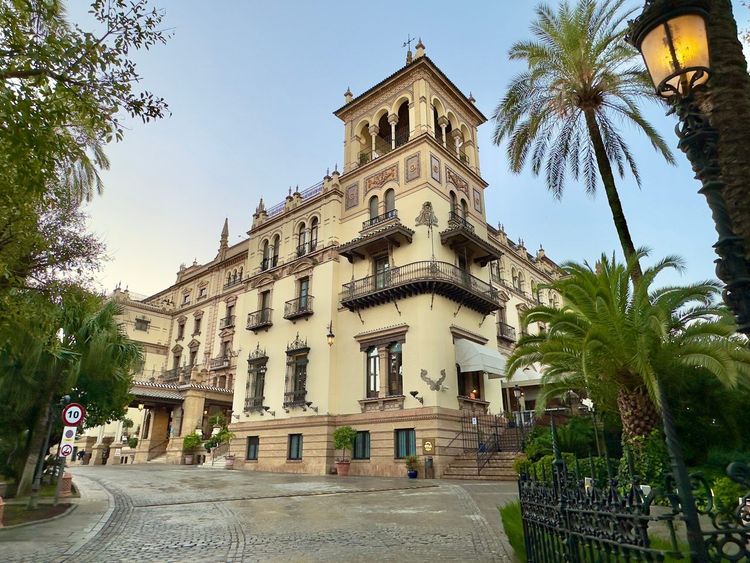
Three categories of accommodation stand out for a stay for two. First, the historic patios, embodied by the Hotel Alfonso XIII mentioned above, but also by more intimate houses converted into boutique hotels, such as Casa 1800 a stone's throw from the cathedral, where the rooms are arranged around an inner courtyard.
Next come the rooftop properties, which rely on a panoramic terrace rather than a traditional patio. Their strength is the view, sometimes at the expense of room size. In a more oriental vein, the Hotel Alcoba del Rey, near La Macarena, offers a Mudéjar-inspired decor.
Finally, the charming accommodations in Triana, on the other side of the river, often offer better value and a more local atmosphere, about fifteen minutes' walk from the center. If you want to avoid the evening crowds without giving up the monuments, it's a serious option.
When to Go to Seville as a Couple
Seville's climate imposes a fairly strict calendar. Between June and August, temperatures regularly exceed 38 degrees during the day, which greatly reduces outdoor strolls between noon and 5 p.m.
Spring, from March to May, remains the most popular period: mild temperatures, flowering patios and the scent of orange blossom, but also heavy crowds around Holy Week and the Feria de Abril, which make accommodation prices soar.
If you prefer calm, autumn, from October to early November, offers an often underestimated compromise: still pleasant warmth, golden light at the end of the day and much shorter lines at the Alcázar and the cathedral.
How Long Should You Plan for a Getaway for Two in Seville?
A three-day, two-night weekend is enough for the essentials: Alcázar, cathedral, Santa Cruz and a dinner in a patio, even if it means sacrificing the ceramics workshop or the private cruise.
To enjoy Seville as a couple without rushing, a four-day, three-night format lets you add Triana, the Arab baths and a flamenco evening.
A five-day stay finally leaves room for a day trip to Carmona or the Roman site of Italica, while keeping a pace slow enough to enjoy the terraces.
How to Get to and Around Seville as a Couple
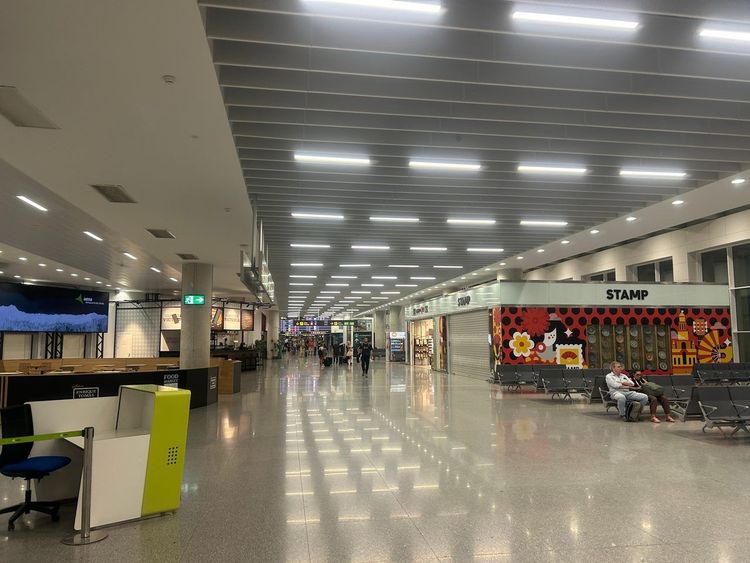
San Pablo Airport, connected to major European cities by direct flights, is about ten kilometers from the center. The EA bus reaches the center in about 35 minutes for 6 euros, while taxis charge a flat fare of about 25 euros during the day. From Madrid, the AVE high-speed train connects the two cities in about two and a half hours.
Once there, the historic center can be explored almost entirely on foot: Santa Cruz, the Alcázar, the cathedral and the Plaza de España are less than twenty minutes' walk from one another. To reach more outlying neighborhoods, the tram, metro and buses complement walking for a modest fare.
What Budget for a Getaway for Two in Seville?
For charming accommodation in a double room, expect between 90 and 150 euros per night in low season, and easily double that during Holy Week or the Feria. The most prestigious addresses, such as the Hotel Alfonso XIII, start closer to 300 euros per night.
As for meals, a dinner in a patio like Corral del Agua averages 35-45 euros per person excluding drinks, compared with 15-20 euros for a hearty tapas meal at the counter. The Arab baths or a private cruise generally add between 80 and 150 euros per couple depending on the package, to be budgeted on top of accommodation.



FAQ
How many days should you plan to visit Seville as a couple?
Three days are enough for the essentials (Alcázar, cathedral, Santa Cruz, a dinner in a patio). Four to five days let you add Triana, the Arab baths or a day trip nearby without rushing your stay.
What is the most romantic neighborhood in Seville?
Santa Cruz remains the benchmark, with its flower-filled patios and narrow lanes. Triana, on the other side of the river, offers a more local alternative, appreciated by couples looking for a bit of calm in the evening.
What budget should you plan for a getaway for two in Seville?
Expect between 150 and 250 euros per day for a couple staying in a charming hotel, with a nice dinner and an activity such as the Arab baths or a workshop. This budget climbs sharply during Holy Week and the Feria de Abril.
When should you go to Seville to enjoy the weather as a couple?
Spring (March to May) and autumn (October, early November) offer the best conditions. Summer, too hot during the day, greatly limits outdoor strolls.
Do you need to book the Real Alcázar in advance for a visit as a couple?
Yes, two to three weeks ahead in high season. Time slots sell out quickly, and showing up without a ticket often means waiting more than an hour, especially in late morning.
Where can you have a romantic dinner for two in Seville?
The patio of the Hotel Alfonso XIII and Corral del Agua, in Santa Cruz, are among the most popular spots for couples. For something simpler, the neighborhood's tapas bars are perfect for a relaxed dinner.
How do you get around Seville without a car during a getaway for two?
The historic center can be explored on foot, with the main monuments less than twenty minutes' walk from one another. The tram, metro and buses complete the journeys to the more distant neighborhoods.
Seville for Two, in a Few Words
Seville as a couple is lived above all in the details: a patio glimpsed through a half-open door, an anecdote whispered in front of an anonymous balcony, a cocktail extended to watch the cathedral light up. Between Mudéjar monuments and covered markets, the city leaves enough room for improvisation for you to trace your own itinerary.
If you prefer a guiding thread, the Ryo audio guide to Seville links the Plaza de España, Santa Cruz, the Alcázar, the Giralda, Triana and the Torre del Oro in order, at your own pace and without reservation.