© Shutterstock
 Votre guide Ryo
Visiting Seville in 2 Days: Complete Itinerary for 2026
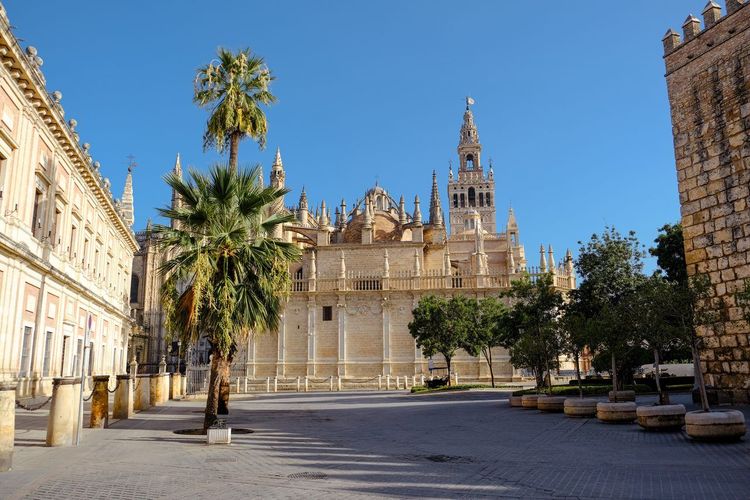
At seven in the morning, the square in front of Seville Cathedral still smells of orange blossom and strong coffee, before the Andalusian heat and groups of visitors take over. This is the best moment to understand why this city — Spain's fourth largest — allows you to visit Seville in 2 days without frustration: its major monuments are clustered in a compact, largely pedestrianised historic centre, which the Ryo Seville audio guide tour lets you follow step by step, without depending on a guide's schedule.
Two days are enough to visit Seville without rushing, provided you follow a logical order. The Giralda is climbed via a ramp designed for horses, not steps. The Plaza de España lines up 48 ceramic benches representing each Spanish province. The Triana neighbourhood, on the other side of the river, claims to be the true birthplace of flamenco, long before Santa Cruz. Between paid monuments and neighbourhoods to explore for free, this itinerary details hour by hour what to see, where to eat, where to sleep, and how to book tickets in advance so you don't lose a morning waiting in line.
Day 1: The Cathedral, the Giralda, and the Real Alcázar
Dedicate the morning of the first day to the two monuments that alone summarise eight centuries of Sevillian history — an Almohad caliphate and then a Catholic kingdom built one on top of the other. Start before 9:30 a.m., when tour groups have not yet invaded the Patio de Banderas: this is the only way to visit Seville without queuing for a full hour at each ticket office.
Seville Cathedral and the Giralda
The Seville Cathedral is the largest Gothic cathedral in the world, built in the 15th century on the site of the former Almohad great mosque, whose minaret it preserved: the Giralda, standing 104 metres tall. Rather than steps, a gently sloping interior ramp allows ascent on horseback — a feat of Islamic architecture originally designed so the muezzin could reach the summit effortlessly five times a day. The view from the bell tower takes in the entire old city, from the river to the hills of the Aljarafe.
Inside, the tomb of Christopher Columbus, carried by four heralds representing the kingdoms of Castile, León, Aragon, and Navarre, draws almost as many gazes as the gilded wooden altarpiece of the Capilla Mayor, one of the largest in Christendom. Book your tickets online at least a week before your visit: the cathedral limits the number of visitors per time slot, and on-site ticket offices regularly sell out during high season, from April to June and then in September–October.
The Real Alcázar and Its Gardens
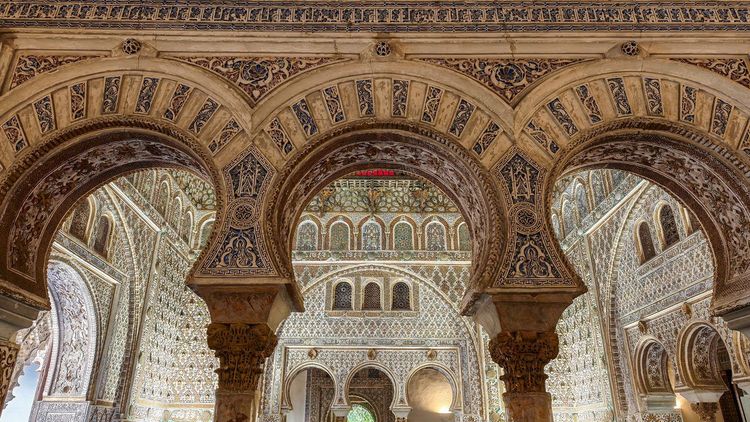
Cross the Plaza del Triunfo to reach the Real Alcázar, a Mudéjar royal palace still used by the Spanish royal family during their stays in Seville. The rooms with coffered ceilings and walls covered in azulejos served as the set for the court of Dorne in the series Game of Thrones, which explains the sometimes dense crowds in front of the Patio de las Doncellas at midday.
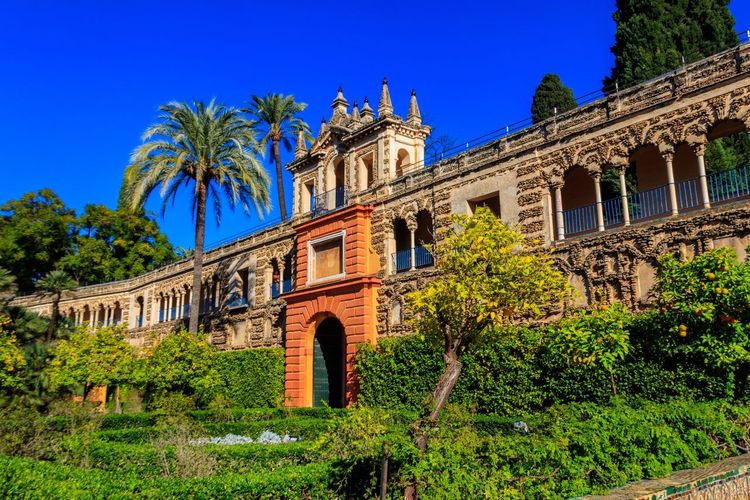
The Alcázar gardens deserve a good half-hour's stroll: Mudéjar fountains, orange trees planted in tight rows, the Grutesco galleries, and peacocks roaming freely across the paths without paying any attention to visitors. As with the cathedral, time slots are limited and often sell out several days in advance in April and May. The two sites sell their tickets separately, each on its own official website: allow a full morning to visit both without rushing.
If you prefer to understand what you are looking at without following a group, the Ryo Seville audio guide tour passes by the cathedral and the surroundings of the Alcázar: 29 audio tracks spread over 8.4 km and approximately 3 hours 20 minutes of walking, to be listened to at your own pace, including the Mudéjar history of the city.
Day 1: The Santa Cruz Neighbourhood and the Church of El Salvador
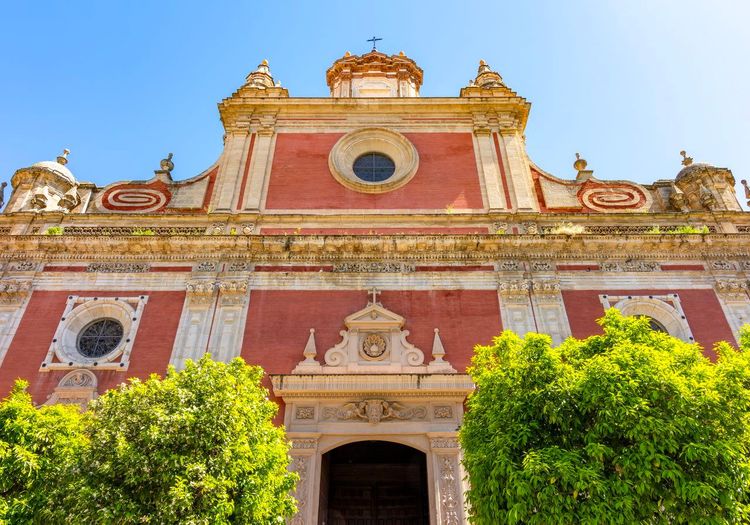
After the Alcázar, put the map away for an hour: the Santa Cruz neighbourhood, the city's former Jewish quarter, is best discovered by intentionally getting lost in its whitewashed alleyways.
The Santa Cruz Neighbourhood and the Hospital de los Venerables
The alleyways of Santa Cruz are too narrow for cars, making it one of the rare corners of Seville where you truly walk in the middle of the road. Look out for the flower-filled patios glimpsed through wrought-iron gates, the Plaza de Doña Elvira with its ceramic benches and orange trees, then the Hospital de los Venerables (Plaza de los Venerables 8, 41004 Sevilla, rated 4.4/5 on Google from 2,282 reviews), a 17th-century hospice for elderly priests that has become a cultural centre. Its two-storey galleried courtyard and baroque chapel are well worth a visit, especially during the quieter hours of early afternoon.
Many visitors rush through Santa Cruz on their way to the next monument. Instead, take fifteen minutes to sit at a discreet terrace away from the Plaza de Santa Cruz itself, where prices quickly climb due to tourist footfall.
The Church of El Salvador and Plaza del Triunfo
Just nearby, the Church of El Salvador, or Colegiata del Salvador, occupies the site of Seville's former main mosque, built before the current cathedral. Its baroque interior, laden with gilded altarpieces, often surprises visitors even more than the cathedral itself — with far fewer crowds.
The Plaza del Triunfo, between the cathedral and the Alcázar, owes its name to the Triumph monument, erected to give thanks that the city was spared during the great earthquake of 1755. It makes a good landmark for getting your bearings before moving on to the rest of the day, towards the city's commercial heart.
Day 1: Metropol Parasol, the Bullring, and Sunset on the Guadalquivir
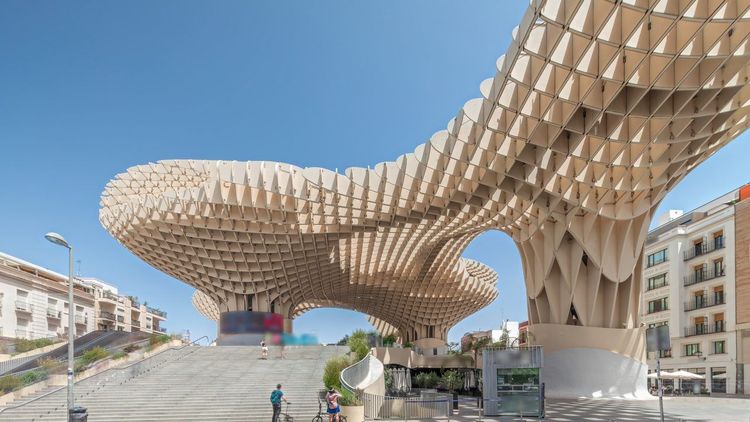
The late afternoon of the first day shifts register entirely: contemporary architecture, bullfighting tradition, then the river. Three atmospheres within a few hundred metres.
Metropol Parasol (Las Setas)
Nicknamed Las Setas (the mushrooms) because of its laminated timber silhouette, the Metropol Parasol is the world's largest timber structure according to the Guinness World Records. Built in 2011 on the Plaza de la Encarnación, it houses a covered market on the ground floor and a paid panoramic walkway at the top, ideal at the end of the day when the light skims across the tiled rooftops.
The basement, less well known, houses the Antiquarium: Roman and Almohad remains uncovered during construction, which can be explored in about twenty minutes if time is short.
The Maestranza Bullring and the Torre del Oro
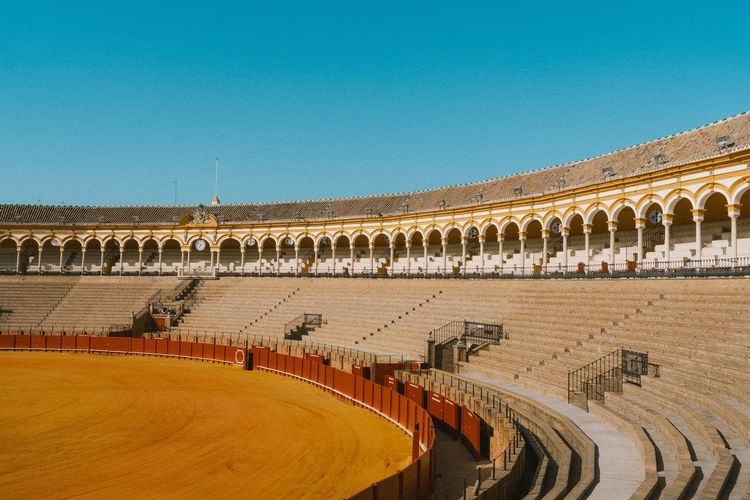
Heading down towards the river, the Plaza de Toros de la Maestranza is one of the oldest bullrings in Spain still in use, with its characteristic yellow-and-white baroque façade. Even without attending a bullfight, the guided tour of the interior — from the stables to the bullfighting museum — sheds light on a tradition still deeply rooted in Andalusia, whatever one's personal view on the matter.
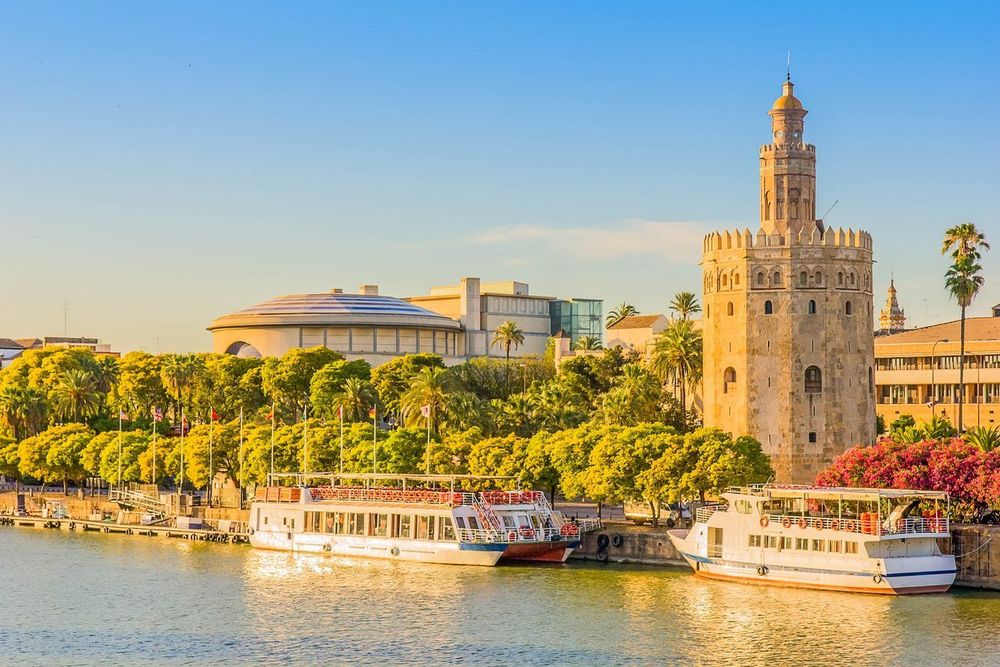
Five minutes' walk away, the Torre del Oro (Paseo Alcalde Marqués del Contadero s/n, 41001 Sevilla, rated 3.5/5 on Google from 1,384 reviews), a 13th-century Almohad watchtower standing on the banks of the Guadalquivir, was used to control river access to the city. Tradition holds that gold brought back from the Americas was stored there, but its name more likely comes from the golden reflections of its original cladding. It now houses a small naval museum.
A Walk or Sunset Cruise on the Guadalquivir
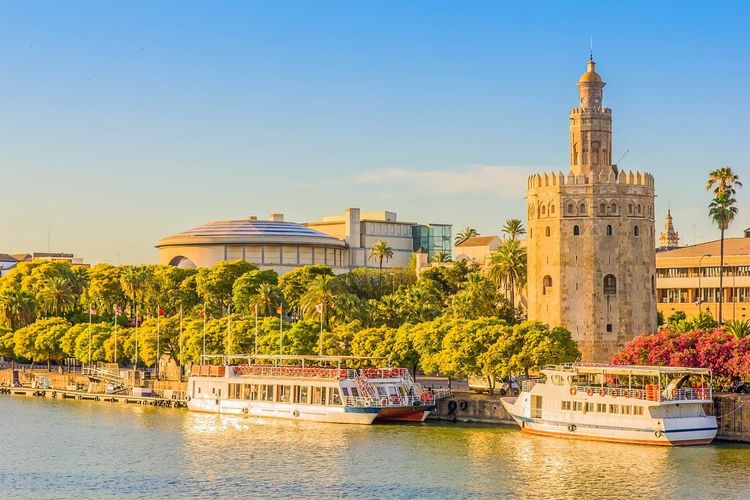
End the day by strolling along the quays, or by boarding a short one-hour cruise on the Guadalquivir. The river takes on a copper colour at the end of the day, with the silhouettes of the Torre del Oro and the Triana bridge cutting against the light — a simple spectacle that alone justifies leaving the evening free.
Not enough time for the full loop? The short version of the Ryo audio guide, "the Princess of the Guadalquivir", condenses the essentials into 23 audio tracks, 2 hours 20 minutes, and 5.9 km, with enough to tell the river's history at the moment the light fades on the water. You'll find it via the Ryo Seville audio guide tour, short version.
Day 2: Plaza de España and Parque María Luisa
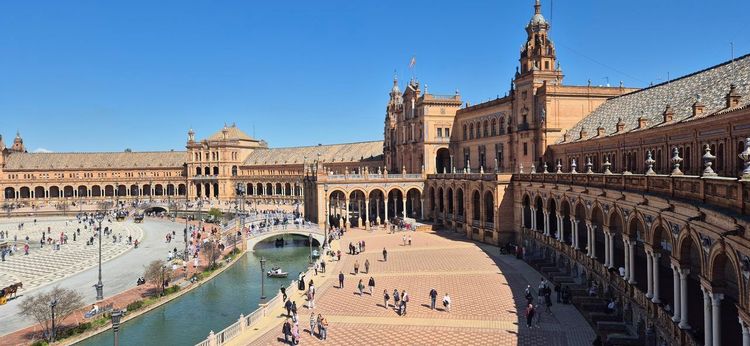
Begin the second day with the city's most photographed monument, before the sun beats down too hard on its vast semicircular esplanade.
Plaza de España, the Unmissable Highlight
Built for the Ibero-American Exposition of 1929, the Plaza de España (Av. Isabel la Católica, 41004 Sevilla, rated 4.8/5 on Google from 190,652 reviews) is a monumental ensemble of brick and ceramic blending Renaissance, Moorish, and Art Deco influences. Its navigable canal, four bridges, and two towers make it one of Spain's most recognisable settings, used in films ranging from Lawrence of Arabia to episodes of Star Wars.
All around the square, 48 ceramic alcoves each represent a Spanish province with a hand-painted map and historical scene. This is actually where the Ryo audio guide tour recommends starting: the history of the 1929 Exposition, told in front of the square, helps you identify the benches for each province and turns a simple souvenir photo into a more informed visit.
Strolling through Parque María Luisa
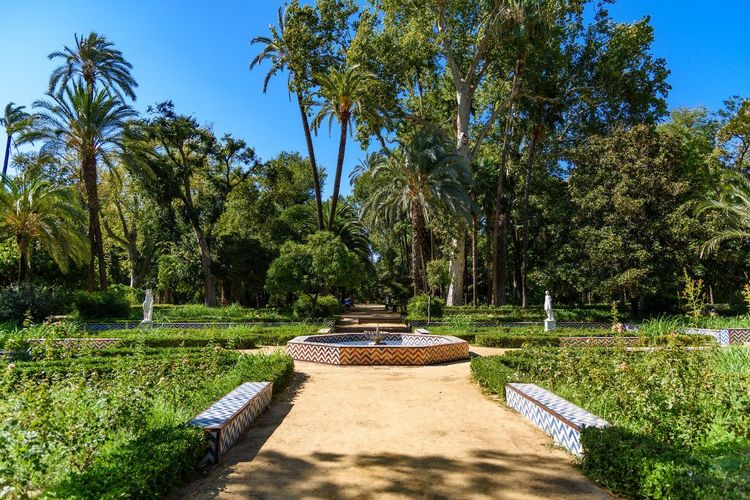
Just behind the Plaza de España stretches Parque María Luisa, the former private garden of the Palacio San Telmo donated to the city in 1893. Shaded by centuries-old palm trees and plane trees, it offers a welcome break after the reflected heat of the Plaza de España.
Continue as far as the Plaza de América, with its white pigeons and 1929 pavilions that now house the Archaeological Museum and the Museum of Popular Arts and Customs. Renting a bicycle or a horse-drawn carriage to explore the park is an option, but walking remains the best way to appreciate the fountains hidden among the bougainvillea beds.
Day 2: The Triana Neighbourhood, the Soul of Seville
After the park, cross the river for a complete change of pace. Triana has neither a cathedral nor a royal palace, but it is the neighbourhood that many Sevillians consider the true heart of the city.
The Triana Market and the Ceramics Workshops
The Mercado de Triana (Calle San Jorge 6, 41010 Sevilla, rated 4.4/5 on Google from 11,967 reviews) occupies the site of the former Inquisition castle, of which a few remains can still be seen displayed under glass in the market floor. Fresh fish stalls, ham, olives, and fruit sit alongside tapas bars where regulars eat lunch standing up, elbow to elbow with the traders.
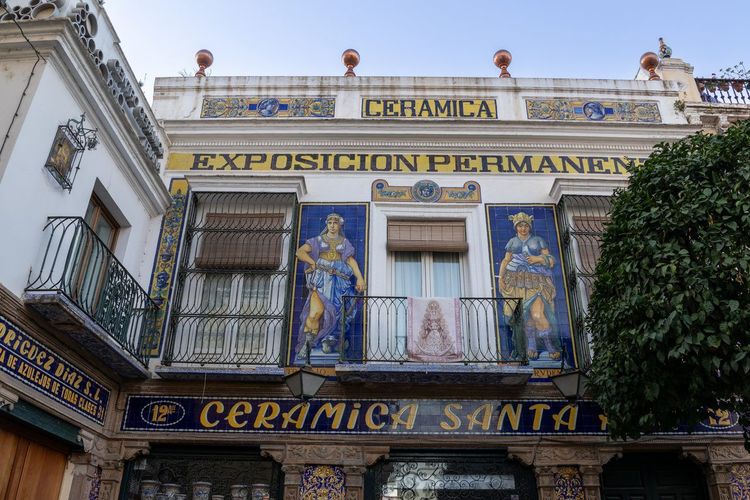
Triana is also the historic home of Seville's ceramics tradition: the azulejos that decorate the entire city, including the Plaza de España, have been produced for generations in the same workshops on Calle Alfarería. Some still offer kiln tours, an experience that is almost entirely absent from the rest of the historic centre.
The Triana Bridge and a Walk along the Quays
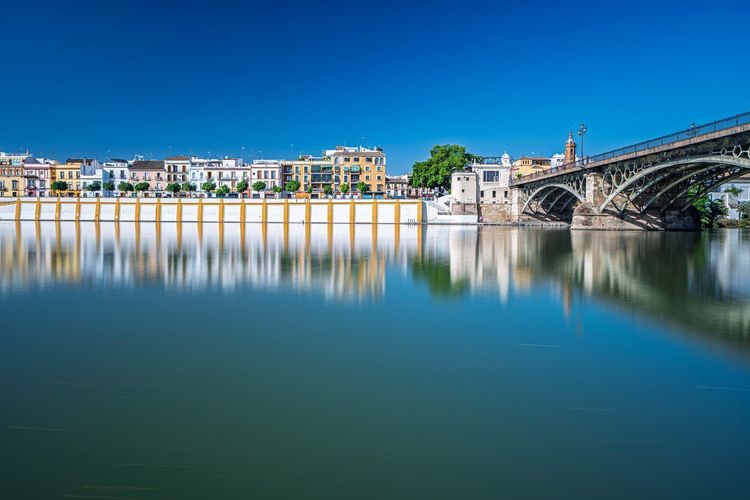
The Triana Bridge, or Puente Isabel II, has linked the neighbourhood to the centre since 1852. It is the oldest preserved metal bridge in Spain, and its wrought-iron deck deliberately contrasts with the baroque buildings surrounding it on both sides.
Then head down to the quays, on the Triana side or the city centre side, for an aimless stroll until dinner. Keep your ears open as you walk: it was in these streets that the gypsy families lived to whom Triana owes much of its flamenco heritage, an echo of which you will see that same evening in the tablaos.
Other Sights Worth Visiting If You Have a Little More Time
If your pace is a little more relaxed or you arrive early on the first morning, several sites deserve a place in your itinerary without necessarily warranting a full day.
The Palacio de las Dueñas (Calle Dueñas 5, 41003 Sevilla, rated 4.4/5 on Google from 11,692 reviews), a Renaissance mansion still belonging to the ducal house of Alba, blends Mudéjar patios and flowered gardens that are significantly less crowded than those of the Alcázar.
The Museum of Fine Arts of Seville, housed in a former convent, holds one of the finest collections of Spanish Baroque painting outside the Prado, featuring works by Murillo, a native of the city.
The Triana Ceramics Museum, set in a former factory, complements a visit to the neighbourhood's workshops nicely with its historical pieces. As for the Antiquarium, beneath the Metropol Parasol, it can be visited in about twenty minutes if you have already explored the walkway. Finally, for a shopping break between monuments, the Calle Sierpes, a pedestrian thoroughfare lined with traditional shops and pastry makers, runs through the centre from north to south.
Visiting Seville on Foot and for Free: the Best Tips
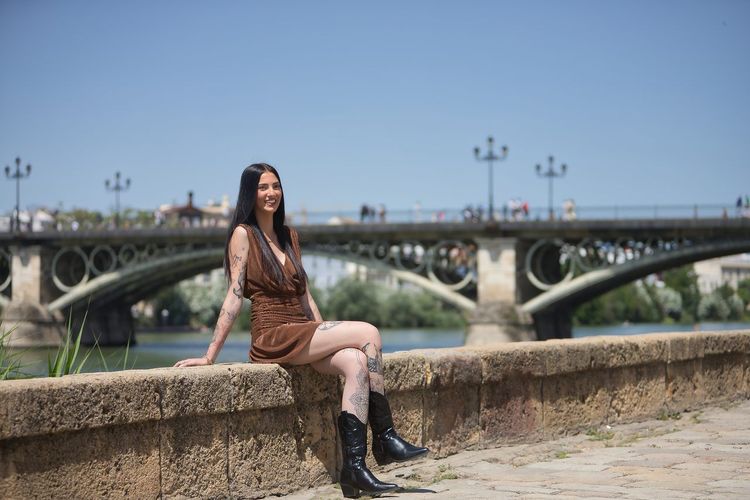
Seville is very well suited to exploring on foot: the distance between the cathedral and the Triana Bridge does not exceed 2.5 km, and most of the historic centre is pedestrianised or semi-pedestrianised.
Several major experiences cost nothing. Walking through Santa Cruz and Triana, strolling around the Plaza de España and Parque María Luisa, walking along the Guadalquivir quays at sunset: none of these moments require a ticket. The Museum of Fine Arts is even free for European Union citizens on presentation of an identity document, and the cathedral opens a free visiting slot each week, to be booked online as places go quickly.
Walking early in the morning has a double advantage: fewer people and still manageable heat, even in summer. Good shoes and a water bottle will serve you better than a detailed map: the distances between the main sites are almost all walkable in under twenty minutes.
Seville and the Charm of Flamenco: Where to See an Authentic Show
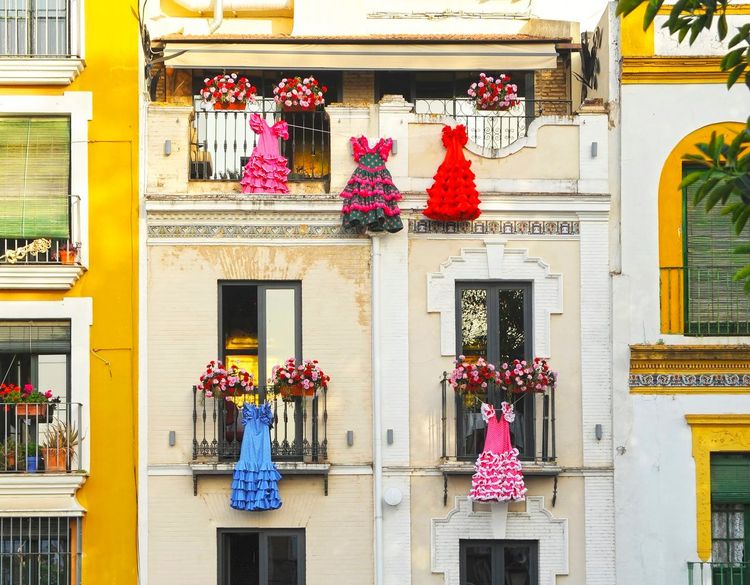
Flamenco was not born in Seville but in the Andalusian outskirts, and Triana claims a large share of its paternity, alongside Jerez and Cádiz. Attending a show remains one of the most memorable experiences of a two-day stay.
It is better to opt for a recognised tablao — a small venue where singers, guitarists, and dancers perform just metres from the audience — rather than a tourist show calibrated for large groups. Book your seat in the late afternoon for an evening performance: the best venues sell out several days in advance during high season, much like the monuments.
Where to Eat in Seville: Tapas and Local Specialities
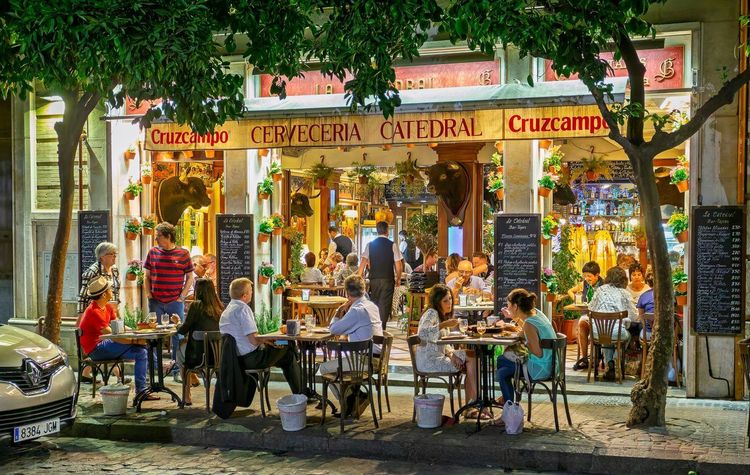
Eating in Seville is above all about moving between several bars rather than booking a single table. The city even claims to have invented the very concept of tapas, said to have originated from a slice of ham placed on top of a glass of wine to keep flies out.
Order in small quantities and change venue every two or three dishes: this is the local way of doing things, whether in the century-old bars of the centre or the more modern spots in Triana. Among the specialities not to miss are salmorejo, a tomato cream denser than gazpacho, espinacas con garbanzos (spinach with chickpeas, a legacy of Judeo-Arab cuisine), and fried fish served in a paper cone, the pescaíto frito.
Just as in Athens, where tavernas serve their mezze in successive waves until the table overflows (we cover this in our guide to visiting Athens in 2 days), Seville's tapas culture is best enjoyed standing up, glass of fino in hand, chatting with the regulars at the bar. Book more formal dinners in advance at weekends, as the best addresses in Santa Cruz and Triana fill up quickly after 9 p.m.
Where to Stay in Seville for a 2-Day Trip
For such a short stay, location matters more than anything else: every fifteen minutes saved on travel translates into extra visiting time.
The Santa Cruz neighbourhood puts everything within walking distance — the cathedral, the Alcázar, and Metropol Parasol included — at the cost of a higher price tag and a more tourist-oriented choice of accommodation. The wider city centre, around Calle Sierpes or the Alameda de Hércules, offers better value for money with equally quick walking access to the monuments. Staying in Triana appeals to those who prefer a more local evening atmosphere, even if it means crossing an extra bridge to reach the historic centre — a journey of barely ten minutes.
Avoid, however, accommodation that is too far out near the Santa Justa train station: it often advertises attractive rates, but adds twenty to thirty minutes to every journey — a luxury that two days simply do not allow.
How to Get to and Around Seville
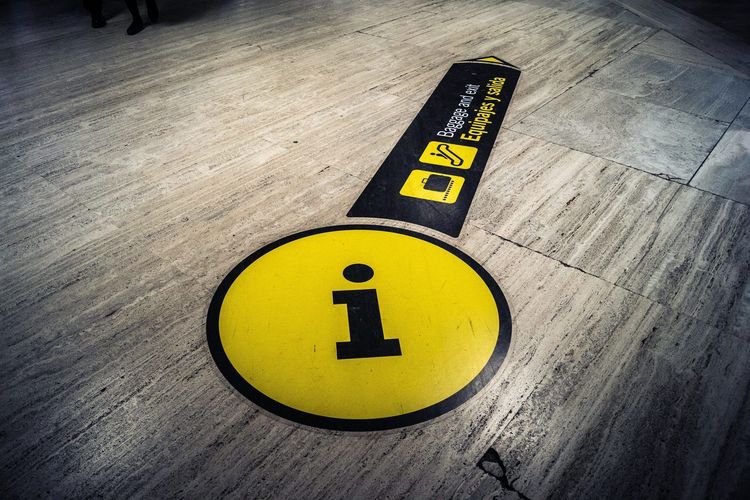
Seville has its own airport, which greatly simplifies organising a two-day stay compared to other more remote Andalusian cities.
Getting to the City Centre from the Airport
Seville Airport (SVQ) is approximately ten kilometres from the centre. The EA shuttle bus (Especial Aeropuerto) connects the airport to the city centre in around thirty minutes for a modest fare, with departures every twenty to thirty minutes. A taxi costs more but remains reasonable, with a fixed rate to the historic centre — practical when arriving late at night with luggage.
Getting Around on Foot, by Bike, or by Tram
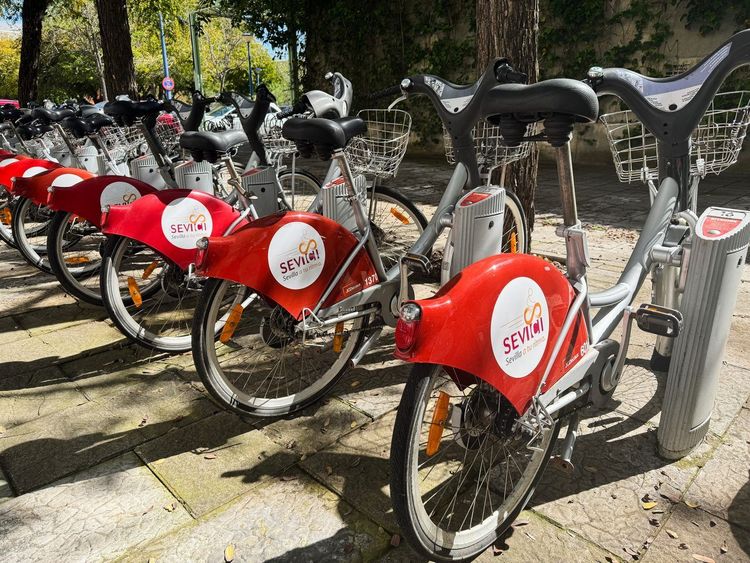
Once on the ground, walking remains the most suitable mode of transport for this two-day itinerary: the historic centre can be crossed from one end to the other in about forty minutes. The Sevici bike-share network is well developed and allows you to reach Triana or Parque María Luisa quickly. The tram has only one line, but it departs from the Plaza Nueva, runs past the cathedral as far as the Puerta de Jerez and then San Bernardo — handy at the end of the day when your legs are tired.
Tickets, Budget, and Best Practices for Planning Your 2 Days
Booking tickets in advance in Seville during high season is not an option — it is a condition for not losing half a day in a queue. Skip-the-line tickets for the Alcázar and the cathedral should be reserved online several days, or even several weeks, in advance between April and June.
For the budget, allow €15.50 for general admission to the Alcázar, €13 for the cathedral booked online, €15 for the Metropol Parasol viewpoint, and between €25 and €45 for a decent flamenco show at a tablao. A full tapas meal across several bars generally costs between €15 and €25 per person.
As for duration, two days are enough to cover the essentials described in this itinerary, provided you accept not seeing everything: it is better to fully enjoy five or six major sites than to race around fifteen. Build some flexibility into your planning, as the Alcázar's visiting hours sometimes change according to the season.
When to Go: the Best Time to Visit Seville
Seville has one of the most extreme climates of any major Spanish city: summers regularly exceed 40°C in July and August, making walking in the full afternoon heat almost impractical.
Spring, from April to June, remains the most sought-after period, falling between Holy Week and the Feria de Abril, with pleasant temperatures but corresponding crowds and prices. Autumn, from September to November, offers a compromise that is often underestimated: the heat has eased, the light is golden, and the queues in front of the Alcázar are significantly shorter. To avoid the summer heat while benefiting from lower prices, March or early December are good options, provided you accept slightly shorter days.
If You Have More Time: Extending to 3, 4, or 5 Days
This two-day itinerary covers the essentials, but Seville also lends itself to a longer stay. Visiting Seville in 3 days allows you to add a day trip to Córdoba or Carmona, by train or car, less than an hour away. What to do in Seville in 4 days often simply means slowing down the pace of the first two days and dedicating a full day to Triana and flamenco rather than half a day.
For visiting Seville in 5 days, the itinerary extends naturally towards Granada and the Alhambra, or towards Málaga and its coastline — two classic extensions for anyone building a wider Andalusian circuit: see for example our guides to visiting Granada in 2 days and visiting Málaga in 2 days. Conversely, what to do in Seville in 1 day means sacrificing either the Alcázar or Triana: the cathedral, the Giralda, and the Plaza de España then become the three absolute priorities. For a longer stay, the full Ryo audio guide tour (8.4 km compared to 5.9 km for the short Guadalquivir version) allows you to explore more neighbourhoods at the same audio pace, without having to choose between two monuments at the last minute.
FAQ
How Many Days Do You Need to Visit Seville?
Two days are enough to see the essentials: the cathedral, the Alcázar, Santa Cruz, Metropol Parasol, Plaza de España, and Triana. Three to four days allow you to add museums, nearby excursions, and a more relaxed pace.
Should You Book Tickets for the Alcázar and the Cathedral in Advance?
Yes, strongly recommended — even essential during high season (April to June, September–October). Time slots are limited, and on-site ticket offices often sell out by mid-morning.
How Do You Get Around Seville Without a Car?
Walking covers the essentials of the historic centre. The Sevici bike-share system and the single tram line usefully complement longer journeys, particularly towards Triana or Parque María Luisa.
What Is the Best Neighbourhood to Stay in Seville?
Santa Cruz offers maximum proximity to the monuments, at a somewhat higher cost. The wider city centre provides better value for money, and Triana appeals for its more local evening atmosphere.
What Is the Best Time to Visit Seville?
Spring (April to June) and autumn (September to November) offer the best weather conditions. July and August frequently exceed 40°C, making daytime sightseeing difficult.
Can You Visit Seville for Free or on a Tight Budget?
Yes, largely. Santa Cruz, Triana, the Plaza de España, Parque María Luisa, and the Guadalquivir quays can all be visited without a ticket. The cathedral, the Alcázar, and the Setas viewpoint remain paid attractions, but the Museum of Fine Arts is free for European Union citizens.
Seville draws to a close on one last sunset along the Guadalquivir, with the particular feeling of having seen the best of a city in barely forty-eight hours. Whether you leave the next day or continue on to Granada or Málaga, keep this itinerary as a base and adjust it to your own pace: some will prefer to spend more time in the Alcázar gardens, others to linger in Triana until nightfall. To find all the stops in audio format, the Ryo Seville audio guide tour remains available on your phone, to be listened to in the order of this article or your own.