© Shutterstock
 Votre guide Ryo
Las Vegas Without a Car: The Complete 2026 Transportation Guide
Ask ten Strip regulars whether you need a rental car in Las Vegas and you'll get ten different lectures about traffic on Las Vegas Boulevard, twenty-dollar valet fees, and parking garages the size of small countries. Skip the lecture: Las Vegas without a car is not just possible, it's often the smarter way to see the city, and Ryo's Las Vegas audio-guided tour was built around exactly that assumption, walking you past the landmarks between resorts rather than past them at thirty miles an hour. Two free trams and a free Downtown shuttle already connect many of the city's biggest hotels and sights. A public bus pass covering the whole Strip costs less than a cocktail. Self-driving robotaxis with no steering wheel now shuttle passengers between Strip resorts, and the Boring Company's underground tunnels ferry riders beneath the traffic jam they'd otherwise be sitting in. The one place a rental genuinely earns its cost is Red Rock Canyon, Hoover Dam, and the handful of desert day trips transit doesn't reach. Here's how to move around Las Vegas, resort by resort, without ever touching a steering wheel.
Do You Need a Car in Las Vegas?
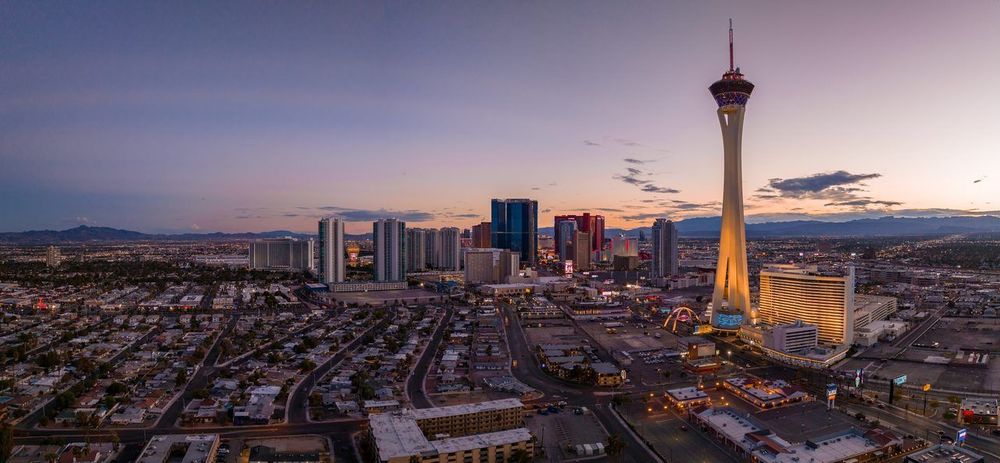
No, you don't need a car in Las Vegas, and for most visitors a rental actively works against you. The Strip was built for pedestrian casino traffic, not through-traffic, so a kilometer and a half between two resorts routinely takes longer to drive than to walk, once you account for valet lines, garage ramps and stoplights.
Parking isn't the free pass it used to be, either. Most resorts now charge $20 to $30 a night for self-parking, on top of whatever you paid to rent and insure the car. Add gas and the occasional valet tip, and a three-night trip can cost more in parking fees than it would have in rideshares for the whole stay.
The exception is anyone splitting time between the Strip and the open desert. If Red Rock Canyon, Hoover Dam, or a Grand Canyon day trip is on your itinerary, read the rental section below before writing off a car completely.
Getting from Harry Reid International Airport to the Strip Without a Car
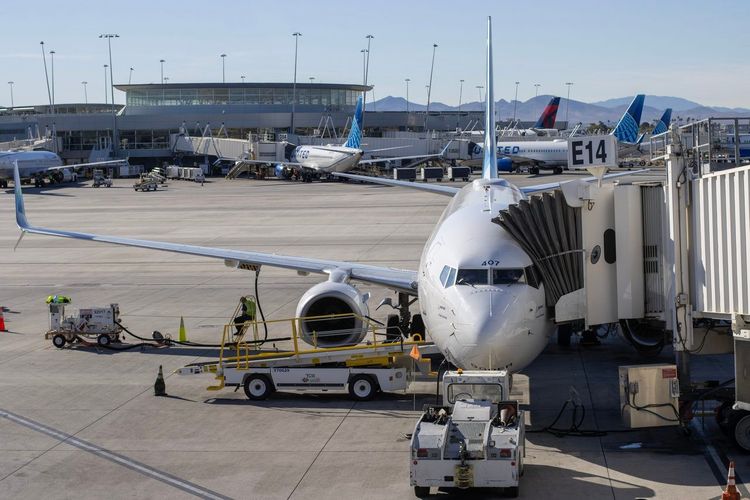
Harry Reid International Airport (5757 Wayne Newton Blvd, Las Vegas, NV 89119, rated 4.2/5 on Google (45 556 avis)) sits just east of the south end of the Strip, close enough that even the slowest option on this list rarely takes more than 45 minutes from curb to check-in desk. That proximity is why so many visitors skip the rental counter entirely: between rideshare, taxis, shared shuttles and public buses, there's no gap a car would meaningfully close.
Rideshare and taxi stands at the airport
Uber and Lyft pick up from dedicated, clearly signed zones in the parking garages at Terminal 1 and Terminal 3, separate from the taxi queue. Expect to pay $15 to $25 to most Strip resorts depending on surge pricing, with rides to the far north end of the Strip or Downtown running a few dollars more.
Taxis queue at marked stands outside both terminals and charge a metered fare plus an airport pickup surcharge, which usually puts a ride to a mid-Strip resort around $20 to $30. Unlike rideshare, taxis don't surge, so on a busy Friday night they can actually work out cheaper. One tip: ask the driver to take surface streets rather than the freeway tunnel if you're heading mid-Strip, since the longer route is a classic way to inflate the meter.
Hotel shuttles and shared vans
A handful of resorts run scheduled shuttles for guests with confirmed reservations, though far fewer than a decade ago; call ahead to confirm your hotel still offers one. Shared-ride vans fill the gap for everyone else, charging roughly $8 to $15 per person for a seat alongside other travelers headed the same direction.
They're slower than a private rideshare since the driver makes several stops, but if you're traveling solo or as a couple on a budget, the per-person price is hard to beat.
The public bus from the airport
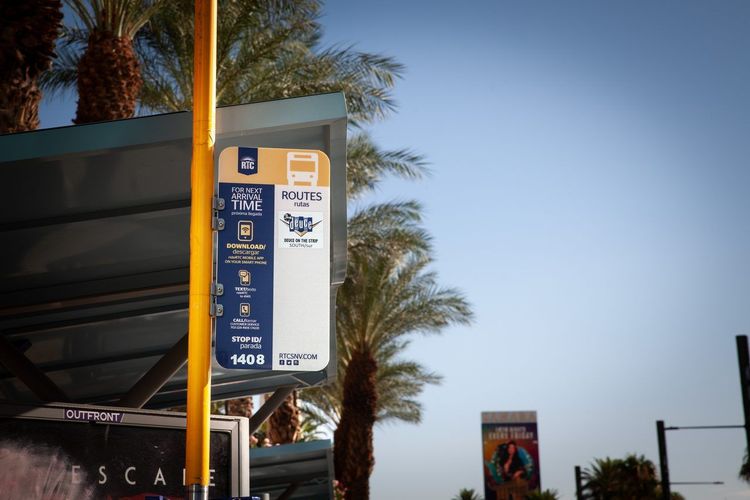
RTC public buses stop at the airport's ground transportation level, and from there you can reach the Strip directly or with one transfer to the Deuce or the SDX (Strip and Downtown Express). A 2-hour pass on Strip routes costs $6 and a 24-hour pass is $8, valid on the Deuce, the SDX and local routes for the rest of the day.
Check the RTC's rideRTC app before you land: it shows which route leaves from your terminal and where to change. Figure 30 to 60 minutes to a mid-Strip stop depending on traffic and connections. It's the cheapest option by far, but with big suitcases on a summer afternoon, you may decide a $20 ride is money well spent.
Walking the Strip and Riding the Free Trams
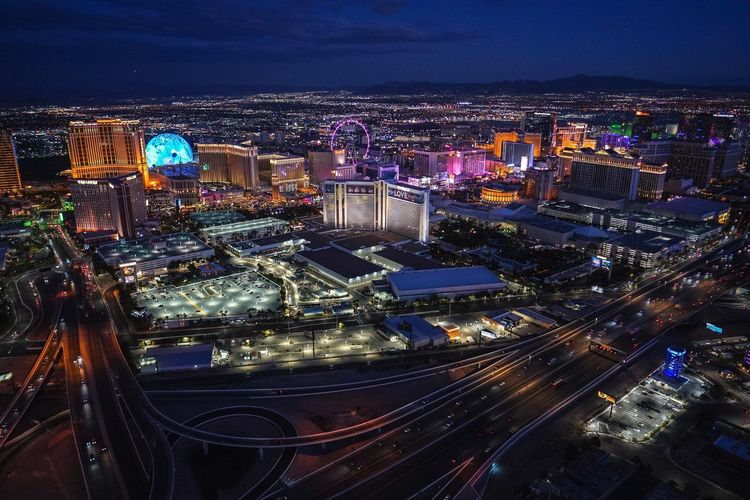
The Strip looks like one continuous boulevard from a hotel window, but it's really a chain of self-contained resort campuses, and knowing which parts you can walk and which you should ride changes how exhausted you feel by day three.
How far apart the resorts really are on foot
End to end, the Strip runs about 6.8 kilometers from Mandalay Bay (3950 S Las Vegas Blvd, Las Vegas, NV 89119, rated 4.4/5 on Google (70 038 avis)) to the Sahara, far longer than almost anyone walks in a single stretch. Between neighboring resorts, though, distances are usually 400 to 800 meters, a five-to-ten-minute walk, and many are connected by elevated pedestrian bridges that skip the street crossings entirely. Just know that the entrance you see from the sidewalk is rarely the shortest way in: casino floors are designed to slow you down, so add a few minutes for every building you cut through.
Summer heat changes the math. From June through September, daytime walks longer than fifteen minutes are genuinely risky, and that's exactly when the two free trams below earn their keep.
Mandalay Bay-Luxor-Excalibur Tram
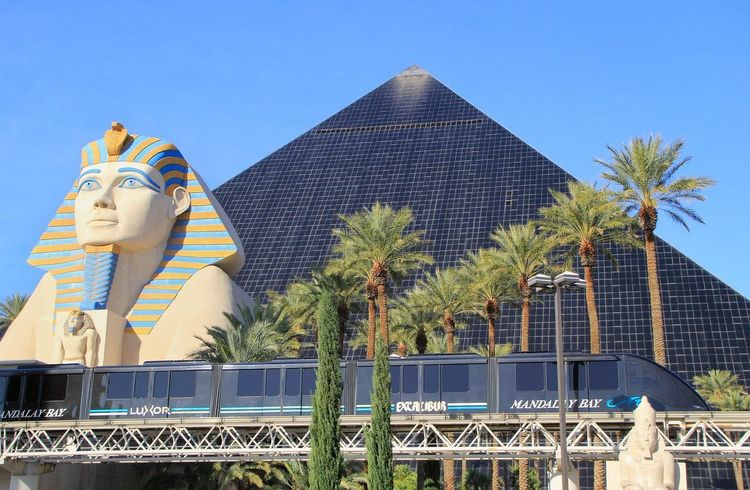
This free tram links Mandalay Bay, Luxor and Excalibur, with a train roughly every four minutes from about 10am to midnight. One track runs nonstop from Mandalay Bay back to Excalibur, while the other stops at Luxor, so the ride takes only a few minutes either way. It's the fastest way to cover the south end of the Strip without stepping into the Nevada sun.
Aria Express Tram (CityCenter)
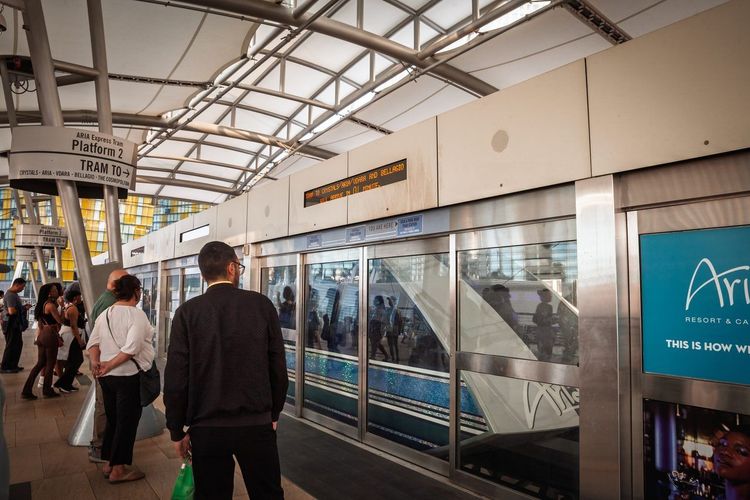
Further north, the free Aria Express connects Park MGM, Aria and the Shops at Crystals, and Bellagio, cutting through the CityCenter complex instead of around it. It's smaller and less known than the Mandalay Bay tram, which is exactly why it's worth seeking out: fewer crowds, a ride of a couple of minutes, and a shortcut most first-time visitors never discover on their own.
If you'd rather have these connections narrated than hunt for the entrance signage yourself, Ryo's audio-guided walk of the Strip follows this exact stretch of resorts, pointing out each tram stop and the story of the landmark behind it as you pass.
The Deuce, SDX Buses and the Downtown Loop
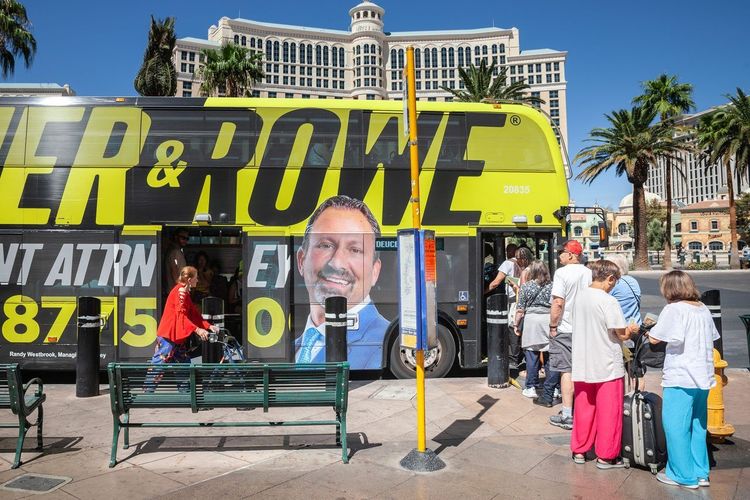
Beyond the trams, Las Vegas runs a genuinely useful public bus network that most tourists never open the app for, which is a shame given how cheap it is compared to a nightly parking fee.
The Deuce and SDX routes and fare passes
The Deuce is the double-decker bus that runs the length of the Strip and into Downtown, 24 hours a day, stopping at nearly every resort. The SDX covers a similar corridor with fewer stops, which makes it noticeably faster when you're heading from the south Strip to Fremont Street. Both share the same fares: $6 for a 2-hour pass, $8 for 24 hours, or $20 for a 3-day pass that pays for itself after about three days of round trips.
Before you land, pull up the Las Vegas bus map on the RTC site or the rideRTC app, where you can also buy passes on your phone. Stops shift occasionally around construction and major events, and knowing your nearest one before you're standing on the sidewalk with luggage saves real time.
Downtown Loop: the free shuttle most visitors miss
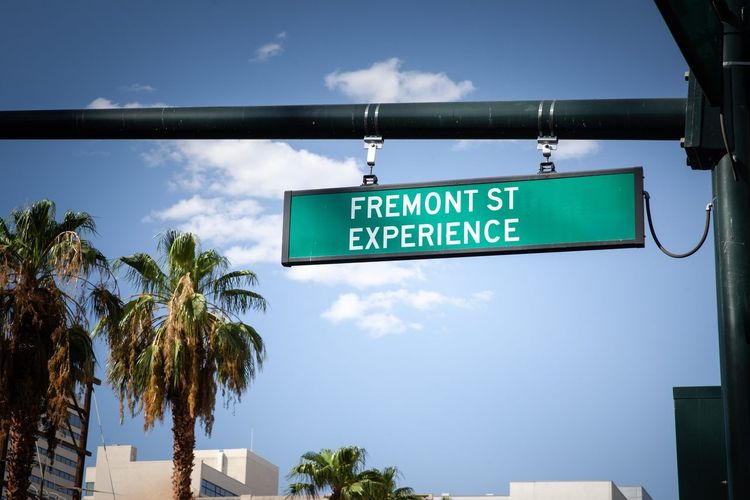
Downtown has its own free shuttle, operated by the City of Las Vegas, circulating between around a dozen stops including the Fremont Street Experience (425 Fremont St, Las Vegas, NV 89101, rated 4.5/5 on Google (61K reviews)), the Mob Museum, the Arts District, Symphony Park, The Strat and the Las Vegas North Premium Outlets. It runs continuously from 11am to 6pm Sunday to Thursday and from 3pm to 10pm on Fridays and Saturdays, so plan your evening on foot.
You can hop on from the Deuce at three transfer points: the Mob Museum, the Bonneville Transit Center or The Strat. If you're basing yourself Downtown, Ryo's Downtown Las Vegas audio tour covers much of the same ground as this free loop, telling the neighborhood's story from dusty railroad stop to neon-lit casino district as you walk between the stops.
The Las Vegas Monorail: Is It Worth It?
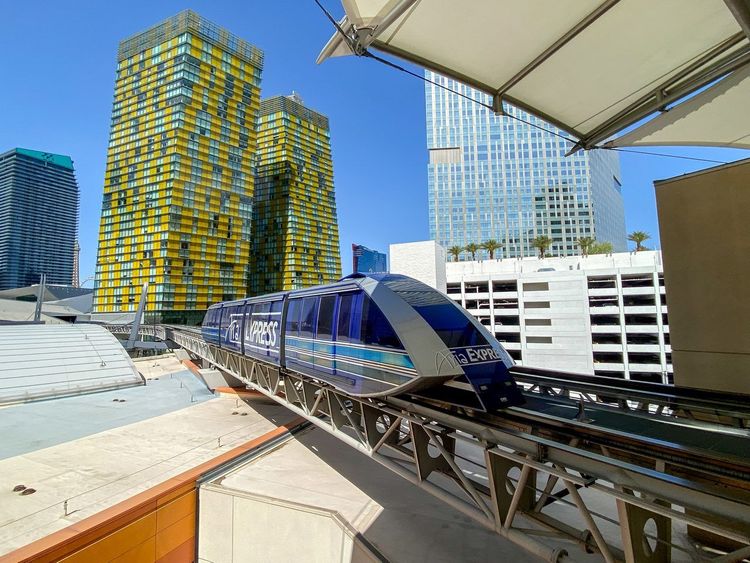
The Las Vegas Monorail is the option visitors ask about most and use least, and the reason comes down to geography more than price.
How the route and stations work
A quick look at the Las Vegas monorail map explains everything: the line runs 6.3 kilometers along the east side of the Strip, behind the resorts rather than in front of them. Its seven stations are MGM Grand, Horseshoe/Paris, Flamingo/Caesars Palace, Harrah's/The LINQ, the Las Vegas Convention Center (3150 Paradise Rd, Las Vegas, NV 89109, rated 4.5/5 on Google (14 119 avis)), Westgate and SAHARA, and the full ride takes about 15 minutes end to end.
Monorail cost vs. walking or rideshare
A single ride costs around $6 and a 24-hour pass roughly $15, with discounts if you buy online rather than at the station machines. Then factor in the walk from the platform to the actual casino floor, which can add another ten minutes. Compare that to a $15 rideshare that drops you at the front door, or a $8 bus pass covering the same ground all day, and the value case gets thin.
Is it worth it for a family? Generally, no. If you're juggling strollers and bags, the Deuce or a short rideshare drops you closer to the entrance than most monorail stations. The monorail earns its keep only if you're staying at a station-adjacent property and heading to a show or a convention at the Las Vegas Convention Center, where it genuinely beats traffic.
Rideshare, Robotaxis and Taxis on the Strip

When walking and transit don't line up with where you're going, paid rides fill in the gaps, and Las Vegas now has more of them than almost any other US city.
Uber and Lyft pickup zones
Most resorts route rideshare pickups through a dedicated zone near the valet or in the parking garage, separate from the taxi line and marked with signs. Expect $8 to $15 for short hops between nearby resorts, climbing to $20 or more during conventions or on Friday and Saturday nights when surge pricing kicks in. Budget an extra ten minutes just to walk from the casino floor to the pickup point at the biggest properties.
Self-driving robotaxis: Zoox and Waymo
Zoox has run its driverless robotaxis on the Strip since September 2025: boxy, all-electric vehicles with no steering wheel, no pedals and seats facing each other, booked through the Zoox app. Rides were free at launch and became paid in August 2026, and they still connect a set of fixed pickup points at Strip resorts and attractions rather than any address you choose.
Waymo opened its Las Vegas service in September 2026 on a waitlist basis, covering the Strip area and surrounding neighborhoods. Coverage for both is still expanding, so check the apps before counting on a robotaxi for an early-morning airport run.
Taxis and limos
Traditional taxis remain plentiful at resort stands and are metered, not surge-priced, which makes them a reliable backup when rideshare costs spike. Limo and town car services exist too, mostly aimed at bachelor parties and anniversary dinners rather than everyday transport, with hourly rates well above what a taxi would charge for the same trip.
Vegas Loop: the tunnels under the Strip
The Boring Company's Vegas Loop runs Tesla vehicles through tunnels beneath the Las Vegas Convention Center campus, moving conventioneers between halls in a couple of minutes instead of a long walk above ground. The network has since grown to stations at Resorts World, Westgate, Encore and Fontainebleau, with more resorts in the pipeline, though it does not yet reach the airport.
There's something to be said for watching the city go by on foot rather than through a tunnel window. Ryo's Las Vegas audio-guided tour stops at the stories a robotaxi or a Loop pod simply drives past, which is worth factoring in before you default to the fastest option every time.
Renting a Car for Day Trips Outside the Strip
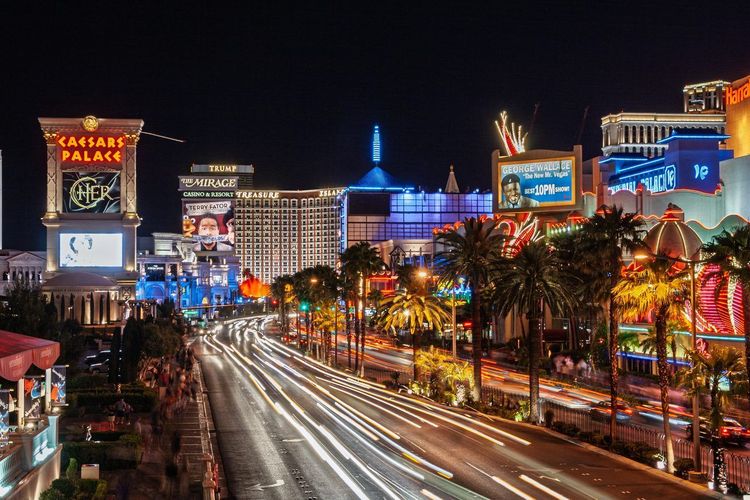
None of this means a rental car is pointless in Las Vegas, just that its value shows up outside the resort corridor rather than inside it.
When a rental actually pays off
A car earns its cost the moment your plans include Red Rock Canyon's scenic drive, Hoover Dam, Seven Magic Mountains, or anywhere further out like Valley of Fire or the Grand Canyon's West Rim, none of which public transit reaches on a useful schedule. For a single day trip, you can rent a car for 24 hours and still spend less than on a private tour, though a guided shuttle wins on convenience if you'd rather not navigate desert roads yourself.
Picking up and dropping off at the airport
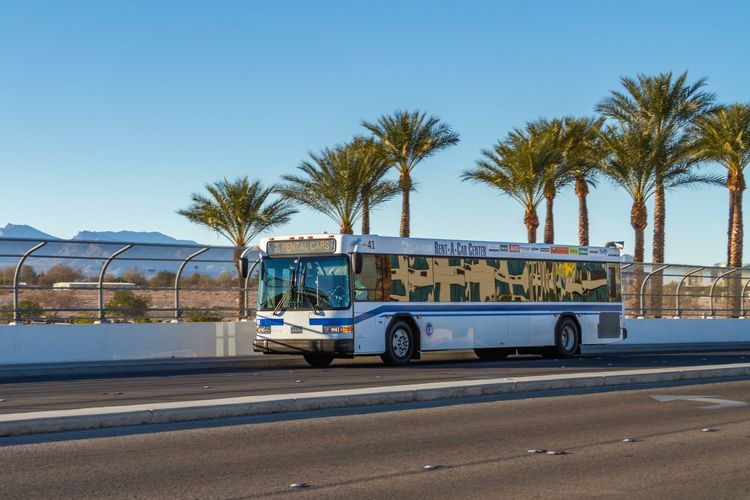
Nearly every major rental company operates out of the airport's consolidated rental car center, about 5 kilometers from the terminals and linked by free shuttle buses. Reserve ahead during conventions or major events, when availability tightens fast and daily rates can double, and return with a full tank, since stations close to the facility charge noticeably more.
Day Trips Without a Car: Red Rock Canyon, Hoover Dam and Seven Magic Mountains

The one honest gap in the no-car plan is the desert itself, and it's worth closing rather than ignoring, because these three stops are some of the best things within reach of the Strip.
Red Rock Canyon by tour or rideshare
Red Rock Canyon National Conservation Area) sits about 27 kilometers west of the Strip, and there's no public bus to the scenic drive. Your options are a small-group tour van with hotel pickup, or a rideshare to the visitor center with a return ride booked in advance, since cell coverage along the loop is patchy. Note that the scenic drive requires a timed-entry reservation for most of the year, which tour operators handle for you. Our guide to visiting Red Rock Canyon from Las Vegas covers the trails and viewpoints worth your time.
Hoover Dam without driving
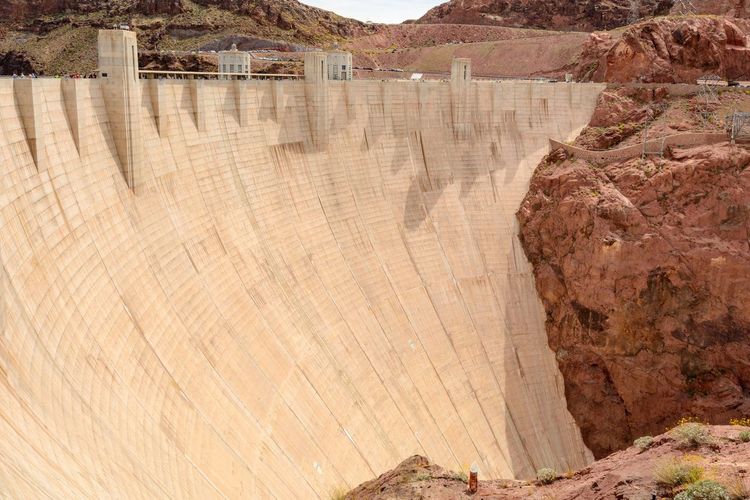
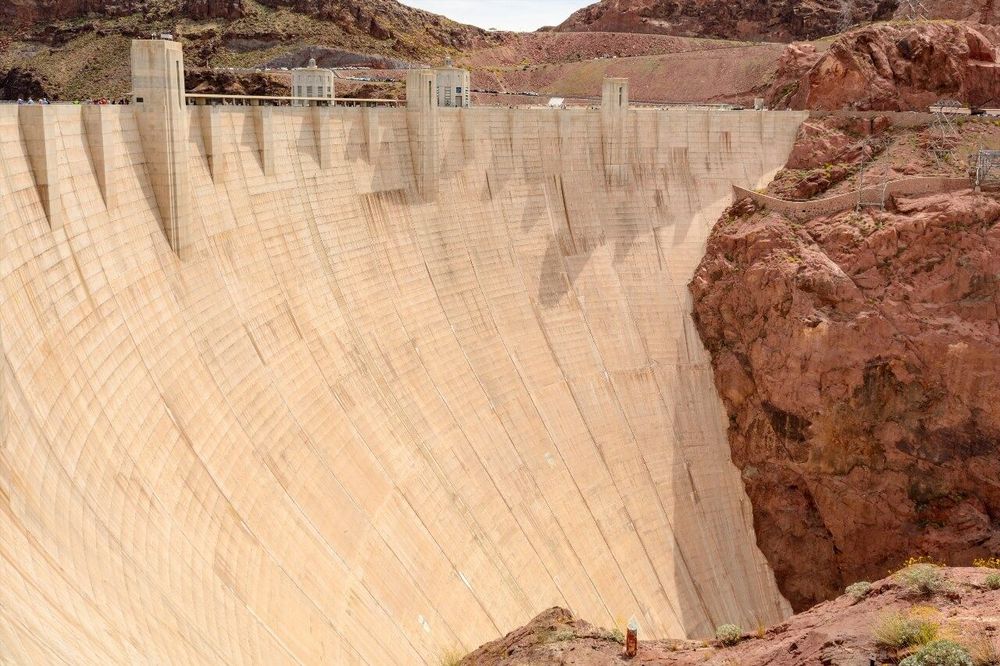
Hoover Dam) is roughly 45 minutes southeast of the Strip, and several tour operators run half-day trips combining the dam with a stop at Lake Mead, picking up directly from major resorts. Full details, including what the dam tours themselves cover, are in our Hoover Dam visitor guide.
Seven Magic Mountains
Seven Magic Mountains (Las Vegas Blvd S, Jean, NV 89019, rated 4.5/5 on Google (18 074 avis)), the stacks of neon-painted boulders about 40 minutes south of the Strip, is trickier: it sits beside the highway near Jean with no bus service, which is exactly why traveler forums keep asking how to reach it car-free. The most reliable option is a rideshare there and a separate one back, or a tour that pairs it with another stop; drivers rarely wait at this spot, so don't count on finding a return ride on arrival.
Where to Stay in Las Vegas Without a Car
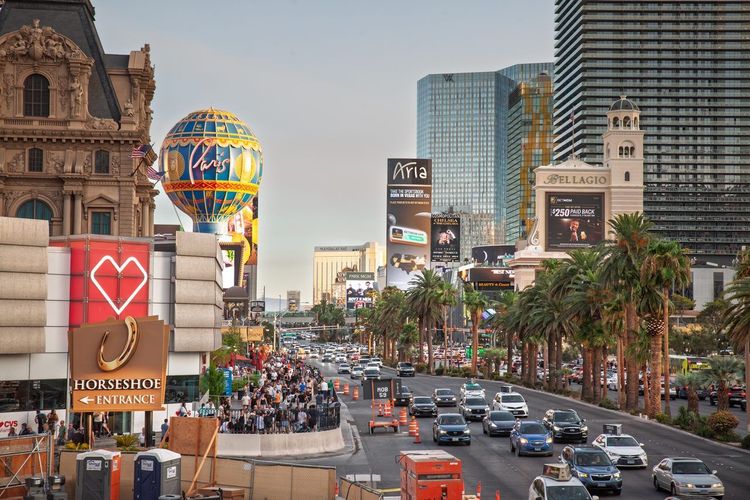
Where you book matters more for a car-free trip than almost any other decision, often more than the hotel's star rating.
On the Strip vs. a block off the Strip
A room directly on Las Vegas Boulevard puts you inside walking range of the trams, the Deuce and most restaurants, at a nightly rate that usually runs higher than hotels one block back. Staying a block off the Strip can change the math: resort fees and room rates both drop, while the walk to the action adds only five or ten extra minutes, or a short bus hop.
Traveling as a family without a car? A center-Strip property near a Deuce stop and a tram station tends to work best, since it shortens every trip back to the room for naps, forgotten sunscreen or an afternoon break from the heat. And if you stay mid-Strip, the Ryo audio-guided tour of Las Vegas starts practically on your doorstep, so you can turn a first evening walk into a narrated introduction to the city.
Downtown Las Vegas as a car-free base
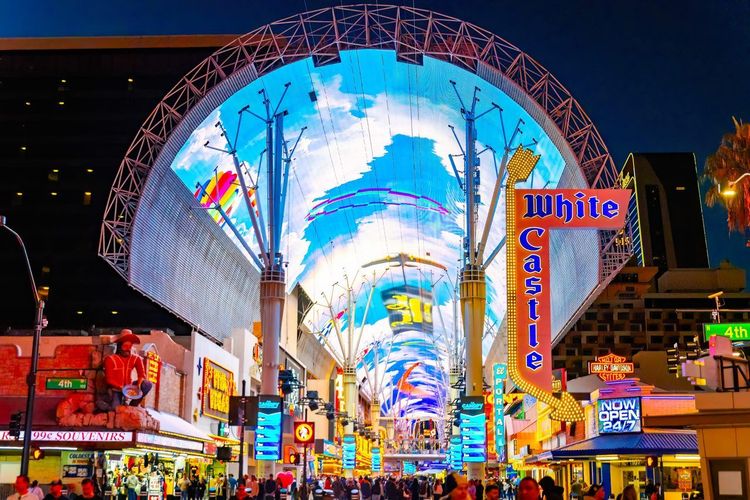
Downtown is the most overlooked car-free base, largely because first-timers assume everything worth seeing is on the Strip. Rooms here run noticeably cheaper, the free Downtown Loop covers most of the district by day, and the Deuce and SDX connect straight back to the Strip whenever you want a change of scenery. Walking Fremont Street's casino row at night, at your own pace, tends to be the detail travelers mention first when asked what surprised them about Downtown.
Cheapest Ways to Get Around Las Vegas: Budget Breakdown
Here's the short version if you're just trying to work out a daily transport budget before the trip.
Free and nearly-free options
Walking, the Mandalay Bay-Luxor-Excalibur tram, the Aria Express and the Downtown Loop shuttle cost nothing at all. A 24-hour Deuce and SDX bus pass at $8 covers nearly every other trip on the Strip and into Downtown, and remains the cheapest transportation in Las Vegas if you're not pressed for time.
When paying for a ride is worth it
Rideshare and taxis earn their cost late at night, in extreme heat, with heavy luggage, or when a bus simply isn't running on your schedule. The monorail rarely wins this comparison unless your hotel sits directly on its route. As a rough rule: if the trip is under a kilometer and it's below 35°C, walk or tram it; otherwise, budget $10 to $20 for a ride and move on with your day.



FAQ
Do you need a car in Las Vegas?
No. Free trams, cheap buses, rideshare and the monorail cover the Strip and Downtown well enough that a rental only pays off for desert day trips like Red Rock Canyon or Hoover Dam.
Is there a free shuttle in Las Vegas?
Yes, several. The Mandalay Bay-Luxor-Excalibur tram, the Aria Express at CityCenter and the City of Las Vegas's Downtown Loop shuttle all run at no cost to riders.
What is the best way to get around in Las Vegas?
For most trips, a mix of walking, the free trams and an $8 24-hour bus pass covers everything on the Strip. Save rideshare for late nights, heavy luggage or extreme heat.
What are the best ways to get from Las Vegas Airport to the Strip?
Rideshare costs $15 to $25 and takes 15 to 20 minutes, a taxi runs similarly with an airport surcharge, and RTC public buses cost $6 for a 2-hour pass but take 30 to 60 minutes depending on traffic and transfers.
Is the Las Vegas Monorail worth it?
Usually not. It costs more than the bus, stations sit behind rather than in front of resorts, and it only wins if your hotel is near a station and you're heading to the Las Vegas Convention Center.
Can you ride a self-driving robotaxi in Las Vegas?
Yes. Zoox runs paid driverless rides between fixed points on the Strip, and Waymo opened its Las Vegas service on a waitlist basis in September 2026.
Between the trams, the buses and a monorail you can skip without regret, Las Vegas turns out to be one of the easier major US cities to see without ever renting a car. Save the rental for the one morning you're headed out to Red Rock Canyon or Hoover Dam, and let everything else run on foot, free shuttles and the occasional $12 ride. If you'd rather have the Strip's landmarks narrated as you walk between them, Ryo's Las Vegas audio guide covers exactly this route, tram stops and all.