© Shutterstock
 Votre guide Ryo
Things to Do in Las Vegas in 2026: Strip, Casinos, Shows, and Grand Canyon Day Trips
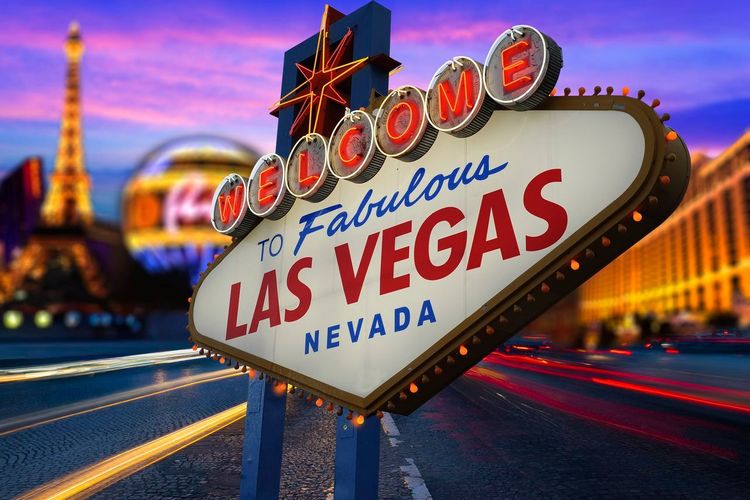
At nightfall, hundreds of visitors gather in front of the "Welcome to Fabulous Las Vegas" sign for the photo that will open their travel album — often before they've even checked into their hotel. Wondering what to do in Las Vegas, however, means choosing from far more than slot machines: the illuminated Strip, the vintage alleyways of Downtown, a neon graveyard, extraordinary shows, and day trips to the Grand Canyon. Born from a bet on the Nevada desert, the city lines up one of the highest concentrations of hotel rooms on the planet along roughly 6.8 km of boulevard. The Ryo audio guide tour of Las Vegas is designed for exactly this kind of freedom — headphones on, no group schedule to follow.
Between hotels and casinos that imitate an Egyptian pyramid or the canals of Venice, a museum entirely dedicated to the mob, a California sand beach set at the foot of a casino, and a massive dam less than 50 km away, the city has cultivated a very particular art of contrasts. You'll find chapels that can marry you in fifteen minutes, as well as trails that sit 86 meters below sea level in Death Valley, about two and a half hours away by road. This guide covers the must-do activities, then the practical questions: how many days to plan, where to stay, how to get around, when to go, and what budget to expect.
1. Strolling the Strip and Admiring Its Iconic Resort Hotels
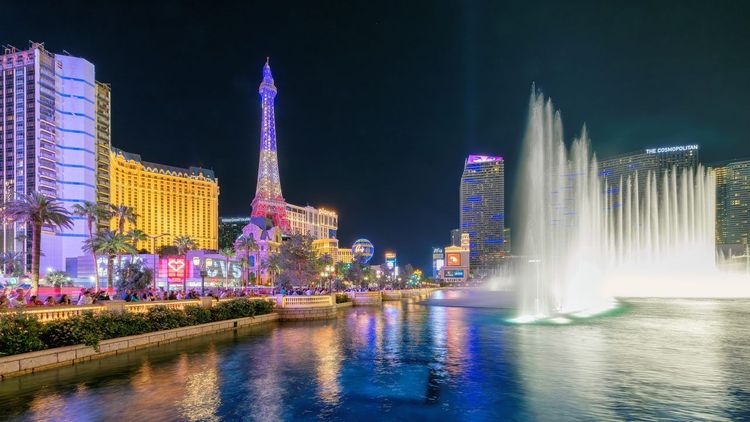
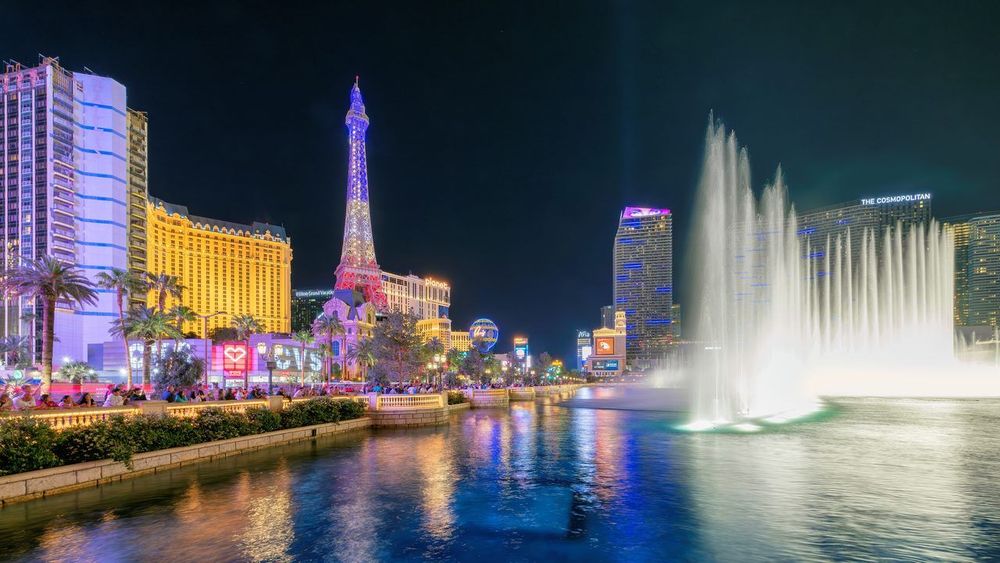
The Strip refers to the 6.8 km of Las Vegas Boulevard South that concentrates virtually all of the city's major resort hotels and casinos. You can walk the entire stretch on foot, but plan on a morning or an evening per section: distances look short on a map, much less so once you're on the sidewalk in 35°C summer heat. Many travelers opt for a guided Strip and hotel tour to understand the history behind each façade without getting lost in the vastness of the lobbies.
The "Welcome to Fabulous Las Vegas" Sign and the Bellagio Fountains
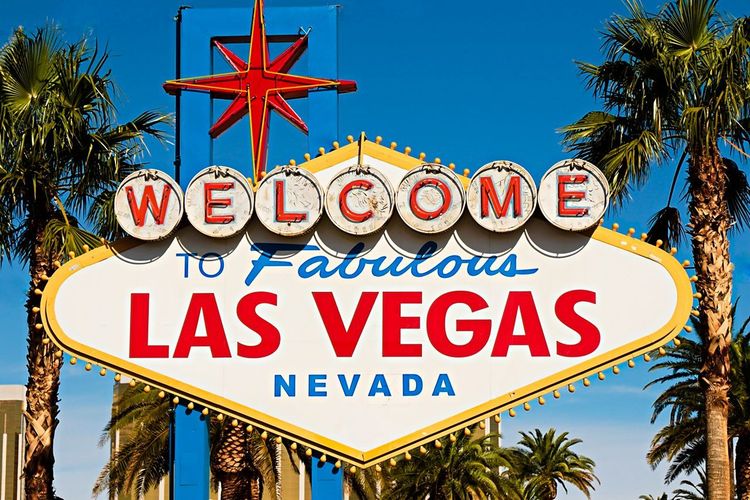
Installed in 1959 at the southern end of the Strip, away from most of the hotels, the "Welcome to Fabulous Las Vegas" sign (5100 Las Vegas Blvd S, Las Vegas, NV 89119) remains one of the most photographed landmarks in the United States. Designed by graphic artist Betty Willis, who never trademarked the design, it is now freely reproduced on thousands of souvenirs. A small parking lot and an organized queue make it easy to get the photo without stepping into traffic. Come early in the morning: the light is softer and the wait is just a few minutes.
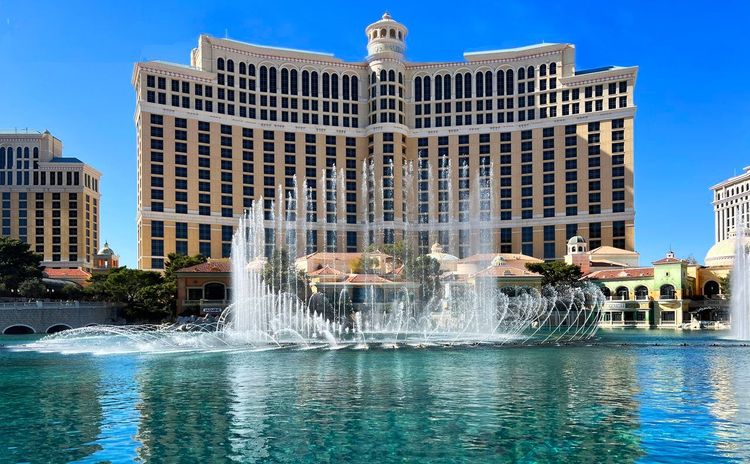
At the other end of the atmosphere spectrum, the Bellagio fountains animate the artificial lake in front of the hotel every 30 minutes in the afternoon, then every 15 minutes in the evening, set to a soundtrack that changes from one show to the next. Each choreography lasts a few minutes and is free of charge, making it an unmissable appointment at nightfall, when jets of water rise up to 140 meters under the spotlights.
Themed Hotels You Can't Miss: Venetian, Caesars Palace, Luxor, New York-New York, Excalibur, MGM Grand, Cosmopolitan
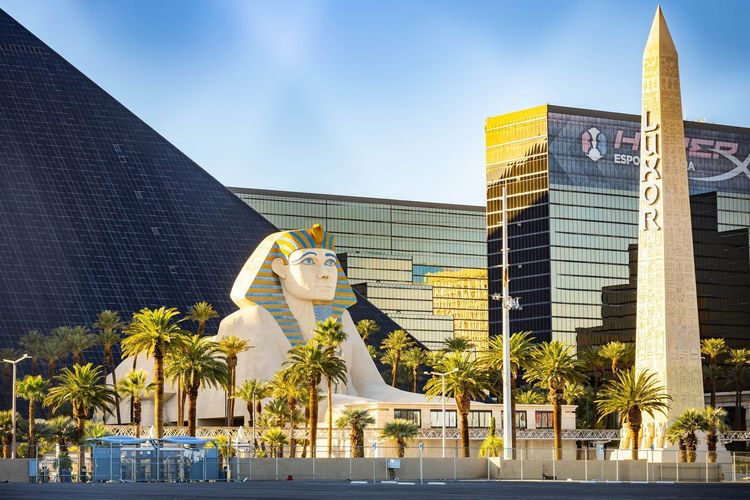
On the ancient Egypt and medieval side, the Luxor (3900 S Las Vegas Blvd, Las Vegas, NV 89119) features a black glass pyramid topped by a beam of light billed as the most powerful in the world, visible to aircraft from dozens of kilometers away. Right next door, Excalibur (3850 S Las Vegas Blvd, Las Vegas, NV 89109) leans into the medieval castle theme with its colorful turrets — deliberately kitsch décor that is a big hit with families.
For a more urban American vibe, New York-New York (3790 S Las Vegas Blvd, Las Vegas, NV 89109) reproduces the Manhattan skyline at reduced scale — Statue of Liberty included — with a roller coaster that winds between the facades. Across the street, MGM Grand (3799 S Las Vegas Blvd, Las Vegas, NV 89109) impresses mainly by its size: over 6,800 rooms, one of the largest hotel complexes in the world, recognizable by its golden lion at the entrance.
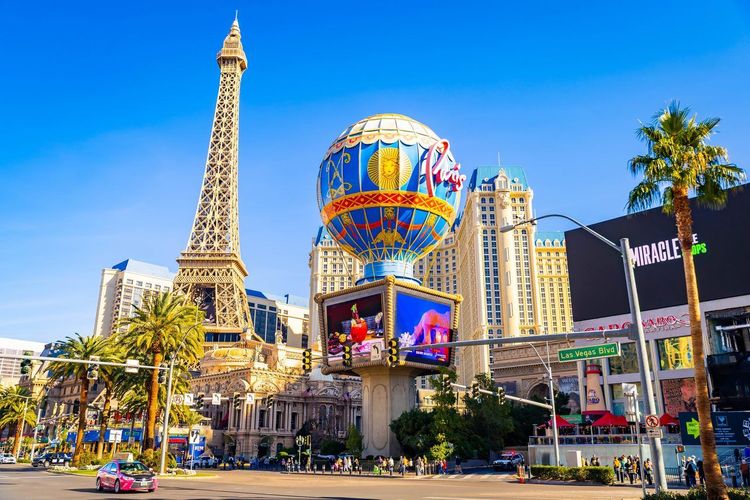
For a more European escape, The Venetian (3355 S Las Vegas Blvd, Las Vegas, NV 89109) recreates indoor canals where you can take a gondola ride, serenaded by the gondolier's voice beneath a ceiling painted to look like the Venetian sky. A short walk away, Caesars Palace (3570 S Las Vegas Blvd, Las Vegas, NV 89109, rated 4.5/5 on Google based on 138,173 reviews) bets on Roman colonnades and statues, a décor maintained since its opening in 1966. The Cosmopolitan (3708 S Las Vegas Blvd, Las Vegas, NV 89109) embraces a far more contemporary aesthetic, with its private terraces above the Strip that are highly sought after for the nighttime view. Directly across the street, Paris Las Vegas and its half-scale Eiffel Tower complete this world tour in just a few hundred meters.
Further north, the Wynn and Encore embody the more understated luxury of contemporary Las Vegas, with flowering indoor gardens and designer boutiques. If you remember the Mirage volcano, note that the hotel closed its doors in July 2024 to be transformed into a Hard Rock: its free nightly eruption is therefore no longer on the program. For a smooth walk, follow the west-side sidewalk between the Wynn and the Bellagio, then cross via the pedestrian bridges, which are required at most major intersections.
You won't have time to see everything in a single outing: it's better to choose 3 or 4 hotels based on your preferences (family kitsch, Venetian romance, nighttime views) rather than racing along every facade on the boulevard in one evening. That's the approach followed by the Ryo Las Vegas audio guide tour: 26 audio stops over 4.6 km, one-way from the Encore to Mandalay Bay, approximately 2 hours of walking not counting time inside the casinos, with an anecdote about each facade as you pass by.
2. Exploring Downtown Las Vegas and Historic Old Vegas
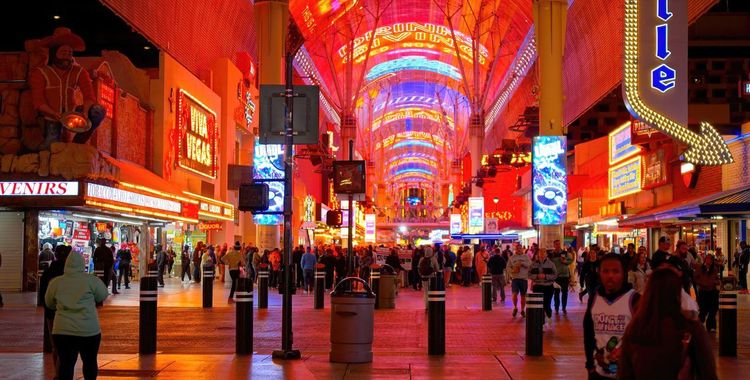
A few kilometers north of the Strip, Downtown Las Vegas, nicknamed Old Vegas, is the city's historic core — the one that existed long before the grand resort hotels on the boulevard. The atmosphere is denser, more vintage, and noticeably less polished in some of the adjacent streets, making it a good counterpoint to the permanent glitz of the Strip. Why visit Downtown? For lower-stakes gaming tables, vintage neon signs, and a history that the Strip has largely erased. The city was born here in May 1905, during a land auction organized by the railroad company that needed a supply point between Salt Lake City and Los Angeles. Historic casinos such as the Golden Nugget or the Golden Gate, which opened as early as 1906 under a different name, still evoke that era.
Fremont Street Experience and Its Light Canopy
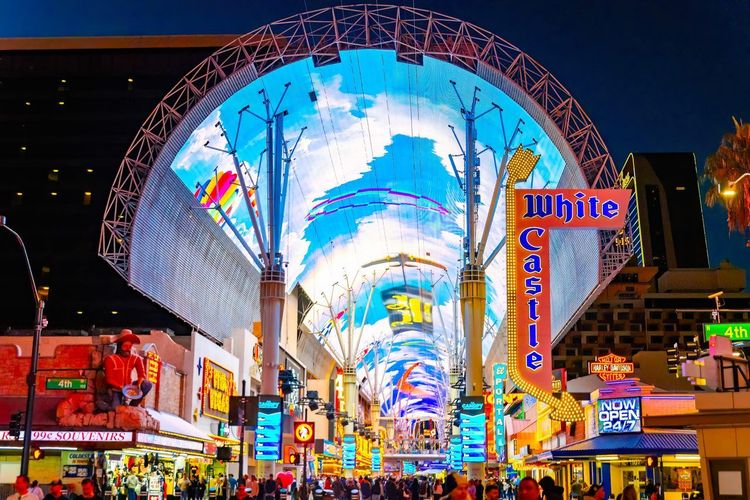
The Fremont Street Experience (425 Fremont St, Las Vegas, NV 89101, rated 4.6/5 on Google based on 60K reviews) stretches over five city blocks beneath a vaulted LED screen called Viva Vision, approximately 460 meters long. Every evening, the canopy comes alive with free sound-and-light shows, while street performers entertain the crowds and SlotZilla zip lines fly overhead. This is where the city issued its first gambling licenses in the early 1930s, long before the Strip took off.
A Food Tour Through the Historic Streets of Downtown
Beyond the main street, the Fremont East neighborhood is home to cocktail bars, street food spots, and retro storefronts. A walking food tour lets you sample several local specialties in one evening while hearing the stories behind each address. Further south, the Arts District is lined with galleries, vintage shops, and craft breweries, and is particularly lively on the first Friday of each month.
The Neon Museum and Its Sign Graveyard
North of Fremont Street, the Neon Museum (770 Las Vegas Blvd N, Las Vegas, NV 89101) preserves more than 200 illuminated signs salvaged from the demolition of former casinos and motels. Its outdoor Neon Boneyard is best visited after dark, when some of the restored neon signs light back up. The welcome area is housed in the former shell-shaped lobby of the La Concha Motel, which was cut into eight pieces and relocated to the site in 2006. Book your time slot online: evening visits often sell out.
The Ryo audio sub-tour dedicated to the history of Downtown tells the story of how the neighborhood evolved from desert pioneers to the first casinos, with stops along the back streets of Fremont Street rather than on the main tourist thoroughfare.
3. Going Up High: Stratosphere Tower, High Roller, and Helicopter Tours
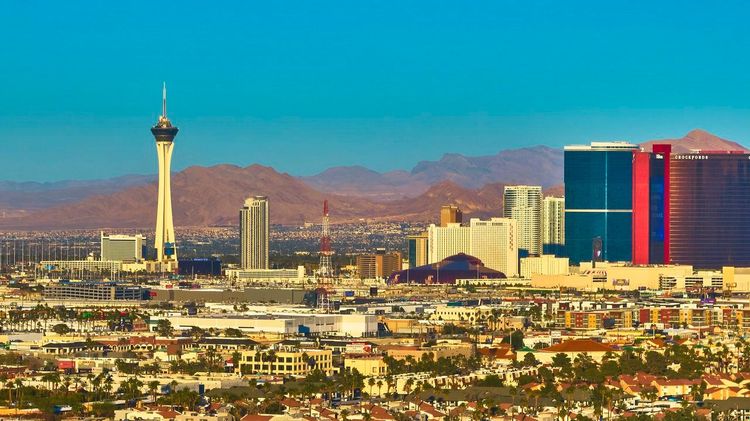
Seeing the Strip from above completely changes your perception of the city: the geometry of the boulevard, the mountains encircling the valley, and the vast expanse of desert become visible in a single glance. Several options are available, from a simple elevator ride to a helicopter flight.
The Stratosphere Tower and Its Vertiginous Thrill Rides
The Stratosphere Tower, renamed The STRAT in 2020 (2000 S Las Vegas Blvd, Las Vegas, NV 89104), rises 350 meters: it is the tallest freestanding observation tower in the United States. At the top, the SkyPod offers both indoor and outdoor panoramic terraces, and three rides operate literally over the edge: Big Shot, which launches riders skyward; X-Scream, a teeter-totter that tilts them over the rim; and SkyJump, a controlled leap of more than 250 meters. The Insanity ride, meanwhile, stopped operating in 2023.
The High Roller at The LINQ Promenade
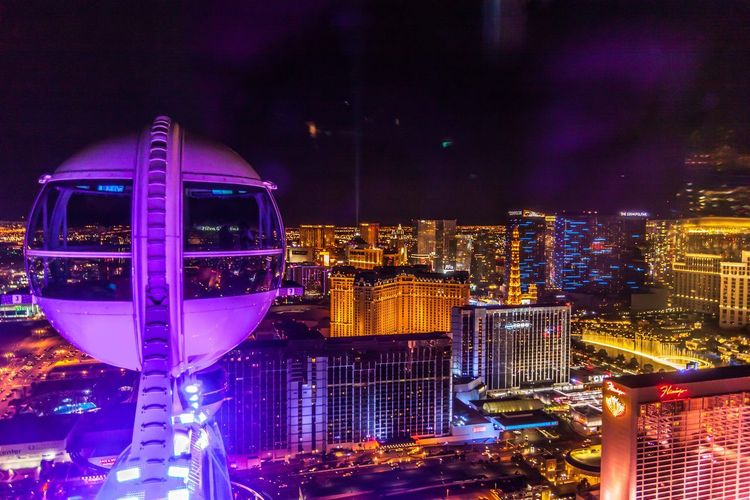
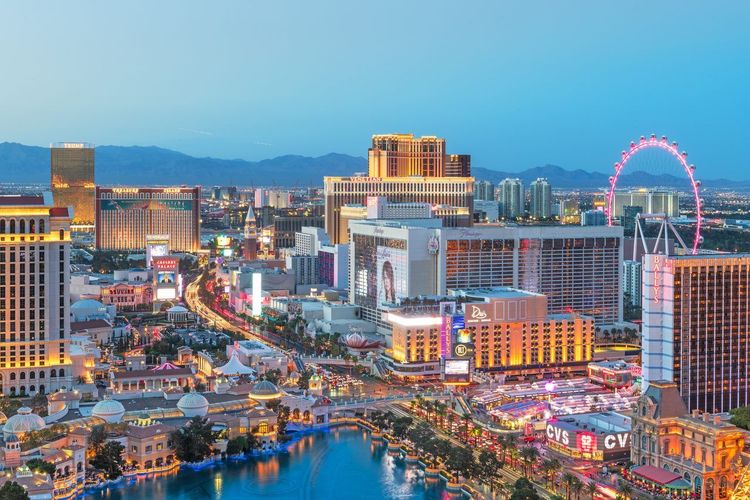
Less dramatic in height but more comfortable, the High Roller observation wheel (3545 S Las Vegas Blvd, Las Vegas, NV 89109, rated 4.6/5 on Google based on 32,064 reviews), located at the end of the pedestrian street of The LINQ Promenade, reaches 167 meters. A full rotation takes about 30 minutes in air-conditioned cabins holding up to 40 people — an ideal option if you'd rather avoid the thrills of the STRAT. The promenade itself, with its bars and shops, can be explored freely.
Another more centrally located viewpoint is the observation deck on the Eiffel Tower at Paris Las Vegas, on the 46th floor, which looks directly onto the Bellagio fountains — a great spot to watch the show from above.
Flying Over the Strip by Helicopter at Night
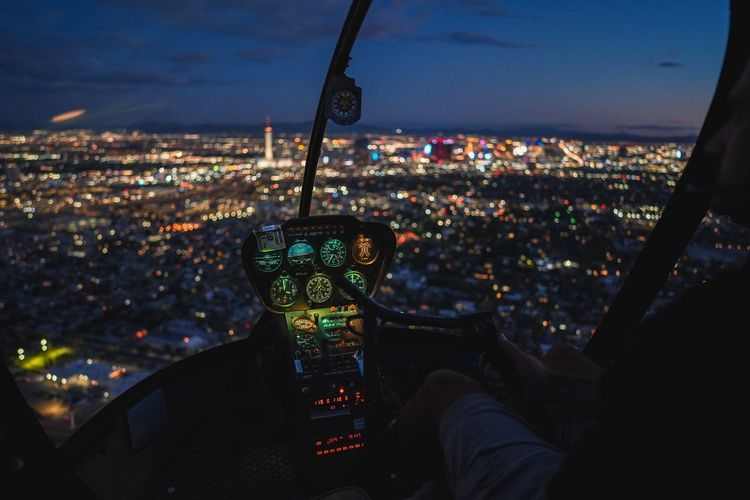
For the most spectacular experience, several companies offer nighttime helicopter flights over the Strip. The flight typically lasts 12 to 15 minutes and lets you take in the full sweep of glowing signs stretching to the desert horizon in one breathtaking view. Book on a weekday if possible: weekend slots often sell out several days in advance.
4. Visiting Las Vegas's Unique Museums
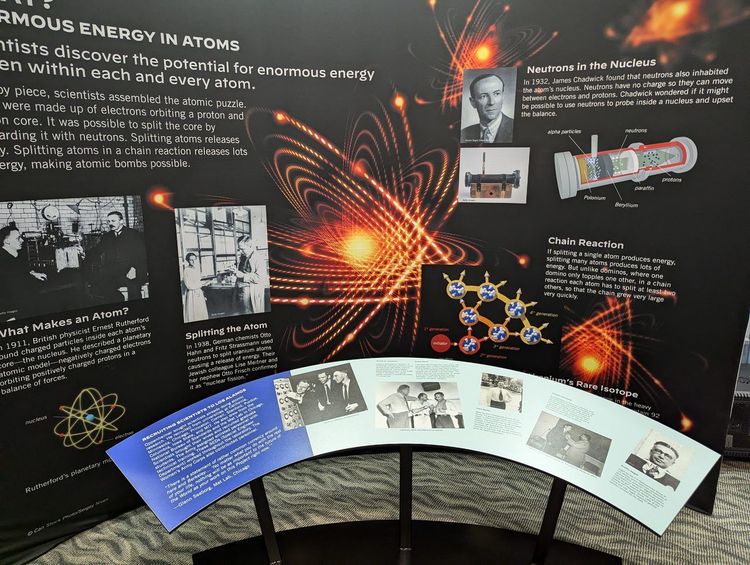
Between strolls along the Strip, Las Vegas's museums and art venues offer a serious — sometimes somber — counterpoint to the festive atmosphere. Contrary to popular belief, the city is home to several quality collections, often housed in historically significant buildings.
The Mob Museum: Tracing the History of Organized Crime
Housed in a former federal courthouse and post office dating from 1933, the Mob Museum (300 Stewart Ave, Las Vegas, NV 89101) traces the history of organized crime and its long-obscured role in building Las Vegas. Visitors can tour the courtroom where the 1950 Kefauver Senate Committee hearings on the mob were held, as well as an original section of wall from the 1929 St. Valentine's Day Massacre in Chicago. In the basement, a reconstructed distillery and speakeasy bar extend the visit into the atmosphere of Prohibition.
Allow 1.5 to 2 hours for the visit. Book a late-morning slot: the museum is air-conditioned and offers a welcome break during the hottest hours of the summer day.
National Atomic Testing Museum and CSI: The Experience
The National Atomic Testing Museum (755 E Flamingo Rd, Las Vegas, NV 89119, rated 4.6/5 on Google based on 4,414 reviews), affiliated with the Smithsonian Institution, covers the nuclear tests conducted between 1951 and 1992 at the Nevada Test Site, about 100 kilometers from the city. The exhibition notably recalls how, in the 1950s, visitors watched atomic mushroom clouds from hotel rooftops, turning the tests into a tourist attraction.
CSI: The Experience, inspired by the television series, long offered visitors at MGM Grand the chance to solve a case using forensic science techniques. This type of attraction regularly changes venue or closes: check availability before planning your day, and consider the Strip's escape rooms as an alternative if it's no longer running.
Art and Galleries on the Strip
On the arts side, the Bellagio Conservatory, free to enter, refreshes its floral compositions with each season. Pop culture enthusiasts should head to the Pinball Hall of Fame, at the southern end of the Strip, where hundreds of vintage pinball machines remain playable for a few quarters.
5. Attending a Show or Musical
Las Vegas claims the title of entertainment capital of the world, with dozens of shows on stage every night. Two main categories stand out, and a new one-of-a-kind venue has recently joined them.
On the family-friendly side, Cirque du Soleil has dominated the scene since the opening of Mystère at Treasure Island in 1993. Among the most celebrated residencies: "O" at the Bellagio, performed above a pool of several million liters, and Michael Jackson ONE at Mandalay Bay, built around the singer's greatest hits. Several Broadway musicals, magicians, and comedians also hold residencies in the major hotels. Tickets generally range from $70 to over $200 depending on the show and seating category.
On the adults-only side, cabaret revues and more risqué shows carry on a tradition inherited from the great revues of the 1950s and 1960s. Absinthe, performed under a spiegeltent in front of Caesars Palace, blends acrobatics with very raw humor. Entry is generally restricted to adults, with ID verification.
Since September 2023, the Sphere, just behind the Venetian, has transformed the landscape: this spherical venue, 112 meters high and entirely covered in LED screens on the outside, projects immersive films inside — such as Postcard from Earth or a reimagined version of The Wizard of Oz — in addition to hosting residency concerts. Even without a ticket, its animated exterior shell is worth seeing at night. In any case, book several days in advance during peak season: the best seats go fast.
If your budget is tight, Tix4Tonight kiosks, scattered along the Strip, sell discounted tickets for same-day performances. The selection is more limited, but it's a great way to catch a magician, comedian, or revue without paying full price. Also look out for free shows dotted throughout the hotels: live music in casino bars or entertainment in the shopping galleries.
6. Trying Your Luck in the Casinos
Gambling remains the activity most associated with Las Vegas, even if it only applies to a portion of visitors. Access to tables and slot machines is restricted to those aged 21 and over, and you may be asked to show ID at any time.
Minimum bets vary enormously: a few dollars at a Downtown table, versus $15 to $25 minimum at some blackjack tables in upscale Strip hotels. The atmosphere also changes dramatically — hushed in private salons, noisy in the large rooms open onto the lobbies. No windows and no clocks in most gaming areas: a deliberate architectural choice designed to make you lose track of time.
A practical tip: sign up for free with the hotel group's loyalty program when you arrive. The card tracks your play and can earn you discounts on meals or shows. Drinks are often complimentary for active players, and tipping the server a dollar or two is customary.
7. Shopping and Enjoying the Pools and Artificial Beaches
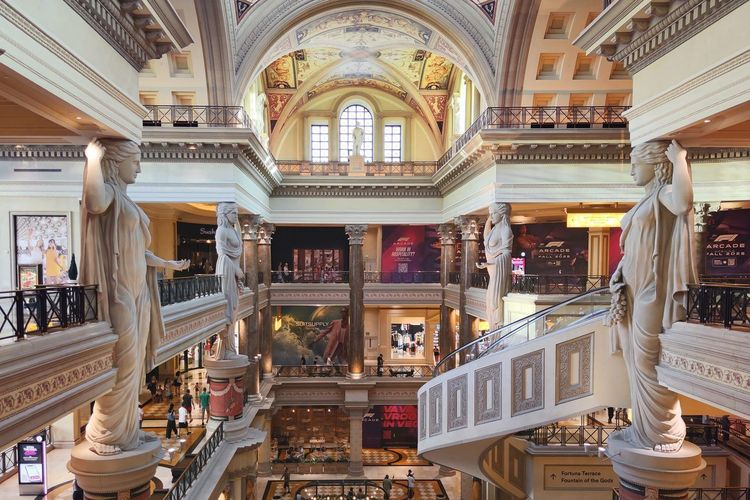
Between shows, shopping plays a significant role, with entire galleries built into the hotels — like the Forum Shops at Caesars Palace or the Grand Canal Shoppes at the Venetian, which extend each property's theme right into the shopping aisles. Fashion Show Mall, across from the Wynn, brings together major American retail chains, while the two Las Vegas Premium Outlets — one near Downtown in the north, one at the south end of the Strip — attract bargain hunters.
Less well known to visitors in a hurry, Mandalay Bay Beach (3950 S Las Vegas Blvd, Las Vegas, NV 89119, rated 4.4/5 on Google based on 69,964 reviews) is one of the city's few genuine artificial beaches: 11 acres, 2,700 tons of sand imported from California, a wave pool designed for surfing, and a lazy river to float between dips. Concerts are held here in summer. It's a valuable option to unwind away from the gaming floors in the heat, without ever leaving the Strip.
Keep in mind that most hotel pools only operate at full capacity between spring and autumn, and access is often restricted to hotel guests.
8. Getting Married in Las Vegas: Chapels and Paperwork
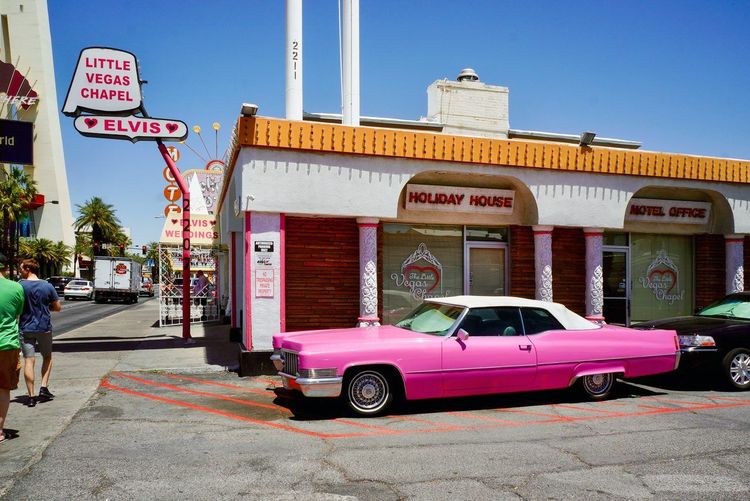
Getting married in Las Vegas remains one of the city's most iconic symbols. The ease of the process is a deliberate legislative choice by Nevada to attract visitors, and the British press was already calling Las Vegas the "marriage capital of the world" in 1953. No blood test or waiting period is required.
In practice, complete the application online, then appear in person with official photo ID at the Clark County Marriage License Bureau, open every day until midnight. The license costs $102. Independent chapels (some with drive-through options), Strip hotels, or the civil marriage office then take over, from an express ceremony to a full package with photographer, limousine, and Elvis impersonator. The Little Church of the West, built in 1942, and the Little White Wedding Chapel are among the most famous venues.
For couples from outside the United States, the marriage is generally only recognized at home after transcription with the relevant consular services, and it is advisable to complete the required preliminary steps before departure. Several agencies specializing in Las Vegas weddings for international couples can guide you through this process — a real advantage if legal English is not your strong suit.
9. What to Do in Las Vegas with Kids
Despite its reputation, Las Vegas offers plenty of family-friendly activities — you just need to know where to look. Excalibur and its medieval castle setting delights younger visitors, as do the roller coasters at New York-New York, accessible from a minimum height. At Circus Circus, the Adventuredome — a 5-acre indoor theme park under a pink glass dome — lets you ride attractions and play games out of the heat.
The Shark Reef Aquarium at Mandalay Bay, the largest aquarium on the Strip, passes sharks and rays right above visitors, and the nearby beach is well suited to a family afternoon. The National Atomic Testing Museum, the Discovery Children's Museum in Downtown, the M&M's World store, and even the monorail also appeal to curious kids. On the other hand, minors are prohibited from entering gaming areas, even accompanied: walk through the casinos without lingering, and consider hotels without a casino or with a separate entrance if you're traveling with young children.
10. Day Trips from Las Vegas: Grand Canyon, Hoover Dam, and Death Valley
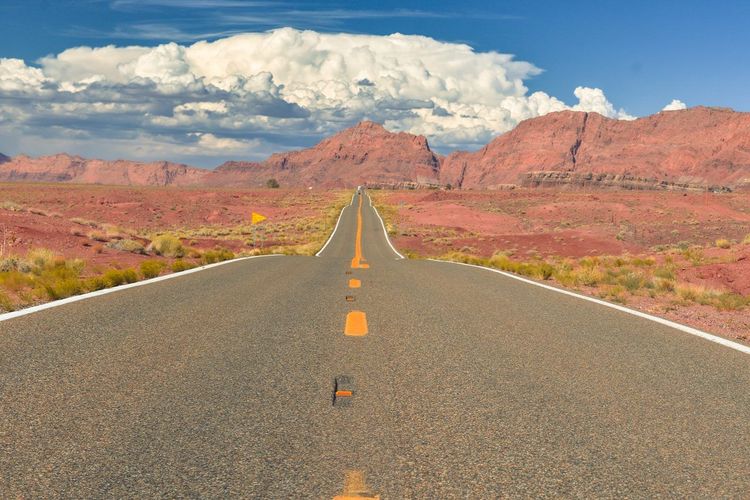
Las Vegas serves as a base camp. Here are the essential day trips, listed in order of increasing distance from the Strip.
Red Rock Canyon and Valley of Fire: the Closest Escapes
About thirty minutes to the west, Red Rock Canyon offers a 21 km one-way scenic loop between red cliffs and hiking trails. During peak season, from October to May, a timed entry reservation is required for the scenic drive in advance. All the practical details can be found in our Ryo article on Red Rock Canyon. Further to the northeast, about an hour away, Valley of Fire — Nevada's oldest state park — unfolds red sandstone formations and petroglyphs.
Hoover Dam
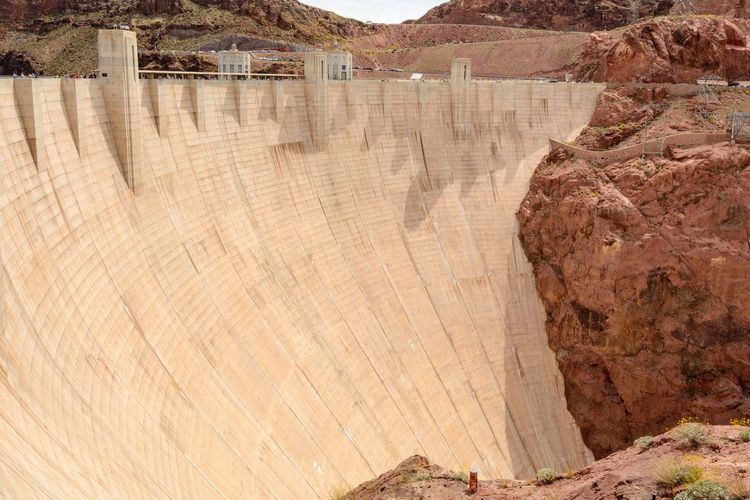
About 48 km to the southeast — roughly a 45-minute drive — Hoover Dam remains the most accessible day trip. Built between 1931 and 1936, the structure rises 221 meters and holds back Lake Mead, the largest reservoir in the United States by volume, supplying water to some 18 million residents of Nevada, Arizona, and California — three states to which it also provides electricity.
The Bureau of Reclamation offers guided tours of the power plant, which descend deep into the structure, in addition to the visitor center and its viewpoints. Find opening hours and the best vantage points in our Ryo article on Hoover Dam.
For this outing as well as the Grand Canyon, the Ryo American Southwest audio guide tour covers Hoover Dam and the Grand Canyon gateway with audio commentary triggered on-site — a welcome aid when you're driving your rental car without a guide on board. The Grand Circle extends the adventure toward the parks of Utah and Arizona.
The Grand Canyon from Las Vegas
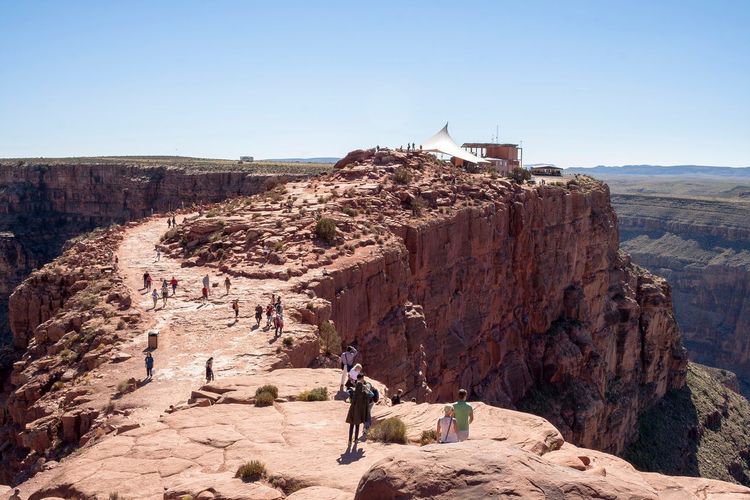
Grand Canyon West (Grand Canyon West Rd, Peach Springs, AZ 86434, rated 4.5/5 on Google based on 19,919 reviews), the closest section of the canyon, is about 2.5 hours away by road, compared to nearly 4.5 hours for the South Rim, which is more spectacular but more distant. Grand Canyon West is home to the Skywalk, a horseshoe-shaped glass bridge suspended approximately 1,200 meters above the canyon floor, on land belonging to the Hualapai Nation. Admission is charged and the Skywalk requires a separate ticket. To save time, many companies offer round-trip helicopter flights from Las Vegas, with aerial views of Lake Mead and Hoover Dam and sometimes a stop at the canyon floor — a costly option, but one that fits into half a day.
Death Valley
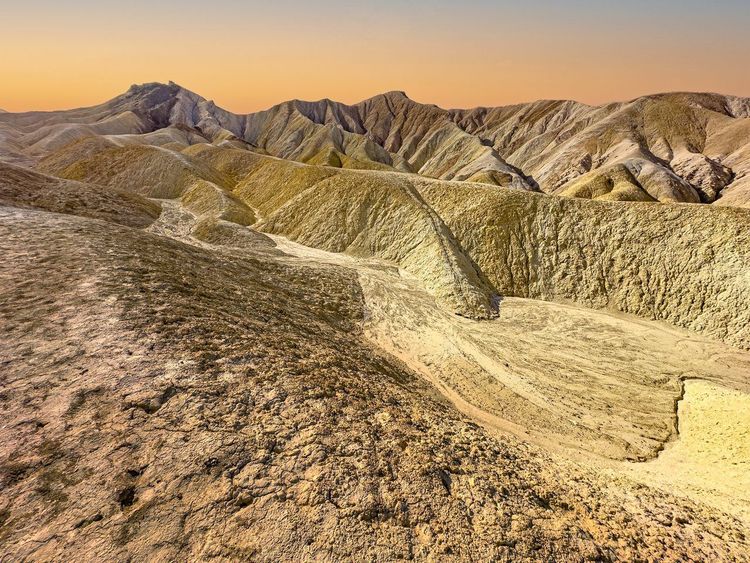
About 2.5 hours away by road, Death Valley ranks among the most extreme landscapes in the United States: Badwater Basin, its lowest point, sits 86 meters below sea level, and an air temperature of 56.7°C was recorded there in 1913 — a world record that still stands. Avoid the period from June to September, when temperatures regularly exceed 45°C: opt instead for autumn, winter, or early spring.
Exploring the Surroundings Independently or with a Guide
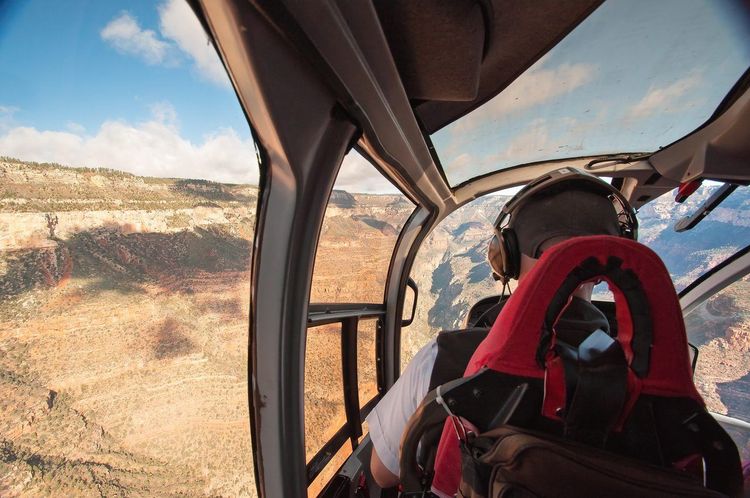
These day trips work equally well on your own in a rental car or on an organized tour departing from Las Vegas. Driving yourself gives you more freedom over timing and photo stops, as long as you set off with plenty of water and a full tank of gas — service stations are scarce in the desert. A guided tour, by minibus or helicopter for the Grand Canyon, eliminates the fatigue of long drives and suits short stays particularly well.
11. How Many Days to Visit Las Vegas? Itineraries from 1 to 4 Days

The ideal length of stay depends mainly on whether or not you want to include day trips. Plan a minimum of 2 days to see the highlights of the Strip and Downtown, and 4 days to add the Grand Canyon and Hoover Dam without feeling rushed.
Las Vegas in 1 Day: the Strip Essentials
For a one-day itinerary, focus on the Strip: the Welcome to Fabulous Las Vegas sign in the morning before the heat sets in, a walk through the themed hotels with lunch in one of the shopping galleries, a mid-afternoon break in an air-conditioned museum, the Bellagio fountains at sunset, then an evening split between a show and the casino. This packed schedule leaves little room for spontaneity, but it covers the must-sees of a first visit.
Las Vegas in 2, 3, or 4 Days: Strip, Downtown, and Day Trips
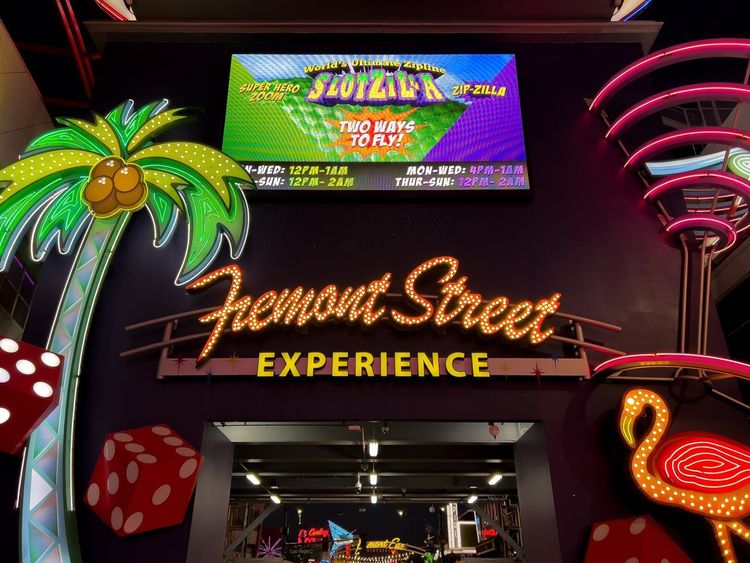
For a two-day itinerary, add an evening in Downtown for the Fremont Street Experience, the Neon Museum, and the Mob Museum. Over 3 days, fit in Hoover Dam or Red Rock Canyon, both doable in a half-day from the Strip. Over 4 days, set aside a full day for the Grand Canyon, departing early to enjoy the light and avoid the afternoon heat.
| Duration | Priorities | |---|---| | 1 day | Strip, Welcome sign, Bellagio fountains, a show | | 2 days | + Downtown, Fremont Street, Neon Museum, Mob Museum | | 3 days | + Hoover Dam or Red Rock Canyon as a half-day trip | | 4 days | + full day at the Grand Canyon |
With its 26 stops and 2 hours of walking, the Ryo Las Vegas audio guide tour fits easily into a morning on your first day, regardless of how many days you have.
12. Where to Stay in Las Vegas
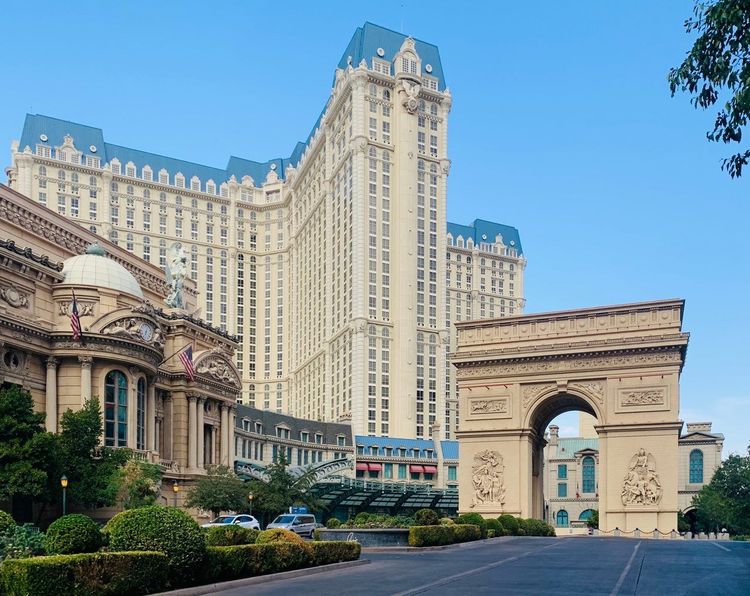
Your choice of accommodation depends mainly on the atmosphere you're looking for and your budget. Staying on the Strip puts casinos, shows, and restaurants within walking distance, but comes with higher rates and near-universal daily resort fees. Which hotel to choose? In the center of the boulevard, properties around the Bellagio, Caesars Palace, or the Venetian minimize travel time; to the south, the Luxor or Excalibur are more affordable, with the monorail or free trams connecting certain neighboring hotels.
Staying in Downtown generally costs less and puts you close to the vintage atmosphere of Fremont Street, at the cost of a bus or rideshare trip to reach the Strip. Casino-free hotels, such as international chain properties set back from the boulevard, are well suited to families and travelers who prioritize peace and quiet.
A third off-Strip option is to choose a hotel further from the boulevard — often significantly cheaper, sometimes with a free shuttle to the major casinos. This solution suits travelers with a car who are planning several day trips, even if it means a few extra minutes of travel each day. Whatever you choose, compare pool facilities too: between spring and autumn, the pools are an integral part of the experience, and those at the major resorts turn into full-blown clubs on weekends.
13. How to Get to Las Vegas and Get Around

Direct flights to Las Vegas from outside the United States are relatively rare: most travelers connect through a major American or European city, or combine the city with a road trip departing from Los Angeles, about 4 hours away via Interstate 15. The drive through the Mojave Desert can be heavy on Sunday afternoons, when Californians return from their weekends: leave early in the morning or shift your return by a day to avoid the traffic.
From the Airport to the Strip
Las Vegas's airport, long known as McCarran International Airport and renamed Harry Reid International Airport (5757 Wayne Newton Blvd, Las Vegas, NV 89119, rated 4.2/5 on Google based on 45,282 reviews) in December 2021, is located just a few kilometers south of the Strip — one of the best-positioned airports in the United States relative to a tourist center. Taxi, rideshare, shared shuttle, or rental car can get you to most hotels in 10 to 20 minutes depending on traffic. Car rental agencies are grouped together in a dedicated facility, served by free shuttles from the terminals.
Getting Around: Monorail, Bus, and Rental Car
Riding the Las Vegas monorail is the quickest way to travel along the eastern back side of the Strip: seven stations over approximately 6 km, from the SAHARA to MGM Grand — a practical alternative to walking in the heat. For public transportation, the RTC bus network serves the Strip and Downtown; its Deuce line runs 24 hours a day along the boulevard. Taxis and rideshares are plentiful, with designated pick-up zones at each hotel, but are subject to traffic congestion during peak hours.
For day trips, renting a car in the United States remains the most flexible option. Your home country driver's license is generally sufficient for a short stay, but an international driving permit is recommended; make sure you have comprehensive insurance and adapt to local rules: speeds in miles, right turn on red permitted after a full stop unless posted otherwise, and mandatory stop behind a stopped school bus.
14. When to Go to Las Vegas: Weather and Best Time to Visit
Las Vegas's desert climate means very hot summers, with highs often exceeding 40°C between June and August, and mild daytime winters (around 14°C in January) but cool nights, dropping to 3 to 5°C. Spring, from March to May, and autumn, from October to November, offer the best compromise for combining Strip visits with desert excursions. Rainfall remains rare throughout the year.
Keep an eye on the events calendar too: CES in January or the Formula 1 Grand Prix, held in November on a street circuit that runs through the Strip, send hotel prices soaring and complicate traffic. Conversely, midweek stays outside major conventions often offer the best hotel rates.
15. Budget and Tourist Passes for Visiting Las Vegas
The good news is that many of the highlights cost nothing: the Bellagio fountains, the conservatory, Fremont Street, the Welcome sign, or a stroll past the hotel facades. The real budget considerations come down to accommodation, shows, and day trips.
Multi-Activity Passes to Save Money
Several multi-activity tourist passes bundle access to attractions such as the STRAT, the High Roller, or certain museums, with meaningful savings compared to buying tickets individually. Do you need a cultural pass to visit Las Vegas? No, none is required: these packages become worthwhile on stays of 3 days or more, when the number of paid activities justifies the upfront cost. Run the numbers against your actual priorities before buying.
Resort Fees, Taxes, and Parking to Plan For
In Las Vegas, almost every hotel on the Strip adds a daily resort fee, often between $35 and $55 per night, supposedly covering Wi-Fi, pool access, and the gym. Since May 2025, a federal rule requires hotels to display the total price inclusive of these mandatory fees, which makes comparisons easier; still read the fine print before confirming. Add a lodging tax of around 13% and, depending on the property, paid parking, often charged $15 to $25 per day. Over a week, these additional charges can add up to several hundred dollars. If you're continuing with a road trip through the American West, factor in the rental car, gas, and the America the Beautiful annual national parks pass.



FAQ
How Many Days Do You Need to Visit Las Vegas?
Plan for a minimum of 2 days to see the highlights of the Strip and Downtown, and up to 4 days if you want to add a day trip to the Grand Canyon or Hoover Dam without feeling rushed.
What Are the Must-See Attractions on a First Visit to Las Vegas?
The Welcome to Fabulous Las Vegas sign, the Bellagio fountains, a walk through the themed resort hotels on the Strip, a show, and the Fremont Street Experience in Downtown form the foundation of a successful first visit.
What Public Transportation Is Available in Las Vegas?
The monorail runs along the east side of the Strip from the SAHARA to MGM Grand, complemented by the RTC bus network, whose Deuce line runs day and night between the Strip and Downtown — a more economical option than a taxi for short trips.
What Can You Do Near Las Vegas?
Red Rock Canyon, 30 minutes away, Hoover Dam, 45 minutes away, Valley of Fire, about an hour away, then Grand Canyon West and Death Valley, roughly 2.5 hours away, can each be visited in a single day from the Strip.
Do You Need a Cultural or Tourist Pass to Visit Las Vegas?
It's not required, but a multi-activity pass becomes worthwhile from a 3-day stay if you plan to visit several paid attractions, such as the STRAT, the High Roller, or certain museums.
What Budget Should You Plan for a Trip to Las Vegas?
Beyond the room rate, budget for a daily resort fee of $35 to $55, a lodging tax of around 13%, possible paid parking, and $70 to over $200 per show ticket.
Conclusion
Between the glitz of the Strip, the quieter history of Downtown, and day trips that sometimes border on the surreal, Las Vegas lends itself just as well to a brief stopover as to a full multi-day stay. The key is to find a pace that suits you — alternating free attractions, a standout show, and at least one venture into the desert — without trying to check every box in a single evening.
To discover the boulevard on your own terms, the Ryo Las Vegas audio guide tour follows your own pace, headphones on, from the Encore to Mandalay Bay, with 26 stories that bring every facade to life.