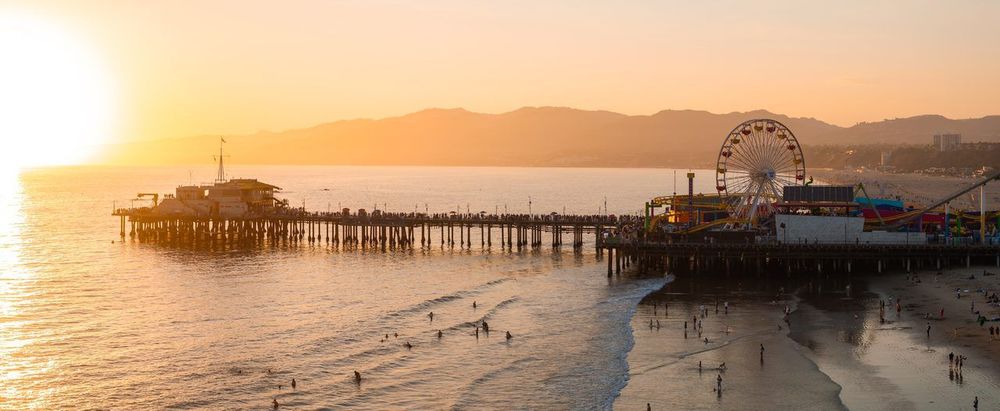
© Shutterstock
 Votre guide Ryo
Santa Monica in 3 Days: A Practical 2026 Itinerary
Planning Santa Monica in 3 days gives you something most visitors never get: time. The usual pattern is a single afternoon, a photo of the Ferris wheel, and a quick drive toward Malibu, without ever finding out that the city backs onto its own mountain range, hides a gallery district inside a former trolley yard, and has a beach-town rhythm that rewards travelers who actually stay the weekend. Three days is the sweet spot: enough to walk the pier at sunrise before the crowds, bike the ocean-front path down to Venice, and still spend a full day on the Pacific Coast Highway. Ryo's audio-guided tour of Santa Monica is a 4 km loop with 14 audio stops that starts at the Route 66 End of the Trail sign on the pier, so you can take in the first morning at your own pace instead of hunting for plaques.
This guide covers a lot of ground: a 1909 pier the city once voted to tear down, a stretch of Montana Avenue where the boutiques change block by block, a Malibu headland where gray whales pass close to shore, a canyon park that reopened in July 2026 after the Palisades Fire, and the transit connection that gets you from LAX without a rental car. Day 1 stays close to the water, Day 2 pushes south toward Venice and north into the shopping streets, and Day 3 leaves the city for a coastal drive most first-time visitors skip entirely.
Day 1: Santa Monica Pier, Downtown and the Beach Bluffs
Morning: Santa Monica Pier and Pacific Park
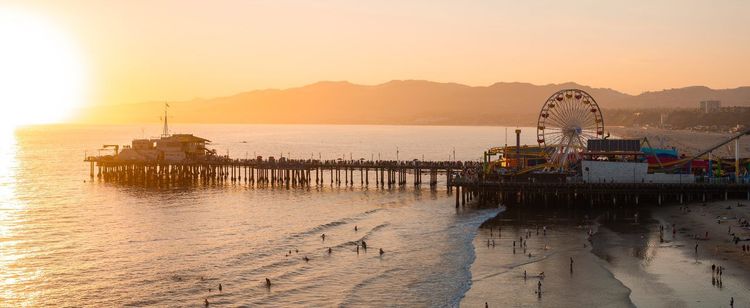
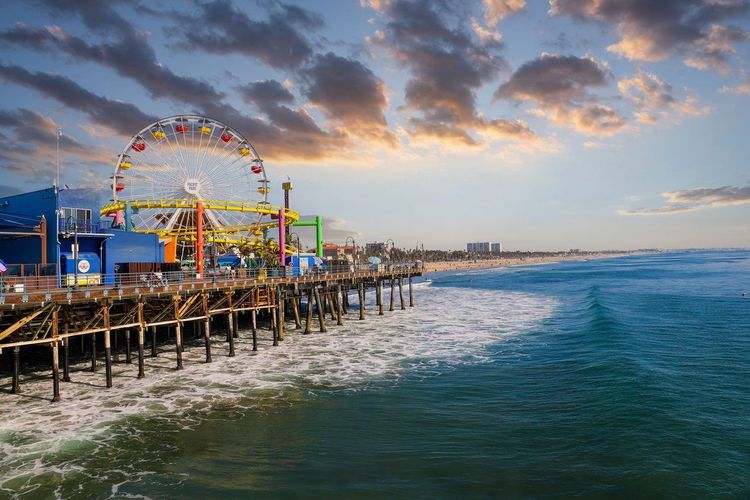
Start early, ideally before 9am, when the Santa Monica Pier) still belongs to joggers and fishermen rather than tour groups.
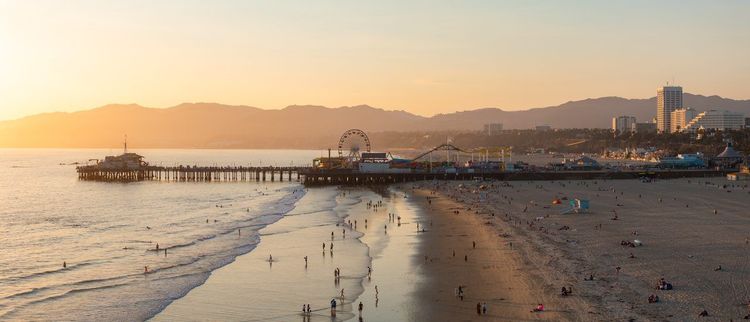
The municipal pier opened in 1909 for a purely practical reason: carrying a sewer pipe out beyond the breakers. The amusement side arrived in 1916, when Charles Looff built his pleasure pier alongside it, and the Looff Hippodrome Carousel from that era still turns near the pier entrance, now a National Historic Landmark. The pier's survival was never guaranteed. In 1973 the city council voted to replace it with a resort island development, and it took a resident campaign to reverse the decision; a decade later, the 1983 winter storms tore away roughly a third of the structure. Today the nonprofit Santa Monica Pier Corporation runs programming and events on behalf of the city, from summer concerts to the pier's free history walks.
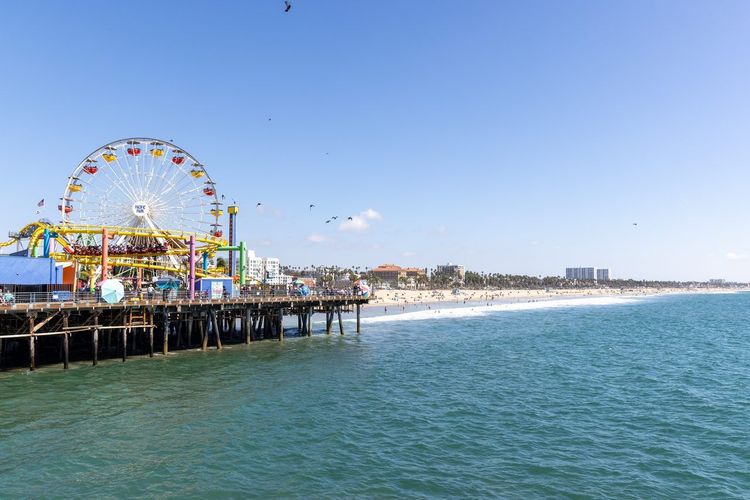
The western end belongs to Pacific Park), the small oceanfront amusement park that opened in 1996.
Its solar-powered Pacific Wheel is the signature ride, and yes, it really does run on panels. Ride it in the first hour after opening and you will have the best photos of the coastline curving toward Malibu. The pier itself is free to walk; only the rides and the small Heal the Bay Aquarium under the deck charge admission. The Ryo parcours starts right here, and its first audio stops tell the story of the carousel and the pier's near-demolition while you stand in front of them, before the loop heads up onto Ocean Avenue.
Afternoon: Third Street Promenade and Santa Monica Place
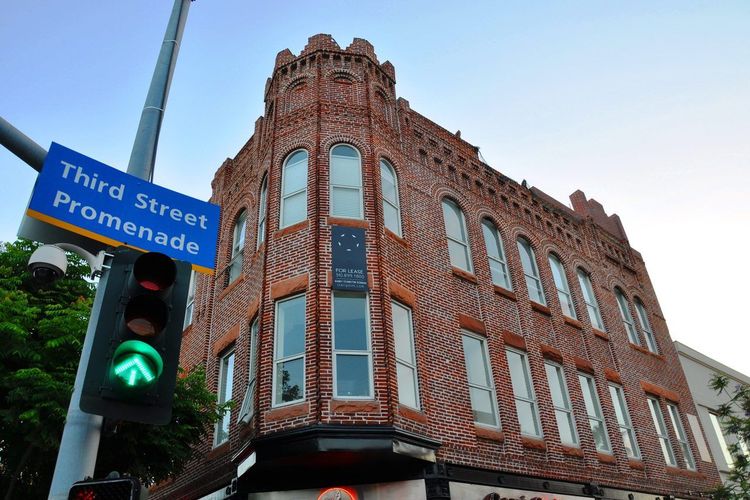
Walk two blocks inland and the mood changes completely. On the way, cut through Tongva Park, a sculpted hillside garden opposite City Hall named for the Indigenous people of the Los Angeles basin, with a lookout that frames the pier from above. Then continue to Third Street Promenade), a three-block pedestrian street lined with street performers, flagship stores and the topiary dinosaur fountains that have been a landmark since the late 1980s.
It gets loud on weekend evenings, so if you want to actually hear the buskers rather than just see them, arrive by 2pm. At the promenade's southern end sits Santa Monica Place), an open-air shopping center whose rooftop dining deck has one of downtown's better ocean views.
A downtown walking tour without any planning takes about ninety minutes if you go from the pier up Colorado Avenue, through the promenade and back via Santa Monica Place. Add thirty minutes if you catch the Downtown Farmers Market on Arizona Avenue, held on Wednesday and Saturday mornings, where many of the city's chefs do their own shopping.
Evening: Sunset over Ocean Avenue and Palisades Park
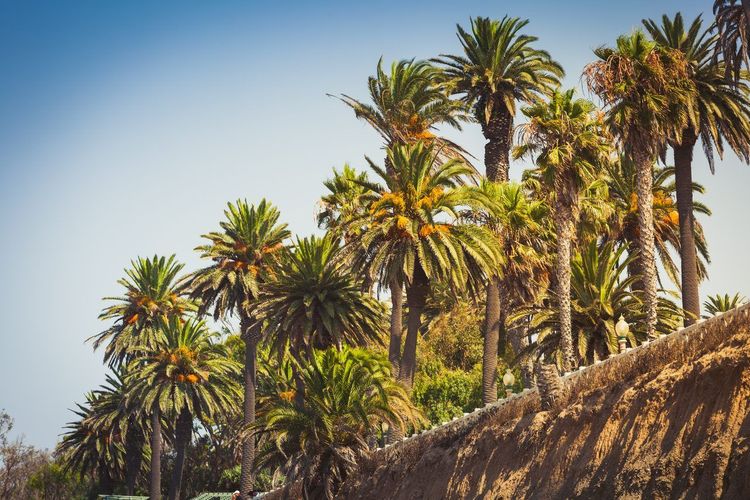
By late afternoon, walk north along Ocean Avenue to Palisades Park (851 Ocean Ave, Santa Monica, CA 90402, rated 4.7/5 on Google (8 147 avis)), a narrow strip of grass and palm trees that runs about 1.6 miles along the bluff above the beach.
This is where locals watch the sunset, not the pier. Find a bench near Arizona Avenue for an unobstructed view over the water, and look for the camera obscura inside the senior recreation center on Ocean Avenue, an optical curiosity dating from 1898 that still projects the street outside onto a table when the room is open. Dinner options line Ocean Avenue itself, many with a partial ocean view from an upper floor, so there is no need to walk far once the light fades.
Day 2: The Strand, Venice Beach and Montana Avenue
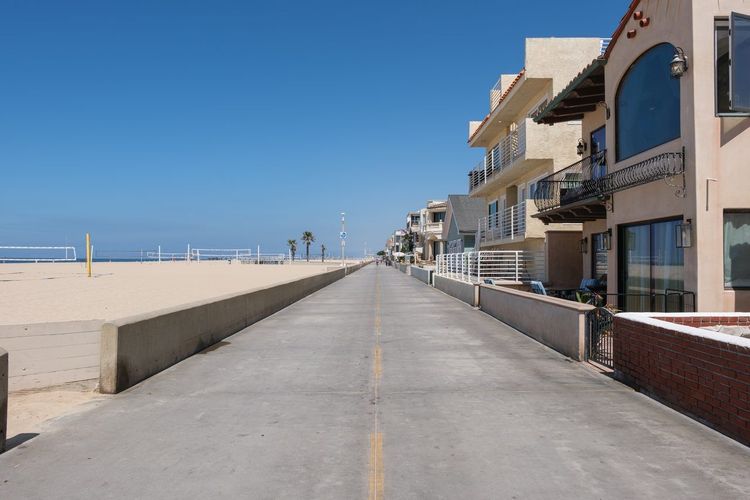
Morning: Biking the Strand from Santa Monica to Venice Beach
Rent a bike near the pier by 9am and you can reach Venice Beach before the boardwalk fills up. The Strand, officially the Marvin Braude Bike Trail, is a paved, mostly flat path that runs along the sand from Santa Monica through Venice and beyond. The pier-to-Venice stretch is about three miles one way, roughly twenty minutes of easy pedaling.
The scenery changes fast. Within the first minutes you pass Original Muscle Beach just south of the pier, then volleyball courts, before the path opens onto Venice Beach with its boardwalk vendors, the skate park, the Venice Canals a few blocks inland and the graffiti-covered Venice Art Walls, where the paint changes almost weekly.
Plan on two to three hours round trip if you stop to walk the boardwalk, longer if the canals pull you in. Rental shops near the pier charge by the hour or the day, and the day rate usually wins past the three-hour mark. Keep to the bike lane: pedestrians who wander onto the Strand are the most common cause of collisions, and weekend traffic on the path can be surprisingly dense.
Afternoon: Boutique shopping on Montana Avenue
Back in Santa Monica, Montana Avenue (Montana Ave, Santa Monica, CA 90403) runs through one of the city's quieter residential neighborhoods, and its boutiques feel deliberately low-key compared to the promenade.
Expect independent clothing shops, home-design stores and small cafés rather than chain retailers. The stretch between 7th and 17th Street is the most walkable section, and most shops close by 6 or 7pm, earlier than downtown. You will notice the change of pace immediately: more dog walkers than tourists, and baristas who know their regulars by name.
Evening: Dinner with an ocean view
For dinner, head back toward the coast. Several restaurants along Ocean Avenue and just south of the pier offer sunset-facing patios, and a reservation a day ahead is worth it on weekends. If cocktails matter more than the meal, aim for a table before 6:30pm in summer, when golden-hour light fills rooftop bars fast. Walk-in tables with a view are the exception on a Friday or Saturday night, not the rule. The full breakdown of where to eat, organized by occasion rather than by name, is further down.
Day 3: A Pacific Coast Highway Day Trip to Malibu
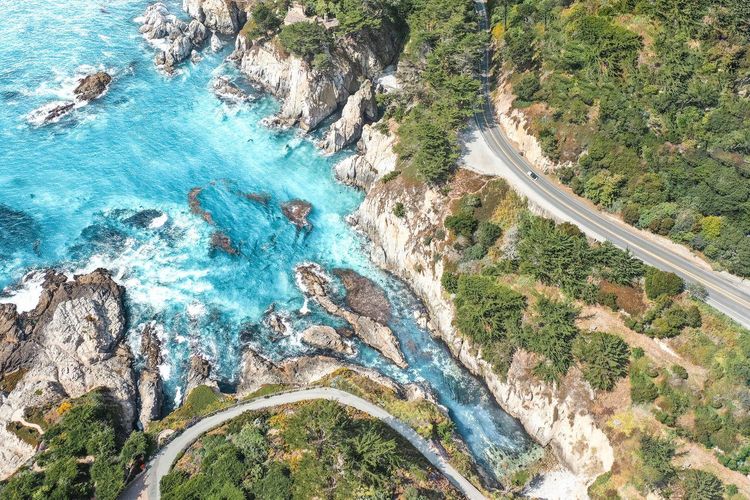
Morning: Driving the Pacific Coast Highway
Rent a car or book a rideshare for the day. Pacific Coast Highway (Highway 1) hugs the coastline north from Santa Monica, and the drive to Point Dume takes about 35 to 45 minutes without traffic, longer on summer weekends. Since the January 2025 Palisades Fire, rebuilding work continues on the stretch between Pacific Palisades and Malibu, so expect construction zones and lane shifts, and check Caltrans alerts before you leave.
Leave by 9am if you can. This stretch is the opening leg of the classic California road trip that continues up Highway 1 toward Big Sur and San Francisco, but for a single day, Malibu is destination enough. There is no toll and no single overlook that beats the others, so do not feel obliged to stop at every turnout.
Midday: Point Dume State Beach and Zuma
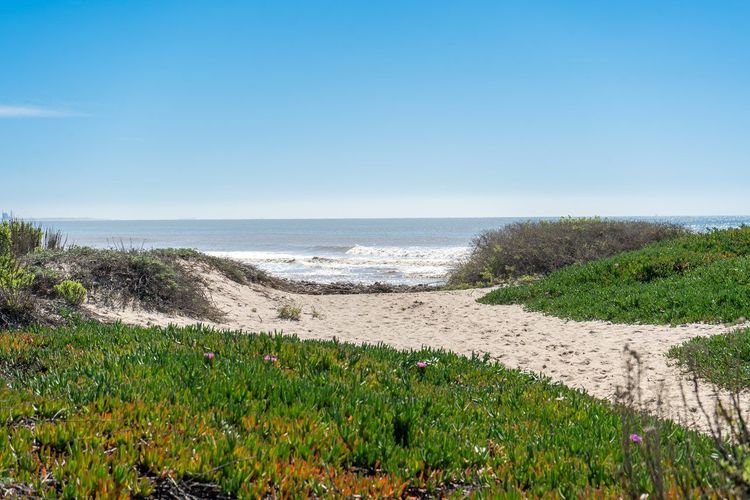
Point Dume State Beach) sits at the base of a headland that separates two of Malibu's best-known beaches, and the short bluff-top trail above the sand becomes a whale-watching platform from December to April, when gray whales pass close to shore.
One practical warning: Westward Beach Road is currently closed, so the lower parking lot is out of reach and you will need to park at the top of Point Dume, where spaces are limited. Arrive before 11am. Just north, Zuma Beach) offers wide sand, lifeguard towers and fewer rocks, better suited to swimming than tide-pooling.
Pack lunch or pick something up in Malibu beforehand; Zuma has only basic facilities. Two hours is enough to walk the point and still get sand time.
Afternoon: Adamson House and the Malibu Pier
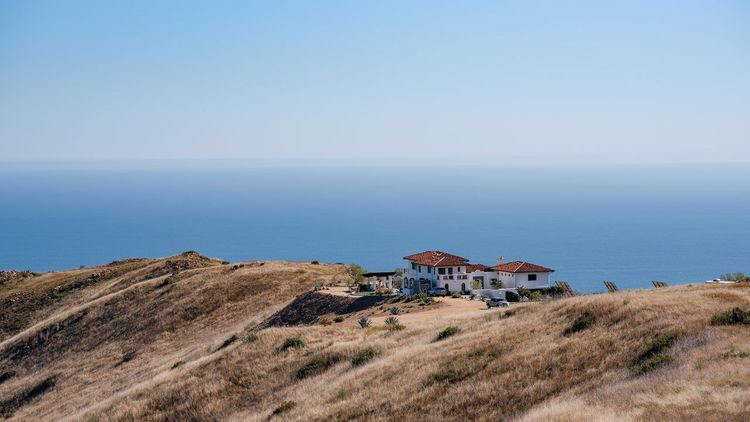
On the way back, stop at the Adamson House) at Malibu Lagoon, a 1929 Spanish Colonial Revival home covered floor to ceiling in Malibu Potteries tile.
Is it worth adding to a packed Malibu itinerary? If you care about design, yes: the grounds are open daily from 8am to sunset, and guided house tours run on select days, so check the schedule before you go. The tile work alone makes it one of the most photographed interiors on this coast, and the lagoon next door is a good spot for birdwatching.
The Malibu Pier (23000 Pacific Coast Hwy, Malibu, CA 90265, rated 4.5/5 on Google (8 674 avis)) stands a short walk away.
California State Parks has posted a closure order for the pier, so check current alerts before planning a last coffee there; if it is closed, the view from the Adamson House lawn covers the same stretch of surf.
Bergamot Station and the Santa Monica Arts District
Most Santa Monica itineraries skip this entirely, which is a mistake if you care about contemporary art. Bergamot Station occupies a former Red Car trolley depot east of downtown, converted in the 1990s into a complex of galleries and studios under one address.
Getting there is easy without a car: the Metro E Line stops at 26th Street/Bergamot, right next to the complex, a few minutes from Downtown Santa Monica station.
Contemporary galleries worth the detour
You will not have time to see everything, so pick a handful. Craig Krull Gallery and Peter Fetterman Gallery lean toward serious photography, while Rose Gallery and Von Lintel Gallery rotate contemporary work with shows that change every few weeks. Ask at the front desk of any gallery for a map of the complex, since the numbering is not intuitive. Most galleries are free, open Tuesday through Saturday, and close around 6pm.
Theatre, design studios and artspace
Beyond the gallery walls, Bergamot Station also houses City Garage Theatre, a small black-box venue known for experimental programming, and the studio of Montalba Architects, visible from the courtyard. An evening show at City Garage pairs well with a late gallery visit if you would rather skip the beach scene for one night.
Where to Eat in Santa Monica
Seafood with ocean views
The Lobster), at the foot of the pier on a site with seafood roots going back to the 1920s, is the restaurant most visitors mean when they ask for a table with a view.
Book a sunset table at least a week ahead in summer; the ocean-facing patio is the reason to go, and the kitchen leans toward simple, well-executed classics. If the wait feels unreasonable, walk a few minutes north along Ocean Avenue for comparable views at a slightly lower price.
Neighborhood favorites for lunch and brunch
For something less scene-driven, Rustic Canyon) on Wilshire Boulevard runs a produce-first menu shaped by the farmers market a few blocks away.
Elephante (1332 2nd St, Santa Monica, CA 90401, rated 4.2/5 on Google (3 400 avis)), a rooftop spot on Second Street, does a Mediterranean-leaning brunch among real palm trees.
Both fill up on weekends, so a weekday lunch is your best bet for a walk-in table. For a splurge, Mélisse, chef Josiah Citrin's tasting-menu restaurant on Wilshire, holds two Michelin stars, and Seline offers an intimate, inventive tasting menu nearby; both need bookings weeks ahead. For something quicker between stops, cafés along Montana Avenue cover coffee and pastries without a wait.
Sunset cocktails and happy hour
Happy hour in Santa Monica usually means a west-facing patio and a 4 to 6pm window. Elephante's rooftop and the bars along Ocean Avenue both work, but arrive early; by 6:30 the same seats become dinner reservations. A cold drink and the sun dropping into the Pacific is the simplest pleasure this city has to offer.
Hiking and Outdoor Escapes Near Santa Monica
Few visitors realize Santa Monica sits at the edge of an actual mountain range, and a morning on the trails is one of the clearest ways this trip beats a typical beach weekend.
Trails in the Santa Monica Mountains
Temescal Gateway Park (15601 Sunset Blvd, Pacific Palisades, CA 90272, rated 4.6/5 on Google (354 avis)), about fifteen minutes by car from downtown in Pacific Palisades, reopened on July 17, 2026 after damage from the Palisades Fire.
The famous Temescal Canyon Trail to the waterfall remains closed until further notice, but the rebuilt Rivas Trail climbs to scenic overlooks, and the Sunset Trail links up with the Temescal Ridge Trail and Topanga State Park. Hiking through a landscape in recovery is a striking experience: blackened trunks next to fresh green growth. Go early, carry water, and check the Mountains Recreation and Conservation Authority's updates before driving up, as trail status can change.
For a workout closer to town, the Santa Monica Stairs drop from Adelaide Drive toward Entrada Drive at the northern edge of the city: close to 200 steps that local runners climb again and again. Please keep noise down, since they sit in a residential street.
The Palisades Park bluff-top walk
If a mountain trail feels like too much, Palisades Park itself doubles as a flat, paved walking route along the bluffs, covered in Day 1 above. It will not replace a real hike, but it delivers the same ocean views with none of the elevation gain, a reasonable fallback if your third day already ran long at Point Dume.
Where to Stay in Santa Monica
Beachfront and boutique hotels
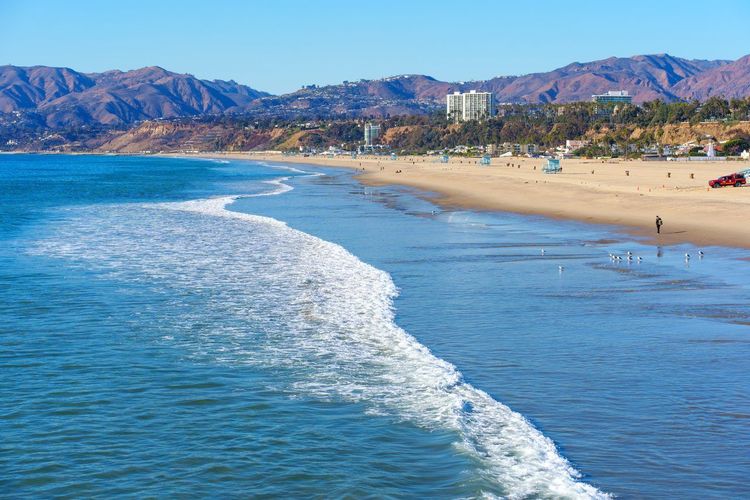
Staying within walking distance of Ocean Avenue puts nearly every Day 1 stop within fifteen minutes on foot, which matters more here than in most beach towns given how compact downtown Santa Monica is. Rooms with a direct Pacific view sit at the top of the price range, particularly on the bluff side of Ocean Avenue, where a west-facing room means watching the sunset from bed rather than looking at a parking structure. Boutique properties a block or two off the beach generally cost less while keeping the same ten-minute walk to the pier.
Budget-friendly and business-traveler picks
Further inland, toward Lincoln Boulevard and the edges of downtown, rates drop noticeably without adding much to the walk, and several properties cater to business travelers with extended-stay suites. Whichever neighborhood you choose, you will not need a car for most of this itinerary. From any hotel downtown, you can join Ryo's Santa Monica audio walk wherever you are, since the loop adapts to your position and takes about 1h30 to complete.
Getting to and Around Santa Monica
From LAX to Santa Monica without a car
Skipping the rental car is realistic here, which is not true of most Los Angeles trips. From the terminals, free shuttle buses run to the LAX/Metro Transit Center, the rail hub that opened in 2025 on the C and K lines. From there, either take the K Line north and change to the E Line west to Downtown Santa Monica, or board a Big Blue Bus heading up Lincoln Boulevard. Count on roughly an hour door to door. Rideshare pickups run around $35 to $50 depending on time of day, so transit wins unless you arrive with heavy luggage or a tight schedule.
Getting around: Big Blue Bus, bike and on foot
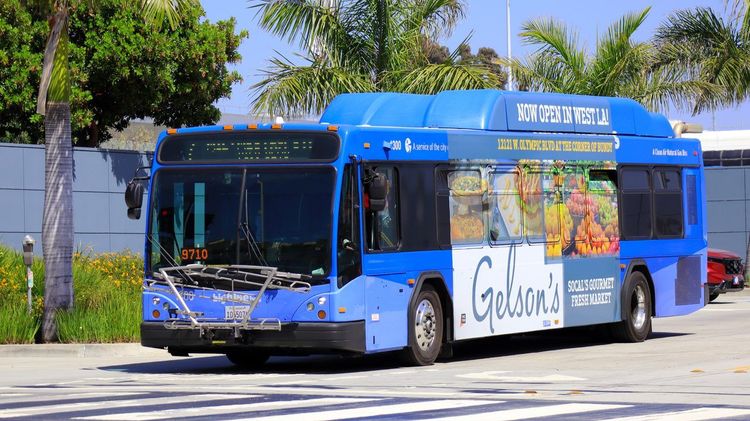
Once in town, the local Big Blue Bus network covers Santa Monica and reaches into Venice and West LA, with a contactless fare of $1.25 that includes a free transfer within two hours. Most of this itinerary does not need the bus at all: downtown, the pier and Palisades Park are all within a short walk of each other, Montana Avenue is a twenty-minute stroll north, and bike-share docks near the pier make the Venice run painless. Parking in the downtown public structures is free for the first 90 minutes before hourly rates kick in, generally cheaper than street meters for short stops.
Best Time to Visit Santa Monica
September and October are the best-kept secret of the Santa Monica calendar: the marine layer that fogs up early-summer mornings has usually burned off, ocean temperatures are at their warmest, and the summer crowds have thinned. Locals call the overcast pattern May Gray and June Gloom for a reason, since foggy mornings are common through early summer even when afternoons clear up.
Winter, from December through February, brings the lowest hotel rates and the best whale-watching odds off Point Dume, though ocean swimming is realistically off the table and rain, concentrated between January and March, can derail a Malibu day. Summer weekends bring the heaviest pier and beach crowds, along with parking that disappears by mid-morning in both Santa Monica and Malibu. If your dates are flexible, a shoulder-season week gives you a noticeably calmer version of this same itinerary.
Budget Tips for a 3-Day Santa Monica Trip
The single biggest saving is skipping the rental car: between the LAX rail connection and how walkable downtown is, most travelers spend little beyond a few Metro and Big Blue Bus fares, plus one rideshare or rental day for Malibu. The pier is free, Palisades Park is free, and the Third Street Promenade costs nothing beyond what you choose to buy.
Pacific Park sells rides individually as well as unlimited wristbands, so decide in advance which two or three rides matter before paying for all-day access you will not use. Bergamot Station's galleries are free to enter, which makes the arts district one of the best free afternoons of the trip. Point Dume and Zuma are public beaches with no entrance fee, only parking costs. Lunch from a Montana Avenue café or a casual downtown counter typically runs under $20, well below the pier's tourist-priced sit-down options.
If you want the stories behind the landmarks without booking a paid walking tour, the Ryo audio-guided route covers the pier, the carousel, Tongva Park, City Hall and the promenade in 14 narrated stops, which you can start and stop whenever you like.
FAQ
How many days do you really need in Santa Monica?
Three days covers the city properly: one day for the pier and downtown, one for Venice and Montana Avenue, and one for a Malibu day trip. Two days works if you skip Malibu, and a single day only covers the pier and Third Street Promenade, leaving out the arts district, the mountain trails and the coast further north.
Is Santa Monica walkable without a car?
Yes, for most of this itinerary. Downtown, the pier and Palisades Park sit within a short walk of each other, and the Big Blue Bus, the Metro E Line and bike-share fill the gaps to Montana Avenue, Bergamot Station and Venice. A car only becomes useful for the Malibu day trip on Day 3, and even that can be done by rideshare.
What is the best time of year to visit Santa Monica?
September and October, after the early-summer marine layer clears and before winter rain arrives. Summer brings the biggest crowds and the highest hotel rates, while winter offers lower prices and the best whale-watching, at the cost of chilly ocean temperatures.
Is it better to stay in Santa Monica or Venice Beach?
Santa Monica suits travelers who want a quieter base with easy walking access to the pier, downtown shopping and Montana Avenue, while Venice Beach suits those who want to be inside the boardwalk energy itself. The two are about twenty minutes apart by bike, so neither choice cuts you off from the rest of this itinerary.
How do you get from LAX to Santa Monica without a car?
Take the free shuttle from your terminal to the LAX/Metro Transit Center, then ride the K Line and E Line to Downtown Santa Monica, or take a Big Blue Bus up Lincoln Boulevard. The trip takes about an hour and costs a fraction of a rideshare.
Is a day trip to Malibu worth it from Santa Monica?
Yes, if you have three days rather than two. The drive up Pacific Coast Highway to Point Dume and the Adamson House fills a full day with stops, and it shows a completely different side of the coastline, from wide state beaches to 1920s tile architecture. Check current road work and closures first, as the area is still rebuilding after the 2025 fires.
Three days is enough to see Santa Monica properly without squeezing the mountains, the arts district or the Malibu coastline into one overpacked afternoon. Follow the pier and downtown on Day 1, let Day 2 pull you south to Venice and north into Montana Avenue's boutiques, and save Day 3 for the Pacific Coast Highway, the part most short trips skip.
If you would rather explore at your own pace than follow a printed itinerary block by block, the Ryo audio guide to Santa Monica walks you from the End of the Trail sign through downtown in about an hour and a half, narrated stop by stop. Whichever way you split the three days, start early each morning: parking, crowds and the marine layer all work against you the later you wait.