© Shutterstock
 Votre guide Ryo
Free Vienna in 2026: 16 Must-Do Experiences Without Spending a Euro
Vienna has a reputation as one of the most expensive capitals in Central Europe, yet its finest treasures can be admired without opening your wallet. Here is where to find the best free activities in Vienna, from Belvedere Park to the vineyards of Grinzing. The imperial gardens of Schönbrunn open at dawn with no paid barrier, the spire of St. Stephen's Cathedral dominates the old town and can be admired from the square, and the Danube Island attracts thousands of Viennese every summer for a picnic that costs nothing. Many of these stops are featured on the Ryo audio-guided tour of Vienna.
Over the 16 stops that follow, you will pass through four parks open all year with no entrance fee, a cemetery where Beethoven and Schubert rest a few meters from each other, federal museums with no ticket for visitors under 19, and a transport network where little ones travel without a ticket. Between colorful façades, a centuries-old market and open-air concerts in summer, the city is best discovered on foot, at a pace that leaves you time to stop.
1. Stroll Through the Gardens of Schönbrunn Palace
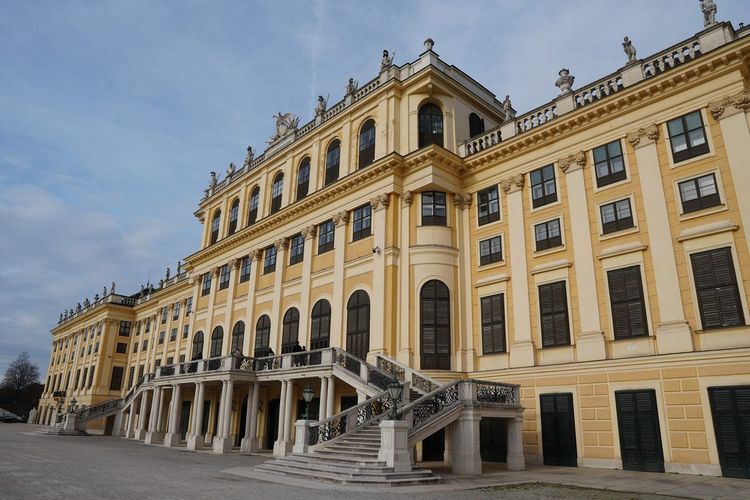
The 160 hectares of the Schlosspark Schönbrunn (Schönbrunner Schloßstraße 47, 1130 Wien, rated 4.8/5 on Google from 61,029 reviews) open at 6:30 a.m. and close at nightfall, with no ticket required. This is the part of the estate that many hurried visitors overlook: only the palace itself, the maze, the zoo, the Palmenhaus and the Gloriette panoramic terrace require payment. The great parterre, aligned on the palace axis up to the hill overlooking the park, can be walked freely all year round, in spring as in winter.
Walk up to the Gloriette: from the outer esplanade, the view over the rooftops of Vienna rewards about twenty minutes of gentle uphill walking from the palace. Along the way, the Neptune Fountain and the artificial Roman ruins offer two photogenic stops, and the French-style trimmed flowerbeds change color almost every month.
You can enter through several free gates, the most convenient being the one near the U4 Schönbrunn metro station. The open lawns, away from the protected flowerbeds, are perfect for a seated break. Even without going through the Palmenhaus ticket office, the large glass-and-iron greenhouse from 1882 can be admired from the outside, to the west of the parterre.
The Ryo sub-tour The Empress of Austria tells the story of Sisi in audio up to the edge of these same gardens, a good way to combine Habsburg history with your walk. Arrive before 9 a.m. in summer: organized groups flood the central avenue as soon as the palace opens.
2. Admire the Gardens of the Belvedere Palace
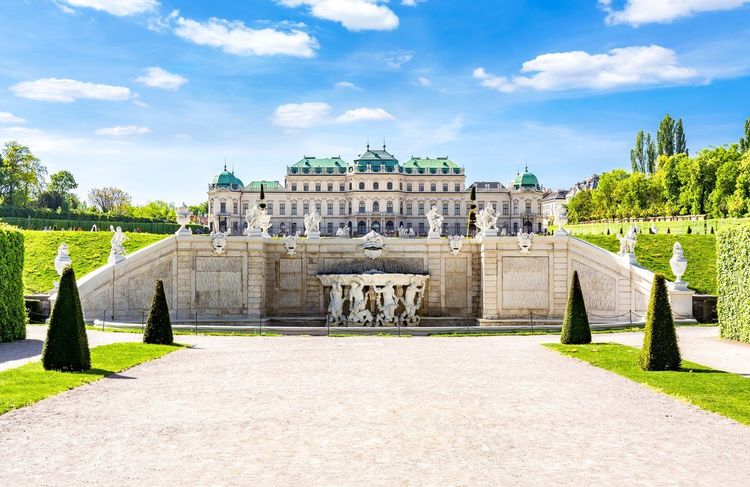
Unlike the Belvedere's art collections, which require a ticket, the gardens of the Palace of the Belvedere can be visited from morning to evening without any ticket being asked of you. The sloping park links the Lower Belvedere to the Upper Belvedere over nearly 500 meters, dotted with cascading basins, stone sphinxes and hedges trimmed to perfection in the purest Baroque style.
From the terrace of the Upper Belvedere, the view over the city center and the spire of St. Stephen's is among the finest in Vienna, on a par with the one from the Gloriette but with less effort. If you come early in the morning or late in the afternoon, you will often have the garden almost to yourself, even in high season.
The pond in front of the Upper Belvedere reflects the façade on calm days. Allow about thirty minutes to walk up the park from one end to the other, a little longer if you stop at every level.
3. Recharge at the Stadtpark and the Burggarten
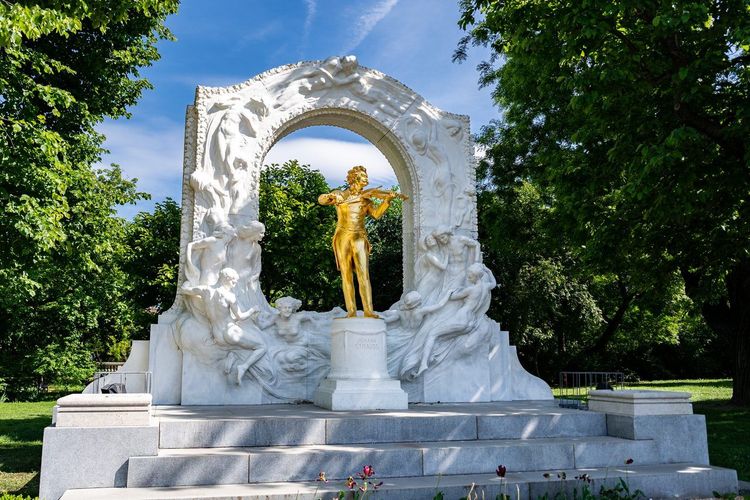
The Stadtpark, laid out in 1862 along the Wien River, remains the most popular green lung of the center. Its golden statue of Johann Strauss the Younger, violin in hand, attracts dozens of photographers every day, but the park deserves more than a selfie: romantic flowerbeds, the Kursalon pavilion and benches in the shade of plane trees.
A quarter of an hour's walk away, the Burggarten (Opernring, 1010 Wien, rated 4.7/5 on Google from 12,564 reviews), a former private garden of the Habsburgs opened to the public in 1919, offers a more intimate atmosphere. The statue of Mozart, preceded by a flowered treble clef, and the Art Nouveau façade of the greenhouse (the Palmenhaus of the Burggarten, now a café) make it a popular break between the Hofburg and the Opera.
Both parks lend themselves equally well to a lunch break or a stroll after eating, and you will never pay an entrance fee.
4. Discover the Hundertwasserhaus and Its Unusual Architecture
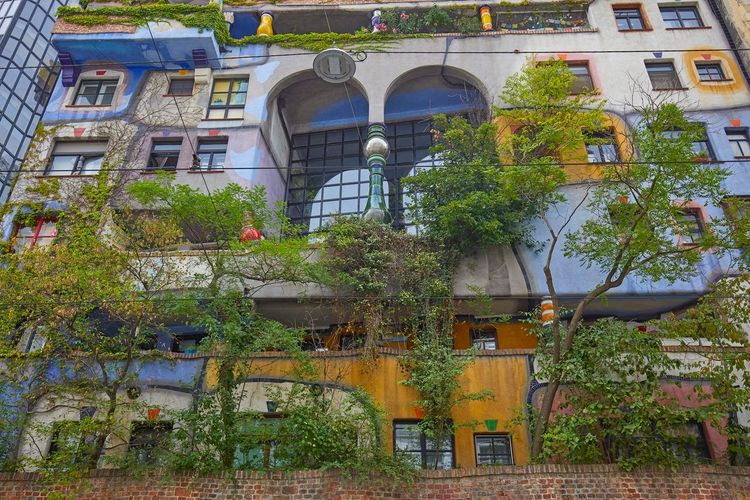
You cannot mistake the Hundertwasserhaus (Kegelgasse 36-38, 1030 Wien, rated 4.5/5 on Google from 35,374 reviews) for anything else in the Landstraße district: undulating façades, multicolored ceramics, trees growing straight out of balconies and deliberately uneven floors are the hallmarks of this social housing project completed in 1985. The visit is limited to the exterior, as the interior remains a residential building, but that is more than enough to grasp the approach of the artist Friedensreich Hundertwasser.
Hundertwasser rejected straight lines, which he considered contrary to human nature: the building's windows come in varied shapes, and he defended the right of residents to decorate the area around their own. The Ryo audio guide details this ecological approach and the anecdotes surrounding the colorful façades, a good complement if you want to understand the building rather than just photograph it.
Just opposite, the Hundertwasser Village, a small shopping passage in the same colors, can be walked through freely. The Kunst Haus Wien, a museum dedicated to the artist, is five minutes away on foot and requires a ticket, but its checkerboard façade alone is worth the detour.
You can reach the district by tram (line 1, Hetzgasse stop), about fifteen minutes from the historic center. The surrounding streets, residential and little visited by tourists, show a more everyday Vienna, a contrast that makes the Hundertwasserhaus all the more surprising when it appears around a street corner.
5. Explore the MuseumsQuartier (MQ), One of the Largest Cultural Districts in Europe
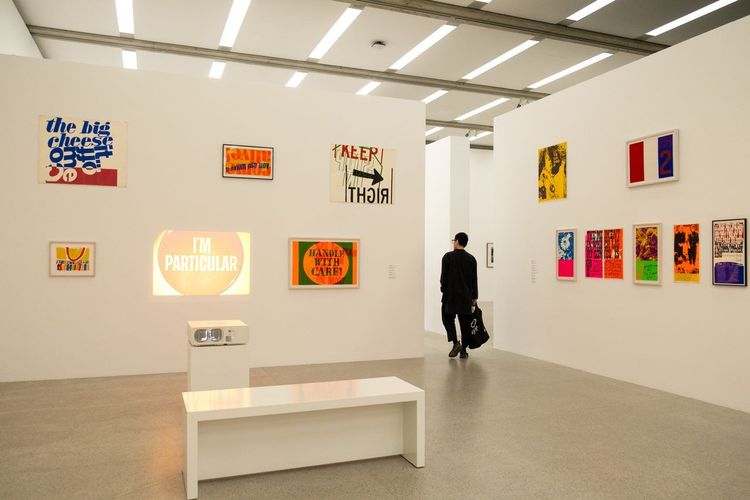
With 90,000 m² spread across converted former imperial stables, the MuseumsQuartier is among the largest cultural complexes in the world. The Leopold Museum, the mumok and the Kunsthalle require a ticket, but the inner courtyards remain open day and night with no ticket needed.
In summer, the Enzis, those large colorful benches scattered across the main courtyard, become the informal meeting place of students and families, sometimes with DJ sets or open-air readings in the evening. You can also glance at the art displays and installations in the district's passages, such as the Q21 space and its open studios.
The contrast between the Baroque façade on the Museumsplatz side and the contemporary cubes of the Leopold Museum (white limestone) and the mumok (gray basalt) sums up the spirit of the place: a permanent dialogue between imperial heritage and current creation.
The Ryo audio tour that crosses the MuseumsQuartier tells the story of the conversion of the former imperial stables as you walk, a useful detour to understand why these buildings now house contemporary art rather than horses.
6. Step Inside St. Stephen's Cathedral (Stephansdom)
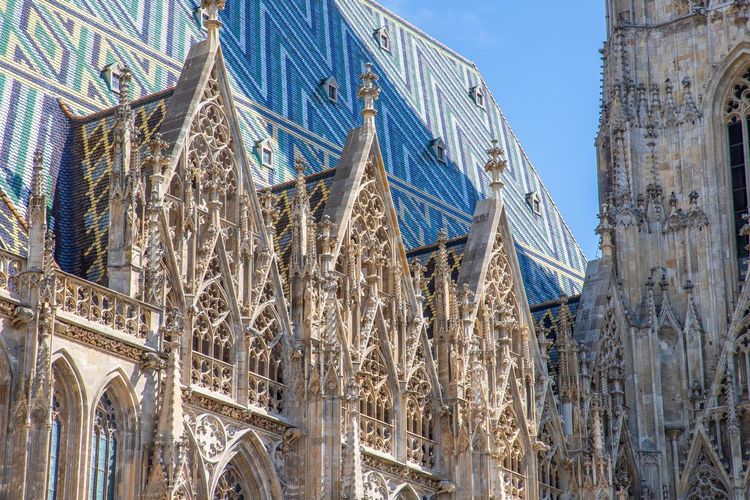
The rear nave of St. Stephen's Cathedral (Stephansdom (Stephansplatz 3, 1010 Wien, rated 4.7/5 on Google from 140,144 reviews)), the symbolic heart of Vienna since the 12th century, remains open without a ticket outside of services. Climbing the towers, the catacombs and the full tour of the nave with audio guide require payment. Simply look up at the Gothic vaults to understand why the Viennese affectionately nickname their south tower "Steffl".
The roof, covered with 230,000 glazed tiles in geometric patterns, including the Habsburg double-headed eagle on the south side, can be admired from the square. The south spire, completed in 1433 and rising to 136 meters, remains visible from many points in the center, a handy landmark so you never get lost in the alleys of the 1st district.
Inside, the stone pulpit carved in the early 16th century deserves a stop: tradition holds that its creator, long identified as Anton Pilgram, depicted himself leaning out of a trompe-l'œil window, the famous "Fenstergucker". The Pummerin bell, the largest in Austria at around 20 tons, is located in the north tower, accessible only with a ticket, but its New Year's chime can be heard from all over the square.
It is a central stop on the Ryo audio-guided tour of Vienna, which tells the story of the south spire and the roof tiles directly on Stephansplatz, without depending on guided tour schedules. Avoid midday in summer: between 11 a.m. and 3 p.m., the square becomes one of the busiest spots in the city, with horse-drawn carriages and organized groups.
7. Walk Along the Danube and Reach the Danube Island (Donauinsel)
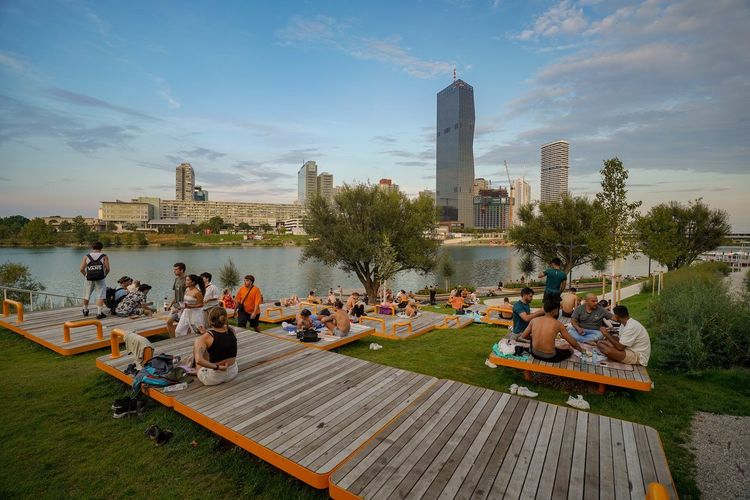
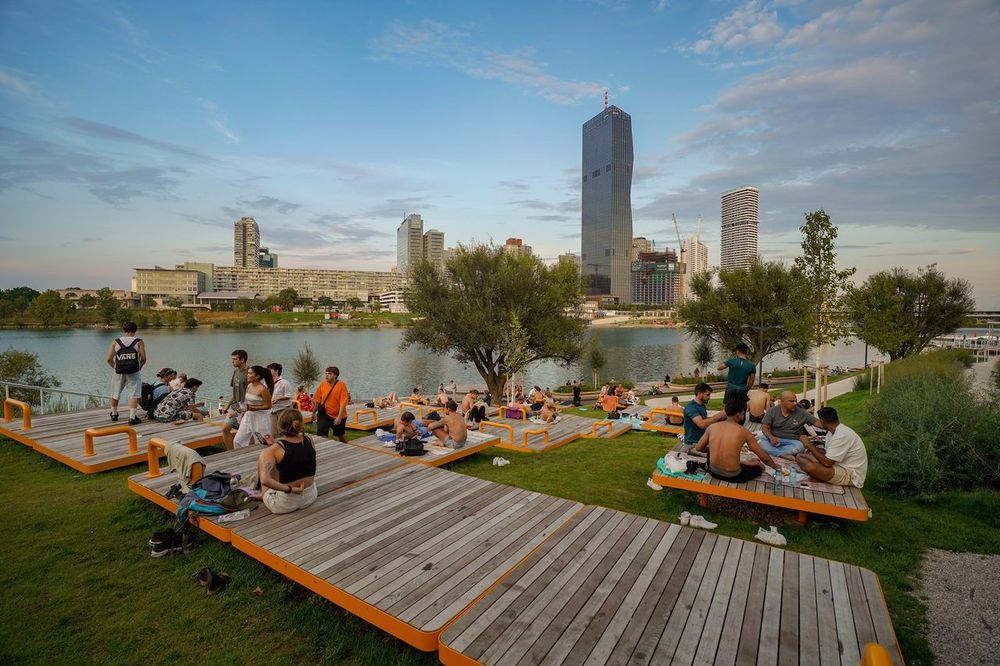
About 21 kilometers long, the Danube Island (Donauinsel (1210 Wien, rated 4.7/5 on Google from 15K reviews)) separates the river from the New Danube and is the Viennese's great summer playground: free swimming, continuous cycle paths, authorized barbecue areas and pebble beaches where you can lay down a towel without a reservation.
You get there directly by metro line U1 (Donauinsel station) in a few minutes from Stephansplatz, then choose the wilder northern part or the more developed southern part. The Donauinselfest, a free festival in late June, gathers several million visitors over three days around dozens of music stages.
On the banks of the Danube, below the Reichsbrücke, several developed quays serve as a petanque court, a skate spot or simply a picnic place at sunset. Think about bringing a bike: if your accommodation lends them, take advantage of it, otherwise the city's bike-sharing bikes cost little, and the path runs the entire length of the island with no car crossings.
In winter, the island loses its crowds but keeps its charm: the long, almost deserted views over the river offer another side of Vienna, far from the postcards of the Baroque center, with the occasional swans or grey herons along the banks.
8. Visit the Wien Museum Karlsplatz and Stroll Around Karlsplatz
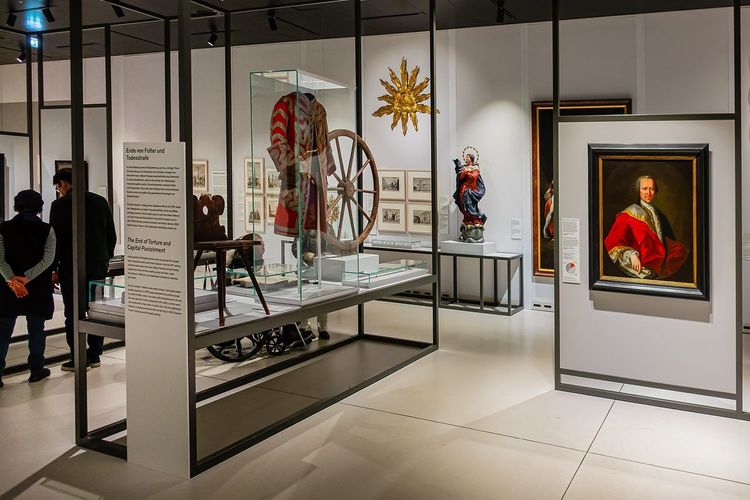
Reopened in late 2023 after several years of renovation, the Wien Museum, dedicated to the history of the capital, offers a permanent collection with free access, with only temporary exhibitions requiring payment. You follow the history of the city from prehistory to today, with a view of the Karlskirche from the top-floor terrace along the way.
Right in front, Karlsplatz (1040 Wien, rated 4.6/5 on Google from 12K reviews) brings together the Baroque Karlskirche, whose dome and two columns can be admired from the pond, two Art Nouveau pavilions designed by Otto Wagner and a park where the Viennese come to read between appointments. The square also serves as an interchange between lines U1, U2 and U4.
The two pavilions of the former city railway station, built by Otto Wagner in 1898-1899, with their green iron structure and golden sunflowers, are among the most photographed examples of Viennese Art Nouveau. One houses a small exhibition dedicated to the architect, the other a café.
Check the opening days before you go: the Wien Museum is closed on Mondays.
9. Walk the Ringstrasse and Its Monuments (Parliament, Opera, City Hall)
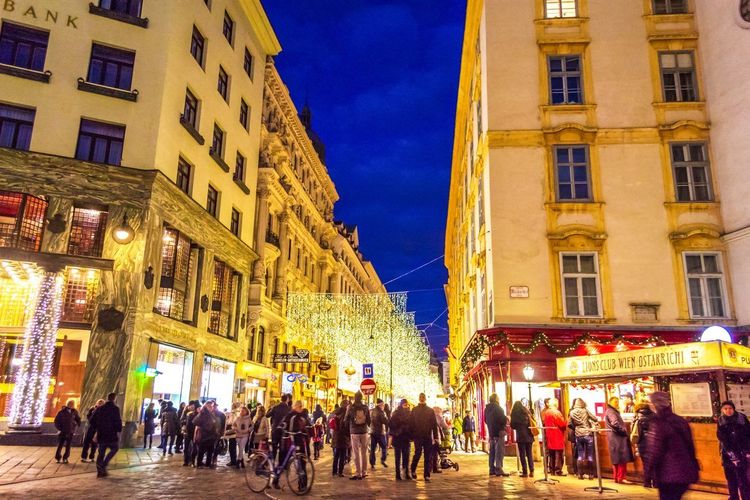
Laid out on the site of the former fortifications, demolished by decision of Emperor Franz Joseph in 1857, the Ringstrasse encircles the historic center over about 5.3 kilometers and concentrates the most emblematic monuments of imperial Vienna, all admirable from the sidewalk.
The Austrian Parliament, with its neo-Greek façade and its Pallas Athena fountain, reopened in 2023 after a complete renovation. If you enjoy political history, note that its guided tours and its interactive visitor center, the Demokratikum, are free of charge (booking recommended for the tours).
The Vienna State Opera (Wiener Staatsoper (Opernring 2, 1010 Wien, rated 4.7/5 on Google from 63,871 reviews)), inaugurated in 1869, displays a neo-Renaissance façade that you can study in detail from the Opernring.
The City Hall (Rathaus), with its 98-meter neo-Gothic tower topped by the "Rathausmann", completes this architectural walk, as do the Burgtheater facing it and the former Stock Exchange a little further along the same axis.
Along the rest of the route, the Votivkirche, completed in 1879 in thanks for the emperor surviving an assassination attempt, and the twin museums of art history and natural history face each other across Maria-Theresien-Platz. Their sculpted façades can be admired freely, even if the interior requires a ticket for adults.
The Ryo audio-guided tour of Vienna runs along part of the Ringstrasse and comments on the façades of the Parliament and the Opera as you walk, a way to string these monuments together without looking up their history on a sign. Allow about two hours to walk the full circuit, or take trams 1 and 2, which follow a good part of the Ring with a simple transport ticket.
10. Attend an Open-Air Concert, Opera or Ballet
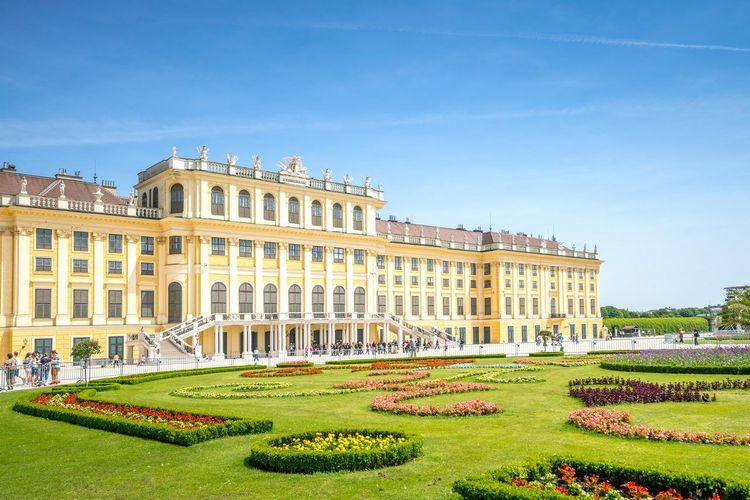
The most spectacular event takes place in June: the Summer Night Concert (Sommernachtskonzert) by the Vienna Philharmonic is held in front of Schönbrunn Palace, with free access, before tens of thousands of spectators settled in the park. Arrive several hours early if you want a spot with a view of the stage.
From July to early September, the Film Festival on the Rathausplatz screens filmed operas, ballets and concerts every evening on a giant screen in front of City Hall, with no ticket. In season, the State Opera also broadcasts some performances live on a screen set up against its façade, on the Herbert-von-Karajan-Platz side ("Oper live am Platz").
Standing-room tickets at the State Opera, sold a few days ahead or on the day itself depending on the performance, cost around 13 to 18 euros: it is not free, but it is the cheapest way to experience a real opera in the hall.
The schedule of these events varies from one season to the next: check the city's official program one to two weeks before your stay.
11. Wander Through the Naschmarkt
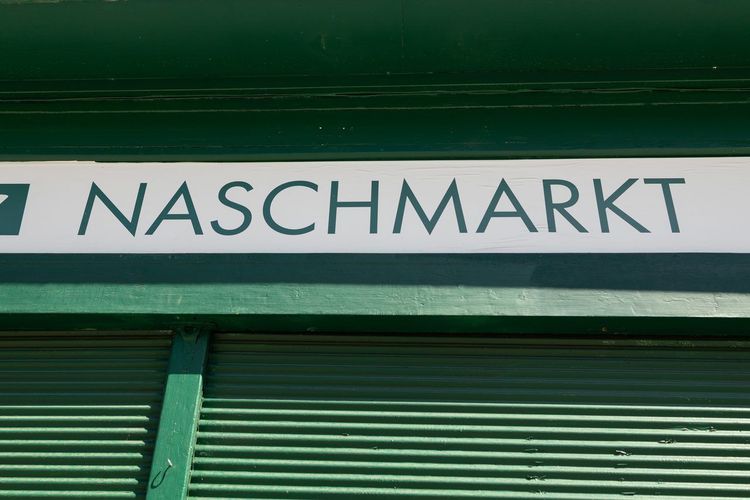
Walking through the Naschmarkt (Wienzeile, 1060 Wien, rated 4.4/5 on Google from 18K reviews), Vienna's most famous market, will cost you nothing: only purchases and tastings are paid. Along about 1.5 kilometers of stalls, spices, Austrian cheeses, Balkan products and street food stands follow one another from Monday to Saturday.
On Saturday mornings, a flea market sets up as an extension of the food market, on the Kettenbrückengasse side, a favorite among bargain hunters and curious visitors alike. The atmosphere changes with the time of day: lively in late morning, noticeably calmer in mid-afternoon.
Look up toward the Linke Wienzeile: the buildings by Otto Wagner, including the Majolikahaus with its floral ceramics, line the market and are worth the detour if you are interested in Secession architecture.
12. Push Open the Doors of the University of Vienna
Founded in 1365, the University of Vienna is among the oldest in the German-speaking world. Its main building on the Ring, built in a neo-Renaissance style and inaugurated in 1884, lets you enter its hall and its large arcaded courtyard, outside the areas reserved for students.
The busts of illustrious professors lined up under the arcades and the grand staircase give a taste of the academic atmosphere, a stone's throw from the Rathaus. Ten minutes are enough, an easy detour to slip between two stops on the Ringstrasse.
13. Stroll Through Vienna's Central Cemetery (Zentralfriedhof)
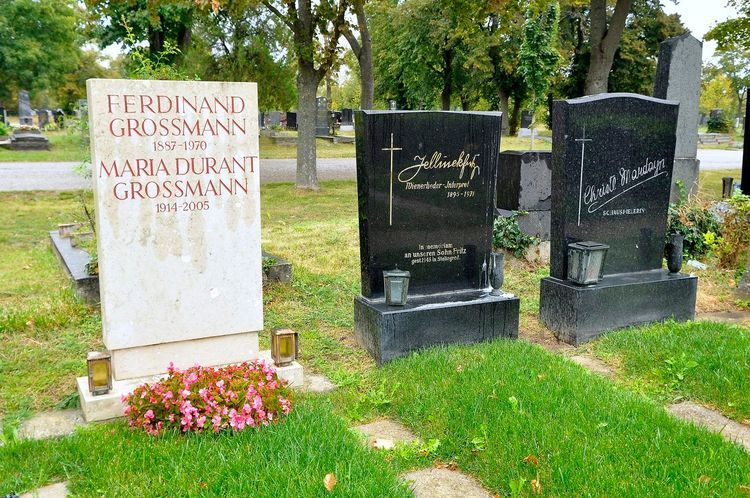
With some 330,000 graves spread over nearly 2.5 km², the Central Cemetery of Vienna (Zentralfriedhof (Simmeringer Hauptstraße 234, 1110 Wien, rated 4.7/5 on Google from 1,311 reviews)) is among the largest in Europe, and you can enter all year round without a ticket. In the section of honorary graves (group 32A), Beethoven and Schubert rest a few meters from each other, near the monument to Mozart and the graves of Brahms and the Strauss family.
The singer Falco, who died in 1998, also rests there, beneath a tall marble stele where his silhouette is engraved on glass, very different from the 19th-century monuments surrounding it. Pick up a map at the main entrance (gate 2): the site is immense and is easier to cover by bike, which is allowed on the paths.
The place surprises with its calm and its centuries-old trees: the Viennese come to run or walk there with their families on Sundays, and you may even come across roe deer in the most secluded sections. Tram 71 drops you there from the Ring.
14. Enjoy a Glass in the Vineyards of Grinzing
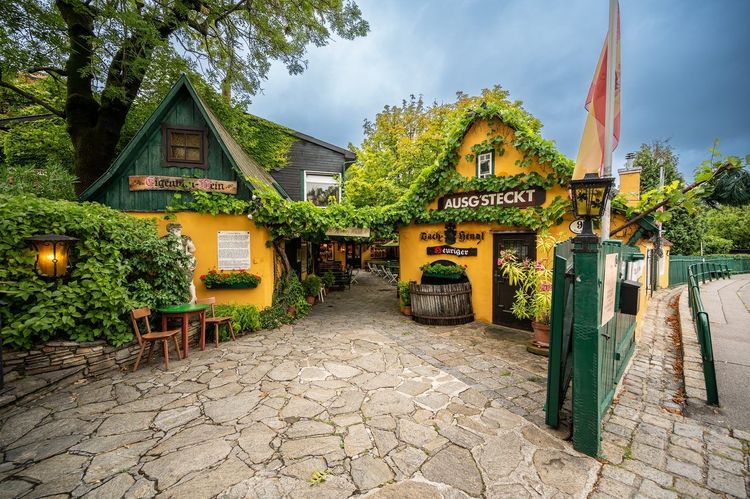
At the northern gates of the city, the wine-growing village of Grinzing (Cobenzlgasse, 1190 Wien, rated 4.4/5 on Google from 3.2K reviews) preserves alleys lined with low houses and vines that climb the hills of the Vienna Woods. The walk through the plots, along the marked trails toward the Kahlenberg, offers an open view of Vienna, very different from the Baroque center.
The Heurigen, those wine taverns recognizable by the pine branch hung above the door, serve the year's wine from local producers. Drinks are paid for, of course, but a single glass of Gemischter Satz is enough to enjoy the garden.
Tram 38 links Schottentor to Grinzing in about twenty minutes, a ride that runs along residential suburbs and then the first vines. If you have good legs, continue to the Kahlenberg: the view of the Danube from the terrace costs nothing.
15. Take Advantage of Free Museums and Cultural Deals
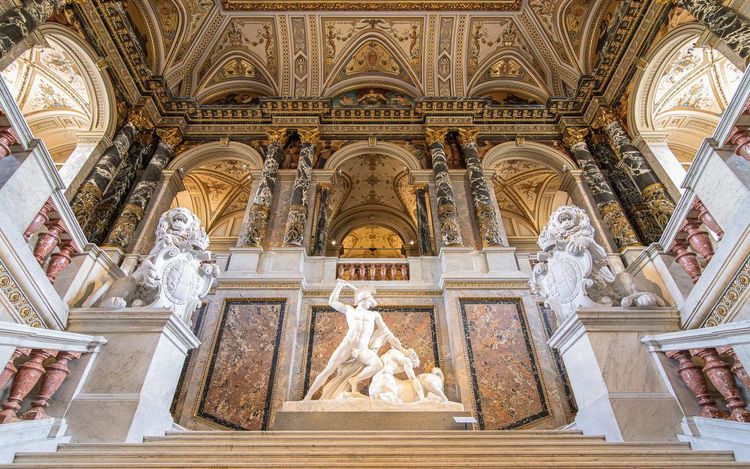
Visitors under 19 enter Austria's federal museums free of charge (Kunsthistorisches Museum, Belvedere, Albertina, Naturhistorisches Museum, MAK, mumok, National Library), upon presentation of an ID. If you are traveling with teenagers, only the adults therefore pay for a ticket.
The MUSA, a branch of the Wien Museum located on Felderstraße, just behind City Hall, shows contemporary Viennese art with free access, Tuesday to Sunday from 10 a.m. to 6 p.m. It is one of the best entry points for discovering local creation without spending money.
Lesser known, the water towers of Vienna (Wassertürme), former 19th-century municipal reservoirs, are among the least documented curiosities of the city. The Wasserturm Favoriten (Windtenstraße, 1100 Wien), in the 10th district, opens its doors on occasional visit days announced by the city, and its adjoining park remains accessible the rest of the time.
Keep a useful rule in mind: in Vienna, the permanent collection (Wien Museum, MUSA) is often free to access, while temporary exhibitions require payment. Check the pricing policy before you go.
For cultural evenings, the "Long Night of Museums" (Lange Nacht der Museen), in early October, opens dozens of venues until 1 a.m. with a single moderately priced ticket. In late September, Heritage Day (Tag des Denkmals) gives free access to monuments usually closed to the public.
Finally, several independent galleries in the Neubau district, around Siebensterngasse, show young Viennese artists with no ticket, an alternative to the major institutions if you are looking for a more intimate scene.
16. Practical Tips: Transport, Tourist Information and Family Activities
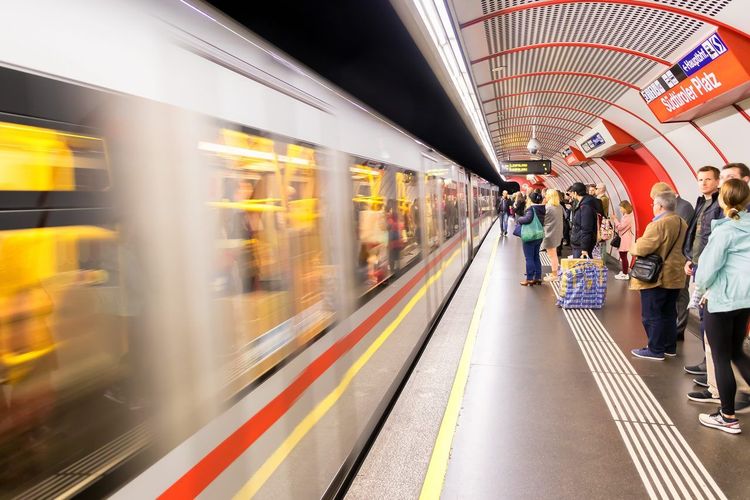
Children under 6 travel without a ticket on the entire Wiener Linien network, and children under 15 enjoy the same benefit on Sundays, public holidays and during Viennese school vacations. If you are visiting the city with your family for several days, the difference quickly shows in your budget.
The main Tourist-Info, on Albertinaplatz behind the Opera, hands out maps, brochures and advice in several languages free of charge, including on current events.
For families, several playgrounds set up in the large parks (Stadtpark, Augarten, Prater) welcome you all year round, some with water games in summer. In the Prater, the great tree-lined avenue (Hauptallee) can be freely walked, cycled or rollerbladed over more than 4 kilometers, and only the amusement park rides cost money. The WIENXTRA facilities, dedicated to children and young people, also provide information on activities taking place across the city.
To extend your discovery, the Ryo guide to visiting Vienna in 2 days and the Ryo top 6 activities to do in Vienna detail complete itineraries that combine several of these stops with the essential paid sites.
Walk rather than multiplying metro rides: most of the sites on this list are less than 30 minutes' walk from one another in the historic center, which saves you transport costs while letting you discover streets overlooked by tour groups. The official WienMobil app finally brings together timetables, routes and bike-sharing bikes.
FAQ
How much time should you plan to visit Vienna for free?
Allow three to four days to cover most of the stops on this list at a comfortable pace. Two days are enough for the historic center (Stephansdom, Ringstrasse, Naschmarkt, MuseumsQuartier), leaving Schönbrunn, Grinzing and the Central Cemetery, which are farther out, for a third day.
Is Vienna an expensive city to visit?
Accommodation and dining weigh on the budget, especially in high season. But a large part of the architectural and natural heritage (imperial parks, Ringstrasse façades, Danube banks) remains accessible free of charge, which lets you put together a rich trip while keeping your spending under control.
Are museums really free in Vienna?
Not all of them. The permanent collection of the Wien Museum and the MUSA are free for everyone, and federal museums do not charge visitors under 19. Temporary exhibitions are almost always paid, and adults pay admission to the major museums.
What is the best time to enjoy free activities in Vienna?
Spring and early autumn offer the best compromise between mild weather and moderate crowds in the parks. Summer remains ideal for open-air concerts and festivals (Sommernachtskonzert, Film Festival, Donauinselfest), but it also draws the biggest crowds to Schönbrunn and Stephansplatz, which are best visited early in the morning.
How can you get around Vienna for free?
On foot, quite simply: the sites in the historic center are often less than 30 minutes from one another. On the Wiener Linien network, children under 6 always travel without a ticket, and children under 15 do so on Sundays, public holidays and during Viennese school vacations.
Do you need to book in advance to visit the Schönbrunn or Belvedere gardens?
No, access to the gardens requires neither a ticket nor a reservation, unlike Schönbrunn Palace and the Belvedere galleries. Only the paid attractions located in the parks (maze, zoo, Palmenhaus) may require a time slot in high season.
Discovering Vienna without spending is therefore not a bargain-bin compromise: it is another way of experiencing the city, between imperial gardens, Art Nouveau façades and a centuries-old market. The few unavoidable expenses (transport, meals, possibly a museum entrance) are largely offset by the density of freely accessible sites, from the historic center to the vineyards of Grinzing.
To link several of these stops without replanning your route at every turn, the Ryo audio guide to Vienna comments on the main sites of the historic center as you walk, with imperial anecdotes and architectural details you do not always notice on your own. It turns this list into a concrete walk, at your own pace.
À lire également