© Shutterstock
 Votre guide Ryo
Visit Vienna in 2 Days: The Complete Itinerary of Austria's Imperial Capital in 2026
Vienna has topped the global quality-of-life ranking seven years running — an amusing paradox for a capital so often imagined frozen in the velvet of its imperial salons. Visiting Vienna in 2 days is nonetheless enough to understand that reputation: the historic center is entirely walkable, century-old cafés have been serving the same Sachertorte since 1876, and the tram connects the Gothic spire of the cathedral to the 1,441 rooms of Schönbrunn Palace in twenty minutes. Our Ryo audio-guided tour of Vienna accompanies you through these cobbled streets, headphones on, without ever having to pull out a paper map.
Over two well-paced days, you'll climb onto the glazed-tile roof of Stephansdom, wander the gardens where Empress Sissi came to escape the formality of court life, and perhaps end the second evening 65 meters up in a cabin of the Prater's giant Ferris wheel, built in 1897 and still in operation. In between, there will be cafés where you can sit and read the newspaper for three hours without anyone raising an eyebrow, a market for snacking before heading off to see Art Nouveau, and a Baroque palace built for Prince Eugene that became one of Europe's finest galleries. More than enough to fill a weekend without ever having to rush.
Day 1 – Morning: St. Stephen's Cathedral and the Pedestrian Historic Center
Devote this first morning to the city's densest historic triangle, between a Gothic cathedral and Baroque pedestrian streets. Everything is on foot, making it an ideal introduction after a night flight or train journey. The Vienna audio-guided tour starts from this very square — a good option if you'd rather walk with headphones on than nose-deep in a guidebook.
Stephansdom and Stephansplatz, the Beating Heart of Vienna
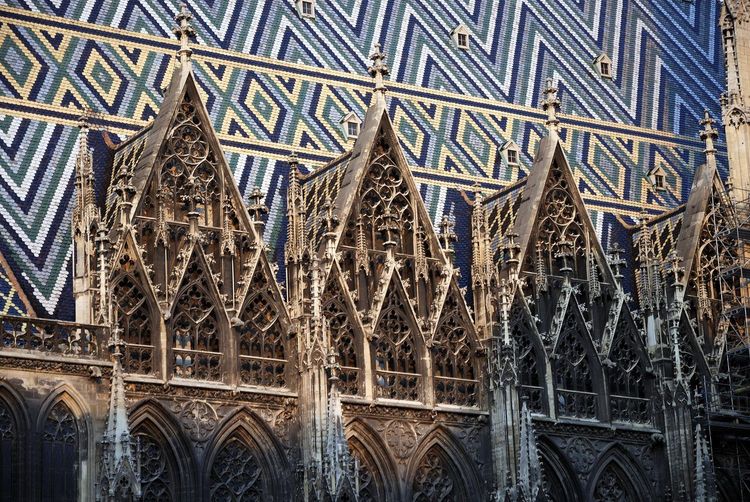
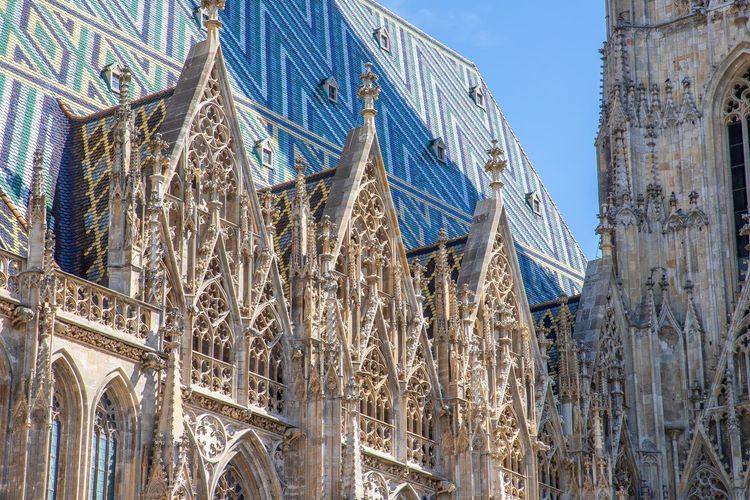
Start at Stephansplatz, the square that has set the pulse of the city center for eight centuries. All of Vienna seems to converge on this cobblestone esplanade, dominated by St. Stephen's Cathedral, begun in the 12th century in a Romanesque style before subsequent centuries added a Gothic spire reaching 136 meters — affectionately nicknamed the "Steffl" by Viennese locals. The roof, covered with 230,000 glazed tiles, depicts the double-headed Habsburg eagle on its south side, a motif you can only really appreciate by looking up from the square or, better still, from an upper-floor café facing the façade.
Entry to the nave is free, but access to the tower, catacombs, or treasury is charged separately — around €6 to €12 depending on the areas, a cost worth budgeting for if you plan to see everything. Climb the south tower if your legs are up to it: 343 spiral steps lead to a height of 72 meters, offering a view that stretches well beyond the rooftops of the historic center. Allow about half an hour up and back, longer if the morning queue spills onto the forecourt, which can happen from 10 a.m. in peak season.
Inside, don't miss the pulpit carved by Anton Pilgram around 1515, where the artist portrayed himself peering out at visitors from a trompe-l'œil window beneath the staircase — a playful self-portrait that has remained one of local guides' favorite details. The catacombs beneath the nave can only be visited on a guided tour and contain the remains of tens of thousands of Viennese who were buried there until the 18th century.
Opposite the main portal, architect Hans Hollein boldly planted the Haas-Haus in the 1990s — a building of glass and polished granite whose curved bays reflect the Gothic cathedral. The contrast caused a scandal at the time; today it has become one of visitors' favorite shots as they emerge from the U1 or U3 metro directly beneath the square.
If you'd rather not explore on your own, a guided tour of the city center departing from the square places the cathedral within eight centuries of Habsburg history in about an hour. Alternatively, our Ryo app offers its own take on the neighborhood, listened to on the go, with no group schedule to follow.
Graben, Kärntner Straße, and the Plague Column
Leaving the square to the west, head into the Graben, a spindle-shaped pedestrian boulevard whose name recalls the medieval defensive ditch it once occupied. Today it is the city center's most elegant thoroughfare, lined with Secession-era façades and luxury boutiques, and dominated at its center by the Plague Column (Graben, 1010 Wien, rated 4.7/5 on Google with 12,544 reviews) (Pestsäule), a Baroque spire swirling with sculpted clouds and cherubs that Emperor Leopold I had erected in 1693 to give thanks for the end of the plague epidemic that had decimated the city.
Nearby, St. Peter's Church (Peterskirche), with its trompe-l'œil painted oval dome, is worth a ten-minute detour: it is far less crowded than the neighboring cathedral and admission is free throughout the day.
The Graben flows naturally into Kärntner Straße, the shopping street that runs down to the Opera. You'll find major international brands, Viennese porcelain shopfronts, and on some afternoons, street musicians playing Strauss for a few coins. It is also the natural passage between the cathedral and the Hofburg, making it a seamless transition into your afternoon.
Take a moment to look up above the shop windows at the 19th-century façades: several buildings along the street still display their original Art Nouveau stucco and mosaic work, a richness easily overlooked by the ground-floor crowds. Late in the afternoon, the café terraces along the Graben come alive with a constant ballet of black-aproned waiters, trays held aloft — a good moment to pause before tackling the rest of the itinerary.
Day 1 – Afternoon: Hofburg Palace and Its Imperial Gardens
Hofburg Imperial Palace and Michaelerplatz
From Kärntner Straße, make your way up to Michaelerplatz, the horseshoe-shaped square that serves as the monumental entrance to the imperial palace. The foundations of a Roman house, uncovered at the center of the paving, are a reminder that Vienna has occupied this site since antiquity, long before the Habsburgs made it the seat of their power for six centuries.
The Hofburg itself is not a single palace but a layering of palaces, expanded by almost every emperor from the 13th century until the fall of the monarchy in 1918. Today you can visit the imperial apartments, the court silverware collection, and the Sisi Museum, dedicated to Empress Elisabeth of Austria and her fraught relationship with Viennese court etiquette. The combined "Sisi Ticket" grants access to all three spaces, plus a visit to Schönbrunn Palace the following day, avoiding paying twice for Sissi-related admissions.
Allow an hour and a half for the full apartment tour, slightly less if you focus on the state rooms and the dining room set for a gala dinner. The Lipizzan horses of the Spanish Riding School, stabled in the adjacent wing, can sometimes be glimpsed from the inner courtyards during their morning training sessions.
The inner courtyard, In der Burg, also houses a monumental sundial and provides access to the Austrian National Library, whose Baroque great hall is among the most beautiful reading rooms in Europe and is open to the public for a modest admission fee.
Volksgarten, Burggarten, and Josefsplatz
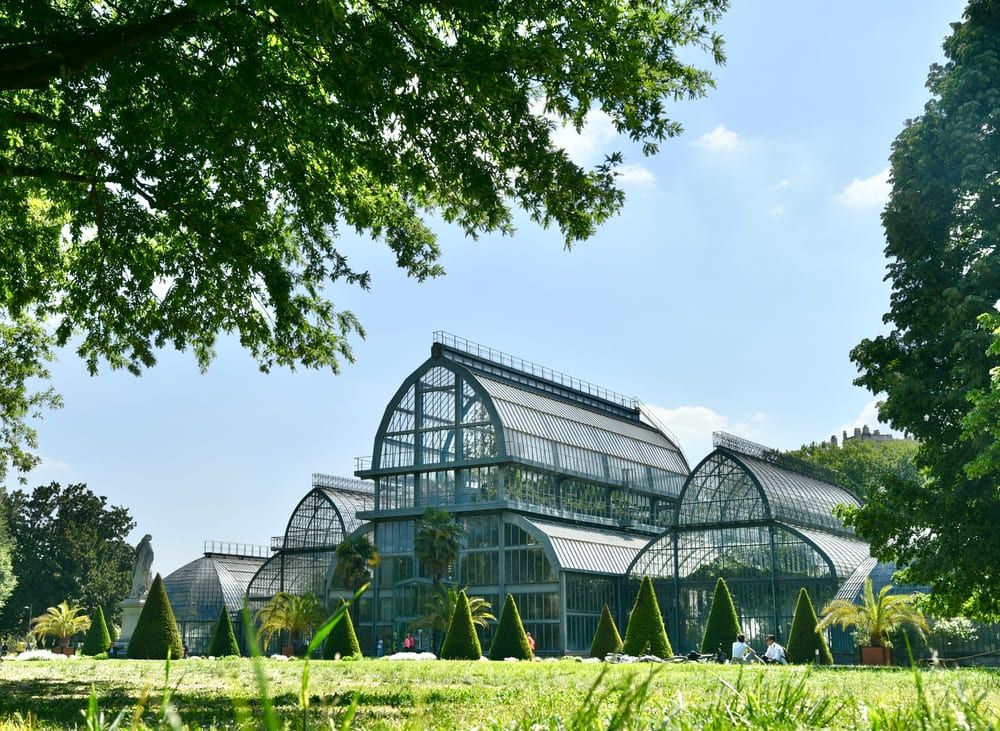
Exiting on the Ring side, two gardens offer a pause more frequented by Viennese locals than by tourist coaches. The Volksgarten, with its rose garden and small Neoclassical temple dedicated to Theseus, runs alongside the Parliament; the Burggarten, more intimate, conceals an Art Nouveau greenhouse now turned into the Palmenhaus garden restaurant and a statue of Mozart surrounded by hedges trimmed in the shape of a treble clef.
Between the two gardens, Josefsplatz displays an equestrian statue of the enlightened emperor and frequently serves as the backdrop for open-air concerts in summer. It is a useful landmark before heading to the Albertina (Albertinaplatz 1, 1010 Wien, rated 4.7/5 on Google with 35,499 reviews), just behind.
If time allows, the Albertina Museum, perched on a bastion of the old city walls, is well worth a detour: its graphic collection ranks among the richest in the world, with drawings by Dürer and Klimt, and its grand staircase opens onto an unobstructed view toward the Opera.
Day 1 – Evening: the Opera, the Ring, and a Break in a Historic Viennese Café
The Vienna State Opera and the Ring
Head down toward the Vienna State Opera, whose Neo-Renaissance façade drew criticism from Viennese audiences from the moment it opened in 1869, to the point that one of its architects is said to have taken his own life in despair. The story is likely embellished, but it says something about the demanding relationship the city maintains with its monuments.
Standing tickets, sold at the box office a few hours before each performance for €3 to €4, remain one of the city's best cultural bargains: you attend a symphonic or operatic concert at one of Europe's most prestigious venues for the price of a coffee. Book ahead if you want a seat — the program changes almost every evening.
The Opera also marks one corner of the Ring, the 5.3-kilometer circular boulevard laid out where the old city walls were demolished in the 1860s. Following it northwest, you pass Rathausplatz, with its Neo-Gothic city hall hosting Christmas markets and open-air cinema depending on the season, then Maria-Theresien-Platz, where twin museums (Art History and Natural History) flank a monumental statue of Empress Maria Theresa.
A little further along, the Ring also lines up the Neoclassical-columned Parliament, the University of Vienna, and the Burgtheater, the second most prestigious German-language stage after Berlin's. You likely won't have time to visit them all in one afternoon, but spotting them in passing helps you grasp the 19th-century urban ambition that shaped this boulevard as a single, coherent architectural statement.
Café Central, Demel, or Sacher: the Viennese Coffeehouse Tradition
Vienna has more than 2,000 listed cafés, and the "Kaffeehaus" tradition has been inscribed on UNESCO's Intangible Cultural Heritage list since 2011. Three historic addresses compete for visitors' attention in the late afternoon, all within fifteen minutes' walk of the Opera.
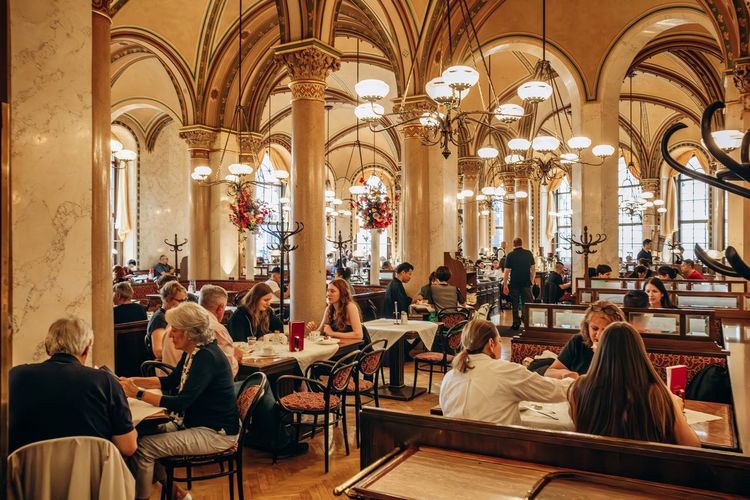
The Café Central, beneath its Neo-Gothic vaulted ceilings, once hosted Trotsky and Freud at the same table; you can have a drink while listening to the pianist play under the arcades, though the queue often spills onto the pavement in the late afternoon.
The Demel, supplier to the imperial court since 1786, lends itself more to a sweet afternoon break: its Sachertorte, prepared to a recipe slightly different from that of the neighboring Sacher, has fueled a culinary dispute between the two establishments for more than a century — one that has never been definitively settled.
The Café Sacher (Philharmoniker Straße 4, 1010 Wien, rated 3.9/5 on Google with 20,116 reviews), set in the hotel of the same name just behind the Opera, claims the original recipe — which is literally kept under seal in a vault. Whichever side you take, allow about an hour to savor the ritual: coffee served with a glass of water and uniformed staff.
Day 2 – Morning: Schönbrunn Palace and Its Gardens
Schönbrunn Palace, in the Footsteps of Sissi
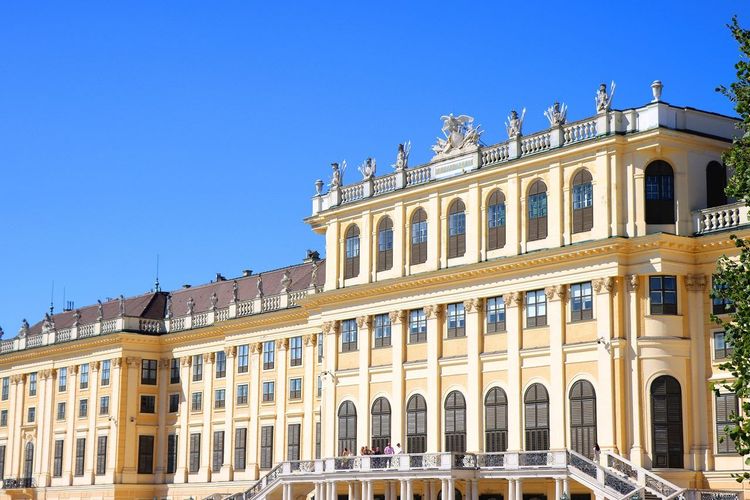
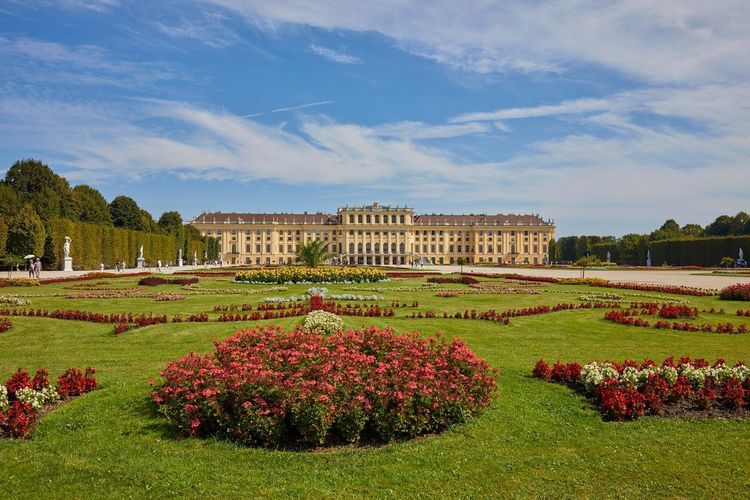
Head southwest to open this second day at Austria's most visited monument. Schönbrunn Palace has 1,441 rooms, 40 of which are open to visitors, and served as the Habsburgs' summer residence for more than two hundred years. Its "Schönbrunn yellow" façade — now a color in its own right on the Austrian paint chart — stretches nearly 180 meters facing the gardens.
Two tour options are available: the Imperial Tour (22 rooms, around 40 minutes) and the Grand Tour (40 rooms, around 60 minutes), which includes the apartments where Empress Sissi lived and had her hair dressed for several hours each morning. Book your timed-entry slot online at least a week in advance during peak season: walk-in visits sell out by mid-morning between June and September.
The visit also retraces the reign of Franz Joseph, who was born and died here, and the Hall of Mirrors where the young Mozart, aged six, is said to have performed before Maria Theresa. Napoleon himself set up his headquarters in the palace during the occupation of 1805 and again in 1809, signing from the Millions Room one of the treaties that redrew the map of Europe. Anecdotes like these, woven through the audio guide provided at the entrance, help place each room in a broader context beyond mere gilded excess.
Sissi's apartments also reveal rituals far less glamorous than one might imagine: daily gymnastics sessions, prolonged baths in warm olive oil, and a waist kept below 50 cm by corsets laced tight each morning by her ladies-in-waiting — an obsession that at times bordered on self-harm. The audio guides provided at the entrance walk through each room in detail; those who prefer a more vivid narrative can follow up with the Ryo trail dedicated to the empress, the short version, The Empress of Austria, designed to extend the visit between the palace and the gardens.
Allow a full morning if you're adding the Schönbrunn Zoo — one of the oldest in the world still in operation (opened in 1752) — or the hedge maze recreated in the gardens. Without these extras, two good hours are enough for the palace alone. Entry starts at around €26 for the Imperial Tour, more with garden and zoo add-ons; the Vienna PASS or the Sisi Ticket mentioned earlier can often save money across the stay.
The Gardens, the Gloriette, and a Concert at the Palace
The formal French gardens stretching behind the palace are free to enter, making them a welcome breather after the ticketed rooms. They climb gently up to the Gloriette, a colonnaded pavilion built in 1775 to celebrate an Austrian military victory, now converted into a hilltop café with sweeping views.
The climb takes about twenty minutes on foot, longer if you stop to photograph the Neptune Fountain halfway up. From the top, the view takes in the entire palace, the symmetrical gardens, and — on a clear day — the outline of the city center and Stephansdom on the horizon.
To extend the morning with live music, a concert at Schönbrunn Palace is held almost every evening in the Orangery or the Hall of Mirrors: Mozart, Strauss, and opera excerpts for a largely tourist audience, but in a setting that is entirely genuine. Tickets can be booked online; expect to pay from around €60 for a standard seat.
You can have lunch on site at one of the park cafés before catching tram 60 or metro U4 (Schönbrunn station) back toward the center in about fifteen minutes.
Day 2 – Midday: Naschmarkt, Museumsquartier, and the Secession Quarter
The Naschmarkt and Its Food Stalls
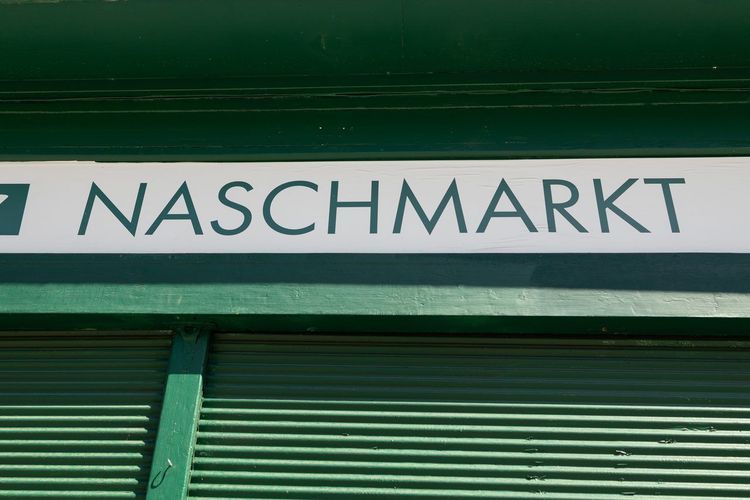
Once back from the tram, head to the Naschmarkt, Vienna's largest open-air market, stretching over a kilometer through fresh-produce stalls, Turkish grocers, and street-food stands. Open Monday to Saturday, it takes on a completely different character on Saturday mornings, when a flea market sets up at its western end.
It's the ideal spot for lunch without compromising between speed and quality: falafels, elevated kebabs, fishmongers grilling the day's catch, Austrian mountain cheeses. Budget around ten euros for a simple meal eaten standing, more if you sit down at one of the restaurants lining the market on the street side.
The market has existed in some form since the 16th century, when milk sellers were already setting up at this spot along the now-covered stream, the Wienfluss. Today it is home to both bulk spice stalls and natural wine bars run by young Austrian winemakers — proof that the market has reinvented itself without losing its working-class neighborhood soul.
Museumsquartier and the Secession Pavilion
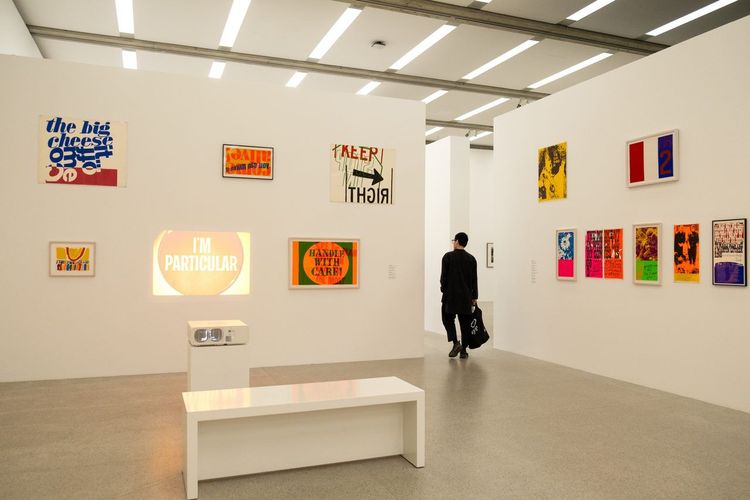
Ten minutes on foot, the Museumsquartier (MQ) brings together one of Europe's largest cultural complexes on a former imperial stable yard: the Leopold Museum dedicated to Klimt and Schiele, the mumok contemporary art museum, and inner courtyards where Viennese locals sprawl on design deck chairs in summer.
Right next door, the Secession Pavilion, with its golden dome of woven foliage, houses Gustav Klimt's Beethoven Frieze — a 34-meter-long work painted in 1902 and rarely displayed anywhere else. The inscription carved above the entrance, "To every age its art, to art its freedom," sums up the entire agenda of the Viennese Art Nouveau movement.
Art Nouveau enthusiasts can push on to the apartment buildings designed by architect Otto Wagner, a short walk along Linke Wienzeile, recognizable by their façades adorned with gilded floral motifs. They usefully complement a visit to the Secession by showing how the same decorative vocabulary spread into ordinary Viennese residential architecture at the turn of the 20th century.
If the Naschmarkt whetted your appetite without fully satisfying it, the Palmenhaus garden restaurant (Burggarten 1, 1010 Wien, rated 4.2/5 on Google with 8,846 reviews), set in the Art Nouveau greenhouse of the Burggarten visited the day before, offers a more substantial menu for a late lunch.
Day 2 – Afternoon: Belvédère Palace and the Hundertwasserhaus
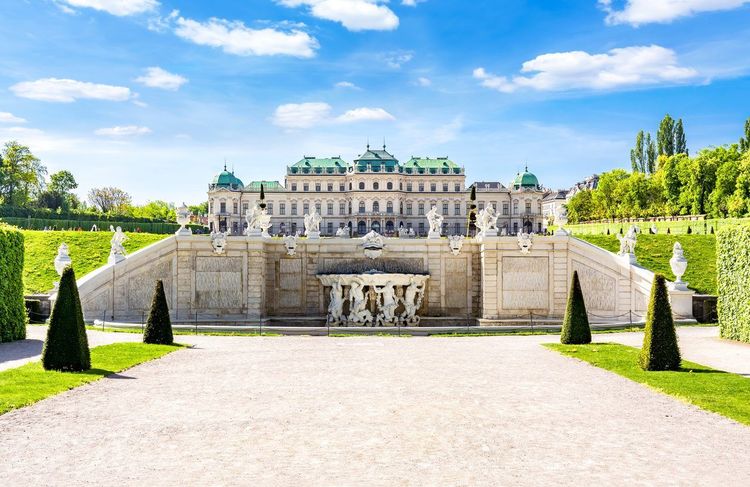
Belvédère Palace and Its Baroque Gardens
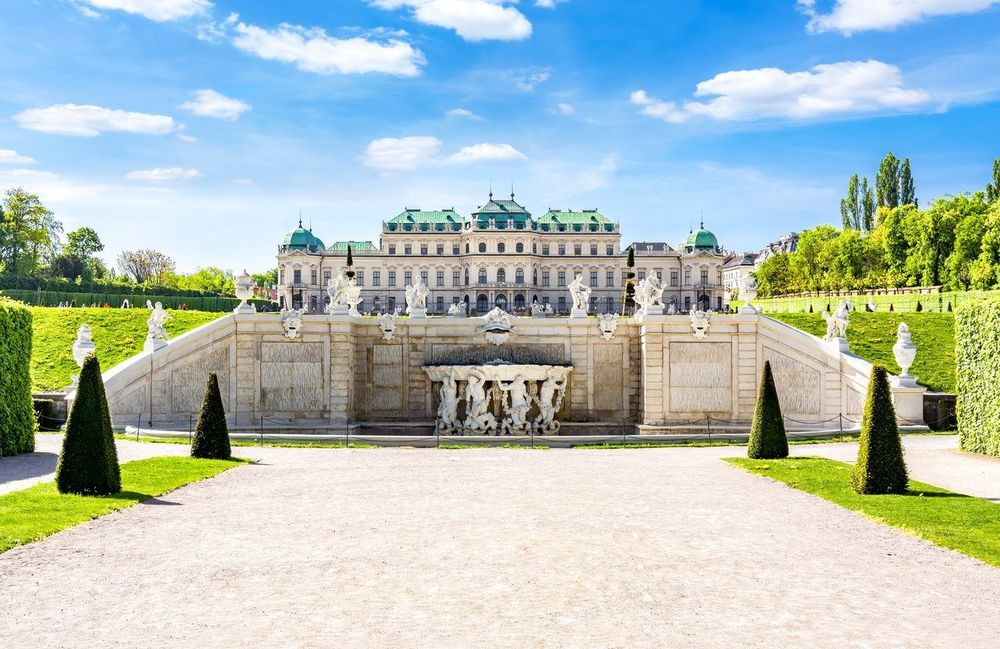
The Belvédère Palace, the summer residence of Prince Eugene of Savoy, is in fact composed of two Baroque palaces (Upper and Lower Belvédère) connected by terraced gardens laid out in the French formal style. The Upper Belvédère now holds the world's largest collection of works by Gustav Klimt, including The Kiss, painted in 1908 and since become the most reproduced image in Austrian art.
The Upper Belvédère also holds canvases by Egon Schiele and Oskar Kokoschka, making it — alongside the Leopold Museum visited earlier at the Museumsquartier — one of the two essential stops for anyone wanting to understand the artistic ferment of Vienna around the turn of the 20th century. If time is short, choose one or the other rather than both in succession, as the density of the works calls for genuine attention.
Allow an hour and a half for the full visit, and save time for the gardens themselves: pools, stone sphinxes, and geometric parterres offer one of the finest views of the Stephansdom's silhouette, visible in the distance from the upper terrace. The southern entrance, near the Lower Belvédère, tends to be less busy in the late afternoon — a useful tip if you're arriving after lunch and want to avoid the morning groups.
The Unconventional Architecture of the Hundertwasserhaus
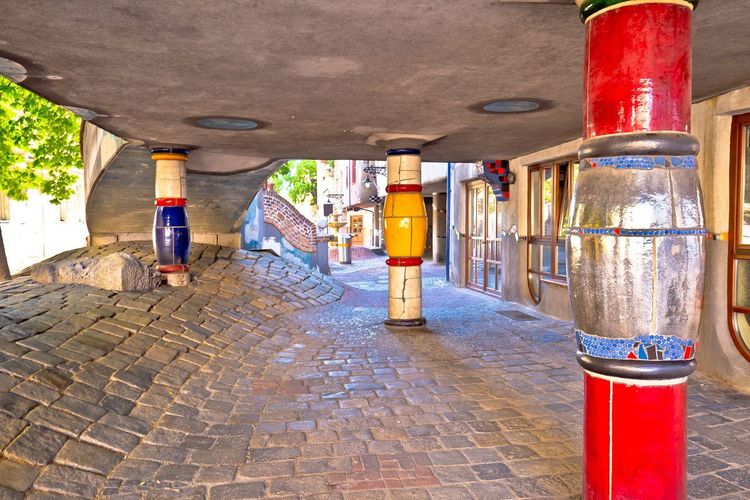
End the afternoon with a total architectural contrast by heading to the Hundertwasserhaus (Kegelgasse 36-38, 1030 Wien, rated 4.5/5 on Google with 34,454 reviews), a residential building designed in the 1980s by artist Friedensreich Hundertwasser, who was fiercely opposed to straight lines. Undulating façades, trees growing directly from the balconies, uneven floors "so that the foot rediscovers the memory of the earth" in the architect's own words: the building remains inhabited, so it can only be viewed from the outside.
Directly opposite, the Kunst Haus Wien displays a selection of Hundertwasser's paintings for those who want to explore further inside a museum setting. It's a differentiator that few two-day itineraries take the time to include — often sacrificed in favor of a more conventional museum — yet it requires only a slight detour from the Belvédère.
The surrounding neighborhood, Landstraße, remains residential and largely untouristy beyond this pocket of interest: an opportunity to see a more everyday Vienna, far from the queues of the historic center, before heading down to the Prater for the evening.
Day 2 – Evening: the Prater Ferris Wheel and Dinner in Vienna
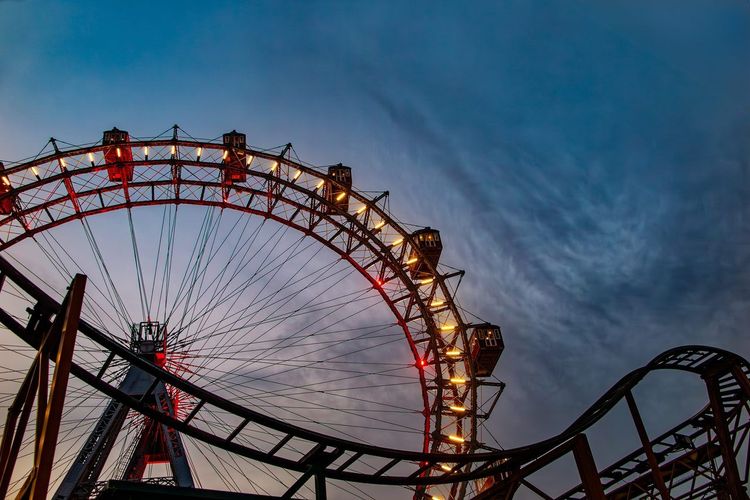
The Prater Ferris Wheel and the Amusement Park
Close out these two days at the Prater, the vast public park gifted to the Viennese by Emperor Joseph II in 1766, which in its section known as the Wurstelprater has become a charmingly old-fashioned amusement park. Its giant Ferris wheel, built in 1897 for Franz Joseph's jubilee, rises to 65 meters and remains one of the oldest Ferris wheels still in operation anywhere in the world.
A ride lasts about ten minutes in vintage wooden cabins, some of which can be privatized as a suspended dining salon. The light of sunset over the Danube, visible from the top, makes it the perfect moment to bring the day to a close.
At the foot of the wheel, the lanes of the Wurstelprater line up retro carousels, shooting galleries, and wooden roller coasters in a fairground atmosphere that contrasts sharply with the Baroque of the day before. Strolling through is free; individual rides are paid for separately.
Where to Dine in the Evening: Our Vienna Recommendations
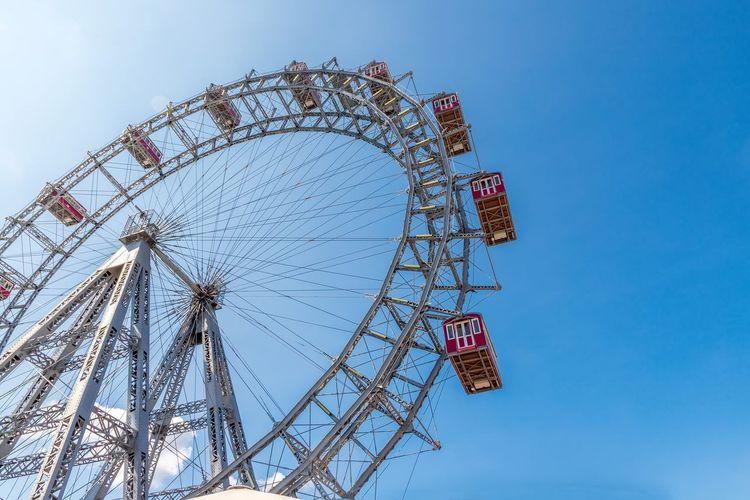
For dinner, the Rollercoaster restaurant, set at the foot of the Ferris wheel, serves classic Austrian cuisine with a direct view of the park's illuminations — a convenient option if you don't want to take public transport again after the ride.
Two more central addresses are worth the trip if you'd rather head back into town: Figlmüller, an institution since 1905 famed for its Wiener Schnitzel larger than the plate it sits on, and Glacis Beisl, a tavern set in the old ramparts of the Museumsquartier, quieter and popular with locals for its shaded terrace.
On the way to the Belvédère in the afternoon, you likely walked past Karlskirche (Kreuzherrengasse 1, 1040 Wien, rated 4.6/5 on Google with 31,243 reviews), with its green copper dome flanked by two sculpted columns inspired by Trajan's Column. An interior panoramic lift optionally takes you right up to the ceiling fresco painted by Johann Michael Rottmayr, at scaffolding height.
How to Get to Vienna and Get Around
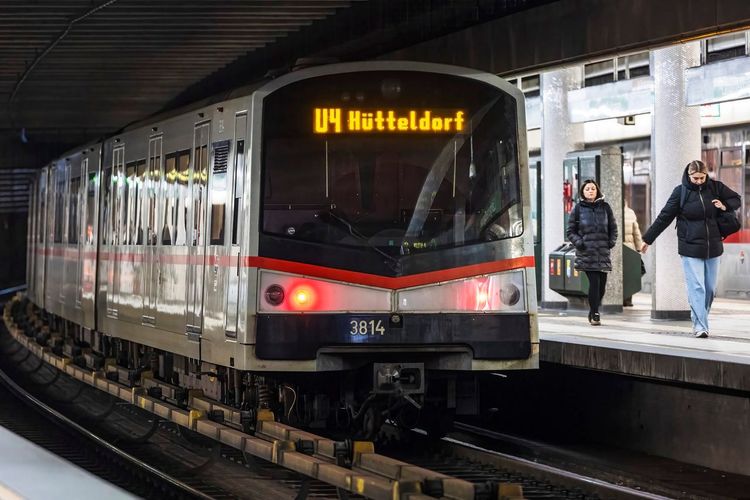
Vienna is served from France by direct flights (Paris, Lyon, Marseille depending on the season, approximately 2 hours) and by the Nightjet overnight train, which connects Paris to Vienna in around twelve hours.
Getting to Vienna from the airport: Vienna-Schwechat Airport is 18 km from the center. The City Airport Train links the airport to Wien Mitte station in 16 minutes for around €12, the S-Bahn (S7 line) covers the same journey in half an hour for around €4.30, and a taxi costs between €35 and €45 depending on the time of day and traffic.
Getting around Vienna: the metro (U-Bahn, 5 lines) and the historic tram network cover the entire city. A single ticket costs €2.40, a 24-hour pass around €8, and the Vienna City Card adds museum discounts on top of unlimited transport. The historic center is entirely walkable.
Two details save time on the ground. Trams 1 and 2 follow most of the Ring: boarding with a standard ticket gives you the same panoramic tour as the tourist trams, at the price of an ordinary journey. And on weekends, the metro runs through the night (Friday and Saturday nights, as well as the evenings before public holidays), which makes a real difference if your evening stretches late at the Prater or in a Heuriger. Tickets are available from station machines or the Wiener Linien app, and must be validated before boarding — not on the tram itself: plain-clothes inspectors are common and the fine runs to around €105.
Mobile network: Austria is a member of the European Union, so French mobile plans work without roaming surcharges for a short stay. Visitors from outside the EU will find it easier to opt for a local eSIM, available from the airport.
Where to Stay in Vienna: the Best Neighborhoods
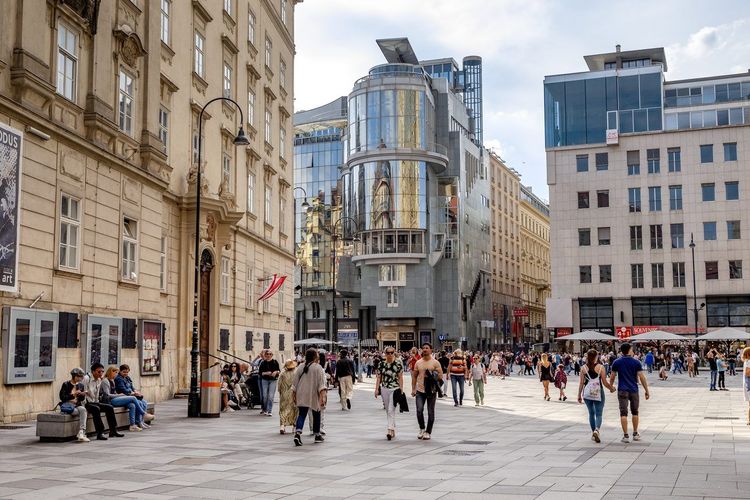
Where to stay in Vienna depends mainly on the pace you want to set for your weekend. The Innere Stadt, the 1st district within the Ring, puts the entire first-day itinerary within walking distance, but hotel rates climb quickly — particularly around Stephansplatz.
The Museumsquartier and Neubau area (7th district), just west of the Ring, offers an effective compromise: ten minutes on foot from the historic center, a younger atmosphere with independent cafés and vintage shops, and noticeably softer prices than the Stephansdom side.
For tighter budgets, Leopoldstadt (2nd district), which borders the Prater and connects to the center in two metro stops, concentrates a good range of recent mid-range hotels and hostels. It is also the most convenient neighborhood if your last evening ends at the Ferris wheel. Expect between €90 and €130 per night for a well-located mid-range hotel, more in the Innere Stadt during peak season where some addresses exceed €200. Highly rated hostels, more numerous in Leopoldstadt and Neubau, can bring costs below €40 in a dorm without sacrificing cleanliness or transport links.
Finally, the Wieden area, around the Belvédère and Karlskirche, appeals to those who prefer a quiet residential neighborhood while remaining fifteen minutes on foot from the Opera. In any case, choosing an address served by the U1, U2, U3, or U4 lines greatly simplifies travel between both days of the itinerary. One last practical note: Viennese hotels often charge breakfast separately, between €15 and €25, while a neighborhood café-bakery serves the same Melange with a pastry for a third of the price. Our Vienna audio-guided tour is accessible from any of these neighborhoods to continue exploring on foot once the bags are dropped.
Where to Eat in Vienna: Our Top Picks
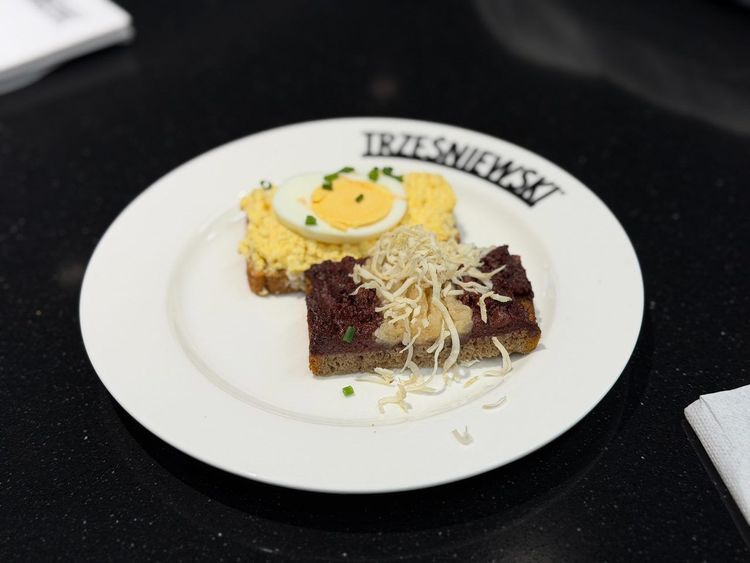
Beyond the addresses encountered along the itinerary, two establishments round out the food lovers' notebook. Trzesniewski, a chain of small counters founded in 1902, serves open-faced sandwiches (egg, herring, pepper) to be downed standing up with a glass of white wine diluted with sparkling water — the local G'spritzter.
For a more traditional experience, a Heuriger in the hills of Grinzing or Nussdorf, on the northern outskirts, serves the estate's young wine alongside a cold buffet in a garden-tavern setting, generally in the evenings from spring onward.
For a late-night snack, the Würstelstand is the city's most democratic institution: these sausage kiosks, open late into the night — including the one on Albertinaplatz behind the Opera — serve Käsekrainer, a cheese-filled sausage, in a hollowed-out roll, eaten standing at the counter alongside opera-goers in evening dress and night owls alike.
Our personal favorites remain simple: a Wiener Schnitzel in a room of worn wooden panels, a slice of Sachertorte with a Melange (the local cappuccino), and a glass of Grüner Veltliner on a terrace before catching the tram. For a more complete overview of local specialties, our Ryo article on Vienna's culinary specialties goes through dish by dish what's worth trying on the spot.
When to Go, Budget Tips, and Extending Your Stay
The best time to visit: spring (April to June) and early autumn (September–October) offer the best balance between mild weather and manageable museum crowds. Summer remains pleasant but busier, especially around Schönbrunn.
Winter deserves a special mention: Christmas markets open from late November in front of the city hall and across several squares in the center, and the giant ice rink installed each year on Rathausplatz (the "Wiener Eistraum") turns the forecourt into an ice skating rink from January to early March — an experience that few two-day guides think to include. Our Ryo article on the winter experience in Austria covers this period in detail if you're considering a trip between December and February.
How to save money in Vienna: the Vienna City Card and the Sisi Ticket mentioned above significantly reduce costs if you're visiting several paid attractions in a row. The gardens of Schönbrunn and the Belvédère, as well as the Naschmarkt and most churches, are free. Travel guides such as the Routard also recommend opting for standing tickets at the Opera rather than seated ones — a tip that cuts the bill by a factor of ten.
More than 2 days in Vienna: two days cover the essentials, but a third day frees up time for a day trip to the Wachau valley or to Bratislava, less than an hour away by train, for those considering Vienna over 3 days. Our selection of things to do in Vienna offers ideas for filling that third day. For a single-day stopover, focus on Stephansdom, the Hofburg, and a shorter version of Schönbrunn, and let the Belvédère go. The Ryo audio-guided tour of Vienna adapts equally well to a one-day stopover or an extended five-day stay.
FAQ
How Many Days Do You Need to Visit Vienna (1, 3, or 5 Days)?
Two days are enough to cover the must-sees: Stephansdom, Hofburg, Schönbrunn, and Belvédère. Allow three days to add the Prater at a relaxed pace and explore the Naschmarkt more thoroughly, and five days to include a day trip to the Wachau valley or Bratislava. A single day is still possible if you focus on the historic center and a shorter version of Schönbrunn.
What Is the Best Time to Visit Vienna?
April–June and September–October offer the best balance between pleasant weather and moderate crowds. Winter, especially December, adds Christmas markets and the Rathausplatz ice rink, at the cost of colder temperatures and shorter days.
How Do You Get Around Vienna Without a Car?
The metro, tram, and bus network covers the entire city, with a single ticket at €2.40 and a day pass around €8. The historic center is entirely walkable, making a car unnecessary and even counterproductive given the scarcity of parking.
Should You Book Schönbrunn Palace in Advance?
Yes, strongly recommended between June and September: timed-entry slots can be booked online and sell out by mid-morning during peak season. Outside peak season, booking the day before is generally sufficient.
How Can You Save Money in Vienna?
The Vienna City Card and the Sisi Ticket bundle several attractions at reduced rates. The gardens of Schönbrunn and the Belvédère, as well as most churches, are free, and standing tickets at the Opera cost just €3 to €4.
Where Should You Stay in Vienna for a Two-Day Weekend?
The Innere Stadt puts everything within walking distance but comes at a higher price; the Museumsquartier and Neubau offer a good price-to-location compromise, while Leopoldstadt, near the Prater, suits tighter budgets.
Two days in Vienna are enough to understand why the city has topped quality-of-life rankings for years, without ever feeling like you've rushed through the essentials. Between the Gothic spire of Stephansdom, the gilded salons of the Hofburg and Schönbrunn, the modernity of the Museumsquartier, and the fairground charm of the Prater, the itinerary alternates imperial heritage with lighter moments, never pushing the pace.
If the urge to keep exploring strikes once you're home — or to prepare your trip in advance — the Ryo audio-guided tour of Vienna covers all these highlights with its own commentary, neighborhood by neighborhood, to be listened to on the go rather than with your nose buried in a paper map. Enough to turn these two days into a habit worth repeating, one day, over three or five.
À lire également