© Shutterstock
 Votre guide Ryo
Visiting Vienna in 3 Days: Complete Itinerary Between Imperial Palaces and Alternative Vienna (2026)
In Vienna, horse-drawn carriages still wait outside St. Stephen's Cathedral, but the city has also topped global quality-of-life rankings for over a decade. This tension between imperial tradition and quiet modernity is precisely what makes visiting Vienna in 3 days so rich: in 72 hours, you walk through the gilded salons of the Hofburg, encounter giant pandas at the world's oldest zoo still in operation, and end the evening beneath a century-old Ferris wheel immortalised by Orson Welles. The Ryo audio guide of Vienna sweeps across this full spectrum, from the Ring and its 19th-century palaces to the spice-filled lanes of the Naschmarkt.
This guide builds a day-by-day itinerary: the first day stays in the UNESCO-listed historic centre, the second shifts to Schönbrunn and the great museums, and the third explores a more unconventional Vienna, from Hundertwasser's undulating architecture to the banks of the Danube. Practical questions that keep coming up are also addressed: how much does the Vienna Pass cost, where to stay without breaking the bank, when to visit for the Christmas markets, what budget to plan day by day, and what to bring home in your suitcase. Everything you need to set off with a realistic plan rather than a checklist of monuments ticked off at a sprint.
Day 1: The Historic and Imperial Heart of Vienna
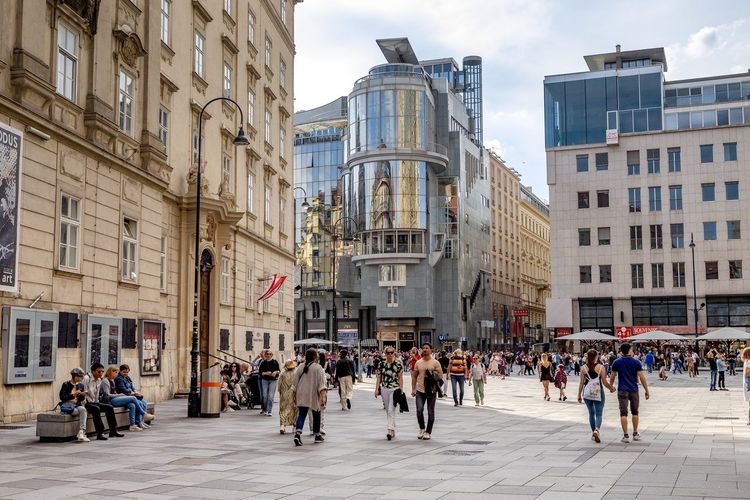
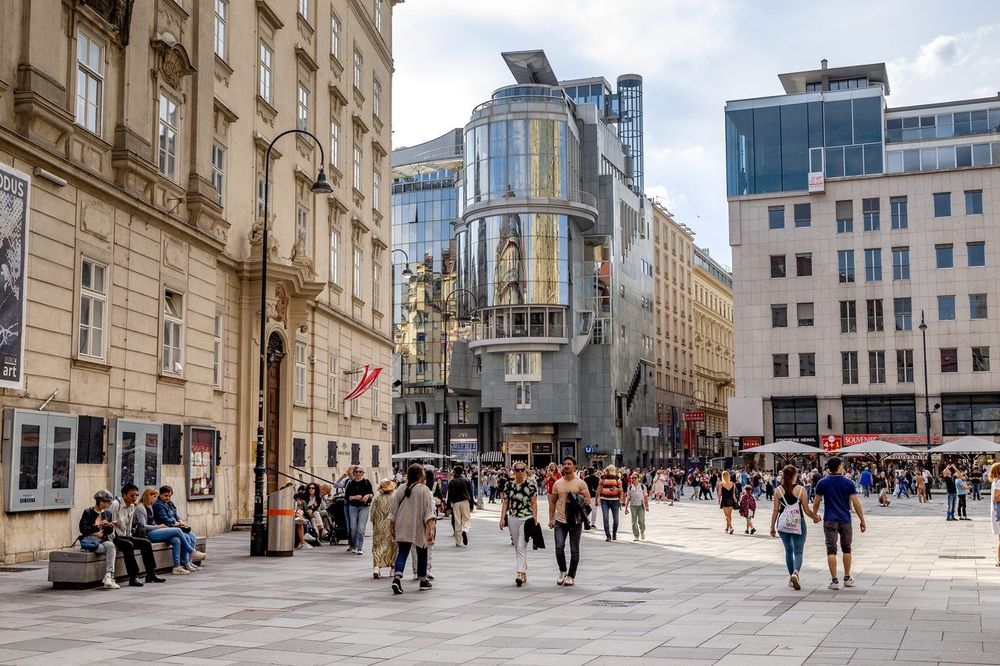
Allow a full day for this first act, the most packed of the three. Vienna's historic centre, the Innere Stadt, can be explored entirely on foot, but each landmark deserves time rather than a rushed pass-by. Start early: most sites open around 9am and the morning light on the Baroque façades is worth the slightly forced wake-up call. The entire day takes place within a radius of less than one kilometre around Stephansplatz, which leaves plenty of time to wander without ever needing to take public transport.
St. Stephen's Cathedral and the Vienna State Opera
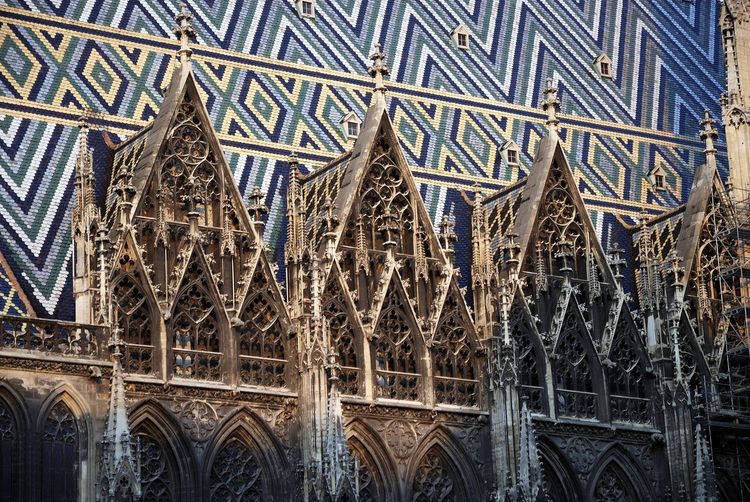
St. Stephen's Cathedral (Stephansdom) has dominated Stephansplatz for more than eight centuries of successive construction. Its Gothic spire reaches 136 metres and its roof, made up of 230,000 glazed tiles, forms a double-headed eagle visible from the surrounding towers. Local legend has it that the Giants' Doorway (Riesentor) at the main entrance owes its name to a mammoth bone discovered during construction work, long displayed as a curiosity. Below ground, the catacombs preserve the entrails of several Habsburg sovereigns, a guided visit in its own right that makes a useful complement to exploring the nave.
The north tower can be visited by lift, while the south tower (the "Steffl") requires 343 steps, an effort rewarded by a view that takes in the entire city centre and, on a clear day, the hills surrounding Vienna. Just in front, the Graben shopping street leads to the Plague Column (Pestsäule), erected from 1679 onwards to give thanks for the end of an epidemic and completed in its marble version in 1693 — a five-minute detour that pairs well with a visit to the cathedral. If you are travelling in high season, aim to arrive before 9:30am: after 10am, coach groups tend to fill much of the square.
Just around the corner, on Domgasse, the Mozarthaus Vienna occupies the apartment where Mozart composed The Marriage of Figaro, between 1784 and 1787. The visit is brief — around thirty minutes — but it appeals to classical music lovers who want to see where one of the world's most performed operas was born.
Heading up towards the Ring, the Vienna State Opera (Staatsoper) makes its presence felt with a Neo-Renaissance façade. Standing tickets (Stehplätze), sold around 80 minutes before each performance for just a few euros, remain one of the city's best cultural deals for anyone willing to queue and stand for three hours. A daytime guided tour also allows you to see the grand staircase, the foyer and the auditorium without attending a performance — a practical option if your stay does not coincide with the programme.
The Hofburg Palace and the Sisi Museum
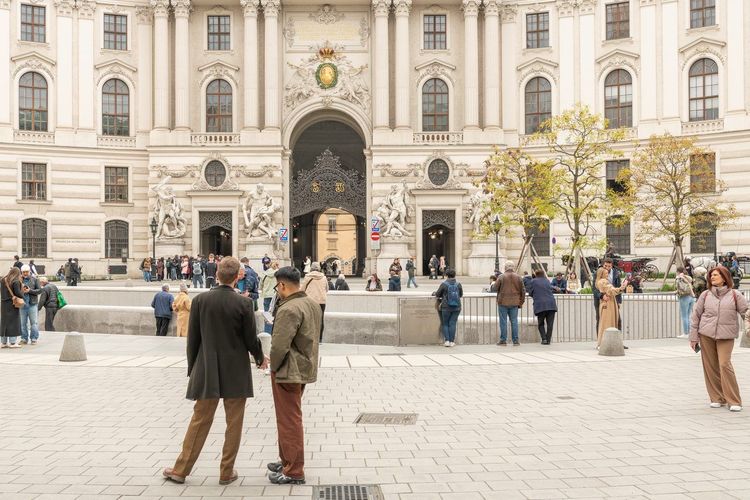
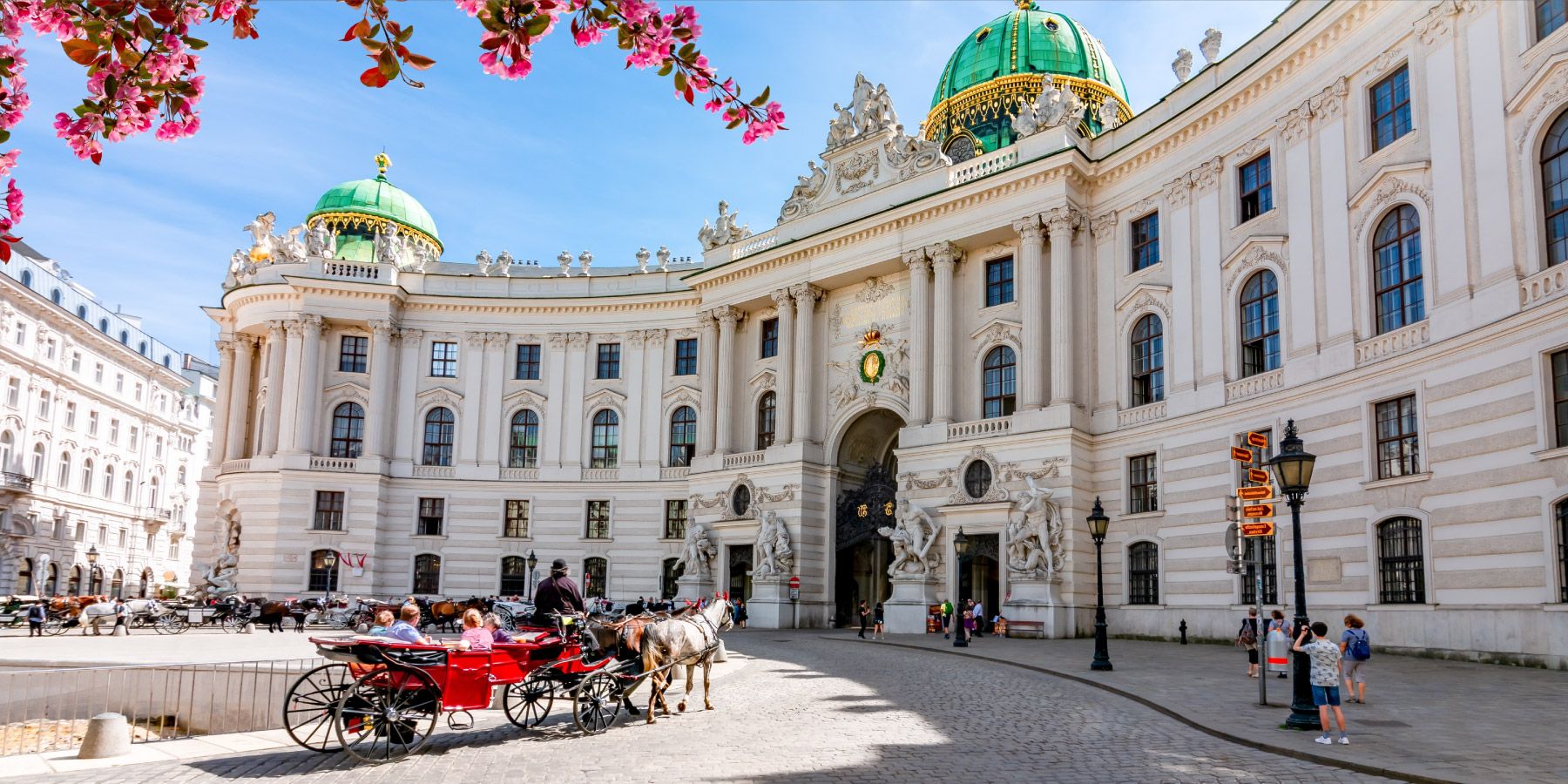
The Hofburg Palace served as the winter residence of the Habsburgs for six centuries; it now houses several museums, the national library and the office of the Austrian federal president. The complex unfolds through successive courtyards, from Michaelerplatz to Heldenplatz, where equestrian statues recall the scale of the former Austro-Hungarian Empire. The Imperial Treasury (Schatzkammer), tucked away in a discreet wing, holds the crown of the Holy Roman Empire and jewels that put many European royal collections to shame.
Inside, the Sisi Museum traces the life of Elisabeth of Bavaria through her gowns, her travelling furniture and the objects connected to her beauty rituals, including hair-styling sessions that could last several hours. You will also see the Imperial Apartments (Kaiserappartements) and the Silberkammer, the court's silverware collection, with table services for more than 100 guests. To deepen this immersion in the Sisi myth, the sub-tour "The Empress of Austria" in the Ryo audio guide of Vienna follows her footsteps through these same courtyards, from the balcony where she appeared in public to the gardens where she escaped the formality of court life.
Just opposite, across the Ring, the Kunsthistorisches Museum merits even a quick detour for its Bruegel collection, the richest in the world, and for its monumental marble staircase decorated by a very young Gustav Klimt before he became the painter rediscovered the following day at the Belvedere. Allow at least two hours if you want to see more than the Bruegel room, as the museum also displays Egyptian collections and a rich section of Greco-Roman antiquities. A combined ticket with the neighbouring ethnology museum is available for visitors who want to extend their afternoon.
A Break in a Historic Viennese Coffee House
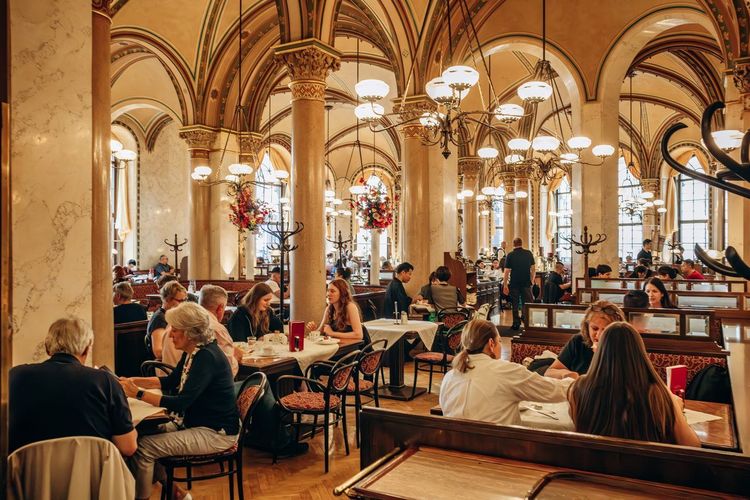
Round off this first day in a historic Viennese coffee house, an institution inscribed on UNESCO's Intangible Cultural Heritage list since 2011. At Café Central (Herrengasse 14, 1010 Wien, rated 4.3/5 on Google from 30,396 reviews), beneath its Neo-Gothic vaulted ceilings, Leon Trotsky played chess a few years before the Russian Revolution, and Freud had his regular table between psychoanalysis sessions. Order a Melange, the Viennese equivalent of a cappuccino, paired with a still-warm Apfelstrudel, served on a silver tray in a ritual unchanged for a century.
This coffee house ritual is more than a tourist stop: it was here that international newspapers were read before the digital age, on long wooden newspaper holders, a custom that some establishments still uphold today. The unwritten rule is simple: no one rushes you to leave, even after a single drink, which explains why Viennese locals sometimes spend the entire afternoon here with a book. Expect to pay around €10 to €15 for a coffee and a pastry — a price that in effect includes the time you spend at your table.
Day 2: Schönbrunn and the Artistic Elegance of Vienna
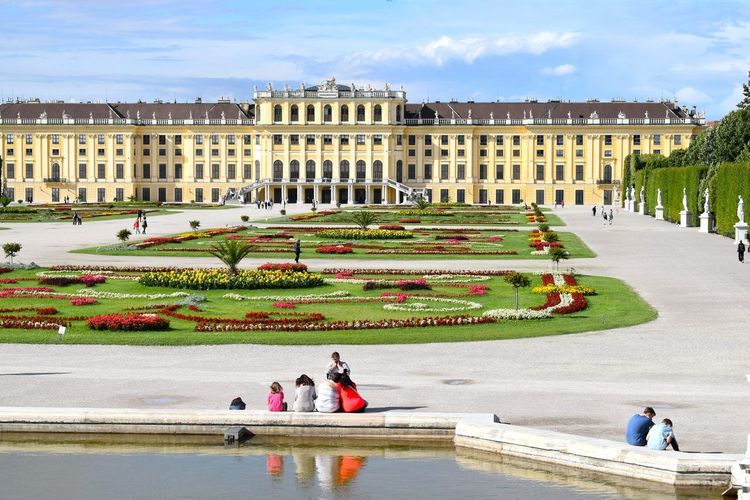
The second day leaves the historic centre behind for two very distinct poles: the Habsburgs' summer residence in the south-west of the city, then the arts triangle stretching around the Ring. Plan to set off as soon as it opens for Schönbrunn: it is the most visited site in the country and tourist groups arrive in force from 10:30am.
Schönbrunn Palace and Gardens
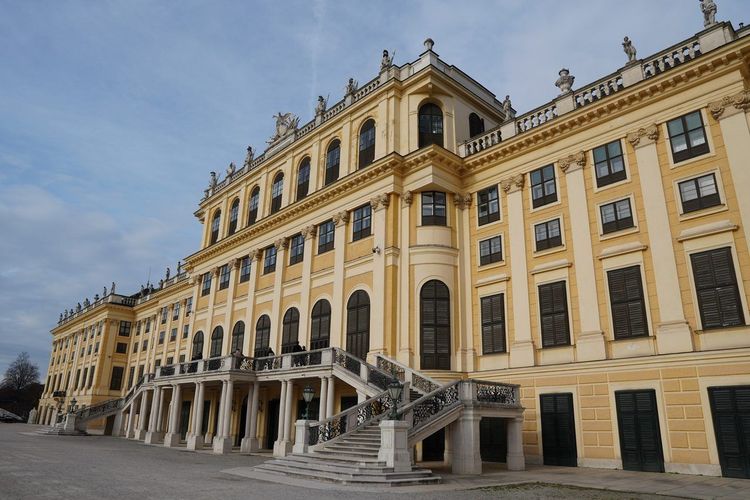
Schönbrunn Palace, with its 1,441 rooms and Schönbrunn yellow façade that has become a colour in its own right in the history of Austrian architecture, stands in direct rivalry with Versailles in the European imagination. Book your tickets online before you travel: queues on site can easily exceed an hour in high season. The Grand Tour ticket gives access to 40 rooms, including the chamber where Franz Joseph I died, while the Imperial Tour is limited to 22 rooms for a tighter budget. An audio guide is included with most ticket options, which means you do not need to follow a group to understand what you are seeing.
The Schönbrunn Palace Park stretches over more than 160 hectares and is best discovered on foot, gradually climbing towards the hill. At the top, the Gloriette, a Neoclassical pavilion built in 1775, offers the most photographed view in all of Vienna: the palace in a straight line with the city in the background. The climb takes around twenty minutes from the formal French gardens, longer if you stop at the Neptune Fountain or the hedge maze (Irrgarten), a playful attraction popular with families.
On the side of the park, the Palm House (Palmenhaus) shelters tropical plant species beneath a glass and iron structure dating from 1882, a striking contrast with Vienna's winter frosts. And for families or simply the curious, the Schönbrunn Zoo claims the title of the world's oldest zoo still in operation, founded in 1752 by Francis I, Duke of Lorraine, the husband of Maria Theresa. Giant pandas, giraffes and a tropical aquarium await across a site that remains far more manageable than most large European zoos, comfortably visited in two to three hours.
Set aside a full half-day for the palace, the park and if possible the zoo: it is the most time-consuming site of the entire stay, but also the one most visitors mention first when they get home. If time is short, skip the interior of the zoo rather than the climb to the Gloriette, whose view remains one of the highlights of the trip.
The Belvedere and Klimt's The Kiss
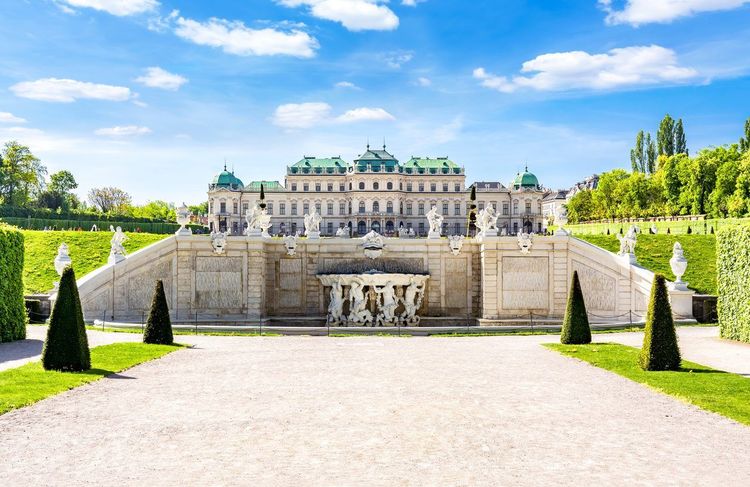
Head next to the Belvedere, a complex of two Baroque palaces built for Prince Eugene of Savoy, now an Austrian art museum. The Upper Belvedere houses the largest collection of Gustav Klimt in the world, including The Kiss (Der Kuss), a painting completed in 1908 that has become the most reproduced image in Austrian art. The neighbouring rooms also display works by Egon Schiele and Oskar Kokoschka, two major figures of early 20th-century Viennese art, less widely known to the general public but equally striking. Book a timed entry slot in advance, as the room housing The Kiss is regulated to prevent overcrowding in front of the work.
If time is limited, focus on the Upper Palace: the formal French gardens between the two buildings, lined with stone sphinxes, can be crossed in fifteen minutes and already offer an open view of the cathedral's silhouette in the distance. The Lower Belvedere is largely devoted to temporary exhibitions and is only essential if the current programme particularly interests you.
The MuseumsQuartier and the Secession
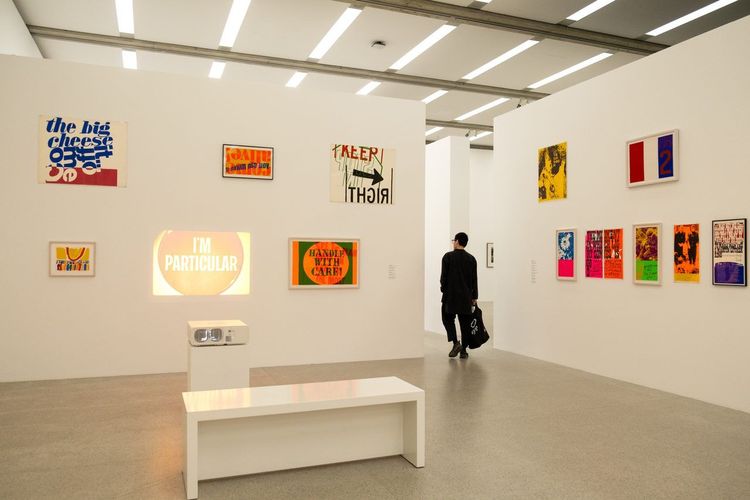
Back towards the centre for the MuseumsQuartier, one of the largest cultural complexes in the world, its 90,000 m² bringing together the Leopold Museum, rich in Schiele canvases, the MUMOK contemporary art museum and numerous independent spaces. The inner courtyards, dotted with colourful designer benches, also function as a social hub in the evenings, particularly lively in summer when Viennese locals settle in for a drink between two exhibitions. Our Ryo article on the best things to do in Vienna details the temporary exhibitions not to be missed depending on the season of your visit. A combined ticket for all the museums on site works out cheaper than separate entries if you plan to visit more than one.
A few streets away, the small golden pavilion of the Secession, built in 1898 to designs by Joseph Maria Olbrich by the artists who had just broken with official academicism, houses Klimt's Beethoven Frieze in its basement. The motto inscribed on the façade sums up the spirit of the place: to every age its art, to art its freedom. Just behind it, the Spittelberg neighbourhood lines up 18th-century low-rise houses transformed into craft shops — a welcome pause after the cultural density of the afternoon, and one of the city's most charming Christmas markets in December.
Heading back towards the Hofburg, two musical institutions round off this day dedicated to the arts. The Spanish Riding School (Michaelerplatz 1, 1010 Wien, rated 3.5/5 on Google from 3,639 reviews) presents its white Lipizzan horses during morning training sessions or evening performances, an equestrian tradition more than 450 years old that is also inscribed on UNESCO's Intangible Cultural Heritage list; evening performance tickets sell out quickly and booking well in advance is recommended. And the Musikverein, the gilded hall where the famous New Year's Concert is performed every 1 January, can be visited outside concert times to admire its legendary acoustics and ornamentation, or attended in the evening for a classical music concert accessible even without an in-depth knowledge of the repertoire.
Day 3: Alternative and Authentic Vienna
The third day shifts the tone entirely: fewer imperial flourishes, more off-beat architecture and local life. It is also the most flexible day of the itinerary, the one where you can slow down after two packed days.
The Hundertwasserhaus and Quirky Vienna
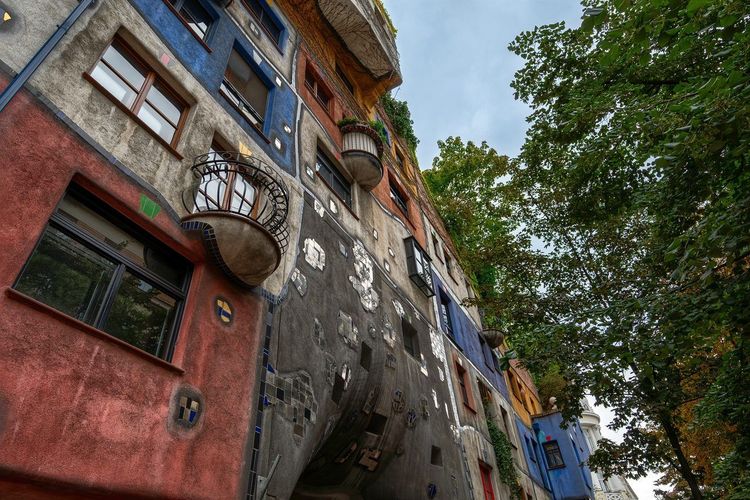
The Hundertwasserhaus, a social housing block built between 1983 and 1985 to designs by artist Friedensreich Hundertwasser, refuses every straight line: undulating floors, multicoloured façades, trees growing from balconies and deliberately mismatched ceramic columns, in keeping with the artist's philosophy that the straight line was "godless and immoral". The interior is not open to visitors — real Viennese residents live there — but the façade can be viewed free of charge from the street, and the nearby Kunst Haus Wien extends the artist's world through his original works and models.
Just opposite, the Hundertwasser Village, a small shopping arcade designed in the same architectural spirit, brings together ceramics and local craft shops — handy for a last original gift. This neighbourhood in the third district, more residential in character, provides a way out of the most frequented routes and a glimpse of a Vienna that goes about its life without paying attention to tourist groups photographing the façades. Allow about an hour for the whole area, façade and village combined.
The Prater and a Walk Along the Danube
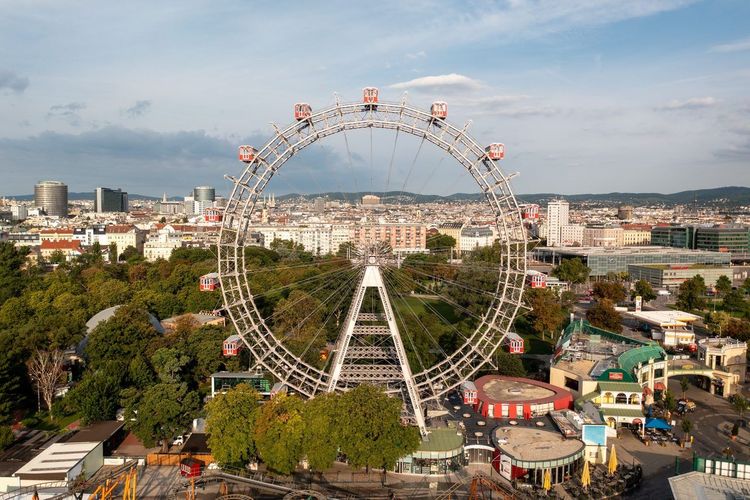
The Prater, a former imperial hunting ground turned into a vast park and funfair, is crossed along long shaded avenues before you reach its great Ferris wheel, the Wiener Riesenrad. Built in 1897 by British engineer Walter Bassett to mark the jubilee of Emperor Franz Joseph I, it served as the backdrop for the iconic scene in the film The Third Man in 1949 and remains, at nearly 65 metres, one of the most photographed attractions in the city. Around it, wooden roller coasters, the Liliputbahn miniature railway for children and confectionery stalls create an old-fashioned funfair atmosphere, very different from the elegance of the previous two days.
For dinner, one of the restaurants at the foot of the Prater's roller coasters serves classic Viennese dishes in an unapologetically funfair setting, far from the gastronomic addresses in the centre visited on previous days. Entry to the park itself is free: only the individual attractions are paid for separately, a system that allows you to tailor the evening to any budget.
Fifteen minutes on foot from the Prater, a walk along the Danube follows the artificial Donauinsel island, developed from the 1970s onwards to protect the city from flooding. In summer, Viennese locals swim, picnic and cycle along its 21 kilometres of riverbanks, while pop-up waterside bars such as Copa Beach recreate a beach atmosphere right in the heart of the city. Hire bikes available nearby allow you to reach the island within a few minutes from the Prater, a total contrast with the grandeur of the historic centre visited the day before.
The Naschmarkt and Vienna's Vibrant Neighbourhoods
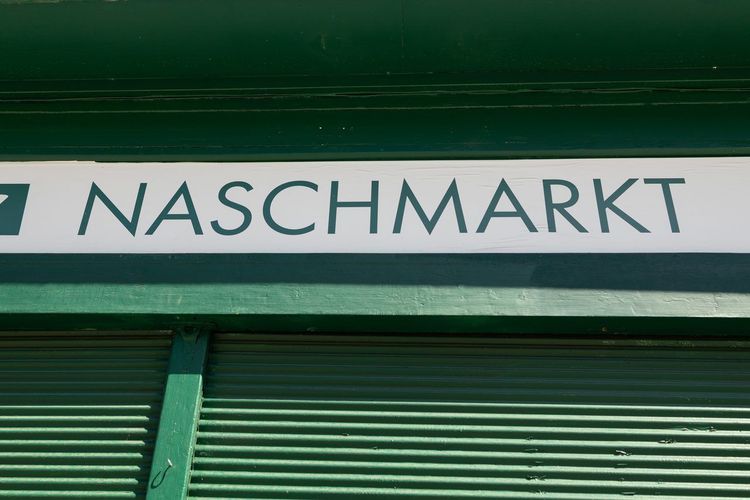
To close the stay, the Naschmarkt (Naschmarkt, 1060 Wien, rated 4.4/5 on Google from 17K reviews) lines up more than 100 stalls of fresh produce, spices and specialities from around the world along nearly one and a half kilometres, on the site of a market dating back to the 16th century. You will find Austrian cheese stalls alongside falafel stands, Turkish meze and Balkan specialities, reflecting the cultural diversity of contemporary Vienna. On Saturdays, a flea market sets up along its far end, a chance to uncover vintage crockery or second-hand vinyl records.
Around the market, the Neubau and Mariahilf neighbourhoods are packed with independent shops, wine bars and galleries — a younger Vienna than the one along the Ring. If you are looking for one last typically local experience before heading home, our Ryo article on the most beautiful places in Austria lists a few lesser-known addresses to add to this final day if you still have a little time to spare.
How to Get to Vienna and Get Around
Getting from the Airport to the City Centre
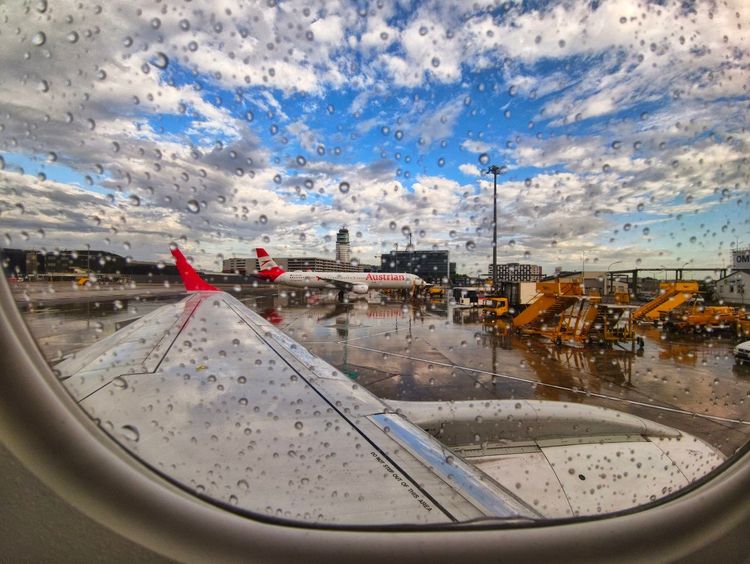
Vienna International Airport at Schwechat is located around 18 kilometres from the city centre. The CAT (City Airport Train) connects the airport to Wien Mitte station in 16 minutes non-stop, at a higher price than the alternatives but with a time saving that is welcome after a night flight. The S7 regional train line, slower (around 25 minutes) but significantly cheaper, also serves the city centre and is included in some transport passes — a detail that can make a real difference on a tight budget. Direct buses also connect the airport to several points in the centre for a fare close to the regional train, a practical option if your hotel is far from an S-Bahn station.
A taxi or ride-hailing car generally costs between €35 and €45 depending on traffic and arrival time, an option worth considering late at night when train frequencies drop. From France, several airlines serve Vienna with direct flights from Paris, Lyon or Marseille in just under two hours. The night train remains an alternative for travellers who want to avoid flying, with direct connections from Paris that take longer but are valued for their lower carbon footprint.
Public Transport, Passes and Car Rental
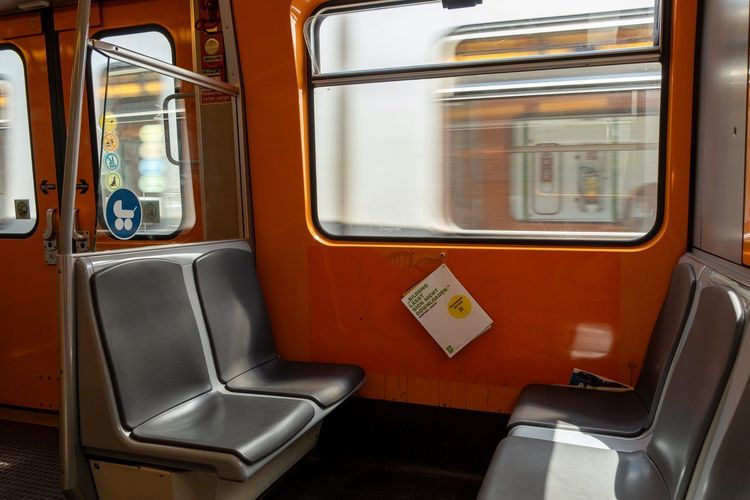
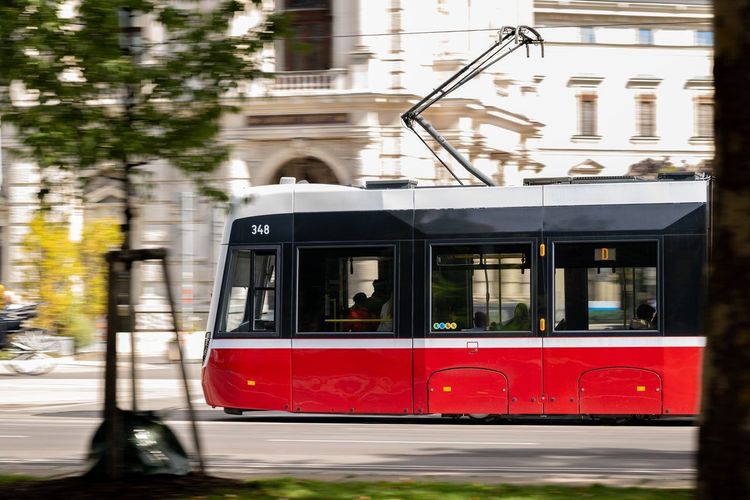
Once there, getting around Vienna is largely done by public transport: five metro lines (U-Bahn), an extensive network of historic trams and night buses that take over after midnight at weekends. A single ticket costs around €2.40, but for a 3-day stay, the 72-hour card (around €17) or the Vienna City Card work out considerably better value if you make multiple journeys between the centre, Schönbrunn and the Prater. The latter also adds discounts on certain partner museums and restaurants, and is available in 24-, 48- or 72-hour versions depending on the length of your stay.
For short trips and fine weather, WienMobil Rad hire bikes and the electric scooters available across the city centre usefully complement the network, with a per-minute rate that remains reasonable over short distances. The city is also largely accessible to people with reduced mobility, as virtually all metro stations are equipped with lifts. Renting a car in Vienna, however, makes little sense for exploring the city itself: the historic centre is largely pedestrianised and parking there is expensive and difficult. Several rental agencies are available at the airport and in the city centre if you plan to extend your stay with a day trip to the Wachau valley or Lake Neusiedl.
Where to Stay in Vienna for 3 Days
The Best Neighbourhoods to Stay in Vienna
The historic centre (Innere Stadt) puts all the Day 1 highlights within walking distance, at the cost of a higher accommodation budget, often 20 to 30% above the Viennese average, with double rooms rarely starting below €100 per night in season. The Neubau neighbourhood, around the MuseumsQuartier, appeals for its younger atmosphere, independent cafés and generally lower prices — around €70–90 for a decent room — while remaining 10–15 minutes on foot from the centre. Leopoldstadt, on the other side of the Danube Canal, close to the Prater, offers a good compromise between residential calm and quick metro access to the city centre, with generally better value for families.
Two other options are worth considering if these three neighbourhoods are fully booked. Josefstadt, the eighth district, lines up quiet streets and neighbourhood theatres one metro stop from the Hofburg, with family-run hotels that are often cheaper than those in the heart of the centre. Landstrasse, around Wien Mitte station, has the logistical advantage of letting you set down your bags as soon as you step off the CAT, which greatly simplifies a short stay with an early morning return flight. In all cases, check the nearest metro station before booking: in Vienna, a ten-minute walk to a U-Bahn stop makes a significant difference to the comfort of a full day of sightseeing.
Recommended Stays and Accommodation Tips
Among addresses tried and tested by travellers, the Rioca Vienna Posto offers comfortable rooms at reasonable prices in a contemporary setting, a few metro stops from the centre. For a longer stay or a family trip, Zoder Apartments provide apartments with a kitchenette, a practical option for keeping the food budget down over 3 days by preparing your own breakfasts and packed lunches.
If your budget is tight, the hostels in Neubau are a reliable choice, with clean, well-located dormitories from around twenty euros per night. Note that Viennese accommodation providers charge a municipal tourist tax of around 3.2% of the room rate, sometimes added at checkout rather than included in the price displayed online. Book early if your stay falls during the Christmas markets or the New Year's Concert period: prices rise noticeably and the best addresses sell out weeks in advance. Back from your visits, there is nothing to stop you reopening the Ryo audio guide of Vienna from your room to plan the following day by scouting out the next stops.
Where to Eat and What to Try in Vienna
Viennese Specialities to Try (Schnitzel, Sachertorte...)
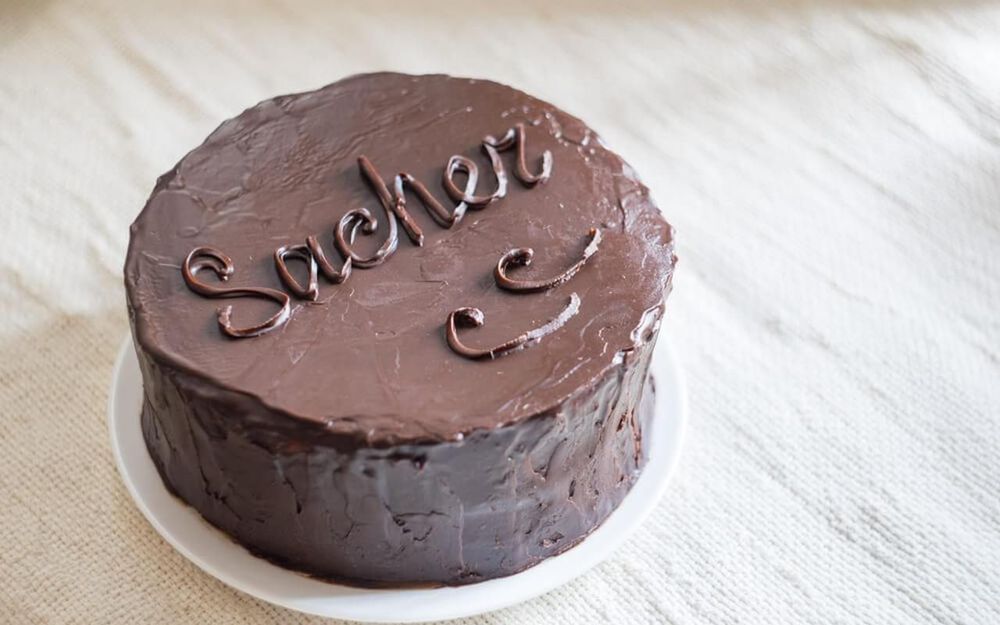
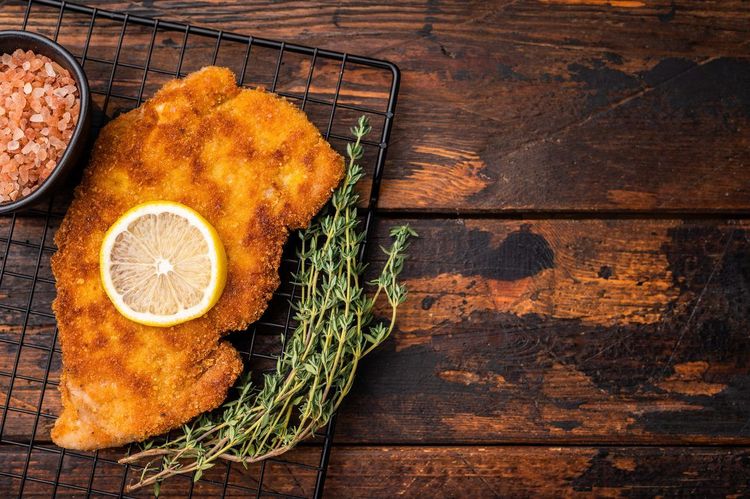
The Wiener Schnitzel, a breaded and fried veal escalope, remains the dish most ordered by visitors, usually served with a simple potato salad, at a price ranging from €15 to €25 depending on the restaurant. The Sachertorte, a chocolate cake created in 1832 by Franz Sacher, then a sixteen-year-old apprentice at the court of Prince Metternich, can be enjoyed in its original form at the Hotel Sacher or in dozens of the city's patisseries, each claiming their own recipe, often with variations in the balance of chocolate and apricot. The Tafelspitz, boiled beef served with broth and horseradish, completes the trio of iconic Viennese dishes, less well known to tourists but very much present on traditional menus.
On the street food side, the Wiener Würstchen and the Käsekrainer, a cheese-filled sausage sold at stands (Würstelstand) open late into the night, offer a quick and affordable option between visits, generally costing around €4 to €6. Vegetarians are not forgotten: many addresses in Neubau offer reimagined versions of the Schnitzel made with vegetables or tofu, a recent trend that now coexists with tradition.
For a good Viennese escalope without overspending, avoid restaurants directly on Stephansplatz: prices there rise quickly for quality that does not always match. A short detour into the adjacent side streets is usually enough to find a family-run Gasthaus, often cheaper and more authentic. Further afield, the Heurigen of Grinzing, wine taverns where vintners serve their own production alongside cold buffets, deserve an evening of their own if you extend the stay beyond 3 days: you eat at long shared tables in a convivial atmosphere very different from the restaurants in the centre.
Historic Coffee Houses and Viennese Hot Chocolate
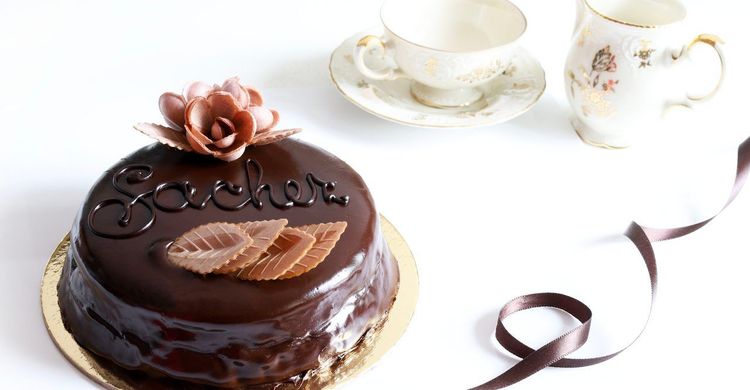
Beyond Café Central already mentioned on the first day, other coffee houses in Vienna are worth the detour: Café Sacher for its iconic Sachertorte, Demel for its pastries long served at the imperial court, or Café Sperl, preserved almost exactly as it was since 1880 with its patinated wooden furniture. Everywhere, the ritual is the same: order at the table, take your time, and leave only when you decide, without ever being hurried by the staff.
For a Viennese hot chocolate, look for the words "heiße Schokolade mit Schlag", served with a generous portion of whipped cream. Expect to pay between €4 and €6 for a drink in a historic coffee house, and a little less in a more contemporary address like Kleines Café, appreciated by locals for its unpretentious atmosphere. Our Ryo article on Vienna's culinary specialities lists ten additional addresses organised by neighbourhood, handy for not always ending up in the same streets.
Budget and Vienna Pass: the Best Tips to Know
The Vienna Pass and Budget-Friendly Tips
The Vienna Pass gives skip-the-line access to more than 90 attractions across the city, including Schönbrunn, the Belvedere and St. Stephen's Cathedral, for a fixed price available in 1-, 2-, 3- or 6-consecutive-day versions. For a 3-day stay that takes in as many paid sites as this itinerary does, the calculation is often favourable: simply add up the individual ticket prices for the sites you plan to visit to check whether the pass is worth it in your specific case, as it does not always pay off for a slower pace that prioritises two or three sites per day rather than five or six.
For those on a tight budget, several municipal museums offer free or reduced-price entry on certain days, and many churches in the centre, including the main nave of St. Stephen's, remain accessible without a ticket. The city's parks, including the Stadtpark and the Burggarten, are also free all year round, a good way to fill a late afternoon without spending a single euro. Under-19s also benefit from free or very reduced entry to most federal museums, a useful detail for families.
Average Budget for 3 Days
For a 3-day stay in Vienna excluding flights, budget on average between €80 and €150 per day per person depending on accommodation level: a hostel or shared apartment at around €40–60 per night, two meals at neighbourhood Gasthäuser for around €25–35, public transport at under €6 per day with the 72-hour card, and two or three paid entries spread across the stay, averaging €20–25 per site. A more comfortable budget, with a 3- or 4-star hotel and more sites visited, can easily climb to between €150 and €250 per day. Book your Schönbrunn and Belvedere tickets in advance: it is often cheaper online than at the ticket office, and avoids a queue that can easily eat up a good hour of visiting time on an already busy day.
When to Visit Vienna
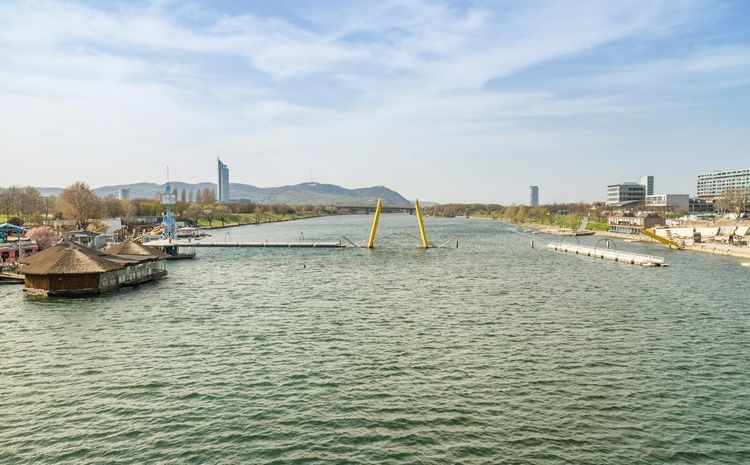
Spring (April–June) and early autumn (September–October) offer the best compromise between mild weather and still-manageable queues at the major sites. Temperatures hover around 18 to 24 °C, ideal for the long walks through the historic centre and the gardens of Schönbrunn without suffering from the heat. Summer, warmer (often 26 to 30 °C in July–August) and busier, remains enjoyable thanks to the many parks and the possibility of swimming on the Donauinsel, where the Donauinselfest, one of Europe's largest free festivals, is held every year.
Vienna in winter transforms the atmosphere entirely: between late November and late December, Christmas markets take over Rathausplatz, Stephansplatz, Spittelberg and the courtyard of Schönbrunn, with mulled wine and local crafts on every corner, some of them running into the first days of January. On 1 January, the famous Musikverein New Year's Concert, broadcast around the world, turns the city into a global musical event for a few days — a period covered in detail in our Ryo article on the New Year's Concert in Vienna. The Viennese winter also lends itself to a complementary escape to the Austrian mountains, as our Ryo guide to the winter experience in Austria shows. Simply plan for shorter days, with nightfall around 4:30pm and temperatures hovering around 0 °C, so a proper coat and sturdy shoes are essential.
Vienna in 1, 2 or 4–5 Days: How to Adapt the Itinerary
The right duration depends above all on your travel pace. Three days remain the benchmark: this format allows you to cover the historic centre, Schönbrunn and an alternative day without rushing from one site to the next.
If you only have a single day, as part of a layover or an extended business trip, focus on the Innere Stadt: St. Stephen's Cathedral, the Hofburg and a quick look at the Opera are enough to grasp the essentials, even if it means sacrificing Schönbrunn, which is too time-consuming for a single day. For a tighter two-day programme, combine the historic centre on day one with a morning at Schönbrunn the next day, then complete the afternoon with the MuseumsQuartier or the Belvedere depending on your artistic tastes.
Conversely, a stay of 4 or 5 days allows you to add a day trip, for example to the UNESCO-listed Wachau wine valley along the Danube, or to Lake Neusiedl on the Hungarian border, appreciated for its vineyards and migratory birds. Families with young children will also benefit from spreading Schönbrunn across two half-days rather than one, with the zoo in the morning and the quieter park in the late afternoon. This extra day is also an opportunity to slow down: wandering without a fixed itinerary through the Josefstadt or Alsergrund neighbourhoods, less frequented than the centre, often reveals a more intimate side of the Austrian capital, far from organised tour groups.
What Souvenirs to Bring Back from Vienna
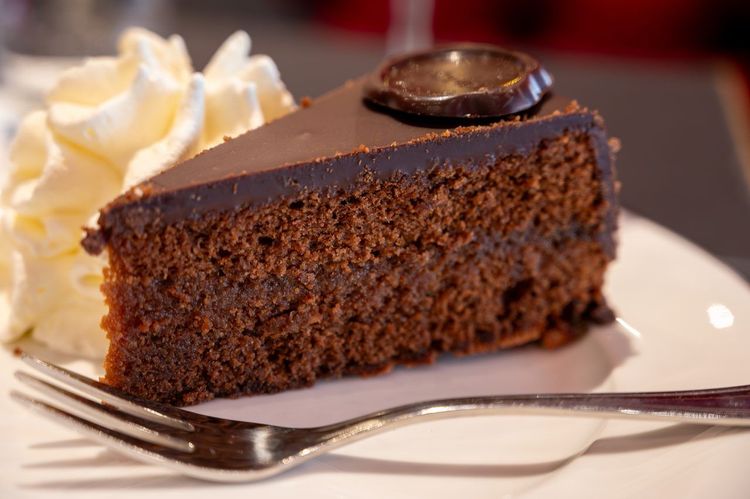
On the food side, a vacuum-packed box of Sachertorte travels well and always goes down a treat back home, as does Julius Meinl coffee, roasted in Vienna since the 1860s, or the famous Mozartkugeln, chocolate balls filled with marzipan and nougat sold in almost every tourist shop in the centre. Music lovers will find scores, recordings and merchandise linked to the Viennese musical tradition in the Musikverein and Staatsoper shops.
For a more artisanal souvenir, the Augarten porcelain manufactory, based in the city since the 18th century, sells hand-painted cups and figurines — a bigger investment but something that lasts for generations. A bottle of Grüner Veltliner, the emblematic white grape variety from the wine region surrounding the capital, rounds off a suitcase already loaded with pastries. Finally, the winter Christmas markets are full of carved wooden objects and handcrafted decorations not easily found elsewhere in Europe, just as the Naschmarkt spice stalls transport easily in checked luggage.



FAQ
How many days do you need to explore Vienna?
Three days are enough to cover the essentials: the historic centre, Schönbrunn and an alternative day. Two days are possible if you tighten the schedule, while four to five days allow you to add a day trip outside the city, to the Wachau valley or Lake Neusiedl for example.
What is the best time to visit Vienna?
Spring and early autumn offer the best balance between pleasant weather and moderate crowds. Winter, especially around Christmas and New Year's, is appealing for its festive atmosphere despite shorter days and cooler temperatures.
How do you get to Vienna from France?
Several airlines offer direct flights from Paris, Lyon or Marseille in under two hours. The night train is an alternative for travellers who prefer to avoid flying, with a longer journey but a reduced carbon footprint.
Is the Vienna Pass worth it for a 3-day stay?
It depends on the number of paid attractions you visit. For a packed itinerary like this guide's, which takes in Schönbrunn, the Belvedere and several museums, compare the combined price of individual tickets with the pass price before deciding.
Where should you stay in Vienna for a first visit?
The historic centre is the most convenient but also the most expensive. Neubau and Leopoldstadt offer a good compromise between budget, local atmosphere and proximity to public transport.
What budget should you plan for 3 days in Vienna?
Budget between €80 and €150 per day per person for an economical stay, and up to €250 per day for more comfortable accommodation and activities, excluding flights.
What souvenirs should you bring back from Vienna?
Sachertorte, Mozartkugeln, Julius Meinl coffee, Augarten porcelain and handcrafted items from the Christmas markets are among the most typical souvenirs from the Austrian capital.
Between imperial gilding, modern art and the banks of the Danube, these 72 hours are enough to understand why the city continues to attract so many visitors without ever feeling overcrowded. Keep in mind the logic that structures this entire guide: one major visit in the morning, a leisurely stroll in the afternoon, a coffee or a concert in the evening. To extend the experience once you are there, the Ryo audio guide of Vienna remains the best way to connect all these places without losing time between two tram stops.