© Shutterstock
 Votre guide Ryo
Visit Albi as a Couple: 2026 Itinerary for an Unforgettable Romantic Getaway
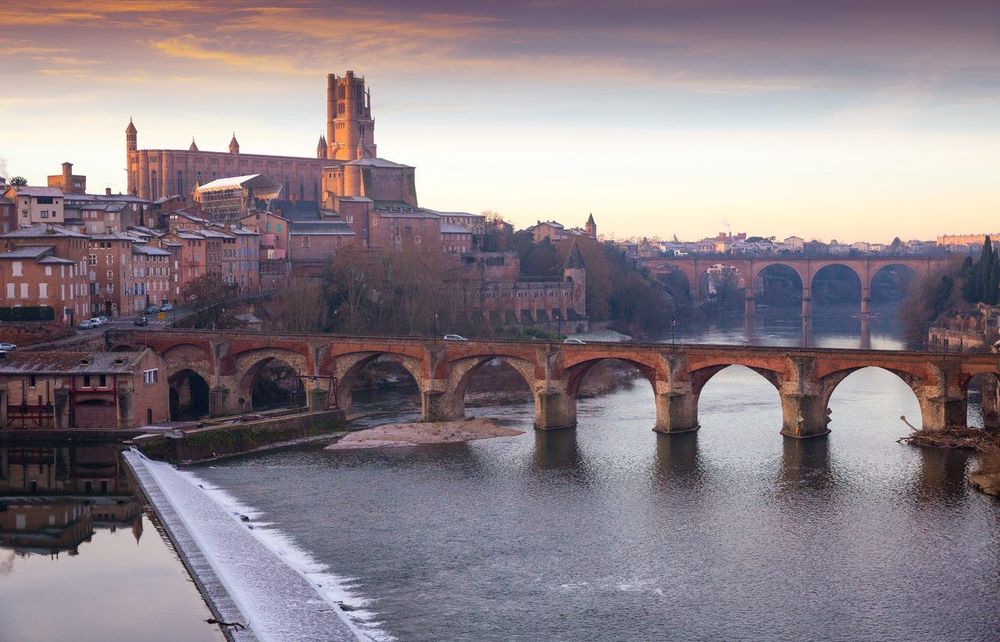
Visiting Albi as a couple often begins with a night scene: spotlights illuminate the façade of Sainte-Cécile Cathedral, the fired brick turns deep red, and the banks of the Tarn empty all at once. It is at that precise moment, between 9 and 10 pm in summer, that the episcopal city changes pace and becomes a setting almost designed for two people strolling slowly. To frame this first evening without getting lost in the old town, the Ryo audio guide tour of Albi traces a connecting thread between the cathedral, the Palais de la Berbie and the riverbanks, across 3.5 km of narrated content.
Visiting Albi as a couple is not simply about ticking the box of a UNESCO-listed episcopal city. It also means gliding along the Tarn aboard a gabarre while a boatman recounts the history of the river traders, discovering the Toulouse-Lautrec Museum housed in a fortified 13th-century palace, or ending the evening in a private spa a few kilometres from the centre. Between the complete two-day itinerary, excursions to Lautrec, Gaillac, and Sorèze, and tips for an intimate dinner, you will find everything you need here to plan a weekend for two with no unpleasant surprises or dead time between visits.
Why Albi Is an Ideal Destination for a Romantic Weekend
Albi can be crossed on foot in about twenty minutes, which makes all the difference when you have no desire to spend your weekend travelling around. The episcopal city, listed as a UNESCO World Heritage Site since 2010, concentrates the main sights within a 500-metre radius of the cathedral.
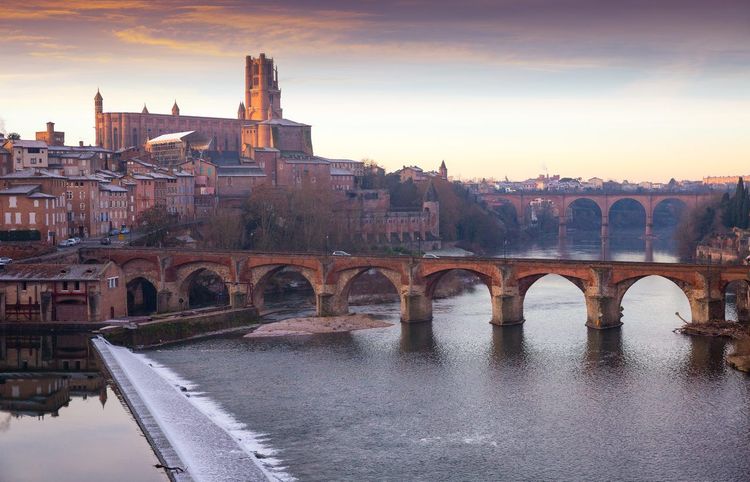
The red of the fired brick, which gives the city its nickname of the Red City, lends Albi a particular quality of light at sunset. The façades absorb the warmth of the day and release it in shades of orange until nightfall. These same tones make photographs of the Pont-Vieux and the banks of the Tarn so instantly recognisable.
Here, there is no complicated itinerary: the cathedral, the Palais de la Berbie, and the old town follow one another in a continuous loop. You can therefore devote your energy to strolling hand in hand rather than consulting a map every five minutes.
The listed perimeter combines the fortified cathedral, the bishops' palace, the collegiate church of Saint-Salvy, the Pont-Vieux, and the medieval neighbourhoods surrounding them. Few French destinations offer such a density of heritage within such a compact area, which is why two days are enough to explore it at a leisurely pace while still leaving time for the surrounding region.
Day 1: The Episcopal City and the Old Town of Albi
Devote the first day to Albi's historic triangle: the cathedral, the bishops' palace, and the surrounding alleyways can all be covered on foot, without needing to get back in the car between stops.
Sainte-Cécile Cathedral and the Palais de la Berbie
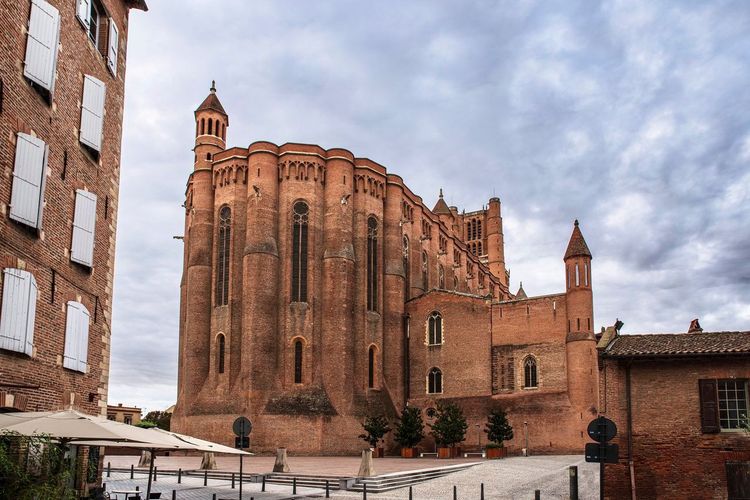
Begin with Sainte-Cécile Cathedral, the largest brick cathedral in the world, completed in the late 15th century after nearly two hundred years of construction. From the outside, it looks almost like a fortress: massive buttresses, smooth city-facing walls, and a single monumental entrance through the sculpted porch that contrasts sharply with the austerity of the rest of the building.
The interior completely reverses the impression left by the exterior. The Flamboyant Gothic rood screen, carved in stone, encloses a chancel whose statues have almost all survived the centuries, while the vault, painted by Italian artists in the early 16th century, unfolds in a deep blue studded with gold. On the west wall, the Last Judgement, painted around 1474–1480 across some 270 square metres, is considered the largest medieval fresco in southern France. Allow thirty to forty minutes if you want to enjoy the chancel without being jostled by a tour group.
Arrive as early as possible, before the first tourist coaches. The morning light passes through the stained-glass windows in a way that cannot be replicated at midday. Another detail that many visitors miss: the 18th-century grand organ, one of the largest in France, can be heard during regular concerts in season — a good excuse to return in the late afternoon if the dates coincide with your visit.
Leave through the forecourt and cross the square to reach the Palais de la Berbie, the former fortified residence of the bishops of Albi and one of the oldest surviving castles in France. The palace now houses the Toulouse-Lautrec Museum, but it is above all its terraced gardens, laid out in the French formal style in the 17th century, that make it worth a quiet moment for two.
From the gardens, the view plunges directly onto the Tarn and the Pont-Vieux (Pont Vieux, 81000 Albi, rated 4.6/5 on Google based on 4K reviews). Settle onto one of the benches: this is one of the few spots in the episcopal city where you can sit facing the water without paying an entrance fee, since the gardens remain accessible independently of the museum. The box hedges trimmed in geometric patterns descend towards the ramparts, and the contrast between the dark green of the hedges and the brick of the palace creates one of the most photographed compositions in Albi.
To follow this first stage without alternating between a paper map and your phone, the Ryo audio guide tour of Albi takes you through the cathedral, the Palais de la Berbie, and the old town in 1 hour 40 minutes, spread across 26 audio stops, at your own pace and without booking a guided tour slot.
Strolling through the Old Town and Its Alleyways
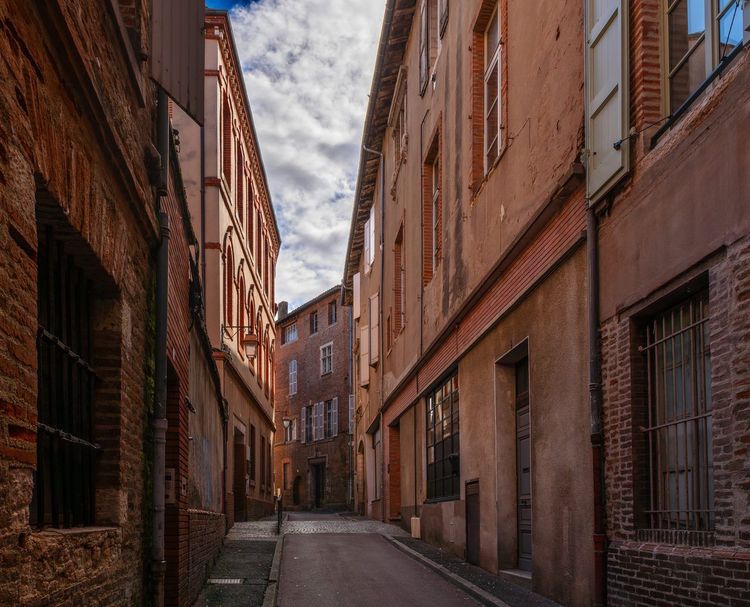
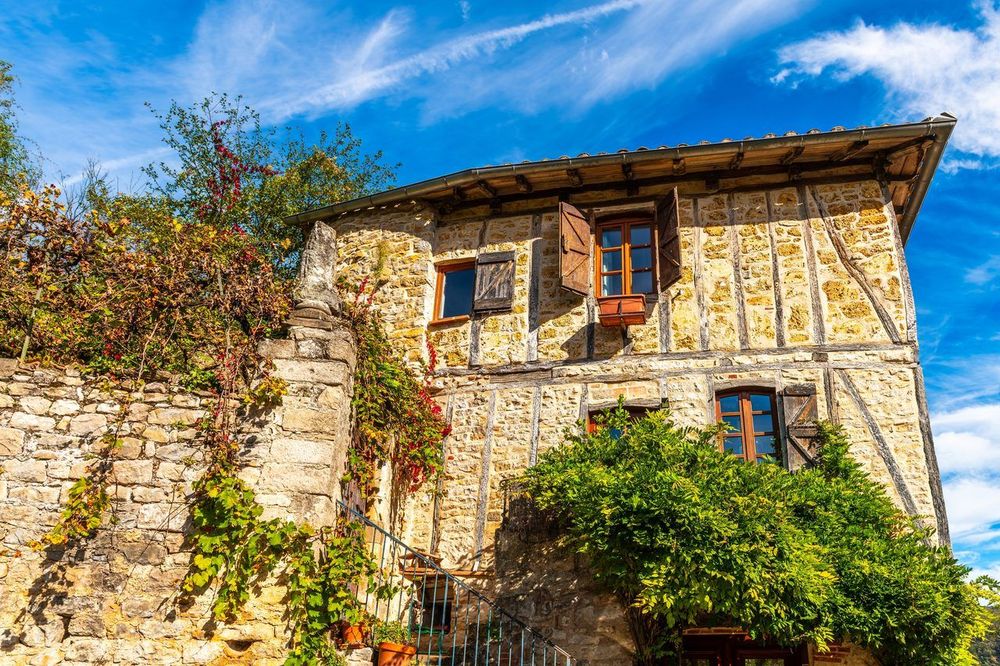
Leaving the palace gardens, head into the old town, the neighbourhood of alleyways and half-timbered houses stretching between the cathedral and the Place du Vigan. The timber-framed and jettied façades, infilled with brick, speak of the prosperity of the pastel merchants during the Renaissance.
Do not look for a specific monument here: the interest lies in the details — a carved carriage gateway, a wooden jetty, an inner courtyard glimpsed through a half-open porch. Let yourselves get purposely lost in the Rue Mariès and Rue Puech-Bérenguier, two of the best-preserved streets in the neighbourhood.
The streets around the cathedral are home to craft workshops and small galleries, often run by local ceramicists — a good excuse for a shaded break in the middle of the afternoon. Around 5 pm, the raking light begins to gild the façades: this is when photographs have the most depth, before the evening crowds arrive.
If you want a longer break, look for the courtyards of former town houses converted into cafés or boutiques. They offer a shaded corner away from the bustle of the main streets, and you will often find a souvenir there that stands out from the standard shops in the centre.
The Pont-Vieux and Sunset from the Right Bank
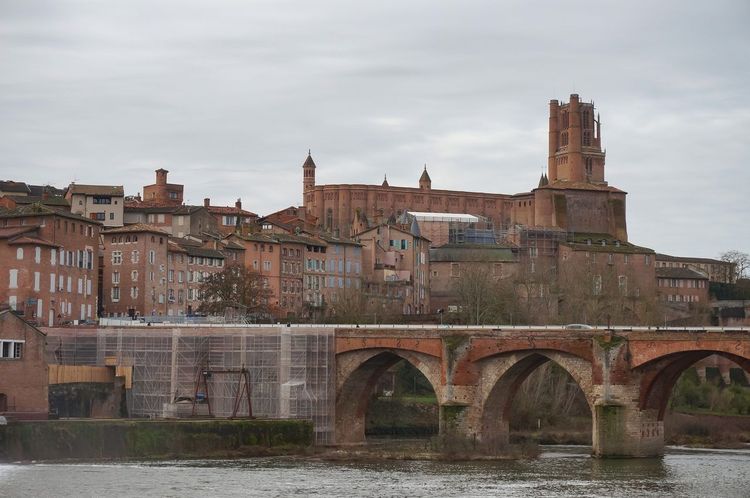
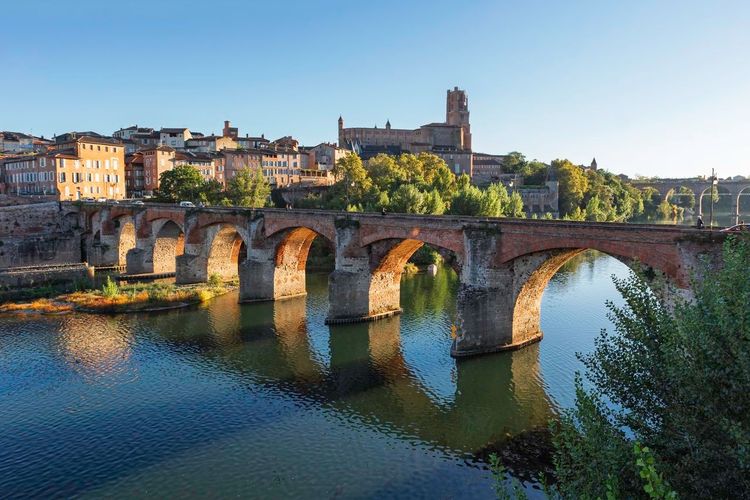
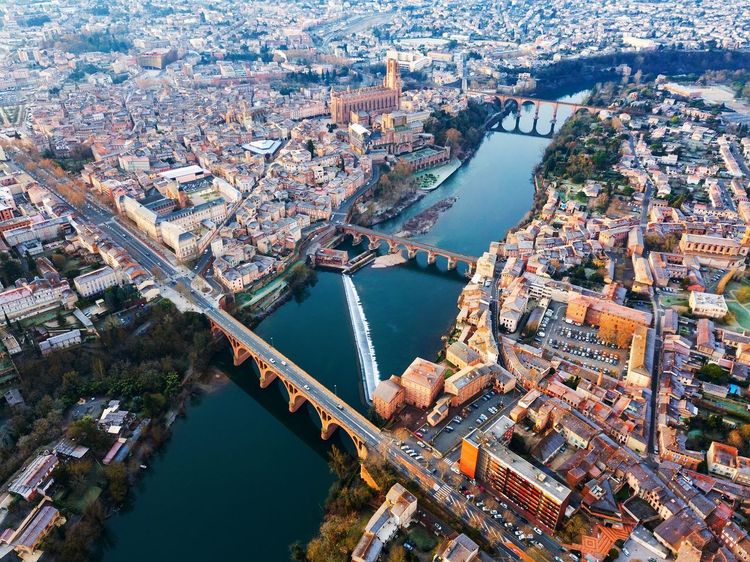
End the day on the Pont-Vieux, built around 1035–1040 and still in use, one of the oldest bridges in France still open to traffic. It long carried houses on it, like many medieval bridges.
Cross it at sunset, when the low light grazes the arches and turns the brick red. On the right bank, in the Madeleine quarter, head down to the riverbanks: this is where you can see the cathedral and the palace rising together above the Tarn, the postcard view of Albi.
It is at the hour when the last visitors make their way back towards the centre that the scene becomes the most beautiful of the stay. Wear comfortable shoes rather than heels — the riverbanks and ramps remain uneven — and wait for the floodlights of the episcopal city to come on before crossing the bridge again.
Day 2: The Tarn, Intimate Museums, and Relaxation
The second day shifts pace: fewer monuments, more water, human-scale museums, and free time to fill as the mood takes you.
A Gabarre Boat Ride on the Tarn
Start with a gabarre boat ride — these traditional flat-bottomed boats once transported goods along the river. The landing stage is at the foot of the Palais de la Berbie and the Pont-Vieux, accessible via the Quai Choiseul.
The classic cruise lasts around thirty minutes — longer options of 1.5 or 2 hours are also available — and offers a view of the cathedral and the Pont-Vieux that is impossible to obtain on foot. The boatman narrates the history of the river traders and the former mills on the bank, a relaxing way to discover the city after a full first day. The gabarres only run during the warmer months, roughly from May to the end of September: check the timetables with the tourist office before planning your morning around it.
Many travellers choose this excursion precisely because it forces a seated pause after a day of walking. The Ryo audio tour also covers the history of the Pont-Vieux and the banks of the Tarn in several of its stops, giving you something to extend what the boatman has just told you once you are back on dry land.
The Toulouse-Lautrec Museum and the Lapérouse Museum
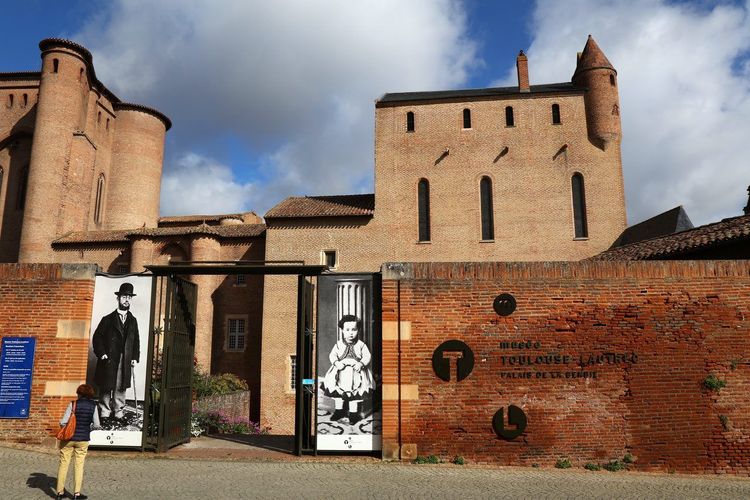
Head next to the Toulouse-Lautrec Museum, housed within the walls of the Palais de la Berbie visited the day before. The collection brings together more than a thousand works by the Albi-born artist — the largest in the world — ranging from Moulin Rouge posters to more intimate portraits.
Allow a good hour if you want to follow the complete chronology, slightly less if you prefer to focus on the rooms dedicated to Paris and the cabarets. The itinerary also touches on the artist's Albi childhood, born just a few streets away, and the two femur fractures that stunted his growth in adolescence — context that changes the way you look at the self-portraits.
Further on, the Lapérouse Museum tells an entirely different story — that of the Albi-born navigator who disappeared with his two frigates in the Pacific at the end of the 18th century.
The square facing the museum is called Botany Bay: it was in that Australian bay that the expedition made its last known stop in 1788, and Albi has established a partnership with the La Pérouse Museum in Randwick, located on site. A detail worth sharing with your partner as you cross the square. The museum is far less crowded than the Toulouse-Lautrec Museum — a pleasant interlude among ship models and period navigation instruments.
Relaxation: Parc Rochegude, Boutiques, or the Fashion Museum
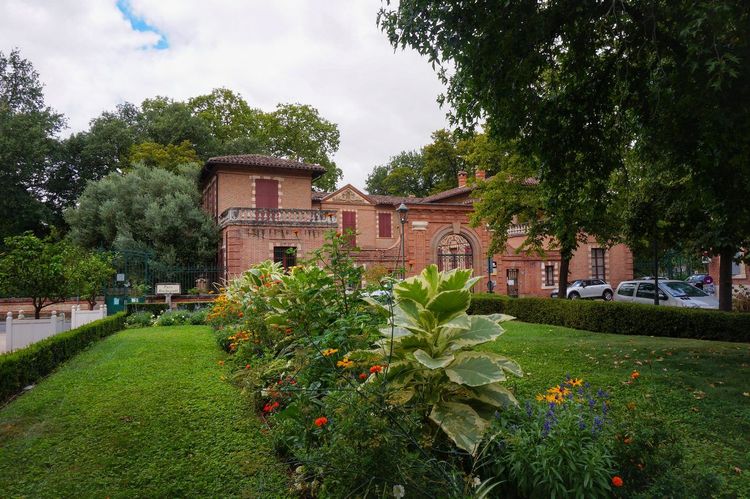
The afternoon is deliberately left more open. If you prefer the outdoors, Parc Rochegude, a garden of around 4 hectares laid out around the Hôtel Rochegude, offers shaded lawns and ponds where you can sit without rushing.
Admission is free, and a few secluded benches at the edge of the flower beds are well away from family groups. With a picnic picked up along the way, it is the simplest option for catching your breath after a morning of museums.
Prefer to wander around town? The independent shops in the historic centre, around the Rue Mariès and the Place du Vigan, offer local crafts and small galleries. For fashion lovers, the Fashion Museum (17 Rue de la Souque, 81000 Albi, rated 4.5/5 on Google based on 411 reviews), on the Rue de la Souque, presents a private collection of antique clothing and accessories, refreshed by theme: a short visit, often under an hour, perfect for a light afternoon.
Must-See Highlights for Two
Is your stay limited to a single express day? Some places are not to be missed, while others are all too easily overlooked on a fleeting visit.
The Episcopal City and the Saint-Salvy Cloister
Beyond the cathedral and the palace, the collegiate church of Saint-Salvy (Cloître Saint-Salvy, 81000 Albi, rated 4.6/5 on Google based on 418 reviews) and its 13th-century cloister, begun in 1270, are frequently overlooked by visitors in a hurry, even though they are less than five minutes on foot from the cathedral. The surviving gallery, with its Gothic arches and paired colonnettes, offers an almost monastic silence right in the heart of the city.
Few express visits include this stop, making it one of the rare spots in the episcopal city where you can enjoy a moment alone as a couple without crossing a tour group, even in high season. Entry to the cloister is free, with no ticket desk or restrictive opening hours.
The carved capitals — some with vegetal motifs, others with animal figures half worn away by time — can be studied without a guide or information panels: it is precisely this stripped-back quality that provides a welcome rest after a morning heavy with historical explanation.
If you only have a few hours — between two trains, for instance — choose this cloister over a second museum: ten minutes are enough to take in the atmosphere of the episcopal city.
The Fountains and Gardens of the Palais de la Berbie
Briefly return to the fountains of the episcopal city, scattered between the Place Sainte-Cécile and the approaches to the palace — features you often pass through without stopping.
The gardens of the Palais de la Berbie deserve a second visit at the end of your stay, at a different hour: the softer morning light on the brick contrasts with the evening view from the right bank. They change their atmosphere almost entirely depending on the time of day you choose.
If you really must prioritise, keep to this order: the cathedral first, for its painted interior, then the palace and its gardens, and finally the Saint-Salvy cloister — the shortest stop and the easiest to slip in before setting off again.
The cathedral, the Palais de la Berbie, the Saint-Salvy cloister: each of these sites is covered in the Ryo audio guide tour, handy for making sure you miss nothing hand in hand, even if you only have a few hours.
Where to Have a Romantic Dinner in Albi
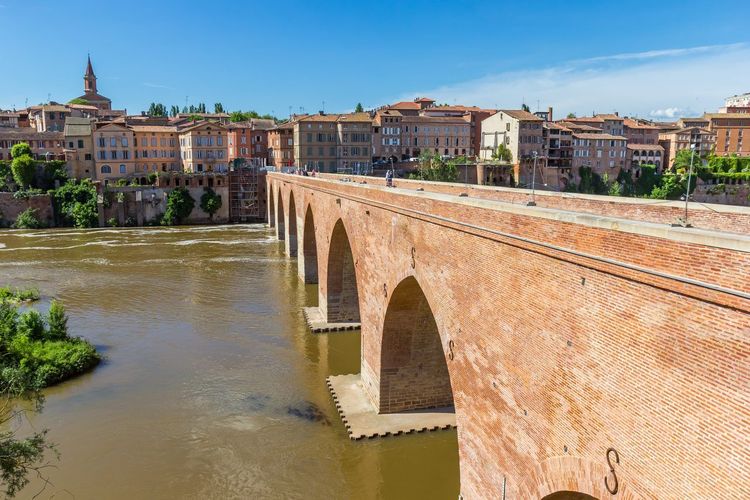
Albi has no shortage of options for a dinner for two, but the atmosphere varies considerably depending on the neighbourhood. Tables set near the banks of the Tarn benefit from a view of the illuminated Pont-Vieux once night has fallen — a setting that almost speaks for itself.
In the old town, the small vaulted dining rooms and inner courtyards offer a more intimate atmosphere, centred on regional cuisine: cassoulet, foie gras, and Gaillac wines to accompany. Book a terrace table if the weather allows — these restaurants often have only a handful of outdoor seats, snapped up from Friday onwards in high season.
For a more hushed evening, some restaurants offer tasting menus — an ideal format if you prefer to take your time rather than working through a succession of courses. Expect to pay roughly between 35 and 55 euros per person for a full menu at the most popular addresses in the historic centre, a little less at bistros away from the Place Sainte-Cécile.
The evening is worth the trip even without a table booked: once the cathedral and the palace are floodlit, a digestive stroll along the riverbanks is enough to round off dinner. A few wine bars also serve Gaillac by the glass — a lighter option for ending the evening seated on a terrace.
Out of season, between November and March, booking is easier, but some addresses close one or two evenings during the week: check the day before rather than on the day itself.
Spa Weekend and Wellness: Unwinding as a Couple on the Outskirts of Albi
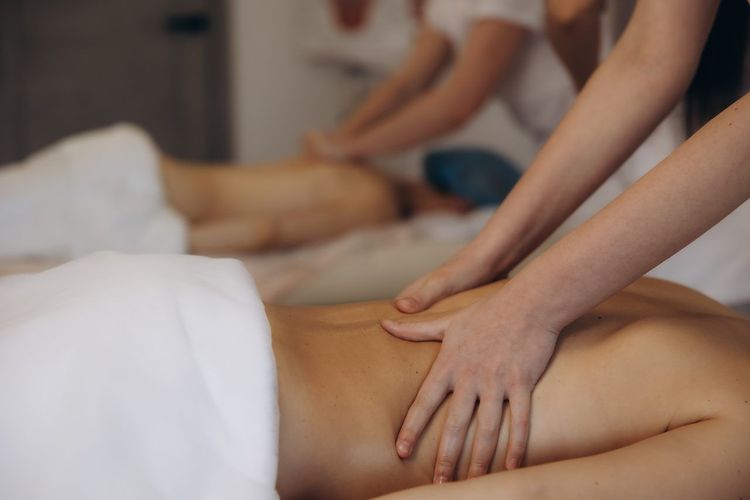
If your stay is planned around relaxation rather than intensive sightseeing, several establishments located fifteen to twenty minutes from the centre pair well with the first two days of the itinerary.
Private Spa and Charming Rooms
Several guesthouses and small hotels set in the countryside between Albi and the Gaillac vineyards offer rooms with a private spa, often bookable by time slot so you do not have to share the pool. The formula suits a weekend conceived as a true retreat rather than a packed itinerary of visits.
Some add a heated swimming pool or an outdoor jacuzzi with views over the Albi countryside — a good compromise for alternating a morning of sightseeing in town with an afternoon of rest. Many offer half board, which means you do not need to drive back out in the evening.
These addresses deliberately limit the number of rooms, sometimes to just five or six, which guarantees genuine peace and quiet. Book several weeks ahead for a spring or autumn weekend: private spa slots disappear quickly as soon as the weather looks favourable.
Gourmet Highlights: Fine Pastry and Gaillac Wines
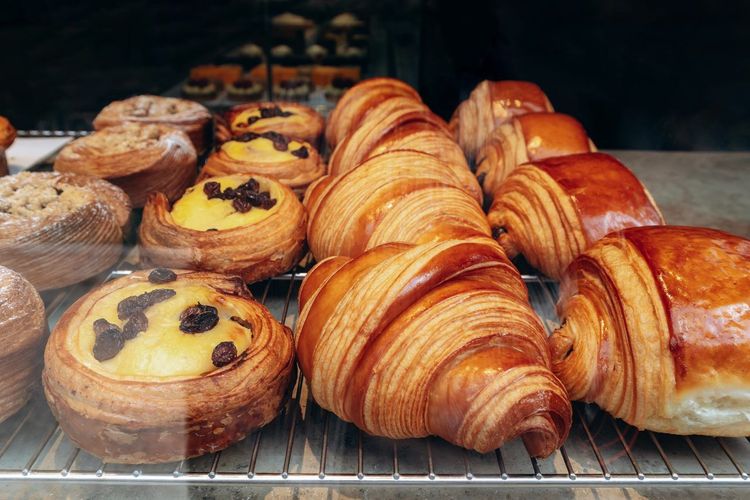
On the sweet side, the pastry shops in the town centre offer fine pastry and local specialities such as jeannots and gimblettes — a simple stop in the shade between two visits.
On the wine side, the region has been producing Gaillac wines since antiquity — sparkling whites, reds, and rosés — featured on almost every wine list in Albi. A tasting at the end of the day, on a terrace facing the Tarn, is a natural way to close an afternoon centred on rest.
If you are staying at a guesthouse with a spa, ask whether a local gourmet hamper — pastry, Tarn charcuterie, and a small bottle of Gaillac — can be prepared for your arrival: several establishments offer this as an optional extra.
Day Trips in the Tarn: Lautrec, Gaillac, and Sorèze
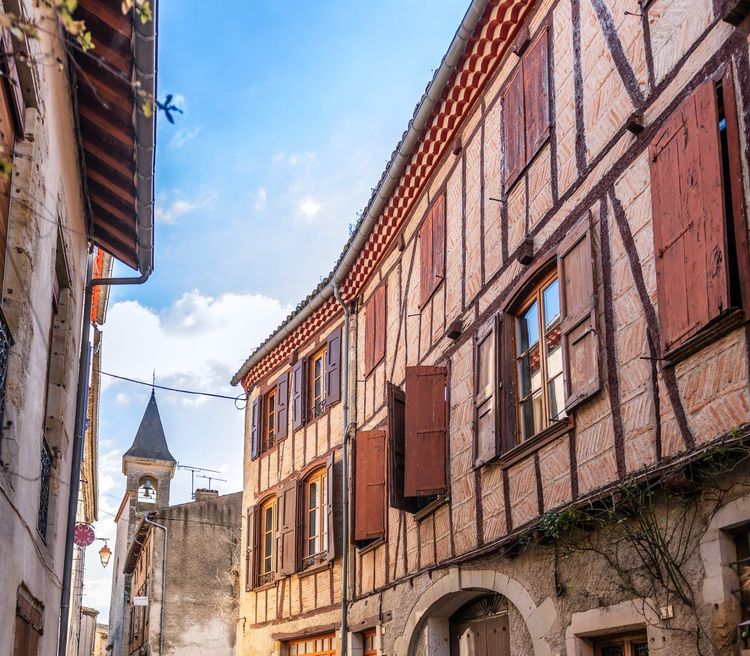
If your stay extends beyond two days, three nearby destinations are well worth the detour, each with an atmosphere very different from the alleyways of the episcopal city. They combine easily, with a half-day devoted to each.
The Village of Lautrec and Its Specialities (Pink Garlic, Pastel)
About three quarters of an hour's drive away, the village of Lautrec is listed among the Most Beautiful Villages of France, perched on a hilltop and arranged around its ancient timber-framed market hall.
The village is renowned for its pink garlic, protected by a Red Label and a PGI, as well as for pastel — the dye plant that made the fortunes of Albi and Toulouse during the Renaissance. The pink garlic festival takes place each year in early August, but the village makes for a pleasant visit throughout the warmer months.
Walk up to the Moulin à Vent de la Salette windmill at the top of the village for a panorama that stretches across the countryside to the Montagne Noire on a clear day. A few minutes on foot from the square is all it takes, making it a short but rewarding stop if you only have a morning to spare.
The Gaillac Vineyards
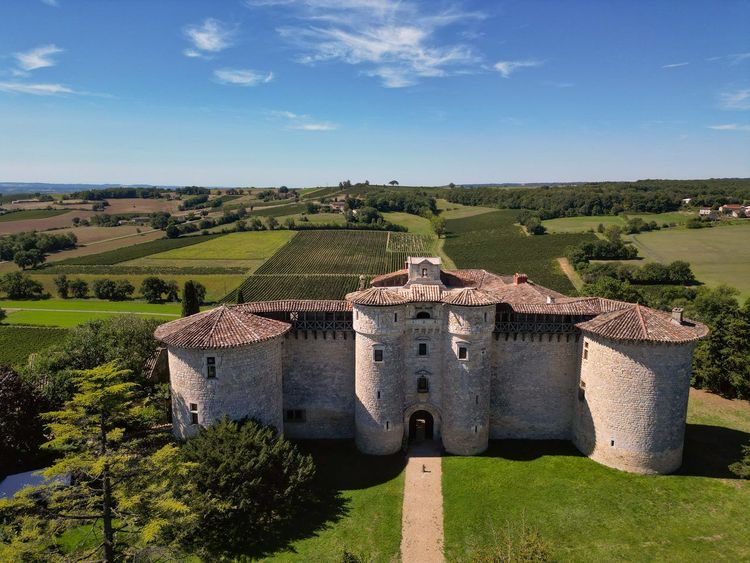
About twenty minutes from Albi, the Gaillac vineyards are among the oldest in France, with a winemaking tradition that predates that of Bordeaux. Several family estates open their doors for tastings — a pleasant interlude to fit into the day.
The Maison des Vins de Gaillac, housed in the former Abbaye Saint-Michel, brings together a good share of local production: practical if you prefer a single venue rather than driving from estate to estate. Allow about an hour for a tasting of three or four wines.
If time allows, venture up to the hillside slopes overlooking the left bank of the Tarn, where the views over the vine rows are far less visited than the estates themselves.
The Abbey School of Sorèze: an Unusual Escape
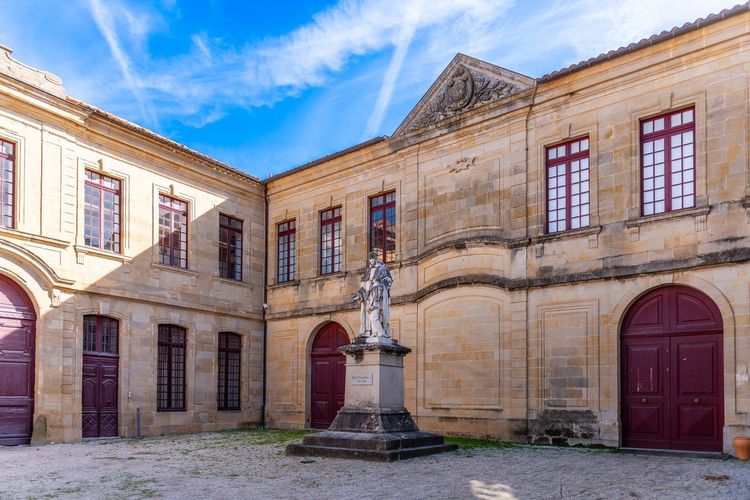
Further afield, about an hour's drive away, the abbey school of Sorèze (Rue Lacordaire, 81540 Sorèze, rated 4.8/5 on Google based on 53 reviews) offers a visit unlike anything else you will have seen. Founded in the 8th century and later transformed into a royal military school under Louis XVI, it educated generations of students until its closure in 1991.
The buildings, now converted into a museum and hotel, can be explored along a route that weaves through classrooms, dormitories, and the park. It is a decidedly more unusual outing than the must-sees of Albi's town centre, and remote enough to mark a genuine break in the stay.
The Musée Dom Robert, dedicated to contemporary tapestry, occupies part of the former abbey and rounds off the visit if you have another hour to spare. Allow half a day, including lunch in the village.
Whether you add Lautrec, Gaillac, or Sorèze to your programme, keep one morning for the Ryo audio guide tour of Albi: its 26 audio stops across 3.5 km cover the historic heart before or after these excursions.
Where to Stay in Albi as a Couple
The choice of accommodation depends mainly on the atmosphere you are looking for — a lively town centre or peaceful countryside — and the budget you are willing to spend on lodging.
In the historic centre, several charming hotels occupy former Albi townhouses, just a few minutes on foot from the cathedral. Their advantage: you walk back after dinner, without looking for parking in the middle of the night.
Some of these addresses occupy historic buildings with exposed beams and views over the terracotta rooftops — an ideal choice if you favour heritage ambiance over the comfort of a modern establishment. Rooms with a view of the cathedral or the Tarn should be booked several weeks in advance from April to September.
Conversely, countryside accommodations, within fifteen to thirty minutes of Albi, focus on tranquillity, vineyard views, and often a private spa. This option requires a car to reach the centre each day, but suits a stay centred on relaxation.
Between the two, a few guesthouses on the outskirts of the episcopal city offer a compromise: close enough to walk into the centre, far enough to enjoy a garden in the evening. Check the actual walking distances before booking — some listings round them up generously.
If you are travelling by car, ask whether there is private parking: spaces in the historic centre are limited at weekends, whereas countryside addresses almost always have their own.
When to Go and How Long to Plan for a Romantic Stay
The season and the length of your stay noticeably shape the experience, especially if you plan to add a day trip into the Tarn.
The Best Time for a Couple's Weekend
Spring, from April to June, and early autumn, in September, offer the best balance between pleasant temperatures and reasonable visitor numbers. The gardens of the Palais de la Berbie are particularly beautiful in May, and the terraces remain usable without the sometimes oppressive heat of July and August.
Summer remains a valid option if you enjoy mild evenings along the riverbanks and can accept denser crowds around the cathedral between 11 am and 3 pm. Winter, quieter and often cheaper for accommodation, suits those looking above all for intimacy — even if it means forgoing the gabarre ride, which does not operate out of season.
If you are hesitating between two dates, opt for a weekday rather than a weekend in high season: group visits tend to concentrate on Saturdays, which noticeably changes the atmosphere around the cathedral.
1, 2, or 3 Days: How Long to Allow
A single day allows you to cover the essentials of the episcopal city — the cathedral, the palace, and the old town — but requires a fairly brisk pace. It suits a stopover from Toulouse more than a proper stay.
Two days is the most comfortable format: the detailed itinerary above unfolds at a leisurely pace and leaves free time in the late afternoon. Three days or more allow you to add one or two excursions — Lautrec and Gaillac each in a half-day, Sorèze more suited to a full day if you add the Montagne Noire.
Beyond three days, why not split your nights between the historic centre and a countryside address with a spa? You will sample both atmospheres within a single stay.
Practical Information: Getting There, Getting Around, and Tips for Albi
A few key details to sort out the logistics of your stay without spending too much time on them.
How to Get to Albi (Toulouse, Train, Car)
From Toulouse, allow around an hour by road via the A68, with a similar journey time by direct train from Toulouse-Matabiau station. From Paris, the train generally requires a connection in Toulouse, for a total of five to six hours. By car, Albi is nearly seven hours from Paris, which makes the train more comfortable for a short weekend. Toulouse-Blagnac airport remains the most practical option if you are travelling from further away, with an onward journey by train or rental car.
Getting Around, Parking, and the Albi City Pass
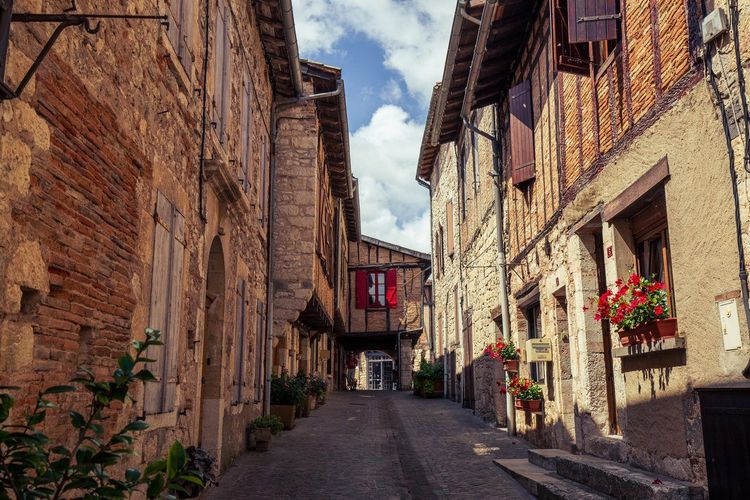
On the ground, the historic centre can be explored entirely on foot: no car is needed between the cathedral, the Palais de la Berbie, and the old town. Several paid car parks are located around the centre, notably on the Place du Vigan and near the banks of the Tarn.
The Albi City Pass, offered by the tourist office, gives access to reduced rates at partner venues including museums and the gabarre boat ride (€8.50 instead of €9.50 for the commentary cruise, for example). It becomes worthwhile as soon as your programme includes three or four paid visits.
In case of rain, most stages of this guide — the cathedral, the Toulouse-Lautrec and Lapérouse museums, and the Fashion Museum — can be visited indoors. Simply postpone the gabarre ride and the sunset from the right bank until the skies clear.
The Ryo app works offline once the tour has been downloaded — handy in the alleyways of the old town where the mobile signal can sometimes be unreliable.
FAQ
How Long Should You Allow to Visit Albi as a Couple?
Two days are enough to discover the episcopal city and the Tarn at a relaxed pace, taking in the cathedral, the Palais de la Berbie, the old town, and the museums. Allow three days or more if you want to add an excursion to Lautrec, Gaillac, or Sorèze.
What Is the Best Time for a Romantic Weekend in Albi?
Spring and early autumn offer the best balance between pleasant weather and moderate crowds. Summer is ideal for mild evenings along the riverbanks, while winter suits a quieter stay that is often less expensive.
Where Should Couples Stay in Albi?
The historic centre is ideal if you want to do everything on foot and return easily after dinner. Countryside accommodations, often with a private spa, are better suited to a relaxation-focused stay.
How Do You Get to Albi from Toulouse or Paris?
From Toulouse, allow around one hour by car or by direct train from Matabiau station. From Paris, the train with a connection in Toulouse remains the most comfortable option, with a total journey time of five to six hours.
What Can Couples Do in Albi When It Rains?
Sainte-Cécile Cathedral, the Toulouse-Lautrec Museum, the Lapérouse Museum, and the Fashion Museum can all be visited indoors, allowing you to maintain the core of your programme. Save the gabarre ride and the riverbanks for when the skies clear.
Is Albi Worth a Couple's Weekend?
Yes: the remarkable heritage density of the UNESCO-listed episcopal city, combined with nearby destinations such as Lautrec, Gaillac, and Sorèze, fills a two- to three-day stay without long transfers between stops.
Albi for Two: Key Takeaways
At the end of these two days, what stays with you most is not any single monument but the feeling of a city compact enough to be lived in as a couple, without a packed schedule. The cathedral in the morning, the gardens of the Berbie at midday, the gabarre and the museums the next day, sunset from the right bank: the programme fits into a weekend and still leaves room for the unexpected.
To keep your bearings between the cathedral, the palace, and the riverbanks without burying your nose in a paper guide, the Ryo audio guide tour of Albi accompanies you across 1 hour 40 minutes and 26 stops, while you focus on what matters most — walking together through the red city.
À lire également